Skip to content
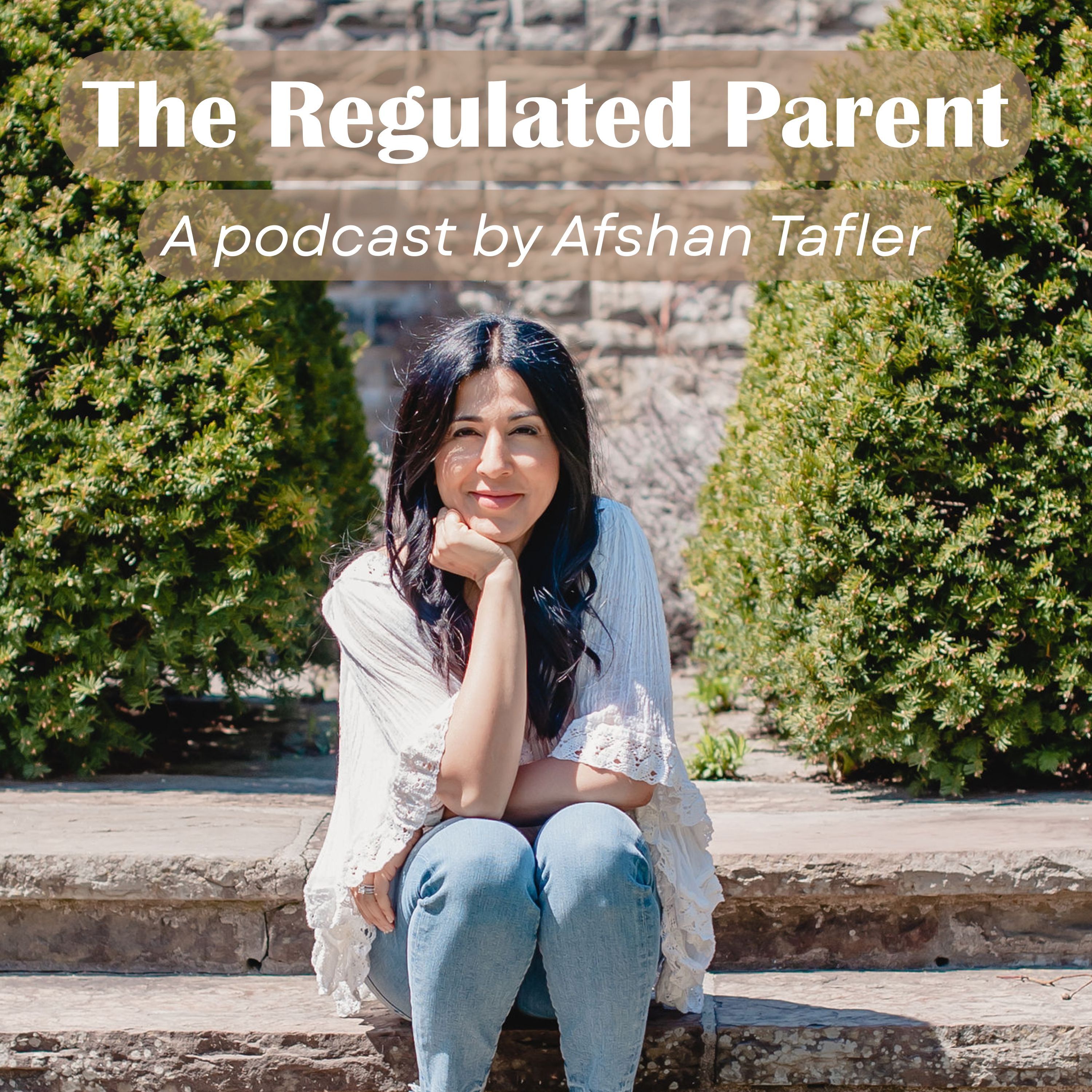
Artwork for The Regulated Parent
Kids & FamilyParenting

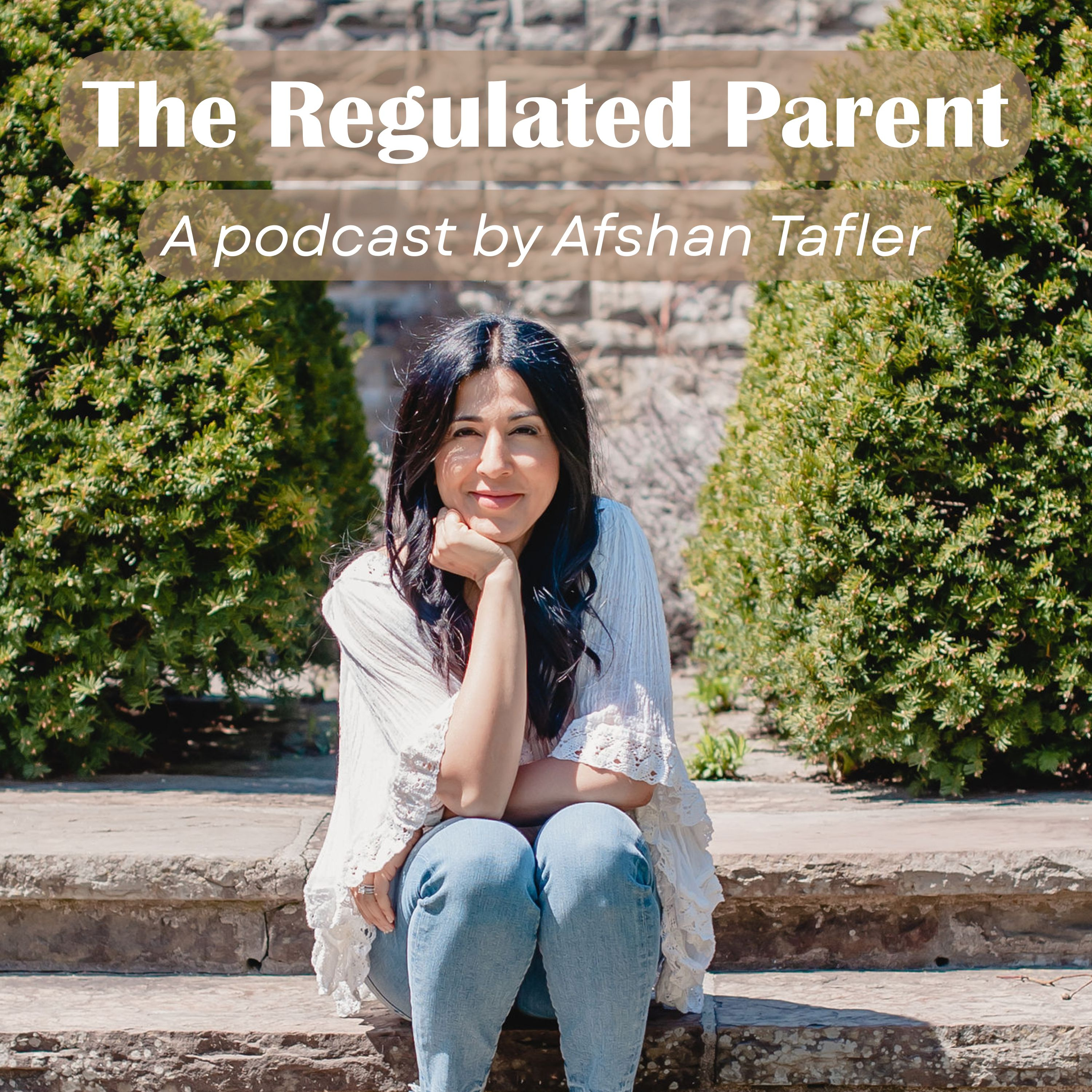
The Regulated Parent

Afshan Tafler

If you're raising a hypersensitive, high-needs child — including Autism, PDA, OCD, ODD, ADHD, or anxiety — this podcast is for you. I'm Afshan Tafler, a Nervous System Resilience Coach for parents like you. Here, we talk about what most people don’t: how it really feels, how your nervous system responds, and how to find your way back to calm, courage, and connection — even on the hardest days. You're not alone, and you were never meant to do this without support.

Play
  • 21 episodes
  • Avg 44 min
  • English
Counted on this page — what you have heard stays on this device, so it is not something the list can be paged by.
  • S1 · E55
    August 22 · 1 hr 2 min

    Ep. 55 What to Do When Your PDA or Autistic Child Is Hitting You (Part 2)

    You don't want to be hit — and yet every option feels wrong. You walk away, they follow. You close the door, they punch it. You stand there, and you're the one getting hurt. There's no good choice, and underneath it all is that trapped, powerless feeling that this will never end. In Part 2 of this three-part series on aggression, Afshan shares what actually changed it in her own home — where storms went from five hours of daily rage to about thirty minutes, maybe once a week. It was never the perfect strategy (there isn't one). It was learning to move out of the “trauma vortex” and into a safe-enough state, right in the middle of the storm — and the specific shifts that make that possible, both inside you and with your child. You'll hear why staying “calm” can backfire, the difference between stopping a behaviour and punishing it, what to do when the hitting is aimed at you (or someone else), and how the storms actually get shorter over time. This is the practical one. Part 1 is the foundation — what's happening inside YOU. Part 3, coming next week, is about the fear of the future: what this behaviour means for your child down the road, and why the way they truly learn isn't what we were taught. 📖 Read the blog version: https://www.illuminateu.ca/blog/what-to-do-when-your-pda-or-autistic-child-is-hitting-you-part-2 🌀 The Regulation Rebuild — doors open soon, join the priority list: illuminateu.ca/regulation-rebuild-course-priority 🎁 Free guide — The 3 Shifts To Make During Your Child's Meltdowns: illuminateu.ca/3-shifts-free-guide
  • S1 · E54
    August 15 · 51 min

    Ep. 54 Why You Can’t Stay Calm When Your PDA or Autistic Child Is Hitting You (Part 1)

    You’ve been told to “just stay calm” while your child rages, hits, or destroys things — and then quietly beaten yourself up when you couldn’t. Here’s the truth: you are not supposed to feel calm in those moments. It isn’t possible — and chasing calm might actually be making them harder. In Part 1 of this two-part series on aggression, parenting coach Afshan (mom to a once-five-hours-a-day melting-down kid) walks you through what’s really happening inside YOU first: the survival patterns we fall into without realizing, the nervous-system science that finally takes the shame off, and the shift that changes everything — from “what do I do?” to “how do I be?” Because your own regulated-enough nervous system is the real intervention. This is the foundation. Part 2 gets into what to actually do when the aggression is aimed right at you — including the hitting. → Read the blog version: https://www.illuminateu.ca/blog/why-you-can-t-stay-calm-when-your-pda-or-autistic-child-is-hitting-you-part-1 → Free guide — The 3 Shifts To Make During Your Child’s Meltdowns: https://www.illuminateu.ca/3-shifts-free-guide → Join the priority list for The Regulation Rebuild course: https://www.illuminateu.ca/regulation-rebuild-course-priority

  • S1 · E53
    August 1 · 1 hr 16 min

    Ep. 53 The Movements That Rewired Her Sons' Brains — and Kept Her Alive

    It was 1 a.m., and Alma Galván was in tears. Both of her sons had severe autism, ADHD and sensory differences. Doctors told her to institutionalize her oldest son, and daily two-hour meltdowns had become normal. She remembers thinking, *"This isn't life."* With no internet or roadmap, Alma spent seven years searching for answers. What she discovered changed everything: gentle developmental movements that helped build the brain's lower centers, reducing chronic survival responses. Her sons, who were both non-speaking until after age six, are now adults in their 30s who are working and thriving. But the biggest surprise wasn't just what happened to her children—it was what happened to her. As she practiced the movements alongside them, her own nervous system began to settle for the first time in years. That experience led Alma to create **Alma Integration**, a program designed not just for children, but for parents. In this episode, we explore: • Why movement reaches the brain when reasoning and rewards can't • The role of the pons in survival, sensory overwhelm and meltdowns • Why a regulated parent is part of the intervention—not just the support • Why play and connection are essential for lasting change • How to tell whether your child is leaning in or pulling away • Alma's remarkable healing journey after 21 days in the ICU • Why healing happens in spirals, not straight lines • Two simple practices you can begin today—for you and your child If you're parenting a PDA, autistic, ADHD or highly sensitive child and feel like you've tried everything, this conversation offers hope for both your child—and for you. 🎟️ ALMA'S TWO FREE SUMMITS — I'm speaking at both The ADHD Toolbox Summit — August 4th The BrainWorx side. Understanding your child's brain, and practical new ways to help them. Live on day one, with additional speakers on day two. Finding Calm in a Chaotic World — The Alma Integration Summit — August 25th This one is for you. How do we help our own hearts find calm in a chaotic world? A completely different, deeper conversation. Both are free. 🔗 FIND ALMABrainWorx — her work with children, families and educators. Alma Integration — her coaching practice, thought streams, and the work of returning to your original blueprint. Alma Integration on YouTube — her songs, which are layered little lessons in disguise. My son's favourite is the one on gratitude and we play it on repeat. 📖 READ THE BLOG VERSION The full write-up, including both practices written out step by step so you can come back to them. 🎁 FREE GUIDE — 7 TRUTHS About Why You React to Your Child (Even When You Know Better) What It Actually Takes to Regulate Your Nervous System and Feel Okay Inside a Life That Feels Hard The real reasons you keep getting hijacked — even after all the mindset work — and the 7 shifts that actually change it. Nervous system regulation for parents of hypersensitive, reactive kids (Autism, ADHD, PDA, OCD, ODD, Highly Sensitive). Download it free here 👉 GUIDE LINK

  • S1 · E52
    July 18 · 28 min

    The #1 Regulation Tool That Cut My Autistic, PDA Child's Meltdowns by 95%

    If I could offer you one tool that took my PDA, autistic son's aggressive behaviors from 5 hours of daily meltdowns and destruction, to less than 30 minutes a few times a week — would you want it?It's four letters. W.A.I.T. — Why Am I Talking.In this episode, I'm walking you through the single most powerful strategy we ever used to help my son regulate — and it wasn't a script, a technique, or the right words. It was learning to stop talking altogether.I share the real story of what this looked like in our house during my son's burnout, the two kinds of talking I used to reach for that both backfired every time, what I came to understand about why verbal processing is so hard for kids like ours in an activated state, and exactly how to practice WAIT yourself — including what to do with your own fight-or-flight energy instead of directing it at your child.This one is close to my heart, and it's the answer I give every time a professional or doctor asks what helped my son the most.🎧 Prefer to read? Catch the full blog version here.📘 Want a place to start today? Grab my free guide, The 3 Shifts To Make During Your Child's Meltdowns (So You Can Stay Calm Instead of React) — how to see your trigger loop, interrupt it, and respond, instead of holding it in or exploding. A nervous system guide for parents of highly reactive kids (ADHD, PDA, Autism, OCD, ODD) to regulate their own nervous systems first. Download it free here.

  • S1 · E51
    July 4 · 35 min

    Ep. 51 Am I Damaging My Child? The 3 Shame Spirals That Keep Parents of PDA, Autistic, ADHD Kids Stuck

    "I lost it on my child. I'm damaging them." "My child is still struggling. I must not be doing enough." "We don't fit in anywhere. Something must be fundamentally wrong with us." If you've felt any of those things — you're not broken. You're stuck in a shame spiral. And in this episode, I'm going to show you exactly what's driving these loops, what's underneath them, and how to start breaking free. I share a real day from our hardest years — the morning I ran at my son like an animal, the afternoon I watched him fail to connect online, the evening I found out we hadn't been invited to a family event we were always included in. All three shame loops. One regular day. Then I walk you through: → Why shame is not a personal flaw — it's ancient survival biology wired into all of us → What actually happens in your nervous system when shame gets triggered (including the inner critic, dorsal vagal shutdown, and the emotions trapped underneath) → The childhood wound that was already there before your child arrived — and why this parenting keeps pulling that thread → What's really underneath each shame loop: the terror, grief, helplessness and longing that shame is protecting you from feeling → Why breaking free from shame is one of the most powerful things you can do for your child's nervous system — not just your own → Two practices: working with your inner critic, and Dr. Kristin Neff's 3-step self-compassion framework applied directly to shame This is deep work. And it's also the most important work you can do — not just for yourself, but for your child, and for the generations that come after. 📖 Prefer to read? Get the full blog version here. 🎁 Free Resource — 7 Steps to Regulated & Resilient Parenting with your Autistic, ADHD, PDA, or high-needs child: FREE EBOOK + VIDEO SERIES LINK The Regulated Parent is hosted by Afshan Tafler, Nervous System Resilience Coach and founder of Illuminate U. Afshan supports parents of PDA, autistic, ADHD, and high-needs children who are stuck in survival mode — through the Regulation Rebuild course and Regulation Rebuild Collective. Website: illuminateu.ca

  • S1 · E47
    June 20 · 51 min

    Ep. 50 Reclaiming Your Joy and Aliveness — Even When Your Autistic Child Is Still Struggling

    Have you lost your sense of aliveness? Your ease? Your feeling of well-being — that quiet sense of being at home inside yourself? If you're parenting a PDA, autistic, or high-needs child and somewhere along the way you stopped feeling like yourself, this episode is for you. I'm sharing the moment I watched my son laugh — during one of his first good days in years — and felt absolutely nothing. Not relief. Not joy. Not ease. Just flatness. And what that moment taught me about what chronic stress actually does to a parent's nervous system. Because here's what I've come to understand: we don't lose our joy, our aliveness, or our well-being. We lose access to them. And that is a completely different problem — with a completely different solution. In this episode: — Why joy, ease, aliveness, and well-being disappear under chronic stress (and why it's not a character flaw) — The difference between losing yourself and losing access to yourself — What I call the Inner Resource — the unshakable ground of well-being that was never actually gone — How I found my way back through sensation in my own body — the tingling, the pulsing, the quiet aliveness that was there all along — Why you don't have to wait for your child to be okay before you start feeling okay — A simple practice to begin reconnecting with yourself today. This episode won't tell you to think positively or practice gratitude. It will help you understand, at a nervous system level, why the good things stopped landing — and give you a real, embodied way back to yourself. 📖 Prefer to read or want to share? Access the full blog post here. 🎁 New here? Start with my free resource: 7 Steps To Regulated & Resilient Parenting — a free ebook + video series for parents of hypersensitive, PDA, autistic, and ADHD children who want to move out of survival mode for good.

  • S1 · E49
    June 13 · 50 min

    Ep. 49 The To-Do List Trap: Why Productivity Keeps Parents of High-Needs Kids Dysregulated

    Do you often feel like you spend so much of your time taking care of your PDA, autistic, ADHD, or high-needs child that nothing else gets done?You end the day exhausted.The laundry is still sitting there.The work didn't get done.The house feels chaotic.And despite spending the entire day helping your child, supporting them, accommodating them, and co-regulating them, you are left feeling like you didn't do enough.In this episode, I explore why so many parents of high-needs children get trapped in the productivity cycle, how productivity becomes tied to self-worth, why parenting often breaks that strategy, and what helped me begin finding enoughness beyond accomplishment.You'll learn:• Why the to-do list can become a nervous system survival strategy• How parenting a high-needs child challenges productivity-based definitions of success• Why helping your child feel safe often doesn't "count" in our minds• How productivity can shape the way we see ourselves and our children• The shifts that helped me move from doing to being📖 Read the full blog article here.🎁 Get my free resource.7 Steps to Regulated & Resilient Parenting With Your PDA, Autistic, ADHD, or High-Needs ChildIf this episode resonates with you, please subscribe, leave a review, and share it with another parent who may need to hear it today.

  • S1 · E48
    May 30 · 46 min

    Ep. 48 Why Your PDA, Autistic Child Needs More Flexibility — And Why That Feels So Hard for Your Nervous System

    Why does giving your PDA, autistic, ADHD, or hypersensitive child more flexibility sometimes feel so terrifying — even when you intellectually understand they need it? In this episode, I explore the nervous system realities underneath control, rigidity, predictability, pressure, and fear in parenting. We’ll talk about: • why flexibility can feel emotionally and neurologically unsafe for many parents • how survival patterns can create rigidity and over-control • the difference between rule-based safety and nervous system safety • why uncertainty can trigger fear and catastrophic thinking • how conditioning around performance, structure, and success shapes parenting reactions • cognitive rigidity as a nervous system survival adaptation • and how parenting these children can become an invitation into deeper nervous system healing and flexibility. This episode is especially for parents of PDA, autistic, ADHD, and hypersensitive children who find themselves caught between wanting to be responsive to their child’s needs… while also feeling overwhelmed by fear, uncertainty, and the loss of control. ⬇️ Read the full blog here. ⬇️ Download my free eBook + video series: “7 Steps to Regulated & Resilient Parenting With Your Hypersensitive, PDA, Autistic, ADHD Child”

  • S1 · E47
    May 23 · 47 min

    Ep. 47 Watching Your Autistic, PDA Child Suffer: The Grief, Guilt, and Helplessness Parents Carry

    Watching your PDA, autistic, or high-needs child suffer can feel heartbreaking, helpless, and deeply overwhelming. In this episode, I talk openly about the hidden grief parents carry when watching their child struggle with things like fear, shutdown, social isolation, self-harm, burnout, survival mode, and nervous system dysregulation. I explore: • why watching your child suffer feels so unbearable • what gets triggered in parents emotionally and neurologically • ambiguous grief and the grief no one talks about • enmeshment, guilt, helplessness, and fear about the future • how grief impacts the nervous system and body • and how to work with this grief without losing yourself inside it This episode is both deeply personal and deeply validating for parents of PDA, autistic, ADHD, and high-needs children. → Click here for the BLOG VERSION → FREE RESOURCE: EBOOK + VIDEO SERIES: 7 Steps to Regulated & Resilient Parenting with your hypersensitive, PDA, autistic, ADHD, high-needs child

  • S1 · E46
    May 16 · 1 hr 2 min

    Ep. 46 How to Accommodate Your PDA, Autistic Child Without Fear, Burnout, or Losing Yourself

    If you’re parenting a hypersensitive, PDA, autistic, or high-needs child, you may already know that accommodating them is what helps.But that doesn’t mean it feels easy.Many parents find themselves stuck in a painful push-pull:👉 If I don’t accommodate, everything escalates 👉 If I do… am I setting them up for failure?At the same time, there’s exhaustion, overwhelm, and a growing feeling of losing yourself in the process.In this episode, we explore what’s really happening beneath that experience.There are 3 core things that get triggered when you begin accommodating your child:• Fear about the present and the future• Burnout from suppressed fight/flight energy• And the loss of self that can come from constantly adapting to your child’s needsYou’ll learn how these patterns are deeply connected to conditioning and nervous system responses—and how to begin working with them so you can:✨ Feel more confident in your parenting ✨ Reduce burnout and overwhelm ✨ Rebuild trust in yourself ✨ Support your child from a grounded, regulated place👉 Read the full blog version here👉 Get my free resource: 7 Steps to Regulated & Resilient Parenting with your hypersensitive, PDA, autistic, high-needs child

  • S1 · E44
    May 2 · 1 hr 3 min

    Ep. 44 Why 8 Core Childhood Wounds Make Parenting a PDA/Autistic or Hypersensitive Child Feel So Personal

    Why does parenting your hypersensitive, PDA, autistic, or high-needs child feel so personal? Why do their behaviors, the lack of support, and the daily challenges seem to hit something so deep inside of you—leaving you feeling overwhelmed, alone, and like you’re somehow failing? In this episode, we explore the real reason behind that experience. It’s not just about what’s happening in the present. It’s about the 8 core childhood wounds that get activated again and again in this kind of parenting—and the meanings your brain learned to make about you long ago. When those wounds are triggered, your reactions aren’t just about your child. They’re connected to something deeper. And when you begin to understand that… everything starts to shift. In this episode, you’ll learn: The 8 core wounds that get activated in parenting a high-needs child Why everything can feel so intense, overwhelming, and personal How your nervous system links present moments to past meanings A new way to begin working with triggers instead of fighting them How to start building new beliefs like: I am safe I am enough I am supported I have power and choice 👉 Read the full blog version here. 👉 Download my free eBook + video series: 7 Steps to Becoming More Calm, Regulated and Resilient with Your Hypersensitive, Autistic, PDA, ODD, OCD, or ADHD Child This work isn’t about becoming a perfect, always-regulated parent. It’s about understanding what’s being activated inside of you… so you can stop taking everything personally, feel more grounded in yourself, and experience more freedom in your parenting and your life.

  • S1 · E43
    April 25 · 32 min

    Ep. 43 Why “Holding It Together” Is Burning You Out as a Parent of a PDA/Autistic Child

    We’re often told that when parenting a PDA, autistic, or high-needs child…we need to hold it together.Stay calm.Stay composed.Stay in control.But what if the very thing you’ve been trying so hard to do…is actually what’s leading to burnout?In this episode, I walk you through a powerful nervous system reframe:• Why “holding it together” is often functional freeze, not regulation• How self-control can turn into self-suppression• Why so many parents become “the strong one”… and end up exhausted• And how to shift into true regulation through capacityYou’ll learn what it actually means to:• build tolerance for big emotions• process activation in the body• and create a different kind of containment that leads to real safetyThis is the shift from survival…to sustainable regulation.🎧 Read or listen to the full blog + podcast here.🌿 Get my free resource:7 Steps To Regulated & Resilient Parenting with your hypersensitive, high needs (PDA, Autistic, ADHD, ODD, OCD) childThis includes a free ebook + video series to help you:• understand your nervous system• build regulation skills• and feel more calm and capable in your parenting

  • S1 · E42
    April 18 · 30 min

    Ep. 42 When You Want to Feel Hope With Your PDA, Autistic Child… But Can’t

    When you’re parenting a hypersensitive, high-needs, PDA/autistic child, hope can start to feel complicated.For some parents, hope feels completely out of reach.No matter how much you want to feel it… you just can’t access it.For others, hope is there—but it doesn’t feel safe to touch.Because every time you let yourself feel it… it feels like it gets taken away.You see progress—then regression.You feel relief—then disappointment.You open to possibility—then get pulled back into fear.Over time, many parents find themselves in an internal bind:Wanting to feel hope…While also protecting themselves from it.In this episode, we explore:• why hope can feel out of reach—or unsafe to feel• how nervous system states and the brain’s negativity bias shape your ability to feel hope• why non-linear growth makes hope feel risky• and how hope can begin to return—not through forcing positivity, but through safety, agency, and shifting meaningThis is a deeply validating and empowering conversation for any parent who feels like hope has disappeared—or feels too painful to hold onto.👉 Read the full blog here👉 For deeper support, download my free guide + video series: 7 Steps to Regulated & Resilient Parenting with Your Hypersensitive, High-Needs, Autistic, PDA, ADHD, OCD Child

  • S1 · E41
    April 11 · 38 min

    Ep. 41 When Your Child Swears or Says Mean Things And It Stings

    When your child says, “I hate you,” or swears at you or says mean things, it can feel deeply personal—even when you understand they’re dysregulated. In this episode, we explore what’s really happening in those moments—not just in your child’s nervous system, but inside of you. Because this isn’t just about behavior. It’s about the beliefs, old wounds, and nervous system responses that get activated when your child’s words land in a vulnerable place. You’ll learn: • Why your child’s swearing and mean words may actually be “fight energy” trying to discharge • How shame in your child can show up as anger, blame, and verbal attacks • Why it feels so personal—even when you know it’s not • The two key reframes that help you stay more regulated in the moment • How to stop taking it personally without ignoring the behavior or suppressing your feelings This episode will help you understand your reactions with more compassion—and give you a new way to meet these moments with more steadiness and clarity. Read the full blog version here. Get the FREE Ebook + Video Series 7 Steps To Regulated & Resilient Parenting With Your Hypersensitive, High Needs, PDA, Autistic, ADHD Child

  • S1 · E40
    April 4 · 38 min

    Ep. 40 Breaking the Anger and Rage Cycle in PDA & Autistic Parenting

    If you’ve ever felt like you’re not a good enough parent…Even though you are trying everything to help your child…This episode is for you.So many parents of PDA, autistic, ADHD, and high-needs children carry a deeply rooted belief:“I’m not doing enough.” “I should be able to handle this better.” “I’m failing my child.”And this belief doesn’t just come from losing your patience.It comes from:• trying everything and not seeing results• watching your child struggle to function• comparing yourself to other families• and living in a constant state of stress and pressureIn this episode, I break down:• Why this belief forms in the nervous system• How conditioning and expectations shape your self-perception• The hidden “effort = outcome” trap• And how to begin stepping into new, life-affirming reframesThis is about understanding yourself more deeply…So you can begin to show up with more regulation, clarity, and compassion.🔗 Read the full blog🌿 Free Resource: 7 Steps to Regulated & Resilient ParentingIf you want to go deeper into nervous system regulation and learn how to feel more calm, grounded, and confident in your parentingIf this episode resonated, share it with another parent who might need to hear this.

  • S1 · E39
    March 28 · 41 min

    Ep. 39 Why Most Parents of PDA, Autistic Kids Feel Like They Are Not Good Enough

    If you’ve ever felt like you’re not a good enough parent…Even though you are trying everything to help your child…This episode is for you.So many parents of PDA, autistic, ADHD, and high-needs children carry a deeply rooted belief:“I’m not doing enough.” “I should be able to handle this better.” “I’m failing my child.”And this belief doesn’t just come from losing your patience.It comes from:• trying everything and not seeing results• watching your child struggle to function• comparing yourself to other families• and living in a constant state of stress and pressureIn this episode, I break down:• Why this belief forms in the nervous system• How conditioning and expectations shape your self-perception• The hidden “effort = outcome” trap• And how to begin stepping into new, life-affirming reframesThis is about understanding yourself more deeply…So you can begin to show up with more regulation, clarity, and compassion.🔗 Read the full blog🌿 Free Resource: 7 Steps to Regulated & Resilient ParentingIf you want to go deeper into nervous system regulation and learn how to feel more calm, grounded, and confident in your parentingIf this episode resonated, share it with another parent who might need to hear this.

  • S1 · E38
    March 21 · 36 min

    Ep. 38 When Your PDA Child Hits Burnout — and Your Fear About The Future Starts Growing

    What happens when your child slowly starts doing less… and less… and less?Maybe they stop going to school.Maybe they don’t want to leave the house.Maybe friends, activities, and even simple daily life start disappearing.And as their world gets smaller… your fear starts growing.In this episode, I talk about a very real and often overwhelming experience many parents of PDA, autistic, ADHD, and other highly sensitive or neurodivergent children go through — when their child enters burnout and begins withdrawing from life.But this isn’t just about your child.It’s also about what happens inside of you.The fear about the future.The pressure to fix it.The cycle of efforting, helplessness, shame, and grief that can take over your nervous system.In this episode, you’ll learn:• Why your brain goes into fear and future-tripping when your child withdraws • The nervous system cycle parents often get stuck in (fear → efforting → helplessness → shame → grief) • Why this season can feel like everything is falling apart • How your child’s burnout may actually be revealing something deeper about the systems we’ve all been living inside • A different way to understand this experience — not just as loss, but as a potential turning pointIf you are in this season right now, I want you to know:You are not alone.And you are not failing.🔗 Read / Listen More👉 Read the full blog or listen to the podcast here. 🌿 Free Resource for ParentsIf you’re feeling overwhelmed and want simple, practical ways to regulate your nervous system during these intense moments, you can download my free guide: 👉 7 Steps to Regulated & Resilient Parenting with Your Highly Reactive Child💬 Let’s ConnectIf this resonated with you, let me know in the comments — I read every one.And if you know another parent who is going through this, share this episode with them so they know they’re not alone.

  • S1 · E37
    March 14 · 37 min

    Ep. 37 Why Real Regulation Can Often Look Messy With Your PDA, Autistic Child

    Parenting a PDA, autistic, or highly sensitive child can put enormous pressure on parents to stay calm all the time.We hear that our nervous system regulates our child’s nervous system — and that message is true. But many parents walk away from that idea believing that regulation means being calm and perfectly composed no matter what.And when we can’t do that — which is often — we feel like we’re failing.In this episode, Afshan Tafler explores a different understanding of nervous system regulation in parenting.Real regulation doesn’t always look calm. Sometimes it looks messy. Sometimes it looks like feeling big emotions while learning how to work with them safely instead of suppressing them.Children don’t learn regulation from perfectly calm parents. They learn it by watching how we navigate big feelings and come back to connection.In this episode you’ll learn:• why the pressure to stay calm can lead to burnout • what “functional freeze” or “pretend calm” looks like • why regulation is about capacity, not perfection • how children learn nervous system regulation through co-regulation • why messy regulation can be healthier than suppressing emotions→ Read the full blog article here→ Free resource:Download 7 Steps to Regulated & Resilient Parenting with Your PDA, Autistic, Hypersensitive Child

  • S1 · E36
    March 7 · 33 min

    Ep. 36 Why Staying Regulated With Your PDA Child Means Letting Go of “Shoulds”

    Do you ever feel like you’re constantly trying to help your PDA, autistic, or high-needs child meet what feel like basic daily expectations…Going to school.Brushing their teeth.Doing homework.Being kind.Cooperating with everyday tasks.And when they resist, avoid, melt down, or escalate — you find yourself wondering:How will they ever function on their own if they can’t do these things now?Most parents feel completely responsible for making sure these things happen. So we push. We explain. We negotiate. We try consequences. We try to stay calm.But the more we push…the more they resist.In this episode, I share the powerful realization that shifted everything for me when my son stopped going to school — and how the expectations that felt completely reasonable were actually keeping both of us stuck in a cycle of pressure, avoidance, escalation, and shame.You’ll learn:• Why “should” expectations can quietly dysregulate both parents and children• The hidden expectation many parents carry when trying to regulate themselves• Why regulating yourself to change your child can keep the cycle going• How dropping expectations doesn’t mean lowering standards• The practice that helps you move from pressure and resistance into safety and connectionThis episode will help you understand why staying regulated with your PDA or high-needs child can feel so difficult — and the shift that allows both you and your child’s nervous systems to settle.📖 Read the full blog version of this episode here. 🎁 Get my free guide + video series: 7 Steps to Becoming More Calm, Regulated and Resilient With Your PDA, Autistic, Hypersensitive, High-Needs ChildThis free resource will help you begin strengthening your nervous system so you can stay more regulated, connected, and resilient in the hardest parenting moments.

Showing 1–20 of 21 episodes