Skip to content
Artwork for The Radical Design Podcast
ArtsSociety & CultureEducation

The Radical Design Podcast

Oliver Vodeb + guests

The Radical Design Podcast is a special monthly show re-thinking the radical potentials of design. We aim to understand the world better through deep conversations with people who are doing significant things. Dive into design beyond the conventional. Hosted by Oliver Vodeb, the podcast explores how design intersects with radical practice and adventurous thought. Each episode features conversations with thinkers, activists and practitioners who do work that matters. Some of the guests so far included Arturo Escobar, Patricio Dávila and Kyle Magee. Built on Memefest's 24 years of global work on radical design, this podcast is our new "pirate island" for discussions about things and in ways that go beyond institutional, professional or disciplinary boundaries.


We are interested in design emerging in the undercurrents, kicking capitalism while its down. From the aesthetics of resistance to strategies of radical imagination, the podcast investigates the ideas shaping design as a tool for transformation.


Our first series, Radical Intimacies features dialogues with contributors to the book Radical Intimacies: Designing Non-Extractive Relationalities, exploring themes of dialogue, power, land, interventions, and radical praxis. Find the book here.


Our conversations highlight design operating beyond dominant, extractive paradigms—aimed at imagining and building new worlds and social relations.


Subscribe to join the conversation and explore Radical Design.


About Memefest:

Memefest is an international network interested in transforming social relations through radical design. Independent and collaborative, it works with universities, practitioners, and social movements to create spaces for deep exchange in the undercurrents.


Credits:

Hosted by Oliver Vodeb / Memefest

Co-production with Intellect Publishers

Music by Bait: https://bait2.bandcamp.com/


Hosted on Acast. See acast.com/privacy for more information.

Play
  • 15 episodes
  • monthly
  • Avg 1 hr 7 min
  • English
  • July 29 · 58 min

    PART 2 Daryl Taylor: Earthship Futures- Radical Design for Community and Life

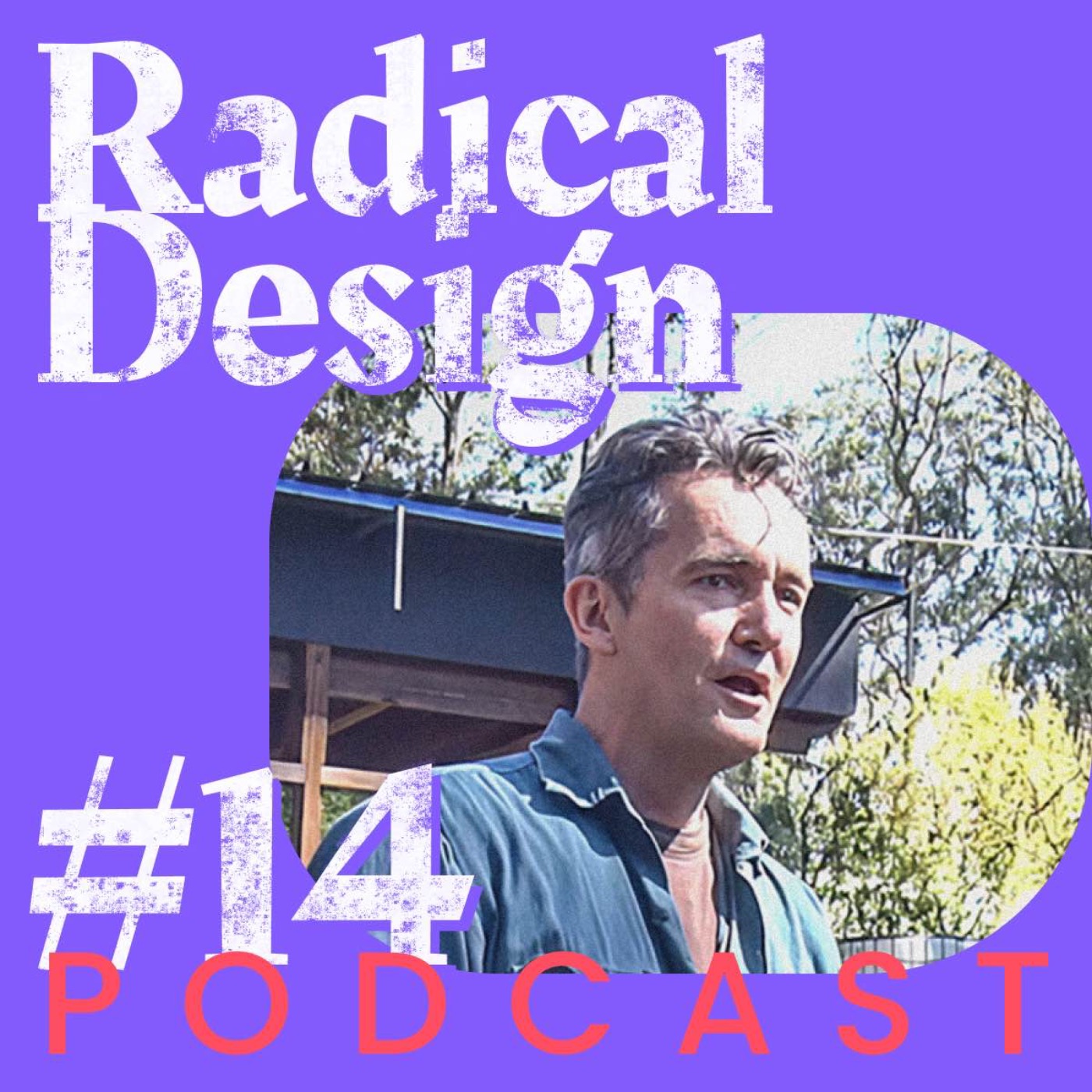
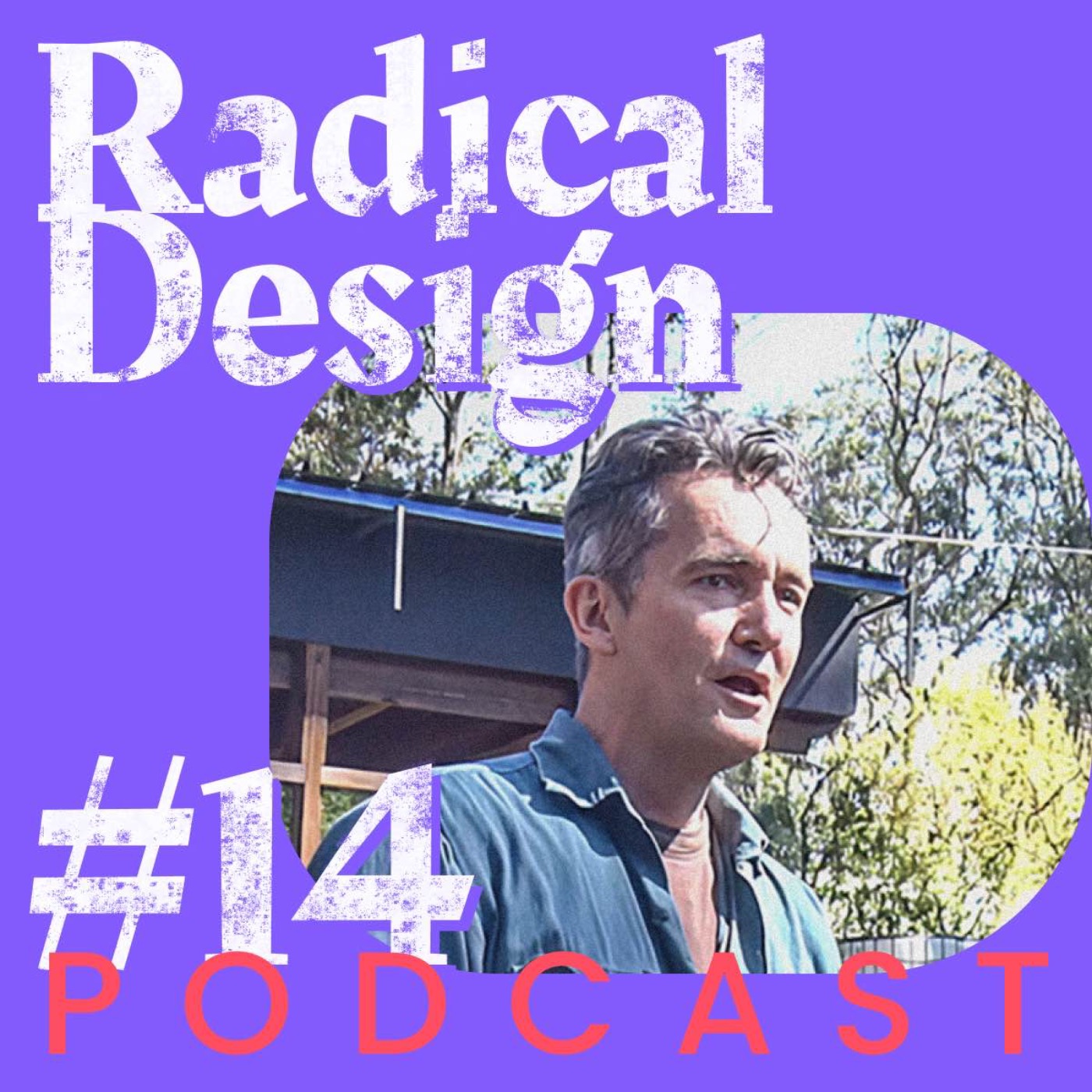
    THIS IS THE SECOND PART OF THE CONVERSATION: Earthship Futures: Radical Design for Community and Life is a live conversation between Daryl Taylor and Oliver Vodeb, at 2026 Melbourne Design Week, recorded as part of the Radical Design Podcast. The discussion focuses on Taylor’s Earthship project in Kinglake, Victoria – an experimental natural building initiative developed through international participatory workshops following the Black Saturday mega-firestorm, Australia’s worst natural disaster. The session explores how community-led design and architecture can support socio-ecological restoration and regenerativity, post-disaster community recovery and discovery, and social and emotional resilience. Drawing on lived experience, the speakers will examine undisciplined and fringe design knowledge, co-liberatory climate-responsive design processes and practices, and the role of design in rebuilding both physical and social infrastructure in disaster-vulnerable and -impacted regions. The event took the form of a moderated dialogue followed by audience Q&A and discussion. *We were also joined by Serenity Hill, a food sovereignty community activist. Daryl Taylor Daryl Taylor is a pioneering Melbourne-based builder, educator, and community leader, known for constructing Victoria’s first council-approved Earthship in Kinglake—a radically sustainable, fire-resistant home built from recycled materials after losing his own in the 2009 Black Saturday bushfires. As a lived-experience mental health and neurodivergency advocate, he has shaped policy and education in community development, disaster resilience, and participatory design across government, NGO, and academic sectors, teaching at five Melbourne universities and co-authoring influential works on post-disaster recovery. Daryl’s work—spanning eco-design, permaculture, and community-led resilience—has earned national awards and features in ABC News and Grand Designs Australia, while his initiatives like Facing Fire, Biocultural Futures, and Retro-Futures continue to inspire sustainable, adaptive living in the age of climate change. Visit our website: https://memefest.org/knowledge/memefest-radical-design/ Hosted on Acast. See acast.com/privacy for more information.
  • #14
    June 10 · 1 hr 3 min

    PART 1 Earthship Futures: Radical Design for Community and Life

    Earthship Futures: Radical Design for Community and Life is a live conversation between Daryl Taylor and Oliver Vodeb, at 2026 Melbourne Design Week, recorded as part of the Radical Design Podcast. The discussion focuses on Taylor’s Earthship project in Kinglake, Victoria – an experimental natural building initiative developed through international participatory workshops following the Black Saturday mega-firestorm, Australia’s worst natural disaster. The session explores how community-led design and architecture can support socio-ecological restoration and regenerativity, post-disaster community recovery and discovery, and social and emotional resilience. Drawing on lived experience, the speakers will examine undisciplined and fringe design knowledge, co-liberatory climate-responsive design processes and practices, and the role of design in rebuilding both physical and social infrastructure in disaster-vulnerable and -impacted regions. The event took the form of a moderated dialogue followed by audience Q&A and discussion. *We were also joined by Serenity Hill, a food sovereignty community activist. Daryl Taylor Daryl Taylor is a pioneering Melbourne-based builder, educator, and community leader, known for constructing Victoria’s first council-approved Earthship in Kinglake—a radically sustainable, fire-resistant home built from recycled materials after losing his own in the 2009 Black Saturday bushfires. As a lived-experience mental health and neurodivergency advocate, he has shaped policy and education in community development, disaster resilience, and participatory design across government, NGO, and academic sectors, teaching at five Melbourne universities and co-authoring influential works on post-disaster recovery. Daryl’s work—spanning eco-design, permaculture, and community-led resilience—has earned national awards and features in ABC News and Grand Designs Australia, while his initiatives like Facing Fire, Biocultural Futures, and Retro-Futures continue to inspire sustainable, adaptive living in the age of climate change. Visit our website: https://memefest.org/knowledge/memefest-radical-design/ Hosted on Acast. See acast.com/privacy for more information.
  • #13
    April 8 · 1 hr

    Jane Naylor and Oliver Vodeb: How to Go on an Artstrike?!

    The amazing Jane Naylor speaks with Oliver Vodeb about how to go on an Artstrike. Jane reassessed her art practice, went on an Artstrike and developed the concept of *Rt. Find out what this means, and how could you do it yourself. Besides this, we talk about deeper and more nuanced ways on how to distinguish Art from Art in ways that help us see through the BullS*** Art World and what it calls Art. Oh, and one thing we really LOVE: Jane speaks about her work in relation to solidarity and the ephemeral! Enjoy! Visit our website: https://memefest.org/knowledge/memefest-radical-design/ Hosted on Acast. See acast.com/privacy for more information.
  • #12
    February 2 · 57 min

    George Petelin and Oliver Vodeb: Dialogue and its Potentials in a Pseudo-Intimate World

    Oliver Vodeb talks to George Petelin, author of the chapter on Dialogue in Memfest’s book on Radical Intimacy. They discuss the importance of intimacy for true dialogue to take place and how conditions in contemporary society erode that intimacy or substitute it with forms of pseudo-intimacy. Radical Art and Design face the difficult task of restoring intimate dialogue mediated through technology on a mass scale. Visit our website: https://memefest.org/knowledge/memefest-radical-design/ Hosted on Acast. See acast.com/privacy for more information.
  • S1 · E11
    Dec 6, 2025 · 57 min

    Rachel Bordeleau, Jeanette Hart-Mann, Chrissie Orr and Oliver Vodeb: SeedBroadcast and the Wisdom of the Seeds

    What carries more wisdom than the seed? Rachel Bordeleau, Jeanette Hart-Mann and Chrissie Orr collaborate on SeedBroadcast, a transdisciplinary art project, raising the culture of agri-culture and putting the seed in the centre of our relations with the world. In this podcast episode they speak with Oliver Vodeb about the different and intimate dimensions of their work learning from the seed and using the knowledge to empower our understanding and our relations. PODCAST CREDITS: Hosted by: Oliver Vodeb/ Memefest​. The podcast is a collaboration between Memefest and Intellect publishers.​ Music: Thanks to Bait for their song Property Law. Two best friends meeting seasonally in bucolic surrounds to generate improvised music. Property Law recognises the Indigenous peoples of the world's relationship to land. As in, "we don't own the land. The land owns us." Each of us is only passing through. Empires, Epochs come & go, but the spirit of the land persists. Visit our website: https://memefest.org/knowledge/memefest-radical-design/ Hosted on Acast. See acast.com/privacy for more information.
  • S1 · E10
    Oct 22, 2025 · 56 min

    Kyle Magee and Oliver Vodeb: How to Participate in the Public Sphere

    In this conversation, artist and activist Kyle Magee joins Oliver Vodeb to explore what it means to act publicly—through subvertising, image intervention, and sustained political engagement within a media landscape dominated by corporate power. Together, they ask: what does genuine participation in the public sphere look like today? Noone does anti- advertising activism like Kyle Magee. And we at Memefest should know. Visit our website: https://memefest.org/knowledge/memefest-radical-design/ Hosted on Acast. See acast.com/privacy for more information.
  • S1 · E9
    Sep 10, 2025 · 55 min

    Daniel Marcus and Oliver Vodeb: Capitalism's Addictions

    American scholar Daniel Marcus and Memefest curator Oliver Vodeb explore the deep ties between capitalism and addiction from the early 20th century to today. They show how capitalism has not only shaped addiction but has actively relied on it as a strategy for growth. Drawing on their chapter “Capitalism’s Addictions” in the book Radical Intimacies, they explain how addiction became capitalism’s answer to a fundamental contradiction: how to keep selling when people don’t need more stuff. From planned obsolescence during the Great Depression to today’s endless cycle of food, technology, and drugs designed to hook us, they trace how pleasure and dependency became central to capitalist expansion. Design plays a crucial role in this story: born within capitalism, it has often been deployed to exploit our vulnerabilities and create new forms of craving. This conversation unpacks how addiction has been used to colonise intimacy itself — and why the rise of AI might push these logics into even more intimate parts of our lives. The episode closes by asking: can Radical Intimacies offer a way out? There is much more in the original written chapter, and If you want to read the whole chapter in Radical Intimacies, Designing Non-Extractive Relationalities, find more about the book: here. PODCAST CREDITS: Hosted by: Oliver Vodeb/ Memefest​. The podcast is a collaboration between Memefest and Intellect publishers.​ Music: Thanks to Bait for their song Property Law. Two best friends meeting seasonally in bucolic surrounds to generate improvised music. Property Law recognises the Indigenous peoples of the world's relationship to land. As in, "we don't own the land. The land owns us." Each of us is only passing through. Empires, Epochs come & go, but the spirit of the land persists. Visit our website: https://memefest.org/knowledge/memefest-radical-design/ Hosted on Acast. See acast.com/privacy for more information.
  • S1 · E8
    Aug 6, 2025 · 1 hr 27 min

    Sandy Kaltenborn and Oliver Vodeb: Design is Not Enough

    Why is design not enough? Berlin based designer extra-ordinaire Sandy Kaltenborn and Oliver Vodeb discuss design practices which seeks social and political impact and transformation, in relation to the to the constrictions of professional frameworks. The pressing social and political challenges we face these days cannot be understood—let alone addressed—from within the closed logic of traditional design professions or academic routines. If design is to have real political or social impact, it must engage directly from within actual social struggles. That’s where the questions arise, where contradictions become visible, and where intervention is needed. Design that seeks to be transformative must in this sense understand itself as a practice shaped by conflict—not as a response to self-contained problems, but as a contribution to real-world struggles. Two friends engaged in radical design for decades reflect on the past and investigate what matters in design today. Visit our website: https://memefest.org/knowledge/memefest-radical-design/ Hosted on Acast. See acast.com/privacy for more information.
  • S1 · E7
    Jul 1, 2025 · 1 hr 17 min

    Sam Burch, Kristy-Lee Horswood and Oliver Vodeb: Seeing Country and Radical Design

    Aboriginal artist and activist Kristy-Lee Horswood and writer, teacher, and activist Sam Burch join Oliver Vodeb to discuss Aboriginal practices of “Seeing Country” and Radical Design. “Country” for Aboriginal people is a deep spiritual and cultural relationship with the land, waters, skies, and all living things—a source of identity, belonging, law, and responsibility. The conversation centres around the chapter Seeing Country: Decolonization, Timeless Intimacies and an Escape from the Tyranny of the Dead Man’s Vision, which Sam Burch contributed to the Radical Intimacies book. It outlines some of the key ideas behind the practice of Seeing Country. As a practice grounded in lived experience, its radical potential for design lies in its specific relationality with the world—rooted in a deep appreciation of, and respect for, all living things. The discussion touches on cultural positions formed in response to the ongoing colonisation of so-called Australia, offering relational frameworks that are deeply relevant to radical design. We hear about the meaning of “fire,” the spiritual nature of initiation rituals, the still ongoing forced removal of children, and ideas of what it means to be in “proper relationship.” At one point, Oliver asks: “Is everything coming from the West bad?” Of course, it isn’t—but as Sam Burch notes, we need to better understand how different knowledge systems can “talk to each other.” Reflecting on capitalism through an Aboriginal lens, Kristy-Lee remarks that even Marx could have benefited from decolonial thinking. This podcast is a beautiful journey into knowledge and radical relationality through dialogue. Sam Burch and Kristy-Lee Horswood are both engaged in activist and educational work and have collaborated closely and meaningfully with Memefest since 2013. Visit our website: https://memefest.org/knowledge/memefest-radical-design/ Hosted on Acast. See acast.com/privacy for more information.
  • S1 · E6
    May 27, 2025 · 1 hr 11 min

    Keely Macarow and Oliver Vodeb: Viral Love

    In this conversation Keely Macarow and Oliver Vodeb touch on intimacy during time of the pandemic. The exceptional events of global pandemics teach us a lot about the limits and the potentials of Intimacy. How can we think about intimacy and even radical intimacy through the lessons learned during Covid lock downs or through looking at the HIV pandemic? Visit our website: https://memefest.org/knowledge/memefest-radical-design/ Hosted on Acast. See acast.com/privacy for more information.
  • S1 · E5
    Apr 26, 2025 · 1 hr 15 min

    Eric Jackson and Oliver Vodeb: Tackling Food Apartheid Through Design

    Black community leader from Baltimore Eric Jackson and Oliver Vodeb speak about radical intimacies and Food Apartheid. The racial structuring of food production, distribution, consumption and promotion of food is deeply rooted in capitalist domination and extraction. The conversation gives deep context on Food Apartheid , explains the situation in Baltimore and the work of Black Yield Institute a Pan African power institution. Visit our website: https://memefest.org/knowledge/memefest-radical-design/ Hosted on Acast. See acast.com/privacy for more information.
  • S1 · E4
    Mar 18, 2025 · 1 hr 19 min

    Alexandra Crosby, Ilaria Vanni and Oliver Vodeb: Seed Balls as a Relational Design Method

    Australian scholars Alexandra Crosby and Ilaria Vanni are in conversation with Oliver Vodeb about their ideas on Seed Balls as a relational design method. As designers who apply permaculture principles to broader social and cultural issues they have explored and developed potentials of a DIY method to relate with the planty world and with each other in radical ways. Check the Radical Intimacies, Designing Non- Extractive Relationalities book and read the complete chapter "Seed Balls as Method" here: https://www.memefest.org/publishing/radical-Intimacies/ The Memefest Radical Intimacies podcast | www.memefest.org Memefest is an international network engaged in the transformation of social relations through radical design. Our main focus is the decolonisation of knowledge and the public sphere + social and environmental change. We integrate education, publishing, research, and the organization of events, as well as the facilitation and production of various media and interventions in the public sphere. Memefest is independent and operates in collaboration with universities, practitioners and social movements. Our approach counters the management of pedagogy, channels knowledge from different disciplines and connects the university with critical, marginal and counter-cultural positions. We create impossible spaces for deep exchange in the undercurrents. Visit our website: https://memefest.org/knowledge/memefest-radical-design/ Hosted on Acast. See acast.com/privacy for more information.
Showing 1–15 of 15 episodes