Skip to content
Artwork for The Practical People Manager with Anna Thomas
BusinessManagement

The Practical People Manager with Anna Thomas

Anna Thomas

The Practical People Manager is the podcast for line managers, HR professionals, and business leaders who want to manage people well, with more confidence and less jargon.

Hosted by HR Expert, Anna Thomas, each episode brings real conversations with experts and practitioners covering the topics that matter most at work, from mental health and neurodiversity to menopause and beyond.

This is practical, people-first leadership. No fluff. Just honest conversations to help you listen better, lead with confidence, and support the people around you.

Play
  • 15 episodes
  • weekly
  • Avg 33 min
  • English
  • S1 · E15
    September 23 · 35 min

    What Managers and Organisations Can Do Differently to Prevent Conflict Escalating

    In the final part of her conversation with Pete Colby, founder of Pragmatism, Anna moves into what organisations and managers can do differently to stop conflict escalating, and why the current approach to employment tribunals represents a massive and largely avoidable problem. Pete opens with a practical challenge to the way organisations handle flexible working requests, arguing that the form should follow the conversation, not replace it. The same logic applies to performance improvement plans, grievance policies, and almost every other formal process: the structure exists to document what should already have happened, not to substitute for it. The conversation takes a genuinely surprising turn when Pete makes the case for trade unions as one of the most powerful and underused allies a manager can have. Drawing on his own experience taking a site from twelve grievances a week to one, and helping Rolls-Royce avoid 2,000 compulsory redundancies, Pete explains why the relationship between management and unions is almost always about trust, and why the person you least want to talk to is usually the one you most need to. Anna and Pete also address the broader backdrop to rising grievances and tribunal claims: the cost of living, the pressure people are under outside work, and why workplaces have become one of the few places where people feel they can push back. Pete's response is characteristically direct. You cannot fix everything, but you can listen. And being heard matters more than people realise. The episode closes with Pete's advice for managers who feel uncomfortable having difficult conversations: that discomfort is normal, it is not a personal failing, and the way through it is to develop the confidence to have a go. Find out more about Pete's work at https://pragmatism-uk.co.uk Connect with Anna Got a question or a topic you'd like covered on the podcast? Anna would love to hear from you. Find her on LinkedIn, Instagram, and TikTok, or visit The People Expert to find out more about her work supporting line managers and HR professionals. LinkedIn: ⁠linkedin.com/in/annathomas-hr⁠ Instagram: ⁠ Instagram.com/practicalmanager⁠ TikTok: ⁠tiktok.com/@practicalpeoplemanager⁠ The People Expert: ⁠https://www.thepeopleexpert.co.uk⁠

  • S1 · E14
    September 16 · 27 min

    Alternative title: People Management Is a Skill: What Line Managers Need to Know About Trust, HR and Starting the Conversation

    In the final part of her conversation with Yohan Macdonald, founder of Great Minds Training, Anna turns to two of the most fundamental questions in people management: what is the real role of HR when it comes to mental health and wellbeing, and what does it actually take to build the trust that makes every other conversation possible? Yohan is clear that if HR is where a wellbeing strategy starts and ends, the organisation is already on the back foot. HR has a vital role as a connector and a support, but the conversations that matter most need to happen between managers and their people, not be handed upwards. Anna reflects honestly on how easy it is for HR professionals to step in and take over, and why that can actually rob managers of the very experiences that would build their confidence over time. The conversation moves into trust, and Yohan draws on Brené Brown's marble jar analogy to explain why trust is built slowly, through consistent small actions, and why a single act of betrayal can shatter it entirely. He makes the point that no one shares something meaningful with someone they do not trust, and that trust is something you earn through what you do, not what you say. Anna and Yohan also explore the question of whether people management is actually the right role for everyone. Yohan is refreshingly honest about what he has seen in training rooms and what it means when someone consistently meets resistance from their team. The answer, sometimes, is that people management is simply not the right fit. The episode closes with Yohan's three-word takeaway for every line manager listening: start the conversation. Find out more about Yohan's work, including his SAFE Conversation Framework and free wellbeing strategy assessment, at https://greatminds.training Connect with Anna:LinkedIn: linkedin.com/in/annathomas-hrInstagram: instagram.com/practicalmanagerTikTok: tiktok.com/@practicalpeoplemanagerThe People Expert: https://www.thepeopleexpert.co.uk

  • S1 · E13
    September 9 · 40 min

    ADHD Coaching, Workplace Conflict and What Great Inclusion Actually Looks Like (Part 3)

    In the final part of her conversation with Ellie Kay, ADHD and AuDHD coach and neurodiversity specialist, Anna moves into coaching, conflict, and what genuinely inclusive management looks like in practice. Ellie explains what ADHD coaching actually involves and why it is different from traditional coaching. For many people, especially those newly diagnosed, it starts with validation: finally feeling heard, understood, and released from years of shame about things that were never their fault. Ellie also introduces the concept of co-coaching, a facilitated three-way conversation between a coach, a manager, and an employee that can resolve tension before it ever reaches a formal process. The conversation gets into the specifics of what managers do that unknowingly causes harm. Cancelling meetings with no context, sending a message that just says "can we have a quick chat", or copying someone into a long email about an investigation without any warning. For someone with ADHD, these small things can derail an entire day. The fix, as Ellie makes clear, is often just a few extra words of context. Anna and Ellie close with a rapid-fire round that distils the whole conversation into practical, immediately usable takeaways: the one question every manager should ask, the one behaviour they should rethink, and the one leadership habit that creates real inclusion. Ellie also shares something personal: how her ADHD diagnosis helped her finally forgive herself for missing a smear test that led to cervical cancer in her 20s. It is a powerful reminder of why diagnosis matters, and why the shame that goes with undiagnosed neurodivergence has real consequences. Find out more about Ellie's work at https://www.elliekay.co.uk Connect with Anna: LinkedIn: linkedin.com/in/annathomas-hr Instagram: instagram.com/practicalmanager TikTok: tiktok.com/@practicalpeoplemanager The People Expert: https://www.thepeopleexpert.co.uk
  • S1 · E12
    September 2 · 31 min

    What Managers Don't Know About Employment Law Could Cost Them

    In the final part of her conversation with Nic Elliott, Director and Head of Employment Law at Actons Solicitors, Anna moves into some of the most sensitive and fast-moving areas of employment law that managers are navigating right now. Nic breaks down the current legal position on sexual harassment, including the duty on employers to take reasonable steps to prevent it, and the incoming third-party harassment provisions that will extend liability to the behaviour of customers, clients, and contractors. He explains why a risk assessment is the foundation of any credible approach, and shares how his own organisation went about identifying where the risks actually sit. The conversation turns to menopause, where Nic draws on personal experience to bring the legal picture to life. He is clear on what managers should and should not do, and why the answer to the question of how a male manager raises menopause with a female colleague is simply: you do not. What you do instead is ask if they are okay, whether there is anything you can do to help, and create the conditions where someone feels safe enough to tell you what is going on. Anna and Nic also cover the new Fair Work Agency, which came into force in April 2026 combining several existing government bodies, and what employers need to know about its powers around holiday pay, sick pay, and national minimum wage compliance. The episode closes on the Employment Rights Act more broadly, and why Nic's advice to managers is straightforward: seek out training, ask for it if it is not being offered, and do not wait for the detail to be handed to you. Find out more about Nic's work at actons.co.uk Connect with Anna: LinkedIn: linkedin.com/in/annathomas-hr Instagram: instagram.com/practicalmanager TikTok: tiktok.com/@practicalpeoplemanager The People Expert: https://www.thepeopleexpert.co.uk
  • S1 · E11
    August 26 · 31 min

    Menopause at Work: Performance, Absence, Legal Risk and Why Women Are Leaving (Part 3)

    Most managers have heard of mediation. Far fewer understand what it actually is or how to use it. In part two of her conversation with Pete Colby, founder of Pragmatism, Anna gets into the heart of it: what mediation really means, why it is fundamentally different from a grievance process, and how managers can use the same principles informally before conflict has a chance to escalate.Pete draws a clear distinction between mediation and grievance. A grievance looks backwards, trying to prove what happened and who was at fault. Mediation looks forward, helping people understand each other and agree on how things could be different. As Pete puts it, the question is never who said what two weeks ago. It is how do we want this to work going forward.Anna and Pete explore what it takes for a manager to stay genuinely neutral when they know both parties involved, and why that is one of the hardest skills to develop. Pete shares a remarkable story from his own mediation experience involving a doctor, a dress, and a disciplinary process that could have been avoided entirely if someone had simply asked the right question earlier. The lesson is the same one that runs through every episode: honest, curious conversations prevent most of the situations that end up becoming formal.They also get into the growing phenomenon of AI-generated grievances, some running to hundreds of pages, and why Pete's advice is not to panic about the document but to focus on the conversation underneath it.This is part two of a three-part conversation with Pete. Part three looks at how managers can spot escalating conflict earlier and what organisations can do to build a healthier culture around disagreement.Find out more about Pete's work at https://pragmatism-uk.co.ukConnect with AnnaGot a question or a topic you'd like covered on the podcast? Anna would love to hear from you. Find her on LinkedIn, Instagram, and TikTok, or visit The People Expert to find out more about her work supporting line managers and HR professionals.LinkedIn: ⁠linkedin.com/in/annathomas-hr⁠ Instagram: ⁠instagram.com/practicalmanager⁠ TikTok: ⁠tiktok.com/@practicalpeoplemanager⁠ The People Expert: ⁠https://www.thepeopleexpert.co.uk⁠

  • S1 · E10
    August 19 · 42 min

    Workplace Mediation: What It Is, When to Use It, and How Managers Can Resolve Conflict Earlier (Part 2 with Pete Colby)

    Most managers have heard of mediation. Far fewer understand what it actually is or how to use it. In part two of her conversation with Pete Colby, founder of Pragmatism, Anna gets into the heart of it: what mediation really means, why it is fundamentally different from a grievance process, and how managers can use the same principles informally before conflict has a chance to escalate. Pete draws a clear distinction between mediation and grievance. A grievance looks backwards, trying to prove what happened and who was at fault. Mediation looks forward, helping people understand each other and agree on how things could be different. As Pete puts it, the question is never who said what two weeks ago. It is how do we want this to work going forward. Anna and Pete explore what it takes for a manager to stay genuinely neutral when they know both parties involved, and why that is one of the hardest skills to develop. Pete shares a remarkable story from his own mediation experience involving a doctor, a dress, and a disciplinary process that could have been avoided entirely if someone had simply asked the right question earlier. The lesson is the same one that runs through every episode: honest, curious conversations prevent most of the situations that end up becoming formal. They also get into the growing phenomenon of AI-generated grievances, some running to hundreds of pages, and why Pete's advice is not to panic about the document but to focus on the conversation underneath it. This is part two of a three-part conversation with Pete. Part three looks at how managers can spot escalating conflict earlier and what organisations can do to build a healthier culture around disagreement. Find out more about Pete's work at https://pragmatism-uk.co.uk Connect with Anna Got a question or a topic you'd like covered on the podcast? Anna would love to hear from you. Find her on LinkedIn, Instagram, and TikTok, or visit The People Expert to find out more about her work supporting line managers and HR professionals. LinkedIn: ⁠linkedin.com/in/annathomas-hr⁠ Instagram: ⁠instagram.com/practicalmanager⁠ TikTok: ⁠tiktok.com/@practicalpeoplemanager⁠ The People Expert: ⁠https://www.thepeopleexpert.co.uk⁠

  • S1 · E9
    August 12 · 36 min

    Mental Health at Work: How to Build a Proactive Wellbeing Culture (Part 2 with Yohan McDonald)

    Most organisations think they are doing enough on mental health. They have an employee assistance programme, a cohort of trained mental health first aiders, and maybe a policy. In part two of her conversation with Yohan Macdonald, founder of Great Minds Training, Anna explores why that reactive approach is leaving huge gaps, and what a genuinely proactive wellbeing culture actually looks like. Yohan introduces The Bridge, his six-step consultancy programme, walking through how organisations can move from firefighting to strategy. It starts with a business audit, using existing HR data, absence figures, engagement scores, and exit interviews, to understand where the gaps really are. From there it builds through infrastructure, training delivery, and ongoing measurement, because as Yohan points out, if you cannot measure it, you cannot prove it is working. The conversation gets into the numbers. Research from Deloitte puts the average cost of poor mental health per employee at £1,230 a year, while a well-embedded proactive approach can return £6.30 for every pound invested. For senior leaders who need a business case, this episode provides one. Anna and Yohan also tackle psychological safety in male-dominated industries, where Yohan draws on two years delivering training almost exclusively in construction, the sector with the highest suicide rates in the UK. His experience runs counter to expectation: given the right environment and permission to speak, men do open up. The key is creating the conditions, not waiting for the moment. The episode closes on an important and often overlooked issue: the manager who cares too much. Yohan is clear on the need for boundaries, what a line manager's role actually is, where it ends, and why blurring those lines puts both the manager and the individual at risk. This is part two of a three-part conversation with Yohan. Part three looks at the role HR and people teams play in supporting line managers, and why people management is a skill that can always be developed. Find out more about Yohan's work at https://greatminds.training Connect with Anna: LinkedIn: linkedin.com/in/annathomas-hr Instagram: instagram.com/practicalmanager TikTok: tiktok.com/@practicalpeoplemanager The People Expert: https://www.thepeopleexpert.co.uk
  • S1 · E8
    August 5 · 23 min

    The Real Risks for Managers Who Don't Understand Neurodiversity (Part 2)

    What happens when a manager refuses to engage with neurodiversity training, dismisses reasonable adjustments, or simply never asks how they can help? In part two of her conversation with Ellie Kay, ADHD and AuDHD coach and neurodiversity specialist, Anna explores the real consequences for individuals, businesses, and the managers themselves. Ellie breaks down the three types of ADHD, hyperactive, inattentive, and combined, and explains what AuDHD looks like in practice when both ADHD and autism are present in the same person. Drawing on her own marriage as a vivid example, she brings to life just how differently these two brain types experience the world, and why that matters enormously in a workplace setting. The conversation gets practical around communication. Ellie explains why understanding how someone prefers to receive information, verbally, visually, or in writing, can be the difference between a team member thriving or shutting down entirely. She also introduces the concept of rejection sensitivity dysphoria, and why what might feel like a minor off-hand comment to a manager can feel like a physical blow to someone with ADHD, with consequences that can derail an entire working day. There is a clear message for managers here: getting this wrong is not just a people issue, it is a legal one. Failing to make reasonable adjustments, not having the conversations, and managing neurodivergent employees as though they are simply underperforming can and does lead to tribunal claims. But Ellie's overriding point is a hopeful one. You do not need all the answers. You just need to be curious, flexible, and willing to ask what would help. This is part two of a three-part conversation with Ellie. Part three explores ADHD and workplace conflict, co-coaching, flexible working, and sensory needs. Find out more about Ellie's work at https://www.elliekay.co.uk Connect with Anna: LinkedIn: linkedin.com/in/annathomas-hr Instagram: instagram.com/practicalmanager TikTok: tiktok.com/@practicalpeoplemanager The People Expert: https://www.thepeopleexpert.co.uk
  • S1 · E7
    July 29 · 33 min

    Absence Management: What Line Managers Need to Know to Get It Right (Part 2)

    Absence management is one of the areas managers find most uncomfortable, and most get wrong. In part two of her conversation with Nic Elliott, Director and Head of Employment Law at Actons Solicitors and a Legal 500-recognised employment law specialist, Anna gets into the practical detail of how organisations should be handling both short-term and long-term absence. Nic makes a strong case for return to work conversations as one of the most underused tools a manager has. Not a form to be filled in before the employee arrives, but a genuine check-in that can surface underlying issues before they escalate. He also explains why getting occupational health involved at the right time, and asking the right questions in that referral, makes a significant difference to the outcome, legally and practically. The episode covers long-term absence in detail, including when to make contact, how to keep someone connected to the workplace without it feeling oppressive, and the risks that come with group income protection policies. Nic shares a story that is as extraordinary as it is cautionary: an employee who was forgotten about for nineteen years, and the very particular problem that created. Anna and Nic also tackle intermittent absence, dependants leave, and the question managers always ask about reasonable adjustments: what does reasonable actually mean? Nic brings a refreshingly common sense approach to a genuinely complex area, including a memorable example of a bank cashier who requested to work from home. Throughout, the message is consistent: good records, early conversations, and the right medical advice will protect both the individual and the business. This is part two of a three-part conversation with Nic Elliott. Part three moves into some of the more sensitive areas managers may face, including protected characteristics, menopause, and documentation. Find out more about Nic's work at actons.co.uk Connect with Anna: LinkedIn: linkedin.com/in/annathomas-hr Instagram: instagram.com/practicalmanager TikTok: tiktok.com/@practicalpeoplemanager The People Expert: https://www.thepeopleexpert.co.uk
  • S1 · E6
    July 22 · 34 min

    Menopause at Work: How Line Managers Can Support Their Team and Start the Conversation (Part 2)

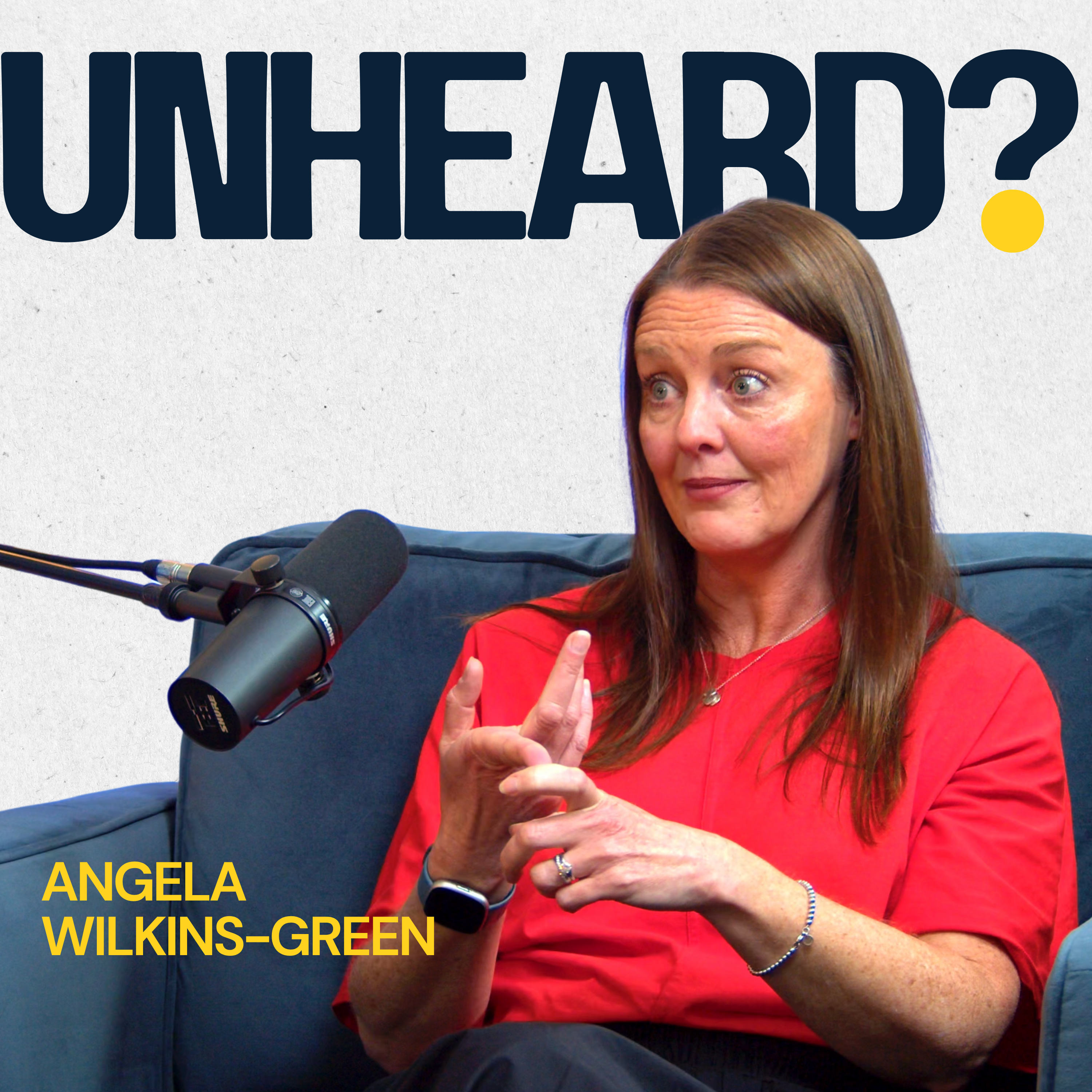
    In part two of her conversation with Angela Wilkins-Green, Anna moves from awareness into action, exploring what line managers and HR professionals can actually do when someone in their team is struggling with perimenopause or menopause symptoms. Angela explains what signs a manager might notice, and why the quality of your relationship with your team will determine whether you ever get the chance to help at all. The conversation is clear on one thing: you do not need to ask anyone if they are perimenopausal. You just need to notice, and ask if they are okay. Anna shares a real example of a manager who did everything right in terms of spotting a change in performance, but whose instinct to reach for a risk assessment left his team member feeling exposed and regretful that she had said anything. Angela unpacks why that response, however well intentioned, can shut conversations down entirely, and what a better approach looks like in practice. They cover the range of reasonable adjustments organisations can make, from a desk fan to a later start time, and why these need to be individual conversations rather than a standard checklist. Angela also introduces her one-to-one menopause audit, a structured session she runs inside organisations to help women understand their own symptoms and come away with a personal action plan. The episode takes a broader turn as Anna and Angela discuss cultural differences in how menopause is experienced and spoken about, why men need this education just as much as women, and how mandatory awareness sessions can shift the culture in even the most resistant organisations. Angela shares the story of a male CEO who not only attended a session but led the conversation, and why moments like that change everything. This is part two of a three-part conversation with Angela Wilkins-Green. Part three continues the discussion around coaching, confidence, and what life looks like on the other side of perimenopause. Find out more about Angela's work at https://www.greenpathcoaching.com LinkedIn: linkedin.com/in/annathomas-hrInstagram: instagram.com/practicalmanagerTikTok: tiktok.com/@practicalpeoplemanagerThe People Expert: https://www.thepeopleexpert.co.uk

  • S1 · E5
    July 15 · 36 min

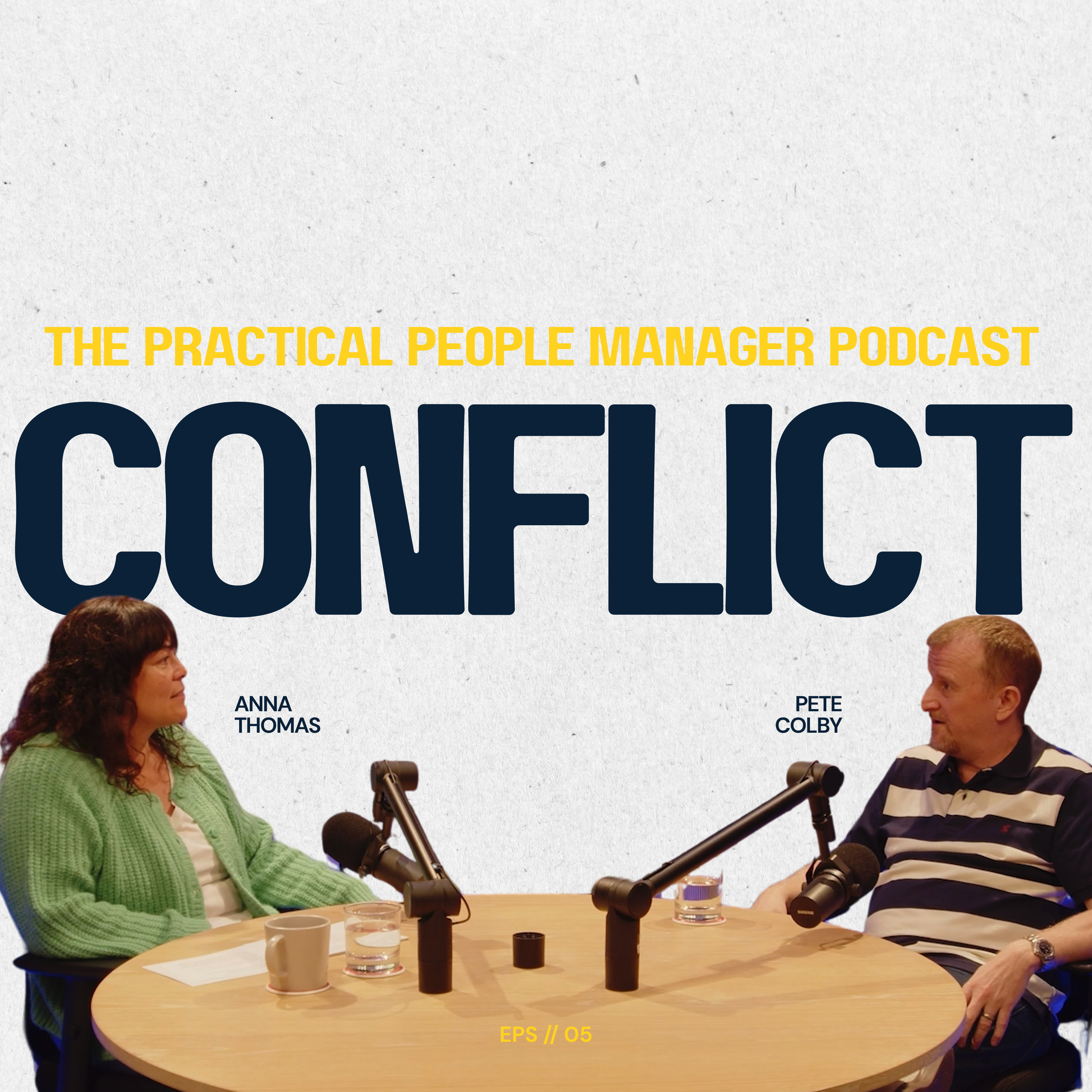
    How to Handle Workplace Conflict Before It Becomes a Grievance with Pete Colby from Pragmatism UK

    Workplace conflict is inevitable. But the damage it causes, the stress, the time, the cost, and the human toll, is largely avoidable. In this episode, Anna is joined by Pete Colby, founder of Pragmatism and a workplace mediator, trainer, and employee relations specialist with four decades of experience spanning the steel, food, and aerospace industries. Pete is allergic to grievances, as he puts it, and has spent his career helping organisations understand why the answer to conflict is almost never a formal process. Pete explains why the root cause of most workplace disputes comes back to the same thing: a lack of confidence to have honest, human conversations early. He shares what happens when small tensions go unaddressed, how quickly emails replace conversation and positions harden, and why the most common thing people say in mediation is that they wish someone had simply asked how they were doing, often years earlier. Anna and Pete explore the pressure managers face when they feel ill-equipped to navigate difficult conversations, particularly around topics like mental health, menopause, or race, and why the fear of saying the wrong thing so often leads to saying nothing at all. Pete shares a compelling real-world example of how a single word triggered a discrimination allegation, and how a skilled conversation turned it into one of the most productive outcomes either party could have imagined. They also challenge the reflex to reach straight for the grievance policy, and make the case for building a culture where formal processes gather dust because they are simply never needed. This is part one of a three-part conversation with Pete. Part two moves into mediation itself: what it is, what it is not, and how it supports people when working relationships have become truly stuck. Find out more about Pete's work at pragmatism-uk.co.uk Connect with Anna Got a question or a topic you'd like covered on the podcast? Anna would love to hear from you. Find her on LinkedIn, Instagram, and TikTok, or visit The People Expert to find out more about her work supporting line managers and HR professionals. LinkedIn: linkedin.com/in/annathomas-hr Instagram: instagram.com/practicalmanager TikTok: tiktok.com/@practicalpeoplemanager The People Expert: https://www.thepeopleexpert.co.uk
  • S1 · E4
    July 8 · 36 min

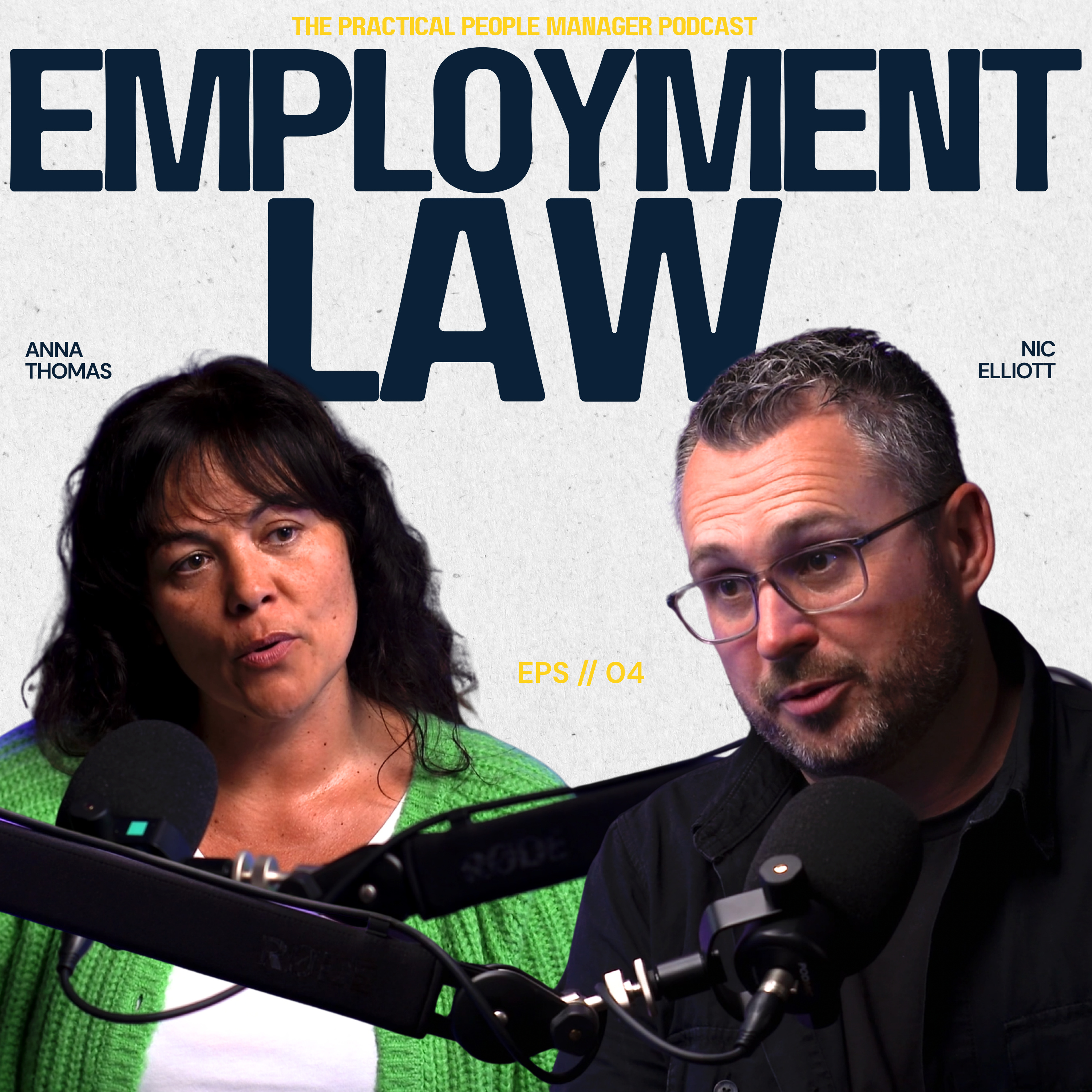
    Why Every Line Manager Needs to Understand Employment Law, with Nic Elliott from Acton Solicitors

    Employment tribunal claims are rising sharply, and employment lawyer Nic Elliott says AI is playing a bigger role in that shift than most HR teams realise. Nic heads the employment team at Actons Solicitors in Nottingham and is also the firm's own HR director, giving him a rare view of both sides of the desk. In this episode, Anna and Nic get into why claims have climbed since the pandemic, the strange new dynamic AI is creating around grievances and settlements, and why so many workplace policies do more harm than good. They also talk difficult conversations, performance management done properly, and the major shift coming to unfair dismissal law in January 2027, changes that will affect an estimated 6.3 million employees and reshape how every manager approaches probation and recruitment. Find out more about Nic's work at https://www.actons.co.uk Connect with Anna Got a question or a topic you'd like covered on the podcast? Anna would love to hear from you. Find Anna on LinkedIn, Instagram, and TikTok, or visit The People Expert to find out more about her work supporting line managers and HR professionals. LinkedIn: http://linkedin.com/in/annathomas-hr Instagram: http://instagram.com/practicalmanager TikTok: http://tiktok.com/@practicalpeoplemanager The People Expert: https://www.thepeopleexpert.co.uk

  • S1 · E3
    June 23 · 28 min

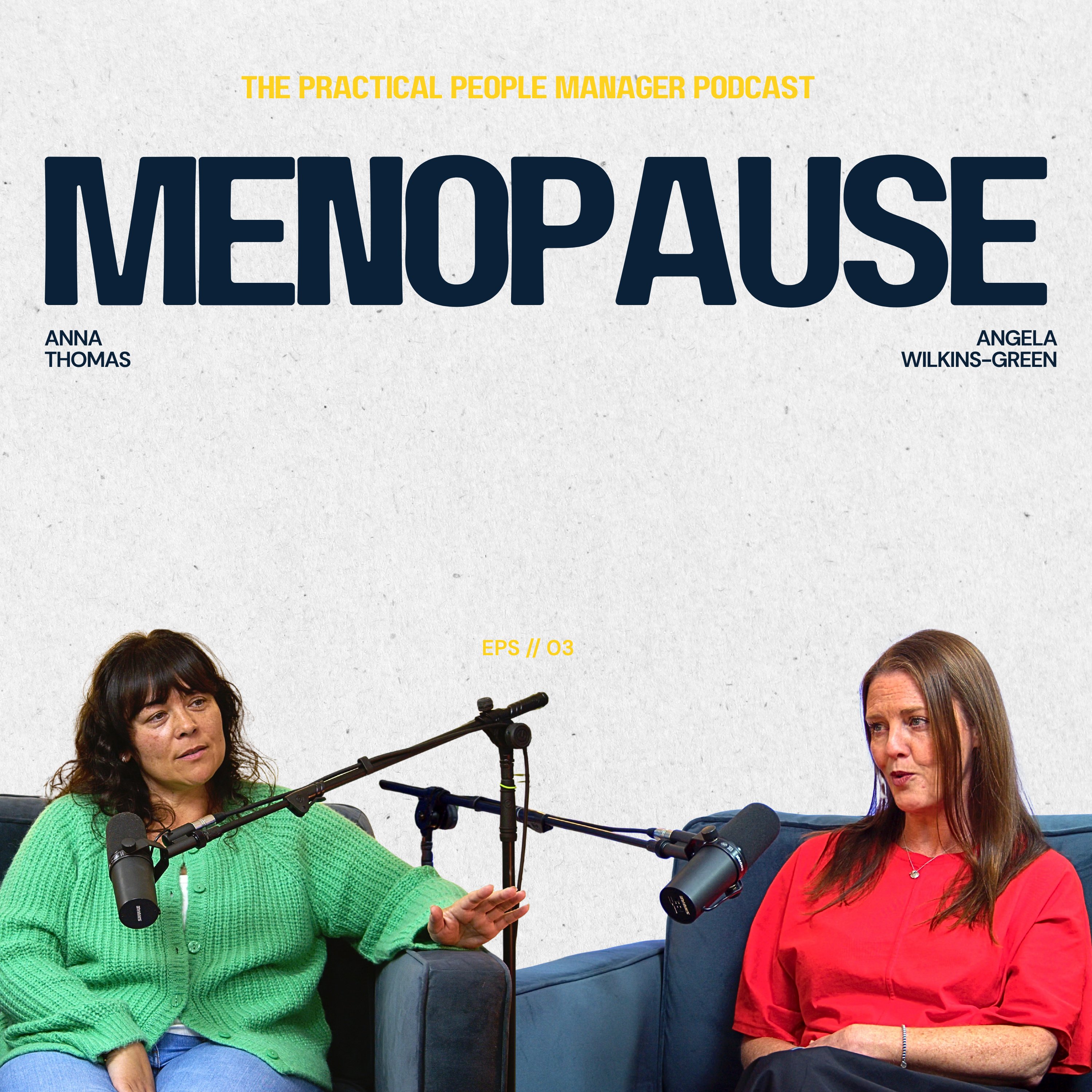
    Menopause at Work: What Line Managers Need to Know and Why It Matters

    One in ten women leave their careers because of menopause. Many more stay but struggle in silence, masking their symptoms and running on empty while nobody around them knows why. In this episode, Anna is joined by Angela Wilkins-Green, an ICF-accredited executive and transformation coach and menopause workplace specialist. With over 25 years in senior leadership roles, Angela now works with organisations to embed menopause awareness, manager training and one-to-one coaching support that goes well beyond the policy document. Angela begins by unpacking the difference between perimenopause and menopause, and the reality may surprise you. The lead-up to menopause can start in a woman's late thirties and last up to fourteen years, and the earliest signs are often psychological rather than physical: anxiety, low confidence, mood changes, and a gradual sense of not feeling like yourself anymore. Anna shares her own experience navigating a GP system that initially offered little clarity, and Angela explains why women need to advocate for themselves in a healthcare landscape that is still catching up. They discuss the wide range of symptoms that extend far beyond hot flushes, why a standalone menopause policy rarely makes the difference organisations think it will, and what genuinely effective workplace support looks like in practice, including the role of menopause champions and the new Employment Rights Act menopause action plans that came into force in April 2026. The business case is clear: if organisations are not having this conversation, they are losing experienced women, often without ever knowing why. This is part one of a three-part conversation with Angela. Part two explores what practical support looks like for individuals and teams. Find out more about Angela's work at https://www.greenpathcoaching.com Connect with Anna Got a question or a topic you'd like covered on the podcast? Anna would love to hear from you. Find Anna on LinkedIn, Instagram, and TikTok, or visit The People Expert to find out more about her work supporting line managers and HR professionals. LinkedIn: linkedin.com/in/annathomas-hr Instagram: instagram.com/practicalmanager TikTok: tiktok.com/@practicalpeoplemanager The People Expert: https://www.thepeopleexpert.co.uk
  • S1 · E2
    June 23 · 28 min

    Mental Health at Work: How Line Managers Can Spot the Signs and Start the Conversation

    One in six people in the workplace will have a diagnosable mental health condition at any given time. Yet the biggest barrier to getting help is not the availability of support. It is silence. In this episode, Anna is joined by Yohan Macdonald, founder of Great Minds Training, who has been specialising in mental health, wellbeing, diversity and inclusion since 2015, delivering programmes for organisations including the NHS, IBM and the FA. Yohan speaks from lived experience. He struggled with anxiety and depression for close to a decade before finding his purpose in workplace wellbeing, and that personal understanding shapes everything he teaches. He explains why stigma remains stubbornly persistent, why managers often talk themselves out of having difficult conversations, and why the wrong thing to say is nothing at all. A highlight of this episode is Yohan's SAFE conversation framework, a practical four-step approach designed to help managers start mental health conversations with confidence. It covers how to set up the conversation in the right environment, ask open and relevant questions, focus on listening beyond just words, and respond with genuine empathy. Anna and Yohan also address one of the most common objections managers raise: the idea that mental health has become the new bad back. Yohan's response reframes where the real risk to organisations actually lies, and makes a compelling case for why early intervention matters far more than scepticism. This is part one of a three-part conversation. Part two looks at what organisations can do to shift from a reactive to a proactive culture around mental health and wellbeing. For any of the resources mentioned please follow the link https://info.greatminds.training/manager-podcast-resources Email Yohan for more information on yohan@greatminds.training. Connect with Anna Got a question or a topic you'd like covered on the podcast? Anna would love to hear from you. Find Anna on LinkedIn, Instagram, and TikTok, or visit The People Expert to find out more about her work supporting line managers and HR professionals. LinkedIn: ⁠linkedin.com/in/annathomas-hr⁠ Instagram: ⁠instagram.com/practicalmanager⁠ TikTok: ⁠tiktok.com/@practicalpeoplemanager⁠ The People Expert: ⁠https://www.thepeopleexpert.co.uk⁠

  • S1 · E1
    June 23 · 33 min

    ADHD at Work: What Every Line Manager Needs to Know

    If you manage people, chances are someone on your team has ADHD, whether they have told you or not. In this episode, Anna is joined by Ellie Kay, an ICF-accredited ADHD and AuDHD coach, neurodiversity specialist, workplace mediator, and keynote speaker. Ellie was diagnosed with combined-type ADHD at 45, after more than two decades running her own business, and now uses that lived experience alongside deep professional expertise to help both individuals and organisations navigate neurodiversity at work. Ellie shares what it felt like to finally get her diagnosis, why so many adults and particularly women go undiagnosed for years, and how ADHD can look very different from the stereotypes most of us grew up with. From hyperfocus and creative thinking to time blindness, people-pleasing, and struggles with admin, this conversation paints a much fuller picture of what ADHD actually looks like day to day in a working environment. Anna and Ellie explore the practical role line managers play in supporting neurodivergent team members, and why curiosity is the single most important skill you can bring to those conversations. Rather than trying to fix or diagnose, Ellie makes the case for a strengths-based approach that helps people thrive where they naturally excel, while putting the right support in place for the areas where they struggle. They also tackle the question of psychological safety: why some employees are reluctant to disclose their diagnosis, what good and bad manager responses look like, and how to open a conversation even when you are not sure what to say. This is part one of a three-part conversation with Ellie. Part two covers the different types of ADHD, how it intersects with autism, and how managers can ask better questions. Find out more about Ellie's work at elliekay.co.uk Connect with Anna Got a question or a topic you'd like covered on the podcast? Anna would love to hear from you. Find Anna on LinkedIn, Instagram, and TikTok, or visit The People Expert to find out more about her work supporting line managers and HR professionals. LinkedIn: ⁠⁠linkedin.com/in/annathomas-hr⁠⁠ Instagram: ⁠⁠instagram.com/practicalmanager⁠⁠ TikTok: ⁠⁠tiktok.com/@practicalpeoplemanager⁠⁠ The People Expert: ⁠⁠https://www.thepeopleexpert.co.uk⁠⁠

Showing 1–15 of 15 episodes