Skip to content
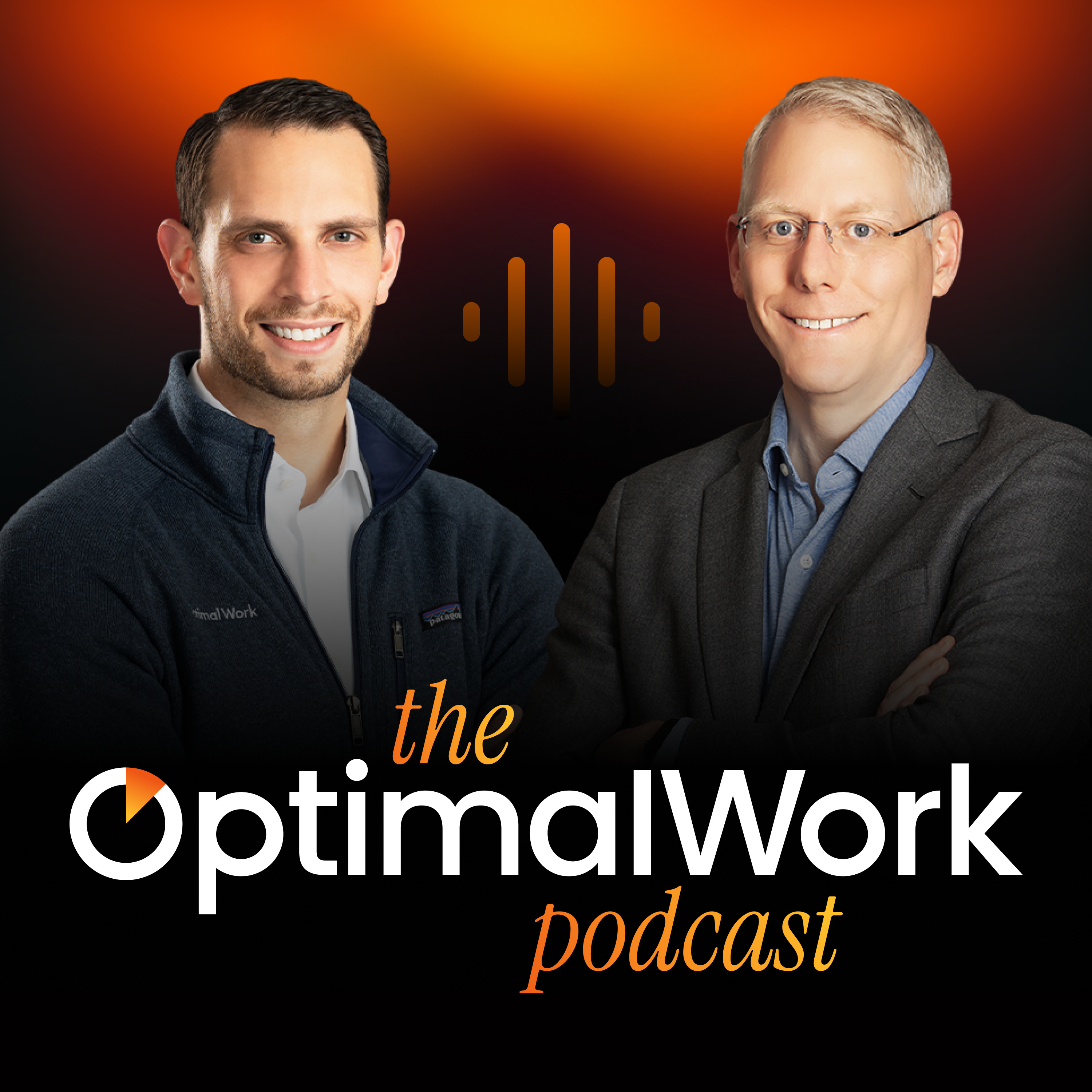
Artwork for The OptimalWork Podcast
EducationSelf-Improvement

The OptimalWork Podcast

OptimalWork

Hosted by Dr. Kevin Majeres and Sharif Younes, co-founders of OptimalWork, The OptimalWork Podcast will help you learn to challenge yourself in each hour of work according to your highest ideals. We discuss all aspects of Dr. Majeres's approach to work, which he developed in his private practice and teaches at Harvard Medical School, and show how it applies to everyday situations like professional work, study, sleep, and relationships.

For personalized plans to help you put the ideas into practice, visit www.OptimalWork.com.

Please send questions for discussion to team@optimalwork.com.

Play
  • 21 episodes
  • weekly
  • Avg 29 min
  • English
Counted on this page — what you have heard stays on this device, so it is not something the list can be paged by.
  • #314
    Monday · 30 min

    [Rebroadcast] Professional Humility II: Defensiveness

    #314: Dr. John Gottman describes four stages in the breakdown of a relationship: first defensiveness, then criticism, then stonewalling, and finally contempt. Each of these is a manifestation of a lack of humility. Having laid out the big picture in our previous episode, here we do a deep dive into the first, defensiveness. We explain how it arises and how it relates to key concepts in our approach, like Reframing, Growth Mindset, and Threat Mode. Find more at https://OptimalWork.com

  • #313
    August 17 · 27 min

    [Rebroadcast] Professional Humility I: The Core Elements

    #313: In this episode of the OptimalWork Podcast, Sharif and Dr. Kevin Majeres delve into the significance of humility in leadership and team dynamics. They explore the concept of humble leadership, the detrimental effects of pride, and the four horsemen of team dysfunction: defensiveness, criticism, stonewalling, and contempt. The conversation emphasizes the importance of cultivating humility as a means to foster better relationships, enhance team cohesion, and promote personal growth. The episode concludes with actionable steps for developing humility and the transformative power it holds in achieving mastery in various aspects of life. Find more at https://OptimalWork.com

  • #312
    August 10 · 31 min

    [Rebroadcast] Navigating Challenges with Extreme Ownership

    #312: In this episode, Sharif and Dr. Kevin Majeres discuss the concept of Extreme Ownership, as introduced and developed by Jocko Willink and Leif Babin. Willink and Babin learned this concept from their time serving as Navy Seals and have gained popularity adapting it to other contexts, like business and relationships. In this conversation, Sharif and Dr. Majeres discuss the nuances of this approach, and share applications to challenges faced in various contexts, from the classroom to the boardroom. Find more at https://OptimalWork.com

  • #311
    August 3 · 28 min

    [Rebroadcast] Developing Mastery IV: The Optimizing Stage

    #311: In this installment of our series on mastery, Sharif and Dr. Kevin Majeres explore the third and final stage: the optimizing stage. The optimizing stage of mastery has deep connections to other core concepts of OptimalWork like deliberate practice, continual growth, and above all service. In the optimizing stage, we can go beyond the automaticity characteristic of the implicit stage (stage two) and develop our mastery to such a degree that we can pour our entire selves into a task. In this way, the optimizing stage of mastery is also connected to flow, the state of peak focus, when we become, as it were, fused with the present task. Find more at https://OptimalWork.com

  • #310
    July 27 · 31 min

    [Rebroadcast] Developing Mastery III: The Implicit Stage

    #310: In this episode, Sharif and Dr. Kevin Majeres explore the second of the three phases of mastery: the implicit phase of mastery. This phase is the most dangerous, because it is where bad actions can become automatic habits, and where good habits can become plateaus. Fortunately, there are ways to avoid these pitfalls. The implicit phase of mastery is also closely connected with flow. The next episode will cover the final stage of mastery: optimizing strategies. Find more at https://OptimalWork.com

  • #309
    July 20 · 31 min

    [Rebroadcast] Developing Mastery II: The Explicit Stage

    #309: In this episode, Sharif and Dr. Kevin Majeres delve into the concept of mastery, focusing on its explicit phase. Broadly, mastery has three forms: mastery over a technical skill, self-mastery, and mastery in the context of bonds. For all these forms, crafting a strategy (a goal plus steps) is essential to developing explicit mastery. As you develop explicit mastery, you can harness dopamine to maintain motivation by setting appropriate micro-goals to complete as you carry out your strategy. Find more at https://OptimalWork.com

  • #308
    July 13 · 26 min

    [Rebroadcast] Developing Mastery I: The Three Stages

    #308: In this episode, Sharif and Dr. Kevin Majeres explore the concept of mastery, its relationship to service, and the neuroscience behind it. We can distinguish between three stages of mastery: explicit, implicit, and optimizing. Ultimately, mastery is not just about raw technical skills, but about putting these skills to the service of higher ideals and ultimately our bonds with others. Find more at https://OptimalWork.com

  • #307
    July 6 · 26 min

    [Rebroadcast] How Breath Shapes Mind and Body

    #307: Sharif and Dr. Kevin Majeres delve into the significance of breath in regulation attention and managing anxiety. One of the most interesting advances in the understanding of breath is the discovery of the oxygen paradox: breathing too much can actually reduce the amount of oxygen that reaches your brain. Breathing, mood, nutrition, attention, and activity are all interrelated. Understanding the relationship between breathing, oxygen, and carbon dioxide shows just how transformative proper breathing techniques can be. Find more at https://OptimalWork.com

  • #306
    June 29 · 29 min

    [Rebroadcast] How to Let Go of Your Worries

    #306: In this episode, Sharif and Dr. Kevin Majeres discuss the importance of learning how to self-regulate your attention. We often try to address distraction and worrying — two common obstacles relating to attention — by re-arranging our external circumstances, changing aspects of our lives. This can be helpful and even necessary at times. But to get the best results, it is also important to focus on the internals, on our own capacity to focus our attention. This capacity is like a muscle that we can strengthen over time with the right exercises. Find more at https://OptimalWork.com

  • #305
    June 22 · 30 min

    [Rebroadcast] Mastering Your Attention to Work Optimally

    #305: In this episode, Dr. Kevin Majeres and Sharif discuss the importance of attention for working at your best. Understanding how your attention works — especially the dynamic between task attention and default attention — can help you improve how you both rest and work. Some may think that focus is a matter of brute force and self-discipline, or of simply arranging your environment. But the understanding of attention explored here points to deeper strategies that we can use to master our attention and shape ourselves in the process. Find more at https://OptimalWork.com

  • #304
    June 15 · 28 min

    [Rebroadcast] How to Approach Anxiety

    #304: In this episode, Dr. Kevin Majeres and Sharif discuss OptimalWork's recently launched anxiety course called Overcoming Anxiety. Having the proper attitude toward anxiety is essential. Rather than thinking we must get rid of anxiety or merely cope with it, we need to see how to embrace anxiety and use it to perform at our best and live out our highest ideals. This understanding is key to shaping our actions, and also helping others to engage the challenges they face. Find more at https://OptimalWork.com

  • #303
    June 8 · 29 min

    [Rebroadcast] The Ultimate Guide to Complaining

    #303: Complaining is very tempting. When experiencing difficulty, it can seem helpful to vent our frustration. But chronic complaining can hinder the development of genuine bonds and can reinforce a negative mindset. Complaining narrows our focus and prevents us from reframing challenges as opportunities for growth. In this episode, Sharif and Dr. Majeres do a deep dive into complaining. Defending oneself or correcting injustices are not considered complaining. Real complaining — which is the futile expression of impatience — has negative effects on our brain and body, weakens our bonds with others, and prevents us from truly solving the problems we face. Instead of complaining, we can accurately assess challenges and find ways that they will bring out our best. Find more at https://OptimalWork.com

  • #302
    June 1 · 28 min

    [Rebroadcast] Equipping Yourself to Engage Challenge

    #302: In this episode, Sharif and Dr. Kevin Majeres discuss the concept of self-efficacy and its practical application in various examples. Self-efficacy is the brain's prediction of success right before engaging in a task. It affects motivation, resilience, and the ability to overcome challenges. The key is to shape self-efficacy by widening the context of success and identifying concrete steps to improve performance. The examples discussed include dealing with a critical boss, learning a difficult subject, and staying focused on repetitive tasks. All of these situations require reframing challenges, setting goals, and maintaining intensity. These examples should help you see more clearly how to apply these principles in your own case. They also highlight that OptimalWork’s core principles — reframing and forming strategies — are not rules or rote formulas, but require your own flexibility, ingenuity, and creativity. Find more at https://OptimalWork.com

  • #301
    May 25 · 27 min

    [Rebroadcast] Why Self-Efficacy is More Important than Self-Esteem

    #301: In this episode, Sharif and Dr. Kevin Majeres discuss the concept of self-efficacy and its relationship to mastery and confidence. Albert Bandura, a psychologist at Stanford, initiated the self-efficacy literature. He developed ways to help people overcome their fear of snakes and observed that this process helped them engage challenges in other areas of their lives. They seemed to develop a more general sense of self-efficacy, not only the ability to deal comfortably with snakes. This episode describes the essential elements of self-efficacy and shows how to develop this mindset. Self-efficacy has an interesting relationship to concepts in psychology like self-esteem and growth mindset, as well as OptimalWork’s key pillars of reframing, mindfulness, challenge, developing strategies, and growing in mastery. Find more at https://OptimalWork.com

  • #300
    May 18 · 34 min

    [Rebroadcast] Reviewing Cal Newport’s “Slow Productivity”

    #300: In this episode, Sharif and Dr. Kevin Majeres discuss Cal Newport's new book, “Slow Productivity: The Lost Art of Accomplishment Without Burnout.” “Slow Productivity” builds on themes he explores in his previous books: for instance, mastering your craft and focusing on the process of working. Here Newport focuses on three principles for achieving greater long-term productivity: doing fewer things, working at a natural pace, and improving the quality of your work. The conversation highlights the connection between Newport’s principles and the OptimalWork’s ideals of order, intensity, and constancy in work. It also touches on ways that OptimalWork’s approach complements Newport’s. Whereas Newport focuses on how to develop greater mastery, OptimalWork adds the purpose behind mastery: growing according to ideals, and developing bonds with others. Find more at https://OptimalWork.com

  • #299
    May 11 · 33 min

    [Rebroadcast] Mindset Mistakes that Sabotage Success

    #299: In this episode, Sharif and Dr. Kevin Majeres discuss the theory and science behind reframing, which is a foundational skill of OptimalWork. Reframing is essential to personal growth and overcoming challenges. But it goes beyond many of the techniques espoused by “self-help experts.” It is not just about positive thinking or building habits, but about discovering the meaningful opportunities for growth hidden within the challenges you face. This episode summarizes the theory and science of reframing, with practical examples to help you apply this key skill in your life. Find more at https://OptimalWork.com

  • #298
    May 4 · 32 min

    298. When Abstention Becomes the Measure

    #298: In this episode, Sharif and Kevin turn their attention to temperance — the most misunderstood of the cardinal virtues in modern culture. While today's wellness conversations obsess over macros, seed oils, and "locking in" on the perfect diet, Kevin argues that classical temperance was never about health at all. It's about protecting bonds. Drawing on Augustine, Aquinas, and Aristotle, Kevin explains why temperance is fundamentally about keeping our love and attention "whole and incorrupt" for the people in front of us — and why food, drink, and even mindful eating can quietly hijack the very meals meant to nourish our deepest relationships. Along the way, Sharif and Kevin explore orthorexia, the etiquette of small bites, the strange inhumanity of intoxication, and how fortitude becomes the secret shortcut from white-knuckled continence to genuine temperance. A thought-provoking reframe for anyone who has ever confused discipline around food with virtue. Find more at https://OptimalWork.com

  • #297
    April 27 · 29 min

    [Rebroadcast] Going Beyond Outcomes with Growth Goals

    #297: Automaticity, while beneficial in some ways, can also be a danger if it makes everyday actions become rote. Treating each moment of a task as unique allows for growth, meaning, and mastery. One way to do this is frequently setting growth goals to stretch yourself in how you do things. The second half of the episode covers the Reframer tool on OptimalWork.com. The Reframer takes you through a number of steps to set a growth goal that will help you reframe a present challenge from a threat to an opportunity. Find more at https://OptimalWork.com

  • #296
    April 20 · 32 min

    [Rebroadcast] How to Help the Anxious Generation Thrive

    #296: In this episode, Sharif and Dr. Kevin Majeres review the book “The Anxious Generation” by Jonathan Haidt. “The Anxious Generation” attributes the skyrocketing levels of anxiety among youth, particularly Gen Z, in large part to the widespread use of smartphones and social media. The negative effects of smartphones include social disconnection, sleep deprivation, attentional problems, and addiction. Haidt recommends dramatically restricting kids’ access to the “virtual world,” while also encouraging them to engage more with the real world. Sharif and Dr. Majeres summarize Haidt’s insights and show how they connect to key OptimalWork concepts like challenge and ideals. Find more at https://OptimalWork.com

  • #295
    April 13 · 29 min

    295. The Sacrifice Trap

    #295: In this episode, Sharif asks Kevin to untangle one of the most common mindsets he encounters when coaching people on work: the urge to "just get things done." Kevin argues that this seemingly reasonable attitude is actually a form of anti-fortitude — an effortful suppression of the cost of a task that quietly taxes performance and squeezes meaning out of what we do. Drawing on the acceptance and commitment literature and the neuroscience of the two striatal systems (the free, flexible dorsomedial system versus the rigid, automated dorsolateral system), Kevin shows how pushing through recruits the wrong circuitry, while willingly bearing the cost for love keeps us available, flexible, and capable of real mastery. Sharif and Kevin explore how to tell which mode you're in, why boring and bureaucratic tasks are precisely where ideals matter most, and how contemplation — being "recollected in love" — transforms even the smallest actions. The conversation closes with a first look at the new Golden Hour tool, redesigned around three questions (Who will benefit? What will be hardest? What does excellence look like?) that light up the meaning, effort, and attention engines before a time of work begins. Find more at https://OptimalWork.com

Showing 1–20 of 21 episodes