Skip to content
Artwork for The Ongoing Transformation

The Ongoing Transformation

Issues in Science and Technology

The Ongoing Transformation is a biweekly podcast featuring conversations about science, technology, policy, and society. We talk with interesting thinkers—leading researchers, artists, policymakers, social theorists, and other luminaries—about the ways new knowledge transforms our world.

This podcast is presented by Issues in Science and Technology, a journal published by Arizona State University and the National Academies of Sciences, Engineering, and Medicine. Visit issues.org and contact us at podcast@issues.org.

Play
  • 20 episodes
  • fortnightly
  • Avg 32 min
  • English
  • Tuesday · 37 min

    Wyoming’s Answer to Why Data Centers

    As data centers have become a national political issue, they have been accused of many things, including “breaking American politics.” However, deliberation over proposals for data center construction plays out at the community level, often with significantly more nuance. Although city and state governments are under pressure to make the local benefits of development visible, they must search for strategies that squeeze value out of these negotiations for their communities. On this episode, host Megan Nicholson is joined by Jacob Hochard, associate professor of conservation economics in the Haub School of Environment and Natural Resources at the University of Wyoming, and Caden Bogus,  a graduate research assistant and interdisciplinary master's student at the University of Wyoming, to discuss Wyoming’s position as an up-and-coming spot for data center development. Wyoming’s energy production, cool climate, affordable land, and friendly tax policies have positioned the state as an attractive spot for data centers. How this growth gets translated into gains for Wyomingites has the potential to shape the future of the industry in the state and beyond. Resources Read “How Communities Are Bargaining With Big Tech Over Data Centers” by Jacob Hochard and Caden Bogus to learn more about how communities are negotiating with data centers. How are data centers impacting the midterm elections? Check out this article by Nicol Turner Lee and Darrell M. West.


  • September 22 · 29 min

    How Community Colleges are Pioneering AI Education

    Artificial intelligence is reshaping work, leaving many people wondering how to gain the skills they need to keep up with a rapidly changing world. Now, a group of American community colleges is working to democratize AI education and prepare students for the future. On this episode, host Sara Frueh is joined by Antonio Delgado, vice president of innovation and technology partnerships at Miami-Dade College and founder and leader of the National Applied AI Consortium. Delgado discusses “applied AI,” a pioneering program at Miami-Dade that provides students pathways to these jobs, and the broader effort by community colleges to help meet the need for AI-fluent workers in the labor force. Resources Check out Antonio Delgado’s Issues article, “Community Colleges are Training the Applied AI Workforce” (Summer 2026) to learn more about how he developed Miami Dade College’s applied AI degree program and founded the National Applied AI Consortium. Visit the National Applied AI Consortium’s website to learn more about their work.

  • September 8 · 47 min

    Local Research for Local Problems

    Since World War II, federal funding has been the central driver of American scientific research. Recently, a state-based model for research shows how local research could be used to solve local problems. On this episode, host Lisa Margonelli is joined by Jeffrey Warren, executive director of the North Carolina Collaboratory. About ten years ago, the North Carolina legislature created a way to get answers to policymakers’ questions and to fund research to solve local problems. The Collaboratory contracts with researchers at the state’s universities to do the work. So far, the legislature has allocated more than $300 million to fund 800 research projects on subjects ranging from water pollution to opioid addiction treatment to foster care. The Collaboratory’s model offers a new vision for how science can respond to society’s needs. Resources: Visit the North Carolina Collaboratory’s website to learn more about their work. Check out Jeffrey Warren’s Issues pieces for more on the Collaboratory's unique model of bipartisan problem solving. “Science for Hyper-Partisan Times” (2021). “Research That Solves North Carolina’s Problems” (2026), co-authored with Blair Ellis Rhoades.

  • August 18 · 44 min

    Introducing “Lab Coat Optional”

    The Ongoing Transformation will be back soon! In the meantime, we’re bringing you an episode of a podcast we all enjoy: Lab Coat Optional, which is produced by Arizona State University’s Knowledge Enterprise. The podcast looks at research, the people behind it and why it matters. In this episode, Nadya Bliss — executive director of ASU’s Advanced Capabilities for National Security Institute — explains how national security is more than tanks and battleships. She breaks down the vital role university research plays behind the scenes to anticipate emerging needs, strengthen infrastructure, accelerate innovation and quietly prevent conflict.

  • August 4 · 42 min

    Introducing “10X Conversations”

    The Ongoing Transformation will be back soon! In the meantime, we’re bringing you an episode of a podcast we all enjoy: 10X Conversations. The podcast examines pressing issues affecting communities along the U.S. Interstate 10 corridor from Jacksonville, Florida to Los Angeles, California and how these challenges provide a lens into what the future may bring for the rest of the country. In this episode, climatologist Jennifer Vanos and human thermoregulation expert Konrad Rykaczewski talk about groundbreaking heat research at ASU, and how its results may help other heat-vulnerable cities in the I-10 corridor and beyond.

  • June 16 · 37 min

    Making Sure Open Science Stays Open

    There was a time when everything on the internet seemed like it would be there forever, whether a Facebook status or a government website. But today the prospect of maintaining massive amounts of digital history is in doubt. This poses a particular issue for the open science movement, which has advocated for wide access to scientific data and papers over the last 25 years. The movement’s successes have led to the creation of digital research infrastructure such as data libraries and preservation systems that serve large and small research communities. Now, as the system is maturing, it’s becoming clear that open science isn’t free: it requires investment and significant effort to stay alive. Without it, open research cannot be verified or advanced. On this episode, host Megan Nicholson is joined by Jen Gibson and Kaitlin Thaney, authors of “Who Will Keep Research Data Infrastructure Open and Running?” in our Spring 2026 issue. Gibson is the executive director of Dryad, an open-access international research data repository and curation service. Thaney is the executive director of Invest in Open Infrastructure, a nonprofit that advances open-source solutions and systems for research communities. Resources: Read “Who Will Keep Research Data Infrastructure Open and Running?” for more on the importance of maintaining digital infrastructure. Visit Dryad and Invest in Open Infrastructure’s websites to learn more about open data, open infrastructure, and how you can support their work.

  • June 2 · 29 min

    Mary Woolley Advocates for American Research

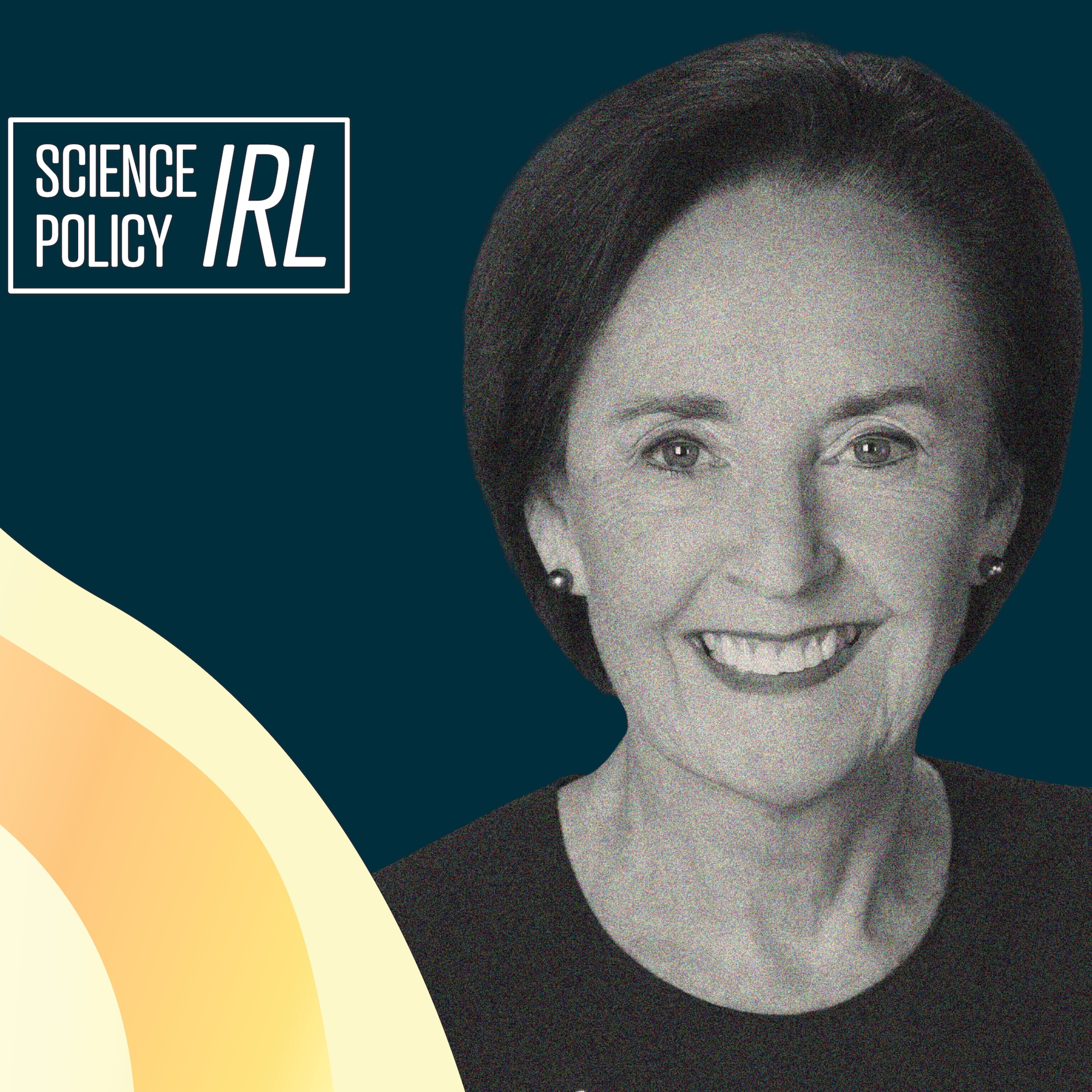
    On Science Policy IRL, we talk to people in science policy about what they do and how they got there. In this installment, host Josh Trapani talks to Mary Woolley about leading Research!America for 35 years. During her tenure, Research!America grew into a major research advocacy organization and helped advocate for many changes, including doubling the budget of the National Institutes of Health. In this episode, Woolley reflects on the transitions she has seen in science and the role of scientists over her career, and shares how researchers can engage with policymakers and the community. Resources: How do Americans feel about science? Check out the results from Research!America’s 2026 January National Survey. Read Mary Woolley’s letter in Issues about the importance of public engagement and understanding public sentiment. Learn more about the McClintock Letters Initiative, a national op-ed letter writing campaign to share why science needs investment.

  • May 19 · 22 min

    You Have 9,870 Unread Messages

    Spam represents nearly half of all global email traffic, from obnoxious ads to dire warnings of impending account closures to absurd invitations to join the Illuminati (just ask our podcast producer). It is a constant, annoying part of online life, but does it have to be that way?. Understanding the efforts to address spam in the early 2000s offers lessons for how we might regulate technologies such as artificial intelligence today. On this episode, host Jason Lloyd is joined by Rebecca Coyne, who recently received her master’s degree in public policy from the University of Michigan. Coyne wrote about spam policy in the Spring 2026 issue, in an article titled “Spam Policy and the Myth of the Ungovernable Internet.” Resources: Read “Spam Policy and the Myth of the Ungovernable Internet” by Rebecca Coyne, from our Spring 2026 issue. Learn more about the early internet by reading “A Prehistory of Social Media” by Kevin Driscoll, and listen to his podcast episode. Check out Spam: A Shadow History of the Internet by Finn Burton for more on the history of spam, and read this article to learn about the vigilante hijinks during the “spam wars.” For more on AI regulation, read “The Mirage of AI Deregulation” by Alondra Nelson in Science and “Moratoriums and Federal Preemption of State Artificial Intelligence Laws Pose Serious Risks,” a report from the Center for American Progress.

  • May 5 · 25 min

    Kumar Garg Funds Ideas That Are “Big, if True”

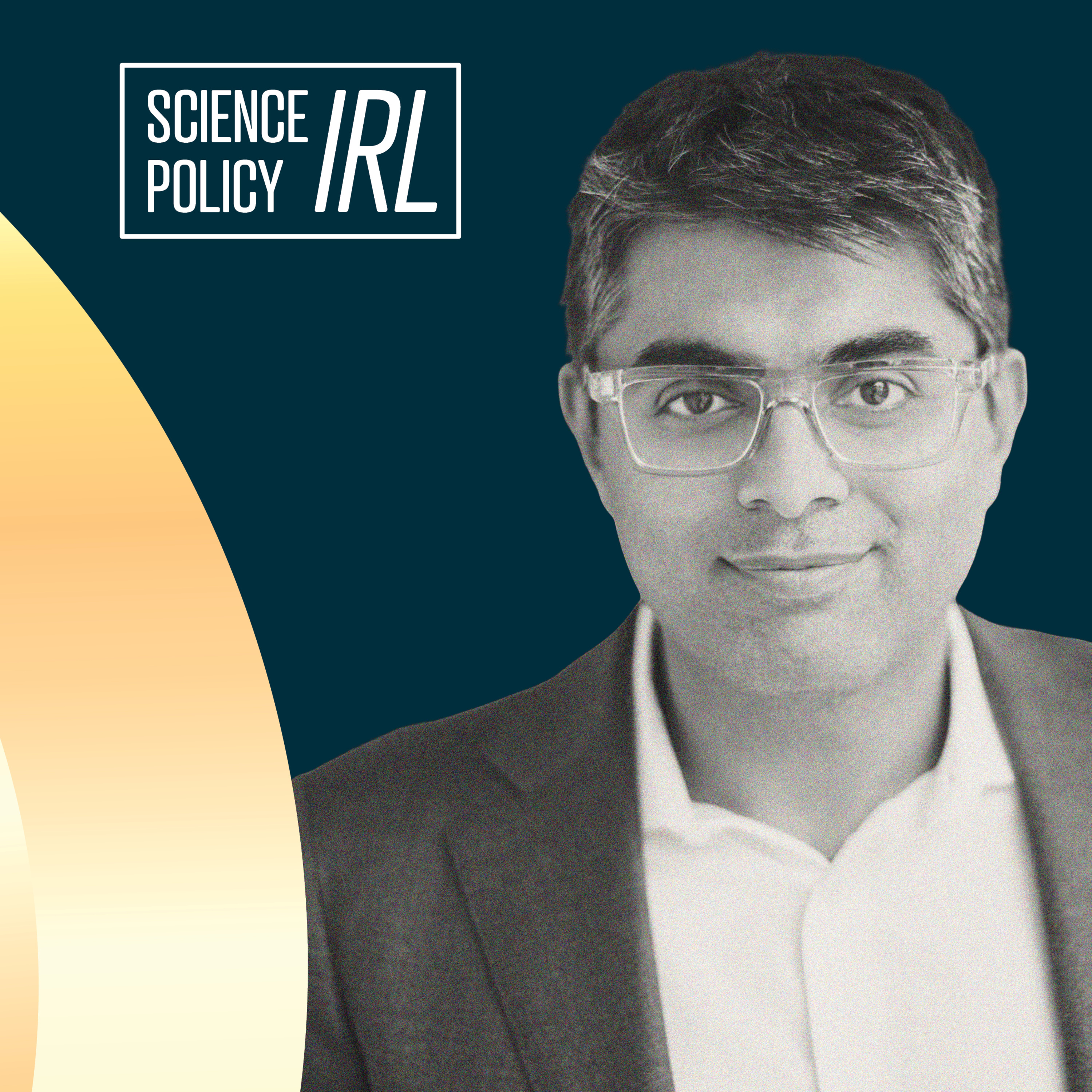
    On Science Policy IRL, we talk to people in science policy about what they do and how they got there. In this installment, we’re exploring how science policy works from both inside and outside the government. Host Monya Baker is joined by Kumar Garg, president of Renaissance Philanthropy, an organization that helps philanthropists support science, technology and innovation. Prior to joining Renaissance Philanthropy, Garg trained as a lawyer and served in the White House Office of Science and Technology Policy. He shares how he has spent his career finding, funding, and implementing ideas both within the government and outside it via philanthropy, which is uniquely positioned to pilot “big, if true” ideas. Resources Learn more about Renaissance Philanthropy by visiting their website and listening to Garg’s interview on how philanthropy can fuel scientific innovation. Visit the NIH Brain Initiative website for more information on the initiative. See Team Kalil’s white board with more advice on how to get things done.

  • April 21 · 27 min

    Untangling the “Cosmic Coincidence” of the Job Market

    How do people find good jobs? How do employers find good talent? How should the American economy prepare for the future of work in the age of artificial intelligence? On this episode, Issues editor Molly Galvin talks to Burning Glass Institute president Matt Sigelman about these questions. Sigelman spent two decades developing the field of real-time labor market data as CEO and then chairman of a company now known as Lightcast. Five years ago, he founded Burning Glass to transform the way that policymakers, researchers, employers, education institutions, and workers understand, plan for, and connect with the world of work. An edited version of this interview appears in our Spring 2026 issue. Resources: Read the Issues Spring 2026 interview with Matt Sigelman. Learn more about Sigelman’s work by visiting the Burning Glass Institute and Lightcast websites.

  • April 7 · 20 min

    The Future of Making Babies

    Assistive reproductive technologies such as in vitro fertilization have helped many people have children. Behind many of these births are egg donors, whose experiences remain largely invisible in public narratives and scholarship. As reproductive technologies change—along with the ethical and policy challenges they raise—the role of egg donors will too. On this episode, host Jason Lloyd is joined by Emily Packard Dawson, a postdoctoral research fellow at the University of Michigan Medical School whose work focuses on the ethics of emerging reproductive technologies. In our Winter 2026 issue, Dawson reviewed a book by Diane M. Tober called Eggonomics: The Global Market in Human Eggs and the Donors Who Supply Them. Dawson discusses egg donors and the donation process, and what advances in reproductive technologies might mean for them. Resources Read Emily Packard Dawson’s review of Eggonomics: The Global Market in Human Eggs and the Donors Who Supply Them. Check out the National Academies workshop report, “In Vitro–Derived Human Gametes as a Reproductive Technology: Scientific, Ethical, and Regulatory Implications: Proceedings of a Workshop” to learn more about in vitro gametogenesis.

  • March 24 · 43 min

    Edward You Protected America From Bioterror

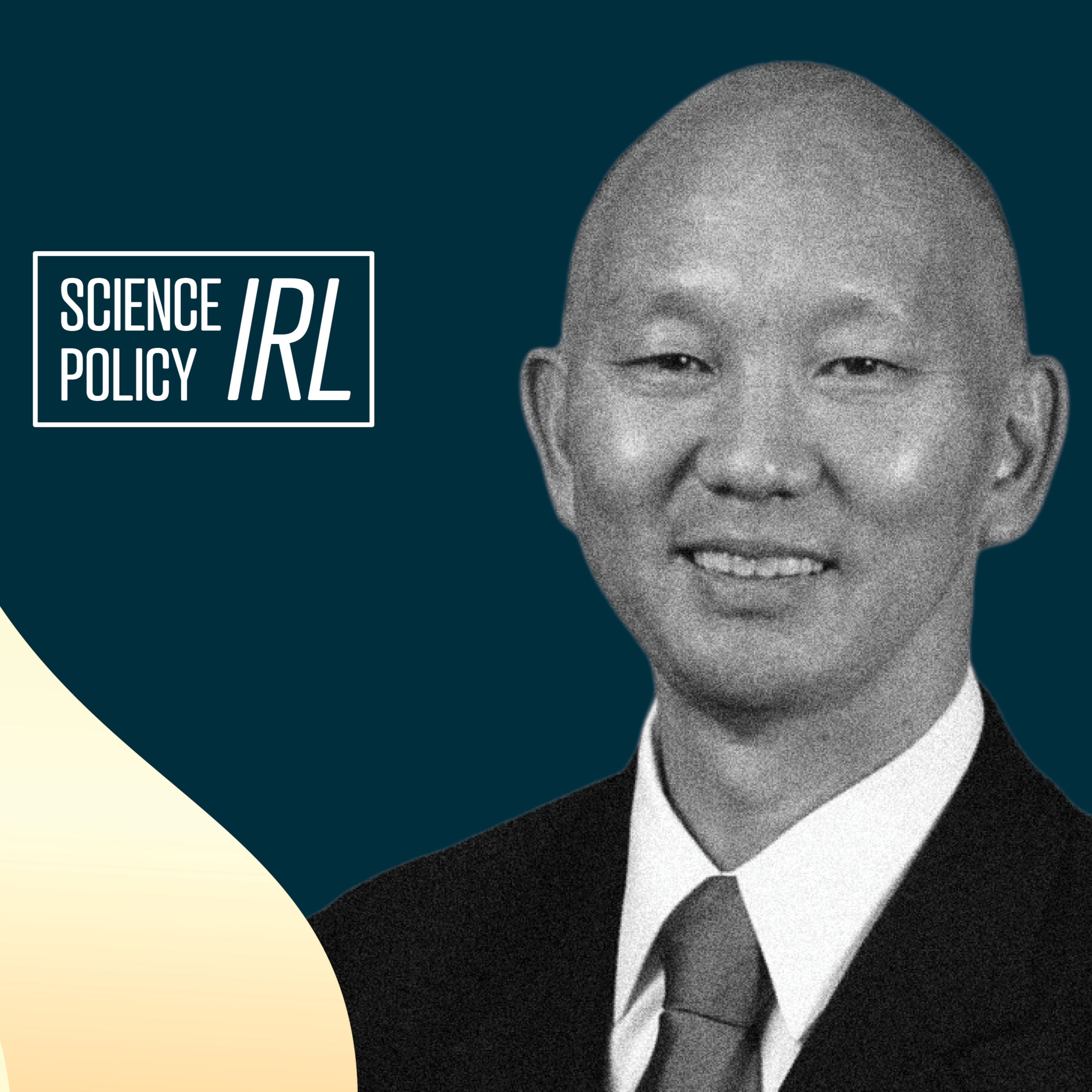
    On Science Policy IRL, we talk to people in science policy about what they do and how they got there. Most of the people we’ve interviewed work in the legislative branch of the federal government or in agencies in the executive branch. In this installment, we’re going to an unexpected place for science policy: the Federal Bureau of Investigation. Host Lisa Margonelli is joined by Edward You, who has been called “America’s Top Bioterror Cop” by MIT Technology Review. A biochemist by training, You worked for the FBI for over 20 years. At the FBI, he served in the Weapons of Mass Destruction Directorate, and was also on joint duty assignment at the Office of the Director of National Intelligence, where he served as the National Counterintelligence Officer for Emerging and Disruptive Technologies. In this episode, Margonelli and You discuss how his time as an FBI agent enabled him to reframe the way the policymakers understand what is required to protect biosecurity and support innovation. Resources: Watch a 60 Minutes episode on DNA and the big-money market for biodata, featuring Edward You. Read “National and Transnational Security Implications of Big Data in the Life Sciences” (2014), a joint report from the FBI, American Association for the Advancement of Science, and United Nations Interregional Crime and Justice Research Institute. Learn more about big data, security, and the FBI’s role by reading “Biosecurity in the age of Big Data: A Conversation With the FBI”. Check out Issues’s recent publications on biosecurity: Interview with Senator Todd Young on emerging biotechnologies. “Reconsidering Research Security” by John C. Gannon, Richard Meserve, and Maria T. Zuber. “When All Research Is Dual Use” by Sam Weiss Evans.

  • March 3 · 33 min

    Building a Tech Innovation Ecosystem in Newark

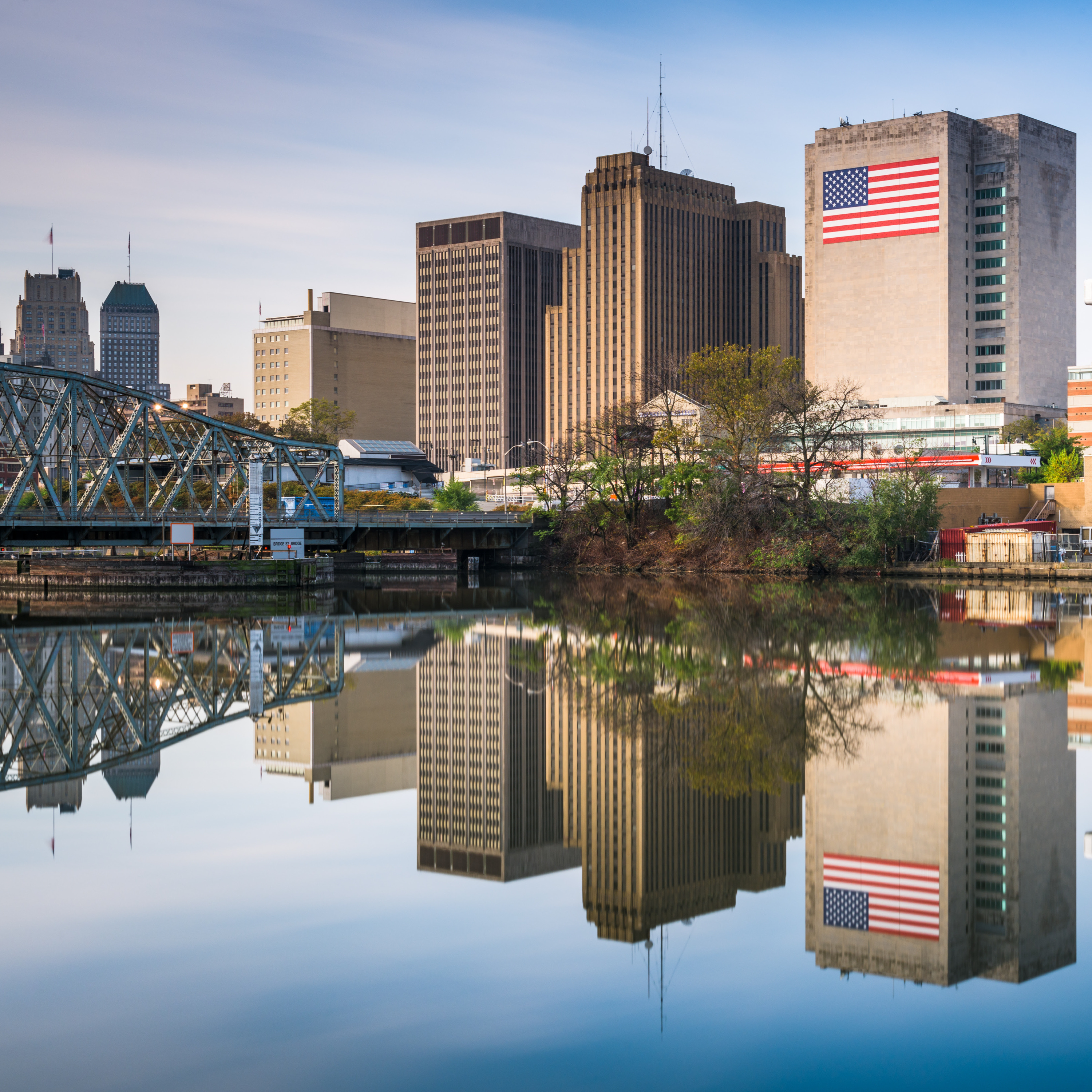
    Innovation lately feels synonymous with the digital entrepreneurs of Silicon Valley or the high-tech corridor of Route 128 outside Boston. But when Thomas Edison opened his first research lab in the 1870s, it was in Newark, New Jersey. A few years later, in nearby Menlo Park, he invented the light bulb. Now, Newark is working to build a new, inclusive tech innovation ecosystem that goes beyond this legacy. On this episode, host Lisa Margonelli is joined by Fay Cobb Payton and Lyneir Richardson, who are both at Rutgers University. Payton directs the Institute for Data, Research, and Innovation Science (IDRIS) and Lyneir is the executive director of the Center for Urban Entrepreneurship and Economic Development. Together they have been pioneering data-led innovation and business accelerators with a diverse group of entrepreneurs. Resources Read Senator Andy Kim’s vision for New Jersey’s Einstein Corridor. Learn more about the Exit to Win accelerator by watching this video. Check out more Issues articles on regional economic development. “Cultivating Mastery in Place” by Maryann Feldman and Alaina Kayaani-George. Diné entrepreneurs entwine economic renewal with mutual obligation, providing a model of regional economic development that serves the community. “Revisiting the Connection Between Innovation, Education, and Regional Economic Growth” by Grace J. Wang. What have we learned over the past 40 years about how to generate sustained economic growth through scientific research and technological innovation? “Place-Based Economic Development” by Maryann Feldman. “Lessons from Baltimore for Participatory Research” by Alvin Hathaway Sr. A pastor and community organizer explains what a landmark Black neuroscience study needed to gain insight, influence, and credibility.

  • February 17 · 31 min

    Who Sets the Standard?

    What do the design of high-visibility public safety vests, the distance between two railroad tracks, and the protocols that allow for file transfers between devices have in common? Each is determined by a technical standard set through a process coordinated by a private, non-profit organization called the American National Standards Institute (ANSI). Technical standards are behind most of the products Americans interact with in everyday life, underpinning public safety, consumer protection, interoperability, and innovation. On this episode, host Megan Nicholson is joined by president and CEO of ANSI and former director of the National Institute of Standards and Technology, Laurie Locascio. Locascio explains the importance of standards for innovation and competitiveness, and describes how the US approach to standards development depends on the participation of people with all kinds of expertise. She also shares how more researchers can find their way into setting “the invisible infrastructure of modern life.” Resources Read ANSI’s United States Standards Strategy 2025 and review their courses and webinars about the American national standard designation. Check out the US government’s 2023 National Standards Strategy for Critical and Emerging Technology, which has not been adopted by the Trump Administration. Read an Issues piece from 1999 on “Why Standards Matter” by Robert L. Mallett, former Deputy Secretary of Commerce.

  • February 3 · 31 min

    How Cannabis Regulation Became a Giant Experiment

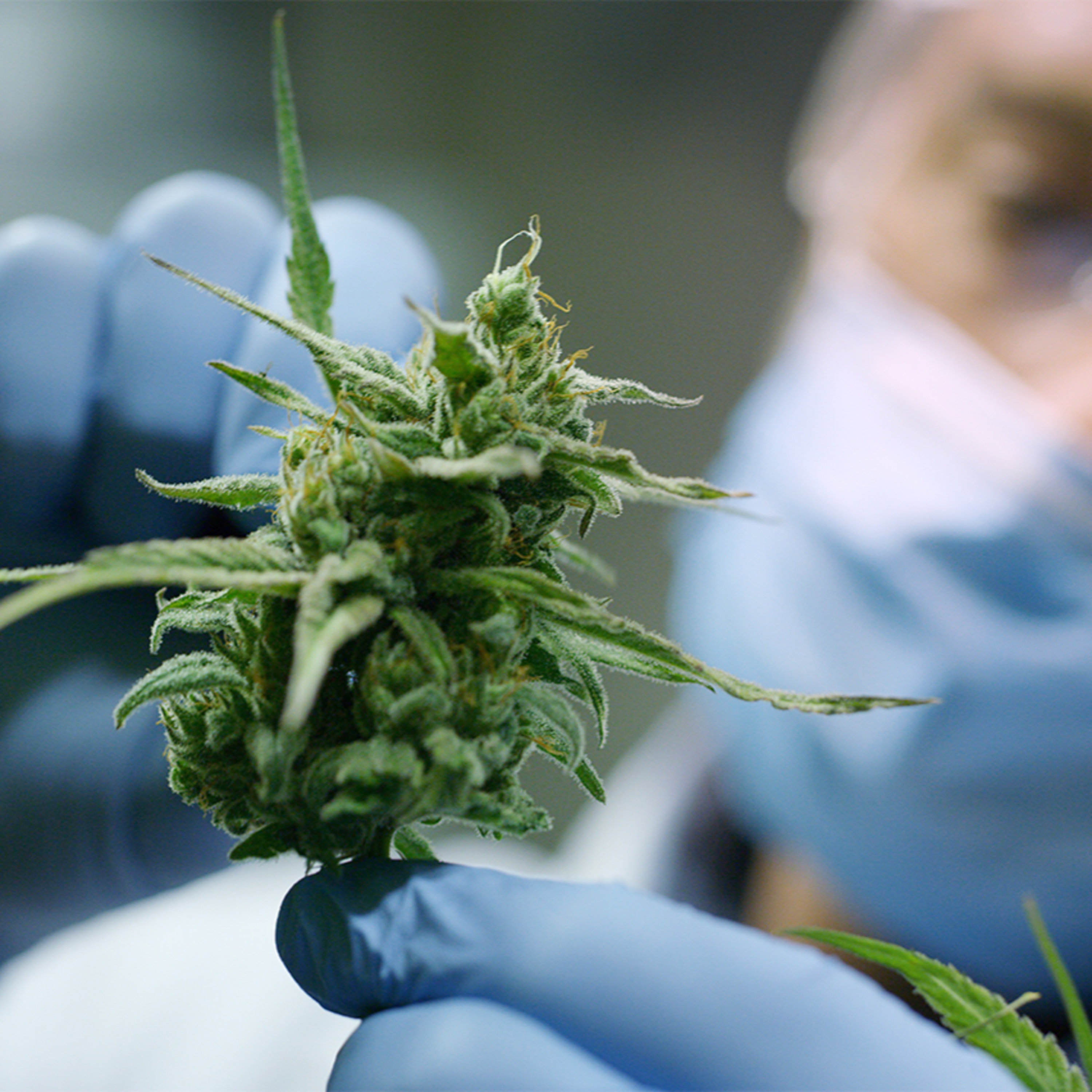
    Cannabis policy in the United States has been, in many ways, a giant experiment. The drug was recently reclassified by the Trump administration from a Schedule I to a Schedule III drug, but remains federally illegal. On the state level, cannabis’s availability to patients and consumers has been determined by voters, not by scientists and regulators. Each state has a different approach to cannabis regulation and product safety, and as a result, a patient using medical cannabis in Florida might be exposed to different risks than a consumer in California, for example. On this episode, host Kelsey Schoenberg is joined by toxicologist Maxwell C. K. Leung, assistant professor at Arizona State University and the director of the ASU Cannabis Analytics, Safety and Health Initiative, and Symone T. Griffith, an ASU Presidential Scholar and doctoral candidate at Arizona State University. Leung and Griffith, who wrote about cannabis regulation and product safety for the Fall 2025 Issues, explain how the federal-state legal divide has shaped cannabis safety, research, and policy. They also share what it’s like to be a researcher working in this space. RESOURCES Read Leung, Griffith, and Marisa Kreider’s essay, “A Coordinated Approach to Cannabis Policy and Product Safety,” in the Fall Issues. Check out Leung and Griffith’s paper on cannabis use and Parkinson’s patients, as well as their lab’s analysis of state-level regulations for cannabis contaminants. Read a paper from the Cannabis Regulators Association outlining a research agenda for how science can shape cannabis policy. Listen to another episode on cannabis: “Minimizing Cannabis’s Harms to Public Health,” with Sara Frueh and guest Yasmin Hurd.

  • January 13 · 31 min

    How Is AI Shaping the Future of Work?

    For as long as people have speculated about the development of artificial intelligence, they have debated its potential impacts on the labor market. Today, several years into widespread use of large language models, those questions are more urgent, but the answers are less clear. Is AI already taking jobs away? Could human beings flourish in a world in which they no longer have to perform economically valuable work? On this episode, Massachusetts Institute of Technology labor economist David Autor joins host Sara Frueh to discuss the possible impacts of AI on the future of work, what that means on an economic and human level, and what policies may be able to shape AI in a way that works for humans. Resources Read the National Academies of Sciences, Engineering, and Medicine’s 2024 consensus study, “Artificial Intelligence and the Future of Work.” Check out Autor’s book, The Work of the Future. Could AI help rebuild the middle class? Autor explores in an essay for Noema Magazine. Read Frueh’s interview with economist Anne Case mentioned in this episode. More on this topic from Issues: “A Vision for Centering Workers in Technology Development” by Amanda Ballantyne, Jodi Forlizzi, and Crystal Weise.

  • Dec 9, 2025 · 30 min

    Science Policy IRL: Bhavya Lal Charts a Future for Humans in Space

    On Science Policy IRL, we talk to people in science policy about what they do and how they got there. In this installment, host Lisa Margonelli talks to Bhavya Lal about the trajectory of her career. Lal began as a nuclear engineer, then completed a midcareer PhD and began to work in science policy. A few years in, she decided to specialize in space policy—which is when things really started to get interesting. Lal has since served in a variety of roles at NASA, including acting chief of staff, chief technology officer, and associate administrator for technology, policy, and strategy. She is currently a professor at the RAND School of Public Policy. In this episode, Lal shares how policy and governance became her passion, how she went from writing reports to leading programs at NASA, and the big questions that drive her work. Resources Read Lal and Roger M. Myers’ Fall 2025 Issues piece, “A Strategy for Building Space Nuclear Systems That Fly,” to learn more about NASA’s efforts to build a nuclear reactor in space. Read Lal and Myers’ white paper “Weighing the Future: Strategic Options for US Space Leadership.” What does space leadership mean? Lal explores this in her SpaceNews piece, “The US can get to the moon first — and still lose.” Check out Earth Abides, the novel that inspired Lal’s career.

  • Nov 25, 2025 · 32 min

    Making AI Chatbots Safer

    Artificial intelligence assistants such as Google’s Gemini have exploded in popularity, constantly offering to help summarize a document, craft an email response, or answer a question. AI chatbots take this even further. These chatbots—sometimes called AI companions—generate conversations with users, and because they “remember” interactions and modulate their responses, they can appear, at times, quite human. On this episode, host Megan Nicholson explores chatbots with J. B. Branch, the Big Tech accountability advocate at Public Citizen. Branch discusses who is using chatbots, what the companies behind these AIs are doing, and how they might be regulated. He also wrote about this topic in his essay for our Fall 2025 edition, “AI Companions Are Not Your Teen’s Friend.” Resources:J. B. Branch on the need to regulate AI chatbots: “AI Companions Are Not Your Teen’s Friend,” Issues in Science & Technology. “AI chatbots shouldn’t be talking to kids — Congress must step in,” The Hill. Learn more about AI companions’ impact on teens mental health by reading Common Sense Media’s risk assessment. Visit the Tech Law Justice Project to read more about the current lawsuits in California state courts against OpenAI. What could regulating AI chatbots look like? See a model state law from Public Citizen.

  • Nov 11, 2025 · 22 min

    Not Now, But Soon: The Art of Portraying War

    Our miniseries Not Now, But Soon challenges the stories we often tell about disasters and explores how we can use speculative fiction to create better futures and policies. On our final episode of this season, host Malka Older examines the role art and fiction play in understanding war. She talks with art and culture historian Brigitte van der Sande, who has spent 25 years studying how war is represented in art—research that brought her to many active conflict zones. Van der Sande discusses how art humanizes the victims of war and spurs action, and how humor and imagination can be forces for resistance. Resources: “Inside Hell We Build Paradise.” Read more about van der Sande’s visit to Rojava, Syria, as part of efforts to build democracy in the region. Check out Other Futures, a multidisciplinary festival that presents speculative visions of the future, founded by van der Sande in 2018. See artwork mentioned in this episode: “The Eyes of Gutete Emerita” and “Soft Target.” Learn more about van der Sande’s latest project, Culture House FKA the Cannibals. This podcast is part of the Future Tense Fiction project, a speculative fiction series that uses imagination to explore how science and technology will shape our future. Read the short stories from the series published by Issues in Science and Technology.

  • Oct 28, 2025 · 20 min

    Not Now, But Soon: Losing Your Country

    Our miniseries Not Now, But Soon challenges the stories we often tell about disasters and explores how we can use speculative fiction to create better futures and policies. On this episode, host Malka Older is joined by Nasir Andisha, ambassador and permanent representative of Afghanistan to the United Nations, to reimagine Afghanistan and the stories we tell about its past, present, and future. As ambassador, Andisha represents the people—not the current government—of a country that has been navigating disaster for decades. He shares the story of what it’s like to lose his nation while continuing to advocate for its people.Resources Visit Nasir Andisha’s website to learn more about human rights, policy, and Afghanistan’s challenges. This episode features brief audio snippets from the BBC and Inside Edition. This podcast is part of the Future Tense Fiction project, a speculative fiction series that uses imagination to explore how science and technology will shape our future. Read the short stories from the series published by Issues in Science and Technology.

Showing 1–20 of 20 episodes