Skip to content
Artwork for The Old Front Line
HistoryEducationTV & FilmFilm History

The Old Front Line

Paul Reed

Walk the battlefields of the First World War with Military Historian, Paul Reed. In these podcasts, Paul brings together over 40 years of studying the Great War, from the stories of veterans he interviewed, to when he spent more than a decade living on the Old Front Line in the heart of the Somme battlefields. 

Play
  • 21 episodes
  • weekly
  • Avg 47 min
  • English

Support the show

Goes straight to the publisher. podnod takes nothing.

Counted on this page — what you have heard stays on this device, so it is not something the list can be paged by.
  • S9 · E47
    August 15 · 46 min

    Bonus Episode: A Roll of Honour

    For our final Bonus Episode before Season 10 begins in September, we look at a rare Roll of Honour for the Gravesend and Dartford area of Kent, and discuss the whole history of these Rolls of Honour and then look through this example seeing what it can tell us about the wider history of the Great War. Main Image: Extracts from the Gravesend and Dartford 'Peace Souvenir' 1919. (Old Front Line archives) Sign up for the free podcast newsletter here: Old Front Line Bulletin. You can order Old Front Line Merch via The Old Front Line Shop. Got a question about this episode or any others? Drop your question into the Old Front Line Discord Server or email the podcast. Send us Fan Mail Support the show

  • S9 · E46
    August 8 · 41 min

    Bonus Episode: Mapping The Old Front Line

    How do you find the hidden story of the First World War landscape? In this special bonus episode of The Old Front Line, we explore the fascinating world of WW1 trench maps and discover how they can transform your understanding of the Western Front and beyond. We begin by looking at the Blue Series IGN maps that first inspired a deeper exploration of the battlefields, before uncovering the remarkable trench maps created during the Great War. What were trench maps? How were they produced? Who used them, and why are they still such an invaluable resource for battlefield historians today? The episode also tells the story of Lieutenant Colonel Evan Maclean Jack CMG DSO, one of the key figures behind the development of British trench mapping, and examines his lasting influence on military cartography. Finally, we put theory into practice by studying three original trench maps from very different theatres of war: Richebourg on the Lys battlefield, Neuville Vitasse south of Arras, and the Salonika Front around Lake Doiran. Together they reveal how maps recorded trenches, strongpoints, roads, artillery positions and the ever-changing front line. Main Image: Trench Maps of Arras, Richebourg and Salonika. The portrait is Lt Col Evan Maclean Jack CMG DSO, 'Maps' at GHQ (IWM archive) Sign up for the free podcast newsletter here: Old Front Line Bulletin. You can order Old Front Line Merch via The Old Front Line Shop. Got a question about this episode or any others? Drop your question into the Old Front Line Discord Server or email the podcast. Send us Fan Mail Support the show

  • S9 · E45
    August 1 · 42 min

    Questions and Answers Episode 58

    In this episode of the Old Front Line Podcast, we answer another fascinating collection of listener questions that explore the people, places and practical realities of the First World War. We begin by asking why visitors can walk, play and live on some historic battlefields, such as the D-Day beaches, while places like Newfoundland Memorial Park on the Somme remain carefully preserved. What makes a battlefield "sacred", and who decides how these landscapes should be remembered? We then untangle the mystery of First World War barbed wire. Discover how troops navigated their own defensive obstacles for raids, wiring parties, patrols and major offensives, and how carefully concealed gaps and communication routes balanced defence with the need to attack. Next, we delve into the history of the King Edward's Horse, examining its formation in 1914, its links to men from across the British Empire, and why some recruits with no Dominion connections—including one listener's ancestor—found themselves serving in this unusual cavalry regiment. Finally, we travel to the closing days of the war to explore what happened after the Armistice. From the emotional scenes of 11 November 1918 to the long process of demobilisation, the return of prisoners of war, encounters between former enemies in No Man's Land, and the immense task of clearing and rebuilding the shattered battlefields of France and Belgium, we trace how Europe emerged from four years of conflict. Main Image: German barbed wire entanglements, known as 'knife rests' photographed in the Beaumont Hamel area, November 1916. (IWM Q1530). Image by Ernest Brookes. Sign up for the free podcast newsletter here: Old Front Line Bulletin. You can order Old Front Line Merch via The Old Front Line Shop. Got a question about this episode or any others? Drop your question into the Old Front Line Discord Server or email the podcast. Send us Fan Mail Support the show

  • S9 · E44
    July 25 · 50 min

    Somme: The Dawn Attack

    In this episode of the Old Front Line Podcast, we explore one of the most successful British attacks of the Battle of the Somme: the Dawn Attack of 14 July 1916. Launched before first light, the assault captured key objectives including Bazentin-le-Petit, Bazentin-le-Grand and Longueval, bringing British troops to the edge of High Wood and changing the course of the campaign. We examine the battle in detail, explaining the careful planning, the surprise achieved by attacking at dawn, and why this operation succeeded where so many earlier assaults had struggled. Along the way, we tell the stories of two men who experienced the fighting from very different perspectives, one an ordinary soldier, the other an officer, bringing a personal dimension to one of the Somme's defining actions. The episode concludes with a virtual battlefield walk, travelling west to east across the ground of the attack. From the British front lines through the captured villages and on towards High Wood, we explore what survives today and reveal how the landscape still tells the story of this remarkable day in July 1916. Main Image: The 20th Deccan Horse, Indian Army, in the Carnoy Valley shortly before their unsuccessful attack at High Wood during the Somme offensive, 14 July 1916. (IWM Q823). Image by John Warwick Brooke. Sign up for the free podcast newsletter here: Old Front Line Bulletin. You can order Old Front Line Merch via The Old Front Line Shop. Got a question about this episode or any others? Drop your question into the Old Front Line Discord Server or email the podcast. Send us Fan Mail Support the show

  • S9 · E43
    July 18 · 45 min

    Questions and Answers Episode 57

    In this Questions and Answers episode we head beneath the battlefields to explore the hidden world of First World War dugouts and bunkers, asking whether the Ypres Salient saw more extensive underground construction than the Somme, and how geology shaped the way British, German, Australian and other armies built and occupied these remarkable underground shelters. We also examine one of the most fascinating aspects of post-war battlefield recovery by looking at the concentration of casualties from High Wood into Caterpillar Valley Cemetery, and ask how the Imperial (now Commonwealth) War Graves Commission decided where recovered soldiers would ultimately be buried. Why were men from the same battalion sometimes reburied in different cemeteries years apart? From there we consider the impact of mist and fog on the Western Front. Did poor visibility and weather bring fighting to a halt, or was it an opportunity for trench raids, wiring parties, patrols and surprise attacks? Finally, we look at one of the 'what ifs' of the First World War. Following Russia's armistice in late 1917, how much artillery and equipment did Germany transfer west alongside its infantry? Could the Kaiserschlacht have happened without the collapse of the Eastern Front, and how might the war have unfolded if Russia had remained in the conflict? Main Image: Battle of Albert, 1916. The steps leading down to a huge German underground shelter at Bernafay Wood, near Montauban, captured by the 9th Division. The picture gives a good idea of the size and depth of many German dugouts on the Somme. (IWM Q4307). Image by John Warwick Brooke. Sign up for the free podcast newsletter here: Old Front Line Bulletin. You can order Old Front Line Merch via The Old Front Line Shop. Got a question about this episode or any others? Drop your question into the Old Front Line Discord Server or email the podcast. Send us Fan Mail Support the show

  • S9 · E42
    July 11 · 50 min

    Old Front Line 300th Episode

    For our 300th Episode we reflect on six years of the Old Front Line Podcast and go back to where we started in March 2020 by retaking a virtual walk through the battlefields and village of Pozières on the Somme. We start at the Pozieres British Cemetery and Memorial and then walk into the village seeing memorials, and discussing some of the 'characters of the Somme', walking up to Mouquet Farm and ending at the Thiepval Memorial to the Missing. Main Image: Thiepval Memorial to the Missing under a summer sky. (OFL Archives) Sign up for the free podcast newsletter here: Old Front Line Bulletin. You can order Old Front Line Merch via The Old Front Line Shop. Got a question about this episode or any others? Drop your question into the Old Front Line Discord Server or email the podcast. Send us Fan Mail Support the show

  • S9 · E41
    July 4 · 43 min

    Questions and Answers Episode 56

    In this episode of the Old Front Line Podcast, we answer another fascinating selection of listener questions covering some of the most intriguing aspects of the First World War. We begin by exploring the formidable German concrete fortifications of the Somme, including the infamous Quadrilateral. How were these massive bunkers and strongpoints constructed so close to the front line, and why were the Allies seemingly unable to prevent their development? We then examine war expectations in 1914 including the belief that the war would be over by Christmas. What did Britain and Germany actually expect from the coming conflict? How did military planners believe victory would be achieved, and what political and territorial objectives were they hoping to secure? The discussion then turns to the Hindenburg Line. How much of this vast defensive system survives today, where can visitors still see it, and why were the Allies caught off guard when German forces withdrew to it during the spring of 1917? Finally, we tackle a practical but rarely discussed aspect of trench warfare: sanitation. Was toilet paper available to soldiers on the Western Front, what alternatives were used, and what can this tell us about daily life, hygiene, and disease in wartime conditions? Main Image: Remains of a German trench in Gommecourt, showing a concrete dug-out entrance, March 1917. (IWM Q4913). Image by John Warwick Brooke. Sign up for the free podcast newsletter here: Old Front Line Bulletin. You can order Old Front Line Merch via The Old Front Line Shop. Got a question about this episode or any others? Drop your question into the Old Front Line Discord Server or email the podcast. Send us Fan Mail Support the show

  • S9 · E40
    June 27 · 47 min

    Somme South: Mametz to Montauban

    In this episode of the Old Front Line Podcast, we continue our exploration of the Battle of the Somme on 1st July 1916 by examining the southern sector of the British attack. Travelling across the battlefields of Mametz and Montauban, we uncover how some of the most successful attacks of the opening day unfolded and why this part of the front achieved results that proved elusive elsewhere. We explore the plans, the units involved, and the fierce fighting that took place as British troops advanced against the German defences. Along the way, we examine the stories of the soldiers who fought here, the objectives they were tasked with capturing, and the cost of victory on the Somme's first day. The episode also includes a virtual battlefield walk across the landscapes of Mametz and Montauban as they appear today, connecting the modern terrain with the events of July 1916 and highlighting key locations, memorials, and surviving traces of the battlefield. Whether you're researching the Battle of the Somme, planning a battlefield visit, or simply interested in First World War history, this episode provides an in-depth guide to one of the most important sectors of 1st July 1916. Jonathan Porter’s Somme Books: Zero Hour Z Day website. Main Image: Infantry from the British 7th Division advancing towards German trenches at Mametz, 7.30am on 1 July 1916, the opening day of the Battle of the Somme. (IWM Q 89). Image by No 1 Printing Company Royal Engineers. Sign up for the free podcast newsletter here: Old Front Line Bulletin. You can order Old Front Line Merch via The Old Front Line Shop. Got a question about this episode or any others? Drop your question into the Old Front Line Discord Server or email the podcast. Send us Fan Mail Support the show

  • S9 · E39
    June 20 · 55 min

    Somme Central: Ovillers to Fricourt

    On the morning of 1st July 1916, as whistles blew along miles of the Somme front, the men of the III Corps and XV Corps rose from their trenches and walked into the centre of one of the most catastrophic days in British military history. In this second special episode of Old Front Line for the Somme 110th Anniversary, we focus on the brutal heart of the Somme battlefield, that stretch of scarred chalk downland running from the village of Ovillers, down through the fortress of La Boisselle, to the encircled ruins of Fricourt. This was the ground where some of the few remaining regulars alongside men of Kitchener's volunteer army, Tyneside Scots and Irishmen, Grimsby fishermen, South Yorkshire lads in the York & Lancs, and Green Howards among so many others, were sent against some formidable German positions on this central part of the Somme front of 1st July. The podcast follows the 8th Division into the killing ground of The Nab and Mash Valley at Ovillers, where German machine guns on three sides made survival almost impossible. We stand at the edge of the Lochnagar crater and trace the advance of the 34th Division, all twelve battalions committed at once, nothing held in reserve, as the Tyneside brigades marched in waves across open ground toward a village that was ready and waiting for them. And we examine the bitter fighting around Fricourt, where the 10th West Yorkshire Regiment suffered the single greatest British battalion casualty toll of any unit in on The First Day of the Somme. We end with a virtual walk across those battlefields today. Jonathan Porter's Somme Books: Zero Hour Z Day website. Main Image: Destroyed German trenches at Ovillers, looking towards Albert, July 1916. (IWM Q 4044). Image by John Warwick Brooke. Sign up for the free podcast newsletter here: Old Front Line Bulletin. You can order Old Front Line Merch via The Old Front Line Shop. Got a question about this episode or any others? Drop your question into the Old Front Line Discord Server or email the podcast. Send us Fan Mail Support the show

  • S9 · E38
    June 13 · 41 min

    Questions and Answers Episode 55

    In this latest Questions & Answers episode of the Old Front Line podcast, we tackle another fascinating collection of listener questions that uncover some of the lesser-known aspects of the First World War. We begin by exploring the German tradition of Sterbebilder or Death Cards, the memorial cards issued to commemorate fallen soldiers. How were these cards produced, who organised them, and where did the photographs that often appeared on them come from? Next, we examine the impact of the 1918 Influenza Pandemic on the armies of the Great War. As Germany's military fortunes declined during the final months of the conflict, how much of a role did illness play alongside battlefield losses, exhaustion, and dwindling resources? We also consider the wider effect of influenza on all the major combatant nations. We then turn to one of the most familiar nicknames in British medal collecting: "Pip, Squeak and Wilfred". Where did these curious names come from, and how did they become attached to the 1914–15 Star, British War Medal and Victory Medal? Finally, we look at trench warfare and ask how opposing armies managed to dig trenches in places where the enemy was often only a few yards away. How were these positions established under fire, and how did some sectors of the front evolve into landscapes where soldiers could hear conversations and even smell the enemy's cooking? Sign up for the free podcast newsletter here: Old Front Line Bulletin. You can order Old Front Line Merch via The Old Front Line Shop. Got a question about this episode or any others? Drop your question into the Old Front Line Discord Server or email the podcast. Send us Fan Mail Support the show

  • S9 · E37
    June 6 · 1 hr 1 min

    Somme North: Serre to Thiepval

    In the first of a three-part series marking the 110th anniversary of the Battle of the Somme, we explore the fighting in the northern sector of the battlefield on 1 July 1916. This episode examines the attacks at Serre, Beaumont-Hamel and Thiepval, where some of the most dramatic and costly actions of the opening day unfolded. We look at the ground over which the soldiers advanced, the plans behind the attacks, the units involved, and how the battle developed. From the struggles of the Pals Battalions attacking Serre to the devastating losses suffered below the heights of Thiepval, we trace the story of the men who fought there and assess the outcomes of their efforts. Along the way, we examine the key commanders, the challenges posed by the terrain and German defences, and the human cost of the battle, exploring the casualties suffered and the legacy left behind on this iconic section of the Western Front. The episode concludes with a virtual walk across the modern battlefield, following the route of the attacks and contemplating that story, that legacy of 1 July 1916 today. Main Image: Troops waiting, some still asleep, in a support trench shortly before zero hour, Beaumont Hamel. (IWM Q64). Image by Royal Engineers No.1 Printing Company. Sign up for the free podcast newsletter here: Old Front Line Bulletin. You can order Old Front Line Merch via The Old Front Line Shop. Got a question about this episode or any others? Drop your question into the Old Front Line Discord Server or email the podcast. Send us Fan Mail Support the show

  • S9 · E36
    May 30 · 45 min

    Questions and Answers Episode 54

    For this episode of the Old Front Line podcast, we open the virtual mailbag once again for another Questions & Answers special covering some fascinating and lesser-known aspects of the First World War. From observation balloons hanging silently over the trenches to trench foot, white feathers and booby traps in No Man’s Land, this episode explores the realities of life on the Western Front beyond the better-known battles. We begin by looking at the observation balloons - the so-called Balloonatics - that became such a familiar feature of the wartime landscape. Who manned these vulnerable aerial observation posts? What was life like for the crews suspended high above the battlefield? How many balloons lined the front by 1916, and were they more effective over the flat plains of Flanders than the broken ground of the Somme? We also examine the infamous White Feather campaign and the pressure placed on young men to enlist, alongside the Derby Scheme which allowed men to attest for service before being called up later. How widespread was the practice, and what impact did it have on those who experienced it? Inspired by an episode of Blackadder Goes Forth, we then investigate whether anti-personnel minefields really existed in the trenches of the Great War, and explore the grim world of booby traps and explosive devices hidden one the battlefield. Finally, we answer a question from Australia concerning trench foot and the long-term effects suffered by soldiers who returned to duty after treatment. How badly could damaged feet affect a man’s ability to march, and what happened when he rejoined his battalion? Join us for another deep dive into the forgotten details and human stories of the First World War. The book mentioned in the introduction is Jon Woolcott's Tattooed Hills: Journeys to Chalk Figures published in 2026. Main Image: The Medical Officer of the 12th Battalion ,East Yorkshire Regiment conducts a foot inspection in a support trench near Roclincourt, 9 January 1918. (IWM Q10622). Image by Thomas Keith Aitken. Sign up for the free podcast newsletter here: Old Front Line Bulletin. You can order Old Front Line Merch via The Old Front Line Shop. Got a question about this episode or any others? Drop your question into the Old Front Line Discord Server or email the podcast. Send us Fan Mail Support the show

  • S9 · E35
    May 23 · 1 hr

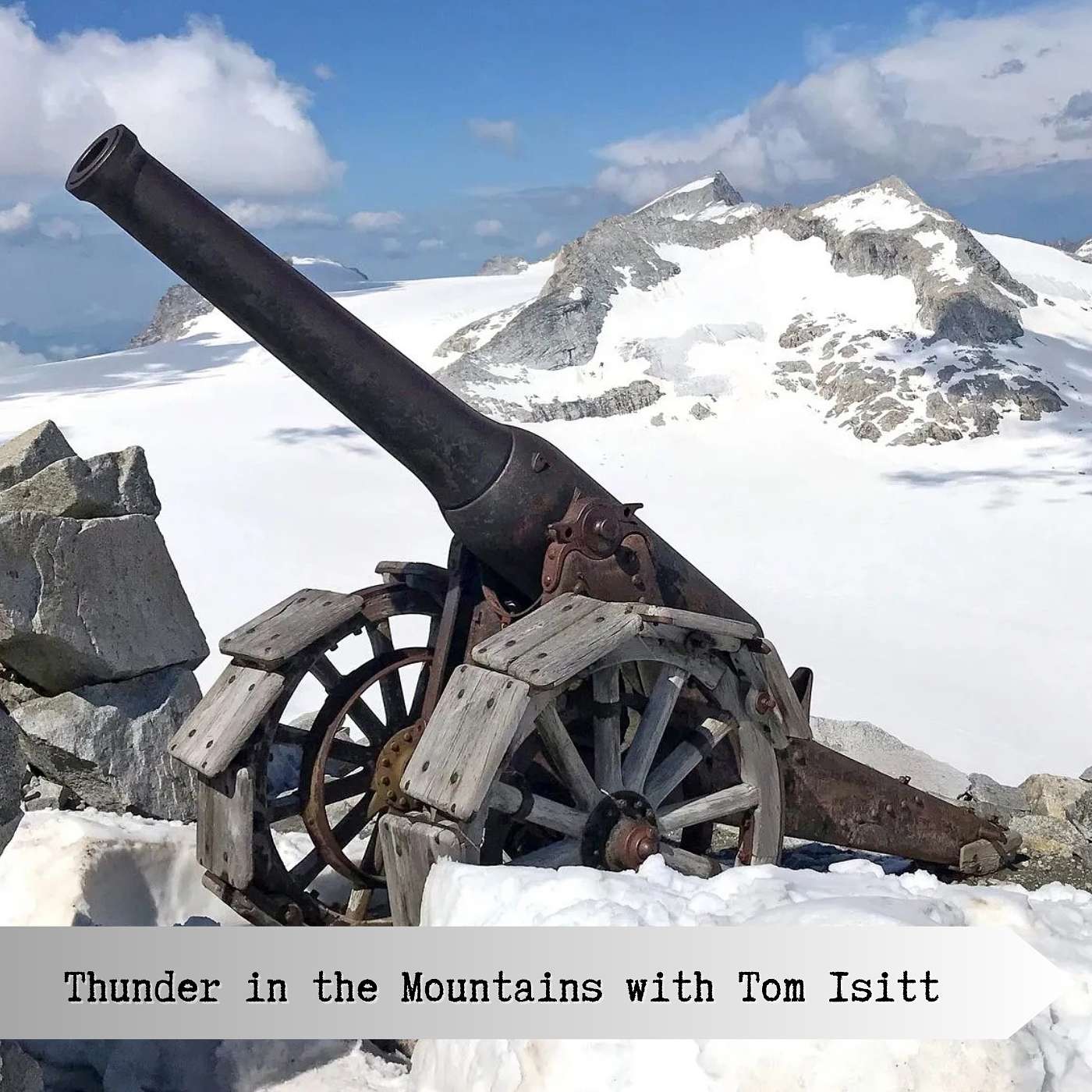
    Thunder in the Mountains with Tom Isitt

    In this special edition of the podcast we explore a lesser-known theatre of conflict from the First World War in Northern Italy with historian Tom Isitt. Tom's new book - Thunder in the Mountains - follows a journey he made across those battlefields and with him we discover the unique challenges of mountain warfare, the diverse nations involved, and personal stories from the battlefield. We examine the Battlefields on the Izonzo, discuss some of the highest points of the Great War in the Dolomites and move to the involvement of German troops in Italy, including Erwin Rommel at Caporetto in 1917, and the arrival of British forces who fought here until the end of the war. You visit Tom Isitt's website and order the book here: Thunder in the Mountains. Sign up for the free podcast newsletter here: Old Front Line Bulletin. You can order Old Front Line Merch via The Old Front Line Shop. Got a question about this episode or any others? Drop your question into the Old Front Line Discord Server or email the podcast. Send us Fan Mail Support the show

  • S9 · E34
    May 16 · 44 min

    Questions and Answers Episode 53

    In this wide-ranging listener Q&A episode of Old Front Line, we dive into some intriguing and human questions thrown up by the Great War. We begin with the fate of the missing. With hundreds of thousands of men listed as “missing” across the Western Front, is there any real evidence that some chose to disappear, seizing the chaos of war to start new lives elsewhere? We explore the realities of desertion, the systems used to record the dead, and whether the idea of men slipping away into anonymity holds up under historical scrutiny. From there, we head to the contested borderlands of Alsace-Lorraine. Annexed by the German Empire after the Franco-Prussian War, the region produced soldiers who often found themselves fighting for Germany despite deep cultural ties to France. Were these men treated with suspicion? Were they deliberately dispersed among regiments, and how did questions of identity and loyalty shape their wartime experience? We also turn to the modern landscape of the First World War, answering a question about relationships with landowners across the former front lines. What happens when cemeteries and forgotten sites lie on private land? Do landowners welcome visitors, and how connected do they feel to the history beneath their fields? Finally, we tackle casualty comparisons. While 1 July 1916 stands as the British Army’s darkest day on the Battle of the Somme, what were the equivalent days of devastation for the French and German armies? From the Battle of the Frontiers to the Offensive in the Champagne, we examine when losses peaked and what that tells us about the wider war. As always, this episode blends thoughtful listener questions with grounded historical analysis, uncovering the personal stories and bigger truths behind the conflict. Research by David O'Mara: Casualties in 1914 and 1915. 315eRI on Substack: The Day Flesh Met Steel. Main Image: The Dawn: Propaganda Poster During the First World War with Two Women Representing Alsace and Lorraine by Henri Royer. Sign up for the free podcast newsletter here: Old Front Line Bulletin. You can order Old Front Line Merch via The Old Front Line Shop. Got a question about this episode or any others? Drop your question into the Old Front Line Discord Server or email the podcast. Send us Fan Mail Support the show

  • S9 · E33
    May 9 · 34 min

    St Eloi Craters 1916

    Step into one of the most chaotic and little-known battles of the First World War in 1916 with this episode of The Old Front Line, as we explore the Battle of the St Eloi Craters (March–April 1916). Fought in the shattered landscape south of Ypres, this battle saw the devastating use of underground mines transform the battlefield into a nightmarish maze of mud-filled craters. We examine how British tunnelling companies detonated massive charges beneath German lines, and how the newly arrived Canadian Corps struggled to hold and understand the ground they had inherited. At the heart of this episode are powerful first-hand accounts. We hear the experiences of Donald Fraser, whose vivid testimony captures the confusion and brutality of crater fighting, and Harold McGill, medical officer with the 31st Battalion, who provides a harrowing insight into the challenges of treating the wounded in such extreme conditions. Main Image: Actions of St. Eloi Craters. Troops of the Northumberland Fusiliers, 3rd Division, wearing German helmets and gas masks captured at St. Eloi, 27th March 1916. Image taken by Ernest Brooks (IWM Q494) Sign up for the free podcast newsletter here: Old Front Line Bulletin. You can order Old Front Line Merch via The Old Front Line Shop. Got a question about this episode or any others? Drop your question into the Old Front Line Discord Server or email the podcast. Send us Fan Mail Support the show

  • S9 · E32
    May 2 · 42 min

    Questions and Answers Episode 52

    Step back from the battlefield and into the questions that bring the Great War to life in this special Q&A episode. Drawing on years of battlefield exploration and historical research, we tackle four fascinating listener questions centred on the Battle of the Somme and beyond. We begin on the heights above the battlefield, exploring the idea of Bouzincourt Ridge as a “grandstand view” on 1 July 1916. What could be seen at 7:30am as the attack began? While no direct veteran testimony from that exact vantage point survives, we examine contemporary accounts, artillery observation points, and how the opening moments of the Somme were witnessed from the rear areas. From there, we address a powerful and sobering question about the dead of the Somme. With so many soldiers listed as unidentifiied, how were remains recovered, identified, and buried? Could parts of the same individual have ended up in different graves, and how did organisations like the Imperial War Graves Commission ensure accuracy and dignity in commemoration? Next, we break down the sheer scale of the Somme fighting. Was it a continuous daily offensive, or a series of smaller battles? We explain how the campaign unfolded between July and November 1916, highlighting key phases such as the Battle of Bazentin Ridge and the Battle of Flers-Courcelette to give clarity to one of history’s most complex battles. Finally, we turn to literature, examining Birdsong by Sebastian Faulks. How accurate is its depiction of trench life and tunnelling warfare? We compare fiction with historical reality, exploring where the novel captures the truth, and where it takes creative licence. Main Image: Bouzincourt Ridge Cemetery during the Centenary in 2018 (Old Front Line Archives) Sign up for the free podcast newsletter here: Old Front Line Bulletin. You can order Old Front Line Merch via The Old Front Line Shop. Got a question about this episode or any others? Drop your question into the Old Front Line Discord Server or email the podcast. Send us Fan Mail Support the show

  • S9 · E31
    April 25 · 1 hr 3 min

    The Bad Luck Battalion

    With a special edition for ANZAC Day, in this insightful interview, playwright Arthur Meek discusses his project to bring to life the voices of Gallipoli veterans through oral histories and verbatim theatre. The conversation explores the power of personal stories, memory, remembrance, and the impact of war on individuals and collective memory. A bonus for TOFL pod listeners - 50% off for the first 50 TOFL listeners with coupon: TOFL50 The Bad Luck Battalion | A Verbatim Anzac War Story - get the full story in audio + ebook formats here https://payhip.com/b/C9B6s Website where folks can keep up to date about the project www.vog.care www.facebook.com/voicesofgallipoli Main Image: The Otago Regiment landing at Gallipoli 1915. Sign up for the free podcast newsletter here: Old Front Line Bulletin. You can order Old Front Line Merch via The Old Front Line Shop. Got a question about this episode or any others? Drop your question into the Old Front Line Discord Server or email the podcast. Send us Fan Mail Support the show

  • S9 · E30
    April 18 · 47 min

    Questions and Answers Episode 51

    In this in-depth Questions & Answers episode of The Old Front Line, we tackle four fascinating listener questions exploring the aftermath and realities of the First World War. We begin in the Ypres Salient, examining how the Commonwealth War Graves Commission replaced thousands of temporary wooden crosses with the iconic headstones we see today. How was this monumental task organised? How many stonemasons were involved, and how long did the process take? Next, we explore the often misunderstood concept of “machine gun barrages” during trench warfare. How did these indirect fire weapons work, and how effective were they on the battlefield? We also look at examples of the barrages and developing use of machine-guns on the battlefield. We then move behind the lines to investigate burial practices at Casualty Clearing Stations and Field Hospitals. With thousands buried in short periods, what environmental and public health challenges arose, and did these cemeteries pose risks to local populations after the war? Finally, we examine the complex issue of land ownership after 1918. Across former battlefields in France and Belgium, how were destroyed landscapes surveyed, boundaries restored, and compensation provided to those who had lost everything? More on the Vickers Gun: Vickers Machine Gun Collection & Research Association. Main Image: A Vickers machine gun team from the Machine Gun Corps (MGC) wearing PH Type anti-gas helmets in action near Ovillers during the Battle of the Somme, July 1916. (IWM Q3995) Sign up for the free podcast newsletter here: Old Front Line Bulletin. You can order Old Front Line Merch via The Old Front Line Shop. Got a question about this episode or any others? Drop your question into the Old Front Line Discord Server or email the podcast. Send us Fan Mail Support the show
  • S9 · E29
    April 11 · 58 min

    Chalk, Englishness and the Great War

    In this special episode with Professor Mark Connelly we explore the profound connection between landscape, memory, and national identity during the Great War, focusing on the significance of chalk landscapes in Britain and their influence on cultural memory and battlefield symbolism. We dive into how the beautiful, chalky terrains of England shaped the identity of soldiers during the Great War. Many of them carried an intimate knowledge of these landscapes, a connection forged through literature and culture. When they found themselves on the battlefields of France, the familiar terrain sparked powerful memories and emotions, making the destruction all the more poignant. This narrative goes beyond military history; it’s about identity, memory, and how we connect with the land we call home. The chalk downlands were not just a backdrop but a symbol of what they were fighting for, and losing. And we ask, what does this mean for how we remember the war today? Professor Mark Connelly's Tours: Mark Connelly - Connelly Contours The book mentioned was 'England in France' by Charles Vince, illustrations by Sydney R. Jones (London 1919) Main Image: A Grave and a Mine Crater at La Boisselle, August 1917 by William Orpen (IWMART2378) Sign up for the free podcast newsletter here: Old Front Line Bulletin. You can order Old Front Line Merch via The Old Front Line Shop. Got a question about this episode or any others? Drop your question into the Old Front Line Discord Server or email the podcast. Send us Fan Mail Support the show

  • S9 · E28
    April 4 · 38 min

    Questions and Answers Episode 50

    We are now 50 Q&As in, and the questions keep getting better, sharper, and more human! This milestone edition of The Old Front Line is built around four listener prompts that take us from the small, intimate scale of one soldier’s photograph to the vast, uneasy scale of a battlefield that never fully stops giving things back to the surface. We start with the stories that first hooked me on First World War history: individual men whose faces, medals, and graves became “beacons” I return to again and again. From Ypres to Plugstreet to the Somme, we talk about why researching named soldiers and walking the Western Front still matters, and how personal connections can turn into serious historical work. Then we shift into regimental identity and military tradition by unpacking what “Light Infantry” really means by 1914. Were these units deployed differently in the Great War, or is the name mainly heritage? We look at rifle regiments, status, old titles, and the sheer scale of their contribution across the war. Finally, we zoom out to the landscape of memory itself: comparing American Civil War battlefields like Gettysburg with the old front line, touching on Franco-Prussian War commemoration, and finishing with the gritty reality of post-1918 farming, ordnance clearance, Graves Registration, iron harvest, and why reburials still happen today. If you enjoyed this one, subscribe, share it with a fellow Great War traveller, and leave a review so more listeners can find the podcast. Main Image: soldiers of the KRRC while in training c.1915 (Old Front Line Archives). Sign up for the free podcast newsletter here: Old Front Line Bulletin. You can order Old Front Line Merch via The Old Front Line Shop. Got a question about this episode or any others? Drop your question into the Old Front Line Discord Server or email the podcast. Send us Fan Mail Support the show

    • Transcript
    • Chapters
Showing 1–20 of 21 episodes