Skip to content
Artwork for The Next Picture Show
TV & FilmFilm HistoryFilm Reviews

The Next Picture Show

Filmspotting

Looking at cinema's present via its past. From the former editorial team of The Dissolve, The Next Picture Show examines how classic films inspire and inform modern movies. Episodes take a deep dive into a classic film and its legacy, then compare and contrast that film with a modern successor. Hosted and produced by Genevieve Koski, Keith Phipps, Tasha Robinson, and Scott Tobias.

Play
  • 26 episodes
  • weekly
  • Avg 1 hr 8 min
  • English
Counted on this page — what you have heard stays on this device, so it is not something the list can be paged by.
  • Tuesday · 1 hr 2 min

    Existential Zones, Pt. 2 — It Ends

    Alexander Ullom's It Ends is a daring little piece of microbudget drama about four friends at transition points in their lives, who find themselves in a place where life and death no longer hold any meaning. Whether it’s a film about despair, about the afterlife, about the human condition, or all of the above, is up for discussion this week, as well as how It Ends fits into this current moment in independent horror cinema. After that, we bring Andrei Tarkovsky’s Solaris back in for Connections to discuss these two films’ respective existential journeys, the baggage their characters are bringing with them, and how each movie uses its genre premise to explore a big central metaphor. Then for Your Next Picture Show, we take a quick look at how Steven Soderbergh’s 2002 version of Solaris compares to Tarkovsky’s. Please share your thoughts about Solaris, It Ends, or anything else in the world of film, by sending an email or voice memo to comments@nextpictureshow.net, or leaving a short voicemail at (773) 234-9730. Next Pairing: Padraic McKinley’s The Weight and William Friedkin’s Sorcerer This episode is presented by⁠ ⁠⁠⁠⁠⁠⁠⁠Regal Unlimited⁠⁠⁠⁠⁠⁠⁠⁠⁠, the all-you-can-watch movie subscription pass that pays for itself in just two visits. Use code NEXTPIC26 for 15% off. Support the show: https://www.patreon.com/join/NextPictureShow See omnystudio.com/listener for privacy information.

    • Transcript
  • September 8 · 1 hr 8 min

    #539: Existential Zones, Pt. 1 — Solaris (1972)

    Alexander Ullom’s feature debut, It Ends, has been billed as a horror movie, but it’s more of an existential exercise wrapped inside a genre premise. That same description could be applied to Solaris, though Andrei Tarkovsky’s 1972 science-fiction classic takes nearly twice as long to ponder the nature of life in a situation where death has no meaning anymore. So this week we’re discussing whether Solaris’ deliberate pace and opaque symbolism work toward or against its emotional core, its relative accessibility compared to Tarkovsky’s other work, and what about the film invites its reputation as the “anti-2001.” Then in Feedback, a listener brings an alternative reading to our recent discussion of War of the Worlds as a response to 9/11. Please share your thoughts about Solaris, It Ends, or anything else in the world of film, by sending an email or voice memo to comments@nextpictureshow.net, or leaving a short voicemail at (773) 234-9730. This episode is presented by⁠ ⁠⁠⁠⁠⁠⁠⁠Regal Unlimited⁠⁠⁠⁠⁠⁠⁠⁠⁠, the all-you-can-watch movie subscription pass that pays for itself in just two visits. Use code NEXTPIC26 for 15% off. Support the show: https://www.patreon.com/join/NextPictureShow See omnystudio.com/listener for privacy information.

    • Transcript
  • September 1 · 1 hr 1 min

    The Family That’s Prey Together, Pt. 2 — The End of Oak Street

    The Platt family is barely surviving, and that’s before their neighborhood is inexplicably dropped millions of years into the past and overrun by hungry dinosaurs. The End of Oak Street isn’t nearly as concerned with explaining that premise or exploring its characters as it is with facilitating dino mayhem and nostalgia for the films of writer-director David Robert Mitchell’s youth. That can be to the film’s benefit and detriment, both of which we cover in this week’s discussion, before bringing Steven Spielberg’s War of the Worlds back in to see how these two family survival narratives compare in their respective ideas about flawed parents, imperiled children, and the universal human desire to not get eaten. Then in Your Next Picture Show we consider a couple of possible alternate pairing for Oak Street, one featuring aliens, one featuring dinosaurs, and both underrated. Please share your thoughts about War of the Worlds, The End of Oak Street, or anything else in the world of film, by sending an email or voice memo to comments@nextpictureshow.net, or leaving a short voicemail at (773) 234-9730. Next Pairing: Alexander Ullom’s It Ends and Andrei Tarkovsky’s Solaris This episode is presented by⁠ ⁠⁠⁠⁠⁠⁠⁠Regal Unlimited⁠⁠⁠⁠⁠⁠⁠⁠⁠, the all-you-can-watch movie subscription pass that pays for itself in just two visits. Use code NEXTPIC26 for 15% off. Support the show: https://www.patreon.com/join/NextPictureShow See omnystudio.com/listener for privacy information.

    • Transcript
  • August 25 · 1 hr 5 min

    The Family That's Prey Together, Pt. 1 — War of the Worlds (2005)

    David Robert Mitchell’s The End of Oak Street drops an ordinary family into extraordinary circumstances, forcing them to focus all their energy on surviving— and maybe, just maybe, learning to understand each other along the way. That structure, combined with Oak Street’s Spielbergian spectacle, pointed us toward 2005’s War of the Worlds, which fuses H.G. Wells’ 1898 novel to images and emotions that draw on the attacks of 9/11. How that approach holds up a quarter-century removed from the events that inspired it is up for discussion this week, along with where War of the Worlds falls on the Steven Spielberg Alien-Encounter Continuum, and just how close that sentimental ending comes to ruining the movie entirely. Then in Feedback, a listener, with an assist from Orson Welles, invites us to get galaxy-brained on the nature of homage as it relates to cinema generally and this podcast specifically. Please share your thoughts about War of the Worlds, The End of Oak Street, or anything else in the world of film, by sending an email or voice memo to comments@nextpictureshow.net, or leaving a short voicemail at (773) 234-9730. This episode is presented by⁠ ⁠⁠⁠⁠⁠⁠⁠Regal Unlimited⁠⁠⁠⁠⁠⁠⁠⁠⁠, the all-you-can-watch movie subscription pass that pays for itself in just two visits. Use code NEXTPIC26 for 15% off. Support the show: https://www.patreon.com/join/NextPictureShow See omnystudio.com/listener for privacy information.

    • Transcript
  • August 18 · 1 hr 18 min

    Anyone Can Cook, Pt. 2 — Tony

    Matt Johnson’s new biopic Tony sidesteps the infamous Walk Hard trap by narrowing its scope to a single summer that would end up shaping the rest of Anthony Bourdain’s life, but not necessarily defining it. Whether that approach is ultimately satisfying to fans of the late celebrity chef and author is up for debate this week, as we’re once again joined by Vulture critic Roxana Hadadi to discuss how Tony plays into and against our expectations of a Bourdain narrative. Then we bring Ratatouille back in for Connections, to compare how these two films introduce us to kitchen culture through the eyes of a newbie. Then for Your Next Picture Show, we recommend two more recent films to fill out a Matt Johnson triple feature. Please share your thoughts about Ratatouille, Tony, or anything else in the world of film, by sending an email or voice memo to comments@nextpictureshow.net, or leaving a short voicemail at (773) 234-9730. Next Pairing: David Robert Mitchell’s The End of Oak Street and Steven Spielberg’s The War of the Worlds This episode is presented by⁠ ⁠⁠⁠⁠⁠⁠⁠Regal Unlimited⁠⁠⁠⁠⁠⁠⁠⁠⁠, the all-you-can-watch movie subscription pass that pays for itself in just two visits. Use code NEXTPIC26 for 15% off. Support the show: https://www.patreon.com/join/NextPictureShow See omnystudio.com/listener for privacy information.

    • Transcript
  • August 11 · 1 hr 15 min

    #535: Anyone Can Cook, Pt. 1 — Ratatouille

    Anthony Bourdain, whose early experience working in a restaurant kitchen is chronicled in the new biopic Tony, once singled out Ratatouille as Hollywood’s best depiction of working in a restaurant kitchen, which is all the invitation we need to revisit Brad Bird’s 2007 Pixar classic. So this week, with the help of Vulture critic Roxana Hadadi, we consider how Ratatouille trusts its viewers to accept an audacious premise, and rewards them in emotional payoff; parse the nuances and contradictions of its “anyone can cook” mantra; and lament that its lone female character of consequence falls victim to Trinity Syndrome. And yes, of course this group of critics has some thoughts on Anton Ego and the film’s take on criticism. Then in Feedback, we discuss a short excerpt from a much longer, in-depth analysis we received in response to our O Brother Where Art Thou? episode. Please share your thoughts about Ratatouille, Tony, or anything else in the world of film, by sending an email or voice memo to comments@nextpictureshow.net, or leaving a short voicemail at (773) 234-9730. This episode is presented by⁠ ⁠⁠⁠⁠⁠⁠⁠Regal Unlimited⁠⁠⁠⁠⁠⁠⁠⁠⁠, the all-you-can-watch movie subscription pass that pays for itself in just two visits. Use code NEXTPIC26 for 15% off. Support the show: https://www.patreon.com/join/NextPictureShow See omnystudio.com/listener for privacy information.

    • Transcript
  • July 28 · 1 hr 14 min

    Home Sweet Homer, Pt. 2 — The Odyssey

    Christopher Nolan’s The Odyssey approaches Homer’s epic from a much more literal vantage point than O Brother Where Art Thou, but that doesn’t mean it’s a dutiful, beat-by-beat adaptation. So this week we’re talking through the ways in which Nolan put his personal stamp on one of the most well-known stories in all of literature, from the film’s non-linear structure and preoccupation with time, to the physicality and humanity Nolan brings to this big-screen spectacle about a time of apparent magic. Then in Connections, we look at how these two very different films approach their shared source material, not just in direct character and narrative parallels, but also their interest in the oral tradition and eras coming to an end. Then in Your Next Picture we return to the subject of O Brother ’s music with a recommendation for the 2000 concert film Down From the Mountain. Please share your thoughts about O Brother, Where Art Thou?, The Odyssey, or anything else in the world of film, by sending an email or voice memo to comments@nextpictureshow.net, or leaving a short voicemail at (773) 234-9730. Next Pairing: Matt Johnson’s Tony and Brad Bird’s Ratatouille This episode is presented by⁠ ⁠⁠⁠⁠⁠⁠⁠Regal Unlimited⁠⁠⁠⁠⁠⁠⁠⁠⁠, the all-you-can-watch movie subscription pass that pays for itself in just two visits. Use code NEXTPIC26 for 15% off. Support the show: https://www.patreon.com/join/NextPictureShow See omnystudio.com/listener for privacy information.

    • Transcript
  • July 21 · 1 hr 15 min

    Home Sweet Homer, Pt. 1 — O Brother, Where Art Thou?

    Considering The Odyssey is one of the most famous and influential stories of all time, there had been relatively few attempts to directly translate Homer’s epic poem to the big screen until Christopher Nolan came along to do it at a blockbuster scale. It’s been more common for filmmakers, such as Joel and Ethan Coen, to use it as the loose framework for a flawed hero’s journey home, such as the one undertaken by Ulysses Everett McGill in O Brother, Where Art Thou?, a Depression-era musical comedy that maps on to Homer’s version only in the broadest of strokes. But revisiting O Brother through the lens of its stated source material, as we’re doing this week, is a revealing lesson in the malleability of adaptation, as well as the Coens’ ability to make even one of the most familiar tales in all of storytelling uniquely theirs. Then in Feedback, we finally break our silence on the indie-horror phenomenon that is Obsession. Please share your thoughts about O Brother, Where Art Thou?, The Odyssey, or anything else in the world of film, by sending an email or voice memo to comments@nextpictureshow.net, or leaving a short voicemail at (773) 234-9730. This episode is presented by⁠ ⁠⁠⁠⁠⁠⁠⁠Regal Unlimited⁠⁠⁠⁠⁠⁠⁠⁠⁠, the all-you-can-watch movie subscription pass that pays for itself in just two visits. Use code NEXTPIC26 for 15% off. Support the show: https://www.patreon.com/join/NextPictureShow See omnystudio.com/listener for privacy information.

    • Transcript
  • July 14 · 1 hr 1 min

    Lady Justice, Pt. 2 — Supergirl

    A good chunk of Supergirl’s DNA can be traced back to True Grit by way of the comics miniseries the film is adapting, which is why we paired it with Joel and Ethan Coen’s 2010 version of that story. But as our discussion of Craig Gillespie’s new entry in James Gunn’s revamped DC Universe details, Supergirl often feels less indebted to its space-western source material than to several other superhero films that preceded it, including some of Gunn’s. That makes it tough to balance a film we all consider okay-at-best against a stone-cold Coens classic, but we attempt to anyway in Connections as we consider these two films’ shared interest in vengeance, western tropes, and really, really bad guys with murky motivations. Then in Your Next Picture Show, we honorTrue Grit’s star-making performance with a recommendation for another Hailee Steinfeld film that’s a favorite of this podcast, The Edge of Seventeen. Please share your thoughts about True Grit, Supergirl, or anything else in the world of film, by sending an email or voice memo to comments@nextpictureshow.net, or leaving a short voicemail at (773) 234-9730. Next Pairing: Christopher Nolan’s The Odyssey and The Coen Brothers’ (yes, again) O Brother, Where Art Thou? This episode is presented by⁠ ⁠⁠⁠⁠⁠⁠⁠Regal Unlimited⁠⁠⁠⁠⁠⁠⁠⁠⁠, the all-you-can-watch movie subscription pass that pays for itself in just two visits. Use code NEXTPIC26 for 15% off. Support the show: https://www.patreon.com/join/NextPictureShow See omnystudio.com/listener for privacy information.

    • Transcript
  • July 7 · 1 hr 7 min

    Lady Justice, Pt. 1 — True Grit (2010)

    The new Supergirl isn’t an outright adaptation of the comic-book miniseries Woman of Tomorrow, but it retains enough of its shape that it evokes that comic’s own source of inspiration, True Grit. Either of the two film adaptations of Charles Portis’ 1968 Western novel about a young girl enlisting a reluctant, drunken hero to help her enact revenge would have provided plenty of connections to Supergirl, but we opted for Joel and Ethan Coen’s 2010 version starring Hailee Steinfeld and Jeff Bridges. So this week we’re discussing what distinguishes True Grit as both a Coens movie and a Western, the film’s overlapping notions of vengeance and justice, and how it utilizes two frequently abused elements — sincerity and voiceover narration — sparingly and effectively. Then in Feedback, we respond to a listener’s misgivings about accepting Disclosure Day’s premise at a time when conspiracy theories don’t feel as harmless as they once did. Please share your thoughts about True Grit, Supergirl, or anything else in the world of film, by sending an email or voice memo to comments@nextpictureshow.net, or leaving a short voicemail at (773) 234-9730. This episode is presented by⁠ ⁠⁠⁠⁠⁠⁠⁠Regal Unlimited⁠⁠⁠⁠⁠⁠⁠⁠⁠, the all-you-can-watch movie subscription pass that pays for itself in just two visits. Use code NEXTPIC26 for 15% off. Support the show: https://www.patreon.com/join/NextPictureShow See omnystudio.com/listener for privacy information.

    • Transcript
  • June 30 · 57 min

    Our Aliens, Ourselves Pt. 2 — Disclosure Day

    Forty-four years after his science-fiction classic about the deep connection between a 10-year-old human boy and an alien visitor stranded on earth, Steven Spielberg is once again considering humanity’s capacity to accept and understand extraterrestrial life with his latest, Disclosure Day. So after sharing our reactions to Disclosure Day, including an ending that’s arguably effective despite — or maybe because of — its corniness, we bring E.T. the Extra-Terrestrial back in for Connections to discuss how these two films literalize the concept of empathy, elevate chase scenes into world-building moments, and center the idea of “home” in very different ways. Then for Your Next Picture Show, we give a taste of what this episode might have been like had we paired Disclosure Day with another, non-Spielbergian, reference point we considered, 1951’s The Day the Earth Stood Still. (#530) Please share your thoughts about E.T. the Extra-Terrestrial, Disclosure Day, or anything else in the world of film, by sending an email or voice memo to comments@nextpictureshow.net, or leaving a short voicemail at (773) 234-9730. Next Pairing: Craig Gillespie’s Supergirl and Joel and Ethan Coen’s True Grit This episode is presented by⁠ ⁠⁠⁠⁠⁠⁠⁠Regal Unlimited⁠⁠⁠⁠⁠⁠⁠⁠⁠, the all-you-can-watch movie subscription pass that pays for itself in just two visits. Use code NEXTPIC26 for 15% off. Support the show: https://www.patreon.com/join/NextPictureShow See omnystudio.com/listener for privacy information.

    • Transcript
  • June 23 · 56 min

    Our Aliens, Ourselves Pt. 1 — E.T. the Extra-Terrestrial

    Disclosure Day is not Steven Spielberg’s first film about the confirmation of alien life, nor is it the first such Spielberg film we’ve discussed on this podcast — that would be Close Encounters of the Third Kind, which we covered a decade ago. But Spielberg’s latest is specifically concerned with whether humanity possesses the empathy to process such a revelation, a question that led us directly to his 1982 classic E.T. the Extra-Terrestrial, about the empathetic link between a 10-year-old boy and an orphaned alien that crash-lands in the forest outside his suburban home. So this week we’re revisiting E.T. to consider how Spielberg, with a crucial assist from Melissa Mathison’s screenplay, navigates the sentimentality of a story that’s all about feelings. Then in Feedback, our recent episode on Babe: Pig in the City prompted a listener to share their own recommendation for an unusually dark kids’ movie. (#529) Please share your thoughts about E.T. the Extra-Terrestrial, Disclosure Day, or anything else in the world of film, by sending an email or voice memo to comments@nextpictureshow.net, or leaving a short voicemail at (773) 234-9730. This episode is presented by⁠ ⁠⁠⁠⁠⁠⁠⁠Regal Unlimited⁠⁠⁠⁠⁠⁠⁠⁠⁠, the all-you-can-watch movie subscription pass that pays for itself in just two visits. Use code NEXTPIC26 for 15% off. Support the show: https://www.patreon.com/join/NextPictureShow See omnystudio.com/listener for privacy information.

    • Transcript
  • June 16 · 1 hr 11 min

    Negative Spaces, Pt. 2 — Backrooms

    Backrooms’ journey to the big screen — from anonymous 4chan post to viral creepypasta to mega-popular YouTube series to A24-backed box-office smash — is as unique and unexpected as the film itself. 20-year-old Kane Parsons’ liminal horror hit feels unlike everything else currently happening in the genre, which is partly what inspired us to pair it with the similarly expectation-defying 1979 cult hit Phantasm, but also makes Backrooms fascinating to discuss on its own. Which is what we do, in mostly spoiler-free terms, before shifting over to Connections to look at how Backrooms and Phantasm compare as low-budget horror phenomena that use unsettling repeating spaces, dream logic, and heroes with no sense of self-preservation to maximum effect. And if Backrooms has you craving more video-game-influenced liminal spaces, we’ve got you covered with a Your Next Picture Show recommendation for the recent Japanese horror-mystery Exit 8. Please share your thoughts about Phantasm, Backrooms, or anything else in the world of film, by sending an email or voice memo to comments@nextpictureshow.net, or leaving a short voicemail at (773) 234-9730. Works Cited: • The 5 essential Backrooms videos to watch on YouTube after the movie, by Tasha Robinson (polygon.com) • Backrooms director Kane Parsons answers three very specific questions about the movie, by Tasha Robinson (polygon.com) • Backrooms’s Ending Cleverly Subverts One of Horror’s Biggest Clichés, by Tasha Robinson (vulture.com) • The Indoor Generation, by Carol Grant • A Feud in Wolf-Kink Erotica Raises a Deep Legal Question, by Alexandra Alter (nytimes.com) Next Pairing: Steven Spielberg’s Disclosure Day and E.T. The Extraterrestrial This episode is presented by⁠ ⁠⁠⁠⁠⁠⁠⁠Regal Unlimited⁠⁠⁠⁠⁠⁠⁠⁠⁠, the all-you-can-watch movie subscription pass that pays for itself in just two visits. Use code NEXTPIC26 for 15% off. Support the show: https://www.patreon.com/join/NextPictureShow See omnystudio.com/listener for privacy information.

    • Transcript
  • June 9 · 59 min

    Negative Spaces, Pt. 1 — Phantasm

    20-year-old Kane Parsons is now the youngest director to ever hit No. 1 at the box office thanks to his A24-backed horror film Backrooms, which made back its budget several times over in the first week of release and is already inviting talk of sequels. All of that offscreen context makes it a natural pairing with 1979’s series-spawning cult hit Phantasm, but it has plenty of onscreen connective tissue to Don Coscarelli’s super-indie horror adventure as well. So this week we do our best to make sense of Phantasm, a movie that emerged out of a dream and often feels like it, and discuss some of the memorable moments that smacked us in the face and drilled into our brains like a Sentinel Sphere. Then in Feedback, we answer some criticism of our own criticisms of The Mandalorian and Grogu. Please share your thoughts about Phantasm, Backrooms, or anything else in the world of film, by sending an email or voice memo to comments@nextpictureshow.net, or leaving a short voicemail at (773) 234-9730. This episode is presented by⁠ ⁠⁠⁠⁠⁠⁠⁠Regal Unlimited⁠⁠⁠⁠⁠⁠⁠⁠⁠, the all-you-can-watch movie subscription pass that pays for itself in just two visits. Use code NEXTPIC26 for 15% off. Support the show: https://www.patreon.com/join/NextPictureShow See omnystudio.com/listener for privacy information.

    • Transcript
  • June 2 · 1 hr 18 min

    Baby on Board, Pt. 2 — The Mandalorian and Grogu

    The Mandalorian and Grogu plays like a few stitched-together episodes of The Mandalorian, which makes it a particularly apt pairing with the 1980 Lone Wolf and Cub assemblage Shogun Assassin — but whether the first new Star Wars feature film since 2019 manages to distinguish itself from its television counterpart is another question. We’re joined again by Filmspotting: SVU co-host Matt Singer to talk through a movie that aims to appeal to both a new generation of Star Wars fans and an older one, and often misses both marks. Then we bring Shogun Assassin back in for Connections, to discuss how The Mandalorian and Grogu honors its forebear in big, structural ways — lethally capable father figures roaming a dangerous landscape alongside the young charges they’re protecting/endangering — and in moments of beat-for-beat homage. And for Your Next Picture Show we offer a preview of what lies ahead for those who decide to continue their cinematic journey down the Lone Wolf and Cub path. Please share your thoughts about Shogun Assassin, The Mandalorian and Grogu, or anything else in the world of film, by sending an email or voice memo to comments@nextpictureshow.net, or leaving a short voicemail at (773) 234-9730. Next Pairing: Kane Parsons’ Backrooms and Don Coscarelli’s Phantasm This episode is presented by⁠ ⁠⁠⁠⁠⁠⁠⁠Regal Unlimited⁠⁠⁠⁠⁠⁠⁠⁠⁠, the all-you-can-watch movie subscription pass that pays for itself in just two visits. Use code NEXTPIC26 for 15% off. Support the show: https://www.patreon.com/join/NextPictureShow See omnystudio.com/listener for privacy information.

    • Transcript
  • May 26 · 1 hr 13 min

    Baby on Board, Pt. 1 — Shogun Assassin (1980)

    The Mandalorian and Grogu gives the feature-film treatment to a streaming series whose premise — an outcast warrior lives by a code of honor while traveling in the company of an adorable small companion — owes no small debt to the Japanese multimedia franchise Lone Wolf and Cub. But rather than comb through the six installments comprising that film series for a good match, we’re looking at another attempt to translate Lone Wolf and Cub to Western audiences via the 1980 compilation Shogun Assassin. Joined this week by Filmspotting SVU’s Matt Singer, we discuss how Shogun Assassin’s “just the hits” approach to combining the first two films in the series simplifies the plot and amplifies the action, and how this franchise’s comic-book origins come through in the film’s use of heightened violence, dynamic editing, and narration. Then in Feedback we hear from a couple of listeners about one very recent episode, and one very old one. Please share your thoughts about Shogun Assassin, The Mandalorian and Grogu, or anything else in the world of film, by sending an email or voice memo to comments@nextpictureshow.net, or leaving a short voicemail at (773) 234-9730. This episode is presented by⁠ ⁠⁠⁠⁠⁠⁠⁠Regal Unlimited⁠⁠⁠⁠⁠⁠⁠⁠⁠, the all-you-can-watch movie subscription pass that pays for itself in just two visits. Use code NEXTPIC26 for 15% off. Support the show: https://www.patreon.com/join/NextPictureShow See omnystudio.com/listener for privacy information.

    • Transcript
  • S5 · E24
    May 19 · 1 hr 26 min

    Burden of Hoof, Pt. 2 – The Sheep Detectives

    Kyle Balda’s new family film The Sheep Detectives pulls off a move George Miller was dissuaded from including in his 1998 sequel Babe: Pig in the City — killing off its human farmer figure — but that premise-setting death aside, it’s generally a warmer and gentler take on talking animals venturing beyond their green pastures and into the big, scary human world. The Sheep Detectives may take the shape of a murder mystery, but as our discussion highlights, it taps into big ideas about memory, grief, and empathy, all while maintaining a sly sense of humor. It’s a tonal balancing act of a different sort than Pig in the City, which we bring back in for Connections to discuss these two films’ respective approaches to animal endangerment, interspecies communication, and making non-verbal creatures talk. Then in Your Next Picture Show we offer a sampler of recommendations for ostensible children’s entertainment that is darker than it initially appears. This episode is presented by⁠ ⁠⁠⁠⁠⁠⁠⁠Regal Unlimited⁠⁠⁠⁠⁠⁠⁠⁠⁠, the all-you-can-watch movie subscription pass that pays for itself in just two visits. Use code NEXTPIC26 for 15% off. Please share your thoughts about Babe: Pig in the City, The Sheep Detectives, or anything else in the world of film, by sending an email or voice memo to comments@nextpictureshow.net, or leaving a short voicemail at (773) 234-9730. Next Pairing: Jon Favreau’s The Mandalorian and Grogu and Kenji Misumi and Robert Houston’s Shogun Assassin Support the show: https://www.patreon.com/join/NextPictureShow See omnystudio.com/listener for privacy information.

    • Transcript
  • #523
    May 12 · 1 hr 7 min

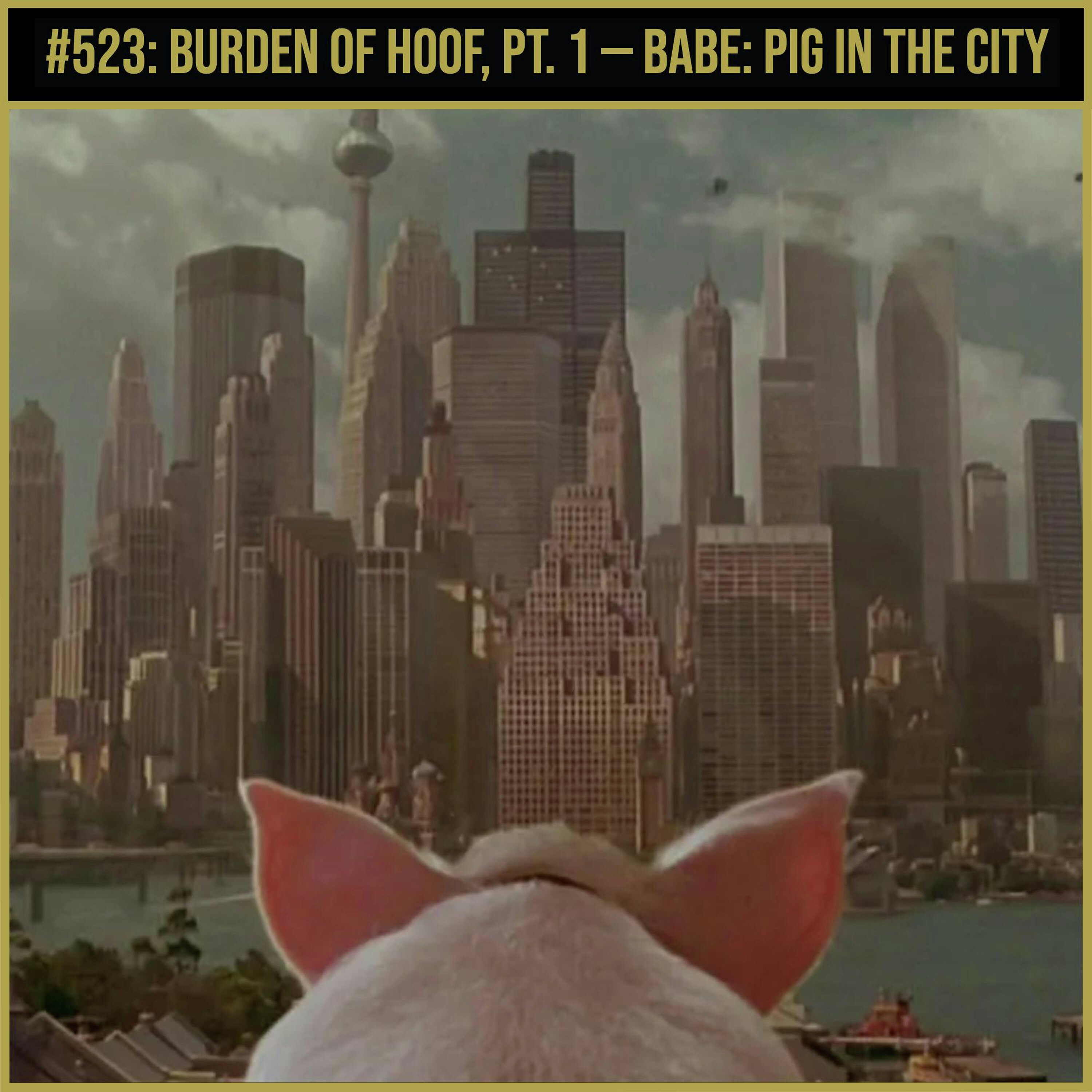
    Burden of Hoof, Pt. 1 — Babe: Pig in the City

    The Sheep Detectives is about as short on pigs as Babe: Pig In the City is short on sheep, but Kyle Balda’s new family film still reminded us of the 1998 box-office-bomb-turned-cult-classic in its tale of talking animals venturing beyond their idyllic pastures and into a dangerous corner of the human world. George Miller’s poorly received sequel to Babe may technically have a lower body count than the murder mystery of Sheep Detectives — not for Miller’s lack of trying — but its combination of fable-like whimsy with tragedy and trauma strikes a deeply odd and at times unsettling chord that turned off audiences charmed by its predecessor. It also gives us much to discuss in this week’s revisitation of Pig in the City, as we attempt to locate the emotional core lurking beneath the slapstick antics and kinetic chase scenes, and consider what Miller was trying to say about humanity via a bunch of down-on-their-luck animals. Then in Feedback we return to a point of contention from our recent Fargo episode, and port over a question from the Patreon regarding the critical response to the new biopic Michael. Please share your thoughts about Babe: Pig in the City, The Sheep Detectives, or anything else in the world of film, by sending an email or voice memo to comments@nextpictureshow.net, or leaving a short voicemail at (773) 234-9730. This episode is presented by⁠ ⁠⁠⁠⁠⁠⁠Regal Unlimited⁠⁠⁠⁠⁠⁠⁠⁠, the all-you-can-watch movie subscription pass that pays for itself in just two visits. Use code NEXTPIC26 for 15% off. Learn more about your ad choices. Visit megaphone.fm/adchoices Support the show: https://www.patreon.com/join/NextPictureShow See omnystudio.com/listener for privacy information.

    • Transcript
  • #522
    May 5 · 1 hr 10 min

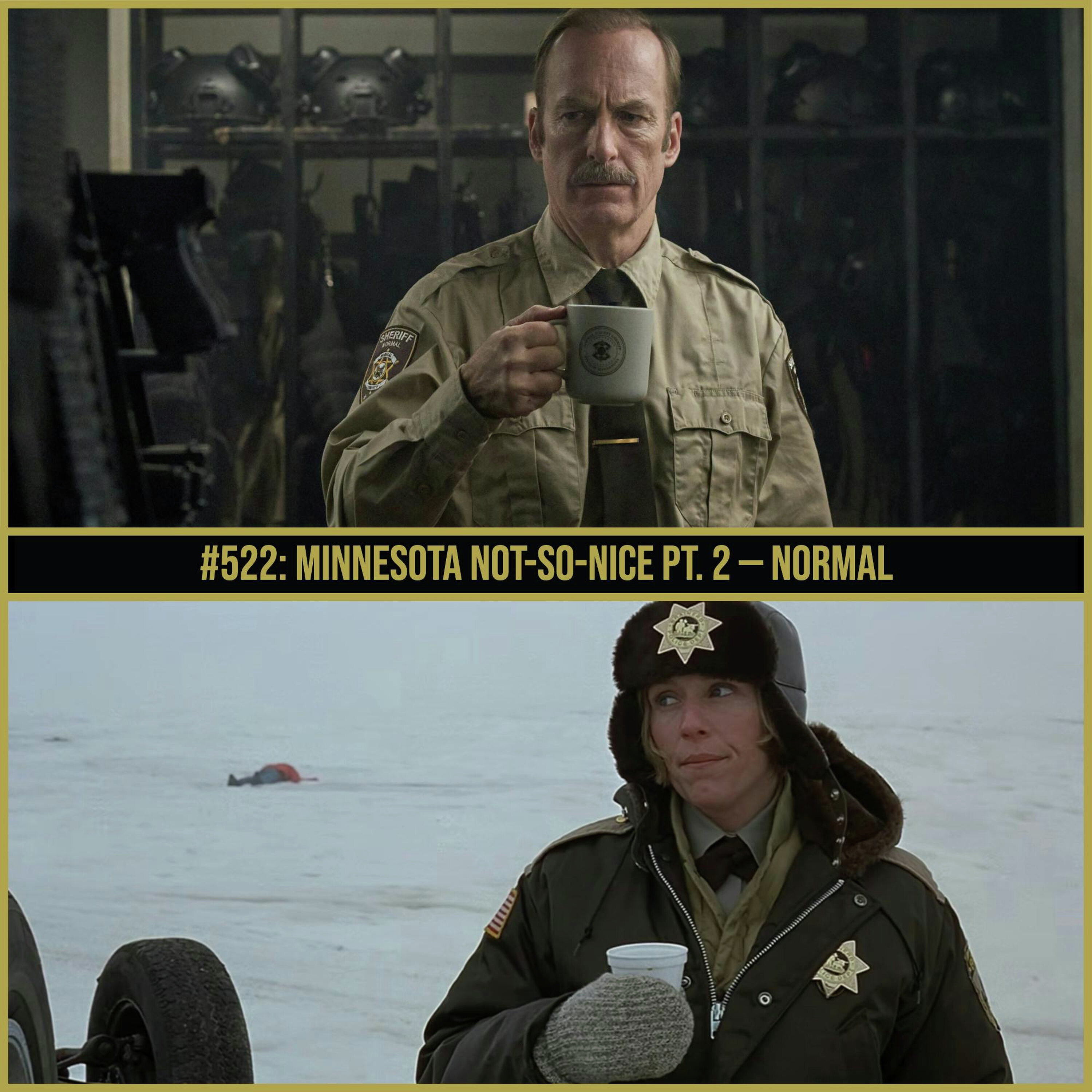
    Minnesota Not-So-Nice, Pt. 2 — Normal

    Despite the snowy setting, law-enforcement-officer protagonist, and pointed poking at the idea of "Minnesota Nice," Ben Wheatley's new Bob Odenkirk-starring shoot-'em-up Nowhere is in many ways the anti-Fargo. Is it fair to compare this scrappy (some might even say sloppy) genre effort to a film as revered as the Coen brothers' comedic crime classic? Maybe not, but that's what we do here at The Next Picture Show, so after a spirited debate over which parts of Nowhere we found the most enervating, we turn to Connections to consider how the two films' many overlapping elements can play out in such different ways. Then we keep the Fargo talk going in Your Next Picture Show via a general recommendation for its FX television offshoot, and a specific recommendation for which of its five anthology seasons to start with. Please share your thoughts about Fargo, Normal, or anything else in the world of film, by sending an email or voice memo to comments@nextpictureshow.net, or leaving a short voicemail at (773) 234-9730. Next Pairing: Kyle Balda's The Sheep Detectives and George Miller's Babe: Pig in the City This episode is presented by⁠ ⁠⁠⁠⁠⁠⁠Regal Unlimited⁠⁠⁠⁠⁠⁠⁠⁠, the all-you-can-watch movie subscription pass that pays for itself in just two visits. Use code NEXTPIC26 for 15% off. Learn more about your ad choices. Visit megaphone.fm/adchoices Support the show: https://www.patreon.com/join/NextPictureShow See omnystudio.com/listener for privacy information.

    • Transcript
  • #521
    April 28 · 1 hr 3 min

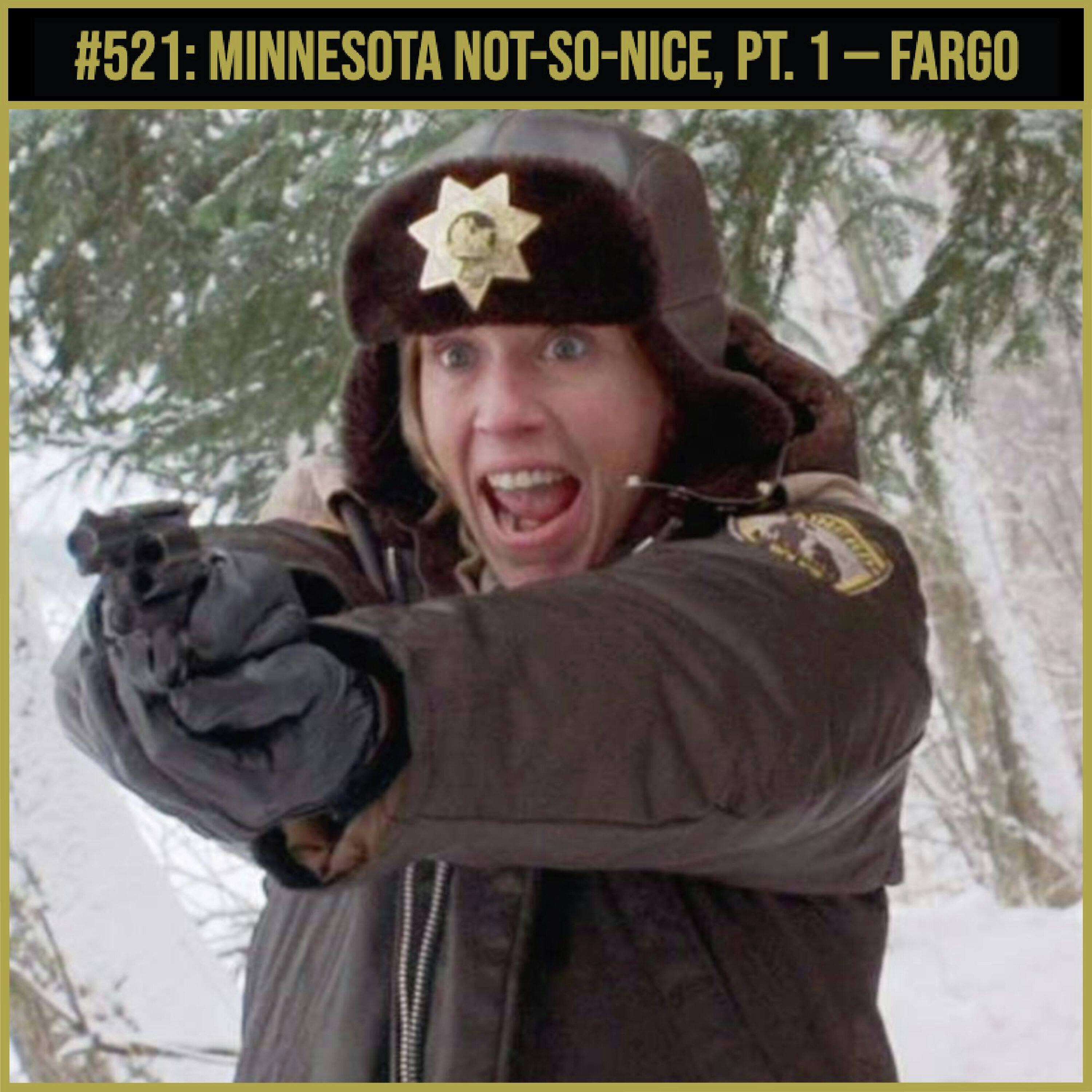
    Minnesota Not-So-Nice, Pt. 1 — Fargo

    As a comedic crime thriller set in snowy Minnesota and featuring a sheriff protagonist, it would be pretty tough for the new Bob Odenkirk-starring shoot-em-up Normal to avoid comparisons to Fargo, and since we will never pass up an opportunity to discuss the Coen Brothers’ 1996 classic, that’s precisely what we will be comparing it to next week. But first we’ll spend this week discussing why Fargo remains so discussable even after multiple viewings, what makes Marge Gunderson — or maybe Jerry Lundegaard — such an effective protagonist, and how the film’s unusual structure and tonal shifts can take even the most seasoned viewer by surprise. Then in Feedback, we keep The Drama going with an encore presentation of our disagreement about that film’s ending. Please share your thoughts about Fargo, Normal, or anything else in the world of film, by sending an email or voice memo to comments@nextpictureshow.net, or leaving a short voicemail at (773) 234-9730. This episode is presented by⁠ ⁠⁠⁠⁠⁠Regal Unlimited⁠⁠⁠⁠⁠⁠⁠, the all-you-can-watch movie subscription pass that pays for itself in just two visits. Use code NEXTPIC26 for 15% off. Learn more about your ad choices. Visit megaphone.fm/adchoices Support the show: https://www.patreon.com/join/NextPictureShow See omnystudio.com/listener for privacy information.

    • Transcript
Showing 1–20 of 26 episodes