Skip to content
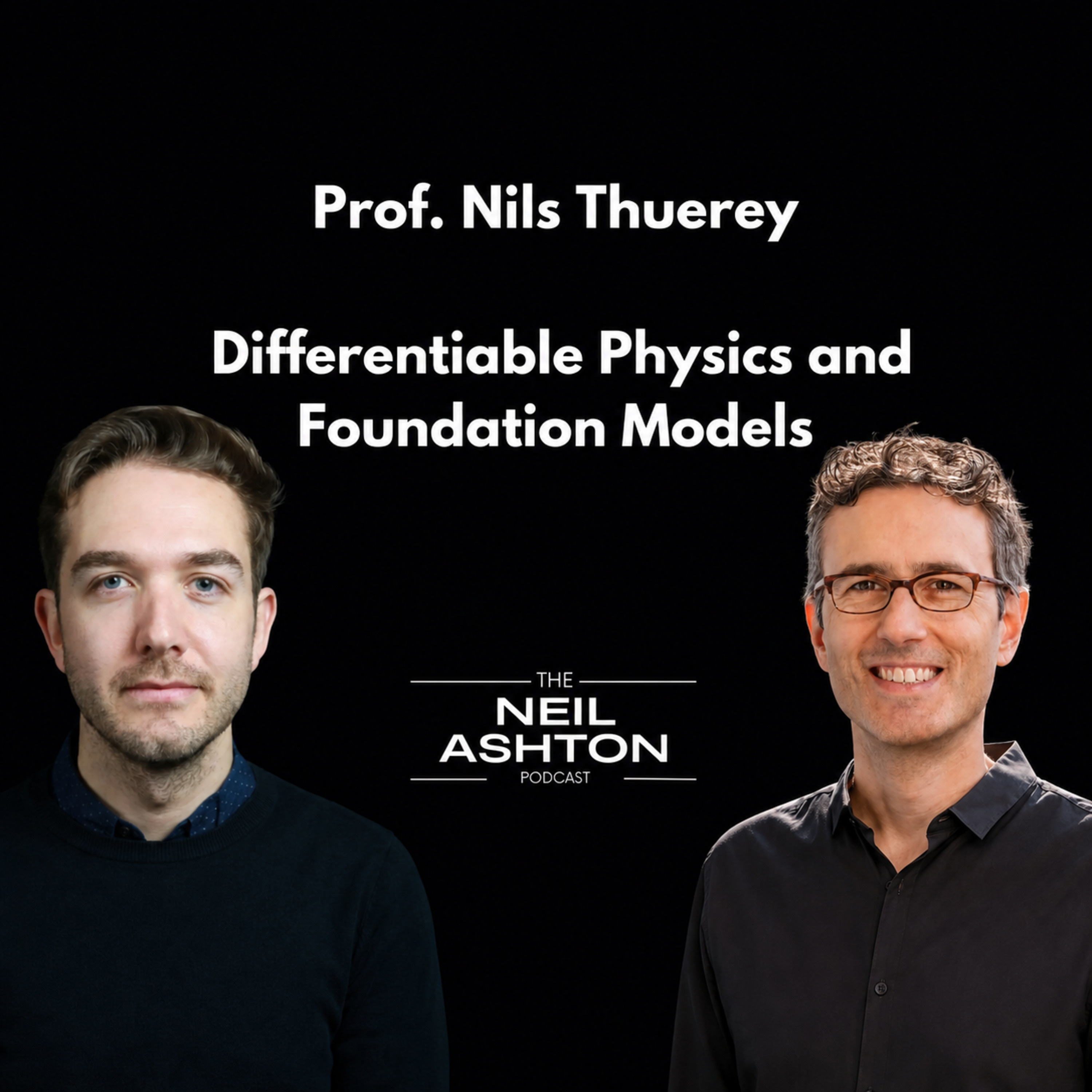
Artwork for The Neil Ashton Podcast
The Neil Ashton Podcast · July 23 · 1 hr 14 min

S4 EP5 - Prof. Nils Thuerey on Differentiable Physics and Foundation Models

Differentiable physics, neural emulators and foundation models for PDEs are the focus of this conversation with Professor Nils Thuerey, head of the Physics-based Simulation group at TUM. Neil and Nils discuss PhiFlow, PICT, Tadpole, scalable 3D transformers, online synthetic data, open datasets, world models and agents that call physics simulators. Full episode, corrected transcript and resources: https://neilashton.co.uk/podcasts/s4-e5-prof-nils-thuerey-on-differentiable-physics-and-foundation-models/ Topics Differentiable physics and physics-based deep learning PhiFlow and differentiable simulation across ML frameworks When neural emulators can outperform their training data Foundation models for PDEs and synthetic online training Scalable 3D transformers and high-resolution simulations LES, temporal data and correlated CFD datasets Open-source tools, startups and physics-aware world models AI agents that call physics simulators Papers Neural Emulator Superiority: When Machine Learning for PDEs Surpasses its Training Data https://arxiv.org/abs/2510.23111 Tadpole: Autoencoders as Foundation Models for 3D PDEs with Online Learning https://arxiv.org/abs/2605.15284 P3D: Scalable Neural Surrogates for High-Resolution 3D Physics Simulations with Global Context https://arxiv.org/abs/2509.10186 PICT — A Differentiable, GPU-Accelerated Multi-Block PISO Solver for Simulation-Coupled Learning Tasks in Fluid Dynamics https://arxiv.org/abs/2505.16992 PhiFlow: Differentiable Simulations for PyTorch, TensorFlow and JAX https://proceedings.mlr.press/v235/holl24a.html Physics-based Deep Learning https://arxiv.org/abs/2109.05237 Learning to Control PDEs with Differentiable Physics https://arxiv.org/abs/2001.07457 Solver-in-the-Loop: Learning from Differentiable Physics to Interact with Iterative PDE-Solvers https://arxiv.org/abs/2007.00016 tempoGAN: A Temporally Coherent, Volumetric GAN for Super-resolution Fluid Flow https://arxiv.org/abs/1801.09710 Deep Learning Methods for Reynolds-Averaged Navier-Stokes Simulations of Airfoil Flows https://arxiv.org/abs/1810.08217 WeatherBench: A Benchmark Dataset for Data-Driven Weather Forecasting https://arxiv.org/abs/2002.00469 SuperWing: A Comprehensive Transonic Wing Dataset for Data-Driven Aerodynamic Design https://arxiv.org/abs/2512.14397 Links Nils Thuerey and the Physics-based Simulation group https://ge.in.tum.de/about/n-thuerey/ Chapters 00:00 Podcast intro 00:39 Introducing Prof. Nils Thuerey 04:13 Conversation begins 05:13 From Computational Numerics to Graphics and Visual Effects 07:17 Physics-Based Deep Learning Before ChatGPT 10:01 CNNs, Graphics and the Move into Engineering Applications 12:37 PhiFlow and Differentiable Physics 14:13 Can Neural Emulators Surpass Their Training Data? 18:00 The Promise and Limits of Foundation Models for PDEs 20:43 Tadpole and Synthetic Online Pre-Training 24:07 From Canonical PDEs to Navier-Stokes and Industrial CFD 26:35 What Do Foundation Models Actually Learn? 28:36 PDE Pre-Training vs. Millions of CFD Simulations 33:08 Scaling 3D Transformers and Training Infrastructure 35:58 Generating and Training on Data in Real Time 38:00 LES, Temporal Data and Turbulence 42:15 Overfitting and Correlated Simulation Data 44:27 Bringing Differentiable Solvers Back into the Loop 45:31 WeatherBench, APEBench and the Value of Benchmarks 47:09 SuperWing, Open Datasets and Commercial Data 51:31 Open Source, Commercial Models and a Technical Oscar 56:17 Academia, Startups and Industry 01:00:55 What Will Change Over the Next Five Years? 01:02:07 World Models and the Need for Physics 01:08:19 Agents, Tool Use and Calling Physics Simulators 01:11:22 Career Advice for AI and Simulation 01:13:54 Closing Thoughts

0:00-1:14:47

transcript

No transcript — this publisher did not publish one.

show notes

Differentiable physics, neural emulators and foundation models for PDEs are the focus of this conversation with Professor Nils Thuerey, head of the Physics-based Simulation group at TUM. Neil and Nils discuss PhiFlow, PICT, Tadpole, scalable 3D transformers, online synthetic data, open datasets, world models and agents that call physics simulators.


Full episode, corrected transcript and resources:

https://neilashton.co.uk/podcasts/s4-e5-prof-nils-thuerey-on-differentiable-physics-and-foundation-models/


Topics


Differentiable physics and physics-based deep learning

PhiFlow and differentiable simulation across ML frameworks

When neural emulators can outperform their training data

Foundation models for PDEs and synthetic online training

Scalable 3D transformers and high-resolution simulations

LES, temporal data and correlated CFD datasets

Open-source tools, startups and physics-aware world models

AI agents that call physics simulators


Papers


Neural Emulator Superiority: When Machine Learning for PDEs Surpasses its Training Data

https://arxiv.org/abs/2510.23111


Tadpole: Autoencoders as Foundation Models for 3D PDEs with Online Learning

https://arxiv.org/abs/2605.15284


P3D: Scalable Neural Surrogates for High-Resolution 3D Physics Simulations with Global Context

https://arxiv.org/abs/2509.10186


PICT — A Differentiable, GPU-Accelerated Multi-Block PISO Solver for Simulation-Coupled Learning Tasks in Fluid Dynamics

https://arxiv.org/abs/2505.16992


PhiFlow: Differentiable Simulations for PyTorch, TensorFlow and JAX

https://proceedings.mlr.press/v235/holl24a.html


Physics-based Deep Learning

https://arxiv.org/abs/2109.05237


Learning to Control PDEs with Differentiable Physics

https://arxiv.org/abs/2001.07457


Solver-in-the-Loop: Learning from Differentiable Physics to Interact with Iterative PDE-Solvers

https://arxiv.org/abs/2007.00016


tempoGAN: A Temporally Coherent, Volumetric GAN for Super-resolution Fluid Flow

https://arxiv.org/abs/1801.09710


Deep Learning Methods for Reynolds-Averaged Navier-Stokes Simulations of Airfoil Flows

https://arxiv.org/abs/1810.08217


WeatherBench: A Benchmark Dataset for Data-Driven Weather Forecasting

https://arxiv.org/abs/2002.00469


SuperWing: A Comprehensive Transonic Wing Dataset for Data-Driven Aerodynamic Design

https://arxiv.org/abs/2512.14397


Links


Nils Thuerey and the Physics-based Simulation group

https://ge.in.tum.de/about/n-thuerey/


Chapters


00:00 Podcast intro

00:39 Introducing Prof. Nils Thuerey

04:13 Conversation begins

05:13 From Computational Numerics to Graphics and Visual Effects

07:17 Physics-Based Deep Learning Before ChatGPT

10:01 CNNs, Graphics and the Move into Engineering Applications

12:37 PhiFlow and Differentiable Physics

14:13 Can Neural Emulators Surpass Their Training Data?

18:00 The Promise and Limits of Foundation Models for PDEs

20:43 Tadpole and Synthetic Online Pre-Training

24:07 From Canonical PDEs to Navier-Stokes and Industrial CFD

26:35 What Do Foundation Models Actually Learn?

28:36 PDE Pre-Training vs. Millions of CFD Simulations

33:08 Scaling 3D Transformers and Training Infrastructure

35:58 Generating and Training on Data in Real Time

38:00 LES, Temporal Data and Turbulence

42:15 Overfitting and Correlated Simulation Data

44:27 Bringing Differentiable Solvers Back into the Loop

45:31 WeatherBench, APEBench and the Value of Benchmarks

47:09 SuperWing, Open Datasets and Commercial Data

51:31 Open Source, Commercial Models and a Technical Oscar

56:17 Academia, Startups and Industry

01:00:55 What Will Change Over the Next Five Years?

01:02:07 World Models and the Need for Physics

01:08:19 Agents, Tool Use and Calling Physics Simulators

01:11:22 Career Advice for AI and Simulation

01:13:54 Closing Thoughts