Skip to content
Artwork for The Neil Ashton Podcast
The Neil Ashton Podcast · June 11 · 1 hr 17 min

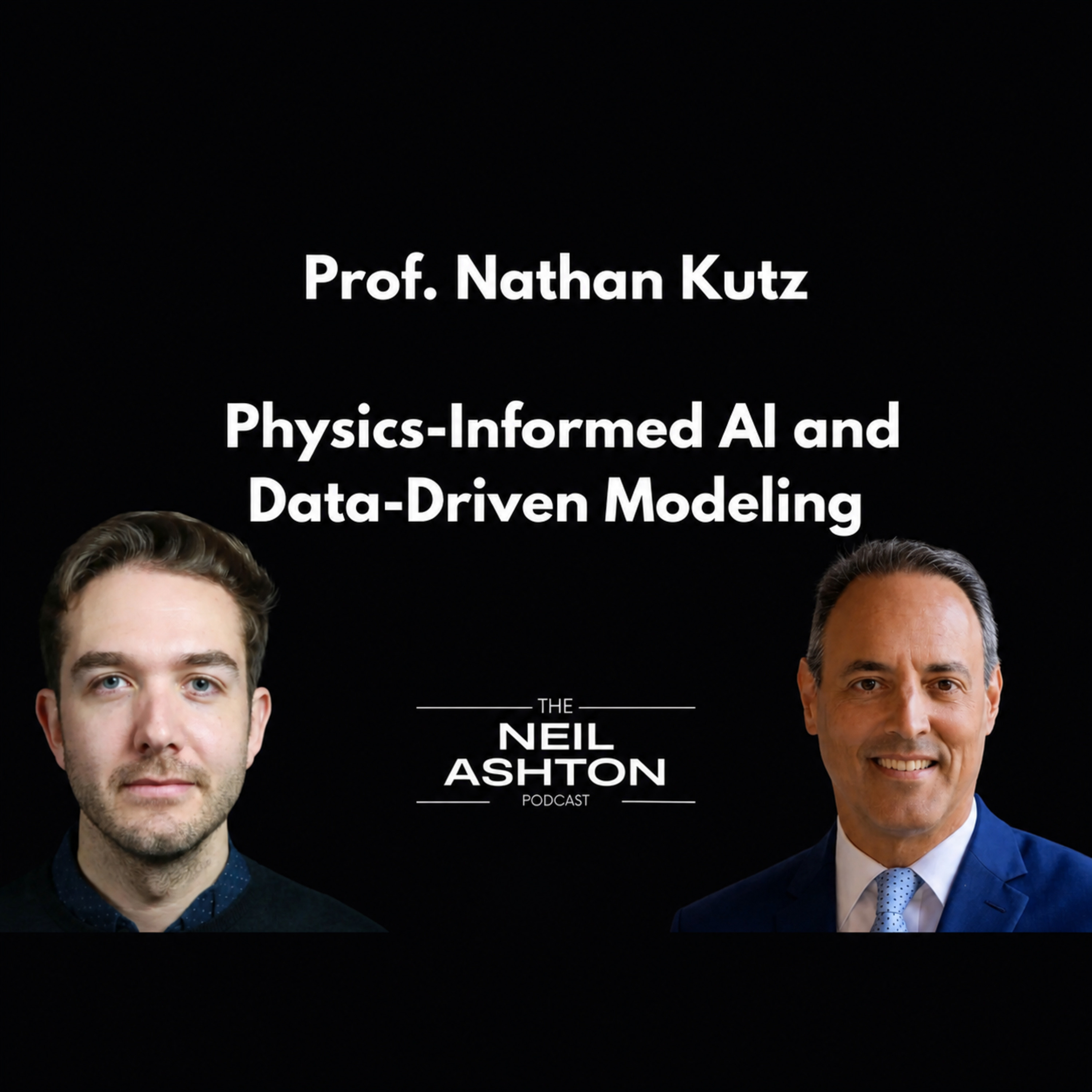
S4 EP2 - Prof. Nathan Kutz on Physics-Informed AI and Data-Driven Modeling

Physics-informed AI, DMD, SINDy and data-driven engineering are the focus of this conversation with Professor J. Nathan Kutz, Director of Physics-Informed AI at Autodesk. Neil and Nathan trace machine learning’s evolution in engineering, the role of physics in trustworthy models, and the future of autonomous agents, design automation and human expertise. Full episode, corrected transcript and resources: https://neilashton.co.uk/podcasts/s4-e2-prof-nathan-kutz-on-physics-informed-ai-and-data-driven-modeling/ Topics History of machine learning in engineering Dynamic Mode Decomposition (DMD) and Sparse Identification of Nonlinear Dynamics (SINDy) Physics-informed AI and reduced-order modeling The debate between physics-based and data-driven models The future of autonomous agents and their impact on industry Papers Flower discrimination by pollinators in a dynamic chemical environment — Jeffrey A. Riffell, Eli Shlizerman, Elischa Sanders, Leif Abrell, Billie Medina, Armin J. Hinterwirth, J. Nathan Kutz https://doi.org/10.1126/science.1251041 Nathan’s early move into neuroscience and data-driven biological modeling. Data assimilation and discrepancy modeling with shallow recurrent decoders — Yuxuan Bao, J. Nathan Kutz https://arxiv.org/abs/2512.01170 Using ML to close the gap between simulation and reality. Discovering governing equations from data by sparse identification of nonlinear dynamical systems — Steven L. Brunton, Joshua L. Proctor, J. Nathan Kutz https://doi.org/10.1073/pnas.1517384113 The foundational paper introducing SINDy. On Dynamic Mode Decomposition: Theory and Applications — Jonathan H. Tu, Clarence W. Rowley, Dirk M. Luchtenburg, Steven L. Brunton, J. Nathan Kutz https://doi.org/10.3934/jcd.2014.1.391 A key reference for Dynamic Mode Decomposition. Data-driven discovery of partial differential equations — Samuel H. Rudy, Steven L. Brunton, Joshua L. Proctor, J. Nathan Kutz https://doi.org/10.1126/sciadv.1602614 Extends equation discovery to PDEs and physical systems. Deep learning for universal linear embeddings of nonlinear dynamics — Bethany Lusch, J. Nathan Kutz, Steven L. Brunton https://doi.org/10.1038/s41467-018-07210-0 Connects deep learning with Koopman theory. Articraft: An Agentic System for Scalable Articulated 3D Asset Generation — Matt Zhou, Ruining Li, Xiaoyang Lyu, Zhaomou Song, Zhening Huang, Chuanxia Zheng, Christian Rupprecht, Andrea Vedaldi, Shangzhe Wu https://arxiv.org/abs/2605.15187 A practical example of agentic AI for engineering design. Links Articraft project page https://articraft3d.github.io/ Chapters 00:00 Podcast intro 00:40 Introduction to Episode 05:00 Welcoming Prof. Kutz 10:34 The Evolution of Data-Driven Modeling 16:13 Understanding the SINDy Algorithm and Its Implications 22:14 Comparing Reduced-Order Modeling and Modern Machine Learning 28:29 The Role of Data in Machine Learning and Physics 34:23 Challenges in Extrapolation and Real-World Applications 40:46 Insights from McLaren and Team Dynamics 46:07 The Shift from Academia to Industry 48:53 Collaboration and Innovation in Engineering 51:57 The Role of Human Expertise in Design 54:45 Leveraging AI in Formula One 57:32 The Future of AI and Workforce Dynamics 59:06 Navigating Career Choices in a Changing Landscape 01:03:02 The Evolution of Thought in Engineering 01:09:06 Preparing for the Future of Technology 01:14:04 Responsible Use of AI in Engineering

0:00-1:17:23

transcript

No transcript — this publisher did not publish one.

show notes

Physics-informed AI, DMD, SINDy and data-driven engineering are the focus of this conversation with Professor J. Nathan Kutz, Director of Physics-Informed AI at Autodesk. Neil and Nathan trace machine learning’s evolution in engineering, the role of physics in trustworthy models, and the future of autonomous agents, design automation and human expertise.


Full episode, corrected transcript and resources:

https://neilashton.co.uk/podcasts/s4-e2-prof-nathan-kutz-on-physics-informed-ai-and-data-driven-modeling/


Topics


History of machine learning in engineering

Dynamic Mode Decomposition (DMD) and Sparse Identification of Nonlinear Dynamics (SINDy)

Physics-informed AI and reduced-order modeling

The debate between physics-based and data-driven models

The future of autonomous agents and their impact on industry


Papers


Flower discrimination by pollinators in a dynamic chemical environment — Jeffrey A. Riffell, Eli Shlizerman, Elischa Sanders, Leif Abrell, Billie Medina, Armin J. Hinterwirth, J. Nathan Kutz

https://doi.org/10.1126/science.1251041

Nathan’s early move into neuroscience and data-driven biological modeling.


Data assimilation and discrepancy modeling with shallow recurrent decoders — Yuxuan Bao, J. Nathan Kutz

https://arxiv.org/abs/2512.01170

Using ML to close the gap between simulation and reality.


Discovering governing equations from data by sparse identification of nonlinear dynamical systems — Steven L. Brunton, Joshua L. Proctor, J. Nathan Kutz

https://doi.org/10.1073/pnas.1517384113

The foundational paper introducing SINDy.


On Dynamic Mode Decomposition: Theory and Applications — Jonathan H. Tu, Clarence W. Rowley, Dirk M. Luchtenburg, Steven L. Brunton, J. Nathan Kutz

https://doi.org/10.3934/jcd.2014.1.391

A key reference for Dynamic Mode Decomposition.


Data-driven discovery of partial differential equations — Samuel H. Rudy, Steven L. Brunton, Joshua L. Proctor, J. Nathan Kutz

https://doi.org/10.1126/sciadv.1602614

Extends equation discovery to PDEs and physical systems.


Deep learning for universal linear embeddings of nonlinear dynamics — Bethany Lusch, J. Nathan Kutz, Steven L. Brunton

https://doi.org/10.1038/s41467-018-07210-0

Connects deep learning with Koopman theory.


Articraft: An Agentic System for Scalable Articulated 3D Asset Generation — Matt Zhou, Ruining Li, Xiaoyang Lyu, Zhaomou Song, Zhening Huang, Chuanxia Zheng, Christian Rupprecht, Andrea Vedaldi, Shangzhe Wu

https://arxiv.org/abs/2605.15187

A practical example of agentic AI for engineering design.


Links


Articraft project page

https://articraft3d.github.io/


Chapters


00:00 Podcast intro

00:40 Introduction to Episode

05:00 Welcoming Prof. Kutz

10:34 The Evolution of Data-Driven Modeling

16:13 Understanding the SINDy Algorithm and Its Implications

22:14 Comparing Reduced-Order Modeling and Modern Machine Learning

28:29 The Role of Data in Machine Learning and Physics

34:23 Challenges in Extrapolation and Real-World Applications

40:46 Insights from McLaren and Team Dynamics

46:07 The Shift from Academia to Industry

48:53 Collaboration and Innovation in Engineering

51:57 The Role of Human Expertise in Design

54:45 Leveraging AI in Formula One

57:32 The Future of AI and Workforce Dynamics

59:06 Navigating Career Choices in a Changing Landscape

01:03:02 The Evolution of Thought in Engineering

01:09:06 Preparing for the Future of Technology

01:14:04 Responsible Use of AI in Engineering