Skip to content
Artwork for The Murder Mindset
True CrimeScienceSocial SciencesSociety & CultureDocumentary

The Murder Mindset

deardhra mcgeough

This is my very interesting podcast

Hosted on Acast. See acast.com/privacy for more information.

Play
  • 18 episodes
  • Avg 43 min
  • English
  • #16
    Tuesday · 1 hr 9 min

    The Halderson Murders: When a Life Built on Lies Collapses

    In this episode, we examine the 2021 murders of Bart and Krista Halderson in Windsor, Wisconsin, and the investigation that slowly exposed the double life their son, Chandler Halderson, had been maintaining for more than a year. At twenty-three, Chandler appeared to be building an impressive future: finishing college, working remotely for American Family Insurance, preparing for an $80,000-a-year job with SpaceX, and planning a move to Florida. But when Bart began independently verifying pieces of that story, the reality underneath it started to unravel. Rather than focusing only on Chandler’s elaborate deception, this episode asks a more difficult behavioral question: How can someone with no known history of serious violence suddenly commit an act of extreme violence? Drawing on neuroscience and forensic psychology, we explore the debated concept of overcontrolled aggression, what research actually says about people who commit severe violence without a prior pattern of aggression, and why the popular idea that anger simply “builds up until someone snaps” does not match modern neuroscience. We also examine how sustained deception taxes working memory and executive control, how repeated dishonesty may change the emotional response to lying, why exposure of a constructed identity can create an intense social threat response, and how investigators used digital evidence, surveillance footage, forensic testing, and witness testimony to reconstruct what happened. Throughout the episode, the case unfolds in the same order investigators experienced it—from two missing parents, to inconsistencies in Chandler’s story, to the discoveries that transformed the investigation entirely. Bart and Krista Halderson were more than victims in their son’s story. They were parents, professionals, friends, and members of their community who had spent nearly twenty-seven years building a life together. This episode begins and ends with them. ⚠️ Content Warning: This episode contains detailed discussion of homicide, dismemberment, firearms, family violence, and the recovery of human remains. 🎧 This episode is intended for listeners interested in true crime, forensic psychology, neuroscience, deception, aggression, emotional regulation, and the behavioral science behind extreme violence. Follow The Murder Mindset on Instagram and TikTok @TheMurderMindset for case insights, short-form analysis, and episode updates. Hosted on Acast. See acast.com/privacy for more information.
  • Sunday · 59 min

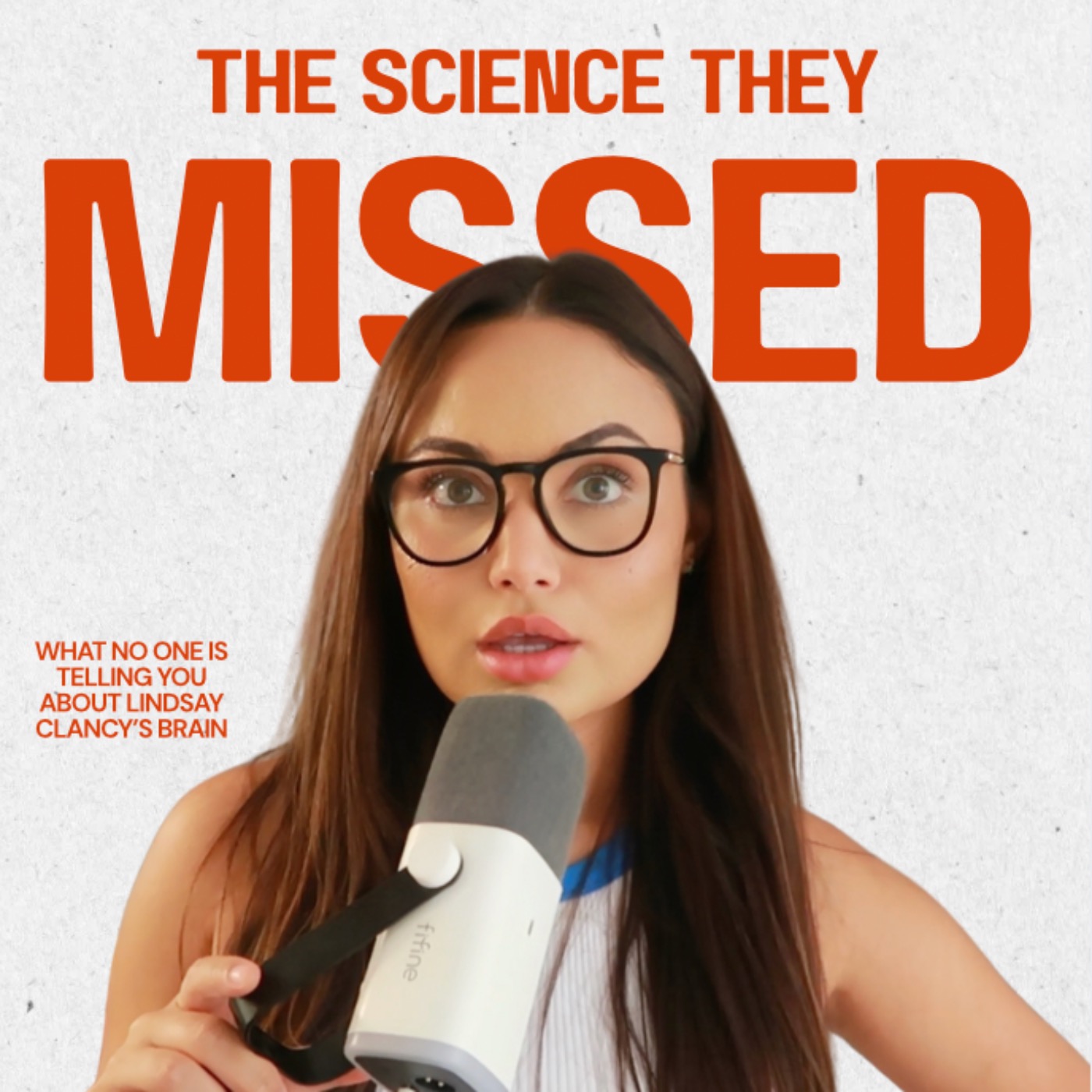
    Lindsay Clancy TRIAL: The Neuroscience Behind the Evidence

    In this pre-verdict update, The Murder Mindset revisits the Lindsay Clancy case now that weeks of trial testimony have revealed far more about her psychiatric history, medication timeline, alleged psychosis, and the forensic evidence surrounding the deaths of Cora, Dawson, and Callan. We break down what postpartum psychosis actually is, how it differs from postpartum depression, medication-induced psychosis, mania, intrusive thoughts, and akathisia, and what Lindsay’s medications were actually doing in the brain. We also examine the testimony from treating providers and competing forensic psychiatrists, including the debate over whether Lindsay was psychotic, whether she could still plan while psychotic, and what criminal responsibility means under Massachusetts law. Then we address the questions dominating social media: Why weren’t usable fingerprints recovered from the exercise bands? What did the DNA evidence actually show? Why was Patrick Clancy’s DNA present? Is there any evidence he framed Lindsay? And does Lindsay’s remorse in court tell us anything about what happened on January 24, 2023? This is not a defense of Lindsay Clancy, and it is not an argument for a particular verdict. It is an evidence-based look at what the trial has actually shown, and what neuroscience can and cannot tell us about one of the most difficult maternal mental-health cases in recent memory. Because understanding the brain is not the same thing as excusing behavior. A brain never breaks out of nowhere. Hosted on Acast. See acast.com/privacy for more information.

  • #15
    August 14 · 57 min

    Austin Yogurt Shop Murders: Finally Solved in 2025 | The Neuroscience of False Confessions

    In this episode, we examine the 1991 murders at the I Can't Believe It's Yogurt shop in Austin, Texas, and the thirty-four-year cascade of wrongful convictions that followed. Four men were imprisoned for this crime. None of them committed it. In 2025, DNA evidence identified the actual perpetrator, Robert Brashers, who confessed and was sentenced to life. The four men were exonerated in 2026. Rather than focusing solely on what happened inside that shop on December 6, 1991, this episode asks the harder questions: What does certainty do to a brain? What happens neurologically when investigators, prosecutors, and a community become locked into a narrative so early, so completely, that contradictory evidence cannot reach them? And what does thirty-four years of imprisonment do to a brain that knows, with absolute clarity, that it is innocent? Drawing on research in forensic psychology, the neuroscience of memory and eyewitness suggestibility, investigation bias, and wrongful-conviction literature, we explore: How confirmation bias and tunnel vision reshape the investigative brain; why investigators stop looking once they believe they have found their suspects, and what neurological mechanisms make this certainty feel irrefutable. What the research on eyewitness memory reveals about false identifications: how trauma, stress, and leading questions corrupt the hippocampus and confidence in memory can be entirely disconnected from accuracy. How the brain adapts to chronic wrongful imprisonment: what decades of fighting an impossible system does to cognition, memory consolidation, and the ability to trust your own perception of reality. Why coercion in interrogation rooms works—what happens to the adolescent prefrontal cortex under pressure, and how false confessions are not lies but neural collapse. The neuroscience of community certainty: how a wrongful conviction becomes embedded in collective memory, and what the reexamination of that conviction costs the brains of everyone who participated in getting it wrong. Sarah Harbison was 15. Jennifer Harbison was 17. Eliza Thomas was 17. Amy Ayers was 15. They were daughters, sisters, friends, and coworkers. They were murdered on December 6, 1991. This episode belongs to them. It is not the backdrop to someone else's story of injustice; their deaths are the foundation of it. ⚠️ Content Warning: This episode contains detailed discussion of graphic violence and murder, wrongful conviction and imprisonment, police coercion and interrogation tactics, and trauma-related psychological harm. If you are struggling, you can call or text the 988 Suicide and Crisis Lifeline. 🎧 This episode is intended for listeners interested in true crime, forensic psychology, the neuroscience of memory and eyewitness reliability, wrongful conviction, and the intersection of institutional failure and neurobiology. Follow The Murder Mindset on Instagram and TikTok @TheMurderMindset for case insights, short-form analysis, and episode updates. Hosted on Acast. See acast.com/privacy for more information.
  • #14
    July 14 · 50 min

    Taylor Parker: The Lie With a Due Date | Pseudologia Fantastica

    In this episode, we examine the case of Taylor Parker and the murder of Reagan Simmons-Hancock through a lens that goes beyond the crime itself and into the psychology of the woman who committed it, the brain that built toward it, and the ten-month fiction she sustained so completely that an entire community believed her. Rather than focusing solely on what happened inside that house in New Boston, Texas, this episode asks the harder questions: what does lying actually do to a brain over a decade, what happens neurologically when a person deceives not just everyone around them but their own reality-testing systems, and when a defense team put her brain scans on a courtroom screen and argued the organ itself was broken — were they right? Drawing on research in forensic psychology, the neuroscience of deception, attachment and developmental science, and the literature on factitious behavior and fetal abduction, we explore: What pseudologia fantastica actually is, how it differs from ordinary deception, and why a lifetime of manufactured illness is a pattern rather than a series of isolated lies. What the research on the brain's adaptation to dishonesty reveals about escalation — how the amygdala's alarm response weakens with every self-serving lie, and why a conscience is not shattered but slowly turned down. How childhood instability, unreliable attention, and a permanent loss she never consented to shaped a brain that learned to manufacture crisis rather than grieve it. Why the confabulation defense collapsed under scrutiny, what frontal lobe dysfunction actually predicts, and why a brain that plans for ten months is not a brain that has lost its brakes. With a background in public health and behavioral science (graduate training at Johns Hopkins), The Murder Mindset prioritizes education, neuroscience, and systemic analysis over sensationalism, examining not just what happened, but what built the brain that made it possible. This episode also examines the systemic failure at the center of this case: the physician who knew, with medical certainty, that this pregnancy was impossible — and the privacy law that prevented him from warning anyone. Reagan's family is currently advocating for federal legislation to change it. Reagan Simmons-Hancock was twenty-one years old. She was a daughter, a sister, a wife, and a mother. She is not the backdrop to someone else's psychology, and this episode belongs to her. ⚠️ Content Warning: This episode contains detailed discussion of graphic violence, the murder of a pregnant woman, the death of an infant, fetal abduction, pathological lying, and non-consensual medical decision-making. Listener discretion is strongly advised. If you are struggling, you can call or text the 988 Suicide and Crisis Lifeline. 🎧 This episode is intended for listeners interested in true crime, forensic psychology, the neuroscience of deception, developmental science, and the intersection of identity, attention, and violence. Follow The Murder Mindset on Instagram and TikTok @TheMurderMindset for case insights, short-form analysis, and episode updates. Hosted on Acast. See acast.com/privacy for more information.
  • #13
    June 22 · 39 min

    Mrs. Letterman | Margaret Mary Ray, Erotomania & Schizophrenia

    In this episode, we examine the case of Margaret Mary Ray, the woman the tabloids called "David Letterman's stalker" through a lens that moves beyond the punchline and into the neuroscience of delusion, the systemic failures that left her without adequate care, and what her story actually tells us about how a brain loses its grip on reality. Because the way this case was covered at the time, it was a joke. Letterman made it a bit. The tabloids made it a headline. And Margaret Mary Ray, a woman with schizophrenia and erotomania who genuinely believed she was his wife, spent years cycling through jails and psychiatric hospitals while the public laughed. This episode asks the harder questions: what is erotomania, how does it develop neurologically, and what does it feel like from the inside of a brain that cannot distinguish between delusion and truth? What role did media attention, inadequate psychiatric follow-through, and medication non-compliance play in her deterioration? And what does it mean that the system kept releasing her without the sustained support she needed? Drawing on research in delusional disorders, schizophrenia neuroscience, erotomania literature, and psychiatric systems analysis, we explore: What erotomania actually is, classified in the DSM-5 as a subtype of delusional disorder, and how it differs from obsessive love or celebrity fixation in ways that matter clinically. How schizophrenia and erotomania operated together in Margaret Mary Ray's brain, and what the research tells us about the neurological architecture of fixed delusion. The role of medication non-compliance, psychiatric revolving door systems, and the absence of sustained community mental health support in cases like hers. How public ridicule and media coverage may have reinforced rather than deterred her behavior — and what forensic psychology tells us about the relationship between attention and delusional fixation. What her trajectory from honor student to repeated incarceration tells us about the gaps between mental illness, the criminal justice system, and the care people actually need. With a background in public health and behavioral science (graduate training at Johns Hopkins), The Murder Mindset prioritizes education, neuroscience, and systemic analysis over sensationalism, examining not just what happened, but what the brain was doing, and what the systems around it failed to do. ⚠️ Content Warning: This episode contains detailed discussion of schizophrenia, erotomania, psychiatric institutionalization, stalking, and suicide. Listener discretion is strongly advised. 🎧 This episode is intended for listeners interested in true crime, forensic psychology, delusional disorders, neuroscience, mental health systems, and the intersection of psychiatric illness, media, and public perception. Follow The Murder Mindset on Instagram and TikTok @TheMurderMindset for case insights, short-form analysis, and episode updates. Hosted on Acast. See acast.com/privacy for more information.
  • #12
    June 8 · 36 min

    The Boogeyman of Westfield | John List & OCPD

    In this episode, we examine the case of John Emil List, known as the Boogeyman of Westfield, through a lens that goes beyond the crime itself and into the psychology of the man who committed it, the brain that built toward it, and the identity he constructed to escape it. Rather than focusing solely on what happened inside that nineteen room mansion in Westfield, New Jersey, this episode asks the harder questions: how does a person become capable of something like this, what does it look like when a brain is shaped toward catastrophe from childhood, and how did a man who murdered his entire family spend seventeen years as the most unremarkable person in every room he walked into? Drawing on research in forensic psychology, personality disorder literature, family annihilator profiling, and the neuroscience of shame and empathy, we explore: How obsessive-compulsive personality disorder differs from OCD, and why that distinction matters in understanding how John List experienced his own actions. What the research on self-righteous family annihilators reveals about men who kill not out of rage but out of a warped, closed-system logic they genuinely believe is protective. How childhood social isolation, authoritarian parenting, and shame-based identity formation shaped a brain with no capacity for flexibility, no ability to ask for help, and no exit when the picture he had built began to fall apart. Why the absence of remorse in cases like this is not a mystery once you understand what empathy actually requires neurologically — and what happens when those circuits never get built. With a background in public health and behavioral science (graduate training at Johns Hopkins), The Murder Mindset prioritizes education, neuroscience, and systemic analysis over sensationalism, examining not just what happened, but what built the brain that made it possible. ⚠️ Content Warning: This episode contains detailed discussion of family annihilation, the murder of children, obsessive-compulsive personality disorder, financial collapse, and the use of religious belief to justify harm. Listener discretion is strongly advised. 🎧 This episode is intended for listeners interested in true crime, forensic psychology, personality disorders, neuroscience, behavioral science, and the intersection of shame, identity, and violence. Follow The Murder Mindset on Instagram and TikTok @TheMurderMindset for case insights, short-form analysis, and episode updates. Hosted on Acast. See acast.com/privacy for more information.
  • #11
    April 14 · 35 min

    Harold Shipman: A Doctor's Pathology "Dr.Death"

    In this episode, we examine the case of Harold Shipman through a lens that moves beyond headlines and into the structural failures that allowed one of the most prolific medical serial killers in modern history to operate undetected for years. Rather than focusing solely on the scale of his crimes, this episode asks more unsettling questions: how did a trusted physician manipulate systems designed to protect patients, what role did authority and clinical perception play in preventing scrutiny, and how did patterns of death become normalized within a medical setting? Drawing on research in forensic pathology, medical oversight systems, behavioral psychology, and public health, we explore: How Shipman used his position as a general practitioner to access, control, and ultimately end patients’ lives while maintaining professional credibility. The role of death certification, cremation processes, and record-keeping failures in delaying detection. What toxicology, postmortem findings, and epidemiological patterns revealed only after suspicion emerged. How cognitive bias, trust in physicians, and systemic gaps in healthcare oversight contributed to prolonged inaction. With a background in public health and behavioral science (graduate training at Johns Hopkins), The Murder Mindset prioritizes education, prevention, and systemic analysis over sensationalism, examining not just what happened, but how and why it was allowed to continue. ⚠️ Content Warning: This episode contains discussion of homicide, abuse of medical authority, patient vulnerability, and systemic failures within healthcare and legal systems. Listener discretion is advised. 🎧 This episode is intended for listeners interested in true crime, forensic pathology, healthcare systems, behavioral science, medical ethics, and the intersection of authority, trust, and criminal behavior. Follow The Murder Mindset on Instagram and TikTok @TheMurderMindset for case insights, short-form analysis, and episode updates. Hosted on Acast. See acast.com/privacy for more information.
  • #10
    March 24 · 34 min

    Kenneth Parks: The Automatism Defense

    In this episode, we examine the case of Kenneth Parks through a lens true crime rarely offers: the devastating intersection of a documented sleep disorder, a brain operating without its owner, and a legal system forced to confront a question it had never been asked before, can a person be criminally responsible for an act their conscious mind never experienced? Rather than centering the verdict or the violence, this episode asks the harder questions: about what happens when the brain's motor systems activate while awareness stays offline, what the neuroscience of disorders of arousal actually reveals, and how a single night in 1987 permanently changed the legal definition of intent in Canada and beyond. Drawing on research in sleep neuroscience, disorders of arousal, procedural memory, parasomnia, forensic psychiatry, and criminal law, we explore: - What a disorder of arousal actually is and why it is neurologically distinct from dreaming, psychosis, or voluntary behavior. - How the brain can execute complex, familiar actions, including driving, navigation, and physical force, while the prefrontal cortex remains in deep slow-wave sleep. - Why Kenneth Parks could name his in-laws at the police station despite having no memory of going to their home, and what that tells us about the difference between stored knowledge and conscious experience. With a background in public health and behavioral science (graduate training at Johns Hopkins), The Murder Mindset prioritizes education, prevention, and understanding over sensationalism — asking difficult questions about consciousness, criminal responsibility, grief, and what it means when the law gives you an answer that still leaves everything unresolved. ⚠️ Content Warning: This episode contains discussion of homicide, violent crime, sleep disorders, and the psychological aftermath of trauma and loss. Listener discretion is advised. 🎧 This episode is intended for listeners interested in true crime, forensic psychology, sleep neuroscience, neuroscience of consciousness, criminal law, and the behavioral science behind automatism, trauma, and grief. Follow The Murder Mindset on Instagram and TikTok @TheMurderMindset for case insights, short-form analysis, and episode updates. Hosted on Acast. See acast.com/privacy for more information.
  • #9
    March 9 · 45 min

    Banita Jacks: Psychosis, Demons, and the Science of Grief

    In this episode, we examine the case of Banita Jacks through a lens that true crime rarely offers: the devastating intersection of unprocessed grief, psychotic illness, religious delusion, and a system that failed to intervene before four children lost their lives. Rather than centering shock or spectacle, this episode asks the harder questions; about what happens to a mind consumed by loss, what the science of grief-induced psychosis actually looks like, and how institutions, neighbors, and systems become bystanders to tragedy. Drawing on research in grief neuroscience, attachment theory, psychosis and delusional belief formation, trauma response, and forensic psychology, we explore: What the neuroscience of complicated grief reveals about how unresolved loss can destabilize the brain's threat and reality-processing systems. How grief-induced psychosis differs from other psychotic disorders and why the distinction matters for both understanding and accountability. What the clinical and behavioral science tells us about the progression from isolation and magical thinking to full delusional systems. How religious delusion functions as a psychological framework during catastrophic grief and why it is so frequently misread by those around it. What Banita's case reveals about systemic failures: school truancy reports, welfare checks, and the neighbors and agencies who noticed something was wrong and weren't empowered to act. What forensic psychiatry and behavioral science say about criminal responsibility when psychosis is real, severe, and untreated — and what justice looks like in cases where the perpetrator is also a victim of her own shattered mind. With a background in public health and behavioral science (graduate training at Johns Hopkins), The Murder Mindset prioritizes education, prevention, and understanding over sensationalism, asking difficult questions about grief, mental illness, accountability, and what it means when the systems designed to protect the most vulnerable arrive too late. ⚠️ Content Warning: This episode contains discussion of child death, severe mental illness, psychosis, religious delusion, and child neglect. Listener discretion is strongly advised. 🎧 This episode is intended for listeners interested in true crime, forensic psychology, grief science, neuroscience, psychopathology, and the behavioral science behind trauma, loss, and mental illness. Follow The Murder Mindset on Instagram and TikTok @TheMurderMindset for case insights, short-form analysis, and episode updates. Hosted on Acast. See acast.com/privacy for more information.
  • #8
    February 23 · 33 min

    Pieper Lewis: The Neuroscience of Surviving

    In this episode, we examine the case of Pieper Lewis through a lens rarely centered in true crime: the complex intersection of sex trafficking, adolescent trauma, survival psychology, and a legal system that punished a victim for defending herself. Rather than focusing on shock or spectacle, this episode explores the psychological, medical, and behavioral questions at the center of a case that continues to ignite national conversation about justice, girlhood, and what it means to survive. Drawing on research in trauma neuroscience, adolescent brain development, forensic psychology, and behavioral science, we explore: How chronic trauma and sex trafficking reshape the developing adolescent brain and why this matters in courtrooms. What the neuroscience of survival tells us about fight responses in victims of repeated abuse. How the legal system defines self-defense, coercion, and criminal responsibility in trafficking cases, and where it fails. Why adolescent victims of sexual exploitation are uniquely vulnerable to institutional and legal re-traumatization. What Pieper's sentencing (including restitution payments to her abuser's family) reveals about systemic failures in how we respond to trafficking survivors. What psychology and behavioral science say about accountability, healing, and justice when the system gets it wrong. With a background in public health and behavioral science (graduate training at Johns Hopkins), The Murder Mindset prioritizes education, prevention, and understanding over sensationalism, asking difficult questions about trauma, accountability, and how systems respond when the most vulnerable people are failed at every level. ⚠️ Content Warning: This episode contains discussion of sex trafficking, child sexual abuse, violence, and the criminal prosecution of a minor. Listener discretion is strongly advised. 🎧 This episode is intended for listeners interested in true crime, forensic psychology, neuroscience, adolescent development, trauma science, and the behavioral science behind survival and violence. Follow The Murder Mindset on Instagram and TikTok @TheMurderMindset for case insights, short-form analysis, and episode updates Hosted on Acast. See acast.com/privacy for more information.

  • #6
    February 5 · 55 min

    Blake Leibel & Iana Kasian: The Anatomy of Narcissistic Violence

    In this episode, we examine the case of Blake Leibel and Iana Kasian through a lens rarely centered in true crime: the anatomy of narcissistic violence. Rather than focusing on shock or spectacle, this episode explores how pathological narcissism, entitlement, control, and emotional detachment can escalate into extreme interpersonal violence. Drawing on research in personality pathology, trauma psychology, attachment theory, and behavioral neuroscience, we explore: How narcissistic traits exist on a spectrum and when they become dangerous The role of entitlement, objectification, and lack of empathy in escalating violence How coercive control and power dynamics function as psychological drivers of violence Warning signs that often precede intimate partner violence and femicide What neuroscience and psychology can and cannotexplain about accountability and intent With a background in public health and behavioral science (graduate training at Johns Hopkins), The Murder Mindsetprioritizes education, prevention, and understanding over sensationalism—asking harder questions about gendered violence, systemic failure, and why warning signs are so often missed. ⚠️ Content Warning: This episode contains discussion of intimate partner violence, psychological abuse, graphic violence, and homicide. Listener discretion is strongly advised. 🎧 This episode is for listeners interested in true crime, forensic psychology, neuroscience, trauma studies, and the behavioral science behind violence. Follow The Murder Mindset on Instagram and TikTok @TheMurderMindset for case insights, short-form analysis, and episode updates. Hosted on Acast. See acast.com/privacy for more information.
  • #4
    January 4 · 38 min

    The Sacramento Vampire | Understanding Richard Chase through Neuroscience

    In this episode, we explore the infamous case of Richard Chase, known as the “Vampire of Sacramento,” whose crimes in the late 1970s shocked the nation. This episode is not a retelling for shock value. Instead, we focus on what many true-crime narratives leave out: the neuroscience, psychology, and environmental factors that may have influenced his behavior and mental state. Drawing on research in schizophrenia, psychosis, neurobiology, and environmental stressors, we break down: How severe mental illness and untreated psychosis can impact perception and decision-making The interplay of environmental and situational factors in the escalation of violent behavior What neuroscience can — and cannot — explain about cases like Richard Chase With a background in public health and behavioral science (graduate training at Johns Hopkins), The Murder Mindsetfocuses on education, prevention, and understanding, not sensationalism. ⚠️ Content Warning: This episode contains discussion of violent crimes, psychosis, and sensitive topics. Listener discretion is advised. 🎧 This episode is for listeners interested in true crime, forensic psychology, neuroscience, and the behavioral factors behind notorious criminal cases. Follow The Murder Mindset on Instagram and TikTok: @TheMurderMindset for case insights, short-form analysis, and episode updates. Hosted on Acast. See acast.com/privacy for more information.
  • #3
    Dec 26, 2025 · 39 min

    Inside the Mind of Elisa Lam: A Neuroscience Perspective

    In this episode, we explore the mysterious and tragic case of Elisa Lam, a young woman whose death in 2013 sparked widespread speculation and media frenzy. This episode is not a retelling for shock value. Instead, we focus on what many true-crime narratives leave out: the neuroscience, psychology, and environmental factors that may have influenced her behavior and mental state. Drawing on research in anxiety, bipolar disorder, psychopharmacology, and environmental stressors, we break down: How mental health and sensory processing can impact perception and decision-making The role of anxiety, depression, and cognitive load in high-stress situations How environmental and situational factors might create a convergence of risk What neuroscience can — and cannot — explain about cases like Elisa Lam With a background in public health and behavioral science (graduate training at Johns Hopkins), The Murder Mindsetfocuses on education, prevention, and understanding, not sensationalism. ⚠️ Content Warning: This episode contains discussion of mental health challenges, distressing circumstances, and sensitive topics. Listener discretion is advised. 🎧 This episode is for listeners interested in true crime, forensic psychology, neuroscience, and the behavioral factors behind mysterious cases. Follow The Murder Mindset on Instagram and TikTok: @TheMurderMindset for case insights, short-form analysis, and episode updates. Hosted on Acast. See acast.com/privacy for more information.
  • #2
    Dec 12, 2025 · 45 min

    The Daniel Marsh Case | Neuroscience Behind a 15-Year-Old Killer

    In this episode, we examine the disturbing case of Daniel Marsh, a 15-year-old who brutally murdered an elderly couple and later described the act as making him feel “happy.” This episode is not a retelling for shock value. Instead, it explores what many true-crime narratives leave out: the neuroscience, psychology, and developmental factors behind extreme adolescent violence. Drawing on research in adolescent brain development, psychopathy, trauma, and impulse regulation, we break down: How the teenage brain processes violence differently than the adult brain The role of empathy deficits, reward circuitry, and emotional regulation Whether adolescents can fully understand consequences at this level What neuroscience can — and cannot — explain about cases like Daniel Marsh With a background in public health and behavioral science (graduate training at Johns Hopkins), The Murder Mindset focuses on education, prevention, and accountability, not glorification. ⚠️ Content Warning: This episode contains discussion of violent crime and may be distressing. Listener discretion is advised. 🎧 This episode is for listeners interested in true crime, forensic psychology, neuroscience, and criminal behavior. Follow The Murder Mindset on Instagram and TikTok: @TheMurderMindset for case insights, short-form analysis, and episode updates. Hosted on Acast. See acast.com/privacy for more information.
  • #1
    Nov 29, 2025 · 42 min

    Andrea Yates: The Postpartum Psychosis Case America Got Wrong

    The Andrea Yates case is often remembered only for its horror, but the medical reality behind it has been largely misunderstood. In this episode of The Murder Mindset, we examine what actually happens inside a brain in the midst of postpartum psychosis, one of the rarest and most severe psychiatric emergencies in perinatal mental health. We break down how hormone crashes, chronic sleep deprivation, and abrupt medication changes can destabilize neural networks; how years of documented warning signs, delusions, deterioration, hospitalizations, and inconsistent treatment revealed a brain in crisis long before the tragedy; and how systemic gaps in psychiatric care left Andrea dangerously unsupported. This episode does not excuse violence; it explains it through neuroscience, psychology, and the failures of the systems meant to protect families. Because if we don’t understand these patterns, we can’t prevent them. Follow @themurdermindset on Instagram and TikTok, and listen on Apple, Spotify, YouTube, and anywhere you get your podcasts. Hosted on Acast. See acast.com/privacy for more information.
Showing 1–18 of 18 episodes