Skip to content
Artwork for The Mind Room
SportsSoccerExplicit

The Mind Room

John Nassoori

Sport psychology insight informing people passionate about performance & mental health. Find out more: https://themindroom.substack.com

themindroom.substack.com
Play
  • 20 episodes
  • Avg 21 min
  • English
  • August 2 · 7 min

    How to establish yourself as a Premier League psychologist

    This is a free preview of a paid episode. To hear more, visit themindroom.substack.com How the hell do you land a job with a Premier League club (and actually make a success of it when you’ve got your foot through the door)? With some experts suggesting that over 300 applicants will be fighting for a single role - and others highlighting the herculean challenge facing recruits tasked with supporting 200-plus person academies - it’s a ques…

  • July 23 · 6 min

    The psychology hangover: how the World Cup will shape the season ahead

    This is a free preview of a paid episode. To hear more, visit themindroom.substack.com In the final episode of The World Cup Psychology Show, Professor Geir Jordet and Tim Harkness, Chelsea’s former head of Sport Science & Psychology, join the show to discuss how World Cup trends - from in-game breaks to squandered ‘stutter kicks’ - might influence domestic and international football over the next 12 months. We dissect the fallout from Eng…

  • July 22 · 10 min

    Three ways to take sport psychology from textbook to the training pitch (with Professor Adam Nicholls)

    This is a free preview of a paid episode. To hear more, visit themindroom.substack.com How do you actually take sport psychology from the confines of the classroom to the pressure cooker of being pitchside? For some, the subject is still something shrouded in mystery (or treated as a purely office-based practice, to the point where one recent job ad was promoted with a picture of an empty desk and chair). But we’ve seen how concepts from …

  • July 12 · 56 min

    The World Cup Psychology Show: why Tuchel's comments show England's 'psychologically safe' environment and how to mentally prepare for meeting Messi

    In the latest episode of The World Cup Psychology Show, Tim Harkness, Chelsea’s former head of Sport Science & Psychology, who worked with Thomas Tuchel at Stamford Bridge, and David Wheeler, one of the only former pro footballers turned psychologists working in the game, join me to look back at England’s win against Norway - and preview the semi-final against Argentina. We explain why Thomas Tuchel’s post-match comments are perhaps a sign of the ‘psychologically safe’ environment England seem to have created, how to turn Leo Messi’s threat into an opportunity that can be exploited and what confidence actually gives elite athletes on the field of play. Questions? If you have any queries about the newsletter, get in touch by emailing mindroomenquiries@gmail.com. Previous articles As a Mind Room Member, you can access all of the website stories - covering everything from AC Milan’s neuroscience lab to the way English rugby teams are embracing ‘shared mental models’ - via the four sections below: * Theory * Practice * Strategy * Features Thanks again for reading The Mind Room! This is a public episode. If you'd like to discuss this with other subscribers or get access to bonus episodes, visit themindroom.substack.com/subscribe


  • July 7 · 55 min

    The World Cup Psychology Show: England vs Mexico - Saka's focus, Pickford's emotional regulation and why being 'under the cosh' can create collective flow

    In the latest episode of The World Cup Psychology Show, Tim Harkness, Chelsea’s former head of Sport Science & Psychology, who worked with Thomas Tuchel at Stamford Bridge, and David Wheeler, one of the only former pro footballers turned psychologists working in the game, join me to look back at England’s win against Mexico. We examine the unerring focus Tuchel’s displayed in the Azteca couldron, why Jordan Pickford’s on-pitch personality was tailor-made for this type of match and why defending for your lives might actually be one of the tactical setups most conducive to creating a collective flow state. Questions? If you have any queries about the newsletter, get in touch by emailing mindroomenquiries@gmail.com. Previous articles As a Mind Room Member, you can access all of the website stories - covering everything from AC Milan’s neuroscience lab to the way English rugby teams are embracing ‘shared mental models’ - via the four sections below: * Theory * Practice * Strategy * Features Thanks again for reading The Mind Room! This is a public episode. If you'd like to discuss this with other subscribers or get access to bonus episodes, visit themindroom.substack.com/subscribe

  • July 3 · 5 min

    How to handle the heat of World Cup knockout matches

    This is a free preview of a paid episode. To hear more, visit themindroom.substack.com Four billion tigers. That’s the metaphorical audience some of Italy greatest players described facing in the final of the last World Cup on American soil. In 1994, it was too much for the likes of Roberto Baggio, Franco Baresi and Roberto Donadoni. Baggio’s skied shootout penalty, which ended Italy’s hopes of winning the tournament, was arguably as much …

  • July 2 · 50 min

    The World Cup Psychology Show: England vs DR Congo - dealing with shock, managing danger and preparing to play at high-altitude

    In the latest episode of The World Cup Psychology Show, Tim Harkness, Chelsea’s former head of Sport Science & Psychology, who worked with Thomas Tuchel at Stamford Bridge, and David Wheeler, one of the only former pro footballers turned psychologists working in the game, join me to look back at England’s win against DR Congo. We delve into how England dealt with the shock of conceeding an early goal, why recognising the difference between fear and danger is so cruical to playing under pressure and how Tuchel’s side might adapt their approach to deal with the physiological and psychological challenges of playing a last-16 match 7,200ft above sea level. Questions? If you have any queries about the newsletter, get in touch by emailing mindroomenquiries@gmail.com. Previous articles As a Mind Room Member, you can access all of the website stories - covering everything from AC Milan’s neuroscience lab to the way English rugby teams are embracing ‘shared mental models’ - via the four sections below: * Theory * Practice * Strategy * Features Thanks again for reading The Mind Room! This is a public episode. If you'd like to discuss this with other subscribers or get access to bonus episodes, visit themindroom.substack.com/subscribe

  • June 25 · 8 min

    How to integrate psychology within performance analysis (and why it's so tricky)

    This is a free preview of a paid episode. To hear more, visit themindroom.substack.com In a world where you can’t seem to go a second without another datapoint passing through your inbox or IMs, the inability to incorporate psychology within performance analysis remains something of a mystery. The technology to monitor on-field behaviour exists. Champions Leagues sides have shown that analysing gestures such as arm movements can credibly …

  • June 24 · 56 min

    The World Cup Psychology Show: England vs Ghana - 'never too high, never too low'

    In the latest episode of The World Cup Psychology Show, Tim Harkness, Chelsea’s former head of Sport Science & Psychology, who worked with Thomas Tuchel at Stamford Bridge, and David Wheeler, one of the only former pro footballers turned psychologists working in the game, join me to look back at England’s draw against Ghana. We consider how Tuchel, his squad and backroom staff will react to the result, analyse the pysche behind Ghana’s rearguard action and examine the challenge-focused psychological framing pivotal to England’s potential progress in the tournament. Questions? If you have any queries about the newsletter, get in touch by emailing mindroomenquiries@gmail.com. Previous articles As a Mind Room Member, you can access all of the website stories - covering everything from AC Milan’s neuroscience lab to the way English rugby teams are embracing ‘shared mental models’ - via the four sections below: * Theory * Practice * Strategy * Features Thanks again for reading The Mind Room! This is a public episode. If you'd like to discuss this with other subscribers or get access to bonus episodes, visit themindroom.substack.com/subscribe

  • June 18 · 50 min

    The World Cup Psychology Show: how did England engineer that second half display against Croatia?

    In the latest episode of The World Cup Psychology Show, Tim Harkness, Chelsea’s former head of Sport Science & Psychology, who worked with Thomas Tuchel at Stamford Bridge, and David Wheeler, one of the only former pro footballers turned psychologists working in the game, join me to look back at England’s win against Croatia. We consider what did Tuchel said in the dressing room to inspire his side’s second half showing, examine the nuances of Harry’s Kane leadership and dissect one of the most memorable interviews delivered by an England assistant. Questions? If you have any queries about the newsletter, get in touch by emailing mindroomenquiries@gmail.com. Previous articles As a Mind Room Member, you can access all of the website stories - covering everything from AC Milan’s neuroscience lab to the way English rugby teams are embracing ‘shared mental models’ - via the four sections below: * Theory * Practice * Strategy * Features Thanks again for reading The Mind Room! This is a public episode. If you'd like to discuss this with other subscribers or get access to bonus episodes, visit themindroom.substack.com/subscribe

  • June 14 · 8 min

    How to build better performance lifestyle-sport psychology partnerships (and why it's increasingly critical)

    This is a free preview of a paid episode. To hear more, visit themindroom.substack.com   “The number of roles that are out there, some of which are driven by leagues mandating it, sometimes makes you feel like, ‘Gosh, the clarity and needs analysis piece hasn't happened before somebody's through the door’. “Team dynamics can feel strained because there’s a bit of confusion about what we even call this: there are about five or six different…

  • June 10 · 56 min

    The World Cup Psychology Show: are England mentally ready to win the World Cup?

    In the first episode of The World Cup Psychology Show, Tim Harkness, Chelsea’s former head of Sport Science & Psychology, who worked with Thomas Tuchel at Stamford Bridge, and David Wheeler, one of the only former pro footballers turned psychologists working in the game, join me to examine how mentally ready England are for the World Cup. Key talking points: * The psychological thinking behind England’s squad selection and preparation: we discuss the factors Tuchel, his coaching and backroom team are likely to have taken into consideration when selecting the squad, from the probable use of quantitative psychological evaluations to the emotional skills players such as Jordan Henderson possess. * Learning from previous tournaments: we look at what’s gone wrong for England in previous European Championships and World Cups and how the team can learn lessons from those exits, focusing on the role of on-pitch communication, team cohesion and emotional regulation. * Dealing with fatigue and heat: we examine the issues which are likely to dominate the competition, from fatigue to heat, with 25% of games set to take place in 26-plus degree temperatures. Questions? If you have any queries about the newsletter, get in touch by emailing mindroomenquiries@gmail.com. Previous articles As a Mind Room Member, you can access all of the website stories - covering everything from AC Milan’s neuroscience lab to the way English rugby teams are embracing ‘shared mental models’ - via the four sections below: * Theory * Practice * Strategy * Features Thanks again for reading The Mind Room! This is a public episode. If you'd like to discuss this with other subscribers or get access to bonus episodes, visit themindroom.substack.com/subscribe

  • June 7 · 5 min

    How to psychologically prepare for a major tournament (with Jess Thom)

    This is a free preview of a paid episode. To hear more, visit themindroom.substack.com What do you need to do to mentally prepare for a World Cup or Olympic Games? And when you’re in the white heat of a major tournament, how do you stick to the performance plans you’ve put in place? They’re questions Jess Thom has fielded for much of the last decade. Since 2016, she’s worked with Team GB athletes across three Olympic competitions, as well …

  • May 22 · 5 min

    How a mental performance programme helped Bodo/Glimt make history (with Bjorn Mannsverk)

    This is a free preview of a paid episode. To hear more, visit themindroom.substack.com How do you go from not winning a top-flight championship in 104 years to taking home four league titles in half-a-decade (whilst also becoming the first club from your country to reach the semi-final of a major European tournament)? The short answer: stop focusing on results. If that’s surprising, the longer explanation is even more revealing. In the lat…

  • May 18 · 6 min

    How to work with performance and sporting directors (with James Bell)

    This is a free preview of a paid episode. To hear more, visit themindroom.substack.com It’s one of the most important, but least spoken about, relationships that a psychologist will form. Working effectively with a sporting or performance director can make or break a practitioner’s tenure with a team. So, what’s the secret to forming and sustaining a successful relationship with front office commissioners? In this episode of The Mind Room …

  • April 27 · 8 min

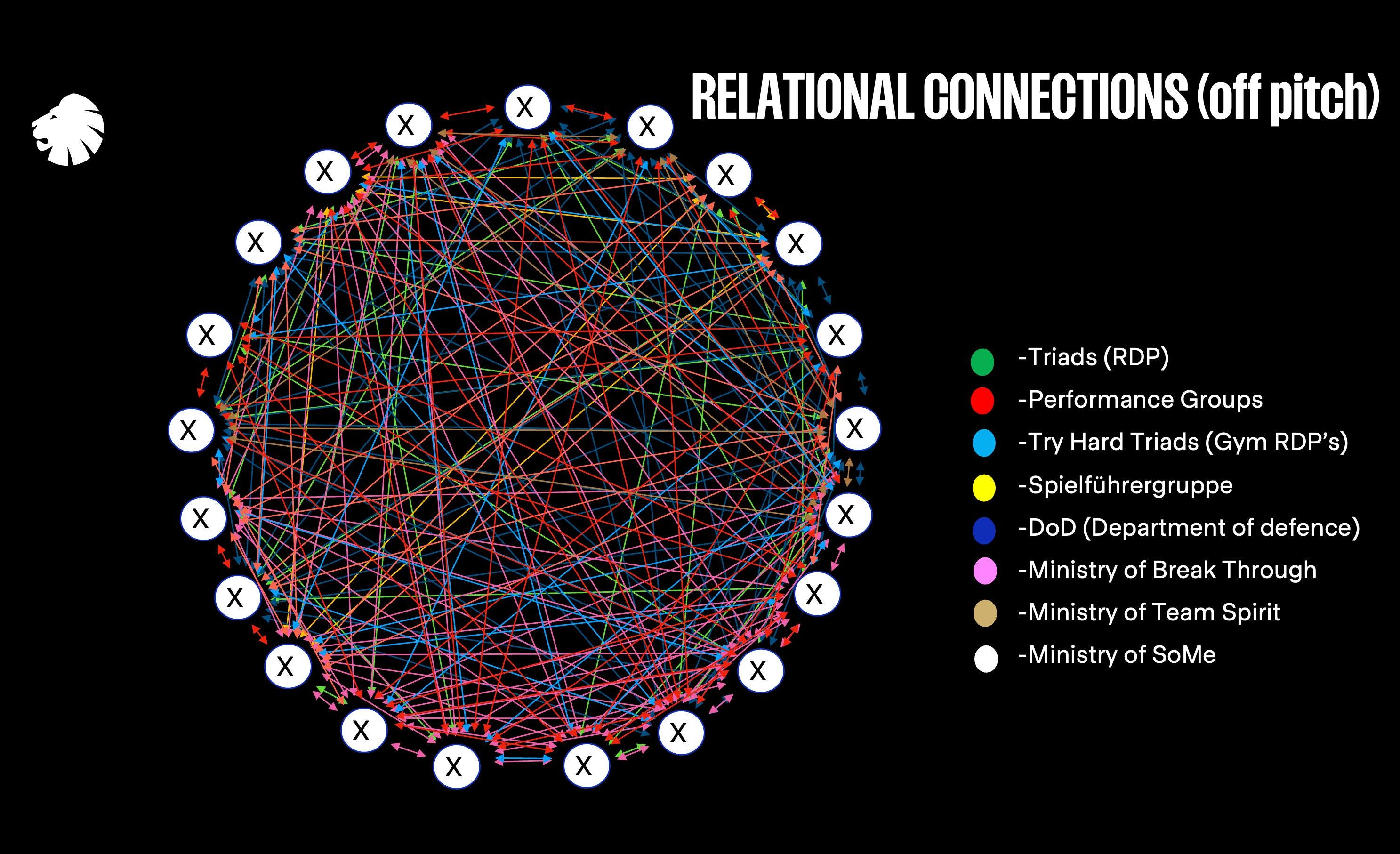
    Why 'relational connections' are your team's missing link (and how to create them)

    This is a free preview of a paid episode. To hear more, visit themindroom.substack.com You’re preparing to face a brilliant Barcelona side on their home turf. Every minute of the game will be a test of your team’s concentration, communication and ability to perform under pressure. How do you psychologically prepare your players? Morten Bertelsen has an interesting answer to that question. In this week’s edition of the Mind Room podcast, I …

  • April 12 · 7 min

    How to fix sport psychology's 'quick fix' problem

    This is a free preview of a paid episode. To hear more, visit themindroom.substack.com A once high-flying side comes crashing down to earth with a series of devastating losses. A press conference is called. The side’s coach announces the appointment of a sport psychologist. Unfortunately, as many readers will know, the above scenario is more fact than fiction (just take a look at the build-up to Sascha Lense’s spell as Manchester United’s…

  • April 3 · 6 min

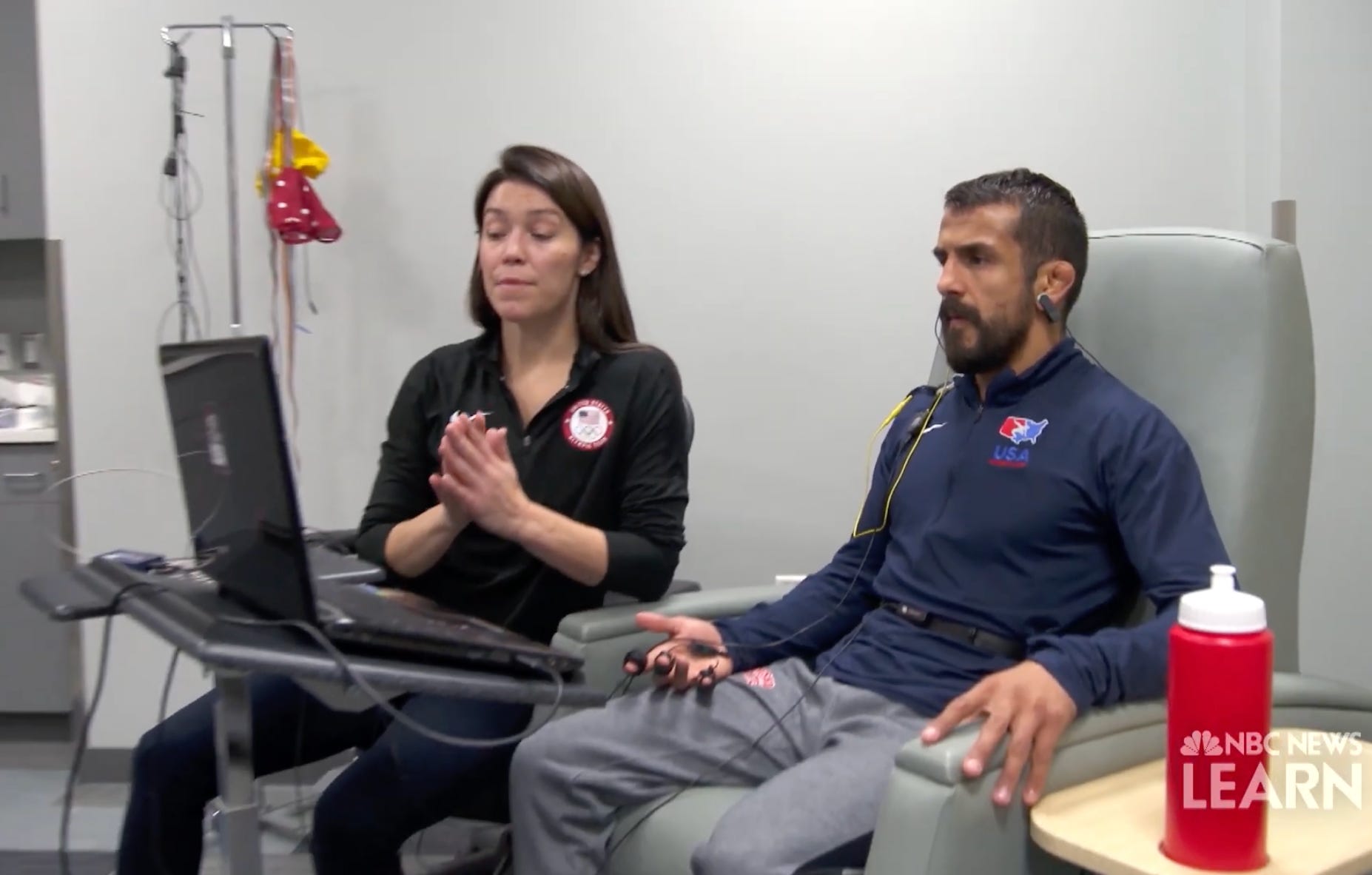
    How to setup and run a sport psychology lab

    This is a free preview of a paid episode. To hear more, visit themindroom.substack.com Electrodes pinned to people’s heads. Screens showing everything from neural activity to heartrate variability. Lab technicians making minute adjustments to polygraph machines. The stereotypical image of a sport psychology laboratory is well-worn. But are images of AC Milan’s Mind Room (the inspiration behind this newsletter) still relevant to running a …

  • March 30 · 9 min

    Exclusive: Michael Caulfield on why conversation trumps convention, sport psychology 'salespeople' and the profession's future

    This is a free preview of a paid episode. To hear more, visit themindroom.substack.com "You're the best sport psychologist I have ever worked with…because you didn't do psychology with me, you treated me.....normally. When I was having a dip in form, you knew what to say, but most of all, when I had some personal issues away from football, you literally just sat with me, did nothing, said nothing, and I can't tell you how much that meant".

  • February 15 · 3 min

    What players want from psychologists

    This is a free preview of a paid episode. To hear more, visit themindroom.substack.com 'Sam, what's going on?’ Four fairly innocuous words that changed the course of Sam Winnall's career. The ex-Derby County striker was speaking to the club's doctor about symptoms that had seen him feeling low and withdrawing from friends and family, when the question came. The conversation that followed would end with a referral to mental health therapy. …

Showing 1–20 of 20 episodes