Skip to content
Artwork for The Marathon Podcast
SportsRunningExplicit

The Marathon Podcast

Kristian Warwick/Wiild Studio

Welcome to The Marathon Podcast!

15% off Saysky with code TMP15

The podcast that sponsors non-sponsored athletes. This is a podcast for established runners, future runners, and people interested in running. On this podcast, we will focus on everything running. Science, nutrition, training, gear, and much more.
Prepare for a new running companion, elite and non-elite guests, and inspiring stories.

Let's run and talk together!

Play
  • 69 episodes
  • a few times a week
  • Avg 1 hr 11 min
  • English
Counted on this page — what you have heard stays on this device, so it is not something the list can be paged by.
  • S1 · E245
    Today · 1 hr 18 min

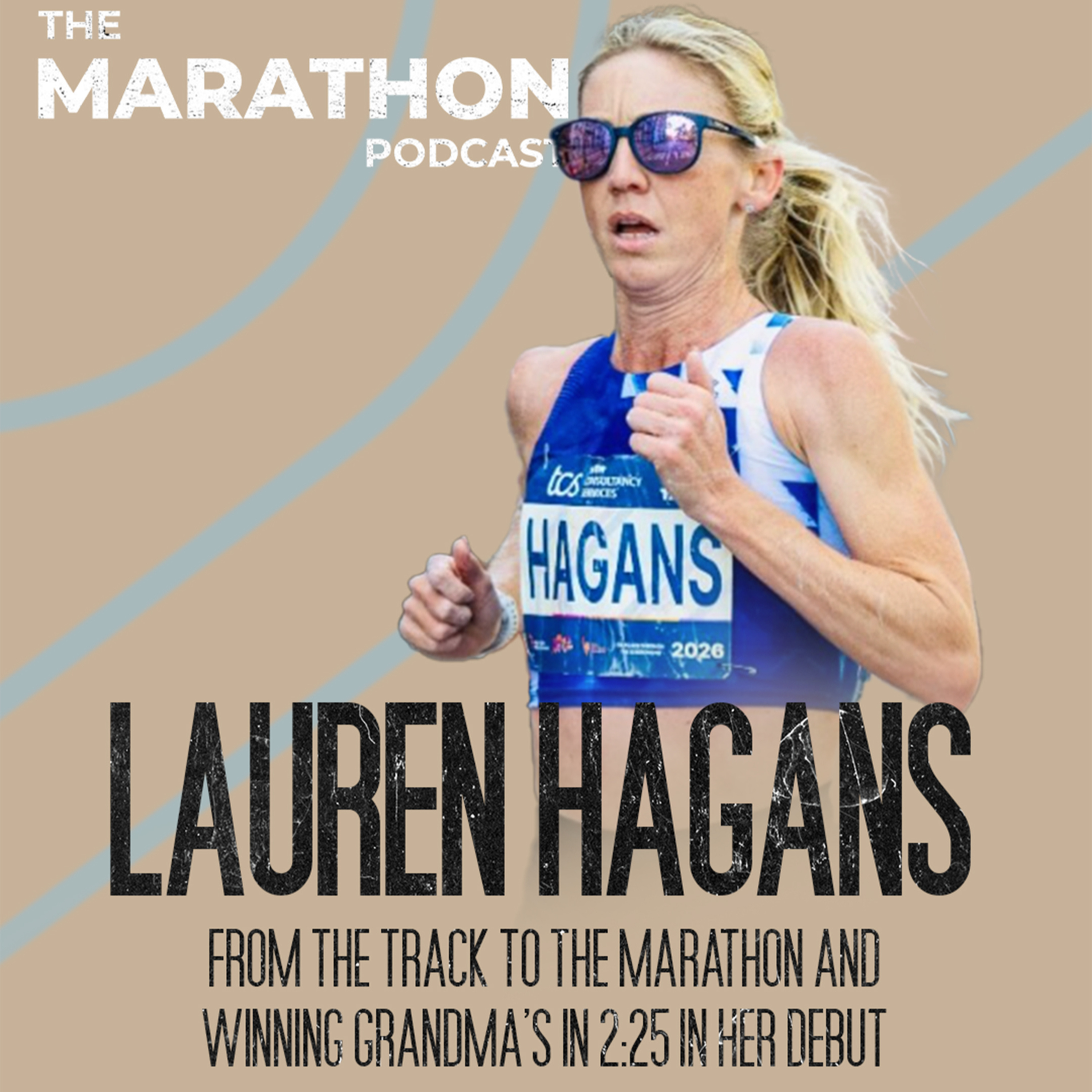
    #245 Lauren Hagans: From 800m to the Marathon & how age is irrelevant

    The Marathon Podcast is now proudly sponsored by Saysky Copenhagen. Use code TMP15 for 15% off at saysky.com. Get 20% off a Strava annual subscription with code KRISTIAN Save on FlexBeam using code WARWICKRUNS or this link: https://rechargehealthas.sjv.io/55GAPb Lauren Hagans started her career on the track as an 800 and 1500 meter runner, and she did not move up to the marathon until 2023, at age 36. She won Grandma's Marathon in 2:25:55 in her debut, then ran 2:25 again in Chicago. After two years of injuries, she came back at the New York City Marathon at age 40, and says she is in the best shape of her life. In this episode, Lauren takes us through her whole career: the switch from the track to the 5000, the half marathon and finally the marathon, and why she keeps changing things when she gets bored. We talk about her New York comeback, the early starting cannon, running at 40 and how age gets talked about in the sport, plus the new Olympic standards. She also explains how she went from about 65 miles a week for most of her career to weeks of 90 to 100, and wonders if she has been a higher mileage athlete all along. I also open the episode with my own thoughts on the new Olympic marathon standard. In this episode: - Her first marathon in two years at the New York City Marathon - The start cannon that went off early - From high school walk-on to Baylor, the track and the 5000 - Winning Grandma's Marathon on her debut - Running at 40 and how age is talked about - The new Olympic standards - Moving from about 65 miles a week to 90 to 100 - A typical week in her New York build - Staying off Strava and trusting the training - Why she is not chasing the Olympic Trials the way she used to Timestamps 00:00 Intro and the new Olympic marathon standard 06:29 Welcome and the New York City Marathon comeback 10:04 The start cannon that fired early 12:26 How she got into running and the walk-on to Baylor 16:14 Moving to the 5000 and the Olympic standard 17:16 Joining the marathon group in Flagstaff and trying the half marathon 19:16 The first marathon and winning Grandma's 24:47 Best shape of her life at 40 and the age conversation 33:00 The age group win and masters prize money 36:08 Her thoughts on the Olympic standards 41:47 The American women's marathon community 47:52 Adapting to different coaches and training styles 50:25 Going from 65 miles a week to 90 to 100 57:38 Is mileage partly mental? 1:03:37 Dessert, a glass of wine and not overthinking it 1:04:42 A typical week in her New York build 1:08:56 Staying off Strava and trusting the training 1:11:57 What is next: Boston and the Olympic Trials 1:16:14 Closing thoughts on her career Follow Lauren on Instagram: @laurenhagans_run Start your free Musicbed trial: https://fm.pxf.io/kristianwarwick Full episodes + the Boston 2025 documentary: https://www.youtube.com/@Warwickruns Follow my training journey on Instagram: @warwick.runs Music from Musicbed: MB01XPYH8ZYENVAMB0133EV2TCQFZY
  • S1 · E244
    Yesterday · 1 hr 14 min

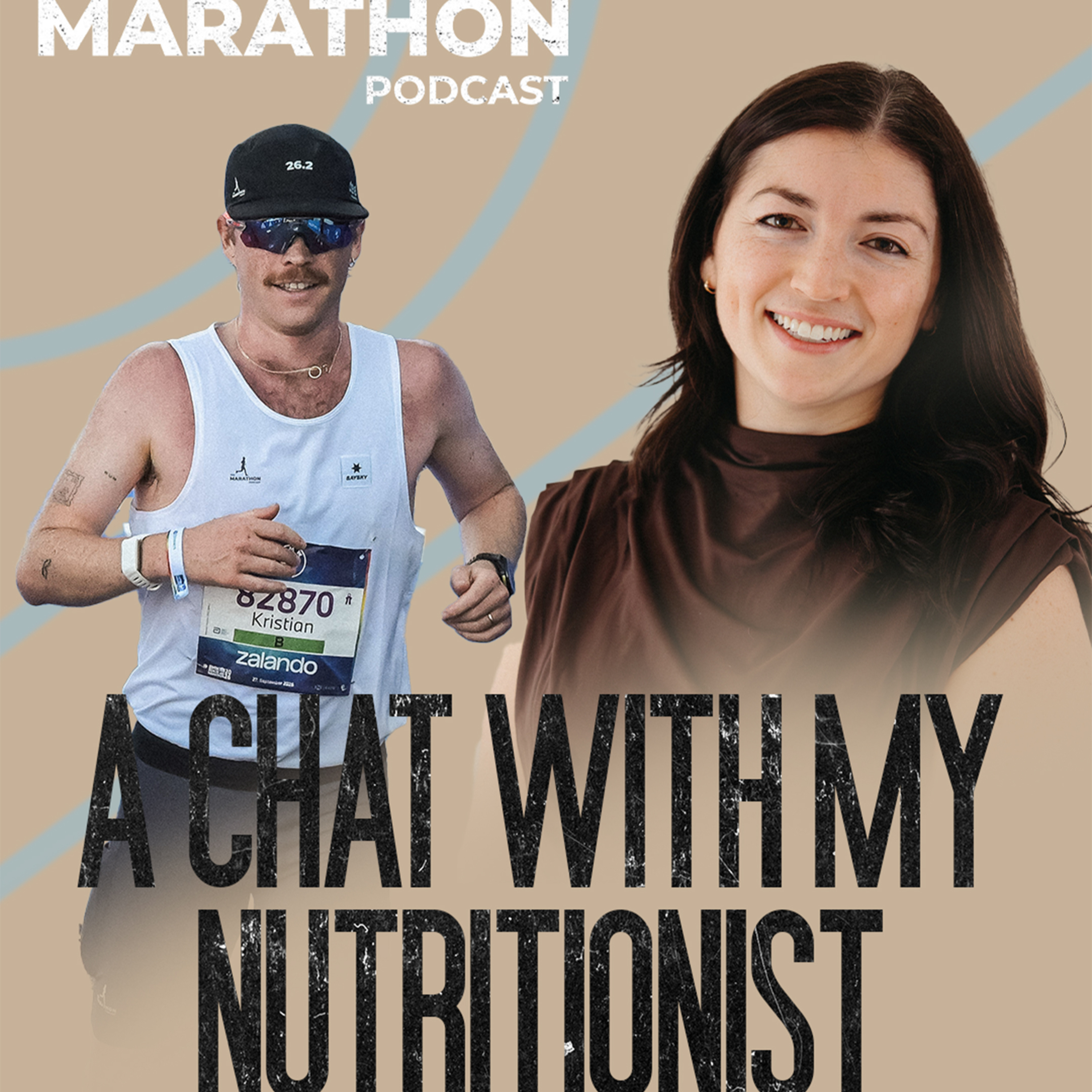
    #244 A real chat with my nutritionist KC Stockman

    The Marathon Podcast is now proudly sponsored by Saysky Copenhagen. Use code TMP15 for 15% off at saysky.com. Get 20% off a Strava annual subscription with code KRISTIAN Save on FlexBeam using code WARWICKRUNS or this link: https://rechargehealthas.sjv.io/55GAPb A bonus episode with KC Stockmon, Kristian's sports dietitian. Instead of a normal interview, this is a real nutrition session, the way KC and Kristian work together: what has changed since August, how daily eating looks in a big training block, and the fueling plan for Valencia. We talk about eating more than ever while training more than ever, keeping meals consistent, why Kristian now thinks about carbs first, and how fueling for runs has shifted from practicing to actually fueling and recovering. KC also explains why appetite can drop at high training volumes, and why it matters to eat enough anyway. Then we go through what happened at Boston with the drink mix and gels, why a very concentrated bottle may have led to nausea, and how to practice for race day: breakfast, timing, gels, hydration and sodium. We finish with body image and the culture around carbs, what it is like to work with a nutritionist over time, and what happens after Valencia. This episode is general information and not individual nutrition advice. In this episode: - Eating more while training more - Meal structure and fueling easy and long runs - Appetite, energy and running on empty - Looking back at Boston fueling - The Valencia fueling plan - Hydration and sodium - Body image and carbs - Working with a nutritionist Find KC at Truly Fueled Nutrition: https://www.trulyfuelednutrition.com Timestamps 00:00 Intro 00:51 Welcome back KC 02:10 What has changed since August 03:09 Eating more than ever 05:06 Meal and snack structure 06:28 Fruit, breakfast and orange juice 09:13 Fueling easy runs and long runs 12:25 Eating enough when appetite drops 15:18 Running on empty 17:36 Orange juice, a correction 19:35 A relaxed approach to daily food 21:25 Food after Valencia 26:12 The Valencia fueling plan and the Boston recap 29:12 What happened at Boston 31:20 Why a concentrated bottle can cause nausea 37:57 Practicing for race day 38:18 Race morning breakfast and timing 44:24 Which gels to use in training 47:20 Carb goals for Valencia 49:08 The drink mix for Valencia 51:09 Hydration 56:58 Sodium 1:00:00 Everything since Boston 1:01:47 Body image and the culture around carbs 1:06:50 Calorie counting and metabolic testing 1:08:17 Working with a nutritionist 1:12:15 Life after Valencia Start your free Musicbed trial: https://fm.pxf.io/kristianwarwick Full episodes + the Boston 2025 documentary: https://www.youtube.com/@Warwickruns Follow my training journey on Instagram: @warwick.runs Music from Musicbed:

  • S1 · E243
    Wednesday · 1 hr 19 min

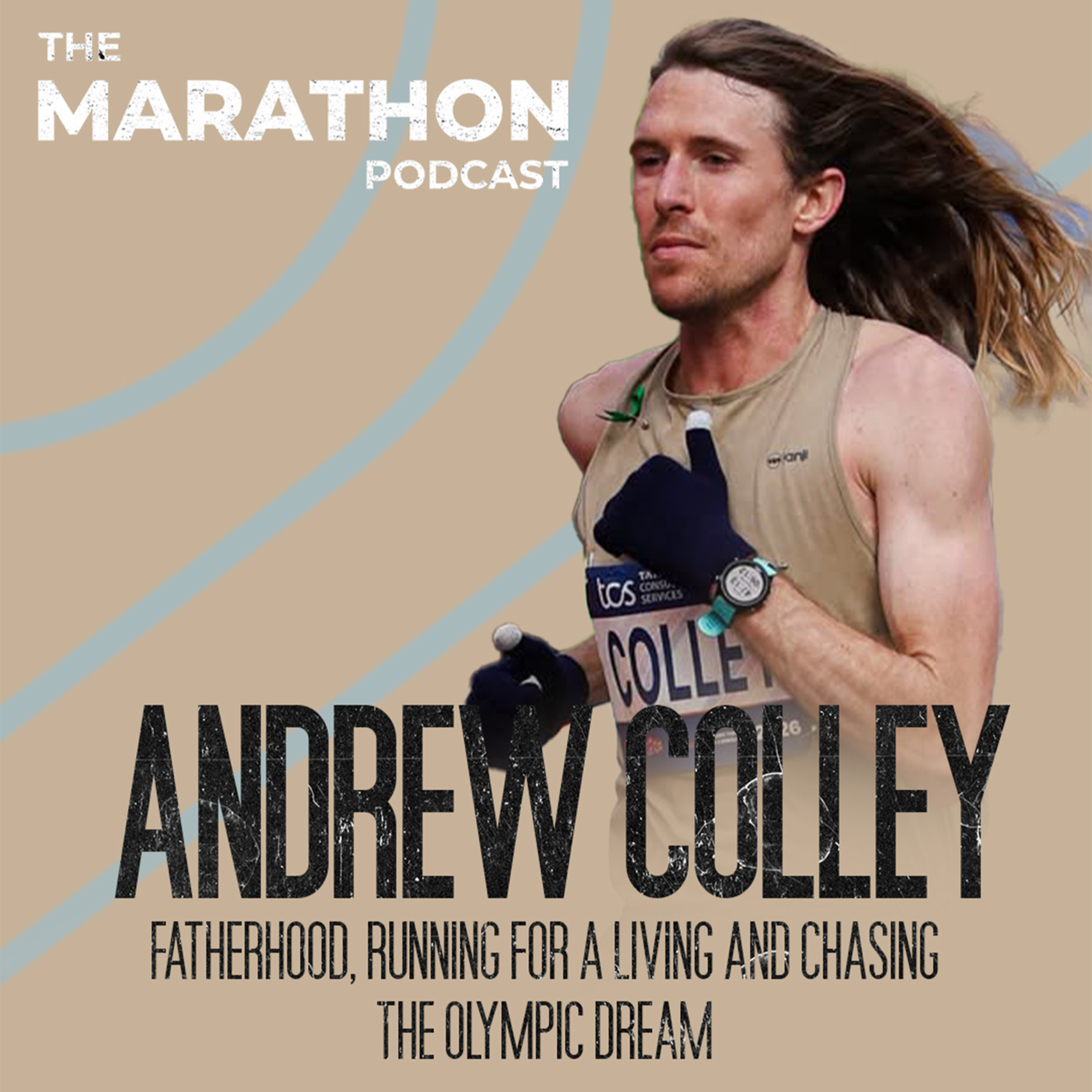
    #243 Andrew Colley: “I Wanted the Olympics Since Third Grade”

    The Marathon Podcast is now proudly sponsored by Saysky Copenhagen. Use code TMP15 for 15% off at saysky.com. Get 20% off a Strava annual subscription with code KRISTIAN Save on FlexBeam using code WARWICKRUNS or this link: https://rechargehealthas.sjv.io/55GAPb Andrew Colley is an American marathoner with a personal best of 2:09:33 from Seville in February 2026, and a half marathon best of 1:00:47. He grew up in Virginia, ran at NC State, and has been chasing the Olympics since the third grade. We recorded this just after he raced the New York City Marathon, where he was aiming to be the first American and was not happy with how it went. Andrew tells the story of how he started running at eight years old after a classmate beat him in the mile, how his dad only let him practice on practice days, and why the dream of the Olympics never left him. We talk about the culture around big goals, becoming a dad to his daughter Lily, and running alongside his wife Tristin, who joined the podcast a year ago. He also goes through his marathon story: a humbling first marathon, a better second one, qualifying for the Olympic Trials in the 5K, the 10K and the marathon, and how the sponsor situation changed when his training group shut down. We finish with his 10 day training cycle, long runs and surges, and what he is taking from New York into the next marathon. Before the interview, Kristian reads a written intro about Andrew's career and gives an update on his own road to Valencia. In this episode: - Becoming a runner at eight years old - Ambition, big goals and the Olympic dream - Becoming a dad and running as a couple - The first and second marathon - Olympic Trials and world cross country - Sponsors, prize money and a professional career - A 10 day training cycle - Long runs, surges and pacing Chicago - Moving on after New York Timestamps 00:00 Intro 00:33 Andrew's written intro 03:29 Kristian's update and the road to Valencia 05:07 Saysky 05:26 Welcome Andrew 06:09 Running and becoming a dad 09:08 How Andrew started running 11:07 Dreaming of the Olympics from the third grade 13:28 What kept him in the sport 16:17 Race anxiety as a kid 18:01 Big goals and the culture around them 21:00 Chasing the Olympic dream as an adult 23:04 Breakthroughs from Jess McClain and Molly Seidel 24:52 From the track to the marathon 27:59 The first marathon 31:06 The second marathon 33:07 Committing to the Olympic cycle 35:00 World cross country in Australia 37:12 Looking back on his career 41:08 Running alongside Tristin 46:15 Sponsors and the training group shutting down 50:23 Between sponsors and the plan for 2026 53:16 Expectations for New York 53:44 A normal 10 day training cycle 1:04:05 Surges in the long run 1:06:11 Long runs close to a race 1:08:21 Pacing Chicago and the pace in New York 1:12:19 Fixing weaknesses four weeks out 1:14:22 Moving on from New York Follow Andrew on Instagram: @thecolleyllama Follow Tristin on Instagram: @tristinvanord Start your free Musicbed trial: https://fm.pxf.io/kristianwarwick Full episodes + the Boston 2025 documentary: https://www.youtube.com/@Warwickruns Follow my training journey on Instagram: @warwick.runs Music from Musicbed: MB01XPYH8ZYENVAMB0133EV2TCQFZY
  • S1 · E242
    Monday · 56 min

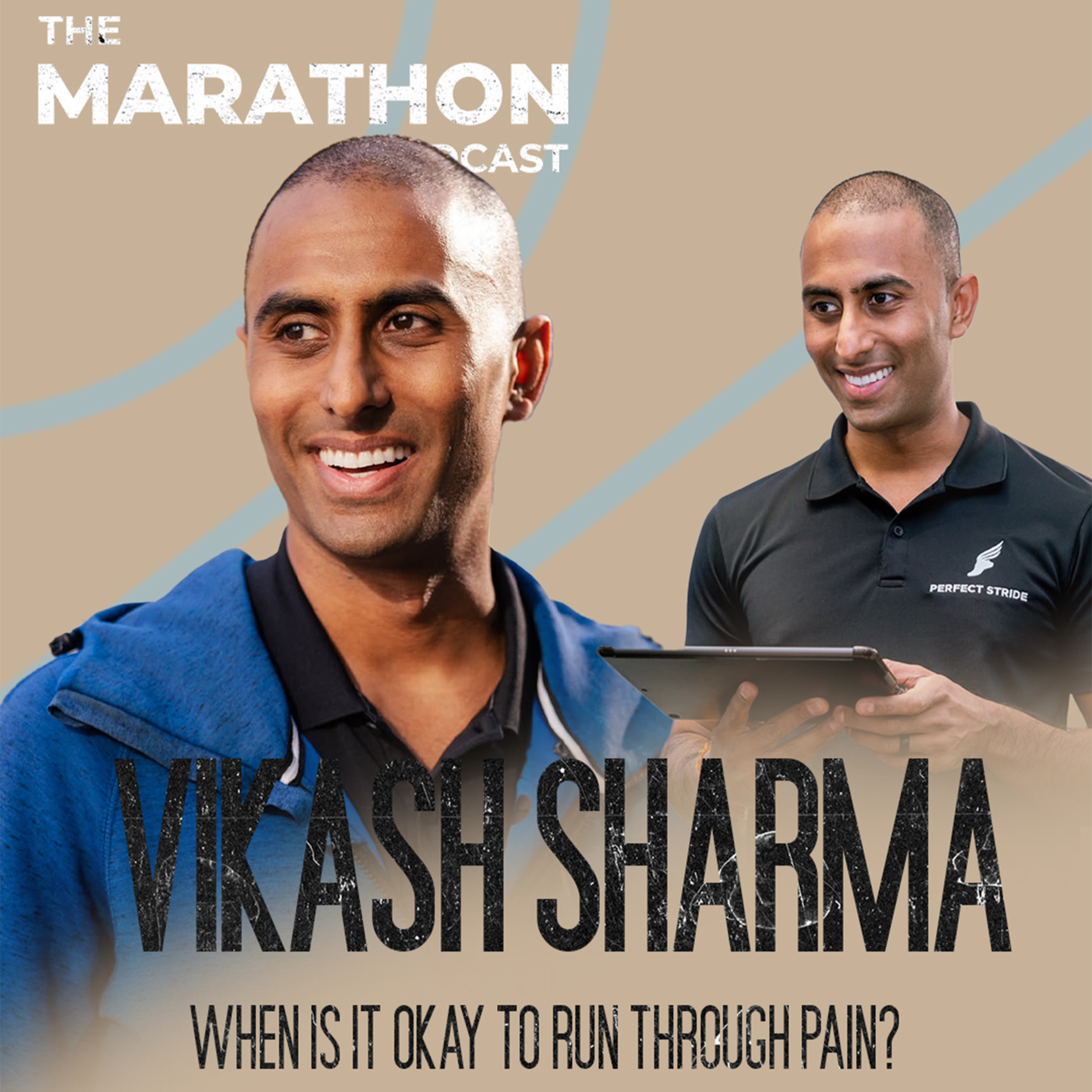
    #242 Vikash Sharma: When Is It Okay to Run Through Pain? A Running Expert Physio Explains

    The Marathon Podcast is now proudly sponsored by Saysky Copenhagen. Use code TMP15 for 15% off at saysky.com. Get 20% off a Strava annual subscription with code KRISTIAN Save on FlexBeam using code WARWICKRUNS or this link: https://rechargehealthas.sjv.io/55GAPb Vikash Sharma is a physical therapist and running performance and rehab specialist based in New York City. His clinic, Perfect Stride Physical Therapy, has worked with runners since 2012, and he also runs Running for Life Education, which teaches coaches and clinicians how to work better with runners. We recorded this a few days before the New York City Marathon, so we start with the taper crazies and why old niggles can flare up when you run less. From there Vikash explains how to tell normal aches from real warning signs, when it is okay to keep running, how to come back after illness or time off, and what to do about bone stress injuries. We finish with strength training for runners: why the best routine is the one you actually do, how heavy to lift, where plyometrics fit, what to do if you only have 30 minutes, and whether stretching matters. Kristian also shares what he learned from his own groin and inner thigh pain. This episode is general information and not medical advice. If you are in pain, get checked by a professional. In this episode: - Taper crazies and why niggles flare up - Red flags when training does not match your goal race - Pain rules: stride changes, pain medication and the 0 to 10 scale - When to keep running and when to get help - Bone stress injuries and cross training - Coming back after illness or time off - The most common running injuries - Strength training, heavy lifting and plyometrics - Stretching Timestamps 00:00 Intro 01:48 Kristian's training update 03:06 Sofie Haugen's marathon debut in Malaga 04:12 Indie Monumental 04:47 Jacob Boutera's YouTube series 05:26 Saysky 06:23 Welcome Vikash 07:03 Taper crazies 08:07 Why niggles flare up in the taper 10:17 Who Vikash is and Perfect Stride 12:19 What clinicians should know about runners 13:20 Red flags: training that does not match the race 16:03 When is pain okay to run through? 17:28 Pain rules: stride changes and pain medication 18:29 The 0 to 10 pain scale 19:27 When to get help 22:03 When the rules do not apply 23:12 Bone stress injuries 27:50 Cross training while injured 28:27 Stress fractures and prevention 31:00 Coming back after illness or time off 34:12 How to ease back into training 37:57 Common running injuries 42:39 The Copenhagen plank and groin strength 43:34 Strength training for runners 44:14 Why runners do not lift heavy enough 45:34 Plyometrics 50:48 Strength training in 30 minutes 52:09 Does stretching matter? Follow Vikash on Instagram: @vikashsharmadpt Start your free Musicbed trial: https://fm.pxf.io/kristianwarwick Full episodes + the Boston 2025 documentary: https://www.youtube.com/@Warwickruns Follow my training journey on Instagram: @warwick.runs Music from Musicbed: MB01XPYH8ZYENVAMB0133EV2TCQFZY
  • S1 · E241
    November 6 · 1 hr 11 min

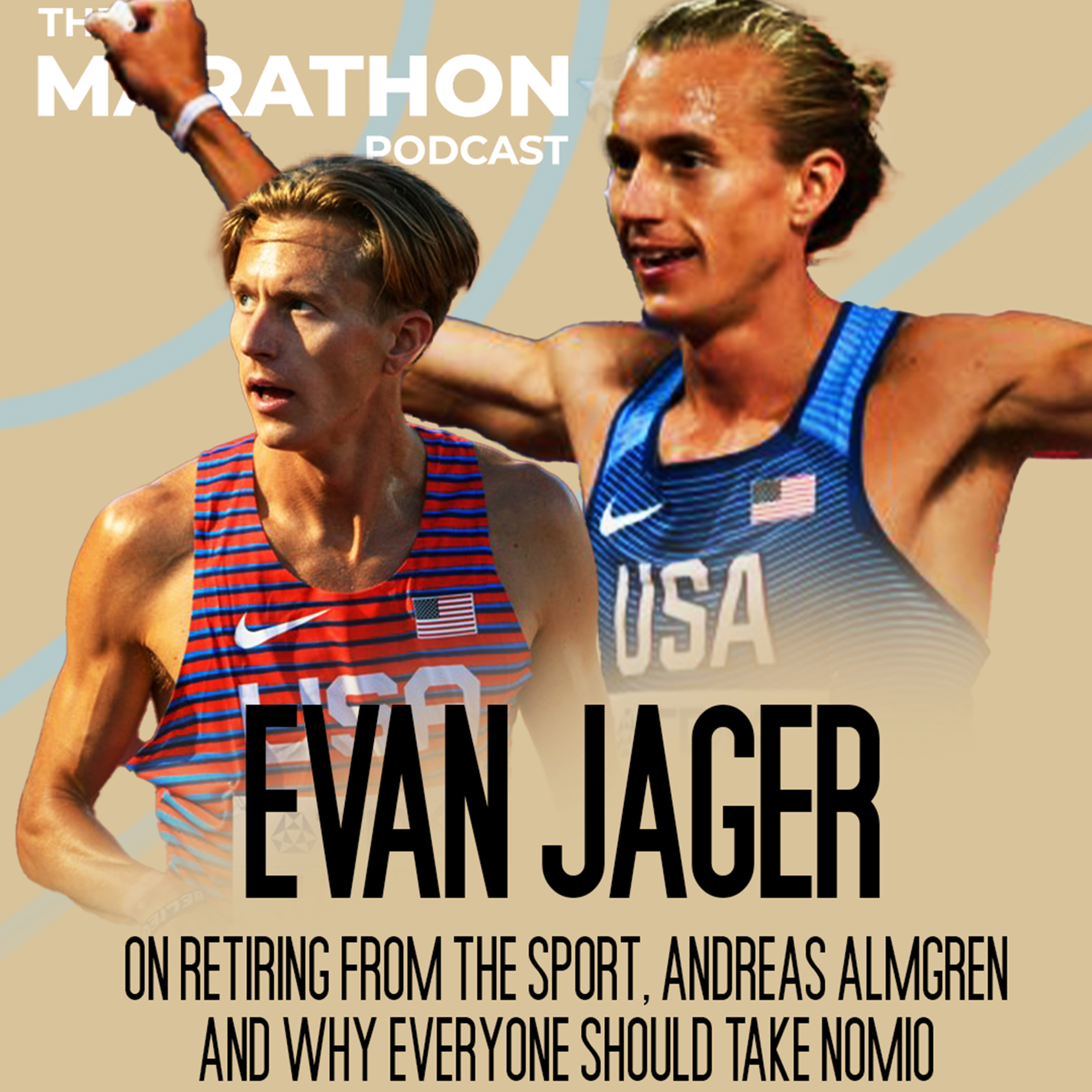
    #241 Evan Jager: On retiring from the sport, Andreas Almgren and Why Everyone should take Nomio

    The Marathon Podcast is now proudly sponsored by Saysky Copenhagen. Use code TMP15 for 15% off at saysky.com. Get 20% off a Strava annual subscription with code KRISTIAN Save on FlexBeam using code WARWICKRUNS or this link: https://rechargehealthas.sjv.io/55GAPb A bonus episode with Evan Jager, recorded just days after Andreas Almgren won the New York City Marathon in his marathon debut. Evan is an Olympic silver medalist in the steeplechase and a world championships bronze medalist, and today he works with Nomio, the Swedish broccoli sprout brand that Almgren has a close tie to. Evan is close to Almgren, so he gives an insider's view of race day in New York and of what makes Almgren so impressive as an athlete. He also talks about how Almgren's win could change the sport of marathoning, and whether it could send more track runners to the roads. Evan also looks back on his own career: falling in love with running as the fast kid at school, growing up playing soccer, why a high school coach pointed him toward the steeplechase, what it felt like to make his first Olympic team, and how the 2016 silver medal compared. He is open about the injuries that ended his career, what retiring felt like, and how he found his next chapter at Nomio. In this episode: - Reacting to Andreas Almgren's New York City Marathon win - Evan's start in running and the steeplechase - Making the Olympic team and winning silver - Injuries, retirement and life after sport - Joining Nomio and why the brand works - Using Nomio regularly and the science behind it - Almgren as an athlete and how he could change the sport - Will more track runners move to the marathon? Timestamps 00:00 Intro 02:31 Road to Valencia and Saysky 03:15 Welcome Evan 03:55 Reacting to Andreas Almgren's win in New York 07:21 Falling in love with running 08:50 Childhood dreams: soccer, running and the Olympics 12:33 Going pro and getting serious 15:56 Why the steeplechase 18:46 Making the Olympic team 21:29 The 2016 silver medal 24:25 Moving on from the Olympic high 26:59 The decision to retire 29:16 Life after athletics 31:30 Joining Nomio 34:24 Why the Nomio brand works 40:41 Using Nomio regularly 44:54 The history and science behind Nomio 53:10 Evan's own experience as an athlete 59:51 Almgren as an athlete 1:02:43 How Almgren could change the sport 1:05:01 Evan and the marathon 1:06:45 Will track runners move to the roads? Start your free Musicbed trial: https://fm.pxf.io/kristianwarwick Full episodes + the Boston 2025 documentary: https://www.youtube.com/@Warwickruns Follow my training journey on Instagram: @warwick.runs Music from Musicbed: MB01XPYH8ZYENVAMB0133EV2TCQFZY Podcast cover art features a combined and modified version of "Evan Jager Oregon 2022" and "Evan Jager London 2017" by photographer Erik van Leeuwen via Wikimedia Commons. These original works are used under the GNU Free Documentation License and the Creative Commons Attribution-ShareAlike (CC BY-SA) license. In accordance with these licenses, this final composite design is also released to the public under the same open-source, share-alike terms.
  • S1 · E240
    November 6 · 1 hr 37 min

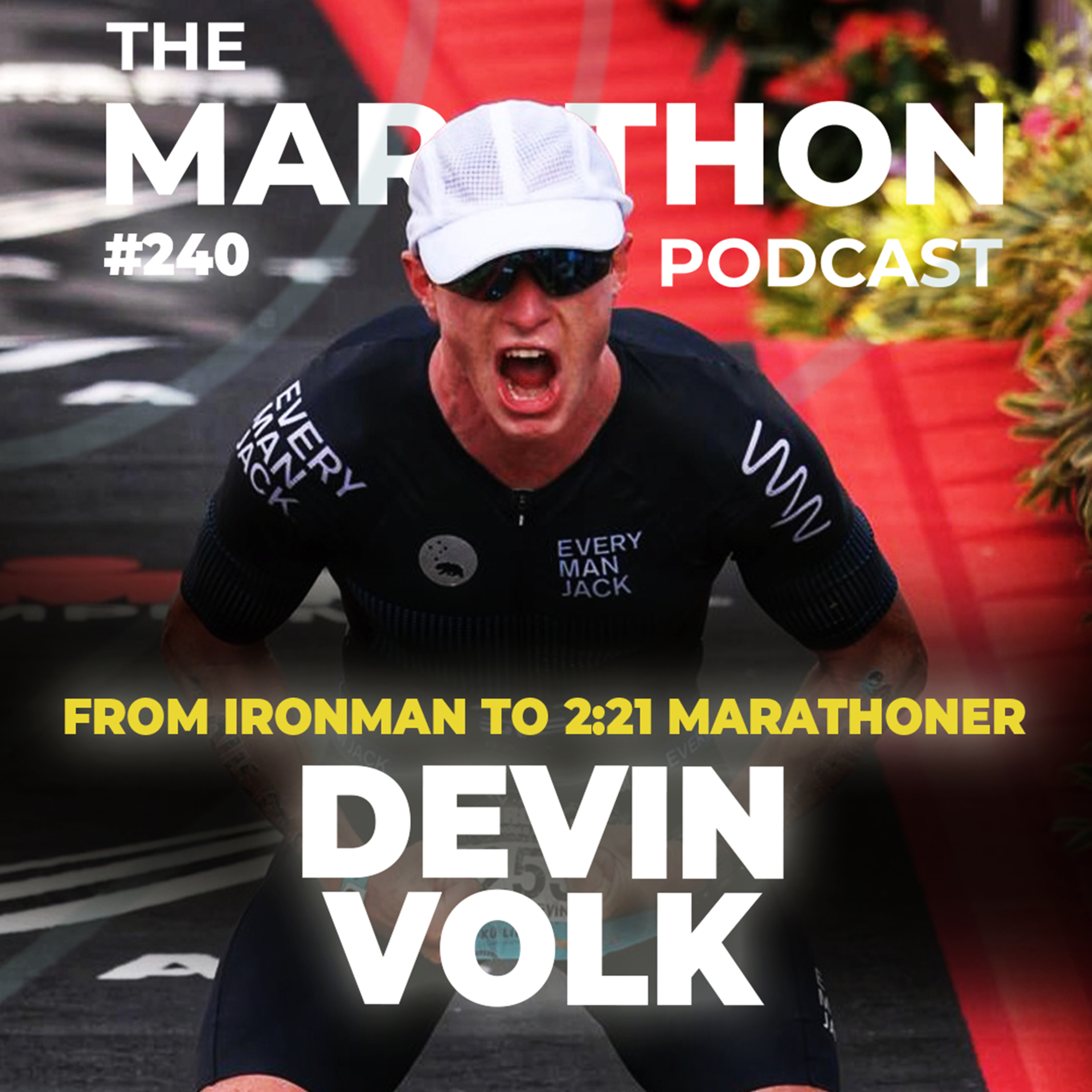
    #240 Devin Volk: From Ironman to 2:21 Marathoner

    The Marathon Podcast is now proudly sponsored by Saysky Copenhagen. Use code TMP15 for 15% off at saysky.com. Get 20% off a Strava annual subscription with code KRISTIAN Save on FlexBeam using code WARWICKRUNS or this link: https://rechargehealthas.sjv.io/55GAPb Devin Volk came to the marathon through triathlon. He won his age group at the Half Ironman World Championships in 2021, finished second in his age group at the Ironman World Championship in Kona in 2022, and raced as a pro before stepping away to focus on other goals. Now he is a 2:21 marathoner, with a 2:25 at Boston and a 2:21:58 at Chicago, and he is chasing the 2:16 Olympic Trials standard. In this conversation Kristian and Devin talk about what triathletes know about intensity control, why time-based easy running and heart rate work for him, and how he went from about four hours a week to eight or nine hours of running. They also get into racing better than you train, the workouts that actually mattered before Boston and Chicago, and the case for dreaming big on a multi-year timeline. Before the interview, Kristian shares a training update, his Road to Valencia YouTube series, and a short rant about people criticizing other people's goals. In this episode: - Triathlon, Kona and moving to the marathon - Swimming as cross-training for runners - The first marathon at CIM - Boston 2:25 and Chicago 2:21:58 - Why you can race faster than your training shows - A key long workout three weeks out - Heat, water and race execution - A typical week in a marathon block - Big goals and the Olympic Trials standard Timestamps 00:00 Intro 01:28 Saysky 02:46 Training update and the groin scare 05:01 Road to Valencia and criticism of big goals 12:27 Welcome Devin 13:41 Triathlon background 16:20 Learning to swim and bike as an adult 20:44 From 20 to 25 hours a week to running 21:46 Becoming a flight instructor 24:33 Cal Poly, 70.3 Worlds and Kona 26:21 Turning pro and stepping back 28:01 Qualifying for Boston at the deadline 29:52 Switching to running without getting injured 32:15 Why swimming helps runners 41:56 Volume and the marathon 45:34 First marathon at CIM 49:11 Building mileage and training by time 51:13 Boston 2:25 55:25 Racing better than training 58:02 The key workout three weeks out 1:00:24 Chicago 1:08:25 Heat, water and race execution 1:14:37 A typical week in a marathon block 1:26:05 Coaching with Matt Hurley 1:30:57 Goals and the Olympic Trials standard 1:34:22 Finishing Chicago without knowing the time Follow Devin on Instagram: @devinvolk Start your free Musicbed trial: https://fm.pxf.io/kristianwarwick Full episodes + the Boston 2025 documentary: https://www.youtube.com/@Warwickruns Follow my training journey on Instagram: @warwick.runs Music from Musicbed: MB01XPYH8ZYENVAMB0133EV2TCQFZY
  • S1 · E239
    November 4 · 1 hr 16 min

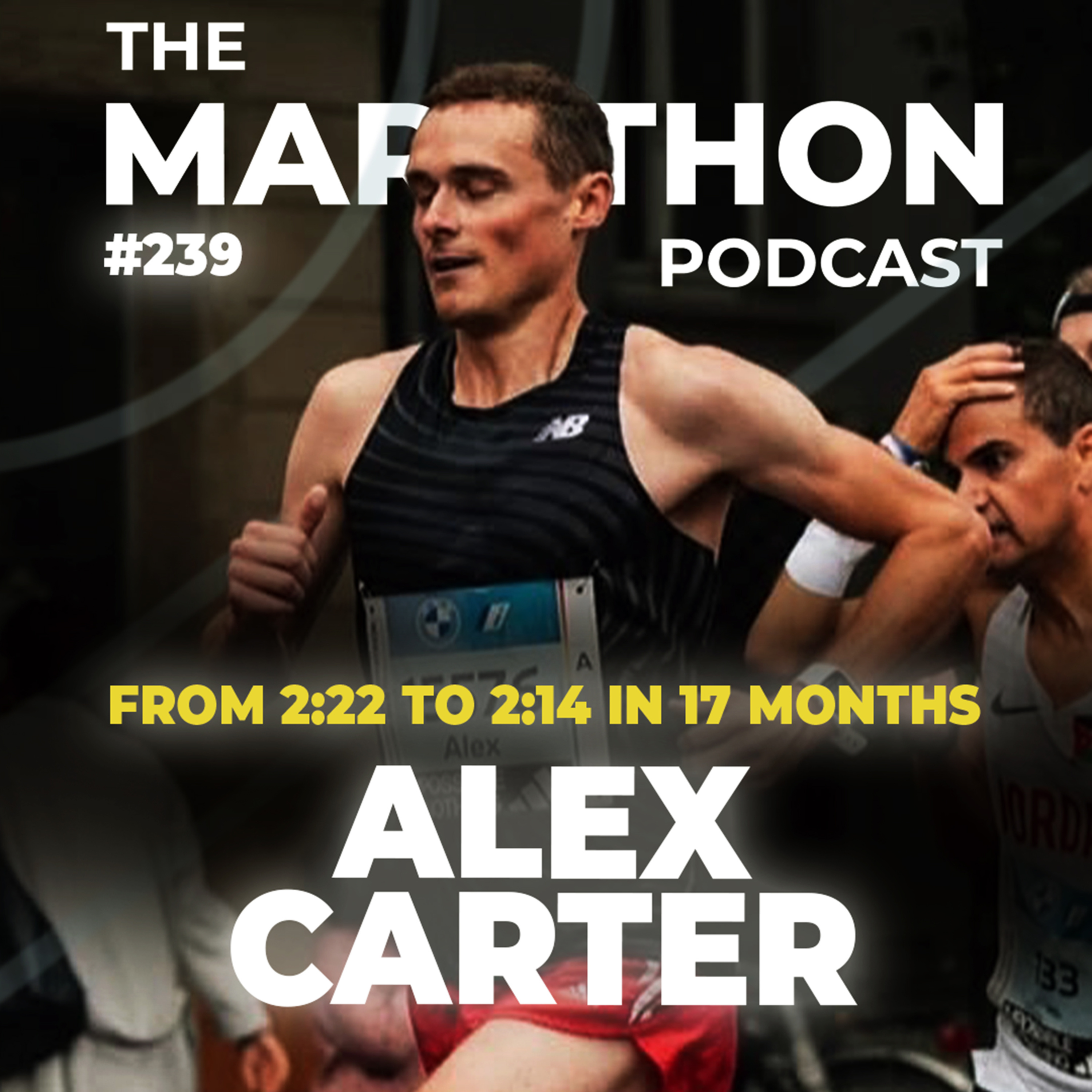
    #239 Alex Carter: 2:22 debut in 2025 - 2:14 in 2026

    The Marathon Podcast is now proudly sponsored by Saysky Copenhagen. Use code TMP15 for 15% off at saysky.com. Get 20% off a Strava annual subscription with code KRISTIAN Save on FlexBeam using code WARWICKRUNS or this link: https://rechargehealthas.sjv.io/55GAPb Alex Carter ran his first marathon in April 2025 at London, finishing in 2:22. Seventeen months later he ran 2:14:42 at Berlin, against an A goal of going under 2:15. In between were four more marathons, each one faster than the last, all while working a full-time sales job in London. In this conversation Alex takes us back to the start: a youth runner in the UK who earned a place at Iona in New York, lost years to stress fractures, and spent a long stretch running for fun before the marathon progression began. We get into the training changes behind the jump, including 200K weeks, back-to-back long workouts, sleep, easy days that are actually easy, and a proper taper. Before the interview, Kristian shares a shoe test, the start of his Valencia YouTube series, a training update and a thought on feeling like you are not training properly. In this episode: - Berlin: the race, the goal and how it unfolded - Youth running, Iona and the stress fractures - The 17 month progression from 2:22 to Berlin - Fueling mistakes in the first marathon - Sleep, easy pace and what changed - Building from 120K to 200K weeks - A typical week in the Berlin block - Puma Project 3 and the Fast-R3 - Moving to New Zealand Timestamps 00:00 Intro 00:17 New shoes and the Valencia YouTube series 03:39 Training update and a groin scare 06:48 Feeling like you are not training properly 08:32 Saysky 09:24 Welcome Alex and congrats on Berlin 10:52 Youth running, Iona and stress fractures 12:26 Dallas, London and the ballot present for his sister 14:49 Sales job and balancing work with training 27:41 Reaching 200K weeks 29:13 Slow progress before the 2:22 debut 33:04 First marathon and the fueling lessons 39:39 Biggest changes: sleep and easy pace 41:43 Mileage increase and back-to-back long days 45:28 Taper 52:59 Marathon by marathon progression 56:27 Fourth Brit in Berlin 1:01:07 A typical 200K week 1:06:38 Fast-R3 on race day 1:08:27 Puma Project 3 1:11:56 Moving to New Zealand Follow Alex on Instagram: @alex_carter_96 Start your free Musicbed trial: https://fm.pxf.io/kristianwarwick Full episodes + the Boston 2025 documentary: https://www.youtube.com/@Warwickruns Follow my training journey on Instagram: @warwick.runs Music from Musicbed: MB01XPYH8ZYENVAMB0133EV2TCQFZY

  • S1 · E238
    November 1 · 37 min

    #238 A HISTORIC NEW YORK CITY MARATHON 2026

    The Marathon Podcast is now proudly sponsored by Saysky Copenhagen. Use code TMP15 for 15% off at saysky.com. Get 20% off a Strava annual subscription with code KRISTIAN Save on FlexBeam using code WARWICKRUNS or this link: https://rechargehealthas.sjv.io/55GAPb A solo recap of the 2026 New York City Marathon, recorded right after the race. Andreas Almgren won in his marathon debut in 2:06:01, and Kristian says he has never been as excited to watch a marathon on TV. He walks through the race from the start to the finish: the confusing start for the women, the wheelchair races, and an elite women's race that stayed open until the final kilometers. Jess McClain ran down Hellen Obiri and took second behind Sheila Chepkirui, less than 10 seconds back. In the men's race, Almgren pulled away from Yemaneberhan Crippa late and won by 13 seconds. Kristian also shares what stood out to him about Almgren's approach, from his mileage to why he never tests himself fully in training, and goes through the performances of many other runners, including a long list of Americans and an Australian who finished just off his own national record. In this episode: - Almgren wins on his marathon debut in 2:06:01 - Chepkirui, McClain and Obiri finish within seven seconds in the women's race - Marcel Hug and Catherine Debrunner in the wheelchair races - A start mix-up and a water grab scare for the pro women - Jess McClain's comeback and her story - Crippa's 2:06:14 and the sprint for the podium - An Australian close to the national record and performances from the Americans - What Almgren said about training and the marathon - A cooldown with the pros the day after Timestamps 00:00 Saysky and welcome 00:17 A historic day for Almgren and New York 01:37 The race recap starts: wheelchair divisions 02:13 A confusing start for the pro women 03:16 Men's start delay and perfect conditions 03:47 Men's wheelchair race: Marcel Hug 05:20 Women's wheelchair race 06:41 The women's pro race 08:12 A scare at the water grab 09:06 A group of ten at the half marathon 10:11 Amanda Vestri drops, and the Brooks coach behind the results 11:27 Five left at 35K, and Jess McClain's story 13:54 Jess catches Obiri and Chepkirui 16:06 The women's times and podium 16:39 More runners and results to know 19:08 Credit to the coverage of the women's race 19:43 The men's field 21:42 Expectations for Almgren 23:54 How the men's race unfolds 26:03 Crippa and Almgren up front 27:42 Almgren wins in 2:06:01 29:35 Shoe talk: Crippa and Almgren 30:01 The podium and top five 30:43 The Australian national record 32:04 Americans and the rest of the top 20 33:36 What Almgren has said about training and the marathon 35:49 Cooldown with the pros 36:34 Wrap-up Join the cooldown with the pros in New York: https://sandychiweshe.regfox.com/cool-down-with-the-pros Start your free Musicbed trial: https://fm.pxf.io/kristianwarwick Full episodes + the Boston 2025 documentary: https://www.youtube.com/@Warwickruns Follow my training journey on Instagram: @warwick.runs Music from Musicbed: MB01XPYH8ZYENVAMB0133EV2TCQFZY
  • S1 · E237
    October 30 · 1 hr 13 min

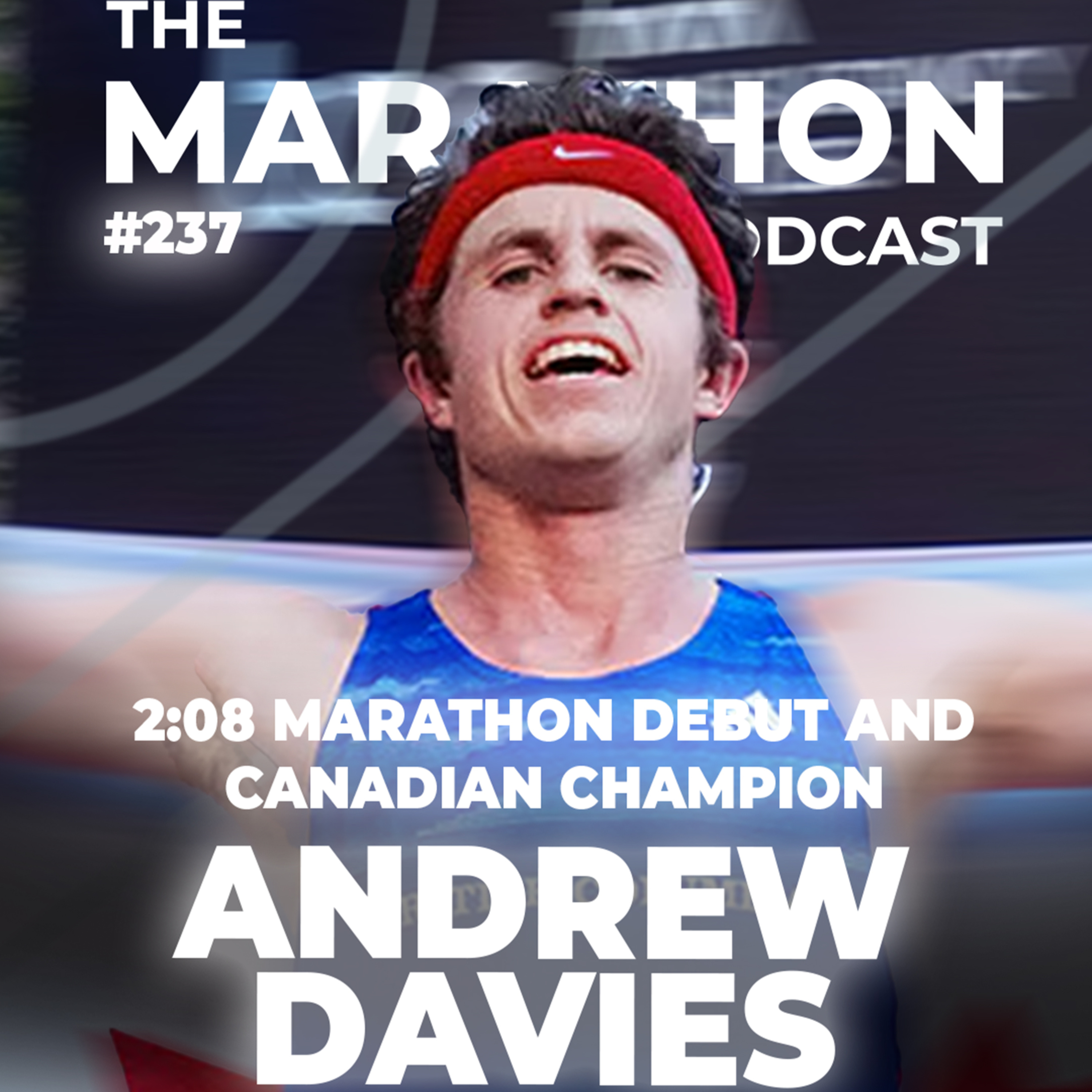
    #237 Andrew Davies: 2:08 Marathon Debut and Canadian Champion

    The Marathon Podcast is now proudly sponsored by Saysky Copenhagen. Use code TMP15 for 15% off at saysky.com. Get 20% off a Strava annual subscription with code KRISTIAN Save on FlexBeam using code WARWICKRUNS or this link: https://rechargehealthas.sjv.io/55GAPb Andrew Davies is the new Canadian marathon champion. In his very first marathon, at the Toronto Waterfront Marathon, he ran 2:08:48, making him the fourth fastest Canadian of all time. His goal was 2:11. He went to work on Monday morning like nothing had happened. Andrew lives in Vancouver, just finished law school and is now working toward becoming a lawyer. In this conversation, he and Kristian talk about how he balanced a full-time job with the build, why he trains mostly by feel instead of chasing heart rate numbers, and what it was like to wake up the next day as a different kind of runner. They also dig into his training in detail: weeks of up to 200K, double threshold days, a 41K easy run in the middle of the week, marathon pace workouts in minutes instead of kilometers, and how he fueled with close to 100 grams of carbs an hour. Andrew also clears up the aid station bottle mix-up that went around social media. Before the interview, Kristian shares his own first double threshold day, including a tough morning session and a much better afternoon in the Puma Fast-R3. In this episode: - Andrew's 2:08:48 debut and the Canadian title - Balancing law work and marathon training - Racing in the Puma Fast-R and training in carbon plated shoes - The aid station bottle mix-up, explained - How the race unfolded, from the start to the last 10K - What the result changes for his Olympic ambitions - Signing with an agent after the race - Training by feel, without heart rate - Weekly mileage, double threshold days and marathon workouts - Fueling with 90 to 100 grams of carbs per hour - What he does next in the spring Timestamps 00:00 Welcome and who Andrew Davies is 02:00 Kristian's first double threshold day 03:53 Afternoon session in the Puma Fast-R3 08:49 Valencia and Boston shakeouts, and merch 10:03 Saysky Copenhagen 11:01 Interview with Andrew Davies begins 12:21 Expectations going into the race 14:04 Andrew's background: running and law school 15:37 Balancing a full-time job with a marathon build 16:29 Ambitions as a young runner 19:04 Career recap: cross country and the track 21:08 Why the marathon now 22:21 Cross country vs the roads 24:19 Race shoes and carbon plates 25:33 Signing with an agent 27:19 The aid station bottle mix-up 31:06 How the race unfolded 35:59 Crossing the finish line 37:07 Olympic ambitions 38:36 Competing with other Canadian marathoners 41:42 Prioritizing the marathon 42:44 Coaching and mileage 46:43 Easy runs by feel 48:03 Heart rate and lactate: how he controls intensity 50:33 Fueling for the marathon 56:20 Marathon workouts 59:37 The weekly structure and a 41K easy run 1:05:41 What he learned from a marathon block 1:08:04 Snacks and reactions at the office 1:10:23 What is next this spring 1:11:33 Wrap-up Follow Andrew on Instagram: @andrewdavies.13 Start your free Musicbed trial: https://fm.pxf.io/kristianwarwick Full episodes + the Boston 2025 documentary: https://www.youtube.com/@Warwickruns Follow my training journey on Instagram: @warwick.runs Music from Musicbed: MB01XPYH8ZYENVAMB0133EV2TCQFZY
  • S1 · E236
    October 28 · 1 hr 7 min

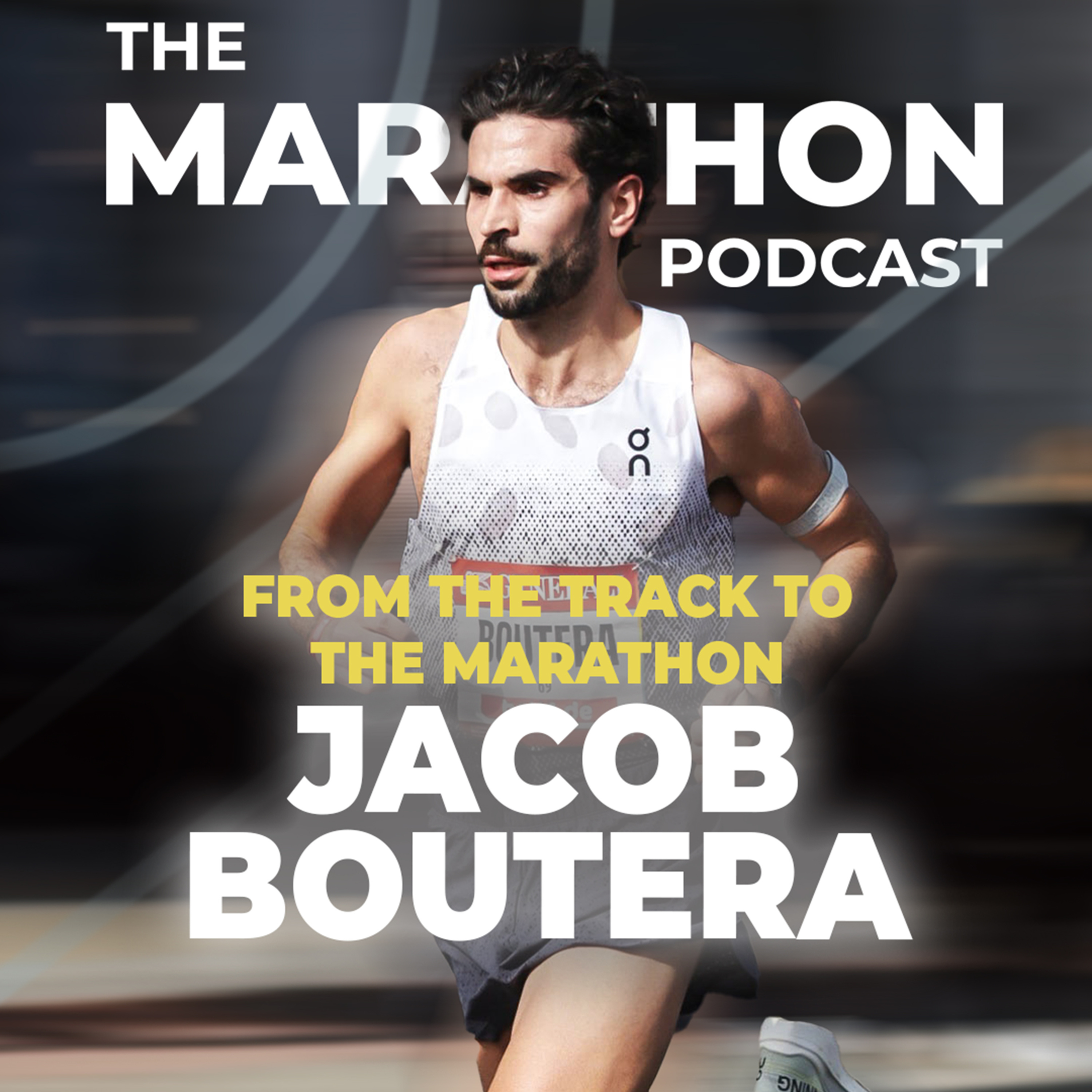
    #236 Pro Runner Jacob Boutera Announces Marathon Debut in Valencia

    The Marathon Podcast is now proudly sponsored by Saysky Copenhagen. Use code TMP15 for 15% off at saysky.com. Get 20% off a Strava annual subscription with code KRISTIAN Save on FlexBeam using code WARWICKRUNS or this link: https://rechargehealthas.sjv.io/55GAPb Jacob Boutera is one of Norway's best middle distance runners, a professional with On, and a former soccer player who only started running at 19. Two days before this conversation he ran 62:10 at the Valencia Half Marathon, and in this episode he announces his marathon debut. Jacob and Kristian are practically neighbors, and this is one of the first guests recorded in Kristian's own studio. They talk about Jacob's path from youth soccer to the steeplechase and a pro contract, how it feels to look back at breaking nine minutes for 3K when he now runs that pace for a whole hour, and how the mindset changes from the track to the road. They also get into marathon training, double threshold days, fueling, treadmill sessions, fatherhood and the running form that Kristian cannot stop studying. Before the interview, Kristian shares a training update, including a rest day to protect his groin, his first planned double threshold day, and signing up for Chicago. In this episode: - Jacob's 62:10 half marathon in Valencia and the road back from injury - From soccer player to national medalist and pro runner - Steeplechase, the World Championships in Eugene and signing with On - Sharing the track with the Ingebrigtsen brothers - Why the marathon went from "way too long" to his next goal - Marathon debut in Valencia and his target of sub 2:10 - A normal training week with double threshold days - Running easy days slower, treadmill sessions and long runs - Fueling from scratch for the marathon - Balancing training with being a dad - Running technique and why Jacob thinks running more matters most Timestamps 00:00 Welcome and why this episode is special 01:58 Kristian's training update 04:37 Chicago sign-up and the Valencia shakeout 05:39 Saysky Copenhagen 06:38 Interview with Jacob Boutera begins 07:39 The Valencia Half Marathon: 62:10 09:04 From soccer player to runner 14:11 Career so far: injury, steeplechase and signing with On 16:28 Looking back at breaking nine minutes for 3K 18:35 Competing in the era of the Ingebrigtsen brothers 20:02 When track and field was not cool 22:15 Mindset shift from the track to the roads 25:30 Marathon debut announced: Valencia in six weeks 27:33 How marathon training is different 31:11 Long runs and durability 35:01 Sharing training on Strava 37:20 Being open about injuries and setbacks 40:44 Training and fatherhood 44:02 Treadmill sessions and double threshold days 47:48 Fueling for the marathon 53:40 Running technique 59:47 A normal training week 1:03:10 Running easy days slower 1:05:17 Marathon goal for Valencia 1:06:16 Wrap-up Follow Jacob on Instagram: @jacobboutera https://www.youtube.com/@jboutera Start your free Musicbed trial: https://fm.pxf.io/kristianwarwick Full episodes + the Boston 2025 documentary: https://www.youtube.com/@Warwickruns Follow my training journey on Instagram: @warwick.runs Music from Musicbed: MB01XPYH8ZYENVAMB0133EV2TCQFZY
  • S1 · E235
    October 26 · 58 min

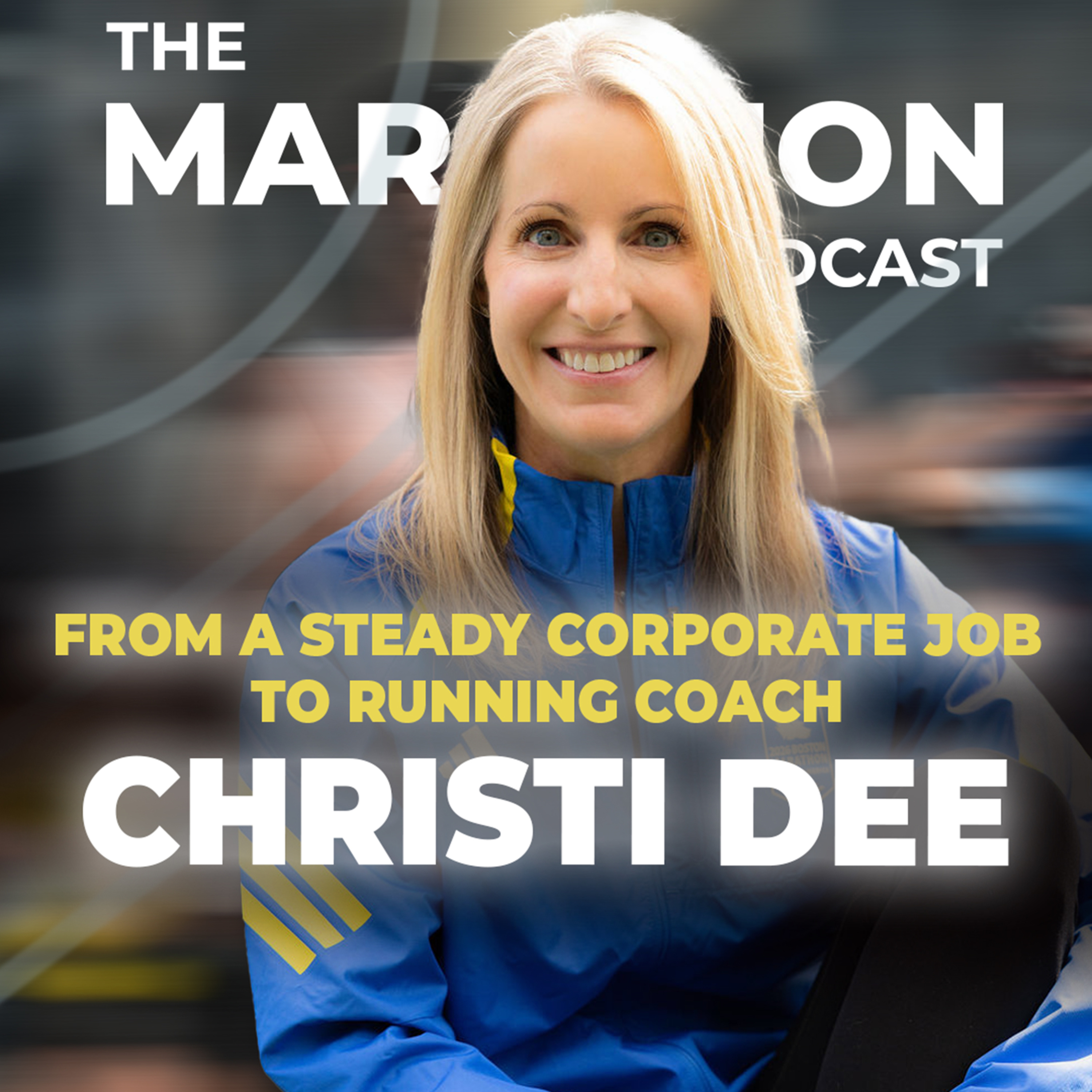
    #235 Christi Dee Quit her Corporate Job to Coach Runners

    The Marathon Podcast is now proudly sponsored by Saysky Copenhagen. Use code TMP15 for 15% off at saysky.com. Get 20% off a Strava annual subscription with code KRISTIAN Save on FlexBeam using code WARWICKRUNS or this link: https://rechargehealthas.sjv.io/55GAPb Christi Dee has run 46 marathons, left a 20-year corporate career to start her own running coaching business, and written two children's books about running. In this conversation, Kristian talks to her about all three: why she wrote Can a Frog Jog and Maya Runs a Marathon, what it took to bet on herself, and how she approaches coaching real people with busy lives. They also get into consistency, what makes running sustainable over decades, the coach and runner relationship, and why not every marathon needs to be a PR. They finish with the Indianapolis Monumental Marathon, a hometown race that is close to her heart. Before the interview, Kristian shares an update on his own training: why he now looks at a rolling 7-day window instead of Monday to Sunday, his first workout on the Wahoo Kickr Run treadmill, a 28K treadmill long run, and honest doubts about his sub 2:30 goal in Valencia. In this episode: - Why Christi wrote running books for children - Can a Frog Jog and Maya Runs a Marathon - Leaving corporate America to coach full time - Running 46 marathons and keeping it sustainable - Coaching busy athletes without making running their whole life - Building confidence in a new career - Trust and communication between coach and runner - Why every marathon does not have to be a PR - The Indianapolis Monumental Marathon and the indie running community Timestamps 00:00 Welcome and what is coming in this episode 00:59 Kristian's training update: Monday to Sunday vs a rolling 7 days 03:05 First workout on the Wahoo Kickr Run treadmill 05:27 A 28K treadmill long run 06:51 Six weeks out from Valencia and the sub 2:30 goal 10:03 Saysky Copenhagen 11:12 Interview with Christi Dee begins 11:39 Why she wrote children's books about running 14:14 Maya Runs a Marathon 15:19 From corporate America to a coaching business 18:47 How kids and parents have reacted to the books 22:19 Teaching kids about the marathon 25:44 Running 46 marathons 28:42 Running while working a corporate job, and why she made the switch 34:13 Consistency and sustainable training 37:51 Coaching busy athletes 41:42 Confidence when starting something new 44:28 Trust and communication between coach and runner 48:56 Not every marathon is a PR 50:10 Her first marathon, Chicago 2006 51:23 The Indianapolis Monumental Marathon 56:22 Where to find the books and wrap-up Follow Christi on Instagram: @this_blonde_runs Start your free Musicbed trial: https://fm.pxf.io/kristianwarwick Full episodes + the Boston 2025 documentary: https://www.youtube.com/@Warwickruns Follow my training journey on Instagram: @warwick.runs Music from Musicbed: MB01XPYH8ZYENVAMB0133EV2TCQFZY
  • S1 · E234
    October 23 · 47 min

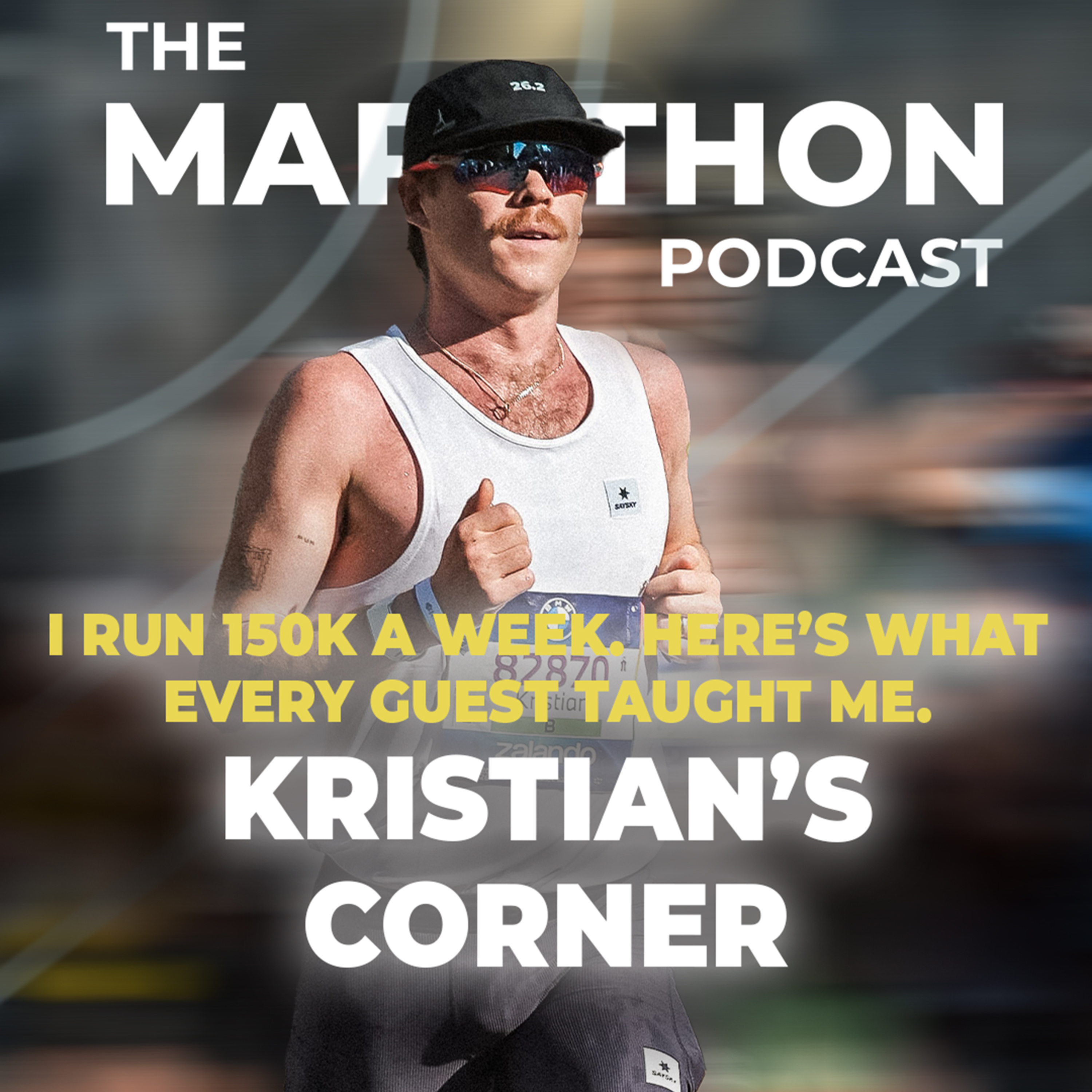
    #234 I Run 150K a Week. Here’s What Every Guest Taught Me.

    The Marathon Podcast is now proudly sponsored by Saysky Copenhagen. Use code TMP15 for 15% off at saysky.com. Get 20% off a Strava annual subscription with code KRISTIAN Save on FlexBeam using code WARWICKRUNS or this link: https://rechargehealthas.sjv.io/55GAPb Another solo episode, and this time Kristian looks back at 234 episodes and shares the lessons from past guests that he thinks about almost every day on his runs. He is now up to 150K a week, almost 100 miles, just a year after celebrating his first 100K week. He explains how guests helped him get there, why mileage makes you faster, and how to tell when it is making you slower. Along the way he covers easy runs, running form, double days, cross training, strength work, fueling, women's health and why you should be careful about copying anyone else's training. In this episode: - Training for a sub 2:30 in Valencia: 150K weeks, fatigue and race day pace - Alana Levy: why running is not optional - Thomas Nobbs: running easy runs truly easy - Miles (Find Your Stride Coach) on running technique - Charlie Sweeney and Sofie Haugen: splitting the load into two runs a day - Felicia Pasadyn and the power of cross training - Strength training, and why most of us know we should do it - Jake (Run to Japan) on breaking a scary pace into seconds - Archie on low intensity training - Alfie Manthorpe and fueling before, during and after runs - Jimmy Whelan on altitude camps, McKenna Myler on the female body and Ingrid Kristiansen on Strava - Why you should take lessons from guests, not copy their training plans Content note: Kristian shares an update on a former guest who was seriously injured after being hit by a truck while crossing the road. Timestamps 00:00 Welcome and why a solo episode on lessons from guests 01:52 150K a week and why mileage works 03:08 Saysky Copenhagen 04:14 Fatigue, workouts and race day pace 08:36 Rest days, niggles and swimming 11:35 Trying the Wahoo Kickr Run treadmill 12:28 Alana Levy: running is not optional 14:50 Thomas Nobbs: easy runs 18:16 Miles on running technique 20:03 Charlie Sweeney and Sofie Haugen: two runs a day 22:17 Felicia Pasadyn and cross training 27:00 Strength training 28:51 Jake on scary paces 30:57 Archie on low intensity training 33:11 Alfie Manthorpe and fueling 36:33 Easing back in after injury 37:55 Jimmy Whelan on altitude camps 39:57 McKenna Myler and the female body 42:03 Ingrid Kristiansen and Strava 44:45 Take the lessons, not the plan 46:24 Wrap-up Start your free Musicbed trial: https://fm.pxf.io/kristianwarwick Full episodes + the Boston 2025 documentary: https://www.youtube.com/@Warwickruns Follow my training journey on Instagram: @warwick.runs Music from Musicbed: MB01XPYH8ZYENVAMB0133EV2TCQFZY
  • S1 · E233
    October 21 · 44 min

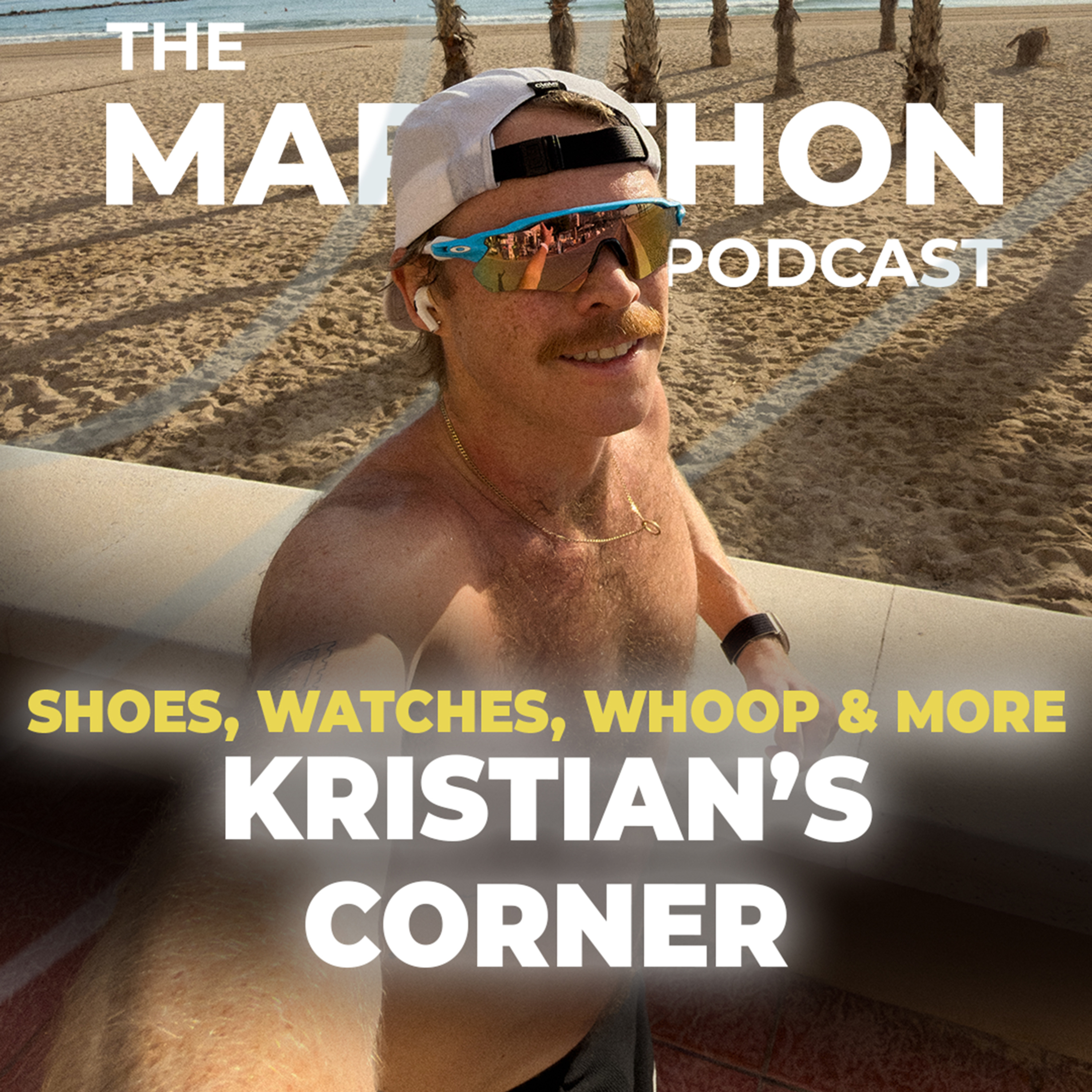
    #233 Shoe Rotation, Whoop and Watches: Gear Talk From a Balcony in Spain

    The Marathon Podcast is now proudly sponsored by Saysky Copenhagen. Use code TMP15 for 15% off at saysky.com. Get 20% off a Strava annual subscription with code KRISTIAN Save on FlexBeam using code WARWICKRUNS or this link: https://rechargehealthas.sjv.io/55GAPb A solo episode recorded on a balcony in Spain, with trains passing by every 30 minutes. Kristian is on a family trip that has turned into a bit of a training camp, and he catches you up on a hectic month, a smart down week, and what he has learned about training on tired legs. Then it is gear time. He walks through his full shoe rotation for easy runs, long runs, recovery days, workouts and racing, and explains why you should not take his word for it. He also gives an honest update on his Whoop journey and the watches he has tried over the last year. In this episode: - Why Kristian took a down week after a 32K long run and what changed - Training in Spain: double days, a beach long run and swim progress - Easy and long run shoes: Puma Deviate Pure, ASICS Novablast 6, Nike Vomero Plus - Recovery day shoes: Nike Vomero Premium and the Adidas Hyperboost Edge - Workout and race shoes: Puma Deviate Nitro Elite, Fast-R3 and ASICS Metaspeed Edge - Whoop after a few months, and what AG1 did to his recovery score - Coros, Garmin and the watches he has tested - Why he buys his own shoes so he can stay honest Timestamps 00:00 Welcome and a solo episode from Spain 02:29 Update on the last episode with Sofie Haugen 03:04 Why Kristian is in Spain 06:13 The 32K long run and the down week 09:05 Travel day, a tired body and a workout 12:29 A 29K long run along the beach 14:49 Swim progress and a 26K Monday 16:31 Shoe rotation: how Kristian thinks about it 18:06 Strava collaboration and the Marathon Podcast club 19:12 Shoes for easy and long runs 22:54 Shoes for recovery days 25:18 Trying new brands: Adidas Hyperboost Edge 26:15 Shoes for workouts and races 28:12 Fast-R3 vs ASICS Metaspeed Edge 29:16 Metaspeed Sky vs Ray 32:00 Whoop update and AG1 37:11 Watches: Coros and Garmin 43:12 Wrap-up and what is coming next Start your free Musicbed trial: https://fm.pxf.io/kristianwarwick Full episodes + the Boston 2025 documentary: https://www.youtube.com/@Warwickruns Follow my training journey on Instagram: @warwick.runs Music from Musicbed: MB01XPYH8ZYENVAMB0133EV2TCQFZY
  • S1 · E232
    October 19 · 1 hr 14 min

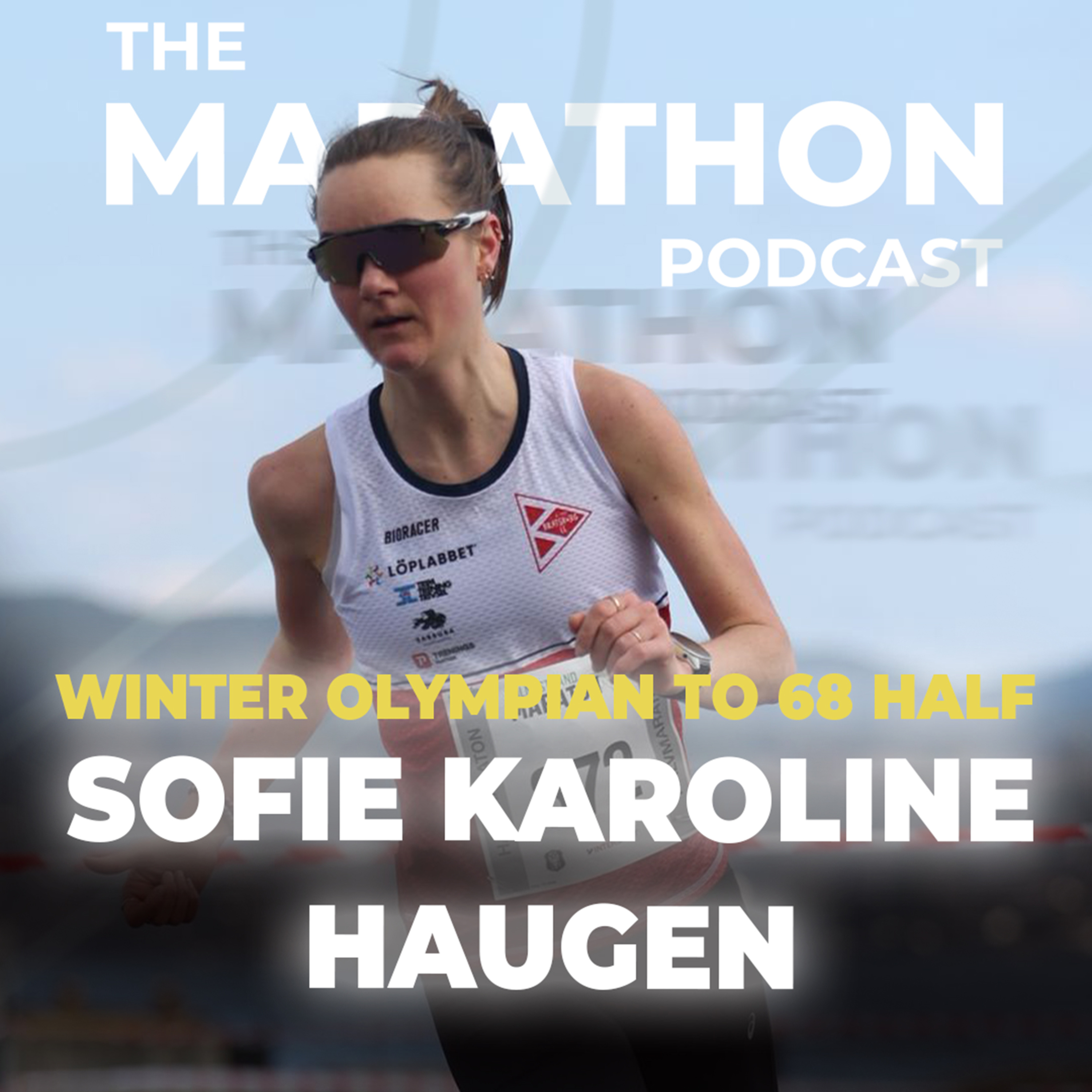
    #232 Sofie Karoline Haugen: from Winter Olympian to 69 half marathoner

    The Marathon Podcast is now proudly sponsored by Saysky Copenhagen. Use code TMP15 for 15% off at saysky.com. Get 20% off a Strava annual subscription with code KRISTIAN Save on FlexBeam using code WARWICKRUNS or this link: https://rechargehealthas.sjv.io/55GAPb How does a winter Olympian become a 1:09 half marathoner in two years? Sofie Karoline Haugen skated for Norway at the 2022 Olympics, retired from speed skating in 2024, and has since run 10K in 31:57 and a 1:09 half marathon at the Copenhagen half, just a year after running 1:18 in the same city. Kristian and Sofie have known each other for around 17 years and both come from speed skating. In this conversation, Sofie looks back on her career: the years without progress, the decision to move to Stavanger and rebuild her training, the 2019 breakthrough that took her to ninth in the world, and the Olympic Games. She explains why she walked away when she was still skating well, and how a casual 3K on the track turned into a running career. Then the conversation turns to training. Sofie takes us through her week at 170 to 180 kilometers, including double threshold days, how she keeps her easy days easy, why consistency matters most, how she chooses shoes for different days as someone who works at the running store Löplabbet, and what she has learned about bicarbonate. She also reveals that her first marathon is coming up in November. In this episode: From speed skating to a 1:09 half marathon The years of hard work before the breakthrough Moving to Stavanger and rebuilding her training Qualifying for the Olympics Why she quit skating in 2024 Her first races as a runner Racing the Copenhagen half Shoes for different days, including the Alphafly 4 A full week at 170 to 180 kilometers Building strength without getting injured Her first marathon Timestamps 00:00 Introducing Sofie 01:17 Saysky 01:51 Interview begins 02:19 From skater to 1:09 half marathoner 04:15 Sofie’s skating background 05:56 Years of hard work, and the setback 08:03 Moving to Stavanger 13:17 Ninth in the world 14:25 Qualifying for the Olympics 16:43 Why she quit skating 19:07 The moment she knew 22:36 Starting to run 23:16 A 9:29 3K 25:02 Working at Löplabbet and her coach 27:46 Racing in Copenhagen last year 31:24 A 31:57 10K 35:19 The Copenhagen Half Marathon 37:15 Running 1:09 40:30 Alphafly 4 vs Alphafly 3 43:43 Shoes for different days 49:26 Injuries and building strength 53:33 A week of training 59:18 Why consistency matters 1:09:46 Bicarbonate 1:11:56 Her first marathon 1:13:26 Wrap up Sofie on Instagram: @sofiehaugen Start your free Musicbed trial: https://fm.pxf.io/kristianwarwick Full episodes + the Boston 2025 documentary: https://www.youtube.com/@Warwickruns Follow my training journey on Instagram: @warwick.runs Music from Musicbed: MB01XPYH8ZYENVAMB0133EV2TCQFZY
  • S1 · E231
    October 16 · 1 hr 11 min

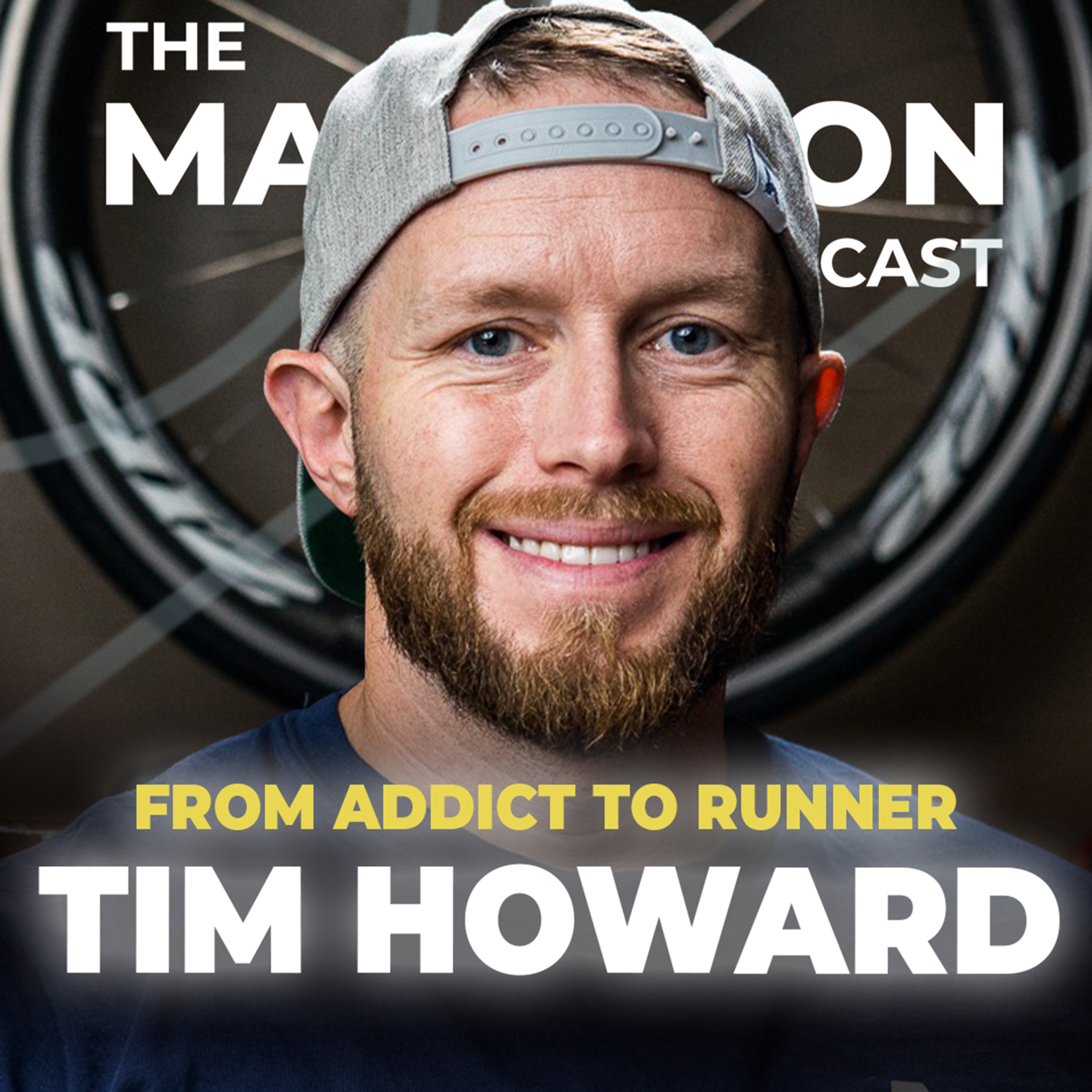
    #231 Tim Howard was a heroin addict - now he is a runner and Ironman

    Content note: This episode includes open discussion of drug addiction, homelessness, violence, mental health and suicidal thoughts (mainly between 05:00 and 12:00). Please take care while listening. If you or someone you know is struggling with substance use in the US, the SAMHSA National Helpline is available at 1-800-662-4357. The Marathon Podcast is now proudly sponsored by Saysky Copenhagen. Use code TMP15 for 15% off at saysky.com. Get 20% off a Strava annual subscription with code KRISTIAN Save on FlexBeam using code WARWICKRUNS or this link: https://rechargehealthas.sjv.io/55GAPb Tim Howard went from a decade of heroin addiction and years of homelessness to running marathons, finishing an Ironman and working for the Indianapolis Monumental Marathon. In this episode of The Marathon Podcast, Tim shares how a flyer for a running group, and a hug on his first morning there, changed the direction of his life. Kristian first came across Tim in an Athletic Brewing documentary about Ironman, and their conversation goes much deeper than the race. Tim talks about what early recovery really looks like, the role of community in staying sober, and how running became a healthy outlet. He also opens up about the lows that came with injuries and surgery, and why giving back has been the thing that keeps him grounded. You will also hear about his first marathon four months into sobriety, running with a pacer and thanking every volunteer on the course, his Ironman Lake Placid journey, and his role at Monumental, where he now helps others reach the start line of their first marathon. In this episode: Tim’s story, from addiction to recovery Early sobriety and what the first two years feel like Finding Back on My Feet and a community that accepted him How to acknowledge people experiencing homelessness Trading one obsession for a healthier one Overtraining, ankle surgery and a dark period His first marathon and why he thanks every volunteer Ironman Lake Placid Giving back through the Indianapolis Monumental Marathon Timestamps 00:00 Introducing Tim 01:18 Kristian’s quick update 01:49 Saysky 02:20 Interview begins 02:31 The Athletic Brewing documentary 04:06 Tim today 05:21 Life before running 07:07 Hitting bottom and getting sober 08:52 Detox and the first weeks 11:55 The first two years of recovery 13:08 Identity in and out of addiction 15:48 Back on My Feet 18:18 The hug that changed everything 20:23 How to show up for people experiencing homelessness 24:09 Finding community 25:16 Accountability and starting over 30:13 Trading heroin for running 32:03 Injury, surgery and a dark period 33:22 Finding a new way to belong 35:08 Tim’s first marathon 41:55 Becoming the community guy 43:37 Thanking the volunteers 47:15 What goes into a major marathon 48:16 Photography and the road to Ironman 51:37 Anxiety and staying on course 54:48 Why Tim never goes back 56:54 Ironman training 1:00:18 The documentary and the team 1:04:17 Finishing Lake Placid 1:07:46 Working for Monumental 1:10:03 Wrap up Tim on Instagram: @timmy_hotdog_howard Start your free Musicbed trial: https://fm.pxf.io/kristianwarwick Full episodes + the Boston 2025 documentary: https://www.youtube.com/@Warwickruns Follow my training journey on Instagram: @warwick.runs Music from Musicbed: MB01XPYH8ZYENVAMB0133EV2TCQFZY
  • S1 · E230
    October 14 · 1 hr 6 min

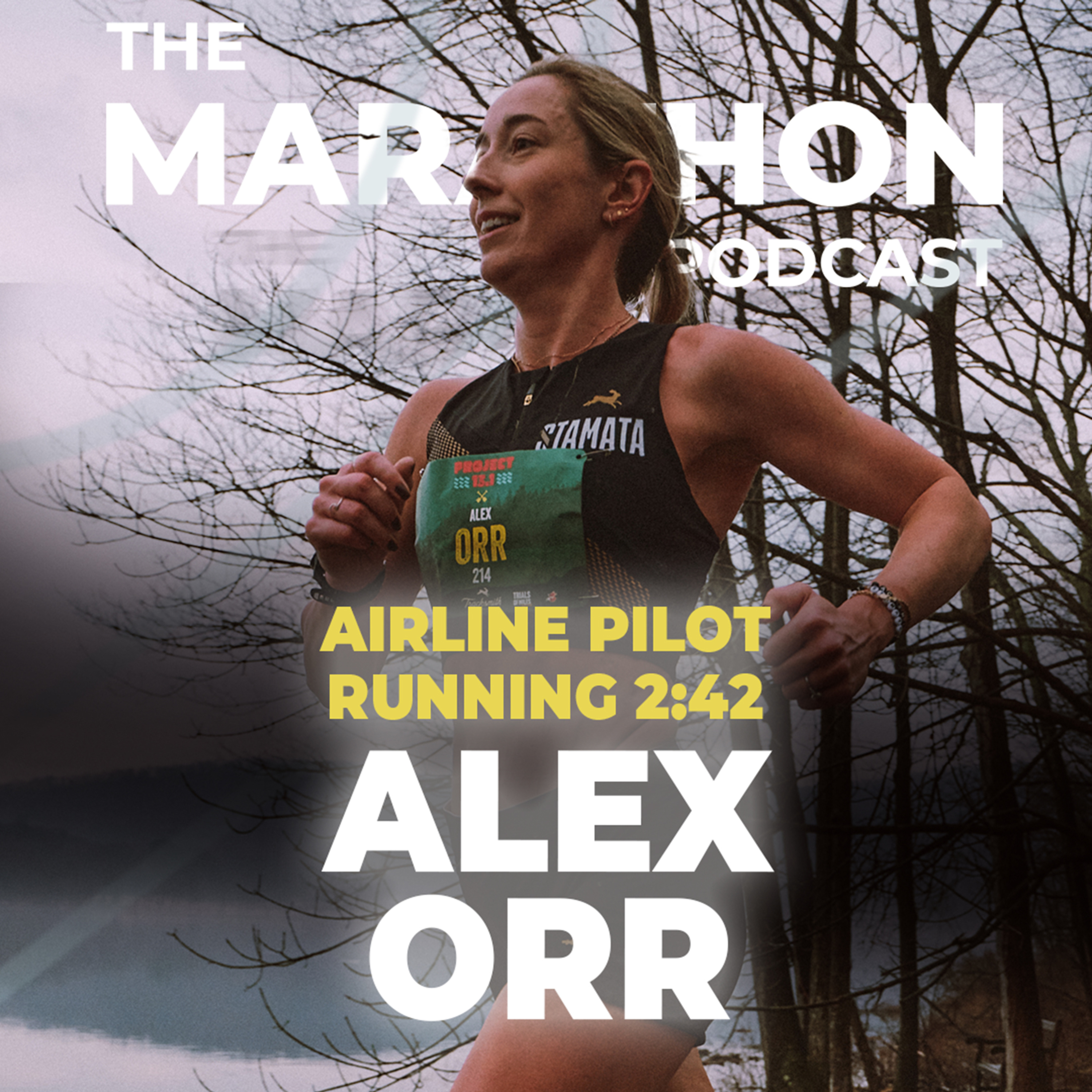
    #230 How a 777 Pilot Runs a 2:42 Marathon: Alex Orr on Training Around Flights, Jet Lag & the OTQ

    The Marathon Podcast is now proudly sponsored by Saysky Copenhagen. Use code TMP15 for 15% off at saysky.com. Get 20% off a Strava annual subscription with code KRISTIAN Save on FlexBeam using code WARWICKRUNS or this link: https://rechargehealthas.sjv.io/55GAPb How do you train for a 2:42 marathon while flying as an international airline pilot? In this episode of The Marathon Podcast, part of our series with Tracksmith’s Stamata team, Kristian talks with Alex Orr, a United Airlines pilot who flies the Boeing 777 and runs for Georgetown Running Club in Washington, D.C. Alex is a 2:42 marathoner (set in Berlin) and a 1:15 half marathoner, and she is chasing an Olympic Trials qualifier. She explains how she plans every week around her flight schedule, why she protects her hard workouts at home, how she handles jet lag and cancelled flights, and what a normal training week looks like when she is gone for days at a time. We also talk about cockpit naps, recovery on layovers, and how she tells the difference between a tough day and a day to back off. Alex shares the story of how she found her way back to running after stepping away from the sport, what she learned from two marathons that did not go to plan, and how being part of Stamata, led by Steph Bruce and supported by Tracksmith, has shaped her journey. In this episode: How a 777 pilot fits in a marathon build Planning workouts around flights, jet lag and delays Joining Tracksmith’s Stamata team Stepping away from running and finding her way back From a 2:46 in Chicago to a 2:42 in Berlin Learning from Indianapolis and Eugene, two marathons that did not go to plan A 1:15 half marathon A full training week, including VO2 sessions and long runs Recovery, sleep and naps in the cockpit Her next goal at CIM Timestamps 00:00 Introducing Alex 01:07 Kristian’s training update 02:31 Welcome, and fitting running around flights 07:13 Who Alex is and how she got into running 08:05 Living the dream as a pilot and runner 08:57 Joining Tracksmith’s Stamata team 11:15 Flight schedules, bidding and training camps 13:13 Getting time off for races 14:52 Early years of running 18:15 Her coaches 19:49 Life after college 20:23 Losing her father 22:52 Coming back with GRC 24:29 The breakthrough in Chicago and 2:42 in Berlin 25:15 Grief and running 27:39 What running means to her 30:01 What drives her 31:51 Chasing the OTQ 32:42 Indianapolis and Eugene, and what went wrong 37:47 The 1:15 half marathon 39:11 Lessons from the marathon 41:42 A typical training week 46:39 Marathon pace work and long runs 50:04 Recovery, sleep and cockpit naps 52:08 International trips and training around them 56:14 Recovery data on work days 59:22 Running in layover cities 1:03:41 Next up: CIM 1:05:56 Outro Alex on Instagram: @alexrunstheskies Start your free Musicbed trial: https://fm.pxf.io/kristianwarwick Full episodes + the Boston 2025 documentary: https://www.youtube.com/@Warwickruns Follow my training journey on Instagram: @warwick.runs Music from Musicbed: MB01XPYH8ZYENVAMB0133EV2TCQFZY
  • S1 · E229
    October 12 · 1 hr 28 min

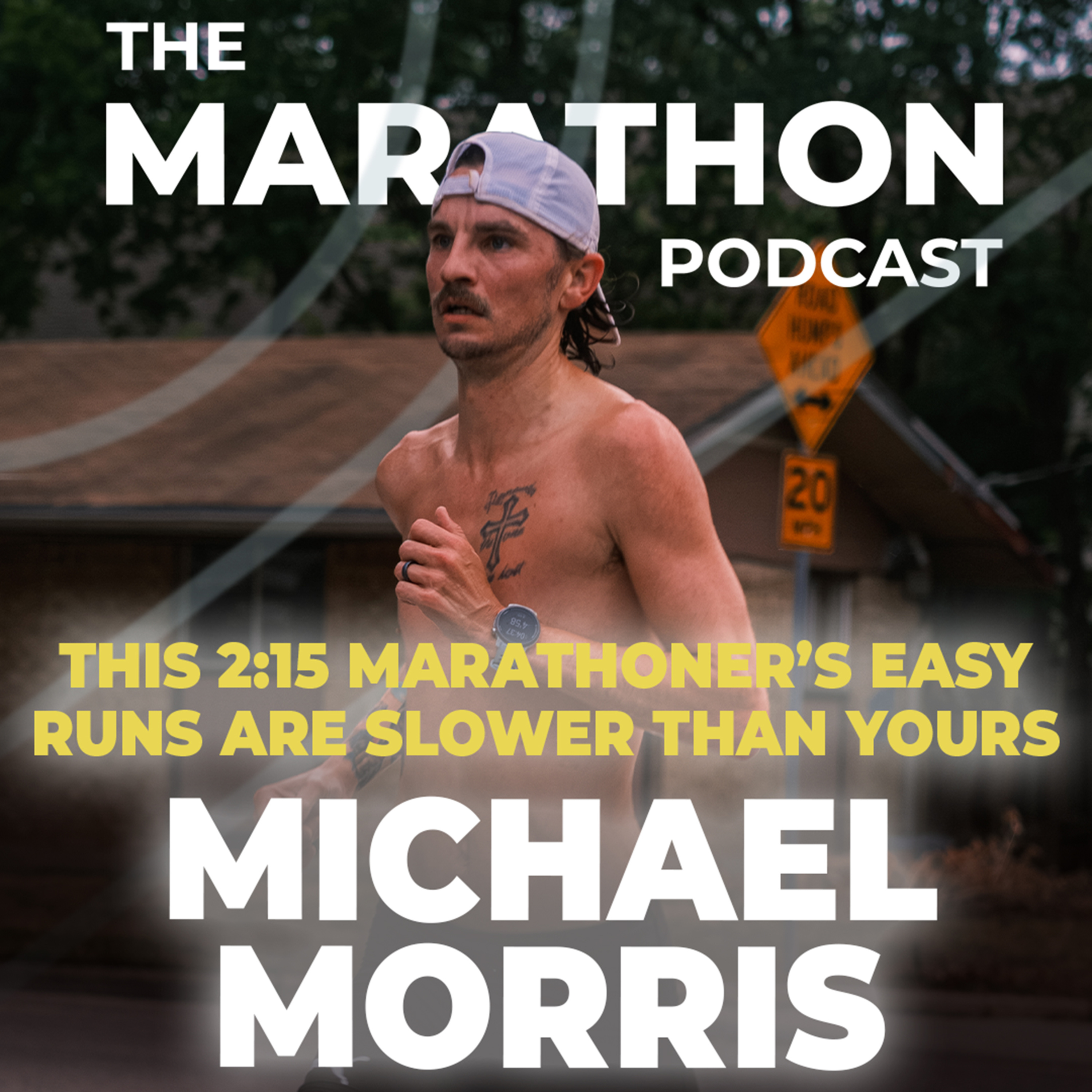
    #229 Supadupaslim (Michael Morris): The Slowest Kid on the Team Became a 2:15 Marathoner

    The Marathon Podcast is now proudly sponsored by Saysky Copenhagen. Use code TMP15 for 15% off at saysky.com. Get 20% off a Strava annual subscription with code KRISTIAN Save on FlexBeam using code WARWICKRUNS or this link: https://rechargehealthas.sjv.io/55GAPb Michael, better known as SupaDupa Slim, is a 2:15 marathoner from Austin, Texas, coached by Jeff Cunningham of Bat City Track Lab. His path to 2:15 has been anything but linear: from the slow kid on the team in a small Texas town, to a marathon that fell apart in the second half, to missing the Olympic Trials standard by seconds, and finally to running 2:15 at the McCurdy Pro Marathon and qualifying. In this conversation, Michael breaks down what actually moved the needle: small, steady jumps instead of big leaps, a smarter approach to mileage, learning to run marathon pace without fear, and why time alone should never define you as a runner. He walks through his training week for the marathon, the block behind the 2:15, and the race itself. He also explains where the SupaDupa Slim name comes from. Before the interview, Kristian shares his own training update on the road to a sub-2:30 attempt in Valencia, including a 3:21 per kilometer opener in a session he did not expect to hold. In this episode: Where the name SupaDupa Slim comes from From slow kid to 2:15 marathoner, 25 years of running Two first marathons and what they taught him Overtraining, injury and rebuilding with patience Why small jumps and consistency beat big leaps How to chase a faster pace without freezing up A full marathon training week and the block behind the 2:15 His mileage philosophy and advice for runners The McCurdy Pro Marathon, mile by mile Next up: the Houston Half Marathon and a Boston pro field hope Timestamps 00:00 Introducing Michael 01:44 Kristian’s training update 02:08 Saysky 14:45 Interview begins 14:52 The name SupaDupa Slim 16:52 What running means to Michael 20:03 Staying consistent for 25 years 22:32 Growing up with running siblings 26:40 His first marathons 32:43 Learning what it takes 39:01 Injury and rebuilding 41:00 Time goals and the ceilings we create 44:53 Learning to run faster paces 48:17 Commitment and decision making 51:07 Coach Jeff Cunningham 53:32 A marathon block for 2:15 1:00:12 Recovery and fueling 1:03:49 Small habits and mobility 1:06:23 Mileage advice 1:10:23 Doing less and feeling better 1:13:24 A week of marathon training 1:17:45 The McCurdy Pro Marathon 1:23:06 Qualifying, emotions and the finish 1:26:11 What’s next 1:27:34 Wrap up Michael on Instagram: @supadupaslim Start your free Musicbed trial: https://fm.pxf.io/kristianwarwick Full episodes + the Boston 2025 documentary: https://www.youtube.com/@Warwickruns Follow my training journey on Instagram: @warwick.runs Music from Musicbed: MB01XPYH8ZYENVAMB0133EV2TCQFZY
  • S1 · E228
    October 11 · 30 min

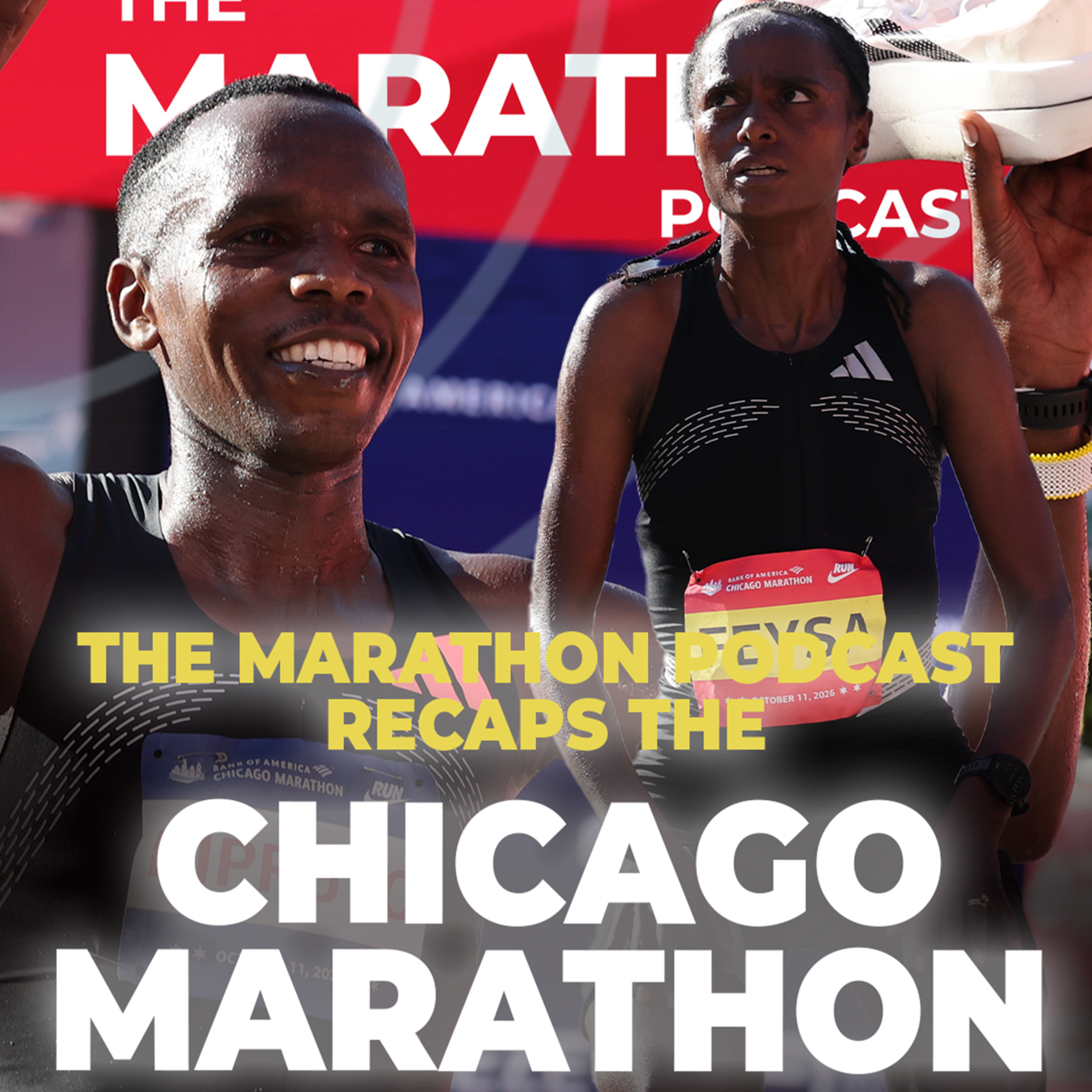
    #228 THIS WAS THE CHICAGO MARATHON 2026 (WOW!)

    The Marathon Podcast is now proudly sponsored by Saysky Copenhagen. Use code TMP15 for 15% off at saysky.com. Get 20% off a Strava annual subscription with code KRISTIAN Save on FlexBeam using code WARWICKRUNS or this link: https://rechargehealthas.sjv.io/55GAPb A quick recap of the 2026 Chicago Marathon, right after the finish. Kristian watched the race from Norway and shares his reactions to a field that was packed from top to bottom: Amos Kipruto won the men’s race in 2:01:09 ahead of Tadese Bikila, and Hawi Feysa defended her title in a personal best 2:13:33 with Sharon Lokedi second. He goes through the moments that stood out to him: Jacob Kiplimo looking relaxed before things changed, Vincent Mauri’s treadmill-built form and his fight through cramps, Clayton Young finishing as the top American man, and Emma Grace Hurley running the fastest marathon debut by a U.S. woman. He also covers Izzi Batt-Doyle’s new Australian record, Dakotah Lindwurm’s race a few days after her interview, Thomas Nobbs’ PR, and a look back at the Melbourne Marathon, including Jimmy Whelan’s debut. All times mentioned in the recording are unofficial, as Kristian recorded right as the athletes finished. In this episode: Melbourne Marathon and Jimmy Whelan’s debut Matt Fox, critical questions and the role of this podcast Vincent Mauri and Emma Grace Hurley, the runners Kristian was most curious about What happened to Jacob Kiplimo Women’s race: Hawi Feysa, Sharon Lokedi and Izzi Batt-Doyle’s Australian record Emma Grace Hurley’s historic debut Vincent Mauri’s treadmill-built form and the cramps Clayton Young, Charles Hicks and Thomas Nobbs Content note: There is a brief mention of Matt Fox’s approach to weight loss, which Kristian notes can be triggering for some listeners (around 02:30). Timestamps 00:00 Welcome and Chicago overview 00:38 Melbourne Marathon and Jimmy Whelan’s debut 01:47 Matt Fox 03:08 Critical questions and the role of this podcast 05:33 Saysky 06:14 Following Chicago from Norway 06:57 Runners Kristian was curious about 07:45 Emma Grace Hurley 09:02 Chicago thoughts and Jacob Kiplimo 12:00 Men’s podium 13:02 Women’s race: Sharon Lokedi and Hawi Feysa 16:19 Izzi Batt-Doyle’s Australian record 18:16 Emma Grace Hurley’s historic debut 20:42 Dakotah Lindwurm and Elena Hayday 21:17 Vincent Mauri 25:53 Clayton Young and Charles Hicks 26:48 Thomas Nobbs 28:08 Puma Project 3 and final thoughts 29:42 Outro Start your free Musicbed trial: https://fm.pxf.io/kristianwarwick Full episodes + the Boston 2025 documentary: https://www.youtube.com/@Warwickruns Follow my training journey on Instagram: @warwick.runs Music from Musicbed: MB01XPYH8ZYENVAMB0133EV2TCQFZY
  • S1 · E227
    October 9 · 1 hr 14 min

    #227 Dakotah Popehn on Chicago, her training and her book (You think this hurts)

    The Marathon Podcast is now proudly sponsored by Saysky Copenhagen. Use code TMP15 for 15% off at saysky.com. Get 20% off a Strava annual subscription with code KRISTIAN Save on FlexBeam using code WARWICKRUNS or this link: https://rechargehealthas.sjv.io/55GAPb Olympic marathoner Dakotah Lindwurm joins The Marathon Podcast just days before she lines up at the Chicago Marathon. She was the top American at the 2024 Paris Olympics, finishing 12th, and is a three-time Grandma's Marathon champion. Dakotah went from a Minnesota hockey kid who finished last in her first high school mile to a Division II runner at Northern State and, eventually, one of the best marathoners in the country. She shares how she trains with Minnesota Distance Elite, why strength work has been behind some of her biggest leaps, how she has stayed healthy for so long, and what a normal marathon training week looks like for her. We also get into race week, her Chicago goal, the road to the 2028 Olympic Trials, and her upcoming book, You Think This Hurts. Kristian also shares an update on his own build for a sub-2:30 attempt in Valencia in December. In this episode: - Race week routines and her goal for Chicago - From hockey to the Olympic marathon - Qualifying for Paris and finishing 12th - Getting engaged right after the Olympic marathon - Staying consistent and injury-free for years - Training with Minnesota Distance Elite and coach Chris Lundstrom - Minnesota winters and the Norwegian training link - Strength training for runners - A full week of marathon training, including easy pace and long runs - Her book, You Think This Hurts Timestamps 00:00 Cold open 00:13 Welcome 01:33 Kristian's training update 04:18 Giveaway 04:56 Saysky and sponsors 05:44 Race week with Dakotah 08:38 Her background 09:12 From hockey to running 10:32 Northern State 14:19 Qualifying for the Olympics 16:22 Last year's Chicago and big goals 19:00 Pressure: Olympics vs majors 20:26 Paris, 12th place and the proposal 24:51 The book 27:50 What running means to her 32:09 Chicago goals 37:26 Racing for top three at the Trials 39:30 Why she has stayed consistent 43:32 Minnesota Distance Elite 50:13 Coach Chris Lundstrom 52:30 Minnesota winters 56:38 Strength training 1:03:08 A normal training week 1:09:56 Easy pace and long runs 1:11:41 Pre-ordering the book 1:13:05 Outro https://www.instagram.com/dakotahlindwurm/ Her book: https://static.macmillan.com/static/smp/you-think-this-hurts-9781250476234/ Start your free Musicbed trial: https://fm.pxf.io/kristianwarwick Full episodes + the Boston 2025 documentary: https://www.youtube.com/@Warwickruns Follow my training journey on Instagram: @warwick.runs Music from Musicbed: MB01XPYH8ZYENVAMB0133EV2TCQFZY
  • S1 · E226
    October 7 · 1 hr 18 min

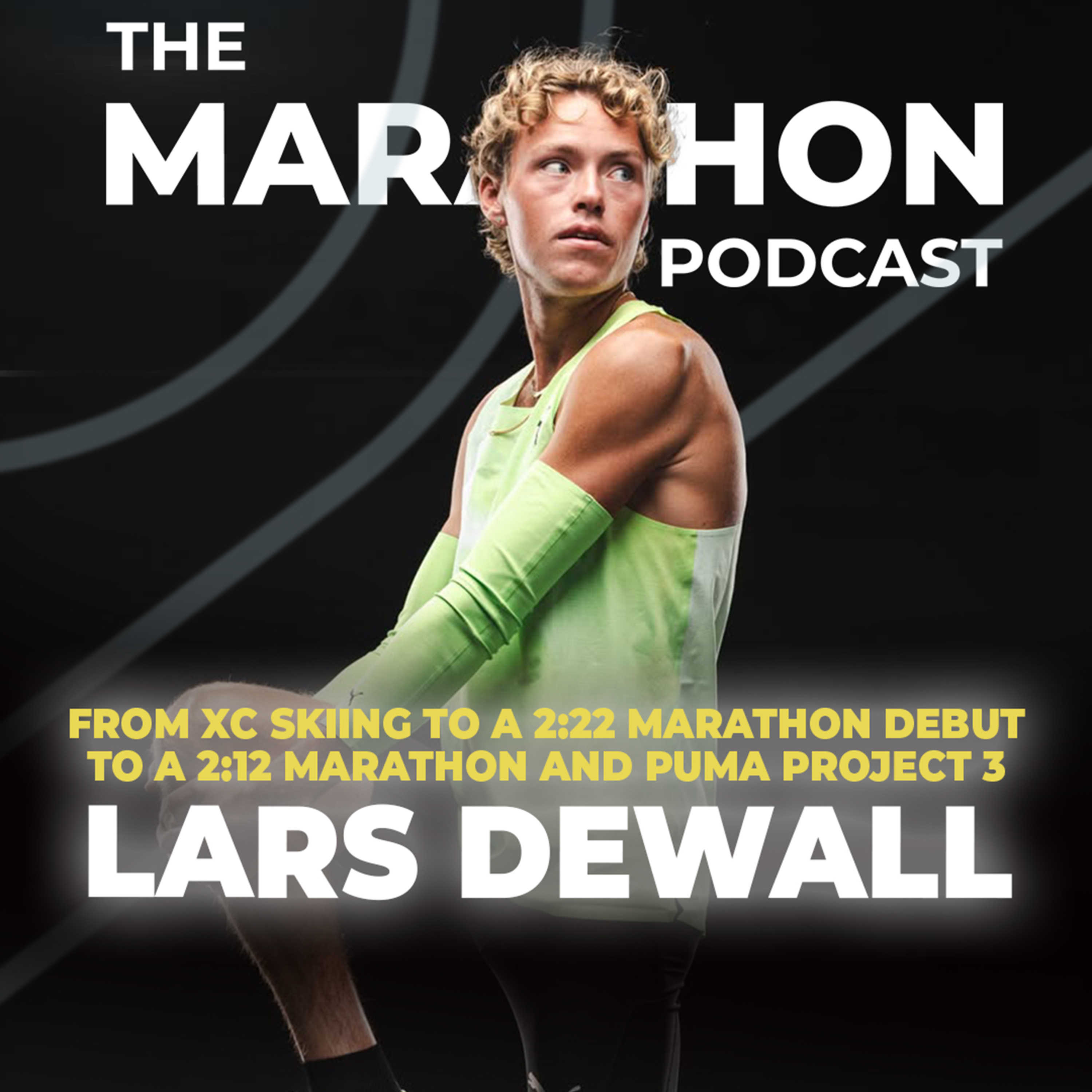
    #226 Lars Dewall is a 2:12 marathoner but his training is different

    The Marathon Podcast is now proudly sponsored by Saysky Copenhagen. Use code TMP15 for 15% off at saysky.com. Get 20% off a Strava annual subscription with code KRISTIAN Save on FlexBeam using code WARWICKRUNS or this link: https://rechargehealthas.sjv.io/55GAPb Kristian sits down with Lars Dewall, a middle school teacher and former Nordic skier who ran a 2:22 debut marathon on a three week build and has since worked his way down to a 2:12:13 personal best at the Berlin Marathon. Lars shares how a Minnesota ski racer turned runner fits two runs a day around a full teaching job, from a 5:30 am shake out to afternoon sessions after school. He explains how his Nordic background shapes his training, why he keeps easy days really easy, and how he ramped up to 135+ mile weeks. We also get an honest look at Berlin as part of Puma Project 3, where he set a PB by 18 seconds but had to let go of his sub 2:10 goal mid race, plus a deep dive into his double threshold sessions and strength routine. In this episode: - Balancing a full time teaching job with a 2:12 marathon - A normal training day, from a 5:30 am run to afternoon miles - How Nordic skiing built his aerobic engine - Running 2:22 in his debut marathon with only three weeks of notice - Why he keeps easy days really, really easy - Going from 2:22 to 2:14 at CIM to 2:12 at Boston - Berlin with Puma Project 3 and letting go of a sub 2:10 goal mid race - Double threshold sessions and treadmill workouts - Why he started strength training after college - Peak mileage of 135+ miles a week Timestamps 00:00 Welcome and why this conversation stood out 01:58 Looking back at 225 episodes 03:07 The friendships behind the podcast and a word on Saysky 04:51 Welcome to Lars 06:26 How he balances teaching and running 07:01 A normal training day 09:11 Minnesota and Nordic skiing 13:23 Moving to San Diego and running with Lane Zero 18:12 The 2:22 debut at Grandma's on three weeks of notice 23:12 Ramping up mileage fast after moving to San Diego 26:39 Keeping easy days really easy 28:29 Training by hours, not miles 33:06 Choosing running over a promising ski career 36:11 From CIM to Boston: how he got to 2:12 41:11 Puma Project 3 and the Berlin build 43:15 Berlin: dropping off the sub 2:10 pack and still running a PB 44:22 Why the sub 2:10 barrier is still the goal 48:10 What he'd change after Berlin 56:32 Threshold sessions on the treadmill and roads 58:31 Double threshold in the Berlin build 59:21 Why he started strength training after college 1:04:22 Peak mileage: 135+ miles a week 1:14:01 Testing at Puma HQ in Boston 1:15:50 What's next after Berlin 1:17:20 Closing thoughts and a thank you to Lars Lars on Instagram: https://www.instagram.com/dewalllars/ Start your free Musicbed trial: https://fm.pxf.io/kristianwarwick Full episodes + the Boston 2025 documentary: https://www.youtube.com/@Warwickruns Follow my training journey on Instagram: @warwick.runs Music from Musicbed: MB01XPYH8ZYENVAMB0133EV2TCQFZY

Showing 1–20 of 69 episodes