Artwork for The MacRumors Show
Technology

The MacRumors Show

The MacRumors Show

Join MacRumors' Dan Barbera and Hartley Charlton for discussion about all of the latest news and rumors from the world of Apple. Whether you’re wondering what’s next for the iPhone, looking for insights into the rumor mill, or just have an interest in the latest gadgets, we’ll be bringing you everything you need to know about the Mac, iPhone, iPad, Apple Watch, and more. 
  • 191 episodes
  • Updated Friday

Episodes191

  • Friday · 32 min

    204: Revisiting iOS 27 Ahead of iPhone 18 Pro!

    After over a month of testing iOS 27, on this week's episode of The MacRumors Show, we circle back to the beta and talk through our experiences with Siri AI, Liquid Glass refinements, and more. ‌iOS 27‌ is expected to launch this fall, bringing sweeping performance work across the system. Apple has cited more than 80 speed and efficiency improvements, with app launches up to 30 percent faster and AirDrop transfers up to 80 percent faster than on iOS 26. Animations, keyboard responsiveness, Home Screen page swapping, and App Library loading have all been sped up, and Apple says the improvements extend even to older iPhones like the iPhone 11. The centerpiece of ‌iOS 27‌ is Siri AI, a substantially overhauled version of the assistant positioned as a rival to chatbots like Claude and ChatGPT. ‌Siri‌ AI can hold back-and-forth conversations, draw on personal context from Mail, Messages, Photos, and Files, and see what's on screen to answer follow-up questions. A new standalone Siri app houses ongoing conversations, while a "Search or Ask" interface, accessed via the Dynamic Island, has effectively replaced Spotlight as the default way to search the device and launch apps. Liquid Glass, the translucent design language introduced in ‌iOS 26‌, has also been reworked. ‌iOS 27‌ adds a system-wide transparency slider in place of the binary "Clear" and "Tinted" toggle from iOS 26.1, letting users dial the effect anywhere between fully opaque and completely clear. Apple also improved how the material diffuses busy content behind it, addressing readability complaints that dogged the original rollout, and refreshed first-party app icons with additional Liquid Glass layering. Elsewhere, Apple has leaned into contextual, on-device intelligence. For example, Call Context, a new Phone app feature, automatically surfaces relevant information, such as a flight confirmation number or order code pulled from Mail, when a user calls a business they've recently corresponded with. Apple says the feature works entirely on-device and looks only at who is being called, not at call audio, and it also appears on the Apple Watch during a call. Calendar and Reminders now support natural language entry, letting users type something like "meeting at 2pm with Eric on July 14" and have the app suggest the date, time, and attendees automatically. Apple says ‌Siri‌ can handle more complex natural-language scheduling requests directly, including edits to recurring events. The ‌Photos‌ app gains three generative editing tools grouped under an Apple Intelligence Tools section: an upgraded Clean Up, a new Extend tool, and Spatial Reframing. Clean Up now offers Fast, High Quality, and Auto modes for object removal and can reconstruct more complex backgrounds than before. Extend uses generative AI to fill in new content when a photo's borders are expanded, and is capped at a maximum of 25% per side. Spatial Reframing, which draws on the same spatial data used for Portrait mode, lets users shift a photo's apparent camera angle after it was taken. The Shortcuts app has been rebuilt around a "Describe a Shortcut" interface, where ‌Apple Intelligence‌ assembles an entire automation from a plain-language description rather than requiring users to build workflows action by action manually. Safari picks up a similar natural-language approach with a new Create an Extension option for building custom browser extensions on the fly, automatic AI-driven tab organization by topic, and a "Notify Me" tool that monitors a webpage and alerts users when it changes, which is useful, Apple says, for tracking ticket sales or restocked products. Image Playground has also been overhauled for ‌iOS 27‌, adding support for photorealistic image generation, edits to existing images via text descriptions, and additional aspect ratio options for wallpapers and Contact Posters. ‌iOS 27‌ is available now to developers and public beta testers, and Apple plans to release the software officially in September. The MacRumors Show has its own YouTube channel, so make sure you're subscribed to keep up with new episodes and clips.

  • July 24 · 37 min

    203: Can OpenAI Actually Beat the iPhone?

    This week's episode of The MacRumors Show covers OpenAI's move into hardware and the trade secret lawsuit Apple filed against the company earlier this month. Apple sued OpenAI in the Northern District of California on July 10, alleging a months-long scheme to obtain confidential information about unreleased products. The complaint centers on OpenAI chief hardware officer Tang Tan, a 24-year Apple veteran who previously led iPhone product design, and former Apple electrical engineer Chang Liu. Apple claims Tan coached recruits on evading its exit-interview security procedures and told at least one employee to bring hardware components to an interview, and that OpenAI persuaded a supplier to apply a proprietary metal-finishing technique to an OpenAI device by falsely stating it had Apple's permission. The filing describes OpenAI's hardware business as "rotten to its core." The suit follows a souring of the 2024 partnership that brought ChatGPT to Siri, with OpenAI itself weighing legal options against Apple in May. More than 400 former Apple employees now work at OpenAI, including Vision Products Group leader Paul Meade, and former design chief Jony Ive leads design on the hardware lineup through LoveFrom after OpenAI's $6.5 billion acquisition of his startup io Products. Apple has countered with retention bonuses of up to $400,000and has now sent legal preservation letters to around 40 former employees, suggesting it believes the alleged misappropriation goes beyond those named. OpenAI says it has "no interest in other companies' trade secrets." Bloomberg's Mark Gurman argues the case is already causing damage ahead of any ruling, deterring Apple engineers from interviewing at OpenAI and making Asian suppliers wary of deepening ties with the company. Ive is not named in the complaint, which Gurman believes was deliberate given Apple's relationship with io Products investor Laurene Powell Jobs. OpenAI's first device, teased for months by Ive and CEO Sam Altman, is believed to be portable, screenless smart speakerthat is now expected in early 2027 at $200 to $300. Powered by ChatGPT and GPT-Live, it has a rechargeable battery so it can be carried between rooms, a camera for understanding its surroundings, and motorized elements that move on their own to give a sense that the device is alive. OpenAI reportedly does not regard the HomePod or HomePod mini as comparable, and people familiar with the project told Bloomberg the device is unlike anything Apple sells, making infringement unlikely. Apple's own smart home hub is the closest analogue. Further out, supply chain analyst Ming-Chi Kuo reported that OpenAI is developing an "AI agent phone" built around a continuous, context-aware interface rather than individual apps, with the company controlling both the operating system and the hardware. Kuo has since revised his mass production expectation from 2028 to the first half of 2027, projecting combined 2027 and 2028 shipments of around 30 million units. The device is rumored to be a direct iPhone rival. Visit https://www.storyblocks.com/mac for 15% off annual plans.

  • July 17 · 47 min

    202: iPhone XX? Next Year's Major Upgrades Change Everything

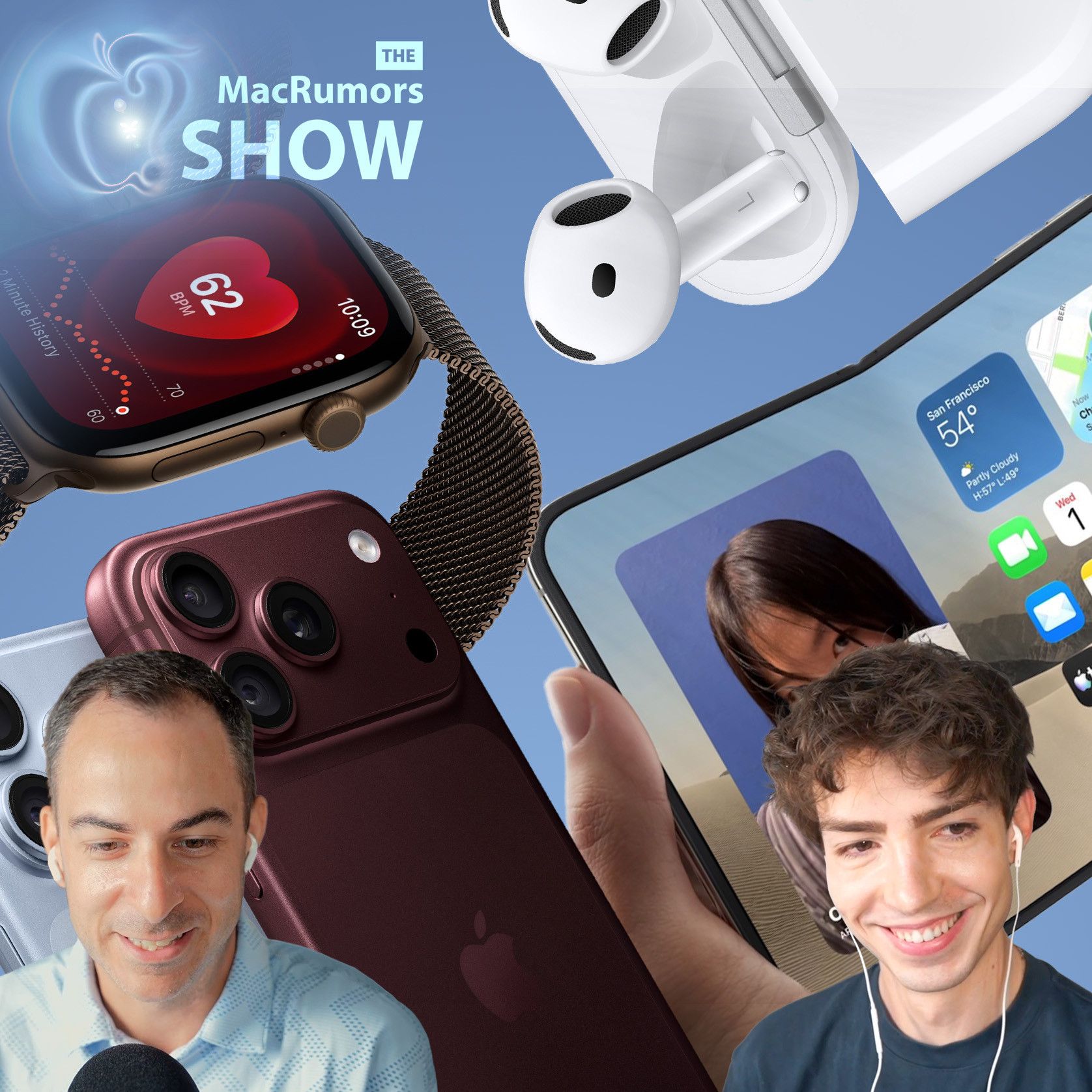
    This week's episode of The MacRumors Show looks ahead to the 20th anniversary iPhone, the radically redesigned model that Apple is expected to launch in 2027. 0:00 Introduction 1:51 What Will Apple Call the 20th Anniversary iPhone? 5:03 Is It Time to Abandon iPhone Numbers? 7:29 Sponsor: Shopify 8:44 The Biggest iPhone Redesign Since iPhone X 14:07 Under-Display Technology and the End of Dynamic Island 18:22 Haptic Buttons and Apple’s All-Glass Vision 22:03 Apple’s Custom Camera Sensor 24:34 The Ideal iPhone and the Future of Foldables 29:20 Battery Life, Denser Batteries, and Reverse Charging 36:02 Why Apple’s Charging Ecosystem Needs an Overhaul 38:14 Apple Needs to Reinvigorate Its Accessories Apple's plans for the device's name remain unclear. The company skipped "iPhone 9" and moved straight to the iPhone X for the handset's 10th anniversary in 2017, and it is widely expected to skip "iPhone 19" in the same way. Rumors have referred to the 2027 models as both the "iPhone 20" and the "iPhone XX" as placeholder names, and it is still possible that they will sit above the iPhone 18 Pro and Pro Max as a separate, higher-tier directly, even though they are more likely to replace them as usual. Apple has reset iPhone branding before with the iPhone Air, whose successor is expected to be the iPhone Air 2. The 2027 iPhone is rumored to be the biggest redesign since the iPhone X. Apple is reportedly aiming for a near bezel-less design with curved glass that wraps around all four edges and a return to a glass back, in line with the single slab of glass that former design chief Jony Ive long described as a goal. The frame is said to be a thin polished band, potentially in a material other than the aluminum used on Apple's straight-edged models, with the display curving onto the sides rather than following one consistent curve. Displays that curve down the sides can be prone to accidental touches, an issue seen on earlier Android handsets with waterfall edges, though Apple is expected to engineer the device to work with a case. The extent of the curvature, and how far the display appears to refract at the edges, is not yet clear. Apple reportedly wants a front with no cutouts, but some of the under-display technology is unlikely to be ready in time, meaning some form of front-facing cutout is expected to persist. Current reporting points to a gradually shrinking Dynamic Island, Face ID components moving beneath the panel, and an under-display camera arriving last, since image quality still degrades when a lens sits behind the display. Apple is also rumored to be revisiting solid-state haptic buttons, reviving the "Project Bongo"effort that reached prototype hardware years ago before being shelved. Reports have cited several potential motivations, including a cleaner frame with no moving parts, a reduction in the mechanical button failures that account for many AppleCare repairs, and additional internal space for a larger battery or additional haptic engine. Apple is reported to be developing a custom image sensor that would replace the Sony sensors currently used across the iPhone lineup, following the company's move to bring its silicon, modem, Wi-Fi, and Bluetooth chips in-house. The rear camera plateau is likely to remain, owing to the space required by the folded optics used for the telephoto lens. The anniversary models are expected to share a second-generation 2-nanometer A21 chip, along with efficiency gains and a newer Apple modem. A 6,000mAh battery has appeared in some rumors, though it is unclear whether that figure is based on supply chain information. Reverse wireless charging appeared in the same report and would let the iPhone top up accessories such as AirPods or an Apple Watch. The underlying hardware is already present, since iPhones can charge a MagSafe battery pack through their wireless coil, but Apple has never enabled the capability for other devices, a feature Samsung has offered on its phones for several years. Its viability on the anniversary model may depend on the larger battery and efficiency gains rumored for the device, given how much charge reverse wireless charging draws from the handset itself. This year's ‌iPhone 18 Pro‌ models are rumored to be a more modest update, with the larger redesign reserved for the 20th anniversary model. It is expected to arrive in the fall of 2027, following the iPhone 18, iPhone 18e, and ‌iPhone Air‌ 2 in the spring. The MacRumors Show has its own YouTube channel, so make sure you're subscribed to keep up with new episodes and clips. Start your business with Shopify and get everything you need to sell online and in person. Start today at https://www.shopify.com/mac
  • July 10 · 45 min

    201: Goodbye MacBook Pro? MacBook Ultra Is Coming!

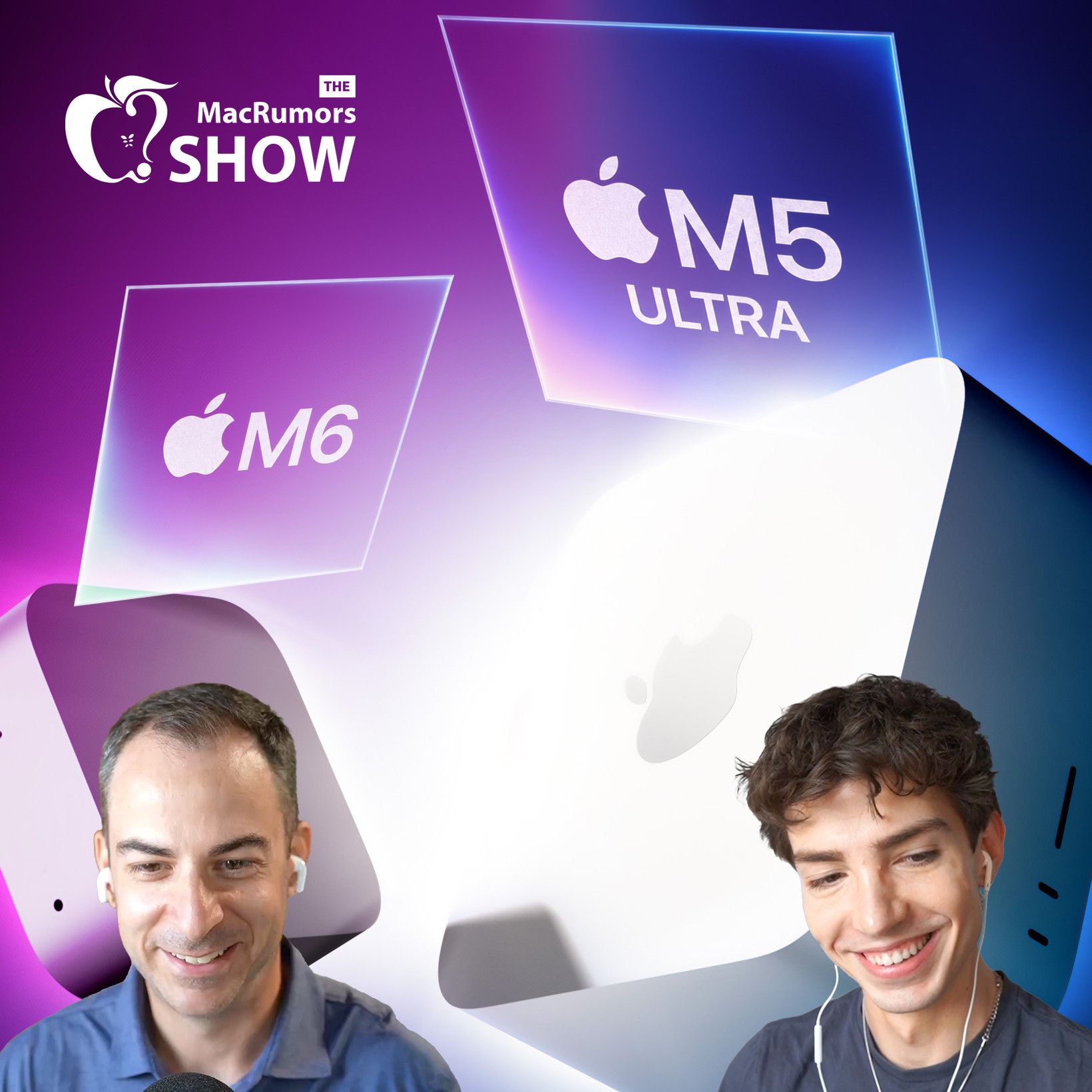
    On this week's episode of The MacRumors Show, we discuss the high-end of Apple's increasingly tangled MacBook lineup, including the entry-level MacBook Pro, the redesigned high-end models, and the rumored “MacBook Ultra." 1:39 Why Apple Is Skipping M6 Pro and M6 Max 4:01 MacBook Ultra Timing and First-Generation Problems 6:00 How MacBook Pro and MacBook Ultra Could Coexist 9:59 Sponsor: Claude 11:20 Untangling Apple’s Upcoming MacBook Lineup 12:47 Which MacBook Models Are Worth Waiting For? 18:00 The MacBook Pro Redesign and Dynamic Island 23:10 Could MacBook Ultra Replace High-End MacBook Pros? 28:18 What Is a Touchscreen Mac Actually For? 30:08 Samsung’s New Foldable and Apple’s iPhone Ultra 33:03 MacBook Ultra Pricing, Features, and Dream Apple Devices Apple's chip roadmap for the Mac is reportedly set to take an unusual turn over the next year. The company is said to be skipping the M6 Pro and M6 Max entirely, jumping from the M5 generation straight to the M7 for its high-end laptops. A standard M6 chip will still arrive this year in an entry-level ‌MacBook Pro‌, but there will apparently be no Pro or Max variant in that family. As a result, Apple's first high-end OLED laptop will use the existing M5 Pro and M5 Max chips rather than newer silicon. First-generation buyers would therefore be paying a premium for a redesigned machine featuring the same processors already found in the current ‌MacBook Pro‌, with M7 Pro and M7 Max models expected to follow in the second half of 2027. The launch window remains fluid. The device was long expected to arrive in late 2026, but memory chip constraints and Apple's recent price increases have pushed it toward early 2027. A second-generation model with M7 chips is already planned for late 2027, meaning the first Ultra could remain on sale for a relatively short window. The overlapping releases make for a crowded and confusing roadmap. Across roughly a year, Apple is expected to ship a base M6 ‌MacBook Pro‌, a redesigned base M7 model in the first half of 2027, two M5 Pro and M5 Max MacBook Ultramodels, their eventual M7 Pro and M7 Max successors, and perhaps new high-end ‌MacBook Pro‌ models with the M7 Pro and M7 Max. Notably, the entry-level M7 model is set to get the new design first, ahead of the pricier high-end ‌MacBook Pro‌ models. The headline changes are reserved for the top-tier "Ultra" model. It is expected to be the first Mac with an OLED display, using the same hybrid tandem ‌OLED‌ technology as the iPad Pro, along with the first touchscreen on a Mac, a Dynamic Island in place of the notch, and a thinner chassis. Both 14-inch and 16-inch sizes are expected. Built-in cellular connectivity for the first time on a Mac is also rumored. Apple is reportedly positioning touch as “touch-friendly, not touch-first," letting users move between touch, trackpad, and keyboard rather than treating the Mac like an iPad. That marks a reversal for a company that long resisted the idea. Steve Jobs argued in 2010 that vertical touchscreens cause arm fatigue, and as recently as 2021 hardware chief John Ternus said the Mac was "totally optimized for indirect input." Signs of the shift are already visible in macOS 27 Golden Gate, which adds direct touch control to Sidecar, so users can tap and interact with macOS elements using a finger on an ‌iPad‌. A reinforced hinge is also expected, so the display does not wobble when tapped. Pricing is likely to be steep. Apple raised prices across the Mac lineup in June, and the current 14-inch ‌MacBook Pro‌ now starts at $1,999, rising to $2,499 with the M5 Pro chip and $4,099 for an M5 Max. The 16-inch M5 Max reaches $4,399, and a fully specced configuration already exceeds $10,000. The high-end ‌OLED‌ model is expected to start higher still. Ready to tackle bigger problems? Get started with Claude today at — https://www.Claude.ai/mac

  • July 3 · 52 min

    200: Latest iPhone 18 Pro Leaks and Rumors

    On this week's episode of The MacRumors Show, we discuss the latest leaks and rumors surrounding the iPhone 18 Pro. 01:30 Tata Electronics data leak discussion 02:49 iPhone 18 Pro's C2 modem: US.. vs. international 09:57 Color-matched rear glass insert 12:20 Variable aperture camera upgrade 17:31 Apple's camera marketing and demo criticism 20:59 iPhone 18 Pro price increase expectations 27:55 Apple TV price hike reaction 35:24 Micron, memory shortage, and supplier pricing 41:18 New HomePod and Apple TV timing 43:56 iPhone 18 Pro's 5G satellite connectivity feature 49:11 SIM vs. eSIM and carrier headaches Tata Electronics, one of Apple's manufacturing partners in India, was hit by a ransomware attackthat resulted in more than 200,000 internal files being posted online, including component lists, supplier data, and images of ‌iPhone 18 Pro‌ test units. The material was obtained illegally, and MacRumors has not seen the stolen files directly. Among the leak's more surprising details is that the C2 modem may be limited to international models, succeeding the C1 and C1X modems already used in the iPhone Air, iPhone 17e, and M5 iPad Pro. A bill of materials for the U.S. variant instead lists Qualcomm components, including the SDX80M and other parts associated with mmWave 5G, a feature Apple's C-series modems still lack. U.S. carriers have spent years building out mmWave networks, making it a harder feature to drop from the Pro lineup than it was from the ‌iPad Pro‌ or a rumored cellular MacBook. The leak also lined up with existing rumors of a more uniform rear finish than the iPhone 17 Pro's two-tone design and camera lenses that protrude further from the plateau. Separately, a leaked SIM tray offered another look at the rumored Dark Cherry color option, expected to join Light Blue, Dark Gray, and Silver as this year's lineup, with no black model. On the camera side, the rumored variable aperture main camera is this year's headline upgrade, though it's unclear how much of a real-world difference it will make compared to genuinely transformative jumps in past generations, like the 8x telephoto lens introduced on the ‌iPhone 17 Pro‌ or the and 48-megapixel sensor from the iPhone 14 Pro. Pricing looms over rumors about the device. Apple has now raised prices across much of its lineup, citing a global memory chip shortage driven largely by AI data center demand. The Apple TV and HomePod price hikes drew particular criticism, since both products are several years old with no accompanying hardware changes. Estimates for the ‌iPhone 18 Pro‌ itself point to a starting price as high as $1,399, up from $1,099 for the ‌iPhone 17 Pro‌, an increase weighed against a modest RAM and battery bump, a smaller Dynamic Island, and a more capable N2 chip. A rumored 5G-via-satellite feature will likely offer limited access to specific services like Siri or Maps rather than full Safari browsing. Micron's chief business officer suggested that Apple's own aggressive supplier negotiating tactics may have contributed to the memory shortage now driving prices up industry-wide Visit https://www.storyblocks.com/mac for 15% off annual plans.

  • June 26 · 47 min

    199: The iPhone 18 Could Cost WAY More

    This week’s episode of The MacRumors Show focuses on Apple’s surprise price hikes, the potential impact on the iPhone 18 lineup, new Apple Watch Ultra 4 rumors, and camera-equipped AirPods coming in 2027. 00:51 Apple Price Hikes Overview 02:00 iPhone 18 Price Hike Expectations 03:58 RAM/Storage Cost Breakdown 09:36 Why Upgrading Yearly Isn’t Necessary 11:49 When Could Price Hikes Hit? 16:30 Apple Watch Series 12 and Ultra 4 Rumors 21:05 Apple Watch Health Features and Market Plateau 24:24 Should Apple Slow Down Annual Watch Releases? 33:18 iPhone 18 Pro: Colors and Durability 34:50 Foldable iPhone Launch Timing and Demand 38:11 AirPods With Cameras Apple has raised prices across nearly its entire product lineup, including Macs, iPads, Apple TV, HomePod, and Vision Pro, citing soaring RAM and flash storage costs driven by AI infrastructure demand. Price increases ranged from $30 to as much as $1,300, while iPhones, AirPods, Studio Display, and accessories were left unchanged for now. Apple also brought back the 256GB Mac mini at a higher $799 price. Those same component costs could lead to significant iPhone 18 Pro price increases this fall. Industry estimates suggest Apple may need to raise prices by around $270 to maintain margins, with the iPhone 18 Pro potentially starting around $1,399 and the Pro Max around $1,499, partly due to more expensive camera hardware. The iPhone 18 Pro is expected to retain its aluminum design while introducing new colors, including a signature Dark Cherry finish, though reports suggest the finishes could be prone to chipping similar to last year’s models. Apple is still expected to launch the iPhone 18 lineup alongside its first foldable iPhone, tentatively called the iPhone Ultra, in September. The foldable is rumored to feature a 7.8-inch inner display, 5.5-inch outer display, A20 chip, C2 modem, Touch ID, dual rear cameras, and a starting price around $2,000. The episode also covers rumors that the Apple Watch Ultra 4 and Apple Watch Series 12 will debut this fall with faster processors and new watch faces in watchOS 27. Finally, Apple has reportedly delayed its camera-equipped AirPods to 2027. Rather than taking photos or videos, the embedded cameras will feed visual information to Siri for object recognition, contextual assistance, reminders, and navigation. The delay is reportedly due to Apple’s ongoing AI development challenges. 00:51 Apple Price Hikes Overview 02:00 iPhone 18 Price Hike Expectations 03:58 RAM/Storage Cost Breakdown 09:36 Why Upgrading Yearly Isn’t Necessary 11:49 When Could Price Hikes Hit? 16:30 Apple Watch Series 12 and Ultra 4 Rumors 21:05 Apple Watch Health Features and Market Plateau 24:24 Should Apple Slow Down Annual Watch Releases? 33:18 iPhone 18 Pro: Colors and Durability 34:50 Foldable iPhone Launch Timing and Demand 38:11 AirPods With Cameras

  • June 19 · 54 min

    198: Hands-On With iOS 27, Brutal watchOS 27 Cuts, and More

    On this week's episode of The MacRumors Show, we continue unpacking WWDC 2026 and take a closer look at iOS 27, macOS Golden Gate, and Apple's other new software updates coming this fall. 00:00 — Intro & beta check-in 00:42 — OS compatibility cuts: watchOS, iOS, macOS, tvOS, iPadOS 09:49 — Sponsor: Claude 11:08 — Liquid Glass refinements & redesigned icons 14:10 — Shortcuts with natural language 16:34 — Sidebar icons, extra-large widgets & foldable iPhone hints 18:43 — Siri's new design & dynamic island shape 20:20 — Siri AI in practice: autocorrect, clarifications, and daily use 25:57 — Third-party AI extensions & region availability 30:03 — Apple Intelligence across apps: Messages, Image Playground, Genmoji, Passwords, nutrition 39:35 — macOS Golden Gate & the keynote's new format 44:39 — iPadOS, watchOS, visionOS, tvOS, and HomeKit hints iOS 27 supports the same iPhones as iOS 26, including the iPhone 11 and second-generation iPhone SE, giving the update the widest device compatibility of any iOS release to date. macOS Golden Gate drops Intel Macs entirely, confirming the end of an era that Apple flagged a year earlier when it said macOS Tahoe would be the final release for pre-Apple silicon machines. Four models that ran Tahoe miss out: the 16-inch MacBook Pro (2019), the 13-inch ‌MacBook Pro‌ with four Thunderbolt 3 ports (2020), the 2020 iMac, and the 2019 Mac Pro. Golden Gate is also the last version with full Rosetta 2 support, meaning the translation layer that keeps Intel-built apps running on Apple silicon will disappear entirely after this release. iPadOS 27 raises its hardware floor to the A14 Bionic or M1 chip, cutting the fifth-generation iPad mini, the eighth-generation iPad, the third-generation iPad Air, the first-generation 11-inch iPad Pro, and the third-generation 12.9-inch ‌iPad Pro‌. watchOS 27 makes the steepest cuts in Apple Watch history, dropping the Series 6, Series 7, Series 8, original Ultra, and second-generation SE in a single wave and effectively erasing three years of device support at once. The only models that remain compatible are the Series 9, Series 10, Series 11, Ultra 2, Ultra 3, and SE 3. tvOS 27 drops two Apple TV models, the Apple TV HD from 2015 and the first-generation ‌Apple TV‌ 4K from 2017, leaving only the second- and third-generation ‌Apple TV‌ 4K boxes supported. In ‌iOS 27‌, notifications now slide in from the left edge of the screen rather than dropping down from the top, and reaching Notification Centre requires swiping down from the top-left corner instead of the centre, freeing up that gesture for Siri. Other changes include colorful sidebar icons, real-time widget updates when an app is already open, extra-large Home Screen widgets, and web audio that no longer interrupts other system audio. The centerpiece of the update is Siri AI, which replaces Spotlight with a "Search or Ask" interface accessed by swiping down from the center of the display. ‌Siri‌ is designed to tone-match a user's own writing style when composing messages. Apple's pill-shaped ‌Siri‌ indicator is seemingly a hardware workaround for current Dynamic Island constraints, and a smaller ‌Dynamic Island‌ on the iPhone 18 Pro could allow the indicator to become a true circle. On the Apple Watch, ‌Siri‌ AI requires pairing with an iPhone that supports Apple Intelligence. In the European Union, ‌Siri‌ AI is available on macOS and visionOS at launch but not on the iPhone or ‌iPad‌. ‌Apple Intelligence‌ is also getting smarter Writing Tools and a composition assistant in Mail and Messages that adapts to how a user typically communicates with different contacts. Apple has overhauled Genmoji, adding a "Describe a change" interface for iterating on existing creations and the ability to start a new Genmoji from an existing emoji, a photo, or a person tagged in the user's photo library. Image Playground similarly adds support for multiple aspect ratios for wallpapers, Contact Posters, and social media images, alongside new photorealistic image generation. Visual Intelligence, meanwhile, gets a new primary entry point called ‌Siri‌ Mode, though holding down Camera Control still works as an alternative. The feature is expanding to the ‌iPad‌ and Mac, and now supports importing multiple calendar events from a single photo of a flyer, as well as importing contacts directly from a photographed business card. On the Mac, ‌macOS Golden Gate‌ extends toolbars and sidebars to the edges of the screen with a more consistent, tighter corner radius across windows. iPadOS 27 adds undo and redo for ‌Home Screen‌ edits, extra-large widgets in Today View, an optional persistent menu bar, and Visual Intelligence support for screenshots combined with Apple Pencil highlighting. Notes gains an Image Wand tool that generates photorealistic images from rough sketches, the ‌Siri‌ app gets a dedicated sidebar with full windowing support, and Shortcuts adds support for Magic Keyboard triggers. watchOS 27 drops the Walkie-Talkie app entirely, with the feature missing from both the app list and Control Center in the first developer beta, while adding new Smart Stack suggestions, more accurate step tracking, and a consolidated Find My app. visionOS 27 lets users activate ‌Siri‌ simply by looking at its on-screen bubble rather than requiring a button press, and adds a redesigned Control Center along with new curved windows. tvOS 27 brings a redesigned Podcasts app, Hi-Res Lossless audio support in Apple Music, and on-device processing for HomeKit Secure Video. Ready to tackle bigger problems? Get started with Claude today at — https://www.Claude.ai/mac

  • June 10 · 45 min

    197: WWDC 2026 Recap: Siri AI, Apple Intelligence in Apps, and More

    On this week’s special episode of The MacRumors Show, we break down everything Apple announced at WWDC 2026, including the all-new Siri AI, major Apple Intelligence upgrades, performance improvements across every platform, and Apple’s latest design refinements. 0:00 Introduction 1:31 Platform Improvements and Liquid Glass 7:08 Trust & Safety and Parental Controls 9:56 Sponsor: Shopify 11:21 Siri AI: Overview and Rebrand 15:00 Siri AI vs. Competitors and Live Demos 19:18 Visual Intelligence, Writing Tools, and Multi-Platform Siri 22:56 Google Gemini Partnership and Privacy 26:36 Apple Intelligence in Safari and Password Management 32:44 Apple Intelligence in Messages, Calendar, and Home 36:50 Image Playground and Photos 40:26 AirPods EQ, Apple Watch, Beta Access, and Final Thoughts We discuss the new Siri experience powered by Apple’s rebuilt AI foundation, including natural conversations, personal context awareness, web access, a dedicated Siri app, Dynamic Island integration, and new AI-powered features across Messages, Mail, Photos, Safari, Shortcuts, Calendar, Home, and more. We also cover Apple’s partnership with Google technologies, privacy protections, waitlist access, and regional availability. Plus, we dive into Liquid Glass refinements, faster app performance, expanded parental controls, CarPlay updates, Vision Pro enhancements, watchOS 27 features, and everything coming to iOS 27, iPadOS 27, macOS Golden Gate, tvOS 27, visionOS 27, and watchOS 27 ahead of their public release this fall. Tune in for our complete breakdown and analysis of Apple’s biggest software event of the year. Start your business with Shopify and get everything you need to sell online and in person. Start today at https://www.shopify.com/mac
  • June 5 · 52 min

    196: Siri’s Make-or-Break Moment at WWDC 2026

    On this week's episode of The MacRumors Show, we talk through all of the major rumors surrounding Apple's announcements at WWDC 2026. 00:00 Introduction 01:50 Why This WWDC Matters 02:58 The New Siri App 06:32 Siri Replaces Spotlight and New Gestures 11:55 Third-Party AI and Extensions Marketplace 19:10 Siri Across First-Party Apps 22:13 Photos, Health, and AI Editing 26:28 Natural Language Shortcuts 28:34 Camera, Safari, Wallet, and AirPods 38:11 macOS and Apple Silicon Only 43:06 Smart Home Hub, Foldable iPhone, and Other Platforms 51:54 Wrap-Up The event's tagline, "All Systems Glow," is widely seen as a hint at Siri's new design. Bloomberg's Mark Gurman has reported that Apple is rebuilding ‌Siri‌ as a full chatbot to compete with ChatGPT, Claude, and Gemini, complete with a dedicated app, Dynamic Island integration, and a new system-wide search interface wrapped in a dark, glowing aesthetic that matches the WWDC branding. The dedicated Siri app for back-and-forth conversations is said to be modeled on iMessage, with voice input and the ability to attach images and documents. Users will reportedly be able to set conversation history to auto-delete after 30 days, one year, or never. A new system-wide interface called “Search or Ask" purportedly replaces ‌Siri‌ Suggestions entirely, triggered by swiping down from the top center of the screen. From there, users can launch apps, start texts, set reminders, trigger Shortcuts, or query Apple's new AI web search, which Gurman says Apple is positioning as a Perplexity competitor. Results allegedly appear as a translucent card in the ‌Dynamic Island‌, and swiping further opens the full ‌Siri‌ app. Notification Center moves to a top-left swipe, while Control Center stays top-right. The new Siri will reportedly be able to answer multi-part questions, maintain conversational context, summarize uploaded documents, generate images, and draw on personal data across first-party apps like Mail, Messages, Photos, Notes, Contacts, Calendar, and Reminders. Apple is said to be powering it with a custom model based on Google's Gemini, after its own models reportedly fell short. Gurman says the personalized ‌Siri‌ still carries a "beta" label in internal builds, and there is a "strong chance" it ships that way, more than two years after Apple first showed it off at WWDC 2024. iOS 27 will also purportedly introduce an "Extensions" feature letting users choose which AI service powers ‌Siri‌, with a dedicated App Store section for third-party integrations. Users will reportedly be able to set ChatGPT, Gemini, Claude, and others as the default for Writing Tools, Image Playground, and more, with third-party responses using a distinct voice so users can tell which is speaking. Apple has also reportedly held talks with developers about deeper agentic integrations, and is said to be replacing Core ML with a new Core AI framework. Apple is reportedly giving the Camera app a major overhaul, moving Visual Intelligence from the Camera Control button into a dedicated Siri mode inside the app. Apple is also purportedly making the interface fully customizable via a widget tray, letting users arrange controls like flash, exposure, timer, and depth of field. ‌Visual Intelligence‌ will allegedly also gain the ability to scan nutrition labels for Health app tracking and read contact details from business cards. ‌Photos‌ is said to be getting three new AI editing tools alongside the existing Clean Up feature. "Extend" generates content beyond the original frame, "Reframe" changes the perspective of spatial photos, and "Enhance" applies automatic color and lighting adjustments. Writing Tools are reportedly getting a grammar checker with per-suggestion accept and reject controls, and keyboard autocorrect is said to be gaining Grammarly-style alternative word suggestions. Apple is reportedly redesigning Image Playground with a simpler interface and new models producing more lifelike images. Genmoji is allegedly getting a new model that improves quality and reduces battery drain, with a Suggested ‌Genmoji‌ feature drawing on the user's media and messages. AI-generated wallpapers are also reportedly coming, with ‌Image Playground‌ built into the wallpaper picker. The Wallet app is purportedly gaining a "Create a Pass" feature for digitizing physical tickets and membership cards, and Apple Cash is reportedly getting a bill-splitting feature that lets users photograph a receipt, assign items to individuals, and send payment requests via Wallet or Messages. Shortcuts is said to be getting a natural language interface for building automations by description. Other notable changes include a system-wide Liquid Glass opacity slider that Apple apparently couldn't get working in iOS 26, the option to beam content to AirPlay alternatives like Google Cast (reportedly EU-only as a DMA requirement), and expanded satellite features including Apple Maps and photo sharing over satellite. Apple also previewed a wide range of accessibility improvements ahead of WWDC, including AI-powered descriptions in VoiceOver and Magnifier, an upgraded Accessibility Reader for complex document layouts, automatic video captionsgenerated on-device, and a new FaceTime API for live sign language interpretation. For visionOS, Apple is adding Power Wheelchair Control using Vision Pro's eye-tracking, Vehicle Motion Cues for users in moving vehicles, and face gesture support for system actions. Leaker "Instant Digital" claims ‌iOS 27‌ will drop support for the iPhone 11 lineup and second-generation iPhone SE, requiring at least an iPhone 12, with Apple Intelligence continuing to require an iPhone 15 Pro or newer. macOS 27 is said to share the same ‌Siri‌ and ‌Apple Intelligence‌ upgrades, with refinements to Liquid Glass and the same performance focus. It will reportedly be Apple silicon only, dropping all remaining Intel Macs, and is said to be the last release to include full Rosetta support. Gurman described ‌iOS 27‌ overall as a "Snow Leopard" update, with Apple prioritizing stability, code cleanup, and battery life gains alongside the new features. The keynote begins June 8 at 10 a.m. Pacific Time, with developer betas expected the same day and a public release in September.

  • May 22 · 44 min

    195: WWDC 2026 Promises Apple Intelligence and Siri Upgrades

    On this week's episode of The MacRumors Show, we discuss Apple's WWDC 2026 keynote date, the sweeping Siriredesign coming in iOS 27, Apple's latest accessibility feature previews, and the hinge troubles reportedly plaguing the foldable iPhone ahead of its expected launch in the fall. 00:00 Introduction and WWDC 2026 Expectations 01:38 WWDC Artwork, Siri Teases, and Apple Intelligence 04:43 HomeOS and Apple’s Smart Home Plans 06:17 Why Apple Should Bring Back Live Keynotes 10:55 WWDC Schedule, Developer Betas, and Coverage Plans 12:20 Sponsor: Claude 14:35 Apple Intelligence Accessibility Features 19:41 How Apple’s AI Strategy Compares to ChatGPT, Gemini, and Grok 24:27 What the New Siri Will Actually Be Able to Do 34:37 iPhone Fold Delays, Hinge Problems, and Pricing Concerns Apple this week confirmed its ‌WWDC 2026‌ keynote for June 8 at 10 a.m. Pacific Time, with the conference running through June 12. The event is expected to introduce ‌iOS 27‌, iPadOS 27, macOS 27, watchOS 27, tvOS 27, and visionOS 27, with developer betas available immediately after the keynote and public releases following in September. The focus is expected to be on Apple Intelligence and AI advancements across its platforms. No major hardware announcements have been rumored for the keynote, but we are overdue seeing a new "homeOS" platform for a tabletop or wall-mounted smart home hub, though launch timing remains unclear. Bloomberg's Mark Gurman reports that ‌iOS 27‌ will bring a sweeping ‌Siri‌ redesign, evolving the assistant into a full chatbot designed to compete with ChatGPT, Claude, and Gemini. For the first time, ‌Siri‌ will apparently have a dedicated app, showing a grid or list of past conversations with support for favoriting, searching, and starting new chats, all using iMessage-style chat bubbles. ‌Siri‌ will also purportedly be integrated into the Dynamic Island, where triggering it will show a "Search or Ask" prompt with a glowing cursor; results appear as a translucent card, and pulling it down opens a full conversation mode. ‌Siri‌ is set to replace Spotlight search, though Suggestions will remain and gain access to more user data. Users will be able to set chats to auto-delete after 30 days, one year, or never. The app could also launch labeled "beta" despite years of development, and is powered by Google Gemini, though Apple is said to be reluctant to emphasize that given Google's reputation as an advertising business. Separately, Apple this week previewed new accessibility features coming later this year, ahead of Global Accessibility Awareness Day, as is Apple's annual tradition. Among the highlights: VoiceOver Image Explorer uses ‌Apple Intelligence‌ to generate detailed descriptions of images, scanned bills, and personal records throughout the system; the Action button can now be used to ask questions about what the camera sees, with natural language follow-up supported; and Voice Control is getting a natural language upgrade that lets users describe on-screen elements in their own words rather than memorizing exact labels. Automatic captions for personal videos will also arrive, generated on-device for recorded videos, received from friends, or streamed online. The features are expected to launch with ‌iOS 27‌, iPadOS 27, ‌macOS 27‌, tvOS 27, and visionOS 27 in September. Finally, Apple's “iPhone Ultra" reportedly hit a new obstacle this week, after Weibo leaker "Instant Digital" posted that trial production has run into a serious hinge reliability problem. According to the leaker, the hinge is consistently failing Apple's quality control under high-frequency open and close testing, eventually producing audible rattling, and the issue "must be solved with absolute perfection, otherwise progress will remain stalled." That broadly aligns with a DigiTimes report from April that placed production one to two months behind schedule, with mass production now pushed from June to August. Bloomberg's Gurman has pushed back on a Nikkei report suggesting the device could slip to 2027, calling it "off base", and expects the foldable iPhone to land around the same time or soon after the iPhone 18 Promodels; if it does launch in September, supply is expected to be constrained, with some reports suggesting customer availability could slip as late as December. The foldable iPhone is rumored to be called the "iPhone Ultra" and is expected to start at over $2,000, with one report citing $2,500, which would make it the most expensive iPhone ever. Ready to tackle bigger problems? Get started with Claude today at — Claude.ai/mac

  • May 15 · 42 min

    194: Should Apple Be Worried About Gemini Intelligence?

    On this week's episode of The MacRumors Show, we discuss Google's latest wave of announcements for Android and Gemini, the newly announced Fitbit Air, and Apple Watch Series 12 rumors. The centerpiece of Google's announcements this week was Gemini Intelligence, Google's new umbrella platform for AI across phones, watches, cars, and laptops. Its headline capability is cross-app automation: users can photograph an event flyer and ask Gemini to find tickets on Expedia, or pull up a grocery list and have it build a cart in a shopping app. A companion feature called Create My Widget lets users describe a home screen widget in natural language and have Gemini generate it, drawing from Gmail and Calendar to build a personalized dashboard. Google also unveiled the Googlebook, a new laptop category designed from the ground up around Gemini with partners including Acer, Asus, Dell, HP, and Lenovo arriving this fall. Gemini in Chrome for Android gained an agentic browsing layer rolling out end of June, and Android Auto received AI-generated contextual replies and DoorDash voice ordering. A Meta partnership brings Ultra HDR, native stabilization, and night mode to Instagram on Android flagship devices. In January, Apple and Google announced a partnership under which Gemini would power the next generation of Apple Foundation Models, including a more personalized Siri expected this year. Apple's equivalent cross-app ‌Siri‌ actions were announced at WWDC 2024 but have not yet shipped; Gemini Intelligence is rolling out this summer using the same underlying technology. Google also unveiled the Fitbit Air this week, a screenless fitness tracker priced at $99 that ships on May 26. The device weighs just 12 grams with the band and tracks heart rate, AFib, HRV, SpO2, and sleep stages in a pill-shaped pebble with no display, no buttons, and no notifications. Battery life lasts for seven days, with a five-minute fast charge delivering a full day of use. A Stephen Curry Special Edition is priced at $129, with core tracking free and Google Health Premium adding an AI Coach for $9.99 per month after a three-month trial. The launch accompanies a broader rebrand. The Fitbit app becomes Google Health on May 19, with Google Fit folded in, Apple Health data supported on iOS, and APIs for Garmin, Whoop, and Oura. Bloomberg's Mark Gurman reported earlier this year that Apple has scaled back a comparable Health+ coaching service, with the feature now unlikely to launch. The Apple Watch SE starts at $249 and requires daily charging, and the Fitbit Air's $99 price with no mandatory subscription addresses a segment Apple does not cover. We also discuss the Apple Watch Series 12, which is shaping up to be an incremental upgrade. Bloomberg's Mark Gurmansaid in March that he does not expect any major design changes, and a significant redesign is now not expected until 2028. The leaker known as Instant Digital said this week that Touch ID, which appeared in leaked Apple code last year, has been deprioritized in favor of battery life improvements. DigiTimes previously reported an eight-sensor array on the back of at least one 2026 model, though blood pressure monitoring is said to be further out. A new chip is expected, with leaked code indicating a meaningful upgrade from the S10 used across the last three series, and watchOS 27 will be previewed at WWDC on June 8. Start your business with Shopify and get everything you need to sell online and in person. Start today at https://www.shopify.com/mac

  • May 8 · 43 min

    193: Is Apple DOWNGRADING the iPhone 18 Due to Memory Shortage?

    On this week's episode of The MacRumors Show, we talk through how the global memory shortage is forcing Apple's hand across multiple key products, killing configurations, delaying launches, and prompting spec decisions that would have seemed unlikely a year ago. The pressure originates outside Apple's control. JPMorgan analysis cited by the Financial Timesfound that memory could account for as much as 45% of an iPhone's component costs by 2027, up from around 10% today. Companies like Nvidia are reportedly outbidding consumer electronics makers for limited DRAM supply from Samsung, SK Hynix, and Micron, while cloud firms are locking in capacity with multi-billion-dollar upfront commitments. Apple, which buys memory for roughly 250 million iPhones per year, has shifted from a position where it could dictate terms to one where it must compete for supply, and component prices are being driven up as a result. The consequences are already visible in the Mac lineup. Apple last week removed the Mac mini's 256GB storage option, pushing its starting price from $599 to $799. Days later, it eliminated Mac mini models with 32GB and 64GB of RAMand stripped the M3 Ultra Mac Studio to a single 96GB configuration, with delivery estimates for remaining Studio models at 9 to 10 weeks. The ‌Mac Studio‌ had already lost its 512GB memory option in March, and multiple configurations became entirely unavailable in April. On Apple's April 30 earnings call, CEO Tim Cook acknowledged that both machines would be "hard to get for months to come" and said Apple expects "significantly higher memory costs" in the current quarter. The MacBook Neo was sold out through April and Cook described demand on the earnings call as “off the charts." The ‌MacBook Neo‌ uses binned A18 Pro chips, adopting manufacturing rejects from the iPhone 16 lineup with one GPU core disabled, repurposed rather than discarded to keep costs low enough to hit the $599 price point. Apple's initial production target is believed to be about five to six million units, but demand has since pushed the company to instruct suppliers to prepare for at least 10 million. TSMC's N3E production lines, where the A18 Pro was made, are now running at maximum capacity, with AI-related orders consuming much of the available output. A fresh manufacturing run for the A18 Pro would yield fully functional chips rather than defective ones, raising the per-unit cost before any expedited manufacturing premium is applied. Apple is now said to be weighing up its options for the ‌MacBook Neo‌. The company is purportedly considering cutting the 256GB entry-level model, which would push the effective starting price up by $100 without changing any existing configuration's price, the same mechanism used with the ‌Mac mini‌. Separately, Apple may be considering new color options to soften any price increase. Upcoming products are apparently being reshaped too. Weibo leaker "Fixed Focus Digital" has claimed in a series of posts that the standard iPhone 18 is being downgraded as a cost-cutting measure, with both display and chip specifications affected. Most recently, the leaker said certain parts are interchangeable between the ‌iPhone 18‌ and the lower-cost iPhone 18e. For context, iPhone 17 and iPhone 17e differ meaningfully: the standard model has a larger ProMotion display, Dynamic Island, Ultra Wide camera, five-core GPU, and significantly better battery life, but it looks like there could be fewer differences with the next generation. A follow-up post framed the new split launch strategy, under which the ‌iPhone 18‌ ships in spring 2027 rather than alongside the Pro models in the fall, as a deliberate commercial mechanism to smooth out demand. By extending the ‌iPhone 17‌'s flagship run, Apple is also said to be creating conditions under which a lower-specced successor will be more palatable. The split launch itself has been widely reported since last year, with Ming-Chi Kuo and Nikkei among those to have corroborated it. The launch of the rumored all-new high-end MacBook Pro or "MacBook Ultra" with an OLED display and touchscreen has also apparently slipped. Bloomberg's Mark Gurman has said early 2027 is now looking more likely than late 2026 due to Apple's constrained memory supply cited as a factor.

  • May 1 · 44 min

    192: Your Tech Questions Answered

    On this week's episode of The MacRumors Show, we answer your listener questions about the future of Apple's product lineup, the software and services shaping the ecosystem, and our own personal histories with the company and its devices. Some questions centre on the iPhone Air and its future direction, including whether Apple might adopt silicon-carbon battery technology for a second-generation model, or prioritise adding a second camera lens instead. There is also interest in how ‌iPhone Air‌ might evolve with features like a vibrating surface speaker. The foldable iPhone generates a lot of discussion, with questions touching on whether listeners would choose it over an ‌iPhone Air‌, whether it could replace both an iPhone and iPad mini, and whether its arrival signals the end of the dedicated compact tablet. Broader hardware questions include when the 11th-generation iPad will be updated, when Apple plans to complete the OLED with ProMotion rollout across its entire laptop lineup, whether the MacBook Neo risks cannibalizing ‌iPad‌ sales, and what the future holds for Apple Vision Pro given its underwhelming reception. On the software side, questions cover what visionOS might look like several years down the line, Photomator's future and whether Apple intends to develop it into a proper Lightroom alternative, and whether Apple is falling behind competitors like Alexa on basic smart home automation, pointing out that HomePod still relies on Shortcuts for many routines that Alexa handles natively. The general tech questions are the most varied, asking which Apple device would cause the biggest bottleneck if swapped for an entry-level version, whether we would attempt an Apple Watch-only week without an iPhone, and what device combinations we actually rely on day to day. There is also curiosity about Nothing as a brand and whether it is worth taking seriously, as well as concerns about the escalating cost of MacBook Pro models and where the ceiling might be. A number of questions are more personal, asking about our first Apple products, what originally drew us to the ecosystem, our favorite and oldest devices, and whether family members using non-Apple products causes any friction. The MacRumors Show has its own YouTube channel, so make sure you're subscribed to keep up with new episodes and clips.

  • April 24 · 36 min

    191: Tim Cook Is Out as Apple CEO

    On this week's special episode of The MacRumors Show, we discuss Apple's bombshell announcement that Tim Cook will step down as CEO on September 1, 2026, with hardware engineering chief John Ternus set to succeed him. Cook will transition to executive chairman, where he will "assist with certain aspects of the company, including engaging with policymakers around the world." The transition was approved by the board and is the result of a "thoughtful, long-term succession planning process." Current board chair Arthur Levinson will become the lead independent director. Cook has served as Apple's CEO since 2011. Ternus, who has spent nearly his entire career at Apple, will join the board ahead of assuming the CEO role. He is a product person in the mold of Steve Jobs rather than a supply chain operator like Cook, and according to Bloomberg's Mark Gurman, he is expected to take a more centralized approach to decision-making. "If you go to Tim with 'A' or 'B,' he won't pick," one person who has worked closely with both executives told Gurman. "Ternus will make decisions." Ternus will take over in time to oversee the launch of the iPhone 18 Pro models and Apple's first foldable iPhone, both expected in September. Alongside the leadership transition, Apple said that Johny Srouji, currently SVP of Hardware Technologies, will take on an expanded role as Chief Hardware Officer, leading Hardware Engineering and reporting to Ternus. Srouji's remit will cover everything from product design to system engineering to reliability and durability testing. Cook described Srouji as having "played a singular role in driving Apple's silicon strategy" and said his influence has been felt "not just inside the company, but across the industry." In a statement, Cook said leading Apple has been the "greatest privilege" of his life and described Ternus as "a visionary whose contributions to Apple over 25 years are already too numerous to count." Ternus said he is "filled with optimism" about what Apple can achieve in the years to come, adding that he promises to "lead with the values and vision that have come to define this special place for half a century." Chubbies is here to keep you comfy and looking good year-round. Get 20% off with code MAC at https://www.chubbiesshorts.com/mac #chubbiespod Ready to tackle bigger problems? Get started with Claude today at https://www.Claude.ai/mac

  • April 17 · 43 min

    190: Major iPad Mini Redesign Coming Soon/What’s Next for the iPad

    On this week's episode of The MacRumors Show, we talk through Apple's upcoming overhaul of the iPad mini and iPad Air, looking at the future of the product lineup as a whole. The headline upgrade is a switch from LCD to OLED display technology. The ‌iPad mini‌ 8 is expected to use a single-stack LTPS panel, which is dimmer than the tandem OLED in the iPad Pro, but a substantial step up from the current display. The screen will also likely grow from 8.3 to 8.7 inches, and ProMotion is a possibility. On the chip, sources disagree. Code Apple accidentally published in August pointed to the A19 Pro, but a other evidencesuggests the device will use the unreleased A20 Pro chip instead. The N1 and C1X chips are also highly likely to be present. Bloomberg's Mark Gurman reported that Apple is also working on a more water-resistant design, which would make new the ‌iPad mini‌ the first in the lineup to carry an official IP rating. Apple is said to have developed a vibration-based speaker system that eliminates traditional speaker holes, removing a primary path for water ingress. The scale of the upgrades strongly suggests a redesigned, thinner chassis to accommodate them. Gurman says the upgrades could push the price up by as much as $100 to around $599. The leaker known as “Instant Digital" has said the device will launch in the second half of 2026 at the earliest. Apple is also expected to update the iPad Air in early 2027, with the headline change similarly being a switch to OLED. Like the ‌iPad mini‌ 8, the Air is expected to use a single-stack LTPS panel supplied by Samsung Display, keeping costs down relative to the tandem OLED in the ‌iPad Pro‌. Arriving over six years after the device's last redesign, it is also likely to feature a new design similar to the ‌iPad mini‌, along with the M5 chip. The next ‌iPad Pro‌ is expected in spring 2027, with an M6 chip and a vapor chamber cooling system similar to the one Apple introduced in the iPhone 17 Pro, but no design changes are rumored. With the ‌iPad Air‌ set to close the gap significantly by adopting OLED and a thinner design, the Pro's key differentiators will narrow considerably. A more transformative reason to choose the Pro may not arrive until Apple launches its long-rumored foldable iPad, which Gurman says will feature an 18-inch display. The device has faced development hurdles around weight and display technology and is now expected no earlier than 2029, with a price potentially reaching $3,900, up to three times the cost of the current 13-inch ‌iPad Pro‌. Start your business with Shopify and get everything you need to sell online and in person. Start today at https://www.shopify.com/mac
  • April 10 · 38 min

    189: The Latest iPhone Fold/Ultra Rumors

    On this week's episode of The MacRumors Show, we discuss all of the rumors surrounding Apple's upcoming foldable iPhone, now said to be called the “iPhone Ultra," which is shaping up to be a comprehensive redesign unlike anything the company has shipped before. The ‌iPhone Ultra‌ is expected to launch alongside the iPhone 18 Pro and ‌iPhone 18 Pro‌ Max this fall, though reports suggest it will ship after the Pro models, potentially as late as December. Pricing is expected to start at over $2,000, making it the most expensive iPhone Apple has ever sold. The device will have a book-style, passport-shaped design with a 4:3 aspect ratio, wider than it is tall and unlike any foldable currently on the market. When closed, it will have a 5.5-inch outer display; when open, a 7.8-inch inner OLED panel takes over, making it just slightly smaller than the 8.3-inch iPad mini. According to design leaks from Instant Digital, the device will measure just 4.5mm thick when unfolded, which would make it Apple's thinnest iPhone to date. The outer frame is said to be made of titanium for durability at that thinness, while the inner frame uses aluminum. The back features a glass finish with a shorter, iPhone Air-style camera plateau housing two horizontally arranged rear cameras. The same leak revealed that volume buttons are relocated to the top edge of the device, aligned to the right. The inner display features a single punch-hole cutout resulting in a smaller Dynamic Island, while a Touch ID power button and Camera Control remain on the right edge. Reports indicate the ‌iPhone Ultra‌ will support iPad-style multitasking and layouts for running apps side by side when unfolded, befitting its iPad mini-sized inner display. Bloomberg's Mark Gurman has described it as the "most significant overhaul in the iPhone's history." Achieving that ultra-thin form factor comes with tradeoffs, and the ‌iPhone Ultra‌ will be missing several features that iPhone users have come to expect, in some ways echoing the compromises Apple made with the iPhone Air. The ‌iPhone Air‌ went without stereo speakers, a SIM card slot, and multiple rear cameras to achieve its 5.6mm frame; the ‌iPhone Ultra‌ faces similar constraints at an even more demanding 4.5mm. The ultra-thin chassis leaves no room for a triple-lens camera setup, so the telephoto lens found on iPhone Pro models is absent, leaving just a dual 48-megapixel rear system. More significantly, there is no space for the TrueDepth sensor array required for Face ID, meaning the ‌iPhone Ultra‌ will rely on a side-button ‌Touch ID‌ module instead. Under the hood, the ‌iPhone Ultra‌ is expected to feature Apple's A20 chip paired with 12GB of RAM. Storage options are said to include 256GB, 512GB, and 1TB. Battery capacity is reportedly in the 5,400mAh to 5,800mAh range, which would put it among the largest ever in an iPhone despite its slim dimensions. The scale of Apple's production ambitions for the ‌iPhone Ultra‌ has already been tempered by manufacturing realities. Kuo initially indicated Apple placed orders for 15 to 20 million total foldable iPhones, though he noted demand would likely be limited due to the device's cost. By December, Kuo warned that early-stage yield and ramp-up challenges could mean smooth shipments may not occur until 2027, with potential shortages lasting through at least the end of 2026. The high asking price is expected to be a further constraint on volume: IDC projects the device will capture over 22% unit share of the foldables market in its first year, but that market remains a niche segment overall. The ‌iPhone Air‌'s underwhelming sales performance, with Kuo reporting suppliers cut production capacity by more than 80% after demand fell short of expectations, may serve as a cautionary tale for premium iPhone form-factor experiments.

  • April 3 · 43 min

    188: Everything We Know About iPhone 18 Pro

    On this week's episode of The MacRumors Show, we talk through everything the iPhone 18 Pro will feature, according to the latest rumors. Following last year's major redesign, the ‌iPhone 18 Pro‌ models are expected to feature a very similar design to their predecessors. There is expected to be a smaller Dynamic Island, with Face ID's flood illuminator component moved under the screen to reduce the cutout's size. It is rumored to be approximately 35% narrower than the iPhone 17 Pro's, shrinking from around 20.7mm to 13.5mm. The Pro Max will be slightly thicker than its predecessor, rising to around 8.8mm and over 240 grams to accommodate a larger battery of 5,100 to 5,200 mAh, up from the ‌iPhone 17 Pro‌ Max's 5,088 mAh. The rear will see a slight design shift as well. Apple is reportedly dropping the two-tone look found on ‌iPhone 17 Pro‌ models in favor of a more seamless aesthetic, with improved alignment between the Ceramic Shield back glass and the aluminum frame. The devices are also expected to come in a special red color. The camera system will undergo more substantial changes. Both Pro models' main 48-megapixel Fusion camera are rumored to feature variable aperture, which would allow users to control the lens opening to manage light intake and depth of field. The aperture would function similarly to a DSLR camera, giving photographers greater control over focus sharpness and background blur in different lighting conditions. Additionally, Samsung is developing a new three-layer sensor for the ‌iPhone 18 Pro‌, designed to reduce noise, improve dynamic range, and enhance camera responsiveness compared to Sony's current sensors. The Camera Control button is also getting a simplification. Rather than supporting both capacitive touch gestures and pressure sensing as on the iPhone 17, the iPhone 18 will rely on pressure sensing alone, reducing manufacturing complexity and the cost of repairs, while improving ease of use. The A20 Pro chip will mark Apple's debut of a 2-nanometer processor, with a reportedly 15% speed increase and about 30% better power efficiency compared to the A19 Pro. The chip will use TSMC's Wafer-Level Multi-Chip Moduletechnology, integrating RAM directly onto the same wafer as the CPU, GPU, and Neural Engine rather than mounting it separately, which should improve performance and battery life while reducing the physical footprint of the chip. The ‌iPhone 18 Pro‌ models will also feature Apple's C2 modem, which is expected to bring faster speeds, improved power efficiency, and support for mmWave 5G in the United States, a capability absent from the C1 and C1X modems used in earlier iPhones. Other upgrades include Apple's N2 wireless chip and 5G satellite internet. The ‌iPhone 18 Pro‌ and ‌iPhone 18 Pro‌ Max are expected to launch in September 2026, with the standard ‌iPhone 18‌ and the lower-end iPhone 18e following in spring 2027. A foldable iPhone is also expected to debut alongside the Pro models in the fall.

  • March 27 · 41 min

    187: Apple Announces WWDC 2026 & Teases New AI Features

    On this week's episode of The MacRumors Show, we discuss Apple's announcement of its 37th annual Worldwide Developers Conference (WWWDC), where the company is expected to unveil a major Siri overhaul alongside iOS 27, macOS 27, and other next-generation operating systems. Like last year, WWDC 2026 will be a primarily online event open to all developers at no cost, with an in-person component at Apple Park in Cupertino reserved for developers and students selected through a random lottery. Apple will notify accepted in-person attendees on April 2. The keynote and all sessions will be available on the Apple Developer app, Apple's website, and YouTube, with over 100 video sessions and interactive labs with Apple engineers and designers planned across the week. Apple first unveiled Apple Intelligence at WWDC 2024, promising a smarter Siri with personal context, on-screen awareness, and deeper app integration, features that were delayed in March 2025, delayed again at WWDC 2025, and then missed a further internal target of iOS 26.4. Apple confirmed in its announcement that the conference will "spotlight incredible updates for Apple platforms, including AI advancements and exciting new software and developer tools," which points clearly to what is shaping up to be the most consequential ‌Siri‌ update ever. The revamped ‌Siri‌ is said to be a sweeping redesign that turns Apple's long-struggling assistant into a full AI chatbot, with Bloomberg's Mark Gurman reporting that Apple is testing a standalone ‌Siri‌ app displaying prior conversations in a list or grid, with pinned and searchable chats and iMessage-style chat bubbles. ‌Siri‌ is also said to be gaining Dynamic Island integration, with a glowing icon and "searching" label while processing requests, an "Ask ‌Siri‌" button in third-party app menus, and a "Write with ‌Siri‌" keyboard option, while Spotlight is expected to be replaced by ‌Siri‌ as the primary search interface on iPhone. The technology underpinning virtually all of this comes from Apple's multi-year partnership with Google, under which next-generation Apple Foundation Models are based on Gemini, with processing continuing to run on-device and in Private Cloud Compute. Separately, Apple plans to open Siri to third-party AI chatbots in ‌iOS 27‌ via an "Extensions" system in Settings, ending OpenAI's exclusive arrangement and allowing users to direct queries to Claude, Gemini, Grok, and others. Beyond ‌Siri‌, iOS 27 is expected to be a relatively lean update, described as a "Snow Leopard" year, focused on performance improvements, bug fixes, and code cleanup rather than major new feature additions. Notable exceptions include optimizations for Apple's first foldable iPhone, which is expected to launch in the fall, and new satellite connectivity features. macOS 27 will apparently share the same ‌Siri‌ upgrades and "Snow Leopard" stability focus. It will drop support for Intel-based Macs entirely. Apple will also unveil iPadOS 27, watchOS 27, tvOS 27, and visionOS 27 at the keynote. Ready to tackle bigger problems? Get started with Claude today at — https://www.Claude.ai/mac.

  • March 20 · 44 min

    186: Surprise AirPods Max 2 Announcement—Worth Upgrading?

    On this week's episode of The MacRumors Show, we discuss Apple's surprise announcement of the AirPods Max 2 this week. The ‌AirPods Max 2‌ introduce a range of improvements primarily driven by the addition of Apple's H2 chip, which replaces the H1 chip used in previous models. This new chip underpins most of the upgrades, enabling more advanced computational audio and significantly enhancing the overall listening experience. One of the most notable improvements is Active Noise Cancellation, which Apple says is up to 1.5x more effective than before, making the headphones better suited to noisy environments such as travel. Transparency mode is also refined, with more natural-sounding ambient audio and improved clarity when hearing voices and surroundings. The H2 chip also facilitates a suite of new adaptive listening features. Adaptive Audio dynamically adjusts the balance between noise cancellation and environmental sound depending on your surroundings, while Conversation Awareness automatically lowers playback and enhances nearby voices when you begin speaking. Personalized Volume builds on this by learning your listening preferences over time and adjusting volume levels accordingly. In addition, Voice Isolation has been improved, helping to prioritize your voice during calls and reduce background noise more effectively. Audio quality is enhanced with a new high dynamic range amplifier and updated signal processing. These changes should result in more consistent bass, clearer midrange, more natural vocals, and improved separation of instruments. Spatial Audio has also been refined, offering more accurate sound placement and a more coherent soundstage. Wireless performance sees an upgrade with support for Bluetooth 5.3, which reduces latency compared to the previous generation. Alongside audio improvements, several new features have been added, including Live Translation powered by Apple Intelligence, the ability to use the Digital Crown as a camera remote for taking photos or controlling video recording, and expanded Siriinteractions, including hands-free activation without "Hey ‌Siri‌" and gesture-based responses. Despite these updates, several core aspects remain unchanged. The design, materials, and overall form factor are identical to earlier versions, battery life remains at up to 20 hours with noise cancellation enabled, and the headphones continue to use the same Smart Case. Pricing is also unchanged at $549. ‌AirPods Max 2‌ will be available to order on Apple.com and in the Apple Store app starting Wednesday, March 25 in the U.S. and more than 30 other countries, and they launch on an unspecified day in early April.

  • March 13 · 48 min

    185: MacBook Neo Is Here — Should You Buy Apple’s $599 Laptop?

    On this week's episode of The MacRumors Show, we discuss first impressions of the MacBook Neo, Studio DisplayXDR, and iPhone 17e. Following its announcement last week, the ‌MacBook Neo‌ arrived this week. Unlike every other Apple silicon Mac, the ‌MacBook Neo‌ is powered by the A18 Pro chip originally developed for the iPhone 16 Pro, making it the first Mac to use an iPhone-class processor instead of an M-series chip. To reach its substantially lower price point, the ‌MacBook Neo‌ makes some compromises. Unlike the MacBook Air, it does not feature keyboard backlighting, a haptic trackpad, P3 wide color, True Tone, ambient light sensing, a camera indicator LED, MagSafe charging, Thunderbolt connectivity, or a 12-megapixel camera with Center Stage, nor does it come with Touch ID as standard. It is also thicker with a slightly reduced battery life, and has larger borders around the slightly smaller display. That being said, it is $500 cheaper than a ‌MacBook Air‌ and is designed to compete with lower-cost Windows laptops and Chromebooks, while expanding the Mac lineup with a substantially more affordable option. We talk through the real-world impact of some of these compromises, including performance with the A18 Pro chip and 8GB of memory. The ‌iPhone 17e‌ retains the same design and price as the iPhone 16e but adds the A19 chip, ‌MagSafe‌ support, Apple's second-generation C1X modem, and 256GB of base storage. Apple also introduced a new ‌Studio Display‌ XDR model, replacing the Pro Display XDR. The new model offers a 27-inch 5K mini-LED panel with up to a 120Hz refresh rate, HDR brightness up to 2,000 nits, and Thunderbolt 5 connectivity. We compare both of these new products to their predecessors, as well as the ‌iPhone 17e‌ and the ‌iPhone 16‌ as the two lowest-cost iPhones on sale today. All of the newly announced devices became available to pre-order on Wednesday, March 4, with the entire lineup scheduled to launch and begin arriving to customers on Wednesday, March 11. The MacRumors Show has its own YouTube channel, so make sure you're subscribed to keep up with new episodes and clips. Start your business with Shopify and get everything you need to sell online and in person. Start today at https://www.shopify.com/mac Ready to tackle bigger problems? Get started with Claude today at — https://www.Claude.ai/mac.