Skip to content
Artwork for The Looking Glass
GovernmentNewsPoliticsNews Commentary

The Looking Glass

The SAIS Review of International Affairs

The Looking Glass is the premier international relations podcast by The SAIS Review of International Affairs with support from The Foreign Policy Institute. Showcasing fresh, policy-relevant perspectives from professional and student experts, The Looking Glass is dedicated to advancing the debate on leading contemporary issues in world affairs.


*The views and opinions expressed in this podcast are the speakers' own, and they do not represent the views or opinions of The SAIS Review of International Affairs, its Editorial Board, or its Advisory Board; the SAIS Foreign Policy Institute; SAIS; or The Johns Hopkins University.*

Play
  • 20 episodes
  • Avg 34 min
  • English
  • April 15 · 30 min

    Ballots, Ousters, Repeat: Peru’s Political Cycle

    Peru’s 2026 election season is occurring amid a deepening crisis of political legitimacy. Public confidence in Congress has collapsed to some of the lowest levels in the Western Hemisphere, and Peruvians increasingly doubt whether their institutions can deliver stability, security, and responsive governance. Adding to this political unease, Keiko Fujimori, a polarizing figure and leader of the right‑wing Popular Force party, has launched a renewed presidential bid despite multiple corruption investigations and past electoral defeats. This context raises urgent questions about what has changed, or worsened, in Peru’s political trust since the last election cycle, what factors are driving voter decisions this time around, and how issues such as crime and insecurity are reshaping the electoral landscape. To help unpack these dynamics, we are joined by Martin Cassinelli, an assistant director at the Atlantic Council’s Latin America Center, who brings deep regional insight into Peru’s political evolution and democratic challenges. Martin Cassinelli is an assistant director at the Atlantic Council’s Adrienne Arsht Latin America Center, where he advances the Center’s work on the region’s economic development and the Andes region. In this role, he advances the center’s work on investment and trade policy in Latin America, as well as leads the center’s work on Peru. During his time at the Atlantic Council, Cassinelli has led the Nearshoring Working Group, co-authored a report on attracting US investment to the Americas, and written several articles on Latin America’s and Peru’s economic challenges. His work has been featured in the Miami Herald, the Diplomat, the China Wire, and La Presse. Prior to joining the Atlantic Council, Cassinelli worked in cluster development projects in Peru. Cassinelli holds a master’s degree in international economics from the Johns Hopkins University School of Advanced International Studies and a bachelor’s degree in political science from the University of Heidelberg. This episode was recording on March 26th, 2026 Remember to leave 5-stars and share with a friend!

  • April 9 · 26 min

    A Stress Test for Democracy: Latin America’s Elections and U.S. Influence

    2026 is a decisive year for Latin American democracy, as democratic institutions across the region are being tested by public distrust and upcoming elections in Colombia, Peru and Brazil. This year, however, it happens under a very different backdrop: The U.S.’s capture of Venezuela's dictator Nicolas Maduro and Washington’s renewed desire to maintain a regional sphere of influence. These developments raise critical questions about the extent of U.S. influence over Latin America’s democratic trajectories, how US political signals affect electoral legitimacy and what this means for the future of democratic governance in the region. To discuss these issues, joining us today is Michael Shifter - former President of the Inter-American Dialogue and Professor at the Georgetown University’s School of Foreign Service. Michael Shifter is a political analyst and expert on Latin American affairs. He previously served as President of the Inter-American Dialogue, a leading think tank focused on democracy, governance, and U.S.–Latin America relations. Since 1993, Shifter has been an adjunct professor at Georgetown University’s School of Foreign Service, where he teaches Latin American politics. He is a member of the Council on Foreign Relations and the Latin American Studies Association and is a contributing editor of Current History. He is currently a board member of InSight Crime and serves on the Advisory Committee of Human Rights Watch/Americas Division. His work explores the intersection of politics, foreign policy, and democratic governance, with particular attention to how domestic institutions, electoral processes, and external influences shape political outcomes across the hemisphere. Shifter’s comparative research analyzes trends in democratic backsliding, institutional consolidation, and the role of U.S. policy in shaping regional political dynamics. Widely published and frequently consulted by policymakers and media outlets, Shifter offers a nuanced perspective on the challenges and opportunities facing democracy in Latin America. Remember to leave 5-stars and share with a friend!
  • January 27 · 33 min

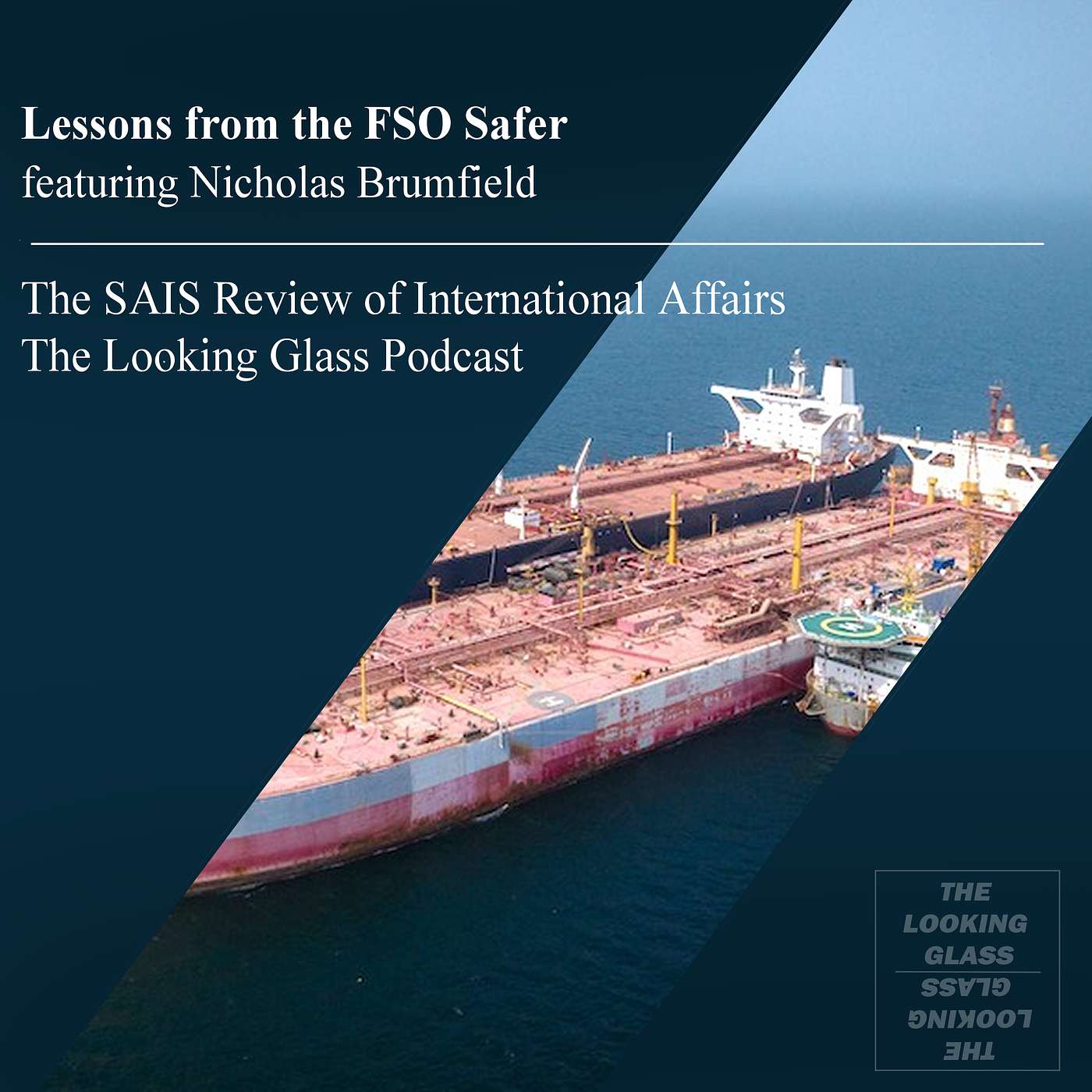
    Lessons from the FSO Safer

    Welcome to the SAIS Review’s The Looking Glass Podcast. This episode is part of our collaborative series with the Politics of Disaster class at SAIS. We explore how crises unfold at the intersection of conflict, governance, and environmental risk. My name is Andrea Majert Galera, and I am joined by my co-host Marcel Kolb. Today, we turn to the story of the FSO Safer. FSO Safer is a deteriorating oil tanker off Yemen’s coast that, for years, threatened to unleash one of the world’s largest man-made environmental disasters. The multinational effort to avert this catastrophe became a success story of cooperation amid an active war. It nevertheless raises more profound questions about responsibility, prevention, and the governance of high-risk infrastructure in conflict zones. Joining us today on the podcast is Nicholas Brumfield. Nicholas Brumfield graduated with an MA in Arab Studies from Georgetown University and has worked since 2018 as a researcher on Middle East politics and security. He has specifically developed an interest in maritime security. His analysis can be seen in publications including Al-Jazeera, the Daily Beast, the Foreign Policy Research Institute, Amwaj Media, and L'Orient L'Jour. We hope you enjoy this episode of the Looking Glass Podcast. Remember to leave 5-stars and share with a friend!
  • January 21 · 27 min

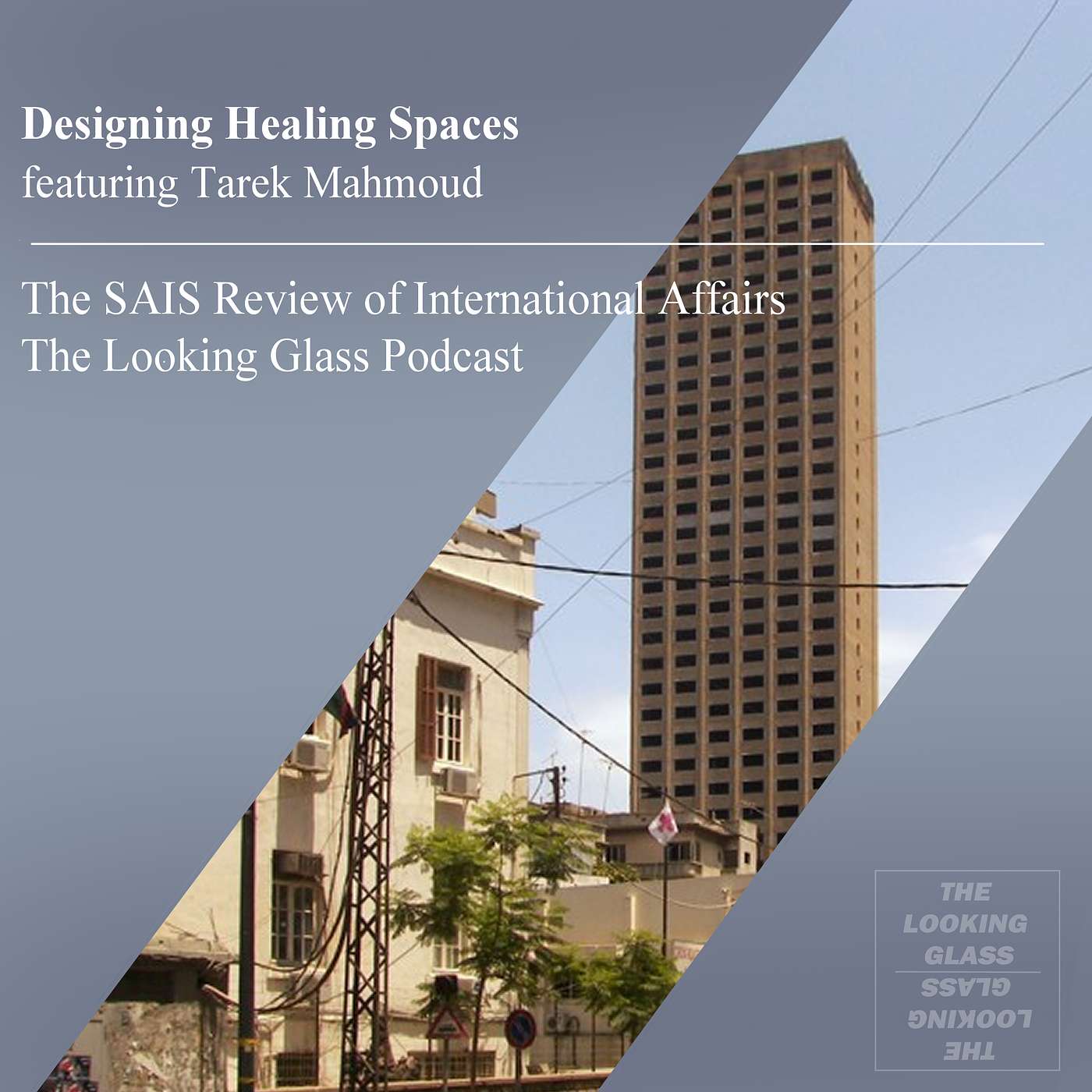
    Designing Healing Spaces

    Welcome back everybody to the SAIS Review’s The Looking Glass Podcast. This is a collaborative mini-series between the Looking Glass and the Politics of Disaster course at SAIS. My name is Nicole Ward and I am joined by my co-host Mira Tarabeine. Today’s episode explores how art, design, and public space shape the way societies rebuild after conflict. To frame our discussion, we focus on Burj El Murr, an unfinished skyscraper in Beirut. Originally envisioned as a symbol of modern architectural ambition, it became a site marked by violence and trauma during the Lebanese Civil War. Decades later, the tower has been reimagined as a venue for design installations that confront themes of war, collective memory, and urban resilience. To help us better understand how war-torn spaces can be transformed into platforms for healing and dialogue, we welcome Mr. Tarek Mahmoud. Tarek Mahmoud is a design engineer based in Milan. Growing up between France and Lebanon, Tarek became interested in investigating how designers can intervene in contexts of war. Our conversation with him today will focus on how design interventions can shape war-torn spaces. Last October, Tarek was one of the curators, along side of an exhibition hosted inside Burj El Murr. We hope you enjoy this episode of The Looking Glass Podcast. Remember to leave 5-stars and share with a friend!

  • January 12 · 44 min

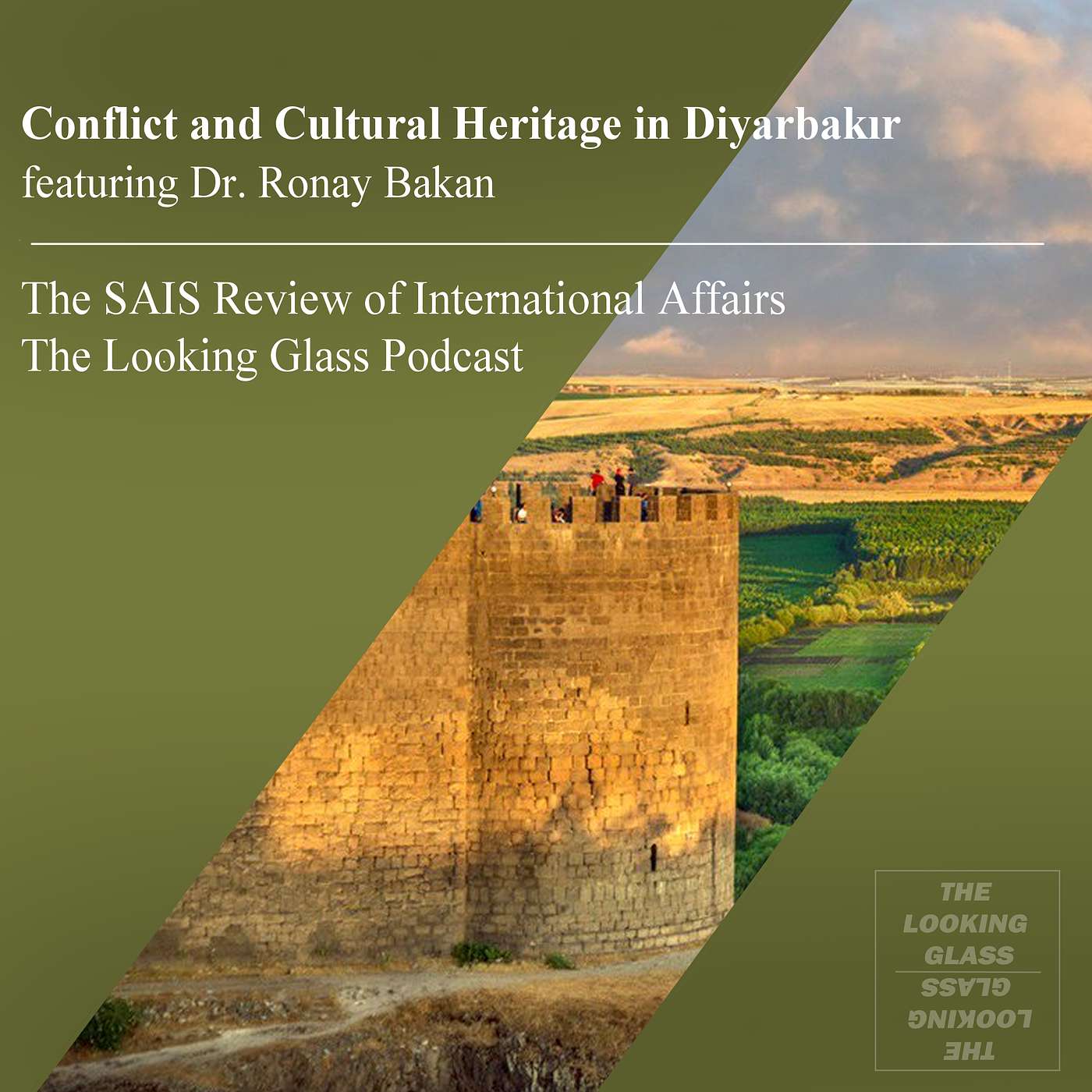
    Conflict and Cultural Heritage in Diyarbakır

    Welcome back everybody to the SAIS Review's The Looking Glass Podcast. We’re your hosts, Maya Martin and Luc van der Linden. In this podcast, we’re unpacking the protection of cultural heritage in Diyarbakir, Turkey, and its recovery since the 2015 Kurdish insurrection. Diyarbakir is considered the unofficial capital of the Kurdish community in south-eastern Turkey. The historic heart of the city is the old town of Sur. There, one can find the UNESCO World Heritage sites of the imposing Diyarbakir walls and the lush Hevsel Gardens. However, many of the cities historical sites were unfortunately damaged between July 2015 and March 2016 during the Kurdish insurrection. In the aftermath, Turkish efforts to rebuild the urban areas of Sur threatened Diyarbakir’s heritage, and the Kurdish communities that reside in the ancient city. Here to help us unpack the cultural heritage recovery of Diyarbakir is Dr. Ronay Bakan. Dr. Ronay Bakan is a Max Weber Postdoctoral Fellow at the European University Institute with a research focus on political violence and the urban spatiality of everyday warfare. By the time she earned her Ph.D. in Political Science from Johns Hopkins University, she was already equipped with bachelor's and master's degrees in political science and international relations from Boğaziçi (Bo-ah-zichi) University in Turkey. Dr. Bakan leverages her extensive academic background to use ethnographic methods to investigate Kurdish politics within Southwest Asia and North Africa. In her writing, she examines why and how states use, and sometimes weaponize, urban development and heritage tourism as tools in counterinsurgency strategies. Remember to leave 5-stars and share with a friend!

  • Dec 22, 2025 · 31 min

    After the Flood: Valencia’s Road to Recovery

    Welcome back everybody to the SAIS Review's The Looking Glass Podcast. We are your hosts Duru Dogan and Isabella Manzione. With natural disasters becoming more frequent, resilience and recovery have moved to the center of global conversations on human security. These events have sparked important discussions about community preparedness, government responsibility, and what it truly means to build back better. Today, we’re joined by Dr. Alexander Fekete to explore how the regions affected by the 2024 Spanish floods have navigated their recovery and strengthened their long-term resilience. Dr. Alexander Fekete is a Full Professor at the Cologne University of Applied Sciences, Institute of Rescue Engineering and Civil Protection. His expertise is in Risk Management, Crisis Management, Natural Hazards, Climate Change Impacts, Disaster Preparedness, and Societal Resilience. He has over 250 publications pertaining to these fields. Recently, he co-hosted a webinar on the topic of “Societal resilience and infrastructure – who is forgotten in post-disaster recovery.” We’re very excited to be joined by him today and hope you enjoy today’s episode of the Looking Glass Podcast. Remember to leave 5-stars and share with a friend!

  • Nov 18, 2025 · 30 min

    Twin Threats of Extremist Violence and Authoritarianism in the Sahel

    Welcome back to the SAIS Review’s The Looking Glass Podcast. We’re your hosts Aaryaman Shah and Jiwon Lim. On May 15, al-Qaeda affiliated militants claimed to kill 200 soldiers during an attack on an army base in Djibo, a village in northern Burkina Faso. This attack is emblematic of the extent to which violent extremism has found a foothold in the Sahel, a belt of semi-arid land straddling the Sahara and coastal West Africa. There are several reasons for the emergence and sustenance of this extremist violence, including free access to weapons, political instability and longstanding ethnic rivalries. Here to help us make sense of violence in the Sahel is Dr Alexander Thurston. Dr. Alexander Thurston is an Assistant Professor of Political Science at the University of Cincinnati. He is a scholar whose work specializes in the intersection of Islam and politics. Dr. Thurston is the author of a blog, Sawahil, on issues across West Africa, MENA, Islam and Politics. His work has been featured in prominent academic journals, including Journal of the American Academy of Religion, African Affairs, Islamic Law & Society. He has also written reports and articles for the Brookings Institution, the Carnegie Endowment, the Center for Strategic and International Studies, and more. He is also the author of Salafism in Nigeria: Islam, Preaching, and Politics and Boko Haram: The History of an African Jihadist Movement. I hope you enjoy this episode of the looking glass podcast. Hosts: Aaryaman Shah and Jiwon Lim Produced by Jiwon Lim Remember to leave 5-stars and share with a friend!

  • Nov 10, 2025 · 22 min

    Japan’s Iron Lady: Takaichi Sanae

    Last month, Japan set history by electing their first female prime minister: Takaichi Sanae. In this victory, she must be ready to face old and new issues, ranging from domestic political and social instability to international tariffs. To discuss who Takaichi is, her platforms, and how she will navigate the ever changing international field, joining us on the podcast today is Dr. Sheila Smith. Dr. Sheila Smith is the John E. Merow senior fellow for Asia-Pacific studies at the Council on Foreign Relations. She is an expert on Japanese politics and foreign policy, and the author of multiple books including “Japan Rearmed: The Politics of Military Power” and “Japan's New Politics and the U.S.-Japan Alliance”. Dr. Smith is chair of the Japan-U.S. Friendship Commission and the U.S. advisor to the U.S.-Japan Conference on Cultural and Educational Interchange, a bi-national advisory panel of government officials and private-sector members. We hope you enjoy today’s episode of The Looking Glass Podcast. Remember to leave 5-stars and share with a friend!

  • Jul 14, 2025 · 38 min

    The GERD Water Dispute and its Impact on Egypt’s Water Security

    Situated at the intersection of the Arab world, Sub-Saharan Africa, and Southern Europe, Egypt remains a pivotal actor in the evolving geopolitics of the Middle East and North Africa. Under the leadership of President Abdel Fattah El-Sisi, the Egyptian state has embarked on a sweeping agenda of transformation—redefining its political economy, reasserting its regional role, and confronting a host of domestic and international pressures. This miniseries aims to move beyond conventional narratives to provide a rigorous, multidisciplinary examination of contemporary Egypt. Through a series of in-depth conversations and analyses, The Looking Glass interrogates the logics, trade-offs, and long-term implications of the choices shaping Egypt’s present and future. In this final episode, we will dive into the dispute over the Grand Ethiopian Renaissance Dam, an Ethiopian megaproject that has upended relations between Egypt and Ethiopia. The Nile River is shared by over 11 countries, and Ethiopia seeks to use its waters to increase its electricity production. While this seeks to improve Ethiopia’s development, Egypt fears it would bring negative consequences down river, including negative impacts to its water supply. We will discuss this issue in debt, as well as Egypt’s water security in general, which has proven to be a key issue in the country. To discuss, we are honored to host Mr. John Mukum Mbaku, Nonresident Senior Fellow at the Brookings Institution, who works on the Africa Growth Initiative. Remember to leave 5-stars and share with a friend!

  • May 29, 2025 · 33 min

    Istanbul's Next Earthquake

    Welcome back everybody to the SAIS Review’s The Looking Glass Podcast. I am your host Davide Donald. On today’s episode we are going to be talking about disaster management in Turkey. Istanbul lies at the heart of the Eurasian and Anatolian tectonic plate fault lines. The prospect of another major earthquake hitting the city of over 16 million people is a question of when, not if. The 6.2 magnitude earthquake that hit Istanbul a few weeks ago on April 23rd–which luckily resulted in only injuries and minor building damage–was a reminder of just how imminent a major quake could be. To discuss the government’s current preparedness and management approach, and the possible consequences of when an earthquake strikes Istanbul in the future, joining us on the podcast today is Dr. Lisel Hintz. Lisel Hintz is an Assistant Professor of International Relations at the Johns Hopkins School of Advanced International Studies. Her research explores how identity struggles interact with domestic politics and foreign policy, focusing on Turkey and its neighboring regions. Drawing on fieldwork and a diverse range of sources, including pop culture and social media, Dr Hintz brings unique insights into how state-society relations evolve in times of crisis. She is a frequent commentator in outlets like Foreign Policy and The Washington Post, and we are eager to have her join us today to discuss the political and societal dimensions of disaster response in Turkey. We hope you enjoy this episode of the Looking Glass Podcast. Host: Davide Donald Additional Editors: Sloan Askins, Sophie Haas-Goldberg, Juliette Legein, Magdalena Paddock Remember to leave 5-stars and share with a friend!

  • May 27, 2025 · 50 min

    Radioactive Roots: Life Finds a Way (Even if it Glows a Bit)

    Nuclear catastrophes like Chernobyl and Fukushima serve as a stark reminder of the risks that come with harnessing atomic energy — we hear about the evacuations, the health impacts, the geopolitical consequences. But what about the landscapes left behind? What happens to plants, animals, and entire ecosystems when exposed to high levels of radiation over days, months, or even years? To help us unpack these questions, we're joined by Dr. Timothy Mousseau. Dr. Timothy Mousseau is an evolutionary biologist and leading expert on the effects of radiation on wildlife in Chernobyl and Fukushima. He was the first U.S.-based biologist to begin research in Fukushima, starting in July 2011, and his pioneering work in Chernobyl has revealed a wide range of radiation-related impacts on organisms—shifting how we understand the vulnerability of natural populations to environmental contaminants. Most recently, his research has expanded to explore the effects of cosmic radiation in space. With years of fieldwork across continents, Dr. Mousseau’s findings have offered critical insights and sparked ongoing debate within the field of radioecology. Let’s explore what nuclear fallout really means for the natural world — and why this research matters now more than ever. We hope you enjoy this episode of the Looking Glass Podcast. Hosts: Meya Lee and Matthew Dowden Additional Editor: Jacob Wright Remember to leave 5-stars and share with a friend!

  • May 23, 2025 · 32 min

    Making It Rain? The Promises and Pitfalls of Cloud Seeding

    Welcome back, everyone, to the SAIS Review’s The Looking Glass Podcast. We are your hosts, Nassim Ali Ahmad and Rachel Fink. As the world confronts new and novel future crises, among the most concerning will be environmental challenges, driven in many places by the sheer scarcity of water. One answer to that dilemma comes from geoengineering, or the shaping of the environment through technological feats like cloud seeding. To discuss what cloud seeding is, why it has become controversial, and its implications for some of the world’s driest regions, joining us on the podcast today is Dr. James Fleming. Dr. James Fleming is the Charles A. Dana Professor of Science, Technology and Society, Emeritus at Colby College. His research focuses on the history of weather, climate, technology, and the environment. Of particular relevance to today's topic, his book, "Fixing the Sky: The Checkered History of Weather and Climate Control" addresses the promise and potential pitfalls of cloud seeding. We hope you enjoy today’s episode of The Looking Glass Podcast. Hosts: Nassim Ali Ahmad and Rachel Fink Additional Editors: Gabriel Davis and Sara Sylvan Remember to leave 5-stars and share with a friend!

  • May 20, 2025 · 50 min

    Lessons from the Myanmar Earthquake

    Hello and welcome to today’s episode of the SAIS Review’s The Looking Glass Podcast. We are your hosts Talita Fernandes and Hantong Wu. Natural disaster relief can pose many challenges, and we have seen that they are only exacerbated by domestic conflict in the area. Since 2021, when the military deposed the democratically elected government, Myanmar has been in a brutal civil war. In the midst of this conflict, a 7.7 magnitude earthquake struck central Myanmar on March 28, complicating the relief efforts and pushing the casualties higher. To discuss the challenges a conflict-ridden area faces when natural disaster strikes, along with the particular implications for Myanmar and its latest disaster, today on the podcast, we are joined by Professor Gregory Gottlieb. Professor Gregory Gottlieb is an expert on humanitarian aid in conflict areas. He formerly served as the director at the Feinstein International Center at Tufts University and as Acting Assistant Administrator at the Bureau for Democracy, Conflict, and Humanitarian Assistance at the United States Agency for International Development (USAID). In particular, he extensively participated in the US response to the 2008 Cyclone Nargis in Myanmar, where ultimately, US humanitarian assistance was denied. Following the disaster, he testified on the Death, Displacement, and Humanitarian Aid to Myanmar in the House Foreign Affairs Committee. We hope you enjoy this episode of the Looking Glass Podcast. Hosts: Talita Fernandes and Hantong Wu Additional Editors: Fauvé Liggans-Hubbard and Nourane Awadallah Remember to leave 5-stars and share with a friend!

  • May 15, 2025 · 41 min

    Beneath the Black River-Oil Spills in Ecuador’s Amazon Rainforests

    The March 2025 oil spill in Ecuador’s Esmeraldas province is one of the country’s worst recent environmental disasters. Over 25,000 barrels of crude oil leaked from the SOTE pipeline, contaminating rivers, farmland, and coastal mangroves. This spill destroyed local biodiversity, poisoned water supplies, and disrupted the lives of more than half a million people, including Indigenous and rural communities, highlighting the urgent need for environmental justice and stronger protections for Ecuador’s people and ecosystems. To discuss these topics, joining us today is Mr. Paul Paz y Miño. BPaul Paz y Miño is a human rights and environmental justice advocate, currently serving as Deputy Director of Amazon Watch, where he has been since 2007. Since 1995, he has volunteered as the Colombia Country Specialist for Amnesty International USA, monitoring human rights conditions and organizing campaign activities. He previously directed community development and human rights programs with indigenous communities in Chiapas, Mexico, and Guatemala as Program Director at the Seva Foundation. He has also served as an Associate Fellow at the Institute for Policy Studies and has been involved with organizations such as Peace Brigades International USA and the Oil and Gas Action Network. Paz y Miño has lived and worked in Ecuador, Mexico, and the United States, and is recognized for his advocacy on behalf of indigenous rights and environmental protection in the Amazon. We hope you enjoy this episode of the Looking Glass Podcast. Hosts: Max Shannon and Khadija Taufiq Additional Editors: Yan Shen Remember to leave 5-stars and share with a friend!

  • May 13, 2025 · 47 min

    Politics of Disaster Miniseries: Disaster Capitalism in Lebanon

    Welcome back everybody to the SAIS Review’s The Looking Glass Podcast. We are your hosts, Nadia Sleiman and Amber Escudero-Kontostathis. Today, we are diving into the critical topic of disaster capitalism in Lebanon amidst its ongoing financial crisis. As Lebanon grapples with currency collapse, inflation, and government paralysis, important questions arise about how these conditions have been exploited economically and politically. To help us unpack the systemic vulnerabilities, the role of elites, and the international dynamics shaping Lebanon’s recovery efforts, joining us on the podcast today is Dr. Hicham Saffadeine. Dr. Hicham Safieddine is Canada Research Chair in the History of the Modern Middle East and Associate Professor of History at the University of British Columbia. He is a scholar of financial systems, political economy and intellectual history (19th and 20th centuries) with an emphasis on the Middle East and North Africa region. He is author of Banking on the State: The Financial Foundations of Lebanon (SUP, 2019), editor of Arab Marxism and National Liberation: Selected Writings of Mahdi Amel (Brill, 2020), and co-editor of The Clarion of Syria: A Patriot’s Call against the Civil War of 1860 (CUP, 2019). In addition to his academic research and teaching, he is the co-founder of e-zines Al-Akhbar English and The Legal Agenda’s English Edition. His press writings have appeared in The Toronto Star, Al-Jazeera English, The Monthly Review, Le Monde Diplomatique, Al-Adaab, Middle East Eye, Egypt Independent, Assafir, al-Akhbar, Jadaliyya, and Al-Ahram Weekly. We hope you enjoy this episode of the Looking Glass Podcast Hosts: Nadia Sleiman and Amber Escudero-Kontostathis Additional Editors: Joveria Javed Remember to leave 5-stars and share with a friend!

  • Apr 22, 2025 · 43 min

    Spotlight on Burma: The Future of the Military Junta

    Since 2022, the global media has heavily concentrated on two major conflicts—the Russia-Ukraine War and the conflict in Gaza. While these wars have significant implications, this narrow focus often obscures other conflicts that continue to shape international security, governance, and regional stability. On our Forgotten Wars series, to discuss Burma’s domestic conflict, from the 2021 coup and the failure of the military to consolidate power, the current resistance groups and opposition in 2025, and attempts for brokering peace, joining us on the podcast today is Billy Ford. Billy Ford is a peacebuilding and governance specialist affiliated with the Southeast Asia Peace Institute with 13 years of experience working on Burma. Most recently, Billy served as Burma Program Officer at the U.S. Institute of Peace, where his work focused on conflict governance, intra-resistance peacebuilding, and military defection. He worked at USIP for 6 years after having held positions with The Asia Foundation, Freedom House, and numerous Burmese organizations. We hope you enjoy today’s episode of The Looking Glass Podcast. Remember to leave 5-stars and share with a friend!

  • Apr 21, 2025 · 18 min

    Miniseries on Contemporary Egypt: Geopolitical Landscape

    From the heart of the Arab world to the crossroads of Africa and Europe, Egypt stands at the center of some of today’s most complex and consequential shifts. Under the leadership of President Abdel Fattah El-Sisi, the country has undergone profound transformations—economic, political, and social. In this mini series, we step behind the headlines and take a closer look at Egypt’s evolving role on the global stage. We explore the choices it’s making, the pressures it’s facing, and how these forces are shaping its future. Over five episodes, The Looking Glass will offer an in-depth look into the architecture of modern Egypt under Sisi. In Episode 1, we unpack Egypt’s geopolitical landscape—how its strategic location has made it both a bridge and a buffer zone in a region gripped by conflict. We examine the ripple effects of the war on Gaza, the growing insecurity across the region, and how decades of instability have indirectly weighed on Egypt’s economy, governance, and global position. To explore these issues in depth, we are joined by Dr. Abdallah Al Dardari, the United Nations Assistant Secretary General and the Director of the Regional Bureau for Arab States of the UNDP Remember to leave 5-stars and share with a friend!

  • Apr 10, 2025 · 35 min

    Sanctions and Economic Warfare

    Welcome back to the SAIS Review’s The Looking Glass Podcast. I’m your host Vinayak Kalra. Sanctions are a misunderstood policy tool, rooted in a complex history, deemed by some as a lever of soft power and by others as a form of deadly warfare. In the 2020s, sanctions regimes continue to be implemented and enforced as a means of exerting influence on other nations, but often yield unexpected impacts upon sanctioned societies. To help us make sense of sanctions and the broader world of economic warfare, joining us on the podcast today is Dr. Narges Bajoghli. Dr. Narges Bajoghli is a Media Anthropologist focusing on the Middle East at the Johns Hopkins School of Advanced International Studies. She is a scholar, public intellectual, and award-winning author whose work explores the intersections of media, power, and resistance in global politics. Narges’ work has been featured in prominent outlets, including Foreign Affairs, The New York Times, and Vanity Fair. She is the director of the film, The Skin That Burns, on survivors of chemical warfare, and her graphic novella, Sanctioned Lives, visually captures the everyday realities of life under sanctions. Most recently, Narges along with Vali Nasr, Djavad Salehi-Isfahani, and Ali Vaez, wrote the book, “How Sanctions Work: Iran and the Impact of Economic Warfare,” a critically acclaimed, ground-up look, at the human impact of sanctions. Remember to leave 5-stars and share with a friend!

  • Mar 25, 2025 · 24 min

    Spotlight on Sudan: The Unending Civil War

    Welcome back everybody to the SAIS Review’s The Looking Glass Podcast. I am your host Jiwon Lim. Since 2022, the global media has heavily concentrated on two major conflicts—the Russia-Ukraine War and the conflict in Gaza. While these wars have significant implications, this narrow focus often obscures other conflicts that continue to shape international security, governance, and regional stability. On our Forgotten Wars series, to spotlight the conflict in Sudan since the 2023 civil war, what has changed since then, the international reaction and interference in its developments joining us on the podcast today is Mr. Ahmed Kodouda. Ahmed Kodouda is a policy, advocacy, and governance specialist with an extensive background in conflict and post conflict settings. Between 2019 and 2021, he served as an advisor to the civilian-led transitional government in Sudan. He has over 15 years of experience working with, and consulting for, governmental, national and international non-governmental organizations in the US, Africa and the Middle East. His peer reviewed publications have appeared in the Journal of Democracy, World Development, and Demography, and his other writing and commentary have been showcased on Foreign Affairs and The Washington Post, among others. He was awarded fellowships from The National Science Foundation (NSF) and the American Political Science Association. We hope you enjoy this episode of the Looking Glass Podcast. Remember to leave 5-stars and share with a friend!

  • Feb 27, 2025 · 34 min

    The Threat of Cyber on Critical Infrastructure

    Welcome back everybody to the SAIS Review’s The Looking Glass Podcast. I’m your host Jiwon Lim. From phishing emails to ransomware, cyberattacks may be a daily part of your and other people’s lives. However, when these attacks target not just your inbox but a whole industry, the conversation gets complicated. To discuss the actors and goals behind cyberattacks on critical infrastructure, their methods, and where we may be headed in the future of cyber attacks and defending against them is Dr. Jim Jones. Dr. Jim Jones has been a cyber security and digital forensics practitioner, researcher, and educator for over 30 years in industry, government, and academia. Jim, his colleagues, and his students spend their days and nights examining digital systems of all types to understand how data persists and decays on these systems, and how such behavior and data can be used, manipulated, and verified to find malware infections and compromised systems, detect system and device misuse, link disparate devices and entities, effect and detect deception activities, and recover lost data. Past and current funded research sponsors include the Defense Advanced Research Projects Agency (DARPA), the Intelligence Advanced Research Projects Activity (IARPA), the U.S. Department of Homeland Security (DHS), the National Science Foundation (NSF), and the United States Department of Defense (DoD). We hope you enjoy this episode of The Looking Glass Podcast. Remember to leave 5-stars and share with a friend!

Showing 1–20 of 20 episodes