Skip to content
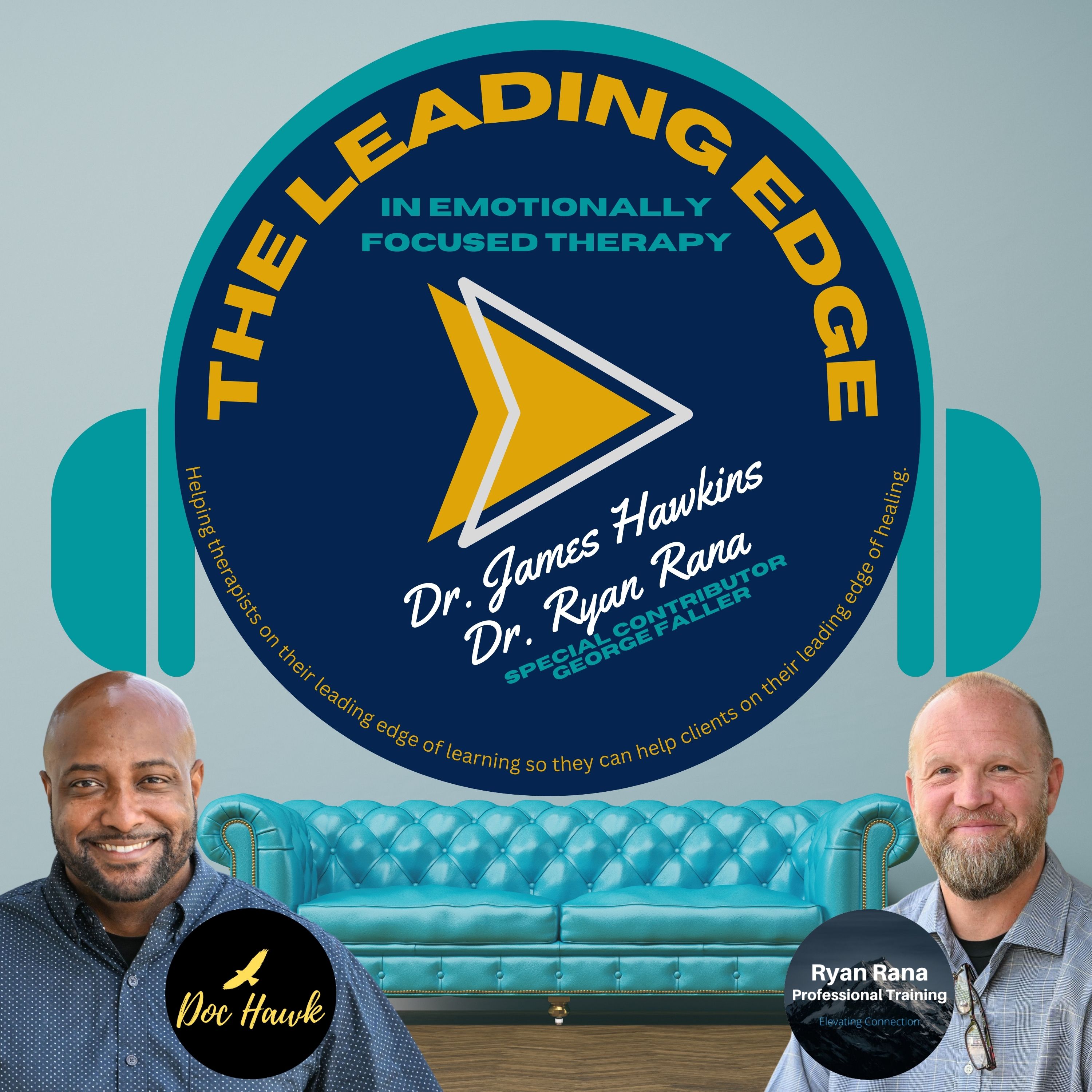
Artwork for The Leading Edge in Emotionally Focused Therapy
Health & FitnessMental HealthEducation

The Leading Edge in Emotionally Focused Therapy

theleadingedgeineft

Helping therapists on their leading edge of learning so they can help clients on their leading edge of healing. In each episode, we try to focus on parts/moments of the counseling experience through the lens of Emotionally Focused Therapy, developed by Sue Johnson. We share how we are being pushed in our growth process and things we are learning from our clients in their growth process. We are also thankful for the many EFTSupervisors and Trainers who share their learning nuggets with us to pass on to you. We invite you into a brave space as we all push our leading edges of learning and healing.

Play
  • 20 episodes
  • Avg 34 min
  • English
  • #147
    Wednesday · 40 min

    145. Adult Attachment in Three Hats: Translating Bonding Science for the Therapy Room and Beyond

    Welcome to the Leading Edge in Emotionally Focused Therapy, hosted by Drs. James Hawkins, Ph.D., LPC, and Ryan Rana, Ph.D., LMFT, LPC—Renowned ICEEFT Therapists, Supervisors, and Trainers. We're thrilled to have you with us. We believe this podcast, a valuable resource, will empower you to push the boundaries in your work, helping individuals and couples connect more deeply with themselves and each other. In this episode, James and Ryan unpack a simple but powerful metaphor for adult romantic bonds: the red hat (emotional system), blue hat (caregiving system), and purple hat (sexual system). Drawing on attachment science from Phil Shaver, Mario Mikulincer, and Sue Johnson, they show how these three behavioral systems interact in-session and at home—and why you “can’t red-hat your way into connection.” You’ll hear vivid clinical examples, live-process reflections, and practical language you can bring straight to your couples, helping them see their cycle, name their hats, and take the first small blue-hat risks that change everything. 1. The Three Behavioral Systems = Three Hats Red Hat = Emotional System The hardwired system that signals inner experience—distress, pain, longings—outward. “Red” is not bad; it’s the channel for “something is happening in me; I need you to see it.” Blue Hat = Caregiving System The instinct to turn toward another’s distress: to be accessible, responsive, and engaged. In EFT terms, this is the responsive other—and it’s what actually creates and maintains bond. Purple Hat = Sexual System The system driving touch, pleasure, and erotic connection in adult romantic bonds. Not an “add-on” after emotions are fixed, but a co-equal system that interacts with red and blue. 2. You Can’t “Red-Hat” Your Way into Connection When both partners stay in red, they’re each sending signals but no one is picking up the phone. That red‑vs‑red pattern feels like: competing for whose pain “counts,” chronic explaining, convincing, and defending, more loneliness after talking than before. Without at least a little blue hat, the bond cannot form or repair—no matter how much content is shared. 3. The Blue Hat Is Vulnerable Work—for Clients and Clinicians Putting on the blue hat requires a yielding move (Jim Coan’s language): setting your own swirl aside for a moment, letting the other’s pain actually touch you, allowing yourself to be impacted and guided by their inner world. For many partners (especially withdrawers), caregiving is wired to feel like a set-up for failure: “Every invitation is just another chance to get it wrong.” They often pull their heart back to protect against repeated failure. As a therapist or coach, you are meant to wear the blue hat for everyone in the room: If your compassion goes offline for one partner, the cycle has pulled you into red. Your temporary blue hat often “bridges” when a partner can’t yet offer that responsiveness. 4. Red, Blue, and Purple Are Interlocking Cogs, Not a Straight Line Traditional framing: fix the emotional system first, and the sexual system will naturally follow. This episode offers a more mutual, systemic view: Secure emotional connection supports satisfying sexual connection. Blocked or painful sexual dynamics also make emotional safety harder. Deep, responsive sexual moments can reinforce emotional security, and vice versa. Think of the systems as interlocked gears: when one jams (emotion, caregiving, or sex), the others feel the strain. 5. Simple Metaphor, Heavy Theory Behind It The hat model is a front-door metaphor for clients that quietly carries: attachment research (5,000+ studies), Shaver & Mikulincer’s work on adult bonding systems, Sue Johnson’s emphasis on responsiveness as the core of love. Instead of teaching full attachment theory to clients who “can’t even sit on the same couch,” you: offer two or three hats they can remember in the heat of the moment, help them name when they’re switching hats, and anchor micro-interventions: “Right now, everyone has the red hat on. Who can risk 1% of a blue hat?” 6. Seeing the Cycle = Regaining Choice Clients cannot change what they cannot see; “hats” give them a shared language to see it. Therapists can track: When red turns from “open red” (vulnerable sharing) into “shadow red” (mistrust, blame, vague signals). When a partner briefly has a blue hat on and then flips back into red. When sexual bids (purple) are met with blue (healing) vs met with red (rejection, mistrust). Even a 1% blue-hat response (e.g., “I can see how hard that is for you”) can be enough to create real hope. 7. Beyond the Couch: A Call for More Blue Hats in the Culture The same red‑vs‑red dynamic shows up at the societal level: “My red hat is bigger/more legitimate than your red hat.” Lots of pain, very few reliable blue hats. The episode frames EFT and attachment science as world-facing work: inviting more blue‑hat moments in communities, justice spaces, and public conversations, honoring community leaders who quietly build learning communities that increase quality of care everywhere. We aim to equip therapists with practical tools and encouragement for addressing relational distress. We're also excited to be part of the team behind Success in Vulnerability (SV)—your premier online education platform. SV offers innovative instruction to enhance your therapeutic effectiveness through exclusive modules and in-depth clinical examples. Stay connected with us: Facebook: Follow our page @pushtheleadingedge Ryan: Follow @ryanranaprofessionaltraining on Facebook and visit his website James: Follow @dochawklpc on Facebook and Instagram, or visit his website at dochawklpc.com George Faller: Visit georgefaller.com If you like the concepts discussed on this podcast you can explore our online training program, Success in Vulnerability (SV). Thank you for being part of our community. Let's push the leading edge together!

  • #146
    Monday · 25 min

    144. Handling Distortion in Session; Without Gaslighting the Recipient

    Welcome to the Leading Edge in Emotionally Focused Therapy, hosted by Drs. James Hawkins, Ph.D., LPC, and Ryan Rana, Ph.D., LMFT, LPC—Renowned ICEEFT Therapists, Supervisors, and Trainers. We're thrilled to have you with us. We believe this podcast, a valuable resource, will empower you to push the boundaries in your work, helping individuals and couples connect more deeply with themselves and each other. In this episode of The Leading Edge in EFT, James Hawkins and Ryan Reyna tackle one of the trickiest tensions in therapy: how to work with distortion and meaning-making without gaslighting your client—especially tender pursuers and highly protected withdrawers. Using a vivid “watermelon vs. hot sauce” metaphor, they unpack what happens when one partner intends care, but the other receives danger. They explore why the brain distorts on purpose in the name of survival, how to keep honoring the client’s emotional reality, and how to redirect blame away from partners and back to the negative cycle as the true enemy. You’ll hear a powerful reframe that replaces the potentially invalidating, “What’s the story you’re telling yourself?” with a cleaner, safer question: “When you see Trigger X, what message does the cycle send to you about how your partner sees you?” James and Ryan apply this lens not just to couples, but also to race, marginalization, and societal conversations, illustrating how attempts to “correct the facts” can land as gaslighting when bodies are carrying generations of threat. They share moving examples of Stage 2 and Stage 3 work where partners begin catching and correcting the cycle on their own—creating “cycle killer” moments that change everything. If you’re an EFT therapist, trauma-informed clinician, or a partner trying to understand your own reactions, this episode will help you honor emotion, respect meaning-making, and still gently face distortion—without shaming or silencing anyone. Top Takeaways “Distortion” in EFT ≠ Fake or Irrational Emotion Emotions are never irrational; they always make sense in context. What may be “distorted” is the meaning-making or thinking, not the feeling. Watermelon vs. Hot Sauce Metaphor One partner offers something meant to be sweet and refreshing (watermelon). The other experiences it as danger or attack (hot sauce). This gap often comes from old injuries, expectations of being hurt, and the cycle, not badness in either partner. Why “What’s the Story You Tell Yourself?” Can Feel Like Gaslighting Although poetic, it can land as, “This is just in your head; you’re making it up.” For pursuers especially, this repeats a long history of being told they’re “too much” or “misreading reality.” A Safer, Cleaner Clinical Question Instead of: “What’s the story you’re telling yourself?” Use: “When you see Trigger X, what message does the cycle send to you about how your partner sees you?” This question: Honors the client’s internal world and logic. Externalizes the problem to the cycle, not the partner. Protects both partners from blame and shame. The Cycle as the Real Distorter The negative cycle becomes the “third entity” that scrambles messages. Seeing the cycle as the enemy helps the therapist stay out of the triangle and helps partners fight the cycle, not each other. Expected Pain Is Real Pain (Jim Coan’s Research) The brain responds to anticipated threat almost as if it already happened. So even if words are technically “distorted,” the body’s reaction is real and valid. The limbic system amplifies signals to protect, not to be dramatic. Clinical Target: Lean Into Pain, Not Cognitive Correction If you pivot too fast to “self-reflection” or cognitive reframe, you may move away from the raw pain where the best enactments live. Staying with the pain supports deeper Stage 2 work and more powerful enactments. Personal vs. Clinical Use of Self-Reflection Personally, it’s healthy to ask, “Is this really what they meant, or is this my story?” Clinically, putting that question on the client too soon can feel invalidating and gaslighting. Application to Race, Marginalization, and Power When someone names patterns of racism or marginalization, responding only with “facts” and statistics often lands as, “You’re crazy; that’s not real.” Bodies encode generational and societal cycles, so their threat response has good reasons. Saying, “I can see good reasons your brain codes it this way,” is deeply regulating and dignifying. Stage 2 & Stage 3: “Cycle Killer” Moments In de-escalated couples, partners begin to say things like: “This might be my stuff coming up, but here’s what happens for me…” “You don’t have to put that part of you away—let’s make space for your fear and my optimism.” These are Stage 3 moments where partners catch and correct the cycle themselves—sometimes without therapist intervention. Therapist Posture: Genuine Blame on the Cycle Effective EFT therapists truly believe that “this is the cycle, not their character.” Repeated exposure to Stage 2/3 couples reshapes the therapist’s internal frame, making it easier to hold the externalized cycle under pressure. Therapist Self-Care and Embodiment Therapy is hard on bodies, not just minds. Ryan and James emphasize physical health practices (walking, gym, etc.) as non-optional for therapists. Our bodies are the instrument we bring into the room. From the Couch to the Culture The same principles that de-escalate couples can transform societal conversations—about race, oppression, and power. As Bruce Perry urges, therapists are invited to take what they witness in session and amplify it into the world We aim to equip therapists with practical tools and encouragement for addressing relational distress. We're also excited to be part of the team behind Success in Vulnerability (SV)—your premier online education platform. SV offers innovative instruction to enhance your therapeutic effectiveness through exclusive modules and in-depth clinical examples. Stay connected with us: Facebook: Follow our page @pushtheleadingedge Ryan: Follow @ryanranaprofessionaltraining on Facebook and visit his website James: Follow @dochawklpc on Facebook and Instagram, or visit his website at dochawklpc.com George Faller: Visit georgefaller.com If you like the concepts discussed on this podcast you can explore our online training program, Success in Vulnerability (SV). Thank you for being part of our community. Let's push the leading edge together!

  • #145
    July 1 · 30 min

    143. Stage 2 Series: “When Every Path Hurts: Getting the Most from You in Stage 2 EFT”

    Welcome to the Leading Edge in Emotionally Focused Therapy, hosted by Drs. James Hawkins, Ph.D., LPC, and Ryan Rana, Ph.D., LMFT, LPC—Renowned ICEEFT Therapists, Supervisors, and Trainers. We're thrilled to have you with us. We believe this podcast, a valuable resource, will empower you to push the boundaries in your work, helping individuals and couples connect more deeply with themselves and each other. In this episode, Dr. James Hawkins and Dr. Ryan Reyna walk into the heart of Stage 2 EFT and ask a hard question: How do you get the most out of YOU when every path forward involves pain? Drawing on stories from haunted houses, combat medicine, and oncology surgery, they unpack what it means to be the stronger, wiser other—not as a top-down expert, but as a steady, emotionally present guide when clients’ eyes are begging, “Please don’t make me go there.” You’ll hear how to: Stay confident and regulated in deep Stage 2 work Use your own limbic system, intensity, and presence in service of healing Avoid “over-validating” clients out of depth Become relentless but attuned when working with shame, trauma, and withdrawer re-engagement Here are the top 10 points from the episode in bullet format, tailored for therapists: Therapist consistency is heroic work Therapists, like elite athletes or Navy SEALs, show up and train relentlessly—session after session—often without recognition, but this consistency is what makes deep Stage 2 work possible. You are the “stronger, wiser other” in Stage 2 Borrowing from Bowlby, the therapist’s role is to be a grounded, slightly leading presence—not hierarchical, but a steady guide who believes in the clients’ capacity to go deeper. Clients need your confidence more than your explanations In Stage 2, detailed EFT mapping is less helpful than a calm, “I know where we’re going; we can do this together” energy. Tone matters: gentle, invitational, and regulated—not pushy or detached. Every real option involves pain—but not the same kind of pain If you back away when clients say “don’t make me do this,” you protect them now but leave unregulated pain to hurt them later. If you stay with them in the fear and shame, you create constructive, healing pain that opens the door to new patterns. Self-coaching: what do YOU need to hear in the chair? Therapists need internal scripts/mantras (e.g., “No one gets left behind on the battlefield”). Drawing on mentors, attachment figures, faith, or personal values can help you stay present when you want to retreat. Use your own limbic system—and the partner’s—to share the load Strategic use of “we” (“We’ll go there together,” “We can face this”) helps clients feel they’re not alone. The therapist can consciously bring their own emotional presence and the partner’s caregiving energy to bear on the hardest moments. Relentless, attuned fighting for the client Ryan names his intensity and even competitiveness as assets: he refuses to let the cycle “win.” Clients often experience this as, “You fought for us more than we fought for ourselves,” which becomes contagious and regulating—as long as it stays tethered to alliance and repair. Validation and celebration must be timed and dosed well Over-validating or celebrating too soon can pull clients out of depth, like doing a cold plunge right after a hard muscle-building workout. Validation should support staying with the core emotion, not remove the heat from the room prematurely. Withdrawer re-engagement is “drip by drip” work Ryan uses the oncologic surgery metaphor: you don’t want to close up while leaving “half the tumor” (unworked shame, trauma, negative self-views) inside. Stage 2 requires repetition and reps—going back into the “torture chamber” scenes multiple times so the body learns, “I don’t have to do this alone anymore.” Homework: study your A-game and your use of self Notice what you do when you’re at your best: your presence, nonverbals, timing, intensity, or way of breathing/pausing. Ask: How am I regulating me? How am I using me as the tool? Then intentionally amplify those strengths and clarify what needs adjustment (e.g., less rescuing, more tolerating pain, smarter use of validation). We aim to equip therapists with practical tools and encouragement for addressing relational distress. We're also excited to be part of the team behind Success in Vulnerability (SV)—your premier online education platform. SV offers innovative instruction to enhance your therapeutic effectiveness through exclusive modules and in-depth clinical examples. Stay connected with us: Facebook: Follow our page @pushtheleadingedge Ryan: Follow @ryanranaprofessionaltraining on Facebook and visit his website James: Follow @dochawklpc on Facebook and Instagram, or visit his website at dochawklpc.com George Faller: Visit georgefaller.com If you like the concepts discussed on this podcast you can explore our online training program, Success in Vulnerability (SV). Thank you for being part of our community. Let's push the leading edge together!

  • #144
    June 29 · 34 min

    142. Stage 2 Series: The Sequela of the Burnout Pursuer: Hope Scenes, Holdouts, and Healing in Stage Two

    Welcome to the Leading Edge in Emotionally Focused Therapy, hosted by Drs. James Hawkins, Ph.D., LPC, and Ryan Rana, Ph.D., LMFT, LPC—Renowned ICEEFT Therapists, Supervisors, and Trainers. We're thrilled to have you with us. We believe this podcast, a valuable resource, will empower you to push the boundaries in your work, helping individuals and couples connect more deeply with themselves and each other. In this episode of The Leading Edge in Emotionally Focused Therapy, James and Ryan explore the “sequela” — the long-term fallout — of the burnout pursuer and how that shows up in both Stage 1 and Stage 2 EFT. They unpack what it means to truly witness a burned-out pursuer’s journey instead of trying to “get them to move,” why holdouts are such a powerful (and costly) survival strategy, and how to work with the unique shame of someone who feels, “I hate myself for still loving you.” You’ll hear practical ways to: Stay grounded with a pursuer who’s done protesting and now just shows up with crossed arms Do the kind of historical witnessing that feels more like a series of emotional “massages” than a quick intervention Use hope scenes and the “big three” moments of failed hope in Stage 2 to create deep limbic revision Support re-engagement without accidentally reenacting the very patterns that burned them out in the first place Top 10 Points from the Episode “Sequela” as a frame: Ryan uses “sequela” (the long-term consequences) to describe what we’re really dealing with in a burnout pursuer—not just current behavior, but the accumulated fallout of thousands of drops, failed bids, and unresolved pain. Burnout pursuer = mixed signals + survival strategy: Burnout pursuers send mixed messages to their partner, the therapist, and themselves. What looks like manipulation or a “power move” is actually an adaptive survival strategy to cope with feeling helpless and repeatedly dropped. Historical witnessing is non‑negotiable: Stage 1 work with burnout pursuers requires slow, repeated, historical witnessing—not “forget the past, let’s start over.” The therapist invites them to tell the journey of how they got this burned out, and stays with the horror and grief of it instead of talking them out of it. The “holdout” dynamic: A burnout pursuer may show up in therapy with arms crossed, essentially saying, “I’m here, but I’m not moving until my partner proves it.” That holdout protects them, but also rigidly locks the cycle in place, sometimes even raising the bar as the withdrawer improves. Therapist stance: release the need to make them move: James names a crucial shift: the therapist must let go of the internal pressure to get the pursuer to move. The more the therapist pushes, the more the pursuer’s nervous system feels pressured and unsafe. The work becomes: “James, just be with what is. Give witness to their journey.” Stage 1 as repeated “emotional massage”: Ryan likens the work to a series of massages—one session won’t undo years of knots. The therapist returns multiple times to witnessing, validating, and grieving with the pursuer, even as this can be very hard on the withdrawer who’s just starting to “get it.” Unique shame of the burnout pursuer: There’s a specific shame: “Fool me once, shame on you; fool me thousands of times… shame on me.” Many burnout pursuers feel, “I love you, and I hate myself for the fact that I love you.” Without naming and working this shame, they can’t risk hope again. Stage 2: asking them to care‑give again is huge: When the couple “dumps over” into Stage 2, the burnout pursuer is often asked to sit with and respond to their partner’s vulnerability first. This can re-evoke the old experience: “Once again, it’s not about me.” Naming how much is being asked of them is essential. The “big three” hope scenes as core Stage 2 work: Effective Stage 2 softening with burnout pursuers often requires revisiting 2–3 symbolic “big hope” moments (e.g., an elaborate romantic trip) where they risked, hoped, and were dropped. These hope scenes become key sites for deep grief, attachment injury work, and limbic revision—otherwise, it’s like leaving a tumor behind and relapse risk stays high. From vision → witness → visual redemption (the “eye” theme): Pursuers are visionaries—they can see how good the relationship could be, but that visionary energy often works against them. They need: Witness in Stage 1 & early Stage 2: someone who really sees the journey of their drops and failed hopes. Visual redemption in late Stage 2: in Step 7, the re-engaged withdrawer looks at them and clearly names, how I see you—lovable, worth fighting for, beautiful, someone I want to be with. That attuned “I see you” becomes a redemptive corrective to years of being unseen and dropped. We aim to equip therapists with practical tools and encouragement for addressing relational distress. We're also excited to be part of the team behind Success in Vulnerability (SV)—your premier online education platform. SV offers innovative instruction to enhance your therapeutic effectiveness through exclusive modules and in-depth clinical examples. Stay connected with us: Facebook: Follow our page @pushtheleadingedge Ryan: Follow @ryanranaprofessionaltraining on Facebook and visit his website James: Follow @dochawklpc on Facebook and Instagram, or visit his website at dochawklpc.com George Faller: Visit georgefaller.com If you like the concepts discussed on this podcast you can explore our online training program, Success in Vulnerability (SV). Thank you for being part of our community. Let's push the leading edge together!

  • #143
    May 27 · 1 hr 12 min

    141. Stage 2 Series: The Heart of Stage 2: Conversations with EFT’s Leading Voices (Special Guests Drs. Marlene Best, Kathryn Rheem, Jim Furrow)

    What happens in the deepest moments of Stage 2 EFT work? In this special roundtable episode of The Leading Edge in Emotionally Focused Therapy, hosts Dr. James Hawkins and Dr. Ryan Rana sit down with three pioneers in EFT process research and training: Dr. Jim Furrow, Dr. Kathryn Rheem, and Dr. Marlene Best. Together, they unpack the heart of Stage 2 change events in EFT: withdrawer re-engagement, pursuer softening, therapeutic presence, fear, longing, attachment risk, and the healing power of vulnerable reach-and-response moments. This conversation is more than theory. It is a masterclass in how therapists help clients move from talking about emotion to speaking from emotion. The group explores how fear and longing work together, why vulnerability requires both courage and safety, and how the therapist’s emotional presence becomes the bridge that helps clients risk connection. You’ll hear powerful reflections on: Why fear must become experiential in Stage 2 The difference between Stage 1 and Stage 2 emotional work How longing creates movement through fear Why enactments are essential for deep limbic revision The therapist’s role in co-regulating attachment risk How healing becomes more powerful than hurt in secure connection This episode is rich with clinical wisdom, emotional depth, and heartfelt reflections from some of the leading voices who helped shape modern EFT. If you’re an EFT therapist wanting to deepen your Stage 2 work—or simply someone passionate about emotional connection and healing relationships—this is an episode you will want to revisit again and again. In This Episode The Origins of Stage 2 EFT Research The guests reflect on the early development of EFT process research and how their studies on pursuer softening and withdrawer re-engagement helped therapists better understand the moment-to-moment dynamics of attachment transformation. Fear vs. Speaking From Fear The conversation explores the difference between naming fear cognitively versus helping clients experientially contact fear in the present moment. Longing and Fear Work Together Dr. Marlene Best shares her now-famous insight that longing must move through fear for attachment change to occur. The group discusses how longing creates movement and momentum toward vulnerable reach. Therapeutic Presence as Co-Regulation Dr. Jim Furrow highlights that clients cannot stay emotionally present to fear unless therapists bring their own grounded emotional presence into the room. Stage 1 vs. Stage 2 Emotional Work The panel clarifies the crucial difference between: accessing primary emotion in Stage 1 restructuring attachment through view of self/view of other in Stage 2. Healing Is More Powerful Than Hurt Dr. Kathryn Rheem closes with a moving reflection on how humans are wired both to hurt and to heal—and how vulnerable connection transforms emotional suffering into secure attachment. Key Clinical Takeaways Fear is not the enemy in Stage 2—it is the doorway. Longing creates movement through attachment fear. Therapists must bring their presence before asking clients to bring theirs. Enactments help clients move from insight into embodied relational experience. Stage 2 is about restructuring view of self and view of other. Healing occurs when fear is shared relationally. Withdrawers often access sadness and loss before fear. Pursuer softening requires risk, surrender, and emotional reach. Emotional safety grows through repeated vulnerable experiences. Deep limbic revision requires deep experiential contact. Best Quotes from the Episode “We don’t just talk about fear in Stage 2—we speak from fear.” “If you want someone to be present to their fear, you need to bring your presence.” “Longing has to move through the fear.” “The therapist’s regulation becomes the emotional scaffolding for the couple.” “Stage 2 is not just emotional access—it’s restructuring attachment.” “Fear reshapes our priorities and tells us not to reach when we most need connection.” “The healing becomes more powerful than the hurt.” “The goal isn’t to eliminate fear. The goal is to reach while fear is still present.” “Therapists often drive past view of self and view of other instead of slowing down and exploring them.” “We heal when vulnerable experience becomes relationally shared.” “The deeper the longing, the deeper the fear.” “People pull away from love when they’re terrified of losing it.” “Healing happens when someone risks reaching and another person responds.” “Fear says ‘don’t reach.’ Love says ‘try anyway.’” “We all want someone who can help us carry what feels too heavy alone.” “The strongest relationships aren’t fear-free—they’re responsive in the presence of fear.” “Behind anger and distance is often grief, fear, and longing.” “Secure connection grows when people can finally share what they were afraid to reveal.” “You don’t heal by never hurting again. You heal by no longer hurting alone.” “The courage to be emotionally honest changes relationships.” EFT World Summit 2027 We wanted to let you know that the EFT World Summit 2027 is coming to Vancouver — May 9 to 11, 2027 — and we would love to see you there. The Summit is the flagship gathering of the global EFT community — the moment when practitioners from over 40 countries come together in one place. You'll be in the room with the researchers and clinicians that have shaped your practice, and you'll participate in conversations that are writing the next chapter of this work. The line up of plenary speakers includes Gail Palmer, Leanne Campbell, Jim Coan, Mark Solms, and Gordon Neufeld — alongside your 4 choices of 12 hands-on workshops across all three modalities, hosted by leaders in the EFT community. All sessions are eligible for CE credits, so you can fulfill your continuing education requirements while connecting with practitioners who speak your clinical language. Click the text below to link to the registration website. Come join us in Vancouver! Visit eftsummit2027.com to register today, and take your place in the gathering this community has been waiting for.

  • #142
    May 22 · 39 min

    140. Stage 2 Series: Stage 2 Rehab-What to Do When Deep Work Falls Apart

    Welcome to the Leading Edge in Emotionally Focused Therapy, hosted by Drs. James Hawkins, Ph.D., LPC, and Ryan Rana, Ph.D., LMFT, LPC—Renowned ICEEFT Therapists, Supervisors, and Trainers. We're thrilled to have you with us. We believe this podcast, a valuable resource, will empower you to push the boundaries in your work, helping individuals and couples connect more deeply with themselves and each other. Welcome back to The Leading Edge in Emotionally Focused Therapy. In this episode, Dr. James Hawkins and Dr. Ryan Rana discuss the concept of “Stage 2 Rehab” — the process of helping couples recover when deep emotional work becomes blocked, disorganized, or overwhelming. Rather than seeing difficult sessions as failures, James and Ryan explore how moments of fear, confusion, and protective relapse often become opportunities for deeper attachment repair when therapists know how to slow down, reorganize the process, and help clients regain safety. Why Stage 2 Work Can Collapse Clients may not yet feel safe enough for depth Fear often interrupts vulnerability The caregiving system can become disoriented or blocked Therapists sometimes move too fast for the nervous system Stage 2 Rehab Strategies Return to the last successful emotional step Normalize fear and hesitation Slow the process down Regulate therapist energy and pacing Help clients climb “back up the ladder.” Reorganize emotional safety before pushing for more vulnerability Highlighting Longing Beneath Pain Drawing from Gail Palmer’s work, James and Ryan discuss how helping clients contact longing—not just pain—can soften blocks and reopen emotional engagement. Resetting the Caregiving System The hosts explore how caregivers can become overwhelmed, defensive, solution-focused, or emotionally disorganized during deep moments — and how therapists can help restore accessibility and responsiveness. Therapist Takeaways Don’t panic when the process breaks down Fear is often the doorway, not the obstacle Stay exploratory rather than perfectionistic Repairing the process is often the work itself We aim to equip therapists with practical tools and encouragement for addressing relational distress. We're also excited to be part of the team behind Success in Vulnerability (SV)—your premier online education platform. SV offers innovative instruction to enhance your therapeutic effectiveness through exclusive modules and in-depth clinical examples. Stay connected with us: Facebook: Follow our page @pushtheleadingedge Ryan: Follow @ryanranaprofessionaltraining on Facebook and visit his website James: Follow @dochawklpc on Facebook and Instagram, or visit his website at dochawklpc.com George Faller: Visit georgefaller.com If you like the concepts discussed on this podcast you can explore our online training program, Success in Vulnerability (SV). Thank you for being part of our community. Let's push the leading edge together!

  • #141
    May 5 · 38 min

    139. Stage 2 Series: 8 Targets + 8 Cues to Guide Your Work in Stage 2

    Welcome to the Leading Edge in Emotionally Focused Therapy, hosted by Drs. James Hawkins, Ph.D., LPC, and Ryan Rana, Ph.D., LMFT, LPC—Renowned ICEEFT Therapists, Supervisors, and Trainers. We're thrilled to have you with us. We believe this podcast, a valuable resource, will empower you to push the boundaries in your work, helping individuals and couples connect more deeply with themselves and each other. We aim to equip therapists with practical tools and encouragement for addressing relational distress. We're also excited to be part of the team behind Success in Vulnerability (SV)—your premier online education platform. SV offers innovative instruction to enhance your therapeutic effectiveness through exclusive modules and in-depth clinical examples. 🔥 The “Crazy Eights” (Two Lists of 8) 1. 8 Stage 2 Targets (Where to Go) These are the deepest places where transformation happens: Individual trauma (moments of being overwhelmed without escape) Disowned parts of self (rejected to survive connection) Attachment injuries (relational “never again” moments) Significant loss (grief that reshapes attachment) Family-of-origin wounds (roles, neglect, triangulation) Early/formative relational experiences (first heartbreaks, betrayals) Negative working model of self (“I am not enough”) Fear of reaching + deepest attachment longings 2. 8 Scene Evocation Cues (How to Get There) Used to unlock deep emotional processing: What do you see? What are the colors/details in the room? What is the temperature? What are you sitting on? What is touching your body (clothes, textures)? What do you hear? What is happening in others’ eyes/faces? What do you notice in your body right now? 💡 Top 10 Nuggets from the Show Stage 2 is about building co-regulation bridges, not just insight. You cannot revise what has never been fully experienced. Therapists must go toward pain, not around it. Safety is not the same as comfort. If you avoid shame, you will also avoid transformation. Emotion must be somatically alive to create lasting change. “Fear” is not enough—you must access the meaning beneath the fear. Deep work lowers relapse because the body learns a new path. Clients don’t need to be taught—they need to experience something new. Therapy is most powerful when we help clients say the unsayable. We aim to equip therapists with practical tools and encouragement for addressing relational distress. We're also excited to be part of the team behind Success in Vulnerability (SV)—your premier online education platform. SV offers innovative instruction to enhance your therapeutic effectiveness through exclusive modules and in-depth clinical examples. Stay connected with us: Facebook: Follow our page @pushtheleadingedge Ryan: Follow @ryanranaprofessionaltraining on Facebook and visit his website James: Follow @dochawklpc on Facebook and Instagram, or visit his website at dochawklpc.com George Faller: Visit georgefaller.com If you like the concepts discussed on this podcast you can explore our online training program, Success in Vulnerability (SV). Thank you for being part of our community. Let's push the leading edge together!

  • #140
    April 27 · 31 min

    138. Stage 2 Series: “Social Trauma in Stage 2: Inviting Every Part of Our Clients into the Room”

    Welcome to the Leading Edge in Emotionally Focused Therapy, hosted by Drs. James Hawkins, Ph.D., LPC, and Ryan Rana, Ph.D., LMFT, LPC—Renowned ICEEFT Therapists, Supervisors, and Trainers. We're thrilled to have you with us. We believe this podcast, a valuable resource, will empower you to push the boundaries in your work, helping individuals and couples connect more deeply with themselves and each other. We aim to equip therapists with practical tools and encouragement for addressing relational distress. We're also excited to be part of the team behind Success in Vulnerability (SV)—your premier online education platform. SV offers innovative instruction to enhance your therapeutic effectiveness through exclusive modules and in-depth clinical examples. In this deeply honoring conversation, Dr. James Hawkins and Dr. Ryan Rana return to the intersection of culture, oppression, and psychotherapy, focusing specifically on how these forces emerge in Stage 2 EFT. James introduces the idea of social trauma and social betrayal—those moments when central identity markers (race, gender, ability, class, religion, size, region, etc.) are attacked, marginalized, or devalued by the larger society. They discuss internalized racism (drawing from Dr. Ken Hardy’s work), the cumulative messages clients absorb about their worth, and how these experiences shape negative models of self and deep attachment fears. Through vivid clinical examples—adoption, biracial identity, hearing impairment, body size, regional and racial identity—James and Ryan illustrate how Stage 2 work often pulls up stories and wounds that neither therapist nor client fully recognized at the start. They connect this to the CARE model (Context, Attachment, Relationship, Emotional capacity/strategies) and model a stance of curiosity, openness, and cultural humility. Listeners will come away with concrete questions, postures, and interventions to help clients discern where protective “armor” is needed in society, and where it may be blocking intimacy at home, so that partners can become safe places to “take the armor off.” If you like the concepts discussed on this podcast, you can explore our online training program, Success in Vulnerability (SV). Thank you for being part of our community. Let's push the leading edge together!

  • #138
    April 1 · 33 min

    136. Stage 2 Series: What Does the End of Stage 2 Really Look Like in EFT?

    Welcome to the Leading Edge in Emotionally Focused Therapy, hosted by Drs. James Hawkins, Ph.D., LPC, and Ryan Rana, Ph.D., LMFT, LPC—Renowned ICEEFT Therapists, Supervisors, and Trainers. We're thrilled to have you with us. We believe this podcast, a valuable resource, will empower you to push the boundaries in your work, helping individuals and couples connect more deeply with themselves and each other. In this episode of Push the Leading Edge, Dr. James Hawkins (Doc Hawk) and Dr. Ryan Rana unpack what it actually looks and feels like when a couple reaches the end of Stage 2 in Emotionally Focused Therapy (EFT). They move beyond theory and manuals into the lived, embodied reality: couples who can stay in the emotional “fire,” face their deepest shame and pain, and still reach for each other. Using vivid metaphors—from Navy SEAL training, battle buddies, and swim buddies, to military deployments and “embrace the suck”—they illustrate how Stage 2 work transforms not just the relationship, but each partner’s internal sense of self and safety. Top 10 Takeaways from This Episode End of Stage 2 = Installed Positive Cycle You know you’re at the end of Stage 2 when couples can see, use, and stay in a positive cycle on their own. The negative cycle isn’t “gone,” but they can repair it reliably and return to connection. It’s Not About Trying, It’s About Training Stage 2 is like military training: repeated, high‑pressure enactments (often ~30+ deep enactments across Stage 2) build automatic, embodied responses, not just cognitive insight. When the “bricks clack” (the trigger of the negative cycle), their bodies now know what to do. Caregiving System Comes Online A key marker of Stage 2 completion is that each partner’s caregiving system is active and available. Partners start pre‑emptively making space for the other’s pain, even before a clear signal is sent, and can say, in effect, “I know this might be hard for you, and I’m here.” “I Must Be Willing to Know Me to Be Known by You” Borrowing from Leanne Campbell, James highlights that clients must be willing to know themselves—all the versions of self—for true intimacy. By end of Stage 2, clients are less afraid of their inner world; they befriend previously shame-filled parts and bring them into the relationship. Both Partners Can Go Deep and Offer A.R.E. True Stage 2 completion means both partners can: Go deep into vulnerability without getting stuck in blame or avoidance Offer A.R.E. (Accessibility, Responsiveness, Engagement) as caregivers It’s not enough for just one partner to do deep work; dyadic reciprocity is crucial. From “Fix Me” to “Be With Me” A major shift is from “please fix me or fix this” to “be with me in this.” Therapists should mark not only outcomes but effort and presence: “Look how you stayed with your partner for 30 minutes in the basement of their pain without trying to fix it.” Confidence and Relational Resilience Grow Couples leave Stage 2 with a felt sense of, “We can do this.” They have experiential proof that under pressure they can rappel into the basement of pain, stay present, and emerge together—building relational resilience, not just symptom relief. Secure Bonds Are Simple but Not Easy Secure bonds aren’t conceptually complicated: Show up Stay present Respond vulnerably and reliably The hard part is slowing down when the body wants to speed up and remaining vulnerably present in discomfort, not learning 50 relationship tricks. Battle Buddies and Swim Buddies: You’re Not Alone in the Fire End of Stage 2 means each partner has a “battle buddy” / “swim buddy” / “wingman”—someone who will go into the fire with them, not just cheer from a distance. You cannot become a battle buddy without fire; Stage 2 requires going into pain, not just building safety around it. Therapists Must Mark and Install Key Moments A big part of the therapist’s role is to slow down, mark, and install these turning points: Naming the risk Naming the caregiving response Naming the resilience and mutual effort This helps clients encode and remember how they did it, so they can find their way back outside of the session. We aim to equip therapists with practical tools and encouragement for addressing relational distress. We're also excited to be part of the team behind Success in Vulnerability (SV)—your premier online education platform. SV offers innovative instruction to enhance your therapeutic effectiveness through exclusive modules and in-depth clinical examples. Stay connected with us: Facebook: Follow our page @pushtheleadingedge Ryan: Follow @ryanranaprofessionaltraining on Facebook and visit his website James: Follow @dochawklpc on Facebook and Instagram, or visit his website at dochawklpc.com George Faller: Visit georgefaller.com If you like the concepts discussed on this podcast you can explore our online training program, Success in Vulnerability (SV). Thank you for being part of our community. Let's push the leading edge together!

  • #137
    January 9 · 45 min

    135. Stage 2 Series: Finally The Big Show: Step 7-The Hidden Need

    Welcome to the Leading Edge in Emotionally Focused Therapy, hosted by Drs. James Hawkins, Ph.D., LPC, and Ryan Rana, Ph.D., LMFT, LPC—Renowned ICEEFT Therapists, Supervisors, and Trainers. We're thrilled to have you with us. We believe this podcast, a valuable resource, will empower you to push the boundaries in your work, helping individuals and couples connect more deeply with themselves and each other. In this episode of Finally the Big Show – Step 7: The Hidden Need, James Hawkins and Ryan Rana dive into one of the most paradoxical moves in EFT: helping clients access and ask for their deepest attachment needs. They explore why secure attachment is all about needs, yet why going for need too early is a clinical trap that invites blame, reactivity, and the negative cycle to take over. Using rich metaphors—from ER triage to math progression to “ESPN tickers from hell”—they walk you through how to seed need from the very beginning, how to recognize when couples are truly ready (double greens), and how to move from hypothetical “someday” needs to live, in‑the‑room Step 7 enactments. Episode Highlights - Why “need” is both central and dangerous - Secure attachment = meeting needs through responsiveness and caregiving. - But in Stage 1, asking “What do you need?” usually invites blame and negative model of other (“I need my partner to do their work”). - The developmental order: don’t jump to trigonometry - Needs work in Step 7 is like trig/calculus; Stage 1 work is basic math. - You can’t skip the progression: tracking the cycle, working blocks, primary emotion, softening/acceptance, then deepest need. - Seeding need long before Step 7 - Use language like, “This is what your heart needed here…” throughout Stage 1. - By the time you explicitly go for need, it should have been seeded dozens of times. - Double green lights and safety conditions - Only consider Step 7 when both partners are “double green”: open, present, non‑reactive. - This is the one place Ryan will not enact into a block; the caregiving response must be highly likely to land. - Pre‑7: loading reluctance to reach - Use a “7A / pre‑seven” move: enact the fear of reaching (“In this place I feel so gross, I don’t deserve comfort”). - This both crystallizes the sufferer’s dilemma and awakens the caregiver to what’s really at stake. - How to actually load the need - James’ path: - Strong use of self (embody and mirror pain). - Slow, detailed evoking in the body (“Where do you feel this right now?”). - Gentle curiosity: “If we could listen to that part of you, what would it cry out for right here, right now?” - Ryan’s path: - Use guided hypotheticals (e.g., next Tuesday in the kitchen after a bad day). - Ask, “Your partner really sees you in that place and comes to you—what would they say or do that would ease this pain?” - Then re‑enter the present so it becomes an in‑the‑room enactment, not just a fantasy. - From hypothetical to live Step 7 enactment - The key is reentry: “Can we let that need be here now, in your body, in this room? Could you turn and ask your partner for that right now?” - If it stays hypothetical (“It would be nice if someday you could…”), it’s not Step 7.Using attachment history as a compass - Draw on earlier assessment work: - Who felt safe? - How did people respond when you were in pain? - What would you say now to the younger you who was hurting? - Those answers often preview the exact Step 7 need (e.g., “You’re okay, buddy, just like you are”). - Normalizing “I don’t know” and therapist awkwardness - “I don’t know what I need” is not a block; it’s exactly where years of defense have left them. - Therapists don’t have to be smooth; they have to be slow, thoughtful, and present. - A caregiver saying, “I don’t know what to say, but I’m here,” can be a beautiful A.R.E. response. - Training and community notes - Core Skills 3 & 4 in Huntington, WV (Jan 15–17, 2026). - Externship in Virginia Beach, VA (Sept 15–18, 2026) with repeaters at 50% off. We aim to equip therapists with practical tools and encouragement for addressing relational distress. We're also excited to be part of the team behind Success in Vulnerability (SV)—your premier online education platform. SV offers innovative instruction to enhance your therapeutic effectiveness through exclusive modules and in-depth clinical examples. Stay connected with us: Facebook: Follow our page @pushtheleadingedge Ryan: Follow @ryanranaprofessionaltraining on Facebook and visit his website James: Follow @dochawklpc on Facebook and Instagram, or visit his website at dochawklpc.com George Faller: Visit georgefaller.com If you like the concepts discussed on this podcast you can explore our online training program, Success in Vulnerability (SV). Thank you for being part of our community. Let's push the leading edge together!

  • #136
    Dec 23, 2025 · 45 min

    134. Stage 2 Mini Series-Caregiver Nightmares: Being Ready for the Predictable Worst Case Scenarios

    Welcome to the Leading Edge in Emotionally Focused Therapy, hosted by Drs. James Hawkins, Ph.D., LPC, and Ryan Rana, Ph.D., LMFT, LPC—Renowned ICEEFT Therapists, Supervisors, and Trainers. We're thrilled to have you with us. We believe this podcast, a valuable resource, will empower you to push the boundaries in your work, helping individuals and couples connect more deeply with themselves and each other. In this episode of “Push the Leading Edge”, James Hawkins and Ryan Rana dive into one of the most anxiety‑provoking parts of EFT: when the caregiving system red-lights right in the middle of beautiful vulnerability. Drawing on attachment theory and years of EFT training experience, they explore “caregiving nightmares”—those predictable moments when a partner can’t respond with comfort, even when their loved one is wide open and reaching. They unpack how pursuers and withdrawers each bring their attachment strategies into the caregiving role: withdrawers often “loan out their avoidance” as a form of love, and pursuers “up the ante” as their way of fighting for the bond. Rather than shaming these moves or bypassing them to “get to the heart,” James and Ryan show how to move toward the blocks themselves as emotional material, validating the attachment logic inside them and using structured, attuned interventions to help partners reclaim their caregiving systems. With rich clinical examples, regulation strategies for therapists, and practical language you can use tomorrow, this episode helps you trust the process, trust the caregiving system, and stay with the red lights long enough for new attachment experiences to emerge. Main Points from the Episode Framing: “Caregiving Nightmares” & Red Lights - Focus on stage 2 / step 6 caregiving positions, and the “back half” of vulnerable enactments. - The “red light” is the blocked caregiving system: the partner can’t offer simple comfort even when they want to. Predictable Attachment Patterns in Caregiving - Withdrawers as caregivers: - “Loan out their avoidance” or self-reliance: advice, positivity, “be comfortable in your own skin.” - This is a form of love and responsiveness, but often misattuned. - Pursuers as caregivers: - “Up the ante”: test, push, or kick the tires on vulnerability (“it’s just words,” “you only do this in here”). - Driven by hope and fear of being dropped again. Therapist Regulation & Preparation - Pre‑regulate before couples sessions; expect blocks as part of the process, not a failure. - If the therapist dysregulates, you now have three protection systems in the room. Working with Withdrawer Red Lights - Steps: 1. Regulate yourself. 2. Offer an attuned, assertive interruption (contain the cycle). 3. Give 3–5 concrete validations of the withdrawer’s strategy as attachment‑driven care. 4. Reframe the strategy’s attachment function (“this is how you love/protect”). 5. Then gently move toward the part that wants to reach. - Don’t bypass the strategy; work with it as emotional material. Working with Pursuer Red Lights - Normalize that pursuers often lash out or test the first vulnerabilities they’ve begged for. - Validate their vision, hope, and fight for the relationship (3–5 validations). - Help them notice their somatic/empathic response to the partner’s pain (1% of reach or comfort). - Avoid shaming language like “you’re going to your head.” Use of Numbers & Repetition - “Magic” 3–5 validations to regulate a nervous system. - Sue Johnson’s idea: clients often don’t really hear you until about the 5th repetition. Tourniquets & Sender Protection - After a strong send + strong red light, layer tourniquets on the sender so they: - Feel caught and not blamed. - Are reinforced to risk again. - Never make the sender give up their experience just to soothe the blocked caregiver. Trusting the Caregiving System - Leanne Campbell’s idea: trusting the process = trusting the caregiving system. - People do know how to care; the cycle paralyzes access. - Our job is to create conditions for that caregiving instinct to re‑emerge experientially. Hope, Respect, and Attachment Change - Both pursuer protest and withdrawer avoidance are hopeful, survival strategies. - Change often comes through “begrudging respect”: seeing a partner fight their old pattern for the relationship. We aim to equip therapists with practical tools and encouragement for addressing relational distress. We're also excited to be part of the team behind Success in Vulnerability (SV)—your premier online education platform. SV offers innovative instruction to enhance your therapeutic effectiveness through exclusive modules and in-depth clinical examples. Stay connected with us: Facebook: Follow our page @pushtheleadingedge Ryan: Follow @ryanranaprofessionaltraining on Facebook and visit his website James: Follow @dochawklpc on Facebook and Instagram, or visit his website at dochawklpc.com George Faller: Visit georgefaller.com If you like the concepts discussed on this podcast you can explore our online training program, Success in Vulnerability (SV). Thank you for being part of our community. Let's push the leading edge together!

  • #135
    Dec 16, 2025 · 37 min

    133. Special Guest Episode: Leanne Shares About Her and Sue's EFT Trauma Book

    Welcome to the Leading Edge in Emotionally Focused Therapy, hosted by Drs. James Hawkins, Ph.D., LPC, and Ryan Rana, Ph.D., LMFT, LPC—Renowned ICEEFT Therapists, Supervisors, and Trainers. We're thrilled to have you with us. We believe this podcast, a valuable resource, will empower you to push the boundaries in your work, helping individuals and couples connect more deeply with themselves and each other. Link to attend the online broadcast of the book launch Link to Purchase on Amazon In this powerful conversation, Dr. James Hawkins sits down with Dr. Leanne Campbell to explore the heart of EFT and trauma and to honor the legacy of Dr. Sue Johnson. Leanne pulls back the curtain on writing the new EFT and Trauma text with Sue—sharing what it was like to co-create Sue’s final formal publication, how their moment‑by‑moment clinical commentary came to life, and why clarity in the model matters now more than ever. Together, James and Leanne dive into the caregiving system, window of tolerance, and how EFT therapists can help clients move through trauma without retraumatizing, using themselves as temporary attachment figures. You’ll hear vivid clinical language and examples around: trusting the caregiving system, working with highly reactive couples, tracking your own nervous system as a therapist, and using transparency to give traumatized clients back their agency and hope. This episode is a blend of theory, practical process, and deep emotion—a tribute to Sue’s legacy and an inspiring guide for any therapist working at the leading edge of EFT and trauma. Main Points / Episode Highlights Leanne’s “Leading Edge” in EFT - Getting radically clear about the model: moment‑by‑moment commentary on what therapists are doing and why. - Making EFT more accessible and teachable through precision and process clarity. Trusting the Caregiving System - “Trust the process” = “trust the caregiving system” when emotion and connection are alive in the room. - Importance of responding in the same channel as the emotional bid (emotion with emotion, not facts or data). Working on the EFT and Trauma Text with Sue Johnson - The process was inspiring, clarifying, exhilarating, and at times sidelined by other EFiT projects. - The book was well underway before Sue’s death and now stands as her last formal publication—a “parting gift” of stories of hope and resilience. Using the Therapist as a Temporary Attachment Figure - Central answer to “How do I help clients move through trauma without retraumatizing them?” - Therapist “sings the song and dances the dance of attunement,” keeping clients at their leading edge without overshooting the window of tolerance. “It Begins With Us” – The Therapist’s Nervous System - Leanne tracks her own felt sense—especially with reactive couples—and uses it to guide interventions. - She slows things down, names process elements (tone, eyes, posture) to: - Validate the receiving partner. - Grow awareness in the reactive partner whose nervous system is firing outside awareness. Window of Tolerance: Respect and Stretch - Respecting the window of tolerance while stretching it—within sessions and in the client’s broader socio‑cultural context. - Normalizing that trauma work often happens in cycles (do a piece, step back, integrate). Validation as Psychoeducation - Validation reframes trauma responses as survival strategies, not character flaws. - Helps the traumatized partner feel understood and the other partner release blame and grow compassion. Transparency Gives Agency - Being explicit about what the therapist is doing and why (“the best surgeon explains the procedure”). - Therapist’s transparency and emotional honesty give traumatized clients predictability and agency, reversing their history of non‑transparent harm. Parts / Versions and Rewriting Identity - Leanne’s language of “versions” of self helps distinguish old survival strategies from the current, wiser self. - Core EFT aim: “You are not your trauma.” Clients move from “This is who I am” to “This is a fear and a history I carry.” Hope and Resilience as the Core Message - If listeners remember one thing: hope and belief in the power of human connection and healing. - The book is intentionally a story of hope and resilience for clinicians and clients, continuing Sue’s attachment legacy. We aim to equip therapists with practical tools and encouragement for addressing relational distress. We're also excited to be part of the team behind Success in Vulnerability (SV)—your premier online education platform. SV offers innovative instruction to enhance your therapeutic effectiveness through exclusive modules and in-depth clinical examples. Stay connected with us: Facebook: Follow our page @pushtheleadingedge Ryan: Follow @ryanranaprofessionaltraining on Facebook and visit his website James: Follow @dochawklpc on Facebook and Instagram, or visit his website at dochawklpc.com George Faller: Visit georgefaller.com If you like the concepts discussed on this podcast you can explore our online training program, Success in Vulnerability (SV). Thank you for being part of our community. Let's push the leading edge together!

  • #134
    Dec 11, 2025 · 33 min

    132. Another Option w/ Blocks: Externalization in EFT—Guiding Clients Compassionately Into Vulnerability”

    Welcome to the Leading Edge in Emotionally Focused Therapy, hosted by Drs. James Hawkins, Ph.D., LPC, and Ryan Rana, Ph.D., LMFT, LPC—Renowned ICEEFT Therapists, Supervisors, and Trainers. We're thrilled to have you with us. We believe this podcast, a valuable resource, will empower you to push the boundaries in your work, helping individuals and couples connect more deeply with themselves and each other. Step into a heartfelt conversation where Dr. James Hawkins and Nicola Hawkins explore the art of externalization in emotion-focused therapy. This episode delves into how therapists can gently guide clients into their most vulnerable spaces without overwhelming them—using creative, compassionate externalization techniques. Listeners will find practical strategies, authentic reflections, and moments of inspiration that underscore the importance of safety, attunement, and reintegration throughout the therapeutic journey. It’s a compassionate guide for every EFT therapist looking to expand their “toolkit” for helping clients move courageously into their own healing. Top Points from the Episode: - Upcoming training opportunities in EFT and gratitude for the therapy community, especially during challenging times. - The concept of externalization as a gentle intervention to help clients face vulnerability when direct approaches would overwhelm. - Creative metaphors and analogies—for example, “letting clients breathe but not leave”—to describe how to stay connected and supportive in tough moments. - Techniques for externalization: using third-person references, prototypes, past versions of self, and broader narratives to create safety. - The crucial process of reintegrating externalized parts to support clients’ healing and growth. - Reflection on the therapist’s role in providing validation, understanding, and new perspectives. - Practical adaptations for different cultural and client contexts, ensuring inclusivity and relevance. - Emphasis on co-creating meaning—from reframing past experiences to fostering autonomy and choice within sessions. - Encouragement for therapists to remain flexible, observant, and compassionate when clients hit emotional blocks. - Inspiring reminders about the transformative power of working on the client’s “leading edge”—where real change happens. We aim to equip therapists with practical tools and encouragement for addressing relational distress. We're also excited to be part of the team behind Success in Vulnerability (SV)—your premier online education platform. SV offers innovative instruction to enhance your therapeutic effectiveness through exclusive modules and in-depth clinical examples. Stay connected with us: Facebook: Follow our page @pushtheleadingedge Ryan: Follow @ryanranaprofessionaltraining on Facebook and visit his website James: Follow @dochawklpc on Facebook and Instagram, or visit his website at dochawklpc.com George Faller: Visit georgefaller.com If you like the concepts discussed on this podcast you can explore our online training program, Success in Vulnerability (SV). Thank you for being part of our community. Let's push the leading edge together!

  • #133
    Dec 11, 2025 · 33 min

    131: The Transparent Therapist: Shining Light on Process, Intention, and Connection

    Welcome to the Leading Edge in Emotionally Focused Therapy, hosted by Drs. James Hawkins, Ph.D., LPC, and Ryan Rana, Ph.D., LMFT, LPC—Renowned ICEEFT Therapists, Supervisors, and Trainers. We're thrilled to have you with us. We believe this podcast, a valuable resource, will empower you to push the boundaries in your work, helping individuals and couples connect more deeply with themselves and each other. In this episode, James and Nicola dive deep into the concept of transparency in therapy and training. They explore how openness about intentions, the process, and emotional reactions creates safety, builds trust, and models vulnerability for both clients and therapists. The discussion includes practical examples, personal stories, and tools for effective therapeutic transparency, plus a rundown of upcoming training events. To support our mission and help us continue producing impactful content, your financial contributions via Venmo (@leftpodcast) are greatly appreciated. They play a significant role in keeping this valuable resource available and are a testament to your commitment to our cause. We aim to equip therapists with practical tools and encouragement for addressing relational distress. We're also excited to be part of the team behind Success in Vulnerability (SV)—your premier online education platform. SV offers innovative instruction to enhance your therapeutic effectiveness through exclusive modules and in-depth clinical examples. Stay connected with us: Facebook: Follow our page @pushtheleadingedge Ryan: Follow @ryanranaprofessionaltraining on Facebook and visit his website James: Follow @dochawklpc on Facebook and Instagram, or visit his website at dochawklpc.com George Faller: Visit georgefaller.com If you like the concepts discussed on this podcast you can explore our online training program, Success in Vulnerability (SV). Thank you for being part of our community. Let's push the leading edge together!

  • #132
    Nov 24, 2025 · 34 min

    130. Stage 2 Mini Series-Caregiver Nightmares: Navigating Red-Light Reactions to Vulnerability

    Welcome to the Leading Edge in Emotionally Focused Therapy, hosted by Drs. James Hawkins, Ph.D., LPC, and Ryan Rana, Ph.D., LMFT, LPC—Renowned ICEEFT Therapists, Supervisors, and Trainers. We're thrilled to have you with us. We believe this podcast, a valuable resource, will empower you to push the boundaries in your work, helping individuals and couples connect more deeply with themselves and each other. In this episode, the hosts kick off a brand-new mini-series exploring one of the most challenging dynamics in Emotionally Focused Therapy (EFT): red-light caregiving responses—those pivotal moments when vulnerability is met with shutdown, panic, or defensive reactivity. Drawing on real cases, supervision moments, and personal experience as EFT trainers, James and Ryan clarify the difference between “green-light” and “red-light” caregiving, unpack why these responses emerge, and offer practical strategies for therapists in the heat of high-stakes attachment moments. To support our mission and help us continue producing impactful content, your financial contributions via Venmo (@leftpodcast) are greatly appreciated. They play a significant role in keeping this valuable resource available and are a testament to your commitment to our cause. We aim to equip therapists with practical tools and encouragement for addressing relational distress. We're also excited to be part of the team behind Success in Vulnerability (SV)—your premier online education platform. SV offers innovative instruction to enhance your therapeutic effectiveness through exclusive modules and in-depth clinical examples. Stay connected with us: Facebook: Follow our page @pushtheleadingedge Ryan: Follow @ryanranaprofessionaltraining on Facebook and visit his website James: Follow @dochawklpc on Facebook and Instagram, or visit his website at dochawklpc.com George Faller: Visit georgefaller.com If you like the concepts discussed on this podcast you can explore our online training program, Success in Vulnerability (SV). Thank you for being part of our community. Let's push the leading edge together!

  • #131
    Nov 11, 2025 · 17 min

    129. Stage 2 Series-Hesitation and Mixed Signals in Step 6-Yellow Lights

    Welcome to the Leading Edge in Emotionally Focused Therapy, hosted by Drs. James Hawkins, Ph.D., LPC, and Ryan Rana, Ph.D., LMFT, LPC—Renowned ICEEFT Therapists, Supervisors, and Trainers. We're thrilled to have you with us. We believe this podcast, a valuable resource, will empower you to push the boundaries in your work, helping individuals and couples connect more deeply with themselves and each other. Here's an engaging show description: "Yellow Lights in Love: Navigating Hesitation and Misattunement in Couples Therapy" In this revealing episode of the Leading Edge in Emotionally Focused Therapy, Drs. James Hawkins and Ryan Rana dive deep into the subtle art of recognizing and transforming "yellow light" moments in couples therapy. Learn how seemingly supportive responses can actually reinforce disconnection in relationships, and discover techniques to help partners truly hear and validate each other's deepest vulnerabilities. Key Points: - Understanding "yellow lights" in EFT: Moments of partial openness or hesitation - The critical difference between reassuring and truly being present with a partner's emotions - How self-regulation and co-regulation work together in healing relationships - Practical strategies for therapists to guide couples from disconnection to genuine emotional attunement Whether you're a therapist, counselor, or simply interested in relationship dynamics, this episode offers profound insights into helping couples create deeper, more authentic connections. To support our mission and help us continue producing impactful content, your financial contributions via Venmo (@leftpodcast) are greatly appreciated. They play a significant role in keeping this valuable resource available and are a testament to your commitment to our cause. We aim to equip therapists with practical tools and encouragement for addressing relational distress. We're also excited to be part of the team behind Success in Vulnerability (SV)—your premier online education platform. SV offers innovative instruction to enhance your therapeutic effectiveness through exclusive modules and in-depth clinical examples. Stay connected with us: Facebook: Follow our page @pushtheleadingedge Ryan: Follow @ryanranaprofessionaltraining on Facebook and visit his website James: Follow @dochawklpc on Facebook and Instagram, or visit his website at dochawklpc.com George Faller: Visit georgefaller.com If you like the concepts discussed on this podcast you can explore our online training program, Success in Vulnerability (SV). Thank you for being part of our community. Let's push the leading edge together!

  • #130
    Nov 5, 2025 · 22 min

    128. Stage 2 Series: Cargeiving Cheat Code-We Don't Want Caregiving Perspectives, We Want Caregiving Responsivness

    Welcome to the Leading Edge in Emotionally Focused Therapy, hosted by Drs. James Hawkins, Ph.D., LPC, and Ryan Rana, Ph.D., LMFT, LPC—Renowned ICEEFT Therapists, Supervisors, and Trainers. We're thrilled to have you with us. We believe this podcast, a valuable resource, will empower you to push the boundaries in your work, helping individuals and couples connect more deeply with themselves and each other. "Unlock the Caregiving Cheat Code: In this powerful episode of Push the Leading Edge, Drs. James Hawkins and Ryan Rana dive deep into the heart of Emotionally Focused Therapy's Stage Two, revealing the secret to transforming vulnerability into profound connection. Learn how to tap into your body's natural bonding instincts and create healing moments of care that can reshape relationships. Key Takeaways: - Discover how vulnerability is the gateway to genuine caregiving - Learn a step-by-step approach to elicit instinctual comfort responses - Understand how somatic cues can guide partners toward deeper emotional connection - Avoid common therapeutic pitfalls that derail emotional healing Whether you're a therapist, couple, or simply interested in human connection, this episode offers transformative insights into how we can truly show up for each other in moments of emotional rawness." To support our mission and help us continue producing impactful content, your financial contributions via Venmo (@leftpodcast) are greatly appreciated. They play a significant role in keeping this valuable resource available and are a testament to your commitment to our cause. We aim to equip therapists with practical tools and encouragement for addressing relational distress. We're also excited to be part of the team behind Success in Vulnerability (SV)—your premier online education platform. SV offers innovative instruction to enhance your therapeutic effectiveness through exclusive modules and in-depth clinical examples. Stay connected with us: Facebook: Follow our page @pushtheleadingedge Ryan: Follow @ryanranaprofessionaltraining on Facebook and visit his website James: Follow @dochawklpc on Facebook and Instagram, or visit his website at dochawklpc.com George Faller: Visit georgefaller.com If you like the concepts discussed on this podcast you can explore our online training program, Success in Vulnerability (SV). Thank you for being part of our community. Let's push the leading edge together!

  • #129
    Oct 7, 2025 · 28 min

    127. Stage 2 Series: Cargiving Response - Step 6 Orientation to Green Lights

    Welcome to the Leading Edge in Emotionally Focused Therapy, hosted by Drs. James Hawkins, Ph.D., LPC, and Ryan Rana, Ph.D., LMFT, LPC—Renowned ICEEFT Therapists, Supervisors, and Trainers. We're thrilled to have you with us. We believe this podcast, a valuable resource, will empower you to push the boundaries in your work, helping individuals and couples connect more deeply with themselves and each other. Here's a podcast episode description and main points: Episode Description: Dive deep into the heart of Emotionally Focused Therapy (EFT) as Dr. James Hawkins and Dr. Ryan Rana explore Step Six: Activating the Caregiving System. Learn how therapists can create transformative moments of connection by inviting partners to respond with genuine comfort and vulnerability. Main Points: 1. The Importance of Caregiving Responses - EFT focuses on responsiveness between partners - Caregiving is about creating genuine comfort, not problem-solving - Therapists must invite partners into emotional vulnerability carefully 2. Key Techniques for Inviting Caregiving Responses - Use somatic, present-moment language - Focus on immediate bodily reactions - Ask specific questions that trigger instinctual care - Maintain the same depth and pacing used in emotional exploration 3. Green Light Moments - Recognize when a partner is ready to provide comfort - Look for non-verbal and emotional engagement - Create space for natural, instinctive caregiving responses 4. Therapeutic Approach - Avoid meta-commentary or intellectual responses - Stay attuned to partners' emotional states - Help partners access their innate capacity for emotional support To support our mission and help us continue producing impactful content, your financial contributions via Venmo (@leftpodcast) are greatly appreciated. They play a significant role in keeping this valuable resource available and are a testament to your commitment to our cause. We aim to equip therapists with practical tools and encouragement for addressing relational distress. We're also excited to be part of the team behind Success in Vulnerability (SV)—your premier online education platform. SV offers innovative instruction to enhance your therapeutic effectiveness through exclusive modules and in-depth clinical examples. Stay connected with us: Facebook: Follow our page @pushtheleadingedge Ryan: Follow @ryanranaprofessionaltraining on Facebook and visit his website James: Follow @dochawklpc on Facebook and Instagram, or visit his website at dochawklpc.com George Faller: Visit georgefaller.com If you like the concepts discussed on this podcast you can explore our online training program, Success in Vulnerability (SV). Thank you for being part of our community. Let's push the leading edge together!

  • #128
    Sep 30, 2025 · 21 min

    126. Stage 2 Series: Enactments-Step 5

    Welcome to the Leading Edge in Emotionally Focused Therapy, hosted by Drs. James Hawkins, Ph.D., LPC, and Ryan Rana, Ph.D., LMFT, LPC—Renowned ICEEFT Therapists, Supervisors, and Trainers. We're thrilled to have you with us. We believe this podcast, a valuable resource, will empower you to push the boundaries in your work, helping individuals and couples connect more deeply with themselves and each other. Listeners will learn about the critical differences between Stage One and Stage Two enactments, understanding that Stage Two is about restructuring relationships and creating a secure emotional bond. The episode outlines key targets for therapists, including uncovering negative self-views, exploring deep-seated primary emotions, and creating opportunities for emotionally risky revelations. To support our mission and help us continue producing impactful content, your financial contributions via Venmo (@leftpodcast) are greatly appreciated. They play a significant role in keeping this valuable resource available and are a testament to your commitment to our cause. We aim to equip therapists with practical tools and encouragement for addressing relational distress. We're also excited to be part of the team behind Success in Vulnerability (SV)—your premier online education platform. SV offers innovative instruction to enhance your therapeutic effectiveness through exclusive modules and in-depth clinical examples. Stay connected with us: Facebook: Follow our page @pushtheleadingedge Ryan: Follow @ryanranaprofessionaltraining on Facebook and visit his website James: Follow @dochawklpc on Facebook and Instagram, or visit his website at dochawklpc.com George Faller: Visit georgefaller.com If you like the concepts discussed on this podcast you can explore our online training program, Success in Vulnerability (SV). Thank you for being part of our community. Let's push the leading edge together!

  • #127
    Sep 17, 2025 · 30 min

    125. Stage 2 Series: Accessing and Sharing the Negative View of Self-Important Component of Restructuring the Bond

    Welcome to the Leading Edge in Emotionally Focused Therapy, hosted by Drs. James Hawkins, Ph.D., LPC, and Ryan Rana, Ph.D., LMFT, LPC—Renowned ICEEFT Therapists, Supervisors, and Trainers. We're thrilled to have you with us. We believe this podcast, a valuable resource, will empower you to push the boundaries in your work, helping individuals and couples connect more deeply with themselves and each other. The episode focuses on working with the negative view of self in Stage Two of EFT therapy, exploring the deep, vulnerable process of helping clients confront and share their most painful self-perceptions. Main Points: 1. Negative View of Self Characteristics: - Goes beyond just emotions - Represents core identity messages - Often rooted in past traumas and attachment injuries - Involves believing fundamental negative things about oneself 2. Stage Two Therapeutic Approach: - Linger and excavate the deepest negative self-messages - Use enactments to reveal core identity beliefs - Help clients share their most vulnerable self-perceptions - Create opportunities for partner acceptance 3. Key Therapeutic Strategies: - Slow, careful exploration of negative self-view - Validate and reflect deeply - Allow partners to provide compassionate, attuned responses - Avoid rushing or trying to immediately "fix" negative beliefs 4. Goals: - Help clients reveal their most painful self-perceptions - Create space for partner acceptance - Gradually restructure negative self-beliefs - Support healing from past relational wounds The episode emphasizes that working with a negative view of self is a profound, delicate process requiring patience, depth, and compassionate therapeutic skill. To support our mission and help us continue producing impactful content, your financial contributions via Venmo (@leftpodcast) are greatly appreciated. They play a significant role in keeping this valuable resource available and are a testament to your commitment to our cause. We aim to equip therapists with practical tools and encouragement for addressing relational distress. We're also excited to be part of the team behind Success in Vulnerability (SV)—your premier online education platform. SV offers innovative instruction to enhance your therapeutic effectiveness through exclusive modules and in-depth clinical examples. Stay connected with us: Facebook: Follow our page @pushtheleadingedge Ryan: Follow @ryanranaprofessionaltraining on Facebook and visit his website James: Follow @dochawklpc on Facebook and Instagram, or visit his website at dochawklpc.com George Faller: Visit georgefaller.com If you like the concepts discussed on this podcast you can explore our online training program, Success in Vulnerability (SV). Thank you for being part of our community. Let's push the leading edge together!

Showing 1–20 of 20 episodes