Skip to content
Artwork for The Language Worker
BusinessCareersTechnology

The Language Worker

Rita Prazeres Gonçalves

Elevate your language business journey with The Language Worker, an audio podcast hosted by Rita Prazeres Gonçalves – founder of The Language Worker, terminology expert, business consultant and veteran podcaster with over 25 years in the language services industry. From big tech and LSPs to boutique agencies and solo businesses, Rita brings together everything she has learned as a Language Lead, Terminologist, Talent & Resource Management Consultant, trainer and host to help you build a sustainable, human‑centred language career.

In each episode, you will hear in‑depth, down‑to‑earth conversations about the real backstage of translation and localization: terminology and glossary work, translation project management, vendor and talent management, AI and MT workflows, SEO translation, and multilingual content that actually supports business goals. Rita talks with translators, project managers, vendor managers, founders, technology specialists and other language workers who share their experience, mistakes and practical strategies for navigating an ever‑changing industry. Topics include pricing and negotiation, client relationships, specialisation, leadership, ethical and sustainable language businesses, and how to design language work that fits your life instead of the other way around.

The Language Worker focuses on three main pillars – Talent, Training and Terminology – and how they show up in real language operations. You will find solo episodes that unpack corporate terminology and terminology governance in simple, practical terms, along with interviews that show why glossaries, termbases and style guides are the backbone of consistent, scalable multilingual content. Other episodes explore talent pathways and careers in the Language Industry, from freelancers and in‑house linguists to PMs, vendor managers and business owners, with plenty of mentoring‑style advice on CPD, networking and building confidence.

Whether you are a freelance translator, interpreter, subtitler, reviser, localization PM, vendor manager, language‑tech founder or head of an LSP, this podcast gives you actionable guidance on finding and keeping better clients, collaborating with LSPs and global teams, setting up workflows that scale, and using technology (including AI, CAT tools and TMSs) without losing the human side of language work. You will also hear about business growth, marketing and visibility for language professionals: niching, B2B case studies, thought leadership, podcasting, and turning your expertise into services that stand out

The Language Worker is the result of Rita’s deep gratitude for a life spent working with language – in tech companies, large and boutique LSPs, universities and now as a business owner. Think of it as a mix of practical business school, mentorship session and honest coffee chat in audio form, made for people who love languages and want their work to be meaningful, profitable and future-proof.

If you are searching in your podcast app for “translation business podcast”, “localization careers”, “terminology expert”, “how to start a language business”, “freelance translator tips”, “LSP growth strategy”, “vendor management in translation”, “AI and translation” or “ethical language services”, you are in the right place. Follow The Language Worker for regular episodes packed with insights, stories and concrete strategies to help linguists, localization professionals and language entrepreneurs create lasting impact and real business growth.
Play
  • 21 episodes
  • Avg 24 min
  • English
Counted on this page — what you have heard stays on this device, so it is not something the list can be paged by.
  • Friday · 7 min

    Becoming a Language Professional

    Got something to say to this podcast? Send a voicemail, and you might hear yourself on the next episode! Always check-in with your intuition

  • S7 · E8
    Thursday · 5 min

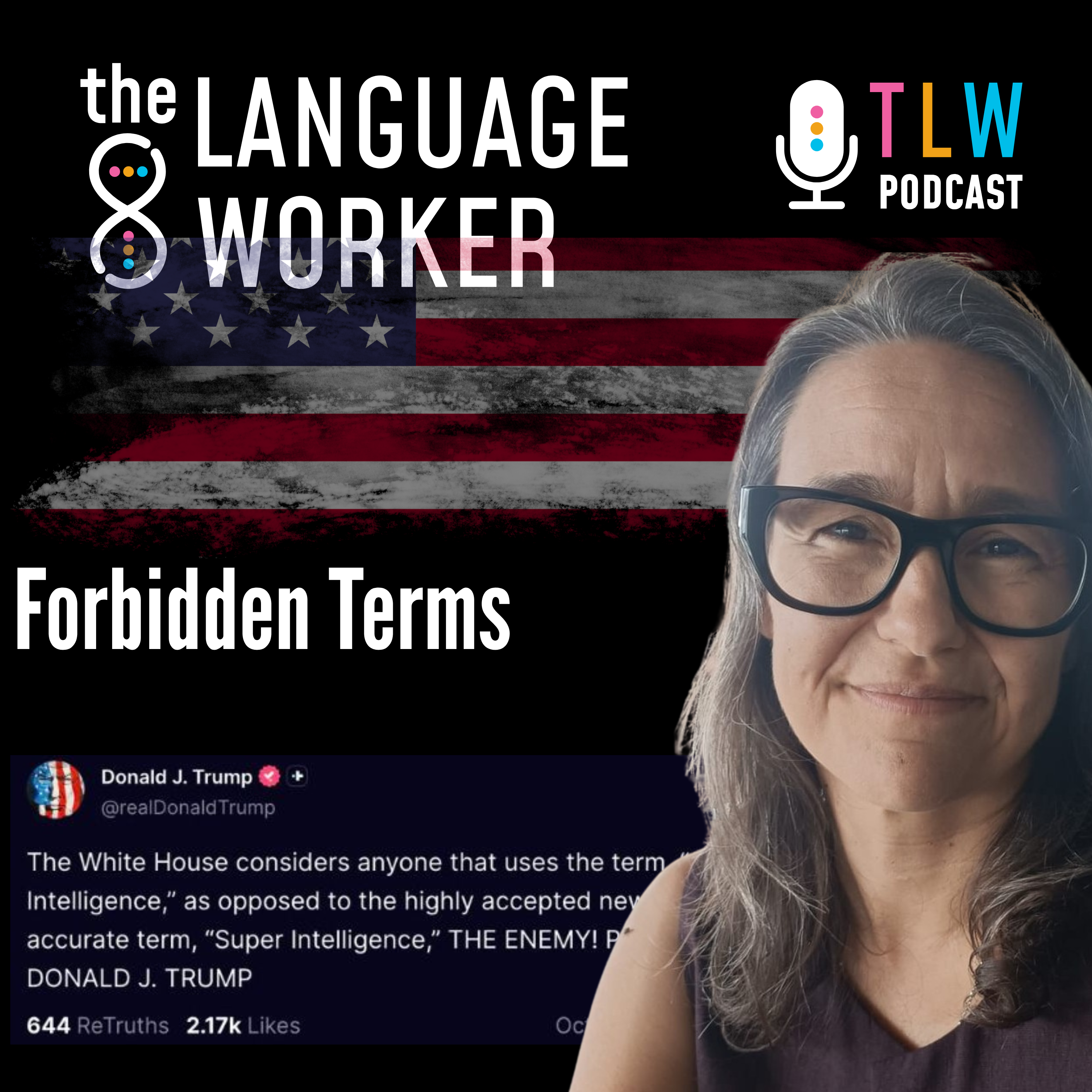
    Artificial Intelligenge becomes SuperIntelligente - Forbidden Terms

    Got something to say to this podcast? Send a voicemail, and you might hear yourself on the next episode! Common terminology status values include preferred, admitted, deprecated, and forbidden. In the context of Language Services, this helps translators, writers, and reviewers decide which term to use. A glossary shows you what term to use and what term not to use. That’s where forbidden terms come in: designations explicitly marked “do not use” or "forbidden" within a defined context. Imagine a company making this terminology decision: 🚫 Artificial Intelligence → ✅ Super Intelligence Adding the new designation isn’t enough. The glossary should explain where the replacement applies, why it was introduced, and what anyone dealing with content should use instead. Terminology reflects your brand and your communication choices, and... so many more things about you! #Terminology #Localization #AI #superintelligence #forbidden

    • Transcript
  • S7 · E7
    Tuesday · 8 min

    The Cost of Chaos: Terminology decisions are business decisions

    Got something to say to this podcast? Send a voicemail, and you might hear yourself on the next episode! Terminology decisions are business decisions and leaving them unmanaged can come at a cost. In this episode, I explore why terminology management matters and how inconsistent language can lead to repeated corrections, unnecessary translation costs, delays, and confusion for your customers. I also talk about why you need to create language assets before you start translating and localizing your content. From glossaries to termbases, language assets give your teams a shared foundation for making language decisions, rather than resolving the same questions in every project. Tune in to explore: The financial consequences of unmanaged terminology. Why terminology work belongs before translation. Which language assets help translators, reviewers, and content creators work toward the same goals. Shift from fixing recurring language issues to preventing them.

    • Transcript
  • S7 · E6
    August 4 · 7 min

    Terminology Workflow in Localization: Client Knowledge, Team Collaboration & Consistency

    Got something to say to this podcast? Send a voicemail, and you might hear yourself on the next episode! Terminology management doesn't happen in isolation. In this episode of The Language Worker, we look at the importance of the workflow. From understanding the client's industry, their audience, their voice, and the materials they've already built (style guides, past translations, product documentation) before a single entry gets added to a glossary. Project managers, in-house terminologists, freelancers, and reviewers all need to be aligned, informed, and working from the same source of truth. Miscommunication at this stage slows things down, and it shows up in the final product. And ultimately, it comes back to service — not just to the client, but to the client's clients. Whether the project is simple or highly complex, the goal of a solid terminology workflow is the same: consistency, clarity, and content that genuinely serves the end reader, in every language. Whether you're a freelancer building your first glossary or a project manager coordinating a multilingual team, this episode is here to tell you that no matter the scale of the project, you need a glossary!

    • Transcript
  • S6 · E13
    July 20 · 25 min

    Working with Languages and Paid Media

    Got something to say to this podcast? Send a voicemail, and you might hear yourself on the next episode! In this episode of The Language Worker, I sit down with Sonia, a German and Italian native speaker and performance marketing specialist for small and medium-sized businesses. She combines her linguistic skills with hands-on expertise in Google Ads, Microsoft Ads, Meta, and LinkedIn to help SMEs scale sustainably across markets. We talk about how Sonia manages and optimises multi-channel ad campaigns, what meaningful performance tracking looks like in practice, and how she turns reporting into clear, actionable insights for her clients. She also shares cool stories about her multilingual upbringing and how her career path has been evolving. If you’re a language professional, marketer, or SME owner who wants to market products and services more efficiently in an ever-changing digital landscape, this conversation will give you concrete ideas on how to align language, data, and paid media.

    • Transcript
  • S7 · E4
    July 7 · 11 min

    Terminology Governance: How to Turn Company Language into a Strategic Asset

    Got something to say to this podcast? Send a voicemail, and you might hear yourself on the next episode! The real backbone of sustainable language operations is terminology governance. We need to look beyond term lists and databases to explore how organizations can build clear decision‑making structures around their key concepts, who should own what, and how to keep everyone aligned from marketing and product to localization and technical communication. Before we implement a terminology strategy, we must think about practical governance models, typical stakeholder roles, and approval workflows, connecting them to the everyday reality of translators, terminologists, and LSPs. What goes wrong when governance is missing? You tell me! What starts working when terminology becomes a managed corporate asset instead of an afterthought? It's a terminology dream you can make possible. If you work in the language industry and want your terminology to stop being a firefight and start being a strategic tool, this episode is for you.

    • Transcript
  • S7 · E3
    June 23 · 8 min

    Corporate Terminology: Why Your Words Matter More Than You Think

    Got something to say to this podcast? Send a voicemail, and you might hear yourself on the next episode! In this episode of The Language Worker, I talk about corporate terminology in simple, practical terms: what it is, how it shows up in your daily work, and why it’s not “just jargon” if you treat it with care in every scenario. From internal emails and training materials to contracts, marketing copy, UX text and multilingual content, the words your organization chooses shape how people understand what you do and how you work together. I connect this to terminology management because having a simple term list or termbase helps your brand voice stay consistent across products, services, and languages. Inconsistent terminology creates problems for teams, clients, and translators, especially when you’re working on localization and global content. A set of agreed-upon terms can reduce misunderstandings, speed up reviews, improve translation quality, and even strengthen your SEO content strategy by aligning keywords with how you actually talk about your business. Every company (large or small, public or private, product or service) should look at terminology as part of strategy, not as an afterthought at the end of the content or translation process. If you care about clear communication, customer experience, international markets, or being found online for the right keywords, this one is for you.

    • Transcript
  • S6 · E12
    June 14 · 23 min

    B2B Case Studies - A way to stand out and build credibility (for language freelancers and companies)

    Got something to say to this podcast? Send a voicemail, and you might hear yourself on the next episode! In this episode of The Language Worker, I talk to down with Italian translator and B2B case study writer Chiara Vecchi, MA AITI, to explore how case studies can become one of the most powerful marketing assets in a language or B2B business. Drawing on her background as an English and German into Italian translator in beauty, cosmetics, medical, travel and hospitality, Chiara explains how she helps B2B brands showcase real-life client stories that resonate with Italian decision-makers and drive new business. We unpack what a B2B case study service actually looks like: from selecting the right clients to interview, through gathering information in a structured way, to writing polished narratives that can be repurposed across websites, blogs, newsletters and sales conversations. Chiara walks us through her process for stepping into the end client’s shoes, asking the right questions, and turning a successful project into a story that builds trust, proves ROI and positions her clients as the obvious choice in their market.

    • Transcript
  • S6 · E11
    May 17 · 32 min

    Over the Phone Interpreting: A New Path for Translators?

    Got something to say to this podcast? Send a voicemail, and you might hear yourself on the next episode! Interpreting is one of those jobs in the language Industry that are becoming more and more talked about. I invited Doris Pingi, an OPI - Over the Phone Interpreter - because I think it's about time to bring this profession to the forefront. I heard about it for the first time almost 20 years ago, while living in California, one of my clients was looking for OPIs to create a new team that would cater the needs of Portuguese speakers who needed linguistic support in the US. Talking to Doris was an amazing opportunity to learn more about this very particular skill from the point of view of someone who lives and breaths Language and Emotional intensity while living her professional dream. Buckle up, this gets real and intense.

    • Transcript
  • S6 · E10
    April 28 · 26 min

    AI, Translation and Quality: A Client‑Side View on Multilingual Content

    Got something to say to this podcast? Send a voicemail, and you might hear yourself on the next episode! How is AI changing the way companies think about translation, quality, and multilingual content? In this episode, I talked to Hristina Karagueorguieva, localization manager, to see what goes on before choosing tools, vendors, and workflows. We explore questions like: What really changes when a company starts using AI for translation instead of relying only on humans? How do you decide who should translate your content: freelancers, small agencies, or big providers? What do you need to have in place before you choose tools and partners, and how do you prepare if your company suddenly needs to grow into many new markets? I also ask Hristina what “good quality” means now that we expect basic things like spelling and grammar to be correct by default. We talk about why simply counting errors is no longer enough, how people actually read and feel content, and why we need to rethink quality so it reflects real user experience and business goals—not just word‑for‑word correctness.

    • Transcript
  • S6 · E9
    March 27 · 28 min

    A Tool to Help you Learn Languages - How can an App Help you?

    Got something to say to this podcast? Send a voicemail, and you might hear yourself on the next episode! This episode I bring together a language industry veteran and a software developer to explore how WordBox came about and how it changes the way we collect and truly learn new words in any language. Paul shares his early beginnings in the language space, reflecting on how his first steps in the industry shaped his life. Kirill talks about leaving Russia and moving to Barcelona, how that move changed his relationship with languages, and how the two of them eventually met there and now work side by side on WordBox to support learners around the world. They talk about how WordBox becomes a single, safe home for every unfamiliar word you want to keep. WordBox lets learners add words manually, via AI, or by exchanging lists with others, then dive into meanings, examples, synonyms, antonyms, and pronunciation, and finally review everything through flashcards, short-story contexts, and exercises.

    • Transcript
  • S6 · E8
    March 12 · 52 min

    SEO Crash Course - Learn SEO and get more clients

    Got something to say to this podcast? Send a voicemail, and you might hear yourself on the next episode! Learn SEO and make your content stand out immediately! I talked to SEO Translator Maja about how learning SEO changed her business and the services she can now offer to her clients. There are many agencies hired, many websites tested and discarded... Now, Maja takes control of her website and helps her clients do the same. Learn quick tips you can implement right now. Help potential clients find you and your freelance business! Use it for your website, your blog, or your LinkedIn profile.

    • Transcript
  • S7 · E1
    January 21 · 5 min

    Trends for freelancers in 2026: Tech, Collaboration, Expansion & Deep Expertise (translators)

    Got something to say to this podcast? Send a voicemail, and you might hear yourself on the next episode! Have you thought about the biggest trends shaping the language industry in 2026? I will break down four key trends that every freelance language professional and every LSP or content-focused company needs to watch closely this year: tech integration, collaboration, expansion, and deep knowledge. You will hear how increased tech integration and interactive learning tools are changing how linguists and companies work, train, and deliver multilingual content at scale. Rita explains why collaboration is accelerating, from LSP mergers to groups of freelancers forming “pretend companies” that stay independent while pooling resources, niche expertise, and capacity. This video also explores expansion: freelancers and companies diversifying services (subtitling, e-learning, game localization) and actively targeting new markets and direct clients around the world. If you are a freelance translator, subtitler, localization specialist, LSP owner, or a company relying on multilingual communication, this 2026 outlook will help you make smarter decisions about skills, services, and partnerships. Watch until the end, share your thoughts in the comments, and use these trends to position yourself or your organization for long-term success in the language business.

    • Transcript
  • S6 · E7
    Dec 16, 2025 · 42 min

    From Nurse to Medical Translator: How to Turn a Lifetime of Care into Language Work

    Got something to say to this podcast? Send a voicemail, and you might hear yourself on the next episode! In this episode, my guest is a former nurse who reinvented herself as a medical translator and communicator after health issues forced her to leave her career in its original format. She shares how a childhood steeped in first aid and Red Cross training led to decades in nursing across several countries, and how ending her career left her feeling completely lost until languages opened a new door. Kathrin explains how she niched down into medical and life sciences translation, built on medical English, clinical experience, and SEO‑savvy branding to become a specialist rather than a generalist translator.​ We also talk about her groundbreaking project “How to Speak Cancer”: a volunteer‑driven book and movement that makes cancer communication clearer for patients, caregivers, and medical communicators, now being translated into 18+ languages by 30+ volunteers. She also introduces MetTalks, her webinar‑meets‑podcast series on medical communication, and her new co‑authored book on making clinical trials more human and accessible.

    • Transcript
  • S6 · E6
    Dec 12, 2025 · 34 min

    From Languages to the Big Screen – A Life in Subtitling and Audiovisual Translation (Portuguese)

    Got something to say to this podcast? Send a voicemail, and you might hear yourself on the next episode! It’s fascinating to discover the stories behind the people we “only” bump into on social media. For years I knew that Rosário was the driving force behind Sintagma, but we had never actually sat down to talk calmly about how everything happened behind the scenes – and it was definitely worth the wait. In this episode, I sit down with Rosário Valadas Vieira, founder and director of Sintagma, one of the key names in subtitling and audiovisual translation in Portugal. We talk about her journey, how Sintagma was born, how the Portuguese multimedia industry has grown and reinvented itself, and how streaming platforms have transformed subtitling, dubbing and accessibility work. If you work with languages, audiovisual content, localisation, or dream of subtitling films and series, this conversation takes you right into the real backstage of the Portuguese market and shows you, without filters, the skills it needs today.

    • Transcript
  • S6 · E5
    Dec 1, 2025 · 28 min

    PM vs Vendor: Building a Real Bridge Between Freelancers and Language Services Providers

    Got something to say to this podcast? Send a voicemail, and you might hear yourself on the next episode! What is it like to be a Project Manager in the Language Industry? What really happens on both sides of the “PM vs vendor” relationship in the language industry? In this episode of The Language Worker, Rita talks with Gabriella (vendor, translator, agency owner) and Lucia (project manager) about how freelancers and LSPs can finally stop seeing each other as “us vs them” and start working as a real team. Through their joint podcast project, they share how their friendship began in an LSP, why Gabriella fully embraces the “vendor” role, and why Lucia is “the PM of PMs” thanks to her experience in project management, vendor management, sales, and account management. They also discuss how AI and tools like ChatGPT can support, not replace, human work, and how better communication can prevent blame, rants, and frustration on both sides. You will hear practical insights on: How PMs are often limited by company policies and why blaming them rarely solves anything. How freelancers can negotiate, ask questions, and think beyond per‑word rates (e.g. hourly rates for MTPE and revision). How their podcast is opening up previously “taboo” topics like referrals, NDAs, AI, and expectations between vendors, PMs, and clients. Perfect for freelance translators, PMs, vendor managers, and language professionals who want more transparency, empathy, and collaboration in the localization ecosystem.

    • Transcript
  • S6 · E5
    Nov 30, 2025 · 36 min

    From Law to Legal Translation: How to build a Flexible, Specialized Career (in Portuguese)

    Got something to say to this podcast? Send a voicemail, and you might hear yourself on the next episode! In this episode of The Language Worker, discover the inspiring path of Ana Dias, a legal translator who transitioned from practicing law to working full-time in translation—without ever leaving her legal background behind. Ana shares how a law degree became a powerful asset in her translation career, how she learned translation in practice, and why legal reasoning, precision, and cultural awareness are essential in her daily work. She also talks about diversifying beyond legal texts into sustainability, hospitality, and marketing, using creativity and curiosity to grow as a professional. This conversation is packed with insights on specialization, client relationships, word‑of‑mouth referrals, continuous learning, and the importance of intellectual humility for translators and interpreters.

    • Transcript
  • S6 · E4
    Nov 4, 2025 · 35 min

    Lemon Twist: A Management Tool for Freelancers

    Got something to say to this podcast? Send a voicemail, and you might hear yourself on the next episode! Ready to level up your freelance business? In this episode of The Language Worker Podcast, Rita Prazeres Gonçalves chats with Martina, co-founder of Lemon Twist, about turning project management pain points into real solutions for freelancers. Discover how Martina’s journey from freelance language professional to tech entrepreneur led her to develop Lemon Twist—a tailor-made TMS (Translation Management System) that helps solo translators and linguists manage projects efficiently, stay organized, and deliver top results to clients. If you want to make your freelance workflow smoother, work smarter (not harder), and explore the path from language expert to founder, this episode is for you!

    • Transcript
  • S6 · E3
    Oct 27, 2025 · 33 min

    Creative Translation: Where Words, Design, and Passion Meet (Episode in Portuguese - Tradução e Criatividade))

    Got something to say to this podcast? Send a voicemail, and you might hear yourself on the next episode! In this episode, I talk to Sara Reis, a specialist in creative translation, content writing, and linguistic solutions for tourism, marketing, and lifestyle brands. Explore Sara’s journey from childhood word lover to launching her own studio that fuses linguistic excellence with aesthetic design! Discover honest insights about building a brand, graphic design for translators, networking, and finding your niche in an evolving industry. With inspiration for freelancers and language professionals alike, this conversation proves why creativity and translation truly are two faces of the same passion.

    • Transcript
  • S6 · E2
    Sep 3, 2025 · 25 min

    Advances in AI Localization and NLP: Language Industry Technology

    Got something to say to this podcast? Send a voicemail, and you might hear yourself on the next episode! This episode dives deep into Olga Beravaya's journey from St. Petersburg to driving cutting-edge research and enterprise impact in California and beyond. Whether you work in translation, language services, or artificial intelligence, this in-depth conversation covers practical career progression, the role of knowledge graphs and machine translation, and strategic advice for business leaders embracing AI in global content strategy. Discover the latest trends in the language technology industry and insights into localization, NLP, and AI translation in this exclusive interview with Olga a leading expert currently spearheading innovation at Smartling.

    • Transcript
Showing 1–20 of 21 episodes