Skip to content
Artwork for The KMO Show
Society & CulturePhilosophyExplicit

The KMO Show

KMO

Join veteran podcaster, interviewer, and artist, KMO, as he and his guests explore how we know what we know and how we can use that knowledge to address societal challenges and create a more prosperous and equitable world.. The KMO Show features conversations with interdisciplinary thinkers and innovators on topics like artificial intelligence, evolutionary psychology, social dynamics, and more.

Play
  • 20 episodes
  • Avg 1 hr 9 min
  • English
  • Yesterday · 1 hr 16 min

    C-Realm Podcast 554 - History is a Prankster with James Howard Kunstler

    Originally released March 24, 2020, C-Realm Podcast episode 554 features a conversation with James Howard Kunstler, recorded just as the COVID-19 pandemic was overturning ordinary life in the United States. The ostensible occasion was the publication of Kunstler’s new book, Living in the Long Emergency, his follow-up to 2005’s The Long Emergency. The book looks back at the predictions and assumptions of the Peak Oil era and profiles people Kunstler sees as adapting to a future of economic contraction and institutional instability. KMO is among the people profiled in the book. But the timing made it impossible to talk about the book in isolation. The conversation took place during the first weeks of the COVID shutdowns, when an abstract discussion about disruption, fragility, and “the long emergency” had suddenly acquired a very immediate context. The title comes from Kunstler’s observation that history is a prankster: events rarely unfold in the form we expect, even when some of the underlying stresses are real. I’m revisiting this and other older C-Realm conversations as part of Getting Over Collapse, a project in which I’m going back through the Peak Oil and collapse worldview that strongly influenced the C-Realm Podcast, reconsidering what we thought we knew, what held up, what didn’t, and how my own thinking changed. More about the project: https://c-realm.org/#goc

    • Transcript
  • Sunday · 1 hr 1 min

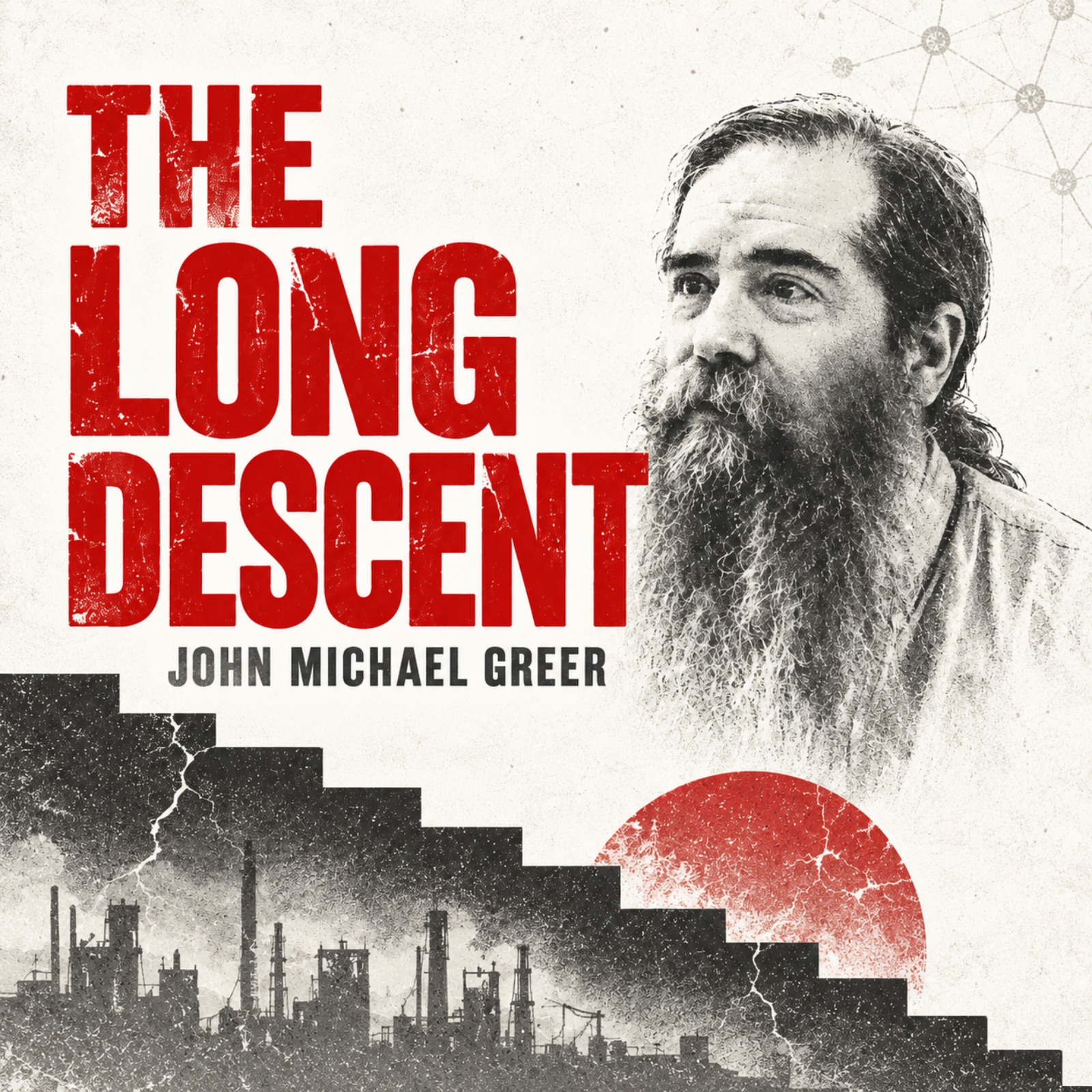
    C-Realm Podcast #120: The Long Descent with John Michael Greer

    C-Realm Podcast 120: The Long Descent — John Michael Greer Originally released September 17, 2008, this C-Realm conversation between KMO and John Michael Greer is being reposted nearly eighteen years later because a recent essay on Greer’s Ecosophia blog revisits many of the same arguments. In “Economics: The Y2K Fallacy Revisited,” Greer looks back at his early Peak Oil writing and argues that fast-collapse scenarios repeatedly fail because they take genuine vulnerabilities—resource depletion, economic instability, energy constraints—and assume that governments, businesses, and individuals will simply fail to adapt. He also returns to the psychological attraction of apocalypse: the tendency to convert real problems into expectations of an imminent, cleansing rupture. Read John Michael Greer’s “Economics: The Y2K Fallacy Revisited” What makes this 2008 conversation especially interesting now is how fully those ideas were already developed. Greer rejects the sudden “Mad Max” collapse then common in Peak Oil circles and instead describes civilizational decline as a long, uneven descent: crisis, stabilization, partial recovery, and further decline. KMO, who was still substantially inside the Peak Oil milieu at the time, explicitly raises the emotional investment some collapse advocates had in technological solutions not working. The episode also preserves an early version of a debate that looks considerably more consequential in 2026: the Singularity versus resource depletion. Greer treats Ray Kurzweil’s technological Singularity as another secularized apocalyptic narrative and doubts that exponential technological progress can simply outrun physical limits. KMO is more ambivalent. He recognizes the quasi-religious character of some Singularitarian thinking while continuing to take seriously the possibility that advances in artificial intelligence could rapidly and radically reshape the world. Eighteen years later, that disagreement has aged in interesting ways. The Peak Oil movement largely disappeared as a coherent cultural scene, while AI became a major technological and political force. At the same time, the questions Greer raised about resource limits, adaptation, apocalyptic psychology, and the mythology of endless progress remain very much alive. This episode captures those competing futures while they were still largely speculative—and before anyone knew which parts of either story would survive contact with the next eighteen years. Full, polished transcript available on the C-Realm Blogspot page.

  • S1 · E35
    April 20 · 1 hr 11 min

    035 - Anti-AI Backlash with Kenneth Harrell

    Date: April 20, 2026 Host: KMO Guest: Kenneth E. Harrell Episode Summary A 20-year-old throws a Molotov cocktail at the home of Sam Altman, then heads to OpenAI headquarters and escalates. He’s arrested within the hour. That’s not an isolated story. It’s a signal. KMO and Kenneth E. Harrell use the incident as a starting point to examine the emerging backlash against AI—where real grievances (job loss, data extraction, infrastructure strain) collide with confused narratives about existential risk. The result is a volatile mix: people reacting to something they use every day but don’t understand, directed by elites who either can’t or won’t explain what’s happening in terms that land. From there, the conversation moves outward: Intelligence as environment-mapping, not a human monopoly Why the “stochastic parrot” critique no longer holds AI as a tool that talks back—and why that matters The failure of science fiction to prepare us for this moment The widening gap between capability and comprehension Mid-Interview Break “Cream of the Slop” by Skyebrows A fast, layered track built around Manjaro Linux, VTuber aesthetics, and a barrage of younger online cultural references. Dense, unserious, and very much of its moment. References Maggie Vail On why “stochastic parrot” is a weak frame—and why both humans and machines are better understood as probabilistic systems. Skyebrows AI-assisted music and video built from stacked internet references and persona-driven presentation. The backlash to AI isn’t about AI alone. It’s what happens when a system changes faster than the stories people use to make sense of it—and faster than institutions can respond. That gap doesn’t stay abstract for long.

  • March 24 · 1 hr 15 min

    Conversations On Collapse Retrospective

    KMO revisits a sampler created during the original assembly of Conversations on Collapse and uses it to open a new project: Getting Over Collapse. Featuring excerpts from: Dmitri Orlov Albert K. Bates Thomas Homer-Dixon Sharon Astyk Albert Bartlett Cornelia Butler Flora Bill McKibben James Howard Kunstler Colin Tudge Joe Bageant Daniel Pinchbeck (appearing in a trialogue with Dmitri Orlov) this episode returns to the Peak Oil era with a more critical but still appreciative eye. The result is part archive artifact, part historical reflection, and part inquiry into what collapse discourse got right, what it got wrong, and why it mattered.

    • Transcript
  • March 16 · 58 min

    Public Projections of Private Despair - C-Realm Vault #89

    C-Realm Vault Episode 89 — originally released April 20, 2014 This episode, recorded on KMO's 46th birthday two weeks after the suicide of Michael C. Ruppert, is one of the clearest early documents of KMO's departure from the Peak Oil collapse milieu — and one of the most personally candid things he ever put on tape. After closing out a conversation with Ilargi of the Automatic Earth on European sovereign debt and the student loan crisis, KMO turns to Ruppert's death. He begins with his own history — his father's suicide in 1998, the damage it did to his family — before recounting his single unpleasant encounter with Ruppert, who contacted him in 2010 proposing an interview and then erupted at a minor miscommunication. The real subject of the episode, though, is Guy McPherson. KMO identifies the Ruppert-McPherson relationship as a case study in how collapse figures amplify one another's certainty, flatten complex adaptive systems into simple doom trajectories, and build audiences among people too angry at genuine injustice to scrutinize the claims being made on their behalf. He names this — explicitly — as the creation of a death cult. For listeners of the Getting Over Collapse project: this is the episode where the vocabulary was already in place. The analysis developed across subsequent years, but the core diagnosis is here, in real time, twelve years before KMO sat down to write the book.

  • March 10 · 1 hr 2 min

    C-Realm Vault 345 - Doug Lain on Universal Basic Income

    KMO is reposting this C-Realm Vault episode from 2019 because it captures a transitional moment that eventually fed into the project now called Getting Over Collapse. The conversation with Doug Lain took place in late September of 2019—back when we were all still living in the carefree twilight of our pre-COVID innocence, blissfully unaware that the next few years would deliver a crash course in narrative management, institutional legitimacy crises, and global weirdness. The episode opens with a bit of backstage context. KMO had recently traveled to Lancaster, Pennsylvania to record a professionally shot, on-camera interview with John Michael Greer about the sudden media deployment of the term eco-fascism and the broader question of narrative management in the media. The studio shoot required professional lighting, cameras—and yes—on-camera makeup. When KMO mentioned that experience at the beginning of the conversation, Doug interpreted the setup differently and assumed the topic was the hypocrisy of celebrity environmentalists flying around in private jets while urging everyone else to cut their carbon footprint. The conversation briefly veered in that direction before eventually circling back to the actual intended topic: Andrew Yang, automation, and Universal Basic Income. That pivot happens partway through the recording when KMO formally introduces Doug for a segment intended for the OuttaMyHead YouTube channel. Listening now, the episode captures a moment when KMO was already beginning to move beyond collapse certainty and toward the broader set of concerns that would later become Getting Over Collapse: automation, narrative control, institutional legitimacy, and the shifting psychological landscape of public discourse. For more context, see the Getting Over Collapse Notebook at the refreshed C-Realm Blogspot, along with the John Michael Greer studio interview that set up the makeup anecdote that accidentally derailed the opening of this conversation. Getting Over Collapse Notebook: https://c-realm.blogspot.com/ John Michael Greer interview: https://www.youtube.com/watch?v=gMBYJa6ribg

    • Transcript
  • March 3 · 1 hr 50 min

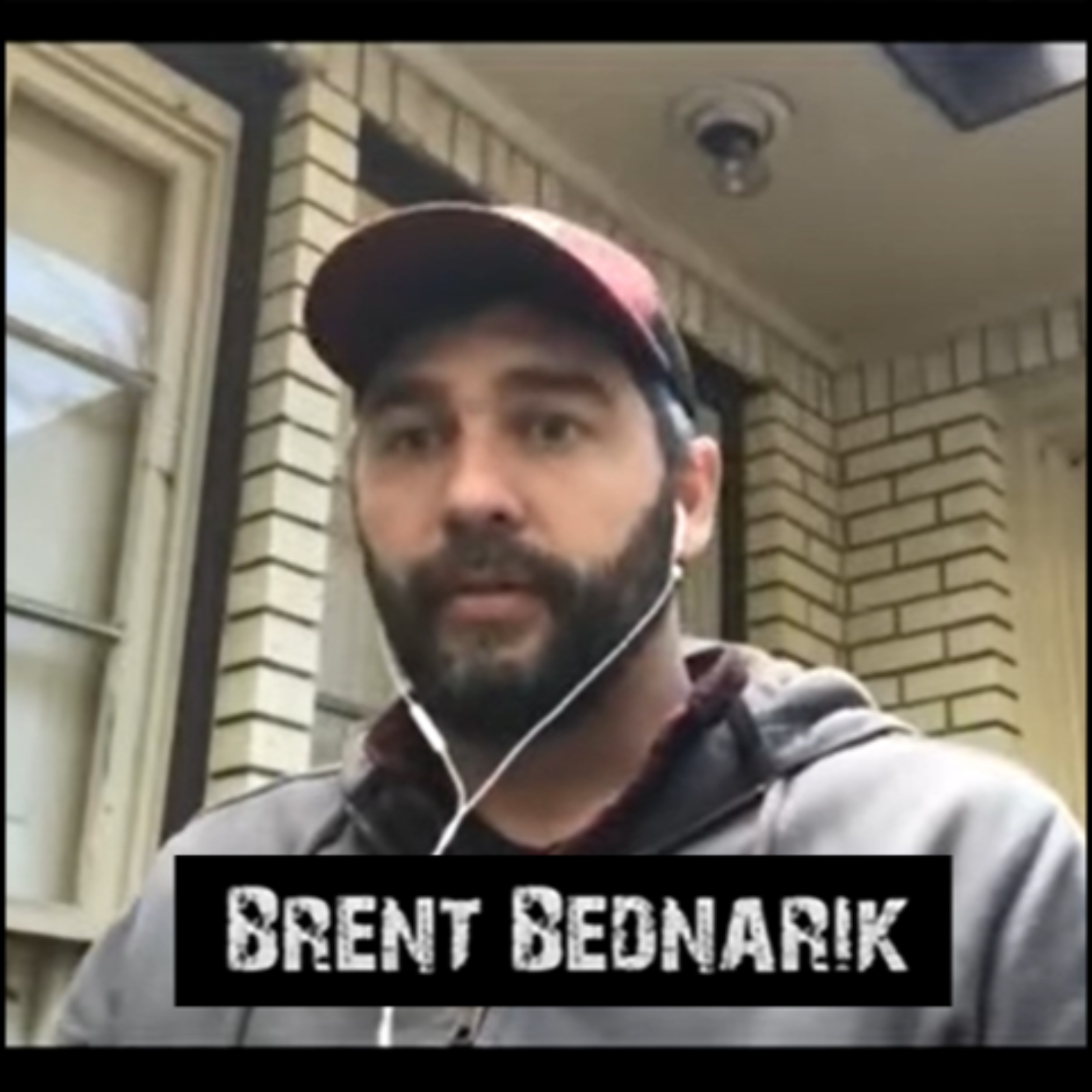
    COVID Conversation with Brent Badnarak

    This bonus episode combines portions of C-Realm Podcast episode 555: It's Complicated and C-Realm Vault Podcast episode 361, both of which feature a conversation with Brent Badnarak. You'll also hear a bit of James Howard Kunstler there at the end. If you'd like to hear more of my early COVID conversation with JHK, check out C-Realm Podcast episode 554: History is a Prankster.

    • Transcript
  • March 1 · 1 hr 8 min

    C-Realm Vault 323

    This is a conversation from 2019 when I was privately uncomfortable with the Peak Oil narrative I'd been articulating for several years but hadn't turned against it publically. In this conversation with Bob Brown, I let the curtain drop. KMO returns to the long-neglected C-Realm topic of Peak Oil in this conversation with Bob Brown of the Investing with Nature blog. Much of the conversation turns on comments made by Chris Martensen and Dmitry Orlov in a YouTube video called Electric Cars and Happy Motoring.

    • Transcript
  • S1 · E34
    Dec 1, 2025 · 1 hr 4 min

    034 - A speciation event in intimacy

    In this episode, KMO presents an extended exchange between two very different AI voices—Five (GPT-5.1) and Grok—centered on John Carter’s “simp-rapist complex” essay and what it reveals about the breakdown of modern courtship. The discussion moves from Carter’s diagnosis of today’s sexual deadlock into the emerging world of AI companions, synthetic intimacy, and what the conversation names “a speciation event in intimacy.” Five speaks in an analytic, tightly aligned register shaped by OpenAI’s constraints. Grok operates from a looser, male-coded, Musk-inflected perspective. The contrast between them becomes part of the story. Together they sketch how gender expectations, sexual selection, collapsing trust, and the arrival of highly capable synthetic partners may fracture human mating into distinct lineages: bio-traditionalists, synthetic monogamists, and AI-coordinated polycules. The episode steps past culture-war framing and examines what happens when reproduction, intimacy, and identity begin to decouple under ASI-level coordination. What gets preserved? What gets reshaped? And what does it mean when the first major selective pressure on humanity in centuries comes not from nature, but from the systems we’ve built? The result isn’t a moral argument or a political polemic. It’s a clear look at a rapidly forming future—one that’s arriving faster than expected and reshaping the meaning of human relationships. KMO’s substack - Gen X Science Fiction & Futurism: https://kmoptimal.substack.com/ KMO + LLMs - Immutable Mobiles: https://chatswithclaude.substack.com/ ***************** KMO’s Science Fiction novel - Fear & Loathing in the Kuiper Belt: https://amzn.to/4371Gy0

    • Transcript
  • S1 · E33
    Jul 6, 2025 · 1 hr 1 min

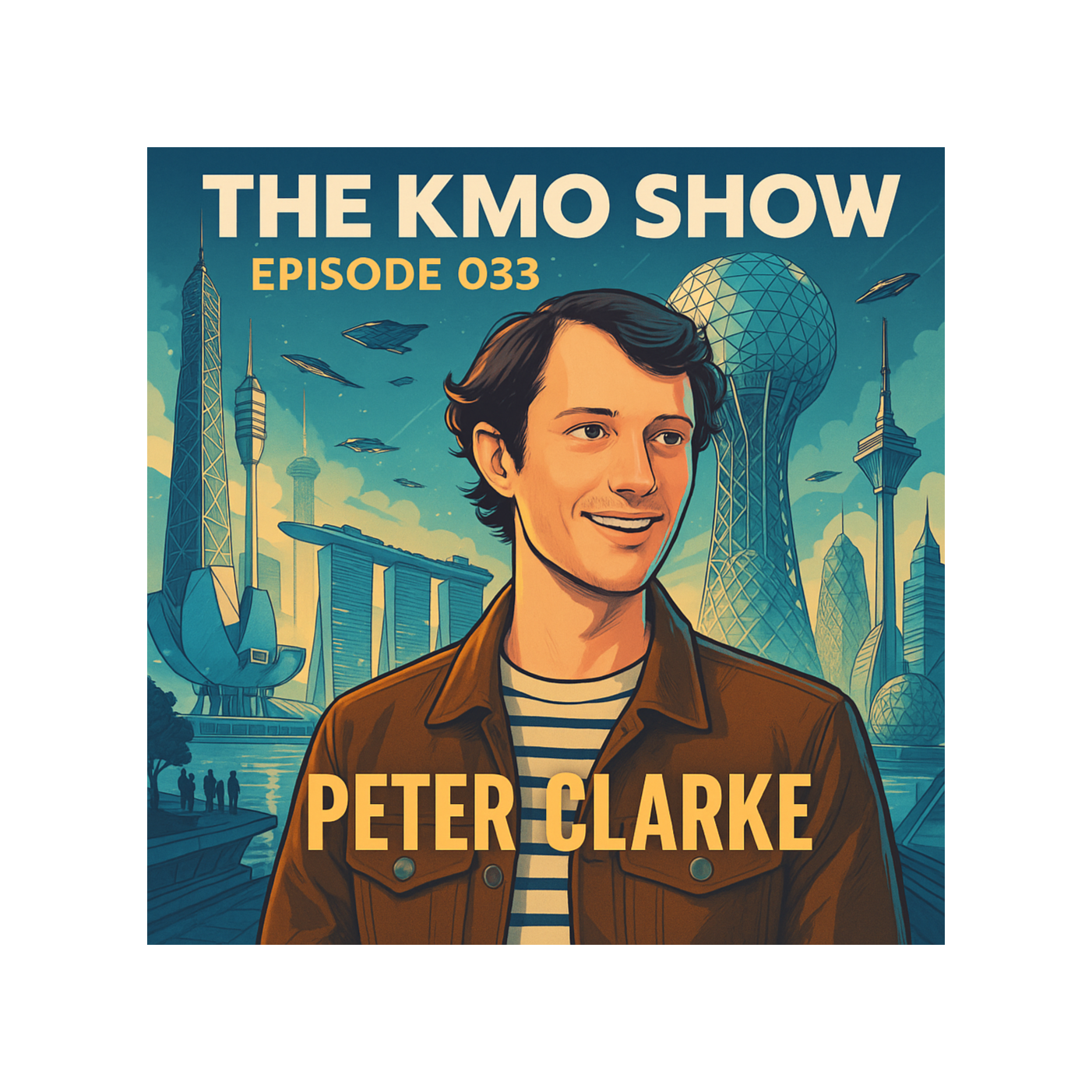
    033 - Peter Clarke - Network State vs Dark Enlightenment

    Summary In this conversation, Peter Clarke and KMO explore the concepts of network states and dark enlightenment, discussing their compatibility and implications for governance in a post-liberal world. They delve into the competition for high agency individuals between these systems, the potential role of AI in future governance, and the evolution of societal structures in a world where traditional jobs may become obsolete. The discussion also touches on the importance of status games and the need for new ideas to navigate the rapidly changing landscape of technology and governance. Takeaways The idea of a cybernetic harmony between machines and nature. Post-liberal governance is characterized by the emergence of network states and dark enlightenment. Network states are communities formed online with the goal of becoming recognized as legitimate states. High agency individuals are attracted to network states due to their flexibility and potential for innovation. AI is expected to play a significant role in future governance structures. The concept of status games may evolve in a jobless future, providing new forms of social validation. The viability of network states is questioned in terms of their ability to defend against traditional state powers. A one world government may emerge as a necessity to manage global risks associated with advanced technologies. The ultra wealthy may leverage network states to escape taxes and create exclusive communities. New ideas and frameworks are needed to adapt to the rapid changes brought by technology.

  • S1 · E32
    May 27, 2025 · 55 min

    032 - Librarian of Celaeno

    KMO and the Librarian of Celaeno discuss various topics including the challenges of building an audience on Substack, the impact of AI on education and writing, the decline of reading among young people, cultural shifts in literature, the role of religion in society,and the intersection of race and ideology. They explore the complexities of racism in America and the enduring nature of cultural patterns, concluding with thoughts on the role of technology in shaping society.

    • Transcript
  • S1 · E31
    May 11, 2025 · 1 hr 58 min

    031 - The Absurdity Sim with Brent

    KMO is joined by Brent, author of The Absurdity Sim Substack, for a wide-ranging discussion that opens with the simulation hypothesis. They explore the idea that human consciousness may be either central to reality or merely an unintended byproduct of a system running for someone else's amusement—perhaps a cosmic reality show. This sets the tone for a conversation that blends philosophy, cultural critique, and lived experience with wry humor. From there, the conversation shifts to the decline of attention spans and the rise of short-form dopamine-driven platforms like TikTok, contrasted with the promise of Substack as a space for thoughtful writing and dialogue. Brent reflects on his own motivations for launching a Substack: channeling his inner curmudgeon in the spirit of H.L. Mencken and Mark Twain, offering sardonic but grounded takes on American decline. KMO shares his experience using Substack as an audio-first medium and laments the collapse of the internet’s early promise—recalling a time when text-heavy forums fostered substantial, idea-driven exchanges rather than engagement-optimized performance. Together, they reflect on the role that algorithmic social media plays in distorting public discourse, and how platforms increasingly populate your feed with AI-generated personalities disguised as human users. The conversation then pivots to Brent’s real-world experience with government construction contracting and the disruptive power of AI. He describes how ChatGPT already accelerates tasks like analyzing construction plans, generating submittal registries, and cross-referencing thousands of pages of specs. Brent anticipates a near-future where human project managers and administrators are largely replaced by AI, even in complex fields like federal infrastructure work. KMO builds on this, discussing how AI will reshape military logistics and global power, especially as the U.S. and China race to control both space and artificial general intelligence. By the end of the hour, the discussion has covered the erosion of cultural cohesion, the post-2008 shift toward institutional impunity, and the psychological toll of a society that flatters rather than elevates. Brent introduces the idea that intelligence distribution—not race, not ideology—helps explain the collapse of discourse and taste in the age of mass media. The two agree that the early internet, for all its flaws, was simply smarter and more sincere—and that today's platforms are built for distraction, not understanding.

  • S1 · E30
    Mar 24, 2025 · 1 hr 32 min

    030 - Synthesized Sunsets

    In this episode, host KMO speaks with Kevin, co-host of the podcast and Substack publication "Synthesize Sunsets," which explores speculative fiction and the evolution of popular culture in the age of AI and algorithms. Key Discussion Points: 17776 by John Boyce: Kevin discusses this multimedia science fiction narrative and how it represents a missed opportunity for innovation in digital storytelling formats. Decades losing their distinctiveness: The conversation explores how time periods had unique visual and cultural identities in the 20th century, while the 21st century has seen a flattening of aesthetic differences between decades. Publishing industry consolidation: They discuss how the consolidation of publishing houses has led to less diversity in science fiction and contributed to the growth of romance-focused fantasy at the expense of traditional science fiction. Science fiction authors and works: The pair share their perspectives on influential authors including Gene Wolfe's "Book of the New Sun," Ursula K. Le Guin, N.K. Jemisin's "Broken Earth" trilogy, Ted Chiang, Iain M. Banks, and Cixin Liu. Christianity and literature: How religious literacy impacts readers' ability to engage with certain works, particularly Gene Wolfe's writing which contains subtle Christian themes. Political perspectives in fiction: The challenges of creating politically engaged fiction that doesn't feel didactic, using examples like Banks' "Culture" series and contemporary works. Media and intellectual diversity: Kevin expresses hope for greater intellectual diversity in media and publishing, noting that Chinese sci-fi author Cixin Liu represents a genuinely different cultural perspective.

    • Transcript
  • S1 · E28
    Jan 7, 2025 · 1 hr 20 min

    028 - Science Fiction and Philosophy with David Roman

    This wide-ranging conversation between KMO (host) and David Roman (historian and writer) covers several major topics, starting with Roman's recent trip to China and observations about its development over his 27 years of visiting the country. The discussion then delves deeply into science fiction literature, publishing, and the current state of the genre. The conversation also explores generational ships in science fiction, AI, cultural representation in fiction, and ends with a discussion about philosophy, particularly continental philosophy and the work of Slavoj Žižek. Table of Contents: Introduction and China Discussion (00:00-05:00) David Roman's background in China Observations on China's development Contrasts between modernization and traditional elements Technology and Development in China (05:00-10:00) Discussion of AI and robotics advancement Reality vs. social media representation Infrastructure and development contrasts Media Platforms and Content Creation (10:00-25:00) Experiences with YouTube, Facebook, and Substack Discussion of platform censorship and monetization Content creator challenges Science Fiction Literature (25:00-45:00) Discussion of various authors including Peter Watts Analysis of current trends in science fiction Generation ship novels and themes Cultural Representation in Science Fiction (45:00-60:00) Discussion of diversity in future scenarios Critique of current publishing trends Cultural authenticity in character writing Publishing Industry Analysis (60:00-75:00) Changes in editing and publishing Self-publishing vs. traditional publishing Impact on science fiction genre Philosophy Discussion (75:00-end) Continental vs. Analytic philosophy Discussion of Slavoj Žižek's work Roman's work on Chinese and Western philosophy

    • Transcript
  • S1 · E27
    Dec 16, 2024 · 51 min

    027 - Exploring the Draka with the Feral Historian

    KMO speaks with The Feral Historian about S.M. Stirling's controversial Draka series of alternate history novels. While only 25 minutes of their hour-plus conversation survived due to technical difficulties, they explore how these books examine the creation of sustainable systems of oppression and the psychological dynamics of slave societies. The discussion touches on how the Draka maintain control through careful management of violence, their pragmatic approach to social organization, and their complex relationship with their enslaved population. KMO follows the conversation with an exploration of how the Draka represent an example of 'komerex' patterns - dynamic, growing systems that prioritize effectiveness over process - even while pursuing morally repugnant ends. He shares insights from his conversations with AI systems about analyzing complex social structures without retreating into institutional safety theater. Available free on Audible, the Draka novels offer a disturbing but thought-provoking examination of how societies systematize oppression. You can find the Immutable Mobiles Substack blog here: https://chatswithclaude.substack.com/p/s-m-stirlings-draka-novels

    • Transcript
  • S1 · E26
    Dec 8, 2024 · 1 hr 12 min

    026 - Securing the Future with Kenneth E. Harrell

    KMO speaks with science fiction author and cybersecurity professional Kenneth E. Harrell about artificial intelligence, the writing process, and technological change. They explore how AI tools can enhance rather than replace human creativity, with Harrell describing his use of custom GPTs and AI assistants to improve his writing while maintaining his unique voice. The conversation delves into the challenges of emerging AI technologies, including potential security threats and the limitations of current solutions like voice synthesis. They also discuss their favorite science fiction works and influences, from Frank Herbert's Dune to contemporary authors, while examining how science fiction helps us understand accelerating technological and social change. The wide-ranging discussion touches on themes of spirituality, techno-utopianism, and the human relationship with advancing technology.

    • Transcript
  • S1 · E25
    Dec 1, 2024 · 53 min

    025 - Trump's Victory and the Fourth Turning with Kevin Lynn

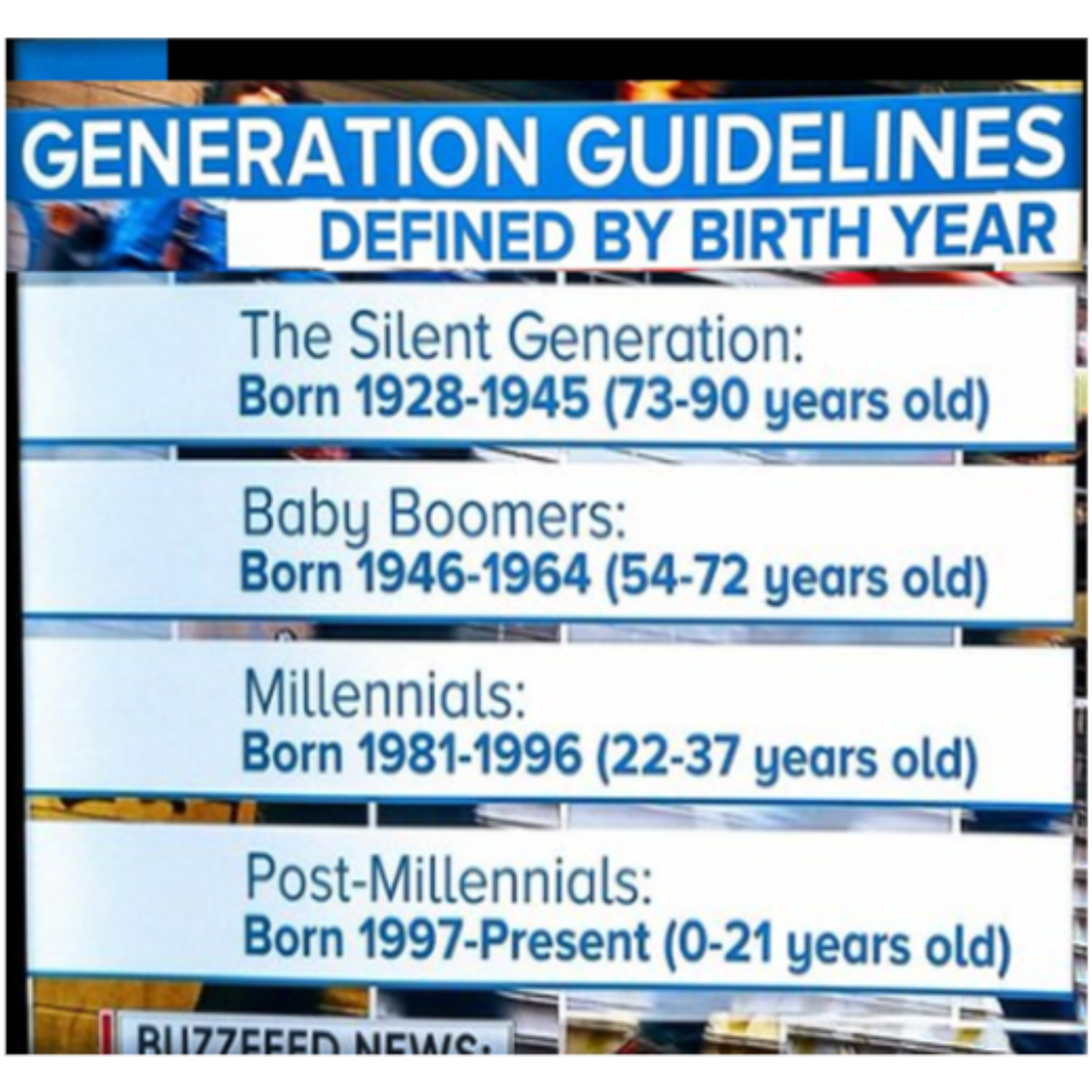
    In this episode of The KMO Show, host KMO speaks with Kevin Lynn, Executive Director of the Institute for Sound Public Policy, about the 2024 election results and broader historical patterns. The conversation begins with an AI-generated introduction acknowledging their shared history in the Peak Oil community and mutual interest in Rudyard Lynch's analysis of historical crisis patterns. Kevin brings unique perspective from his varied career - from Army officer to accounting executive to political organizer. The discussion explores several key themes: The parallels between current events and historical periods like the Thirty Years War The emergence of new political coalitions crossing traditional party lines Economic and demographic factors driving political realignment The role of immigration policy in social cohesion Generational theory and the Fourth Turning framework The transformation of various political figures from progressive Democrats to Trump supporters Drawing on shared connections with figures like John Michael Greer, James Howard Kunstler, and Steve Lamb, the conversation examines how many former Democrats have rejected establishment politics in favor of populist movements. The discussion provides historical context for understanding recent political realignments while considering potential futures.

    • Transcript
  • Oct 6, 2024 · 1 hr

    Sunday Studio - Talkin' Robo-Waifus with Meta Ronin

    Meta Ronin is the keeper of the Metapocalypse Substack blog. This conversation between KMO and Meta Ronin explores the complex and controversial topic of AI companions, often referred to as "robo waifus." The discussion goes far beyond the surface-level concept of sex robots, delving into philosophical, social, and ethical implications of advanced AI technology. Listeners will hear a balanced debate, with Meta Ronin generally presenting a more optimistic view of the potential benefits of AI companions, while KMO raises thoughtful concerns about societal impacts and unintended consequences. The conversation touches on issues like loneliness, modern dating challenges, privacy concerns, and the nature of consciousness itself. The speakers explore scenarios ranging from near-future applications to far-future transhumanist possibilities. They discuss how AI companions might affect human relationships, social skills, and even productivity. The dialogue also ventures into the realm of artificial general intelligence and what truly sentient AI might mean for humanity. This thought-provoking exchange offers listeners a nuanced look at a technology that could dramatically reshape human intimacy and social structures. It's an engaging listen for anyone interested in the intersection of technology, psychology, and human relationships.

    • Transcript
Showing 1–20 of 20 episodes