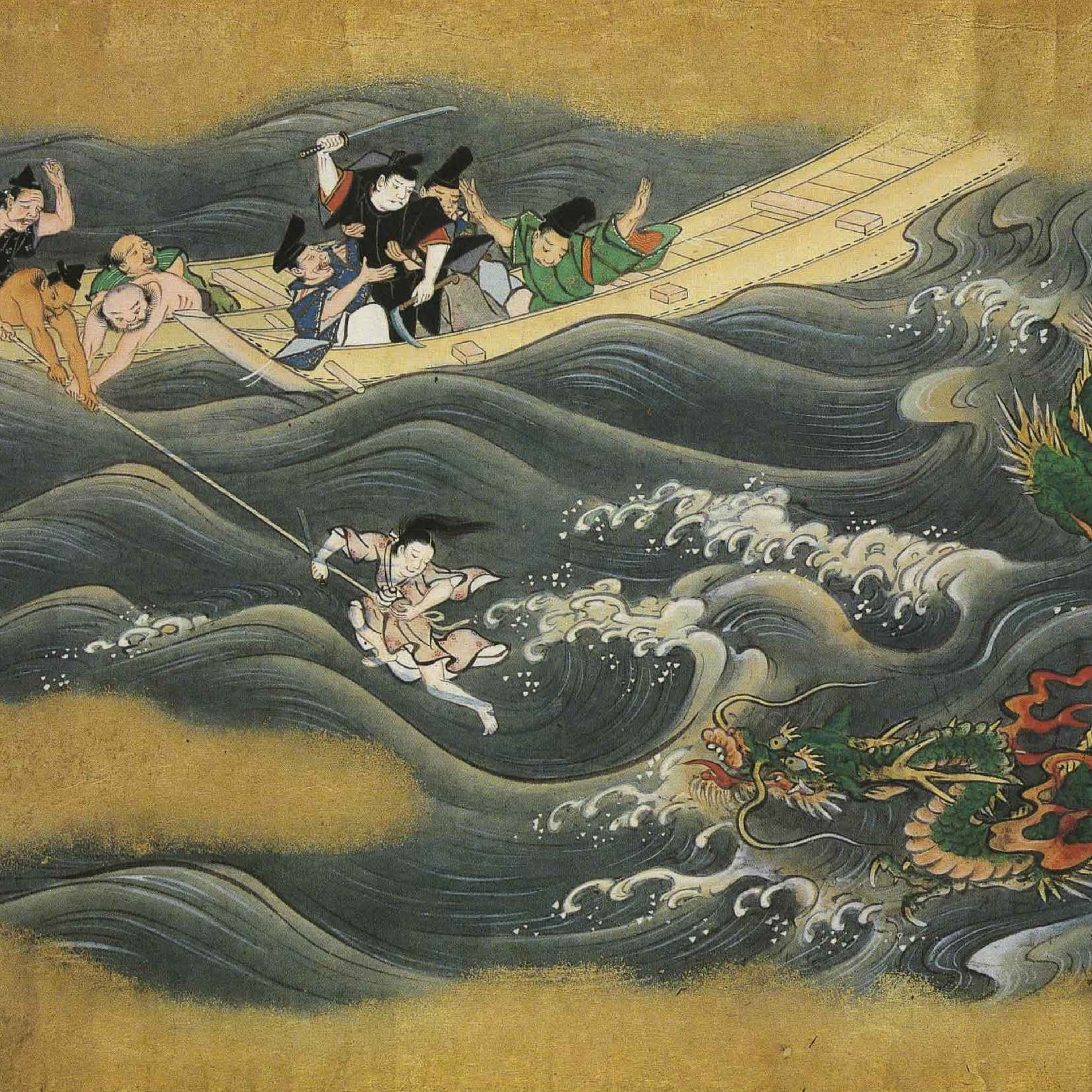
China as #1 in Japanese Literature: “Taishokan” [PREVIEW] (Kōwaka ballad, by 1553)
Next in our ongoing series ReOrient-ing early modern literature across Eurasia, we discuss the most widely visually represented of the sixteenth-century Japanese short-form ballads known as kōwaka, which arguably surpassed the noh theatre for patronage among the warrior elite of Japan’s age of civil war. First appearing in performance records at the height of the Tally Trade (勘合貿易) with China—whereby the military ruler of Japan (like the shogun Ashikaga Yoshimitsu or the warlord Toyotomi Hideyoshi) accepted investiture as King of Japan from the Emperor of China in return for various samurai-bourgeois clans like the Hosokawa and the Ōuchi receiving trading rights in their designated port of Ningbo—this story legendarily depicts the founder of the Fujiwara courtier family (representative here simply of the Japanese elite) proudly marrying his daughter to the Emperor of China at the latter’s request. He is “overwhelmed at the honor of having the Emperor of the Great Country of the world for a son-in-law, despite being a mere subject of the Emperor of a small country.” This reflects the standard medieval Japanese worldview in which there are three main countries in the world: Japan which is a “small country on the margins” (辺土の小国), the Great Country of China, and India, which as the source of Buddhism may or may not be even greater than China. An adventure ensues involving a precious relic stolen by demonic forces, among whom are supposedly degenerate, northern nomad races according to a new, early-modern, quasi-racist logic, but one that is precisely opposite to that of the Japanese empire, in which everything Chinese was discredited and the Mongoloid, nomadic, and Altaic was elevated as the ideal. Here, by contrast, Chinese heroes are the most noble and orderly (even though they make mistakes), and they possess advanced technology that Japanese can only dream of. Many striking things to see in this glimpse of a different worldview from another time. Hosted on Acast. See acast.com/privacy for more information.