Skip to content
Artwork for The John Batchelor Show
NewsSociety & CultureArtsBooks

The John Batchelor Show

John Batchelor Show.

The John Batchelor Show is a hard news-analysis radio program on current events, world history, global politics and natural sciences. Based in New York City for two decades, the show has travelled widely to report, from the Middle East to the South Caucasus to the Arabian Peninsula and East Asia.

Play
  • 945 episodes
  • Avg 22 min
  • English
Counted on this page — what you have heard stays on this device, so it is not something the list can be paged by.
  • S8 · E1290
    August 17 · 37 min

    S8 Ep1290: Gary Rivlin — Multi-Part, Part One: Gary Rivlin, author of AI Valley: Microsoft, Google, and the Trillion-Dollar Race to Cash In on Artificial Intelligence, explores the origins and personalities driving the modern artificial intelligence revolution. Rivl

    Gary Rivlin — Multi-Part, Part One: Gary Rivlin, author of AI Valley: Microsoft, Google, and the Trillion-Dollar Race to Cash In on Artificial Intelligence, explores the origins and personalities driving the modern artificial intelligence revolution. Rivlin begins by demythologizing AI, focusing on central figures such as Reid Hoffman, a polymath whose childhood obsession with strategy games and thirst for human connection led him to co-found LinkedIn and become a premier venture capitalist. Hoffman represents the bloomer perspective, an optimist who sees AI as a co-pilot to amplify human intelligence. The narrative highlights the interconnectedness of Silicon Valley, tracing the friendships and debates between Hoffman, Peter Thiel, and Elon Musk that date back to their early days at PayPal. The history of AI is traced to Frank Rosenblatt's 1950s vision of neural networks, which aimed to create machines that learn as humans do. This approach was long ridiculed by proponents of rules-based computing, leading to decades of AI winters in which funding and interest evaporated. The revival came in the 2010s with Mustafa Suleyman and Demis Hassabis, whose London-based startup DeepMind proved that neural networks could master complex tasks through feedback. After Google acquired DeepMind in 2014, Elon Musk, fearing a corporate monopoly on the technology, co-founded OpenAI as a nonprofit. The discussion concludes with the rise of Sam Altman and the 2017 Transformer paper, a breakthrough from Google researchers that allowed computers to understand context, ultimately enabling generative AI and ChatGPT. (1)

  • S8 · E1289
    August 17 · 16 min

    S8 Ep1289: Londinium Chronicles — Multi-Part, Part Three: Gaius (John Batchelor) and Germanicus (Michael Vlahos) close with the death of diplomacy as a geopolitical tool. Gaius provides a detailed historical account of the Japanese surrender in 1945, noting that eve

    Londinium Chronicles — Multi-Part, Part Three: Gaius (John Batchelor) and Germanicus (Michael Vlahos) close with the death of diplomacy as a geopolitical tool. Gaius provides a detailed historical account of the Japanese surrender in 1945, noting that even firebombing and atomic weapons failed to move the military Big Six until the Emperorintervened with a secret recording, the imperial rescript. Germanicus argues that the United States is currently failing because it has abandoned diplomatic channels in favor of proxy wars and sanctions, which often backfire by existentially energizing the target populations. He specifically cites Iran, claiming that unlike wartime Japan, which was on the brink of starvation, Iran has been united by external aggression and will not yield to anything short of an existential weapon that the United States is unwilling or unable to use. He laments that after the fall of the Soviet Union in 1991, the American elite began acting as Olympians who felt they no longer needed to negotiate, leading to the current state of defeat and despair. The debate concludes with the two men awaiting the completion of their wine bar expansion while predicting that a true revolution or revival of these core institutions is at least thirty years away. (3)

  • S8 · E1288
    August 17 · 18 min

    S8 Ep1288: Londinium Chronicles — Multi-Part, Part Two: Gaius (John Batchelor) and Germanicus (Michael Vlahos) turn to the ragged ends of wars and the long-term consequences of current strategic decisions. Germanicus argues that by handcrafting the war in Ukraine an

    Londinium Chronicles — Multi-Part, Part Two: Gaius (John Batchelor) and Germanicus (Michael Vlahos) turn to the ragged ends of wars and the long-term consequences of current strategic decisions. Germanicus argues that by handcrafting the war in Ukraine and blockading Russia, the United States has inadvertently fostered a united Eurasia, a powerful condominium of Moscow, Beijing, Tehran, and Pyongyang that threatens to eclipse Western power. He compares modern strategic failures to historical precedents such as the 1919 Treaty of Versailles and the 1953 Koreanarmistice, both of which created conditions for future catastrophes. A major theme is the collapse of American industrial capacity. Germanicus asserts that the United States has lost the skilled labor and shipyards necessary to maintain naval dominance, describing the current state as atrophied and sclerotic. He suggests that the United States must now rely on allies such as Japan and Korea for naval deterrence against China because American shipbuilding cannot revive itself for at least fifteen to thirty years. He concludes that the nation is in deep trouble but lacks the pragmatic builders required to fix it, suggesting a period of drift that may last until 2055. (2)

  • S8 · E1287
    August 17 · 22 min

    S8 Ep1287: Londinium Chronicles — Multi-Part, Part One: Gaius (John Batchelor) and Germanicus (Michael Vlahos) meet in the wine bar in Londinium, 92 AD, where they are overseeing its expansion during a rainy summer. They discuss a potential partnership with a Greek

    Londinium Chronicles — Multi-Part, Part One: Gaius (John Batchelor) and Germanicus (Michael Vlahos) meet in the wine bar in Londinium, 92 AD, where they are overseeing its expansion during a rainy summer. They discuss a potential partnership with a Greek vintner in Gaul, likely from the Gironde valley, who wishes to market a specific vintage to retired centurions. The conversation shifts to modern geopolitical turmoil, specifically the integration of conflicts in the Black Sea and Indian Ocean basins into a singular war over energy resources. Germanicus criticizes the twenty-first century Imperator for prioritizing domestic gasoline prices over strategic military objectives, such as requesting that Ukraine avoid attacking Russian tankers. He highlights a severe morale crisis in the US Navy, noting that the carrier Lincoln was withdrawn because of conditions bordering on mutiny. This crisis is attributed to the flagrant abuse of the professional military, where nuclear-powered ships are kept deployed indefinitely without sufficient crew rotation or logistical support, a sharp contrast to the rotation systems used during the Vietnam War. Germanicus warns that such disregard for the military's welfare historically leads to the overthrow of emperors. (1)

  • S8 · E1286
    August 17 · 5 min

    S8 Ep1286: Jeremy Zakis: Jeremy Zakis details the melodrama and unexpected struggles of the Australian cricket team during their series against Bangladesh in Darwin. Despite playing on home soil, the Australians fell significantly behind, leading to visible frustrat

    Jeremy Zakis: Jeremy Zakis details the melodrama and unexpected struggles of the Australian cricket team during their series against Bangladesh in Darwin. Despite playing on home soil, the Australians fell significantly behind, leading to visible frustration and on-field tantrums. Zakis highlights an incident in which Mitchell Starc yelled at a Bangladeshi batter, as well as other players protesting rudely to umpires. He attributes the team's poor performance to Bangladesh's exceptional batting strength and their superior conditioning for Darwin's extreme humidity. Unlike the Australians, who are accustomed to dry heat, the Bangladeshi players thrived in these tropical conditions. Zakis characterizes this Bangladeshi squad as a black sheep whose performance has surprised everyone. He concludes that these bad days are a stark departure from the team's usual professionalism and raise concerns as they look ahead to the upcoming Ashes series. (2)

  • S8 · E1285
    August 17 · 26 min

    S8 Ep1285: Jeremy Zakis: Jeremy Zakis explains that Australia is entering a super El Niño cycle, exacerbated by a positive Indian Ocean Dipole that dries out the continent. He warns that recent winter rain has fueled undergrowth that will soon become tinder-dry wild

    Jeremy Zakis: Jeremy Zakis explains that Australia is entering a super El Niño cycle, exacerbated by a positive Indian Ocean Dipole that dries out the continent. He warns that recent winter rain has fueled undergrowth that will soon become tinder-dry wildfire kindling. Shifting to wildlife, Zakis recounts a fascinating experiment in which magpies cooperated to remove GPS trackers from one another, demonstrating high social intelligence. He also shares anecdotes about his dog Dallas and the vandal cockatoos that have been destroying hardwood birdhouses in his yard. (1)

  • S8 · E1285
    August 16 · 9 min

    S8 Ep1285: Jeff Bliss: California is currently contending with an early start to the wildfire season, a period dubbed Dirty August by experts. Jeff Bliss highlights three major blazes: the Timber Fire, the Bug Fire, and the MP 18 Fire. The Timber Fire in Monterey Co

    Jeff Bliss: California is currently contending with an early start to the wildfire season, a period dubbed Dirty August by experts. Jeff Bliss highlights three major blazes: the Timber Fire, the Bug Fire, and the MP 18 Fire. The Timber Fire in Monterey County has burned 5,600 acres and remains only 15 percent contained; its location along Highway 1 threatens picturesque tourist destinations such as Monterey and Carmel, creating significant infrastructure and tourism challenges. In contrast, the Bug Fire on the California-Nevada border is much larger at 95,000 acres but has reached a more stable 76 percent containment, a federal effort using specialized crews including smokejumpers and teams from Indigenous reservations. A newer threat, the MP 18 Fire in Humboldt County, is currently 14 percent contained, and its rugged, hilly topography near the Oregon border makes it difficult to access, likely requiring a massive mutual aid response involving resources from Oregon, Nevada, and California. Current environmental factors are heightening the danger, as steep canyons serve as chimneys that rapidly funnel flames upward through dense vegetation fueled by previous rains. Additionally, the super El Niño year presents a double-edged sword; while it can bring heat-inducing high-pressure systems that dry out the coast, the subsequent heavy rains on scorched terrain often trigger catastrophic mudslides and flooding. Firefighting agencies are mobilizing resources from across the United States and Canada to manage these unpredictable threats. (1)

  • S8 · E1284
    August 16 · 37 min

    S8 Ep1284: **Keach Hagey:** Keach Hagey, author of *The Optimist: Sam Altman, OpenAI, and the Race to Invent the Future*, explores the rise of Sam Altman and the founding of OpenAI, which launched in 2015 as a nonprofit research lab aimed at developing artificial ge

    Keach Hagey: Keach Hagey, author of The Optimist: Sam Altman, OpenAI, and the Race to Invent the Future, explores the rise of Sam Altman and the founding of OpenAI, which launched in 2015 as a nonprofit research lab aimed at developing artificial general intelligence safely. Altman partnered with Greg Brockman and lead scientist Ilya Sutskever, securing initial billion-dollar commitments from major players such as Elon Musk and Peter Thiel. The narrative follows Altman's trajectory from a brilliant student at John Burroughs School to a Stanford dropout who founded the startup Loopt. Though Loopt was considered a relative failure, Altman's charismatic storytelling and investment prowess eventually led him to succeed Paul Graham as president of Y Combinator. As OpenAI's needs for computational power grew, the organization transitioned into a complex for-profit structure, leading to a power struggle that saw Musk depart. The account highlights a pivotal 2023 crisis in which the board fired Altman over concerns regarding his transparency, only for him to be reinstated after a massive staff revolt. Throughout, the book balances Altman's unwavering optimism for the future against stark warnings from AI godfathers about the potential existential risks of unaligned artificial intelligence. (1)

  • S8 · E1283
    August 16 · 37 min

    S8 Ep1283: James Romm — Multi-Part, Part Two: Professor James Romm details the violent collapse of the Dionysian dynasty and its influence on Plato's writing. Following a falling out and exile, Dion launched an invasion to liberate Syracuse. However, his rule descen

    James Romm — Multi-Part, Part Two: Professor James Romm details the violent collapse of the Dionysian dynasty and its influence on Plato's writing. Following a falling out and exile, Dion launched an invasion to liberate Syracuse. However, his rule descended into factionalism, culminating in the assassination of his rival Heraclides and Dion's own eventual murder by his soldiers. The chaos ended when Timoleon of Corinth forced Dionysius the Younger to abdicate; the former tyrant famously spent his final years in Corinth as a humble music teacher. Romm explains that these political failures directly informed the Republic, specifically the allegory of the cave and the concept of the philosopher king. While Plato's letters and Plutarch's accounts attempted to whitewash Dion as a virtuous leader, Romm suggests Plato was often politically naive regarding the brutal realities of Syracusan power. (2)

  • S8 · E1282
    August 16 · 37 min

    S8 Ep1282: James Romm — Multi-Part, Part One: Professor James Romm, author of Plato and the Tyrant: The Fall of Greece's Greatest Dynasty and the Making of a Philosophic Masterpiece, discusses the rise of the Dionysian dynasty in fourth-century BCE Syracuse, then th

    James Romm — Multi-Part, Part One: Professor James Romm, author of Plato and the Tyrant: The Fall of Greece's Greatest Dynasty and the Making of a Philosophic Masterpiece, discusses the rise of the Dionysian dynasty in fourth-century BCE Syracuse, then the most powerful state in the Greek West. Dionysius the Elder consolidated power as a demagogue, using the defensible island fortress of Ortygia and practicing polygamy to secure his rule, though this created deep familial rivalries. Syracuse became famous for Syracusan tables, a lifestyle of extreme luxury and alcoholic excess. Plato, influenced by the execution of his teacher Socrates and the reign of the Thirty Tyrants, viewed Syracuse as a laboratory for his theory of Forms. After a failed initial visit, Plato returned to tutor Dionysius the Younger at the urging of the ruler's brother-in-law, Dion. Plato's goal was to transform the immature, hard-drinking tyrant into an enlightened monarch through lifestyle reform and abstract philosophy. (1)

  • S8 · E1281
    August 16 · 39 min

    S8 Ep1281: Josiah Osgood — Multi-Part, Part Two: Professor Josiah Osgood continues with 58 BCE, when the rivals took separate paths; Cato went to Cyprus to model honest administration while Caesar sought military glory in Gaul. The death of Julia, Caesar's daughter

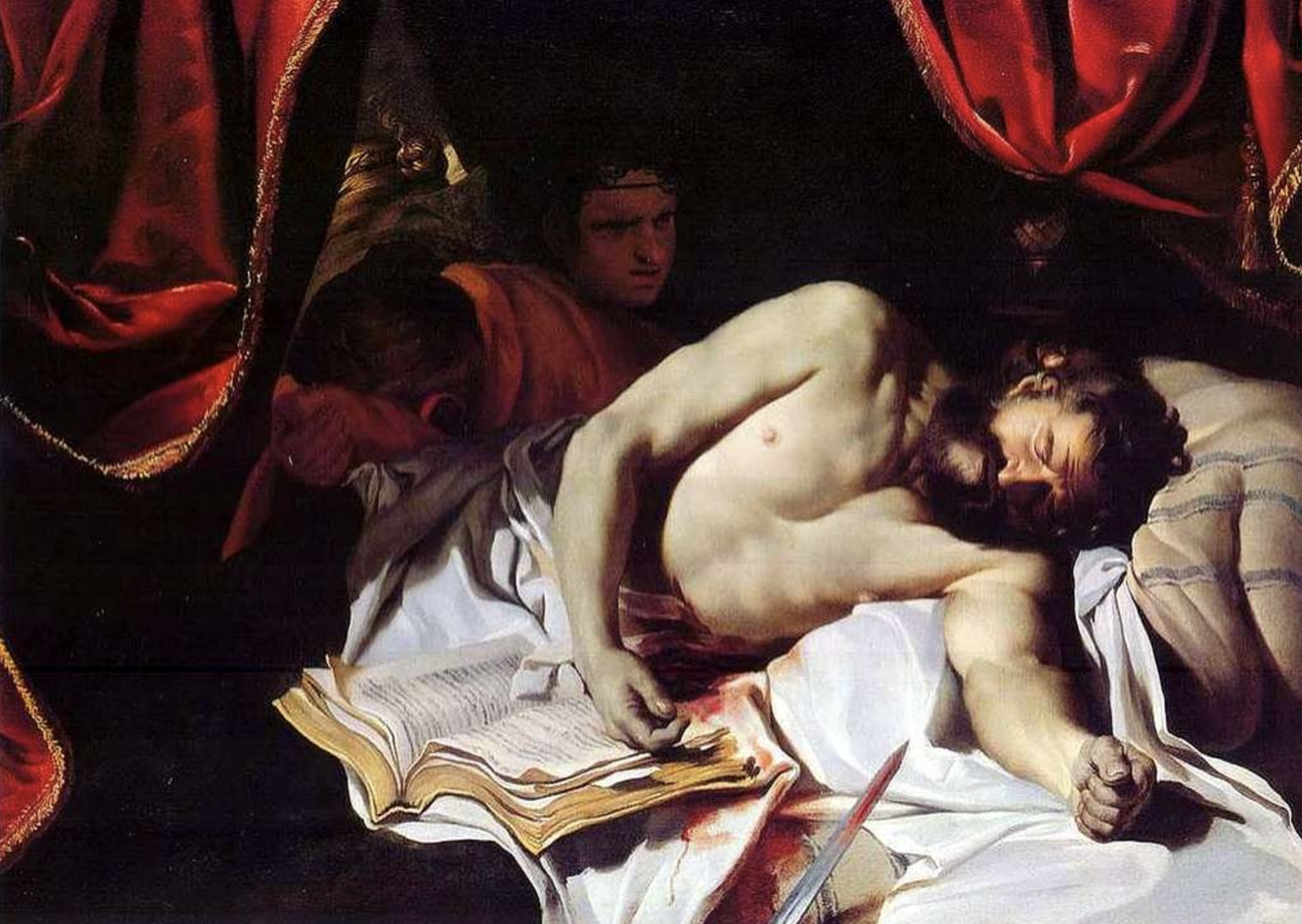
    Josiah Osgood — Multi-Part, Part Two: Professor Josiah Osgood continues with 58 BCE, when the rivals took separate paths; Cato went to Cyprus to model honest administration while Caesar sought military glory in Gaul. The death of Julia, Caesar's daughter and Pompey's wife, eventually severed the alliance between the two generals, allowing Cato to convince the Senate to appoint Pompey as sole consul to restore order. When Caesar crossed the Rubicon in 49 BCE, sparking civil war, Cato reluctantly followed Pompey's retreat. Following Pompey's defeat at Pharsalus, Cato fled to Utica, where he chose suicide over Caesar's clemency, stabbing himself and tearing open his own wounds to mar Caesar's victory. His death transformed him into a saint of the Republic, inspiring generations of poets and dissidents under the later Roman Empire. (2)

  • S8 · E1281
    August 16 · 39 min

    S8 Ep1281: Josiah Osgood — Multi-Part, Part One: Professor Josiah Osgood, author of Uncommon Wrath: How Caesar and Cato's Deadly Rivalry Destroyed the Roman Republic, begins in 64 BCE, when Cato and Caesar briefly cooperated in the murder courts to penalize those re

    Josiah Osgood — Multi-Part, Part One: Professor Josiah Osgood, author of Uncommon Wrath: How Caesar and Cato's Deadly Rivalry Destroyed the Roman Republic, begins in 64 BCE, when Cato and Caesar briefly cooperated in the murder courts to penalize those rewarded during Sulla's brutal purges. Their rivalry ignited permanently during the Catiline conspiracy in 63 BCE. While Caesar proposed life imprisonment for the conspirators, Cato's debut Senate speech demanded their execution and successfully implicated Caesar in the plot. This established their core conflict: Cato's Stoic rectitude and fear of strongmen against Caesar's pursuit of dignitas and popular reform. The period also saw the rise of the triumvirate, an alliance between Caesar, Pompey, and Crassus, which Cato tirelessly opposed as a threat to republican freedom. (1)

  • S8 · E1280
    August 16 · 37 min

    S8 Ep1280: Michael McFaul — Multi-Part, Part Two: Michael McFaul, a Stanford professor and former US Ambassador to Russia, continues his discussion of Autocrats Versus Democrats: China, Russia, America, and the New Global Disorder, shifting to modern Putinism and th

    Michael McFaul — Multi-Part, Part Two: Michael McFaul, a Stanford professor and former US Ambassador to Russia, continues his discussion of Autocrats Versus Democrats: China, Russia, America, and the New Global Disorder, shifting to modern Putinism and the no-limits partnership between Russia and China. McFaul describes Vladimir Putin as a risk-taker driven by imperialist ideology rather than national interest alone. He advocates for a grand strategy to counter autocracy by strengthening democratic alliances, supporting human rights, and maintaining America's edge in attracting global talent. He concludes that while US democracy is currently wobbling, its economic and ideational power remains superior if unified. (2)

  • S8 · E1279
    August 16 · 37 min

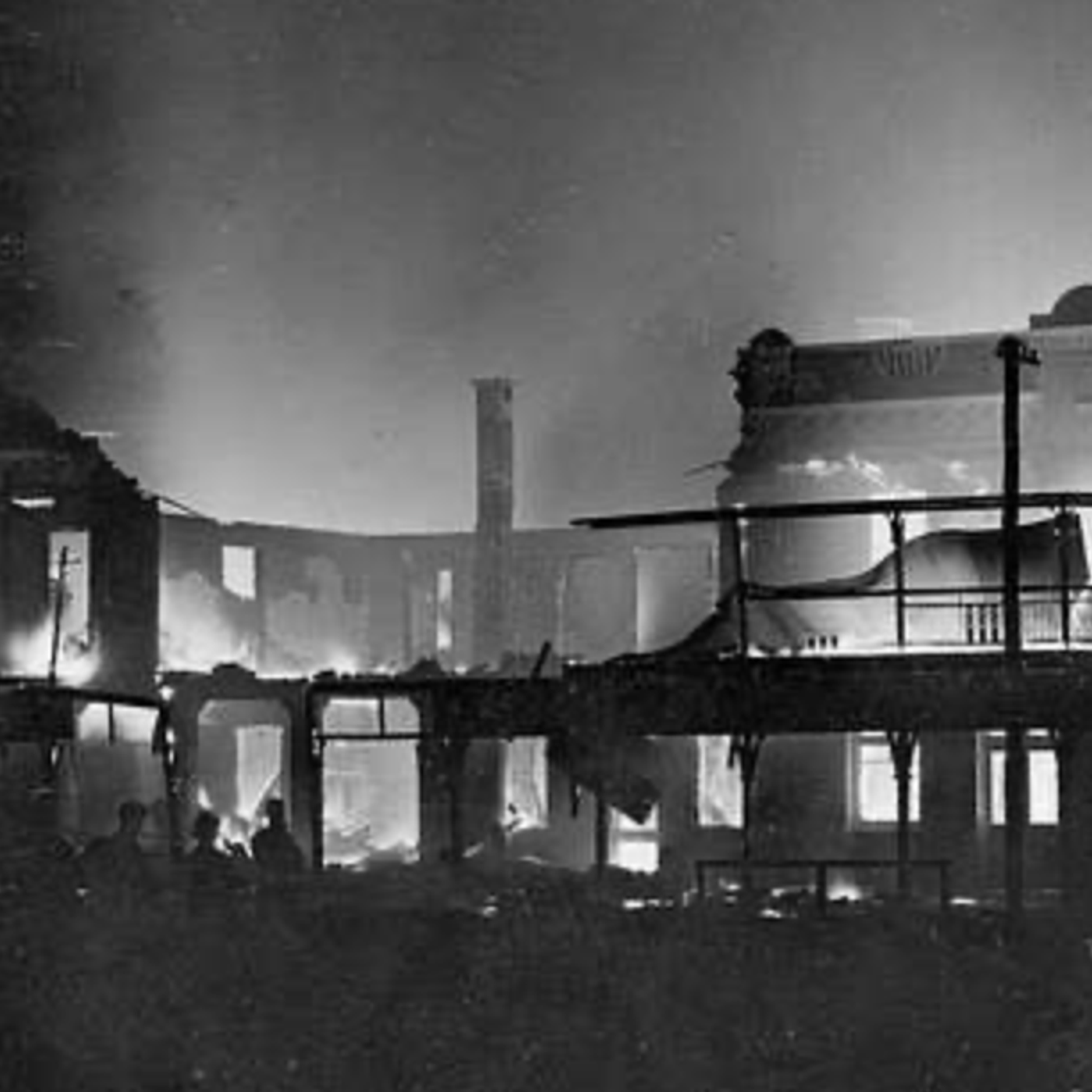
    S8 Ep1279: Michael McFaul — Multi-Part, Part One: Michael McFaul, a Stanford professor and former US Ambassador to Russia, details his book Autocrats Versus Democrats: China, Russia, America, and the New Global Disorder. In Part One, McFaul examines historical turni

    Michael McFaul — Multi-Part, Part One: Michael McFaul, a Stanford professor and former US Ambassador to Russia, details his book Autocrats Versus Democrats: China, Russia, America, and the New Global Disorder. In Part One, McFaul examines historical turning points, beginning with the 1962 Cuban Missile Crisis and the 1991 Soviet collapse. He argues that the West was too complacent following the Cold War, missing critical opportunities to consolidate democratic institutions in Russia and China. He also explains how China's century of humiliation informs Xi Jinping's current desire for strength. (1)

  • S8 · E1278
    August 16 · 19 min

    S8 Ep1278: Robert Cwiklik — Multi-Part, Part Two: Robert Cwiklik, author of Sheridan's Secret Mission: How the South Won the War After the Civil War, continues with General Philip Sheridan's response, specifically his Banditti telegram proposing military trials for

    Robert Cwiklik — Multi-Part, Part Two: Robert Cwiklik, author of Sheridan's Secret Mission: How the South Won the War After the Civil War, continues with General Philip Sheridan's response, specifically his Banditti telegram proposing military trials for White Leaguers. While Sheridan was ready for total war, his plan sparked Northern indignation and constitutional denunciations by Senator Carl Schurz. Ultimately, President Ulysses S. Grant declined to support Sheridan, citing legal limitations and prioritizing Northern political victories such as the Ohio gubernatorial election. This federal withdrawal effectively ended aggressive Reconstruction, allowing the South to re-establish white supremacy. (2)

  • S8 · E1278
    August 16 · 37 min

    S8 Ep1278: Robert Cwiklik — Multi-Part, Part One: Robert Cwiklik, author of Sheridan's Secret Mission: How the South Won the War After the Civil War, explores how the Union's victory was undone by Southern resistance and Northern political retreat. Part One details

    Robert Cwiklik — Multi-Part, Part One: Robert Cwiklik, author of Sheridan's Secret Mission: How the South Won the War After the Civil War, explores how the Union's victory was undone by Southern resistance and Northern political retreat. Part One details the violent struggle for Black suffrage in Louisiana, beginning with Abraham Lincoln's early support for voting rights for free men of color. This progress was met with brutal massacres in New Orleans in 1866 and Colfax in 1873, fueling Radical Reconstruction and the empowerment of carpetbaggers. Tension reached a breaking point in 1874 during the Battle of Liberty Place, where the armed White League forcibly overthrew the state's Republican government. (1)

  • S8 · E1277
    August 15 · 6 min

    S8 Ep1277: TABLE OF CONTENTS THE JOHN BATCHELOR SHOW 8-14-2026. Jeff Bliss discusses the severe threats posed by a potential "super El Niño," which could lead to massive coastal erosion, mudslides, and heavy rains in Los Angeles, similar to the damage seen in previ

    TABLE OF CONTENTS THE JOHN BATCHELOR SHOW 8-14-2026. Jeff Bliss discusses the severe threats posed by a potential "super El Niño," which could lead to massive coastal erosion, mudslides, and heavy rains in Los Angeles, similar to the damage seen in previous severe weather years. He also reports on active wildfires in California, such as the Timber Fire in Monterey County and the Bug Fire near the Nevada border, noting that humans cause roughly 90 to 95% of these blazes. Shifting to entertainment, Bliss describes the highly anticipated opening of the Lucas Museum of Narrative Art, which features the "Skywalker Grill"—a restaurant causing excitement among Los Angeles foodies for its Michelin-star potential. Additionally, Bliss covers the landmark $12.8 billion purchase of the Los Angeles Lakers by a group involving Jared Kushner and Bob Iger. Finally, he touches on the legal controversy surrounding the Paramount-Skydance merger and David Ellison's threat to move production out of Hollywood. (1) Gene Marks shares insights from White House advisor Kevin Hassett regarding the validity of government economic data, with Hassett favoring durable goods orders and unemployment claims over revised surveys. Marks reports a generally positive outlook for small businesses, citing an uptick in optimism and a four-year high in manufacturing activity driven by the AI and data center explosion. He notes that while tariffs and $4 gasoline remain concerns, many businesses are absorbing costs without significant impact on sales. Marks characterizes the United States as an "entrepreneur's paradise" because of the ease of starting a business and the high availability of capital. He highlights that nearly half a million new business applications are filed monthly, supported by record levels of private debt and venture capital. Marks concludes that despite various uncertainties, the small business sector remains resilient and is continuing to hire. (2) Jim McTague provides a report on the "mixed" economy of Lancaster County, Pennsylvania, observing that retail activity is picking up due to back-to-school shopping despite inflationary pressures. He notes that discount giants like Costco are packed as shoppers seek relief from high prices, while tourism traffic at local hotels and amusement parks has lightened midweek. McTague also highlights local opposition to data centers, making them a contentious political issue for upcoming elections. A central focus is the "Heritage Paris" patisserie at Park City Mall, where a French chef sells premium handcrafted pastries. McTague describes high-end offerings like the "Popcorn Illusion" pastry priced at $17.95, illustrating a market for luxury food even in a cautious economy. He humorously recounts his own difficulty resisting these treats while on a low-carb diet, emphasizing that the shop is a significant draw for local residents. (3) Lorenzo Fiori describes a "disaster" situation in Europe caused by severe drought and record heat, with water restrictions implemented in Swiss towns and critically low levels in northern Italy's Po River. The drought has turned the normally green Alps brown and disrupted lake navigation. Simultaneously, Sicily's Mount Etna has entered a prolonged eruption phase, spewing ash for seven days and forcing the cancellation of 700 flights at Catania airport during the peak tourist season. Fiori notes the chaos caused by tourists seeking "eruption selfies" in dangerous areas. For a cultural reprieve, he recommends the Bernina Express rail journey, which reaches the highest railway point in Europe. He also shares a traditional recipe for polenta with Gorgonzola cheese, paired with local Valtellina wine, though he expresses concern that the drought may soon impact milk production from Alpine cows. (4) Bob Zimmerman details the robotic mission by startup Catalyst to rescue NASA's Swift Space Telescope, utilizing innovative software to maneuver a servicing craft despite thruster failures. He highlights SpaceX's massive Starshipproduction line in Boca Chica, noting that four prototypes are ready for monthly launches and upcoming orbital refueling tests. Zimmerman also discusses Lockheed Martin's strategic investments in rocket startups like Firefly to secure launch capabilities. On the international front, he reports on Poland's successful protest against Starlink roaming restrictions and Vietnam's first satellite contract with an American company, SpaceX, signaling a shift toward U.S. ties. Additionally, Zimmerman covers the State Department's efforts to pull India away from Russian space partnerships and NASA's collaboration with the Department of Energy on nuclear propulsion for Mars. He concludes with breathtaking imagery of stars orbiting the Milky Way's central black hole. (5) Alex Wright, author of Empire of Ink: The Printers, Rogues, and Radicals Who Invented the American Newspaper, Part Two: Wright recounts the history of American newspapers, focusing on the Civil War's impact on journalism. He highlights George Smalley's groundbreaking combat reporting at Antietam, where Smalley wrote a vivid account on a night train to secure the "scoop of all scoops" for the Tribune. Wright also explores "soldier-published" newspapers that provided a slice of camp life and the origins of Stars and Stripes. Moving west, he describes the dangerous life of frontier editors, such as Mark Twain, who carried revolvers to defend against aggrieved readers and occasionally fled town to avoid duels. Wright explains how newspapers became "gold mines" by discovering the revenue potential of patent medicine advertising, which once accounted for half of all ads. He concludes by drawing parallels between the fragmented, anything-goes media landscape of the 19th century and today's digital era of content creators and AI. (6) Henry Sokolski examines the "Golden Dome," a proposed $185 billion space-based missile defense project that mirrors the Cold War-era SDI. He warns that the program's lack of transparency is "suicidal" for its funding, as Congress remains in the dark about its primary mission. Sokolski notes that while technology is closer to practicality than 40 years ago, current threats are often low-cost drones rather than intercontinental missiles. In the energy sector, he highlights Elon Musk's $10 billion "Project Crystal Sun" solar factory in Texas, which Musk frames as capturing the "fusion reactor" of the sun. Sokolski observes that even conservative states are voting with their pocketbooks for renewables as battery storage investments double. Finally, he touches on a mutual defense pact between Saudi Arabia, Turkey, and Pakistan, suggesting a "Sunni NATO" is emerging due to a lack of confidence in U.S. security guarantees. (7) Angela DiFulvio explains a theoretical method for detecting nuclear weapons in low Earth orbit to prevent catastrophes like the 1962 Starfish Prime experiment, which destroyed a third of existing satellites. She describes an "inspector" satellite designed to induce a unique radioactive signature from fissile material using high-energy protons. DiFulvio details technical challenges, such as "pulse shape discrimination," to distinguish weapon-related neutrons from background cosmic radiation in the harsh space environment. She suggests that an international agency like the IAEAmight oversee these inspectors to ensure space remains weapon-free. DiFulvio emphasizes that while tests can occur in classified environments, more research is needed on the survivability of sensing electronics. She warns that a modern orbital nuclear detonation would be catastrophic for global infrastructure, specifically mentioning the vulnerability of massive constellations like Starlink. (8)

  • S8 · E1276
    August 15 · 19 min

    S8 Ep1276: Angela DiFulvio explains a theoretical method for detecting nuclear weapons in low Earth orbit to prevent catastrophes like the 1962 Starfish Prime experiment, which destroyed a third of existing satellites. She describes an "inspector" satellite designed

    Angela DiFulvio explains a theoretical method for detecting nuclear weapons in low Earth orbit to prevent catastrophes like the 1962 Starfish Prime experiment, which destroyed a third of existing satellites. She describes an "inspector" satellite designed to induce a unique radioactive signature from fissile material using high-energy protons. DiFulvio details technical challenges, such as "pulse shape discrimination," to distinguish weapon-related neutrons from background cosmic radiation in the harsh space environment. She suggests that an international agency like the IAEAmight oversee these inspectors to ensure space remains weapon-free. DiFulvio emphasizes that while tests can occur in classified environments, more research is needed on the survivability of sensing electronics. She warns that a modern orbital nuclear detonation would be catastrophic for global infrastructure, specifically mentioning the vulnerability of massive constellations like Starlink. (8)

  • S8 · E1275
    August 15 · 17 min

    S8 Ep1275: Henry Sokolski examines the "Golden Dome," a proposed $185 billion space-based missile defense project that mirrors the Cold War-era SDI. He warns that the program's lack of transparency is "suicidal" for its funding, as Congress remains in the dark about

    Henry Sokolski examines the "Golden Dome," a proposed $185 billion space-based missile defense project that mirrors the Cold War-era SDI. He warns that the program's lack of transparency is "suicidal" for its funding, as Congress remains in the dark about its primary mission. Sokolski notes that while technology is closer to practicality than 40 years ago, current threats are often low-cost drones rather than intercontinental missiles. In the energy sector, he highlights Elon Musk's $10 billion "Project Crystal Sun" solar factory in Texas, which Musk frames as capturing the "fusion reactor" of the sun. Sokolski observes that even conservative states are voting with their pocketbooks for renewables as battery storage investments double. Finally, he touches on a mutual defense pact between Saudi Arabia, Turkey, and Pakistan, suggesting a "Sunni NATO" is emerging due to a lack of confidence in U.S. security guarantees. (7)

  • S8 · E1274
    August 15 · 37 min

    S8 Ep1274: Alex Wright, author of Empire of Ink: The Printers, Rogues, and Radicals Who Invented the American Newspaper, Part One: Wright recounts the history of American newspapers, focusing on the Civil War's impact on journalism. He highlights George Smalley's gr

    Alex Wright, author of Empire of Ink: The Printers, Rogues, and Radicals Who Invented the American Newspaper, Part One: Wright recounts the history of American newspapers, focusing on the Civil War's impact on journalism. He highlights George Smalley's groundbreaking combat reporting at Antietam, where Smalley wrote a vivid account on a night train to secure the "scoop of all scoops" for the Tribune. Wright also explores "soldier-published" newspapers that provided a slice of camp life and the origins of Stars and Stripes. Moving west, he describes the dangerous life of frontier editors, such as Mark Twain, who carried revolvers to defend against aggrieved readers and occasionally fled town to avoid duels. Wright explains how newspapers became "gold mines" by discovering the revenue potential of patent medicine advertising, which once accounted for half of all ads. He concludes by drawing parallels between the fragmented, anything-goes media landscape of the 19th century and today's digital era of content creators and AI. (6)

Showing 821–840 of 945 episodes