Skip to content
Artwork for The Intelligence Age
TechnologyEducationBusinessCareers

The Intelligence Age

Mark Smith [nz365guy]

The Intelligence Age explores how intelligent technology is changing people, business, and work. Host Mark Smith [nz365guy] talks with practitioners, leaders, and innovators about putting AI to work: adoption that sticks, governance that holds, and the skills that matter next.


Podcasting since 2017, with more than 830 episodes. New episodes weekly.


https://theintelligenceagepodcast.com

Play
  • 22 episodes
  • Avg 29 min
  • English
Counted on this page — what you have heard stays on this device, so it is not something the list can be paged by.
  • #840
    Yesterday · 34 min

    Build AI That Works

    Build AI That Works Full Show Notes https://www.theintelligenceagepodcast.com/840 Mark Smth talks with James Diekman about how Accelerate Tech has scaled, where AI is actually creating value in government workflows, and why most successful projects are targeted workflow changes rather than broad rollout tools. They also dig into Australia’s growing caution around AI governance, data residency, and the practical push toward local models and sovereign infrastructure. We discuss how AI is being used inside engineering and marketing, why many Copilot-style deployments lose momentum, and how project management itself may evolve as agents take on governance, reporting, and coordination tasks. James shares what’s working in production, what keeps failing before launch, and where the next 6 to 12 months of AI adoption is heading. Key topics James Diekman shares that Accelerate Tech has grown to about 32 staff in the last six months, driven by demand in government projects and AI-enabled solutions. The conversation contrasts AI use in engineering and marketing versus more passive consumption in functions like HR and finance. James explains that the strongest results come from embedding AI into specific workflows, rather than treating it as a standalone chatbot or a broad deployment. They discuss why many Copilot rollouts see mixed adoption and usage drop-off when the tool sits outside the daily workflow. James describes the most successful approach as identifying a business process, pulling apart a sub-workflow, and then applying AI, automation, or judgment-based reasoning to that narrow area first. He notes that many AI projects never reach production, and says that out of 30-plus AI projects delivered, only five or six have made it fully into production. The discussion turns to local government systems, with James outlining how his team often acts as the integration layer, or “the plumbers,” between older council platforms and newer software. They cover Australia’s increasing AI governance maturity, including state frameworks, federal requirements, and the rise of dedicated AI roles inside agencies. Mark and James debate public concerns around data centers, water use, and energy, with James emphasizing the need for better policy and the practical constraints of local compute. They explore the move toward local models, onshore hosting, and reserving compute capacity as organizations seek more control, lower risk, and better throughput. James makes the case that teams do not always need frontier models like Opus for every task and that model choice should match the job, cost, and risk. The episode closes on project management, where James outlines a “project brain” concept using agents, shared knowledge, registers, ticketing, and workflow automation to support or partially replace manual PM effort. If you want to get in touch with me, you can message me here on Linkedin. Thanks for listening 🚀 - Mark Smith

    • Transcript
    • Chapters
  • #839
    September 7 · 38 min

    Why the Death of UI Could Change Everything for Businesses

    Full Show Notes https://www.theintelligenceagepodcast.com/839 Mark Smth speaks with Ashish Bhatia about how his move from Microsoft to Audible changed the way he thinks about customers, AI, and product design. The conversation centers on personal AI, running OpenClaw locally, and why owning your memory, workflows, and data matters more as AI systems become more capable. They also explore Audible’s role in learning, the future of interactive audio, and how agents are beginning to replace clunky app-based workflows with more direct, personalized experiences. Key topics Ashish explains the shift from B2B at Microsoft to B2C at Audible, and how that changes the way you learn from customers He shares why personal AI matters to him more than ever, especially when it involves health data, finances, and memory Mark describes building a large OpenClaw setup with 26 agents, including a nine-agent DevOps team and automated bug fixing They discuss why running AI locally teaches real systems thinking through failure, debugging, and repeated iteration Ashish talks about using OpenClaw to manage daily life, including lunch ordering through Grubhub as a mission-critical workflow The conversation highlights the importance of owning your memory and being able to move your AI system across machines and platforms They explore the idea of the death of UI, where agents increasingly bypass app interfaces and handle tasks directly Mark raises concerns about AI companies ingesting books and content, leading to a discussion of copyright, hypocrisy, and cultural attitudes toward books Ashish shares how Audible supports different learning styles, especially for commuters, slow readers, and people who learn better through audio plus text He outlines Audible’s direction toward interactive, multilingual audiobooks with AI-powered recall, discovery, and personalization Resource Recommendations: The Infinity Machine - Demis Hassabis - Amazon.com: The Infinity Machine: Demis Hassabis, DeepMind, and the Quest for Superintelligence: 9780593831847: Mallaby, Sebastian: Books The Thinking Machine - Jensen Huang - The Thinking Machine: Jensen Huang, Nvidia, and the World's Most Coveted Microchip: Witt, Stephen: 9780593832691: Amazon.com: Books Sapiens - Yual Noal Harari - Sapiens: A Brief History of Humankind eBook : Harari, Yuval Noah: Amazon.ca: Kindle Store The Apple Podcast that I have curated - https://podcast.ashish-bhatia.com/feed.xml Ashish Bhatia's website - ashish-bhatia.com If you want to get in touch with me, you can message me here on Linkedin. Thanks for listening 🚀 - Mark Smith

    • Transcript
    • Chapters
  • #838
    August 31 · 38 min

    Why AI Is Becoming a Business Transformation, Not a Technology Upgrade

    Full Show Notes https://www.theintelligenceagepodcast.com/838 AI is about to replace bloated SaaS, and most businesses are still only playing with chatbots Sean G Muller says the next wave of AI is not about better prompts or prettier copilots. It is about rebuilding business around context, agents, and what actually creates value - before your software stack becomes the expensive middleman. Mark Smth and Sean unpack why the last six months have been a genuine shift: agentic loops are now good enough to handle real business work, not just experiments. Sean explains how he moved from traditional technical architecture into building full application pipelines, MCP servers, and background agents that review email, track social signals, draft responses, and keep business moving without adding more human overhead. You'll discover why context is the missing ingredient in almost every failed AI project, how Sean uses a simple meal-planning example to explain it, and why companies that scatter knowledge across laptops, SharePoint, Google Cloud, and people's heads are sitting on hidden risk. Sean also breaks down the difference between AI as a feature and AI as a business transformation engine, including the mistake many firms make when they bolt chat onto old workflows and call it progress. We also get into the coming SaaS pocalypse - the idea that tools like HubSpot, Salesforce, Xero, Slack, and Atlassian may face a serious reckoning as businesses realize they can build leaner, custom, agent-first systems for less than the cost of endless licenses and modules. Sean shares how he built a headless, agent-driven CRM and why he thinks greenfield builds will replace expensive transformation projects much sooner than most executives expect. This conversation matters if you lead a business, run operations, own a small or mid-sized company, or simply suspect your current software is forcing you to work the wrong way. If you want to understand where AI is actually delivering leverage right now - and how to avoid wasting money on shallow pilots - this episode is essential listening. Mark Smth hosts the conversation and brings the enterprise and product lens, pushing Sean to get specific about what success looks like for real businesses in New Zealand. Sean G Muller is an AI and enterprise architecture specialist based in New Zealand, known for helping organizations build practical AI systems, implement agentic workflows, and rethink business process from the ground up. Resources 1. The Cuckoo's Egg: Tracking a Spy Through the Maze of Computer Espionage - https://www.amazon.com.au/dp/0385249462?ref_=mr_referred_us_au_nz 2. Gemini: A Family of Highly Capable Multimodal Models — 2312.11805.pdf ⁠https://arxiv.org/abs/2312.11805 3. On the Measure of Intelligence — 1911.01547.pdf - https://arxiv.org/pdf/1911.01547 If you want to get in touch with me, you can message me here on Linkedin. Thanks for listening 🚀 - Mark Smith

    • Transcript
    • Chapters
  • #837
    May 27 · 25 min

    Why AI Adoption Fails And How to Fix It

    Get featured on the show by leaving us a Voice Mail: https://bit.ly/MIPVM AI adoption fails when it stops at access to tools. This episode introduces a practical model that bridges the gap between AI tools like Copilot and measurable business outcomes. The focus shifts from technology to people, addressing key blockers such as time, confidence, and relevance. By grounding AI in real workflows, tailoring role-specific use cases, and measuring outcomes, organisations can move from low usage to meaningful impact fast. 🎙 Full Show Notes https://www.microsoftinnovationpodcast.com/837 👉 What you’ll learn Identify the real blockers stopping AI adoption in teams Shift from tool access to measurable business outcomes Design role-specific AI use cases that drive daily value Build AI training that fits real work, not theory Measure AI adoption with practical KPIs and usage data ✅ Highlights "These two things are very, very different" "Some things really need to happen in between those two places" "This is not about the tech. This is about the people" "They didn't know how to use the tool" "They didn't know what they were allowed to do" "When would they sit and just learn a link" "To actually tailor use cases that are relevant" "We have to measure how they are moving" "We moved a department from 15% to 83%" "It shifts how you are working" 🧰 Mentioned Microsoft Copilot (https://copilot.microsoft.com/) Copilot Notebooks (https://support.microsoft.com/en-us/topic/get-started-with-microsoft-365-copilot-notebooks-0775e693-11c6-4d80-8aba-fcc81a737a06) ChatGPT (https://chatgpt.com/) AI Boost Academy (https://hannabergstrom.com/) [ Vattenfall (https://group.vattenfall.com/) Microsoft MVP YouTube Series - How to Become a Microsoft MVP - https://www.youtube.com/playlist?list=PLzf0yupPbVkqdRJDPVE4PtTlm6quDhiu7 ✅ Keywords ai adoption, copilot, generative ai, ai training, business transformation, ai use cases, digital productivity, ai skills, organisational change, ai strategy, workplace efficiency, ai literacy If you want to get in touch with me, you can message me here on Linkedin. Thanks for listening 🚀 - Mark Smith

    • Transcript
    • Chapters
  • #836
    May 25 · 38 min

    Stop Buying Software, Start Buying Outcomes

    Get featured on the show by leaving us a Voice Mail: https://bit.ly/MIPVM This episode dives into why large CRM and ERP projects keep failing and how AI is reshaping consulting, software delivery, and platform decisions. The core insight is simple. Organisations fail when they buy software instead of outcomes. With AI, experienced teams can move faster, strip away legacy complexity, and build only what the business actually needs. The conversation explores outcome-based thinking, flawed RFP processes, and why AI is accelerating the gap between great and average practitioners. 👉 Full Show Notes https://www.microsoftinnovationpodcast.com/836 🎙️ What you’ll learn How to frame technology decisions around outcomes, not vendors or features Why traditional RFP processes drive cost blowouts and failed projects The four core business problems most systems are really trying to solve How AI tools are changing the speed and shape of consulting work When building custom solutions now beats buying off-the-shelf software ✅ Highlights “So many people are still buying software like it’s a software decision rather than a business decision.” “You’re really only trying to solve one of four business problems.” “Most organizations aren’t even thinking in terms of what is the root of what I’m trying to solve.” “Your highest qualified people are not even in the game because you’ve already excluded quality.” “AI is now to the developer what Visual Studio was in the 90s.” “It made the good developers really good and the bad developers a lot faster.” “Low code was developed because we couldn’t get enough developers.” “There’s a third option now, and that is vibe code your own add-on.” “I think we’re less than 18 months away from this changing enterprise software.” 🧰 Mentioned Microsoft Power Platform: https://learn.microsoft.com/power-platform Microsoft Dynamics CRM (Dynamics 365 CRM): https://www.microsoft.com/dynamics-365/solutions/crm Microsoft Business Central: https://www.microsoft.com/dynamics-365/products/business-central Microsoft Finance and Operations (Dynamics 365 Finance): https://www.microsoft.com/dynamics-365/products/finance Notebook LM: https://notebooklm.google LinkedIn Sales Navigator: https://business.linkedin.com/sales-solutions/sales-navigator DynamicConsultantsGroup.com: https://dynamicconsultantsgroup.com ✅Keywords ai in consulting, outcome-based software, crm failures, erp projects, power platform, low code vs pro code, vibe coding, rfp process, enterprise software, applied ai skills, digital transformation, consulting strategy If you want to get in touch with me, you can message me here on Linkedin. Thanks for listening 🚀 - Mark Smith

    • Transcript
    • Chapters
  • #835
    May 24 · 37 min

    AI as Your Operating System for Work and Life

    Get featured on the show by leaving us a Voice Mail: https://bit.ly/MIPVM AI is shifting from a tool to an operating system, enabling individuals to move faster, build bespoke solutions, and dramatically increase productivity. The biggest advantage now comes from curiosity, not technical depth. Those who experiment, learn a few tools deeply, and treat AI as a collaborator can compress hours into minutes and unlock new business models. Meanwhile, large organisations risk falling behind due to governance, inertia, and slow decision-making. 👉 Full Show Notes https://www.microsoftinnovationpodcast.com/835 🎙️ What you’ll learn Use AI as an operating system to replace and create software Move from idea to working solution in minutes, not hours Build capability by mastering a few tools, not chasing every new model Apply curiosity-driven workflows to unlock better AI outcomes Avoid common enterprise pitfalls around governance and tool sprawl ✅ Highlights "This software rewards the patient and the curious." "Learn two or three of these tools really well." "Are you using these tools to improve your quality of life or aren’t you?" "This is the last software that I’ll ever train." "We can create bespoke applications through any of these tools." "It’s eating other software." "People who choose to be left behind." "From idea to iteration in 30 minutes." "I feel like I’m becoming a bionic person." "The barriers to entry are just gone." 🧰 Mentioned ChatGPT – https://chatgpt.com/ Bing (Copilot Search) – https://www.microsoft.com/en-us/bing/copilot-search Google – https://www.google.com Gemini – https://gemini.google.com/ Claude – https://claude.ai/ Copilot – https://copilot.microsoft.com/ Perplexity – https://www.perplexity.ai/ Stability AI (Stable Diffusion) – https://stability.ai/ Ethan Mollick (Wharton profile) – https://mgmt.wharton.upenn.edu/profile/emollick/ Co-Intelligence (book) – https://www.penguinrandomhouse.com/books/741805/co-intelligence-by-ethan-mollick/ Suno (AI music generator) – https://suno.com/ ✅Keywords ai tools, generative ai, chatgpt, ai productivity, solopreneur ai, ai governance, llm workflows, ai operating system, automation, business ai, ai adoption, digital transformation If you want to get in touch with me, you can message me here on Linkedin. Thanks for listening 🚀 - Mark Smith

    • Transcript
    • Chapters
  • #834
    May 20 · 24 min

    Make Copilot Safe: Fix Data Governance First

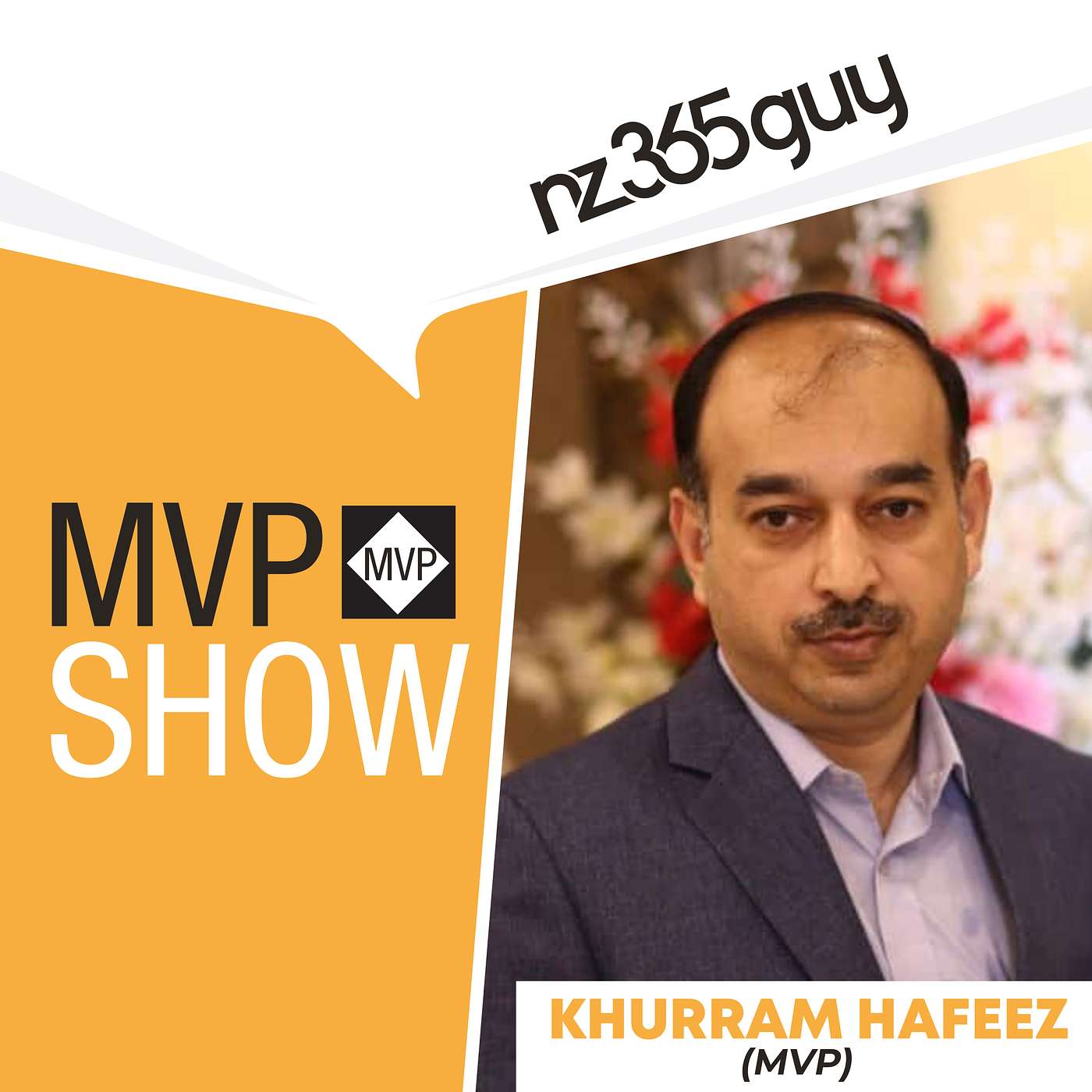
    Get featured on the show by leaving us a Voice Mail: https://bit.ly/MIPVM This episode explores why data governance must come before enabling Microsoft 365 Copilot, with insights from Khurram Hafeez. It breaks down how sensitivity labels, data loss prevention, and Microsoft Purview reduce the risk of unintended data exposure. You will hear practical guidance on preparing your environment, protecting sensitive information, and managing AI use across Microsoft tools and third‑party AI sites. The focus is on real‑world decisions organisations must make to safely adopt Copilot at scale. 🎙 Full Show Notes https://www.microsoftinnovationpodcast.com/834 👉 What you’ll learn Why Copilot increases the impact of poor data governance How sensitivity labels affect what Copilot can access and summarise When to use DLP versus inline DLP for AI risk management How organisations can limit data sharing with third‑party AI tools What licensing choices matter for Copilot and Purview governance ✅ Highlights “With the intro of the AI, the importance of the data governance compliance has much increased.” “The first defense layer that you should be apply, that is the sensitivity label.” “If a user doesn’t have permission, Copilot can’t actually extract the data.” “Standard policy actually is not sufficient these days.” “Users copy and paste or upload a sensitive file to third‑party AI sites.” “Inline DLP policy is one step ahead of endpoint DLP policy.” “Microsoft focus not to block something, to protect something.” “Before enabling the copilot, they ensure that their environment is ready.” “Copilot certainly honors the permissions the user have.” 🧰 Mentioned Microsoft 365 Copilot: https://learn.microsoft.com/microsoft-365/copilot/ Microsoft Entra Suite: https://www.microsoft.com/security/business/microsoft-entra-suite E5 licence: https://www.microsoft.com/microsoft-365/enterprise/e5 Pay‑as‑you‑go Purview licensing: https://learn.microsoft.com/purview/purview-billing-models ChatGPT: https://chatgpt.com/ Gemini: https://gemini.google.com/ DeepSeek: https://www.deepseek.com/ Microsoft MVP YouTube Series - How to Become a Microsoft MVP: https://www.youtube.com/playlist?list=PLzf0yupPbVkqdRJDPVE4PtTlm6quDhiu7 ✅ Keywords microsoft copilot, microsoft purview, data governance, sensitivity labels, data loss prevention, inline dlp, endpoint dlp, ai security, m365 e5, third party ai, information protection, enterprise ai If you want to get in touch with me, you can message me here on Linkedin. Thanks for listening 🚀 - Mark Smith

    • Transcript
    • Chapters
  • #833
    May 18 · 28 min

    Adopt vs Adapt: Cut Power Platform Technical Debt

    Get featured on the show by leaving us a Voice Mail: https://bit.ly/MIPVM A practical rethink of how teams use Power Platform and Dynamics 365 to reduce technical debt, improve governance, and build sustainable solutions. The discussion centres on shifting from tech-first thinking to business outcomes, balancing low-code and pro-code principles, and preparing for AI and Copilot. The key insight is that long-term success comes from disciplined governance, reuse, and choosing when to adopt versus adapt. 👉 Full Show Notes https://www.microsoftinnovationpodcast.com/833 🎙️ What you’ll learn Shift from technology-first to outcome-first solution design Decide when to adopt vs adapt to reduce complexity Apply coding principles inside low-code environments Manage technical debt through governance and architecture Evaluate where AI and Copilot add real value today ✅ Highlights "taking a step back and looking at business need and use a process rather than technology first." "a term we're using in the department more and more is kind of adopt versus adapt." "the more you’re restricting yourself off from these possibilities." "it's treating it as a tool, a set of tools we can use rather than the default." "governance to me means more preventative." "it's really difficult to then stay on top of things like the Wave releases." "it’s more a matter of time than anything." "it's not the same thing as code, but it's not meant to be." "there's still a level of maturity that we need to get to." "what does Power Platform mean really and what is it there for?" 🧰 Mentioned Power Virtual Agents (now part of Copilot Studio): https://www.microsoft.com/en-us/microsoft-copilot/blog/copilot-studio/microsoft-power-virtual-agents-now-part-of-microsoft-copilot-studio/ AI Builder: https://learn.microsoft.com/en-us/ai-builder/overview Copilot: https://copilot.microsoft.com/ If you want to get in touch with me, you can message me here on Linkedin. Thanks for listening 🚀 - Mark Smith

    • Transcript
    • Chapters
  • #832
    May 17 · 30 min

    AI Makes Breaches Faster: 30-Minute Data Theft

    Get featured on the show by leaving us a Voice Mail: https://bit.ly/MIPVM This episode explores how AI is accelerating both productivity and cyber risk. As attacks become faster and more automated, traditional perimeter security no longer holds. The conversation focuses on why organisations must assume compromise, adopt zero trust thinking, and build visibility before scaling AI. It highlights practical steps to govern AI use, reduce insider risk, and modernise access models beyond legacy VPNs. The core message is clear: embracing AI without security foundations can move your business backwards. 👉 Full Show Notes https://www.microsoftinnovationpodcast.com/832 🎙️ What you’ll learn Why AI has shortened breach timelines from days to minutes How to shift from perimeter defence to a zero trust mindset Practical ways to gain visibility over AI tools and data use Where unplanned AI adoption creates insider risk Why VPN-only security models struggle in cloud-first work ✅ Highlights “From the time of compromise to data exfiltration, we’re seeing 30 minutes.” “Cybercrime is doing the same thing with AI that businesses are.” “You can’t protect what you can’t see.” “You can’t govern what you don’t know about.” “We almost have to assume we’re going to get hit.” “Security by obscurity doesn’t work anymore.” “AI is introducing far more risk when there’s no planning.” “Once you’re in with a VPN, there’s zero control on the inside.” “The volume and scale and speed is what really concerns me.” 🧰 Mentioned Zero trust: https://learn.microsoft.com/security/zero-trust/zero-trust-overview VPN (virtual private network): https://www.cisco.com/learn/topics/security/what-is-a-virtual-private-network-vpn.html SASE (secure access service edge): https://www.microsoft.com/security/business/security-101/what-is-sase Booz Allen: https://www.boozallen.com/ Gartner: https://www.gartner.com/en Anthropic Claude: https://claude.ai/ ✅Keywords ai security, cybersecurity, zero trust, ai risk, data governance, cybercrime, vpn security, sase, insider risk, cloud security, ai adoption, threat landscape If you want to get in touch with me, you can message me here on Linkedin. Thanks for listening 🚀 - Mark Smith

    • Transcript
    • Chapters
  • #831
    May 13 · 25 min

    Why Copilot Adoption Is Stuck at 3% And Fix It

    Get featured on the show by leaving us a Voice Mail: https://bit.ly/MIPVM This episode explores how business leaders are actually using AI inside organisations, and why adoption of tools like Microsoft 365 Copilot remains low. Chris shares practical insight from the frontline, covering Copilot strategy, Work IQ, agentic thinking, and how AI now enables teams to build internal tools faster than buying SaaS. The focus is not hype, but how to reimagine business models, reduce cost, and unlock new value with applied AI capability. 🎙️For full Show Notes https://www.microsoftinnovationpodcast.com/831 👉 What you’ll learn Why low Copilot adoption is an opportunity, not a failure How to think beyond productivity to AI-enabled business models When building internal AI tools beats buying SaaS What Work IQ enables that other AI systems cannot How agentic systems change OKRs, dashboards, and execution ✅ Highlights “AI is transformative, it is expensive, and it requires several years of exposure to capital budgets” “It’s not just about doing things better, but doing things you never could do before” “Microsoft is the largest commercial AI company on the planet” “Copilot can orchestrate over your information in a way that other AI can’t” “Work IQ would be a little bit better than the word graph” “I love the term vibe coding” “It would have been a couple of hundred thousand dollars two years ago” “I’ve taken over two thousand dollars of subscription costs out of my business” “They do exactly what I needed to do and no more” 🧰 Mentioned Microsoft 365 Copilot: https://www.microsoft.com/microsoft-365-copilot Host - Polaris podcast: https://polaris.synozur.com Co-Host Microsoft’s Intrazone podcast: https://aka.ms/TheIntrazone Microsoft MVP YouTube Series - How to Become a Microsoft MVP - https://www.youtube.com/playlist?list=PLzf0yupPbVkqdRJDPVE4PtTlm6quDhiu7 ✅ Keywords ai adoption, microsoft copilot, work iq, agentic ai, internal tools, ai strategy, okrs, vibe coding, business transformation, saas replacement, applied ai, enterprise ai If you want to get in touch with me, you can message me here on Linkedin. Thanks for listening 🚀 - Mark Smith

    • Transcript
    • Chapters
  • #830
    May 11 · 27 min

    How Agentic AI Is Rewriting ERP Workflows

    Get featured on the show by leaving us a Voice Mail: https://bit.ly/MIPVM This episode with Christian Segurado explores how agentic AI is reshaping ERP and enterprise delivery. The discussion covers deploying Copilot Studio agents in Teams, reducing ERP UI friction, accelerating fit gap and requirements work, and why multi agent orchestration matters. It focuses on where AI delivers real operational value today, the foundations required to unlock it, and what this shift means for people, process, and technology decisions in 2026. 👉 Full Show Notes https://www.microsoftinnovationpodcast.com/830 🎙️ What you’ll learn How agentic AI changes how users interact with ERP systems Where Copilot Studio and Azure Foundry fit in real implementations How AI accelerates requirements gathering and fit gap analysis Why clean data foundations are critical for agentic scenarios What multi agent, multi model AI means for enterprise teams ✅ Highlights “ERP being actually more the layer on the back where the agent inquires knowledge” “It is probabilistic, not deterministic” “We are deploying is on Teams” “It will fundamental change how we interact with the ERP” “You cannot start with the roof if you don’t have the foundation” “We have an agentic driven methodology” “Consistency creates predictability” “It does have a soul” “Multi agent, multi model will be the norm” 🧰 Mentioned Dynamics 365: https://www.microsoft.com/dynamics-365 Copilot: https://www.microsoft.com/microsoft-copilot Copilot Studio: https://www.microsoft.com/microsoft-365-copilot/microsoft-copilot-studio Azure Foundry (Microsoft Foundry): https://ai.azure.com Microsoft Fabric: https://www.microsoft.com/microsoft-fabric Medallion architecture: https://learn.microsoft.com/azure/databricks/lakehouse/medallion Azure DevOps: https://azure.microsoft.com/products/devops Microsoft Learn: https://learn.microsoft.com Microsoft Mesh: https://www.microsoft.com/microsoft-mesh ✅Keywords agentic ai, erp, dynamics 365, copilot studio, microsoft teams, multi agent systems, enterprise ai, ai governance, fit gap analysis, microsoft power platform, azure foundry, digital transformation If you want to get in touch with me, you can message me here on Linkedin. Thanks for listening 🚀 - Mark Smith

    • Transcript
    • Chapters
  • #829
    May 10 · 31 min

    Why AI Alone Won’t Fix Innovation Culture

    Get featured on the show by leaving us a Voice Mail: https://bit.ly/MIPVM 👉 Full Show Notes https://www.microsoftinnovationpodcast.com/829 This episode explores why AI and innovation fail without culture change. Drawing on decades of innovation experience, the discussion breaks down common myths around productivity, frameworks, and lone heroes. The core insight is simple but hard to execute. Sustainable AI adoption starts with leadership alignment, psychological safety, and recognising that everyone is creative. Real change happens bottom‑up, reinforced by long‑term discipline, not hype or short‑term fixes. 🎙️ What you’ll learn Why AI does not automatically improve productivity or innovation How leadership behaviour shapes innovation culture What psychological safety enables in teams and organisations Why every employee is creative in practical, everyday ways How to build long‑term innovation habits that actually stick ✅ Highlights “If it’s that easy, everyone will be doing it.” “Sometimes I think AI makes me more unproductive.” “There is no lone hero that is going to save the company.” “Everyone knows at least one thing how they can improve something.” “Innovation is much more complex than one framework.” “Psychological safety is a property of a group, not an organisation.” “Everyone is creative, not just artistic people.” “Changing behaviour is one of the most difficult things.” “You cannot trick people, they will see if you walk the talk.” 🧰 Mentioned AI adoption: https://learn.microsoft.com/azure/cloud-adoption-framework/ai/ Innovation frameworks: https://www.deloittedigital.com/us/en/offerings/customer-led-marketing/customer-strategy-and-applied-design/applied-design-and-innovation/ten-types.html Design thinking: https://online.hbs.edu/blog/post/what-is-design-thinking Business Model Canvas: https://www.strategyzer.com/library/the-business-model-canvas ✅Keywords ai adoption, innovation culture, psychological safety, creativity at work, leadership, organisational change, productivity myths, design thinking, innovation frameworks, applied ai, business innovation, technology change If you want to get in touch with me, you can message me here on Linkedin. Thanks for listening 🚀 - Mark Smith

    • Transcript
    • Chapters
  • #828
    May 6 · 22 min

    How AI Is Taking Over Project Management Work

    Get featured on the show by leaving us a Voice Mail: https://bit.ly/MIPVM This episode explores how Microsoft Planner is evolving into a practical, AI-assisted project management tool for modern teams. Cindy Lewis explains how Planner fits into daily work through Microsoft Teams, how AI agents support planning, reporting, and risk assessment, and why small usability improvements matter. The discussion also covers Copilot, Dataverse, Power BI, and the shift from automation to agent-style AI that actively helps manage work. 🎙 Full Show Notes https://www.microsoftinnovationpodcast.com/828 👉 What you’ll learn How Microsoft Planner fits into modern, collaborative project management Where AI adds value in planning, reporting, and risk management Differences between Planner basic and premium plans and why they are merging How Copilot supports everyday productivity beyond automation Why data, feedback, and adoption timing matter for real-world AI impact ✅ Highlights “Everybody starts with a plan, whether or not you’re trained in project management.” “The future is collaboration and artificial intelligence, not desktop-only tools.” “We need to be able to ask a question of my plan and get the answer back.” “AI is doing a really nice status report that used to take hours of work.” “The average person doesn’t even know enough to know what it could do.” “They’ve made it so you can’t make the most common project management mistakes.” “Power BI is the winner if you want resource capacity across portfolios.” “Most companies are not ready, even though the future is already here.” “A lot of what people call AI is really automation.” “It’s the little annoying things that Microsoft is fixing that people don’t notice.” 🧰 Mentioned Microsoft Planner: https://www.microsoft.com/microsoft-365/planner Microsoft Teams: https://www.microsoft.com/microsoft-teams Microsoft Project: https://www.microsoft.com/microsoft-365/project/project-management Microsoft To Do: https://to-do.microsoft.com Microsoft Copilot: https://www.copilot.com Planner Agent: https://support.microsoft.com/office/access-planner-agent-86bf60a1-239d-4c37-b7b6-9a4111e1cc02 Microsoft MVP YouTube Series - How to Become a Microsoft MVP - https://www.youtube.com/playlist?list=PLzf0yupPbVkqdRJDPVE4PtTlm6quDhiu7 ✅ Keywords microsoft planner, project management, ai agents, copilot, microsoft teams, dataverse, power bi, task management, productivity, automation, collaboration, planning If you want to get in touch with me, you can message me here on Linkedin. Thanks for listening 🚀 - Mark Smith

    • Transcript
    • Chapters
  • #827
    May 4 · 25 min

    Why Copilot Adoption Is a Culture Shift, Not Training

    Get featured on the show by leaving us a Voice Mail: https://bit.ly/MIPVM In this episode, Ricky Lawson explains why Copilot adoption is not a technology problem but a cultural one. He shares how enterprise value comes from governance, security, and meeting people where they are, not from forcing tools. From leadership led behaviour change to agents, licensing, and Copilot as core infrastructure, the conversation reframes AI as everyday electricity for modern work. 👉️ Full Show Notes https://www.microsoftinnovationpodcast.com/827 🎙️ What you’ll learn How to drive Copilot adoption through culture, not training courses Why Copilot works best as the enterprise interface for AI How governance and data protection change AI adoption decisions Why agent creation is moving from technical to accessible How to introduce AI through small, habit forming use cases ✅ Highlights “It got me maybe 60% there, right?” “Things are getting so much more natural.” “Copilot really does well that other tools don’t is that it’s agile.” “You’re not training the model.” “It’s a perfect enterprise work solution.” “Copilot adoption is not necessarily a technical motion.” “It’s almost a habitual motion, a cultural motion.” “Why do you need to see ROI on electricity?” “This is exactly the type of thinking of a frontier firm.” 🧰 Mentioned Microsoft Copilot: https://copilot.microsoft.com/ Microsoft 365: https://www.microsoft.com/microsoft-365 Copilot Studio: https://www.microsoft.com/microsoft-365-copilot/microsoft-copilot-studio/ Agent 365: https://www.microsoft.com/microsoft-agent-365 Microsoft Cowork (Copilot Cowork): https://www.microsoft.com/microsoft-365/blog/2026/03/09/copilot-cowork-a-new-way-of-getting-work-done/ Microsoft Teams: https://www.microsoft.com/microsoft-teams Slack: https://slack.com/ OpenAI: https://openai.com/ Anthropic: https://www.anthropic.com/ ChatGPT: https://chatgpt.com/ ✅Keywords copilot, microsoft copilot, ai adoption, enterprise ai, ai governance, copilot studio, ai agents, microsoft 365, frontier firm, generative ai, ai culture, agent 365 If you want to get in touch with me, you can message me here on Linkedin. Thanks for listening 🚀 - Mark Smith

    • Transcript
    • Chapters
  • #826
    May 3 · 24 min

    AI’s S-Curve: When the Hype Consolidates

    Get featured on the show by leaving us a Voice Mail: https://bit.ly/MIPVM Jeff Mahony joins AI Unfiltered to explore why AI adoption has not yet hit its consolidation point, and how blockchain’s immutability can restore trust at scale. The conversation connects AI agents, bias, regulation, and distributed systems, arguing that transparency, not speed alone, is the real unlock. Jeff explains how larger, collaborative teams can mitigate bias, why current AI agents often reduce productivity, and where AI plus blockchain can create real-world value across finance, supply chains, and public systems. 👉 Full Show Notes https://www.microsoftinnovationpodcast.com/826 🎙️ What you’ll learn Why the AI market has not yet reached its S-curve consolidation phase How bias enters AI systems and how team design can reduce its impact Where AI agents help productivity, and where they quietly reduce it Why blockchain creates authenticity through transparency How AI and blockchain together can enable scalable audits and pattern detection ✅ Highlights “Each of us has built-in flaws, but our flaws don’t touch too many people.” “If I’ve somehow biased that model, now my flaw could touch millions.” “The fix is going to be those collaborative, larger teams.” “Blockchain is authenticity born through transparency.” “On a blockchain, it would be very clear what the anomaly was.” “The intermediary is the source of virtually all corruption.” “We’re seeing a reduction in productivity by those people using agents.” “You wouldn’t let that person give you the synopsis and then act from it.” “Layer that on top of a blockchain, and now you can do data analysis.” 🧰 Mentioned AI agents: https://www.ibm.com/think/topics/ai-agents Blockchain: https://www.ibm.com/think/topics/blockchain Distributed data warehousing: https://www.educative.io/answers/what-is-a-distributed-data-warehouse-dwh Sovereign entities: https://fiveable.me/ap-hug/key-terms/sovereign-entity Voting systems: https://electionlab.mit.edu/research/voting-technology FinTech: https://www.britannica.com/money/financial-technology-fintech right.io (RYT.io): https://right.io/ ✅Keywords ai agents, blockchain, s-curve adoption, ai bias, transparency, immutability, fintech, regulation, productivity, distributed systems, supply chain, sovereign solutions If you want to get in touch with me, you can message me here on Linkedin. Thanks for listening 🚀 - Mark Smith

    • Transcript
    • Chapters
  • #825
    April 29 · 21 min

    Automate Marketing with Copilot Agents

    Get featured on the show by leaving us a Voice Mail: https://bit.ly/MIPVM This episode explores how AI agents are reshaping modern marketing workflows, drawing on the hands-on experience of Ramón Rautenstrauch. Using Microsoft Copilot, Copilot Studio, and Microsoft Foundry, the discussion shows how marketers can automate campaigns, experiment faster, and reduce low-value work while keeping humans in the loop. The core insight is not replacing marketers with AI, but using agents to unlock creativity, speed, and continuous optimisation that were previously impractical. 👉 Full Show Notes https://www.microsoftinnovationpodcast.com/825 🎙️ What you’ll learn How Copilot and generative AI change creative and campaign planning Where AI agents add the most value in marketing workflows Practical differences between Copilot Studio and Microsoft Foundry Why experimentation becomes easier with agent-driven automation How to reduce repetitive work without losing human judgement ✅ Highlights “From one day to another, we had a whole new world of ideas.” “I’ve been fully into agents to try to automate all the marketing work.” “Not to replace me, but to assist me.” “Before I spent more or less half of the day doing things that didn’t add value.” “Now I can try to do things differently.” “This helps us to do different things that we would never have tried.” “With Copilot Studio, it took me half an hour.” “With Foundry, it took me one week.” “With Foundry, you have to sit down and think.” 🧰 Mentioned Microsoft Copilot: https://www.copilot.com Copilot Studio: https://www.microsoft.com/microsoft-365-copilot/microsoft-copilot-studio/ Microsoft Foundry: https://ai.azure.com/ ChatGPT: https://chatgpt.com/ OpenAI: https://openai.com/ Google Ads: https://ads.google.com/ Microsoft MVP YouTube Series - How to Become a Microsoft MVP - https://www.youtube.com/playlist?list=PLzf0yupPbVkqdRJDPVE4PtTlm6quDhiu7 ✅ Keywords ai agents, microsoft copilot, copilot studio, microsoft foundry, marketing automation, generative ai, campaign automation, ai workflows, experimentation, productivity, marketing strategy, human in the loop If you want to get in touch with me, you can message me here on Linkedin. Thanks for listening 🚀 - Mark Smith

    • Transcript
    • Chapters
  • #824
    April 27 · 30 min

    AI Needs Context: Build Your Company “Core” File

    Get featured on the show by leaving us a Voice Mail: https://bit.ly/MIPVM This episode with Balazs Horvath explores how AI is shifting from hype to practical value in business applications. The core insight is that models are now good enough, but value comes from context, not tools. CRM is becoming a database, interfaces are disappearing, and skills like problem framing, signal detection, and prompting matter more than building apps. AI works best as a colleague when organisations invest in shared language, data foundations, and human judgement. 👉 Full Show Notes https://www.microsoftinnovationpodcast.com/824 🎙️ What you’ll learn Why context, not models, is the real limiter of AI value How CRM is shifting from interfaces to signal-driven systems Where ERP and data platforms still have defensible moats How reverse prompting improves thinking and outcomes Why consulting skills matter more than coding in the AI era ✅ Highlights "It’s been more hype than actual value." "Models are good enough. It’s about the context that you give them." "I haven’t logged into my CRM for the past two weeks." "CRM will just become a database." "Finance is audited, legislated, and hard to replicate." "The way we interact with apps is changing." "I flipped our academic program upside down." "AI understands intent." "Ask me 20 questions, one at a time." 🧰 Mentioned Dynamics 365: https://www.microsoft.com/dynamics-365 Microsoft Power Platform: https://www.microsoft.com/power-platform Business Central: https://www.microsoft.com/dynamics-365/business-central Finance and Operations (Dynamics 365 Finance): https://www.microsoft.com/dynamics-365/finance Power BI: https://www.microsoft.com/power-platform/products/power-bi Microsoft Fabric: https://www.microsoft.com/microsoft-fabric Dataverse: https://www.microsoft.com/power-platform/dataverse Copilot: https://copilot.microsoft.com Claude: https://claude.ai Anthropic: https://www.anthropic.com Microsoft Graph: https://learn.microsoft.com/graph Vibe.powerapps.com: https://vibe.powerapps.com ✅Keywords ai context, crm future, power platform, dynamics 365, copilot, anthropic, claude, reverse prompting, vibe coding, business central, microsoft fabric, applied ai If you want to get in touch with me, you can message me here on Linkedin. Thanks for listening 🚀 - Mark Smith

    • Transcript
    • Chapters
  • #823
    April 26 · 27 min

    Why AI Governance Becomes Critical with Agentic AI

    Get featured on the show by leaving us a Voice Mail: https://bit.ly/MIPVM This episode breaks down why AI governance must evolve alongside agentic AI, drawing on the insights of Matthias Darblade. The conversation explores the EU AI Act, continuous compliance, and why the biggest business value often sits in high‑risk AI use cases. For organisations adopting agents, governance becomes a live system, not a one‑time checkbox, balancing innovation, responsibility, and trust at scale. 👉 Full Show Notes https://www.microsoftinnovationpodcast.com/823 🎙️ What you’ll learn Why agentic AI turns governance into a continuous process How the EU AI Act affects organisations inside and outside Europe Where the real business value lies in high‑risk AI systems Why static compliance models fail for AI and agents How organisations can govern AI without slowing innovation ✅ Highlights “With this black box that needs to be governed and controlled.” “It gives you a certain sense of being safe regarding the regulators.” “It starts to become a lot, even for a company as big as Airbus.” “It’s definitely a live system.” “For AI, it will be a bit more complex.” “High risk is where most of the value lies for companies.” “You’re leaving a lot of money on the table.” “It needs to be running and monitoring in real time.” “You need to be respecting the law and proceed in a certain way.” 🧰 Mentioned ISO 24001: https://www.iso.org/standard/81230.html AI governance: https://www.oecd.org/ai/governance/ Agentic AI: https://www.ibm.com/topics/agentic-ai Copilot: https://www.microsoft.com/microsoft-copilot OpenAI: https://openai.com/ Gemini: https://ai.google/gemini/ ✅Keywords ai governance, eu ai act, agentic ai, ai compliance, high risk ai, ai regulation, autonomous agents, responsible ai, continuous monitoring, enterprise ai, ai oversight, ai strategy If you want to get in touch with me, you can message me here on Linkedin. Thanks for listening 🚀 - Mark Smith

    • Transcript
    • Chapters
  • #822
    April 22 · 27 min

    Why AI Agents Will Replace How We Actually Work

    Get featured on the show by leaving us a Voice Mail: https://bit.ly/MIPVM Cas de Morree and Mark Smith unpack why applied AI skills now matter more than prompts. They explore Copilot’s real strength inside work data, the rapid shift towards agents and outcome‑driven systems, and how low‑cost tooling is reshaping productivity. The conversation challenges привычные workflows, highlights why more output does not equal better work, and shows how professionals can rethink email, meetings, automation, and software building using AI that actually integrates into daily work. 👉 For full Show Notes https://www.microsoftinnovationpodcast.com/822 🎙️ What you’ll learn How Copilot’s value changes when it is connected to your work data Why outcome engineering is replacing prompt engineering When AI automation increases noise instead of productivity How agents can replace SaaS tools and reduce recurring costs What applied AI skills look like for consultants and knowledge workers ✅ Highlights “They forgot about the entire plugged into your work data, and that’s what Copilot is good at.” “It was a rough start using Copilot.” “It will keep iterating on a task till it gets to the destination.” “I think this is the start of outcomes engineering rather than prompt engineering.” “We expect all this magic from these new tools.” “Why would you send out meeting notes to everyone?” “It’s insanity.” “I’ve taken over $2,000 of annual cost out of my business SaaS expenses.” “The only limitation is your own creativity at this point.” 🧰 Mentioned Microsoft Copilot: https://www.copilot.com/ Microsoft 365: https://www.microsoft.com/microsoft-365 Microsoft Graph: https://learn.microsoft.com/graph/overview Anthropic: https://www.anthropic.com/ Claude (by Anthropic): https://claude.com/ Bitly: https://bitly.com/ RAG systems (Retrieval‑Augmented Generation): https://en.wikipedia.org/wiki/Retrieval-augmented_generation Microsoft MVP YouTube Series - How to Become a Microsoft MVP - https://www.youtube.com/playlist?list=PLzf0yupPbVkqdRJDPVE4PtTlm6quDhiu7 ✅ Keywords ai productivity, microsoft copilot, applied ai skills, outcome engineering, ai agents, automation, microsoft 365, anthropic, claude, openai, knowledge work, business ai If you want to get in touch with me, you can message me here on Linkedin. Thanks for listening 🚀 - Mark Smith

    • Transcript
    • Chapters
  • #821
    April 20 · 38 min

    Build Your Own AI Agent Army Without Burnout

    Get featured on the show by leaving us a Voice Mail: https://bit.ly/MIPVM This episode with Joris de Gruyter explores how advanced AI agents are reshaping individual productivity and technical work. The conversation covers coding agents, personal agent systems, automation beyond code, and the risks of burnout, privacy, and memory misuse. Real-world examples show how AI can turn notes into workflows, handle testing and reporting, and operate as a team of specialised agents. The key message is clear: applied AI skills now combine technical fluency with strong boundaries around focus, context, and trust. 👉️ Full Show Notes https://www.microsoftinnovationpodcast.com/821 🎙️ What you’ll learn How coding agents are expanding into everyday knowledge work Practical ways to turn notes into repeatable automation When to use multiple AI agents and when to limit them How memory features can introduce risk and bias Why APIs matter for an AI-driven future of work ✅ Highlights “I realised that I had incredible power to create anything my mind can conceive digitally.” “Tokens have become my money.” “The productivity gains is causing this tremendous burnout for some reason.” “I’ve put the guardrails in place so they’re not allowed to talk to me after 9pm.” “It started with notes, and it’s turning into automation.” “The internet is a very hostile place to AI.” “Memory is the first thing I turn off everywhere.” “I don’t want anybody else’s code in my mix.” “It allows you to become almost like superhuman in a weird way.” 🧰 Mentioned AI Brain Fry: https://hbr.org/2026/03/when-using-ai-leads-to-brain-fry GitHub Copilot: https://github.com/features/copilot Work IQ: https://learn.microsoft.com/microsoft-365/copilot/extensibility/workiq-overview Claude:https://claude.ai/ ✅Keywords ai agents, github copilot, coding agents, automation, productivity, ai burnout, ai memory, privacy, workflows, devops, markdown, applied ai If you want to get in touch with me, you can message me here on Linkedin. Thanks for listening 🚀 - Mark Smith

    • Transcript
    • Chapters
Showing 1–20 of 22 episodes