Skip to content
Artwork for The iGaming Leader
BusinessManagementCareersExplicit

The iGaming Leader

Leo Judkins, Founder - iGaming Leader Mastermind

The iGaming Leader is hosted by Leo Judkins, founder of The iGaming Leader Mastermind.

Every other week, Leo sits down with Founders, C-suite executives, and VPs from across the iGaming industry for conversations you won't hear on a conference panel. The real decisions. The hard calls. What leadership actually looks like from the inside.

No keynote polish. No PR answers. Just honest conversations between people who know the industry.

New episodes every other Wednesday.

Play
  • 22 episodes
  • fortnightly
  • Avg 44 min
  • English
Counted on this page — what you have heard stays on this device, so it is not something the list can be paged by.
  • #61
    Yesterday · 39 min

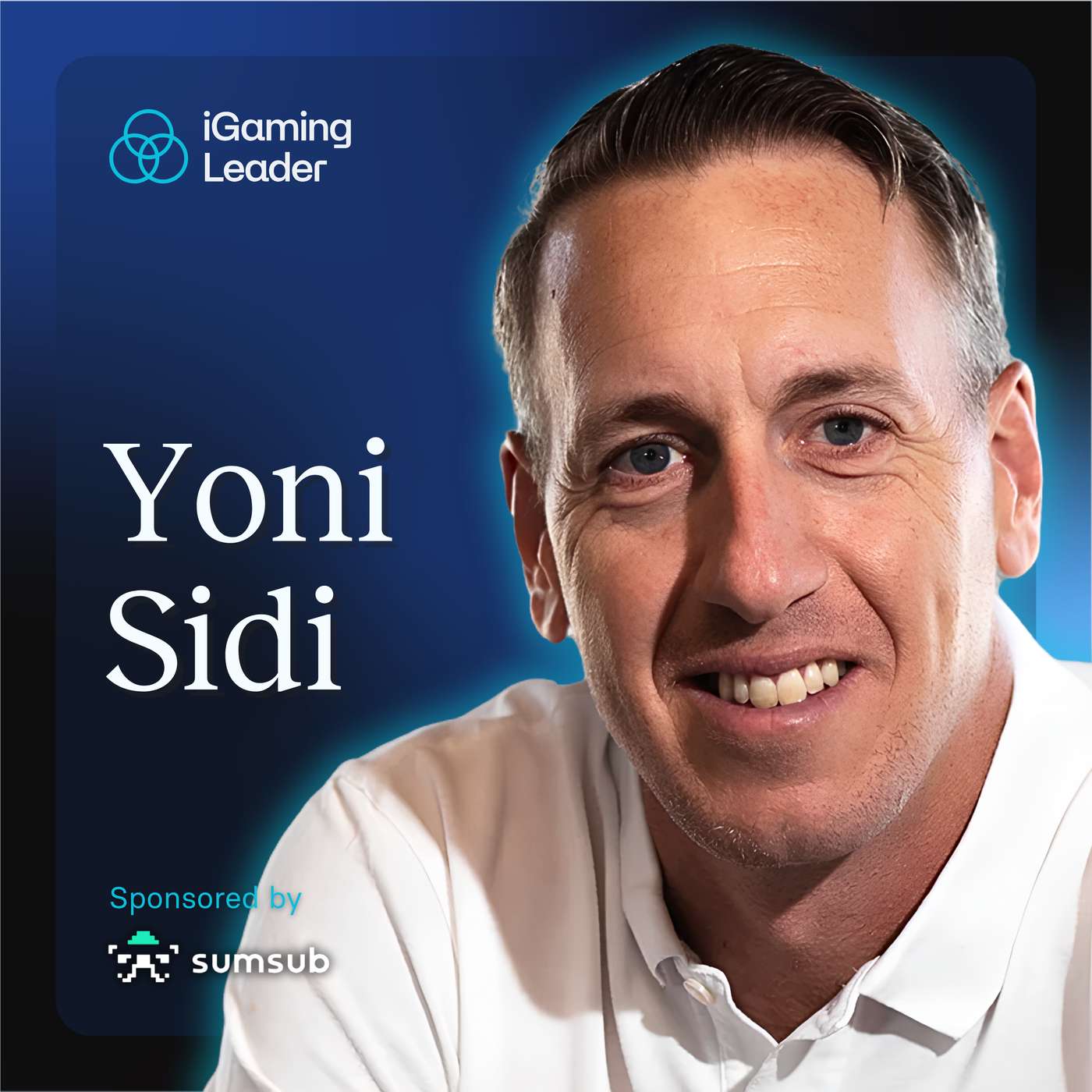
    Why This CEO Works 15-Hour Days Across Two Continents

    Yoni Sidi wanted to slow down. After 17 years in corporate iGaming, he had a simple plan: build a platform, generate traffic, play golf, and reduce the pressure. Then Winpot took off in Mexico, the B2B business grew to 14 or 15 clients, and he found himself working 14 to 15-hour days across two continents. In this episode of the iGaming Leader podcast, Yoni, CEO of Wiztech Group, talks about building a bootstrapped operator and tech business from scratch, leading across cultures, and what he would tell his 2022 self. About the guest: Yoni Sidi is an experienced Chief Executive and Marketing Leader with a proven track record in the global iGaming and entertainment industry. He is currently driving growth at the intersection of technology, regulated gaming, and customer engagement, with skills across scaling brands, building high-performing teams, and developing data-driven strategies in acquisition, retention, and brand partnerships. He is passionate about bridging innovative digital platforms with real-world experiences and is actively expanding into new markets across LATAM, Europe, and beyond. In this episode: 00:00 Introduction 00:48 Growing up around Ronnie Rosenthal, Liverpool, and Tottenham 06:29 Three years of military service as a combat instructor and what it taught him about standards 08:14 Building Winpot with no outside funding, brick by brick 12:38 How close he still is to the original vision of slowing down 15:32 Why switching off has been harder than any commercial decision 18:41 Managing two businesses across Cyprus and Mexico in different time zones 26:48 The hard part of leadership is people, not strategy 32:16 Learning to lead across Israeli, Mexican, British, and Cypriot cultures 35:50 What he would go back and tell himself in 2022 Quotes from Yoni: "My aim and vision was to literally stop generating traffic. I'd be playing golf. No pressure, no stress. We make plans and God laughs." "The bad times will feel like you have five elephants on your shoulders. The good times will not feel as good as you expect them to be." "It can be a really lonely place at the top when you're making your own decisions." "I wasted a lot of my own time and energy and deteriorated my own mental health by being too ashamed to ask for help or for advice." "I would always choose the people over the speed." "Everything will be okay. Nothing is life or death. Speak to people. Share your problems." Connect with Yoni: https://www.linkedin.com/in/yoni-sidi-b5b3a88/ Follow Leo Judkins on LinkedIn: https://www.linkedin.com/in/leo-judkins/ Subscribe to the iGaming Leader newsletter: https://www.igamingleader.com/signup Join the iGaming Leader Mastermind: https://www.igamingleader.com/ This episode is sponsored by Sumsub, the full-cycle verification platform trusted by top iGaming operators worldwide. Player onboarding, AML, fraud prevention, all in one place. Learn more at https://sumsub.link/8gu

    • Transcript
  • #60
    September 9 · 51 min

    Our Biggest Failure Is My Proudest Moment

    David Carrion started as a dealer on Margarita Island, Venezuela in 1995. Thirty years later, he's Chief Strategy Officer at Gaming1, having run live poker events for PokerStars, launched a casino from scratch in his hometown, and led a four-state US market entry. In this episode of the iGaming Leader podcast, David walks us through four transitions every leader has to make: from doing to letting do, from knowing everything to knowing very little, from argument to context, and from the smaller to the bigger picture. In this episode: 00:00 Guest intro 00:03 Dealing cards at 18 on Margarita Island 00:06 Running Casino Buenos Aires for 21 million people 00:10 Launching Casino Asturias from zero 00:16 The PokerStars Caribbean Adventure 00:21 What PokerStars got right about culture 00:36 The PCA 10th anniversary trying to break 10,000 players 00:44 Launching in four US states as a relatively small Belgian company 00:46 The strongest stretch of leadership I have ever went through Quotes from David: "Launching USA was one of our biggest failures, and that's why it's one of my proudest moments." "There's nothing more dangerous than a man that doesn't know what he doesn't know." "The higher you are, the harder it is to influence." "Growth is for sure on the other side of comfort." "There aren't that many superheroes out there. There's a lot of common-sense and hard work." Connect with David: https://www.linkedin.com/in/david-carrion-82332952/ Follow Leo Judkins on LinkedIn: https://www.linkedin.com/in/leo-judkins/ Subscribe to the iGaming Leader newsletter: https://www.igamingleader.com/signup Join the iGaming Leader Mastermind: https://www.igamingleader.com/ This episode is sponsored by Sumsub, the leading identity verification provider for iGaming operators. Learn more at https://sumsub.link/8gu

    • Transcript
  • #59
    August 26 · 37 min

    The Trap That Destroys Founder-Led Businesses 100% of The Time

    What happens when you lose 100% of your revenue in back-to-back meetings on the same day? For Sidharth Swarup, it was the moment that forged everything. In this episode, Sid shares the real story behind building Ingenuity from a $1,000 investment into a business that in 2014 made more money than the previous 14 years combined. No outside investment. No borrowed money. No diluted equity. Sid opens up about running on eight treadmills at full speed for decades, fuelled by toxic energy, wearing masks until he had nothing left inside, and what it actually took to rebuild. He also makes a bold claim: the conventional wisdom of "hire the right people and get out of the way" fails founder-led businesses 100% of the time. And he explains exactly why. This one goes deep. Leadership, identity, burnout, culture, and one of the most inspiring social impact stories I have heard in years. About the Guest Sidharth Swarup is the co-founder and CEO of Ingenuity Gaming, a global game development partner for casino operators and suppliers across regulated markets worldwide. Ingenuity builds high-quality games, platforms, and teams, with craftsmanship at the core. Sid co-founded the business in 2000 and has grown it without ever taking outside investment or diluting equity. He is a TEDx speaker, a member of YPO, an avid reader, a board game enthusiast, and a father. He cares deeply about how organisations grow, how leaders show up, and how culture is shaped over time. Key Topics Discussed 00:00 The knockout punch. Losing both anchor clients in one day. 03:00 Growing up in a bubble and believing his family was the richest in the world. 05:00 Boarding school and a deep sense of abandonment. 08:00 Burnout and breakdown: calling a friend asking for help. 12:00 The founding of Ingenuity in 2000 with a $1,000 investment 16:00 Working with his brother. Twenty years of partnership. 19:00 get the right people and get out of the way fails founder-led businesses 100% of the time. 22:00 Founder Mode and why Sid wishes he had read it two years earlier. 24:00 Signal versus noise and why most effort goes into the wrong problems. 28:00 Pulling kids off the streets of Delhi and educating them. 34:00 Embracing the multi-billion-dollar ambition 36:00 Advice for anyone running on eight treadmills Memorable Quotes "It's a knockout punch. You're on your knees. You just gotta find a way to get back up." "You're running on eight different treadmills at the same time, and any day you're not living up to your ideal self, you're miserable. It doesn't matter how many good things are happening in your life." "Get the right people, but on these fronts, be in the weeds. Make sure nobody forgets." "They are heroes in their communities. The other kids have their posters up on the walls. They're a source of serious inspiration of what you can pull off." "The most selfish thing you can do as a human being is to be kind, compassionate, and generous. Because it comes back to you a hundredfold in terms of joy." "I'm still running on eight different treadmills as fast as I can, even faster than before. But it's a very different fuel now. It's not toxic fuel anymore." Key Takeaways Losing 100% of your revenue in a single day is survivable. Ingenuity broke even in year one, turned profitable in year two, and in the year after that made more than the previous 14 years combined. The conventional wisdom of "hire the right people and get out of the way" fails in founder-led businesses. Founders must stay in the weeds on two things: keeping everyone focused on the most important problem, and protecting the resourcefulness that creates results with very little. Burnout does not announce itself. It builds under masks that the outside world cannot see. Getting help is not weakness. It is the move that changes everything. Redefine value in your organisation. Move from roles and responsibilities to problems solved. The question is not "what is your job?" but "what problem are you solving that nobody else can?" You do not have to change who you are. You have to learn to run on better fuel. Ambition, the need for validation, the drive to prove yourself: these are not flaws to fix. They are engines to redirect. Social impact and commercial excellence are not opposites. The Navodaya programme at Ingenuity is proof that a business can build high-performance teams and move people out of poverty at the same time. The conventional wisdom of "hire the right people and get out of the way" fails in founder-led businesses. Founders must stay in the weeds on two things: keeping everyone focused on the most important problem, and protecting the resourcefulness that creates results with very little. Burnout does not announce itself. It builds under masks that the outside world cannot see. Getting help is not weakness. It is the move that changes everything. Redefine value in your organisation. Move from role and responsibilities to problems solved. The question is not "what is your job?" but "what problem are you solving that nobody else can?" You do not have to change who you are. You have to learn to run on better fuel. Ambition, the need for validation, the drive to prove yourself: these are not flaws to fix. They are engines to redirect. Social impact and commercial excellence are not opposites. The Navodaya program at Ingenuity is proof that a business can build high-performance teams and move people out of poverty at the same time. Resources and Links Mentioned Founder Mode by Paul Graham: Referenced by Sid as the piece he wishes he had read two years earlier. https://paulgraham.com/foundermode.html Follow Leo Judkins on LinkedIn: https://www.linkedin.com/in/leo-judkins/ Subscribe to the iGaming Leader newsletter: https://www.igamingleader.com/signup Join the iGaming Leader Mastermind: https://www.igamingleader.com/ Sidharth Swarup on LinkedIn: https://www.linkedin.com/in/sidharth-swarup-2773221/ This episode is sponsored by Sumsub, the leading identity verification provider for iGaming operators. Learn more at https://sumsub.link/8gu

  • #58
    July 22 · 48 min

    Leadership Is Learned During Days of Thunder Not of Sunshine

    In this episode of the iGaming Leader Podcast, Leo sits down with Andreas (Andy) Koeberl, aerospace engineer turned entrepreneur, who built HappyBet from three people to 180, survived COVID wiping out 100% of its revenue overnight, turned around BetGames from a shrinking business into one of the most profitable live dealer companies in the world, and is now building Autonomous Minds, an AI deeptech startup creating what he calls an "agent-first Palantir." Andy talks about what real crisis leadership looks like from the inside, why the sunny periods are more dangerous than the hard ones, and why the only advisors worth having are the ones who've also failed. Guest Bio Andreas (Andy) Koeberl is an engineer turned entrepreneur and CEO. He started his career in aerospace engineering before moving to Microsoft, where he honed his commercial instincts. In 2017, he co-founded HPYBET, a retail sports betting business that grew to become one of the top operators in Germany and Austria before being sold to SNI in 2020. He then joined BetGames as CEO to lead a full company turnaround, taking the business from decline to record growth years of 50% in 2024 and 45% in 2025. In late 2024, he co-founded Autonomous Minds, an AI deeptech startup building the data infrastructure layer for the agent era. Key Topics Discussed 00:00 – How COVID wiped out 100% of HappyBet's revenue in 90 days. 03:00 – Running a seven-figure monthly OpEx with zero revenue. 06:00 – The two-column whiteboard exercise Andy used to manage the crisis. 08:00 – Why not a single person quit during COVID 11:00 – "Andy bombs": dropping unscheduled harsh truths and why it kept the team together. 13:00 – "Shock them with your honesty." Advice from mentor Armin Sageder 15:00 – Leadership is learned during days of thunder, not sunshine. 21:00 – BetGames: flying to Lithuania and finding great people. 27:00 – Turning down a deal that would have more than doubled revenues to protect a niche identity. 30:00 – How BetGames went from near-death to the number two crash game in its core markets and record growth. 36:00 – What an "agent-first Palantir" actually means. 42:00 – Burnout does not come from hard work. Memorable Quotes "You are not allowed to call yourself a senior leader until you've managed at least one substantial crisis. Not successfully. Just managed one." "Everybody can be a sunshine leader. Leadership is only forged during a crisis." "My mentor always told me: shock them with your honesty. I try to live by that in my personal life too." "Burnout does not come from hard work. It comes from emotional stress. And as a founder, you are in with your time, your accountability, and your own cash." "The best advisors are the ones who've been in your shoes and who you can call and say: I have no clue how to handle this, without being anxious about what they'll think." Important Links Follow Andy Koeberl on LinkedIn: https://www.linkedin.com/in/koeberlandreas/ Follow Leo Judkins on LinkedIn: https://www.linkedin.com/in/leo-judkins/ Subscribe to the iGaming Leader newsletter: https://www.igamingleader.com/signup Join the iGaming Leader Mastermind: https://www.igamingleader.com/ This episode is sponsored by Sumsub, the leading identity verification provider for iGaming operators. Learn more at https://sumsub.link/8gu

    • Transcript
  • #57
    July 4 · 30 min

    Being Great at Marketing Won't Make You a Great Marketing Leader

    In this episode of the iGaming Leader Podcast, Leo sits down with Michael Baker-Mosley, ex-Head of Brand at Kambi, ex-CMO at iGP, and one of the most respected B2B marketing minds in iGaming. Michael pulls back the curtain on what it actually takes to step into a CMO role unprepared, why most B2B marketing in this industry is renting its audience rather than building one, and what happens when a leader has to let go of the people they hired and believed in. The conversation covers the art of hiring outside the industry, why picking a nemesis is a legitimate market entry strategy, the real ROI of brand, and the moment Michael went ballistic on his first holiday in years over a PR piece that was never meant to go live. Guest Bio Michael Baker-Mosley is a senior marketing leader and consultant with over a decade of experience across B2B technology, iGaming, and brand strategy. He spent five years at Kambi, rising to Head of Brand Marketing, before joining iGP as CMO in January 2024, where he led the brand, PR, events, and product marketing functions through a period of significant growth and restructuring. He is widely cited as one of the most influential B2B marketers in the iGaming industry and serves as an Ambassador for the iGaming Leader Mastermind. Key Topics Discussed 00:00 – From the smoking area at SBC Lisbon to the iGaming Leader: who Michael is now vs. then. 02:00 – The gap nobody prepares you for: the step up from head of to C-level. 05:00 – "We promote people who are good at their job. And we might get a shit manager." 09:00 – The best hire Michael ever made: a risk manager from Amazon with nine months of events experience. 12:00 – Two-thirds of marketers have never had formal training. What that actually means for the industry. 18:00 – Delegation gone wrong: the PR piece that went live on the first day of his holiday. 24:00 – Letting people go: why it is never just business, and why it should not be. 28:00 – The human cost of redundancy when the team was genuinely performing. 31:00 – Picking a nemesis: why having a competitor with 45 people in their B2B marketing team was a gift. 34:00 – Rented audience vs. owned brand: the most expensive mistake in B2B marketing. 38:00 – Why SEO, paid media, and affiliate are all forms of renting someone else's audience. 41:00 – The ROI of brand: why CFOs get it wrong and CMOs let them. 44:00 – What Michael would tell his earlier self on day one of the CMO role. 46:00 – Why Michael became an Ambassador for the iGaming Leader. Memorable Quotes "We promote people who are good at their job. And actually it's so wrong for so many people, because you lose somebody who's good at their job and you might get a shit manager as well." "The best hire I made in my marketing team was a risk manager from Amazon. Outside the industry. Had about nine months of event management experience." "Two-thirds of marketers have never had any formal training. I've hired a risk manager from Amazon, but it's true." "I wasn't asking for people's opinions of whether or not I should be calm. It was too late. My mistake was to go ballistic." "You as a leader always have to remember: it's not about you. 'I feel bad. I hope you...' It's not about you, is it? It's about them." "If you're looking to enter a market, picking a nemesis is a great way to do it. One of our competitors had 45 people in their B2B marketing team. Ten to one outspending us. And we would find ways to subtly mock them at any opportunity." "To build long-term value for a business, marketing needs to be building brand, building its own audience, owning the audience itself. Everything else is rented." Key Takeaways The Promotion Trap: Promoting the best performer into management is one of the most common and costly mistakes in iGaming. You lose a high performer and risk gaining a poor manager. The skills that make someone exceptional at a job are rarely the same skills that make someone exceptional at leading others who do it. Hire for Your Weaknesses: The best hire Michael made was a risk manager from Amazon with nine months of events experience. She became one of the best hires of his career. Hiring outside the industry and outside your own strengths creates the depth of capability that frees a leader to operate at a strategic level. Rented Audience vs. Owned Brand: Paid media, affiliates, SEO, and editorial placements are all rented. When the algorithm changes, the spend stops, or the platform shifts, the audience disappears with it. The only durable asset in marketing is a brand that people seek out directly. That is what separates market leaders from permanent bit players. Picking a Nemesis: Entering a competitive B2B market without positioning is invisible. Identifying a well-funded competitor and building your identity in contrast to theirs is a legitimate and powerful go-to-market strategy. You do not need their budget if your message does the hard work they cannot buy. It Is Never Just Business: The hardest part of leadership is not strategy. It is sitting across from someone you hired, believed in, and worked beside, and telling them it is over, for reasons that are not their fault. The leaders who treat that moment as purely transactional lose something they do not get back. Stamp Your Vision Early: The biggest regret from Michael's time as CMO was waiting a year before taking his vision for the brand and the business to board level. The conversation was worth far more than he gave it credit for. A CMO who waits to be invited into strategy is always going to be seen as a cost, not a driver of growth. Important Links Follow Michael Baker-Mosley on LinkedIn: https://www.linkedin.com/in/mosleymichael Follow Leo Judkins on LinkedIn: https://www.linkedin.com/in/leo-judkins/ Subscribe to the iGaming Leader newsletter: https://www.igamingleader.com/signup Join the iGaming Leader Mastermind: https://www.igamingleader.com/ This episode is sponsored by Sumsub, the leading identity verification provider for iGaming operators. Learn more at https://sumsub.link/8gu

    • Transcript
  • #56
    June 20 · 44 min

    The Founder Who Got Tired of Gambling's Bullshit. So He Built Something Better.

    In this episode of the iGaming Leader Podcast, Leo sits down with Savvas Fellas, founder and CEO of MrQ, the bootstrap challenger brand that decided the UK gambling industry's nonsense had gone on long enough. Growing up on a council estate in Birmingham, Savvas built his way into iGaming through SEO, affiliates, and white-label operations before a simple question changed everything: why is the player experience still so bad? In 2018, he launched MrQ with no external funding, no wagering requirements, no smoke and mirrors, just a product built on the belief that players deserve better. The conversation covers how he scaled to 200 people, why building the right C-suite nearly broke him, how MrQ responded to the UK's 40% gambling tax shock, and why he believes the next frontier of real money entertainment is shared, synchronous, and nothing like a slot machine. Guest Bio Savvas Fellas is the founder and CEO of MrQ and Lindar Media. Starting out in digital marketing and affiliate SEO in London, he identified the gaps in the player experience from both sides of the fence before deciding to build his own platform from scratch. MrQ launched in 2018 as a fully bootstrapped, UK-focused online casino built around fairness and transparency: no fees, no wagering requirements, no complexity. Under Savvas's leadership, MrQ has grown into one of the UK's fastest-rising gaming brands, backed by partnerships with Watford FC, the World Snooker Tour, UFC, and boxing with Queensbury and DAZN. Key Topics Discussed 00:00 – "How hard can it be?" The frustration that started MrQ. 05:00 – Running both sides of the fence as advertiser and affiliate publisher. 09:00 – MrQ's six core values and how they shape every interview. 11:00 – The secret sauce: mission, vision, and values as a decision-making framework. 13:00 – Shiny objects and one-way door decisions: staying focused when everything is calling. 18:00 – The C-suite problem: why building the right leadership team took eight years. 24:00 – "What got you here won't get you there": managing the human cost of restructuring. 27:00 – The tech vs. product realisation: the mistake that cost MrQ years of momentum. 32:00 – The 40% tax shock: MrQ's response and why Savvas thinks the government is reckless. 35:00 – Creating a common enemy: how the tax change rallied the whole team. 38:00 – Shifting the paradigm: why real money entertainment doesn't have to mean slots. 42:00 – What Savvas would tell his earlier self about building the C-suite faster. Memorable Quotes "The frustration started to brew. I couldn't get anything over the line. Eventually I was like, 'Do you know what? Fuck this. How hard can it be?'" "Have a very clear mission and clear vision and values that underpin your behaviours and your collective personality. The first principles in which you make your day-to-day decisions should be your value framework. That's the secret sauce." "I don't wanna tell you that you can't do the job when I don't even know what the job is. I'll run you through this programme and they'll benchmark you. And I said: if I don't benchmark either, I'll also step aside." "This government does not have an idea of how business works. They've never been in business. How can you be okay with £500,000 going into the black market knowing that people are going to be put in front of risk?" "We sell entertainment. Can we shift the paradigm of what real money entertainment is? That's the headline." "The genius with a thousand helpers are the good companies. But you take them out and the thing should still perform as good if not better." Key Takeaways First Principles Over Pattern Matching: The best founders don't ask "this worked over there, will it work here?" They break the problem down to bare bones, challenge every assumption, and build back up. MrQ's entire product philosophy, from no wagering requirements to synchronous entertainment, is first principles thinking applied consistently. Values as a Decision-Making Framework: MrQ's six values (We Own It, We Challenge Everything, We Win as One, We Care by Design, We Play Smart Long Games, We Get Shit Done) are not a wall poster. They are the filter through which every hire, every decision, and every strategic debate runs. That's the difference between a culture and a slogan. The Tech vs. Product Mistake: Savvas spent years solving a technology problem that had already become a product problem. More engineers without product ownership produces nothing. Recognising when the nature of the bottleneck has fundamentally changed is one of the most important and most missed leadership calls in a scaling business. Management Debt Is Exponential: Every hard decision deferred compounds. Savvas learned this when he reversed a C-suite appointment in front of his entire leadership team. The earlier you reverse a wrong call, the less it costs. Waiting does not make it easier; it makes it more expensive. The Common Enemy Playbook: When the UK's 40% gambling tax landed, MrQ reframed it immediately. The threat was not internal. It was the black market. That reframe turned a business crisis into a team rallying point and a brand differentiator. Founder Mode vs. CEO Mode: Great companies transcend their founders. Good ones collapse when the founder leaves. The distinction is whether the leader has built an organisation that runs on mission and values or one that runs on their own energy and oversight. Savvas's goal is the former. Important Links Follow Savvas Fellas on LinkedIn: https://www.linkedin.com/in/savvas-fellas/ Follow Leo Judkins on LinkedIn: https://www.linkedin.com/in/leo-judkins/ Subscribe to the iGaming Leader newsletter: https://www.igamingleader.com/signup Join the iGaming Leader Mastermind: https://www.igamingleader.com/ This episode is sponsored by Sumsub, the leading identity verification provider for iGaming operators. Learn more at https://sumsub.link/8gu

    • Transcript
  • #55
    June 6 · 40 min

    Why Most Founders Are Wrong About Who Should Lead Their Company

    In this episode of the iGaming Leader Podcast, Leo sits down with Ramiro Atucha, co-founder of Leander Games and Vibra Gaming, who has done something most founders never do twice: voluntarily stepped down as CEO of two companies he built from scratch. Ramiro pulls back the curtain on the painful reality of recognising when you are no longer the right person to lead what you created, the difference between ego and self-esteem, and why the best decisions of his life were not really decisions at all. The conversation spans two decades of building in iGaming, including the moment he stepped aside at Leander to bring in Steven Matsell, how Brazilian regulation is repeating the same mistakes as the UK and Germany, and why, at 50, he chose to become the Miyagi rather than start over again. Guest Bio Ramiro Atucha is a gaming industry executive and strategic advisor with more than 20 years of experience building and scaling businesses across Europe and Latin America. He co-founded Leander Games and later co-founded Vibra Gaming, helping build both into recognised industry names. He stepped down as CEO of Vibra in mid-2025 and launched Atucha Strategic Advisory in November 2025, where he works as a board-level advisor to operators, suppliers, and investors focused on growth strategy and market expansion across Latin America. Key Topics Discussed 00:00 – Stepping down from two companies you built: what it actually feels like. 03:00 – The Argentinian restaurant story: how Ramiro saved a Mastermind dinner in Barcelona. 05:00 – The morning you post on LinkedIn that you're leaving the company you co-founded. 07:00 – The accidental marriage proposal: why the best decisions aren't always decisions. 09:00 – As CEO, the ultimate responsibility is always yours. The cost of that over time. 11:00 – Ego vs. self-esteem: why anything driven by ego is cursed. 13:00 – Bringing Steven Matsell in as CEO at Leander in 2012 and stepping into the COO role. 15:00 – Landing Betsson, PokerStars, and VideoSlots: the pressure of delivering on a new scale. 16:00 – Knowing when you're not the right person to lead the next phase of your own company. 18:00 – Essence preservation: what happens when majority shareholders take the company in a direction you can't stop. 20:00 – Fundraising mistakes Ramiro would fix if he were starting Leander today. 23:00 – Launching Atucha Strategic Advisory: why he chose five clients over thirty. 26:00 – Leaders cannot be seen in doubt. The case for confidential peer spaces. 28:00 – LATAM regulators are making the same mistakes as the UK and Germany. 31:00 – Brazil: church politics, $5M licences, and why 60% of the market stays unregulated. 33:00 – Where founder CEOs spend their time incorrectly and where they should overspend it. 35:00 – Alex Tomic and the Alea model: how to untie a founder's hands without losing them. 36:00 – If you were starting Leander today: fight harder for your equity from day one. 38:00 – Validating yourself in new rooms. Why Ramiro loved not knowing anyone at Indian Gaming in San Diego. Memorable Quotes "It's always painful to realise that the company you created, you grew as a baby, that you put the hours and the time into... that you're not the right person to continue to lead it." "I hate the word ego. Anything driven by ego is cursed. Self-esteem is a lot better. My self-esteem is bulletproof. Nobody loves me more than myself." "You need to know: 'I really messed up here. Really messed up.' I still love me. That's what allows you to accept that you messed up." "As CEO, the ultimate responsible is you. If a bill is not paid, you cannot hide behind finance." "Imagine you're in a boat and all of a sudden the captain says: 'I have no clue where we are.' People will start jumping out of the boat." "I didn't feel the need to do it again. With Vibra, I felt the need to prove my stripes as CEO. After Vibra, I didn't need that anymore." "The company needs to make more money by working with me than they did before. That's how I'll be judged." Important Links Follow Ramiro Atucha on LinkedIn: https://www.linkedin.com/in/ramiro-atucha-3a69054 Follow Leo Judkins on LinkedIn: https://www.linkedin.com/in/leo-judkins/ Subscribe to the iGaming Leader newsletter: https://www.igamingleader.com/signup Join the iGaming Leader Mastermind: https://www.igamingleader.com/ This episode is sponsored by Sumsub, the leading identity verification provider for iGaming operators. Learn more at https://sumsub.link/8gu

    • Transcript
  • #54
    May 23 · 41 min

    Why most entrepreneurs are not risk seekers, only bad at assessing risk.

    In this episode of the iGaming Leader Podcast, Leo Judkins sits down with Nigel Eccles, the co-founder and former CEO of FanDuel. Moving from a small dairy farm in Northern Ireland to scaling one of the most iconic brands in sports betting history, Nigel pulls back the curtain on the psychological distortions required to build a massive tech enterprise. The conversation challenges the foundational myths of entrepreneurship, proving through research that founders aren't actually risk-seeking, they are simply bad at assessing risk. Nigel recounts the early grinding days of FanDuel, the terrifying moment he burned his boats by resigning from his public corporate job, and how he learned to handle the operational numbness of being sued by multiple state attorney generals. Finally, Nigel shares his second act: launching BetHog and Sentient Studios, and why generative AI means non-technical leaders are now "vibe coding" whole software platforms from scratch. Guest Bio Nigel Eccles is a 25-year veteran of the online gaming and technology sectors. He was product manager at Flutter.com, guiding its structural transition into an exchange prior to its landmark merger with Betfair. He went on to co-found and lead FanDuel as CEO and currently serves as the co-founder and CEO of BetHog and Sentient Studios, pioneering the intersection of iGaming, web3, and advanced AI-driven game environments. Key Topics Discussed 00:00 – The Risk Illusion: Why data shows entrepreneurs are just bad at calculating probabilities. 03:00 – From an Irish farm to New York 04:45 – The Flutter Origin Story 06:30 – Burning Your Boats 11:45 – Why startups are not "big companies in miniature". 13:30 – Product-Market Fit 16:00 – Being Right vs. Right Now 20:15 – Knowing When a Venture is Dead 25:15 – The Pivot to B2B 29:15 – Scaling multiple companies with the same core team. 35:00 – Vibe Coding: no more technical barrier to entry for new founders. 38:00 – The Solo Founder Trap Memorable Quotes "Entrepreneurs aren't more risk-seeking... they are just very bad at assessing risk. They just look at it, over-assess their ability and think, 'I can figure it out.'" "Startups aren't like big companies in miniature. Startups are really like a science experiment." "It's very, very hard at that first point to know, am I a visionary or am I just deluded?" "By this point you're like, anything that's below like a federal agency suing me is not worth getting out of bed for." "If you have a co-founder, your chance of being successful increases dramatically... You own 100% of zero without one." Important Links Follow Nigel Eccles on LinkedIn: https://www.linkedin.com/in/nigeleccles/ Follow Leo Judkins on LinkedIn: https://www.linkedin.com/in/leo-judkins/ Subscribe to the iGaming Leader newsletter: https://www.igamingleader.com/signup Join the iGaming Leader Mastermind: https://www.igamingleader.com/ This episode is sponsored by Sumsub, the leading identity verification provider for iGaming operators. Learn more at https://sumsub.link/8gu

    • Transcript
  • #53
    May 6 · 42 min

    Business Has No Feelings: How to Scale by Being "Strategically Boring"

    In this episode of the iGaming Leader Podcast, Leo sits down with Richard Dennys, a two-time CEO and turnaround specialist who has navigated the highest stakes in digital marketing and iGaming. Richard shares the dispassionate reality of the C-suite, arguing that because "business isn’t your friend," hard decisions must be made based on common sense rather than emotion. The conversation explores Richard’s "strategically boring" approach to scaling , the specific frameworks he used to generate £60 million in cash flow at Game Lounge , and his "10:30 Rule" for maintaining professional boundaries. Guest Bio Richard Dennys is a two-time CEO who has spent the last decade building, acquiring, and scaling digital businesses in performance marketing and iGaming. Most recently, he led Game Lounge, where he oversaw the buying and selling of assets, including an eight-figure exit on Betting.com. He has recently moved on to build independently through Free Spirit Partners, focused on acquiring digital businesses at the critical point where AI is reshaping industry fundamentals. Key Topics Discussed 00:00 – Business isn’t your friend and why not everyone can be a CEO. 03:00 – Learning commerce on the beach and in bars. 06:00 – How personal loss and business failure build a "second skin". 09:00 – The common enemy: Using market changes to fight for transformation. 12:00 – The Three Horizons 16:00 – The Home Zone 21:00 – Delaying a hard call is never a kindness. 24:00 – The 10:30 Rule: nothing good happens after. 26:00 – Punching Up and managing your manager. 36:00 – Yield vs. Acquisition: What iGaming can learn from retail e-commerce. 39:00 – Blue Oceans: How to build a durable affiliate business in a Red Ocean market. Memorable Quotes "Business doesn't have feelings, right? It's just not your friend. Commerce, your competitors, everything about life in business is trying to kill you or get you fired." "Delaying hard calls is never kindness, it's just deferred pain, and usually, that pain escalates." "If you're gonna complain, complain upwards. Don't complain downwards. Because if you complain down, it spreads and then you get negativity, which kills the flow." "It just meant that when the wind blew strong, we went fast." Key Takeaways Operate in Horizon Two: CEOs must leave Horizon One (Business as Usual) to their operators. A leader’s value is found in Horizon Two, manoeuvering the business toward the future and keeping a watchful eye on Horizon Three. The "Strategically Boring" Leader: Successful turnarounds require focusing on the "Home Zone" (the existing product and market) to drive efficiencies rather than chasing high-risk "shiny objects". Dispassionate Hard Calls: Leadership is defined by the ability to make tough calls. Management debt (deferring hard conversations) is a failure of leadership that inevitably increases the ultimate cost to the organisation. The "Punch Up" Philosophy: Always invest in the relationship with your line manager and the one above them. Empathising with their problems allows you to profile your own branding inside the company effectively. Build a Brand, Not a Funnel: In a world where SEO is being disrupted by AI, "funnels" are easily replaced. The only durable moat is a trusted brand that users seek out directly. Important Links Follow Richard Dennys on LinkedIn: https://www.linkedin.com/in/richarddennys/ Follow Leo Judkins on LinkedIn: https://www.linkedin.com/in/leo-judkins/ Subscribe to the iGaming Leader newsletter: https://www.igamingleader.com/signup Join the iGaming Leader Mastermind: https://www.igamingleader.com/ This episode is sponsored by Sumsub, the leading identity verification provider for iGaming operators. Learn more at https://sumsub.link/8gu

    • Transcript
  • #52
    April 25 · 41 min

    30 Years In iGaming: From Casino Dealer to £2BN CEO

    In this episode of the iGaming Leader Podcast, Leo Judkins sits down with Dan Phillips, a 30-year veteran of the industry who started his career as a trainee dealer in a Soho basement and rose to run a £2 billion turnover business. Dan shares the "no-bullshit" reality of leadership, from the gut-wrenching moment his biggest client walked away during his first week as a CEO to the complex ethics of managing global redundancies. The conversation dives deep into the specific decisions that shape a career: why the "invincibility of youth" can be a leader's greatest asset and its biggest risk, the strategic necessity of admitting when you don't have the answer, and how to spot "wingers" in your organisation. Whether you are leading a team of five or an organisation of 700, Dan’s insights on "customer-first" leadership and the "50/25/25" framework of team commitment offer a masterclass in operational excellence. Guest Bio Over three decades, Dan has built a distinguished career that has taken him from the casino floor in London to senior executive positions within some of the world’s leading regulated betting and gaming organisations. His experience spans online, retail, and social gaming across both B2B and B2C sectors, establishing him as a respected figure in the global gaming industry. Before joining Playnetic in 2023 as CEO and subsequently as a Non-Executive Director, Dan held a series of Director, Vice President, and C-level roles with major groups including Playtech and what is now the Entain Group. In these positions, he oversaw end-to-end product, service, and operational portfolios, managing large-scale teams and P&Ls while driving innovation, regulatory compliance, and expansion into new markets. Alongside his corporate leadership, Dan acts as a trusted adviser to a range of global Tier 1 operators and SMEs, leading initiatives across sports betting, iGaming and casino operations, technology, regulation, product & people development, M&A, and market entry strategies. Key Topics Discussed 00:00 – Intro 03:00 – Learnings from the casino floor. 06:00 – The llack of self-exclusion tools and building early operations. 09:00 – Launching mobile bingo for the iPad when the market was uncertain. 12:00 – How to challenge experts when the pit of your stomach says something is wrong. 15:00 – Losing Betfair in week one and boosting business value through hard cuts. 19:00 – Imposter Syndrome at the top: Managing the "loneliness" and infallibility of leadership. 24:00 – The people you have are the people you need. 34:00 – The 50/25/25 Rule: you will never get 100% of people on board. 38:00 – The Power of "No": turning down deals is a leadership superpower. Memorable Quotes ["I don't know is powerful. I would rather someone says, 'no, I don't know. Here's how I'm gonna find out.'"] ["It's kind of lonely at the top. There's still a feeling that as the leader of any business, you are kind of infallible. People look up to you and you struggle with that."] ["I hate surprises. If you don't know, tell me—it's not a problem."] ["I’ve done a number of commercial deals by saying no 10 times until it becomes yes."] Key Takeaways Admit Your Limitations Early: The most dangerous leaders are those who "wing it." Admitting you don't know something builds trust and allows you to seek expert advice to make better decisions. The Reputation of an Exit: Even in a crisis, managing a transition professionally (as Dan did with Betfair) preserves long-term industry reputation, which is more valuable than any single deal. Stop Trying to Get 100% Alignment: Use the 50/25/25 framework: 50% are with you, 25% go with the flow, and 25% focus on themselves. As long as they aren't disruptive, focus on moving the 75% forward. Hire for the Pivot: In a fast-moving industry like iGaming, you need a mix of people who can handle sudden strategic shifts (e.g., Flash to HTML5) without dragging their heels. The Strength of Non-Creativity: Recognising you are an "operator" rather than a "visionary" allows you to surround yourself with the right creative mix to balance the business. Important Links Follow Dan Phillips on LinkedIn: https://www.linkedin.com/in/dan-phillips-nel/ Follow Leo Judkins on LinkedIn: https://www.linkedin.com/in/leo-judkins/ Subscribe to the iGaming Leader newsletter: https://www.igamingleader.com/signup Join the iGaming Leader Mastermind: https://www.igamingleader.com/ This episode is sponsored by Sumsub, the leading identity verification provider for iGaming operators. Learn more at https://sumsub.link/8gu

    • Transcript
  • #51
    April 1 · 47 min

    Founder Mode: Whatever it takes to get the job done

    In this episode of the iGaming Leader Podcast, Leo sits down with Daniel Graetzer, the former CEO and Founder of MaximBet and Carousel Group. Dan shares a raw, unfiltered account of the "tumbleweed effect" that comes with rapid scaling, eye-watering valuations, and the immense pressure of managing a high-profile brand in the US market. The conversation explores the "staring into the abyss" reality of leadership, the critical distinction between Founder Mode and Manager Mode, and the high price of isolation. Guest Bio Daniel Graetzer has spent the past two decades working across the full company journey, from building and scaling businesses to transactions, restructurings and exits, across tech, AI, iGaming and digital media. Over that time, he has led strategy, M&A, commercial growth and international expansion across Europe, the US, LatAm and Australia. He has worked with founders, operators and investors through growth phases, complex deals and high-pressure strategic decisions. Today, his focus is on advisory work, investing and supporting early-stage companies. Key Topics Discussed 00:00 - Raising money is just the start, not the celebration 04:00 - Sustainable High Performance 07:30 - Burnout and the "too little, too late" reality check 10:30 - Pivot to MaximBet and Nicki Minaj 14:00 - The $250M valuation that felt like a "momentum trap" 17:30 - Bullishness vs. Kidding Yourself 22:00 - How stress clouds strategic lateral thinking 26:00 - Empathy vs. Sympathy in the executive suite 30:00 - Stoicism and Values 34:00 - Mindfulness for High Performers 39:00 - Founder Mode vs. Manager Mode Memorable Quotes "I don't think people should celebrate raising money... it's actually just the start of the next step." "Owning a business is like staring into the abyss while eating glass." "The train just kept getting bigger... the stakes were bigger... and at some point the macro started really going against the growth story." "Founder mode says: results over process any day of the week." "Mindfulness has had a really bad CMO." Key Takeaways Raising Money is a Responsibility, Not a Win: Celebrating a fundraise can distract from the fact that anxiety and investor demands start the moment the cheque is cut. Founder Mode vs. Manager Mode: The traditional MBA paradigm of "hiring good people and getting out of the way" can be fatal for early-stage companies; founders must stay close to the truth of the business. The High Cost of Isolation: High-performers often avoid burdening family or friends with complex corporate problems, making professional support and mastermind groups essential. Reframing Mindfulness: Tools like breathing exercises and journaling shouldn't be seen as ways to "disconnect," but as biological "power-ups" to sustain elite executive performance. Decision Quality Erosion: Chronic stress narrows a leader's perspective into binary choices; maintaining a "cool head" is a requirement for creative, lateral problem-solving. Follow Daniel Graetzer: https://www.linkedin.com/in/graetzer/ https://newtonlorenz.com/ Follow Leo Judkins on LinkedIn: https://www.linkedin.com/in/leo-judkins/ Subscribe to the iGaming Leader newsletter: https://www.igamingleader.com/signup Join the iGaming Leader Mastermind: https://www.igamingleader.com/ This episode is sponsored by Sumsub, the leading identity verification provider for iGaming operators. Learn more at https://sumsub.link/8gu

    • Transcript
  • #50
    March 25 · 37 min

    I Can Survive Anything: Cancer, Career, and Cutting the Bullshit with Line Peteri

    In this episode of the iGaming Leader Podcast, Leo sits down with Line Peteri, a powerhouse leader who has scaled teams across tech, fashion, and iGaming. Line shares her raw, unfiltered journey of building a career since age 17, only to be reduced by others to her appearance, her relationships, and her health. She calls out the "fake bullshit" in the industry, discusses the isolation of being a high-achieving woman in her 20s, and explains why she refuses to compromise her values for a title. Guest Bio Line Peteri is VP - Strategic Partnerships at ATFX, operating at the intersection of performance, regulation, and global expansion in the financial trading industry. With a background in scaling brands, including co founding and growing roccamore, she brings a commercial, data driven approach to leadership and customer acquisition. Alongside her corporate role, she advises start ups on growth strategy and sustainable performance. A HYROX endurance athlete and cancer survivor, Line speaks on resilience, high performance mindset, and leading with clarity under pressure. Key Topics Discussed 00:00 – Line calls out all the BS on Linkedin 05:30 – Being known as "the girlfriend" despite a 10-year career. 10:00 – Being dismissed at business school. 11:30 – Incurable Cancer diagnosis at age 30 14:00 – A 7-minute run led to a half-marathon and a shoe company. 16:00 – Why very little can throw Line off her game now. 19:00 – Line hires people to eventually replace her. 21:00 – Resigning when the company wouldn't allow her to protect her team. 25:30 – The Political Gap: being liked by your team isn't enough. 28:00 – Fluff and BS 33:00 – Why Line refuses to accept "Female Leader" awards. 35:00 – Advice to her 20s: "Don't give a fuck" and stop trying to blend in with the furniture. Memorable Quotes "I can survive cancer, I can survive anything. Even when I meet an asshole... I just think: you could just fuck off." "I am very honest and I'm very direct... I don't really filter things. I think there's a lot of fake things going on." "The more you begin to compromise your values, the less they become." "If you wanna blend in with the furniture, yes, that’s what you can do. But you know what? Show yourself." "Everything you learn, you learn on the way down." Follow Line on LinkedIn: https://www.linkedin.com/in/linepeteri/ Follow Leo on LinkedIn: https://www.linkedin.com/in/leo-judkins/ Subscribe to the iGaming Leader newsletter: https://www.igamingleader.com/signup Join the iGaming Leader Mastermind: https://www.igamingleader.com/ This episode is sponsored by Sumsub, the leading identity verification provider for iGaming operators. Learn more at https://sumsub.link/8gu

    • Transcript
  • #49
    March 14 · 39 min

    Stop Fighting Alone: The Secret to Startup Survival

    In this episode of the iGaming Leader Podcast, Leo Judkins sits down with Ebbe Groes, the co-founder and CEO of EveryMatrix. From a garage in 2008 to building the world’s largest casino aggregation platform, Ebbe has navigated the brutal realities of scaling a B2B giant without the "fuel" of massive venture capital. Ebbe shares the high-stakes decisions of EveryMatrix’s "survival" era between 2015 and 2017, where the company nearly ran out of cash and the team took massive salary cuts to keep the dream alive. He pulls back the curtain on why he ringing a literal bell in meetings to keep efficiency high, the "law of large numbers" that makes VCs dangerous for founders, and why his recent decision to bring his brother in as co-CEO is about building a multigenerational legacy. GUEST BIO Co-founder & CEO, EveryMatrix Ebbe Groes is a seasoned technology entrepreneur with a PhD in Economics and a proven track record of scaling software startups. Since co-founding EveryMatrix in 2008, he has transformed a bootstrapped venture into a leading global B2B iGaming provider that remains debt-free and founder-controlled. With nearly two decades of experience in the sector, Ebbe is known for his sharp commercial focus on tier-one clients and his commitment to maintaining product agility through modular, independent business units. Key Topics Discussed 00:00 – The VC calculation: Why investors push 60% of companies "down the drain" 02:00 – From garage to global giant: The EveryMatrix origin story 04:00 – Founder-led advantages: Fast decision-making vs. board bureaucracy 06:30 – Identifying bottlenecks: your Outlook calendar is your best leadership gauge 09:00 – The 2015–2017 crisis and nearly running out of cash 4:30 – Swapping salaries for equity during the lean years 20:00 – Why EveryMatrix only raised $4.3M in 18 years 25:00 – Watching your business dreams get taken by VCs 28:00 – The luxury of "No": Segmenting clients into Gold, Silver, and Bronze 32:30 – Co-CEO Strategy: Bringing in family to build a 100-year business 37:00 – "Chop, Chop": Removing people who aren't in the fight with you Memorable Quotes "The key thing to understand about VCs is that they do their calculations on large numbers... they're going to push and accelerate to see if you belong to the 60% that go down the drain." "Suddenly the founders... their dreams are shut to pieces and they own 10% of the company. There's nothing fun about it. You feel then cheated from your own dreams." "It's important that you surround yourself with also people that think like you and you don't feel, 'oh, I'm alone in fighting this battle.'" "If there's some founder in a similar situation... and he feels that some people are not with him... then, you know, here's your chance to get rid of them... So chop, chop." Key Takeaways The "Fuel" Trap: Venture capital often accelerates a company toward a "hit or fail" binary outcome. Founders who take too many rounds often end up as "passengers" in a company they no longer own or recognise. Modular Agility: Splitting a large organisation into independent business units with their own P&Ls prevents management bottlenecks and allows each product to compete as a specialist in the market. Transparency in Crisis: During the 2015 cash crunch, EveryMatrix survived by being radical about cost-cutting and transparent with staff, eventually converting reduced salaries into high-value equity. The Power of "No": Taking the wrong clients creates "opportunity cost" and disrupts your roadmap. Segmenting clients and being willing to cut off distracting revenue streams is essential for long-term scalability. Succession as Legacy: Bringing in a Co-CEO isn't just about bandwidth; it's about shifting from a "trade sale" mindset to a multi-generational, family-owned philosophy that preserves the company’s DNA. Follow Ebbe Groes on LinkedIn: https://www.linkedin.com/in/ebbe-groes/ Follow Leo Judkins on LinkedIn: https://www.linkedin.com/in/leo-judkins/ Subscribe to the iGaming Leader newsletter: https://www.igamingleader.com/signup Join the iGaming Leader Mastermind: https://www.igamingleader.com/ This episode is sponsored by Sumsub, the leading identity verification provider for iGaming operators. Learn more at https://sumsub.link/8gu

    • Transcript
  • #48
    March 7 · 50 min

    You Only Learn on the Way Down: Lessons from a $300M Reality Check

    In this episode of the iGaming Leader Podcast, Leo sits down with Charles Cohen, a serial entrepreneur who has experienced the industry's highest peaks and most isolating moments. From building beenz.com, one of the internet’s first digital currencies, to pioneering mobile-first gaming with Probability plc, Charles shares the raw reality of leadership when the "arc of the universe" refuses to bend to your will. Charles reflects on the "seasickness" of the .com bubble burst, where a $300 million valuation evaporated almost overnight, and the discipline required to stick to a "mobile-only" strategy when the rest of the industry was laughing at the idea. Now leading the Department of Trust, he discusses the evolution of player safety and why the most valuable lessons in a career are almost always learned on the way down. GUEST BIO Charles Cohen Founder & CEO, Department of Trust / NED Veikkaus Charles Cohen is a veteran technology entrepreneur who has founded, listed, and exited major businesses in both the UK and US. An Oxford PPE graduate, he rose to prominence as the founder of beenz.com before becoming the CEO of Probability plc, the pioneer of mobile-centric gambling games. Following Probability's acquisition by GTECH (now IGT), Charles spent nearly seven years as Vice President, leading global mobile and US sports betting expansion. Currently, he leads the Department of Trust, sits on the board of Veikkaus Oy, and serves on the UK Gambling Commission Industry Forum. Key topics discussed 00:00 – You can’t negotiate with reality: Adapting or walking away. 03:00 – Realising a $300M valuation no longer applies. 09:00 – The Founder’s Trap: Being a passenger on your own train. 11:00 – Closing offices and returning value honorably. 16:00 – Why Charles resisted the "regular website" for Probability. 19:00 – Mailing physical checks in the early days of mobile. 24:00 – Every employee is taking a risk on your company. 33:00 – Why selling a business is the most stressful period. 37:00 – The PASPA Repeal: Being in the right place at the right time. 44:00 – Compliance & Automation: Where manual processes go to die. 48:00 – Why you should always have more questions than answers. Key takeaways Learn on the Downward Trend: Success masks inefficiency. True learning and organisational discipline are forged during downturns and failures rather than during rapid growth. Don't Finesse the Inevitable: When a paradigm shift occurs—like a market bubble bursting—leaders must accept and adapt immediately. There is no room for denial or finessing a fundamental change in reality. The Discipline of Specialism: Real value is built by doing something different, not by being a "different version" of what everyone else is doing. Sticking to a "mobile-first" bet when desktop was king created long-term enterprise value. Identity vs. Momentum: High-growth startups can turn founders into "passengers on their own train." It is essential to maintain a rational perspective when behavior starts to be influenced by metrics like "fundraising" rather than core business health. Systems Over People in Compliance: Regulatory failure is often a system failure, not a people failure. Overburdened and under-equipped departments require better data and systems (like Open Banking) to make risk-based judgments effectively. Memorable quotes "There's no room for denial, you can't negotiate with it... You've either got to accept it and adapt to it, or get out and walk away." "The lesson that I took out of it ultimately is: you don't learn anything on the way up. Everything you learn, you learn on the way down." "All this Silicon Valley horse shit about defining the future... You can not bend the arc of the universe." "What's a couple hundred million between friends?" Follow Charles Cohen on Linkedin: https://www.linkedin.com/in/cohencharles/ Follow Leo Judkins & iGaming Leader LinkedIn: https://www.linkedin.com/in/leo-judkins/ Newsletter: https://www.igamingleader.com/subscribe Join the Mastermind: https://www.igamingleader.com/apply This episode is sponsored by Sumsub, the leading identity verification provider for iGaming operators. Learn more at https://sumsub.link/8gu

    • Transcript
  • #47
    February 25 · 53 min

    The Secrets to Running 4 Companies in iGaming

    In this episode of the iGaming Leader Podcast, Leo Judkins sits down with Andy Rogers, the quiet force behind some of the industry's most significant behind-the-scenes developments. Andy shares his journey from industrial design to launching and exiting multiple agencies and technology firms, including his strategic tenure at Media Tech and the eventual founding of Rokker. The conversation explores strategic decision-making under intense constraints, the intricacies of business design, and the reality of navigating a "mad" 10-year plan. Andy offers deep insights into the value of patience, the importance of running your own race, and why being undercapitalised is the most expensive mistake an executive can make. GUEST BIO Andy Rogers Founder and CEO of Rokker Andy has been an MD, CEO, Investor, and Board member in the digital and gaming industries for 28 years. After studying Industrial Design at Brunel University, he launched his own design agency in 1998, working through the dotcom boom and bust, developing the UK's first online trading platform, and even running a military database business. He later joined Lightmaker as Managing Director, scaling it into a global leader with clients like Manchester United, Sony, and Nintendo. After moving to London to lead the digital arm of ETV Media Group, Andy entered the iGaming sector, eventually building the world’s first B2B social gaming platform. Following the sale of that business to Mediatech, he served as their Managing Director in Spain, overseeing nearly a third of the country's online GGR. In 2015, Andy founded Rokker, acting as an incubator for ventures including Random Colour Animal, Skull Mountain, and Pretty Technical, where he continues to lead today. Key Topics Discussed 00:00 - Patient strategy and the "fuck it, I'll figure it out" mindset 03:00 - Launching a first agency and the transition to "proper" jobs 05:00 - Walking away from an acquisition payday at Media Tech 09:00 - Why Andy chose to bootstrap Rokker instead of raising VC 12:00 - Running your own race: Refusing to judge success by others' achievements 18:00 - Reverse engineering a 10-year life and financial plan 21:00 - The "Mad Plan": Incubating four businesses by waiting for the right people 27:00 - Capital deployment: Deciding which fire to put out first 34:00 - Listening to accountants without letting spreadsheets kill growth 41:00 - Undercapitalisation: The canary in the coal mine for business failure 43:00 - Why it is expensive to be poor: Blood in the water and bad deals 50:00 - Advice to 25-year-old Andy: Get into gaming earlier and back yourself Memorable Quotes "Our success is directly proportional to the number of times you've said: fuck it, I'll figure it out." "Investing is easy if you have an infinite amount of time." "It's expensive to be poor. You get worse deals, you get worse rates, someone can see the blood in the water." "Run your own race... I'm comfortable in my own skin to run my own race." "When you know, you know. There is no amount of swinging for the boundaries... you just know it's done." Key Takeaways Patience is a Competitive Advantage: By giving himself a 10-to-15-year horizon rather than a standard 3-year VC cycle, Andy was able to build value without the pressure of external shareholders. The "Expensive to be Poor" Trap: Running a business undercapitalised forces you to take bad projects and accept suboptimal deals because investors can "see the blood in the water". Don't Cut Costs to Growth: While accountants are essential for structure, cost-cutting your way to a growth target is often a "convenient memory loss" that ignores the initial investment required to hit those numbers. Success is Contextual: Most industry success is based on context and timing rather than purely personal ability; leaders must be honest enough to admit when luck played a role. Back Yourself to Run Again: The highest leverage a young leader has is the conviction to run their own race rather than helping someone else achieve their goals at the expense of their own conviction. Follow Andy Rogers: https://www.linkedin.com/in/andyrogersprofile/ www.rokker.co.uk www.rokkerx.team www.prettytechnical.io Follow Leo Judkins & iGaming Leader LinkedIn: https://www.linkedin.com/in/leo-judkins/ Newsletter: https://www.igamingleader.com/subscribe Join the Mastermind: https://www.igamingleader.com/apply This episode is sponsored by Sumsub, the leading identity verification provider for iGaming operators. Learn more at https://sumsub.link/8gu

    • Transcript
  • #46
    February 13 · 46 min

    Your Company is Not a Family: Bootstrapping Lessons with the Founder of TESTA

    In this episode of the iGaming Leader Podcast, Leo sits down with Kyle Wiltshire, the founder and CEO of TESTA. Kyle takes us on a journey from the high-octane "Wild West" days of Bodog in Manila to building a global, bootstrapped testing powerhouse from his base in Taipei. Kyle shares the "brutal" reality of scaling an operation from 50 to 1,200 people in a flash, the hard-learned lessons of dealing with technical partners who try to "hold products hostage," and why he believes the common corporate trope of "we are a family" is actually toxic for performance. He opens up about his philosophy of "making yourself non-essential" and why the most successful leaders are generalists who know exactly when to hand off the ball. GUEST BIO Kyle Wiltshire Founder & CEO, TESTA Kyle Wiltshire is a technical-leader-turned-entrepreneur who specialised in DevOps and backend innovation long before they were buzzwords. After years of driving massive scalability for Asia-facing operators, he founded TESTA in 2023 to solve a persistent industry pain point: real-world, crowdsourced QA for the global iGaming sector. Based in Taipei, Kyle is a self-proclaimed "generalist" with an MBA who believes in building lean, profitable businesses in uncontested markets. Key topics discussed 00:00 – Why a company is a sports team, not a family. 02:00 – Moving to Manila: The "brutal" 12-hour time difference and the project that never ended. 04:00 – The Bodog Days: Scaling from 50 to 1,200 people and the chaos of "two of everything." 09:00 – The Partner Betrayal: How a startup partner tried to hold code hostage for equity. 14:00 – The Ethics of Equity: Why Kyle is now "freewheeling" no more with cap tables. 16:00 – The Bootstrap Constraint: Why saying "no" to VC money made TESTA a more scientific business. 23:00 – Finding the "Blue Ocean": Why Kyle chose crowdsourced testing over the "Red Ocean" of slot studios. 26:00 – The Squeaky Wheel: Why coaching low performers is a drain on the high performers. 31:00 – Parroting vs. Execution: The challenge of "yes-men" in diverse global cultures. 36:00 – The Art of the Handoff: How to get over yourself and let the team run the booth. 43:00 – The Vince McMahon Lesson: Railroaded ambition and disrupting regional territories. Key takeaways The Sports Team vs. Family Model: A family is unconditional; a company is mission-based. Viewing your team as a high-performance sports unit allows for the "ruthless" but necessary decisions required to protect the organisation's goals. Make Yourself Non-Essential: The ultimate goal of a founder is to be "off the critical path." If a business requires you to be the subject matter expert in every room, you haven't built a company—you've built a job. The "Mom Test" for Software: You can have all the data in the world, but you will always learn more by watching a real person use your product in their own environment. Data tells you what is happening; stories tell you why. Bootstrap for Clarity: Outside capital often forces a "race to the top" that ignores product-market fit. Spending "money that would have been in your pocket" forces a more disciplined, scientific approach to growth. Stop Fixing People: In leadership, you cannot solve people like a technical challenge. Spending excessive time coaching a low performer isn't just a waste of your time—it’s an insult to your high performers who are actually carrying the weight. Memorable quotes "A company is not a family. Let's be honest, we're trying to accomplish this thing... It’s not, we're all just here to hug each other and sing Kumbaya." "How would you ever get promoted if they absolutely need you to do the thing that you do? The goal is to make yourself not essential." "If you are clever enough to build another slot company in 2026, good on you... I like the uncontested space." "You have to learn to fire people when it’s not working because it’s actually this weird superpower that brings the whole group together." Connect with Kyle Wiltshire: https://www.testa.io https://www.linkedin.com/in/kwiltshire/ https://next.io/podcasts/next-io-podcast/kyle-wiltshire-the-truth-about-doing-business-in-southeast-asia/ Follow Leo Judkins & iGaming Leader LinkedIn: https://www.linkedin.com/in/leo-judkins/ Newsletter: https://www.igamingleader.com/subscribe Join the Mastermind: https://www.igamingleader.com/apply

    • Transcript
  • #45
    February 6 · 42 min

    The "Bait and Switch" of the C-Suite: Dealing with the gap between the job description and the reality of a company in trouble.

    In this episode of the iGaming Leader Podcast, Leo sits down with Ian Freeman, a commercial powerhouse who has navigated the high-stakes world of Kambi, IGT, and Inspired Entertainment. Ian pulls back the curtain on the "Bait and Switch" of executive leadership, the moments when the glossy job description meets the grim reality of a business in crisis. Ian reflects on the formative trauma of losing his father at 20 and how carrying a family legacy forged a "survive and thrive" mentality that defined his career. He shares the brutal honesty of walking into his first board meeting at a new firm only to realise the company was on the verge of insolvency, and how he learned, through painful trial and error, that coming in "too hot" can sometimes fuel the fire rather than put it out. Key topics discussed 00:00 – The First Board Meeting: Realising there wasn't "another page" to the numbers. 03:00 – Formative Crisis: Losing a father at 45 and taking over the family legacy at 20. 07:00 – Breaking Down: The moment Ian realised he was living his father's life, not his own. 08:00 – Fishing with Ted Baker: Lessons in entrepreneurship from the riverbank. 10:00 – The "Moxie" Days: Learning the John McMahon sales toolkit. 13:00 – The Scandinavian Consensus: What iGaming can learn from Kambi’s leadership culture. 19:00 – Walking into Insolvency: How to lead when everyone's "hair is on fire." 24:00 – The Danger of "Coming in Hot": Why speed isn't always the answer in a turnaround. 28:00 – The Fear of Failure: Admitting when you need help in the C-Suite. 33:00 – The B2B Sin: Why failing to deliver technology is "killing" your customers' businesses. 40:00 – Living for Two: How Ian carries his father's legacy into the next 20 years of iGaming. GUEST BIO Ian Freeman, former CCO & CRO (Kambi, IGT, Inspired Entertainment), is a veteran commercial leader with over 20 years of experience across Europe, North America, and LatAm. From driving Kambi’s landmark IPO to navigating the complex regulatory waters of Brazil for Inspired, Ian has seen the industry from every angle. Beyond the boardroom, Ian is a devoted father in a blended family and a passionate fly fisherman who finds his clarity in the silence of nature. Follow Ian Freeman on Linkedin: www.linkedin.com/in/free-man Follow Leo Judkins & iGaming Leader LinkedIn: https://www.linkedin.com/in/leo-judkins/ Newsletter: https://www.igamingleader.com/subscribe Join the Mastermind: https://www.igamingleader.com/apply

    • Transcript
  • #44
    January 17 · 43 min

    From Affiliate Manager to CMO — Leading Through Crisis, Regulation & Restructure

    In this episode of the iGaming Leader Podcast, Leo sits down with Elen Barber, who went from affiliate manager to CMO at Kindred in just nine years, to explore what it really takes to lead through the industry's toughest challenges. Elen shares the brutal reality of her first weeks as CMO: facing a £100 million fine, Swedish re-regulation, plummeting share price, and multiple rounds of restructuring that forced her to make impossible decisions about people she'd worked alongside for years. She reveals how she kept 550 people motivated while simultaneously having to cut headcount, and why the loneliness at the top hit harder than she expected. About Elen Barber Elen Barber has been working in the gaming industry for over 20 years and has witnessed its evolution from the wild west days to today's highly regulated landscape. She's held CMO roles at Super Group and Kindred Group, managing teams across multiple countries and dealing with everything from new market launches to regulatory curveballs. Based in London, she's passionate about how this industry continues to reinvent itself. Key Topics Discussed 00:00 - Elen Barbers iGaming Journey 03:00 - Creating your own opportunities: you can't wait for your manager 08:00 - Why the higher you go, the lonelier it gets (and how to handle it) 14:00 - Wearing different hats: the two-chair technique for managing emotions 18:00 - Building trust: having your team's back and showing your true nature 22:00 - The worst crisis in company history hits in week one as CMO 26:00 - Managing multiple restructures while keeping people motivated 34:00 - Life after Kindred: why career breaks aren't always roses 36:00 - The pressure of being a perfect parent, perfect exec, perfect everything 41:00 - Quick fire Q&A: leadership advice, mistakes, and legacy Memorable Quotes "It is too easy to make money in our industry comparing to any other industries. The margins are much higher. So we are spoiled for this. It doesn't drive innovation." "You also create opportunities, you don't wait for the opportunities to be created for you. You can't rely completely on your manager to get you through your career." "And it is scary for the leader to understand and accept that suddenly you know significantly less than people within your team." "I've been working all my life, and I didn't know how to relax, I missed that mental stimulation. " "You really have to try to take emotions out of the business decisions because these things do not work together." Connect with Elen Barber LinkedIn: https://www.linkedin.com/in/elen-barber/ Follow Leo Judkins & iGaming Leader LinkedIn: https://www.linkedin.com/in/leo-judkins/ Newsletter: https://www.igamingleader.com/subscribe Join the Mastermind: https://www.igamingleader.com/apply

    • Transcript
  • #43
    Dec 17, 2025 · 49 min

    The Entrepreneurial Journey: 30 Years of Leadership Lessons from David McDowell

    In this episode of the iGaming Leader Podcast, Leo sits down with veteran executive David McDowell, co-founder of FSB Technology and an early pioneer in the B2B platform space, to unpack the brutal reality of the 30-year entrepreneurial journey. David shares the truth about leadership burnout (it's the weight of the decisions, not the hours), the biggest mistake CEOs make when scaling (waiting too long to remove a talented but toxic employee), and the devastating cost of losing your vision. He offers a raw, cathartic reflection on the final chapters of FSB: being named Platform of the Year, only to have the momentum killed by a lack of capital investment demanded by a board focused on short-term liquidity. This is a crucial lesson in battling the "noise to the vision" and the indispensable wisdom only gained by staying in the game long enough to get the wins. About David McDowell David started his career as an engineer in Michigan and moved to London to do an MBA in 1993. He launched his first business, a two-sided marketplace using college students to teach adults how to use the internet, in 1995. He has since spent 25 years in the gambling industry. He co-founded GameAccount (now GAN), an early skill games provider that pivoted to B2B casino games and platform provider before its IPO in 2013. He co-founded and was CEO for 15 years of FSB Technology, a B2B sports betting platform that was sold to PE in 2019 and on to EveryMatrix in 2024. He currently works as an independent consultant with various gambling-related businesses and serves as an Entrepreneur Mentor in Residence at London Business School. Key Topics Discussed 00:00 - The entrepreneurial philosophy 04:00 - Building the first venture (SOS) in 1995 06:15 - Transitioning to CEO: becoming the external face of the organisation 07:45 - It often feels like everything that you do is a mistake 10:00 - Managing burnout: the importance of compartmentalising and health 16:30 - Careful who your investors are 19:20 - The fundraising Goldilocks problem: minimising dilution while maximising runway 24:30 - Why customer-led features are often an absolute waste of time 31:00 - Knowing in your gut someone is wrong for the organisation 37:00 - Communicating your vision clearly 39:00 - Isolation in leadership 47:00 - What would I do differently going back Memorable Quotes "The entrepreneurial journey is just staying in the game long enough so that you can get the wins." "All of those are almost noise to the vision. You still have to kind of make sure that you're building your own vision..." "My biggest mistake is waiting too long [to remove a cultural mismatch] because I thought we need... we can't afford the disruption right now." Connect with David McDowell LinkedIn: https://www.linkedin.com/in/david-mcdowell-547209?lipi=urn%3Ali%3Apage%3Ad_flagship3_profile_view_base_contact_details%3BomU134VSR%2B2eskLlRqTFHQ%3D%3D Follow Leo Judkins & iGaming Leader LinkedIn: https://www.linkedin.com/in/leo-judkins/ Newsletter: https://www.igamingleader.com/subscribe Join the Mastermind: https://www.igamingleader.com/apply

    • Transcript
  • #42
    Dec 3, 2025 · 45 min

    The Architect of US Sports Betting and iGaming

    In this episode of iGaming Leader, Leo sits down with William J. Pascrell III, “BP3”. He is a partner at Princeton Public Affairs Group and a driving force behind the legalisation of sports betting and online gaming in the United States. BP3 shares the unseen cost of bold bets: losing every major client when he onboarded PokerStars to help bring iGaming to America, the two-year sprint that followed, and the resilience forged long before politics from a 45-day coma with spinal meningitis to the daily discipline learned from his father. This is a conversation about courage, people, and choosing to be a happy warrior rather than an angry gladiator. About BP3 Bill Pascrell III is a veteran strategist and lobbyist who helped lead New Jersey’s iGaming framework and the decade-long campaign that culminated in PASPA’s repeal in 2018. He advises governments and gaming companies across the US and internationally on policy, compliance and market access. Key Topics Discussed 00:00 – Scars, setbacks and the “small gladiator” mindset 03:30 – “Architect of American sports betting” and what it really means 08:00 – Growing up without privilege and learning to outwork everyone 14:00 – Spinal meningitis as a teenager 20:00 – Lessons from his father on example, integrity and service 23:30 – The King David Hotel story and resourcefulness under pressure 28:30 – Grief, legacy and the Pascrell Public Service Institute 34:00 – Onboarding PokerStars, losing every client and starting again 39:00 – NFL opposition, real-world pressure and personal risk 40:00 – Happy warrior versus angry gladiator 43:00 – People before everything Memorable Quotes “I have the scars and the bruises to show I was a small gladiator in this fight.” “Give me 10% of 40 million and I’ll get this done in two years. And we did.” “I could have treated my adversaries more as a happy warrior than as an angry gladiator.” “Titles come and go. What matters is how we treat each other.” Connect with Bill Pascrell III LinkedIn: https://www.linkedin.com/in/billpascrell/ X: https://x.com/BillPascrell3rd INSTAGRAM:https://www.instagram.com/pascrell3rd/ Follow Leo Judkins & iGaming Leader LinkedIn: https://www.linkedin.com/in/leo-judkins/ Newsletter: https://www.igamingleader.com/subscribe Join the Mastermind: https://www.igamingleader.com/apply Learn more about BP3 BP3 on Boston 25 News https://www.boston25news.com/news/local/25-investigates-sports-betting-could-raise-odds-problem-gambling-ma/PSOWJETP6ZA4VAX24VQZFCQURI/ The Philadelphia Inquirer: Entain Foundation U.S. Educates Athletes on Sports Betting https://www.inquirer.com/sports/nfl-ncaa-betting-education-entain-foundation-amani-toomer-20230727.html#loaded BP3 for Pittsburgh Post-Gazette: Pennsylvania's Casinos Must Protect Problem Gamblers https://www.post-gazette.com/opinion/Op-Ed/2022/11/28/racinos-betters-gambling-addiction/stories/202211280003 Forbes: How New Jersey Will Double Down on Gambling if Casinos Come to New York City https://www.forbes.com/sites/willyakowicz/2022/10/14/how-new-jersey-will-double-down-on-gambling-if-casinos-come-to-new-york-city/ BP3: From NJ.com: NJ Sports Bettors Need More Protection https://www.nj.com/opinion/2024/04/nj-sports-bettors-need-more-protection-opinion.html Game Masters 2025: TOP 100 Most Influential Figures in the U.S. iGaming Industry Game Masters 2025: TOP 100 Most Influential Figures in the U.S. iGaming Industry - USiGamingHUB Sen. Addabbo: Legalize iGaming First, Then ‘I Want To Create’ Sweeps Regulation Addabbo: Legalize iGaming, Then 'I Want To Create' Sweeps Regulation Casinos, online play fuel strong July in NJ Casinos, online play fuel strong July in NJ - NJBIZ BP3: From IMGL Magazine– The Importance of Geolocation in the Online Gaming Industry IMGL Magazine June 2025 Internet gaming, sports wagering pace February DGE report (updated) Internet gaming, sports wagering pace February DGE report (updated) - NJBIZ Bill Pascrell: US Election day warm up: https://next.io/podcasts/next-io-podcast/bill-pascrell-us-election-day-warm-up/?utm_campaign=Daily%20Newsletter&utm_medium=email&_hsenc=p2ANqtz--thGRArZ3dvBERn9NoBY4lv0g8vB2vmx1uDcV5DecKSq-IXpITjwZ5BQ8Y2K1E1L1FtsB5UODaJ190VR9ISatxI2aSTCq25FCypCtUlLfYVSSP-xc&_hsmi=97835674&utm_content=97835674&utm_source=hs_email

    • Transcript
Showing 1–20 of 22 episodes