Skip to content
Artwork for The Generalist

The Generalist

Mario Gabriele

“The future is already here. It’s just not evenly distributed.”

The Generalist Podcast brings you weekly conversations with the people who live in these pockets of the future – visionary founders, prescient investors, and original thinkers. Each episode is designed to introduce you to new ideas, technologies, and markets and help you prepare for the world of tomorrow.

Play
  • 21 episodes
  • fortnightly
  • Avg 1 hr 14 min
  • English
Counted on this page — what you have heard stays on this device, so it is not something the list can be paged by.
  • August 18 · 1 hr 15 min

    38x in Ten Months: Inside One of Fintech’s Fastest-Growing Infrastructure Companies (Farooq Malik, CEO of Rain)

    Farooq Malik is the co-founder and CEO of Rain, a financial infrastructure company powered by stablecoins. Growing up in an immigrant family, Farooq saw firsthand the friction involved in moving money across borders. Alongside co-founder Charles Yoo-Naut, Farooq spent years building infrastructure before stablecoins became mainstream, betting that tokenized money would eventually become a foundational layer of the global financial system. Today, Rain powers card issuance, payments, and other financial products built on stablecoin rails, helping companies move money faster and operate across markets. In our conversation, we explore: How stablecoins combine the advantages of cash and electronic money The barriers that still make moving money across borders expensive and inefficient The parallels between being an immigrant and being an entrepreneur How Farooq and Charles met through On Deck and decided to build together What Rain gained by building before the market was ready How Rain earned the trust of early partners who later became customers What The Art of War taught Farooq about patience The misconception that stablecoins are only for emerging markets Why the payments market is big enough for multiple winners Why he believes Rain’s infrastructure is well positioned for a future shaped by AI agents — Thank you to the partners who make this possible Brex: The intelligent finance platform. — Timestamps (00:00) Intro (02:46) An overview of Rain and global-first financial infrastructure (06:57) The barriers to moving money and how technology can reduce them (15:34) How stablecoins behave like cash (18:46) The economic opportunity of a more efficient monetary system (22:06) How Farooq’s childhood as an immigrant shaped him (26:00) Farooq’s first entrepreneurial venture (29:11) Lessons from Farooq’s career before founding Rain (36:09) Connecting with Charles through On Deck (39:51) From Sign and Wire to Rain (42:18) Why Rain bet on stablecoins (47:25) How a Rain card works (49:15) How Rain thinks about its business (51:12) Lessons from The Art of War (54:30) Rain’s approach to hiring and management (55:47) Why the US is a stablecoin hub (59:10) Why there’s room for more than Stripe (1:03:39)How Farooq and Charles stay aligned with limited meetings (1:05:54) Rain’s most critical mantras (1:08:56) Why Rain is ready for AI agents (1:12:30) Final meditations — Follow Farooq Malik LinkedIn: https://www.linkedin.com/in/fhmalik X: https://x.com/rooqster Website: https://fhmalik.com — Resources and episode mentions: https://www.generalist.com/p/38x-in-ten-months-inside-one-of-fintechs — Production and marketing by penname.co. For inquiries about sponsoring the podcast, email jordan@penname.co.

  • August 4 · 1 hr 22 min

    AI Got Good at Language. Now It’s Learning the Language of Life. (Eric Nguyen, Co-Founder and CEO of Radical Numerics)

    Eric Nguyen is the co-founder and CEO of Radical Numerics, an AI research lab that has raised $50 million to train models directly on biological data. Before starting the company, Eric helped develop Evo and Evo 2, large-scale genome language models trained on unlabeled DNA sequences. Radical Numerics is now building models that can connect information across DNA, RNA, proteins, epigenetics, and other parts of biology, rather than treating each as a separate problem. Researchers have already used Evo to generate viable bacteriophage genomes, and Eric says Radical Numerics’ newer model, Omnii, matched key findings from two years of Alzheimer’s wet-lab research in a matter of days. He also believes these tools could make it easier to create dangerous pathogens, which is why the company is working on both biological design and biodefense. In our conversation, we explore: What AI models can learn by treating DNA as a language Why reading scientific papers is not the same as learning directly from biological data How Eric’s unusually free-range childhood shaped the way he follows his curiosity Why biology may have more useful data than researchers know how to use How Radical Numerics plans to connect information across DNA, RNA, proteins, and other biological systems Where the company sees early opportunities in drug discovery, diagnostics, synthetic biology, and biodefense Why testing AI-generated biology in the lab is still slow and difficult How models that design biological systems could also help detect dangerous or manipulated pathogens How to make powerful biology models safer without eliminating the capabilities that make them valuable — Thank you to the partners who make this possible Ahrefs Brand Radar: Find your brand in AI results. Brex: The intelligent finance platform. Guru: The AI source of truth for work. — Timestamps (00:00) Intro (03:35) An overview of Radical Numerics (06:35) From protein models to modeling all of biology (11:08) Why they started with DNA (15:04) The process of mapping DNA as a language (19:47) What’s unknown, and how we learn from novelty (26:24) The limits of language models in biology (31:15) Eric’s free-range upbringing and path to his PhD program (41:20) Applying long-context models to DNA and meeting his co-founders (46:36) Biology’s untapped data opportunity (49:02) Why biology needs multimodal AI (55:30) How better general LLMs benefit Radical Numerics (57:19) The challenges of biological verification (1:02:05) Making biology more concrete (1:04:51) Radical Numerics’ strategy and early use cases (1:07:26) Balancing safety with capable AI models (1:15:47) What success in biodefense looks like (1:18:09) Final meditations — Follow Eric Nguyen LinkedIn: https://www.linkedin.com/in/nguyenstanford X: https://x.com/exnx Website: https://erictnguyen.com — Resources and episode mentions: https://www.generalist.com/p/ai-got-good-at-language-now-its-learning — Production and marketing by penname.co. For inquiries about sponsoring the podcast, email jordan@penname.co.

  • June 30 · 1 hr 16 min

    The Token Budget Problem Nobody Is Talking About (Matan Grinberg, Co-Founder & CEO of Factory)

    Matan Grinberg is the co-founder and CEO of Factory, an AI company valued at $1.5 billion that helps enterprises like Nvidia, Morgan Stanley, and Adobe automate software development through “Droids,” intelligent agents designed to streamline software engineering. Before Factory, Matan spent more than a decade in theoretical physics, studying string theory at Princeton and UC Berkeley. His work now centers on a different kind of complex system: how software gets built in an era of increasingly capable AI agents, open models, and shifting compute economics. In our conversation, we explore: How Emmy Noether’s theorem continues to shape Matan’s approach to technology, business, and AI Why Matan believes there will always be more problems to solve, even as AI becomes more capable The resource allocation problem facing CEOs as they balance headcount, compute, and token budgets Why Factory is betting on model independence and Matan’s take on the SpaceX-Cursor deal Why Matan pushes back on conflating open models with “Chinese models” and wants a stronger open-model ecosystem The identity crisis that followed Matan’s decision to leave physics Lessons from Factory’s first few years, including learning to push back and identify gaps in his own knowledge Factory’s culture, values, and Matan’s partnership with co-founder Eno Reyes — Thank you to the partners who make this possible .tech domains: An identity for builders at their core. Brex: The intelligent finance platform. Persona: Trusted identity verification for any use case. — Transcript: https://www.generalist.com/p/the-token-budget-problem — Timestamps (00:00) Intro (03:50) Noether’s theorem explained (06:45) How the search for what’s conserved informs Matan’s work (10:53) Why there will always be more problems to solve (11:58) The resource allocation problem of the AI era (15:54) Factory’s mission: bringing autonomy to software engineering (18:28) How Factory decides what to build next (20:10) Why Factory abstracts away model choice (22:07) How Factory wins enterprise customers (23:15) Matan’s take on the SpaceX-Cursor deal (27:48) Why open-weight models matter (29:19) Anthropic’s Fable 5 release and the debate over AI guardrails (35:33) How Matan got into string theory (38:21) Working with Juan Maldacena (41:53) Startup founders vs. theoretical physicists (46:15) Rethinking physics and redefining his identity (51:29) Discovering AI and code generation (52:53) The origins of Factory (55:52) Lessons from Factory’s first few years (59:58) Learning to push back and finding the holes in his knowledge (1:03:17) Factory’s culture and values (1:08:11) Matan’s predictions for the future of AI and Factory (1:10:49) Final meditations — Follow Matan Grinberg LinkedIn: https://www.linkedin.com/in/matan-grinberg X: https://x.com/matanSF Website: https://factory.ai — Resources and episode mentions: https://www.generalist.com/p/the-token-budget-problem⁠ — Production and marketing by penname.co. For inquiries about sponsoring the podcast, email jordan@penname.co.

  • June 23 · 1 hr 8 min

    Own or Be Owned: Why Every Company Needs Its Own AI Model (Yash Patil, Co-Founder & CEO of Applied Compute)

    Yash Patil is the 23-year-old founder and CEO of Applied Compute, a $1.3 billion company helping businesses train custom AI models on their own data: smaller, cheaper, and purpose-built for the work they actually do. Before founding the company, Yash dropped out of Stanford and spent two years at OpenAI working on post-training infrastructure and Codex. He left with one core conviction: every company that runs its critical workflows on someone else’s model is building on shifting sand. Applied Compute is his answer to that problem, already serving customers including DoorDash, Cognition, and Mercor. In our conversation, we explore: Why “own or be owned” is becoming existential for any company that relies on frontier AI models What it was like inside OpenAI the weekend the board fired, and then reinstated, its CEO Why post-training is where competitive advantage is now being built, and what reinforcement learning with verifiable rewards actually is Why evals have become the new production environment, and why companies will never share them with frontier providers How a specialized model built for DoorDash outperformed frontier models on a narrow, high-value task Why cost, not capability, is now the primary driver pushing companies toward custom models Why Yash believes AI’s transformation of the economy will unfold over decades, and why near-term fears about mass job displacement are misplaced — Thank you to the partners who make this possible Brex: The intelligent finance platform. Guru: The AI source of truth for work. Persona: Trusted identity verification for any use case. — Transcript: https://www.generalist.com/p/own-or-be-owned-why-every-company — Timestamps (00:00) Introduction (03:50) Fable 5 and the case for owning your own models (09:22) Why Applied Compute is betting on custom AI models (12:30) Yash's early influences and first projects (17:42) His brief time building at Stanford (19:29) Leaving Stanford for OpenAI (25:58) Inside OpenAI during Sam Altman's firing (28:18) What Yash admires about Sam Altman (29:43) Teaching models to reason (35:39) The core insight behind Applied Compute (39:40) How Applied Compute works with its customers (45:55) Why model training never ends (48:56) Why not every task needs a frontier model (51:25) The culture and people of Applied Compute (54:50) Applied Compute's training infrastructure (58:43) The coming compute crunch and other predictions (1:03:48) Final meditations — Follow Yash Patil X: https://x.com/ypatil125 Website: https://yashpatil.me LinkedIn: https://www.linkedin.com/in/yash-s-patil — Resources and episode mentions: https://www.generalist.com/p/own-or-be-owned-why-every-company⁠ — Production and marketing by penname.co. For inquiries about sponsoring the podcast, email jordan@penname.co.
  • June 2 · 1 hr 16 min

    What America Is Missing Between Sanctions and Nuclear War (Bryon Hargis, Co-Founder & CEO of Castelion)

    Bryon Hargis is the co-founder and CEO of Castelion, a defense startup building low-cost hypersonic missiles designed to be manufactured at scale. Before founding Castelion, Bryon spent more than a decade at Johns Hopkins Applied Physics Laboratory and nearly six years at SpaceX, where he worked on national security space programs and saw firsthand how iterative engineering and manufacturing speed could reshape aerospace. Castelion’s first missile, Blackbeard, is slated for integration on the Navy’s F/A-18 Super Hornet in roughly a year. — In our conversation, we explore: Why Bryon believes building missiles is paradoxically essential to maintaining peace The game theory behind warfare and why tit-for-tat strategies require credible middle-ground responses How China’s 2021 hypersonic test revealed not just a capability gap but a manufacturing and cost advantage Why traditional aerospace processes—optimized for low risk and high cost—can’t compete with rapid iteration What Bryon learned in his first week at SpaceX (after 12 years in traditional aerospace) Why building a carrier-based, air-launched hypersonic missile as a first product was the hard but right choice How focusing on manufacturability and cost over maximum capability can produce more effective deterrence Why the person who adapts faster in warfare always wins, and how that shapes Castelion’s philosophy — Thank you to the partners who make this possible .tech domains: An identity for builders at their core. Ahrefs Brand Radar: Find your brand in AI results. Persona: Trusted identity verification for any use case. — Timestamps (00:00) Intro (04:01) Why America needs hypersonic missiles (07:13) China’s edge in hypersonics (12:05) The missing middle ground in deterrence (18:05) Preventing warhead ambiguity (19:40) How hypersonics differ from ballistic missiles (25:05) The economics of defensive vs. offensive systems (28:21) How SpaceX differs from traditional aerospace (37:40) Why Bryon chose to build in defense over space (42:42) Key factors that drove Castelion’s success (48:28) Designing Blackbeard, Castelion’s first hypersonic missile (1:01:06) The importance of lower costs and quicker manufacturing (1:10:04) Book recommendations — Follow Bryon Hargis LinkedIn: https://www.linkedin.com/in/hargsb X: https://x.com/hargsb — Resources and episode mentions: https://www.generalist.com/p/what-america-is-missing-between-sanctions — Production and marketing by penname.co. For inquiries about sponsoring the podcast, email jordan@penname.co.
  • May 19 · 1 hr 12 min

    “Our Goal Is to Build an Electrical Engineer.” (Davide Asnaghi, Co-Founder & CEO of Diode)

    Davide Asnaghi is the co-founder and CEO of Diode, a Brooklyn-based startup using AI to design and manufacture circuit boards in the United States. Before Diode, Davide worked on Apple’s Special Projects Group and spent time in Hong Kong and Shenzhen studying Asia’s electronics manufacturing ecosystem. That experience convinced him that PCB design, despite powering everything from smartphones and satellites to medical devices and autonomous systems, remained one of the most overlooked layers of the tech stack. Since its founding just two years ago, Diode has landed Physical Intelligence and Saronic as customers and partnered with Anthropic to help Claude become a better electrical engineer. The company’s ultimate ambition: to make hardware as nimble as software. In our conversation, we explore: Why the West outsourced PCB manufacturing to Asia in the 2000s and why bringing it back matters for American competitiveness What Shenzhen’s manufacturing culture does better than Silicon Valley (and what the U.S. can learn from it) How Diode’s models can one-shot much of schematic design and compress hardware timelines from months to weeks The three-week YC pivot that transformed Diode from a design validation tool into a full-stack manufacturer Why circuit boards are the “forgotten middle child” between silicon and software How Diode partners with Anthropic to make LLMs better electrical engineers What it takes to build a hardware company in 2025—and why the talent bar must stay incredibly high How Italian, American, and Chinese cultures shaped Davide’s approach to entrepreneurship and manufacturing — Thank you to the partners who make this possible .tech domains: An identity for builders at their core. Guru: The AI source of truth for work. Brex: The intelligent finance platform. — Transcript: https://www.generalist.com/p/our-goal-is-to-build-an-electrical-engineer — Timestamps (00:00) Intro (04:15) Why Davide calls himself a copper merchant (05:53) Diode’s mission to rebuild PCB manufacturing in the U.S. (07:58) What success looks like (09:00) Growing up in northern Italy and spending a year in Minnesota (13:14) Why Italy produces fewer venture-backed founders (15:30) Why Hong Kong accelerated Davide’s learning (19:09) Silicon Valley vs. Shenzhen (22:05) What Davide learned in Apple’s Special Projects Team (24:11) Why Davide left Apple after two years (26:54) Meeting his co-founder, Lenny (29:32) How Davide uncovered the need for better PCB design and manufacturing (33:23) PCB manufacturing in Asia, and Diode’s approach (41:29) The YC pivot that changed Diode’s business (44:39) Inside Diode’s customer journey (48:10) Where the value is in electronics manufacturing, and Davide’s AGI thesis (51:30) What separates a working board from a great one (55:32) Where Diode fits in the electronics stack (59:55) Diode’s early near-death moment and long-term vision (1:02:30) Diode’s exceptionally high bar for hiring (1:04:48) Where Davide gets his best ideas (1:07:00) Final meditations — Follow Davide Asnaghi LinkedIn: https://www.linkedin.com/in/d-asnaghi X: https://x.com/davideasnaghi GitHub: https://hexdae.github.io — Resources and episode mentions: https://www.generalist.com/p/our-goal-is-to-build-an-electrical-engineer⁠ — Production and marketing by penname.co. For inquiries about sponsoring the podcast, email jordan@penname.co.

  • May 5 · 1 hr 13 min

    Investing Like A Mystic: How Cyan Banister Finds Outliers (Co-Founder of Long Journey Ventures)

    Cyan Banister has built one of the most distinctive early-stage track records of the last fifteen years, with early bets on companies like Uber, SpaceX, DeepMind, Niantic, and Postmates. Today, she is co-founder and general partner at Long Journey Ventures, where she backs what she calls “magical weirdos.” Banister describes herself as a professional daydreamer, running constant thought experiments and paying close attention to signals others ignore. In this episode, she explains how that mindset translates into investing, and why many of her best opportunities have come from observation, curiosity, and a willingness to look in unlikely places. In our conversation, we explore: Cyan’s philosophy of treating life as a series of experiments The strange, profound experiences that led her to question and ultimately move beyond her atheism How scanning Wi-Fi networks in a Four Seasons café led her to Flock Safety, last valued at $8.4 billion Long Journey Ventures’ “Biz, Tizz, and Rizz” framework for identifying exceptional founders and why the trifecta is rare How AI will enable the age of the polymath Why she believes brain-computer interfaces are closer than most people think Why she says Pokémon Go was “the closest we ever came to world peace” Why she lives part-time in a retirement community and her vision for a more connected future — Thank you to the partners who make this possible .tech domains: An identity for builders at their core. Brex: The intelligent finance platform. Persona: Trusted identity verification for any use case. — Transcript: https://www.generalist.com/p/investing-like-a-mystic-cyan-banister — Timestamps (00:00) Intro (03:51) Never playing the game you appear to be playing (07:18) Practicing childlike wonder as a daily discipline (10:08) Questioning belief after her stroke (13:30) Cyan’s metaphysical experiments (23:24) Non-local consciousness and creativity (27:22) Investing with extreme openness to signals (29:05) The importance of timing in investing (32:26) Meeting Travis Kalanick (34:19) Finding Flock Safety through a chance encounter (38:23) The summer of Pokémon Go (what worked and what didn’t) (39:55) Human nature and what makes something "stick" (42:15) Brain-computer interfaces and AI’s accelerating effect (52:53) “Biz, Tiz, Riz:” her framework for evaluating founders (59:20) Why Cyan lives in a retirement community part-time (1:03:50) A unique way of finding books that speak to you (1:08:44) Final meditations — Follow Cyan Banister: LinkedIn: https://www.linkedin.com/in/cyanb X: https://x.com/cyantist Newsletter: https://uglyduckling.substack.com Website: https://cyanbanister.com — Resources and episode mentions: https://www.generalist.com/p/investing-like-a-mystic-cyan-banister — Production and marketing by penname.co. For inquiries about sponsoring the podcast, email jordan@penname.co.
  • April 21 · 1 hr 22 min

    The Future Of Drug Discovery Is 4 Billion Years Old (Viswa Colluru, Founder & CEO at Enveda)

    For decades, drug discovery has shifted away from nature and toward biology-first approaches. Viswa Colluru believes that shift was a catastrophic mistake. His company, Enveda Biosciences, has raised over $500 million to build a “search engine for nature’s chemistry.” The mission is personal: he grew up around his father’s pharmacy in India and later lost his mother to a treatable cancer whose medicine his family couldn’t afford. Many life-changing medicines, including morphine, aspirin, and metformin, originated in nature, but there has never been a reliable, scalable way to systematically explore its chemistry. Colluru founded Enveda in 2019 with $55,000 of his own savings to change that. The company has since identified 18 drug candidates, with three now in clinical trials. In our conversation, we explore: Why the pharmaceutical industry abandoned nature (and why that was a massive mistake) How Enveda built a system to decode unknown molecules in nature The deeply personal story of his mother’s battle with leukemia and how it shaped his life’s work Why old ideas, from immunotherapy to natural products, often hold the most latent potential How Enveda developed 18 drug candidates for about $1 million each instead of $10-15 million Enveda’s three leading drug candidates targeting eczema, obesity, and ulcerative colitis Why first-in-class medicines capture the vast majority of returns in pharma What competitive table tennis taught him about building companies — Thank you to the partners who make this possible Brex: The intelligent finance platform. Ahrefs Brand Radar: Find your brand in AI results. Persona: Trusted identity verification for any use case. — Timestamps (00:00) Introduction to Viswa Colluru (03:57) His father’s pharmacy and early exposure to Western and Ayurvedic medicine (07:06) Early pull toward technology (09:29) His mother’s leukemia diagnosis (14:24) Studying Biotechnology (16:07) Graduate school (17:55) Studying immunotherapy when it was unfashionable (24:23) Innovation vs. novelty (27:24) Lessons from table tennis (32:05) Joining Recursion (37:10) Learning urgency and courage (40:42) What launched Enveda (45:40) The limits of reductionist drug discovery (49:53) Chemistry-first approach (52:17) Raising $225K and investing $55K personally (56:04) Initial studies and targets (1:04:30) Three categories of leading drugs: Eczema, obesity, ulcerative colitis (1:13:27) Why GLP-1s are not the whole answer (1:18:27) Enveda’s long-term vision (1:21:31) Book recommendation — Follow Viswa Colluru LinkedIn: https://www.linkedin.com/in/viswacolluru X: https://x.com/viswacolluru — Resources and episode mentions: https://www.generalist.com/p/the-future-of-drug-discovery — Production and marketing by penname.co. For inquiries about sponsoring the podcast, email jordan@penname.co.
  • April 14 · 1 hr 4 min

    How a 20-Person Startup Won Gold at the Math Olympiad—Tying With OpenAI & DeepMind (Tudor Achim, CEO of Harmonic)

    Tudor Achim is the co-founder and CEO of Harmonic, a startup working to solve one of AI’s hardest problems: mathematical reasoning. In July 2024, Harmonic achieved gold-medal-level performance on International Math Olympiad problems alongside systems from OpenAI and Google DeepMind—but with a key difference: every proof Harmonic submitted was formally verified. Tudor's path to Harmonic wound through competitive piano, computational biology, and autonomous driving. He studied at Carnegie Mellon's music preparatory school, worked on machine learning at Quora, briefly pursued a PhD before dropping out, and then co-founded an autonomous driving company, Helm.ai. Harmonic's core product, Aristotle, uses reinforcement learning and the programming language Lean 4 to solve problems and verify solutions. In our conversation, we explore: Why Tudor believes math is the fundamental toolkit to understand the world How Harmonic uses hallucinations as a feature, not a bug How Aristotle works and the applications beyond pure mathematics The reinforcement learning process that lets Harmonic generate synthetic training data and solve problems humans have never attempted Why Tudor believes AI could surpass human mathematicians on specific tasks within 2–3 years Why the future of mathematics looks more like GitHub than academic journals The alternating pattern between intellect leaps and data leaps throughout scientific history How studying piano under an extraordinary teacher taught Tudor discipline and the value of sticking with hard problems — Thank you to the partners who make this possible Brex: The intelligent finance platform. Guru: The AI source of truth for work. Rippling: Stop wasting time on admin tasks, build your startup faster. — Transcript: https://www.generalist.com/p/how-a-20-person-startup-won-gold — Timestamps (00:00) Intro (03:34) From competitive piano to computer science (06:28) The mathematical foundations of music (and why Tudor keeps them separate) (08:24) Can AI ever create art with true intent? (09:51) Early obsessions (12:52) Defining intelligence (14:49) Discovering machine learning’s potential at Quora (17:30) Why Tudor chose computational biology for his PhD (19:19) The decision to drop out and build Helm.ai (22:55) The two breakthroughs that made mathematical AI possible in 2023 (25:28) The importance of Lean 4 (28:21) How Tudor and Vlad Tenev discovered they shared the same impossible dream (32:35) Why formal verification became the core conviction (34:21) The timeline for AI surpassing human mathematicians (35:25) An overview of Aristotle: the world’s first always-correct mathematical agent (38:12) Why Tudor says hallucinations are the engine of creativity (39:30) The translation challenge from natural language to formal proof (40:40) Reinforcement learning (42:10) Why Aristotle is both faster and cheaper than alternatives (43:34) Tradeoffs and use cases (45:34) Math in AI now and what’s next (47:38) Tying with OpenAI and DeepMind at the International Math Olympiad (49:08) Democratizing AI and correctness (53:13) Tudor’s 2030 thesis (56:02) History’s alternating rhythm of thinking and measuring (57:53) What Tudor has been wrong about (58:52) What Tudor’s best at (1:00:18) Final meditations — Follow Tudor Achim LinkedIn: https://www.linkedin.com/in/tudorachim X: https://x.com/tachim/with_replies — Resources and episode mentions: https://www.generalist.com/p/how-a-20-person-startup-won-gold⁠ — Production and marketing by penname.co. For inquiries about sponsoring the podcast, email jordan@penname.co.
  • April 7 · 1 hr 10 min

    30% Of Network Engineers Are Retiring. What Happens Next? (Anil Varanasi, Co-Founder & CEO of Meter)

    Anil Varanasi, co-founder and CEO of Meter, is building a new kind of networking company for the AI era. Alongside his brother Sunil, he has helped raise more than $250 million to challenge incumbents like Cisco with a vertically integrated approach spanning hardware, software, deployment, and ongoing operations, all delivered through a utility-style model. His view is that networking has remained largely unchanged for decades, even as it has become foundational to everything from AI workloads to real-world infrastructure. Meter’s ambition is not just to improve existing networks, but to make them autonomous over time. Before starting the company, Anil and Sunil were deeply involved in filmmaking, a background that still shapes their philosophy of building with cathedral-level craft across every layer of the stack. Together we explore: The “burden of knowledge” and why progress is getting harder across fields Why most companies over-index on technology and ignore business model innovation The three ways companies create advantage: technology, delivery, and business model How Meter’s trade-in model borrows from the automotive industry Why networking should function like electricity or water—not hardware Lessons from Japanese vending machine logistics for infrastructure deployment The hidden coordination problem behind vertically integrated companies Why Anil believes “common knowledge” is often wrong How COVID forced Meter to abandon geographic constraints and scale nationally The case for fully autonomous networks in a world of exploding demand — Thank you to the partners who make this possible .tech domains: An identity for builders at their core. Granola: The app that might actually make you love meetings. Brex: The intelligent finance platform. — Transcript: https://www.generalist.com/p/the-case-for-autonomous-networks — Timestamps (00:00) Introduction to Anil Varanasi and Meter (03:52) The burden of knowledge and slowing innovation (08:18) Losing creativity vs gaining expertise (10:25) What Meter actually does (13:26) Early life, immigration, and upbringing (15:47) Parental influence (20:03) Film, storytelling, and creative influence (22:55) Why Anil didn’t pursue filmmaking (25:44) Parallels between company building and filmmaking (27:00) Early programming and building (28:05) George Mason and understanding systems (29:59) The dynamic of working with his brother as a co-founder (34:03) His first business and lessons learned (or lack thereof) (35:15) Lessons from successful companies (38:16) Japanese vending machines and logistics insight (41:10) Scrapping 18 months of work (42:40) Conviction and long-term company building (46:02) COVID shock and near-death moment (49:59) Building hardware like a cathedral (52:25) Rethinking the networking business model (57:06) Build vs buy and transaction costs (59:39) Networking as infrastructure and utility (01:01:30) The case for autonomous networks (01:03:25) Hiring, talent, and what actually matters (01:06:15) Big unanswered questions (sleep, science) (01:07:28) Rethinking education (01:09:02) Infinite games and long-term thinking — Follow Anil Varanasi LinkedIn: https://www.linkedin.com/in/anilcv X: https://x.com/acv Website: https://anilv.com — Resources and episode mentions: https://www.generalist.com/p/the-case-for-autonomous-networks⁠ — Production and marketing by penname.co. For inquiries about sponsoring the podcast, email jordan@penname.co.

  • March 24 · 1 hr 19 min

    Why One Superintelligence Is More Dangerous Than a Thousand (Vincent Weisser, CEO & Co-Founder of Prime Intellect)

    Much of the fear around AI centers on misalignment – the idea that powerful systems might act against human interests. Vincent Weisser worries about something different: what happens if advanced AI systems are perfectly aligned with the interests of a small group of institutions? That concern led him to co-found Prime Intellect, a startup building open infrastructure for training and deploying advanced AI models. Before Prime Intellect, Weisser helped organize Vitalik Buterin’s Zuzalu experiment and worked in decentralized science, where he helped unlock roughly $40 million in funding for unconventional research. Today, he’s applying that same open ethos to AI, working to ensure the tools that shape superintelligence remain broadly accessible rather than concentrated in the hands of a few. — In our conversation, we explore: Why Vincent believes multiple superintelligences are safer than one The intellectual influences that shaped Vincent’s thinking about intelligence and progress, including David Deutsch and Nick Bostrom Prime Intellect’s evolution from distributed compute infrastructure to frontier model training and reinforcement learning tools Why Vincent believes open and decentralized science could accelerate discovery The Zuzalu experiment and what it suggests about the future of scientific communities The role of aesthetics and craft in building technology Why Europe might have a cultural advantage in a post-superintelligence world Vincent’s predictions for the next five years of AI — Thank you to the partners who make this possible Granola: The app that might actually make you love meetings. Brex: The intelligent finance platform. Rippling: Stop wasting time on admin tasks, build your startup faster. — Transcript: https://www.generalist.com/p/why-one-superintelligence-is-more — Timestamps (00:00) Introduction to Vincent Weisser (03:28) The book behind Prime Intellect’s name (07:35) The case for suffering (09:35) An overview of Prime Intellect (13:03) Why open source models matter (21:18) Vincent’s intellectual influences (25:17) Early years in the startup scene (31:48) Funding science outside traditional institutions (41:22) The past 6 months of AI progress (43:45) Deciding to build Prime Intellect (46:55) Why GPUs were the right starting point (51:39) Training models on Prime Intellect (59:48) Why beauty matters (1:03:48) The Zuzalu experiment (1:06:27) Prime Intellect’s AGI Easter egg (1:11:13) Predictions for the next five years (1:15:09) Final meditations — Follow Vincent Weisser LinkedIn: https://linkedin.com/in/vincentweisser X: https://x.com/vincentweisser Goodreads: https://www.goodreads.com/user/show/69248416-vincent-weisser Website: https://primeintellect.ai — Resources and episode mentions: https://www.generalist.com/p/why-one-superintelligence-is-more⁠ — Production and marketing by penname.co. For inquiries about sponsoring the podcast, email jordan@penname.co.

  • March 17 · 1 hr 14 min

    Why Robots Still Struggle With Simple Tasks (And What Might Finally Change That) | Karol Hausman, Co-Founder & CEO of Physical Intelligence

    Karol Hausman is the co-founder and CEO of Physical Intelligence, a robotics company building a general-purpose “AI brain for the physical world.” The company has raised more than $1 billion in funding to develop foundation models that allow robots to operate across many machines, environments, and tasks rather than being programmed for a single purpose. The core thesis: the same scaling dynamics that transformed language models may also unlock robotic intelligence. But only if you resist every commercial pressure pushing you toward specialization. The central challenge isn’t mechanical design. It’s intelligence: how robots learn, generalize, and interact with a physical world that is far harder to simulate than it is to describe. Before launching Physical Intelligence, Karol worked at Google Brain and Stanford University, studying robot learning alongside researchers Sergey Levine and Chelsea Finn, who later became his co-founders. In our conversation, we explore: How growing up in a small town in Poland and watching Star Wars sparked Karol’s fascination with robots The moment a lecture from Sergey Levine convinced him to abandon his PhD research direction and pivot fully to deep learning Why robotics has historically lagged behind breakthroughs in language models The case for building a general “AI brain” for the physical world rather than a single specialized robot The role of real-world data in training robots, the limits of simulation, and how deployment could create a powerful data flywheel The return of reinforcement learning and the parallels between human learning and robot training The unique challenges of physical intelligence and why robots must operate with far higher reliability than language models — Thank you to the partners who make this possible Brex: The intelligent finance platform. Granola: The app that might actually make you love meetings. — Transcript: https://www.generalist.com/p/karol-hausman-physical-intelligence — Timestamps (00:00) Intro (04:05) Karol’s early fascination with robots (07:38) How Karol relates to Fei-Fei Li’s biography (08:52) What inspired Karol to build better robots (11:19) Philosophical influences (15:33) Parallels between The Inner Game of Tennis and robotics (18:21) Karol’s entry point to robotics and PhD program (25:49) Combining robotics with LLMs: The Taylor Swift demo (30:48) The 1970s SHRDLU AI experiment (32:33) Founding Physical Intelligence (35:13) How Lachy Groom got involved (39:40) How research shapes what Physical Intelligence builds (45:22) The importance of real-world data (49:07) The return of reinforcement learning in robotics (53:31) The risk of commercializing too early (55:47) Finding the right partners for the business (57:13) Open research questions (1:00:00) NVIDIA’s simulation engines (1:01:57) The surprising speed of progress (1:04:16) Reliability in robotics (1:07:31) Compensating for missing senses (1:12:28) Book recommendation — Follow Karol Hausman LinkedIn: https://www.linkedin.com/in/karolhausman X: https://x.com/hausman_k — Resources and episode mentions: https://www.generalist.com/p/karol-hausman-physical-intelligence — Production and marketing by penname.co. For inquiries about sponsoring the podcast, email jordan@penname.co.

  • March 10 · 1 hr 11 min

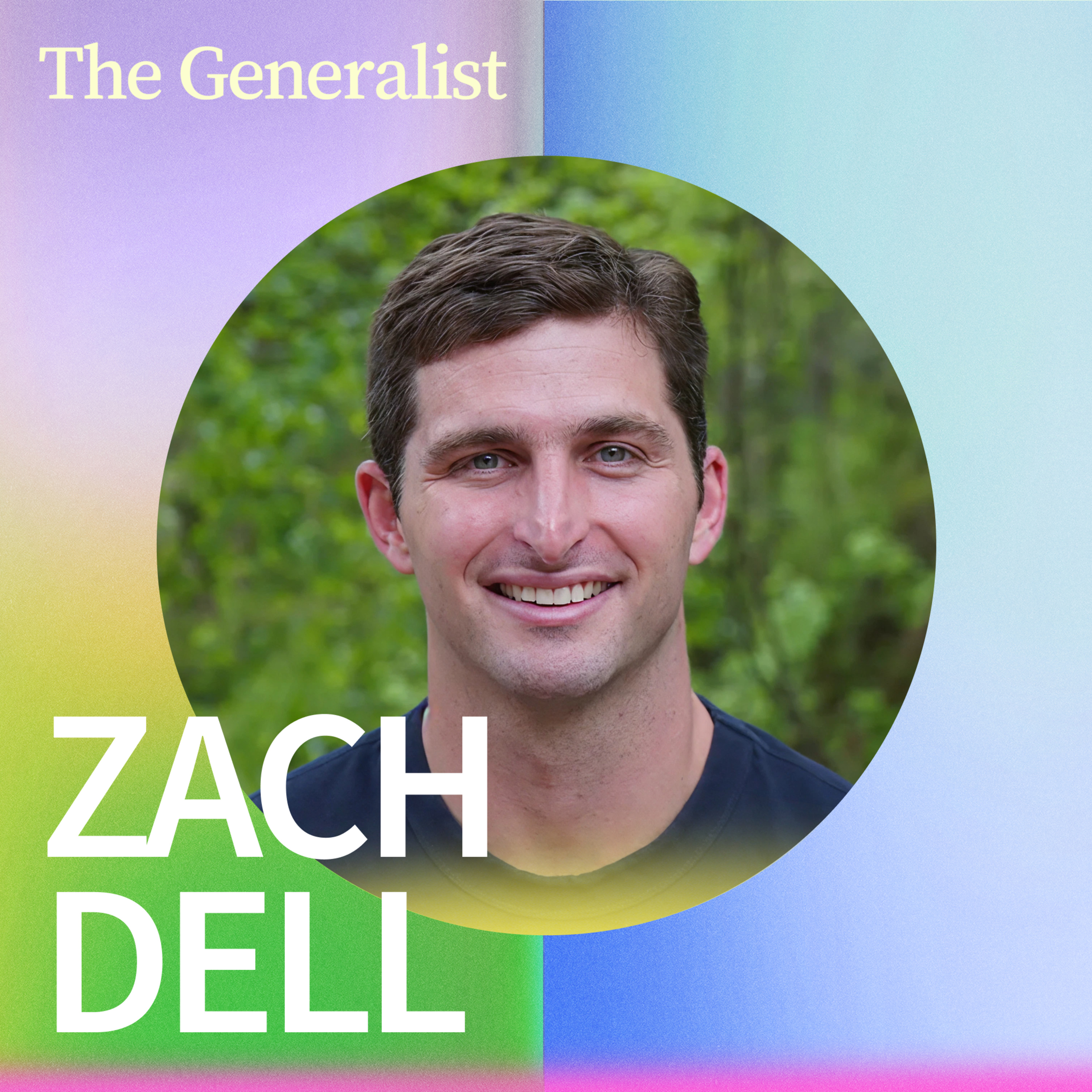
    America’s Electric Power Grid Is Broken. This Startup Is Trying to Fix It. (Zach Dell, co-founder & CEO of Base)

    For decades, America’s electrical system has rewarded utilities for building more infrastructure, not for lowering costs. The result is a grid that expanded but rarely improved. Zach Dell, co-founder and CEO of Base, is building a different kind of power company. In under three years, Base has grown into a vertically integrated business valued in the billions. It combines home batteries and software to store electricity when it is cheap and deliver it when demand spikes. Dell’s interest in energy began long before Base. In college, he tried to lease a Hawaiian lava field for a solar project. He also experimented with anaerobic digestion systems in India and worked at Blackstone and Thrive Capital, where he met his co-founder. His bet is simple but ambitious: the next phase of the grid will come from increasing utilization rather than constantly building new infrastructure. In our conversation, we explore: How a failed college solar project and early energy experiments in India pulled Zach into the power industry The lessons he absorbed from his parents, including truth-seeking, reinvention, and competitive endurance How the U.S. grid’s regulatory structure discourages innovation and why Texas’s deregulated market creates space for new power companies Why batteries are best understood as a time-shifting technology that increases grid utilization and reduces total system costs, not simply as energy generators Base’s “make, move, store, sell” framework for thinking about the full power stack How Base aims to become the first beloved energy company How Zach identified Justin as a world-class operator and built the trust needed to go all-in together on a non-obvious idea How aggressive AI adoption is compressing cycle times and why slow adopters risk falling behind — Thank you to the partners who make this possible Granola: The app that might actually make you love meetings Brex: The intelligent finance platform. — Transcript: https://www.generalist.com/p/americas-electric-power-grid-is-broken⁠ — Timestamps (00:00) Introduction to Zach Dell and Base (02:08) The Hawaiian lava field solar project and early energy curiosity (07:03) Investing vs. operating (09:31) Lessons from Phil Jackson on aligning talented teams (14:27) Lessons from his parents (18:20) The loneliness of solo founding and the value of co-founders (23:45) Justin’s strengths as a co-founder and how their partnership formed (29:55) Why Base became the obvious focus (32:08) The original vision and the three reversals (34:58) The US power grid and what makes Texas different (39:19) Why batteries matter and what Base is building (41:12) How Base works in two market types (45:10) Base’s core product (46:50) The software behind Base’s battery network (48:20) Base’s partnerships with battery cell makers (49:51) The Gen 2 hardware mistake and the lesson in risk management (51:08) Dino’s strengths as Head of Hardware (52:36) Base’s positioning as grid infrastructure (53:29) Building a beloved energy brand (58:01) How hiring at Base has evolved (1:01:10) AI workflows at Base (1:03:00) Zach’s dedicated deep work time (1:05:54) Final meditations — Follow Zach Dell LinkedIn: https://www.linkedin.com/in/zach-dell-a631a554 X: https://x.com/ZachBDell — Resources and episode mentions: https://www.generalist.com/p/americas-electric-power-grid-is-broken — Production and marketing by penname.co. For inquiries about sponsoring the podcast, email jordan@penname.co.

  • February 24 · 1 hr 7 min

    Everyone Is Betting on Bigger LLMs. She's Betting They're Fundamentally Wrong. (Eve Bodnia, Founder & CEO of Logical Intelligence)

    Eve Bodnia is the co-founder and CEO of Logical Intelligence, which is developing energy-based reasoning models (EBMs) as an alternative to large language models. She argues that LLMs, which operate by recognizing and recombining patterns within language space, are structurally incapable of genuine reasoning. Eve's alternative: Kona — an EBM that reasons in abstract latent space, learns rules about the world rather than surface patterns, and can interface with language models as one output channel among many. Eve traces the core ideas behind her architecture to decades of work in symmetry groups, condensed matter physics, and brain science — fields that share, as she explains, the same underlying mathematics. In a public demo, Kona solved a complex reasoning task for roughly $4 in compute, compared to an estimated $15,000 using frontier LLMs. With Yann LeCun serving as founding chair of its technical board, Logical Intelligence sits at the center of a small but growing effort to rethink AI beyond language-based models. In our conversation, we explore: Why Eve believes LLMs can’t truly extrapolate knowledge, even at larger scale What energy-based reasoning models are—and where the “energy” concept comes from The $4 vs. $15,000 benchmark, and what it tells us about the cost of guessing vs. knowing How Logical Intelligence showed spontaneous knowledge transfer at just 16M parameters Why systems like chip design, surgical robotics, and power grids need more than probabilistic AI What formally verified code generation means for the future of programming Why the math behind particle physics also explains how the brain filters signal from noise How meeting Grigori Perelman as a teenager shaped Eve’s views on ego and ownership in science Why Eve believes humans must remain the constraint-setters in advanced AI How meditation, piano, and Eastern philosophy support her creative process — Thank you to the partners who make this possible Granola: The app that might actually make you love meetings. Persona: Trusted identity verification for any use case. — Transcript: https://www.generalist.com/p/everyone-is-betting-on-bigger-llms — Timestamps (00:00) Introduction (03:03) Eve’s encounter with Grigori Perelman (05:38) Why bizarre people are Eve’s favorite people (06:56) Her early obsession with math and physics (09:02) The manifold hypothesis and language (11:54) The Kekulé Problem (14:05) Eve’s upbringing and her CERN research in high school (17:40) Eve’s academic path (20:36) Symmetry in nature (22:58) Spirituality and creativity (27:00) Theory vs. experiment (29:03) Uncovering a critical gap in AI models (33:45) What Logical Intelligence is building (35:50) Logical Intelligence’s use cases (42:08) Energy-based models explained (45:06) LLMs vs. EBMs (48:01) AGI defined (51:22) Kona’s knowledge extrapolation (53:20) The team behind Logical Intelligence (58:09) Early investors in Logical Intelligence (58:50) Feynman’s influence on Eve’s work (1:01:15) How Eve sustains her creativity (1:03:42) Final meditations — Follow Eve Bodnia LinkedIn: https://www.linkedin.com/in/eve-bodnia-351b41355 X: https://x.com/evelovesolive Website: https://logicalintelligence.com — Resources and episode mentions: https://www.generalist.com/p/everyone-is-betting-on-bigger-llms⁠ — Production and marketing by penname.co. For inquiries about sponsoring the podcast, email jordan@penname.co.
  • February 19 · 1 hr 20 min

    How Bolt Survived An 85% Revenue Crash And Became Europe's Ride-Hailing Champion (Markus Villig, Founder & CEO)

    In 2013, on an Estonian island of just 10,000 residents, a teenager borrowed €5,000 from his parents and decided to take on Uber. Twelve years later, Markus Villig leads Bolt, a company operating in 50+ countries, generating nearly €3 billion in revenue, and standing as one of the only European tech companies competing at true global scale. Rather than going head-to-head with incumbents in their strongest markets, Bolt expanded through underserved cities, emerging economies, and overlooked segments of urban transport. When COVID erased 85% of its revenue in weeks, the company didn’t retreat; it staged a kind of corporate “eucatastrophe,” pivoting into food delivery across nearly 20 countries in what became a company-wide sprint. That same bias toward action now shapes Markus’s broader agenda: investing in defense tech for Estonia and Ukraine, pushing for capital markets reform, and advancing a contrarian thesis on autonomous vehicles. In this conversation, we discuss: How growing up in Soviet-occupied Estonia shaped Markus’s ambition and moral clarity How Bolt’s European ethos and long-term focus on driver retention became a structural advantage The marketplace models and capital discipline that allowed Bolt to outmaneuver better-funded rivals Why Bolt found breakout success in African markets after failing in 12 Western countries The 85% revenue collapse during COVID and the rapid food delivery pivot that reshaped the company Bolt’s partnerships with Stellantis and Pony.ai and its long-term bet on autonomous vehicles Why Ukrainian and Eastern European startups are often outperforming their Western peers Markus’s blueprint for closing Europe’s tech deficit and building globally competitive companies — Thank you to the partners who make this possible Granola: The app that might actually make you love meetings Brex: The intelligent finance platform. Persona: Trusted identity verification for any use case. — Transcript: https://www.generalist.com/p/how-bolt-survived-an-85-revenue-crash — Timestamps (00:00) Intro (03:32) How The Lord of the Rings shaped Markus’s worldview (05:52) Bolt’s underdog story and its existential turning point (10:22) Estonia’s startup DNA and its imprint on Bolt (13:38) Europe’s ambition problem (17:23) Europe’s defense tech gap (23:09) The need for capital market reform in Europe (25:13) Bolt’s origin story (36:35) Frugality as strategy (38:24) What running Bolt actually demands (41:27) The hidden costs of being too lean (42:50) Bolt’s shift to experimentation (44:10) Bolt’s micromobility strategy (45:50) How Bolt found the right markets (50:44) The Serbian mob story (54:00) Markus on venture capital and lessons from Klarna’s board (55:40) Why Bolt never sold (57:08) Bolt’s autonomous vehicle (AV) strategy and key partnerships (1:05:50) The concept of culture-market fit (1:07:48) How Bolt operates: writing, hiring, reading, and more (1:13:15) Markus’s personal strengths (1:14:15) What people get wrong about business (1:16:27) Final meditations — Follow Markus Villig X: https://x.com/villigm LinkedIn: https://www.linkedin.com/in/markusvillig — Resources and episode mentions: https://www.generalist.com/p/how-bolt-survived-an-85-revenue-crash — Production and marketing by penname.co. For inquiries about sponsoring the podcast, email jordan@penname.co.
  • February 3 · 1 hr 16 min

    The Private Company Bringing Nuclear Enrichment Back to America (Scott Nolan, CEO of General Matter)

    Roughly 20% of the U.S. power grid runs on nuclear energy. A quarter of the fuel behind it is headed toward a hard stop. In this episode, I sit down with Scott Nolan, founder and CEO of General Matter, to unpack why uranium enrichment has quietly become one of the most consequential industrial bottlenecks of the 21st century. While at Founders Fund, Scott spent over a year searching for an American enrichment company to back. When he couldn’t find one, he decided to build it himself. Less than a year after emerging from stealth, General Matter secured a historic enrichment site in Paducah, Kentucky, and was awarded a $900 million Department of Energy contract—marking one of the first serious efforts to rebuild domestic enrichment capacity ahead of the 2028 ban on Russian supply. In this episode, we discuss: Why enrichment is the missing link in America’s nuclear supply chain How the U.S. went from controlling 86% of global enrichment capacity to effectively none at commercial scale The science behind uranium enrichment and why it matters for next-generation reactors Why Scott applied the SpaceX playbook to nuclear after more than a decade in venture capital How General Matter is revitalizing the historic Paducah, Kentucky enrichment site The significance of General Matter’s $900 million Department of Energy contract The bipartisan political support for expanding nuclear energy Why Scott believes nuclear energy could grow 3-4x by 2050 The parallels between America’s space and nuclear industries — Thank you to our sponsor, Persona: Trusted identity verification for any use case. — Transcript: https://www.generalist.com/p/the-private-company-bringing-nuclear — Timestamps (00:00) Introduction to Scott Nolan (03:11) General Matter’s mission to rebuild U.S. enrichment (05:06) How the U.S. lost its edge (06:28) The nuclear fuel cycle explained—and where enrichment fits (08:30) Scott’s background: From SpaceX and Founders Fund to General Matter (13:54) Lessons from SpaceX (17:32) How Scott’s focus evolved over 13 years at Founders Fund (20:57) How Scott landed on nuclear enrichment (25:55) Why nuclear energy was off the radar—until recently (30:07) Finding the right partner: Scott and Lee’s collaboration (32:01) What downblending means and why it matters (33:26) How U.S. uranium enrichment quietly came to an end (38:32) The Russian uranium ban and the 2028 supply cliff (40:38) How General Matter plans to compete (43:05) Building a world-class team (46:38) The market for enriched uranium (49:31) Future bottlenecks (50:53) What the U.S. needs to actually scale nuclear energy (52:40) Uranium supply constraints (54:14) LEU vs. HALEU: the fuels powering old and new reactors (57:01) Why 20% enrichment is a critical threshold (59:30) Why General Matter chose Paducah, Kentucky (1:04:34) Legislation and executive orders easing nuclear friction (1:09:42) The $900 million Department of Energy award (1:11:00) Why mission matters most (1:14:12) Final meditations — Follow Scott Nolan X: https://x.com/ScottNolan — Resources and episode mentions: https://www.generalist.com/p/the-private-company-bringing-nuclear — Production and marketing by penname.co. For inquiries about sponsoring the podcast, email jordan@penname.co.

  • January 20 · 1 hr 18 min

    Programming Sunlight: How Reflect Orbital Is Building Satellites to Redirect Light From Space (Ben Nowack, Founder & CEO)

    Most energy conversations start with scarcity. This one starts with abundance. Sunlight powers nearly everything on Earth, directly or indirectly. And yet we have almost no control over when or where we get it. Ben Nowack thinks that’s a solvable problem. Ben is the founder and CEO of Reflect Orbital, a company building satellites designed to redirect sunlight from space—not as a thought experiment, but as a product. The company nearly died before it worked. Eight months in, Ben had $300 left and was living in a garage. He made a deliberate decision to go $50,000 into credit card debt to finish critical tests. At one point, he was down to $21 of available credit. A month later, Reflect raised its first round. Today, the company is preparing to launch its first revenue-generating satellites. This is a conversation about building conviction, finding the real market, and what changes when a fundamental resource becomes programmable. In our conversation, we explore: How Reflect’s satellites work The surprising pivot from energy to lighting applications that made the business immediately viable Ben’s remarkable journey from building RC planes and X-ray machines in high school to founding Reflect Why previous attempts at space mirrors failed and what’s changed to make this possible now The near-death moment when Ben went $50,000 into credit card debt to keep his vision alive How Reflect plans to scale from moonlight-level brightness to potentially powering solar farms The company’s first satellite launches planned for this year, and their path to a full constellation The wide range of applications, from emergency response to municipal lighting to agriculture — Timestamps (00:00) Introduction to Ben Nowack (02:26) What Reflect Orbital is building (05:07) How the satellite constellation works (08:00) What Reflect is launching this year (10:35) Finding early markets (13:43) Ben’s childhood and early building experiences (22:04) What Ben learned working for startups (28:03) High school projects: X-ray machines, rocket engines, and fusion reactors (33:14) The eureka moment that led to Reflect (35:24) Early validation of the idea (38:35) The Russian space mirror experiments of the 1990s and what’s changed (42:31) Partnering with Tristan Similac as co-founder (45:05) Baiju Bhatt’s involvement (47:04) Why Reflect isn’t pivoting to space-based data centers (50:54) Common misconceptions about Reflect’s technology (55:11) Why programmable light is valuable (1:01:28) Initial target markets (1:03:42) The future markets for Reflect (1:07:33) Reflect’s company culture and operational philosophy (1:12:05) Surprises and struggles in building Reflect (1:14:56) Putting the idea to the test — Follow Ben Nowack LinkedIn: https://www.linkedin.com/in/ben-nowack X: https://x.com/bennbuilds — Resources and episode mentions —People— Vladimir Syromyatnikov: https://en.wikipedia.org/wiki/Vladimir_Syromyatnikov Tristan Semmelhack on LinkedIn: https://www.linkedin.com/in/tristan-semmelhack-6a1ba0149 Baiju Bhatt on LinkedIn: https://www.linkedin.com/in/bprafulkumar Marc Andreessen on X: https://x.com/pmarca J.P. Morgan: https://en.wikipedia.org/wiki/J._P._Morgan Ric Burton on LinkedIn: https://www.linkedin.com/in/richardjburton —Other resources— Reflect Orbital: https://www.reflectorbital.com Zipline: https://www.zipline.com Cassegrain: https://en.wikipedia.org/wiki/Cassegrain_reflector Advanced Composite Solar Sail System (ACS3): https://www.nasa.gov/mission/acs3 Znamya: https://en.wikipedia.org/wiki/Znamya_(satellite) Aetherflux: https://www.aetherflux.com Elon Musk’s post on X about building a sentient sun: https://x.com/elonmusk/status/1985048731818094950 Denali: https://en.wikipedia.org/wiki/Denali — Production and marketing by penname.co. For inquiries about sponsoring the podcast, email jordan@penname.co.

  • January 13 · 1 hr 19 min

    Nothing’s Carl Pei on Building a $1B Smartphone Company, Why He Left OnePlus After 10 Days of Retirement, and Why He Thinks About Death Every Week

    Carl Pei is the founder of Nothing, the consumer electronics company known for its distinctive transparent design language across smartphones and audio products. Before launching Nothing in 2020, Carl co-founded OnePlus, where he spent seven years helping build it into a major smartphone brand. But Carl’s instincts as a builder showed up much earlier. As a teenager, he taught himself to code by building Pokémon fan sites, all while moving between China, the U.S., and Sweden. That combination of early creation and constant change shaped a founder comfortable with uncertainty—and deeply motivated by questions bigger than products. Carl thinks often about time and mortality, is skeptical of early retirement, and believes creativity is humanity’s real advantage. In an industry obsessed with optimization, he’s focused on making technology feel meaningful again. In our conversation, we explore: The origins of Nothing’s transparent design language and how it helps differentiate the brand in a mature, competitive market Carl’s childhood fascination with mortality and how it continues to drive his ambition today Nothing’s multiple near-death experiences, from 80% defect rates on first products to fundraising struggles Why India has become a crucial market for Nothing’s smartphone business How Nothing approaches community involvement, including letting users invest alongside VCs The company’s approach to integrating AI features without overhyping the technology Carl’s admiration for Genghis Khan’s management style and talent acquisition approach The future of consumer electronics beyond smartphones — Thank you to our sponsor, Guru — The AI source of truth for work — Transcript: https://www.generalist.com/p/nothings-carl-pei-on-building-a-1b-smartphone-company — Timestamps 00:00) Introduction to Carl Pei and Nothing (02:44) Nothing’s long-term vision (06:33) How existential thinking shapes Carl’s motivation (10:12) Why Carl’s planned sabbatical ended after ten days (12:35) Carl’s international upbringing (16:02) Entrepreneurial experiments in China (19:10) Carl’s competitive nature and attitude toward school (25:30) Lessons from seven years at OnePlus (28:07) Taking a break at age 31 (30:50) Carl’s fundraising strategy (33:26) Why Carl chose London for Nothing’s HQ (35:12) Lessons from Genghis Khan (38:38) Nothing’s first near-death moment (42:56) Nothing’s product evolution and breakout hits (45:24) Partnering with Teenage Engineering (49:28) Design inspirations (51:36) How Nothing recruits talent (53:42) Nothing’s approach to marketing (56:51) How India became a key market (59:48) Why Nothing created CMF (1:02:12) Why Carl is bullish on India (1:03:32) How Carl thinks about AI (1:07:05) Rethinking ads based on community feedback (1:09:05) How Nothing leverages community (1:11:23) Why AI hardware is struggling (1:13:37) Carl’s thoughts on the future of consumer electronics (1:15:10) Philosophies that shape Carl’s worldview (1:16:45) Final meditations — Follow Carl Pei LinkedIn: https://www.linkedin.com/in/getpeid X: https://x.com/getpeid — Resources and episode mentions: https://www.generalist.com/p/nothings-carl-pei-on-building-a-1b-smartphone-company — Production and marketing by penname.co. For inquiries about sponsoring the podcast, email jordan@penname.co.

  • Dec 9, 2025 · 1 hr 16 min

    Why Being a Generalist VC Is a Competitive Advantage (Aydin Senkut, Founder & Managing Partner at Felicis Ventures)

    Two decades ago, Aydin Senkut was a first-time fund manager with a thin track record to show prospective backers. LPs didn’t believe a solo GP, especially one without experience at a legacy firm, could build a lasting franchise. They were wrong. Today, Felicis is a Silicon Valley mainstay on its 10th fund, a $900M vehicle. Across its history, Felicis has backed a slew of winners, including Shopify, Canva, Crusoe, and dozens of other billion-dollar outcomes. Rather than specialize over time, Aydin has remained a true generalist, investing across markets and cycles. In this conversation, we dig into the frameworks, stories, and philosophies that shaped Felicis into what it is — and where Aydin believes the next decade of technology is heading. We explore: How growing up in Turkey with entrepreneur parents shaped Aydin’s approach to risk and investing Lessons from working alongside Larry Page and Sergey Brin during Google’s early days Why Felicis deliberately chose a generalist strategy when most VCs were specializing How international experience became a competitive advantage in finding global winners The mathematical case for portfolio diversification (50-70 companies per fund) Why valuation concerns are often overblown when revenue growth is exponential Felicis’s aggressive AI investment strategy and what other investors are missing The future of robotics and physical AI through companies like Skild AI Why learning and adapting rapidly is Felicis’s constitutional principle — Thank you to our sponsor, Guru: The AI source of truth for work. — Transcript: https://www.generalist.com/p/why-being-a-generalist-vc-is-a-competitive-advantage — Timestamps (00:00) Introduction (03:09) How Aydin made his way to Silicon Valley (06:15) What he learned from his entrepreneurial parents (08:55) Learnings from the early days at Google (15:05) The childhood roots of his investing philosophy (16:31) Why rejection became a catalyst for his venture career (19:28) Strategy behind Felicis's first $41M fund (25:44) How his international background became an investing edge (28:17) How Aydin approaches diversification at scale (32:08) How he sizes investments based on conviction (33:15) Generalist vs. specialist investing (38:23) Why founders are the foundation (42:48) Why success may look different than expected (43:46) The Felicis journey (48:18) Why Felicis is going all in on AI (54:54) Why entry point matters less than potential (57:33) How the AI bubble debate misses the point (59:47) What makes Skild AI a standout company (01:04:58) The AI bets Felicis missed (01:07:55) How missing Airbnb and Uber led to backing Adyen (01:11:20) Final meditations — Follow Aydin Senkut LinkedIn: https://www.linkedin.com/in/aydins X: https://x.com/asenkut — Resources and episode mentions —Books— Antifragile: Things That Gain from Disorder: https://www.amazon.com/Antifragile-Things-That-Disorder-Incerto-ebook/dp/B0083DJWGO Clear Thinking: Turning Ordinary Moments into Extraordinary Results: https://www.amazon.com/Clear-Thinking-Turning-Ordinary-Extraordinary/dp/0593086112 —People— Larry Page: https://en.wikipedia.org/wiki/Larry_Page Sergey Brin: https://en.wikipedia.org/wiki/Sergey_Brin Eric Schmidt: https://en.wikipedia.org/wiki/Eric_Schmidt Brian Chesky on X: https://x.com/bchesky Shane Parrish’s blog: https://fs.blog —Other resources— Felicis: https://www.felicis.com Mastering Portfolio Construction: https://www.generalist.com/p/mastering-portfolio-construction Steve Jobs’s quote on focus: https://www.goodreads.com/quotes/629613-people-think-focus-means-saying-yes-to-the-thing-you-ve Angry Birds: https://www.angrybirds.com Rovio: https://www.rovio.com Adyen: https://www.adyen.com Canva: https://www.canva.com ...Resources continued at: https://www.generalist.com/p/why-being-a-generalist-vc-is-a-competitive-advantage⁠ — Production and marketing by penname.co. For inquiries about sponsoring the podcast, email jordan@penname.co.

  • Dec 2, 2025 · 1 hr 15 min

    Joey Krug on Prediction Markets, Crypto Treasuries & the Next Era of On-Chain Finance (Partner at Founders Fund)

    Prediction markets are no longer a fringe curiosity. They are becoming one of the most revealing instruments in modern finance. Platforms like Polymarket, once a niche corner of crypto, now regularly clear billions in monthly volume as traders speculate on everything from political outcomes to sports to cultural events. Few people saw this future as early, or as clearly, as Joey Krug. A decade before prediction markets went mainstream, Joey dropped out of college to co-found Augur, the first decentralized prediction market protocol. He later became one of the most influential investors in the category by backing Polymarket at Founders Fund. In this conversation, Joey shares why the moment for prediction markets has finally arrived, what has changed, and how these markets are reshaping information flows across society. We explore: The experimental mindset that led Joey from horse-racing predictions to mining bitcoin in high school Why Augur was the right idea at the wrong moment, and what it taught Joey about timing and infrastructure The product, liquidity, and founder-market fit signals that persuaded Founders Fund to back Polymarket Why resolution is the hardest problem in prediction markets, and how Polymarket approaches it How crypto treasury companies are emerging as a major force and where ETFs fit in Why mimetic behavior drives entire sectors and how savvy investors read those waves The rise and fall of Operation Choke Point and its impact on crypto How Founders Fund reframed Joey’s approach to evaluating founders, markets, and structural shifts — Thank you to the partners who make this possible Guru: The AI source of truth for work. Auth0: Secure access for everyone. But not just anyone. — Transcript: https://www.generalist.com/p/joey-krug-on-prediction-markets — Timestamps (00:00) Intro (04:10) How Joey began making predictions with horse racing (08:00) Why Joey began coding with Applesoft BASIC (09:32) How Joey first discovered crypto (11:06) Why Joey dropped out of school to pursue crypto (12:52) The origins of Joey’s interest in medical school (16:15) How Joey spends nights and weekends splitting time between biotech and trading (17:18) The early influences behind Augur’s creation (19:40) Why prediction markets captivated early crypto thinkers (23:26) The unlock crypto created for prediction markets (29:22) How Polymarket began and why Joey decided to back it (32:11) What made Polymarket the right team (35:25) The FBI raid and how Shane responded (38:20) Why Joey expected Polymarket’s volume to hold after the election (40:20) The trend toward duopolies in financial markets (42:37) What sets Polymarket’s product design apart (45:25) How to keep prediction markets clear and unambiguous (48:31) The rise of crypto treasury companies and FF’s work with BitMine (51:26) The value of crypto treasuries and the role of ETFs (54:33) The mimetic rise of crypto treasury companies (57:03) Joey’s take on where the crypto market stands now (1:00:23) Why Founders Fund is bullish on ETH (1:03:03) Operation Choke Point, regulatory whiplash, and the end of the crypto crackdown (1:06:04) Where the Clarity Act falls short (1:08:56) How Joey’s thinking has evolved since joining Founders Fund (1:13:21) Final meditations — Follow Joey Krug LinkedIn: https://www.linkedin.com/in/joeykrug — Resources and episode mentions: https://www.generalist.com/p/joey-krug-on-prediction-markets⁠ — Production and marketing by penname.co. For inquiries about sponsoring the podcast, email jordan@penname.co.

Showing 1–20 of 21 episodes