Skip to content
Artwork for The ECTRIMS Podcast
ScienceHealth & FitnessMedicine

The ECTRIMS Podcast

The European Committee for Treatment and Research in Multiple Sclerosis

The ECTRIMS Podcast is a sounding board for MS experts & advocates to discuss innovative work in MS research, treatment and care with the greater MS research community, while offering a collaborative platform for MS and healthcare experts to promote & nurture the advancement of research.

Play
  • 22 episodes
  • fortnightly
  • Avg 26 min
  • English
Counted on this page — what you have heard stays on this device, so it is not something the list can be paged by.
  • #78
    Thursday · 31 min

    Predicting MS: Can Data Bring Us Closer to Personalised Care?

    Can growing amounts of real-world MS data help clinicians predict disease progression and make more personalised treatment decisions? In this episode of the ECTRIMS Podcast, host Brett Drummond speaks with Dr. Will Brown from Cambridge University and Dr. Carmen Tur from CEMCAT about the rapidly evolving field of predictive modelling in multiple sclerosis. They explore why MS is particularly difficult to predict, from its biological and clinical heterogeneity to the lack of sufficiently sensitive, specific and widely available biomarkers. They also discuss how increasingly rich, long-term datasets are allowing researchers to study disease outcomes, treatment journeys and populations traditionally underrepresented in clinical trials. The conversation examines the methodological challenges that come with real-world data, including missing data, non-random treatment allocation, clinical outcome selection and bias, as well as the opportunities and limitations of AI and machine learning. Finally, they ask what must happen before predictive models can enter routine clinical care — including robust external validation, calibration, interpretability, equitable representation and evidence that using these tools actually improves clinical decisions and long-term patient outcomes. --- This podcast episode is supported by an educational grant from Alexion, AstraZeneca Rare Diseases, Bristol Myers Squibb, Novartis, Roche, Sanofi, and UCB. Educational grant providers have no input into the podcast series content.

  • August 12 · 31 min

    How Technology Is Transforming Multiple Sclerosis Care

    Technology is opening new possibilities for how multiple sclerosis is monitored, treated and managed. In this episode of the ECTRIMS Podcast, host Brett Drummond speaks with Prof. Ellen Mowry of Johns Hopkins University and Prof. Letizia Leocani of Vita-Salute San Raffaele University about how innovative medical technologies could transform MS research and clinical care. Together, they explore: How artifical intelligence, wearable devices and digital biomarkers could help monitor MS progression The potential to capture fatigue, cognition, pain, mood, sleep and other symptoms between clinical visits How passive monitoring could provide a more complete picture of everyday life with MS The growing role of virtual rehabilitation, digital therapies and other technologies in bringing care into people's homes Why digital biomarkers require rigorous research and validation before being used in clinical trials From earlier detection of disability progression to more accessible rehabilitation and personalised symptom management, this episode examines both the opportunities and challenges of using technology to improve MS care. --- This podcast episode is supported by an educational grant from Alexion, AstraZeneca Rare Diseases, Bristol Myers Squibb, Novartis, Roche, Sanofi, and UCB. Educational grant providers have no input into the podcast series content.

  • July 30 · 32 min

    Should High-Risk Populations Be Screened for Multiple Sclerosis?

    Could multiple sclerosis one day be detected before symptoms appear? And if so, should we be actively screening people who are at higher risk? In this episode of the ECTRIMS–MS Journal collaboration series, host Prof. Anneke van der Walt, Controversies Editor at the Multiple Sclerosis Journal, is joined by Prof. Helen Tremlett (University of British Columbia) and Prof. Ruth Ann Marrie (Dalhousie University) to debate one of the most important emerging questions in MS research. Helen argues that targeted screening should begin now—but only within carefully designed research studies—to better understand how MS develops before clinical symptoms appear. Ruth Ann argues that while prevention is the ultimate goal, the science, ethics and healthcare systems are not yet ready for widespread screening. Together they discuss: · Whether MS is entering a new era of prevention research · What lessons can be learned from Parkinson's disease and radiologically isolated syndrome (RIS) · The ethical and psychological impact of identifying people at risk before symptoms develop · How screening programmes could improve—or worsen—health inequalities · What research is still needed before screening could ever become part of routine clinical practice Although they argue opposing positions, both experts agree on one important point: preventing MS is an achievable ambition—but only if research proceeds carefully, ethically and equitably. This MS Journal Controversies article series has been made open access for the next month for ease of reading. "Yes" – High-risk populations should be screened for MS "No" – High-risk populations should not yet be screened for MS "Commentary" – High-risk populations should not yet be screened for MS Note: This episode is part of the MS Journal Controversies in MS series, where experts debate opposing viewpoints on important unresolved questions in MS research. The positions argued do not necessarily represent the authors' personal opinions, but rather present the strongest evidence supporting each side of the debate.

  • July 16 · 27 min

    How Geography, Healthcare Systems and Access Shape the Multiple Sclerosis Journey

    Where someone lives can profoundly influence their multiple sclerosis journey. While advances in diagnosis and treatment have transformed MS care in many parts of the world, millions of people still face significant barriers to diagnosis, specialist care and life-changing therapies. In this episode of the ECTRIMS Podcast, host Brett Drummond speaks with Dr. Fiifi Duodu and Prof. Alfredo Damasceno about the realities of managing MS patients in diverse healthcare settings and what can be done to improve equity worldwide. Together, they discuss: 🔹 Why MS diagnosis can take years in some regions, and how the revised 2024 McDonald Criteria are influencing earlier MS diagnosis 🔹 The impact of limited access to neurologists and MRI 🔹 Barriers to disease-modifying therapies and anti-CD20 treatments 🔹 The role of regional initiatives such as AFRICTRIMS and BCTRIMS 🔹 Why greater diversity in MS clinical trials matters This episode highlights both the challenges and the remarkable progress being made to improve MS care across the globe. ------------------------ This ECTRIMS podcast episode is supported by an educational grant from Alexion, AstraZeneca Rare Diseases. Bristol Myers Squibb, Novartis, Roche, Sanofi, and UCB. Educational grant providers have no input into the podcast series content.

  • July 2 · 23 min

    MS Research Briefs: MRI Biomarkers, Machine Learning and the Future of MS Diagnosis

    Welcome to MS Research Briefs, a new ECTRIMS podcast series delivering an expert guided tour of important new studies in multiple sclerosis research. In each episode, leading MS experts will take a small number of recently published studies and go beyond the headline findings – exploring what the research shows and how it may influence clinical practice and future discovery. In this inaugural episode, Prof. Alan Thompson and Prof. Olga Ciccarelli discuss two studies exploring how advanced MRI biomarkers and machine learning may transform the diagnosis and prognosis of multiple sclerosis. Featured Publications Paramagnetic Rim Lesions and Development of Clinical MS in Radiologically Isolated Syndrome.JAMA Neurology. 2026;83(3):250–258. Machine learning-based combination of the central vein sign, cortical lesions and paramagnetic rim lesions: a web-based tool for the diagnosis of multiple sclerosis.Brain Communications. 2026;8(2):fcag079. Discussed in this episode Can paramagnetic rim lesions identify individuals with radiologically isolated syndrome (RIS) who are most likely to develop clinical MS? Why do paramagnetic rim lesions appear to be stronger prognostic biomarkers while the central vein sign remains a powerful diagnostic biomarker? Can machine learning models combining MRI biomarkers outperform traditional dissemination-in-space criteria? What role might advanced MRI biomarkers play in future diagnostic criteria and treatment decisions? How close are we to AI-supported diagnosis and automated biomarker detection in routine clinical practice? As advanced MRI biomarkers move from research tools towards clinically meaningful decision-making, this episode explores one of the most important developments in contemporary MS research. -------------------------------- This ECTRIMS podcast episode is supported by an educational grant from Alexion, AstraZeneca Rare Diseases. Bristol Myers Squibb, Novartis, Roche, Sanofi, and UCB. Educational grant providers have no input into the podcast series content.

  • June 18 · 31 min

    Vitamin D and Multiple Sclerosis: Separating Evidence from Expectation

    Vitamin D and multiple sclerosis have been linked for decades, but how strong is the evidence – and what does it mean for clinical practice? In this episode of the ECTRIMS Podcast, host Brett Drummond speaks with Prof. Eric Thouvenot from University Hospital of Nimes and Dr. Deborah Mason from Christchurch Hospital about the evolving science behind vitamin D and MS. Together, they explore: Why vitamin D deficiency is associated with increased MS risk The influence of latitude, sunlight exposure and genetics How vitamin D affects immune regulation and inflammation Findings from recent vitamin D supplementation trials As researchers continue to investigate vitamin D's role in MS, this episode provides a balanced look at what we know, what remains uncertain, and what it means for patient care. ____________________________ This ECTRIMS podcast episode is supported by an educational grant from Alexion, AstraZeneca Rare Diseases. Bristol Myers Squibb, Roche, Sanofi, and UCB. Educational grant providers have no input into the podcast series content.

  • #72
    June 3 · 33 min

    Can the revised 2024 McDonald Diagnostic criteria solve the misdiagnosis problem in multiple sclerosis?

    In this episode of the ECTRIMS Podcast, recorded in collaboration with the Multiple Sclerosis Journal "Controversies in MS" series, host Prof. Anneke van der Walt moderates a discussion between Prof. Andy Solomon and Prof. Enrique Gómez on one of the most debated developments in modern multiple sclerosis diagnosis. Together, they explore: • Why misdiagnosis remains a major challenge in MS care • The role of the central vein sign (CVS) and paramagnetic rim lesions (PRLs) in improving specificity • Whether expanding diagnostic sensitivity may increase false positives • The practical realities of implementing advanced MRI biomarkers globally • The importance of radiology training, implementation science, and AI-assisted imaging • How clinicians should approach MRI interpretation in real-world practice This conversation examines the balance between earlier diagnosis, diagnostic accuracy, and equitable implementation of emerging diagnostic tools across different healthcare settings. This episode is part of the MS Journal Controversies in MS series on The revised 2024 McDonald criteria can solve the misdiagnosis problem in MS. The accompanying Yes, No, and Commentary articles are available to read open access for the next month, compliments of MS Journal.

  • #71
    May 15 · 29 min

    EBV and Multiple Sclerosis: Could Infection Hold the Key to MS?

    Epstein–Barr virus (EBV) has become one of the most intensely studied topics in multiple sclerosis research. But how strong is the evidence linking EBV to MS, and could targeting the virus change the future of treatment and prevention? In this episode of the ECTRIMS Podcast, host Brett Drummond speaks with Prof. Gavin Giovannoni and Prof. Tomas Olsson about the evolving science connecting infections, immunity and multiple sclerosis. Together, they explore: Molecular mimicry and how EBV proteins may trigger autoimmune responses Whether EBV contributes to chronic CNS inflammation and disease progression Emerging therapeutic approaches including antivirals, CAR-T cells, and vaccines This conversation examines one of the most important scientific questions in MS research and the therapeutic possibilities that may emerge from it.

  • #70
    April 22 · 26 min

    Fenebrutinib in Relapsing MS: FENhance Trial Results Explained

    New Phase 3 data presented at the AAN conference 2026 provide compelling evidence that fenebrutinib may represent a high-efficacy oral treatment option for people living with relapsing multiple sclerosis. In this exclusive episode, leading experts Prof. Ludwig Kappos from University of Basel and Dr. Jiwon Oh from Barlo MS Centre join host Brett Drummond to unpack the full FENhance 1 & 2 trial results. Together, they explore: How fenebrutinib performed against teriflunomide in relapsing MS Why BTK inhibition continues to generate strong interest across the MS treatment landscape What the results reveal about relapse reduction, MRI outcomes, and disability progression What the safety profile of fenebrutinib looked like in this cohort of patients Listen for a deep dive into the science, clinical context, and future implications for MS care. ----------------------------- This ECTRIMS podcast episode is supported by an educational grant from Alexion, AstraZeneca Rare Diseases. Bristol Myers Squibb, Novartis, Roche, Sanofi, and UCB. Educational grant providers have no input into the podcast series content.

    • Transcript
  • April 8 · 24 min

    How MRI and OCT are Changing Multiple Sclerosis Diagnosis, Prognosis, and Treatment

    Imaging techniques in multiple sclerosis are evolving rapidly, with MRI and emerging biomarkers playing a central role in diagnosis, prognosis and disease monitoring. In this episode of the ECTRIMS Podcast, neurologist Gabriel Bsteh and host Brett Drummond explore how MRI, optical coherence tomography (OCT), and imaging biomarkers are reshaping the way clinicians diagnose and manage MS. They discuss the 2024 updates to the McDonald diagnostic criteria, including the introduction of the central vein sign (CVS), paramagnetic rim lesions (PRL), and the inclusion of the optic nerve. The episode also examines how imaging biomarkers may be used to: Predict disease progression Provide prognostic information at diagnosis Monitor neuro-axonal damage over time Support treatment decisions and personalised medicine This episode is essential listening for anyone interested in multiple sclerosis, MRI, OCT, biomarkers, and advances in MS research and care. ---------------------------- This ECTRIMS podcast episode is supported by an educational grant from Alexion, AstraZeneca Rare Diseases. Bristol Myers Squibb, Novartis, Roche, Sanofi, and UCB. Educational grant providers have no input into the podcast series content.

  • #68
    March 19 · 24 min

    Does the Label Given to My MS Disease Course Matter?

    How much do the labels used to describe multiple sclerosis actually reflect the lived experience of people affected by the disease? In this first episode of the new ECTRIMS–MS Journal collaboration series, host Dr. Anneke van der Walt, Controversies Editor at the Multiple Sclerosis Journal, speaks with Jon Strum, MS caregiver and host of the RealTalk MS podcast, and Kathryn Smith, patient advocate and volunteer with the National MS Society, and person living with MS. Together they explore a deceptively simple question: does the label given to an MS disease course actually matter? Jon argues that disease labels shape perception, communication and expectations for people living with MS and their families. Kathryn explains why those same labels increasingly fail to capture the day-to-day reality of living with the disease. They discuss: Why traditional MS disease course labels can feel disconnected from lived experience The emotional and practical impact of terms such as relapsing-remitting and secondary progressive The concept of PIRA (progression independent of relapse activity) and what it reveals about MS progression Why functional outcomes and patient experience should play a greater role in how MS is described The importance of patient voice in research, clinical conversations and scientific publishing Although they begin from opposing viewpoints, Jon and Kathryn ultimately arrive at a shared conclusion: the MS community may need a new language — one that better reflects biology, individual experience and the realities of living with the disease. Note: This episode is part of the MS Journal Controversies in MS series, specifically its new Controversies: Patient Voice section – a dedicated space highlighting the lived experiences of people affected by MS. Please see the following articles for more information: "Yes" – The label does matter "No" – The label does not matter Commentary

  • February 25 · 22 min

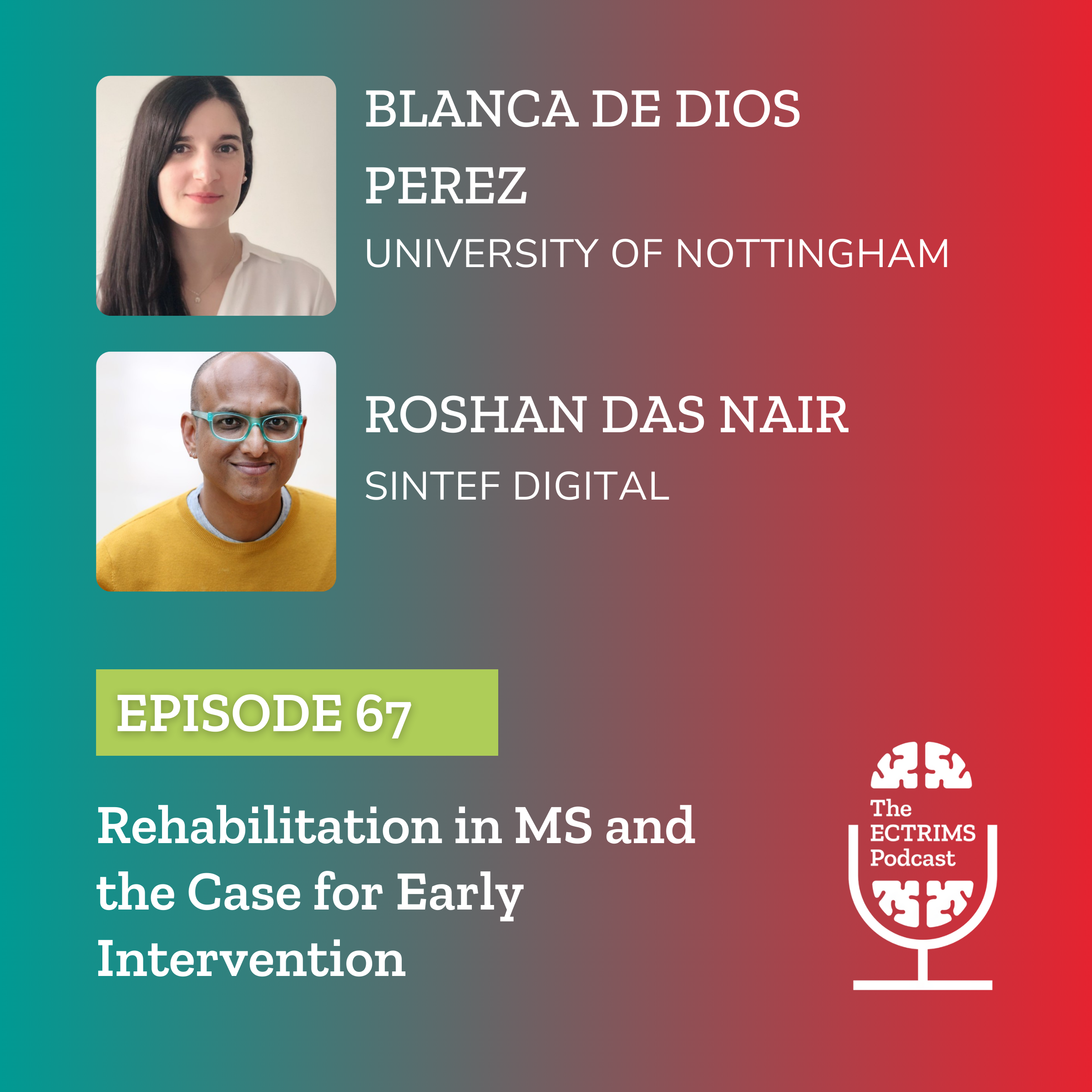
    Rehabilitation in MS and the Case for Early Intervention

    Rehabilitation is more than exercise – it is a personalised process of learning and adaptation that empowers people living with MS to maximise independence, participation and quality of life. In this episode – recorded at ECTRIMS 2025 in Barcelona during the joint ECTRIMS–RIMS meeting – host Brett Drummond speaks with Prof. Roshan das Nair from SINTEF and Dr. Blanca de Dios Pérez from University of Nottingham about the evolving role of rehabilitation in MS care. They explore: · Why rehabilitation should be integrated from diagnosis · The rise of vocational rehabilitation and supporting people to remain in work · Mental health as a core component of MS care · Digital technologies for cognitive screening and personalised triage · The importance of implementation — turning research into real-world care · Moving toward a "community of care" model beyond the clinic As MS care advances, rehabilitation remains essential for translating medical progress into meaningful everyday outcomes. ------------------------------------- This ECTRIMS podcast episode is supported by an educational grant from Alexion, AstraZeneca Rare Diseases. Bristol Myers Squibb, Novartis, Roche, Sanofi, and UCB. Educational grant providers have no input into the podcast series content.
    • Transcript
  • February 7 · 34 min

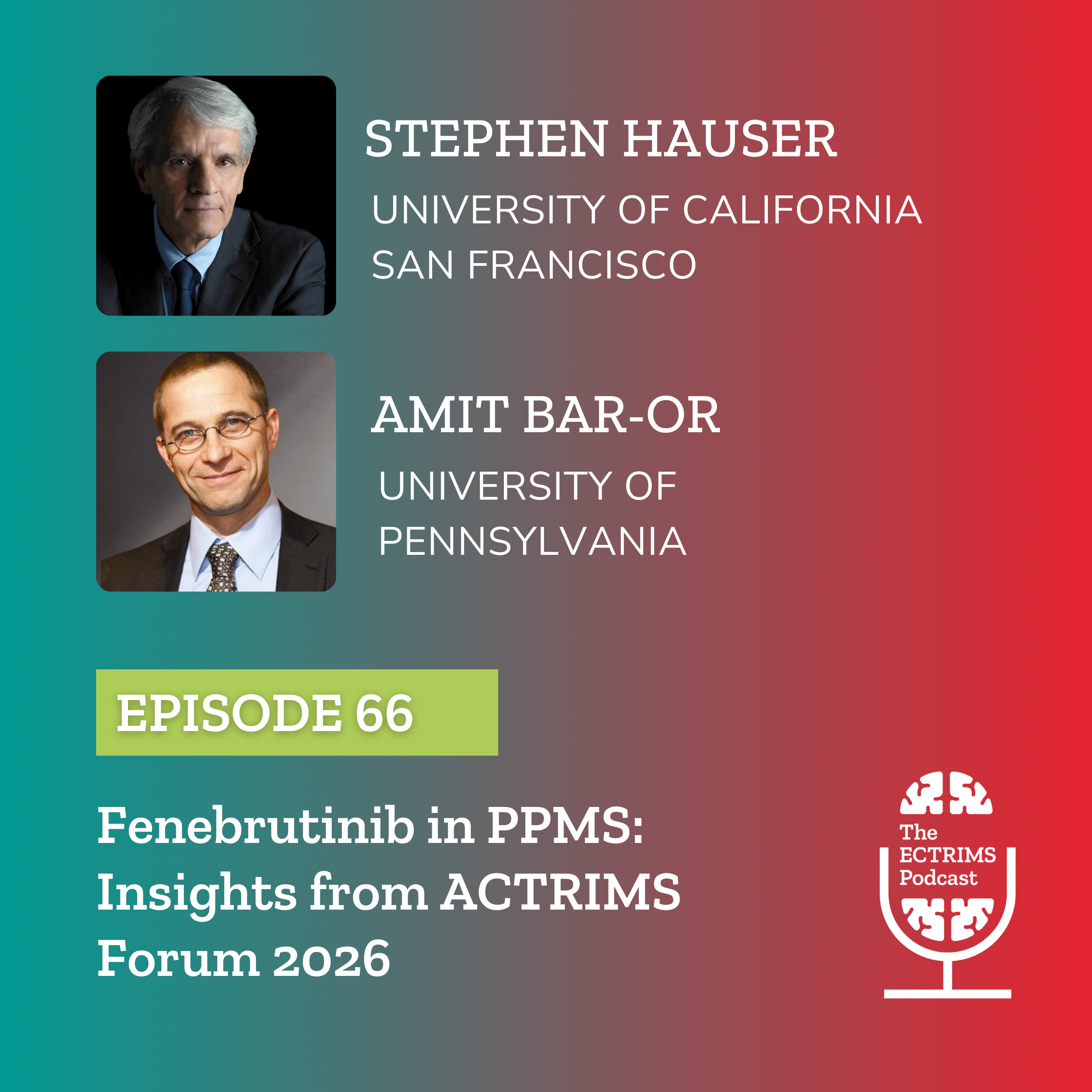
    Fenebrutinib in PPMS: Insights from ACTRIMS Forum 2026

    Clinical trial results unveiled today at ACTRIMS Forum 2026 suggest that fenebrutinib may be a novel and effective treatment option for people living with primary progressive multiple sclerosis. In this exclusive episode providing the first expert discussion of the complete dataset, FENtrepid trial leads Prof. Amit Bar-Or (University of Pennsylvania) and Dr. Stephen Hauser (University of California San Francisco) break down what the fenebrutinib results really show. Together, they explore: Why BTK inhibition is uniquely positioned to address progressive MS biology How fenebrutinib compared to ocrelizumab in the Phase 3 FENtrepid PPMS trial What the data suggest for patients with non-relapsing, chronic disease Listen for a deep dive into the science and the clinical implications. Editorial Note: At 21:49, the discussion refers to Müller cells. The correct term is Kupffer cells. Download the transcript -------------------------------- This ECTRIMS podcast episode is supported by an educational grant from Alexion, AstraZeneca Rare Diseases. Bristol Myers Squibb, Roche, Sanofi, and UCB. Educational grant providers have no input into the podcast series content.

    • Transcript
  • January 13 · 32 min

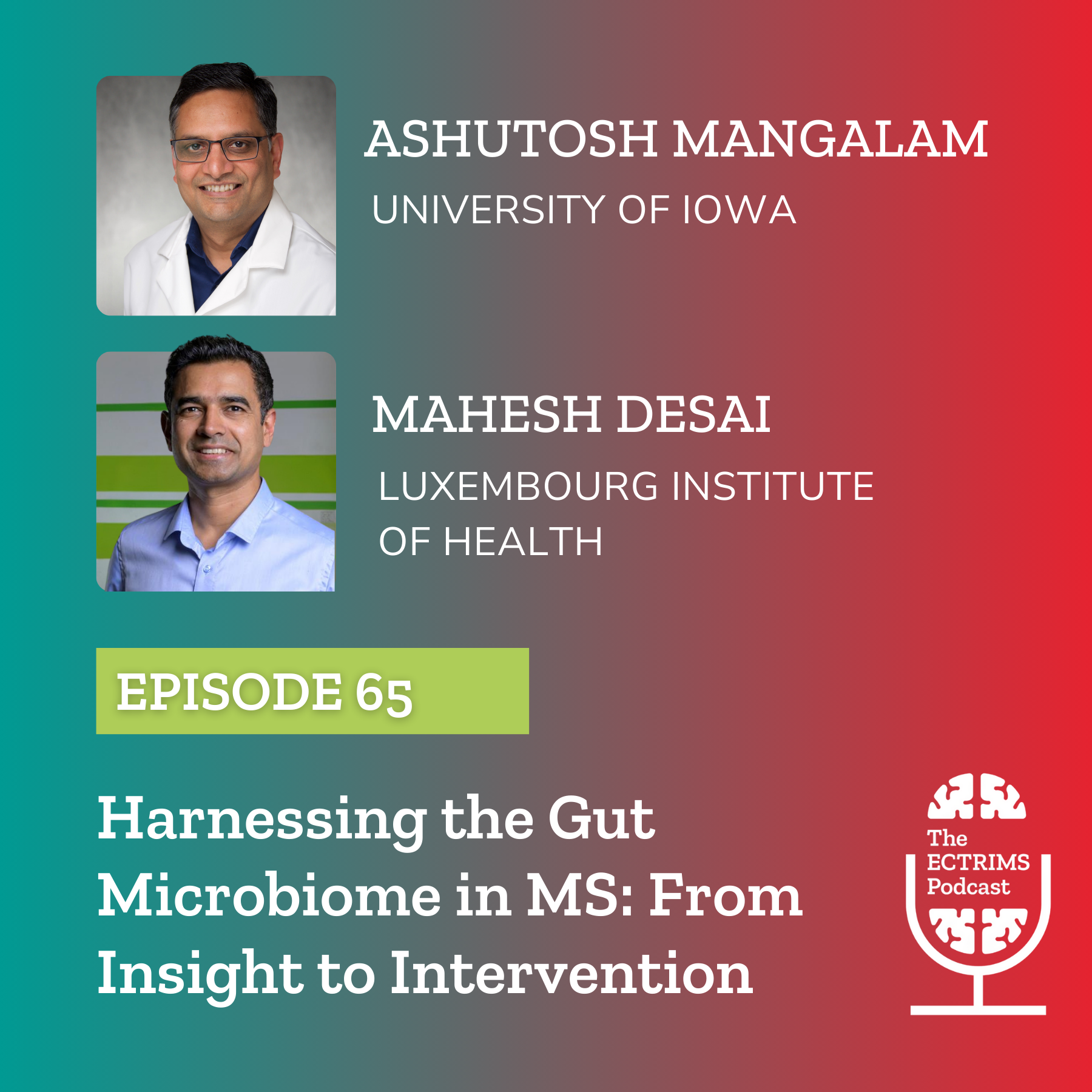
    Harnessing the Gut Microbiome in MS: From Insight to Intervention

    What role does the gut microbiome play in multiple sclerosis — and how close are we to translating microbiome research into meaningful clinical interventions? In this episode of the ECTRIMS Podcast, host Brett Drummond is joined by Mahesh Desai (Luxembourg Institute of Health) and Ashutosh Mangalam (University of Iowa), two internationally recognised leaders in microbiome and MS research, to explore how gut microbes influence disease susceptibility, progression, and immune regulation in MS. The discussion moves beyond simple "good vs bad bacteria" narratives, highlighting why microbial function, community structure, and host–microbiome dialogue are far more informative than individual taxa alone. The speakers examine evidence from animal models and human studies, including twin studies, microbial networks, and immune markers such as IgA coating, to understand whether microbiome changes are drivers or consequences of disease. They also explore the potential of the gut microbiome as a predictive biomarker, the challenges of causality, and why diet and personalised approaches may be key to restoring immune balance in MS. -------------------------------- This ECTRIMS podcast episode is supported by an educational grant from Alexion, AstraZeneca Rare Diseases. Bristol Myers Squibb, Novartis, Roche, Sanofi, and UCB. Educational grant providers have no input into the podcast series content.
  • #64
    Dec 8, 2025 · 30 min

    How well are we measuring cognition in MS?

    Cognitive change is one of the most common—and most misunderstood—symptoms of multiple sclerosis. In this episode, host Brett Drummond is joined by Dr. Vicki Levitt (Columbia University) and Dr. Tom Fuchs (MS Center Amsterdam) to explore why cognition remains one of the biggest unmet challenges in MS care. Although problems with memory, attention, information processing speed, and executive function affect many people with MS, cognitive symptoms are often overlooked in routine clinical practice. The conversation examines why current assessment tools are not widely used, the barriers to implementing cognitive screening in busy clinics, and why measuring cognitive change is becoming increasingly important as treatments continue to improve physical outcomes. From practical challenges in the clinic to cutting-edge research shaping the future, this episode explores how better measurement, earlier detection, and more personalised approaches could help protect one of the outcomes that matters most to people living with multiple sclerosis. -------------------------------- This ECTRIMS podcast episode is supported by an educational grant from Alexion, AstraZeneca Rare Diseases. Bristol Myers Squibb, Novartis, Roche, Sanofi, and UCB. Educational grant providers have no input into the podcast series content.
  • #63
    Nov 13, 2025 · 25 min

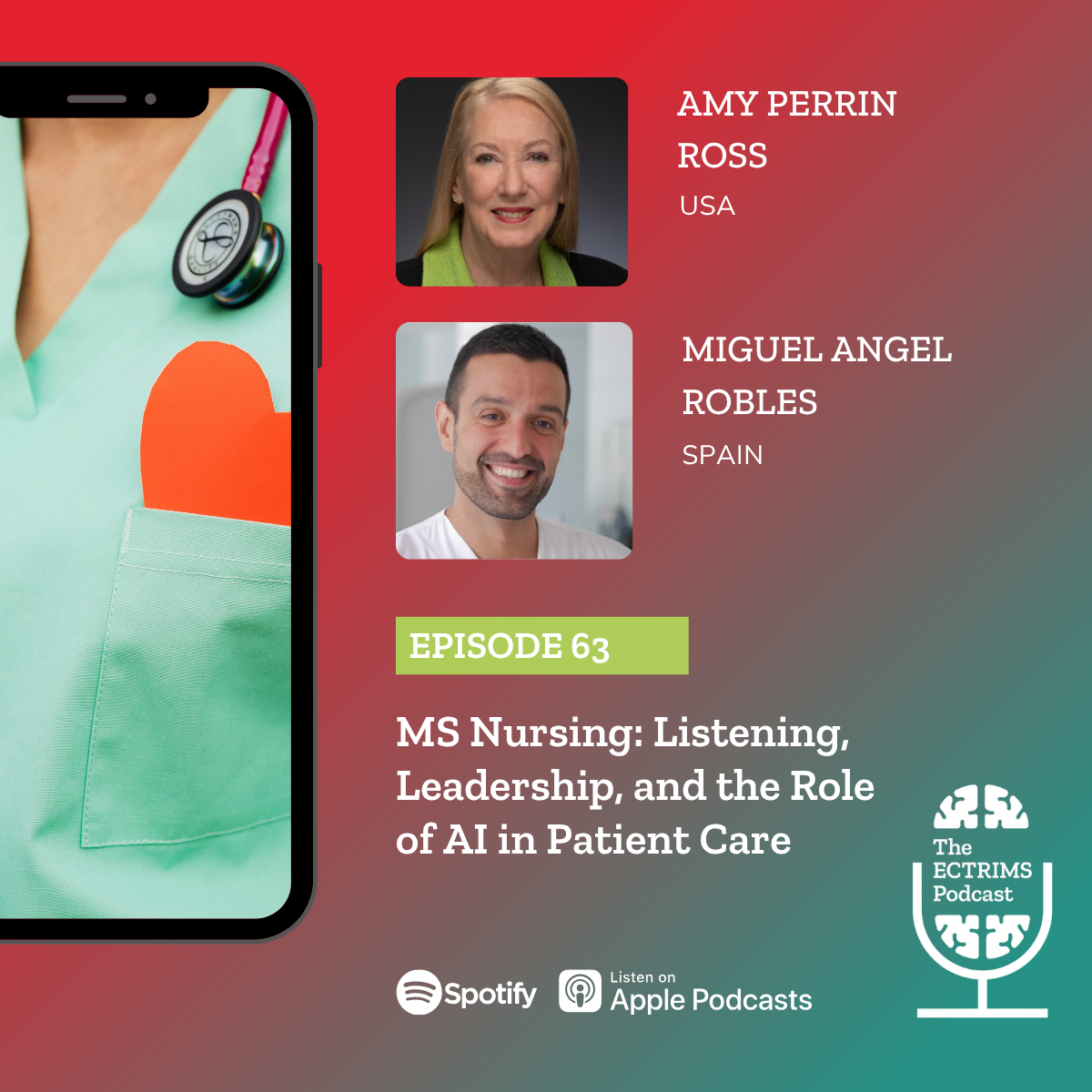
    MS Nursing: Listening, Leadership, and the Role of AI in Patient Care

    At every stage of the MS journey, nurses are the steady link between patients, families, and the healthcare team. In this episode, host Brett Drummond speaks with Amy Perrin Ross, MS Specialist Nurse and Program Coordinator at Loyola University Chicago (USA), and Miguel Ángel Cortés-Vicente, Multiple Sclerosis Consultant Nurse at CEMCAT – Centre d'Esclerosi Múltiple de Catalunya (Spain), about the evolving role of MS nurses — from care coordination and patient engagement to leadership in research and innovation. They share insights from the 2025 ECTRIMS Congress Nurse Sessions, exploring how nurses are advancing health literacy, supporting shared decision-making, and integrating AI to improve patient care. -------------------------------- This ECTRIMS podcast episode is supported by an educational grant from Alexion, AstraZeneca Rare Diseases. Bristol Myers Squibb, Novartis, Roche, Sanofi, and UCB. Educational grant providers have no input into the podcast series content.
  • #62
    Oct 29, 2025 · 20 min

    Why We Need to Talk More About Mental Health in MS

    While much of MS care focuses on physical symptoms, mental health challenges—like depression, anxiety, loneliness, and stigma—often go under-recognised. In this episode, host Brett Drummond speaks with Dr. Rebecca MaGuire, psychologist and MS researcher at Maynooth University, who also lives with MS herself. Together they discuss why mental health must become a core part of MS care, what the latest research reveals, and how clinicians and communities can better support emotional wellbeing throughout the MS journey. This podcast episode is supported by an educational grant from Alexion, AstraZeneca Rare Diseases, Bristol Myers Squibb, Novartis, Roche, Sanofi, and UCB. Educational grant providers have no input into the podcast series content.

  • #61
    Oct 15, 2025 · 21 min

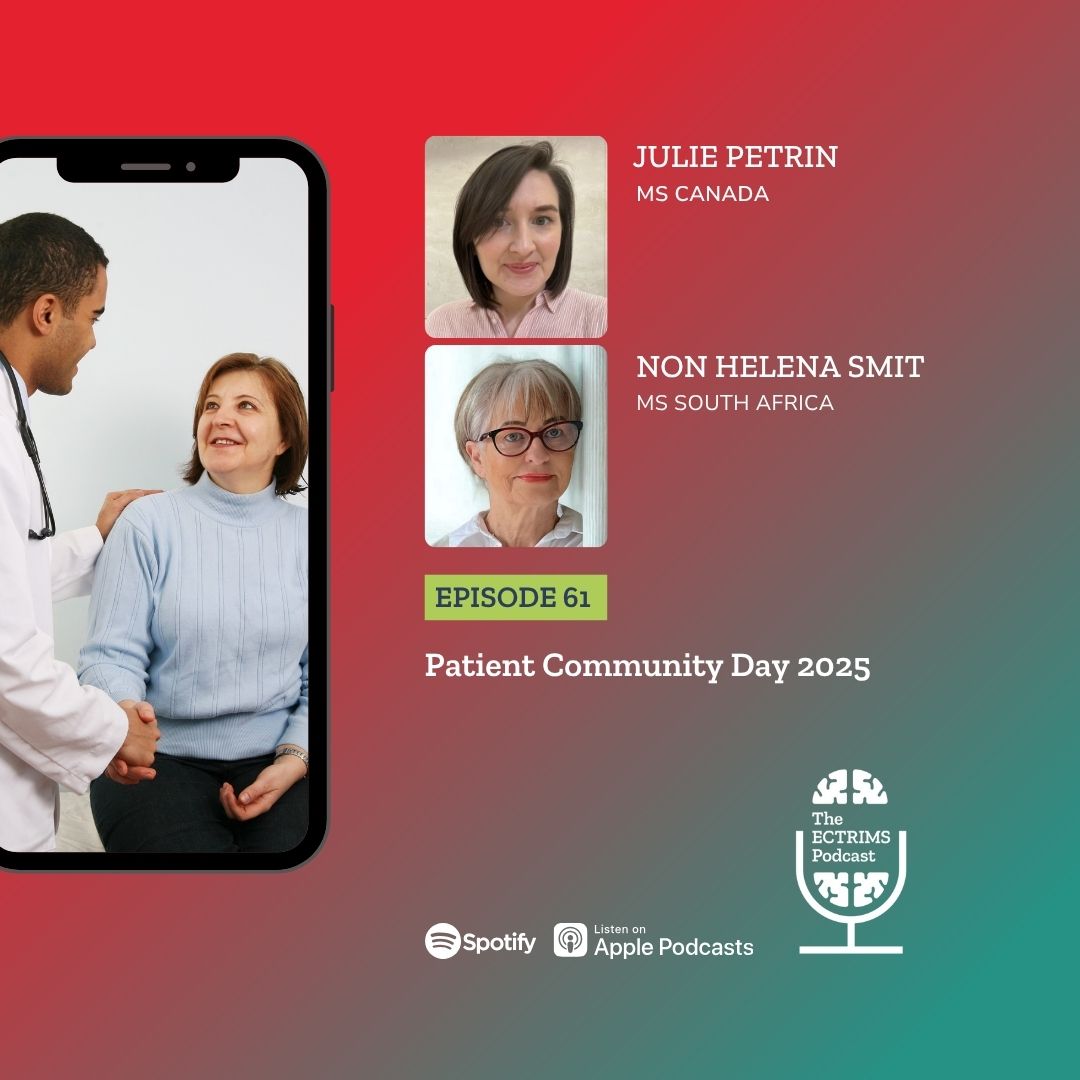
    MS Research Through the Patient Lens: Key Takeaways from Patient Community Day 2025

    Patient Community Day 2025 set a new attendance record, highlighting the growing desire among people living with MS to connect with experts leading the charge in understanding the disease and advancing effective treatments. After the event wrapped up in Barcelona, host Brett Drummond caught up with Julie Petrin, Director of Impact and Evaluation at MS Canada and a person living with MS, and Non Helena Smit, CEO of MS South Africa, to reflect on key takeaways and share what they're looking forward to at next year's event in Toronto. This podcast episode is supported by an educational grant from Alexion, AstraZeneca Rare Diseases, Bristol Myers Squibb, Novartis, Roche, Sanofi, and UCB. Educational grant providers have no input into the podcast series content.
  • Oct 2, 2025 · 25 min

    Can We Repair Myelin in Multiple Sclerosis? Results from the CCMR-Two Trial

    Can damaged myelin be repaired in people living with multiple sclerosis? Results from the CCMR-Two clinical trial presented at ECTRIMS 2025 offered promising new evidence for remyelination using a combination of metformin and clemastine. Straight from his late-breaking presentation in Barcelona, trial lead Dr. Nick Cunniffe of the University of Cambridge joins host Brett Drummond to explain what the results mean, what researchers are learning about the biology of myelin repair, and the next steps towards developing future remyelination therapies for MS. This podcast episode is supported by an educational grant from Alexion, AstraZeneca Rare Diseases, Bristol Myers Squibb, Novartis, Roche, Sanofi, and UCB. Educational grant providers have no input into the podcast series content.

  • #59
    Sep 26, 2025 · 16 min

    What's Next for MS Treatment? Key Takeaways from ECTRIMS 2025

    What were the biggest developments in multiple sclerosis treatment at ECTRIMS 2025? As the 41st Congress came to a close in Barcelona, attention turned to new clinical trial results and what they could mean for the future of MS care. Dr. Sharmilee Gnanapavan, Consultant Neurologist at Barts Health and Princess Alexandra Hospital NHS Trust (UK), joins host Brett Drummond to unpack the key treatment takeaways from ECTRIMS 2025, the research worth watching, and what the MS community can look forward to as the Congress heads to Toronto in 2026. Sponsorship Disclosure: This ECTRIMS podcast episode is supported by an educational grant from Alexion, AstraZeneca Rare Diseases. Bristol Myers Squibb, Roche, Sanofi, and UCB. Educational grant providers have no input into the podcast series content.
Showing 1–20 of 22 episodes