Skip to content
Artwork for The Documentary Life
TV & FilmArtsVisual ArtsBusinessEntrepreneurship

The Documentary Life

The Documentary Life

The Documentary Life is a podcast about building a life in nonfiction storytelling.

Hosted by documentary filmmaker Chris G. Parkhurst, the show explores what it really means to make documentaries—not just as a craft, but as a way of moving through the world with greater curiosity, observation, and empathy.

Each episode features thoughtful conversations with filmmakers, editors, cinematographers, producers, journalists, festival programmers, and other storytellers who have dedicated themselves to telling true stories. Together, we explore the creative process, the realities of production, the ethical questions that arise when working with real people, and the personal challenges of sustaining a meaningful creative life.

But The Documentary Life isn't only about cameras, funding, or film festivals.

It's about learning to listen more carefully. To sit with complexity instead of rushing toward certainty. To embrace uncertainty, contradiction, and the deeply human stories that exist all around us.

Whether you're directing your first short documentary, editing your tenth feature, producing independent nonfiction work, or simply someone drawn to authentic storytelling, this is a place for honest conversations about the rewards and realities of documentary filmmaking.

Expect interviews with accomplished filmmakers from around the world, practical discussions about craft and career, behind-the-scenes insights from real productions, and reflections on the philosophy of living a documentary life.

Because in the end, documentary filmmaking isn't simply about making films.

It's about paying attention.

Welcome to The Documentary Life.

Play
  • 21 episodes
  • fortnightly
  • Avg 44 min
  • English
Counted on this page — what you have heard stays on this device, so it is not something the list can be paged by.
  • S5 · E144
    August 19 · 46 min

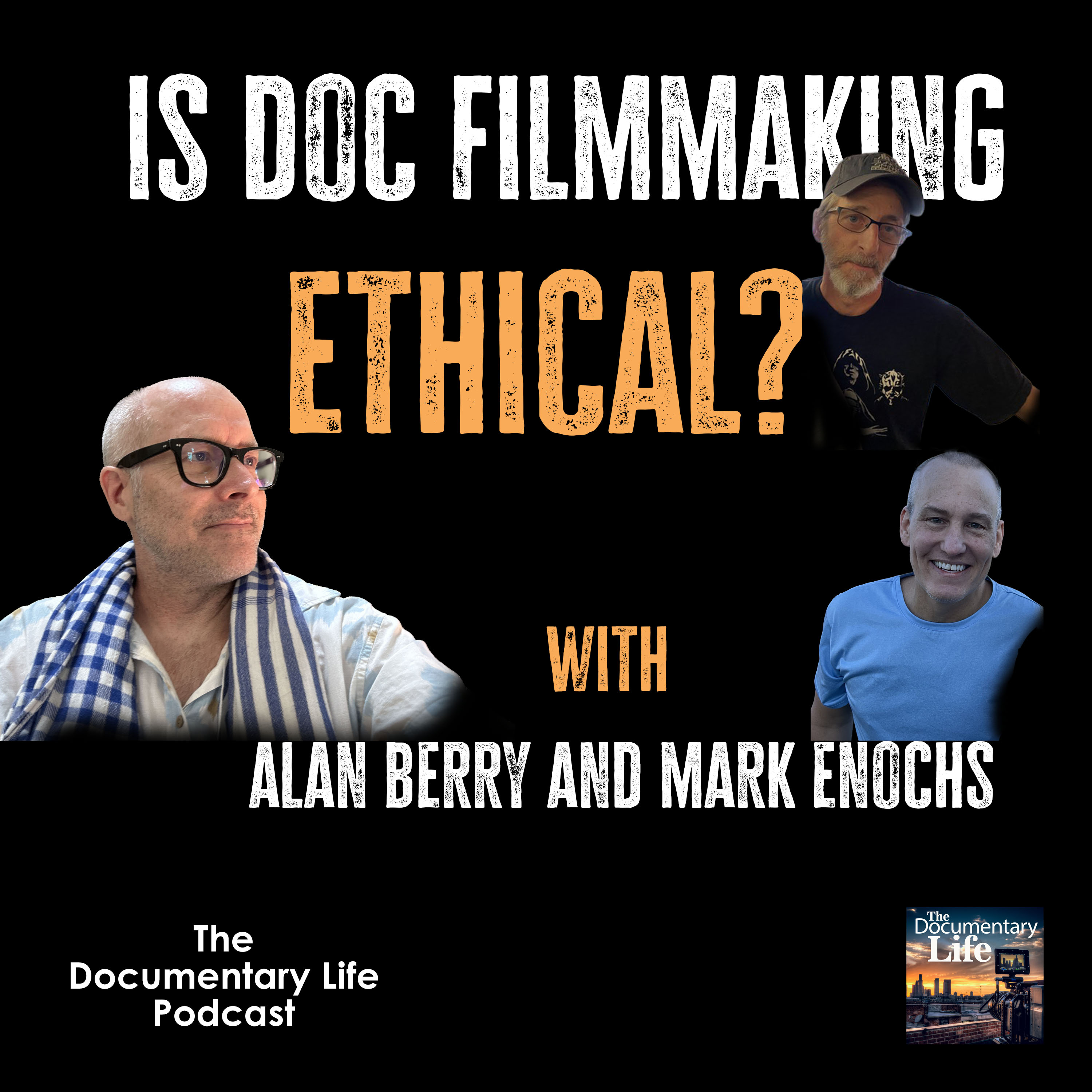
    Episode 144 | The Ethics Lab: Access, Consent & Trust | With Alan Berry & Mark Enochs

    Episode Summary What does it mean when someone trusts you with their story? Access may get a documentary filmmaker through the door, but it is only the beginning. The deeper responsibility lies in earning trust, maintaining it throughout production, and making ethical decisions about another person's story long after the interview ends. In this episode of The Documentary Life, Chris G. Parkhurst is joined by filmmakers Alan Berry and Mark Enochs, directors of Dead Man's Line, for a practical conversation about access, consent, and trust in documentary filmmaking. Drawing from their experience interviewing law enforcement, family members, journalists, and others connected to an extraordinary Indianapolis hostage case, they explore how relationships are built before the camera rolls, why keeping promises to participants matters, what happens when difficult material emerges in an interview, and how filmmakers navigate subjects who may not agree with the finished film. Rather than offering a simple set of ethical rules, this conversation examines documentary ethics as an ongoing human relationship—one requiring honesty, humility, clear communication, and an understanding that being entrusted with someone's story carries responsibilities that can continue long after the cameras stop rolling. In This Episode Why access is only the beginning of a documentary relationship Building trust before the camera ever starts rolling How honesty, preparation, and credibility help earn access Setting clear expectations with documentary participants Keeping promises when difficult material emerges in the edit Navigating subjects who disagree with the finished film The filmmaker’s responsibility to participants after production ends Why documentary ethics ultimately comes down to how we treat people Chapters 00:00 – The first moment of access: how documentary relationships begin 02:00 – Building trust before the camera starts rolling 04:35 – When access becomes earned access 13:41 – Living inside the relationship with your subjects 16:54 – Setting expectations and keeping promises to participants 19:06 – Ethical decisions filmmakers face in the edit 23:31 – What happens when subjects see the finished film? 28:04 – How Dead Man’s Line made its way to Hollywood 37:04 – Loyalty, collaboration, and the long road to Dead Man’s Wire 40:19 – The ultimate trust test—and what documentary filmmakers can learn from it Featured Guests Alan Berry and Mark Enochs are longtime friends and the filmmaking team behind Dead Man’s Line, a documentary exploring the extraordinary 1977 Indianapolis hostage crisis involving Tony Kiritsis. Through extensive archival material and interviews with law enforcement officers, journalists, legal professionals, family members, and others connected to the case, they built the film by earning access one relationship at a time. Their experience offers a valuable case study in the practical ethics of documentary filmmaking: establishing credibility, building trust before filming begins, keeping promises to participants, making difficult editorial decisions, and accepting that not everyone will agree with the finished film. Their work on Dead Man’s Line would later contribute archival material to Gus Van Sant’s narrative adaptation, Dead Man’s Wire, on which Berry and Enochs were credited as historical consultants. Watch Dead Man's Line Full Documentary https://www.youtube.com/watch?v=hUcZXVT6888 Sponsors Learn More 📖 The Documentary Life Field Guide "I've put together the free guide I wish someone had handed me when I first picked up a camera." Download here: The Documentary Life Field Guide 📺 Watch on YouTube Watch the full conversation here: https://youtu.be/SvVx__qM4yw 🎙 Listen to More Episodes Related episodes: ✉ Join the Newsletter Receive weekly reflections, podcast updates, documentary resources, and practical advice for nonfiction filmmakers. Sign up here Support The Documentary Life If you're enjoying the show, there are a few simple ways to support it: • Subscribe • Leave a review • Share the episode with another filmmaker • Join the newsletter Connect Website Newsletter Instagram LinkedIn YouTube Barang Films Quotes from the Episode "The relationship really starts before you ever get in the studio." — Alan Berry "Treating people like how you'd want to be treated goes the furthest. And then on top of it, sticking to your word." — Alan Berry "Show up when you say you're going to. Ask the questions you say you're going to ask." — Mark Enochs "If you're being honest about what you're saying, I think you're going to go over well. But if you're trying to BS somebody... they're going to see through it." — Alan Berry "What we've always wanted is just for people to see it." — Alan Berry About The Documentary Life The Documentary Life is a podcast exploring the craft, business, and lived experience of documentary filmmaking. Through conversations with filmmakers from around the world, host Chris G. Parkhurst explores not only how documentaries are made, but what it means to build a meaningful, sustainable creative life. And Lastly… Stories matter. Listening matters. Human connection matters. Thanks for spending part of your documentary life with us.
  • S5 · E143
    August 5 · 37 min

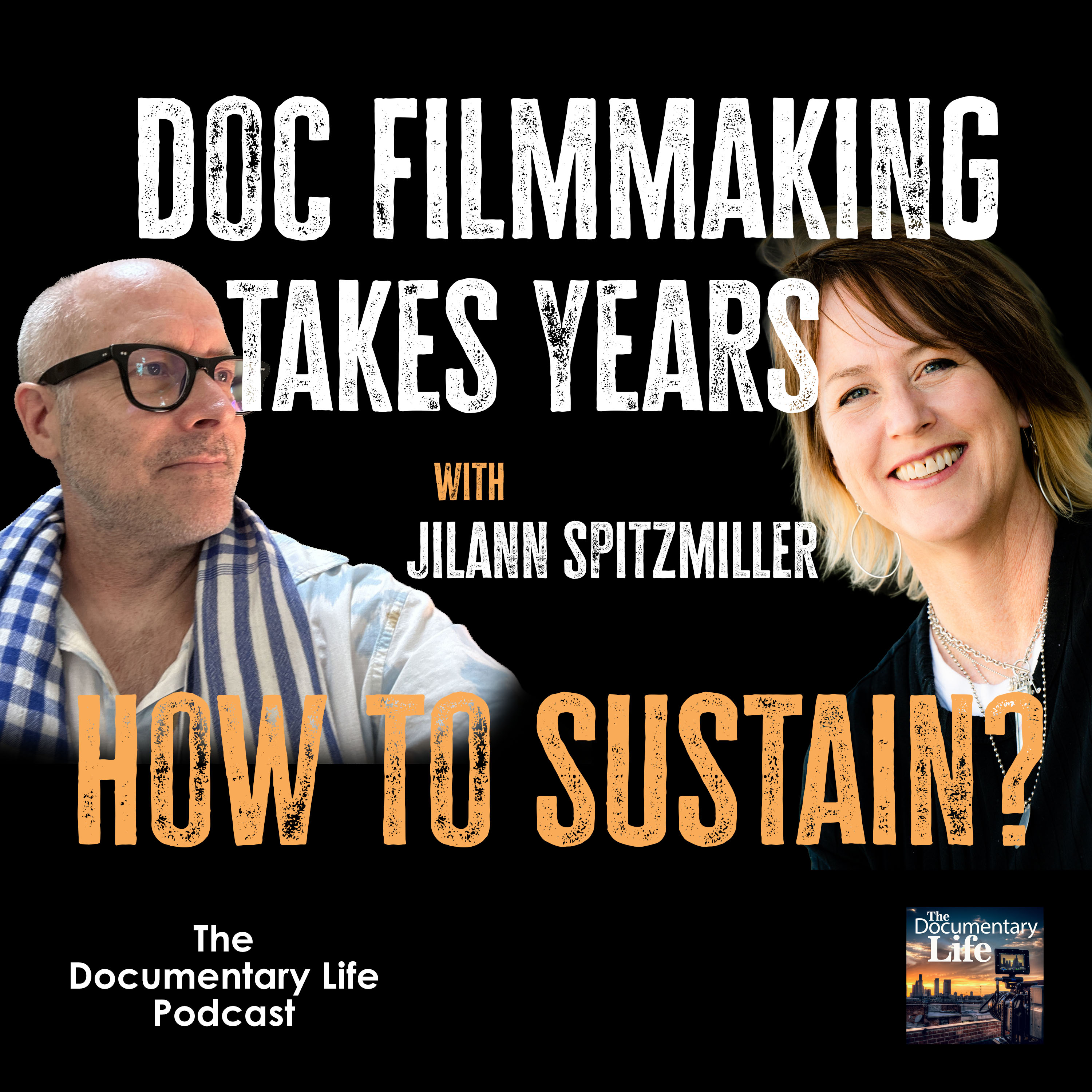
    Episode 143 | How Do I Sustain My Documentary? | With Jilann Spitzmiller

    Episode Summary What happens when the money runs out—but the film isn't finished? For many documentary filmmakers, securing initial funding feels like the biggest hurdle. But as the months stretch into years, a different challenge begins to emerge: how do you sustain both your film and yourself through a process that rarely follows a straight line? In this episode of The Documentary Life, Chris G. Parkhurst is joined by veteran documentary filmmaker and grant mentor Jilann Spitzmiller for an honest conversation about the realities of long-form documentary production. Together they explore sustaining funding over years—not months—why pauses in production don't mean failure, and how filmmakers can navigate the emotional, financial, and creative demands of projects that unfold over time. Whether you're waiting on grants, balancing freelance work with your film, or wondering if your documentary has simply taken too long, this conversation offers reassurance that endurance—not uninterrupted momentum—is often what brings meaningful nonfiction stories to completion. In This Episode Why long production timelines are the norm—not the exception Sustaining your documentary through years of uncertainty Navigating the emotional and financial realities of long-form filmmaking Balancing paid work while keeping your film alive Letting go of guilt when life forces your documentary to pause Building resilience through community, mentorship, and support Why taking a break doesn't mean you've failed Endurance as one of the most important documentary filmmaking skills Chapters 00:00 – Why sustaining a documentary is harder than starting one 04:53 – Why long-form documentaries take years to complete 07:28 – Jilann Spitzmiller on the realities of long-haul filmmaking 14:26 – What happens when the funding runs out? 20:11 – Navigating the emotional middle of a documentary project 23:29 – Balancing paid work while keeping your film alive 28:28 – Finding personal grounding during long productions 31:21 – Why taking longer doesn't mean you're failing 33:20 – Building support through mentorship and community 36:13 – Final reflections and resources for documentary filmmakers Featured Guest Jilann Spitzmiller is an award-winning documentary filmmaker, cinematographer, producer, and mentor with more than 30 years of experience creating long-form, character-driven nonfiction films. Her work has been supported by organizations including the Sundance Institute, ITVS, and the Open Society Institute, and includes acclaimed documentaries such as Shakespeare Behind Bars and Meow Wolf: Origin Story. As an educator and grant mentor, Jilann has helped countless filmmakers navigate the realities of documentary funding, production, and distribution. Drawing on decades of experience making films that unfold over many years, she offers a candid and deeply reassuring perspective on sustaining both a documentary project and the filmmaker behind it. Website Sponsors Desktop Documentaries – Doc Funding Hub Looking for practical guidance on funding your documentary? The Doc Funding Hub from Desktop Documentaries, created by award-winning filmmakers Jilann Spitzmiller and Hank Rogerson, helps documentary filmmakers develop sustainable fundraising strategies through live webinars, funding alerts, an extensive resource library, and the Funding Essentials for Your Documentary course. As a listener of The Documentary Life, you'll receive 50% off your first two months when you join through the link below. 👉 Doc Funding Hub 👉 Documentary Budgeting Tool Kit 👉 The Ultimate Documentary Pitch Template Package 👉 Desktop Docs All Products Learn More 📖 The Documentary Life Field Guide "I've put together the free guide I wish someone had handed me when I first picked up a camera." Download here: The Documentary Life Field Guide 📺 Watch on YouTube Watch the full conversation here: youtube.com/watch?v=1kQ9Y44rE0c&feature=youtu.be 🎙 Listen to More Episodes Related episodes: Episode #142 How Do I Fund My Film? with Liz Nord Episode #69 The Art of Film Funding with Carole Lee Dean Episode #15 Shaking the Money Tree with Morrie Warshawski ✉ Join the Newsletter Receive weekly reflections, podcast updates, documentary resources, and practical advice for nonfiction filmmakers. Sign up here Support The Documentary Life If you're enjoying the show, there are a few simple ways to support it: • Subscribe • Leave a review • Share the episode with another filmmaker • Join the newsletter Connect Website Newsletter Instagram LinkedIn YouTube Barang Films Quotes from the Episode "A documentary isn't measured by uninterrupted momentum. The question isn't whether your film pauses. The question is whether, when the time comes, you find your way back." — Chris G. Parkhurst "If I had known then just how torturous this process would become... I probably never would have made the film. And maybe that's one of documentary's quiet mercies." — Chris G. Parkhurst "Making a film is about commitment." — Jilann Spitzmiller "There's no shame in having to step away. It's just the normal ebb and flow of making a long-term documentary." — Jilann Spitzmiller "Your film is going to come and go. But you're sort of stuck with yourself the whole time." — Jilann Spitzmiller About The Documentary Life The Documentary Life is a podcast exploring the craft, business, and lived experience of documentary filmmaking. Through conversations with filmmakers from around the world, host Chris G. Parkhurst explores not only how documentaries are made, but what it means to build a meaningful, sustainable creative life. And Lastly… Stories matter. Listening matters. Human connection matters. Thanks for spending part of your documentary life with us.
    • Transcript
  • S5 · E142
    July 22 · 40 min

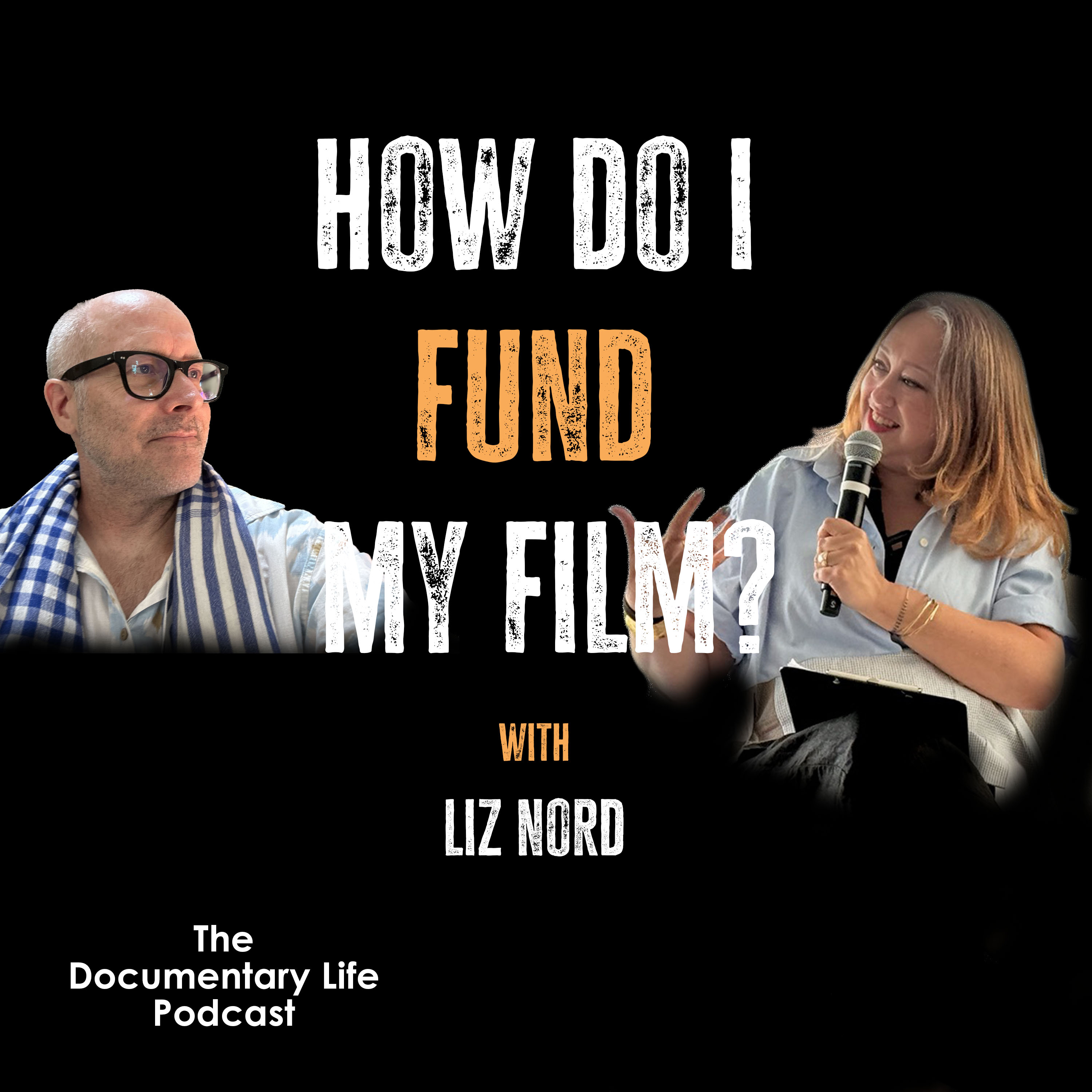
    Episode 142 | How Do I Fund My Film? | With Liz Nord

    Episode Summary How do documentary films actually get funded? It's one of the most common questions filmmakers ask—and one of the least honestly answered. While conversations often focus on grants, pitch decks, and crowdfunding campaigns, the reality is that funding is rarely a single breakthrough moment. More often, it's a long process of building relationships, navigating uncertainty, and learning to make thoughtful decisions that shape not only your film, but your life as a filmmaker. In this episode, Chris G. Parkhurst is joined by filmmaker, educator, and industry leader Liz Nord to explore the realities of documentary funding beyond the myths. Together, they discuss hybrid funding strategies, crowdfunding, grants, equity investment, sustainability, and the ethical questions that arise whenever money enters a creative project. Rather than searching for a single "correct" path, they examine how filmmakers can assemble multiple sources of support while maintaining authorship and creative integrity. Whether you're preparing to fund your first documentary or trying to build a career that extends beyond a single project, this conversation offers a grounded look at what funding really means—and why the strongest foundation for any documentary is often not the money itself, but the relationships that make the work possible. In This Episode Why there is no single "right" way to fund a documentary Building a hybrid funding strategy that actually works How funding relationships shape your film—and your creative decisions Crowdfunding, grants, investors, and the realities of patchwork financing Protecting your authorship while accepting financial support The difference between surviving one film and building a sustainable documentary career When it's okay—and sometimes necessary—to say no to funding Reframing the funding process as another form of storytelling Chapters 00:00 – Opening remarks and episode overview 01:34 – Funding is about relationships, not just money 07:02 – Liz Nord on the realities of documentary funding 09:12 – Why funding is an evolving system—not a one-time event 12:52 – When funding begins to shape the film 16:03 – The myth of the "right" funding pathway 21:25 – Grants, crowdfunding, investors, and hybrid funding 28:36 – Sustainability versus survival as a documentary filmmaker 32:38 – When—and why—to say no to funding 35:43 – Reframing funding as another form of storytelling Featured Guest Liz Nord is a filmmaker, educator, and one of the documentary industry's most respected advocates for emerging storytellers. As Head of Programs and Creative Development at NYU Production Lab, former Director of Content at Sundance Collab, and former Editor-in-Chief of No Film School, she has spent years helping filmmakers navigate the creative and practical realities of building careers in nonfiction storytelling. Drawing on her experience as both a documentary filmmaker and mentor, Liz offers a refreshingly honest perspective on funding, sustainability, and the complex decisions filmmakers face long before their films ever reach an audience. Website Learn More 📖 The Documentary Life Field Guide "I've put together the free guide I wish someone had handed me when I first picked up a camera." Download here: The Documentary Life Field Guide 📺 Watch on YouTube Watch the full conversation here: https://youtu.be/YVPhl7A6JdY 🎙 Listen to More Episodes Related episodes: Episode #92 How to Fund Fund Your Film: The Individual Donor Episode #69 The Art of Film Funding with Carole Lee Dean Episode #15 Shaking the Money Tree with Morrie Warshawski ✉ Join the Newsletter Receive weekly reflections, podcast updates, documentary resources, and practical advice for nonfiction filmmakers. Sign up here Sponsors Desktop Documentaries – Doc Funding Hub Looking for practical guidance on funding your documentary? The Doc Funding Hub from Desktop Documentaries, created by award-winning filmmakers Jilann Spitzmiller and Hank Rogerson, helps documentary filmmakers develop sustainable fundraising strategies through live webinars, funding alerts, an extensive resource library, and the Funding Essentials for Your Documentary course. As a listener of The Documentary Life, you'll receive 50% off your first two months when you join through the link below. 👉 https://desktop-documentaries.com/tdl Support The Documentary Life If you're enjoying the show, there are a few simple ways to support it: • Subscribe • Leave a review • Share the episode with another filmmaker • Join the newsletter Connect Website Newsletter Instagram LinkedIn YouTube Barang Films Quotes from the Episode "Funding is not just about money. It's about relationship. It's about trust." — Chris G. Parkhurst "Few films are funded from a single source. It's often about putting together a puzzle of different pieces." — Liz Nord "The responsibility of the filmmaker is to make sure the content of the film is not being influenced by anyone outside the story." — Liz Nord "The question isn't just, 'How do I get this film funded?' It becomes, 'What does it mean to invite people into this story?'" — Chris G. Parkhurst "Think of pitching as another opportunity for storytelling. Every time you talk about your film, you understand it a little better." — Liz Nord About The Documentary Life The Documentary Life is a podcast exploring the craft, business, and lived experience of documentary filmmaking. Through conversations with filmmakers from around the world, host Chris G. Parkhurst explores not only how documentaries are made, but what it means to build a meaningful, sustainable creative life. And Lastly… Stories matter. Listening matters. Human connection matters. Thanks for spending part of your documentary life with us.
    • Transcript
  • S4 · E141
    July 8 · 53 min

    Episode 141 | Building a Sustainable Documentary Life | With Ondi Timoner

    Episode Summary Episode 141 marks the beginning of a new chapter for The Documentary Life — not as a relaunch or reboot, but as a recommitment to the questions that matter most. After a five-year hiatus, host Chris G. Parkhurst reflects on the realities that shaped both his filmmaking and his life: burnout, financial uncertainty, raising a family while making documentaries, and the realization that building a meaningful body of work requires more than simply finishing films. It requires learning how to sustain a life around them. Chris is joined by acclaimed documentary filmmaker Ondi Timoner, the only director to win the Sundance Grand Jury Prize twice, for a candid conversation about longevity, reinvention, creative identity, and what it truly takes to remain in documentary filmmaking over decades. Together, they explore the myths surrounding success, the importance of making work without waiting for permission, balancing creative ambition with personal life, and why the most valuable lessons in documentary filmmaking are often the ones no one teaches. This episode isn't about shortcuts, funding strategies, or career hacks. It's about the conditions that allow documentary filmmakers to keep doing meaningful work over the long term. If you've ever questioned whether it's possible to build a sustainable documentary life, this conversation is for you. In This Episode In This Episode Why documentary filmmaking is about building a sustainable life—not just completing a film. Chris shares the personal story that reshaped his understanding of success, funding, and creative longevity. Why many of the most important skills documentary filmmakers need are never formally taught. Acclaimed filmmaker Ondi Timoner reflects on more than three decades of independent documentary filmmaking and what has enabled her to keep creating. The myth that one breakthrough film changes everything—and what actually happens after success. Reinvention, resilience, and adapting to changing industries without losing your creative voice. How filmmakers can avoid tying their identity entirely to the films they make. The importance of stepping away from the edit, reconnecting with nature, and creating space for reflection. Why editing remains one of the most essential storytelling skills a documentary filmmaker can develop. What it really means to live—and sustain—a documentary life. Chapters [00:00] Introduction and core themes of the season [07:08] The financial realities and disillusionment in filmmaking [12:05] Ondi Timoner's background and entry into documentary [26:16] Reinvention and personal transformation in filmmaking [36:13] The relationship between filmmaker identity and their work [43:40] Balancing personal life and documentary work [49:15] Practical advice for sustaining a documentary career Featured Guest Acclaimed documentary filmmaker Ondi Timoner has spent more than three decades telling stories about visionary individuals who challenge convention, reshape culture, and push the boundaries of what's possible. The only filmmaker to win the Sundance Grand Jury Prize twice, her body of work spans music, technology, politics, social justice, and deeply personal human stories. In this conversation, Ondi shares hard-earned insights on creative longevity, reinvention, work-life balance, and why sustaining a career in documentary filmmaking requires far more than talent alone. Whether you're just beginning your documentary journey or questioning how to keep going after years in the field, her perspective offers an honest, generous, and deeply experienced guide to building a life in nonfiction storytelling. Website Instagram Films Documentary Life Reflection Documentary Life Reflection When I stepped away from the podcast five years ago, I didn't stop living a documentary life—I was simply living it in its most difficult form. I was learning that making documentaries isn't only about story, craft, or perseverance. It's also about learning how to build a life that can carry the work without sacrificing everything else that's meaningful. My conversation with Ondi Timoner reminded me that there is no single path through documentary filmmaking. Every career is shaped by different opportunities, setbacks, reinventions, and moments of doubt. But beneath those differences is a shared commitment: we continue because we believe paying attention to other people's lives still matters. Perhaps that's the real business of documentary filmmaking. Not simply finding funding or finishing the next film, but creating the conditions that allow us to keep showing up—with curiosity, with integrity, and with enough balance that we can continue doing this work for years to come. One Thing to Take With You A sustainable documentary life isn't built by finishing one great film. It's built by making choices that allow you to keep making the next one. Watch the Trailer / Teaser All the Walls Came Down Trailer https://www.youtube.com/watch?v=iy9kk2rFlOM Official Website Learn More This is where you promote your ecosystem. 📖 The Documentary Life Field Guide "I've put together the free guide I wish someone had handed me when I first picked up a camera." Download here: The Documentary Life Field Guide 📺 Watch on YouTube Watch the full conversation here: https://youtu.be/JXiZoI5Danc 🎙 Listen to More Episodes Related episodes: Episode # Episode # Episode # ✉ Join the Newsletter Receive weekly reflections, podcast updates, documentary resources, and practical advice for nonfiction filmmakers. Join Sponsors Support The Documentary Life If you're enjoying the show, there are a few simple ways to support it: • Subscribe • Leave a review • Share the episode with another filmmaker Connect Website Newsletter Instagram LinkedIn YouTube Barang Films Quotes from the Episode Chris Parkhurst "Documentary filmmaking is not a naïve choice. It is a deliberate one. It is the decision to pay attention in a world that rewards distraction." Chris Parkhurst "The business of documentary filmmaking isn't really about deals or funding strategies. It's about survival. It's about whether you can stay in this work long enough to keep making it without losing everything else in the process." Ondi Timoner "No one can stop you from making your movies. It's not like you need permission." Ondi Timoner "We tell the truth beneath the headlines and provide bridges of compassion into worlds that other people might never otherwise enter." Ondi Timoner "Nature will return you to yourself. Trust those messages that you hear." 6. Chris: "It's not, 'How do I make this film?' It's, 'How do I build a life where making films is actually sustainable?'" About The Documentary Life The Documentary Life is a podcast exploring the craft, business, and lived experience of documentary filmmaking. Through conversations with filmmakers from around the world, host Chris G. Parkhurst explores not only how documentaries are made, but what it means to build a meaningful, sustainable creative life. And Lastly… Stories matter. Listening matters. Human connection matters. Thanks for spending part of your documentary life with us.
    • Transcript
  • S3 · E140
    Oct 2, 2020 · 30 min

    All Good Things Must Come to An End

    Can you believe that it was over four years ago that we first began producing episodes of The Documentary Life?? Well, neither can we. But as they say, all good things must come to an end! It has been a great ride this here podcast over the past four years! Which is why this is not our typical end-of-the-season show, my #doclifer friend. Don't miss this one thinking that it's simply a re-hash of parts of past episodes. It is truly much more than that. And finally, I'd like to say, thank you, old Friend. Thank you. Sponsors & Thank Yous ° Free Music Archive – Special Thank You to recording artist, Dlay who supplied music for this week’s episode of TDL. You too can download his music or other artists’ music by going to Free Music Archive today! Subscribe Apple | Spotify | Stitcher | Rate and Review If you have found value in this podcast please leave a review so it can become more visible to others. Simply click the link and then click on the Ratings and Reviews tab to make your entry. Thank you for your support!

  • S3 · E139
    Sep 18, 2020 · 51 min

    Winning an Oscar for Your Documentary Film

    Imagine stepping up to the podium to accept your award for Best Documentary Feature for the film that you have put your heart, soul, blood sweat tears into. What would you say? Who would thank? Where would you even start? Well, Steven Bognar, of this year's American Factory knows precisely what this feels like. And he details the story of he and his partner, Julia Reichert's walk to that Oscar podium. And he details a heckuva lot more about what it means to live the life of a documentary filmmaker in Dayton, OH, far from the neon lights of New York, London, or L.A. And what it means to make meaningful documentaries that impact a lot of people and win a lot of awards. What it means to live and lead a documentary life. Topics Discussed host Chris G. Parkhurst gives some History 101 of documentaries and the Academy Awards why its beneficial to the world that documentary filmmakers make films from where they are at how American Factory came from turning down what was initially meant to be a corporate video for the Fuyao factory play-by-play of Steven Bognar and Julia Reichert's walk to the podium to accept their award for Best Documentary Feature unique sound approaches that were brought to American Factory Additional Resources Trailer for American Factory https://www.youtube.com/watch?v=m36QeKOJ2Fc American Factory wins Best Documentary Feature https://www.youtube.com/watch?v=RF4ytC3-M3g Sponsors & Thank Yous ° Free Music Archive – Special Thank You to recording artist, Dlay who supplied music for this week’s episode of TDL. You too can download his music or other artists’ music by going to Free Music Archive today! Subscribe Apple | Spotify | Stitcher | Rate and Review If you have found value in this podcast please leave a review so it can become more visible to others. Simply click the link and then click on the Ratings and Reviews tab to make your entry. Thank you for your support!

  • S3 · E138
    Sep 4, 2020 · 41 min

    Cinematography in Documentary Film

    In the past, documentary cinematography has been in the shadow of narrative feature's, overlooked because of certain, perhaps unfair assumptions about the craft. Well, that is no longer the case since the American Society of Cinematographers, as of this year, has an award for Outstanding Achievement in Non-Fiction Filmmaking. And cinematographers, Fejmi Daut and Samir Ljuma, of the Academy Award nominated, Honeyland, were the recipients of that inaugural award. (Not to mention a host of other cinematography awards!) And so we have today's episode which is entirely dedicated to the craft of documentary cinematography! Topics Discussed host Chris G. Parkhurst talks about what makes a good documentary cinematographer and where we can find them what it's like working as a two person cinematography team how the shooting style changed dramatically midway into filming due to an unforeseen shift in story working without power in rural Macedonia achieving the perpetual golden hour look of Honeyland Additional Resources FREE DOWNLOAD OF HONEYLAND CONVERSATION PART TWO As mentioned in the show, there is much more to my conversation with cinematographers, Fejmi Daut and Samir Ljuma. Too much to put into a single show! To listen to the second part of that conversation head over HERE for your free download! Trailer for Honeyland https://www.youtube.com/watch?v=B27ORUHlp6E Finding the star of Honeyland https://www.youtube.com/watch?v=dj9mT91fe64 Honeyland at DOCNYC https://www.youtube.com/watch?v=lJo1dvoo67k Sponsors & Thank Yous Music Vine 15 PERCENT OFF! Music Vine Thank you to music licensing platform, Music Vine for contributing the wonderful music that we’ve used in this week’s episode. We’ve used many music licensing platforms over the years for commercials, corporate videos, and documentaries and these guys are definitely different. Their music catalogue is truly fresh, diverse, full of character, their search engine is as straight forward and user friendly and their licensing fees? Unlike anywhere else we have come across. If you need any music for your doc project, we can honestly recommend Music Vine. And make sure to use our promo code to get an additional 15 percent off of any subscription!! PROMO CODE: doclife15 Continuing the Discussion with The D-Word Today's episode is only the beginning of the conversation. Now it's time to have your voice heard, #doclifer! So where can you do this? THE D-WORD WHAT IS THE D-WORD The D-Word began in 1996 as a series of online journal entries by filmmaker Doug Block depicting the joy and angst of making and selling his feature documentary, Home Page. In the words of Mr. Block, "it was meant to inform, inspire, humor and depress the hell out of working or aspiring documentary filmmakers, or anyone else interested in the filmmaking process, for that matter!" We had Doug on the show way back in EPISODE #105, where he discussed those early days working as an independent documentary filmmaker. And how this would lead him to creating the first incarnation of The D-Word. The D-Word has long-since evolved into a virtual community and is now the largest, longest-running one of its kind, currently numbering more than 19,000 members from 147 countries. Its focus is now on hosting free discussions on documentary film and production and leading a documentary life. Sound familiar? Get started with The D-Word today, by completing their free APPLICATION. ° Free Music Archive – Special Thank You to recording artist, Dlay who supplied music for this week’s episode of TDL. You too can download his music or other artists’ music by going to Free Music Archive today! Subscribe Apple | Spotify | Stitcher | Rate and Review If you have found value in this podcast please leave a review so it can become more visible to others. Simply click the link and then click on the Ratings and Reviews tab to make your entry. Thank you for your support!

  • S3 · E137
    Aug 21, 2020 · 36 min

    Reality Television and the Documentary Filmmaker

    It wasn't that long ago when reality television was a dirty word that incited some pretty strong feelings among the documentary filmmaking crowd. However, non fiction television has come a long way in the past few years. Of course, don't take my word for it. Take it from fellow documentary filmmaker, Joe Litzinger, who is the executive producer of some of non fiction tv's most well known and respected (did I say respected?) shows. Topics Discussed host Chris G. Parkhurst talks about how documentary filmmakers can use their abilities to advantage in other avenues of production why doc filmmakers are well suited for reality television how one procures work in the reality tv industry the advantages of shooting a documentary film over reality tv how reality television supports Joe Litzinger's documentary life Additional Resources Trailer for Zulu Summer https://www.youtube.com/watch?v=E-BcYvbbl-s Trailer for Will Work for Views https://www.youtube.com/watch?v=Nx2Nt1cYA0E Behind the Scenes for Life Below Zero https://www.youtube.com/watch?v=tTBmwAhCd4c&list=PLh_0X_RDOHqHuDMD3ft0cZ7gqlF6kHhsE&index=14 Continuing the Discussion with The D-Word Today's episode is only the beginning of the conversation. Now it's time to have your voice heard, #doclifer! So where can you do this? THE D-WORD WHAT IS THE D-WORD The D-Word began in 1996 as a series of online journal entries by filmmaker Doug Block depicting the joy and angst of making and selling his feature documentary, Home Page. In the words of Mr. Block, "it was meant to inform, inspire, humor and depress the hell out of working or aspiring documentary filmmakers, or anyone else interested in the filmmaking process, for that matter!" We had Doug on the show way back in EPISODE #105, where he discussed those early days working as an independent documentary filmmaker. And how this would lead him to creating the first incarnation of The D-Word. The D-Word has long-since evolved into a virtual community and is now the largest, longest-running one of its kind, currently numbering more than 19,000 members from 147 countries. Its focus is now on hosting free discussions on documentary film and production and leading a documentary life. Sound familiar? Get started with The D-Word today, by completing their free APPLICATION. Sponsors & Thank Yous ° Free Music Archive – Special Thank You to recording artist, Dlay who supplied music for this week’s episode of TDL. You too can download his music or other artists’ music by going to Free Music Archive today! Subscribe Apple | Spotify | Stitcher | Rate and Review If you have found value in this podcast please leave a review so it can become more visible to others. Simply click the link and then click on the Ratings and Reviews tab to make your entry. Thank you for your support!

  • S3 · E136
    Aug 7, 2020 · 48 min

    Documentary Filmmaking During a Pandemic

    Documentary filmmaking during this time of a pandemic is something that so many of us doc filmmakers are contemplating. Or doing. Or not doing. Today's episode is filled with both a discussion on the ethics of documentary production during this time as well as best practices & safety protocol for those of us who are making our docs during this time. Documentary filmmaker and TDL host, Chris G. Parkhurst, delves into this discussion with IDA's Carrie Lozano and award-winning documentary filmmaking, Heidi Ewing. Topics Discussed Chris G. Parkhurst's tips for filming during this time of Covid the whats, whys, hows of IDA's The Ethics of Documentary Production in a Pandemic how Carrie Lozano's background in both journalism and documentary filmmaker has made her uniquely positioned to discuss filming during this time why award-winning documentary filmmaker, Heidi Ewing has chosen to film during this time how documentary filmmaking inherently is made up of a number of ethical decisions Ewing's best practices & safety protocol for doc filmmakers Additional Resources Read for yourself IDA's The Ethics of Documentary Production in a Pandemic Continuing the Discussion with The D-Word Today's episode is only the beginning of the conversation. Now it's time to have your voice heard, #doclifer! So where can you do this? THE D-WORD WHAT IS THE D-WORD The D-Word began in 1996 as a series of online journal entries by filmmaker Doug Block depicting the joy and angst of making and selling his feature documentary, Home Page. In the words of Mr. Block, "it was meant to inform, inspire, humor and depress the hell out of working or aspiring documentary filmmakers, or anyone else interested in the filmmaking process, for that matter!" We had Doug on the show way back in EPISODE #105, where he discussed those early days working as an independent documentary filmmaker. And how this would lead him to creating the first incarnation of The D-Word. The D-Word has long-since evolved into a virtual community and is now the largest, longest-running one of its kind, currently numbering more than 19,000 members from 147 countries. Its focus is now on hosting free discussions on documentary film and production and leading a documentary life. Sound familiar? Get started with The D-Word today, by completing their free APPLICATION. Sponsors & Thank Yous ° Free Music Archive – Special Thank You to recording artist, Dlay who supplied music for this week’s episode of TDL. You too can download his music or other artists’ music by going to Free Music Archive today! Subscribe Apple | Spotify | Stitcher | Rate and Review If you have found value in this podcast please leave a review so it can become more visible to others. Simply click the link and then click on the Ratings and Reviews tab to make your entry. Thank you for your support!

  • S3 · E135
    Jul 24, 2020 · 51 min

    Race in the Documentary Filmmaking Community

    Questions of race and who has the right to tell another person's or culture's or race's stories have recently been at the forefront of the documentary community's collective consciousness. More than that, it's been the subject of recent debate and discussion, whether in industry-led panels, major publications, or social media. Documentary filmmaker and TDL host, Chris G. Parkhurst, delves into this difficult, sometimes divisive discussion with two of documentary's own, Marjan Safinia and Grace Lee. Topics Discussed how Safinia and Lee came to collaborate on PBS' And She Could Be Next overlook at discussions of race in the documentary community over the past few months who has the right to tell a story and why how people of color in the American documentary industry can have less access and resources than their white counterparts How minorities are looking to reclaim and change the way that their stories are being told Additional Resources Teaser, And She Could Be Next https://www.youtube.com/watch?v=qPgO1J-Y2DY Continuing the Discussion with The D-Word Today's episode is only the beginning of the conversation. Now it's time to have your voice heard, #doclifer! So where can you do this? THE D-WORD WHAT IS THE D-WORD The D-Word began in 1996 as a series of online journal entries by filmmaker Doug Block depicting the joy and angst of making and selling his feature documentary, Home Page. In the words of Mr. Block, "it was meant to inform, inspire, humor and depress the hell out of working or aspiring documentary filmmakers, or anyone else interested in the filmmaking process, for that matter!" We had Doug on the show way back in EPISODE #105, where he discussed those early days working as an independent documentary filmmaker. And how this would lead him to creating the first incarnation of The D-Word. The D-Word has long-since evolved into a virtual community and is now the largest, longest-running one of its kind, currently numbering more than 19,000 members from 147 countries. Its focus is now on hosting free discussions on documentary film and production and leading a documentary life. Sound familiar? Get started with The D-Word today, by completing their free APPLICATION. Sponsors & Thank Yous ° Free Music Archive – Special Thank You to recording artist, Dlay who supplied music for this week’s episode of TDL. You too can download his music or other artists’ music by going to Free Music Archive today! Subscribe Apple | Spotify | Stitcher | Rate and Review If you have found value in this podcast please leave a review so it can become more visible to others. Simply click the link and then click on the Ratings and Reviews tab to make your entry. Thank you for your support!

  • S3 · E134
    Jul 10, 2020 · 46 min

    The Online Film Festival for the Documentary Filmmaker

    Lyndon Stone is the founder and festival director of Melbourne Documentary Film Festival. Melody Gilbert is a documentary filmmaker well acquainted with the world of film festivals. In light of Covid events, both the festival director and filmmaker, have had to pivot their approaches to documentary film festivals. This is the kind of discussion we documentary filmmakers have been wanting to have ever since the pandemic greatly impacted our doc lives. Topics Discussed how Lyndon Stone has incorporated a hybrid approach to this year's MDFF how the virtual festival can actually be a good thing for both the festival director as well as the documentary filmmaker why doco Melody Gilbert was initially hesitant to premiere her documentary feature at MSPIFF which how an online film festival might actually be very advantageous to the independent documentary filmmaker Additional Resources Teaser for Silicone Soul https://vimeo.com/350156250 Check out the full roster of this year's Melbourne Documentary Film Festival! Sponsors & Thank Yous Music Vine 15 PERCENT OFF! Music Vine Thank you to music licensing platform, Music Vine for contributing the wonderful music that we’ve used in this week’s episode. We’ve used many music licensing platforms over the years for commercials, corporate videos, and documentaries and these guys are definitely different. Their music catalogue is truly fresh, diverse, full of character, their search engine is as straight forward and user friendly and their licensing fees? Unlike anywhere else we have come across. If you need any music for your doc project, we can honestly recommend Music Vine. And make sure to use our promo code to get an additional 15 percent off of any subscription!! PROMO CODE: doclife15 ° Free Music Archive – Special Thank You to recording artist, Dlay who supplied music for this week’s episode of TDL. You too can download his music or other artists’ music by going to Free Music Archive today! Subscribe Apple | Spotify | Stitcher | Rate and Review If you have found value in this podcast please leave a review so it can become more visible to others. Simply click the link and then click on the Ratings and Reviews tab to make your entry. Thank you for your support!

  • S3 · E133
    Jun 26, 2020 · 47 min

    Spirituality in Documentary Filmmaking with Mickey Lemle

    Mickey Lemle has made documentary films about some of the most brilliant individuals in the modern world. From His Holiness the 14th Dalai Lama to Ram Dass to Sir Laurens van der Post, Lemle has been rubbing shoulders with great minds who all have very spiritual & compassionate ways of living. Lemle has had the splendid fortune to be able to tell their stories. Topics Discussed how Lemle’s time in Nepal in the Peace Corps informed him about Tibet and in turn led to his making his first documentary film how/why he treats doc filmmaking as personal exploration how to make one’s spiritual documentary accessible to a wider audience the power of a meditation practice to doc filmmakers tips for interviewing the most incredible minds of the world Additional Resources Teaser for The Last Dalai Lama? https://www.youtube.com/watch?v=5v_Rpg_36ig Teaser for Compassion in Exile https://www.youtube.com/watch?v=uDXbAPx2kew To check out Mickey Lemle's full roster of DOCUMENTARY FILMS. Sponsors & Thank Yous Music Vine 15 PERCENT OFF! Music Vine Thank you to music licensing platform, Music Vine for contributing the wonderful music that we’ve used in this week’s episode. We’ve used many music licensing platforms over the years for commercials, corporate videos, and documentaries and these guys are definitely different. Their music catalogue is truly fresh, diverse, full of character, their search engine is as straight forward and user friendly and their licensing fees? Unlike anywhere else we have come across. If you need any music for your doc project, we can honestly recommend Music Vine. And make sure to use our promo code to get an additional 15 percent off of any subscription!! PROMO CODE: doclife15 ° Free Music Archive – Special Thank You to recording artist, Dlay who supplied music for this week’s episode of TDL. You too can download his music or other artists’ music by going to Free Music Archive today! Subscribe Apple | Spotify | Stitcher | Rate and Review If you have found value in this podcast please leave a review so it can become more visible to others. Simply click the link and then click on the Ratings and Reviews tab to make your entry. Thank you for your support!

  • S3 · E132
    Jun 12, 2020 · 48 min

    Personal Trauma in Documentary Film with Sasha Joseph Neulinger

    Sasha Joseph Neulinger endured some of the most traumatic events a child can experience. He is a survivor of childhood sexual abuse. And he has now turned those events into one of 2020's more extraordinary documentary films, Rewind. Neulinger sits down with TDL to discuss his journey making Rewind and to offer some insight into how doc filmmakers might best deal with the depiction of personal trauma in their films. In our first segment, Chris G. Parkhurst, gives us 5 Tips for Making the Personal Documentary. Topics Discussed tips for making your personal documentary film why Neulinger set out to face his own demons by making this documentary film why making the personal documentary needs to be more for yourself than others approaching family members with your personal doc the journey of financing a film like Rewind Additional Resources Teaser for Rewind https://www.youtube.com/watch?v=Dx0q7ETJRAI The D-Word Hey, #Doclifers! By now, you have probably heard the news that we are partners with The D-Word! If you are not already a member of this important online documentary community and resource, allow us to introduce you to them! WHAT IS THE D-WORD The D-Word began in 1996 as a series of online journal entries by filmmaker Doug Block depicting the joy and angst of making and selling his feature documentary, Home Page. In the words of Mr. Block, "it was meant to inform, inspire, humor and depress the hell out of working or aspiring documentary filmmakers, or anyone else interested in the filmmaking process, for that matter!" We had Doug on the show way back in EPISODE #105, where he discussed those early days working as an independent documentary filmmaker. And how this would lead him to creating the first incarnation of The D-Word. The D-Word has long-since evolved into a virtual community and is now the largest, longest-running one of its kind, currently numbering more than 19,000 members from 147 countries. Its focus is now on hosting free discussions on documentary film and production and leading a documentary life. Sound familiar? Get started with The D-Word today, by completing their free APPLICATION. Sponsors & Thank Yous Music Vine 15 PERCENT OFF! Music Vine Thank you to music licensing platform, Music Vine for contributing the wonderful music that we’ve used in this week’s episode. We’ve used many music licensing platforms over the years for commercials, corporate videos, and documentaries and these guys are definitely different. Their music catalogue is truly fresh, diverse, full of character, their search engine is as straight forward and user friendly and their licensing fees? Unlike anywhere else we have come across. If you need any music for your doc project, we can honestly recommend Music Vine. And make sure to use our promo code to get an additional 15 percent off of any subscription!! PROMO CODE: doclife15 ° Free Music Archive – Special Thank You to recording artist, Dlay who supplied music for this week’s episode of TDL. You too can download his music or other artists’ music by going to Free Music Archive today! Subscribe Apple | Spotify | Stitcher | Rate and Review If you have found value in this podcast please leave a review so it can become more visible to others. Simply click the link and then click on the Ratings and Reviews tab to make your entry. Thank you for your support!

  • S3 · E131
    May 29, 2020 · 39 min

    Doc Filmmaking in the Mountains with Eric Becker

    Eric Becker has been taking on extreme challenges since he can remember. If it's not racing bikes it's climbing mountains. If it's not climbing mountains, it's making doc films about people climbing mountains. Tune into this week's episode where we celebrate International Everest Day by welcoming doc filmmaker and mountaineer, Eric Becker on to TDL! In our first segment, Chris G. Parkhurst, gives us Reasons for Working on Multiple Documentary Projects at the same time! Topics Discussed Reasons to work on multiple doc projects at the same time How doc filmmaker Eric Beckergot hooked into documentary as a way to travel the world Logistics of filming an actual mountaineering expedition How to get brand support for your doc films How to work with an otherwise reticent doc subject Additional Resources Teaser for Return to Mt. Kennedy https://vimeo.com/268848753 Sponsors & Thank Yous Music Vine 15 PERCENT OFF! Music Vine Thank you to music licensing platform, Music Vine for contributing the wonderful music that we’ve used in this week’s episode. We’ve used many music licensing platforms over the years for commercials, corporate videos, and documentaries and these guys are definitely different. Their music catalogue is truly fresh, diverse, full of character, their search engine is as straight forward and user friendly and their licensing fees? Unlike anywhere else we have come across. If you need any music for your doc project, we can honestly recommend Music Vine. And make sure to use our promo code to get an additional 15 percent off of any subscription!! PROMO CODE: doclife15 ° Free Music Archive – Special Thank You to recording artist, Dlay who supplied music for this week’s episode of TDL. You too can download his music or other artists’ music by going to Free Music Archive today! Subscribe Apple | Spotify | Stitcher | Rate and Review If you have found value in this podcast please leave a review so it can become more visible to others. Simply click the link and then click on the Ratings and Reviews tab to make your entry. Thank you for your support!

  • S3 · E130
    May 15, 2020 · 54 min

    YouTube For the Documentary Filmmaker with David Hoffman

    It's hard to refute the power and potential of the second biggest search engine in the world, YouTube. Especially for the independent doc filmmaker. Here at TDL we have long talked about the importance of you, the doc filmmaker, in fully embracing and becoming your best entrepreneurial self. The importance of building your own brand. Raising your own funding. Building audiences for all of your work. Selling yourself and your work. YouTube is a great platform for you to be doing this. In our first segment, Chris G. Parkhurst, gives us 5 Tips For Becoming a Documentary Filmmaking Entrepreneur. This segment is followed by a discussion with one of the champions of YouTube for the doc filmmaker, David Hoffman, a doc filmmaking veteran of the industry for over 50+ years, who is now making his living via YT! Topics Discussed how 50+ year doc filmmaking veteran, David Hoffman, came to embrace YouTube how much Hoffman makes per day with YouTube how YouTube is changing the landscape of documentary filmmaking why doc filmmakers need to also embrace the power of the platform best practices for your YouTube channel Additional Resources From David Hoffman to Each of My Subscribers https://www.youtube.com/watch?v=B6iESFlwWlc What Happens When You Lose Everything, David Hoffman on TEDTalks Nine days before TED2008, filmmaker David Hoffman lost almost everything he owned in a fire that destroyed his home, office and 30 years of passionate collecting. He looks back at a life that's been wiped clean in an instant -- and looks forward. https://www.ted.com/talks/david_hoffman_what_happens_when_you_lose_everything?language=en Why You Should Support David Hoffman https://www.youtube.com/watch?time_continue=1&v=uJWZWrrF8sQ&feature=emb_logo Check out David's PATREON PAGE to help support him! Sponsors & Thank Yous Music Vine 15 PERCENT OFF! Music Vine Thank you to music licensing platform, Music Vine for contributing the wonderful music that we’ve used in this week’s episode. We’ve used many music licensing platforms over the years for commercials, corporate videos, and documentaries and these guys are definitely different. Their music catalogue is truly fresh, diverse, full of character, their search engine is as straight forward and user friendly and their licensing fees? Unlike anywhere else we have come across. If you need any music for your doc project, we can honestly recommend Music Vine. And make sure to use our promo code to get an additional 15 percent off of any subscription!! PROMO CODE: doclife15 ° Free Music Archive – Special Thank You to recording artist, Dlay who supplied music for this week’s episode of TDL. You too can download his music or other artists’ music by going to Free Music Archive today! Subscribe Apple | Spotify | Stitcher | Rate and Review If you have found value in this podcast please leave a review so it can become more visible to others. Simply click the link and then click on the Ratings and Reviews tab to make your entry. Thank you for your support!

  • S3 · E129
    May 1, 2020 · 43 min

    Making the Sports Documentary with Gotham Chopra

    Sports documentaries have really come into their own as a documentary genre. The truth is that the built-in drama and sometimes off-the-field shenanigans make for some really compelling stories. Entities like ESPN's 30 For 30 series, HBO Sports, Netflix and Hulu's ventures into sports docuseries, all have been making these films and really elevating the stature of the sports documentary. And so has filmmaker, Gotham Chopra. With his business venture, Religion of Sports, Gotham has been embracing the sports documentary in a way that has really been separating himself from the pack. And we were fortunate enough to be able to sit down with Gotham and have a one-on-one chat about why sports docs are so popular and best practices for the doc filmmaker to be making them! Topics Discussed how Gotham Chopra came to documentary via early journalism assignments How ESPN’s 30 for 30 series legitimized sports as documentary subject Why sports makes for such compelling stories How to gain access to higher profile sports personalities The importance of separating your project from all of the types of content that are already out there Additional Resources Watch the Religion of Sports' The Great Brady Heist in its entirety! https://www.youtube.com/watch?v=I29ZMIOZwX0 Sponsors & Thank Yous Music Vine 15 PERCENT OFF! Music Vine Thank you to music licensing platform, Music Vine for contributing the wonderful music that we’ve used in this week’s episode. We’ve used many music licensing platforms over the years for commercials, corporate videos, and documentaries and these guys are definitely different. Their music catalogue is truly fresh, diverse, full of character, their search engine is as straight forward and user friendly and their licensing fees? Unlike anywhere else we have come across. If you need any music for your doc project, we can honestly recommend Music Vine. And make sure to use our promo code to get an additional 15 percent off of any subscription!! PROMO CODE: doclife15 ° Free Music Archive – Special Thank You to recording artist, Dlay who supplied music for this week’s episode of TDL. You too can download his music or other artists’ music by going to Free Music Archive today! Subscribe Apple | Spotify | Stitcher | Rate and Review If you have found value in this podcast please leave a review so it can become more visible to others. Simply click the link and then click on the Ratings and Reviews tab to make your entry. Thank you for your support!

  • S3 · E128
    Apr 17, 2020 · 40 min

    Documentary Film and the Music Composer with Nainita Desai

    When it comes to documentary film - and really film, in general - one of the forgotten heroes is often the film's music composer. And yet, it's often the music that truly elevates a film from good to greatness, making the storyline and all of its visuals just a bit more rich, complex, and emotional. In today's episode I'll take a look at 5 Considerations for Music for Your Doc. This will be followed by a deep dive discussion with world-renowned film composer, Nainita Desai, the multi-award winning and internationally recognized composer of 2019 Academy Award nominee, For Sama. Topics Discussed five considerations for music for your documentary how a background in both sound and film brought Nainita Desai to composing for film how she immerses herself in the material of a doc project that she will be scoring best practices for the doc director to approach their working relationship with a music composer Additional Resources Sponsors & Thank Yous Music Vine 15 PERCENT OFF! Music Vine Thank you to music licensing platform, Music Vine for contributing the wonderful music that we’ve used in this week’s episode. We’ve used many music licensing platforms over the years for commercials, corporate videos, and documentaries and these guys are definitely different. Their music catalogue is truly fresh, diverse, full of character, their search engine is as straight forward and user friendly and their licensing fees? Unlike anywhere else we have come across. If you need any music for your doc project, we can honestly recommend Music Vine. And make sure to use our promo code to get an additional 15 percent off of any subscription!! PROMO CODE: doclife15 ° Free Music Archive – Special Thank You to recording artist, Dlay who supplied music for this week’s episode of TDL. You too can download his music or other artists’ music by going to Free Music Archive today! Subscribe Apple | Spotify | Stitcher | Rate and Review If you have found value in this podcast please leave a review so it can become more visible to others. Simply click the link and then click on the Ratings and Reviews tab to make your entry. Thank you for your support!

  • S3 · E127
    Apr 3, 2020 · 44 min

    Mental Health and the Documentary Filmmaker with Rebecca Day

    We doc filmmakers are no strangers to mental health. Whether by the very nature of being doc filmmakers or from the subjects of our documentaries, we're often dealing with levels of anxiety, stress, and/or depression on a daily basis. Still it's not something that we often openly talk about. That is, not until recently, as more and more doc filmmakers and more and more documentary organisations are having open and honest discussions about the topic of mental health as it related to independent documentary filmmakers. And our guest, documentary filmmaker and psychotherapist, Rebecca Day (Film in Mind) is often leading these discussions! Enjoy today's episode as both Rebecca and I delve into this immensely important topic that may, in fact, be more relevant now than ever! Topics Discussed ways in which our host has dealt with bouts of mental illness how doc filmmaking brought Rebecca Day to psychotherapy sustainability for the doc filmmaker is not only financial, but emotional how to immerse yourself in your subject but also protect yourself how we doc filmmakers can be dealing with the added stress & anxiety of the coronavirus Additional Resources The following resources come from Rebecca Day's Film in Mind site. "The documentary career is as demanding and taxing as it is rewarding. On the one hand, there are the occasional honours, accolades, fellowships and grants, along with the impetus that your work can make a transformative difference in both moving the art form forward and making substantive social change. But the documentary profession is a long-odds game, one often fraught with disappointment and struggle." In collaboration with IDA and D-Word, Rebecca discussed this topic with the documentary community. Here is a reflection on what took place. "There is an incredible surge of supportive conversations, and the creation of an online community within our own sector, in ways that we haven't witnessed before."​ BFI Network - How to manage your mental health as a filmmaker during coronavirus Sponsors & Thank Yous Music Vine 15 PERCENT OFF! Music Vine Thank you to music licensing platform, Music Vine for contributing the wonderful music that we’ve used in this week’s episode. We’ve used many music licensing platforms over the years for commercials, corporate videos, and documentaries and these guys are definitely different. Their music catalogue is truly fresh, diverse, full of character, their search engine is as straight forward and user friendly and their licensing fees? Unlike anywhere else we have come across. If you need any music for your doc project, we can honestly recommend Music Vine. And make sure to use our promo code to get an additional 15 percent off of any subscription!! PROMO CODE: doclife15 ° Free Music Archive – Special Thank You to recording artist, Dlay who supplied music for this week’s episode of TDL. You too can download his music or other artists’ music by going to Free Music Archive today! Subscribe Apple | Spotify | Stitcher | Rate and Review If you have found value in this podcast please leave a review so it can become more visible to others. Simply click the link and then click on the Ratings and Reviews tab to make your entry. Thank you for your support!

  • S3 · E126
    Mar 20, 2020 · 49 min

    Finding Yingying with Jiayan Shi

    When it comes to being affected by the coronavirus, we doc filmmakers, of course, are no exception. Whether we work in tv broadcasting, run video productions, or are freelancers, we are all feeling the impact of the massive shutdowns happening due to Covid-19. So in today's episode I'd like to offer up some ways in which we might all stay positive and stay focused on our documentary projects and on a bigger scale, our documentary lives, which have already been significantly affected by recent events so much. Jiayan 'Jenny' Shi, is a first time doc filmmaker who has been directly affected by these recent events, as her first documentary film, the extraordinary, Finding Yingying was set to premiere at this year's SXSW, only to lose its premiere once that festival closed its doors due to Covid-19. This candid conversation about coronavirus and her time spent filming the tragic events of Finding Yingying is a conversation that I'll remember for quite some time. I think that you will to. Topics Discussed ways in which we all can stay focused on our documentary lives how a first-time doc filmmaker came upon the tragic story that would change a family's lives as well as her own life the cultural differences involved in filming in two completely different cultures the delicate balance between a grieving family subjects and the doc filmmaker how the closing of SXSW is changing the whole distribution and film festival plan for her film Additional Resources Please check out all that Kartemquin has to offer by going HERE. Sponsors & Thank Yous Music Vine 15 PERCENT OFF! Music Vine Thank you to music licensing platform, Music Vine for contributing the wonderful music that we’ve used in this week’s episode. We’ve used many music licensing platforms over the years for commercials, corporate videos, and documentaries and these guys are definitely different. Their music catalogue is truly fresh, diverse, full of character, their search engine is as straight forward and user friendly and their licensing fees? Unlike anywhere else we have come across. If you need any music for your doc project, we can honestly recommend Music Vine. And make sure to use our promo code to get an additional 15 percent off of any subscription!! PROMO CODE: doclife15 ° Free Music Archive – Special Thank You to recording artist, Dlay who supplied music for this week’s episode of TDL. You too can download his music or other artists’ music by going to Free Music Archive today! Subscribe Apple | Spotify | Stitcher | Rate and Review If you have found value in this podcast please leave a review so it can become more visible to others. Simply click the link and then click on the Ratings and Reviews tab to make your entry. Thank you for your support!

  • S3 · E125
    Mar 6, 2020 · 42 min

    Fire in Paradise with Drea Cooper

    One of the most compelling, intense, and well done documentaries that I saw in all of 2019 wasn't even a feature length film. In fact, its run time was only 39 minutes. But it was 39 mins of riveting documentary that was financed and distributed by Netflix, and it came from ZCDC's Zachary Canepari and Drea Cooper. And Cooper sat down to discuss with us, among other things, what it was like working on this incredible. film. And speaking of run time, in our opening segment, I discuss how to decide what the proper length for your doc films might be. And how, in fact, we may be doing a disservice to our stories, by trying to adhere to a set of arbitrary time lengths. Topics Discussed how Cooper & Canepari came to the decision to make this a 39 min film how Netflix fully supported their film change of plans to pivot to this story how & why the usage of people’s phone footage became a powerful storytelling device Drea Cooper’s recommendsfor covering a catastrophic event on film Additional Resources Trailer for Fire in Paradise https://www.youtube.com/watch?v=5KNAl23NwME&t=8s Trailer for Netflix's Flint Town https://www.youtube.com/watch?v=EfNURrdgWTU And if you haven't already done so, you can LISTEN to our episode that we did with ZCDC's producer, Gary Kout! Sponsors & Thank Yous Music Vine 15 PERCENT OFF! Music Vine Thank you to music licensing platform, Music Vine for contributing the wonderful music that we’ve used in this week’s episode. We’ve used many music licensing platforms over the years for commercials, corporate videos, and documentaries and these guys are definitely different. Their music catalogue is truly fresh, diverse, full of character, their search engine is as straight forward and user friendly and their licensing fees? Unlike anywhere else we have come across. If you need any music for your doc project, we can honestly recommend Music Vine. And make sure to use our promo code to get an additional 15 percent off of any subscription!! PROMO CODE: doclife15 ° Free Music Archive – Special Thank You to recording artist, Dlay who supplied music for this week’s episode of TDL. You too can download his music or other artists’ music by going to Free Music Archive today! Subscribe Apple | Spotify | Stitcher | Rate and Review If you have found value in this podcast please leave a review so it can become more visible to others. Simply click the link and then click on the Ratings and Reviews tab to make your entry. Thank you for your support!

Showing 1–20 of 21 episodes