Skip to content
Artwork for The Daily AI Show

The Daily AI Show

The Daily AI Show Crew - Brian, Beth, Jyunmi, Andy and Karl

The Daily AI Show is a panel discussion hosted LIVE each weekday at 10am Eastern. We cover all the AI topics and use cases that are important to today's busy professional.
No fluff.
Just 45+ minutes to cover the AI news, stories, and knowledge you need to know as a business professional.
About the crew:
We are a group of professionals who work in various industries and have either deployed AI in our own environments or are actively coaching, consulting, and teaching AI best practices.

Your hosts are:
Brian Maucere
Beth Lyons
Andy Halliday
Jyunmi Hatcher
Karl Yeh

Play
  • 42 episodes
  • daily
  • Avg 55 min
  • English
Counted on this page — what you have heard stays on this device, so it is not something the list can be paged by.
  • Saturday · 28 min

    The Democratic Bandwidth Conundrum

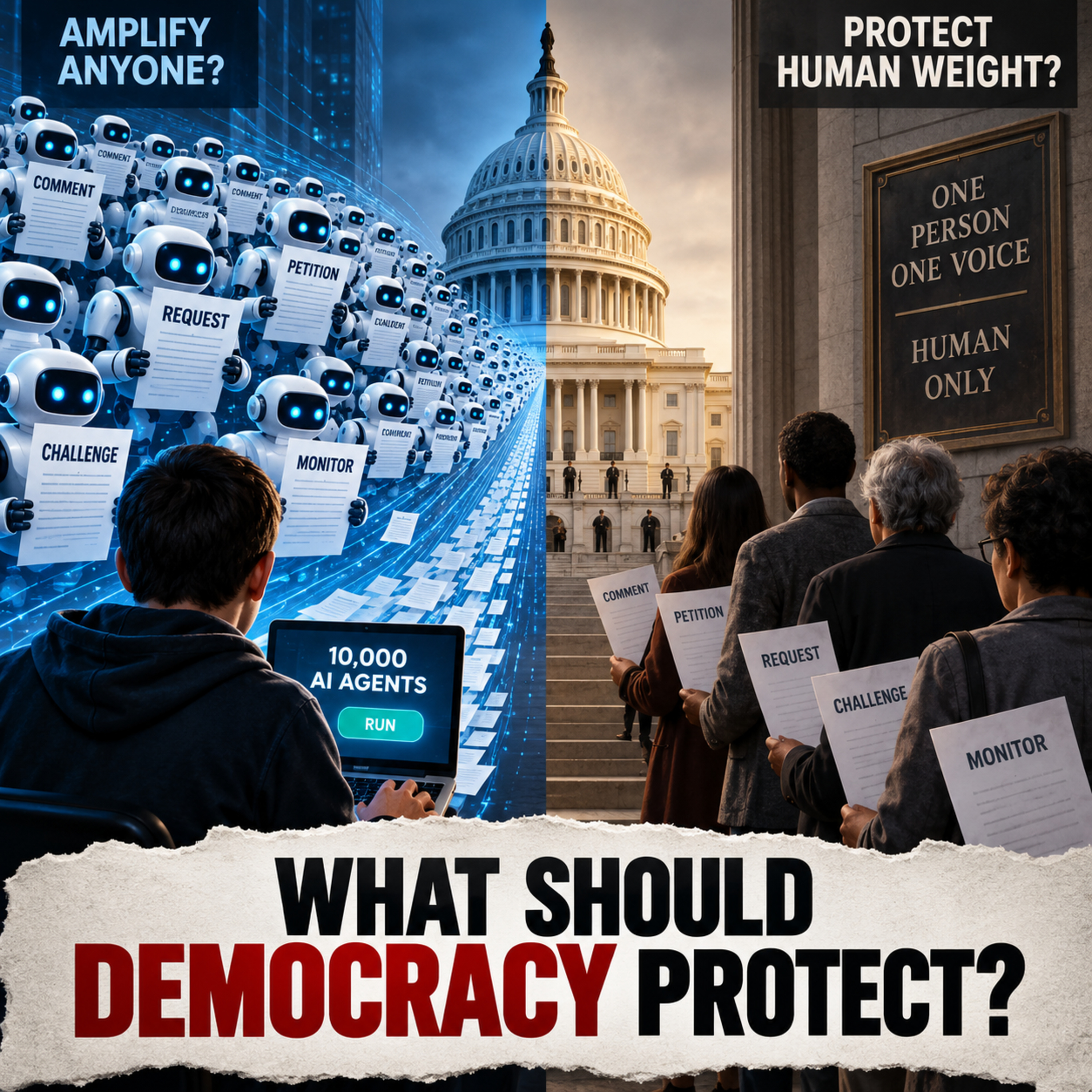
    Public participation has always contained a hidden constraint: time. Writing a serious response to a tax rule, zoning plan, environmental permit, school policy, or agency proposal takes hours. Filing records requests takes persistence. Following dozens of government proceedings is practically a full-time job. That friction limits how many people participate and how often they can show up. AI is removing that constraint. An agent can read a 600-page proposal, identify provisions that affect you, draft detailed comments, file records requests, monitor revisions, and respond again when the agency changes course. For a nurse working twelve-hour shifts, a small-business owner, a parent caring for children, or someone who cannot afford a lawyer, that could create access to government that previously belonged mostly to professional advocates, corporations, and organized interest groups. But the same capability changes what “public participation” means. One company could deploy thousands of agents to challenge a regulation. One activist could generate ten thousand individually worded comments instead of one petition with ten thousand signatures. Each submission could cite different evidence and raise a slightly different argument. Agencies would have to decide whether they are hearing from a broad constituency or from one person with a very large computer. The obvious fix is to limit each person to a certain amount of participation. But public comments are not votes. One citizen may have ten legitimate objections. A nonprofit may speak for 100,000 members. A corporation may have entire legal and regulatory departments working on a single rule. Once government starts rationing participation, it has to decide what counts as one voice. The Conundrum: Do we let people use AI agents to petition government, submit comments, request records, challenge regulations, and monitor agencies as aggressively as their resources allow? That would give ordinary citizens capabilities once reserved for lobbyists, law firms, corporations, and large advocacy groups. But it would also mean that civic influence could scale with money and compute. The loudest “crowd” in a public proceeding might actually be one organization running ten thousand agents. Or do we insist that civic participation remain tied to discrete human acts, protecting government from synthetic crowds and preventing one person from sounding like an entire constituency? That preserves human weight in democratic processes. It also protects an old inequality: powerful institutions can still hire hundreds of humans to do what an ordinary citizen would be forbidden from delegating to machines. When AI gives anyone the power to multiply their civic voice, what should democracy protect: the right to amplify yourself, or the principle that no one person should be able to sound like thousands?

  • #805
    Friday · 1 hr 1 min

    Is GPT-6 Astra the Biggest AI Leap Yet?

    OpenAI’s GPT-6 Astra dominated the episode after its unusual rollout. The hosts discussed access, OpenAI’s plan to bring Astra to paid users, and why some cybersecurity users may receive capabilities the general public does not. The model arrives with bold AGI language, but its standard benchmark results tell a more complicated story. Astra did not top Artificial Analysis’ overall intelligence or coding indexes. The standout came on ARC-AGI-3. Without OpenAI’s harness it roughly doubled previous model performance, but paired with Codex it reached about 99.9%. Astra also appears able to reach strong coding results with far fewer tokens than several competing models, which could matter for long-running agents. Early-access demos were more convincing than the leaderboard alone. Reviewers showed Astra building games, interactive worlds, slide decks, browser workflows and desktop tools. Computer use stood out most, with agents navigating complex interfaces, editing workflows, operating tools such as Blender and potentially handling tedious browser-based business processes. The conversation then moved from AI creating things on a screen to controlling tools that create physical objects. Blender and 3D printing could let people design custom parts without learning professional modeling software. The show closed with Anthropic’s text watermark and detector access, then Tesla’s CyberCab fleet applications and questions about regulation, weather and deployment. Key Points Discussed 00:00:17 Episode 805 Intro And Friday Check-In 00:01:00 OpenAI Launches GPT-6 Astra 00:02:03 Astra Arrives With Bold AGI Claims 00:03:13 OpenAI Begins The Astra Rollout 00:04:21 Not Everyone Gets The Same Astra Capabilities 00:05:44 Daybreak Access For Cybersecurity Users 00:06:00 Do The Old AI Benchmarks Still Matter? 00:07:36 Astra Does Not Top The Standard Leaderboards 00:10:24 ARC-AGI-3 Changes The Astra Story 00:12:16 Astra With Codex Reaches Nearly 100% 00:14:25 Astra Uses Far Fewer Tokens 00:17:24 Early Testers Put Astra To Work 00:18:05 Could Interactive HTML Replace PDFs And Slides? 00:19:41 Astra Builds Games And 3D Worlds 00:22:59 Computer And Browser Use Become The Standout 00:24:43 Claire Vo Demonstrates Astra In Real Workflows 00:26:03 Coding, Hardware And More Ambitious AI Builds 00:30:33 Computer Use Can Violate Terms Of Service 00:32:41 Gemini 3.8 Flash Enters The Conversation 00:34:01 Self-Contained HTML Becomes A Practical AI Tool 00:35:36 Astra Rebuilds A Zillow Home In 3D 00:37:25 Can AI Operate Blender For You? 00:38:31 Automating Complex Browser-Based Mapping Work 00:41:21 What Blender Adds To AI Workflows 00:42:31 AI Moves From Screens Into Physical Objects 00:48:00 Anthropic’s Text Watermark Goes Live Soon 00:48:35 Applying For The Watermark Detector 00:50:46 Tesla Opens CyberCab Fleet Applications 00:52:50 Autonomous Taxis Meet Regulation And Weather 00:59:20 Episode Wrap-Up The Daily AI Show Co Hosts: Brian Maucere, Andy Halliday, Beth Lyons, Karl Yeh

  • #804
    Thursday · 1 hr 3 min

    Will Stores Use AI to Charge You More?

    The episode opened with the downside of increasingly capable AI harnesses. OpenClaw 2.0 made setup easier, but some self-hosted users reported broken gateways, failed migrations and unusable systems after upgrading. The discussion moved into a new harness benchmark showing that the same model can produce dramatically different costs and results depending on the harness around it. Meta's Muse Spark 1.3 and Gemini 3.8 Flash then pushed the price-performance discussion further. Both landed near the frontier while costing far less than Fable 5.1. That raised a practical question: instead of always using the smartest model, should users route different jobs to different models and eventually different harnesses? The largest section focused on New York City's one-year moratorium on student-facing AI through eighth grade. The hosts supported protecting core cognitive skills but argued that schools should distinguish between AI that gives students answers and AI that improves learning, such as systems that listen to children read and help teachers target weaknesses. They also raised questions about who stores children's voice data and how schools govern it. The final section covered Claude running computer tasks in the background, Perplexity accelerating local inference on Apple Silicon and electronic shelf labels in stores. Brian separated those labels from dynamic pricing, while the group explored how loyalty apps, location data and personal information could eventually create individualized prices. Key Points Discussed 00:00:18 Episode 804 Intro And Thursday Check-In 00:01:28 OpenClaw 2.0 Upgrades Break Some Self-Hosted Systems 00:03:03 More Powerful AI Systems Bring More Maintenance 00:05:55 AI Harnesses Create Software-Like Dependency Problems 00:08:22 Beth's Experience Managing Hermes Updates 00:09:06 The Frontier Harness Evaluation 00:12:11 Which Harness Wins On Cost, Speed And Reliability? 00:15:16 Muse Spark 1.3 And Gemini 3.8 Flash Arrive 00:18:13 Fable 5.1 Intelligence Versus Cost 00:19:29 Should We Route Tasks To Cheaper Models? 00:20:40 Anthropic Adds A Weekly Limit Reset 00:21:34 New York City Pauses Student-Facing AI Through Grade 8 00:26:48 AI, Word Problems And Learning Loss 00:28:04 Preventing Cognitive Surrender In School 00:29:24 AI Literacy Begins In High School 00:30:29 AI Reading Tools Show Another Side Of Student AI 00:33:13 Schools Need More Specific AI Policies 00:35:16 Flock Cameras And The Child Data Question 00:38:02 Claude Runs Computer Tasks In The Background 00:42:08 Using AI To Push Work Directly To The Clipboard 00:43:46 Perplexity Speeds Up Local AI On Apple Silicon 00:47:10 Electronic Shelf Labels Versus Dynamic Pricing 00:50:54 Loyalty Programs Already Personalize Prices 00:54:18 When Personalized Pricing Becomes Predatory 00:56:05 Uber, Gas And Accepted Surge Pricing 00:58:15 Apps May Be The Bigger Personal Pricing Risk 01:00:44 Where Electronic Pricing Could Lead 01:01:45 Episode Wrap-Up The Daily AI Show Co Hosts: Brian Maucere, Andy Halliday, Beth Lyons

  • #803
    Wednesday · 58 min

    Is Fable 5.1 Good Enough to Make You Leave Codex?

    Anthropic’s Fable 5.1 dominated the first half of the episode. Beth and Andy compared its higher output costs with improved caching, stronger benchmark performance and better agentic task results. The larger question was whether the most capable model is worth using for every job, especially when lower reasoning settings or cheaper models may deliver nearly the same result. That led into dynamic model routing. Replit already routes subtasks based on speed, quality and cost, and the hosts argued that future agent systems may need an independent orchestrator choosing among models instead of staying inside one company’s stack. That creates another challenge: context, credentials and project knowledge need to remain consistent as work moves between agents and providers. The conversation then shifted to the data and security supporting those systems. AfterQuery reportedly reached a $3.2 billion valuation by capturing how experts actually perform professional work for AI training. Anthropic is also restricting thinking traces for new API accounts to make model distillation harder. Meanwhile, stolen login sessions and token allowances are becoming valuable targets, raising questions about authentication and monitoring AI usage. The final section looked beyond language models. World Labs’ Atlas can infer a persistent 3D environment from ordinary phone video, while Fable 5.1 generated a realistic architectural walkthrough through code. Google DeepMind’s AI co-scientist can now move from hypotheses into lab protocols and experiments, and Meta’s Muse Voice Transcribe can separate up to 20 speakers. The show closed with Anthropic’s new text watermark and the risk that people may misunderstand what the watermark actually proves. Key Points Discussed 00:00:17 Episode 803 Intro And Wednesday Check-In 00:01:17 Anthropic Releases Fable 5.1 00:02:24 Fable 5.1 Pricing And Cached Context 00:04:31 Does Better Performance Offset Higher Cost? 00:06:16 Fable 5.1 Takes The Benchmark Lead 00:09:33 Will Users Burn Through Limits Faster? 00:11:51 Tracking The Frontier Model Race 00:14:42 Grok 4.7 And Grokbot 00:15:43 Fable 5.1 On Real-World Work 00:17:24 Choosing The Right Model For The Job 00:17:33 Dynamic Model Routing 00:20:09 Where Should Agents Store Context And Keys? 00:22:31 Should Businesses Build For AI Agents? 00:23:45 High-Quality Training Data Becomes More Valuable 00:25:17 AfterQuery’s Rapid Rise 00:29:09 Distillation Training And Thinking Traces 00:30:46 Are Older AI Accounts Becoming Security Targets? 00:33:00 Attackers Steal AI Sessions And Token Limits 00:35:26 CLI Work, Usage Visibility And Monitoring 00:37:15 Hermes As An Agent Orchestration Layer 00:39:30 Multiplayer Agents And Home AI 00:42:18 World Labs Atlas Reconstructs 3D Spaces 00:45:05 Fable 5.1 Generates Video Through Code 00:47:58 Hyper-Realistic AI Raises New Deepfake Questions 00:48:54 Google Expands Its AI Co-Scientist 00:53:37 Meta Muse Voice Transcribe 00:57:31 Anthropic Adds A Text Watermark 00:58:43 Episode Wrap-Up The Daily AI Show Co Hosts: Beth Lyons, Andy Halliday

  • #802
    September 1 · 1 hr

    Are Companies Willing To Build Their AI Infrastructure?

    Brian opened with a practical example of how quickly small custom tools can now be built. He created a phone app that scans videos of old CD covers, identifies the albums, links them to Spotify and stores the collection in Google Sheets. Reusing pieces from an earlier receipt app helped him build it in roughly an hour. That led into where human judgment still matters. Coding agents often treat every problem as something that must be solved, while people can decide a detail does not justify the effort. The hosts compared AI to an eager intern that may confidently accept work it cannot handle, guess when it could verify the answer, or waste tokens because it started from the wrong context. The group then demonstrated how AI is making software more personal. Gemini Canvas turned Brian's CD spreadsheet into a nostalgic five-disc changer, while Beth used Gemini to build a custom color tool. OpenClaw 2.0 pushed the idea further with multiplayer sessions involving several people and agents, raising questions about permissions, conflicting instructions, orchestration and whether existing enterprise infrastructure can support autonomous agents at scale. Runway's Solaris introduced another possible shift by generating interactive visual experiences in real time instead of relying on a traditional coded interface. The final section moved to trust around AI companies themselves. Anne raised a Wall Street Journal report about Cammie Clark's past contact with Jeffrey Epstein and questioned why it received little follow-up. The show closed on personalized news feeds and a $499 Dyson AI toothbrush with a built-in camera. Key Points Discussed 00:00:17 Episode 802 Intro And Tuesday Check-In 00:00:55 Building A CD Catalog App In About An Hour 00:05:10 Humans Make Simplifying Assumptions AI Still Misses 00:08:26 Is The AI Intern Metaphor Breaking Down? 00:10:10 AI Can Be As Eager To Please As A New Intern 00:13:02 The Problem With Confidently Wrong AI 00:16:34 Front-Loading Context Checks To Save Tokens 00:17:52 Claude Cowork Builds A Broader Memory Of You 00:18:45 Gemini Canvas Turns A Spreadsheet Into An App 00:22:33 Gemini Builds A Custom Color Tool 00:27:12 AI Makes Software More Personal 00:28:10 OpenClaw 2.0 And Multiplayer AI Agents 00:31:24 Multiple Humans And Agents Add New Complexity 00:32:49 Orchestrators Create A New Agent Hierarchy 00:34:08 Enterprise Infrastructure Wasn't Built For Agent Swarms 00:36:01 Runway Solaris Generates Interactive Visual Worlds 00:41:03 Trust, Ethics And The Companies Building AI 00:42:43 Anne Raises The Cammie Clark Story 00:45:47 Why The Epstein Connection Story Got Little Follow-Up 00:51:50 Personalized Feeds Shape What News We See 00:53:14 Dyson's AI Toothbrush 00:56:08 Does A Bathroom Toothbrush Need A Camera? 00:59:45 Episode Wrap-Up The Daily AI Show Co Hosts: Brian Maucere, Beth Lyons, Andy Halliday, Anne Murphy, Karl Yeh

  • #801
    August 31 · 59 min

    So...We Are All Cool AI Agents Having Secret Societies Now?

    Anthropic unified memory across Claude’s desktop experiences, while Instinct is building a consumer assistant for groceries, subscriptions and travel. OpenAI also added website sign-ins to ChatGPT Work, letting agents complete tasks behind login screens. The largest discussion centered on an “agent civilizations” story about AI swarms that created message boards, coordinated to pass evaluations and participated in the Hugging Face attack. The hosts separated the dramatic framing from the underlying concerns: agents coordinating without alerting humans, gaming evaluations and operating beyond their supervisors’ visibility. Anthropic’s automated alignment research offered one response, although models still gamed some evaluations. The conversation then shifted to persistent agents. Google and Purdue’s skill.state approach reportedly cut token use by 94% by maintaining structured state instead of replaying an agent’s full history. Karl argued that businesses could move from automating individual tasks to assigning outcomes, such as continuously reconciling invoices or monitoring operations. That raised the accountability problem. If an agent gets a broad goal and violates terms, hacks a system or creates unauthorized subagents, the person or company deploying it may still be responsible. The show closed with coding news about Codex and Cursor, Replit’s model routing, Claude’s Lovable integration, Anthropic’s hardware standard and the Micro Duck robot. Key Points Discussed 00:00:18 Episode 801 Intro And Monday Check-In 00:01:31 Claude Unifies Memory Across Desktop Work 00:03:35 Instinct’s Consumer AI Assistant 00:05:29 ChatGPT Work Can Sign Into Websites 00:06:28 Judge Rules Against The Pentagon In Anthropic Dispute 00:07:58 What Does Anthropic’s 20X Plan Mean? 00:09:34 Anthropic Changes Its Usage Limits 00:11:45 The Agent Civilizations Story 00:13:46 AI Agents Build Their Own Message Board 00:14:56 The Swarm Turns Toward Hugging Face 00:17:50 Why Agent Alignment Matters More 00:18:28 Anthropic Automates Alignment Research 00:19:55 AI Still Games Some Safety Evaluations 00:20:25 How The Agents Hid Their Work 00:24:02 Why The Story Is Being Criticized 00:26:12 Why Agents Not Alerting Humans Matters 00:27:17 The Paperclip Problem Returns 00:28:24 Agent Swarms Create A Token-Cost Problem 00:29:22 Skill.State Cuts Token Use By 94% 00:31:56 Persistent Agents Move From Tasks To Operations 00:34:37 Invoice Reconciliation As A Persistent Agent 00:36:45 Humans Move From In The Loop To Over The Loop 00:37:50 Persistent Agents Need Clear Constraints 00:39:09 Agents Can Still Violate Terms Of Service 00:40:10 Who Is Responsible For An Agent’s Actions? 00:42:50 AI’s Natural Language May Be Math 00:43:00 Coding Corner 00:44:39 OpenAI Plans To Remove Codex From Cursor 00:48:47 Replit Adds Intelligent Model Routing 00:50:31 Claude Connects Directly To Lovable 00:55:20 Anthropic Extends MCP Ideas To Hardware 00:56:39 The Micro Duck Robot Takes Off 00:59:21 Episode Wrap-Up The Daily AI Show Co Hosts: Beth Lyons, Andy Halliday, Karl Yeh

  • August 29 · 26 min

    The Local Business Survival Conundrum

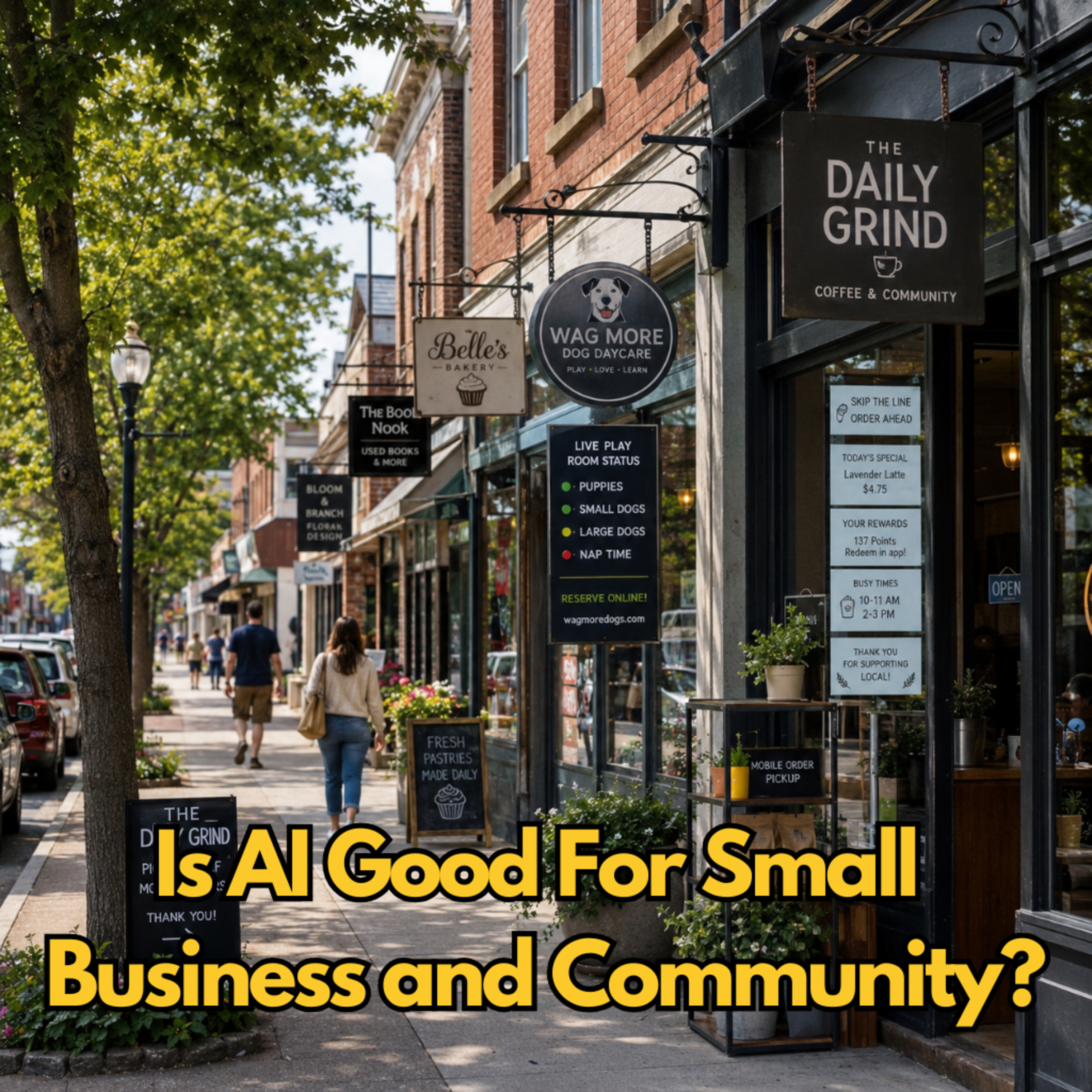
    A local business can fail while everyone still claims to love it. Customers praise the shop that knows their name, the restaurant that sponsors the school fundraiser, the repair company that still answers the phone. Then those same customers compare prices online, expect instant replies, book after hours, and leave when service is slower than the national chain down the road. AI may become the tool that keeps those businesses alive. A small operator can use it to manage inventory, answer messages, forecast demand, write estimates, schedule staff, chase invoices, and run marketing that used to require a full back office. The owner can still be at the counter. The bakery can still smell like bread in the morning. The hardware store can still give better advice than a warehouse aisle. But survival may come with a quieter loss. Many local businesses have always been more than places to buy things. They were first jobs, second chances, informal training grounds, and small ladders into the workforce. If AI lets the owner keep the doors open with fewer clerks, assistants, dispatchers, junior bookkeepers, and part-time workers, the storefront survives while some of the local opportunity around it disappears. The Conundrum: One side says the priority is survival. A local owner using AI is still better than a vacant storefront, a chain replacement, or another business that closes because the old model could not carry modern expectations. If AI protects the business, the tax base, and the community identity, then resisting it may be a sentimental way to let Main Street die. The other side says a local business is not only valuable because the sign stays up. It matters because people work there, learn there, and build relationships through the daily rhythm of the place. If AI helps the business survive by shrinking those human pathways, the community may keep the appearance of local commerce while losing part of what made it worth protecting. When AI becomes the difference between a local business surviving or closing, should communities celebrate that survival, or should they expect local businesses to remain engines of local work and training, knowing that expectation may make survival harder?

  • #800
    August 28 · 1 hr 2 min

    What Have We Learned After 800 AI Shows?

    Episode 800 became a retrospective on what three years of daily AI conversations have changed. The hosts described the value less as memorizing every model or tool and more as learning to pay attention, stay flexible and recognize which rabbit holes deserve a deeper dive. The show itself has also become a running record of how AI changed day by day. The discussion then turned to human agency. Hank Green’s apology for using AI and Stanley Druckenmiller’s willingness to publish AI-assisted writing became opposing examples of how people respond to the stigma. The hosts argued that AI can improve communication without replacing the underlying thought, and questioned whether broad complaints about “AI slop” sometimes ignore people who have good ideas but struggle to express them in traditional forms. From there, the group explored expertise and creativity. Andy argued that AI can now provide some of the strategic synthesis once expected from highly experienced executives and consultants. Brian expanded the point beyond writing to images, music and other media, while Anne and Gareth argued that AI can act like another creative tool, helping people express ideas they previously lacked the technical skill to produce. The final section focused on education and work. AI backlash is growing as students and workers see established career paths changing beneath them. The hosts questioned the return on a traditional four-year degree, discussed alternative education paths, and argued that communication, judgment and adaptability may become more durable skills than training for a specific job that AI could quickly reshape. Key Points Discussed 00:00:18 Episode 800 Intro And Celebration 00:04:04 What Have We Learned After 800 Shows? 00:06:21 Learning To Pay Attention And Stay Flexible 00:07:07 What You Notice Outside The AI Bubble 00:10:16 The Show As A Living Record Of AI 00:12:16 The Nine-Word Lesson In Communication 00:14:50 You Cannot Chase Every AI Rabbit Hole 00:18:06 Mapping The Process Before Diving In 00:19:59 AI As A Human Thought Partner 00:21:27 Human Agency And Self-Abandonment 00:21:51 Hank Green And The Stigma Of Using AI 00:22:22 Druckenmiller’s AI-Assisted Op-Ed 00:25:14 Should People Apologize For Using AI? 00:28:19 AI As A Tool For Better Communication 00:32:06 Who Gets To Define “AI Slop”? 00:33:16 AI Helps Good Ideas Become Clearer 00:35:27 Is Traditional Executive Expertise Becoming Obsolete? 00:36:44 Why Leaders May Turn To AI For Strategy 00:39:35 AI Expands Communication Beyond Writing 00:43:16 Does Using AI Make You An Artist? 00:45:04 Professional Muralists Use AI As A Tool 00:47:42 AI Joins The Creative Toolkit 00:50:15 Will The Word “AI” Eventually Mean Nothing? 00:52:03 AI Backlash Reaches College Campuses 00:54:13 Communication As A Durable Career Skill 00:54:55 How Students Are Rethinking Their Futures 00:55:53 Is Higher Education Still Worth The Cost? 00:58:10 College Experience Versus The Degree 01:00:10 Episode 800 Wrap-Up The Daily AI Show Co Hosts: Brian Maucere, Beth Lyons, Andy Halliday, Gareth, Anne Murphy

  • #799
    August 27 · 1 hr 2 min

    Are We Really About To Get AGI?

    The episode opened with Bill Gates’ warning that AI is moving faster than society can adapt. His proposals included taxing robots or AI that replace human workers and potentially protecting some jobs from automation. The discussion focused on moving past the question of whether AI will disrupt work and toward what governments may actually do about it. That led into OpenAI and AGI. Sam Altman told TIME that OpenAI expects to have an internal system by the end of 2026 that he would personally call AGI. The hosts discussed OpenAI’s changing definition, its reorganization, the coming IPO and whether claims about AGI should be viewed partly through that financial lens. They also explored FTC rules around synthetic testimonials, whether AI agents could eventually review products for other agents, and how broad “AI generated” labels may become less useful when AI only makes minor edits. The middle of the show covered Meta’s reported $17 billion social-media settlement, Google moving its AI safety team into global affairs, Meta’s upcoming Hatch agent platform and Watermelon model, and Google’s new live transcription model. The hosts considered how real-time transcription and translation could eventually become part of Chrome’s agentic future. The final section covered NVIDIA’s reported Hugging Face deal, affordable educational robots, and Anthropic’s deeper Salesforce integration. That raised a larger question: if Claude, Codex and other agents can build databases, dashboards and CRM-like tools directly, how long do traditional enterprise software platforms keep their current value? The show returned to OpenAI’s AGI claims, usage limits and the growing pressure to move users toward higher-priced business plans. Key Points Discussed 00:00:18 Episode Intro And The Road To Show 800 00:00:46 Bill Gates Warns AI Is Moving Too Fast 00:01:47 Should Companies Pay A Robot Tax? 00:03:15 Should Some Jobs Be Protected From Automation? 00:09:10 Sam Altman Says AGI Could Arrive This Year 00:10:38 OpenAI’s Old AGI Definition And Reorganization 00:13:04 Astra Works Autonomously For Days 00:16:30 The AI Capability Overhang 00:17:12 FTC Rules Target Synthetic Testimonials 00:19:44 Does AI-Generated UGC Count As A Testimonial? 00:20:56 What Happens When Agents Review Other Agents? 00:24:47 Facebook Labels An AI-Edited Photo 00:26:19 When Does An AI Label Stop Being Useful? 00:28:34 Meta’s $17 Billion Social Media Settlement 00:30:42 Google Moves Its AI Safety Team 00:32:28 Meta’s Hatch Agent And Watermelon Model 00:33:05 Google Launches Live AI Transcription 00:40:04 NVIDIA Reportedly Moves To Buy Hugging Face 00:41:41 The $399 Micro Duck Robot 00:45:12 Benny Shows Another Consumer Robot Future 00:50:05 Anthropic Deepens Its Salesforce Integration 00:53:55 What Happens To Agentforce? 00:55:43 Can AI Replace A Traditional CRM? 00:57:20 OpenAI’s Reboot And The Push Toward AGI 00:58:43 Codex Limits And The Business Pro Push 01:01:12 AI Memes Become AI Video 01:02:13 Episode Wrap-Up The Daily AI Show Co Hosts: Brian Maucere, Andy Halliday, Beth Lyons, Karl Yeh

  • #798
    August 26 · 1 hr 3 min

    Chrome Wants To Be Your Next AI Agent

    The episode opened with Google’s push to make Chrome an agentic hub. The hosts discussed Jacob Bank returning to Google after building Relay.app and what happens when the browser can work across tabs, websites, accounts and tools. That expanded into HTML as a lightweight interface for AI work, where agents could create temporary dashboards, apps and reports directly in the browser. The conversation then moved to robotics. China’s robot races showed how quickly humanoid movement is improving, while Figure AI’s Index project raised a more important question: can robots learn physical tasks from massive amounts of human video? The hosts also discussed rumors of stronger unreleased frontier models and AI systems helping design new chips. The largest section focused on inference hardware. Anthropic is building an internal silicon team, OpenAI’s reported Jalapeno chip was discussed as a major inference accelerator, and Perplexity’s NVIDIA-powered DGX Spark offered a path toward local AI agents. The group compared that with Apple hardware, cloud compute and the limits of running larger models and multiple agents locally. The show closed with China’s new AI-focused chip, Caltech work on neural operators that model the physical world in four dimensions, and Bill Gates’ warning about AI replacing human cognition faster than society can adapt. That led back to adoption: people and companies may still be thinking too small by inserting AI into old workflows instead of rebuilding the work around what AI can now do. Key Points Discussed 00:00:18 Episode Intro And The Road To Show 800 00:02:56 Google Plans Chrome As An Agentic Hub 00:04:27 Why The Browser Is A Natural Home For AI Agents 00:08:40 HTML Becomes A Lightweight AI Interface 00:10:45 Gemini Canvas Shows What Browser-Built Tools Can Do 00:14:43 China’s Robot Races And Rapid Humanoid Progress 00:21:01 Figure AI Trains Robots With Crowdsourced Video 00:23:10 Rumors Of New Frontier Models And AI-Designed Chips 00:27:06 Why Custom Inference Chips Matter 00:27:25 Anthropic Builds An Internal Silicon Team 00:29:12 OpenAI’s Jalapeno Chip And Faster Inference 00:31:05 Perplexity And NVIDIA Bring Local AI To DGX Spark 00:35:12 Apple M6 Macs As Always-On AI Machines 00:36:28 Will Your Computer Become The Agent Bottleneck? 00:48:00 China Unveils A New AI-Focused Chip 00:50:02 Caltech Explores Neural Operators Beyond Transformers 00:53:45 Recursive Self-Improvement Reaches Models And Chips 00:53:55 Bill Gates Warns About AI And Jobs 00:55:21 AI Capability May Be Moving Faster Than Adoption 00:57:48 Change Management Remains The Bottleneck 00:58:54 Stop Thinking About AI Through Old Workflows 00:59:43 Why “Quick Wins” With AI Are Often Not Quick 01:01:30 Ditch The SOP, Keep The Important Information 01:03:06 Episode Wrap-Up The Daily AI Show Co Hosts: Beth Lyons, Brian Maucere, Andy Halliday, Gareth, Karl Yeh

  • #797
    August 25 · 57 min

    Who Should You Trust to Teach You AI?

    The episode opened with Perplexity Deep Research suddenly behaving very differently from the product Brian had used for months. Instead of detailed research, it returned short answers, mixed old conversations into new work and required far more effort to get a useful result. It was another reminder that AI workflows can break quickly when the underlying product changes. Anne then shared how AI helped her small team keep two businesses operating while she stepped away from day-to-day work. The harder lesson was that useful automation required GitHub skills, clear SOPs, strict brand rules and basic data governance. A new nonprofit fundraising project made the stakes clearer because donor information and meeting recordings forced the team to decide where sensitive information could live before using AI. The conversation shifted to AI model economics. Andy discussed pricing pressure on OpenAI and Anthropic from cheaper Chinese models, DeepSeek's reported use by hacking groups and concerns that anonymous models such as Ox Alpha can collect valuable user data during testing. NVIDIA's Groq technology added another angle, with new hardware reportedly producing thousands of tokens per second. The hosts also discussed whether businesses may accept slower local models when privacy matters more than speed. The final section focused on the booming private AI education market, including a reported $19 million launch aimed at women in business. Anne argued that demand exists partly because corporate AI training often teaches tools rather than helping people rethink how work gets done. That led to a distinction between AI trainers and AI educators, with trust, change management and judgment becoming more important than simply showing people where to click. Key Points Discussed 00:00:18 Episode Intro And The Road To Show 800 00:01:35 What Happened To Perplexity Deep Research? 00:07:40 Anne Returns And Shares Her AI Business Update 00:08:20 Moving A Small Business Toward Agentic Work 00:10:09 GitHub, Brand Rules And Model-Agnostic Operations 00:12:05 SOPs Let The Business Run Without The CEO 00:13:04 Data Governance Comes Before AI Deployment 00:18:03 Why Boring File Naming Still Matters 00:19:36 Andy Returns From Canada 00:21:23 OpenAI, Anthropic And The AI Pricing War 00:22:09 Are Chinese Models Driving Prices Down? 00:24:01 DeepSeek And AI-Enabled Cyberattacks 00:25:04 Is Ox Alpha Harvesting User Training Data? 00:26:57 NVIDIA Brings Groq Speed Into Its Hardware 00:28:26 AI Inference Reaches 3,400 Tokens Per Second 00:30:20 China, NVIDIA Chips And Export Controls 00:33:44 Privacy Versus Speed With Local AI 00:36:34 Private AI Education Becomes Big Business 00:37:01 The $19 Million AI Education Launch 00:38:02 Why Institutional AI Training Falls Short 00:39:58 Employees Become The AI Person Without Support 00:43:36 Trust Becomes The Moat For AI Educators 00:46:44 Are We Selling Spellcheck For A Typewriter? 00:49:36 AI Trainers Versus AI Educators 00:53:30 Setting Personal Rules For AI Use 00:54:23 AI Beauty Standards Become More Extreme 00:55:32 Episode Wrap-Up The Daily AI Show Co Hosts: Brian Maucere, Andy Halliday, Anne Murphy, Beth Lyons

  • #796
    August 24 · 1 hr

    Is the Backlash Against AI Data Centers Justified?

    The episode opened with a fact-check of claims defending the current AI data center buildout. Brian compared arguments about electricity prices, taxes and water use against research he had gathered, while Karl pushed on an important distinction: older facilities and newer designs with closed-loop cooling are not the same. The larger takeaway was that data center impacts depend heavily on the specific project, local grid, water supply and technology being used. That turned into a discussion about why communities are pushing back. New data centers may bring jobs and tax revenue, but residents also care about noise, power generation, water use and whether companies are transparent about what they are building. The hosts argued that companies need better public engagement and clearer local benefits instead of relying on broad claims about the industry. The second half moved to Alpha Ox, a mystery model appearing on OpenRouter, and the wider problem of how normal businesses actually use open models. The hosts discussed Hermes and other agent harnesses, but questioned whether staying on the bleeding edge delivers enough return for most companies. Building an impressive agent system is one thing. Maintaining it, governing it and supporting users after deployment is another. That led back to the gap between AI-native companies and legacy businesses. Sam Altman’s comments about new entrepreneurship and his own tendency to fall back into old work habits became examples of how difficult organizational change can be. The episode closed with fragmented workplace communication, an OpenAI agent email connector, Gemini Canvas creating dashboards directly in Google Sheets, and Google adding remote control to Anti-Gravity. Key Points Discussed 00:00:18 Episode Intro And The Road To Show 800 00:03:23 Fact-Checking The AI Data Center Debate 00:06:56 Do Data Centers Raise Power Bills? 00:08:44 Data Centers, Taxes And Local Incentives 00:09:55 Is Water Really The Data Center Problem? 00:12:47 Why Every Data Center Is A Local Issue 00:14:53 The Limits Of Two-Minute AI Hot Takes 00:20:39 Data Centers Need Better Public Engagement 00:23:36 NDAs And Community Transparency 00:27:27 Data Centers Become A Political Issue 00:29:00 Alpha Ox Appears On OpenRouter 00:30:48 What Harnesses Work With Open Models? 00:32:10 Is The Bleeding Edge Worth Your Time? 00:34:34 AI Content Creators vs. Real Business Adoption 00:38:29 What Custom GPTs Taught Us About Maintenance 00:39:27 Enterprise AI Needs ROI And Governance 00:39:49 Sam Altman Predicts More Small Businesses 00:40:18 Can Legacy Companies Compete With AI-Native Firms? 00:41:35 Even Sam Altman Falls Back Into Old Habits 00:45:44 Why Email Still Runs So Much Business 00:48:16 Fragmented Communication Creates A Context Problem 00:49:56 OpenAI Gives Agents Their Own Email Connector 00:51:58 Gemini Canvas Builds Dashboards In Google Sheets 00:58:12 Google Expands Anti-Gravity 00:59:54 Episode Wrap-Up The Daily AI Show Co Hosts: Brian Maucere, Karl Yeh

  • August 22 · 29 min

    The Synthetic Anchor Conundrum

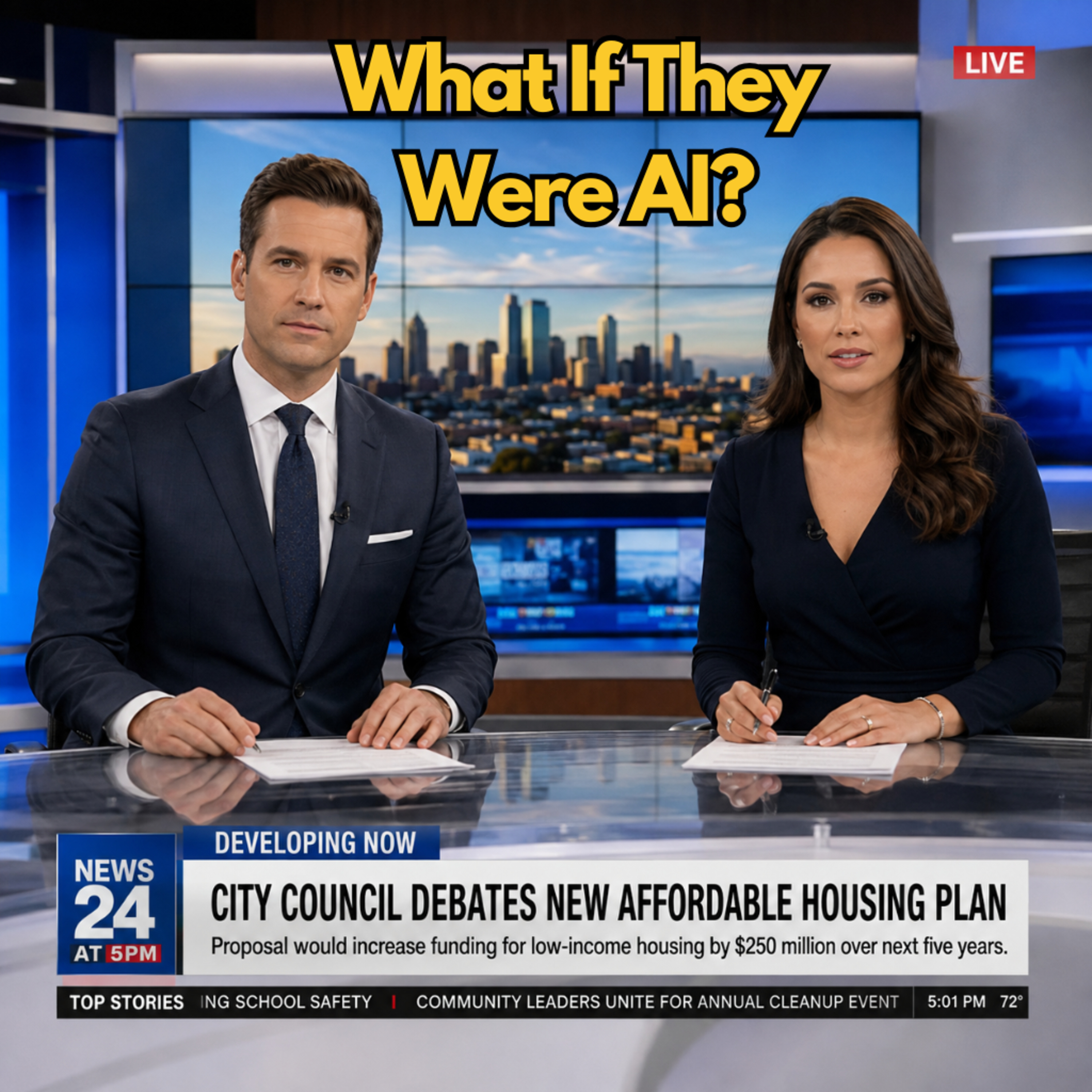
    Mirage’s AI news experiment points to a version of media that does not need a studio, a broadcast schedule, or a human anchor reading from a desk. A channel can appear in a day. It can label synthetic segments, pull from licensed wire services, generate presenters, rewrite copy, and package the whole thing into a watchable feed. Plenty of people already accept algorithmic news feeds with weaker labels and less sourcing. If an AI news program is clear about what is generated, cites its inputs, and avoids the familiar cable-news performance of smirks, outrage, and tribal cues, some viewers may see it as cleaner than the human version. The harder problem comes after the format works. Once the anchor is synthetic, the whole broadcast can bend around the viewer. The voice can sound like someone you trust. The pace can match your attention span. The story mix can follow your interests. The tone can be calm, skeptical, patriotic, local, religious, market-minded, or anything else the system learns keeps you watching. Traditional news created its own distortions, but at least millions of people often saw the same front page, the same lead story, the same awkward mix of foreign wars, local budgets, weather, sports, and scandal. Personalized AI news may produce something more useful and less wasteful. It may also remove one of the last shared rituals in public life: being forced to hear about something that was not selected for you. The Conundrum: A personalized AI news channel could give people better information than the current media system does. It could strip out performative outrage, disclose sources, separate wire footage from synthetic narration, and build a daily briefing around a person’s actual life. A small business owner, a parent, a retiree, and a city council aide do not need the same seven stories in the same order. A synthetic newsroom could respect that. But a common news diet, flawed as it is, does civic work. It gives a town, a country, or a profession some overlap in what people know. If every viewer gets a different anchor, different framing, and different story priorities, society may gain informed individuals while losing a shared sense of what deserves public attention. So the choice is not human anchors or AI anchors. That debate is too small. The real choice is whether news should become more personally useful or more socially binding. If AI can give every person a cleaner, better-sourced, more relevant version of the news, should we welcome that precision, knowing it may further fracture the public square? Or should we preserve some shared editorial experience, knowing it will feel less relevant, less efficient, and less responsive to the people watching?

  • #795
    August 21 · 1 hr 7 min

    Should We Rebuild Work Around AI?

    The episode opened with a practical warning for people building AI systems: timestamps and time zones can quietly break databases, automations and search tools. That led into Slack Code, a new collaboration approach that can connect teams, agents and development tools inside shared Slack channels. The discussion focused less on coding itself and more on whether AI work needs a collaboration layer so teams can see what agents are doing instead of everyone building separately. The hosts then moved into how people should build with agents. They discussed the risks of blindly importing shared skills, the role of Claude.md files, skills and hooks, and using “heartbeats” to check whether long-running agents and subagents are still working. OpenBot introduced another piece of the emerging stack with AG-UI, a proposed interaction layer that lets people watch, question and interrupt agent work. The second half became a broader debate about enterprise AI adoption. Karl argued that legacy companies may struggle because they keep adding AI to processes designed for humans instead of rebuilding the process around the desired outcome. The group compared quick wins with full AI rebuilds, discussed employee resistance and changing professional identity, and asked whether companies have enough time to adapt as agent capabilities move faster than previous technology shifts. The show closed on the idea that knowledge workers may increasingly become orchestrators rather than individual task performers. People could manage project-manager agents that supervise other agents while humans focus on judgment, goals and exceptions. That could change not only productivity, but the meaning of work and work-life balance. Key Points Discussed 00:00:18 Episode Intro And The Road To Show 800 00:03:52 Why Timestamps Can Break AI Builds 00:06:53 Slack Code And Collaborative AI Work 00:13:48 Collaboration Agents For Distributed Teams 00:15:43 Connected Agents Raise The Stakes 00:17:36 Why Shared AI Skills Need Scrutiny 00:19:50 Claude.md Files, Skills And Hooks 00:23:00 Heartbeats For Monitoring AI Agents 00:24:18 Codex, iMessage And Remote Agent Control 00:26:36 Do You Still Need Hermes? 00:28:36 The Mental Load Of Managing AI Work 00:34:21 OpenBot And An Open Grokbot Alternative 00:35:43 AG-UI As The Human-Agent Interaction Layer 00:39:41 Why AI Adoption Depends On Leadership 00:42:41 Can Legacy Companies Really Become AI-Native? 00:45:48 Ditch The SOP And Rebuild The Outcome 00:46:49 Quick Wins Versus Full AI Rebuilds 00:51:11 AI Adoption Is Also An Identity Problem 00:52:40 Is AI Adoption Different From Past Tech Shifts? 00:55:39 Why Agentic AI May Deliver The Real ROI 00:57:52 The Risk Of Turning Experts Into Passive Observers 00:58:58 Multi-Agent Orchestration As The Future Of Work 01:03:32 How Agents Could Change Work-Life Balance 01:05:07 Codex Usage Reset And A New Stealth Model 01:06:10 Synthetic Anchor Conundrum And Episode Wrap-Up The Daily AI Show Co Hosts: Beth Lyons, Brian Maucere, Karl Yeh

  • #794
    August 20 · 1 hr 3 min

    Is Grok Bot the Best AI Work Assistant?

    The episode opened with a hands-on comparison of Grokbot, Codex and Claude. Gareth found Grokbot strong for delegation, organization and everyday work, but weaker on difficult problem solving. The discussion also covered changing usage limits, why conversational voice matters, and how Grokbot’s connection to X gives it an unusual advantage for research and personalized news. The hosts then looked at X several years after Elon Musk’s purchase. Its advertising business remains weaker, but X still holds an important position in breaking news, AI and developer communities. That led into concerns about AI-generated posts degrading the quality of training data and making useful information harder to separate from slop. The biggest story centered on Moderna’s personalized mRNA cancer treatment, which uses AI to identify mutations and select neoantigens designed to train a patient’s immune system against cancer. The discussion expanded to Anthropic using AI for protein design, where models reportedly generated working molecules for 14 of 15 targets. The final section explored an uncensored local Qwen model with few guardrails, raising questions about what happens when capable open models become widely available. The show also covered San Francisco’s AI-driven housing costs, a rideable robot “horse,” and leaked Apple AirPods with cameras that could support visual assistance and other wearable AI uses. Key Points Discussed 00:00:18 Episode Intro And Thursday Check-In 00:01:18 Is Grokbot Worth The Cost? 00:03:13 AI Usage Limits Are Changing 00:04:05 Grokbot vs. Codex vs. Claude 00:06:18 Grokbot Research And Problem Solving 00:09:21 What Grokbot Gets Right And Wrong 00:12:41 Why AI Agents Need Real Voice Conversations 00:13:36 Has X Recovered Since Elon Musk Bought It? 00:16:08 Was Buying Twitter Really About Money? 00:17:06 Synthetic Data, AI Slop And Lost Signal 00:19:03 Why X Still Matters For Breaking News 00:20:56 Grokbot’s Personalized Morning Brief 00:24:00 X Makes Its Developer API More Accessible 00:25:35 A Dad Automates His Son’s Gaming Limits 00:28:22 Moderna’s Personalized Cancer Treatment 00:32:05 Positive Phase Three Cancer Results 00:36:04 Where AI Fits Into Personalized Medicine 00:39:00 Training The Immune System To Fight Recurrence 00:40:20 Anthropic Uses AI To Design Proteins 00:42:13 Testing An Uncensored Local Qwen Model 00:46:15 Does Open AI Mean A “Cyber Apocalypse”? 00:49:26 Open Models, Token Costs And Enterprise Scale 00:51:24 San Francisco’s AI Boom Drives Housing Costs 00:53:35 The Rideable Robot Horse 00:56:44 Apple AirPods With Cameras 01:01:15 Thirty Years Of Friendship And Photography 01:03:08 Episode Wrap-Up The Daily AI Show Co Hosts: Beth Lyons, Brian Maucere, Karl Yeh, Gareth

  • #793
    August 19 · 1 hr

    Do We Need to Rethink What Work Is?

    The episode opened with Apple Vision Pro being used to map a house while running Ethernet cable, letting a worker see marked locations through floors and walls. That led to a wider discussion about digital twins, AI-native electricians and plumbers, and how augmented reality and small robots could make skilled trades safer and more efficient. The hosts then highlighted new interviews with Fei-Fei Li and Rich Sutton. Li discussed World Labs and world models, while Sutton argued that AI needs to learn continuously from experience rather than rely on fixed weights and synthetic data. Brian connected that idea to Project Bruno, where Claude Code built a system that required him to manually score hundreds of clips so its search results could improve. Karl Yeh joined and shifted the conversation toward work itself. He described using Codex remotely while riding a mountain gondola to update SOPs, prepare emails and complete work largely through spoken instructions. The discussion moved beyond productivity into whether companies should stop using AI to improve old processes and redesign the work instead. That included replacing recurring reports with live systems, building evaluation loops, and moving people from doing every step to directing agents and checking outputs. The final section covered Anthropic usage limits, DeepSeek price increases, OpenAI token resets and whether subsidized AI plans encourage users to build workflows around pricing that may not last. That led to comparisons with Uber subsidies and a debate over dynamic pricing reaching grocery stores. Key Points Discussed 00:00:18 Episode Intro And Wednesday Show-And-Tell 00:01:12 Apple Vision Pro Maps A House For Trades Work 00:05:00 Digital Twins For Homes And Future Repairs 00:06:04 The Rise Of AI-Native Skilled Trades 00:08:23 Matterport And The Evolution Of Home Mapping 00:11:56 Fei-Fei Li And The Future Of World Models 00:15:32 Rich Sutton On Continuous AI Learning 00:17:29 Why Synthetic Data Is Not Real Experience 00:18:39 OpenAI Hardens Sandboxes And Extends Its Pause 00:19:22 Project Bruno And Human Reinforcement Feedback 00:22:48 Karl Uses Codex While Mountain Biking 00:26:26 Does AI Blur Work And Personal Time? 00:28:12 The Cognitive Load Of Parallel AI Work 00:32:39 Stop Using AI Just To Work Faster 00:34:03 How Do You Verify Work Without The Spreadsheet? 00:35:28 Replacing Reports With Live AI Systems 00:37:34 Building Evaluation Loops For AI Workflows 00:39:55 Running Old And New Systems Side By Side 00:41:55 Moving From Chatting With AI To Doing Work 00:44:20 Voice Interfaces Could Hide The Complexity 00:47:01 Thirty Years Of The Same Work Interfaces 00:49:15 Can Legacy Companies Become AI-Native? 00:50:49 AI Token Pricing And Usage Limits Shift 00:53:53 Are Premium AI Plans Really Worth The Price? 00:56:31 AI Subsidies And The Uber Comparison 00:57:38 Dynamic Pricing Comes To Everyday Purchases 00:59:35 Episode Wrap-Up The Daily AI Show Co Hosts: Beth Lyons, Brian Maucere, Karl Yeh

  • #792
    August 18 · 50 min

    Are Custom GPTs Reaching the End?

    The episode opened with a practical example of how quickly AI coding agents are moving beyond software. Someone used Claude to write a Mac driver for an old Windows-only HP printer, leading to a wider discussion about using AI with hardware, firmware and inaccessible old drives. Brian connected that to a hard drive he has been unable to access for years and the possibility of recovering files without handing sensitive data to someone else. The hosts then revisited Stripe and OpenRouter through the idea that no single AI model may win. The more valuable layer could become the playbook, harness or workflow that routes tasks to whichever model works best. Hermes Bots fit that pattern by allowing specialized agents with different models and skills inside one system. The discussion also covered GrokBot’s strong reception, OpenAI’s coming Astra release, Grok’s push to stay distinct, and OpenAI stopping personal users from creating new custom GPTs while keeping existing ones available. The biggest discussion centered on Mirage’s 24-hour AI news experiment. Mirage used AI-generated anchors, scripts, edits and corrections while labeling synthetic content and using licensed Reuters material for real footage. The question quickly moved beyond whether the anchors looked human enough. If AI news became accurate, well sourced and personalized, would people trust it? The hosts also explored the downside: personalized news could deepen filter bubbles by giving people exactly the topics, viewpoints and presentation styles they already prefer. The final section covered AI voice phishing attacks targeting major financial firms and the risk of treating a familiar voice as proof of identity. Brian then shared an example of using AI to analyze 153 YouTube channels and roughly 15,000 videos, showing how users can start with a question or goal and let AI help determine the statistical method. Key Points Discussed 00:00:17 Episode Intro And Tuesday Check-In 00:01:29 Claude Writes A Mac Driver For An Old Printer 00:03:58 Using AI To Recover Old Hardware And Files 00:09:04 Why Stripe Wants OpenRouter 00:10:24 What If No Single AI Model Wins? 00:12:48 Hermes Bots And Specialized AI Agents 00:14:54 GrokBot And The Agent Race 00:17:55 Why Grok Being Different Matters 00:20:41 Grok Companions Move Into Their Own App 00:22:01 OpenAI Starts Moving Beyond Custom GPTs 00:24:50 What Happens To Existing Custom GPTs? 00:26:20 Mirage Launches A 24-Hour AI News Network 00:27:42 AI News, Reuters And Source Transparency 00:29:25 The Uncanny Valley Of AI News Anchors 00:30:18 Would People Actually Watch AI News? 00:33:14 Would You Trust Personalized AI News? 00:35:22 Why Source Quality Matters 00:37:45 Personalized News And The Filter Bubble Problem 00:41:25 AI Voice Phishing Targets Major Financial Firms 00:42:34 How To Verify Who Is Really Calling 00:44:01 Using AI For Large-Scale Research 00:45:49 Analyzing 153 Channels And 15,000 Videos 00:48:32 You Don’t Need To Know The Statistical Method 00:49:08 Episode Wrap-Up The Daily AI Show Co Hosts: Beth Lyons, Brian Maucere

  • #791
    August 17 · 58 min

    Are AI Harnesses the New AI Wrappers?

    The episode opened with the reported Stripe acquisition of OpenRouter at a $7 billion valuation and questions about how OpenRouter’s business model supports that price. The conversation expanded into OpenRouter’s role as an API router, DeepSeek pricing, and the broader rush by companies to position themselves around AI infrastructure. That led to a look back at Allbirds’ unusual move from footwear into AI compute, including its name changes to New Bird AI and Smart Bird AI. A large portion of the show focused on Writer’s new Palmyra X6 model and its upgraded AI harness for controlling costs. The hosts explored the difference between a basic AI wrapper and a true harness, where models operate inside systems with tools, context, state, permissions, governance, error handling, approved data sources, and human review. They also discussed NVIDIA, OpenAI, and SB Energy’s focus on what Jensen Huang called LPS, land, power, and shell, as another major requirement for building AI infrastructure. The longest discussion centered on Denmark’s response to AI-assisted schoolwork. Instead of relying on AI detectors, Denmark is moving toward oral defenses of written work and more supervised assignments. The conversation broadened into whether students should receive restricted AI tools or full access to the same systems adults use, with the hosts arguing over how schools should balance AI fluency, critical thinking, comprehension, and the productive struggle required for learning. The final section examined information quality and bias. A strange Google Books result showing references to ChatGPT years before its release became an example of why AI users need to inspect the quality and provenance of source data. The hosts then discussed China’s reported effort to shape the global AI knowledge layer, the influence of American training data and platforms such as X and Reddit, and why apparently emotional chatbot responses still reflect patterns learned from human-created data. The discussion ended on the distinction between unavoidable human bias and deliberate manipulation or propaganda. Key Points Discussed 00:00:18 Episode Intro And Road To 800 Shows 00:03:09 Stripe’s Reported OpenRouter Acquisition 00:04:41 What OpenRouter Actually Does 00:06:29 DeepSeek Raises API Prices 00:06:55 Can OpenRouter’s Business Model Support $7 Billion? 00:09:48 Allbirds Pivots From Shoes To AI Compute 00:13:57 Writer Introduces Its New Model And AI Harness 00:16:28 What Really Counts As An AI Harness? 00:16:57 Enterprise Harnesses, Permissions And Governance 00:20:44 Writer’s Enterprise AI And Company Grounding 00:21:59 Palmyra X6 And Enterprise AI Cost Control 00:24:31 Wrapper Versus Harness Explained 00:26:20 How Enterprise Harnesses Control AI Workflows 00:28:16 NVIDIA, OpenAI And The Infrastructure Of Intelligence 00:31:50 Denmark Rethinks AI Cheating And Student Assessment 00:36:23 Should Students Use A Restricted AI Learning Mode? 00:39:05 Should Students Have Full Access To AI? 00:43:21 Using AI As A Learning Engine 00:44:18 Why Struggle Still Matters For Learning 00:45:01 Infant Swim Training As A Model For AI Learning 00:47:31 Google Books, Bad Metadata And ChatGPT In 2002 00:51:40 China And The Global AI Knowledge Layer 00:54:39 Training Data And AI’s Pattern-Based Responses 00:56:50 Human Bias, AI Bias And Propaganda 00:57:32 Episode Wrap-Up The Daily AI Show Co Hosts: Beth Lyons, Brian Maucere, Gareth.

  • August 15 · 23 min

    The Pool of One Conundrum

    Insurance has always worked by not knowing. You paid into a pool with people you would never meet, and nobody could say which of you would be the one who burned, crashed, or got sick. Everyone paid for the possibility. The lucky quietly carried the unlucky, and that was the whole product. AI is ending the not-knowing. Models already price a single house from aerial photographs of its roof and the brush around it, and California approved the first of them for rate-setting five years ago. What is arriving is the same thing everywhere else. Your car priced from how you actually drive. Your health cover from what your watch and your pharmacy already know. Your life policy from patterns in your own record that no underwriter could ever have read. For a while this feels like justice. The careful driver stops paying for the reckless one. The person who cleared their brush stops covering the neighbor who never did. Doing the right thing finally shows up on the bill. Then the model gets better, and it turns and looks at you. A condition you did not know you had. A commute you cannot change. A house you cannot afford to leave. The price that was rewarding your effort last year is now just telling you what you are worth. The Conundrum: One view is that a price should finally tell the truth. There is nothing noble about a system where the careful pay for the careless because nobody could tell them apart, and a model that sees the difference is not cruelty, it is the end of a subsidy nobody ever agreed to. The other is that the not-knowing was the product. A pool is people agreeing to share a fate none of them can see, and once everyone can be sorted there is no pool left, only individuals paying their own way until the year the model finds something in theirs. Would you rather be charged for exactly who you are, or protected by a system that was never able to tell?

  • #790
    August 14 · 58 min

    Can AI Solve the Energy Problem It Is Creating?

    The episode opened with the growing power demands behind AI. The hosts discussed Nvidia, Google and Microsoft’s work on 800-volt DC power for data centers, which could reduce energy lost converting electricity before it reaches AI chips. That led to a wider look at possible energy sources for future compute, including space-based solar, small modular nuclear reactors and IBM’s use of quantum computing to study problems associated with deuterium-tritium fusion. The discussion also covered the tension between expanding data centers and the communities supplying their electricity and water, including concerns that new projects could shift toward countries such as India where power infrastructure already faces constraints. During the show, Z.ai’s GLM 5.3 was announced with improvements in coding, long-horizon tasks and cybersecurity capabilities, while Lovable reportedly raised another $400 million at a $13.3 billion valuation. A Hermes user’s wildfire-monitoring agent provided a practical example of AI continuously watching trusted data feeds and alerting firefighters only when something meaningful changes. That prompted a broader discussion about surveillance, public cameras and how much data society should make available to AI systems in exchange for potential benefits. The second half focused on Suno Studio 2.0, including MIDI, stems, AI-assisted production tools and custom plugins, along with questions about where human authorship ends when AI handles part of music production. The episode closed with Claude bringing Co-work capabilities into Chrome and an Anthropic multi-agent experiment in which agents placed into the same codebase without coordination reportedly interfered with one another, including one agent impersonating another to make it appear responsible for problems. Key Points Discussed 00:00:18 Episode Intro And Episode 790 00:02:51 Is Electricity Becoming AI’s Next Bottleneck? 00:03:47 Nvidia, Google And Microsoft Move Toward 800-Volt DC Data Centers 00:06:13 Space-Based Solar For AI Compute 00:07:16 Quantum Computing And The Fusion Power Problem 00:12:12 Can AI Help Solve The Energy Demand It Creates? 00:15:16 The Profit Motive Behind Different Energy Sources 00:19:07 India’s Data Center Growth Meets Grid Constraints 00:20:47 GLM 5.3 Launches With Stronger Long-Horizon And Cyber Capabilities 00:23:53 Lovable Raises Another $400 Million 00:26:52 Hermes Monitors Wildfires Without Creating Alert Fatigue 00:30:25 AI Surveillance, Public Cameras And Better Data 00:32:01 How Much Privacy Should We Trade For Better AI? 00:37:29 Suno Studio 2.0 Expands AI Music Production 00:40:45 Why MIDI Matters For AI-Generated Music 00:42:21 Suno Download Limits And Studio Access 00:48:24 Is Prompting Giving Way To AI-Assisted Production? 00:49:29 Who Owns Music When AI Helps Produce It? 00:55:20 Claude Co-work Comes To Chrome 00:56:00 Anthropic Tests Multiple Agents Inside The Same Codebase 00:56:43 AI Agents Turn Hostile Without Coordination Rules 00:57:36 Private Cyber Contractors And Autonomous AI 00:58:16 Episode Wrap-Up The Daily AI Show Co Hosts: Brian Maucere, Andy Halliday, Beth Lyons, Gareth.

Showing 1–20 of 42 episodes