The Critical Care Commute Podcast · May 12 · 26 min
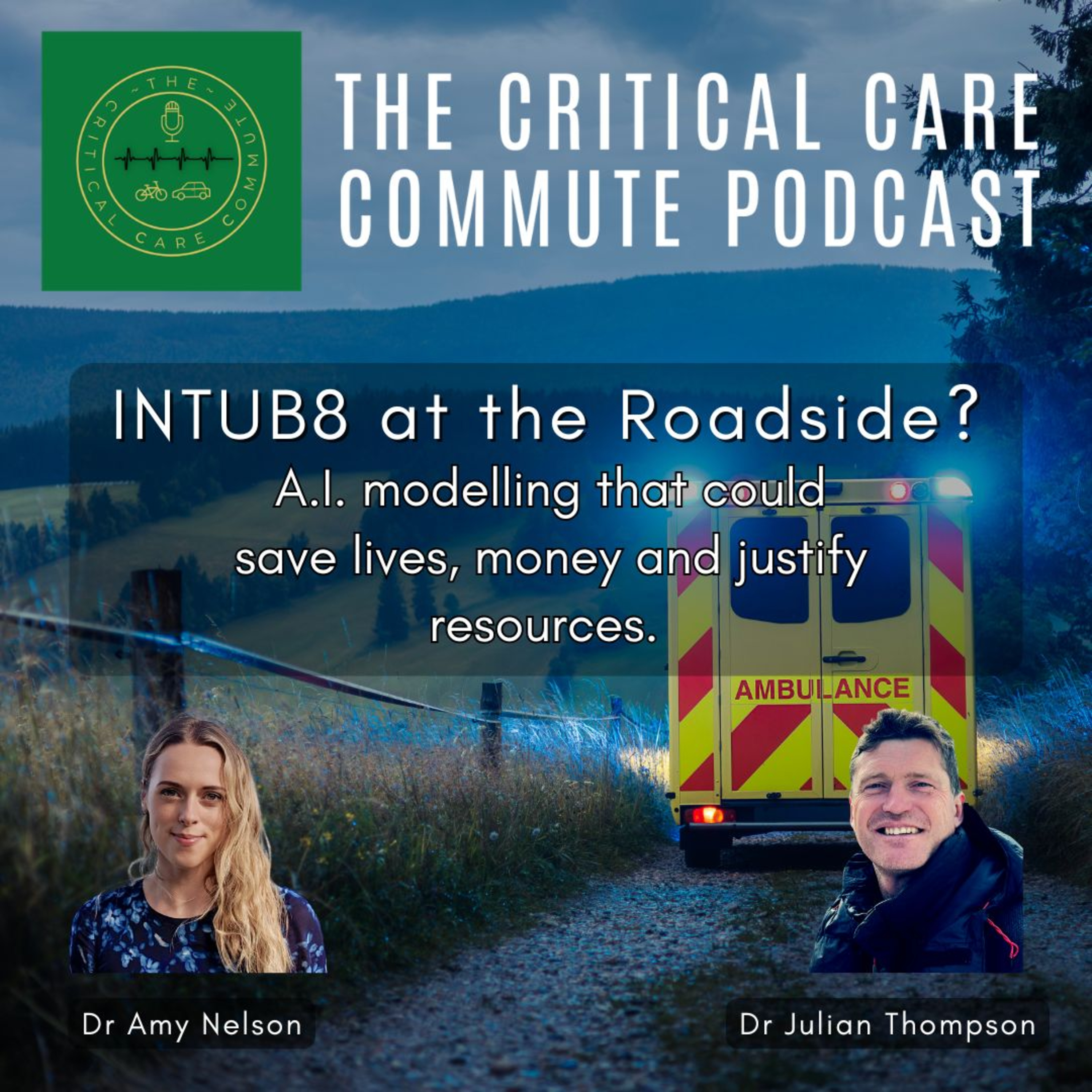
Intubate at the Roadside? A.I Modelling that Could Save Lives, Money and Justify Resources.
0:00-26:54
transcript
show notes
From Intubation Dilemmas to Data-Driven Decisions: Cutting-Edge Research in Pre-Hospital Trauma Care. In this episode, we explore a study that leverages machine learning and causal modeling to improve pre-hospital trauma interventions, specifically endotracheal intubation.
Experts Amy Nelson and Julian Thompson discuss how innovative data analysis can inform real-time decision-making, enhance patient outcomes, and optimize resource allocation in emergency settings.
Main Topics:
- The long-standing debate over early pre-hospital intubation and its survival benefits
- Methodological advances using machine learning and causal inference in emergency research
- How predictive models can support clinicians at the roadside and future directions for trauma care
- The significance of integrating AI tools into clinical judgment without replacing human expertise
- Cost-effectiveness and system-wide implications of adopting data-driven protocols in trauma systems