Artwork for The Critical Care Commute Podcast
Health & Fitness

The Critical Care Commute Podcast

Critical Care Commute

The Critical Care Commute Podcast is grateful for your ears, insights and feedback. In return its hosts- Peter Brindley and Leon Byker, two ICU doctors in Alberta, Canada- offer up knowledge and debate with some of the most qualified, interesting, enlightened and provocative folks in Critical Care Medicine, and beyond. We strive to keep it practical and concise. Like you, our overriding goal is to get better, do better and feel better.

  • 20 episodes
  • Updated July 21

Episodes20

  • July 21 · 38 min

    The Surviving Sepsis Campaign Guideline 2026 with Prof. Bram Rochwerg.

    This episode features Professor Bram Rochwerg discussing the latest guidelines on surviving sepsis, covering evidence-based practices, fluid management, vasopressor use, and emerging therapies. Gain insights into how expert panels synthesize evidence to guide critical care in sepsis management. Key Topics Covered: Sepsis guideline updates 2026 Evidence synthesis and recommendation strength Fluid resuscitation strategies and targets Vasopressor use and peripheral administration Emerging therapies: Methylene blue, steroids, bicarbonate Biomarkers and diagnostics in sepsis Links: Surviving Sepsis Campaign: International Guidelines for Management of Sepsis and Septic Shock 2026 | SCCM Executive Summary: Surviving Sepsis Campaign:... : Critical Care Medicine

  • June 29 · 24 min

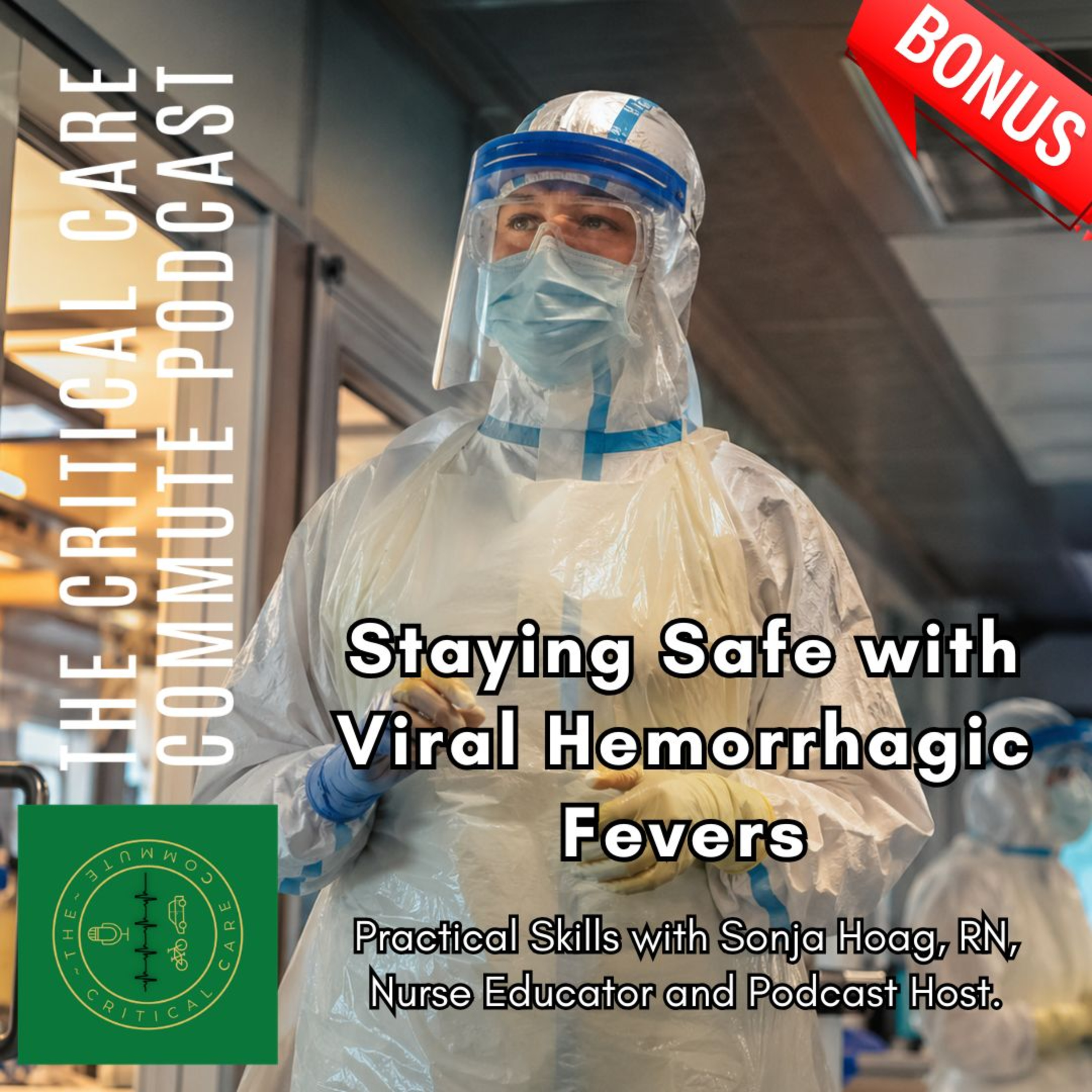
    Staying Safe with Viral Hemorrhagic Fevers - Practical Skills with Sonja Hoag, RN, CNE and Podcast Host.

    In this episode, we're joined by Sonja, RN, Nurse Educator, and host of the Sedation Vacation Radio podcast. (Full disclosure: we're big fans, so we might be just a little biased!) Sonja shares practical, real-world advice on infection prevention and control, from getting PPE right to safely managing patients with suspected viral hemorrhagic fevers. Along the way, we explore what it takes to prepare healthcare teams and systems for these high-consequence situations, with plenty of practical tips and lessons you can apply in your own workplace. Key topics Infection control procedures for viral hemorrhagic fever PPE donning and doffing protocols with step-by-step guidance System-level response and isolation procedures for high-risk infectious cases Role of medical officers and rapid response teams in outbreak management Waste disposal and sample handling for contagious diseases Aerosol-generating medical procedures and precautions Takeaways: Proper PPE donning and doffing is critical to prevent self-contamination. Clear protocols and checklists improve safety during high-risk procedures. System-level planning includes designated isolation units and inter-agency communication. Understanding the difference between contact, droplet, and airborne precautions is essential. Links of Interest: https://www.canada.ca/en/public-health/services/diseases/ebola/border-measures.htmlPractical PPE: Coverall PPE (this is the PPE that anyone going into the room and doing patient care or assessments will be wearing) https://youtu.be/ADosrKxfsNI Buddy PPE (this is the PPE that is worn by those who assist with Coverall doffing and other tasks) https://youtu.be/RaNwdvSyrb4 Coverall and Buddy Doffing https://youtu.be/EjVoXmRNzWc Sedation Vacation Podcast: https://open.spotify.com/show/15P4tJ7uW17u41bm3V7CEf?si=1ua7uXu-Sa6nQGrkur0Gow

  • June 16 · 33 min

    Ebola!

    Join us on this episode as we discuss Ebola Disease with Dr Rob Fowler, critical Care Physician, Researcher and Scientist. As a physician who experienced working with patients with Ebola Disease, there is no better person to discuss this hot topic. Key Topics Ebola virus strains and outbreaks Diagnostic testing and laboratory protocols Therapeutic developments and clinical trials Supportive care principles in Ebola treatment Infection prevention and PPE in outbreak settings Case fatality rates and clinical outcomes Virus immune evasion mechanisms Public health response and outbreak management. Further reading and important links: WHO Supportive Care Guidelines (2026 – coming soon) https://www.magicevidence.org/ WHO Specific Therapeutic Guidelines (not Bundibugyo species specific) (2022) http://www.who.int/publications/i/item/9789240055742 WHO Ebola and Marburg virus IPC Guidelines (2026) https://www.who.int/publications/i/item/9789240111332

  • May 26 · 25 min

    Hantavirus Infection: From Rodents to Cruise Ships and ICU.

    This episode features Professor Wendy Sligl discussing hantaviruses, their transmission, clinical presentation, public health response, and prevention strategies. Aimed at healthcare professionals and public health officials, it provides critical insights into managing outbreaks and understanding zoonotic diseases. Key Topics: Hantavirus family and strains Transmission routes and human-to-human spread Clinical presentation and severity spectrum Public health response and quarantine protocols Prevention and protective measures

  • May 12 · 26 min

    Intubate at the Roadside? A.I Modelling that Could Save Lives, Money and Justify Resources.

    From Intubation Dilemmas to Data-Driven Decisions: Cutting-Edge Research in Pre-Hospital Trauma Care. In this episode, we explore a study that leverages machine learning and causal modeling to improve pre-hospital trauma interventions, specifically endotracheal intubation. Experts Amy Nelson and Julian Thompson discuss how innovative data analysis can inform real-time decision-making, enhance patient outcomes, and optimize resource allocation in emergency settings. Main Topics: The long-standing debate over early pre-hospital intubation and its survival benefits Methodological advances using machine learning and causal inference in emergency research How predictive models can support clinicians at the roadside and future directions for trauma care The significance of integrating AI tools into clinical judgment without replacing human expertise Cost-effectiveness and system-wide implications of adopting data-driven protocols in trauma systems

  • April 28 · 33 min

    Dr Craig Spencer: I Went to an Anti Vax Conference, So Should You!

    In this in-depth interview, Dr. Craig Spencer discusses the anti-vaccine movement, its community dynamics, historical context, and how healthcare professionals can engage effectively. The conversation explores the psychology behind vaccine hesitancy, community engagement strategies, and the importance of understanding different perspectives. Further Reading: https://www.statnews.com/2025/11/11/childrens-health-defense-conference-pro-vaccine-doctor/ Craig Spencer, MD, MPH | Center for Human Rights and Humanitarian Studies | Brown University

  • April 17 · 31 min

    Antibiotic Stewardship: IV Amoxiclav with Dr George Zhanel

    In this episode, made possible through an educational grant from Sandoz Canada, Dr. George Zhanel discusses the latest developments in antimicrobial stewardship, focusing on IV Amox Clav, its clinical applications, safety profile, and the Canadian Leadership on Antimicrobial Real-Life Usage Registry (CLEAR). Gain insights into optimizing antibiotic use and future prospects in antimicrobial development. Key Topics: IV Amox Clav clinical applications Canadian Leadership on Antimicrobial Usage Registry (CLEAR) Antibiotic stewardship strategies Future developments in antimicrobial agents Chapters: 00:00 Introduction and Guest Credibility 01:47 Introduction of Dr. George Zhanel and his background 02:41 The journey into IV Amox Clav and its significance 03:21 Overview of the CLEAR registry and its purpose 06:18 Findings from the CLEAR study on IV Amox Clav usage 07:57 Clinical indications and safety profile of IV Amox Clav 10:58 De-escalation and appropriate use of IV Amox Clav 12:34 Use in bacteremia and various infections 13:35 Side effects and safety data of IV Amox Clav 15:02 Dosing strategies and renal adjustments 17:29 Beta-lactamase inhibitors and future antimicrobial development 20:16 Future prospects for new antibiotics in Canada 23:13 Canadian Antimicrobial Resistance Alliance (CARA) and involvement 25:53 Case examples and clinical decision-making in pneumonia and skin infections 31:09 Closing remarks and appreciation for the audience Resources: Canadian Leadership on Antimicrobial Real-Life Usage Registry (CLEAR) - https://www.clearregistry.ca Canadian Antimicrobial Resistance Alliance (CARA) - https://www.cara.ca Meropenem Vaborbactam - https://www.meropenem.com Ceftazidime-Avibactam - https://www.ceftazidime-avibactam.com Guest Links: LinkedIn - https://www.linkedin.com/in/george-zhanel Twitter - https://twitter.com/GeorgeZhanel

  • April 3 · 51 min

    Meningitis: Implications for Critical Care

    Young lives have sadly been lost in the 2026 Kent meningitis outbreak. An “unprecedented” cluster centred on the University of Kent, linked to a Canterbury nightclub, and rapidly spreading through student halls and social mixing. In this timely and hard-hitting podcast episode, Jonny is joined by Intensivists Martin Beed, Peter Brindley (authors of the new primer on infectious meningitis and encephalitis in the Journal of the Intensive Care Society), and Andrew Conway-Morris. They explore the UK government’s targeted MenB vaccination program for university students and affected schools, the critical importance of early clinical suspicion and prompt antibiotic administration, transmission risks in nightclubs and social settings (including behaviors like vaping), and lessons from past UK and global outbreaks. The discussion also covers practical public education, healthcare worker resources including useful infographics. The discussion stresses the need for high vigilance, rapid treatment, vaccination where appropriate, and support for public and family mental health during outbreaks. Packed with actionable clinical guidance and real-world takeaways, this episode is essential listening for healthcare professionals, students, parents, and anyone wanting to understand how to spot, treat, and prevent this devastating disease.

  • March 25 · 31 min

    Dose VF: Defibrillation Done Right! With Prof. Sheldon Cheskes

    This episode features Sheldon Cheskes discussing advanced defibrillation techniques, including double sequential defibrillation, vector change, and the importance of early intervention in refractory VF. Gain insights into recent trials, practical protocols, and the impact on neurological outcomes. Key topics Double sequential defibrillation (DSD) Vector change and pad positioning in defibrillation Timing and dosing of medications in VF Impact of early intervention on neurological outcomes Recent clinical trials: Dose VF and EpiDose Further Reading: Defibrillation Strategies for Refractory Ventricular Fibrillation

  • March 11 · 38 min

    Science Communication and the Certainty Illusion - Prof Tim Caulfield

    In this conversation, Peter Brindley and Timothy Caulfield discuss the critical importance of science communication in the face of misinformation and the challenges posed by predatory journals. They explore the societal impact of vaccines, the misuse of scientific terms for marketing purposes (scienceploitation), and the illusions surrounding science, goodness, and opinion. The discussion emphasizes the need for humility in science, the pressures researchers face, and the responsibility of all individuals to advocate for accurate scientific information. Lessons: We all have to speak up for science. Science is a process, not a list of facts. There is pressure to publish, leading to predatory journals. Vaccines are one of the most successful biomedical interventions. Science is often misused as clickbait. Terms like 'natural' have become meaningless in marketing. You can't really boost your immune system; it's about maintaining health. The wellness industry has significant conflicts of interest. The opinion illusion shows how we are manipulated by online reviews. Trillions of dollars depend on the credibility of online reviews.

  • February 24 · 24 min

    Critical Care Workforce: Where We Are, And Where We're Going with Prof. Peter Kruger

    In this conversation, Peter Brindley and Leon Byker sit down with Peter Kruger, President of the College of Intensive Care Medicine, to unpack one of the defining issues facing healthcare today: workforce reform. Against the backdrop of national workforce reviews across Australia and New Zealand, the discussion explores the tension between aspiration and reality. Governments want equitable access, rural coverage, sustainable systems, and improved wellbeing for clinicians. Colleges want standards, safety, and meaningful careers. Trainees want jobs. Communities want hospitals. Politicians want solutions. So how do we reconcile all of it? Dr. Kruger reflects on the growing engagement between specialist colleges and government, particularly around workforce maldistribution, rural and regional care, sub-specialization versus generalism, and the moral complexity of relying on internationally trained doctors. The conversation highlights a key truth: intensive care is a hospital-based, system-dependent specialty. You cannot simply “place a doctor” in a community without the supporting infrastructure. The episode also tackles uncomfortable but necessary questions: Can there be a universal standard for ICU access across vastly different hospital settings? Should governments mandate rural placements—or can communities be strengthened from within? What role should nurse practitioners and multidisciplinary teams play? Are we protecting turf, or protecting patients? And how do we better support doctors across the entire career pipeline—from medical student to senior intensivist winding down night shifts? Throughout, the tone is candid but diplomatic. There’s recognition that workforce reform is complex, long-standing, and resistant to simple solutions. Yet there is also optimism: trust, transparency, and genuine partnership between colleges and government may offer a way forward. At its core, this episode is about purpose. The shared mission between clinicians, colleges, and governments is delivering safe, effective care to the community. The challenge lies in doing so while balancing standards, sustainability, and humanity.

  • February 10 · 24 min

    Steroids, Fluids, Interleukins, COVID 19 and lots of Professorial Wisdom with Prof. John Myburgh

    In this discussion at the College of Intensive Care meeting in Tasmania 2025, Peter Brindley and Leon Byker engage with Prof. John Myburgh, who talks about his long-standing involvement in critical care research and the annual college meeting. John discusses the significance of the grad ceremony and highlights the impact of his research group at the George Institute. He reflects on the contributions of late colleague Ronaldo and praises current leading figures. The conversation delves deep into the ongoing research on steroids in critical care, focusing on genetic endotypes and precision medicine. Other topics covered include interleukin treatments, the evolution of fluid management in treating conditions like diabetic ketoacidosis, and the adaptive platform trials in sepsis. The discussion concludes with reflections on the Queensland Covid-19 vaccine and the broad implications of science, social forces, and politics in critical care advancements.00:00 Welcome and Introductions00:32 John's Involvement with the College01:47 Research and Collaborations03:29 Steroids in Critical Care04:49 Genomic Studies and Future Trials07:18 Challenges in Measuring Outcomes13:27 Interleukins and Sepsis14:18 Fluid Management in Critical Care19:31 COVID-19 and the Queensland Vaccine23:49 Closing Remarks

  • January 26 · 34 min

    Are Emergency Rooms in Crisis? With Dr Paul Parks.

    In this episode of the Critical Care Commute, hosts Peter Brindley and Leon Byker engage in a compelling discussion with Dr. Paul Parks, a prominent emergency physician and advocate for healthcare reform. Dr. Parks shares his insights on the current state of emergency room care in Alberta, emphasizing the systemic issues that have led to a crisis in emergency services. He describes the overwhelming pressures faced by emergency departments, and highlight the dire need for government acknowledgment and action to address the crisis. He also articulates the challenges of navigating the healthcare system, where patients often wait for hours or even days for care, and advocates for a coordinated response to improve patient outcomes. Takeaways 'Emerge owns the sins of the system.' 'We are right now in a state of crisis.' 'It's inhumane the conditions that we're seeing.' 'We need a command and control structure.' 'We must move back to being data-driven in our decisions.' 'We have to have the ability to speak truth to power.' 'Patients are waiting for hours, even days, for care.' 'The system is chaotic and disorganized.' 'We need to advocate for transparency and accountability.'

  • January 13 · 38 min

    Complaints, Courtrooms and Keeping Calm while Carrying on.

    In this conversation, Dr. Marcus Peck shares his harrowing experience of being involved in a medical case that led to a coronial inquest and subsequent investigation by the GMC. He discusses the emotional toll of moral distress, the challenges of navigating legal scrutiny in the medical field, and the importance of community support. The conversation highlights the complexities of patient care, the impact of loss on healthcare professionals, and the lessons learned from difficult experiences in critical care. Dr Marcus Peck is a consultant in anesthesia and intensive care at Hampshire Hospitals NHS trust, and Network Lead of the Intensive Care Society's Focused Ultrasound for Intensive Care (FUSIC) committee and is joined by Dr Jonny Wilkinson, Consultant in ICU and Anesthesia from North Hampton. Takeaways: Loss is a universal experience in the medical community. Moral distress can significantly impact healthcare professionals. Legal challenges can arise from complex medical cases. Documentation is crucial in protecting healthcare providers. Emotional responses to patient outcomes are valid and important. Support from colleagues and community is essential during tough times. Investigations can feel isolating and shameful for medical professionals. Resilience is key in overcoming professional challenges. Learning from past experiences can improve future practice. Open conversations about these issues can help reduce stigma.

  • Dec 17, 2025 · 18 min

    Acknowledgement of Country with Dr Lewis Campbell

    In this short thoughtful episode, we highlight an important Australian tradition: the Acknowledgement of Country. This brief statement, often given at the start of meetings, gatherings, and public events, recognizes the Traditional Custodians of the land, honors their enduring cultural connection to it, and shows respect for Elders past and present. It’s a simple but meaningful way Australians acknowledge history, presence, and identity, and it reflects a national commitment to reconciliation and cultural respect. In today’s episode, we introduce Dr. Lewis Campbell, a critical care physician from Alice Springs, south of Darwin. Dr. Campbell brings his Northern Territory perspective to our clinical conversation, offering insights shaped by the unique geography, culture, and healthcare challenges of Australia’s Top End. A concise, engaging listen for your commute.

  • Dec 2, 2025 · 31 min

    MedPod Learn: A New Era in Medical Podcasts.

    In this conversation, Iain discusses the launch of MedPod Learn, a platform offering a searchable database of curated medical podcasts. He shares insights on the pricing strategy, including user perceptions about value and affordability, and the decision to offer a free trial to encourage subscriptions. Takeaways MedPod Learn offers a searchable database of medical podcasts. The platform is available on both App Store and Google Play. User perceptions of pricing can vary significantly. Some users believe lower prices may lead to undervaluation. Iain's approach includes a free trial for new users. The subscription fee is set at £2.99 after the trial. Market research revealed surprising insights about pricing expectations. The founder's model aims to attract early adopters. Engagement strategies are crucial for subscription services. Understanding user psychology is key to pricing decisions. https://t.co/Jw9XUrA5nh Download MedPod Learn from Google Play Store or Apple Store

  • Nov 12, 2025 · 18 min

    The Obesity Paradox with Dr Rob Bevan

    In this episode, Peter Brindley interviews Dr. Rob Bevan, past president of the CICM, about the obesity paradox in Intensive Care Units (ICUs). They discuss the surprising observation that overweight ICU patients often show better survival rates than those underweight, despite obesity's known health risks. Dr. Bevan dives into the history and the limitations of BMI as a metric and various biases that could influence the perceived obesity paradox. He also explains how classification bias, selection bias, confounding, and collider bias might skew these outcomes. The discussion touches on the importance of separating patients who are critically ill and happen to be obese from those who are in ICU primarily because of obesity-related diseases. The conversation is rooted in the upcoming textbook chapter authored by Dr. Bevan and explores obesity's broader health implications globally.

  • Oct 29, 2025 · 31 min

    Precision Medicine - It may be easier than you think!

    In this episode, Peter and Leon, recording at the College of Intensive Care Medicine's Conference in Tasmania, Australia, discuss advancements in precision medicine with Dr. Pratik Sinha from Washington University in St. Louis. Dr Pratik trained in both Emergency and Intensive Care Medicine, but only works clinically as an intensivist. He runs a research program that seeks to change the way we identify and classify critically ill patients, by using a combination of novel biological measurements and state of the art data science approaches. The conversation delves into how critical care medicine currently operates, emphasizing the need to shift from supportive care to more personalized approaches using biological measuring systems, big data, and novel data science techniques. They discuss identifying patient subgroups using machine learning algorithms and protein biomarkers, revealing phenotypes like hyper and hypo-inflammatory responses. The discussion covers the practical challenges of implementing these technologies, the importance of rigorous testing, and the future implications for intensive care. The speakers highlight the necessity of prospective clinical trials and broader accessibility of these advanced diagnostic tools to improve patient outcomes. 00:00 Introduction and Opening Remarks 00:34 Diving into Precision Medicine 01:35 Elevator Pitch for Medical Research 02:10 Understanding Patient Complexity 04:12 Biological Measurements and Data Science 10:37 Challenges in Modern Medicine 17:08 Future of Medical Research and AI 21:20 Concluding Thoughts and Future Prospects

  • Oct 14, 2025 · 43 min

    Mystery Guest - Dr Smith and the future of Critical Care Medicine.

    In this episode of the Critical Care Commute podcast, Dr. Smith discusses the multifaceted future of critical care medicine, touching on economic, political, and technological challenges. The conversation delves into the role of artificial intelligence in enhancing healthcare, the importance of clinician well-being, and the need for a human touch in medicine. The discussion also explores personal interests, travel experiences, and the ethical implications of AI in clinical practice, emphasizing the balance between technology and human interaction. Guests: Drs Marcus Peck and Jonny Wilkinson. Chapters 00:00 The Future of Critical Care Medicine 02:40 Artificial Intelligence in Healthcare 05:38 Human Factors and Clinician Well-being 08:22 Economic Challenges in Healthcare 11:09 The Role of Politics in Healthcare 14:13 The Turing Test and AI's Evolution 16:41 Personal Interests and Travel Experiences 19:57 AI's Impact on Clinical Practice 22:38 Ethical Considerations of AI in Medicine 25:19 The Future of AI and Human Interaction

  • Sep 30, 2025 · 20 min

    The Power of Kindness

    The Power of Kindness in Healthcare: A Conversation with Dr. Suzanne Crowe. In this episode, Peter Brindley and Leon Byker speaks with Dr. Suzanne Crowe, pediatric intensivist and president of the Medical College of Ireland, at the College of Intensive Care meeting in Tasmania, 2025. They explore the significant impact of kindness on patient outcomes, emphasizing its vital role in healthcare. Dr. Crow highlights the necessity of incorporating kindness as a core practice, noting that it reduces mistakes, improves diagnostic accuracy, and fosters better cooperation from patients. They discuss the effectiveness of empathy training and the importance of leadership in fostering a culture of kindness within healthcare systems. Dr. Crow also shares practical tips for healthcare professionals on how to demonstrate kindness in daily interactions, such as sitting beside patients and offering comforting gestures.00:00 Introduction and Guest Welcome00:34 The Power of Kindness in Healthcare01:24 Defining and Recognizing Kindness02:20 Microdosing Kindness in Practice03:19 Teaching and Modeling Kindness03:54 Empathy Training and Its Importance05:07 Challenges and Barriers to Kindness06:57 Kindness in Patient Interactions09:27 Systemic Kindness and Leadership17:17 Empathy Training Techniques19:00 Conclusion and Final Thoughts