Skip to content
Artwork for The Classical Mind
ArtsBooksSociety & CulturePhilosophy

The Classical Mind

Junius Johnson & Wesley Walker

Conversations on the Great Books. New episodes on the first Tuesday of every month.

www.theclassicalmind.com
Play
  • 20 episodes
  • Avg 1 hr
  • English
  • August 14 · 1 hr 2 min

    The Classical Mind Goes to the Movies: Christopher Nolan's Odyssey

    Warning: this episode discusses the film in full, spoilers included. If you haven’t seen it yet, go watch it first and come back. Fr. Wesley Walker and Dr. Junius Johnson head to the theater for another Classical Mind Goes to the Movies episode, this time tackling Christopher Nolan’s big-screen adaptation of The Odyssey. Have you seen Nolan's The Odyssey? Let us know what you thought in the comments or in our community chat on Substack. This is a public episode. If you'd like to discuss this with other subscribers or get access to bonus episodes, visit www.theclassicalmind.com/subscribe
  • August 10 · 41 min

    Bonus Episode: The Forge of Friendship

    Everyone knows The Lord of the Rings and The Chronicles of Narnia. Fewer people know the full story of the friendship that helped make both of them possible. In this special bonus episode, Dr. Junius Johnson sits down with Kirk Manton of Eastgate Creative to talk about The Forge of Friendship, a five-part documentary series, ten years in the making, telling the story of the relationship between J.R.R. Tolkien and C.S. Lewis. Dr. Manton walks through how the project began small and grew into a multi-part documentary spanning the two writers’ entire life together, and how, along the way, the project itself became something of a case study in its own subject: it has connected Tolkien fans and Lewis fans, two overlapping but distinct communities, into new friendships of their own. Junius and Kirk also discuss what makes the Lewis-Tolkien friendship worth telling in this much depth, why Eastgate Creative chose to build this project as a donor-funded nonprofit rather than a traditional investor-backed production, and what’s still ahead as the documentary moves through post-production toward release. This is a great listen for anyone who loves Tolkien, Lewis, or the Inklings — and a chance to support a project built entirely on donations from people who believe this story is worth telling well. Support the Project Eastgate Creative has funded this documentary entirely through donations — no investors, no profit distributions. Every dollar goes straight into finishing the production and funding the next generation of Christian filmmakers. * Watch the trailer & learn more: eastgatecreative.org * Sign up for updates: Join the Eastgate Creative newsletter * Donate directly: Support The Forge of Friendship This is a public episode. If you'd like to discuss this with other subscribers or get access to bonus episodes, visit www.theclassicalmind.com/subscribe
  • July 28 · 1 hr 29 min

    The Lord of the Rings: The Fellowship of the Ring by J.R.R. Tolkien

    The Lord of the Rings didn’t just launch a genre — it set the standard every fantasy writer since has been measured against. This month, Fr. Wesley Walker and Dr. Junius Johnson begin their journey through J.R.R. Tolkien’s masterpiece with The Fellowship of the Ring, the first volume of the trilogy that turned Middle-earth into the mythology of the modern imagination. In this episode, Wesley and Junius explore what actually sets Tolkien apart from the fantasy writers who came before, and the flood of imitators who came after. They dig into Tolkien’s remarkable balancing act: a world built with more depth and history than perhaps any fictional world ever created, yet worn so lightly that you never have to read a page of the appendices to feel its weight. They trace the providence that runs quietly beneath the entire tale — the “hand that is not Gandalf’s” guiding events from the moment Bilbo is chosen for the quest in The Hobbit — and ask what it means that Middle-earth’s races are written almost as facets of human nature itself, essential yet never simple. The conversation also turns to Frodo: is he really the hero of the story, or is that title quietly earned by someone else? Wesley and Junius make the case that Frodo’s heroism isn’t the sword-and-glory kind; it’s the daily, unglamorous courage of simply doing the next right thing, again and again, all the way to Mount Doom. Along the way: the structure of the six “books” hidden inside the trilogy, the guerrilla-war tension of hobbits slipping across a Shire already crawling with Nazgûl, and why the Council of Elrond marks the one time the Fellowship, as a whole, actually exists. Endnotes * Junius: The Children of Húrin by J.R.R. Tolkien * Wesley’s endnote: The Fellowship of the Ring trick-taking card game Next month: The journey continues with The Two Towers! This is a public episode. If you'd like to discuss this with other subscribers or get access to bonus episodes, visit www.theclassicalmind.com/subscribe
  • July 13 · 13 min

    Bonus Episode: Season 5

    Discover the official Season 5 reading schedule for The Classical Mind podcast! Join Junius and Wesley as they lay out the next 12-month literary journey through the Western canon. Here is the list: * October 2026: Theogony by Hesiod * December 2026: The Life of Moses by Gregory of Nyssa * January: The Strange Case of Dr. Jekyll and Mr. Hyde by Robert Louis Stevenson * February 2027: Around the World in 80 Days by Jules Verne * March: Hamlet by William Shakespeare * April: Timaeus by Plato * May: Northanger Abbey by Jane Austen * June: Silence by Shusaku Endo * July: The Odyssey by Homer * August: Principles of Human Knowledge by George Berkeley * Season Conclusion: The Three Musketeers by Alexandre Dumas This is a public episode. If you'd like to discuss this with other subscribers or get access to bonus episodes, visit www.theclassicalmind.com/subscribe
  • July 1 · 1 hr 7 min

    A Midsummer Night's Dream by William Shakespeare with Heidi White

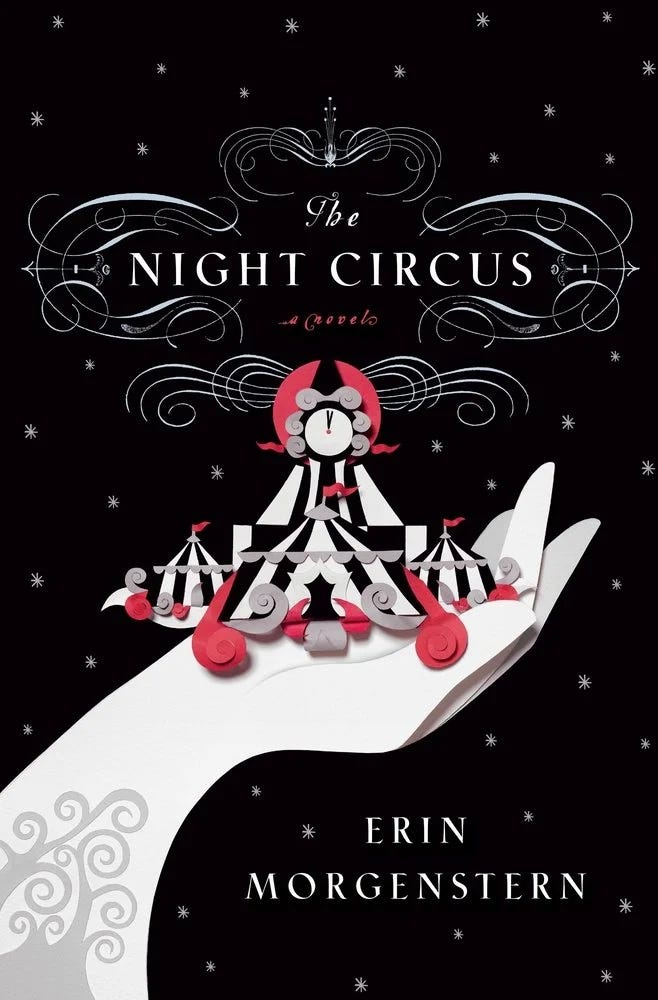
    In this summer episode of The Classical Mind, hosts Dr. Junius Johnson and Father Wesley Walker welcome back three-time guest Heidi White, co-host of the Close Reads podcast and author of The Divided Soul. Together, the trio dives deep into William Shakespeare’s beloved masterpiece, A Midsummer Night’s Dream, analyzing its intricate narrative layers through the compelling lens of duty versus desire. While often celebrated for its lighthearted magical antics and brilliant comedic performance, the hosts unpack the surprisingly dark premise that sets the play in motion: forced marriages, legal coercion, and the stripping away of individual autonomy. From the rigid laws of Athens to the chaotic, transformative "green world" of the forest, this conversation explores how Shakespeare juxtaposes cold logic with wild imagination. Endnotes * Heidi: The Night Circus by Erin Morgenstern * Junius: Dear Brutus by J.M. Barrie * Wesley: The Hazards of Love by the Decemberists This is a public episode. If you'd like to discuss this with other subscribers or get access to bonus episodes, visit www.theclassicalmind.com/subscribe
  • June 9 · 1 hr 8 min

    The Importance of Being Earnest with Dr. Grace Hamman

    Welcome to another episode of The Classical Mind, the podcast where we explore the great books of the Western tradition! In this episode, hosts Father Wesley Walker and Dr. Junius Johnson are thrilled to welcome a special guest, Dr. Grace Hamman. Dr. Hamman holds a PhD from Duke University, focuses on late medieval poetry and contemplative writing, and hosts the Old Books with Grace podcast. Together, they dive into a delightful and deep discussion about Oscar Wilde’s brilliant drawing-room comedy, The Importance of Being Earnest. Endnotes * Junius: Oscar Wilde’s fairy tales—The Happy Prince, The Nightingale and the Rose, and The Selfish Giant * Wesley: Ricky Stanicky * Grace: Arrested Development This is a public episode. If you'd like to discuss this with other subscribers or get access to bonus episodes, visit www.theclassicalmind.com/subscribe

  • May 12 · 1 hr 24 min

    Paradiso with Dr. Jonathan Juilfs

    In this concluding chapter of our journey through Dante’s Commedia, Dr. Junius Johnson and Fr. Wesley Walker are joined by Dr. Jonathan Juilfs to explore the radiant heights of Paradiso. The conversation centers on the idea that the third canticle is not a boring landscape of static perfection, but rather the very “point” of the entire project grounded in the medieval understanding of capacity and divine alignment. Endnotes: * Dr. Juilfs: * The Pearl * The Consolation of Philosophy by Boethius * What Dreams May Come * Wesley: Little Gidding from Four Quartets by T.S. Eliot * Junius: * The Discarded Image by C.S. Lewis * The Last Battle by C.S. Lewis * Perelandra by C.S. Lewis This is a public episode. If you'd like to discuss this with other subscribers or get access to bonus episodes, visit www.theclassicalmind.com/subscribe

  • April 28 · 1 hr 23 min

    Purgatorio with Heidi White

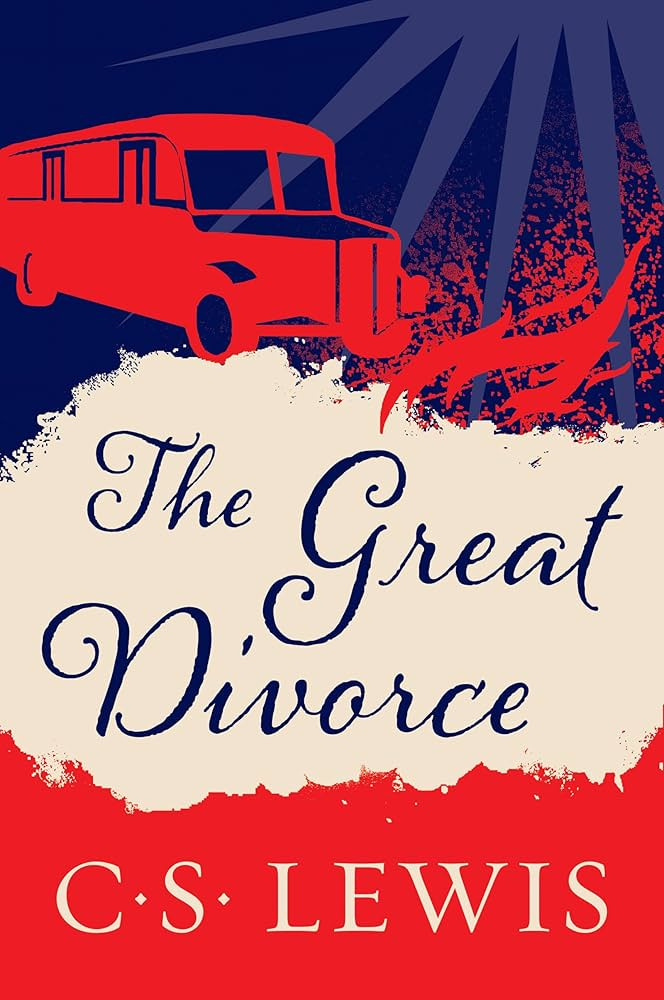
    In this episode of The Classical Mind, Fr. Wesley Walker and Dr. Junius Johnson welcome back Heidi White to explore the middle canticle of Dante’s Divine Comedy, the Purgatorio. Is Purgatory “cosmic extra innings” or a “cosmic decontamination chamber” for the saved? How do Inferno and Purgatorio differ? Give a listen as Heidi, Junius, and Wesley discuss the moral and structural architecture of Mount Purgatory, specifically the “Order of Love” (ordo amoris) that governs the seven terraces and how Dante organizes the capital vices. Endnotes: Heidi: The Great Divorce by C.S. Lewis Junius: The Voyage of the Dawn Treader by C.S. Lewis Wesley: “Ash Wednesday” by T.S. Eliot I Because I do not hope to turn again Because I do not hope Because I do not hope to turn Desiring this man's gift and that man's scope I no longer strive to strive towards such things (Why should the agèd eagle stretch its wings?) Why should I mourn The vanished power of the usual reign? Because I do not hope to know The infirm glory of the positive hour Because I do not think Because I know I shall not know The one veritable transitory power Because I cannot drink There, where trees flower, and springs flow, for there is nothing again Because I know that time is always time And place is always and only place And what is actual is actual only for one time And only for one place I rejoice that things are as they are and I renounce the blessèd face And renounce the voice Because I cannot hope to turn again Consequently I rejoice, having to construct something Upon which to rejoice And pray to God to have mercy upon us And pray that I may forget These matters that with myself I too much discuss Too much explain Because I do not hope to turn again Let these words answer For what is done, not to be done again May the judgement not be too heavy upon us Because these wings are no longer wings to fly But merely vans to beat the air The air which is now thoroughly small and dry Smaller and dryer than the will Teach us to care and not to care Teach us to sit still. Pray for us sinners now and at the hour of our death Pray for us now and at the hour of our death. II Lady, three white leopards sat under a juniper-tree In the cool of the day, having fed to sateity On my legs my heart my liver and that which had been contained In the hollow round of my skull. And God said Shall these bones live? shall these Bones live? And that which had been contained In the bones (which were already dry) said chirping: Because of the goodness of this Lady And because of her loveliness, and because She honours the Virgin in meditation, We shine with brightness. And I who am here dissembled Proffer my deeds to oblivion, and my love To the posterity of the desert and the fruit of the gourd. It is this which recovers My guts the strings of my eyes and the indigestible portions Which the leopards reject. The Lady is withdrawn In a white gown, to contemplation, in a white gown. Let the whiteness of bones atone to forgetfulness. There is no life in them. As I am forgotten And would be forgotten, so I would forget Thus devoted, concentrated in purpose. And God said Prophesy to the wind, to the wind only for only The wind will listen. And the bones sang chirping With the burden of the grasshopper, saying Lady of silences Calm and distressed Torn and most whole Rose of memory Rose of forgetfulness Exhausted and life-giving Worried reposeful The single Rose Is now the Garden Where all loves end Terminate torment Of love unsatisfied The greater torment Of love satisfied End of the endless Journey to no end Conclusion of all that Is inconclusible Speech without word and Word of no speech Grace to the Mother For the Garden Where all love ends. Under a juniper-tree the bones sang, scattered and shining We are glad to be scattered, we did little good to each other, Under a tree in the cool of day, with the blessing of sand, Forgetting themselves and each other, united In the quiet of the desert. This is the land which ye Shall divide by lot. And neither division nor unity Matters. This is the land. We have our inheritance. III At the first turning of the second stair I turned and saw below The same shape twisted on the banister Under the vapour in the fetid air Struggling with the devil of the stairs who wears The deceitul face of hope and of despair. At the second turning of the second stair I left them twisting, turning below; There were no more faces and the stair was dark, Damp, jaggèd, like an old man's mouth drivelling, beyond repair, Or the toothed gullet of an agèd shark. At the first turning of the third stair Was a slotted window bellied like the figs's fruit And beyond the hawthorn blossom and a pasture scene The broadbacked figure drest in blue and green Enchanted the maytime with an antique flute. Blown hair is sweet, brown hair over the mouth blown, Lilac and brown hair; Distraction, music of the flute, stops and steps of the mind over the third stair, Fading, fading; strength beyond hope and despair Climbing the third stair. Lord, I am not worthy Lord, I am not worthy but speak the word only. IV Who walked between the violet and the violet Whe walked between The various ranks of varied green Going in white and blue, in Mary's colour, Talking of trivial things In ignorance and knowledge of eternal dolour Who moved among the others as they walked, Who then made strong the fountains and made fresh the springs Made cool the dry rock and made firm the sand In blue of larkspur, blue of Mary's colour, Sovegna vos Here are the years that walk between, bearing Away the fiddles and the flutes, restoring One who moves in the time between sleep and waking, wearing White light folded, sheathing about her, folded. The new years walk, restoring Through a bright cloud of tears, the years, restoring With a new verse the ancient rhyme. Redeem The time. Redeem The unread vision in the higher dream While jewelled unicorns draw by the gilded hearse. The silent sister veiled in white and blue Between the yews, behind the garden god, Whose flute is breathless, bent her head and signed but spoke no word But the fountain sprang up and the bird sang down Redeem the time, redeem the dream The token of the word unheard, unspoken Till the wind shake a thousand whispers from the yew And after this our exile V If the lost word is lost, if the spent word is spent If the unheard, unspoken Word is unspoken, unheard; Still is the unspoken word, the Word unheard, The Word without a word, the Word within The world and for the world; And the light shone in darkness and Against the Word the unstilled world still whirled About the centre of the silent Word. O my people, what have I done unto thee. Where shall the word be found, where will the word Resound? Not here, there is not enough silence Not on the sea or on the islands, not On the mainland, in the desert or the rain land, For those who walk in darkness Both in the day time and in the night time The right time and the right place are not here No place of grace for those who avoid the face No time to rejoice for those who walk among noise and deny the voice Will the veiled sister pray for Those who walk in darkness, who chose thee and oppose thee, Those who are torn on the horn between season and season, time and time, between Hour and hour, word and word, power and power, those who wait In darkness? Will the veiled sister pray For children at the gate Who will not go away and cannot pray: Pray for those who chose and oppose O my people, what have I done unto thee. Will the veiled sister between the slender Yew trees pray for those who offend her And are terrified and cannot surrender And affirm before the world and deny between the rocks In the last desert before the last blue rocks The desert in the garden the garden in the desert Of drouth, spitting from the mouth the withered apple-seed. O my people. VI Although I do not hope to turn again Although I do not hope Although I do not hope to turn Wavering between the profit and the loss In this brief transit where the dreams cross The dreamcrossed twilight between birth and dying (Bless me father) though I do not wish to wish these things From the wide window towards the granite shore The white sails still fly seaward, seaward flying Unbroken wings And the lost heart stiffens and rejoices In the lost lilac and the lost sea voices And the weak spirit quickens to rebel For the bent golden-rod and the lost sea smell Quickens to recover The cry of quail and the whirling plover And the blind eye creates The empty forms between the ivory gates And smell renews the salt savour of the sandy earth This is the time of tension between dying and birth The place of solitude where three dreams cross Between blue rocks But when the voices shaken from the yew-tree drift away Let the other yew be shaken and reply. Blessèd sister, holy mother, spirit of the fountain, spirit of the garden, Suffer us not to mock ourselves with falsehood Teach us to care and not to care Teach us to sit still Even among these rocks, Our peace in His will And even among these rocks Sister, mother And spirit of the river, spirit of the sea, Suffer me not to be separated And let my cry come unto Thee. This is a public episode. If you'd like to discuss this with other subscribers or get access to bonus episodes, visit www.theclassicalmind.com/subscribe
  • April 1 · 13 min

    "The Tapestry": A Conversation about a New CiRCE Language Arts/Grammar Curriculum with Buck Holler

    In this episode of The Classical Mind, Dr. Junius Johnson sits down with Buck Holler from the CiRCE Institute to discuss "Tapestry," a new writing and grammar curriculum designed to bridge the gap between early elementary studies and the advanced persuasive essays found in The Lost Tools of Writing. Holler explains that for twenty-five centuries, the study of grammar and literature were considered a single, unified discipline, an organic connection that was largely severed during the Enlightenment. By re-integrating these fields, the curriculum moves away from the modern trend of teaching grammar through isolated, "zigzag" sentences and instead grounds linguistic study in the rich soil of full stories, including Aesop’s fables, Arthurian legends, and sacred Scripture. This is a public episode. If you'd like to discuss this with other subscribers or get access to bonus episodes, visit www.theclassicalmind.com/subscribe
  • March 16 · 30 min

    The Inaugural Classical Mind Battle of the Books

    Round 1: Voting will be open from Monday (3/16) until Monday (3/23) ***Vote Now!*** Round 2: Voting will be open from Monday (3/23) until Saturday (3/30) Round 3: The first semi-final round will be Monday (3/30) until Wednesday (4/1); the second semi-final round will be Thursday (4/2) until Saturday (4/4) Round 4 (the final): Voting will be open from Monday (4/6) until Monday (4/13) In this special bonus episode, Fr. Wesley Walker and Dr. Junius Johnson pivot from their usual textual analysis to the “Battle of the Books.” Harnessing the competitive energy of March Madness, they set out to seed the last twelve books discussed on the podcast into a tournament bracket, where the ultimate winner will be decided by listener votes. The seeding process is guided by two primary criteria: the quasi-objective historical influence of the text and the quasi-subjective literary or theological quality of the work. The books included in the tournament are: * Lilith by George MacDonald * Billy Budd, Sailor by Herman Melville * Proslogion by Anselm * The Taming of the Shrew by William Shakespeare * Frankenstein by Mary Shelley * The Aeneid by Virgil * Peter Pan by J.M. Barrie * The Federalist Papers * The Journey of the Mind to God by Bonaventure * Love in the Ruins by Walker Percy * The Castle of Otranto by Horace Walpole * The Communist Manifesto by Karl Marx and Friedrich Engels This is a public episode. If you'd like to discuss this with other subscribers or get access to bonus episodes, visit www.theclassicalmind.com/subscribe
  • March 10 · 1 hr 15 min

    Inferno

    In this episode, Father Wesley Walker and Dr. Junius Johnson are joined by Dante scholar Catherine Illingworth to navigate the harrowing depths of Dante’s Inferno. The conversation centers on the profound medieval understanding of sin not merely as a broken rule, but as a fundamental distortion of love and human nature. The hosts and their guest explore how the damned souls, such as Francesca and Paolo in Canto V, consistently refuse to take responsibility for their actions, instead blaming external forces like romantic love for their eternal demise. This introduces the foundational concept that hell is a realm where souls have misordered their affections, elevating earthly desires above their love for God and ultimately choosing their own ruin. The discussion dives deeply into the mechanics of divine justice, specifically the concept of contrapasso, where the physical punishment seamlessly mirrors the internal reality of the sin. Through vivid examples like Capaneus, whose unyielding pride becomes his own internal and eternal torment , and Odysseus, whose final voyage represents the ultimate theological fraud of attempting to achieve salvation through human merit alone, the episode illustrates how sin deforms the human soul. The group also grapples with the modern reader’s severe discomfort with eternal damnation, contrasting contemporary universalist tendencies with Dante’s vision of a highly physical, meticulously structured afterlife where characters literally become the landscape of their own making. Junius has a video on courtly love that may be helpful to understand some of the conversation. Catherine Illingworth studied religion and literature at the Yale Divinity School before pursuing a PhD at UCLA in medieval literature with a specialized focus on Dante. She recently stepped away from the academic world after her young son, George, was diagnosed with a rare neurodegenerative genetic disease. In response to the immense financial barriers preventing children from accessing existing, life-saving gene therapies, she founded the Bradstreet Foundation to help families lacking a commercial pathway for treatment. You can learn more about her vital advocacy work at geneforgeorge.org, and follow her updates on TikTok and Instagram by searching for Catherine Illingworth. Endnotes: * Catherine: “The Waste Land” by T.S. Eliot * Junius: No Exit by Jean-Paul Sartre * Wesley: Unreal, Unearth by Hozier This is a public episode. If you'd like to discuss this with other subscribers or get access to bonus episodes, visit www.theclassicalmind.com/subscribe
  • February 10 · 56 min

    BONUS EPISODE: An Introduction to The Divine Comedy by Dante Alighieri

    This bonus episode of The Classical Mind serves as “front matter” to prepare listeners for a three-month reading marathon of Dante Alighieri’s Divine Comedy. Join Wesley and Junius as they explain that the work is a “comedy” not because of humor, but because of its trajectory: it begins in the darkness of Inferno and ends with the “blessed life” and vision of God in Paradiso. The discussion explores the poem’s intricate architecture, consisting of 100 cantos and an interlocking three-line rhyme scheme called terza rima. The hosts emphasize that Dante intentionally wrote the poem to be read using the medieval fourfold method—literal, allegorical, moral (tropological), and eschatological—allowing it to function as both a narrative journey and a transformative spiritual school for the reader. The episode also provides the vital historical and cosmological context required to navigate Dante’s world, from the “funnel” of Hell beneath Jerusalem to the mountain of Purgatory on the opposite side of the globe. The hosts explain how the Earth was viewed as the “cosmic dump” at the absolute bottom of a sphere-shaped universe, putting Satan as far from God as possible. Additionally, they break down the 13th-century political strife between the Ghibellines and Guelphs, noting that Dante’s own exile as a White Guelph deeply colors the text. By synthesizing the theology of Aquinas and Bonaventure with the classical poetry of Virgil, Dante created an “encyclopedia of medieval thought” that remains a high point of the Western canon. This is a public episode. If you'd like to discuss this with other subscribers or get access to bonus episodes, visit www.theclassicalmind.com/subscribe
  • January 20 · 1 hr 23 min

    Lilith

    In this episode of The Classical Mind, Fr. Wesley Walker and Dr. Junius Johnson explore George MacDonald’s 1895 fantasy novel, Lilith. The discussion navigates the tension between MacDonald’s occasionally “fumbling” literary style and the profound, “mythopoeic” power of his spiritual vision. The episode also touches on MacDonald’s universalist leanings and his belief that even “evil that is good for you” acts as a redemptive force. Ultimately, the episode highlights how Lilith challenges readers to move beyond a dry love of books to a lived experience of the supernatural reality they represent. We want to keep up the conversation with you! To receive new episodes and support our show, consider becoming a free or paid subscriber. Endnotes: * Junius: Phantastes by George MacDonald * Wesley: Our Next Work: Inferno by Dante Alighieri This is a public episode. If you'd like to discuss this with other subscribers or get access to bonus episodes, visit www.theclassicalmind.com/subscribe
  • January 6 · 1 hr 5 min

    Medieval Exegesis

    In this episode of The Classical Mind, hosts Father Wesley Walker and Dr. Junius Johnson dive deep into the fascinating, complex topic of Medieval Exegesis—”specifically how the medievals read the scriptures.” Moving beyond single book analysis, this discussion traces the history of Christian exegesis from the Patristic era (Paul, Origen) to the evolution of the foundational Four Senses of Scripture (literal, allegorical, moral, and anagogical). Discover the critical, often-misunderstood meaning of the Literal Sense and learn how this ancient, nuanced method of biblical interpretation offers powerful intellectual tools for solving modern-day false dichotomies. Endnotes * Junius: The Mystical Ark by Richard of Saint Victor * Wesley: The Selected Spiritual Writings of Hugh of Saint Victor This is a public episode. If you'd like to discuss this with other subscribers or get access to bonus episodes, visit www.theclassicalmind.com/subscribe
  • Dec 30, 2025 · 22 min

    Our Top Reads of 2025

    In this special year-end bonus episode, hosts Father Wesley Walker and Dr. Junius Johnson take a break from their usual Great Books discussion to share their personal Top 5 favorite books read this year—works that fell (mostly) outside of the main Classical Mind reading list. The Classical Mind is a reader-supported publication. To receive new posts and support our work, consider becoming a free or paid subscriber. Junius Frankenstein by Mary Shelley Phantastes by George MacDonald The Liberation of Jerusalem by Torquato Tasso The Lord of the Rings by J.R.R. Tolkien The Daevabad Trilogy by S.A. Chakraborty Wesley The Meaning of Christian Brotherhood by Joseph Cardinal Ratzinger On Great Fields: The Life and Unlikely Heroism of Joshua Lawrence Chamberlain by Ronald C. White Attack Upon Christendom by Soren Kierkegaard Everything Sad is Untrue by Daniel Nayeri Nietzsche is My Brother by Bridget Edman, O.C.D. This is a public episode. If you'd like to discuss this with other subscribers or get access to bonus episodes, visit www.theclassicalmind.com/subscribe
  • Dec 2, 2025 · 1 hr 9 min

    Billy Budd, Sailor

    In this episode of The Classical Mind, Junius and Wesley dive deep into Herman Melville’s Billy Budd, Sailor — a haunting naval novella exploring innocence, evil, law, mutiny, and biblical symbolism aboard a British warship during the Napoleonic era. Melville’s final, posthumously published work blends gripping maritime drama with profound moral and theological questions. We unpack what Makes Billy Budd a Great (and Strange) Work, Historical and Naval Context, Biblical Themes, and how memory and myth are related. Endnotes: * Junius: Bartleby, the Scrivener * Wesley: Billy Budd (1962) This is a public episode. If you'd like to discuss this with other subscribers or get access to bonus episodes, visit www.theclassicalmind.com/subscribe
  • Nov 13, 2025 · 1 hr 5 min

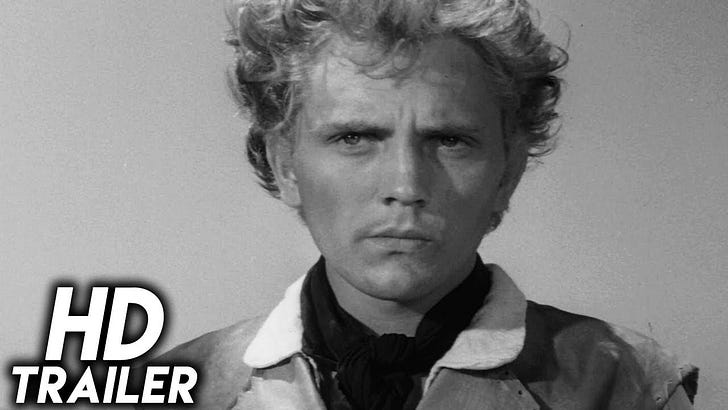
    The Classical Mind Goes to the Movies: Frankenstein (2025)

    In this episode, Junius and Wesley take on the latest film adaptation of Frankenstein, asking what makes a great adaptation of a classic work — and whether this one succeeds. From Mary Shelley’s 19th-century vision of creation and responsibility to modern cinematic retellings, they explore how filmmakers interpret, distort, and occasionally deepen the original novel’s moral and theological questions. Along the way, they consider what’s lost and what’s gained when literary imagination meets the visual power of film. Be sure to check out the stage adaptation by A.S. Peterson that Junius speaks about a few times in the episode. This is a public episode. If you'd like to discuss this with other subscribers or get access to bonus episodes, visit www.theclassicalmind.com/subscribe

  • Oct 28, 2025 · 1 hr 10 min

    The Proslogion by St. Anselm

    In this episode, Father Wesley and Dr. Junius dive deep into St. Anselm’s Proslogion, the short yet monumental work that introduced one of the most enduring and debated arguments in the history of philosophy and theology: the ontological argument for God’s existence. The hosts explore Anselm’s background as monk, abbot, and Archbishop of Canterbury, highlighting his tumultuous life amid royal and papal conflict, his intellectual lineage from Augustine and Boethius, and his place at the dawn of scholasticism. They also reflect on how his prayerful approach to theology—fides quaerens intellectum (“faith seeking understanding”)—blurs the line between philosophical proof and devotional meditation. Endnotes * Junius: The Prayers and Meditations of St. Anselm * Wesley: * “A Gift Exceeding Every Debt” by David Bentley Hart * “Anselmian Apocatastasis: The Fitting Necessity of Universal Salvation in St Anselm’s Cur Deus Homo” by Roberto J. De La Noval This is a public episode. If you'd like to discuss this with other subscribers or get access to bonus episodes, visit www.theclassicalmind.com/subscribe
  • Oct 14, 2025 · 1 hr 5 min

    The Taming of the Shrew

    In this episode of The Classical Mind, we take on Shakespeare’s most provocative comedy, The Taming of the Shrew. Junius and Wesley dig into the play’s strange structure—from the unclosed frame of Christopher Sly to the unsettling symmetry between performance and identity. What does it mean that the “prologue” is itself a play? And how does that affect the way we read Katherina’s transformation—or her apparent submission? Along the way, we explore the tension between romantic idealism and pragmatic marriage, trace the medieval roots of love as both commerce and devotion, and consider how Shakespeare’s comedy holds the contradictions of his culture up to the mirror. We talk about mimesis, medieval “speculum” thinking, and why comedy works best when it exposes absurdity rather than preaches morality. The result is part literary diagnosis, part philosophical reflection: a conversation about performance, freedom, and what it means to find truth in the masks we wear. Endnotes This is a public episode. If you'd like to discuss this with other subscribers or get access to bonus episodes, visit www.theclassicalmind.com/subscribe

  • Aug 27, 2025 · 1 hr 21 min

    Frankenstein by Mary Shelley

    Let’s go back to the 19th century and talk about one of the scariest novels we’ve ever read on the Classical Mind (but maybe not for the reasons you might think) with Mary Shelley’s Frankenstein. On this episode, Junius and Wesley discuss the different editions of this book before getting into some of its underlying philosophy like the responsibilities a creator has to their creatures and vice-versa, romanticism’s critique of scientism, and the moral deterioration that results from sin. Join us as we dive deeply into the text and make some fun connections with other books we’ve read or will read in the Classical Mind program (we’re looking at you J.R.R. Tolkien). Endnotes: * Junius: The Bicentennial Man by Isaac Asimov * Wesley * “Show Me How to Live” by Audioslave * Grendel by John Gardner This is a public episode. If you'd like to discuss this with other subscribers or get access to bonus episodes, visit www.theclassicalmind.com/subscribe
Showing 1–20 of 20 episodes