Skip to content
Artwork for The Charge Point Podcast

The Charge Point Podcast

Christophe Lephilibert, Robert Brehm

The Charge Point Podcast is your gateway to the future of EV charging. In each episode, we dive deep into the world of EV infrastructure, offering insights and perspectives from industry leaders, innovators, and the people at the forefront of deploying charging networks. Join us to explore the exciting developments that are accelerating our world towards sustainable mobility. More information about our Mission, Vision and Values here: https://www.flexecharge.com/company/about-us

Play
  • 22 episodes
  • fortnightly
  • Avg 34 min
  • English
Counted on this page — what you have heard stays on this device, so it is not something the list can be paged by.
  • August 19 · 36 min

    Episode 55 – How ORLEN Is Scaling Its EV Charging Network across 7 markets

    How do you transform a major fuel-retail network into a scalable EV charging business? Marvin Bechtel from ORLEN shares how the company is expanding its EV charging network while navigating site selection, grid constraints, technical complexity and changing customer expectations. The conversation explores what it takes to move from individual charging sites to a standardised, reliable and customer-centric network - and why charging speed alone will not differentiate tomorrow’s leading Charge Point Operators. Episode summary ORLEN operates approximately 3,500 service stations across seven European countries, including around 600 in Germany. Its ambition is to evolve from a traditional fuel retailer into an integrated energy and mobility provider, with EV charging as a central pillar of that transformation. Marvin explains how ORLEN approaches charging locations across Germany and Eastern Europe, from existing service stations and retail destinations to dedicated high-power charging hubs. He also shares why selecting the right location remains one of the most important factors in building a commercially successful charging network. As the rollout grows, the challenges change. Managing a handful of chargers is very different from operating hundreds of charging points across multiple locations, technical environments and grid operators. Standardisation therefore becomes critical- helping teams accelerate deployment, simplify commissioning and reduce operational complexity. The discussion also looks ahead to battery energy storage systems, solar integration, dynamic pricing and smarter energy management. As charging speeds become increasingly similar across networks, Marvin believes convenience, reliability, transparent pricing and the overall customer experience will become much stronger differentiators. What you will learn How ORLEN is transforming from a fuel retailer into an integrated energy and mobility provider What EV charging means for the future of traditional service stations Why prime locations remain essential to charging-network utilisation and profitability How EV adoption and grid readiness differ across Germany and Eastern Europe What changes when a CPO moves from individual projects to a large charging network Why site selection should not be driven solely by the easiest grid connection How grid limitations and physical space affect charging-site development Why standardisation can accelerate rollout and reduce operational complexity How failed commissioning can delay an entire charging site How FLEXBOX and the HARMON-E platform support a repeatable operational approach Where battery storage, solar power, load management and dynamic pricing could add value Why charging speed alone will become less of a competitive differentiator What may separate successful Charge Point Operators from the rest over the next three to five years About the guest Marvin Bechtel is responsible for ORLEN’s e-mobility business in the German market. After joining ORLEN in 2017, he worked in communications and public relations before moving into business development, where he helped develop the company’s mobile payment application for fuel and car-wash services. In 2023, Marvin took on responsibility for building and scaling ORLEN’s EV charging activities in Germany. His work covers charging-network strategy, site development, operational excellence and the creation of a consistent customer experience across ORLEN Charge locations. Connect with Marvin Bechtel on LinkedIn: https://www.linkedin.com/in/marvin-bechtel/ Key topics EV charging infrastructure · CPO strategy · charging-network scalability · ORLEN Charge · service-station transformation · charging-site selection · grid capacity · DNO requirements · charging-hub operations · commissioning · standardisation · FLEXBOX · HARMON-E · load management · battery energy storage systems · dynamic EV charging prices · customer experience · Germany · Eastern Europe Resources Check out the intro webinar about the FLEXBOX here Support the Charge Point Podcast If you found this conversation valuable, share the episode with a colleague or someone working in EV charging and e-mobility. Please also follow the Charge Point Podcast, leave a review and give the show a five-star rating. Your support helps more people discover the podcast and join the conversation about the future of EV charging. Got some feedback or questions? Text us! You can get more information on our website. Give us some stars please 🌟 If you enjoyed the episode, please give it a 5-stars note and leave us a review. Get in Touch: Do you have suggestions for future guests or topics? Reach out to us at hello@flexecharge.com. Subscribe & Stay Updated: 🔔 Make sure to subscribe to the Charge Point Podcast to stay updated on the latest trends and developments in the world of EV charging and energy. 📩 You can subscribe to our Newsletter, The Charge Point Journal, by clicking here. 🫱🏻‍🫲🏼 And you can follow us on Linkedin by clicking here and connect with Christophe here. ⚡ Let’s keep the conversation—and the electrons—flowing.

  • August 13 · 28 min

    Episode 54 – How Cheap Batteries Are Changing EV Charging Infrastructure - with Ryan Fisher, BloombergNEF

    Cheap batteries are starting to reshape the economics of EV charging infrastructure. In this episode of the Charge Point Podcast, Christophe Lephilibert speaks with Ryan Fisher, Head of Charging Infrastructure at BloombergNEF, about why co-located Battery Energy Storage Systems — or BESS — are becoming increasingly relevant for fast-charging sites, truck charging, megawatt charging and grid-constrained locations. The conversation builds on BloombergNEF’s report, How Cheap Batteries Are Helping EV Charging Scale, to which FLEXECHARGE contributed data. Ryan explains why battery storage is moving from a niche pilot topic to a serious infrastructure tool for Charge Point Operators, especially as battery costs fall, grid fees rise, and charging sites need to deliver more power. Together, Christophe and Ryan discuss peak-demand charges, grid connection constraints, energy arbitrage, subsidies, truck charging, BYD’s battery-backed megawatt charging rollout, and the implications of BloombergNEF’s 2026 Electric Vehicle Outlook. The key message: co-located BESS will not make sense for every charging site tomorrow — but every serious CPO should now understand where batteries fit into their rollout strategy. Guest Ryan Fisher Head of Charging Infrastructure, BloombergNEF Ryan Fisher leads BloombergNEF’s charging infrastructure research. His work connects the electrification of transport with the wider energy system, covering charging infrastructure, battery storage, power markets, grid constraints and the future of EV adoption. In this episode, Ryan brings a global BloombergNEF perspective on how cheap batteries, grid fees and higher charging powers are changing the fast-charging business case. What you will learn In this episode, you will learn: Why battery storage is becoming more relevant for EV fast-charging infrastructure How cheaper batteries can help CPOs deal with grid connection constraints Why peak-demand charges and grid fees are becoming critical to the charging business case How co-located BESS can help unlock sites that were previously too expensive or too difficult to build Why truck charging and megawatt charging may accelerate battery deployment How China, Europe and the US differ in battery costs, subsidies and tariff structures Why ancillary services and flexibility markets are promising, but still early for most CPOs What BloombergNEF’s 2026 EV Outlook says about EV growth, electricity demand and future charging needs Why future charging networks may need to think more like distributed energy asset operators Key topics covered Why this report, and why now? Ryan explains why BloombergNEF decided to investigate the role of batteries in EV charging infrastructure. Overcapacity in the battery market has pushed storage costs down, while CPOs are facing more questions around grid access, grid fees and whether charging infrastructure can scale fast enough. BloombergNEF tracked around 800 projects where batteries are already being used with EV charging infrastructure — a striking sign that co-located BESS is no longer only an experimental topic. The bottleneck is shifting from chargers to energy For years, fast charging was mainly discussed in terms of charger deployment, location, utilization and uptime. Today, the bottleneck is increasingly about energy: available grid capacity, power availability, grid fees and the ability to deliver higher charging speeds. This becomes even more important as EVs become capable of higher charging power and as commercial vehicles bring much larger loads to charging sites. The business case for co-located BESS Ryan breaks down where the value of BESS can come from: avoiding or delaying grid upgrades reducing peak-demand charges enabling higher charging power on constrained grid connections shifting electricity consumption to cheaper hours supporting truck charging and large fleet operations preparing for future flexibility and ancillary service revenues But the business case is highly market-specific. Tariff structures, electricity prices, utilization, subsidies and grid constraints all determine whether BESS makes financial sense. Peak-demand charges and grid fees One of the most important insights from the episode is that grid fees vary significantly by country, region and tariff structure. Some markets have peak-demand charges, some have time-of-use grid fees, and some have both. Ryan explains that in certain markets, peak-demand charges are being reduced or temporarily removed to support charging infrastructure rollout. But the long-term challenge remains: how do you scale charging infrastructure without creating unsustainable grid costs? Truck charging and megawatt charging Truck charging is one of the strongest use cases for co-located BESS because the energy demand is much larger than passenger-car charging. A single truck can have a battery of several hundred kilowatt-hours, and high-power charging for fleets can quickly create major grid requirements. The discussion also touches on BYD’s battery-backed megawatt charging rollout in China, which could significantly influence the global average size and architecture of battery-supported charging sites. Can cheap batteries change where charging sites are built? Ryan’s answer is clear: yes. If battery costs continue to fall — or if operators can access grants and subsidies — BESS can make new types of charging locations viable. This is particularly relevant for existing fuel retail sites, depots, and high-traffic locations where the commercial case is strong but the grid connection is weak. With batteries, a site that previously lacked sufficient grid power may still be able to offer high-power charging. BloombergNEF’s 2026 EV Outlook The conversation also connects BESS with the broader findings from BloombergNEF’s 2026 Electric Vehicle Outlook. Ryan highlights growth in Europe, developments in Southeast Asia, progress in heavy-duty trucking, and emerging questions around robotaxis. The outlook also looks at electricity demand from EVs and the grid investment needed to support transport electrification. One important point: EVs will become a meaningful driver of grid investment, but they are only one part of a wider picture that also includes aging grids, data centers, general electricity demand growth and electrification in other sectors. The future charging business case Ryan explains that the future competitive landscape for CPOs will not only be about who has the best location or the most chargers. It will also be about: who can deliver higher charging powers who can manage electricity costs who can optimize grid capacity who can integrate batteries effectively who can combine charging with retail, amenities or other site-level business models A good charging site today could be overtaken tomorrow by a better-located, better-optimized, higher-power and more energy-efficient competitor. Key takeaway Co-located BESS is not a universal solution for every charging site. But cheap batteries, grid constraints, higher charging power and the rise of truck charging are changing the EV charging business case. For many CPOs, batteries will become a strategic tool to reduce costs, unlock constrained sites, improve charging performance and prepare for future flexibility markets. The smartest operators will not wait until every business case is obvious. They will start understanding where BESS fits, which sites are suitable, and how to build the technical stack needed to scale when the economics become attractive. Listen to the full episode Listen to the full conversation with Ryan Fisher from BloombergNEF to understand how cheap batteries are changing EV charging infrastructure — and what this means for CPOs, fleet operators, truck charging, grid constraints and the future of fast charging. If you enjoyed this episode, please share it with a colleague working in EV charging, batteries, fleet electrification or energy infrastructure. You can also support the Charge Point Podcast by leaving a review and giving us a five-star rating on your preferred podcast platform. Resources mentioned BloombergNEF report: How Cheap Batteries Are Helping EV Charging Scale BloombergNEF Electric Vehicle Outlook 2026: Got some feedback or questions? Text us! You can get more information on our website. Give us some stars please 🌟 If you enjoyed the episode, please give it a 5-stars note and leave us a review. Get in Touch: Do you have suggestions for future guests or topics? Reach out to us at hello@flexecharge.com. Subscribe & Stay Updated: 🔔 Make sure to subscribe to the Charge Point Podcast to stay updated on the latest trends and developments in the world of EV charging and energy. 📩 You can subscribe to our Newsletter, The Charge Point Journal, by clicking here. 🫱🏻‍🫲🏼 And you can follow us on Linkedin by clicking here and connect with Christophe here. ⚡ Let’s keep the conversation—and the electrons—flowing.

  • July 8 · 43 min

    Episode 53 - Grid Constraints, Batteries & AI: What Power2Drive 2026 Revealed

    Recorded live on the showfloor at Power2Drive Europe 2026 in Munich, this special episode of The Charge Point Podcast captures the technologies, business models, and conversations shaping the next phase of EV charging. Across seven short interviews with experts from Polarium, ADS-TEC Energy, Sungrow, FLEXECHARGE, KEBA, and Lumina, one message comes through clearly: EV charging is moving beyond rapid infrastructure rollout. The next phase is about smarter operations, better use of constrained grid connections, battery-backed business models, depot and truck charging, energy market integration, and more intelligent software. From distributed battery storage and battery-buffered charging to FLEXBOX, C&I storage, cable theft prevention, local energy management, VPPs, AI agents, and ecosystem collaboration, this episode offers a snapshot of where the EV charging industry is heading next. Episode summary Power2Drive 2026 showed an industry entering a more mature phase. For years, the central question was how fast charging networks could be deployed. Today, the conversation is shifting. CPOs, hardware providers, battery companies, EMS platforms, and software players are increasingly focused on profitability, resilience, operational intelligence, and making the most of the grid connections already available. In this showfloor episode, Christophe speaks with seven guests to understand what stood out at Power2Drive 2026. The conversations highlight three major themes: grid constraints as a defining design challenge, battery energy storage as a strategic commercial asset, and the growing convergence between EV charging, solar, storage, grid services, software, and AI. The result is a practical, on-the-ground view of the next charging playbook: optimise sites, orchestrate assets, unlock new value streams, and collaborate across the energy ecosystem. What you will learn Why grid constraints are now shaping how charging sites are designed, deployed, and operated. How battery energy storage can help CPOs avoid or delay grid upgrades, increase charging capacity, reduce peak demand costs, and unlock additional revenue streams. Why BESS is moving from a “nice to have” to a strategic lever for site profitability, especially in depot and truck charging. How battery-buffered charging can help operators deploy high-power charging on limited grid connections. Why C&I storage, PV integration, and energy market participation are becoming increasingly relevant for EV charging operators. How local energy management can coordinate chargers, batteries, solar PV, and grid constraints in real time. Why depot and truck charging were among the hot topics at Power2Drive 2026. How charger reliability, service, and cable theft prevention are becoming critical issues for logistics and public charging operators. Why AI is moving from a broad buzzword to practical agents that can help operations teams manage EV chargers and energy assets. Why the future of EV charging will depend on stronger collaboration between hardware, software, batteries, solar, grid services, and energy management providers. Guests featured in this episode Håkan Tezcanli, Polarium Håkan shares the battery and distributed energy storage perspective. He explains why batteries have become central to solving grid and energy challenges, how distributed BESS can support EV charging, and how aggregated battery sites can contribute to VPP models and new revenue opportunities. Sascha Koenig, ADS-TEC Energy Sascha discusses battery-buffered charging and how it can help operators deploy on low-voltage or constrained grid connections. He also explains why truck and depot charging are becoming major growth areas, and why batteries are increasingly essential when the power and energy requirements of fleets increase. Miguel Lojan Jaramillo, Sungrow Miguel brings the C&I storage and solar perspective. He talks about weak grid connections, electricity prices, peak charges, PV integration, PowerStack, technical support, after-sales service, and the growing role of ecosystem partnerships when customers want to connect EV chargers, PV, ESS, and energy market opportunities. Kasper Daugaard, FLEXECHARGE Kasper reflects on the shift from charger deployment and land-grabbing to energy optimisation and site profitability. He introduces FLEXBOX as a local energy controller that balances chargers, batteries, solar, and the grid in real time, while helping operators maximise charging capacity without exceeding grid limits. Torsten Freytag, KEBA Torsten takes the conversation into transport and logistics. He explains why reliability and service are critical for depot charging, why partner ecosystems matter in early-stage depot electrification, and how KEBA is approaching AI-supported cable theft prevention. He also discusses high-power DC charging and liquid-cooled cables for trucks. Mikkel Weikop & Andreas Sønderbo Patscheider, Lumina Mikkel and Andreas discuss how the AI conversation is moving from general hype to practical agents. They explain how operations teams could build and deploy AI agents to operate EV chargers and energy assets, and why e-mobility, solar, storage, software, and adjacent energy sectors are becoming increasingly intertwined. Key themes from Power2Drive 2026 1. Grid constraints are becoming the central design challenge Charging operators are no longer only asking how many chargers they can deploy. They are asking how to maximise the value of the grid connection they already have. This changes everything: site design, hardware choices, energy management, battery strategy, and long-term business models. 2. Batteries are becoming commercial assets, not just technical fixes BESS can help solve grid constraints, but the bigger story is value stacking. Batteries can support charging capacity, peak shaving, load shifting, PV optimisation, arbitrage, flexibility services, and VPP participation. For CPOs, the battery is increasingly becoming part of the business model. 3. The industry is becoming one connected operating system EV charging, solar, batteries, grid services, local controllers, EMS platforms, AI, and depot operations can no longer be treated as separate industries. The most interesting solutions are emerging at the intersections — and that makes partnerships more important than ever. Key takeaway Power2Drive 2026 revealed an industry moving from rollout to optimisation. The next winners in EV charging will not only be the companies that build fast. They will be the ones that operate smart: making better use of constrained grid connections, integrating batteries and flexibility markets, coordinating assets in real time, improving operational resilience, and building stronger partnerships across the energy ecosystem. Listen to this episode if you are interested in EV charging, CPO strategy, Power2Drive, grid constraints, battery energy storage, BESS value stacking, depot charging, truck charging, public fast charging, local energy management, flexibility markets, VPPs, C&I storage, PV integration, cable theft prevention, AI agents, energy orchestration, and the future of profitable EV charging operations. Got some feedback or questions? Text us! You can get more information on our website. Give us some stars please 🌟 If you enjoyed the episode, please give it a 5-stars note and leave us a review. Get in Touch: Do you have suggestions for future guests or topics? Reach out to us at hello@flexecharge.com. Subscribe & Stay Updated: 🔔 Make sure to subscribe to the Charge Point Podcast to stay updated on the latest trends and developments in the world of EV charging and energy. 📩 You can subscribe to our Newsletter, The Charge Point Journal, by clicking here. 🫱🏻‍🫲🏼 And you can follow us on Linkedin by clicking here and connect with Christophe here. ⚡ Let’s keep the conversation—and the electrons—flowing.

  • June 18 · 31 min

    Episode 52 - Beyond Kilowatt-Hours: Flexibility as the Next Value Pool for CPOs

    EV charging is no longer only about selling kilowatt-hours. As grid capacity becomes tighter, electricity prices more volatile, and flexibility markets more mature, Charge Point Operators have a new strategic question to answer: can charging infrastructure become a flexible energy asset? In this episode of the Charge Point Podcast, Christophe speaks with Lars Herre, Flexibility Portfolio Lead at Fortum, about demand response, flexibility, V2G, batteries, and the role CPOs can play in the future energy system. Lars brings a rare combination of technical depth and market perspective. His background spans electrical engineering, power systems research, energy market modelling, and venture-building around aggregation and EV flexibility. In the conversation, he explains how demand response can help customers electrify while preventing the grid from running into limits — and why CPOs should start preparing now, even if the business case does not always feel urgent today. Together, we explore what it means to move beyond kilowatt-hours. For CPOs, flexibility can become a way to reduce energy costs, manage peak loads, delay or avoid grid upgrades, integrate batteries and local renewables, and eventually participate in flexibility markets or Virtual Power Plants. But this is not just a technology story. It is also about regulation, forecasting, standardisation, customer experience, and knowing how much flexibility can be activated without disappointing drivers. Lars also shares his view on what has changed in recent years: greater awareness of electricity price volatility, the rise of flexibility players, the growing relevance of dynamic tariffs, regulation that is ambitious but often slow in implementation, and the fact that V2G is increasingly moving from vision to real-world partnerships. What you will learn In this episode, you will learn: Why demand response is becoming increasingly relevant for CPOs How a charging site can become a flexible energy asset Why selling kilowatt-hours may not be enough as the market matures How flexibility can help manage grid constraints and peak demand Why driver experience must remain the first priority What role batteries, V2G and Virtual Power Plants could play in CPO profitability Why pilots should be designed with scale, standardisation and automation in mind How CPOs can prepare today for a more grid-interactive future Key topics discussed Demand response and EV charging Flexibility as a new value pool for CPOs Grid constraints and electrification Dynamic tariffs and energy price volatility Battery Energy Storage Systems at charging sites Vehicle-to-Grid and bidirectional charging Virtual Power Plants and aggregation Flexibility markets and reserve markets The balance between monetisation and driver experience Regulation, market access and implementation barriers What CPOs need to future-proof their charging portfolios Guest Lars Herre, Flexibility Portfolio Lead at Fortum, formerly part of the Hiven.energy team, a Fortum venture. Lars works at the intersection of electrification, power systems and flexibility. His mission is to help customers electrify while avoiding unnecessary pressure on the grid - turning uncontrollable loads into flexible assets that can create value for customers and support the wider energy system. Connect with him now: linkedin.com/in/larsherre/ Why this episode matters for CPOs For many CPOs, profitability is still closely tied to utilisation, location, pricing and operational efficiency. But the next layer of value may come from how intelligently charging assets interact with the grid. Flexibility will not replace the core business of charging drivers, but it can strengthen it. It can help CPOs reduce costs, improve site resilience, make better use of limited grid capacity, and open new revenue opportunities. The key message from this episode is clear: CPOs do not need to capture every flexibility revenue stream tomorrow — but they do need to build the capability today. The future CPO will not only operate chargers. It will operate intelligent, flexible, grid-interactive assets. Listen now Tune in to Episode 52 of the Charge Point Podcast to understand why flexibility could become one of the most important value pools for the next generation of CPOs. Got some feedback or questions? Text us! You can get more information on our website. Give us some stars please 🌟 If you enjoyed the episode, please give it a 5-stars note and leave us a review. Get in Touch: Do you have suggestions for future guests or topics? Reach out to us at hello@flexecharge.com. Subscribe & Stay Updated: 🔔 Make sure to subscribe to the Charge Point Podcast to stay updated on the latest trends and developments in the world of EV charging and energy. 📩 You can subscribe to our Newsletter, The Charge Point Journal, by clicking here. 🫱🏻‍🫲🏼 And you can follow us on Linkedin by clicking here and connect with Christophe here. ⚡ Let’s keep the conversation—and the electrons—flowing.

  • June 4 · 42 min

    Episode 51 - INTERFACE Nordics: Batteries, Flexibility and the Next Phase of Charging

    Recorded just after INTERFACE Nordics at the FLEXECHARGE HQ in Copenhagen, this special episode brings together five short interviews with leading voices from across the EV charging and energy ecosystem. The Nordics are often seen as the future of electrification: high EV adoption, clean power, ambitious CPOs and fast-moving innovation. But a new challenge is now emerging fast: grid constraints. How do we keep scaling charging when capacity is no longer something CPOs can take for granted? What role will batteries play? Are flexibility markets becoming a real opportunity? And what happens when electric trucks start putting MW-scale pressure on depots, corridors and local grids? In this episode, Christophe speaks with five guests who each bring a different perspective on the next phase of charging. Guests Daniel Bogdanoski, Energy Solutions Product Manager, OKQ8 Wulf Schlachter, CEO & Founder of DXBe Management Jeppe Arnsdorf Pedersen, Product Owner for Ancillary Services, Clever Jacob Ribergaard Vinther, Senior Business Consultant, Cerius-Radius Martin Moos, eMobility consultant and founder of Elevathors What you will learn Why the Nordic charging market is moving from deployment to optimization Why grid constraints are becoming a strategic challenge, even in power-rich markets How CPOs are starting to think about charging sites as energy assets, not just hardware locations Why BESS can support grid access, charging performance, peak shaving and new revenue streams What DSOs wish CPOs understood about connection timelines, planning and early dialogue What is actually monetizable today in flexibility and ancillary services — and why it is still complex Why heavy-duty charging is not just “bigger EV charging”, but a new operational challenge How depot charging, route planning, driver breaks, grid capacity and software orchestration need to work together Why collaboration between CPOs, DSOs, TSOs, BESS OEMs, flexibility specialists, software providers and fleet operators will define the next phase of the market Episode summary The core message of this episode is clear: EV charging is entering a new phase. The first phase was about building networks, adding chargers and creating coverage. That work continues — but it is no longer enough. As utilization grows, grid capacity tightens and heavy-duty electrification accelerates, the industry needs to think differently. Charging sites are becoming energy systems. Batteries, smart charging, flexibility, grid integration and software orchestration are moving from future topics to operational necessities. From Wulf Schlachter, we hear how the market is shifting from a start-up phase to a scale-up phase, where profitability and energy management matter more than ever. From Daniel Bogdanoski, we get the CPO perspective: batteries and smart energy solutions are not only about grid constraints. They are also about delivering the charging experience customers expect. From Jacob Ribergaard Vinther, we hear the DSO reality: the issue is not willingness to connect new customers, but time, capacity and planning. Early dialogue matters. From Jeppe Arnsdorf Pedersen, we dive into ancillary services and flexibility: the opportunity is real, but it requires scale, strong IT systems, regulation awareness and careful protection of the customer experience. And from Martin Moos, we look at heavy-duty charging, where electrification brings a much deeper layer of complexity: depots, routes, schedules, driver breaks, grid capacity, software and energy cost all need to be coordinated. Key themes Grid constraints and the Nordic Grid Paradox Batteries in EV charging infrastructure Flexibility markets and ancillary services From CPOs to energy operators DSO-CPO collaboration Heavy-duty and depot charging Customer experience and charging reliability Software orchestration and energy optimization Future perspective The Nordics are still ahead in electrification. But being ahead also means meeting the constraints first. That is what makes this region so interesting. The solutions now being tested in Denmark, Sweden and Norway — batteries, flexible grid connections, VPPs, depot orchestration and closer DSO-CPO collaboration — may become part of the blueprint for the rest of Europe. As charging power increases and electric trucks scale, the winners will not only be the companies that deploy the most hardware. They will be the ones that can orchestrate energy, grid capacity, customer experience and market value in real time. Learn more To go deeper into INTERFACE, read more about the event, watch the video interviews, and get access to the recorded keynotes - go here Watch the webinar: “The Power of Co-Located Batteries — Unlocking the Full Revenue Potential” - link here Got some feedback or questions? Text us! You can get more information on our website. Give us some stars please 🌟 If you enjoyed the episode, please give it a 5-stars note and leave us a review. Get in Touch: Do you have suggestions for future guests or topics? Reach out to us at hello@flexecharge.com. Subscribe & Stay Updated: 🔔 Make sure to subscribe to the Charge Point Podcast to stay updated on the latest trends and developments in the world of EV charging and energy. 📩 You can subscribe to our Newsletter, The Charge Point Journal, by clicking here. 🫱🏻‍🫲🏼 And you can follow us on Linkedin by clicking here and connect with Christophe here. ⚡ Let’s keep the conversation—and the electrons—flowing.

  • May 19 · 42 min

    Episode 50 - Battery-Backed Charging: How Q8 Electric Is Scaling Beyond Grid Limits

    Episode summary Fast charging is entering a new phase. For many CPOs, the challenge is no longer simply installing chargers — it is securing enough grid capacity, keeping rollout speed high, and delivering a reliable charging experience even when the grid is constrained. In this episode of the Charge Point Podcast, Christophe speaks with Geert de Mil from Q8 Electric and Joost de Meester from Intercel about why co-located battery energy storage systems are becoming a structural part of fast-charging infrastructure. Q8 Electric is scaling towards 500 high-power charging locations across the Benelux, and as Geert explains, the traditional model of “connect chargers to the grid and go” no longer works at scale. Grid connection lead times, limited capacity, and commercially attractive locations without sufficient power are forcing CPOs to rethink site architecture. Together with Joost, we explore why batteries are no longer just a nice-to-have, but a critical enabler for fast charging: helping sites reduce dependence on large grid connections, buffer peak demand, improve reliability, and prepare for future use cases such as arbitrage and flexibility markets. The conversation also goes beyond the business case. We discuss the technical complexity of integrating chargers, batteries, smart meters, grid constraints, and an energy management system in real time — and why the real value of BESS comes from making the whole system work together without compromising the driver experience. What you will learn In this episode, you will learn: Why grid constraints are becoming one of the biggest barriers to fast-charging rollout. How Q8 Electric is using co-located batteries to support its expansion across the Benelux. Why batteries are shifting from “nice-to-have” to structural infrastructure for CPOs. How BESS can help reduce the size of required grid connections while maintaining charging performance. Why power boosting is often the first and most important use case for battery-backed charging. How peak shaving, dynamic load management, arbitrage, and future ancillary services fit into the value stack. Why the integration challenge is not the battery itself, but the orchestration between the car, charger, battery, grid, and energy management system. What can go wrong if response times, restart logic, and control signals are not properly managed. How Q8 Electric thinks about customer experience, uptime, predictability, and ROI. Why truck charging and megawatt charging will make batteries even more relevant in the coming years. How future fast-charging sites may evolve into intelligent energy hubs. Key topics discussed From fuel sites to energy hubs Geert explains how Q8 Electric emerged as part of Q8’s broader mobility transition, and why fast charging now requires a much more sophisticated site architecture than simply installing chargers. The grid as the breaking point As Q8 Electric scales towards hundreds of HPC locations, grid availability has become a key constraint. The best commercial locations are not always the locations with enough power, which makes batteries essential to unlock rollout opportunities. Why BESS is becoming structural For Q8 Electric, batteries are no longer optional. They help deliver predictable, reliable, fast charging while reducing stress on the grid and making the operator a more responsible grid user. The Intercel perspective Joost shares how Intercel sees the market evolving, why battery demand around EV charging is accelerating, and how European assembly, service, and integration capabilities matter in complex infrastructure projects. The real integration challenge The episode highlights why EV charging is more demanding than many other BESS use cases. A charging session can stop suddenly, power flows change instantly, and the system must react in milliseconds to keep the site stable. Sizing and business case Geert explains how Q8 Electric learned to size batteries together with Intercel, using simulations to balance battery capacity, charger demand, grid limits, and future expansion needs. Value stacking - but with priorities The discussion covers power boosting, peak shaving, dynamic load management, arbitrage, and future flexibility markets. But the priority is clear: customer experience comes first. The battery must support fast charging, not interfere with it. The future of battery-backed charging The guests look ahead to more battery-backed HPC sites, truck charging, megawatt charging, and public energy hubs where grid investment, charging infrastructure, and storage are planned more strategically. Featured guests Geert de Mil, Q8 Electric Geert leads charging technology, systems, and insights at Q8 Electric, focusing on everything behind the charger: site architecture, hardware, digital systems, monitoring, energy management, and the infrastructure needed to make fast charging reliable at scale. Joost de Meester, Intercel Joost is commercially responsible for part of Intercel’s business. With a background in sales, business development, and previous experience at Tesla working on charging infrastructure, he now focuses on helping customers deploy battery systems for the energy transition. Memorable insight “The future of fast charging will not only be about adding more chargers. It will be about building smarter sites — where chargers, batteries, grid connections, and energy management systems work together as one integrated energy system.” Recommended resources Watch the webinar: “The Power of Co-Located Batteries — Unlocking the Full Revenue Potential” - link here Interested in the solution side of the story? Listen to Episode 43 of the podcast where Christophe discusses with Topias Koskela from Enico, a leading BESS OEM from Finland - link here Keywords EV charging, fast charging, high-power charging, HPC, BESS, battery energy storage, co-located batteries, Q8 Electric, Intercel, energy management system, grid constraints, peak shaving, power boosting, EV charging infrastructure, charge point operators, CPO, truck charging, megawatt charging, flexibility markets, energy hubs. Got some feedback or questions? Text us! You can get more information on our website. Give us some stars please 🌟 If you enjoyed the episode, please give it a 5-stars note and leave us a review. Get in Touch: Do you have suggestions for future guests or topics? Reach out to us at hello@flexecharge.com. Subscribe & Stay Updated: 🔔 Make sure to subscribe to the Charge Point Podcast to stay updated on the latest trends and developments in the world of EV charging and energy. 📩 You can subscribe to our Newsletter, The Charge Point Journal, by clicking here. 🫱🏻‍🫲🏼 And you can follow us on Linkedin by clicking here and connect with Christophe here. ⚡ Let’s keep the conversation—and the electrons—flowing.

  • May 7 · 29 min

    Episode 49 – Grid Congestion Decoded: What Every CPO Needs to Understand Now

    Summary In this episode of the Charge Point Podcast, Christophe sits down with Maarten Staats from Enexis and GridCapacityMaps.eu to unpack one of the most pressing challenges facing EV charging infrastructure today: grid congestion. As EV adoption accelerates across Europe, more Charge Point Operators are encountering limited grid capacity, delayed connection approvals, and uncertainty around available power for new charging sites. Maarten explains how congestion actually works in practice, why the Netherlands is experiencing these issues so early, and what this means for the future deployment of EV charging infrastructure. Which topics do we explore? 🔌 What grid congestion actually means ⚡ The difference between grid congestion and transport scarcity 🗺️ How DSOs calculate and allocate grid capacity 🇳🇱 Why the Netherlands has become an early stress test for electrification 🚧 Why grid reinforcement projects take so much time 📈 How increasing electrification impacts grid planning 🔋 The role of flexible capacity agreements and smarter grid usage 🏗️ What CPOs should understand before planning new charging sites About the guest Maarten Staats works at Enexis, one of the leading Dutch Distribution System Operators (DSOs), and is also the creator of GridCapacityMaps, a platform helping visualize grid capacity constraints across regions. Resources & Links 🌍 Grid Capacity Maps https://www.gridcapacitymaps.eu 🔗 Maarten Staats on LinkedIn https://www.linkedin.com/in/maartenstaats/ Continue Listening 👉 Interested in the solution side of the story? Listen to Episode 47, where we explore batteries, smart energy management, and flexibility solutions for grid-constrained charging sites in the Benelux. Got some feedback or questions? Text us! You can get more information on our website. Give us some stars please 🌟 If you enjoyed the episode, please give it a 5-stars note and leave us a review. Get in Touch: Do you have suggestions for future guests or topics? Reach out to us at hello@flexecharge.com. Subscribe & Stay Updated: 🔔 Make sure to subscribe to the Charge Point Podcast to stay updated on the latest trends and developments in the world of EV charging and energy. 📩 You can subscribe to our Newsletter, The Charge Point Journal, by clicking here. 🫱🏻‍🫲🏼 And you can follow us on Linkedin by clicking here and connect with Christophe here. ⚡ Let’s keep the conversation—and the electrons—flowing.

  • April 23 · 36 min

    Episode 48 – Inside Survoltage: A French BSP on Flexibility Markets & EV Charging

    🎙️ Episode Overview In this episode, we dive into one of the most strategic topics for the future of EV charging: flexibility - and the role of BSPs (Balancing Service Providers). As renewable energy penetration increases, the grid is becoming more volatile - and the ability to adapt consumption in real time is turning into a critical asset. Together with Jeff Knoepfli, CEO & Founder of Survoltage, we explore how flexibility markets work, how energy assets can be orchestrated, and what it means concretely for charge point operators - across both commercial and residential contexts. ⚡ What You’ll Learn What a Balancing Service Provider actually does How flexibility markets work - from a practical, operator perspective Why EV charging infrastructure is becoming a key flexibility asset The role of aggregation, smart control, and real-time optimisation How CPOs can start unlocking new revenue streams from their assets How flexibility also applies to B2C use cases, including smart homes and residential energy management The growing convergence between B2C, B2B, and EV charging flexibility 🔍 Key Takeaways for CPOs Flexibility is moving from “nice-to-have” to a core component of the EV charging business model Your charging infrastructure can become a revenue-generating asset, not just a cost center You don’t need to go all-in immediately — start with pilots and scale Batteries + smart energy management + BSP integration = value stacking opportunity The market is evolving fast — early movers will capture the most value 🔗 Related Episode If you want to go deeper into how flexibility is already deployed at scale in the Nordics, listen to: 👉 Episode 37 – with My Näslund (Flower) 👤 About the Guest Jeff Knoepfli is the CEO & Founder of Survoltage, a French company building digital infrastructure to connect, control, and optimise distributed energy assets across residential (B2C) and commercial (B2B) environments. Their mission: turn energy consumption into a flexible, controllable resource that supports the grid and unlocks new value streams. 🌐 Learn More Survoltage: https://www.survoltage.fr/ FLEXECHARGE's collaboration with BSPs: https://www.flexecharge.com/partnerships/software Got some feedback or questions? Text us! You can get more information on our website. Give us some stars please 🌟 If you enjoyed the episode, please give it a 5-stars note and leave us a review. Get in Touch: Do you have suggestions for future guests or topics? Reach out to us at hello@flexecharge.com. Subscribe & Stay Updated: 🔔 Make sure to subscribe to the Charge Point Podcast to stay updated on the latest trends and developments in the world of EV charging and energy. 📩 You can subscribe to our Newsletter, The Charge Point Journal, by clicking here. 🫱🏻‍🫲🏼 And you can follow us on Linkedin by clicking here and connect with Christophe here. ⚡ Let’s keep the conversation—and the electrons—flowing.

  • April 8 · 25 min

    Episode 47 – When EV Charging Hits the Grid Wall: Inside the INTERFACE Benelux conference

    ⚡ Episode Overview What happens when EV charging growth collides with grid reality? In this special episode of the Charge Point Podcast, we take you inside INTERFACE Benelux - a live event where industry leaders gathered to tackle one of the biggest challenges in electrification today: grid constraints. Through a series of short interviews recorded on-site, you’ll hear how key players across EV charging, battery storage, and energy markets are adapting — and what it really takes to keep scaling in a grid-constrained world. You'll hear interviews with Robert (FLEXECHARGE), Tessa (Intercel), Mike (Kwetta), Peter (Floading) and Jan (FLEXECHARGE). 🎧 What You’ll Learn Why the grid - not the charger - is now the main bottleneck How BESS (battery storage) is becoming essential to unlock new charging capacity What “energy orchestration” really means for modern charging sites Where the real value lies in flexibility markets today Why EV charging sites are evolving into full energy systems 🧠 Key Takeaways EV charging has entered a new phase: from deployment → to energy optimisation Grid constraints are structural, not temporary BESS + EMS + smart orchestration are becoming the new standard Flexibility is no longer theoretical - it’s a real business lever The industry is still early - and learning in real time 🚀 Why This Matters As EV adoption accelerates, the ability to work with the grid - not against it - will define the winners in this space. This episode gives you a front-row seat to how leading players are already making that shift. 🔗 Links & resources More info about the INTERFACE conference series: https://www.flexecharge.com/event-interface-ev-charging-meet-the-grid-in-person On-Demand Webinar: https://www.flexecharge.com/resources/webinars/the-power-of-co-located-batteries-unlocking-the-full-revenue-potential Got some feedback or questions? Text us! You can get more information on our website. Give us some stars please 🌟 If you enjoyed the episode, please give it a 5-stars note and leave us a review. Get in Touch: Do you have suggestions for future guests or topics? Reach out to us at hello@flexecharge.com. Subscribe & Stay Updated: 🔔 Make sure to subscribe to the Charge Point Podcast to stay updated on the latest trends and developments in the world of EV charging and energy. 📩 You can subscribe to our Newsletter, The Charge Point Journal, by clicking here. 🫱🏻‍🫲🏼 And you can follow us on Linkedin by clicking here and connect with Christophe here. ⚡ Let’s keep the conversation—and the electrons—flowing.

  • March 31 · 30 min

    Episode 46: 800+ Grid Operators, One Massive Problem - And How CPOs Can Standardize Their Rollout

    Scaling EV charging infrastructure in Europe sounds straightforward — until you hit the grid. In markets like Germany, Charge Point Operators are facing a highly fragmented landscape with 800+ Distribution System Operators (DSOs) — each with their own technical requirements, processes, and timelines. The result? More complexity, longer delays, and unpredictable rollouts. In this episode, Christophe is joined by Christof (Product Strategist) and Nicolas (Head of Customer Success) from FLEXCHARGE to unpack what’s really happening behind the scenes — and what it means for CPOs looking to scale. They break down why grid integration is becoming the #1 bottleneck, how lack of standardization is slowing down the entire industry, and why forward-thinking operators are shifting their approach. Because this isn’t just a technical challenge — it’s a strategic one. ⚡ What You’ll Learn Why grid integration is becoming the main constraint for scaling EV charging The real impact of 800+ DSOs on deployment speed and complexity Why every new site risks becoming a custom engineering project How standardization can unlock faster, more predictable rollouts What role solutions like the FLEXBOX play in simplifying grid integration Why EV charging is evolving into a grid-interactive energy asset What CPOs need to do today to stay competitive tomorrow 🔑 Key Takeaways Fragmentation kills scale: dealing with hundreds of DSOs creates operational chaos Standardization is a competitive advantage, not just an efficiency gain Compliance is only the starting point — flexibility and control are the next frontier Charging infrastructure is becoming part of the energy system, not just mobility 🧠 About the Guests Christof – Product Strategist at FLEXCHARGE, focused on designing scalable, grid-integrated solutions for EV charging infrastructure. Nicolas – Head of Customer Success at FLEXCHARGE, working closely with CPOs across Europe to support rollout and operations at scale. 🔗 Links & resources On-Demand Webinar: Solving the Grid Control Bottleneck in Germany: https://www.flexecharge.com/resources/webinars/the-best-cpos-dont-reinvent-deployments-they-standardise-meet-the-flexbox Got some feedback or questions? Text us! You can get more information on our website. Give us some stars please 🌟 If you enjoyed the episode, please give it a 5-stars note and leave us a review. Get in Touch: Do you have suggestions for future guests or topics? Reach out to us at hello@flexecharge.com. Subscribe & Stay Updated: 🔔 Make sure to subscribe to the Charge Point Podcast to stay updated on the latest trends and developments in the world of EV charging and energy. 📩 You can subscribe to our Newsletter, The Charge Point Journal, by clicking here. 🫱🏻‍🫲🏼 And you can follow us on Linkedin by clicking here and connect with Christophe here. ⚡ Let’s keep the conversation—and the electrons—flowing.

  • March 17 · 28 min

    Episode 45 – How Smart Freight Centre Is Accelerating the Shift to Zero-Emission Trucking

    In this episode, we sit down with Samuel Barendregt from the Smart Freight Centre, a global nonprofit working at the forefront of zero-emission freight. Freight is one of the hardest sectors to decarbonize — but things are starting to move. Battery-electric trucks are entering the market, charging infrastructure is evolving, and new collaborative models are emerging to bridge the gap between ambition and execution. So what will it actually take to scale zero-emission freight? 🚀 What we cover Why battery-electric trucks are emerging as the leading solution for zero-emission road freight The critical role of charging infrastructure — and why depot charging dominates today The rise of shared charging hubs and semi-public depot infrastructure The importance of megawatt charging systems (MCS) for long-haul trucking Why collaboration across the ecosystem is essential to unlock scale The current state of pilot projects vs. real deployment Why the biggest gap today is not technology — but knowledge and coordination 🔑 Key insights Depot charging is king: the majority of truck charging happens at depots due to cost and operational control Shared infrastructure is emerging: fleets are beginning to collaborate on semi-public charging to improve utilization Battery-electric trucks are leading the transition, with other technologies playing more limited roles The industry is still in an early stage, especially when it comes to advanced solutions like MCS and V2G Learning and collaboration today = competitive advantage tomorrow 🌍 About Smart Freight Centre A global nonprofit focused on reducing emissions in the freight sector. They work with major companies like Amazon, IKEA, DHL, and LEGO to: Track and report emissions Enable collaborative decarbonization projects Accelerate the adoption of zero-emission technologies Their mission: align the freight sector with 1.5°C climate targets. 🔗 Links & resources Smart Freight Centre Connect with Samuel Barendregt On-Demand Webinar: Solving the Grid Control Bottleneck in Germany Got some feedback or questions? Text us! You can get more information on our website. Give us some stars please 🌟 If you enjoyed the episode, please give it a 5-stars note and leave us a review. Get in Touch: Do you have suggestions for future guests or topics? Reach out to us at hello@flexecharge.com. Subscribe & Stay Updated: 🔔 Make sure to subscribe to the Charge Point Podcast to stay updated on the latest trends and developments in the world of EV charging and energy. 📩 You can subscribe to our Newsletter, The Charge Point Journal, by clicking here. 🫱🏻‍🫲🏼 And you can follow us on Linkedin by clicking here and connect with Christophe here. ⚡ Let’s keep the conversation—and the electrons—flowing.

  • March 5 · 21 min

    Episode 44 - Speed vs. Grid Reality: Inside ELECTRA’s German Expansion

    Germany is Europe’s largest automotive market - and one of the most challenging environments to scale EV charging infrastructure. In this episode of the Charge Point Podcast, host Christophe Lephilibert speaks with Paul Tonini, General Manager of ELECTRA Germany, about the realities of rolling out high-power EV charging (HPC) networks in one of Europe’s most complex regulatory and grid landscapes. From navigating 800+ Distribution Network Operators (DNOs) to managing grid capacity constraints, permitting challenges, and fragmented technical requirements, Paul shares practical insights into what it really takes to scale EV charging infrastructure in Germany. The conversation also explores why standardization, grid integration, and scalable technology architecture are becoming essential for Charge Point Operators (CPOs) that want to expand across Europe. If you're interested in EV charging infrastructure, grid integration, high-power charging networks, or the future of electric mobility, this episode provides a real-world perspective from the front lines of the industry. Key Topics Covered • Why Germany is one of the most important EV charging markets in Europe • The operational challenges of dealing with 800+ distribution system operators (DSOs) • How grid capacity and connection delays impact EV charging rollout timelines • Why standardization and repeatable infrastructure designs are critical for scaling charging networks • How ELECTRA differentiates through customer experience, charging site design, and technology • The growing importance of grid control, load management, and smart energy infrastructure • Future trends in high-power charging architecture, including centralized power cabinets and dispenser charging systems ⚡ Resources On-Demand Webinar: Solving the Grid Control Bottleneck As discussed in this episode, one of the biggest challenges for Charge Point Operators expanding EV charging networks in Germany and Austria is managing grid compliance and Distribution Network Operator (DNO) requirements. Fragmented grid rules, complex technical interfaces, and unpredictable approval timelines can significantly slow down EV charging infrastructure deployment. In this on-demand webinar, we explain how operators can simplify grid integration and accelerate rollout using standardized grid-control infrastructure. 👉 Watch the webinar In this session, you’ll learn how the FLEXBOX helps CPOs: • Simplify grid operator control integration • Standardize deployments across fragmented DNO environments • Accelerate HPC site commissioning and rollout • Future-proof charging hubs for energy flexibility, load management, and grid services About Our Guest : Paul Tonini General Manager Germany – ELECTRA Paul has nearly a decade of experience in the electric mobility and EV charging industry. Before joining ELECTRA, he worked across several companies in the energy and charging ecosystem, helping develop charging networks and mobility solutions across Europe. Today, he leads ELECTRA’s expansion in Germany, one of the most competitive and strategically important EV charging markets in Europe. Under his leadership, ELECTRA is building a fast-growing high-power charging network focused on urban c Got some feedback or questions? Text us! You can get more information on our website. Give us some stars please 🌟 If you enjoyed the episode, please give it a 5-stars note and leave us a review. Get in Touch: Do you have suggestions for future guests or topics? Reach out to us at hello@flexecharge.com. Subscribe & Stay Updated: 🔔 Make sure to subscribe to the Charge Point Podcast to stay updated on the latest trends and developments in the world of EV charging and energy. 📩 You can subscribe to our Newsletter, The Charge Point Journal, by clicking here. 🫱🏻‍🫲🏼 And you can follow us on Linkedin by clicking here and connect with Christophe here. ⚡ Let’s keep the conversation—and the electrons—flowing.

  • February 19 · 27 min

    Episode 43 – Scaling Fast Charging with Batteries: Enico’s Take on Co-Located BESS

    Episode Overview Grid constraints are no longer an exception - they are becoming the norm. Across Europe, Charge Point Operators are facing limited grid capacity, long connection lead times, and rising energy costs. In this episode, Christophe speaks with Topias Koskela, Sales & Development Director at Enico, about how co-located Battery Energy Storage Systems (BESS) are helping CPOs scale fast-charging infrastructure in real grid conditions. Using Recharge’s pilot site in Vesterås, Sweden, as a case study, they explore how batteries can move from pilot deployments to scalable roll-out blueprints. Topics Covered Why BESS adoption has accelerated over the past two years The impact of grid constraints on fast-charging expansion How co-located batteries enable power boosting and site growth Why peak shaving alone is rarely enough to justify the investment What “value stacking” means in practice Combining peak shaving, arbitrage, and frequency markets Operational realities: integration, availability, and DNO requirements Battery sizing considerations for high-power charging sites What CPOs should evaluate before launching their first BESS project Key Insights BESS is becoming a strategic enabler, not just a technical workaround. Profitability depends on stacking multiple value streams - not relying on a single use case. Seamless integration between chargers, batteries, and EMS platforms is critical. High availability and long-term serviceability are key KPIs for CPOs. Co-located BESS is evolving from pilot phase to standard infrastructure design. Resources & Links “Optimisation of co-located BESS”, an on-demand webinar with Dr. Robert Brehm, CTO at FLEXECHARGE – sign up here Got some feedback or questions? Text us! You can get more information on our website. Give us some stars please 🌟 If you enjoyed the episode, please give it a 5-stars note and leave us a review. Get in Touch: Do you have suggestions for future guests or topics? Reach out to us at hello@flexecharge.com. Subscribe & Stay Updated: 🔔 Make sure to subscribe to the Charge Point Podcast to stay updated on the latest trends and developments in the world of EV charging and energy. 📩 You can subscribe to our Newsletter, The Charge Point Journal, by clicking here. 🫱🏻‍🫲🏼 And you can follow us on Linkedin by clicking here and connect with Christophe here. ⚡ Let’s keep the conversation—and the electrons—flowing.

  • February 5 · 33 min

    Episode 42 – From Diesel to Electric: Who Wins When Freight Electrifies

    Episode Description Road freight is entering a structural shift as electric trucks move from pilots to real operations. In this episode of The Charge Point Podcast, Christophe Lephilibert speaks with Otto Gussenhoven from sennder about what it actually takes to make electric freight work at scale. The conversation goes beyond vehicle technology and into the real drivers of success: access to electric trucks, charging and energy strategy, utilization, and risk management. Drawing on firsthand operational experience and insights from sennder’s recent EV White Paper, this episode explores why some fleets are already approaching cost parity with diesel—and why the next few years will be decisive for the industry. What You’ll Learn in This Episode Why electrification of road freight is a structural, once-in-a-generation transition Why electric trucks are no longer the main bottleneck—and what has replaced them How access models and risk-sharing approaches are accelerating adoption Why charging and energy strategy can make or break the TCO of electric freight How utilization, route selection, and operational learning drive competitiveness Why the freight market may split between EV leaders and diesel laggards over the next decade Resources & Links sennder's White Paper: https://www.sennder.com/reports/how-electric-heavy-duty-trucks-will-outperform-diesel-by-2030 “Optimisation of co-located BESS”, an on-demand webinar with Dr. Robert Brehm from FLEXECHARGE – sign up here Got some feedback or questions? Text us! You can get more information on our website. Give us some stars please 🌟 If you enjoyed the episode, please give it a 5-stars note and leave us a review. Get in Touch: Do you have suggestions for future guests or topics? Reach out to us at hello@flexecharge.com. Subscribe & Stay Updated: 🔔 Make sure to subscribe to the Charge Point Podcast to stay updated on the latest trends and developments in the world of EV charging and energy. 📩 You can subscribe to our Newsletter, The Charge Point Journal, by clicking here. 🫱🏻‍🫲🏼 And you can follow us on Linkedin by clicking here and connect with Christophe here. ⚡ Let’s keep the conversation—and the electrons—flowing.

  • January 22 · 39 min

    Episode 41 – EV Charging Under Attack? A Cybersecurity Wake-Up Call

    About this episode In this second episode dedicated to the crucial (but often underestimated) topic of cybersecurity in EV charging, we sit down with Giuseppe Serio from Upstream Security - one of the most respected voices in automotive and mobility cybersecurity. Giuseppe shares a realistic and urgent view of the risks CPOs face today, from firmware vulnerabilities to large-scale data breaches, and outlines what operators can do to stay ahead. As EV infrastructure becomes more connected and essential, cybersecurity must become part of the operational core - not just a compliance checkbox. What we cover in this episode Why cybersecurity is now mission-critical for CPOs Real-world examples of cyber incidents in the EV charging space What makes chargers an attractive target for threat actors Common vulnerabilities in charge points and backend systems The cost of downtime: brand reputation, lost revenue, and trust Why compliance is only the baseline, not the finish line Giuseppe’s recommendations for proactive risk mitigation Resources & Links 2025 Upstream Security Annual Automotive Cybersecurity Report (latest) Sign up to Upstream’s webinar where they present their 2026 Report: https://mobex.io/webinars/the-ai-awakening-findings-from-upstreams-2026-automotive-cyber-report/ Connect with Giuseppe on LinkedIn Want to learn more about the power of co-located batteries? Join our free masterclass on co-located stationary batteries. In this masterclass, FLEXECHARGE’s CTO, Robert Brehm, reveals how intelligent orchestration of co-located batteries and chargers unlocks multiple revenue streams through value stacking. Discover how to move beyond simple grid stability and transform your site into a profit-generating energy hub. Access the on-demand webinar here Got some feedback or questions? Text us! You can get more information on our website. Give us some stars please 🌟 If you enjoyed the episode, please give it a 5-stars note and leave us a review. Get in Touch: Do you have suggestions for future guests or topics? Reach out to us at hello@flexecharge.com. Subscribe & Stay Updated: 🔔 Make sure to subscribe to the Charge Point Podcast to stay updated on the latest trends and developments in the world of EV charging and energy. 📩 You can subscribe to our Newsletter, The Charge Point Journal, by clicking here. 🫱🏻‍🫲🏼 And you can follow us on Linkedin by clicking here and connect with Christophe here. ⚡ Let’s keep the conversation—and the electrons—flowing.
  • January 8 · 26 min

    Episode 40 – Sunshine, Setbacks & a Surge: A Deep Dive into Spain’s EV Charging Market

    Episode Summary In this market deep dive, we zoom in on Spain’s evolving EV charging landscape with Didac González Màsich, Business Development Manager for E-Mobility at Ingeteam. While Spain has faced its fair share of permitting delays and bureaucratic challenges, momentum is finally building. Didac shares insights on what’s changing, what CPOs need to watch out for, and why Spain is shaping up to be one of the more exciting markets in Southern Europe. Whether you’re operating in Spain already or eyeing it as a future opportunity, this episode offers a grounded and optimistic look at a market on the rise. 🔗 Connect with Didac on LinkedIn ️ Key Topics Discussed Why Spain’s EV charging rollout has been slower — and what’s finally unlocking growth The biggest barriers CPOs face: grid capacity, permitting delays, and red tape The increasing electrification of heavy vehicles and its impact on infrastructure How regional policy fragmentation creates uncertainty for investors and operators Ingeteam’s role as a Spanish manufacturer and solution provider in a growing market Want to learn more about the power of co-located batteries? Join our free Masterclass on co-located stationary batteries. In this masterclass, FLEXECHARGE’s CTO, Robert Brehm, reveals how intelligent orchestration of co-located batteries and chargers unlocks multiple revenue streams through value stacking. Discover how to move beyond simple grid stability and transform your site into a profit-generating energy hub. Access the on-demand webinar here. More info on Ingeteam’s first fast-charging station deployed in 2018 400kW, installed in 2018 for Repsol, at the Ugaldebieta service station. At the time, it had the most powerful chargers in Europe during a few months. More information here. Got some feedback or questions? Text us! You can get more information on our website. Give us some stars please 🌟 If you enjoyed the episode, please give it a 5-stars note and leave us a review. Get in Touch: Do you have suggestions for future guests or topics? Reach out to us at hello@flexecharge.com. Subscribe & Stay Updated: 🔔 Make sure to subscribe to the Charge Point Podcast to stay updated on the latest trends and developments in the world of EV charging and energy. 📩 You can subscribe to our Newsletter, The Charge Point Journal, by clicking here. 🫱🏻‍🫲🏼 And you can follow us on Linkedin by clicking here and connect with Christophe here. ⚡ Let’s keep the conversation—and the electrons—flowing.

  • Dec 11, 2025 · 45 min

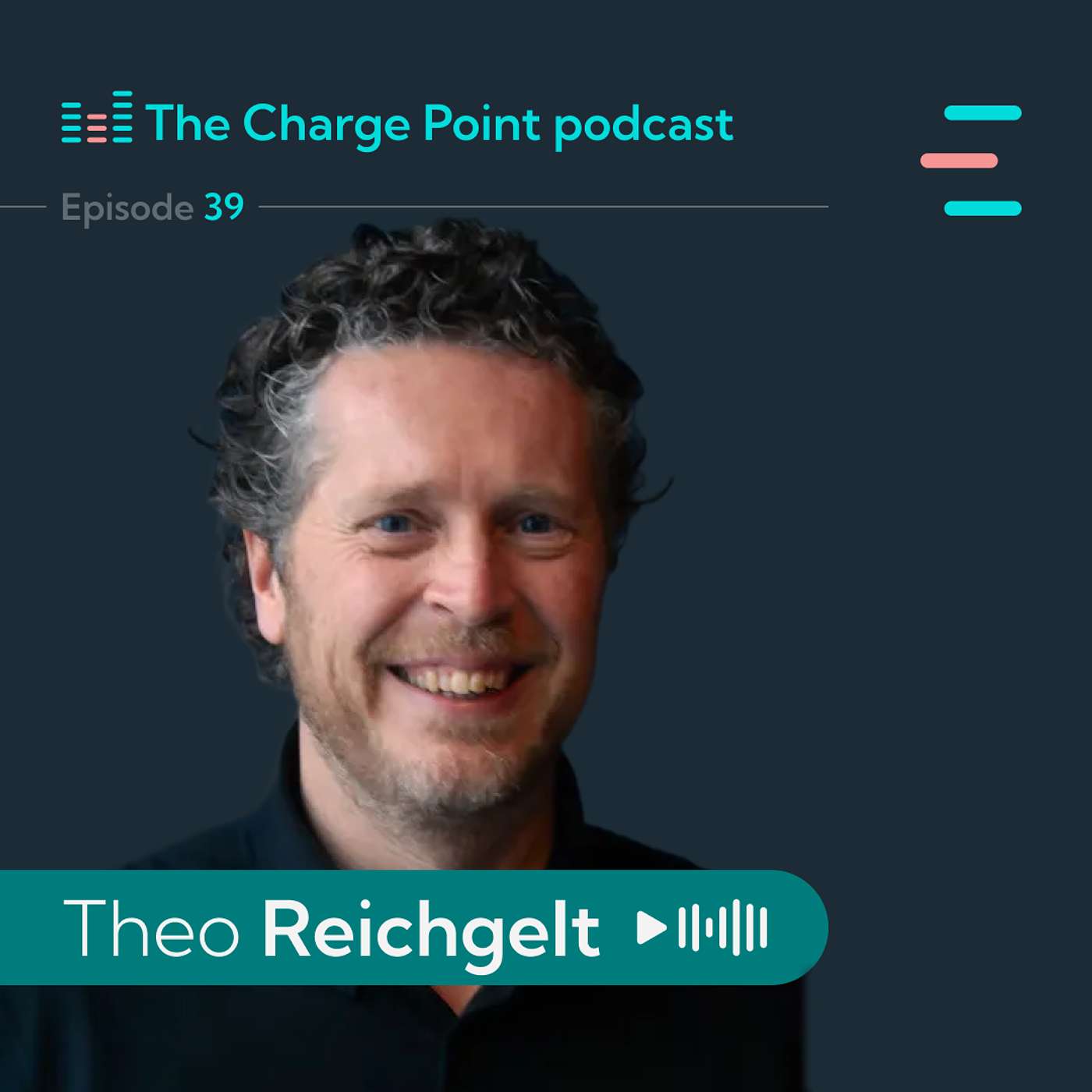
    Episode 39 – From Specs to Stories: How CPOs Can Win with Better Marketing

    Episode Summary: In this episode, host Christophe Lephilibert speaks with Theo Reichgelt, founder of the e-mobility-focused marketing agency Next Industry. They dive into the unique challenges and opportunities CPOs face when it comes to marketing and branding — from making technical products relatable, to educating new EV drivers, to convincing site owners of the value of hosting chargers. Whether you're leading a network, scaling a brand, or just trying to simplify your message in a complex space, this conversation is packed with practical advice and fresh perspective. About the Guest: Theo Reichgelt is the founder of Nexxt Industry, a marketing agency specialized in the EV and e-mobility space. With a background that includes working at Allego and supporting dozens of companies across Europe, Theo brings deep experience in turning technical offerings into clear, compelling brands. 🔗 Connect with Theo on LinkedIn Topics Covered: Why branding in e-mobility starts at the charge point The common marketing pitfalls CPOs fall into — and how to avoid them Educating vs. selling: what new EV drivers really need The importance of B2B and B2C messaging for CPOs How to simplify complex technical propositions Why storytelling is the new differentiator in a specs-driven industry The growing role of marketing in the commercial success of CPOs Related Episode - Episode 18: "Marketing Leaders at CPOs - Building Brands from the Inside" A great companion to this episode, focused on in-house marketing strategies at CPOs. 🔗 Listen now Want to learn more about the power of co-located batteries? Join our free Masterclass on co-located stationary batteries. In this masterclass, our CTO, Robert Brehm, reveals how intelligent orchestration of co-located batteries and chargers unlocks multiple revenue streams through value stacking. Discover how to move beyond simple grid stability and transform your site into a profit-generating energy hub. Access the on-demand webinar here: https://www.flexecharge.com/resources/webinars/the-power-of-co-located-batteries-unlocking-the-full-revenue-potential Got some feedback or questions? Text us! You can get more information on our website. Give us some stars please 🌟 If you enjoyed the episode, please give it a 5-stars note and leave us a review. Get in Touch: Do you have suggestions for future guests or topics? Reach out to us at hello@flexecharge.com. Subscribe & Stay Updated: 🔔 Make sure to subscribe to the Charge Point Podcast to stay updated on the latest trends and developments in the world of EV charging and energy. 📩 You can subscribe to our Newsletter, The Charge Point Journal, by clicking here. 🫱🏻‍🫲🏼 And you can follow us on Linkedin by clicking here and connect with Christophe here. ⚡ Let’s keep the conversation—and the electrons—flowing.

  • Dec 4, 2025 · 40 min

    Episode 38 – From Spot Pricing to Flex Markets: Essential Insights for CPOs from EPEX SPOT

    Episode Overview In this episode, we explore, with our guest Philippe Vassilopoulos from EPEX SPOT, how Europe’s electricity markets - from day-ahead pricing to local flexibility platforms - are reshaping the economics of EV charging. With EPEX SPOT’s perspective on market design and flexibility, we connect these insights to the opportunities emerging for Charge Point Operators (CPOs), especially as VPP participation and on-site battery storage become mainstream. Topics We Cover How spot and intraday electricity prices are formed Why local flexibility markets are accelerating in Europe and the UK The UK Power Networks project: 250,000+ flexible assets supporting grid congestion management The growing role of EVs, heat pumps, and batteries as flexibility resources What dynamic pricing means for depot charging and CPO profitability How CPOs can respond to volatility with energy-aware load management The link between wholesale markets and emerging VPP models How BESS + EV charging unlock new revenue streams and grid services Why This Matters for CPOs & infrastructure owners Wholesale price signals now directly influence charging profitability Flexibility markets are becoming accessible for distributed assets — including EV chargers Local grid constraints are shaping where and how fast CPOs can grow Smart energy management, VPP participation, and co-located storage will define the next wave of competitiveness CPOs can future-proof sites by integrating dynamic load management, BESS, and flexibility-ready infrastructure Key Takeaways Electricity markets are not abstract — they shape real operational and financial decisions for CPOs Price-responsive charging and storage will determine future profitability Local flexibility markets offer a major new revenue opportunity CPOs who build “energy-market-ready” infrastructure will outperform those who don’t Want to learn more about the power of co-located batteries? Join our free Masterclass on co-located stationary batteries. In this masterclass, our CTO, Robert Brehm, reveals how intelligent orchestration of co-located batteries and chargers unlocks multiple revenue streams through value stacking. Discover how to move beyond simple grid stability and transform your site into a profit-generating energy hub. Access the on-demand webinar here >> https://www.flexecharge.com/resources/webinars/the-power-of-co-located-batteries-unlocking-the-full-revenue-potential Got some feedback or questions? Text us! You can get more information on our website. Give us some stars please 🌟 If you enjoyed the episode, please give it a 5-stars note and leave us a review. Get in Touch: Do you have suggestions for future guests or topics? Reach out to us at hello@flexecharge.com. Subscribe & Stay Updated: 🔔 Make sure to subscribe to the Charge Point Podcast to stay updated on the latest trends and developments in the world of EV charging and energy. 📩 You can subscribe to our Newsletter, The Charge Point Journal, by clicking here. 🫱🏻‍🫲🏼 And you can follow us on Linkedin by clicking here and connect with Christophe here. ⚡ Let’s keep the conversation—and the electrons—flowing.

  • Nov 20, 2025 · 37 min

    Episode 37 – Monetizing Flexibility: How Flower Turns EV Charging Sites Into Valuable Grid Assets

    In this episode, My Näslund from Flower explains how EV charging sites can become flexible grid assets that generate new value. We explore Flower’s role as a Balance Responsible Party (BRP), how flexibility markets work, and why EV chargers and co-located batteries are perfectly positioned for monetization. My shares Flower’s rapid growth, insights from real projects like their work with Recharge, and what CPOs need to know to start participating in flexibility markets - without compromising the charging experience. A clear, practical introduction to flexibility trading for CPOs, energy professionals, and anyone interested in the future of EV infrastructure. Topics Covered What a Virtual Power Plant (VPP) is and why it matters Flower’s BRP role and access to flexibility markets How EV chargers become flexibility assets Realistic revenue potential for CPOs The Recharge pilot with co-located BESS How European flexibility markets are evolving Want to learn more about Virtual Power Plants? Join our free Masterclass on Virtual Power Plants for EV charging, hosted by FLEXECHARGE CTO Robert Brehm. We’ll explore how VPPs work, what they mean for CPOs, and how to prepare your charging infrastructure for flexibility markets. Sign up here: https://www.flexecharge.com/resources/webinars Like this episode? Want to learn more about BRPs/BSPs? Then check out Episode 16, where we speak with Fever, another leading BSP, for more insights on flexibility and frequency services. Got some feedback or questions? Text us! You can get more information on our website. Give us some stars please 🌟 If you enjoyed the episode, please give it a 5-stars note and leave us a review. Get in Touch: Do you have suggestions for future guests or topics? Reach out to us at hello@flexecharge.com. Subscribe & Stay Updated: 🔔 Make sure to subscribe to the Charge Point Podcast to stay updated on the latest trends and developments in the world of EV charging and energy. 📩 You can subscribe to our Newsletter, The Charge Point Journal, by clicking here. 🫱🏻‍🫲🏼 And you can follow us on Linkedin by clicking here and connect with Christophe here. ⚡ Let’s keep the conversation—and the electrons—flowing.

  • Nov 13, 2025 · 48 min

    Episode 36 - Building the E-Truck Ecosystem: Lessons from BYD, Stäubli, and Trailer Dynamics

    Guests: Baris Akyalcin, Head of eTrucks Europe at BYD Claudio Castagnetti, Head of Business Development at Stäubli Electrical Connectors Dr. Abdullah Jaber, CEO and Co-Founder of Trailer Dynamics Episode Overview In this edition of The Charge Point Podcast, recorded on the floor of NextTruck 2025, Christophe Lephilibert speaks with three pioneering voices in the e-truck revolution. From megawatt charging and smart trailers to the race for TCO parity, these conversations reveal how technology, partnerships, and innovation are accelerating Europe’s shift toward zero-emission freight. Key Takeaways The e-truck transition is shifting from if to how fast. Collaboration across OEMs, charging providers, and energy players is now the main growth enabler. Megawatt charging and smart energy management are unlocking operational feasibility for heavy-duty fleets. Early adopters will gain a lasting advantage in efficiency, reliability, and brand leadership. 🎓 Want to learn more about Grid Compliance in the DACH region? Join our free Masterclass on “Grid Compliance in the DACH region”, by following the link here. Got some feedback or questions? Text us! You can get more information on our website. Give us some stars please 🌟 If you enjoyed the episode, please give it a 5-stars note and leave us a review. Get in Touch: Do you have suggestions for future guests or topics? Reach out to us at hello@flexecharge.com. Subscribe & Stay Updated: 🔔 Make sure to subscribe to the Charge Point Podcast to stay updated on the latest trends and developments in the world of EV charging and energy. 📩 You can subscribe to our Newsletter, The Charge Point Journal, by clicking here. 🫱🏻‍🫲🏼 And you can follow us on Linkedin by clicking here and connect with Christophe here. ⚡ Let’s keep the conversation—and the electrons—flowing.

Showing 1–20 of 22 episodes