August 28 · 14 min
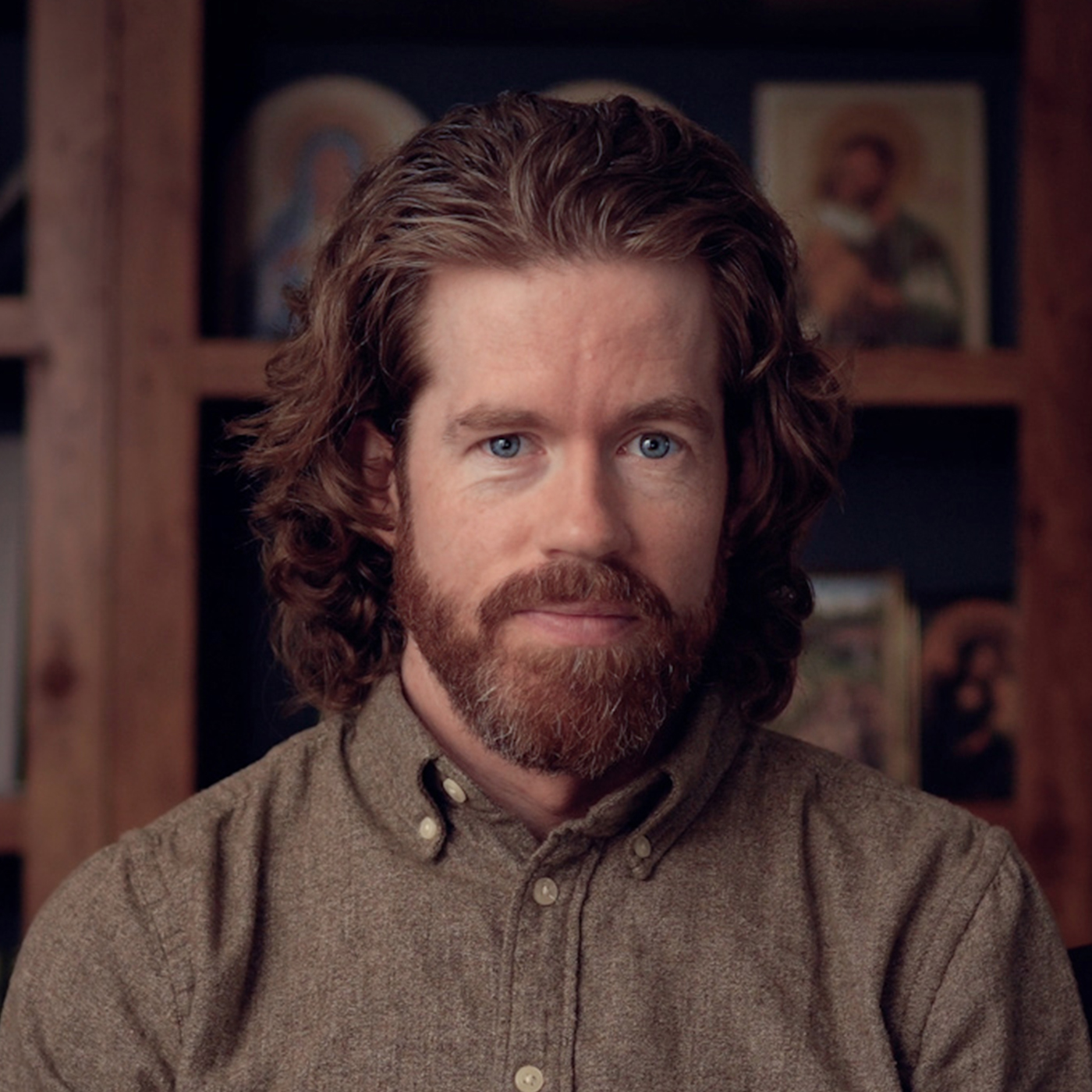
Brian Holdsworth
Interviews and commentaries from Brian Holdsworth. Topics include theology, philosophy, current events, culture, music, art, liturgy, tradition, education, and more - with an appreciation for the treasure of tradition.
Joe Schmid's return to the Catholic Church has generated a lot of of backlash from atheists and agnostics online. But how much of that criticism actually engages with his reasons for becoming Catholic?
"When Protestants today decry Catholics for what they claim is paganism… they actually sound exactly like ancient pagans who denounced the ancient Christians for the same thing." Support the channel by visiting: https://brianholdsworth.ca/help
"If you're single and struggle with lust, you need to get married." Support the channel by visiting: https://brianholdsworth.ca/help It sounds biblical. St. Paul does say that it is better to marry than to burn with passion, and the Christian tradition has long described marriage as a remedy for concupiscence. But does that mean marriage actually cures the vice of lust?
How can an all-loving God condemn people to Hell? Support the channel by visiting: https://brianholdsworth.ca/help It's one of Christianity's oldest and most emotionally powerful objections—but part of the problem may be that modern Christians have inherited an oversimplified picture of Hell. The older Catholic tradition, reflected vividly in Dante and developed through scholastic theology, understood damnation in terms of different degrees of guilt, culpability, deprivation, and punishment. Scripture itself repeatedly suggests that not everyone receives the same judgment: greater knowledge brings greater responsibility, different sins have different gravity, and God "renders to each according to his works." In this video, I explore how the traditional understanding of Hell may actually be far more nuanced—and more merciful—than the version most people imagine today.
"Not every man who carries a crozier is a true shepherd." Support the channel by visiting: https://brianholdsworth.ca/help In John 10, Christ warns that some men entrusted with his flock will act as hirelings: enjoying the position of a shepherd but abandoning the sheep when the wolves arrive. Saints such as Augustine and Gregory the Great applied this warning directly to bishops who seek worldly honours, temporal advantages, or personal security rather than the salvation of souls. So how can Catholics distinguish a faithful shepherd from a hireling? In this video, I consider two revealing tests: whether a bishop's leadership produces vocations and whether he is willing to defend the faithful when doing so carries a personal cost. The difference between a thriving diocese and a dying one may have far less to do with consultants, strategic plans, and institutional resources than with whether its leaders genuinely believe in God and trust his grace.
In The Humanitarian Theory of Punishment, Lewis challenged the increasingly popular idea that criminals should never be punished because they deserve it. Instead of treating crime as a moral act committed by a responsible human being, the humanitarian theory treats criminality as a disease to be cured by experts. Lewis warned that this supposedly merciful approach could produce something far more arbitrary and tyrannical than traditional punishment: indefinite confinement, forced psychological treatment, the denial of moral agency, and even the punishment of innocent people in the name of deterring others. Mercy is indispensable—but mercy only makes sense when justice comes first.
Catholic apologetics can sometimes give the impression that every objection has a simple answer. But recent controversies have forced Catholics to wrestle more seriously with teachings that, at least on the surface, appear difficult to reconcile with Scripture and the Church's established tradition. In this video, I examine two of the hardest examples. First, I consider whether Pope Francis's declaration that the death penalty is "inadmissible" can be reconciled with centuries of biblical and magisterial teaching that regarded it as morally permissible in certain circumstances. Then I examine the apparent conflict between the nineteenth-century papal condemnations of religious liberty and Vatican II's declaration that the human person possesses a right to religious freedom. These questions do not necessarily prove that the Church has reversed herself, but they do require careful distinctions, greater humility, and a willingness to admit when newer formulations are confusing, prudential, or potentially in need of reform.
Following the Society of St. Pius X's consecration of four new bishops, the Vatican declared those involved and others formally adhering to the Society to have incurred automatic excommunication. Many Catholics are asking whether these penalties are really binding, whether the Pope acted justly, and whether extraordinary circumstances can justify disobedience.
Modern science was not inevitable. It emerged from a fragile historical chain in which Christianity preserved Greek reason, reconciled faith with philosophy, invented the university system, and cultivated the conviction that the natural world is intelligible because it was created by divine reason.
There are two very different kinds of atheism: the sentimental optimism of John Lennon's Imagine, and the hard, brutal realism of Friedrich Nietzsche's "death of God." Lennon imagines a world without religion, borders, or possessions, where everyone naturally lives in peace. Nietzsche saw more clearly that if God disappears, so does the Christian moral framework that gave the West its ideas of compassion, humility, charity, and care for the weak. But Nietzsche's alternative has its own fatal flaw. A world built on strength, power, and self-assertion cannot explain why the strong should care for the weak — even though every human being spends large portions of life in weakness, dependence, and need.
Marriage only makes sense as a public institution if it serves a public good. If it is reduced to private romantic attachment or sexual companionship, then the state has no coherent reason to recognize it, limit it, incentivize it, or treat it as distinct from any other consenting arrangement.
"Appealing to his own desire to lead and provide will always be more effective than trying to overcome him in an adversarial way." Support the channel by visiting: https://brianholdsworth.ca/help In this episode, I explore one of the most difficult truths about human nature: our tendency to blame external causes for the problems we create ourselves. From relationships and marriage to business and faith, we instinctively avoid self-examination and instead look for someone else to fault. Using examples from sports, business, Church authority, and family life, I argue that hierarchy and order are necessary for healthy human relationships—and that many marital conflicts become worse when spouses try to coerce rather than lovingly correct one another.
The evil revealed in elite scandals like Epstein's is not shocking if you understand modern philosophy's influence. When a culture elevates sensation as the primary human experience and abandons objective truth, goodness, and beauty, it produces boredom, addiction, and an obsessive search for novelty. In ordinary people this results in distraction and vice. In the powerful, it becomes dangerous — because their access to limitless choice pushes them toward increasingly exotic and morally unthinkable experiences.
Why does the Society of St. Pius X provoke such intense reactions among Catholics—especially among those who have no real connection to them? Support the channel by visiting: https://brianholdsworth.ca/help In this video, I don't argue whether the SSPX is schismatic or whether they should be excommunicated. Instead, I look at something deeper and more widespread: the culture of online "chattering" that erupts whenever a controversial Church topic hits the headlines - and why that habit does real damage to Christian unity, charity, and credibility. Drawing on history, St. Thomas Aquinas, and common sense, I argue that many Catholics mistake being informed for being authoritative, and opinion for competence. The result is a cycle of outrage that solves nothing and often makes the Church look worse to outsiders. Music written and generously provided by Paul Jernberg. Find out more about his work as a composer here: http://pauljernberg.com
Can God die? Muslims often argue that the Trinity and the Incarnation are incoherent, but their own theology makes that argument impossible. Sponsor: https://exodus90.com/brian Support the channel by visiting: https://brianholdsworth.ca/help Islam's dominant Divine Command Theory teaches that God can will anything whatsoever, even what seems incoherent or contradictory. Therefore Muslims cannot logically argue that the Trinity or the Incarnation are impossible, because their own theology denies any intrinsic limits on God's power. At most they can claim that God wouldn't do these things, which shifts the burden of proof and collapses their usual objections.
Modern entertainment trains us to live for self-pleasure, turning us inward and making us passive consumers, whereas true worship trains us in sacrifice, gratitude, and outward-facing love; because these orientations are opposites, a culture addicted to entertainment is structurally incapable of sustaining real worship or belief in God.
In this podcast, I analyze the recent debate between Catholic apologist Joe Heschmeyer and Mormon apologist Jacob Hansen, and show how his central LDS argument for a "Great Apostasy" commits a fatal logical fallacy: if not Catholicism, therefore Mormonism. I explain why this reasoning collapses, why the burden of proof is on the one claiming the Church disappeared, and how the historical record actually ends up pointing straight back to Catholicism.
"When you seek to fill an infinite need with finite material means, no amount of consumption will satisfy." Sponsor: https://exodus90.com/brian Support the channel by visiting: https://brianholdsworth.ca/help Every year, secular Christmas extends itself further into sectors of seasons and places it doesn't belong. It seems that no amount of time, no quantity of purchases, no amount of decorations, and no amount of indulgence will finally be enough for people who seem to need Christmas to meet some need that they have that is far greater than any Christmas display or material consumption will satisfy. Perhaps this is because we have an infinite need to worship the infinite God who alone can satisfy this need that we have. Instead, we're trying to meet the infinite need with finite solutions, and we find we are unsatisfied as a result, committing ourselves to more, and greater consumption to try to appease the restlessness of our dissatisfaction.
"If Scripture alone produces 'wrong' conclusions unless filtered through Protestant tradition, then Scripture is not the final authority—Protestant interpretation is." Sponsor: https://exodus90.com/brian Support the channel by visiting: https://brianholdsworth.ca/support A doctrine that cannot produce its own intended end (reliable knowledge) without extra-scriptural authorities fails on its own terms. Sola Scriptura claims that Scripture alone is sufficient to produce authoritative knowledge of faith and morals, yet in practice Protestant theology constantly corrects the conclusions people naturally reach from Scripture—especially in passages like James 2 or John 6. This shows that Scripture is not functioning as the final authority; instead, Protestant interpretive frameworks are.