Skip to content
Artwork for The BrainFood Show
HistoryEducation

The BrainFood Show

Cloud10

In this show, the team behind the wildly popular TodayIFoundOut YouTube channel do deep dives into a variety of fascinating topics to help you feed your brain with interesting knowledge.

Play
  • 36 episodes
  • daily
  • Avg 48 min
  • English
Counted on this page — what you have heard stays on this device, so it is not something the list can be paged by.
  • Yesterday · 2 hr 21 min

    WTF is Up with Dr. Pepper?

    In the epsidoe today, we're looking at the twisting, turning, tale of Dr. Pepper and the real story behind it and what's in it. Next up, who invented toast, whether sodium actually raises blood pressure, why cashews are not sold to consumers in their shells and a variety of other interesting food related facts and stories. For the full list, check out the chapter markers below: 0:00 Who Invented Dr. Pepper? 25:31 Who Invented Toast 33:16 Fact or Myth: Sodium Raises Blood Pressure 41:59 Why Cashews are Not Sold to Consumers in Their Shells and Why Pistachios Used to Be Dyed Red 43:13 The Accidental Discovery of Saccharin, and the Truth About Whether Saccharin is Bad for You 50:06 The Origin of Competitive Eating Contests 1:05:11 Why Teachers are Associated with and Traditionally Given Apples 1:10:07 What Makes Peanut Butter Sticky? 1:13:23 The Difference Between Fruits and Vegetables 1:17:13 Why Salt Preserves Meat 1:20:59 Why Buffalo Wings Are Called That 1:25:53 Ketchup or Catsup? 1:30:23 The Difference Between Green and Black Tea 1:32:32 Why is Cottage Cheese Called That? 1:37:37 The Original Uber Eats India’s Amazing Near Century and a Half Old Dabbawala 1:48:16 Why One Bad Apple Spoils a Bunch 1:51:17 Graham Crackers Were Originally Meant to Be Part of a Diet Thought to Curb Sexual Urges 1:56:59 Grape-Nuts Contain Neither Grapes Nor Nuts 2:01:36 Why Seaweed is Sometimes Used in the Making of Ice Cream 2:06:14 The Fruit That Tastes Like Chocolate Pudding 2:12:43 Why Does the Yolk of an Overcooked Hard-Boiled Egg Turn Green? Learn more about your ad choices. Visit megaphone.fm/adchoices

  • Thursday · 16 min

    A Tale of Two Brothers- The Devil and the Absolute Legend

    Hermann Göring was second only to Hitler in the hierarchy of the Third Reich. Commander of the Luftwaffe, acting Prime Minister of Prussia, President of the Reichstag, and Hitler’s designated successor – Göring’s Nazi resume was almost unparalleled, as were the atrocities he took part in. His brother, Albert, however, could not have been more the opposite- an unsung forgotten hero of the war, saving countless lives through his work to undermine his brother and Hitler. This is the story of Hermann and Albert Göring. Host: Simon Whistler Producer: Samuel Avila Editor: Daven Hiskey 0:00 The Devil- Hermann Goring 5:09 The Unsung Hero and Badass that was Albert Goring 9:18 "No" Learn more about your ad choices. Visit megaphone.fm/adchoices

  • Wednesday · 33 min

    The Extremely Weird, Drug-Filled, Forgotten History of 7UP

    Food in the past could be horrifying. Prior to the introduction of regulations like the United States Pure Food and Drug Act of 1906, it was disturbingly common for manufacturers to add all sorts of inedible or even genuinely toxic substances to food to make it last longer, make it look more appetizing, or cut down on expensive ingredients and maximize profits. Boric acid and formaldehyde in milk. Brick dust in cinnamon. Bone meal or plaster of Paris in flour and bread. Lead-based dyes in jelly and jam. At one point, S.E. Massengill Company even added diethylene glycol to a common medicine to help make it taste sweeter and more easy to consume… For the uninitiated, diethylene glycol, commonly used today in antifreeze and as a solvent, is highly poisonous, and was known to be so at the time as well. Yet the substance was nonetheless added to the medicine targeted at children anyway, with about 100 deaths resulting before they recalled the medicine. Although noteworthy even with the recall, didn’t bother to tell the doctors prescribing it that there was any urgency in that, nor the danger their existing stocks of the medicine posed if they didn’t return them, and instead, continued to sell it. The owner of the company, Dr. Samuel Evans Massengill, responded to the outrage over the deaths by simply stating, “My chemists and I deeply regret the fatal results, but there was no error in the manufacture of the product. We have been supplying a legitimate professional demand… I do not feel that there was any responsibility on our part.” Much more on this story and how it finally got the government to step in and start regulating consumable products later in the Bonus Facts, and how this all led to Kinder Surprise Eggs being illegal in the United States. Which, yes, they still are. Watch to the end before commenting I’m wrong, and you’ll save yourself having to edit your comment. But for now, other questionable substances were part of the appeal of the product itself - most infamously the cocaine in Coca-Cola. Paired with caffeine from the Kola nut, this ingredient was originally chosen by the drink’s inventor, pharmacist John Pemberton, as a treatment for morphine addiction and a stimulating alternative to alcohol. Cocaine was not fully eliminated from the official formula until 1929, though the Coca-Cola company continues to use processed coca leaves in the drink’s manufacture, being the largest consumer of that plant outside of the illegal drug trade. But while it is the most famous example, Coca-Cola was not the only classic soft drink to contain psychoactive drugs, with another iconic brew originally including a mood-altering medication still taken by millions of people to this day. This is the weird forgotten history of 7UP. Author: Gilles Messier Host/Editor: Daven Hiskey Producer: Samuel Avila 0:00 Intro 2:37 Why People Started Drinking Carbonated Water, and Discovering Lithium 4:55 The Origins of 7Up and Why the Drugs? 16:22 What Does Lithium Actually Do to You? 18:55 The Elixir Sulfanilamide Incident and Why Kinder Surprise Eggs are Still Illegal in the United States Learn more about your ad choices. Visit megaphone.fm/adchoices

  • August 28 · 1 hr 25 min

    The Ad Campaign That Gave Us Breakfast as We Know It, How Baby Carrots are Made and Much More

    In the video today, we're looking at a variety of food facts including- How Two Guys are the Reason We Eat What We Eat for Breakfast, How are Baby Carrots Made, Is Pet Food Safe for Humans to Eat, The Bizarre Story of the Yorkshire Forced Rhubarb Triangle, That Time Quaker Oats Fed Orphans Radioactive Oatmeal for Reasons…, How To Make a Proper Cup of Tea According to Famed English Author George Orwell, Why are Potatoes Called “Spuds”, Peeling Back the Foil: The Origin of the TV Dinner, The History of Spoons, Forks, and Knives, and the The Surprisingly Short History of the Peanut Butter and Jelly Sandwich Host: Simon Whistler Producer: Caden Nielsen Learn more about your ad choices. Visit megaphone.fm/adchoices

  • August 27 · 15 min

    The Real Story of Jack the Ripper

    He is one of the most famous serial killers of all time, but who actually was Jack the Ripper and what actually happened during his reign of terror. Just before 4 am on August 31, 1888, on London’s seedy Buck’s Row, a cart driver named Charles Cross saw the body of a woman lying on the ground. In the early morning gloom, it was initially impossible to tell if she was drunk or dead. Cross was soon joined by another carter, Robert Paul. The two men saw the woman’s skirts were pulled above her waist. They smoothed them back over her knees and went searching for a policeman. What the two carters didn’t notice in the shifting shadows was the woman’s throat had been cut so brutally that her head had almost been decapitated. Beat officer John Neil discovered that gruesome fact on closer inspection of the body. (He later testified at the inquest that when he had passed that way just 30 minutes earlier, “there was not a soul about.”) P.C. Neil sent another colleague to fetch a local medic and soon Dr. Rees Ralph Llewellyn arrived on the scene. He quickly examined the body and found that the arms and legs were still warm. Llewellyn believed the woman had been dead for less than 30 minutes. Her killer may have still been lurking nearby when Cross and Paul came upon the body.... Host: Simon Whistler Editor: Daven Hiskey Producer: Samuel Avila Learn more about your ad choices. Visit megaphone.fm/adchoices

  • August 26 · 1 hr 2 min

    Who ACTUALLY Invented the Telephone?

    Did Alexander Graham Bell actually invent the telephone? How about Elisha Gray? Or what about Antonio Meucci who both Italy and even U.S. Congress at one point acknowledged as the true inventor of the telephone... But is there any actual truth to his story, or was it a major flub by Congress? And what about the oft' forgotten Johann Philip Reis who there was even a bonafide conspiracy to suppress his part. Well sit back and relax as we dive into sorting through this mess and determine who actually invented the telephone. “Mr. Watson, come here, I want to see you.” Along with “What Hath God Wrought?”, the first U.S. telegraph message sent by Samuel Morse on May 24, 1844; and the letter S, the first transatlantic radio signal sent by Guglielmo Marconi on December 12, 1901, these are perhaps the most consequential words in the history of modern communications. Spoken by Scottish-American inventor Alexander Graham Bell to his assistant Thomas Watson on March 10, 1876, they are widely believed to constitute history’s first ever telephone call. Bell had patented his “speaking telegraph” just three days prior, and, following this historic demonstration, events moved quickly. On June 25 of that same year, Bell demonstrated the telephone before stunned crowds at the Centennial Exhibition in Philadelphia, while on October 9 he and Watson succeeded in holding a conversation over a two mile telephone line strung between Boston and Cambridgeport, Massachusetts. In 1877, Bell formed the Bell Telephone Company - today AT&T - while in 1878 the first commercial telephone exchange was installed in New Haven, Connecticut. The new technology quickly spread around the world, shrinking the globe, making Bell and Watson, very wealthy men, and cementing their place in history as the fathers of modern telecommunications. …at least, that’s the version of events we’re all taught in school. But like with basically every invention ever made by humans, Bell and Watson were far from alone in their pursuit of telephony, with many of their rivals being hot on their heels. So hot, in fact, that some have argued that the dynamic duo were not, in fact, the true inventors of the telephone, and that their place in history was the result not of superior brains and grit or even sheer dumb luck, but rather underhanded legal and political chicanery - a conspiracy that has lain forgotten in the annals of history for 150 years. But is any of it actually true? Here now is the true story of the invention of the telephone. Author: Gilles Messier Host/Editor: Daven Hiskey Producer: Samuel Avila Learn more about your ad choices. Visit megaphone.fm/adchoices

  • August 25 · 18 min

    Did John F Kennedy Really Say He was a Jelly Filled Doughnut in His Most Famous Speech?

    On June 26, 1963, U.S. President John F. Kennedy stood on the steps of the Rathaus Schöneburg in West Berlin and delivered one of the most famous - and infamous - speeches of his presidency. Before a gathered crowd of 450,000 people, Kennedy railed against East Germany’s construction of the Berlin Wall two months before, extolled the virtues of democracy and self-government, and pledged his unwavering support for the people of West Berlin: “I know of no town, no city, that has been besieged for 18 years that still lives with the vitality and the force, and the hope and the determination of the city of West Berlin… Lasting peace in Europe can never be assured as long as one German out of four is denied the elementary right of free men, and that is to make a free choice. You live in a defended island of freedom, but your life is part of the main…Freedom is indivisible, and when one man is enslaved, all are not free.” Then, in a final, powerful statement of solidarity, he closed his speech with the iconic words: “All free men, wherever they may live, are citizens of Berlin, and, therefore, as a free man, I take pride in the words "Ich bin ein Berliner”. If you have ever heard of this speech, then you probably know what happened next: instead of cheering, the crowd broke into mocking laughter. Thanks to an unfortunate combination of bad grammar and cultural ignorance, the President had just declared himself to be not a fellow resident of Berlin but rather a “Berliner”, a type of jelly-filled doughnut. Whoopsy doodle. …only no, he didn’t. While this story has been repeated countless times over the past six decades and become a popular and quirky bit of JFK lore, there is little evidence that any German listening to Kennedy’s speech that day would have understood his final words as meaning “I am a jelly doughnut.” So how, then, did this amusing - if ultimately false - urban legend get started? It all has to do with the intricacies of German grammar, lazy journalism, and our age-old tendency to not let the truth get in the way of a good story. This is the story of one of the most misunderstood speeches of the Cold War.... Author: Gilles Messier Host: Simon Whistler Editor: Daven Hiskey Producer: Samuel Avila Learn more about your ad choices. Visit megaphone.fm/adchoices
  • August 24 · 44 min

    The Incredible Story Behind Iron Man

    Ever Wonder How Iron Man of all Marvel characters was chosen to be the one to launch the Marvel universe? Well, wonder no more, as we do a deep dive into how the Iron Man Movies were made. At the time of writing this script the Marvel Cinematic Universe, henceforth shortened to the MCU, has made about $31 billion at the box office, the most of any film series in history. To put this amount into perspective, that's over 3 times more than Star Wars has made in almost half a century ($10.3 billion), over 4 times the total gross of the entire live-action output of their rival DC ($7.1 billion) and almost 8 times what the Shrek franchise has made since its inception ($4.1 billion)... Really? Shrek? Alrighty then… Going back to Marvel, just the Avengers series on its own, a collection of 4 movies, is considered the 6th most successful film series of all time in terms of box office, grossing in excess of $7 billion. Which eagle-eared fans listening along at home may notice is more than literally every recent DC live-action movie combined. As an aside, because this is really funny, if you go by the numbers, the DC extended universe’s closest box office rival isn’t Marvel, but the Fast & Furious franchise, with the 11 movies featuring Dominic Toretto and his super friends grossing about a $100 million more than the 15 made by DC at the time of writing this. That’s the power of Family. In any event, all of this success began with one movie- Iron Man, a film it can be argued is one of the most important made in recent history with its success and the glut of sequels released in the decades since having, for better or worse, quite literally changed the way movies are made and developed. And, just saying we get that it made Marvel a ton of money, but Hollywood, not every movie or series needs to be a cinematic universe. Sometimes a story can have a satisfying ending and you can then move on to brand new stories. Mmmmkay? However, the success of the initial live-action outing of the Iron Avenger belies how much of a huge pain in the butt this movie, and by extension the entire MCU, was to get off the ground. So let’s now dive into the fascinating story of how the Invincible Iron Man made his way to the big screen. To begin with, something... Author: Karl Smallwood Editor/Host: Daven Hiskey Producer: Samuel Avila Learn more about your ad choices. Visit megaphone.fm/adchoices

  • August 22 · 54 min

    Why Don't Vultures Get Sick?

    ⁠⁠In this episode of The Brain Food Show, we start by looking at the mind blowing things caterpillars get up to while in the chrysalis. Next up we begin by looking at the fascinating way in which honey bees, which are cold blooded, manage to keep their hives warm and the variety of fascinating things they do with their rather unique heating abilities. We then look at the rather amazing vulture and, among other things, why they don’t get sick when they eat dead things and what integral role this plays in keeping humans alive. Finally we look at the mysterious Kentucky meat shower, which unfortunately has nothing to do with KFC. Learn more about your ad choices. Visit megaphone.fm/adchoices
  • August 20 · 12 min

    WTF is Up with the Tea Bag?

    Legend says that brewing tea dates back to around 2737 BC, when tea leaves fell into water being boiled for Emperor Shennong of China. There does not appear to be any hard evidence of tea being discovered this way, but evidence we do have suggests that brewing tea did indeed likely start in China, first as part of a medicinal elixir. The first documented reference to this is found during the Shang Dynasty (1600 BC to 1046 BC). By the Qin Dynasty in the third century BC, it had become a relatively popular drink using just the tea (camellia sinensis), rather than mixed with other things as seems to have been common when used medicinally. From the beginning until the early 20th century, very little innovation came about in terms of the common method of brewing tea. This all changed in 1901. Contrary to popular belief (and what every single tea manufacturer I could find said on their websites, and many-a-tea history book and paper consulted also stated), it was not tea merchant Thomas Sullivan who invented the tea bag in 1908. While he did (probably independently, given his reported design was quite inferior to the original) invent a tea bag that year, he was beat out by about seven years by Roberta C. Lawson and Mary Molaren of Milwaukee, Wisconsin.... Author: Sarah Stone Editor: Daven Hiskey Host: Simon Whistler Producer: Samuel Avila Learn more about your ad choices. Visit megaphone.fm/adchoices

  • August 19 · 50 min

    Why the Heck Did Goose Die Ejecting in Top Gun, but Maverick Didn't at Mach 10 in Top Gun: Maverick?

    During the 1986 beach volleyball film Top Gun, U.S. Navy aviators and ultimate bros Lt. Pete “Maverick” Mitchell and Nick “Goose” Bradshaw are flying dogfight exercises in a Grumman F-14 Tomcat when they accidentally fly into the jet wash of another aircraft, causing both their engines to flame out. The Tomcat immediately snaps into an unrecoverable flat spin and hurtles towards the earth, giving Maverick and Goose no choice but to eject. But while Maverick safely clears the aircraft, Goose slams into the cockpit canopy, killing him. His lifeless body drifts into the water below, where Maverick helplessly embraces him.. But is a death like Goose’s in Top Gun possible given ejection seat designs? And on a related note, using current ejection seat technology, could Maverick have survived an ejection at Mach 10 as depicted in Top Gun Maverick? Or is all of this just another example of melodramatic Hollywood exaggeration? And just who invented these awesome lifesaving contraptions and how do they actually work? Well strap on your “bone dome” and prepare to “punch out” as we explore the fascinating science, incredible engineering, and history of ejection seat technology, and along the way we’ll get into whether Goose would have actually lived when ejecting in Top Gun, and whether Maverick would have actually died ejecting in Top Gun: Maverick. And in the Bonus Top Gun Facts at the end, we’ll also cover just how realistic was it that Maverick could have so easily dominated all the rest of the best of the best in the training scenarios in Top Gun Maverick. As ever, if you’d like to skip the awesome history and fascinating science and engineering and go right to the answers, check out the chapters on this video. Author: Gilles Messier Editor/Host: Daven Hiskey Producer: Samuel Avila Learn more about your ad choices. Visit megaphone.fm/adchoices

  • August 18 · 19 min

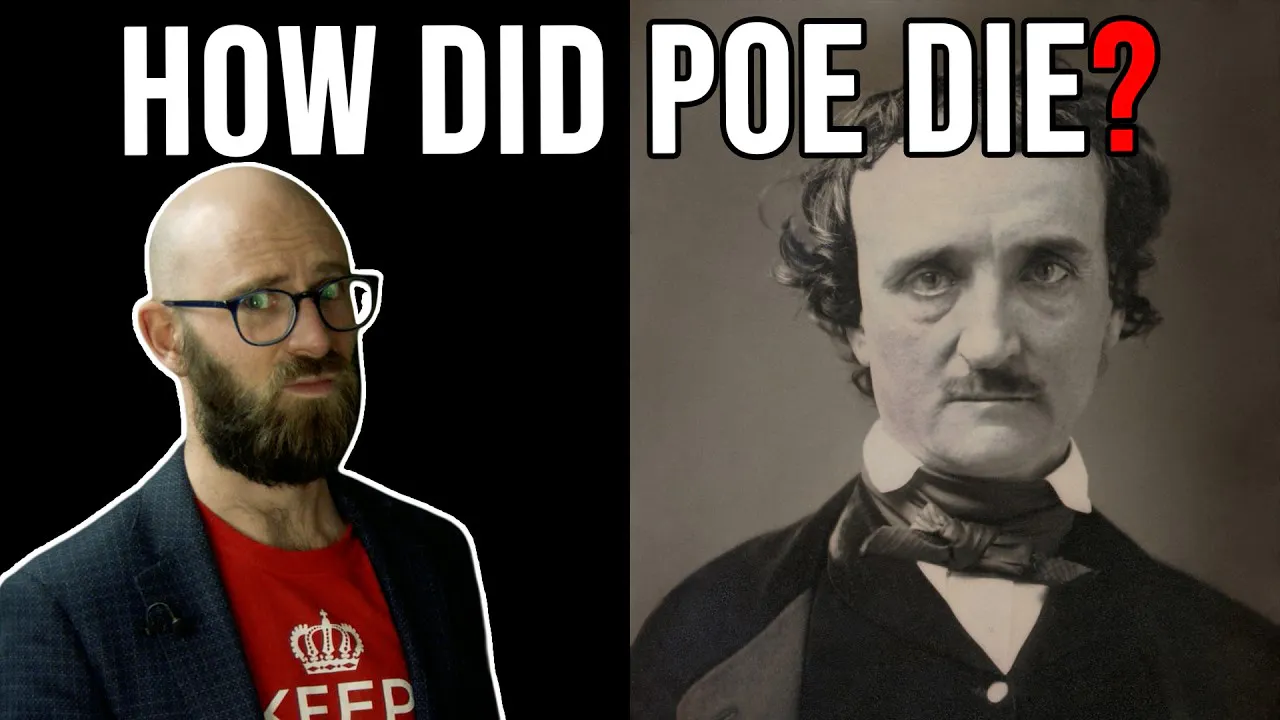
    How Did Edgar Allan Poe Die?

    Edgar Allan Poe is probably best known for his raven that squawks “Nevermore,” but he’s also one of the first American short story writers and is often credited with being the “inventor” of detective fiction. He also contributed heavily to the genre of science fiction. Not only that, but he was one of the first American writers to earn a living from his writing alone. What’s not as well-known about the man is that Poe had a somewhat turbulent stint in the military, married his 13 year old cousin, and more. Here now is the real story of Edgar Allen Poe. Host: Simon Whistler Editor: Daven Hiskey Producer: Samuel Avila Learn more about your ad choices. Visit megaphone.fm/adchoices

  • August 17 · 32 min

    NASA’s Most Hilarious Failure

    On April 11, 2026, the Orion spacecraft Integrity splashed down in the Pacific Ocean, bringing astronauts Victor Glover, Reid Wiseman, Jeremy Hansen, and Christina Koch (cook) safely back to earth after an epic 10-day journey from the earth to the moon - the first such mission since Apollo 17 in 1972. Aside from some minor issues with the spacecraft’s toilet and Microsoft Outlook, which… historically the furthest from Earth Outlook has ever not worked… so far… the Artemis II mission was near-flawless from start to finish, marking a triumphant return to manned space exploration beyond low earth orbit. These days space travel can seem almost routine, with only the most spectacular missions like Artemis II even making headlines. It can thus be easy to lose sight of an important fact: space travel is hard - and dangerous. The road to the stars is littered with the wreckage of hundreds of failed spacecraft and not a few human corpses. From the crew to Apollo 1 and Soyuz 1 in 1967 to those of Soyuz 11 in 1971, Challenger in 1986, and Columbia in 2002, dozens of astronauts have given their lives in the pursuit of the Final Frontier. But not all spaceflight disasters are so tragic; some are just plain absurd - even funny - and none more so than a largely forgotten incident from the very dawn of the U.S. space program. This is the hilarious story Mercury-Redstone 1, the four inch failure, not to be confused with my college girlfriend’s nickname for me… On October 4, 1957, history forever changed when the Soviet Union launched Sputnik 1, the world’s first artificial satellite, into orbit. In response to Sputnik, the United States ramped up ICBM development efforts while simultaneously scrambling to launch its own satellite. These early efforts were…less than successful, with the first attempted American satellite launch, Vanguard TV3 on December 6, 1957, ending in a fiery and embarrassing explosion on the launch pad. It would not ... Author: Gilles Messier Host/Editor: Daven Hiskey Producer: Samuel Avila Learn more about your ad choices. Visit megaphone.fm/adchoices

  • August 15 · 54 min

    Can You Actually Tip a Cow?

    ⁠⁠In this episode of The Brain Food Show, we start by looking at a rather fascinating fact about dogs and cats that you probably didn’t know. Next up we begin by debunking a variety of common whale related myths, most notably frequently depicted in movies the world over. Among other things, we then look at what exactly the uvula does (that dangly thing in the back of your throat), whether cats and dogs can actually see color, whether it’s physically possible for a human to tip a cow as is the common drunken game, and why you’d never, ever want to mess with an ostrich. Learn more about your ad choices. Visit megaphone.fm/adchoices

  • August 14 · 2 hr 55 min

    The U.S.'s Biological Warfare Against Its Own Citizens, the Nazi Breeding Program and Much More

    In the "Forgotten History" compilation video today, we're looking at the United States' biological warfare program tested on its own citizens, the women who were used for breeding by the Nazis, the amazonian arrow poison that revolutionized medicine, the only axi prisoner to escape from Canada and make it back to Germany, the forgotten and extremely tragic valcartier grenade incident, and much, much more. 00:00 That Time the United States Tested Biological Warfare on its Own Citizens 18:38 The Women Who were Used for Breeding by the Nazis 36:07 The Amazonian Arrow Poison that Revolutionized Medicine 56:31 The Red Devil: The Only Axis Prisoner to Escape from Canada And Make It Back to Germany 1:10:18 Intentionally Swept Under the Rug- The Forgotten and Extremely Tragic Valcartier Grenade Incident 1:24:37 The Insane Story the Kamikaze Scandal that Rocked Japan 1:42:33 The Forgotten Carnival Sideshow That Saved Countless Babies’ Lives 1:54:15 That Time Disney Helped Give the World a Weapon of Mass Destruction 2:09:01 Forgotten History- That Time Hitler had His Agents Secretly Attack Germany in Order to Justify Starting WWII 2:19:16 Forgotten History- The U.S. Military’s Obsessive WWII Ice Cream Crusade 2:29:05 Glowing in the Dark, The “Radium Girls” 2:44:52 Julius Caesar and His Pirate Adventure Learn more about your ad choices. Visit megaphone.fm/adchoices
  • August 13 · 14 min

    The Forgotten American Civil War Death Camp

    On November 10, 1865, Henry Wirz, the commander of Andersonville prison in Georgia (a.k.a. Camp Sumter), was executed for his actions during the Civil War. A Swiss immigrant, Wirz was the only Confederate officer convicted and put to death for war crimes. (Even Confederate President Jefferson Davis ultimately got off more or less scot free.) Built in 1864, Andersonville, or Camp Sumter, was the largest Confederate military prison. The original plan was to move the prisoners out of Richmond, Virginia to an area of greater security and a better food supply. The camp was operational for only a little over a year, but during that time over 45,000 Union soldiers were incarcerated there. Out of those, a full 13,000 perished from disease, starvation, exposure, and the general horrible conditions at the camp. The first prisoners came to Andersonville in early 1864. Over the next few months, around 400 more arrived each day. At its peak, 33,000 prisoners were held in an area originally built to hold about 10,000. Editor: Daven Hiskey Host: Simon Whistler Producer: Samuel Avila Learn more about your ad choices. Visit megaphone.fm/adchoices

  • August 12 · 35 min

    How Close are We to Creating a Handheld Laser Gun?

    Laser guns are a staple of science fiction. Engineers are very good at making science fiction, science fact, with a lot of money and awesome science and engineering. So how close are we to creating a handheld sci-fi laser gun? “Ancient weapons and hokey religions are no match for a good blaster at your side, kid.” In this memorable line from 1977’s Star Wars, loveable smuggler and rogue Han Solo neatly summarizes the enduring appeal of the sci-fi hero’s classic sidearm. From the Martian heat rays in The War of the Worlds to the ray guns of Flash Gordon and Buck Rogers, the phasers and disruptors of Star Trek and the blasters of Star Wars, energy-beam weapons have been a staple of science fiction for over a century. As handy as a regular handgun but far deadlier, versatile, and boasting a near-infinite magazine capacity, they are the perfect way to tell your audience that your fictional universe is far more advanced - and way cooler - than our own. Of course, given how well punches and hand held weapons and the like pretty much always worked against the Borg, we are still left wondering why standard protocol wasn’t to ditch the phasers and replicate an AK-47 for everyone, similar to what Picard did in the second greatest movie of all time- Star Trek: First Contact. Of course, science fiction has a long history of becoming science fact - with, for example, the concept of a War of the Worlds death ray helped inspire the invention of radar in the 1930s. So, has anyone actually succeeded in creating a handheld sci-fi blaster, or is it really even possible at all? Well let’s dive into it, shall we? Author: Gilles Messier Host/Editor: Daven Hiskey Producer: Caden Nielsen Learn more about your ad choices. Visit megaphone.fm/adchoices

  • August 11 · 21 min

    The Real Story of Amelia Earhart

    In the field of aviation, few figures loom larger in the popular imagination than Amelia Earhart. Over her relatively brief 10-year career, the legendary aviatrix became an icon and inspiration for women everywhere, becoming the first woman to fly the Atlantic solo and setting dozens of long-distance flight records. Her mysterious disappearance during an attempted round-the-world flight in 1937 continues to fuel speculation to this day, ensuring her legacy will live on for years to come. But before she was a world-famous superstar, Amelia Earhart was a struggling social worker and pilot living in Massachusetts whose earliest flights were instrumental in the establishment of Dennison Field, among the first commercial airports in the United States. Amelia Earhart was born on July 24, 1897, in Atchison, Kansas, the eldest of two daughters born to Amy Otis and Edwin Earhart, a lawyer. From an early age Amelia displayed a love of adventure and the outdoors, spending long days with her younger sister Muriel exploring the neighbourhood, collecting insects, and engaging in all sorts of rough-and-tumble play - including building a roller-coaster-like ramp that provided Amelia with her first taste of flight. But aside from a few idyllic years spent in Atchison, much of Amelia’s childhood was characterized by hardship and constant movement: “There are two kinds of stones, as everyone knows, one of which rolls. Because I selected a father who was a railroad man it has been my fortune to roll.” When Edwin Earhart’s law practice failed in 1905, he took a job as a claims officer for the Rock Island Railroad and moved the family to Des Moines, Iowa. At first all seemed well for the family, with Edwin quickly earning a promotion. But he... Author: Gilles Messier Host: Simon Whistler Editor: Daven Hiskey Producer: Samuel Avila Learn more about your ad choices. Visit megaphone.fm/adchoices

  • August 10 · 43 min

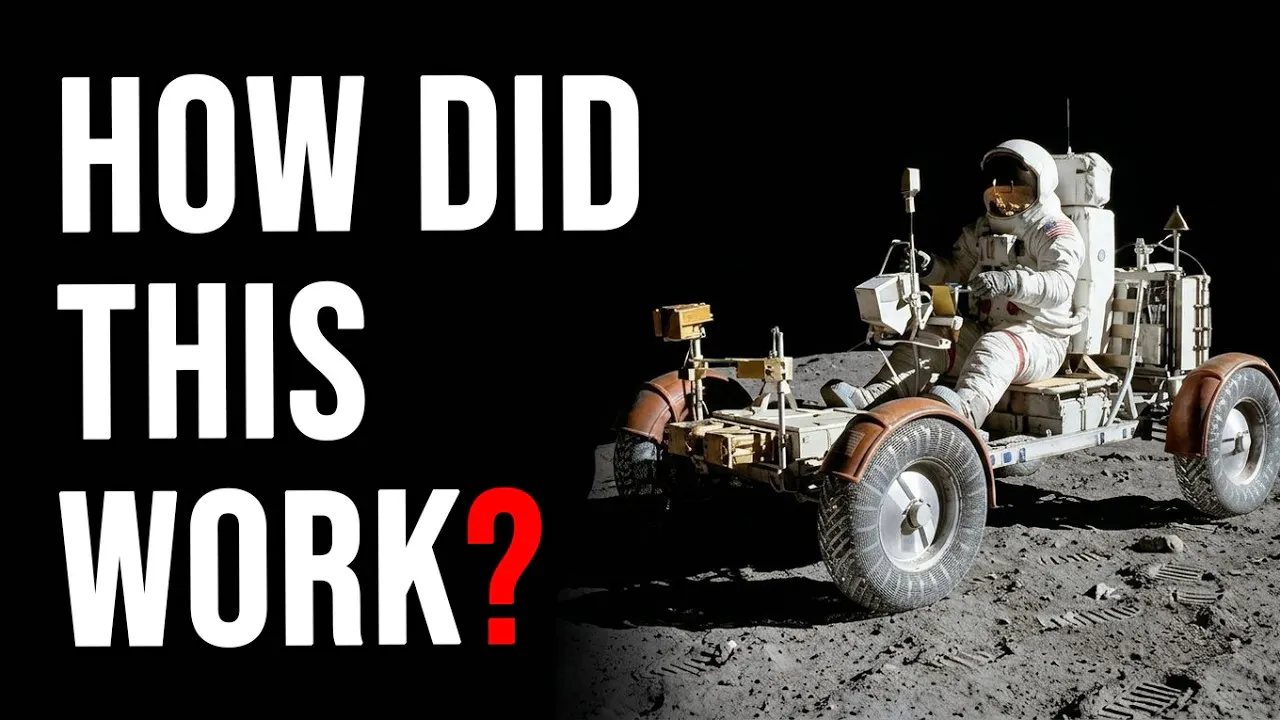
    The Incredible Engineering Behind Driving on the Moon

    Long before the Apollo Program was officially announced in 1961, engineers and science fiction writers recognized the value of giving future moon explorers some kind of wheeled vehicle to increase their mobility. Most early concepts for such vehicles were large truck-like contraptions with pressurized cabins, allowing the astronauts to operate in so-called “shirt-sleeve” conditions, not unlike in the phenomenal film, The Martian. Such vehicles appear in Polish science fiction writer Jersz Zulawski’s 1901 novel On a Silvery Globe and Belgian cartoonist Hergé’s 1952 comic book On a Marché Sur La Lune AKA Explorers on the Moon, in which intrepid globetrotting journalist Tintin becomes the first person to set foot on earth’s satellite. That same year, Wernher von Braun, the former Nazi rocket engineer who developed the V2 ballistic missile and was brought to the United States after the Second World War as part of Project Paperclip, wrote a series of articles for Collier’s Weekly magazine with the delightfully gung-ho 1950s title of Man Will Conquer Space Soon! in which he speculated on what future space missions might look like. In these articles, he described a hypothetical six-week expedition to the moon equipped with specially-designed ten-ton tractor-trailer vehicles for hauling supplies. These articles were later adapted into three episodes of the Disney anthology TV series Disneyland - Man in Space, Man and the Moon, and Mars and Beyond - in which von Braun was prominently featured. Once the Apollo Program officially got underway, von Braun - by now the director of the newly-formed Marshall Spaceflight Centre in Huntsville, Alabama - commissioned a series of studies in cooperation with various corporations including Lockheed, Bendix, Boeing, General Motors, Brown Engineering, Grumman, and Bell Aerospace to evaluate the feasibility of building a wheeled vehicle for lunar surface exploration. Directed by MSC engineer Saverio Morea, these studies came up with a number of theoretical concepts including the Lunar Logistics System or LLS; the Lunar Scientific Survey Module or LSSM; the Mobility Test Article or MTA, the Lunar-Traversing Vehicle or LTV and the Mobility Laboratory or MOLAB - all of which followed the same general form factor of a large, truck-like vehicle with a pressurized cabin and four or more large wheels driven by electric motors. At first, the primary challenge in designing such vehicles was the nature of the lunar surface, which in the late 1950s and early 1960s was largely unknown. Some astronomers speculated that millions of years of bombardment by meteorites might have buried the surface under a blanket of dust several feet deep that would instantly swallow up any lander, rover, or astronaut that touched down on it. Author: Gilles Messier Host/Editor: Daven Hiskey Producer: Samuel Avila Learn more about your ad choices. Visit megaphone.fm/adchoices

  • August 8 · 1 hr 35 min

    The “Trial of the Century” That Led to Women Jumping Out of Cakes

    ⁠⁠In this episode of The Brain Food Show, we start with a Simon rant, then look at what the M’s stand for in M&Ms. Next up we look at when exactly humans started putting living things in food items for the purpose of entertainment, the origin of “That’s What She Said” and “Said the Actress to the Bishop”, and then all leading up to the first “Trial of the (20th) Century” and what exactly that had to do with the curious practice of having women jump out of cakes. ⁠This is the story⁠ we discussed in the part we cut out at the end, which was in relation to a rather dark story Simon came across concerning soldiers/drinking, noting he had something “orders of magnitude” more disturbing than Nesbit’s youth, to which I apparently did not have a good enough imagination for, thinking that must be an exaggeration… It was not an exaggeration, and we ultimately decided to cut it out because of it. Learn more about your ad choices. Visit megaphone.fm/adchoices

Showing 1–20 of 36 episodes