Automotive Procurement's Power Problem: What Other Industries Do Better
transcript
show notes
Automotive built the procurement playbook. Structure, process, category management, sourcing discipline. Compressed margins forced it, and every penny had to be defended. The problem is that the same discipline that made automotive procurement world-class is now the thing slowing it down.
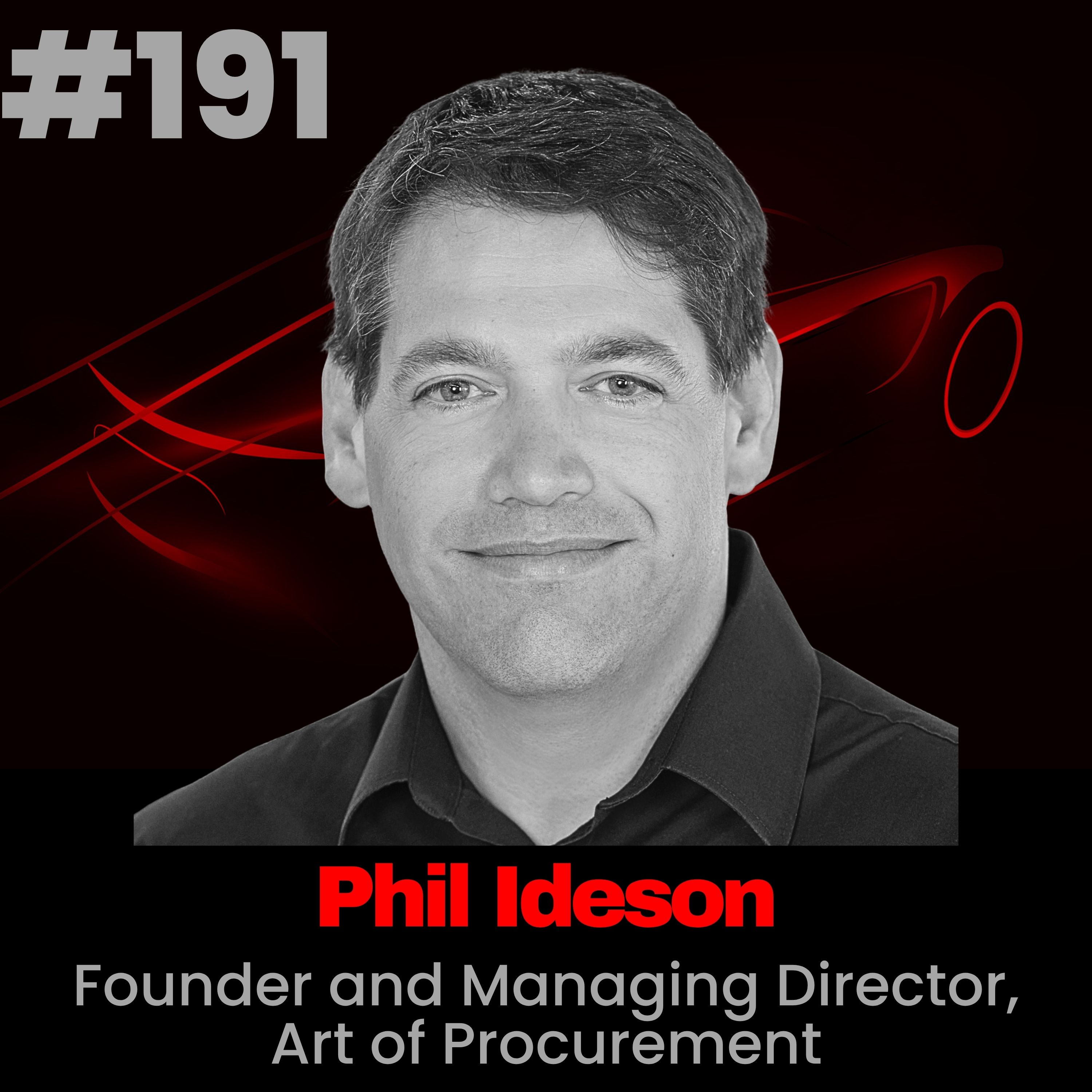
Phil Ideson, Founder and Managing Director of Art of Procurement, has seen both sides of that. He started his career in automotive purchasing at Vauxhall, moved through Ford's graduate scheme, went to Visteon, and then left for pharma, consumer products, technology, and financial services. Today, he runs Art of Procurement, home of the number one procurement podcast in the world, and he spends his days with procurement leaders across every industry you can name. Jan has known him for years, and she has never met anyone who cares more about elevating this function.
In this episode, Phil names something the industry rarely says out loud. Many automotive processes exist to maintain control, not to drive an outcome. Purchasing teams waved the process in people's faces because that is where the power came from, and the whole function ended up measured on cost savings because that is the business case procurement built for itself. Then comes the part about AI. Phil argues it is an operating model question, not a technology purchase, and he lays out what happens when you free up capacity with AI and your team is not ready to use it.
There is also a preview of Catalyst coming to Detroit on September 22nd, and Phil designed it as a small room for 30 to 50 senior leaders rather than another hall full of exhibitors.
The mindset shift here is bigger than procurement. It is about whether legacy automotive can stop protecting what works long enough to build what is next.
Themes Discussed in this Episode
- What automotive procurement does well and where it lags
- Process built for control instead of outcomes
- The cost savings trap inside procurement's own business case
- Why the "seat at the table" mindset keeps the function small
- Power dynamics and early supplier engagement
- AI as an operating model question, not a technology purchase
- Making sense of a market of 500-plus procurement tech providers
- Driving change with confidence
🎥 Watch the full episode on YouTube:
https://www.youtube.com/@jangriffithsautomotiveleaders
Featured Guest: Phil Ideson, Founder and Managing Director, Art of Procurement
Phil is the founder and managing director of Art of Procurement, a media, events, and advisory business built to help procurement leaders raise their impact. What began in 2015 as a podcast has grown into a media-led company with a global community of procurement and supply chain executives. Before Art of Procurement, Philip worked inside the function, leading procurement transformation, shared services, category management, and sourcing programs for Ally Financial, Chiquita, Pfizer, and Visteon. He started his career in automotive purchasing and has lived in the United States for more than twenty years, including seven or eight of them in Detroit.
About Your Host – Jan Griffiths
Jan Griffiths is the champion for culture change and the host of the Automotive Leaders Podcast. A former automotive executive with a rebellious spirit, Jan is known for challenging outdated norms and inspiring leaders to ditch command and control. She brings honesty, energy, and courage to every conversation, proving that authentic, human-centered leadership is the future of the automotive industry.
Mentioned in this Episode:
- 21 Traits of Authentic Leadership
- Catalyst | Detroit September 22nd: When AI Meets Manufacturing Reality
Episode Highlights
[02:05] How an accident became a career: Phil never planned on procurement. An internship at Vauxhall, Ford's graduate scheme, and a spin-off to Visteon put him in purchasing, and he never left.
[04:29] What automotive gets right, and what it misses: Structure, process, and sourcing discipline are world-class here. Where other industries pull ahead is in how they measure value and how quickly they adopt new technology.
[07:40] Process for control or process for outcome: Phil asks the question most teams skip. What is this process trying to produce, and could a different process produce something better?
[09:36] The cost savings trap: Procurement built its business case on saving a dollar for every dollar invested, so that is how the rest of the business decided to measure it. The behaviors followed the metric.
[10:43] The seat at the table: Phil wants to throw that table off the top of the Ren Cen. He explains how the need to prove worth turns into paperwork, control, and a function that never gets invited in as a partner.
[14:21] ProcureTech100 and a market that exploded: When Phil started, there were maybe ten or twenty procurement technology providers. His team now tracks five or six hundred, and a panel of CPOs and heads of digital procurement votes on the hundred their peers should know.
[19:55] Why Catalyst is built small: Thirty to fifty senior practitioners, pre-work, and a mastermind format. Phil explains why the room is deliberately limited and what he wants people to do differently on Monday morning.
[24:16] Power dynamics and early supplier involvement: Jan takes it back to a concurrent engineering team in the '80s that designed a torque converter with suppliers in the room. Phil connects it to the habit of finding power and then using it, and why that habit costs you the best innovation.
[26:46] AI is an operating model issue: The heart of the work is not the tool. Phil explains what happens after AI clears the tactical work, leaving the freed capacity with nowhere useful to go.
[30:53] Driving change with confidence: Learning from each other's experience de-risks the decision. That is the whole point, and it is a good place to close.
Top Quotes
[25:35] Philip Ideson: "The leaders who I admire the most are those who are the most curious, and their answer to what's happening and what the impact is going to be is they don't know."
[26:46] Philip Ideson: "AI is an operating model issue, not a technology issue."
[27:45] Philip Ideson: "If the team isn't there in the position to take advantage of that time that's now been freed up, what happens is you probably lose those people, and then you go back to the same old problem of, I've got too much to do and not enough people, and the capacity that I freed has now just been taken up by an AI budget instead."
If this episode resonated, share it with a fellow automotive leader and subscribe to The Automotive Leaders Podcast, where we’re shaping the future of authentic leadership in the automotive industry.
This podcast episode is also available on YouTube. Check out our YouTube channel at Jangriffithsautomotiveleaders
Send us your feedback or questions — email Jan at Jan@Gravitasdetroit.com.