Artwork for The Automotive Leaders Podcast
Business

The Automotive Leaders Podcast

Jan Griffiths

Prepare yourself, your team, and your business for the future of automotive.
We are all evolving the products we make, have you thought about the leadership model to get us there?
In-depth interviews with leaders, authors, and thought leaders, provide the insights you need.
This podcast is brought to you by Gravitas Detroit.

  • 20 episodes
  • Updated July 23

Episodes20

  • July 23 · 36 min

    How Ford Is Breaking Command and Control on the Factory Floor

    In the automotive industry, we often focus on the vehicle itself, the technology within it, the smart factories, and artificial intelligence. Ford is leading the way in all these areas, even reimagining the assembly line that Henry Ford created back in 1913. However, that is not the whole story. The hardware has never been the main focus. The real story lies in the culture; it's about how more than 100,000 individuals think, act, and make decisions, and whether they can adapt faster than the legacy companies that were built to move at a different pace. In this episode of the Automotive Leaders Podcast, Jan Griffiths interviews Bryce Currie, Ford's Chief Manufacturing Officer, who oversees more than 40 plants worldwide. Both Bryce and Jan began their careers in a command-and-control environment, where plant managers were feared, meetings featured thrown books, and no one felt comfortable offering alternative ideas because they weren’t being heard. However, Bryce opted for a different approach. He identifies as a servant leader and has dedicated 51 weeks of his life to traveling by bus to demonstrate his commitment. These bus tours form the core of their discussion. Over the course of a week, Bryce visits four plants with 50 employees from every level and function, working from 5:30 in the morning until 10:30 at night, all focused on learning to operate Ford's production system in a unified way. This initiative is how Bryce turns culture into a tangible experience for the team. He emphasizes aspects that many leaders overlook: he turns off his phone so his team can learn to operate independently, encourages two ideas from every operator, and uses Thomas Edison's 2,332 inventions as a benchmark for what his team can achieve in a single year. This conversation explores what it takes to accelerate a company with over a century of history. Trust and kindness are powerful business tools. He advocates for accountability without fear, highlighting that culture should not be viewed as a soft concept; rather, it is the backbone that drives results. If you’re a leader in this industry, Bryce will illustrate what shifts when you stop trying to control your team and start believing in them. Themes Discussed in this Episode Why culture is the real transformation story at Ford Breaking command and control at the manufacturing scale Servant leadership across 40-plus Ford plants The bus tour is a culture change engine Empowerment over micromanagement in a legacy organization Activating the minds of 100,000 people Driving innovation through frontline operator ideas This episode is sponsored by Lockton, click here to learn more 🎥 Watch the full episode on YouTube: https://www.youtube.com/@jangriffithsautomotiveleaders Featured Guest: Bryce Currie, Chief Manufacturing Officer at Ford Bryce is responsible for Ford's global manufacturing operations, producing some of the industry's most dynamic vehicles. He also oversees Ford Global Manufacturing Engineering, Material Planning & Logistics, Advanced Technology & Platforms, and Safety. Currie leads with a commitment to servant leadership, empowering teams to innovate and achieve their full potential. Since joining Ford in 2023, he has applied his Lean expertise to enhance operational performance and cultivate a people-centric culture. He does it through principles of efficiency, waste reduction, collaboration, recognition, and continuous improvement. About Your Host – Jan Griffiths Jan Griffiths is the champion for culture change and the host of the Automotive Leaders Podcast. A former automotive executive with a rebellious spirit, Jan is known for challenging outdated norms and inspiring leaders to ditch command and control. She brings honesty, energy, and courage to every conversation, proving that authentic, human-centered leadership is the future of the automotive industry. Mentioned in this Episode: 21 Traits of Authentic Leadership Jim Voss and Tenneco's transformation (Episode 186 and Episode 187) Jim Collins, author of Good to Great Episode Highlights [03:25] Who Are You as a Leader? Bryce answers with servant leadership and credits his father, who rejected command-and-control back in the '70s and '80s. [04:26] Unlearning Command and Control: Bryce traces his mindset back to the Toyota Production System and its real lesson: respect for people. [05:37] Fear Culture That Died: Why the rock-star CEOs of the '90s faded while the people-first leaders lasted. [08:51] From a Relay Race to a Basketball Court: Jan and Bryce break down the mindset shift from siloed handoffs to a whole team on the floor at once. [09:19] Inside the Bus Tour: Bryce explains the immersion experience he built in 1991 and how it rewires culture plant by plant. [14:50] Why He Shuts His Phone Off: Making time with the people the priority, and trusting his team to run without him. [17:41] Empowerment or Micromanagement: How Bryce pushes real decision-making down through a company over 100 years old. [19:41] The Pushback and the Right Talent: What happened when a proud, tenured team met a new way of leading. [27:42] Thomas Edison and the 2,332 Challenge: How one number became a company-wide innovation target that operators blew past. [32:48] Culture Is Not Soft: Bryce makes the business case with statistical proof and a message for the naysayers. Top Quotes [03:45] Bryce Currie: "I believe in people, and innovation comes from people if you treat them the right way." [05:53] Bryce Currie: "The ones that have stuck around for many, many years are the ones who have believed in the fact that the people are what make the company, and they'll follow the process, but you build it off of that culture." [34:44] Bryce Currie: "The companies that last, that do it year over year over year, they have that it factor, and that it factor is through the people, and it delivers the results." If this episode resonated, share it with a fellow automotive leader and subscribe to The Automotive Leaders Podcast, where we’re shaping the future of authentic leadership in the automotive industry. This podcast episode is also available on YouTube. Check out our YouTube channel at Jangriffithsautomotiveleaders Send us your feedback or questions — email Jan at Jan@Gravitasdetroit.com.
  • July 9 · 19 min

    250th Anniversary Episode, a Personal Perspective

    In 1976, an 11-year-old girl from a small farm in Wales stood before a glass case in Greenwich, England, staring at strange uniforms and a document called the Constitution. The exhibition was titled "The British Story of the American Revolution." That was all Jan Griffiths knew of America, what she could see through the glass. Decades later, she sits in the engine room of that country, in Detroit, at the heart of the auto industry. This episode marks America's 250th anniversary, and Jan tells her own story to get at something bigger. She takes us from the shop floor at BorgWarner in Kenfig, South Wales, where the smell of oil and coolant hooked her for life, to Muncie, Indiana, to the drive up I-75 when the Detroit skyline first came into view, and something rushed through her. It is the story of what this country and this industry gave a young woman who would not have had the same shot back home in the 1980s. She names the people who believed in her, and she means every one of them. Then she turns it forward. Jan draws a straight line from Frederick Taylor's work in 1911 and Henry Ford's moving assembly line in 1913 to the management playbook most legacy automakers still run today. The country is 250 years old. The industry's operating system is barely younger, and it has hardly changed. Culture is not soft, she says. Culture is how we behave and how we decide, and the industry does not have another century to sort it out, while Chinese OEMs move at speed, and relay-race handoffs slow down every decision. She points to Jim Voss and the movement building inside Tenneco as proof of what happens when people rise up for a cause. And she reminds us what Detroit already knows about getting knocked down and coming back, from bankruptcy to two of the Big Three going under and returning stronger. This is one immigrant's love for two countries and one industry, and a challenge to every leader who still talks about transformation instead of defining it. Themes Discussed in this Episode An immigrant's love for two countries From a Welsh farm to Detroit's engine room Why culture is not soft The 100-year-old automotive playbook Competing with Chinese OEMs on speed Moving from a relay race to all players on the court Detroit's grit and comeback story Leaders defining transformation, not just talking about it This episode is sponsored by Lockton, click here to learn more 🎥 Watch the full episode on YouTube: https://www.youtube.com/@jangriffithsautomotiveleaders About Your Host – Jan Griffiths Jan Griffiths is the champion for culture change and the host of the Automotive Leaders Podcast. A former automotive executive with a rebellious spirit, Jan is known for challenging outdated norms and inspiring leaders to ditch command and control. She brings honesty, energy, and courage to every conversation, proving that authentic, human-centered leadership is the future of the automotive industry. Mentioned in this episode Jim Voss and Tenneco's transformation (Episode 186 and Episode 187) 21 Traits of Authentic Leadership (free PDF) Catalyst | Detroit: When AI Meets Manufacturing Reality (September 22nd 2026 | Detroit, Michigan) Episode Highlights [01:19] Through the glass in Greenwich: Jan takes us to 1976, an 11-year-old on a school trip staring at an exhibition called The British Story of the American Revolution, the first time America was more than something on TV. [03:03] Hooked on the shop floor: BorgWarner in Kenfig, South Wales, the smell of oil and coolant, and the moment a farm girl fell for automotive manufacturing. [03:58] "Don't go to Detroit": Why Jan ignored the warnings out of Muncie, took the torque converter job in Sterling Heights, and felt a rush the first time the skyline came into view on I-75. [07:30] A moment of gratitude: Jan names the people who believed in her and shaped her career, from Paul Humphreys to Lon Offenbacher. [08:40] You never fully assimilate: What a psychiatrist once told her about immigrants, and why she can love Wales and America at the same time. [10:53] Culture is not soft: Jan pushes back on the eye-roll, defining culture as how we behave and how we decide, not hierarchy and performative theater. [11:52] A playbook from 1911: Frederick Taylor's work, Henry Ford's 1913 assembly line, and why the industry's operating system has barely changed since. [14:43] From relay race to basketball: The handoffs and resistance points that slow legacy automakers, and what it looks like when everyone plays on the court. [18:09] All in: Jan's closing challenge to leaders who talk about transformation instead of defining it, and why the industry cannot wait. Top Quotes [02:44] Jan Griffiths: "Never in my wildest dreams did I think that I would go from peering through the glass at America to being firmly planted in the engine of that country in Detroit, but here we are." [10:53] Jan Griffiths: "Culture is how we behave. It's how we act. It's our framework for how we make decisions, for how we operate." [17:23] Jan Griffiths: "Detroit didn't just put America on wheels. It built the model, the system for people to share in that prosperity, and we need that back again." [18:29] Jan Griffiths: "I am all in on this country, I am all in on this industry, and I am most definitely all in on Detroit." If this episode resonated, share it with a fellow automotive leader and subscribe to The Automotive Leaders Podcast, where we’re shaping the future of authentic leadership in the automotive industry. This podcast episode is also available on YouTube. Check out our YouTube channel at Jangriffithsautomotiveleaders Send us your feedback or questions — email Jan at Jan@Gravitasdetroit.com.
  • June 25 · 50 min

    Jim Voss on Building a Culture That Wins (The Tenneco Way, Part 2)

    In Part 1, Jim Voss, CEO of Tenneco, took on a company in need of a turnaround. In Part 2, he hands you the playbook behind it. This is the Tenneco Way. Not a poster on a wall. Not a slide deck someone presents once a month. It’s the operating system running a 100-year-old company with more than 60,000 people across 28 countries. And as Jim puts it, it is the company's sustainable competitive advantage. Jim sees culture as the most powerful advantage a leader can build. It's the thing that drives every result you actually care about, because people drive results, and culture shapes people. From there, it builds. Simplify, kill the bureaucracy and the silos, and go hunt for friction instead of waiting for it to find you. Organizational velocity, the differentiator Jim believes will separate the winners from everyone else. Tenacious execution, because strategy gets eaten alive without it. Accountability and ownership without a shred of micromanagement. And win, treated as a mindset, not an outcome. Then Jim gets practical. How do you roll core values out to 60,000 people in 28 countries without peanut-buttering it across the wall? The Tenneco mindset and the power of humility. Why did he grow his own talent through Tenneco University and the P3 standards that went from impossible to gold? This is not the legacy playbook. This is a transformation that actually happened, told by the leader who lived it. Themes Discussed in this Episode Why culture is an operating system, not a soft HR initiative The six gears of the Tenneco Way Radical candor and building a company where bad news travels fast Redefining failure: we never fail, we win or we learn Organizational velocity as the next great competitive differentiator Accountability and ownership without micromanagement The Tenneco mindset and the power of humility P3 standards and the pride that drives performance 🎥 Watch the full episode on YouTube: https://www.youtube.com/@jangriffithsautomotiveleaders This episode is sponsored by Lockton, click here to learn more Featured Guest: Jim Voss, CEO at Tenneco Jim is the CEO of Tenneco, a global automotive supplier with operations spanning 28 countries and more than 60,000 employees. Before joining Tenneco in 2022, he spent more than a decade with Apollo Global Management as an operating advisor and portfolio CEO, leading complex business transformations across multiple industries. With nearly 30 years of leadership experience in industrial, chemical, and manufacturing sectors, Jim is known for driving operational excellence, building high-performance cultures, and leading large-scale turnarounds. He also serves as Chairman of Vacuumschmelze and sits on the boards of ABC Technologies and Kem One. About Your Host – Jan Griffiths Jan Griffiths is the champion for culture change and the host of the Automotive Leaders Podcast. A former automotive executive with a rebellious spirit, Jan is known for challenging outdated norms and inspiring leaders to ditch command and control. She brings honesty, energy, and courage to every conversation, proving that authentic, human-centered leadership is the future of the automotive industry. Mentioned in this Episode: 21 Traits of Authentic Leadership Execution: The Discipline of Getting Things Done by Bossidy and Charan Episode Highlights [01:38] The Tenneco Way: Jim defines it plainly. It is the operating system and the company's sustainable competitive advantage, built on the belief that people drive every result. [04:18] The six gears: Jan and Jim walk through the framework gear by gear, starting with core values. [04:35] Radical candor: Start with the truth. Build an organization with the courage and the skills to have the tough conversations that get to the facts. [08:11] Bad news travels fast: Jim's tell for a healthy culture. In most companies, good news flies and bad news crawls. He pays attention to how fast the bad news moves. [15:14] Simplify: Reject bureaucracy, minimize layers, eliminate silos. Go find the friction instead of waiting for someone to bring you a problem. [18:10] Organizational velocity: Jim's pick for the number one differentiator going forward. It takes getting every element right, from strategy to frontline competency. [22:48] Tenacious execution: The bedrock of everything. Strategy gets eaten alive without execution, and Jim spends 95 percent of his time on it. [24:00] Accountability without micromanagement: Why control is the easy way out and the enemy of true ownership. [32:38] The Tenneco mindset: If he could keep only one gear, this is it. The power of humility, learned from the All Blacks, and refusing to be a victim of anything. [41:08] P3: People, Pride, Performance: Manufacturing standards so rigorous that plants winning OEM awards weren't yet certified bronze, developed bottom-up with plant managers. Top Quotes [01:38] Jim Voss: "The Tenneco Way is our operating system. More importantly, it's our sustainable competitive advantage. " [26:44] Jim Voss: " A winning culture is learned." [47:23] Jim Voss: " Good leadership never builds something around an individual, whether it's the CEO or anyone in the organization. " If this episode resonated, share it with a fellow automotive leader and subscribe to The Automotive Leaders Podcast, where we’re shaping the future of authentic leadership in the automotive industry. This podcast episode is also available on YouTube. Check out our YouTube channel at Jangriffithsautomotiveleaders Send us your feedback or questions — email Jan at Jan@Gravitasdetroit.com.
  • June 11 · 21 min

    The Man, The Mess, and The Moment: How Jim Voss Began Tenneco's Transformation

    How do you take a 100-plus-year-old automotive company with 158 manufacturing sites, operations in 28 countries, more than 60,000 employees, and over 30 brands and transform it into a top-performing company? That’s the question at the heart of Tenneco’s remarkable turnaround story. In less than three years, under the leadership of CEO Jim Voss and his team, Tenneco doubled its EBITDA margins, becoming a leader within its peer group. But before the performance came the hard part: confronting a deeply entrenched command-and-control culture and reimagining how leadership works inside a legacy automotive company. In Part 1 of this two-part series, Jim shares his unconventional path to the automotive industry, his private equity background with Apollo, what he discovered when he arrived at Tenneco in 2022, and why culture became the foundation of the company's transformation. This is a conversation about leadership, trust, organizational velocity, and the courage required to challenge decades of legacy thinking. Themes Discussed in this Episode Why Tenneco's turnaround began with culture. What Jim found when he walked into Tenneco in 2022 Breaking away from command-and-control leadership Why organizational velocity is now a competitive advantage The challenge of transforming legacy automotive organizations How leaders create cultures that drive execution High care and high accountability as a leadership model Why manufacturing plants should sit at the top of the organizational pyramid 🎥 Watch the full episode on YouTube: https://www.youtube.com/@jangriffithsautomotiveleaders This episode is sponsored by Lockton, click here to learn more Featured Guest: Jim Voss, CEO at Tenneco Jim is the CEO of Tenneco, a global automotive supplier with operations spanning 28 countries and more than 60,000 employees. Before joining Tenneco in 2022, he spent more than a decade with Apollo Global Management as an operating advisor and portfolio CEO, leading complex business transformations across multiple industries. With nearly 30 years of leadership experience in industrial, chemical, and manufacturing sectors, Jim is known for driving operational excellence, building high-performance cultures, and leading large-scale turnarounds. He also serves as Chairman of Vacuumschmelze and sits on the boards of ABC Technologies and Kem One. About Your Host – Jan Griffiths Jan Griffiths is the champion for culture change and the host of the Automotive Leaders Podcast. A former automotive executive with a rebellious spirit, Jan is known for challenging outdated norms and inspiring leaders to ditch command and control. She brings honesty, energy, and courage to every conversation, proving that authentic, human-centered leadership is the future of the automotive industry. Mentioned in this Episode: 21 Traits of Authentic Leadership Episode Highlights [01:08] The turnaround everyone is talking about: Jan opens the episode by laying out the scale and complexity of Tenneco’s transformation and why this may be one of the most significant leadership turnaround stories in automotive today. [03:05] From chemicals to automotive: Jim explains his unconventional journey into the automotive industry and why, despite never working directly in a Tier One supplier before Tenneco, he had spent decades working alongside the automotive ecosystem. [04:25] The Apollo influence: Jim shares what nearly fifteen years with Apollo Global Management taught him about creating value through talent, culture, and operational excellence rather than relying on short-term cost-cutting measures. [05:25] Walking into the mess: When Jim arrived at Tenneco, he saw two realities at the same time: a company filled with great people, technology, and capability, but struggling with culture and execution. [07:34] Why culture came first: Jim discusses the command-and-control environment he inherited and explains why changing leadership behavior became the first priority in transforming the business. [09:00] Turning the pyramid upside down: Jim challenges traditional organizational thinking, arguing that manufacturing plants and distribution centers should sit at the top of the organizational hierarchy because they create the value that drives the company. [12:24] Seeing automotive through fresh eyes: As an outsider to traditional automotive leadership, Jim reflects on the industry's strengths, blind spots, and the urgent need to adapt to a faster-moving competitive environment. [15:59] The power of organizational velocity: Jim introduces one of the core principles behind Tenneco's transformation: organizational velocity. He explains why strategy, structure, and leadership competencies must work together to enable faster decision-making and execution. [17:15] Leadership for a different game: The leadership skills that created success twenty years ago are not necessarily the skills required to win today. Jim explains why organizations must honestly assess whether their leaders are equipped for the future. [18:39] A student of human behavior: Drawing on his background in psychology, sociology, and organizational development, Jim explains why understanding people is every bit as important as understanding the numbers. [20:46] High care. High accountability: Jim shares the leadership philosophy driving Tenneco's culture today: caring deeply about people while maintaining world-class standards and accountability. Top Quotes [10:10] Jim Voss: "My job isn't to score touchdowns for Tenneco. I'm a blocker and a tackler for the folks out there doing the work." [17:06] Jim Voss: "You have to have leaders that are fearless, and you have to have leaders that have the ability to make decisions without 100% of the information." [20:53] Jim Voss: "You have to care about people. You cannot be a leader if you don't." If this episode resonated, share it with a fellow automotive leader and subscribe to The Automotive Leaders Podcast, where we’re shaping the future of authentic leadership in the automotive industry. This podcast episode is also available on YouTube. Check out our YouTube channel at Jangriffithsautomotiveleaders Send us your feedback or questions — email Jan at Jan@Gravitasdetroit.com.
  • May 28 · 6 min

    Closing Season 7 and Preparing for What’s Next

    Season 7 of the Automotive Leaders Podcast is officially coming to a close, and Jan Griffiths is taking a moment to reflect on the journey, the lessons, and what’s ahead for the automotive industry. In this short solo episode, Jan shares why stepping back matters, how the team is preparing for an even stronger Season 8, and why listener feedback is shaping the future direction of the podcast. Jan also gives a preview of the powerful two-part season opener returning June 11th, featuring a transformational CEO who turned around a massive global automotive supplier in less than four years by focusing on leadership, culture, and organizational change. If you’ve ever struggled with bureaucracy, slow decision-making, legacy systems, or culture challenges inside automotive, this upcoming season is for you. Mentioned in this episode: M1 Studios Email Jan at jan@gravitasdetroit.com Subscribe to our YouTube channel for video podcasts

  • May 18 · 38 min

    2026 Working Relations Index — The First Time in 26 Years All Six OEMs Moved Up

    For the first time in 26 years of the Working Relations Index, every single North American OEM moved up the chart. Ford, Toyota, Stellantis, Honda, GM, and Nissan all scored higher than the year before. That has never happened. Not once. In this special episode, Jan sits down with Dr. Angela Johnson, principal at Plante Moran responsible for the WRI, along with Sig Huber, Chief Commercial Officer of Elm Analytics and former supplier risk leader at Toyota and Fiat Chrysler. Three sharp voices. One story the industry needs to hear. Tariffs. EV cost recovery. Permacrisis fatigue. Return-to-office mandates. Four undercurrents shaped this year's results, and they all point to the same place. When OEMs can't control the macro, they lean into what they can control. Communication. Accessibility. Buyer responsiveness. Taking the meeting. Listening. Acting. That's what moved the needle, and the suppliers noticed. Ford's 32-point jump is the second-largest gain in WRI history, and Liz Door led that charge from the top. Stellantis is showing the early signs of a real turnaround under Filosa. GM's still working through cultural inertia, but the relationship side keeps moving in the right direction. And Toyota and Honda aren't slowing down. Angela also unpacks her new 6C framework. It's the bridge between transactional and relational. Commercial fairness, consistency, clear expectations, communication, continuity, and collaboration. It's the structure the industry's been missing. But here's the harder truth. The next 18 to 24 months will test every relationship in this industry. Cost of goods sold is climbing. Supplier financial distress is creeping back. Cross-functional alignment inside the OEMs is slipping. The playbook's changing. The question isn't whether we can do this together. It's whether we will. Here's the link to the WRI 2026 Study Themes Discussed in this Episode First-time-ever WRI result: all six OEMs scored up Permacrisis fatigue and the shift toward collaboration Tariffs, EV cost recovery, and commercial fairness The 6C framework: bridging transactional and relational Ford's record-setting jump and Liz Door's leadership Stellantis's rebound under Filosa GM's ongoing culture change Top 50 suppliers, organizational memory, and cultural inertia Return-to-office mandates and buyer performance Cross-functional decline inside the OEMs From cost reduction to resilience: the playbook is changing 🎥 Watch the full episode on YouTube: https://www.youtube.com/@jangriffithsautomotiveleaders This episode is sponsored by Lockton, click here to learn more Featured Guest: Dr. Angela Johnson – Principal, Plante Moran Dr. Angela Johnson leads Plante Moran's supplier relations analytics and oversees the team that runs the annual Working Relations Index (WRI) Study. She brings more than 30 years of automotive experience at General Motors across multiple functions, paired with a doctorate in Industrial Engineering from Wayne State University. Angela helps organizations understand how trust, governance, and day-to-day commercial behaviors shape performance across large manufacturing ecosystems. She is also the architect of the 6C framework introduced in the 2026 WRI Study. Featured Guest: Sig Huber – Chief Commercial Officer, Elm Analytics Sig is the Chief Commercial Officer of Elm Analytics, a leading source of supplier financial health and risk data. Before Elm, Sig ran supplier risk management for Toyota and global supplier risk management for Fiat Chrysler, giving him a rare view from both the top and the bottom of the WRI scale. He is a frequent voice on the show when the conversation turns to supplier resiliency, financial distress, and the operational realities of managing risk across a global supply network. About Your Host – Jan Griffiths Jan Griffiths is the champion for culture change and the host of the Automotive Leaders Podcast. A former automotive executive with a rebellious spirit, Jan is known for challenging outdated norms and inspiring leaders to ditch command and control. She brings honesty, energy, and courage to every conversation, proving that authentic, human-centered leadership is the future of the automotive industry. Mentioned in this Episode: Plante Moran 2026 OEM-Supplier Working Relations Index (WRI) Study Kumar Galhotra (COO, Ford) – John McElroy interview on the Ford reorganization [Autoline AfterHours] Episode Highlights [01:21] A first in 26 years: Every single North American OEM moved up the WRI chart this year. That's never happened before. Jan sets the table for why this result matters. [03:43] 10,000 supplier comments and a real tone shift: Angela describes more than three times as many comments as in prior years, with less frustration and finger-pointing. Suppliers are putting real thought into it because they believe the OEMs are listening. [06:21] The four undercurrents: EV, tariffs, return-to-office, and permacrisis fatigue. Angela breaks down the forces driving this year's results and why suppliers are giving OEMs credit for leaning into what they can control. [09:36] The 6Cs: the bridge between transactional and relational: Angela introduces her new framework. Think of it as a Maslow's hierarchy of supplier relationships. Commercial fairness, consistency, clear expectations, communication, continuity, and collaboration. [12:00] Ford's 32-point jump and Liz Door's leadership: The biggest OEM gain this year and the second-largest in WRI history. Angela credits Liz Door for engaging the supply base, taking meetings, and driving those behaviors all the way down to the buyer level. [14:12] Stellantis's strong rebound: A 22-point jump under new leadership. Sig shares what he's seen working with Filosa in Brazil and why consistency and continuity will determine whether this turnaround sticks. [18:57] GM's culture change keeps moving: GM hit its highest-ever WRI score. The relationship side keeps trending up even as suppliers pushed back on some resiliency initiatives. [25:38] Cross-functional alignment is slipping: A fascinating data point. Across the board, suppliers reported a decline in OEM cross-functional integration. Angela and Sig dig into why uncertainty inside the OEMs may be the cause. [29:14] The 100-pound backpack: organizational memory and cultural inertia: Top 50 suppliers still rate the Detroit Three below their average and Nissan, Honda, and Toyota above. Angela's analogy lands hard. The Detroit Three are walking uphill with a 100-pound backpack, while Toyota, Honda, and Nissan cruise by on e-bikes with turbo boost. [34:13] Return-to-office is showing up in the data: Buyer accessibility, responsiveness, and issue resolution all improved. Angela makes the call: getting people back in the office is helping supplier relationships. The data backs it up. Top Quotes [01:21] Jan Griffiths: “Never, ever in 26 years have all six OEMs shown an increase, and that's hard to imagine with everything that we've had to deal with in 2025 and the early part of 2026.” [12:40] Dr. Angela Johnson: “Liz led this charge. She engaged for the supply base, took meetings with the supply base, communicated more with the supply base, and she drove those behaviors down through her organization.” [32:08] Dr. Angela Johnson: “There's a bit of Stellantis, GM, and Ford are walking up a hill carrying a 100-pound backpack. They have to put in more effort. Meanwhile, Nissan, Toyota, and Honda go cruising by them on an e-bike with a turbo boost.” [36:00] Dr. Angela Johnson: “I am convinced there are enough indicators in the data to say getting everybody back in the office more, definitely beneficial to your supplier relationships.” [32:49] Sig Huber: “What's happening with all of these disruptions that are coming one after the other after the other, you can't deal with that on a brute force basis.” If this episode resonated, share it with a fellow automotive leader and subscribe to The Automotive Leaders Podcast, where we’re shaping the future of authentic leadership in the automotive industry. This podcast episode is also available on YouTube. Check out our YouTube channel at Jangriffithsautomotiveleaders Send us your feedback or questions — email Jan at Jan@Gravitasdetroit.com.
  • May 14 · 39 min

    The CEO Whisperer: What Automotive Leaders Need Most Right Now

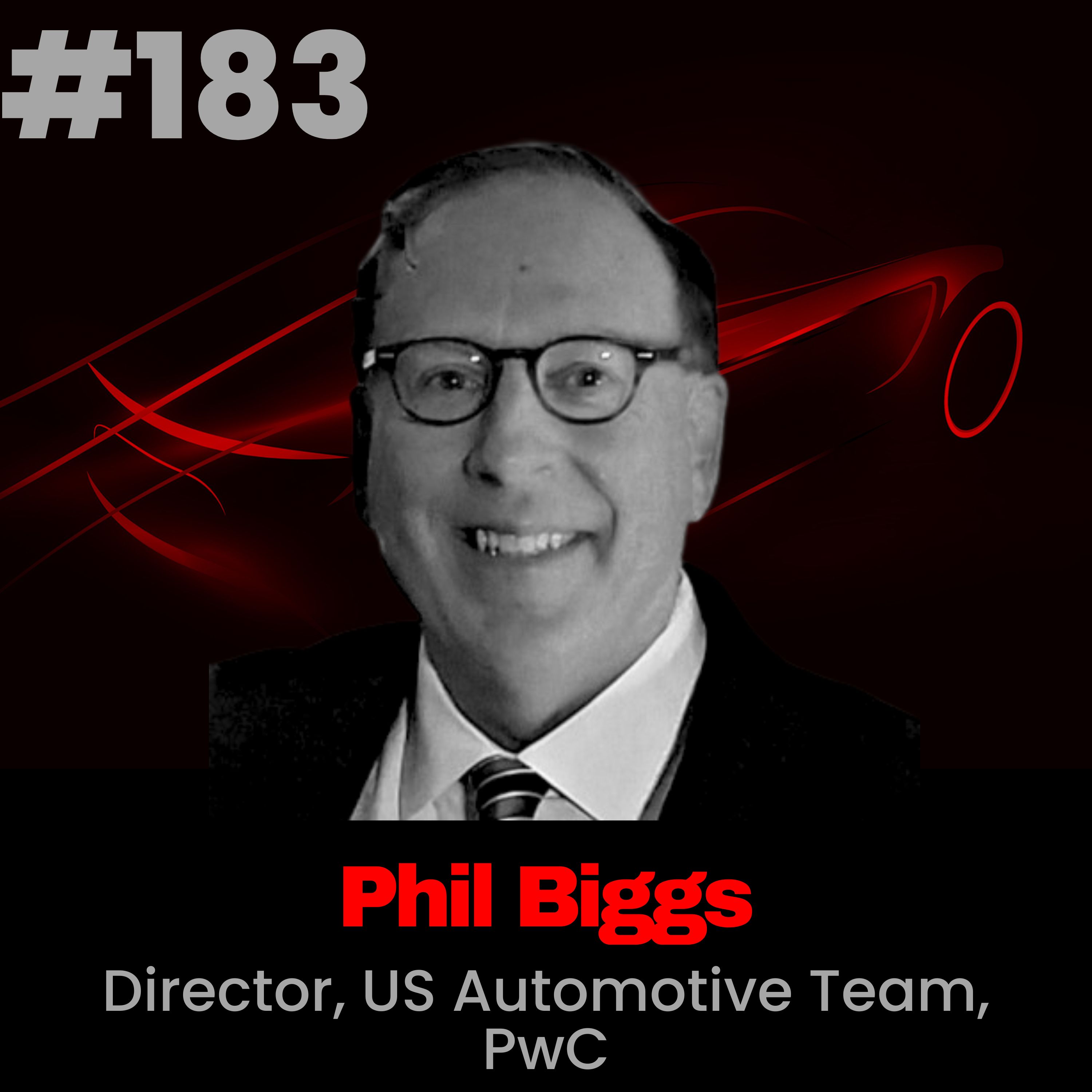
    What does it really mean to lead at the highest level in the automotive industry today? In this episode, Jan Griffiths sits down with Phil Biggs, the man quietly trusted by more than 100 CEOs across automotive and beyond. Known as the “CEO whisperer,” Phil has spent nearly a decade creating a confidential space where leaders can speak openly about the pressure, uncertainty, and responsibility that comes with the top job. And one thing is clear: leadership has changed. The old command-and-control model is breaking under the weight of constant disruption. Tariffs. Supply chain shocks. AI. Workforce shifts. EV uncertainty. The pressure never stops. Phil shares what he’s learned from years of listening to CEOs behind closed doors and why emotional intelligence, trust, and authenticity are now non-negotiable leadership traits. This conversation goes deep into the loneliness of leadership, the tension between kindness and toughness, and why the best CEOs know how to balance both humanity and accountability. Jan and Phil also unpack the dangerous automotive habit of glorifying leaders who stay buried in the weeds instead of empowering their teams to lead. At its core, this episode is about the future of leadership in automotive and the cultural shift required to survive what’s coming next. Because today’s leaders don’t need more control. They need courage, trust, and the ability to lead humans through uncertainty. Themes Discussed in this Episode Why leadership at the top is often deeply lonely The role trust plays in high-level CEO conversations Why command-and-control leadership no longer works The balance between kindness and toughness in leadership Emotional intelligence as a critical CEO competency Why automotive leaders must stop glorifying micromanagement Empowering teams is more important than controlling them How disruption is reshaping leadership expectations across automotive 🎥 Watch the full episode on YouTube: https://www.youtube.com/@jangriffithsautomotiveleaders This episode is sponsored by Lockton, click here to learn more Featured Guest: Phil Biggs, Director, US Automotive Team, PwC Phil is the Client Relationship Executive for PwC Private in Greater Michigan and a member of PwC’s U.S. Automotive team. With more than 25 years of automotive experience, Phil has worked across consulting, business development, and executive leadership roles in both multinational corporations and early-stage technology companies. His client portfolio has included leading organizations such as Amway, Penske, Rivian, Denso, Meijer, and Gordon Food Service. About Your Host – Jan Griffiths Jan Griffiths is the champion for culture change and the host of the Automotive Leaders Podcast. A former automotive executive with a rebellious spirit, Jan is known for challenging outdated norms and inspiring leaders to ditch command and control. She brings honesty, energy, and courage to every conversation, proving that authentic, human-centered leadership is the future of the automotive industry. Mentioned in this Episode: Meet Doug Conant, former CEO of Campbell Soup Company AutoLine After Hours with John McElroy Episode Highlights [01:57] The CEO Council begins: Phil shares how a small dinner of five leaders evolved into one of the most trusted CEO peer groups in automotive. [04:21] No PowerPoints allowed: Why Phil banned slide decks and created a space for real conversation instead. [05:30] The loneliness at the top: Jan and Phil unpack why CEOs desperately need trusted peer conversations. [07:29] The DNA of a modern CEO: Phil explains why uncertainty and disruption are now permanent leadership conditions. [09:48] Kindness and toughness: Phil reflects on Jan’s AutoCulture 2.0 chapter and the leadership balance exemplified by Alan Mulally and Doug Conant. [11:01] High EQ matters: Why emotional intelligence has become a critical trait for CEOs navigating transformation. [14:10] The danger of living in the weeds: Jan challenges automotive’s obsession with detail-heavy leadership and micromanagement. [16:35] Empowerment over control: Why future-ready CEOs must trust their teams and stop owning every decision. [17:44] Breaking the silo mentality: Jan and Phil compare legacy automotive structures to modern, fast-moving team dynamics. [18:36] Mentorship and the missing middle: Phil explains why leadership development and coaching are now essential. [20:55] Authentic leadership vs. command and control: A candid discussion about what leadership must become in today’s automotive industry. [21:44] Building a CEO brand: Why authenticity matters more than self-promotion and how leaders earn credibility. [27:40] Workforce challenges keep CEOs up at night: Why talent, culture, and leadership pipelines dominate executive conversations. [28:18] How CEOs should think about AI: Phil outlines four priorities leaders should focus on right now, including data readiness and security. [31:21] Phil’s final message to CEOs: “Be the best Maytag repairman you can be.” [36:24] Life after PwC: Phil opens up about retirement, cancer survival, music, charity work, and what comes next. [38:17] Defining Phil Biggs’ personal brand: Jan shares the feedback she heard repeatedly from industry leaders: “He’s an all-around good human.” Top Quotes [11:09] Phil Biggs: “ You've got to care enough to be kind. You've got to be tough and have that mentality.” [11:12] Phil Biggs: “The CEO has to think about how I am reinventing the future while I’m managing the very tough issues of today.” [16:36] Jan Griffiths: “You have to trust and empower your people.” [21:17] Jan Griffiths: “Authentic leadership is leadership that really comes from the heart.” If this episode resonated, share it with a fellow automotive leader and subscribe to The Automotive Leaders Podcast, where we’re shaping the future of authentic leadership in the automotive industry. This podcast episode is also available on YouTube. Check out our YouTube channel at Jangriffithsautomotiveleaders Send us your feedback or questions — email Jan at Jan@Gravitasdetroit.com.
  • April 30 · 37 min

    Lincoln’s Reinvention: Joaquin Nuño-Whelan on Leadership, Luxury, and Legacy Transformation

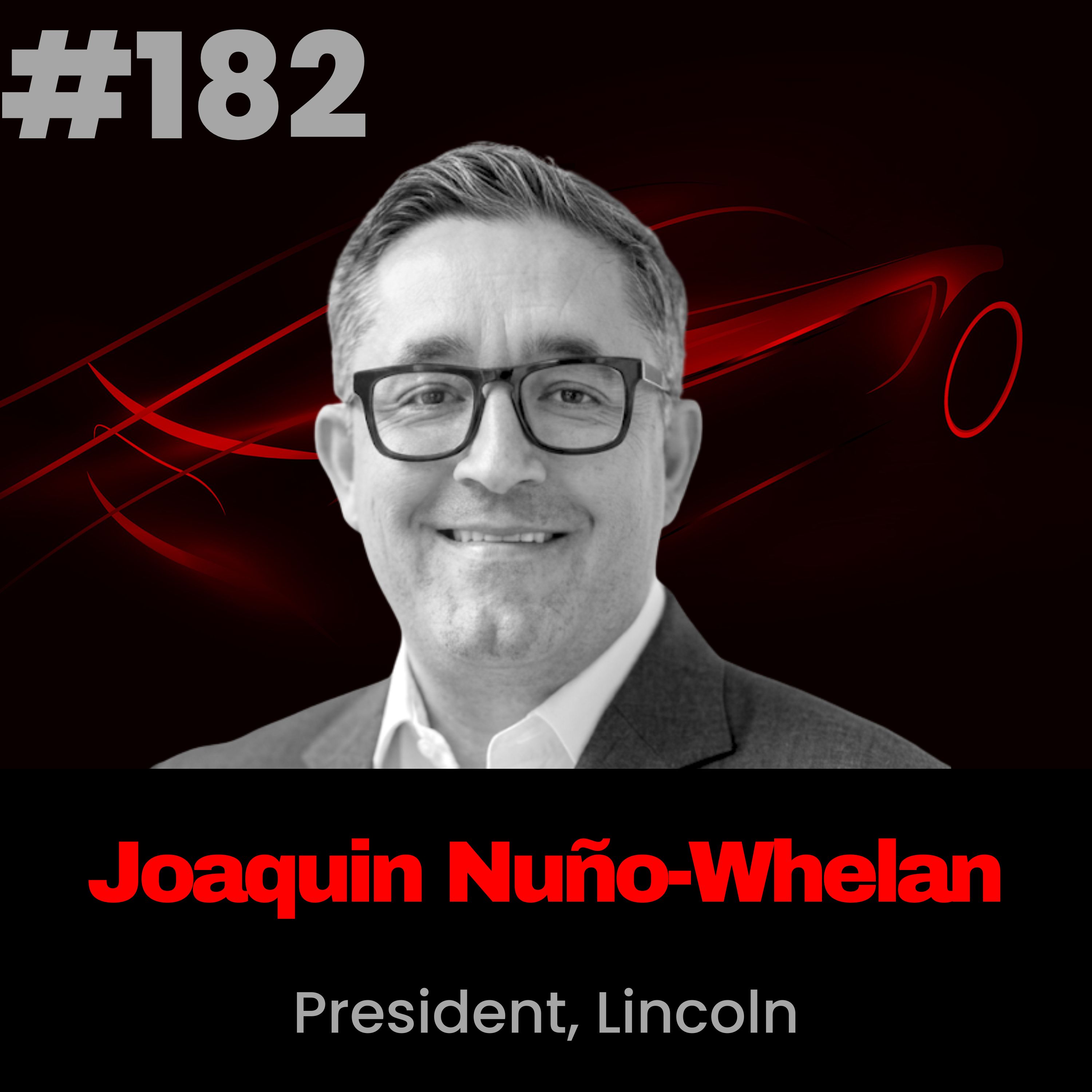
    What happens when a 100-year-old luxury brand decides to think like a startup? In this episode, Jan Griffiths sits down with Joaquin Nuño-Whelan, President of Lincoln, live from Newlab at Michigan Central. This is not a conversation about cars. This is about leadership, culture, and what it really takes to transform a legacy brand from the inside out. Joaquin shares how he’s doing exactly that. Building a team-first culture rooted in trust. Reframing Lincoln’s identity around “quiet luxury” and Gravitas. And leading in a way that rejects the old command-and-control model in favor of authenticity, clarity, and ownership. But this conversation goes beyond the brand. Joaquin opens up about something deeper, his commitment to developing people. From empowering his teams inside Lincoln to investing his time in education and nonprofit work, he is actively shaping the next generation of talent entering the industry. That belief becomes real when you hear from Diego Vargas, a student at Detroit Cristo Rey. His voice brings a grounded, honest perspective on opportunity, growth, and what young people need from today’s leaders. It’s a powerful reminder that the future of this industry will be defined by the leaders we develop now. This episode hits at the core of AutoCulture 2.0: leadership, trust, and the courage to do things differently. Themes Discussed in this Episode Why momentum is the most underrated leadership force inside legacy organizations The connection between leadership DNA and brand identity What “quiet luxury” really means and why it matters now How to lead authentically inside a command-and-control culture The power of trusting teams to unlock ownership and performance Why legacy OEMs must think like startups to stay relevant The role of education and early talent in shaping the future workforce Bridging industry leadership with student opportunity through programs like FIRST 🎥 Watch the full episode on YouTube: https://www.youtube.com/@jangriffithsautomotiveleaders This episode is sponsored by Lockton, click here to learn more Featured Guest: Joaquin Nuño-Whelan, President, Lincoln Joaquin is the president of Lincoln, effective May 1, 2025, where he leads the brand’s global operations and drives its continued evolution as a world-class luxury brand, advancing its global product portfolio and delivering differentiated, connected customer experiences worldwide; he reports to Lisa Materazzo, Ford’s CMO, with dual reporting to Andrew Frick, president of Ford Blue and Model e and interim head of Ford Pro, and brings more than 25 years of global experience in vehicle and technology development with a strong focus on luxury and premium vehicles, having joined Ford in 2024 as Vehicle Program Director for full-size utilities after serving as senior vehicle line director for new programs at Rivian and holding multiple leadership roles over a 20-plus-year career at General Motors, and he holds a bachelor’s degree in mechanical engineering from the University of Detroit Mercy and a Master of Science degree from Rensselaer Polytechnic Institute. Featured Guest: Diego Vargas, Student, Detroit Cristo Rey Diego represents the next generation of automotive talent. As a student at Detroit Cristo Rey, he brings a fresh, grounded perspective on opportunity, education, and what young people need from today’s leaders and organizations. About Your Host – Jan Griffiths Jan Griffiths is the champion for culture change and the host of the Automotive Leaders Podcast. A former automotive executive with a rebellious spirit, Jan is known for challenging outdated norms and inspiring leaders to ditch command and control. She brings honesty, energy, and courage to every conversation, proving that authentic, human-centered leadership is the future of the automotive industry. Episode Highlights [02:30] Who are you as a leader?: Joaquin defines his leadership through one word: momentum, built by trusting people, removing friction, and creating ownership so teams can move with purpose and pride. [03:55] Leading inside a legacy OEM: Jan challenges the reality of driving change inside a legacy system, and Joaquin explains how aligning leadership, culture, and timing created the conditions for transformation at Ford and Lincoln. [06:45] The inflection point: Why Lincoln, why now: Joaquin shares how Lincoln sits at a rare moment of strength, where industry shifts, brand heritage, and leadership freedom collide to create a bold opportunity. [08:05] Thinking like a 100-year-old startup: Lincoln’s mission becomes clear: operate with startup energy inside a legacy structure, moving fast while honoring a century of brand equity. [09:45] Rediscovering Lincoln’s DNA: A visit to the Lincoln Motor Heritage Museum sparks a deeper understanding of the brand’s roots, reshaping how the team thinks about its future. [11:20] What “quiet luxury” really means: Joaquin reframes quiet luxury as gravitas, a confident, grounded presence that doesn’t need to shout but commands attention through authenticity. [13:00] Evolving the brand with emotion and edge: Lincoln isn’t staying still; the strategy is to layer emotional connection and subtle fierceness onto its foundation of elegance and restraint. [15:10] Leadership DNA meets brand DNA: Joaquin connects his personal leadership style to the Lincoln brand, grounded, intentional, and built on listening before acting. [17:00] Rejecting the loud, disruptive leader stereotype: Instead of flipping tables, Joaquin leads by learning first, then acting decisively, reinforcing a culture of respect and trust. [19:00] The shift to authentic leadership: A candid discussion on moving away from command-and-control toward leading from the heart, where vulnerability and clarity drive better outcomes. [21:30] Letting go of the leadership “mold”: Joaquin reflects on the moment he stopped trying to fit expectations and started leading with conviction, unlocking freedom and mental clarity. [24:00] Confidence, vulnerability, and risk: Authentic leadership requires all three, and Joaquin shares how embracing them creates stronger teams and better decisions. [27:00] Advice for the next generation: From students to future leaders, the message is clear: believe in something, go after it, and don’t wait for permission to lead. [30:30] Final reflections on leadership and legacy: As the conversation closes, the focus returns to impact, building teams, shaping culture, and creating something that lasts beyond the individual. Top Quotes [02:35] Joaquin Nuño-Whelan: “ What I try to do as a leader is create positive momentum and you'll see it in the way I work with the team, in the way I report things out, in the way I drive the culture of the team.” [10:48] Joaquin Nuño-Whelan: “When a Lincoln pulls up, it should have this sense of Gravitas So, what that means for us as a brand is we're doubling down on all of that goodness from the past, but we're going to add some more emotion, more emotional connection, more a little bit of underlying fierceness that is 'when you need it, it's there' kind of thing.” [14:30] Joaquin Nuño-Whelan: “Believe in something and go after it. When I stopped worrying about what everyone thought so much, and I think everyone kind of goes through that journey as they're getting older. And then, it is a risk because you have to be vulnerable, you have to speak from the heart, but it's actually the most liberating feeling.” About Detroit Cristo Rey Detroit Cristo Rey is a coed Catholic high school for those of all faiths. Our students receive a high-quality, college preparatory education and professional work experience – all at an affordable cost. Grounded in faith, morals and service, our curriculum provides students with the building blocks to make a difference in their families, the community and the world. If this episode resonated, share it with a fellow automotive leader and subscribe to The Automotive Leaders Podcast, where we’re shaping the future of authentic leadership in the automotive industry. This podcast episode is also available on YouTube. Check out our YouTube channel at Jangriffithsautomotiveleaders Send us your feedback or questions — email Jan at Jan@Gravitasdetroit.com.

  • April 16 · 34 min

    Is USMCA at Risk? Colin Bird Breaks Down What Happens Next

    The USMCA review is fast approaching, uncertainty is building across the automotive industry, and leaders are asking a critical question: Is the agreement that binds North America together at risk? Colin Bird, the Consul General of Canada in Detroit, United States, brings clarity. This is not a collapse or a dramatic reset. It is a built-in review designed to test whether the agreement still works in a world that has fundamentally changed. The environment that shaped USMCA no longer exists. Supply chains are strained, global competition is intensifying, and China has accelerated ahead in the EV space. The real issue is not whether the agreement survives. The issue is whether North America can operate effectively under pressure. July 1 is not a breaking point. It’s part of a process meant to ensure the agreement stays relevant while the industry evolves at speed. Colin makes it clear that the real danger comes when North America starts putting up barriers within its own system. The automotive supply chain has been built over decades to operate seamlessly across borders. When tariffs or policy decisions disrupt that flow, it does not just impact one country. It makes the entire region less competitive at a time when global players are moving fast. This episode is about what matters now: certainty, coordination, and competitiveness. The industry doesn’t need more noise or political posturing. It needs alignment. Because if North America wants to win, it must act as one integrated system, not three separate countries. Themes Discussed in this Episode What the USMCA “review” really means Why July 1 is not a cliff, but a checkpoint The risk of disrupting a deeply integrated supply chain How tariffs and policy decisions can backfire on North America Why China’s EV acceleration changes everything The critical role of certainty and predictability for investment What leaders must focus on to stay competitive globally 🎥 Watch the full episode on YouTube: https://www.youtube.com/@jangriffithsautomotiveleaders This episode is sponsored by Lockton, click here to learn more Featured Guest: Colin Bird Colin is the Consul General of Canada in Detroit, United States, brings deep, real-world expertise in international trade at a moment when it matters most to the automotive industry. With a background in government studies from Harvard and a law degree from the University of Ottawa, he has worked across the full spectrum of North American and global trade, from serving as counsel to the NAFTA Secretariat to leading trade law and policy on complex issues like aerospace and softwood lumber. He played a central role in the U.S.-Canada trade relationship while based in Washington, D.C., including during the transformation of NAFTA into USMCA. Colin has also represented Canada at the World Trade Organization and at the highest global forums, including the OECD, G7, and G20. Today, in Detroit, he operates at the heart of the North American automotive ecosystem, where trade policy directly impacts manufacturing, investment, and competitiveness across the region. About Your Host – Jan Griffiths Jan Griffiths is the champion for culture change and the host of the Automotive Leaders Podcast. A former automotive executive with a rebellious spirit, Jan is known for challenging outdated norms and inspiring leaders to ditch command and control. She brings honesty, energy, and courage to every conversation, proving that authentic, human-centered leadership is the future of the automotive industry. Episode Highlights [02:43] Inside the Deal: Colin takes us back to the renegotiation of NAFTA into USMCA and why Detroit sits at the center of a deeply integrated, cross-border manufacturing system. [03:37] From Tension to Alignment: What began as a tough negotiation shifted toward shared goals: higher wages, stronger labor standards, and rebuilding North American manufacturing. [06:29] Review, Not Renegotiation: July 1 is not a breaking point. It is a structured review to ensure the agreement keeps pace with change. [08:11] The Need for Certainty: In a volatile environment, the industry is asking for predictability to support investment and long-term planning. [10:49] Reading the Political Noise: Colin explains how to interpret strong political language and separate negotiation tactics from real risk. [13:08] Industry Is Driving the Agenda: Automotive leaders across all three countries are aligned. Protect the agreement. Improve it. Do not disrupt it. [14:00] The Cost of Disruption: Breaking supply chains that took decades to build weakens North America and opens the door for global competitors. [16:30] Competing with China: The real competitive pressure is external. China’s acceleration in EVs raises the stakes for North America to act as one system. [18:45] Avoiding Self-Inflicted Damage: Tariffs and internal barriers do not strengthen local economies. They reduce overall competitiveness across the region. [21:10] A Fragile Global System: Colin reflects on how global trade systems are becoming less stable, forcing countries to rethink resilience and strategy. [24:00] Securing the Supply Chain: Critical minerals, energy, and manufacturing inputs are now strategic priorities, not just operational concerns. [27:15] What Leaders Must Focus On Now: The path forward is clear: reduce friction, strengthen coordination, and move faster as a unified region. Top Quotes [08:11] Colin Bird: “What is required at a moment of great challenge to our industry is predictability, some certainty, some coordination in how we address challenges from offshore.” [03:37] Colin Bird: “We wanted to make sure that there were advantages to being located here, bringing back investment and manufacturing to the heartland of both of our countries.” [10:49] Colin Bird: “There’s a win-win outcome that can preserve what we have created here in North America in terms of reducing barriers to effectively building vehicles together.” If this episode resonated, share it with a fellow automotive leader and subscribe to The Automotive Leaders Podcast, where we’re shaping the future of authentic leadership in the automotive industry. This podcast episode is also available on YouTube. Check out our YouTube channel at Jangriffithsautomotiveleaders Send us your feedback or questions — email Jan at Jan@Gravitasdetroit.com.
  • April 2 · 24 min

    It's Q2: Are You Ready to Blow Up Your Playbook?

    Q1 was a wild ride. Tariffs. Geopolitical shocks. Supply chain chaos. And now Q2 is here, and the question no one's asking out loud is: are you walking into your quarterly review meetings with the same playbook you've always used? Are you making decisions the same way? Operating the same way? Thinking the same way? Because if you are, this episode is for you. In this solo episode, Jan Griffiths lays out five things every automotive leader needs to confront as we head into Q2 2026. This is not a pep talk. This is a reality check. The ground is shifting. Trade agreements are uncertain. Chinese competitors are moving faster than ever. And the old playbook, the one built on certainty, hierarchy, and control, is a liability. Jan covers the five forces shaping Q2 2026 and what you need to do about them: from the geopolitical storm still raging, to the reinvention mandate, to why trust is a P&L lever, not a soft skill. She also shares a personal update on her new role as Executive Advisor with Seraph, a global manufacturing and operations consulting firm. If you're heading into Q2 with the same mindset as Q1, this episode will challenge you to change that, now! Themes Discussed in this Episode The geopolitical storm: tariffs, the Iran conflict, global oil crisis, chip shortages, and USMCA renegotiation Why resilience without reinvention is just endurance The reinvention mandate: speed, process destruction, and AI as an accelerator, not a crutch Trust and transparency as competitive weapons, not cultural nice-to-haves Why command-and-control leadership is a speed killer and authentic leaders are winning Over-customization and why stopping it could be the fastest path to speed and cost reduction The WRI scorecard: OEMs will be judged on supplier relationships in May Jan's new Executive Advisor role with Seraph Three actions you can take this week to start Q2 differently 🎥 Watch the full episode on YouTube: https://www.youtube.com/@jangriffithsautomotiveleaders About Your Host – Jan Griffiths Jan Griffiths is the champion for culture change and the host of the Automotive Leaders Podcast. A former automotive executive with a rebellious spirit, Jan is known for challenging outdated norms and inspiring leaders to ditch command and control. She brings honesty, energy, and courage to every conversation, proving that authentic, human-centered leadership is the future of the automotive industry. Mentioned in this episode Listen to the Auto Supply Chain Champions Podcast powered by QAD The Automotive Leaders Podcast with Lori Lancaster, Vice Chairwoman at Emotiv Mobility The North American Automotive Industry's Road to Resilience McKinsey report GM and Ford should reconsider parts consolidation by John McElroy Episode Highlights [00:01:26] Q2 Is Here. Now What?: The rules have changed permanently. Stop waiting for certainty. Clarity is not coming [00:02:20] The Geopolitical Storm: Tariffs, the Supreme Court EPA decision fallout, an Iran conflict, a global oil crisis, a looming chip shortage, and USMCA renegotiation in July. Jan also flags Canada allowing 49,000 Chinese OEM vehicles into the country, and what that means when they start crossing into the US. Upcoming guest: Colin Bird, Consul General for Canada, will join the podcast to discuss USMCA. Submit your questions to Jan on LinkedIn. [00:07:05] The Reinvention Mandate: Tear apart your processes and target a 50% reduction in cycle time. Chinese OEMs already launch vehicles in half the time legacy OEMs can. Jan references Terry Woychowski at Caresoft for the data and points to QAD’s framing, systems of record to systems of action, as the right mindset for agentic AI. [00:11:10] Trust and Transparency: Trust is a P&L lever. Approval processes built on decades of mistrust are killing speed. The WRI scorecard drops in May and will show which OEMs are walking the talk with suppliers and which ones aren’t. [00:14:35] Authentic Leaders Are Winning: Command and control is too slow. Jan references Lori Lancaster, Vice Chair at Emotive Mobility, on leaders who wait too long to ask for help. When people hide problems instead of raising them, it's a speed killer. Culture is the operating system. [00:16:50] Stop Customizing What Nobody Cares About: The McKinsey North American Automotive Road to Resilience report and Terry Woychowski at Caresoft make the case: the industry agonizes over components consumers don’t care about. Chinese OEMs don’t. Jan previews an upcoming conversation with the President of Horse North America on shared component strategy. [00:18:30] Personal Update: Jan has taken on an Executive Advisor role with Seraph, a global manufacturing and operations consulting firm focused on supply chain and operational improvement. She also shares an update on the Automotive Leaders YouTube channel. [00:20:15] Closing: Three Things You Can Do This Week Identify one decision that can be pushed downstream and push it down today Name one process that slows you down and kill it Have an honest executive-level conversation about your culture playbook and how to rewire it Top Quotes [00:04:50] "We have to stop waiting for clarity. Clarity is not coming. The only response to all of this is resilience." [00:05:00] "Resilience is the ability to absorb shocks, pivot fast, and keep executing while the rules change around you." [00:11:05] "Trust isn't soft. It's a P&L lever." [00:12:43] "People who've been trained to hide problems instead of raising them -- and to protect themselves instead of protecting the business -- that mentality is a speed killer." [00:13:21] "Culture is not soft. Culture is the operating system. It is how we behave. It is how we make decisions. It is our playbook. It's time for us to rewire our operating system." [00:18:27] "Resilience without reinvention is just endurance. You'll survive, but you won't win." [00:18:36] "Reinvention without trust is just a memo that nobody really reads." If this episode resonated, share it with a fellow automotive leader and subscribe to The Automotive Leaders Podcast, where we’re shaping the future of authentic leadership in the automotive industry. This podcast episode is also available on YouTube. Check out our YouTube channel at Jangriffithsautomotiveleaders Send us your feedback or questions — email Jan at Jan@Gravitasdetroit.com.
  • March 19 · 29 min

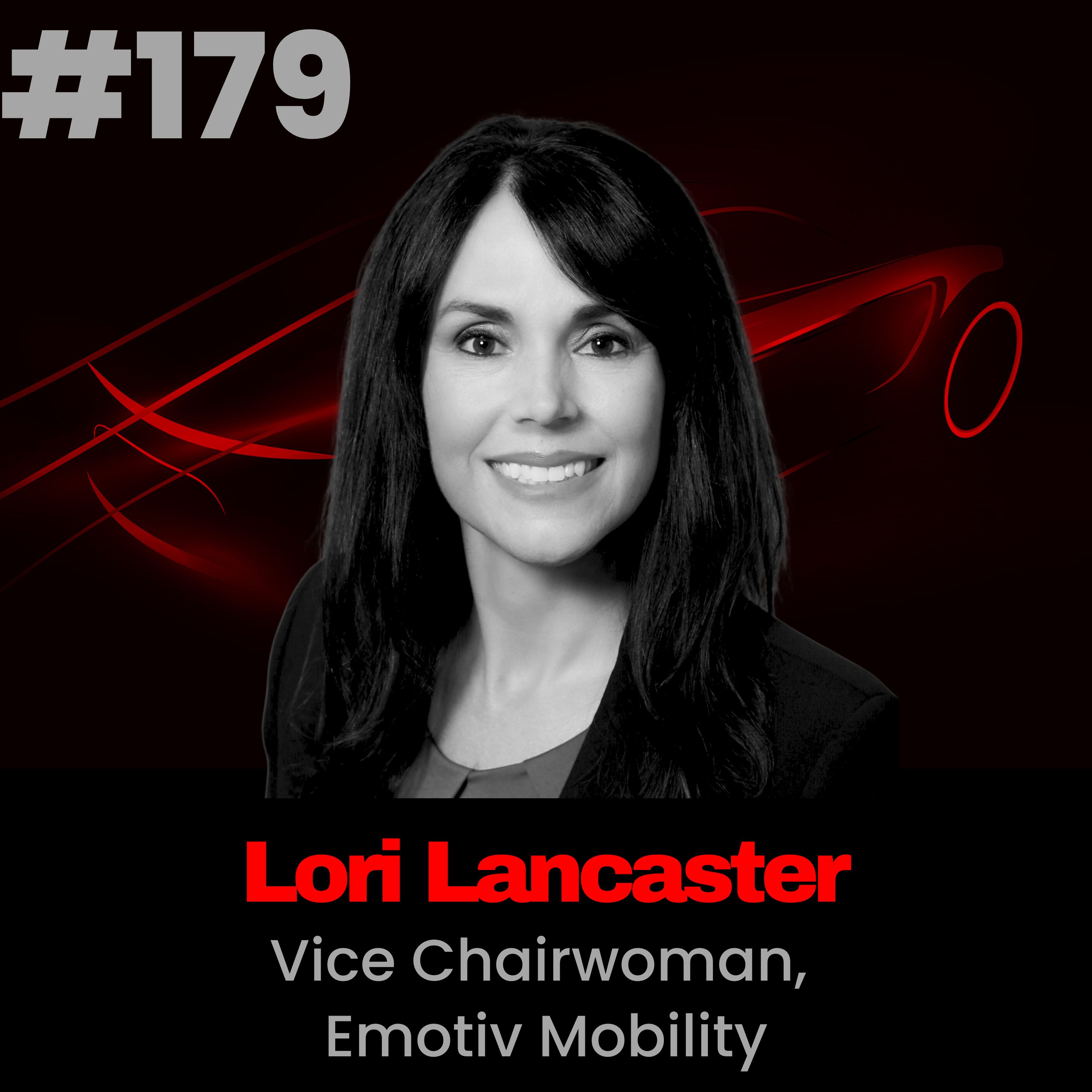
    Why Reinvention Is Critical for Automotive Suppliers Right Now

    Reinvention in the automotive industry is no longer optional. It is survival. In this episode, Jan Griffiths sits down with Lori Lancaster, Vice Chair of Emotiv Mobility, to break down what reinvention really looks like when you are living it, not talking about it from a distance. The old playbook is cracking, and incremental improvement will not get us where we need to go. Yet many leaders are still holding on, waiting for direction instead of stepping up to create it. Lori did not wait. She made the decision to step back from the EV hype, resist the pressure to go all in, and focus instead on the real constraint holding the industry back. Infrastructure. That shift required courage. It meant challenging conventional thinking and refusing to follow the herd. Instead of chasing what everyone else was doing, she looked at where the real opportunity was and made a strategic move to meet it. That decision led to a bold reinvention of the business. By taking core automotive manufacturing capabilities such as process discipline, scale, and precision, Lori and her team expanded into energy and transformer production while exploring emerging mobility spaces like eVTOL. This was not diversification for the sake of it. It was a deliberate move to stabilize the business, reduce reliance on automotive cycles, and position the company for what comes next. But reinvention is not just about strategy. It is about leadership. Lori grounds her approach in servant leadership, accountability, and clarity of purpose. She makes it clear that transformation only works when people understand the why, when they are engaged in the journey, and when leaders create an environment of trust. Without that foundation, even the best strategy will fail. The message is simple and direct. If you are waiting for certainty, you are already behind. If you are waiting for direction, you have missed the point. Reinvention belongs to leaders who are willing to see what is coming, make the hard calls, and move forward without a safety net. Themes Discussed in this Episode Reinvention as a survival strategy Why incremental improvement is no longer enough Breaking free from OEM dependency and legacy thinking The real barrier to EV adoption: infrastructure, not vehicles Diversification beyond automotive to stabilize volatility Translating automotive manufacturing discipline into new industries Leadership courage in high-risk, uncertain decisions Servant leadership vs command-and-control in transformation Accountability through clarity of purpose and shared vision Culture as the foundation for successful reinvention 🎥 Watch the full episode on YouTube: https://www.youtube.com/@jangriffithsautomotiveleaders This episode is sponsored by Lockton, click here to learn more Featured Guest: Lori Lancaster Lori is a seasoned automotive and advanced manufacturing executive known for leading organizations through complex industry change. Over the course of her career, she has overseen large-scale operations supporting major OEMs, helping guide companies through supply chain disruption, operational transformation, and the shift toward electrified mobility. She began her career as a critical care nurse at Massachusetts General Hospital, an experience that shaped her leadership style and approach to decision-making in fast-moving, high-pressure environments. About Your Host – Jan Griffiths Jan Griffiths is the champion for culture change and the host of the Automotive Leaders Podcast. A former automotive executive with a rebellious spirit, Jan is known for challenging outdated norms and inspiring leaders to ditch command and control. She brings honesty, energy, and courage to every conversation, proving that authentic, human-centered leadership is the future of the automotive industry. Mentioned in this episode Dakkota eVTOL (Electric Vertical Take-Off and Landing) Episode Highlights [01:26] Reinvention is survival, not strategy: Jan opens with a hard truth. The legacy automotive model is breaking, and incremental improvement is no longer enough to compete. [02:36] Defining leadership: servant, not command-and-control: Lori shares her leadership philosophy. Lead by example. Serve the team. Hold people accountable without losing trust. [03:47] Challenging old-school leadership norms: Jan calls out the industry’s past. Command-and-control once ruled. Lori explains how she chose a different path and why it works. [04:18] Engagement and buy-in drive accountability: Lori breaks down the real meaning of accountability. It starts with listening, aligning on vision, and helping people understand the why. [06:00] The industry’s biggest trap: incremental thinking: Jan challenges the status quo. Automotive is great at small improvements, but that mindset is now holding companies back. [07:18] From healthcare to automotive: A powerful personal reinvention. Lori shares how starting in healthcare shaped her ability to lead in high-pressure environments. [09:11] Building Emotiv Mobility: The strategy comes to life. Leveraging automotive discipline and processes to enter energy and infrastructure markets. [09:59] Post-COVID reality check: COVID, chips, and EV pressure collide. Lori describes the moment leaders had to decide: follow the hype or think differently. [10:30] The bold call: don’t go all in on EVs: Lori makes a high-risk decision. Limited capital means choosing carefully, not chasing trends. [11:03] Identifying the real problem: infrastructure: Range anxiety and lack of infrastructure become the real barrier. Lori shifts focus to solving that instead of chasing vehicle programs. [12:11] Breaking free from OEM dependency: Jan highlights a critical shift. Lori didn’t wait for OEM direction. She created her own path forward. [16:54] Culture as the foundation for reinvention: Lori reinforces that transformation is not just about strategy. Culture, trust, and team alignment make or break execution. [22:22] The 21 Traits of Authentic Leadership: When asked which traits resonate most, Lori points to listening, transparency, empowerment, and heart-first leadership. These are not concepts. They are daily behaviors that build trust and drive results. [26:52] The courage to lead differently: Reinvention demands uncomfortable decisions. Lori reflects on the risk, the doubt, and the importance of staying true to your convictions. Top Quotes [01:26] Jan: “Reinvention isn't a buzzword anymore, it's survival.” [02:36] Lori: “I like to think of myself as a servant leader, right? As somebody who, you know, sets an example for the team. If I'm not willing to do something, I wouldn't think my team, I shouldn't be able to expect my team to be willing to do something.” [04:18] Lori: “I think to do that you have to really engage and listen to the people, you have to take their ideas and meld them with the vision you see for the company and figure out a way that will work to get to where you want to go.” [05:15] Lori: “You have to help people understand the ‘why’.” If this episode resonated, share it with a fellow automotive leader and subscribe to The Automotive Leaders Podcast, where we’re shaping the future of authentic leadership in the automotive industry. This podcast episode is also available on YouTube. Check out our YouTube channel at Jangriffithsautomotiveleaders Send us your feedback or questions — email Jan at Jan@Gravitasdetroit.com.
  • March 5 · 20 min

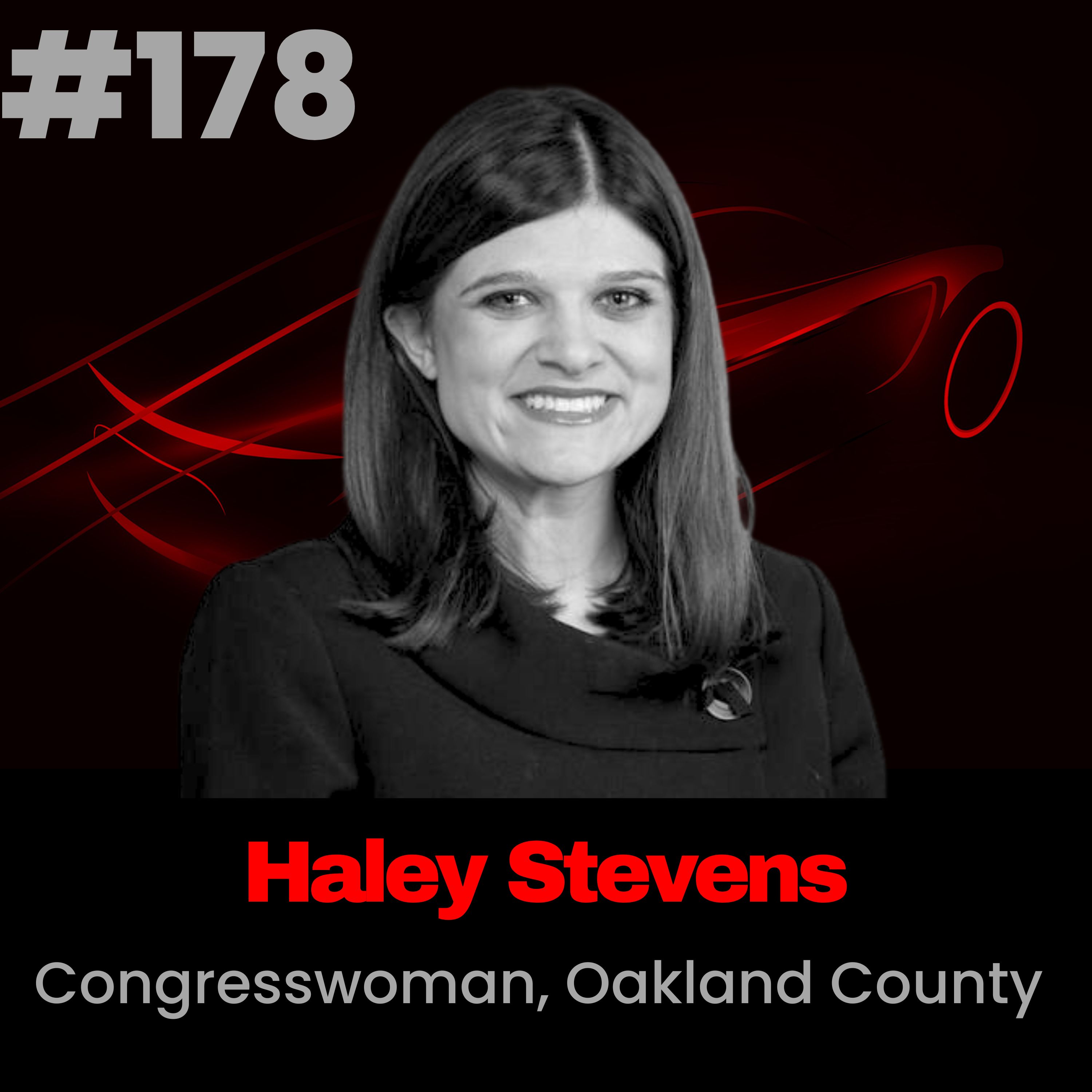
    Policy, Power, and the Future of Automotive Manufacturing with Congresswoman Haley Stevens

    If you had told Jan a year ago she would bring a member of Congress onto this show, she would have said you were crazy. But this isn’t about politics. It’s about survival. It’s about supply chains, tariffs, China, semiconductors, and the reality that policy decisions now move faster than most production lines. In this episode of the Automotive Leaders Podcast, Jan Griffiths sits down with Congresswoman Haley Stevens, often called the “manufacturing geek,” for a direct conversation about industrial policy, public-private partnership, national security, and what automotive leaders should expect from Washington. Whether we like it or not, policy volatility is now a leadership variable. Themes Discussed in this Episode Why Manufacturing Mondays keep policymakers grounded in shop-floor reality Lessons from the 2008–2009 auto rescue and bipartisan public-private partnership The Chips and Science Act and reshoring semiconductor production China’s 95% dominance in rare earth processing and why it matters Critical minerals, battery recycling, and national competitiveness Tariff volatility and the cost of policy uncertainty USMCA review, Canada relationships, and North American stability The Chinese OEM threat and rule-based trade enforcement What automotive leaders can expect from policymakers moving forward 🎥 Watch the full episode on YouTube: https://www.youtube.com/@jangriffithsautomotiveleaders This episode is sponsored by Lockton, click here to learn more Featured Guest: Congresswoman Haley Stevens Congresswoman Haley Stevens is a Michigan native who served as Chief of Staff on President Obama’s auto rescue team, helping save 200,000 Michigan jobs. Elected to Congress in 2018, she flipped a Republican-held seat and has since championed Michigan’s manufacturing and auto industries. She has introduced legislation to strengthen domestic supply chains, counter China’s influence in critical minerals and auto production, and push back against tariffs impacting Michigan families. Stevens has been recognized as one of the most effective Democrats in Congress, particularly on science and technology issues, and is currently running to be Michigan’s next U.S. Senator. About Your Host – Jan Griffiths Jan Griffiths is the champion for culture change and the host of the Automotive Leaders Podcast. A former automotive executive with a rebellious spirit, Jan is known for challenging outdated norms and inspiring leaders to ditch command and control. She brings honesty, energy, and courage to every conversation, proving that authentic, human-centered leadership is the future of the automotive industry. Mentioned in this episode Cirba Solutions Episode Highlights [01:26] Why Jan Brought a Policymaker Onto the Show: Policy now shapes daily decisions in automotive. Jan explains why Washington can no longer be ignored. [04:09] Nearly 200 Manufacturing Mondays Visits: Haley Stevens shares how nearly 200 shop floor visits keep her grounded in real manufacturing issues. [07:03] Inside the Auto Task Force During GM’s Bankruptcy: A firsthand look at the bipartisan effort to stabilize GM and protect American jobs during the crisis. [10:03] Chips and Reshoring Strategy: From pandemic shortages to the CHIPS Act, rebuilding semiconductor strength became a national priority. [11:14] China’s 95% Control of Critical Minerals: China dominates processing and refining. Stevens calls it a supply chain and national security risk. [14:17] USMCA and Canada Trade Tensions: Uncertainty around trade agreements creates instability for manufacturers across North America. [15:20] 55 Tariff Announcements in 100 Days: Volatility is the real problem. Constant tariff changes leave suppliers scrambling. [16:57] The Chinese OEM Threat: Chinese automakers are expanding globally. The competitive pressure is real, even if we do not see it yet. [18:26] What Leaders Should Expect from Policymakers: Leaders need steady voices who understand the supply chain and fight for fair competition. Top Quotes [07:53] Haley Stevens: “We were caught holding the bag and we needed to act.” [10:03] Haley Stevens: “They're doing 95% of that processing and refining, we've seeded an industry to them.” [00:15:20] Haley Stevens: “When you mention the White House tab that's open, 55 tariffs announcements in the first a hundred days, and then many more from that. I mean, manufacturers didn't know which way is up.” [00:18:37] Haley Stevens: “Well, look, I think we need reasonable policy makers who actually have an understanding of the industries and the jobs that they are lawmaking around.” [00:19:20] Jan Griffiths: “I would agree. It's the volatility that kills us. Tariffs are here. They're a reality, whether we like it or not, it's part of the administration moving forward. They're here, but it's the way that they're administered that we have a problem with.” The automotive industry does not operate in a vacuum. Trade policy, tariffs, semiconductor access, critical minerals, and global competition now shape execution decisions daily. You cannot lead at speed if you ignore the forces shaping your environment. If this episode resonated, share it with a fellow automotive leader and subscribe to The Automotive Leaders Podcast, where we’re shaping the future of authentic leadership in the automotive industry. This podcast episode is also available on YouTube. Check out our YouTube channel at Jangriffithsautomotiveleaders Send us your feedback or questions — email Jan at Jan@Gravitasdetroit.com.
  • February 26 · 33 min

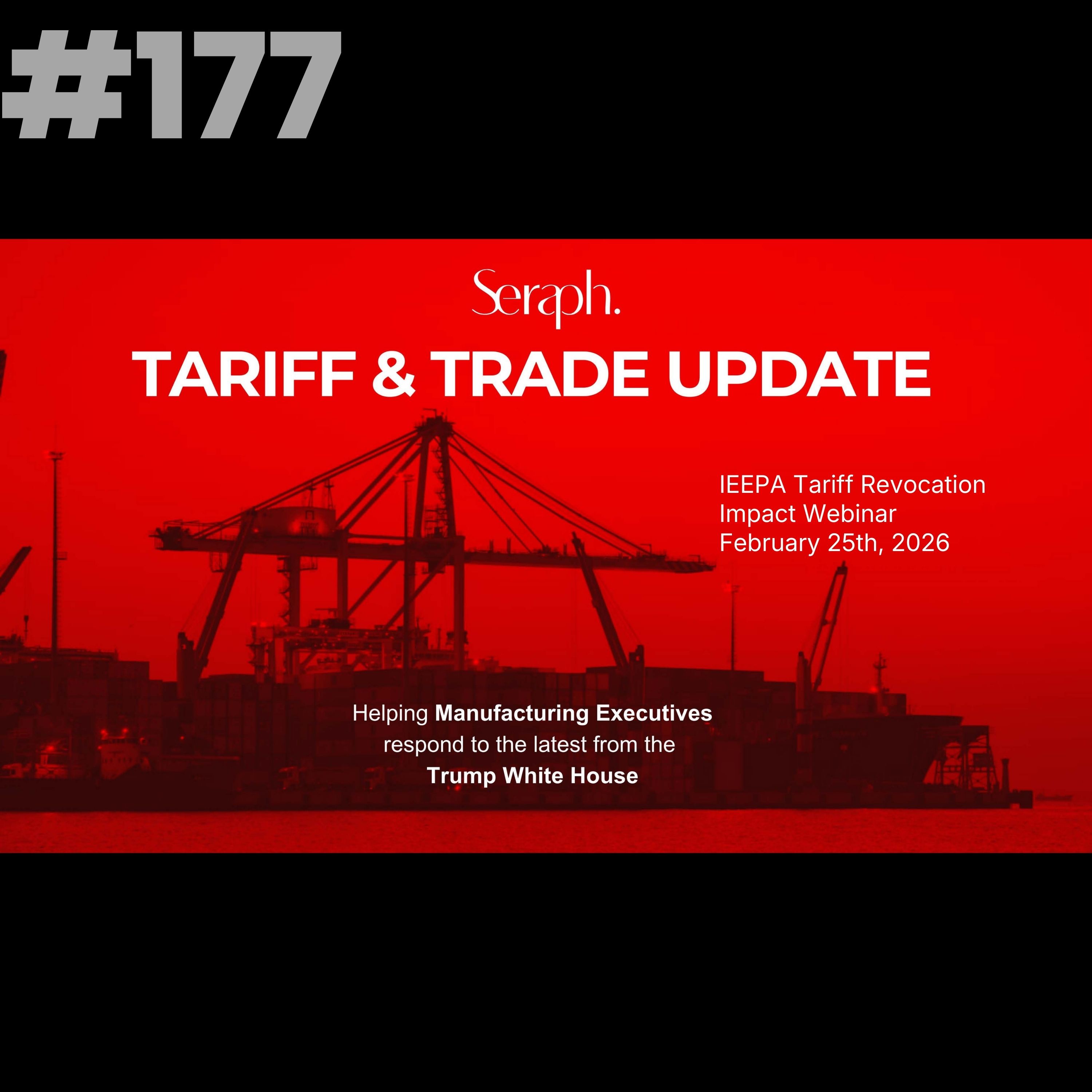
    IEEPA Struck Down — Why the Tariff Pressure Remains

    Download the full webinar slides here Special Audio from the February 20th Seraph Webinar Tariffs were struck down. So why does the pressure still feel the same? If the Supreme Court ruled against IEEPA, why aren’t costs meaningfully lower? This special episode is different. It is the full audio recording from the February 20th Seraph IEEPA Tariff Revocation Impact Webinar, led by Ambrose Conroy, CEO of Seraph. In this episode of the Automotive Leaders Podcast, Jan Griffiths joins Ambrose and Harrison Catlin as they break down what the Supreme Court decision actually changed and what it didn’t. Headlines suggested relief. But Section 122 tariffs were implemented almost immediately. Effective rates dropped briefly, then climbed back up — not fully to prior IEEPA levels, but still materially impactful. This conversation goes beyond policy. It is about enterprise risk, supply chain resilience, and what leaders must do next. Themes Discussed in this Episode What the Supreme Court ruling actually changed How Section 122 partially restored tariff levels The three critical dates: entry date, liquidation date, protest window How Post Summary Corrections (PSC) impact refund strategy OEM debit risk and cascading supply chain pressure Why geopolitics — not just tariffs — is the real long-term risk The July 2026 convergence: Section 122 expiration and USMCA negotiations Using AI and prediction markets to anticipate legal outcomes Why reshoring must continue regardless of short-term tariff shifts Featured Guest: Ambrose Conroy is the Founder and CEO of Seraph, a global operational excellence and manufacturing strategy firm. He advises CEOs, boards, and private equity leaders on supply chain restructuring, footprint acceleration, and industrial resilience in volatile geopolitical environments. Ambrose is known for his reality-first perspective on manufacturing strategy and for translating global uncertainty into decisive operational action. About Your Host – Jan Griffiths Jan Griffiths is a champion for culture transformation and the host of the Automotive Leaders Podcast. A former automotive executive with a rebellious spirit, Jan is known for challenging outdated norms and inspiring leaders to ditch command and control. She brings honesty, energy, and courage to every conversation, proving that authentic, human-centered leadership is the future of the automotive industry. Episode Highlights [01:05] Supreme Court strikes down IEEPA tariffs [02:00] Section 122 implemented and effective rates climb back [06:07] What tools remain available to the administration [11:55] Refund mechanics: entry date, liquidation date, PSC filings [14:46] OEM debit risk and supply chain tension [18:08] China, Taiwan, and geopolitical escalation [25:47] July 2026 - Section 122 expiration meets USMCA negotiations [30:00] AI and prediction markets used to model the ruling [32:00] Why tariffs are likely here to stay Top Quotes [11:38] Ambrose: “ Tariffs are a core tenet.” [17:23] Ambrose: “ Pre-COVID supply chain was, was a function that was seen as supportive. Now it's so core, and it's so critical, and it's so impactful so many times because everything is so fragile since we've sought the lowest cost and lowest price and not necessarily taken into account true resiliency. “ [27:43] Jan: “Get your arms around the data, get visibility all the way through the supply chain. And make sure that you know those dates, the entry date and the liquidation date, and that you've got the right team of people around you with the right set of expertise.” [26:34] Ambrose: “ The only thing that it is clear to me if you if you want to sell a product in the United States, make it in the United States, source it in the United States.” If this episode resonated, share it with a fellow automotive leader and subscribe to The Automotive Leaders Podcast, where we’re shaping the future of authentic leadership in the automotive industry. This podcast episode is also available on YouTube. Check out our YouTube channel at Jangriffithsautomotiveleaders Send us your feedback or questions — email Jan at Jan@Gravitasdetroit.com.
  • February 19 · 36 min

    Building a $67B Auto Business Within Constraints: The Leadership Behind 230% Growth

    This conversation goes straight at the tension every legacy leader feels but rarely names. How do you build something new inside a company designed for stability? How do you move fast inside a system built to control risk? How do you create urgency without burning out your team? In this episode of the Automotive Leaders Podcast, Jan Griffiths sits down with Ted Cannis, former CEO of Ford Pro and longtime executive at Ford Motor Company. Ted didn’t just grow revenue. He helped build an integrated ecosystem of vehicles, software, charging, service, and financing. But this conversation isn’t about the numbers. It’s about the leadership and culture required to produce them. Ted shares what it really takes to drive change inside a legacy organization. Why data is your most powerful ally. Why shared metrics matter more than motivation. Why speed is a discipline. And why every bold initiative faces what he calls “status quo snapback.” He also makes a surprising admission. He’s a self-confessed micromanager. And that opens up one of the most honest leadership moments we’ve had on the show. This episode is about disciplined change. Not hype. Not slogans. Not transformation theater. Real leadership inside real constraints. Themes Discussed in this Episode Why building inside constraints sharpens leadership The power of going to the gemba instead of managing from the conference room Using data to win enterprise-level change How shared metrics break down silos Why speed requires preparation, not chaos The danger of “sketchy scoping” in big strategic bets What “status quo snapback” looks like inside legacy organizations Can micromanagement and authentic leadership coexist? Watch the full episode on YouTube - click here This episode is sponsored by Lockton, click here to learn more Featured Guest - Ted Cannis Ted Cannis is the former CEO of Ford Pro, where he scaled the business to $67B in revenue and $9B EBIT by integrating commercial vehicles, SaaS, charging, service, and financing into one global ecosystem. Across a 30+ year career at Ford Motor Company, Ted led global electrification strategy, investor relations, and international operations. He is known for combining operational discipline with enterprise-level vision and has been featured in CNBC, The Wall Street Journal, and Forbes. Today, he serves as a strategic advisor and board-level collaborator across mobility, energy, and technology ventures. About Your Host – Jan Griffiths Jan Griffiths is the champion for culture change and the host of the Automotive Leaders Podcast. A former automotive executive with a rebellious spirit, Jan is known for challenging outdated norms and inspiring leaders to ditch command and control. She brings honesty, energy, and courage to every conversation, proving that authentic, human-centered leadership is the future of the automotive industry. Episode Highlights [02:47] “Build within constraints” — Ted’s leadership mindset [06:17] Why going to the gemba is a strategic investment, not a luxury [12:16] Using hard data to sell change across the enterprise [15:43] Speed, impatience, and seizing decision windows [19:04] The Culture Change Hub — leaders, teams, rituals, rules, metrics, stories [22:18] Why C-suite sponsorship is non-negotiable [26:23] Pivoting fast when the plan breaks [28:24] “Status quo snapback” and how initiatives quietly die [30:39] Vision and ownership as the core of authentic leadership [32:46] The micromanagement confession Top Quotes [02:48] Ted: “I build within constraints. Set a vision of where you want to go and be pragmatic about how you get there.” [07:25] Ted: “You can’t be blind. You have to go and see.” [14:14] Jan: “Speed is everything. The way we make decisions, how we make decisions, and the speed of those decisions.” [22:49] Ted: “If you really want change in a large company or a small one, it needs to come from the top.” [28:44] Ted: “The most exciting days for the project are the day it's announced. That is the high. It never gets any better.” [31:59] Ted: “You have to own the pivot. No matter what.” If this episode resonated, share it with a fellow automotive leader and subscribe to The Automotive Leaders Podcast, where we’re shaping the future of authentic leadership in the automotive industry. This podcast episode is also available on YouTube. Check out our YouTube channel at Jangriffithsautomotiveleaders Send us your feedback or questions — email Jan at Jan@Gravitasdetroit.com.
  • February 5 · 39 min

    Reality Check 2026: Speed, China, AI, and the Hard Truths Automotive Leaders Can’t Ignore

    This conversation doesn’t sugarcoat anything. The auto industry is under real pressure, and leaders can’t afford denial or delay. In this episode of the Automotive Leaders Podcast, Jan Griffiths sits down with Jamie Butters, now an independent journalist, speaker, emcee, and content creator who has spent decades reporting from every corner of the automotive ecosystem. Jamie brings a clear, grounded view of where the industry stands at the start of 2026. China’s competitive advantage is no longer theoretical. Affordability is becoming an existential issue. Tariffs and geopolitics are injecting uncertainty that freezes investment. AI is everywhere, but leaders still struggle to separate real value from noise. They unpack why legacy automotive culture slows decision-making, how bespoke thinking drives unnecessary cost, and why speed is now a leadership requirement, not a nice-to-have. The conversation also digs into Tesla’s influence on manufacturing thinking, the future of dealer AI tools, and what’s at stake as the UAW heads into a pivotal leadership year. This episode is about reality. Not hype. Not fear. Just the hard truths automotive leaders need to face if they want to compete, adapt, and lead with courage. Themes Discussed in this Episode Why China’s scale and speed threaten global incumbents How affordability became automotive’s silent crisis Where AI delivers value and where it quietly creates waste The cultural cost of bespoke thinking in legacy organizations Tariffs, uncertainty, and their chilling effect on investment What UAW leadership changes could mean for competitiveness Why speed of decision-making is now a core leadership skill Watch the full video on YouTube - click here This episode is sponsored by Lockton, click here to learn more Featured Guest Jamie Butters is an independent automotive journalist, speaker, emcee, and content creator. He previously served as Executive Editor and Chief Content Officer at Automotive News, Detroit bureau chief for The Wall Street Journal, and automotive editor at Bloomberg. Jamie is known for connecting the dots early, telling the truth plainly, and translating complex industry dynamics into language leaders can actually use. About Your Host – Jan Griffiths Jan Griffiths is a champion for culture transformation and the host of the Automotive Leaders Podcast. A former automotive executive with a rebellious spirit, Jan is known for challenging outdated norms and inspiring leaders to ditch command and control. She brings honesty, energy, and courage to every conversation, proving that authentic, human-centered leadership is the future of the automotive industry. Mentioned in this Episode Automotive News Bloomberg The Wall Street Journal USMCA UHY RFQ white paper Episode Highlights [02:08] Jamie’s move to independence and why now is the right moment [04:51] Why China’s competitive threat feels distant in Detroit but isn’t [07:47] Affordability, regulation, and how the industry boxed itself in [13:29] The hidden cost of bespoke thinking in the supply base [17:20] Tesla’s influence on China’s manufacturing mindset [18:30] Using AI where customers don’t see it but value it [25:03] Tariffs, uncertainty, and frozen investment [31:03] What’s at stake in the next UAW leadership cycle [36:18] Why speed of decision-making defines modern leadership Top Quotes [05:24] Jamie: “It's a real challenge when you're competing with players in an economy that is not a capitalist market economy. They have different motivators; they have different factors that determine who survives. And so, it's a really asymmetric competition. ” [08:24] Jamie: “ They really never made money on small cars. Being able to focus on the bigger ones, it's more profitable, it's less good for the environment, and it does make it harder for low to middle-income people to buy a new vehicle. ” [14:54] Jan: “If you change the process but you’re still feeding it with legacy thinking, what have you really achieved?” [18:50] Jamie: “You should focus where you have the most cost and where the consumer doesn’t really know or care how you get it done.” [25:17] Jamie: “Just having those threats continue to come really paralyzes investment.” [36:14] Jan: “Speed is everything. The way we make decisions, how we make decisions, the speed of those decisions.” If this episode resonated, share it with a fellow automotive leader and subscribe to The Automotive Leaders Podcast, where we’re shaping the future of authentic leadership in the automotive industry. This podcast episode is also available on YouTube. Check out our YouTube channel at Jangriffithsautomotiveleaders Send us your feedback or questions — email Jan at Jan@Gravitasdetroit.com.
  • January 22 · 34 min

    Why Automation Fails in Manufacturing and the Leadership Shift Required to Fix It

    Re-industrializing America sounds bold. Necessary. Inevitable. But on factory floors across the country, automation keeps stalling before it ever delivers real value. Robots sit unused. Projects drag on for years. Leaders know automation is essential, yet decisions stall, risks get avoided, and the same problems repeat. This episode goes straight to the heart of why. Jan Griffiths is joined by Søren Peters, CEO of HowToRobot, a global marketplace helping manufacturers source and implement robotics more effectively. Søren has spent decades leading digital transformation and operational change, giving him a front-row seat to why automation struggles inside real plants, not PowerPoint decks. This conversation moves past hype. It tackles the real blockers: fear-based leadership, siloed decision-making, short-term contracts, poor education, and a complete lack of ownership once robots hit the shop floor. Automation doesn’t fail because the technology isn’t ready. It fails because organizations aren’t. Søren challenges leaders to rethink how they assess risk, train their workforce, and take responsibility for change. Buying a robot isn’t a technology decision. It’s a leadership decision. And without courage, clarity, and accountability, even the smartest automation strategy will collapse. If the automotive industry is serious about rebuilding manufacturing capacity, closing labor gaps, and preparing for an AI-enabled future, leaders must stop waiting for certainty and start owning the change. Themes Discussed Why automation failures are leadership failures, not technology failures The risk-avoidance mindset is slowing manufacturing transformation How siloed decision-making kills automation on the shop floor Why education matters beyond engineers and integrators The hidden impact of short-term supplier contracts on ROI What successful automation leaders do differently Why ownership and courage matter more than tool Watch the full video on YouTube - click here This episode is sponsored by Lockton, click here to learn more Featured Guest Søren Peters is the CEO of HowToRobot, a global industrial robot marketplace that helps manufacturers find, evaluate, and implement automation solutions more effectively. He has spent over two decades leading companies through digital transformation, outsourcing, and large-scale operational change across Europe and the United States. Søren brings a pragmatic, leadership-first perspective to automation, grounded in what actually works inside manufacturing plants. About Your Host – Jan Griffiths Jan Griffiths is a champion for culture change and the host of the Automotive Leaders Podcast. A former automotive executive with a rebellious spirit, Jan is known for challenging outdated norms and inspiring leaders to ditch command and control. She is the author of AutoCulture 2.0 and the co-host of the Auto Supply Chain Prophets podcast. Jan brings honesty, energy, and courage to every conversation, proving that authentic, human-centered leadership is the future of the automotive industry. Mentioned in this Episode HowToRobot UHY RFQ white paper Episode Highlights [02:55] Re-industrialization sounds great until automation decisions stall for years [04:12] Why factories don’t need humanoids, they need basics that work [06:35] The real reason companies delay buying robots for a decade [09:10] Fear, risk, and leadership paralysis inside manufacturing [12:58] Why training only engineers guarantees automation failure [14:41] Robots are workers, and leaders must manage them as such [18:04] Short-term contracts destroy long-term automation ROI [19:52] Financing, trust, and the reality of buying unfamiliar technology [21:21] What the DNA of a successful automation leader really looks like Top Quotes [11:20] Soren Peters: “I think it’s leadership. And I think those who want to be the one who takes the torch and says, I will take the risk. I will bear the burden.” [14:52] Soren Peters: “A robot is a worker in a sense, and it comes with different ROIs, it comes with different behaviors.” [15:15] Soren Peters: “And a robot also has a sick day. But we are also saying to everybody, a robot never gets sick — and it’s not, well, but it does.” [25:48] Jan Griffiths: “The tech mindset is let’s get this technology and play with it. Let’s break it. Let’s break it. Let’s iterate it.” If this episode resonated, share it with a fellow automotive leader and subscribe to The Automotive Leaders Podcast, where we’re shaping the future of authentic leadership in the automotive industry. This podcast episode is also available on YouTube. Check out our YouTube channel at Jangriffithsautomotiveleaders Send us your feedback or questions — email Jan at Jan@Gravitasdetroit.com.
  • January 1 · 18 min

    Leadership After the Storm: What 2025 Taught Us and How to Lead in 2026

    2025 didn’t just challenge the automotive industry. It exposed it. Tariffs that shifted overnight. Another chip crisis. A sudden rethink on EVs. Then Ford dropped the bomb: nearly $20 billion in charges as it pivoted away from EVs, stranding capital across the supply chain. And on top of it all, AI is moving faster than most leaders can keep up with. In this solo episode, Jan Griffiths presses pause on the noise and calls it what it really was: feedback. Not chaos. A signal. 2025 showed us exactly where legacy leadership breaks under pressure. Command-and-control slowed decision-making. Rigid processes collapsed under uncertainty. And waiting for perfect data became a competitive disadvantage. As we step into 2026, Jan lays out what leadership must become if this industry wants to survive, not just react. She challenges leaders to stop pretending they have all the answers and start learning out loud. To trade certainty for curiosity. Ego for humility. Silos for systems thinking. AI is not the threat. Speed is the reality. And culture is still the differentiator. This episode is a direct, honest conversation with leaders who feel the weight of what’s coming and know the old playbook won’t get them there. Jan breaks down the five leadership categories that will define success in 2026 and beyond, and why standing still is no longer an option. If 2025 cracked the foundation, 2026 is the year leaders decide whether to rebuild or repeat the same mistakes. Watch the full video on YouTube - click here This episode is sponsored by Lockton, click here to learn more Themes Discussed Why 2025 wasn’t chaos, but critical feedback for automotive leaders The leadership behaviors that failed under pressure Learning out loud instead of waiting for perfect answers Intellectual humility as a competitive advantage Why speed now matters more than certainty How AI is forcing a shift away from rigid org charts The leadership mindset required to win in 2026 About Your Host – Jan Griffiths Jan Griffiths is a champion for culture change and the host of the Automotive Leaders Podcast. A former automotive executive with a rebellious spirit, Jan is known for challenging outdated norms and inspiring leaders to ditch command and control. She is the author of AutoCulture 2.0 and the co-host of the Auto Supply Chain Prophets podcast. Jan brings honesty, energy, and courage to every conversation, proving that authentic, human-centered leadership is the future of the automotive industry. Mentioned in this Episode AI‑Era Leadership Self‑Assessment Episode Highlights [01:26] Reflecting on 2025: Challenges and Lessons [04:32] Leadership Traits for 2026 [04:45] Mindset and Intellectual Humility [06:03] Systems Thinking and Bias Awareness [07:20] AI and Business Processes [08:27] Leadership Styles in the Age of AI [09:47] Decision Making and Accountability [11:26] Trust, Culture, and Empowerment [14:51] Humanity and Empathy in Leadership If this episode resonated, share it with a fellow automotive leader and subscribe to The Automotive Leaders Podcast, where we’re shaping the future of authentic leadership in the automotive industry. This podcast episode is also available on YouTube. Check out our YouTube channel at Jangriffithsautomotiveleaders Send us your feedback or questions — email Jan at Jan@Gravitasdetroit.com.
  • Dec 11, 2025 · 36 min

    AI, Trust, and the Human Shift: What Automotive Leaders Must Do Next

    Sometimes a conversation hits so deeply that it demands a part two , and that’s exactly what happened after our episode with MIT’s Dr. Bryan Reimer. The response was immediate, and the very first message came from CADIA CEO Cheryl Thompson, who had been quietly diving deep into AI for months. Her reaction captured what so many leaders are feeling right now: excitement, overwhelm, fear, and possibility all at once. This episode brings Cheryl and Bryan together to talk about what AI is really doing inside companies — not the hype, but the human impact. The emotional truth? AI is forcing us to look hard at our culture, our trust levels, and our willingness to unlearn the habits that hold us back. That’s where transformation starts. Cheryl shares how AI has changed the way she works, creates, leads, and even manages her daily life. But she’s honest about the trap many leaders fall into: using AI to produce more… instead of stepping back to breathe, think, and lead. Bryan brings the research lens, grounding the conversation in what AI can do, what it can’t, and how leaders must shift from delegation to collaboration if they want AI to be truly useful. Together they unpack psychological safety, generational differences, the rise of agentic AI, and the cultural tension AI exposes inside legacy automotive. And they remind us that AI will not replace leaders — but leaders who use AI well will absolutely outpace those who don’t. This isn’t a conversation about technology. It’s a conversation about courage, trust, and the future of leadership in an industry that desperately needs to move faster while staying true to its values. Themes Discussed in This Episode How trust and culture determine whether AI succeeds or stalls Why leaders must collaborate with AI instead of delegating blindly What the Wow, Whoa, Grow framework reveals about human behavior How generational differences shape AI adoption and comfort levels Why AI in automotive demands unlearning old processes, not just adding tools The risk of locking down AI too tightly — and the risk of letting it run wild How small businesses and startups are using AI to outrun traditional OEMs Watch the Full Video on YouTube - click here This episode is sponsored by Lockton, click here to learn more Featured Guests Cheryl Thompson, CEO, CADIA Cheryl leads the CADIA: Culture Evolved, where she equips organizations to build equitable, high-performing cultures. A former manufacturing engineering leader in the automotive industry, Cheryl is known for her human-centered approach to leadership, her commitment to psychological safety, and her skillful integration of AI into learning and development. She helps teams work smarter, remove friction, and accelerate change by pairing technology with deep emotional awareness. Dr. Bryan Reimer, Research Scientist, MIT Dr. Bryan Reimer is a Research Scientist at the MIT Center for Transportation & Logistics and a founding member of the MIT AgeLab. His work examines how humans and automation interact in real-world conditions, including driving, attention, decision-making, and safety. He leads three major academic–industry consortia focused on human-centered vehicle technology and is the author of How to Make AI Useful, a practical guide for leaders navigating AI’s cultural and operational impact. About Your Host – Jan Griffiths Jan Griffiths is a champion for culture transformation and the host of the Automotive Leaders Podcast. A former automotive executive with a rebellious spirit, Jan is known for challenging outdated norms and inspiring leaders to ditch command and control. She brings honesty, energy, and courage to every conversation, proving that authentic, human-centered leadership is the future of the automotive industry. Mentioned in This Episode How to Make AI Useful by Dr. Bryan Reimer CADIA McKinsey research on the “second muscle” of leadership Episode Highlights [02:35] Cheryl’s AI “wow” moment: Enthusiasm turns into overload, forcing her to reset and take the lead back from the tool. [04:06] Bryan on LLMs: Useful copilots, not autopilots — and only one part of a much larger AI ecosystem. [07:18] Human in the Loop: Cheryl and Bryan break down why AI must be viewed as an opinion, not a fact. [11:14] Next-level use cases: Cheryl explains how to move beyond meeting summaries into real business transformation. [14:00] Leaders must stop throwing AI to IT: AI adoption requires business alignment, courage, and clarity. [16:33] Culture and unlearning: Why legacy processes slow AI more than technology does. [20:52] Generational differences: Gen X trusts AI most; boomers the least; Gen Z remains skeptical. [23:03] The collaboration equation: Neural activity drops when we delegate to AI — but rises when we collaborate with it. [32:18] Capturing knowledge before it walks out the door: AI as a tool for organizational memory. [34:29] Final advice: Leaders must experiment, question, and use AI to learn faster than the pace of change. Top Quotes “AI won’t replace us, but leaders who use it well will outrun those who don’t.” — Cheryl Thompson “Large language models are opinions. You have to decide whether you trust that electronic opinion.” — Bryan Reimer “The future belongs to those who ask how AI becomes useful, not those who sit on the sidelines.” — Bryan Reimer “Most people are using maybe one percent of AI’s potential. The opportunity is enormous.” — Cheryl Thompson Jan Griffiths “You cannot codify a bad culture. You have to fix the human issues first.” “Leaders today can’t throw AI over the wall to IT. This is a business responsibility.” If this episode resonated, share it with a fellow automotive leader and subscribe to The Automotive Leaders Podcast, where we’re shaping the future of authentic leadership in the automotive industry. This podcast episode is also available on YouTube. Check out our YouTube channel at Jangriffithsautomotiveleaders Send us your feedback or questions — email Jan at Jan@Gravitasdetroit.com.

  • Nov 27, 2025 · 40 min

    AI Is About to Change Everything… But Not the Way You Think

    AI dominates every conversation in the automotive industry, but very few companies know how to make it truly useful. That focus on real value is what led MIT research scientist Dr. Bryan Reimer to write How to Make AI Useful. The idea began casually over dinner in Lisbon, when someone asked him what he really thought about AI. Bryan didn’t dive into predictions about machines taking over. He focused on something more practical: how AI only matters when it’s built with people in mind. He breaks AI down into three realities: the excitement of what it could do, the fear that follows when we realize what it might do, and the long, steady work required to make it truly valuable. AI can automate the basics and even create new content, but its real strength is amplifying human skill, not replacing it. The goal isn’t an autopilot workforce. It’s a copilot. That means the fear that AI will take jobs is misplaced. AI changes work; it doesn’t erase it. Just as assisted driving has changed how we drive, rather than removing the driver, AI will shift roles and demand new skills. Bryan points out that layoffs blamed on AI are often just business decisions wearing a convenient mask. The real question is how companies use AI to make work better rather than cheaper. To do that, leaders in automotive need to unlearn old habits. Years of rigid processes, slow decision-making, and fear of change make it hard for AI to deliver value. He argues that useful AI requires trust and transparency. It’s hard for any organization to move forward when fear, hidden approvals, and layers of bureaucracy control decisions. If employees can’t be trusted to make decisions, AI won’t save them. The real challenge is cultural, not technical. Bryan expands the conversation globally. Japan is embracing robotics as companions, while Europe is focusing heavily on privacy. Culture shapes how AI grows, and automotive companies need to pay attention to what consumers value, not just what tech can do. He connects this to China as well. China’s speed is not about dumping features into cars. It’s about building products people can afford and use. If Western brands only chase faster or cheaper without real value, they will lose. AI becomes useful when companies start small, test real-world problems, and continually improve the tool until it actually helps people do their work. That progress may cost more in the beginning, but better safety features, more accurate data, and enhanced customer experiences rarely come from shortcuts. The goal is not to replace people. It’s to build technology that helps them perform at a higher level. Watch the Full Video on YouTube - click here This episode is sponsored by Lockton, click here to learn more Themes discussed in this episode: How AI becomes useful only when it is designed to support human judgment instead of replacing workers Why the “Wow, Whoa, and Grow” framework helps companies move beyond AI hype and build tools that solve real problems How assisted driving proves that advanced technology still depends on human responsibility and oversight to deliver safe, reliable results The importance of unlearning outdated processes before applying AI to existing workflows in automotive Why a lack of trust inside automotive organizations slows down AI adoption more than the technology itself Lessons from China’s speed in product development and why Western automakers should prioritize value and accessibility over rushed innovation What automotive leaders can learn from the pharmaceutical model of testing, releasing, and improving technology through data-driven updates over time Why leaders should start small, run narrow pilots, and scale only after AI tools prove measurable value for customers and business results Featured guest: Dr. Bryan Reimer What he does: Dr. Bryan Reimer is a Research Scientist at the MIT Center for Transportation & Logistics and a key member of the MIT AgeLab. His work focuses on how drivers behave in an increasingly automated world, using a combination of psychology, big data, and real-world testing to study attention, distraction, and human interaction with vehicle technology. He leads three major academic-industry consortia that are developing new tools to measure driver attention, evaluate how people use advanced driving systems, and improve in-vehicle information design, thereby guiding automakers and policymakers toward safer, human-centered mobility solutions. Mentioned in this episode: MIT Center for Transportation & Logistics MIT AgeLab MIT AVT | Advanced Vehicle Technology Consortium AI Sweden | National center for applied AI Automotive Suppliers and the Revenue Acquisition Process – Then and Now: 2025 Update How to Make AI Useful: Moving beyond the hype to real progress in business, society, and life Episode Highlights: [03:04] Lisbon, Wine, and a Big Question: A casual dinner in Portugal, fueled by a few glasses of wine, led to a book built around a simple idea: AI only matters when it helps real people, not just shows off technology. [05:13] The Wow, Whoa, and Grow: AI starts with excitement, triggers hesitation when its power becomes real, and only becomes useful when organizations move past fear and begin building systems that support people, policy, and long-term value. [09:55] Fear vs. Reality: Layoff headlines make AI sound like a job killer, yet its real impact is changing how work is done, not removing it, and companies often use AI as an excuse while human skills and responsibilities continue to grow alongside the technology. [11:50] Header: AI note-taking creates efficiency, but the real shift comes when companies unlearn old processes and use AI to turn meeting outputs into work plans that assign tasks, drive follow-through, and reshape how the work actually gets done. [15:04] Unlearning to Compete: To meet China’s pace and build vehicles people can actually afford and use, the industry must rethink old development cycles and focus on AI that supports drivers rather than chasing fully automated cars. [19:31] Different Cultures, Different AI: Japan embraces robotics as companions, Europe prioritizes privacy, and the U.S. remains cautious, showing how each culture adapts AI in its own way and must shape policies that reflect human needs, not just technology trends. [21:03] Technology Moves Fast. Institutions Don’t.: Austin’s Law explains why automated driving and AI can advance quickly while governments, policies, and organizations move slowly, creating delays driven by fear, inconsistent rules, and low trust within the systems trying to adopt new technology. [24:39] Trust Before Technology: Layers of approvals, hidden decisions, and bureaucratic red tape break trust inside automotive companies, and without a culture that empowers people to act, AI has nowhere to grow and no one who believes in it. [27:59] Fix Culture, Then Code: AI can’t succeed in a blame-driven industry, because once decisions are written into software, companies must own them, learn from them, and evolve like the pharmaceutical model that improves systems over time instead of pointing fingers. [30:14] Copilot, Not Cost-Cutting: AI isn’t a cheap layoff tool, it creates value when leaders plan for lifecycle costs, learn through small pilots, and use it as a decision-support copilot instead of dumping out low-value work. [35:08] AI Plus People: AI can speed up translation work, but the real value comes from pairing it with human expertise, where the best results may cost more yet deliver a higher-quality experience that’s worth it. [38:31] Mindset Over Machines: Real progress happens when leaders stop fearing the technology or spending blindly on it, and instead redesign their processes with a practical, consumer-focused mindset that keeps core values intact while evolving how work gets done. Top Quotes: [10:28] Bryan: “I don't think AI, like any other technological revolution, is going to shake all the jobs. I think what it is going to do is change the nature of work. It's automation by a different language. Automation doesn't replace work; it changes the nature of it.” [23:03] Bryan: “Technology is evolving much faster than the institutional changes to support that, and that fear is a limiting factor. And that's where the fear and hype of AI become so challenging: we need to find a middle ground that allows us to build and evolve these technologies forward faster and more efficiently, while managing the overhype. Automation's going to change the nature of work, and we're going to get rid of all employees due to the fear of, "What am I going to do if technology takes over?" And I think a lot of that comes down to balancing trust, trust in institutions, trust in organizations, trust in my colleagues.” [37:59] Bryan: “We've got to think about what the value proposition for that is and how we deploy AI and other technologies. If we keep chasing better, faster, cheaper, and that's the sole output, I could tell you that the Chinese will win with that. Our strength is going to become how we strategically focus on each of those elements in a more optimal system. And that's exactly how I think Detroit and other western and legacy automakers are going to have to reinvent, driving the mobility experience to compete with a growing potential tsunami of Chinese cars across the world.” If this episode resonated, share it with a fellow automotive leader and subscribe to The Automotive Leaders Podcast, where we’re shaping the future of authentic leadership in the automotive industry. This podcast episode is also available on YouTube. Check out our YouTube channel at Jangriffithsautomotiveleaders Send us your feedback or questions — email Jan at Jan@Gravitasdetroit.com.

  • Nov 13, 2025 · 44 min

    Inside Panasonic’s Gigafactory: No Blame, Big Results

    Inside Panasonic’s gigafactories in Nevada and Kansas, machines never stop running. Every second, 70 batteries roll off the line, powered by thousands of people working 24/7. At the center of it all is Allan Swan, a Scotsman who left aerospace to lead one of the most ambitious manufacturing operations in America. Allan begins by explaining what a gigafactory really is and what it takes to manage a workforce of almost 8,000 people while producing billions of batteries a year. At Panasonic, Allan flipped the hierarchy, putting his name at the bottom of the org chart to remind everyone that leaders exist to serve their people. For him, leadership isn’t about hitting KPIs; it’s about getting the people side right first. When communication is clear and employees have what they need to do their jobs, the results follow naturally. He shares how Panasonic built a no-blame culture, where problems are met with curiosity rather than fear. Through a system called CIG — Control, Influence, and Gravity — issues are quickly directed to the people who can resolve them, with no hierarchy or politics in the way. One of his favorite examples is the “door story,” where a small request from a team led to significant changes in trust and teamwork across the plant. Allan also explains how recognition helps maintain high morale in an environment that never stops. Teams celebrate wins every day through thank-you cards, high-five points, and open conversations that connect everyone to the company’s mission. The focus isn’t just on electrification and sustainability, but on providing people with meaningful work that can change their lives. Allan’s approach to leadership is anything but distant. He spends time on the factory floor every day, talking with teams, asking questions, and seeing problems firsthand. For him, leadership means being present and approachable, not hiding behind emails or titles. In the end, Allan’s message to other leaders is simple: real change doesn’t come from massive initiatives or slogans. It begins with small, consistent actions that show people that you care. Fix one problem. Listen to one person. Keep showing up. That’s how culture and performance grow together. Watch the full video on YouTube - click here This episode is sponsored by Lockton, click here to learn more Themes discussed in this episode: The shift from aerospace to EV manufacturing and what it taught Allan Swan about leadership The evolution of leadership from command-and-control to people-first management in large-scale manufacturing How Panasonic’s gigafactories produce 70 batteries every second with a people-driven approach Why focusing on people before KPIs drives long-term performance across Panasonic’s gigafactories How Panasonic’s Control, Influence, and Gravity (CIG) system helps teams escalate issues and make faster decisions How recognition programs such as “Did You Win Today?” and “High-Five Points” help sustain motivation in 24/7 production environments The value of hiring people for energy and mindset rather than industry experience in a new manufacturing sector How daily visibility and “gemba walks” keep leaders connected to people and grounded in real operations Featured guest: Allan Swan What he does: Allan Swan leads Panasonic Energy’s battery manufacturing operations in the United States, overseeing the company’s gigafactories in Sparks, Nevada, and De Soto, Kansas. Under his leadership, Panasonic has grown into the leading global producer of cylindrical lithium-ion batteries, powering much of today’s electric vehicle industry. With a focus on people, innovation, and performance, Allan has helped transform the Nevada facility from a startup into a world-class smart factory producing over two billion cells each year. His work drives Panasonic’s mission to advance clean energy, create thousands of American jobs, and build a more sustainable future. On Leadership: “We've got one job as leaders, that's to make sure our people have got the right tools to do their job. They're accountable for doing the job. We are accountable to make sure they've got the right tools to do their job. And that's what we hone in on every single day. And by doing that, we created a really amazing culture that, quite frankly, KPIs are irrelevant because you just keep blowing past them all the time. And everybody wins.” Episode Highlights: [07:18] People Before Numbers: Success isn’t measured by spreadsheets but by how well leaders equip and support their people to win every day. [11:44] Resilience Through No Blame: Of the 21 traits of authentic leadership, Allan connects most with resilience, built through a no-blame culture where people feel safe to make mistakes, learn fast, and keep moving forward. [17:33] Wrong Question, Right Answer: Instead of playing pricing games, Allan builds trust with EV customers by focusing on transparency; aligning cost curves, solving gaps together, and keeping speed at the center of every partnership. [21:03] Mindset Over Resume: Allan shares why even the most impressive credentials don’t matter if a leader can’t roll up their sleeves, stay adaptable, and thrive in a fast-moving, disruptive culture. [24:56] The Door Lesson: A manager’s request to add a door turned into a real test of leadership, showing how solving even small issues can build trust, prove accountability, and strengthen a high-performance culture. [30:07] Celebrating the Wins: From “Did you win today?” scoreboards to handwritten thank-you cards and high-five points, Allan keeps thousands of employees motivated through simple, constant recognition. [33:37] Leading with Presence: Allan defines authentic leadership through daily visibility; rolling up his sleeves, walking the floor, and listening so every employee knows they’re seen, heard, and supported. [34:40] One Language, One Team: By aligning every level of the factory around the same daily metrics and transparent communication, Allan built a culture where shop floor employees feel heard, valued, and proud to power America’s clean energy future. [37:39] Beyond the Factory Floor: Allan opens up about his life outside work, from his love for America’s can-do spirit to the morning habits and simple routines that keep him grounded and ready to lead. [42:46] Start with Small Steps: Allan’s advice for leaders facing change is simple: skip the big leaps, take one step at a time, and start by showing up where it matters most: on the floor with your people. Top Quotes: [07:48] Allan: “I don't look at KPIs, I look at how we operate with the people. Because if we get the people right, and we get the communication right, and we get working with them right, any KPI in the world will look after itself. That's what I believe in.” [12:02] Allan: “We never blame anybody ever. Nobody gets to blame. So, if we have a problem, we accept it with a grateful heart. That is our message. Then, we go about looking at that problem, understanding what happened, getting to the countermeasure, fixing it, and then we eliminate that particular problem.” [21:28] Allan: “I've met some amazing people from around, the auto industry, and others, and they are just amazing. I mean, their resumes are to die for, quite frankly, but their mindset isn't right. And unfortunately, we haven't chosen them because the mindset won't work. Because you can't be in an ivory tower somewhere sending emails. That's not, you gotta have your sleeve rolled up and go on the floor and do the thing. And, as I said, go and talk to the teams and really spend a lot of time there. And if you don't have that mindset, it won't work.” [43:22] Allan: “Small steps are good. People talk about this leap. I don't believe in that. I actually believe just one small step at a time, and just make a difference and engage. So, for example, if there are leaders listening, go to the floor. Go to the floor, see some of those problems. See that door issue that I talked about earlier, and fix it. And you'll be amazed. The catalyst effect that will have will be huge.”