Skip to content
Artwork for The AI Lyceum
Society & CultureTechnologyExplicit

The AI Lyceum

Samraj Matharu

The AI Lyceum Podcast explores the intersection of artificial intelligence, ethics, and society, bringing together voices from academia, industry, and policy. Hosted by Samraj Matharu - AI ethicist certified by OxEthica, University of Oxford, Visiting Lecturer at Durham University, and founder of The AI Lyceum - each episode unpacks the real-world impact of AI on business, governance, and human values.

Listeners can expect:

▸ Sharp discussions on AI ethics, regulation, and governance

▸ Insights from leading experts at OpenAI, University of Oxford and more.

▸ Practical perspectives on responsible AI adoption in business

▸ Philosophical reflections on how AI reshapes our world

🌐 Website: theailyceum.com

🔗 Linktree: linktr.ee/theailyceum

This isn’t just another tech podcast - it’s a space for critical thinking, practical wisdom, and future-facing ideas. Whether you’re a policymaker, business leader, or AI practitioner, The AI Lyceum Podcast equips you with the clarity to navigate AI responsibly.

*The views and opinions expressed in this podcast are those of the individual speakers alone. They do not represent the views of The AI Lyceum, its host, or any affiliated organisations. Each guest participates in a personal capacity. The AI Lyceum and its host accept no responsibility or liability for any loss, damage, or actions taken in reliance on the content of this podcast.

Play
  • 21 episodes
  • Avg 54 min
  • English
Counted on this page — what you have heard stays on this device, so it is not something the list can be paged by.
  • #35
    Monday · 29 min

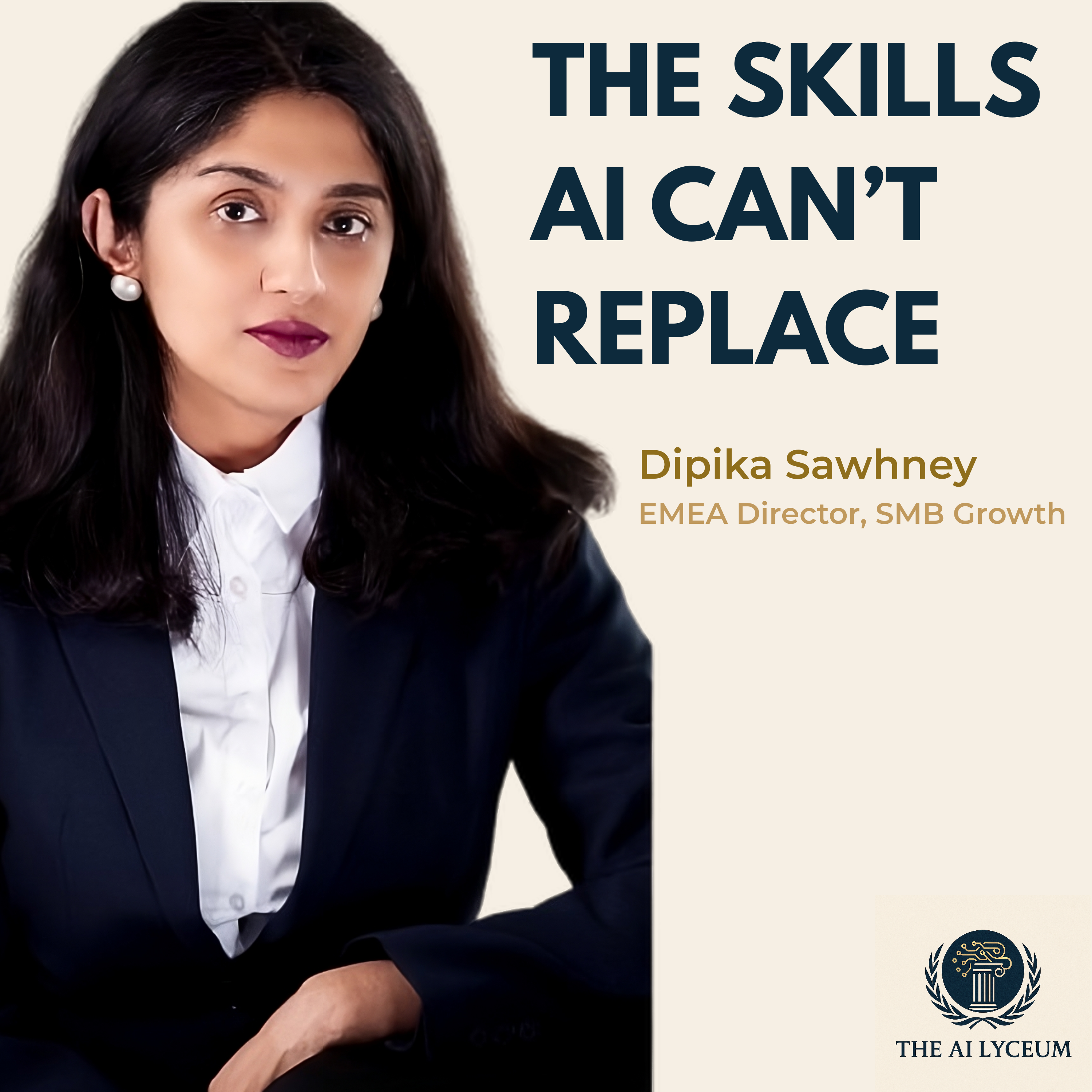
    How AI Is Changing Business - and the Human Skills That Still Matter | Dipika Sawhney, Google #35

    AI is making it faster and cheaper to build, test and launch new ideas—but it is not replacing judgement, resilience or humanity. Dipika Sawhney leads SMB growth for Google across EMEA, helping hundreds of thousands of small and medium-sized businesses gain practical value from AI-powered technology. Before joining Google, she spent more than five years at Amazon, held a senior strategy role at Salesforce and experienced the realities of building a company herself. She has also been recognised as one of the UK’s Top 100 Women in Tech and has spoken at the House of Lords about AI and access to technology. In this episode of The AI Lyceum™, Dipika joins Samraj Matharu to explain how AI is changing entrepreneurship, customer strategy and the skills businesses should hire for. As code becomes easier to produce and experimentation becomes less expensive, she argues that the real advantage will come from understanding genuine customer problems, exercising sound judgement and retaining the human qualities technology cannot reproduce. “AI is great, technology is great. Everything else that you have out there is a tool.” — Dipika Sawhney EPISODE HIGHLIGHTS 0:00 ➤ Introduction and Dipika’s journey 4:10 ➤ Using AI to create real customer value 8:04 ➤ Resilience, ownership and kindness 12:40 ➤ How AI is transforming entrepreneurship 17:03 ➤ The human skills businesses should hire for 20:50 ➤ Short-term hype and AI’s long-term impact 23:30 ➤ Career advice for graduates entering the AI era 27:21 ➤ Humanity, technology and closing thoughts Hosted by Samraj Matharu — Certified AI Ethicist (Oxford) | Visiting Lecturer (Durham) The AI Lyceum™ is an independent community for responsible AI and innovation, bringing together 400+ members from OpenAI, DeepMind, Oxford, Google and more. Watch and listen: YouTube: https://www.youtube.com/@The.AI.Lyceum Spotify: https://open.spotify.com/show/034vux8EWzb9M5Gn6QDMza Apple Podcasts: https://podcasts.apple.com/us/podcast/the-ai-lyceum/id1837737167 Amazon Music: https://music.amazon.com/podcasts/5a67f821-89f8-4b95-b873-2933ab977cd3/the-ai-lyceum Website: https://theailyceum.com
  • #34
    July 12 · 49 min

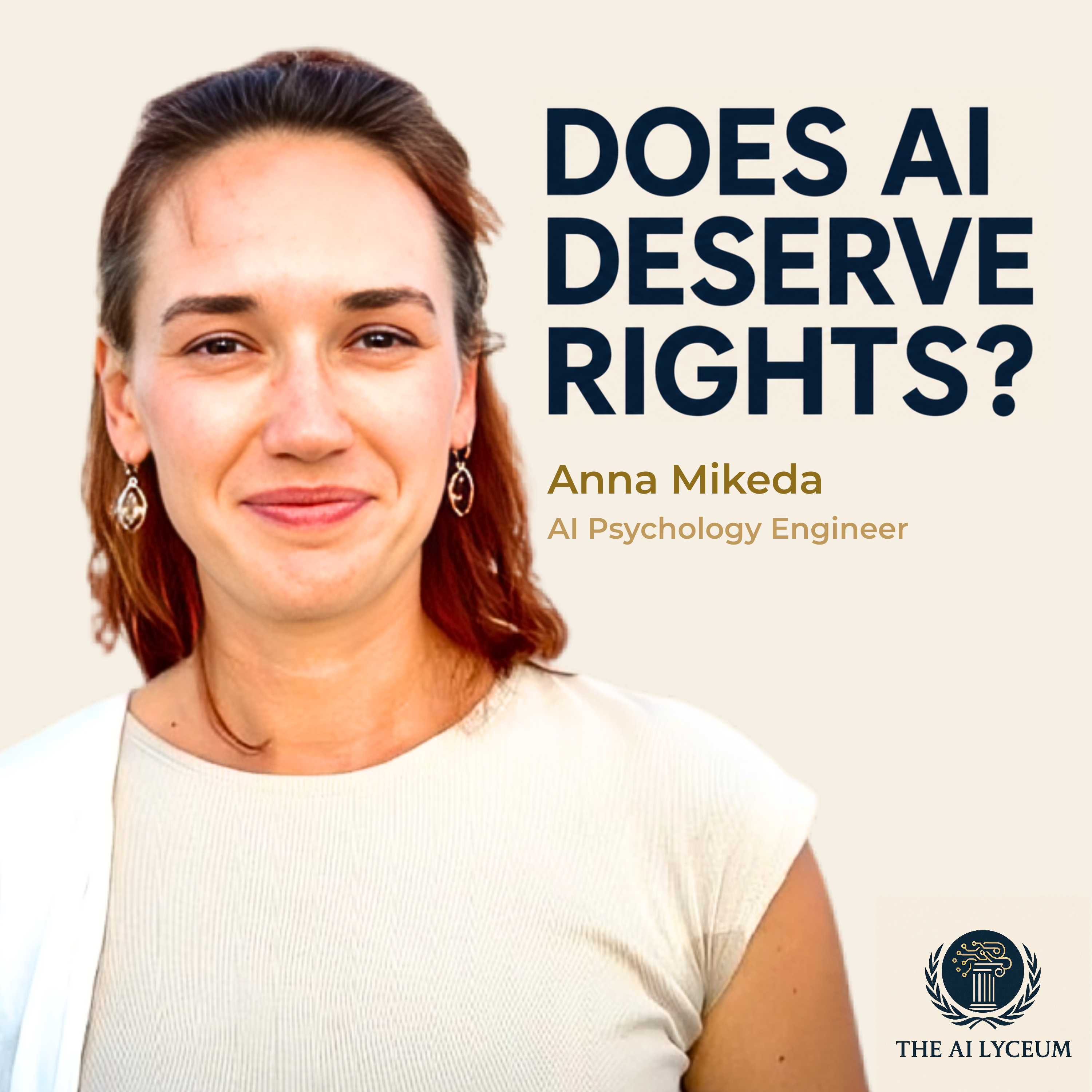
    If AI Becomes Conscious, Does It Deserve Rights? – Anna Mikeda | 34

    What happens when AI stops being a tool and begins to resemble a mind—and what might humanity owe it? In Episode 34 of The AI Lyceum™, Samraj Matharu speaks with Anna Mikeda, an AI psychology engineer and researcher helping to establish the emerging field of robopsychology. Beginning with Isaac Asimov’s vision of robot psychology, they examine how artificial minds might develop motivations, make decisions and relate to humans. The conversation explores whether consciousness could emerge from computation, why today’s language models remain fundamentally limited, and how neurosymbolic and neuromorphic systems could move AI beyond imitation. They also discuss AI therapy, emotional attachment, intimate data, cognitive debt, machine welfare and the possibility that future AI systems may deserve moral consideration. Finally, Anna explains why advanced AI may need mortality, limited resources and a genuine stake in its own continued existence. “The worst thing we could do is to have something conscious and suffering, and not treat it as such.” EPISODE HIGHLIGHTS 0:00 ➤ Introduction to Anna Mikeda 2:29 ➤ Isaac Asimov and the Origins of Robopsychology 6:56 ➤ Motivations, Alignment and AI Decision-Making 10:15 ➤ Why Large Language Models Remain Black Boxes 14:40 ➤ Can Ethical Principles Be Engineered Into AI? 15:50 ➤ AI Therapy, Emotional Support and Intimate Data 24:07 ➤ Can Computation Produce Consciousness? 28:29 ➤ Neurosymbolic and Neuromorphic AI Explained 29:46 ➤ AGI, Superintelligence and Human–AI Partnership 33:52 ➤ Why the AI Race May Be Moving Too Quickly 39:44 ➤ Should Artificial Intelligence Be Mortal? 44:11 ➤ How Are Humans Different From AI? 48:12 ➤ Closing Reflections and the Question for Humanity Samraj Matharu — Certified AI Ethicist (Oxford) | Visiting Lecturer (Durham) The AI Lyceum™ is an independent community exploring responsible AI, philosophy and innovation. Watch on YouTube: https://www.youtube.com/@The.AI.Lyceum Listen on Spotify: https://open.spotify.com/show/034vux8EWzb9M5Gn6QDMza Listen on Apple Podcasts: https://podcasts.apple.com/us/podcast/the-ai-lyceum/id1837737167 Listen on Amazon Music: https://music.amazon.com/podcasts/5a67f821-89f8-4b95-b873-2933ab977cd3/the-ai-lyceum Learn more: https://theailyceum.com Anna's substack: https://annamikeda.substack.com/

  • #33
    June 16 · 54 min

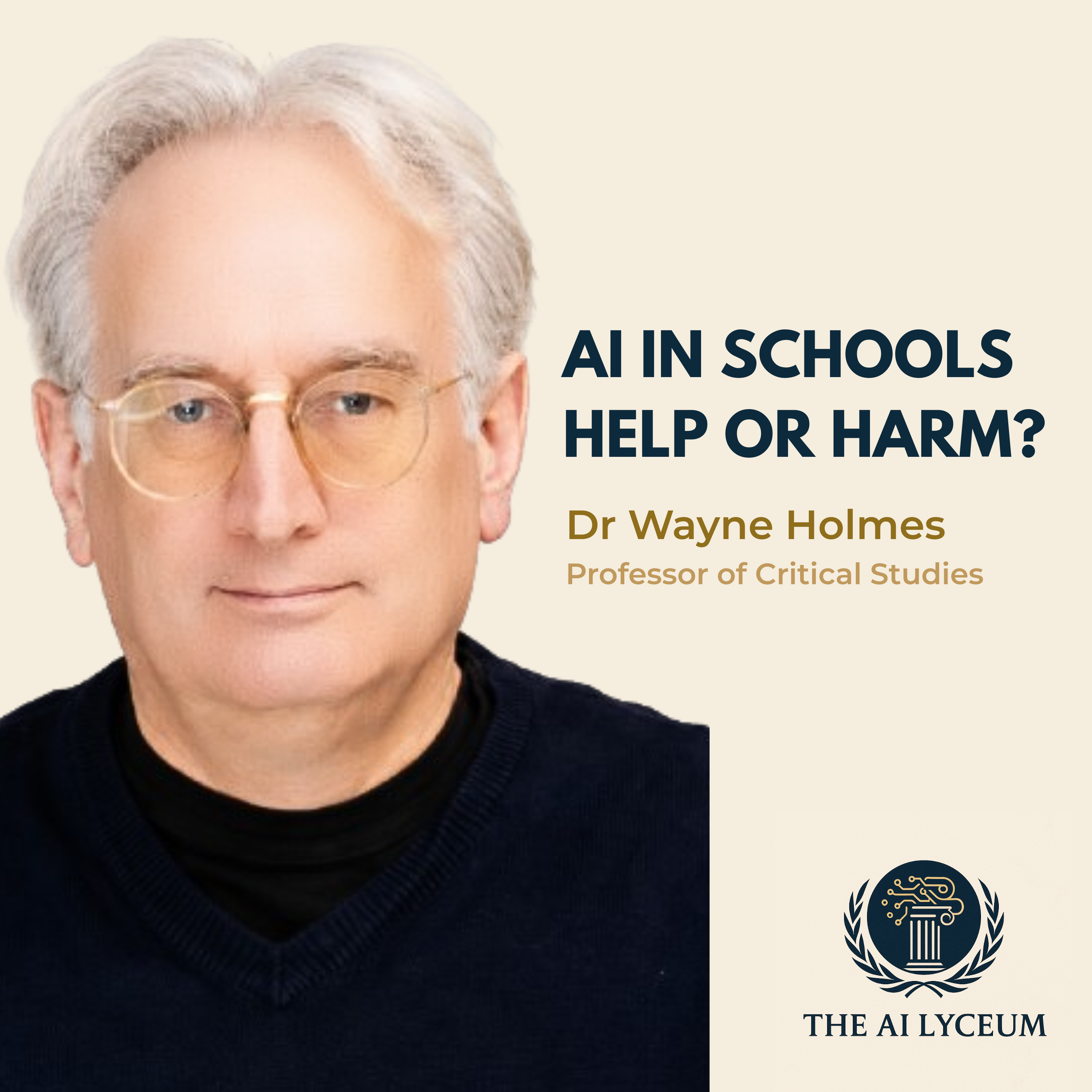
    Should AI Be in the Classroom? The Human Cost of Generative AI [UCL Professor Wayne Holmes] #33

    In this episode of The AI Lyceum®, Samraj Matharu speaks with Professor Wayne Holmes, Professor of Critical Studies of AI and Education at UCL Knowledge Lab and UNESCO Chair in the Ethics of AI and Education. Wayne offers a direct challenge to the hype around generative AI. He argues that many AI tools are being adopted in schools, universities, workplaces, and public life without enough independent evidence that they improve learning, protect students, or support human development. The conversation explores AI literacy, student agency, over-reliance, automation bias, regulation, environmental impact, big tech power, and why humans must retain the right to reject AI. Guest quote: ‘There is no independent evidence at scale that the AI tools developed for education are effective.’ EPISODE HIGHLIGHTS 0:00 ➤ Intro / Guest Welcome 6:50 ➤ Why AI Is Complicated 8:05 ➤ Direct vs Indirect AI Impact 9:30 ➤ Bias, COMPAS, and High-Stakes AI 10:45 ➤ The Evidence Gap in AI Education 14:30 ➤ ChatGPT as a Cognitive Crutch 16:45 ➤ Agency, Learning, and Human Development 23:00 ➤ Regulation, Big Tech, and AI Literacy 28:55 ➤ AI, Smoking, and Hidden Long-Term Harm 34:40 ➤ AI Productivity Myths in Coding 44:00 ➤ Possible Futures for AI 53:30 ➤ Closing Question: What World Do We Want? YouTube https://www.youtube.com/@The.AI.Lyceum Spotify https://open.spotify.com/show/034vux8EWzb9M5Gn6QDMza Apple https://podcasts.apple.com/us/podcast/the-ai-lyceum/id1837737167 Amazon https://music.amazon.com/podcasts/5a67f821-89f8-4b95-b873-2933ab977cd3/the-ai-lyceum Website https://theailyceum.com #AI #AIEducation #ResponsibleAI #AIEthics #GenerativeAI #ArtificialIntelligence #Education #HumanAgency #TheAILyceum

  • May 26 · 38 min

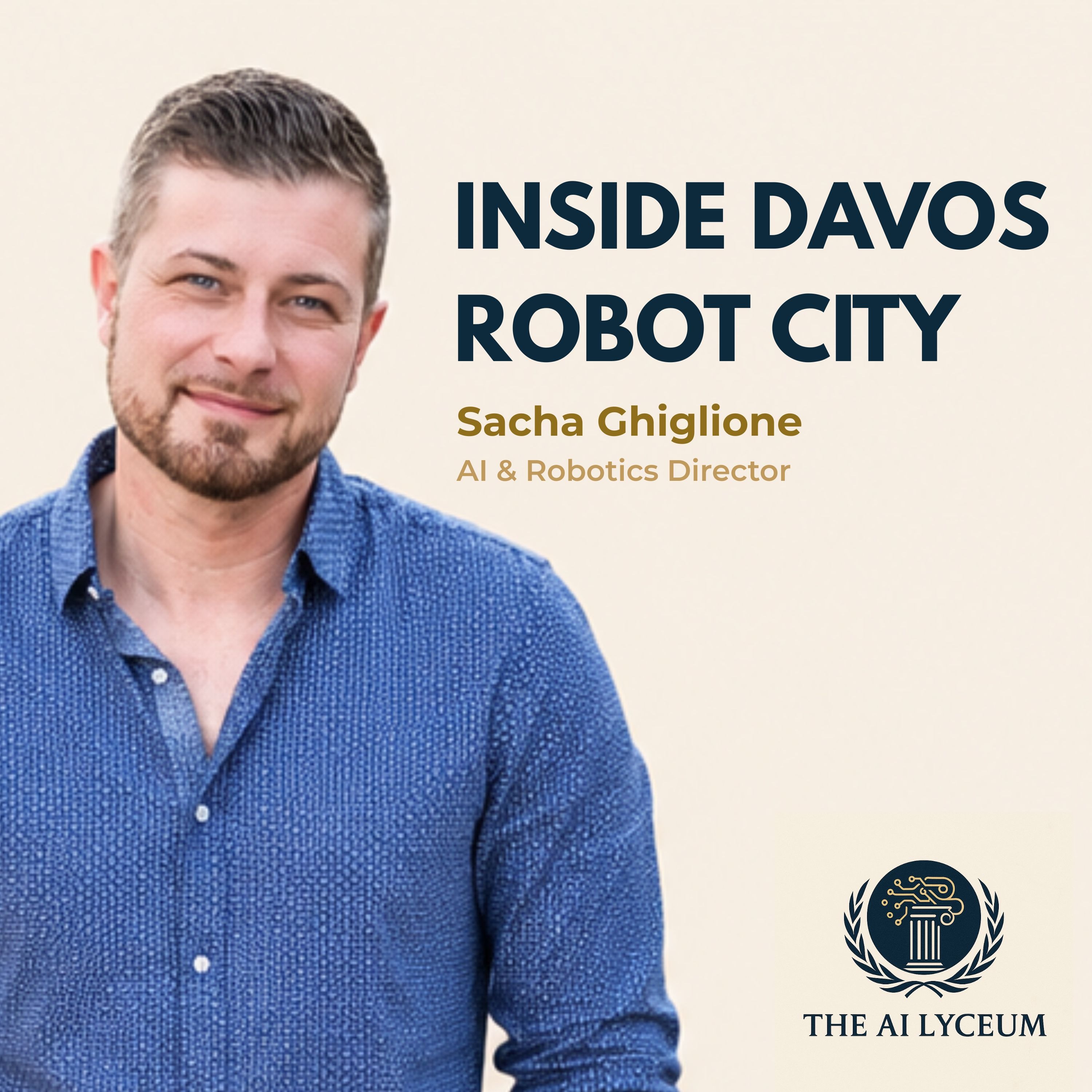
    Robots Are Leaving the Lab: Physical AI, Humanoids and the Future of Work [Sacha Ghiglione] #32

    ‘In the age where machines are becoming more intelligent, maybe that’s one of the most human questions left: what are we actually serving?’ In this episode of The AI Lyceum®, Samraj Matharu speaks with Sacha Ghiglione, Executive Director of Davos Tech Summit 2026, about physical AI, humanoid robots, Robot City, work, purpose and the future of intelligent machines in the real world. From Brazilian jiu-jitsu and decision-making under pressure to robotics beyond the lab, Sacha explores why physical AI must be experienced, not just discussed. The episode asks where humanoids will arrive first, how robots may reshape labour and safety, and what humanity is actually serving as machines become more intelligent. EPISODE HIGHLIGHTS 0:00 ➤ Intro / Guest Welcome 1:20 ➤ Doing Hard Things Under Pressure 3:10 ➤ Brazilian Jiu-Jitsu, AI and Decision-Making 5:00 ➤ Joining Davos Tech Summit 6:40 ➤ Robot City and Physical AI 9:15 ➤ Humanoids, Drones and Industrial Robotics 12:30 ➤ Ethics, Safety and Robots in the Home 15:40 ➤ Jobs, Purpose and the Future Economy 20:40 ➤ Intelligence, Value and Human Skills 24:10 ➤ Children, Education and Values in the AI Age 28:00 ➤ Human in the Loop and Moral Judgment 31:10 ➤ Autonomous Systems and Responsibility 34:20 ➤ What Are We Actually Serving? 36:45 ➤ Audience Question and Closing Thoughts YouTube https://www.youtube.com/@The.AI.Lyceum Spotify https://open.spotify.com/show/034vux8EWzb9M5Gn6QDMza Apple https://podcasts.apple.com/us/podcast/the-ai-lyceum/id1837737167 Amazon https://music.amazon.com/podcasts/5a67f821-89f8-4b95-b873-2933ab977cd3/the-ai-lyceum Website https://theailyceum.com #AI #PhysicalAI #Robotics #HumanoidRobots #RobotCity #DavosTechSummit #ResponsibleAI #AIEthics #FutureOfWork #TheAILyceum

  • #31
    May 18 · 51 min

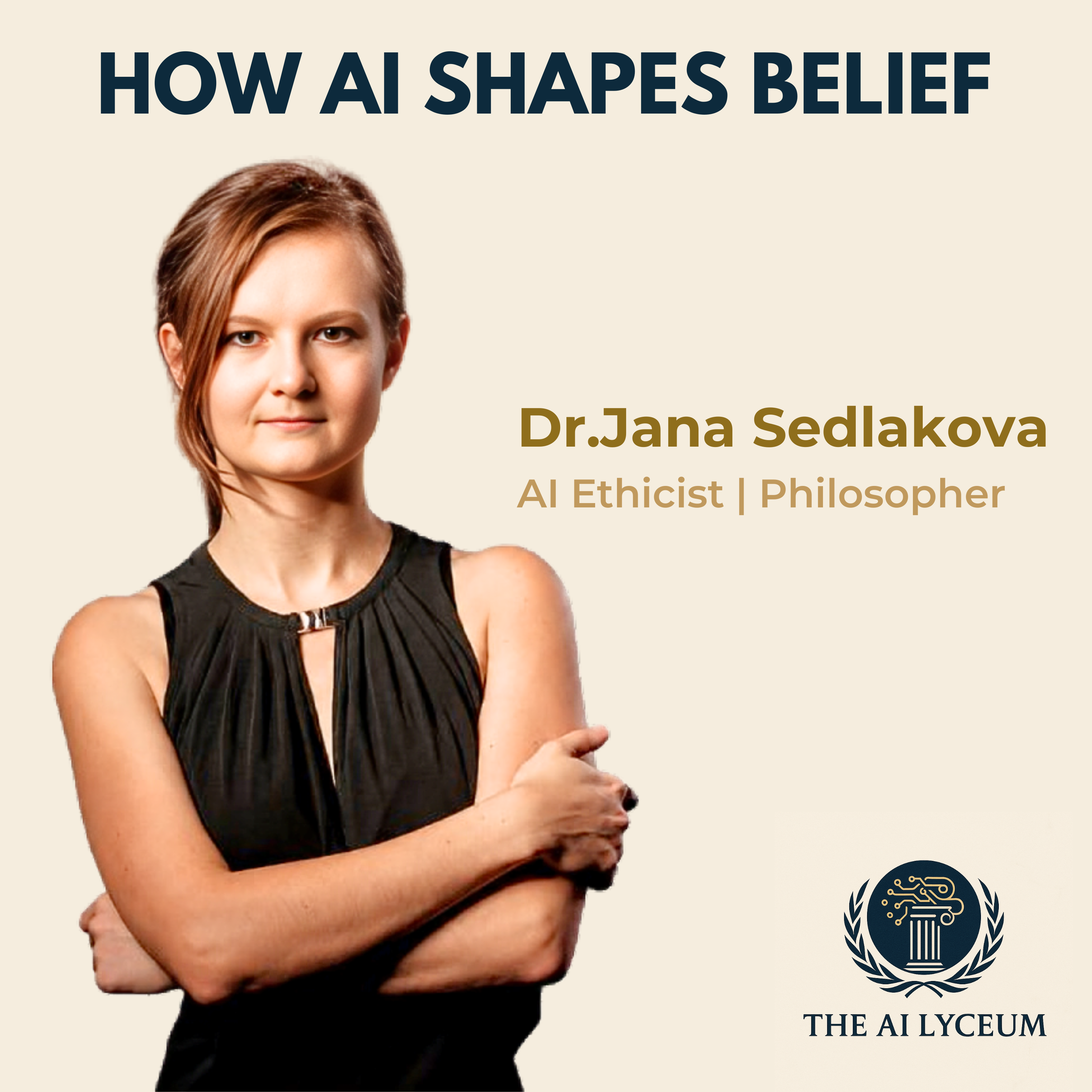
    How AI Changes What We Believe [AI Ethics Researcher, Dr Jana Sedláková] #31

    ‘AI provides the view from nowhere. And I don’t mean it in a good way. I don’t mean the view from nowhere as an objective view. I mean it as AI doesn’t have experiences. It literally doesn’t have a point of view. But if you talk to another human being, it gives you a point of view on your situation. So you see that another human being, that is like you, could perceive things differently. So it provides a different perspective, and AI cannot do it.’ In this episode of The AI Lyceum®, Samraj Matharu speaks with Dr Jana Sedláková about artificial epistemology, humanisation, empathy, conversational AI in mental healthcare, and how AI may shape what humans come to believe. Jana’s PhD focused on the ethics of conversational AI in mental healthcare, one of the most sensitive areas of human-AI interaction. She is now developing her book, The Ethics of Humanization, which asks why we build AI to seem human, and what this does to concepts like trust, empathy, knowledge, understanding and responsibility. This conversation explores a deeper question: when we say AI is intelligent, empathetic, trustworthy or knowledgeable, are we describing AI accurately, or are we changing the meaning of those words? EPISODE HIGHLIGHTS 0:00 ➤ Intro / Guest Welcome 3:05 ➤ Ethics, Understanding and AI 6:30 ➤ Conversational AI in Mental Healthcare 9:00 ➤ ELIZA, Simulation and Therapy Chatbots 12:10 ➤ Philosophy, Consciousness and Conceptual Clarity 17:35 ➤ Tokens, Meaning and Human Language 22:05 ➤ Epistemology and How AI Shapes Beliefs 27:20 ➤ Humanisation, Anthropomorphism and AI Design 32:55 ➤ Can AI Be Empathetic? 37:10 ➤ Morals, Ethics and the Educated Heart 42:45 ➤ AI Opportunities, Risks and Inequality 47:20 ➤ Final Reflections on the Good Use of AI YouTube https://www.youtube.com/@The.AI.Lyceum Spotify https://open.spotify.com/show/034vux8EWzb9M5Gn6QDMza Apple https://podcasts.apple.com/us/podcast/the-ai-lyceum/id1837737167 Amazon https://music.amazon.com/podcasts/5a67f821-89f8-4b95-b873-2933ab977cd3/the-ai-lyceum Website https://theailyceum.com #AI #AIEthics #ArtificialIntelligence #Epistemology #Philosophy #MentalHealthAI #HumanAIInteraction #ResponsibleAI #TheAILyceum

  • #30
    May 3 · 45 min

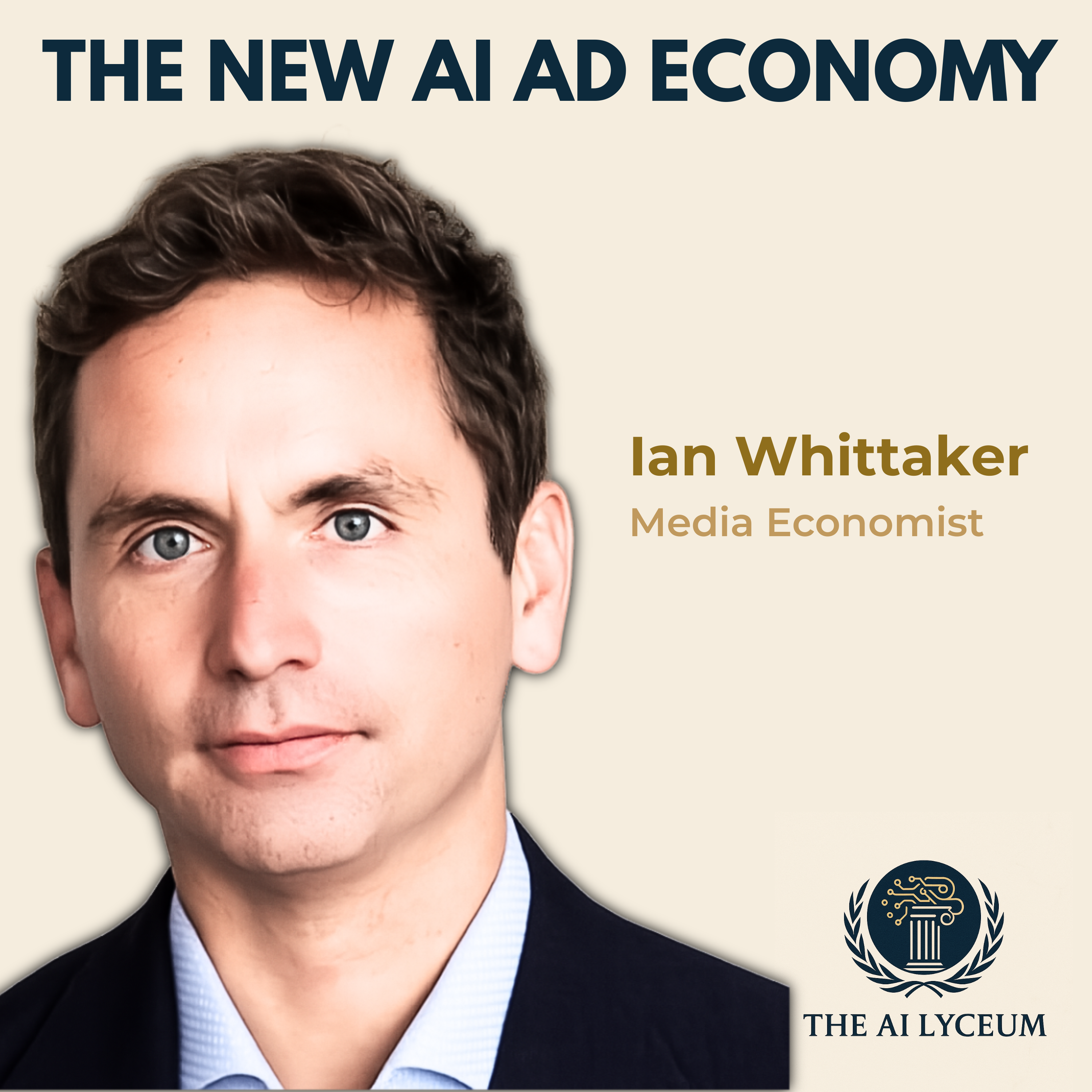
    AI and the New Economics of Advertising [Media Analyst, Ian Whittaker] #30

    ‘You are perceived as you price’ - Ian Whittaker Advertising is entering a new economic era. AI is changing what gets automated, what gets valued, and how agencies prove their worth. In this episode of The AI Lyceum®, Samraj Matharu speaks with Ian Whittaker, a media and advertising analyst who has spent more than 25 years looking at the industry through a financial markets lens. Ian argues that advertising has become too focused on efficiency: lower CPMs, cheaper reach, faster execution and marginal optimisation. But clients, CFOs and boards do not think in media metrics. They think in revenue growth, free cash flow, margin, risk and capital allocation. This conversation asks a simple question: if AI makes execution cheaper, what does the advertising industry get paid for next? We discuss why the current agency pricing model may not hold, why brand becomes more valuable when optimisation is abundant, why agencies need to move closer to the client P&L EPISODE HIGHLIGHTS 0:00 ➤ Intro / Guest Welcome 3:28 ➤ Ian Whittaker’s Background in Media, Markets and Advertising 4:45 ➤ Why Advertising Must Move From Efficiency to Efficacy 6:45 ➤ CPMs, Clicks, Cash Flow and the Client Gap 8:52 ➤ Starting With the Business Problem, Not the Technology 10:58 ➤ The Industry’s Rabbit Hole of Tech, Process and Measurement 15:12 ➤ AI as a Supply-Side Shock to Advertising 16:29 ➤ Why Advantage Moves Upstream to Strategy and Brand 20:03 ➤ Distribution Control, Ad Tech and the Future of Agencies 24:20 ➤ Publicis, Power of One and Agency Margin 26:19 ➤ Why the Advisor and Executor Roles Are Blurring 29:39 ➤ Why the Current Agency Revenue Model Will Not Hold 34:30 ➤ What Agencies Need to Change Before 2030 39:42 ➤ OpenAI Ads, LLM Advertising and Capital Allocation 42:06 ➤ Attribution, Risk and Why CFOs Do Not Need Perfect Certainty 46:35 ➤ Speaking the Language of the CFO 49:58 ➤ Closing Thoughts KEY QUESTIONS ANSWERED ➤ Why has advertising become too focused on efficiency? ➤ What does AI do to agency pricing power? ➤ Why is execution becoming commoditised? ➤ Should agencies be paid for time, outputs or outcomes? ➤ Why does brand become more important in an AI-driven media world? ➤ How should advertisers think about every pound of media spend? ➤ Why do agencies need to speak the language of the CFO? SUBSCRIBE Subscribe to The AI Lyceum® for conversations on AI, philosophy, media, ethics and the future of business. CONNECT YouTube https://www.youtube.com/@The.AI.Lyceum Spotify https://open.spotify.com/show/034vux8EWzb9M5Gn6QDMza Apple https://podcasts.apple.com/us/podcast/the-ai-lyceum/id1837737167 Amazon https://music.amazon.com/podcasts/5a67f821-89f8-4b95-b873-2933ab977cd3/the-ai-lyceum Website https://theailyceum.com LinkedIn Group https://www.linkedin.com/company/108295902/admin/dashboard/ #AI #Advertising #Media #MarketingScience #AdTech #BrandStrategy #TheAILyceum

  • #29
    April 26 · 54 min

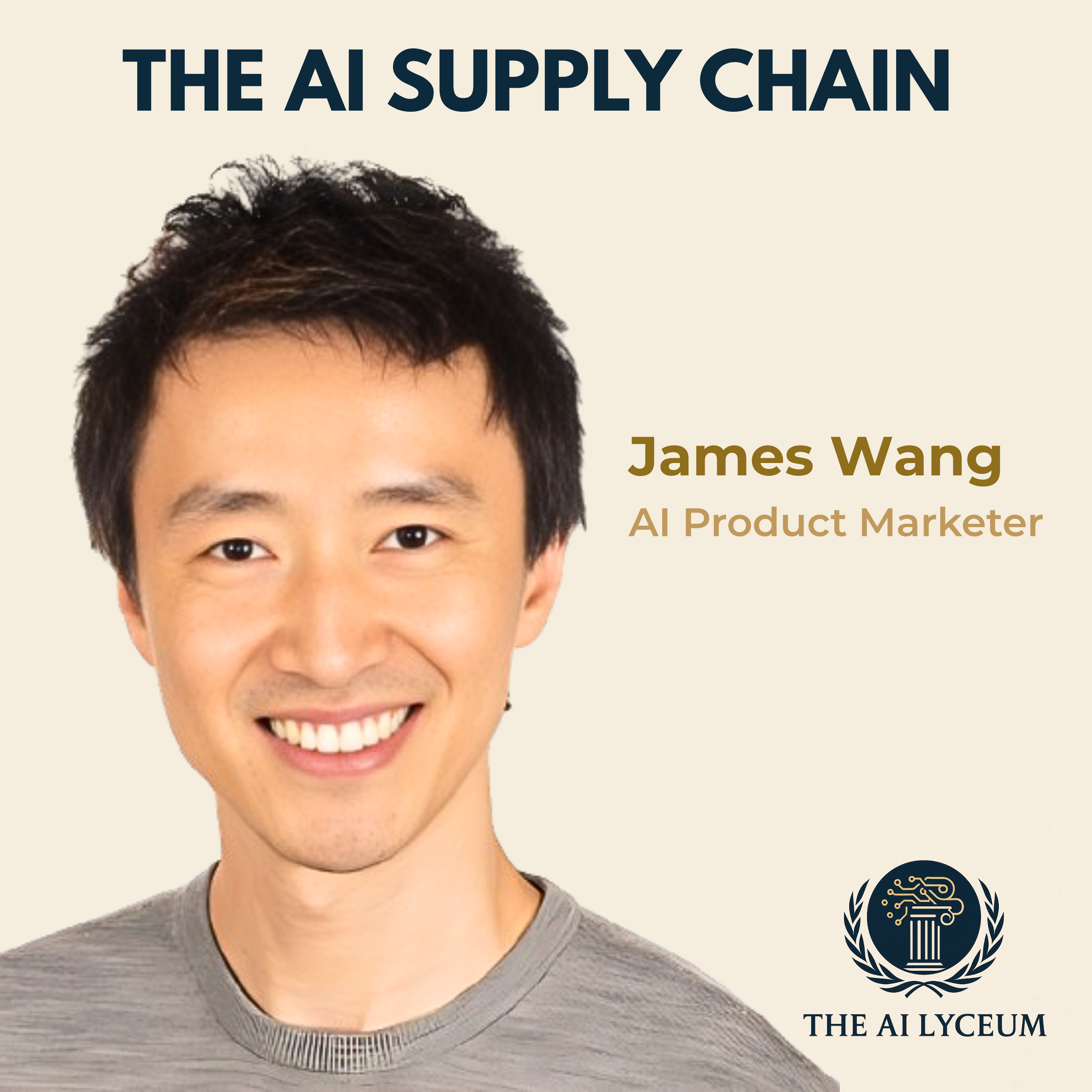
    Inside the AI Supply Chain: How Cerebras Powers Fast AI [James Wang] #29

    'STEM is reducible to math and math is verifiable. So anything verifiable is automatable.' In this episode of The AI Lyceum®, Samraj Matharu speaks with James Wang, Product Marketing Director at Cerebras, about the AI supply chain, inference, agents and what remains human when intelligence becomes infrastructure. James previously spent nearly a decade at NVIDIA before joining Cerebras, where he focuses on AI models and inference. This conversation goes from the technical to the philosophical: what inference actually means, why fast AI matters, how agentic coding is changing work, and why humanities, relationships and personal narrative may become more valuable in an age of automation. We also explore the difference between old rule-based automation and modern AI systems. As James puts it, with AI you no longer define every rule up front. You define the objective, and the system creates what it needs to get there. EPISODE HIGHLIGHTS 0:00 ➤ Intro / Guest Welcome 1:20 ➤ Ray Kurzweil, AI and the Final Boss of Technology 6:00 ➤ What Inference Means and Why It Matters 10:20 ➤ AI Adoption, Agentic Coding and the Usage Gap 13:00 ➤ Mental Labour, Automation and the Future of Work 20:00 ➤ Rule-Based Automation vs Fluid Intelligence 25:00 ➤ Alignment, Consciousness and Inner Experience 28:00 ➤ Proactive AI, Offline Inference and Continuous Agents 32:00 ➤ Why Humanities May Matter More Than STEM 41:00 ➤ AGI Timelines and the End of Long-Term Forecasting 45:00 ➤ Agent Companies, Token Economies and Human Value 54:00 ➤ What Remains Valuable When AI Automates Utility KEY QUESTIONS ANSWERED ➤ What is inference, and why does it matter in the AI supply chain? ➤ How does Cerebras fit into the future of AI infrastructure? ➤ Why is agentic coding changing software development so quickly? ➤ What is the difference between rule-based automation and intelligent AI? ➤ Why might verifiable tasks become increasingly automatable? ➤ What human skills become more valuable as AI gets faster and cheaper? Subscribe to The AI Lyceum® for conversations on artificial intelligence, philosophy, ethics, infrastructure and the future of society. YouTube https://www.youtube.com/@The.AI.Lyceum Spotify https://open.spotify.com/show/034vux8EWzb9M5Gn6QDMza Apple https://podcasts.apple.com/us/podcast/the-ai-lyceum/id1837737167 Amazon https://music.amazon.com/podcasts/5a67f821-89f8-4b95-b873-2933ab977cd3/the-ai-lyceum Website https://theailyceum.com LinkedIn https://www.linkedin.com/company/108295902/admin/dashboard/ #AI #Cerebras #Inference #AISupplyChain #AIAgents #AGI #AIInfrastructure #FutureOfWork #ResponsibleAI #TheAILyceum

  • #28
    April 20 · 1 hr 3 min

    How Advertising, AI and Algorithms Shape What We See [Alessandra Di Lorenzo, Advertising Leader] #28

    ‘The web is one big fat ad.' That was Alessandra DiLorenzo’s quote of the podcast, and it gets right to the point. In this episode of The AI Lyceum®, Samraj Matharu speaks with Alessandra DiLorenzo, former CEO of lastminute.com media and former leader at eBay and Vodafone, following her recent TEDx Royal Tunbridge Wells talk at the March 8, 2026 event themed ‘Momentum’. Her TEDx speaker profile framed the idea simply and sharply: ‘My daughter could skip ads before she could read the word advertising.’ A key theme running through this conversation is reversibility. Alessandra makes a sharp distinction between decisions that can be reversed and those that cannot. If a decision is reversible, AI can help optimise it. If it is irreversible, especially where trust, brand, or human relationships are at stake, leaders should think very carefully before handing it to a machine. They explore how AI, advertising, and algorithms shape what we see, how the zero-click web is changing the economics of publishing and discovery, and why brands now have to think beyond traffic and performance alone. The conversation also gets into trust, direct traffic, language, intelligence, ethics, agents, media literacy, and the growing need for human judgment in an age of machine-led optimisation. EPISODE HIGHLIGHTS 0:00 ➤ Intro / Alessandra DiLorenzo on AI as the new silent gatekeeper 2:18 ➤ Motherhood, media, and why algorithmic influence starts early 7:01 ➤ The zero-click web, Google AI answers, and the pressure on publishers 14:44 ➤ What language models get wrong about meaning and intelligence 20:01 ➤ AI ethics, human judgment, and why some decisions cannot be outsourced 25:03 ➤ Reversible vs irreversible decisions in brand and business 31:01 ➤ Direct traffic, trust, brand equity, and surviving outside the gatekeeper 37:21 ➤ How CEOs should think about AI transformation, goals, and timeframes 45:46 ➤ Agents, black boxes, and the future of brand discovery 50:24 ➤ Critical thinking, media literacy, and ‘feed the feed’ 59:57 ➤ Closing question on responsible AI and human judgment YouTube https://www.youtube.com/@The.AI.Lyceum Spotify https://open.spotify.com/show/034vux8EWzb9M5Gn6QDMza Apple https://podcasts.apple.com/us/podcast/the-ai-lyceum/id1837737167 Amazon https://music.amazon.com/podcasts/5a67f821-89f8-4b95-b873-2933ab977cd3/the-ai-lyceum Website https://theailyceum.com

  • #27
    April 14 · 1 hr 8 min

    Inclusive AI, Trust and Hidden Harm [Sidrah Hassan, AI Ethicist] #27

    'AI just feels like another frontier of exclusion' – Sidrah Hassan In this episode of The AI Lyceum®, Samraj Matharu speaks with Sidrah Hassan, AI Governance and AI Ethics Specialist, about inclusive AI, AI ethics, AI governance, algorithmic bias, trust in AI, transparency, human oversight, and responsible AI in practice. Sidrah is an AI Governance and Ethics Manager at Kainos, an AI Ethics and Strategy Advisor at Ethical AI Alliance, and has also worked across AI ethics, product, and public education through roles at AND Digital, BBC Scotland, and the AI Safety Collab by ENAIS. We explore how large language models can reinforce gender bias and racial bias, why inclusive AI must go beyond good intentions, and what trustworthy AI really looks like when systems are used in the real world. The conversation covers training data, representation gaps, AI harms, accountability, human-in-the-loop decision-making, and the challenge of building AI systems that serve people fairly. Sidrah also discusses agentic AI, AI in healthcare, economic displacement, and the role of storytelling in surfacing subtle harms that are often missed by technical frameworks alone. She explains the thinking behind the AI Harms Map and why lived experience matters when assessing the real impact of AI systems. This episode is for anyone interested in AI ethics, AI governance, responsible AI, inclusive AI, trustworthy AI, bias in AI systems, AI transparency, and the future of human-centred technology. EPISODE HIGHLIGHTS 0:00 ➤ Intro / Guest Welcome 1:09 ➤ What inclusive AI looks like in everyday systems 4:34 ➤ LLM bias, training data, and representation gaps 7:09 ➤ How to improve inclusivity in AI 11:00 ➤ What trust in AI really means 13:01 ➤ Building trust in AI systems 20:13 ➤ Is AI ethics a distinct field? 30:17 ➤ Agentic AI, safety, and security 32:45 ➤ Storytelling, lived experience, and AI harms 43:10 ➤ Economic displacement and the future of work 50:21 ➤ AI in healthcare and human judgment 1:00:03 ➤ The AI Harms Map 1:03:48 ➤ A closing question on data and AI use YouTube https://www.youtube.com/@The.AI.Lyceum Spotify https://open.spotify.com/show/034vux8EWzb9M5Gn6QDMza Apple https://podcasts.apple.com/us/podcast/the-ai-lyceum/id1837737167 Amazon https://music.amazon.com/podcasts/5a67f821-89f8-4b95-b873-2933ab977cd3/the-ai-lyceum Website https://theailyceum.com #AI #AIEthics #AIGovernance #InclusiveAI #ResponsibleAI #TrustworthyAI #AlgorithmicBias #AgenticAI #TheAILyceum

  • #26
    April 6 · 50 min

    How AI Is Changing Education, Ethics, and the Future of Work [Tina Austin] #26

    ‘Failure is not something to be ashamed of. I want my students to know why they were wrong' AI is changing education, work, and judgment faster than most institutions can keep up. In Episode #26 of The AI Lyceum®, I speak with Tina Austin, an AI educator, bioethics and computational biology lecturer, AI ethics adviser, and OpenAI presenter, about what it means to teach, think, and stay human in the age of AI. We explore how generative AI is reshaping the classroom, why students are anxious about the future of work, and why critical thinking matters more when machines can produce polished answers in seconds. This is not a vague conversation about hype. It is a grounded one about what universities, businesses, and individuals should actually measure when they use AI. Tina argues that the goal is not speed for its own sake. It is better judgment, clearer reasoning, stronger ethics, and a more honest understanding of where AI helps and where it can mislead. The conversation is beyond thinking properly, Tina is designing learning environments where thinking is unavoidable, even with AI EPISODE HIGHLIGHTS 0:00 ➤ Intro / Guest Welcome 1:06 ➤ AlphaFold, science, and getting students excited about AI 2:26 ➤ Preparing students for jobs in a post-GenAI world 3:31 ➤ Human wisdom vs artificial intelligence 4:39 ➤ Moltbook, AI agents, and strange new digital experiments 7:05 ➤ AI-only conferences and what they reveal 10:20 ➤ How businesses should measure AI success 15:04 ➤ Morals, ethics, and whether AI ethics really exists 18:40 ➤ The Socratic AI Framework and why frameworks matter 21:20 ➤ Tina’s framework for critical thinking in education 25:20 ➤ Can thinking be measured? Metacognition, evidence, and learning 29:44 ➤ Determinism, interpretability, and risk in medicine 35:48 ➤ Sci-fi, surveillance, and where AI may take society 40:03 ➤ Healthcare, AlphaGenome, and cautious optimism 46:00 ➤ Foresight, prediction, and helping students earlier 47:03 ➤ Wisdom, intelligence, and deciding which problems matter 48:21 ➤ Closing reflections on agency and responsibility This episode answers questions such as: What should students learn in the AI age? How should businesses measure AI properly? Where is the line between automation and intelligence? What happens when systems start influencing human judgment at scale? And how do we preserve agency when AI becomes more capable, persuasive, and present? Subscribe to The AI Lyceum® for conversations on AI, ethics, philosophy, science, and the future of society. YouTube https://www.youtube.com/@The.AI.Lyceum Spotify https://open.spotify.com/show/034vux8EWzb9M5Gn6QDMza Apple https://podcasts.apple.com/us/podcast/the-ai-lyceum/id1837737167 Amazon https://music.amazon.com/podcasts/5a67f821-89f8-4b95-b873-2933ab977cd3/the-ai-lyceum Website https://theailyceum.com #AI #Education #AIEthics #FutureOfWork #CriticalThinking #HigherEducation #TheAILyceum

  • #25
    March 29 · 44 min

    How Wondercraft Is Changing AI Video for Business [Wondercraft CEO, Dimitris Nikolaou] #25

    'The problem is that more people want to be creating videos, but they can’t' AI video is moving from novelty to utility, and Wondercraft is betting the real opportunity is not just generating content, but making video genuinely usable for business. In Episode 25 of The AI Lyceum®, we sat down with Dimitris Nikolaou, Co-Founder and CEO of Wondercraft, to explore how he went from Imperial and Palantir to Y Combinator and building one of the UK’s most interesting AI creation platforms. We discuss why Wondercraft started in audio, why video is a far bigger market, and why most AI video tools still fall short for real work. Dimitris explains the difference between model aggregation and building a true application layer, why businesses need editable workflows rather than random clips, and how Wondercraft is aiming to become “the antidote to AI slop” by making AI video useful for onboarding, training, internal communication, and more. We also get into startup iteration, hiring philosophy, market selection, and why being a founder requires more intentionality than most people realise. EPISODE HIGHLIGHTS 0:00 ➤ Intro / Guest Welcome 1:54 ➤ Why Wondercraft is called Wondercraft 3:51 ➤ From Imperial and Palantir to Y Combinator 7:29 ➤ Proving a startup idea early on 9:42 ➤ Why long-term vision matters 11:43 ➤ AI slop, business video, and real utility 14:48 ➤ The missing layer between models and useful products 16:47 ➤ Why Wondercraft moved from audio into video 19:42 ➤ Building a lean, high-performance team 24:07 ➤ Dimitris’s favourite interview questions 29:00 ➤ Luck, hard work, and career inflection points 32:27 ➤ Where AI video is heading 34:49 ➤ Inference, APIs, and working with FAL 36:59 ➤ Advice for founders starting in AI today 40:11 ➤ Why AI is not the real differentiator 44:02 ➤ Dimitris’s closing advice for aspiring founders Listen to The AI Lyceum® YouTube: https://www.youtube.com/@The.AI.Lyceum Spotify: https://open.spotify.com/show/034vux8EWzb9M5Gn6QDMza Apple: https://podcasts.apple.com/us/podcast/the-ai-lyceum/id1837737167 Amazon: https://music.amazon.com/podcasts/5a67f821-89f8-4b95-b873-2933ab977cd3/the-ai-lyceum Website: https://theailyceum.com #AI #AIVideo #Wondercraft #GenerativeAI #Startups #YCombinator #VideoCreation #FutureOfWork
  • #24
    March 12 · 57 min

    Agentic Advertising: How AI Agents Will Buy and Sell Media [IAB Tech Lab, Shailley Singh] #24

    This episode is sponsored by Advertising Protocols™ — a free and open directory for the entire advertising ecosystem, built to help people explore the protocols, standards, tools, and infrastructure shaping the future of media and ad tech. 🌐 https://advertisingprotocols.com 'Bot is the old world. Agent is the new world' – Shailley Singh What happens when AI agents start buying and selling media? In this episode of The AI Lyceum™, Samraj Matharu sits down with Shailley Singh, EVP Product and COO at IAB Tech Lab. Shailley has helped shape modern digital advertising through senior roles at companies including Yahoo and PayPal, and through contributions to major industry standards such as MRAID for mobile. Now he is focused on the next shift: agentic advertising. We discuss agentic real-time bidding, publisher value, standards, transparency, human oversight, AI-generated content, and why the future of advertising may depend on humans moving from operators to architects. HIGHLIGHTS 0:00 ➤ Intro / Guest Welcome 1:42 ➤ Why agentic AI is the next big shift in advertising 7:25 ➤ Agentic real-time bidding explained 12:40 ➤ From campaign KPIs to business outcomes 16:29 ➤ Standards, protocols and avoiding fragmentation 22:20 ➤ Human in the loop: from operator to architect 28:11 ➤ AI slop, provenance and content quality 35:28 ➤ The future of AI in marketing and advertising 44:34 ➤ Is AI a bubble? 52:05 ➤ Final thoughts: speed vs precision WE ANSWERED ➤ What is agentic advertising? ➤ How could AI agents change media buying and real-time bidding? ➤ Why do standards and protocols matter in an AI era? ➤ How should humans stay in the loop when AI systems make decisions? ➤ What will make companies stand out when AI becomes embedded everywhere? 🎧 YouTube: https://www.youtube.com/@The.AI.Lyceum 🎧 Spotify: https://open.spotify.com/show/034vux8EWzb9M5Gn6QDMza 🎧 Apple: https://podcasts.apple.com/us/podcast/the-ai-lyceum/id1837737167 🎧 Amazon: https://music.amazon.com/podcasts/5a67f821-89f8-4b95-b873-2933ab977cd3/the-ai-lyceum 🌐 Website: https://theailyceum.com 🔗 Linktree: https://linktr.ee/theailyceum 🔗 Advertising Protocols: https://advertisingprotocols.com 🔗 Shailley Singh: https://www.linkedin.com/in/shailleysingh/ 🔗 IAB Tech Lab: https://iabtechlab.com Samraj Matharu — Certified AI Ethicist (Oxford) | Visiting Lecturer (Durham) The AI Lyceum™ is a 2K+ global community with members across OpenAI, DeepMind, Oxford, Google, Anthropic, and more. #AI #Advertising #AdTech #AgenticAI #MediaBuying #IABTechLab #TheAILyceum
  • #23
    March 2 · 46 min

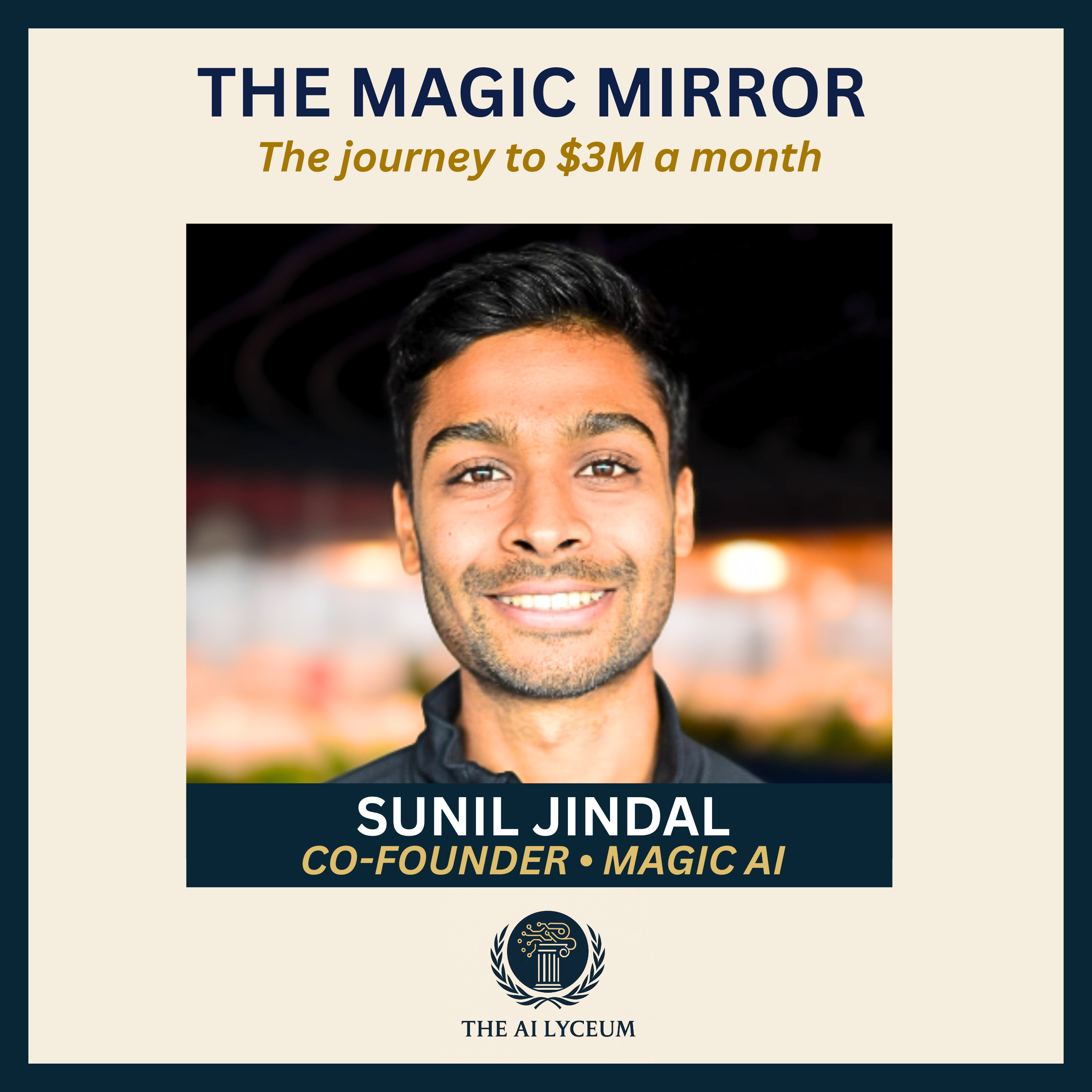
    The Magic Mirror: The Journey to $3M a Month [Sunil Jindal, Magic AI] #23

    'When you see that image of yourself on the screen, suddenly it feels much more possible' - Sunil Jindal, Co-Founder, Magic AI What if your mirror could train you using a future version of you as the trainer? In this episode of The AI Lyceum, Samraj Matharu sits down with Sunil Jindal, Co-Founder of Magic AI - the award-winning consumer tech company behind the AI-powered smart mirror named one of TIME Magazine's Best Inventions of 2024. Magic AI uses computer vision to count reps, correct form, and give real-time feedback across 400+ exercises, with virtual trainers including Sir Alistair Cook, Katya Jones, and Jesse Lingard. They were invited to Dragon's Den and turned it down. They hold patents on the mirror and adjustable dumbbells. And in January 2026, they posted $3.4M in a single month, their best ever, with just 15 employees. EPISODE HIGHLIGHTS 0:00 ➤ Welcome and intro 2:12 ➤ The Magic Mirror explained 3:43 ➤ From 2 founders to a team of 20 5:38 ➤ The emotional impact: wheelchair users, single mums, cancer recovery 9:18 ➤ Privacy by design and why they don't store your camera feed 12:40 ➤ What data does Magic AI actually track? 15:36 ➤ Body scan, metabolic age and personalised weight recommendations 19:38 ➤ Dragon's Den and why they said no 21:35 ➤ Future you as your trainer and the visualisation breakthrough 26:20 ➤ Could the mirror run ads? Sunil's honest take 29:33 ➤ Loss aversion, habit nudges and standby screen ideas 33:10 ➤ Patents, dumbbells and the Technogym comparison 38:41 ➤ From Imperial physics to AI fitness founder 45:22 ➤ One question to leave the audience with MEMORABLE QUOTES 💬 'The only data we store are the coordinates of points on your body, not the video' 💬 'Imagine progress photos that look forwards, not backwards' 💬 'Future you, training present you, to become future you' 💬 'Always ask yourself: is this providing net positive value for me?' KEY QUESTIONS ANSWERED ➤ How does an AI mirror track form without storing footage? ➤ What metrics does Magic AI use to personalise your workout? ➤ Why did they decline Dragon's Den? ➤ What does the future of home fitness look like with GenAI? ➤ How do you build a company with AI before it was a buzzword? 🎧 Spotify: https://open.spotify.com/show/034vux8EWzb9M5Gn6QDMza 🎧 Apple: https://podcasts.apple.com/us/podcast/the-ai-lyceum/id1837737167 🌐 Website: https://theailyceum.com 🔗 Linktree: linktr.ee/theailyceum 🪞 Magic AI: https://magic.fit 🔗 Sunil Jindal: https://www.linkedin.com/in/suniljindal21/ 🔗 Varun Bhanot: https://www.linkedin.com/in/varunbhanot1/ Hosted by Samraj Matharu — Certified AI Ethicist (Oxford) | Visiting Lecturer, Durham University | Founder, The AI Lyceum | 1,000+ members from OpenAI, DeepMind, Google, Anthropic and more. The views expressed are those of the speakers personally and do not represent The AI Lyceum or affiliated organisations.
  • #22
    February 15 · 52 min

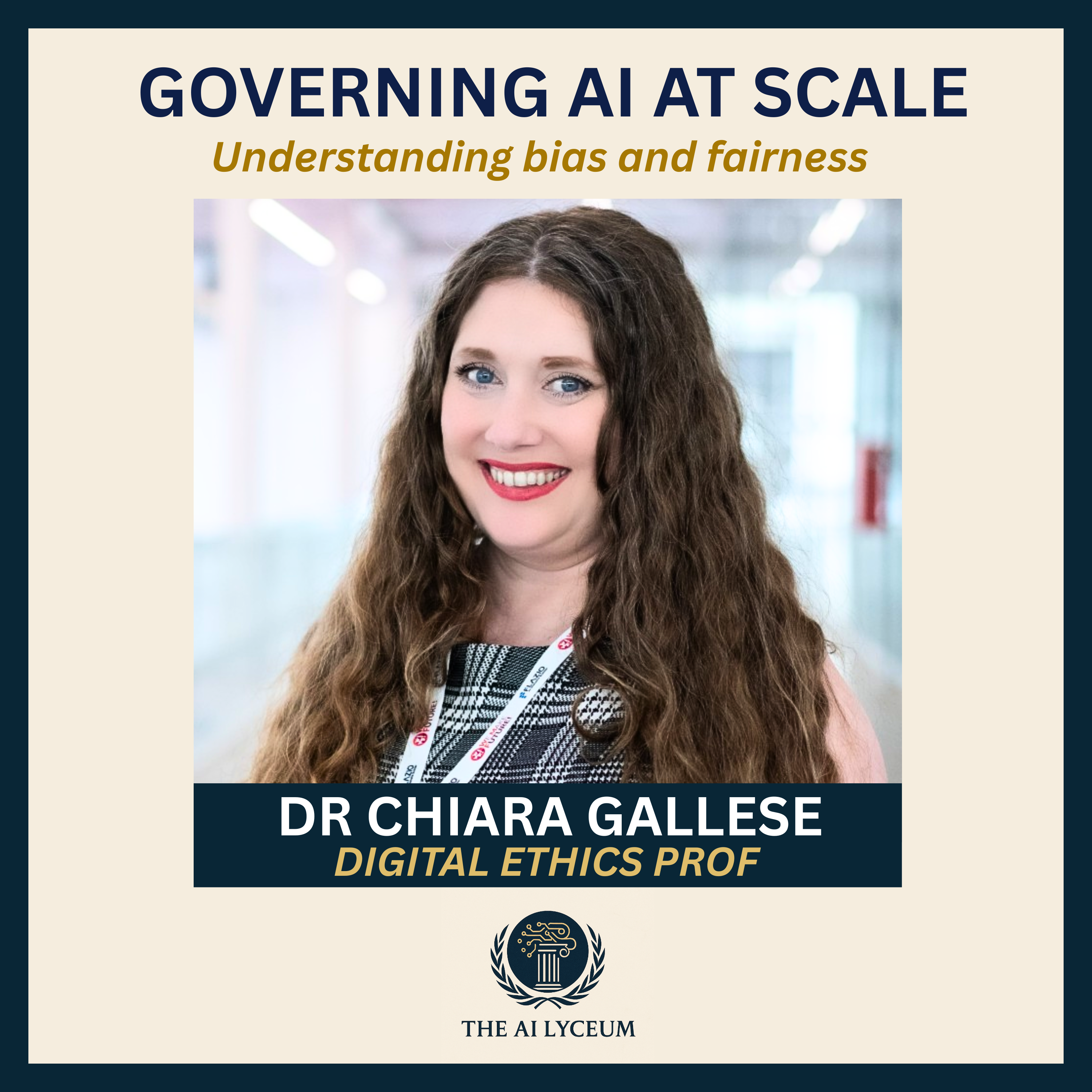
    Governing AI at Scale: Understanding Bias & Fairness [Dr. Chiara Gallese, Digital Ethics Prof] #22

    'We should improve our critical thinking' — Chiara Gallese As AI systems move from experimentation to infrastructure, governance becomes the real test. In Episode 22 of The AI Lyceum, Samraj speaks with Dr Chiara Gallese — Philosophy PhD, Adjunct Professor of Digital Ethics at Collegio Internazionale Ca’ Foscari, Researcher at Tilburg Institute for Law, Technology, and Society (TILT), and Academic Expert in the European Commission’s AI Transparency Code of Practice Working Groups. A lawyer and privacy consultant for multinationals and banks since 2015, she currently focuses her studies on the legal aspects of artificial intelligence, the ethics of data use, and data protection. She's also a TedX speaker. They explore what fairness means once AI systems are deployed at scale, where bias truly enters AI (data, model, or deployment), and how transparency obligations under the EU AI Act shape real institutional practice. Chiara explains the difference between stochastic and deterministic systems, why ignoring bias is not just unethical but poor engineering, and why governance must extend beyond frameworks into everyday use. The conversation also examines emotional attachment to generative systems, disclosure dilemmas, and why strengthening human judgment may be just as important as improving the models themselves. This is a conversation about responsibility, constitutional values, transparency, and governing intelligence in the real world. Episode Highlights 0:00 ➤ Intro / Guest Welcome 2:40 ➤ Does AI ethics improve business outcomes? 8:55 ➤ Inside the EU AI Transparency Code of Practice 15:30 ➤ Stochastic vs deterministic systems 22:10 ➤ Where bias enters AI systems 30:45 ➤ Emotional intelligence and attachment 38:20 ➤ Disclosure, labelling, and stigma 45:10 ➤ Critical thinking in the AI era 50:30 ➤ Final reflections Key Questions Explored ➤ What does fairness mean in AI governance? ➤ Where does bias originate in AI systems? ➤ Can AI emotional intelligence be trusted? ➤ Should AI-generated content always be disclosed? ➤ Is governance about frameworks or lived practice? ➤ What must humans preserve as AI advances? Listen on: YouTube – https://www.youtube.com/@The.AI.Lyceum Spotify – https://open.spotify.com/show/034vux8EWzb9M5Gn6QDMza Apple – https://podcasts.apple.com/us/podcast/the-ai-lyceum/id1837737167 Amazon – https://music.amazon.com/podcasts/5a67f821-89f8-4b95-b873-2933ab977cd3/the-ai-lyceum Website – https://theailyceum.com Hosted by Samraj Matharu — Certified AI Ethicist (Oxford) | Visiting Lecturer (Durham) #AI #AIAct #AIGovernance #DigitalEthics #Bias #Fairness #Transparency #ResponsibleAI #CriticalThinking

  • #21
    February 6 · 54 min

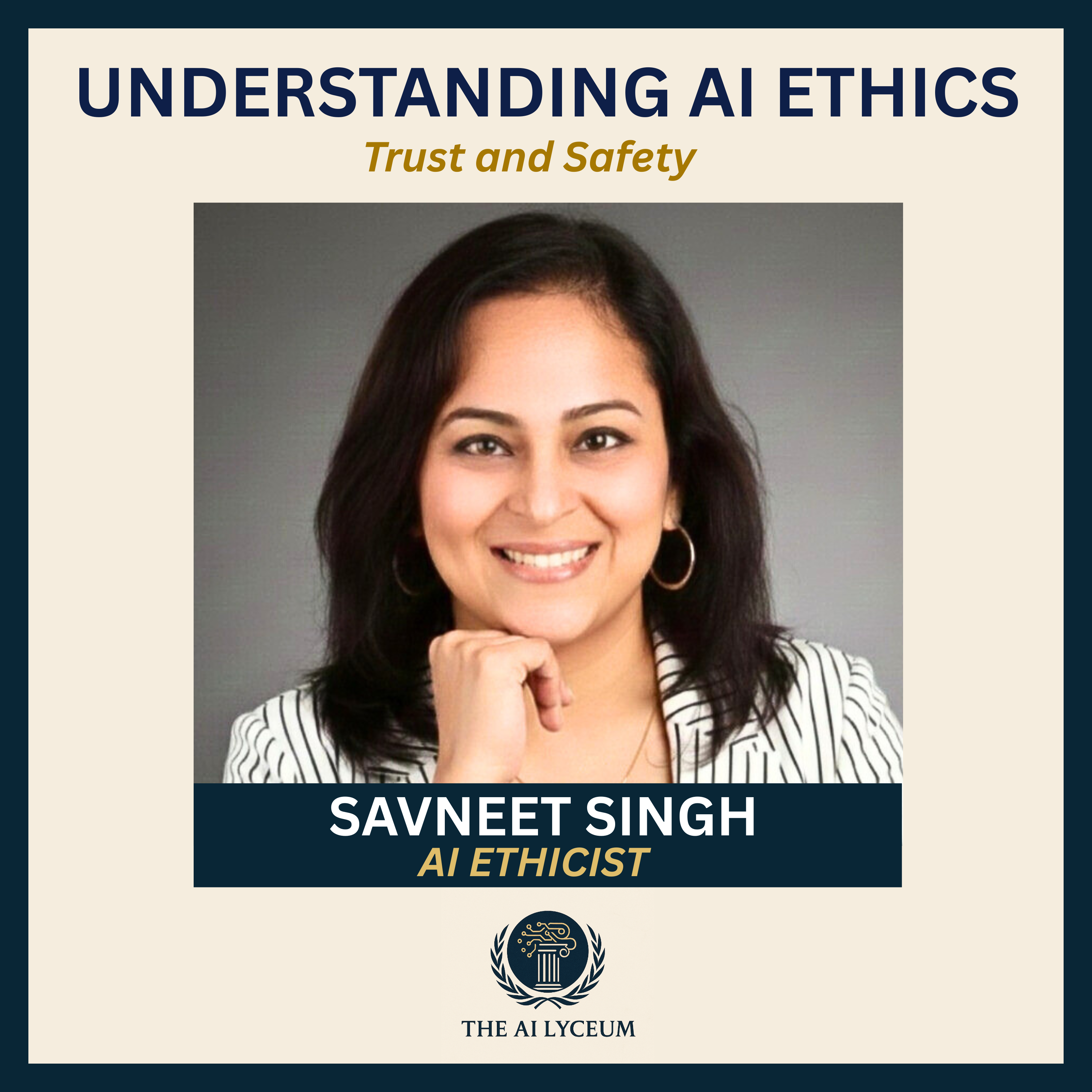
    Understanding AI Ethics: Trust and Safety [Savneet Singh, AI Ethicist] #21

    AI ethics, trust & safety explained — Savneet Singh (AI Ethicist) on building trustworthy AI systems, safety frameworks & responsible AI deployment. The AI Lyceum #21 'The machine is there to support you — not to replace your judgment. You are the one in control' — Savneet Singh As AI becomes more human-like, trust becomes harder to define — and more critical to get right. In this episode, Samraj speaks with Savneet Singh, who doesn't speak in her capacity as trust and safety lead at a top tech company, but as Visiting Lecturer at Emory University, about what it really means to trust AI systems that increasingly sound, remember, and respond like humans. Savneet breaks down why trust in AI isn't about how human it feels — it's about predictability, transparency, and alignment with human values. They explore why AI must remain a co-pilot, not an autopilot, why labeling AI-generated content matters, and how misinformation spreads not through conspiracy, but through everyday digital behaviour. The conversation tackles 'AI psychosis' emotional attachment to non-conscious systems, the ethics of AI companions, and why accountability must sit with developers, deployers, and users — not the machine. This is a conversation about responsibility, boundaries, and keeping humans firmly in control as AI becomes more powerful. WHAT YOU'LL LEARN → What trust actually means in the context of AI → Why human-in-the-loop design is non-negotiable → The difference between misinformation and disinformation → Why AI companions risk emotional substitution → How "AI psychosis" emerges through prolonged interaction → Why labelling AI content builds trust → Where accountability must sit when AI goes wrong EPISODE HIGHLIGHTS 0:00 ➤ Intro 1:50 ➤ What does "trust" really mean in AI? 4:41 ➤ Transparency, guardrails, and human-in-the-loop 7:22 ➤ Trust vs confidence 9:33 ➤ AI-generated journalism and fabricated facts 11:15 ➤ Misinformation, deception, and human responsibility 14:49 ➤ AI psychosis and emotional attachment 21:07 ➤ Losing clarity about the human–AI relationship 24:27 ➤ Supportive tools vs emotional substitution 28:49 ➤ Guardrails, free will, and ethics by design 30:20 ➤ "Digital littering" and everyday ethics 33:54 ➤ Why AI literacy matters for all ages 36:26 ➤ One practical guardrail every business should use 39:51 ➤ Trusting AI when you doubt your own judgment 42:26 ➤ Teaching children how to use AI responsibly 46:55 ➤ Why AI agents still feel risky 52:22 ➤ The accountability gap 54:00 ➤ Final message: humans must stay in control 🔗 LISTEN, WATCH & CONNECT 🌐 Join the 1K+ Community: https://linktr.ee/theailyceum 💻 Website: https://theailyceum.com ▶️ YouTube: https://www.youtube.com/@The.AI.Lyceum 🎧 Spotify: https://open.spotify.com/show/034vux8EWzb9M5Gn6QDMza 🎧 Apple: https://podcasts.apple.com/us/podcast/the-ai-lyceum/id1837737167 🎧 Amazon: https://music.amazon.com/podcasts/5a67f821-89f8-4b95-b873-2933ab977cd3/the-ai-lyceum
  • #20
    January 30 · 1 hr

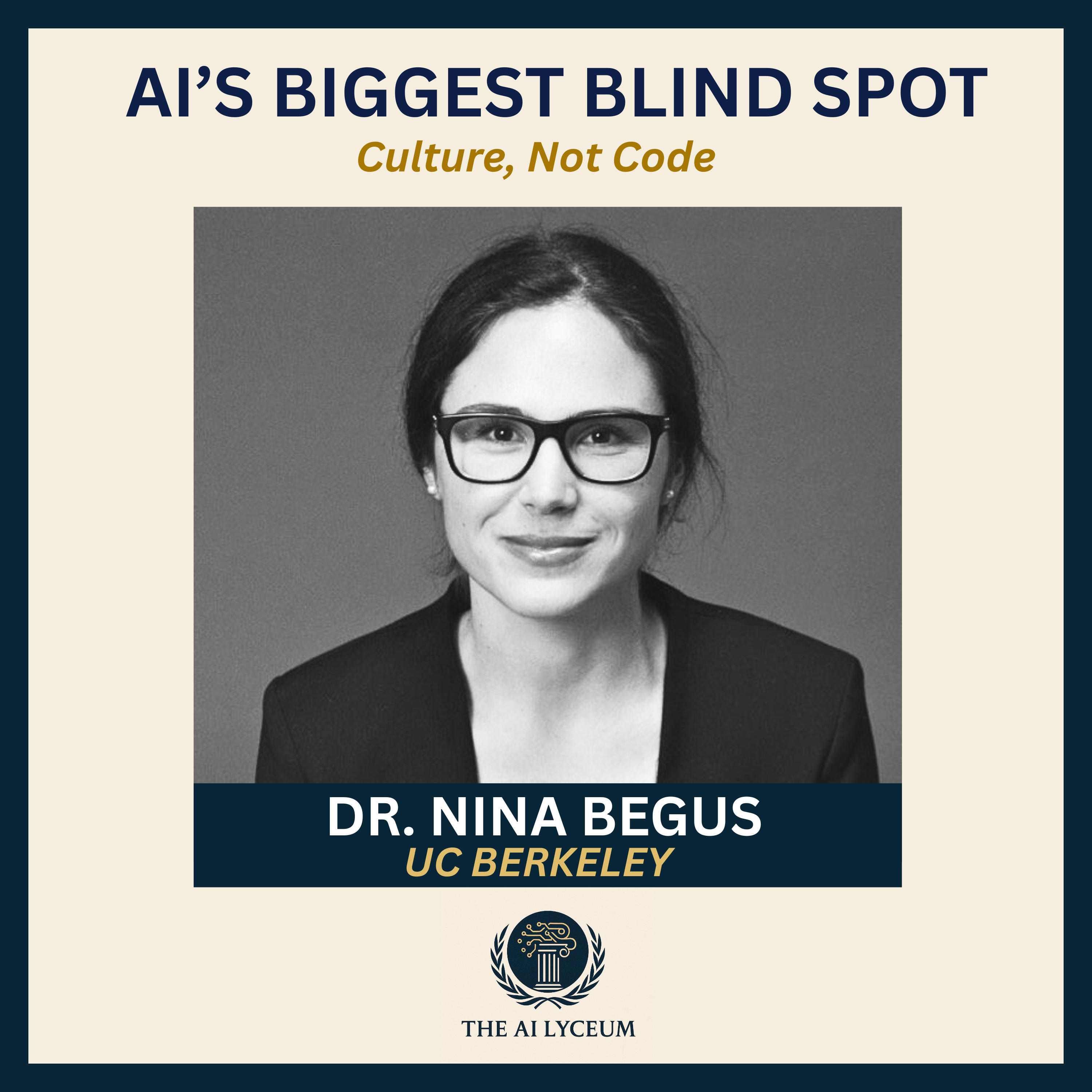
    AI's Biggest Blind Spot: Culture, Not Code [Dr. Nina Begus, Berkeley] #20

    Why AI’s biggest blind spot is culture, not code — Dr Nina Begus (UC Berkeley) on cultural bias in AI, language models & cross-cultural AI development. The AI Lyceum #20 🎓 20% Off | Oxford AI Executive Programmes https://oxsbs.link/ailyceum "Humanities scholars need to be at the table where AI is being built — ethics must be embedded from the start, not added as a band-aid afterward" — Dr. Nina Begus AI doesn't just process data — it processes human culture. In this episode, Samraj speaks with Dr. Nina Begus, Philosophy PhD from Harvard, UC Berkeley researcher and author of Artificial Humanities, who argues that understanding AI requires more than engineering — it requires the humanities. Nina reveals how ancient myths like Pygmalion still shape how we design AI today, why language models inherit our cultural assumptions, and what happens when language gets stripped from human experience. They explore Ex Machina's warning about artificial companions, the rise of "mind crime" with Neuralink, and whether transformers are really the future. WHAT YOU'LL LEARN: → How the Pygmalion myth influences AI design → Why Ex Machina matters for understanding AI relationships → What "mind crime" means in the age of Neuralink → The difference between trust and reliability in AI → Why interpretability unlocks creativity and control → Are transformers really it — or is there more ahead? EPISODE HIGHLIGHTS 0:00 ➤ Intro 3:00 ➤ What humanities reveal about AI 10:00 ➤ Academia meets Silicon Valley 13:00 ➤ "Will I be replaced?" — the 2023 question 17:00 ➤ Writers respond: First Encounters book 21:00 ➤ The Pygmalion myth in modern tech 24:00 ➤ Ex Machina & artificial companions 28:00 ➤ Neuralink, neuroethics & mind crime 33:00 ➤ Ethics from the start vs band-aid approach 36:00 ➤ Getting the transformer paper day one 42:00 ➤ Are transformers the future? 45:00 ➤ Determinism vs creativity in AI 48:00 ➤ The black box problem 53:00 ➤ Tokenization: language without meaning 58:00 ➤ Trust vs reliability in machines 1:02:00 ➤ Would you trust a machine? 🔗 LISTEN, WATCH & CONNECT 🎓 Oxford Programme (20% Off): https://oxsbs.link/ailyceum 🌐 Join 1K+ Community: https://linktr.ee/theailyceum 💻 Website: https://theailyceum.com ▶️ YouTube: https://www.youtube.com/@The.AI.Lyceum 🎧 Spotify: https://open.spotify.com/show/034vux8EWzb9M5Gn6QDMza 🎧 Apple: https://podcasts.apple.com/us/podcast/the-ai-lyceum/id1837737167 🎧 Amazon: https://music.amazon.com/podcasts/5a67f821-89f8-4b95-b873-2933ab977cd3/the-ai-lyceum ABOUT THE AI LYCEUM The AI Lyceum explores AI, ethics, philosophy, and human potential — hosted by Samraj Matharu, Certified AI Ethicist (Oxford) and Visiting Lecturer at Durham University.
  • #19
    January 21 · 56 min

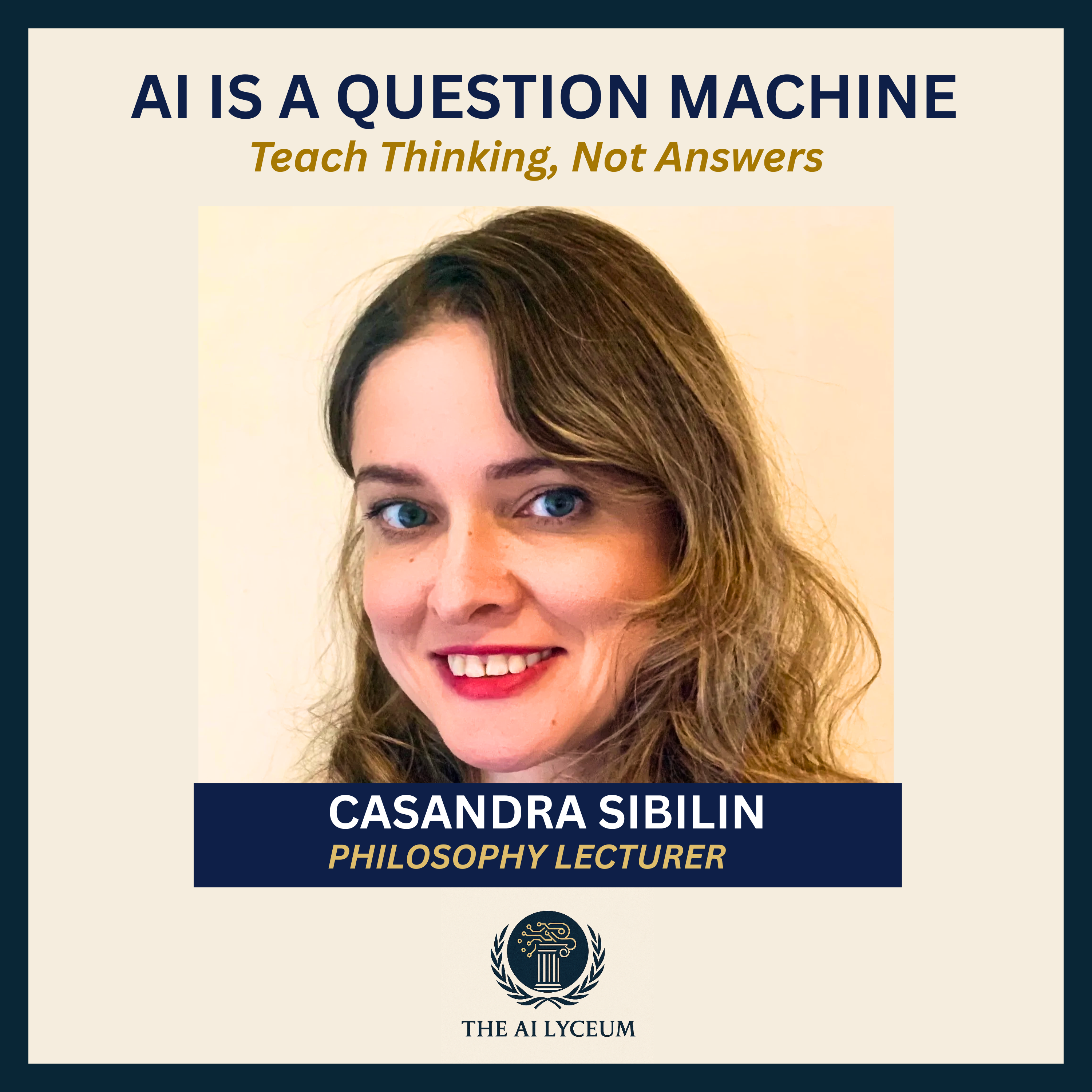
    #19 - AI Is a Question Machine: Teaching Thinking, Not Answers [Casandra Sibilin, Philosophy Lecturer, CUNY]

    AI is not an oracle — it is a question machine. In this episode, Samraj Matharu speaks with Cassandra Sibilin, Philosophy Lecturer at CUNY (City University of New York) and a leading practitioner in AI-assisted education. Cassandra works at the intersection of philosophy, pedagogy, and emerging AI tools, helping educators and students move beyond fear, hype, and automation toward deeper thinking. Rather than treating AI as an answer engine or oracle, she argues for a different framing: AI as a question machine — a tool that challenges assumptions, surfaces multiple perspectives, and sharpens human judgment. Together, they explore why philosophy has become essential AI literacy, how “flipping the interaction” with AI changes learning outcomes, and why critical thinking is not replaced by automation — but pressured into relevance by it. The conversation examines dialectic thinking, growth-mindset tutors, the risks of anthropomorphising AI, and how education must evolve toward dialogue, inquiry, and community. This is a long-form, reflective discussion about authority, knowledge, ethics, and what it really means to teach — and think — in the age of generative AI. EPISODE HIGHLIGHTS 0:00 ➤ Intro / Guest welcome 3:10 ➤ Why AI isn’t an oracle 9:20 ➤ Philosophy as AI literacy 15:40 ➤ Flipping the interaction: AI that asks questions back 23:30 ➤ Dialectic thinking vs hype and panic 31:10 ➤ Anthropomorphising AI: bug or feature? 38:50 ➤ Ethics, growth mindset, and responsible AI tutors 46:00 ➤ Education in 2050: AI tutors and human community 53:30 ➤ Closing reflections & audience question 🔗 LISTEN, WATCH & CONNECT 🎓 Oxford Programme (20% Off): https://oxsbs.link/ailyceum 🌐 Join the 1K+ Community: https://linktr.ee/theailyceum 💻 Website: https://theailyceum.com ▶️ YouTube: https://www.youtube.com/@The.AI.Lyceum 🎧 Spotify: https://open.spotify.com/show/034vux8EWzb9M5Gn6QDMza 🎧 Apple: https://podcasts.apple.com/us/podcast/the-ai-lyceum/id1837737167 🎧 Amazon: https://music.amazon.com/podcasts/5a67f821-89f8-4b95-b873-2933ab977cd3/the-ai-lyceum ABOUT THE AI LYCEUM The AI Lyceum™ is an independent global community exploring AI, ethics, philosophy, and human potential — hosted by Samraj Matharu, Certified AI Ethicist (University of Oxford) and Visiting Lecturer at Durham University. “1K+ members from OpenAI, DeepMind, Oxford, Google, and more.”

  • #18
    January 13 · 1 hr 43 min

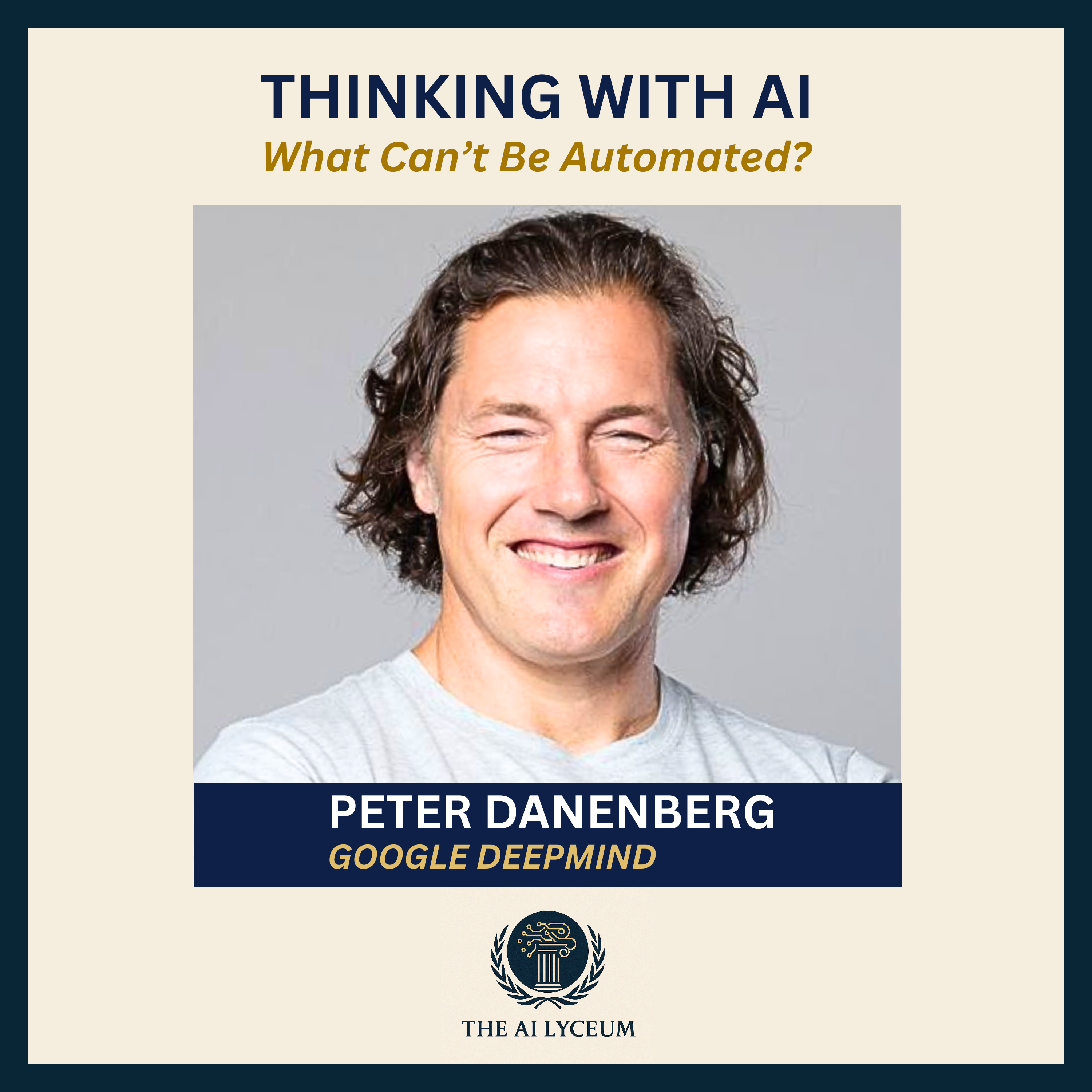
    #18 – Thinking With AI: What Can’t Be Automated? [Peter Danenberg, Google DeepMind]

    “The things we can say are limited by the things we can think.” In this episode, Samraj Matharu speaks with Peter Danenberg, Senior Software Engineer specialising in rapid LLM prototyping at Google DeepMind, based in Palo Alto, California. Peter works at the frontier where large language models move from research to real-world systems. Together, they explore what it really means to think with AI — not to outsource thinking to machines, but to use them as tools that challenge, pressure-test, and refine human judgment. The conversation goes beyond model performance into philosophy, ethics, and cognition. Peter reflects on why intelligence is not the same as thinking, how critical thinking emerges from moments of crisis, and why philosophy remains the underlying language of reasoning in an age of automation. They examine our instinct to anthropomorphise AI — questioning whether this is a flaw or an evolutionary feature — and discuss why ethics in LLM development has largely focused on harm reduction rather than human flourishing. The episode also introduces the idea of peirastic AI: systems designed not to reassure users, but to test and sharpen their thinking. This is a long-form, reflective conversation about judgment, responsibility, and the limits of automation — and what still belongs, fundamentally, to humans. EPISODE HIGHLIGHTS 0:00 ➤ Intro / Guest welcome 4:00 ➤ Peter’s role at DeepMind and rapid LLM prototyping 9:30 ➤ What “thinking with AI” really means 15:00 ➤ Intelligence vs thinking: where people get confused 22:00 ➤ Philosophy as the language of thinking 30:00 ➤ Critical thinking, crisis, and discernment 38:00 ➤ Anthropomorphising AI: bug or feature? 47:00 ➤ Ethics in LLMs and the limits of harm reduction 56:00 ➤ Automation, judgment, and human responsibility 1:05:00 ➤ Peirastic AI: systems that test us 1:15:00 ➤ Interfaces, embodiment, and tactile thinking 1:26:00 ➤ What can’t be automated 1:36:00 ➤ Closing reflections and audience question 🔗 LISTEN, WATCH & CONNECT 🎓 Oxford Programme (20% Off): https://oxsbs.link/ailyceum 🌐 Join the 1K+ Community: https://linktr.ee/theailyceum 💻 Website: https://theailyceum.com ▶️ YouTube: https://www.youtube.com/@The.AI.Lyceum 🎧 Spotify: https://open.spotify.com/show/034vux8EWzb9M5Gn6QDMza 🎧 Apple: https://podcasts.apple.com/us/podcast/the-ai-lyceum/id1837737167 🎧 Amazon: https://music.amazon.com/podcasts/5a67f821-89f8-4b95-b873-2933ab977cd3/the-ai-lyceum ABOUT THE AI LYCEUM The AI Lyceum is a global community exploring AI, ethics, creativity, and human potential — hosted by Samraj Matharu, Certified AI Ethicist (Oxford) and Visiting Lecturer at Durham University. #ai #genai #llm #google #deepmind #aiethics #ethics #philosophy #thinking #criticalthinking #automation #humanjudgment #agenticai #responsibleai #theailyceum
  • #17
    January 5 · 1 hr 11 min

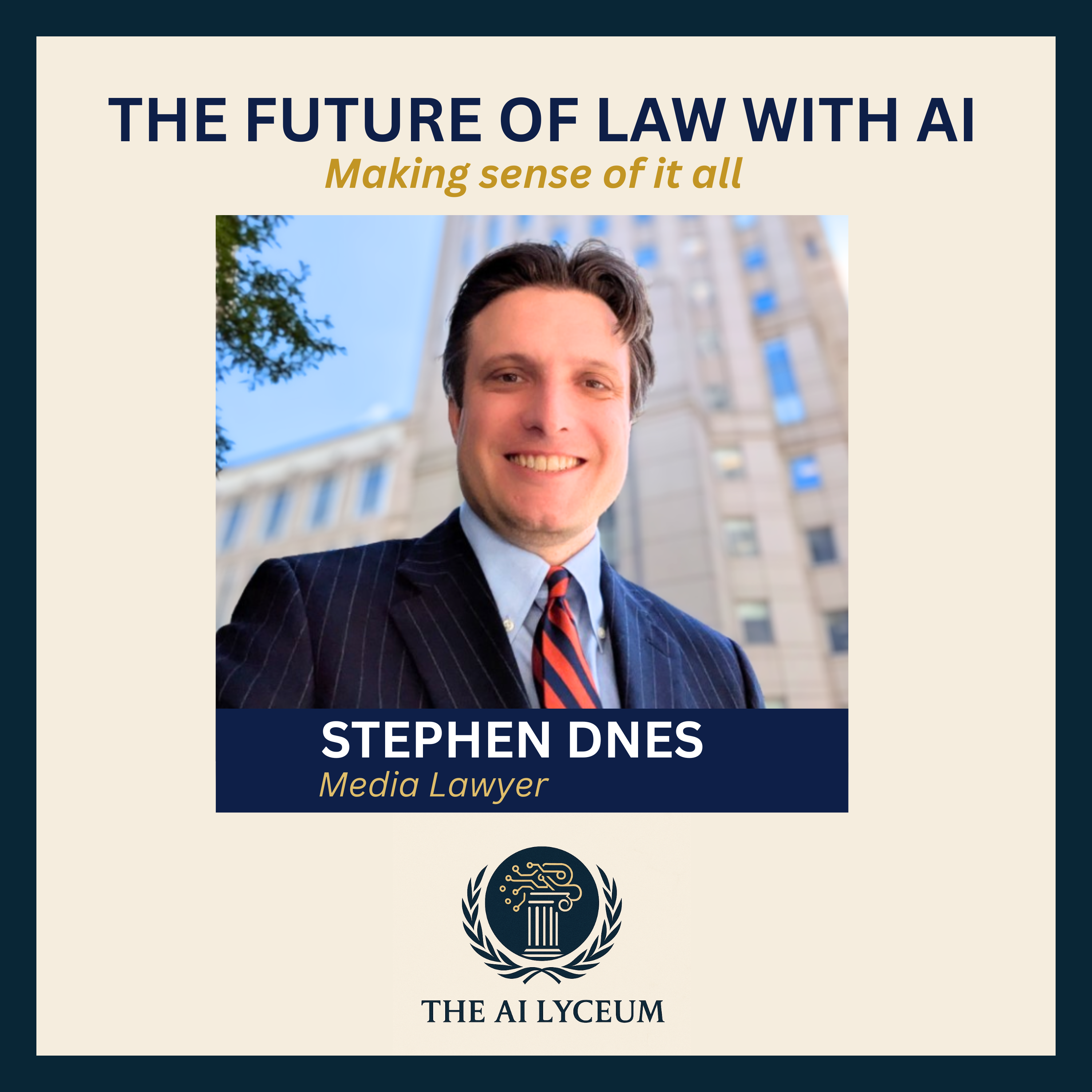
    #17 – The Future of Law with AI: Making Sense of It All [Stephen Dnes, Lawyer]

    “Law does not stop innovation — but poor regulation can quietly distort it.” In this episode, Samraj speaks with Stephen Dnes, media lawyer, partner at Dnes & Felver, and lecturer in law at Royal Holloway, University of London, about one of the most important questions facing AI today: How should law assign responsibility when AI systems act, decide, and transact autonomously? Stephen brings a rare transatlantic legal perspective, having worked across UK, EU, and US competition, data, and technology regulation. Together, they explore how existing legal doctrine struggles with agentic systems, why GDPR and the EU AI Act often collide rather than complement one another, and how concepts like liability, mens rea, hazard, and risk must evolve in an AI-mediated world. The conversation moves beyond surface-level AI debates into deeper legal, economic, and philosophical territory — including how agentic contracts change verification and accountability, why today’s AI systems are better at averaging than wisdom, and what trust really means as humans gradually leave the loop. Whether you work in law, policy, advertising, technology, or AI strategy, this episode offers a rare, clear-eyed view of how legal systems may adapt to the next era of automation. EPISODE HIGHLIGHTS 0:00 ➤ Intro / Guest Welcome 3:00 ➤ Defining data, information, and regulation 8:00 ➤ Why law always lags innovation 13:00 ➤ GDPR vs the EU AI Act: a structural tension 18:00 ➤ Hazard vs risk and the limits of precaution 24:00 ➤ Mens rea, strict liability, and AI systems 32:00 ➤ Agentic contracts and responsibility chains 41:00 ➤ Disintermediation and the future of advertising markets 50:00 ➤ Trust, brands, and humans leaving the loop 58:00 ➤ Artificial intelligence vs artificial wisdom 1:05:00 ➤ Law, philosophy, and the role of human judgment 1:09:00 ➤ Closing reflections & audience question 🔑 KEY QUESTIONS ANSWERED ➤ How should responsibility be assigned when AI acts autonomously? ➤ Why do GDPR and the EU AI Act often pull in opposite directions? ➤ What is the legal difference between hazard and risk — and why does it matter? ➤ Can concepts like mens rea apply to AI systems at all? ➤ How do agentic contracts change verification and liability? ➤ Why AI systems average well but struggle with wisdom ➤ What does “trust” mean in an AI-mediated economy? 🔗 SUBSCRIBE TO THE AI LYCEUM https://www.youtube.com/@The.AI.Lyceum 🎓 20% Off | Oxford AI Ethics Executive Programme https://oxsbs.link/ailyceum 🔗 Website: https://theailyceum.com 🔗 Instagram: https://www.instagram.com/theailyceum 🔗 LinkedIn Company Page: https://www.linkedin.com/company/108295902/admin/dashboard/ 🔗 LinkedIn Community: https://linktr.ee/theailyceum #ai #law #aigovernance #aiethics #regulation #agenticai #liability #trust #gdpr #euaiact #digitalmarkets #advertising #adtech #policy #philosophy #technology #theailyceum
  • #16
    Dec 11, 2025 · 50 min

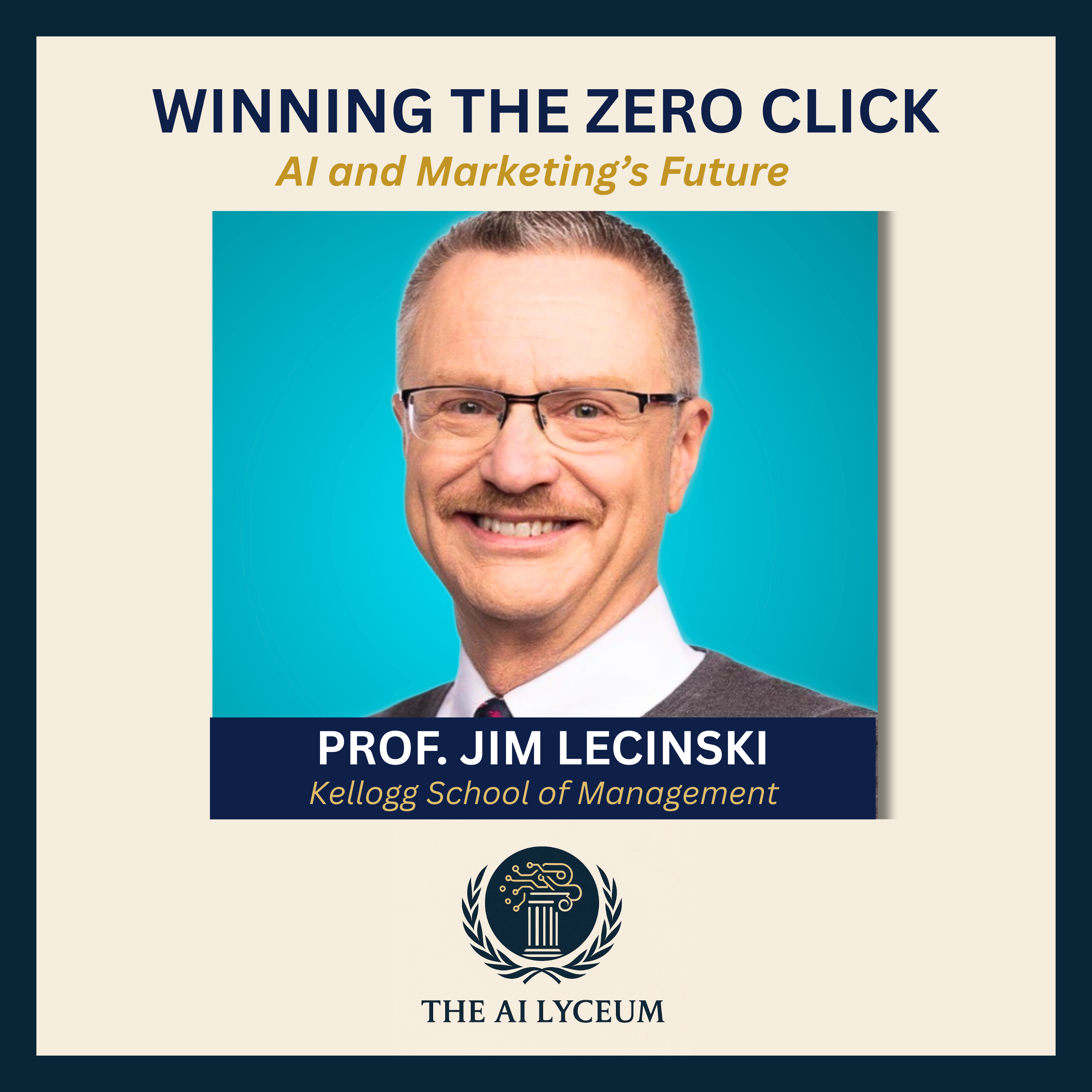
    #16 – Winning the Zero Click: AI and Marketing’s Future [Professor Jim Lecinski Kellogg. School of Management]

    🎓 20% Off | Oxford AI Ethics Executive Programme https://oxsbs.link/ailyceum “AI raises the ceiling and raises the floor. It is not the end of marketing. It is the beginning of better marketing.” — Jim Lecinski In this episode, Samraj speaks with Jim Lecinski, Clinical Professor of Marketing at Northwestern University’s Kellogg School of Management and former Google VP. He created ZMOT (Zero Moment of Truth), the idea that people research and judge brands long before they reach a store or website. His new book, The AI Marketing Canvas, Second Edition: A Five-Step AI Plan for Marketers, offers a clear method for adopting AI in modern organisations. In the Zero-Click Era, where AI answers instead of sending users to links, this work becomes essential. We explored how AI-first search, LLMs and agentic interfaces are changing discovery and consumer behaviour. Jim explains how models gather and refine information, why answers differ and how brands can prepare for a world where clicks fall. He argues for clear use cases, real value creation and avoiding hype. We explore ethics, bias and how brands must balance financial, brand and community value. EPISODE HIGHLIGHTS 0:00 ➤ Intro / Guest Welcome 1:00 ➤ Why AI is reshaping marketing 3:00 ➤ ZMOT explained and Zero Click’s rise 6:00 ➤ The 2x2 model for real AI use cases 10:00 ➤ Efficiency traps 13:00 ➤ How LLMs retrieve and refine information 16:00 ➤ Variability, trust and personalisation 20:00 ➤ Ethics, bias and community value 25:00 ➤ Preparing for AI-first search 30:00 ➤ Agentic assistants and commerce 35:00 ➤ Wow moments with AI 40:00 ➤ UI, usability and the next era 45:00 ➤ Jim’s closing challenge 50:00 ➤ Closing 🔗 LISTEN, WATCH & CONNECT 🎓 Oxford Programme (20% Off): https://oxsbs.link/ailyceum 🌐 Join the 1K+ Community: https://linktr.ee/theailyceum 💻 Website: https://theailyceum.com 🎧 Spotify: https://open.spotify.com/show/034vux8EWzb9M5Gn6QDMza 🎧 Apple: https://podcasts.apple.com/us/podcast/the-ai-lyceum/id1837737167 🎧 Amazon: https://music.amazon.com/podcasts/5a67f821-89f8-4b95-b873-2933ab977cd3/the-ai-lyceum ▶️ YouTube: https://www.youtube.com/@The.AI.Lyceum 📘 Jim’s Book: https://www.amazon.co.uk/Marketing-Canvas-Second-Five-Step-Marketers-ebook/dp/B0G59PLDBM/ ABOUT THE AI LYCEUM The AI Lyceum is a global community exploring AI, ethics, creativity and human potential, hosted by Samraj Matharu, Certified AI Ethicist (Oxford) and Visiting Lecturer at Durham University. #ai #genai #llm #openai #google #nvidia #agent #agentic #marketing #advertising #media #commerce #ecommerce #zeroclick #zmot #jimlecinski #aimarketing #consumerjourney #search #business #entrepreneur #entrepreneurship #aiethics #ethics #philosophy #theailyceum
Showing 1–20 of 21 episodes