Skip to content
Artwork for The Advanced Women’s Health Podcast
Health & FitnessAlternative Health

The Advanced Women’s Health Podcast

The Advanced Women’s Health Podcast

Welcome to the Advanced Women’s Health Podcast, your trusted source for guidance and the latest insights in holistic women’s health. Hosted by Dr. Sarah Wilson, ND, this podcast is dedicated to empowering women to thrive at every stage of their lives. Each episode features in-depth discussions with leading health professionals, cutting-edge medical research, and practical wellness tips to help you achieve optimal health and well-being.

Tune in to discover how you can take charge of your health and transform your life with the power of naturopathic medicine and holistic wellness.

Play
  • 20 episodes
  • weekly
  • Avg 33 min
  • English
  • S1 · E93
    Yesterday · 35 min

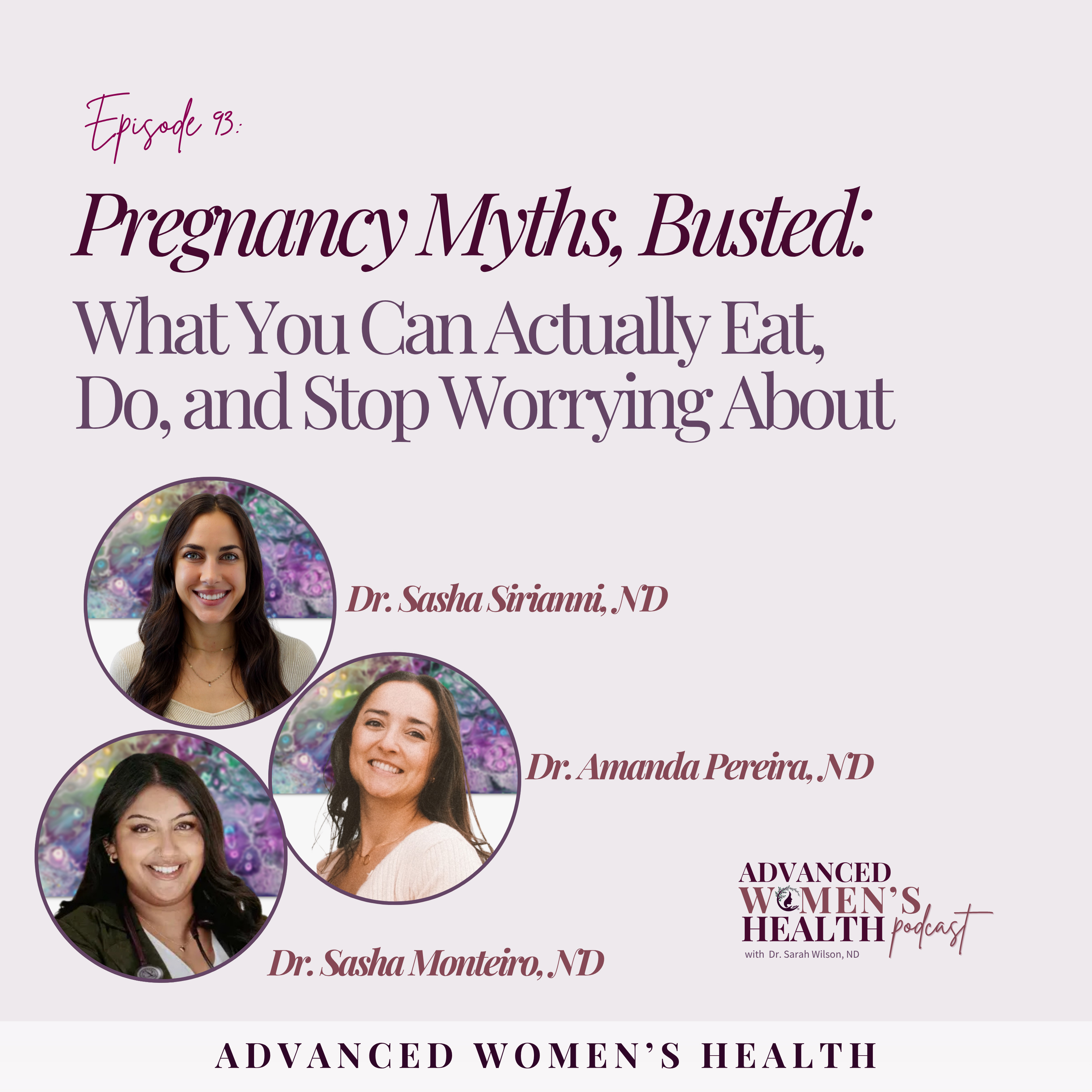
    Episode 93: Pregnancy Myths, Busted: What You Can Actually Eat, Do, and Stop Worrying About

    Up to 80% of pregnant people receive advice that directly contradicts current medical evidence — this episode cuts through the noise. In This Episode, We Answer: Can I drink coffee while pregnant? Is it safe to have sex during pregnancy? Should I be exercising while pregnant? Am I really eating for two? Do I need to "bounce back" after having a baby? Key Takeaways: Up to 200 milligrams of caffeine per day is safe during pregnancy according to current guidelines. That is roughly one 12-ounce cup of brewed coffee or two shots of espresso. Matcha is about 40 to 60 milligrams per cup. Exercise during pregnancy is not only safe, it is recommended. The 140 beats per minute heart rate cap has been removed. Canada's 2019 guidelines recommend working up to 150 minutes per week at moderate intensity, and research shows blood flow to the baby is protected even during high-intensity exercise. "Bounce back" is not a health goal. Your brain, your body, and your physiology have been reprogrammed in pregnancy to optimize your new role. Postpartum recovery involves your pelvic floor, your core, your hormones, your mental health, and your energy — not just what you see in the mirror. Quick Answers (FAQ): Q: Can I drink coffee while pregnant? A: Yes, in moderation. Current guidelines recommend staying under 200 milligrams of caffeine per day. That is one 12-ounce brewed coffee or two espresso shots. Matcha is lower at 40 to 60 milligrams per cup. We go deeper into this at 03:45. Q: Is sex safe during pregnancy? A: Yes, for most pregnancies. There are specific medical conditions like placenta previa, cervical insufficiency, and preterm premature rupture of membranes where pelvic rest is prescribed, and your provider will tell you if that applies to you. Otherwise there is no contraindication. We go deeper into this at 05:30. Q: Should I be exercising while pregnant? A: Yes. The old 140 beats per minute heart rate cap has been removed. Canada's 2019 guidelines recommend 150 minutes per week of moderate-intensity activity. Research using fetal heart rate monitoring during exercise has shown that blood flow to the baby is protected, even at high intensities. We go deeper into this at 10:15. Q: How much extra food do I actually need during pregnancy? A: Almost none in the first trimester. A modest increase in the second trimester and a bit more in the third. "Eating for two adults" is not what the evidence supports. We go deeper into this at 15:00. Resources Mentioned: Canada's 2019 Pregnancy-Specific Physical Activity Guidelines (free access online) Related Episodes: Fertility Masterclass Part 1: Are You Actually Ovulating? Fertility Masterclass Part 2: The Immune System's Role in Getting and Staying Pregnant Coming next in the fertility series: circulation and structural fertility Connect With Us: Website: advancedwomenshealth.ca Instagram: @drsarah_nd | @advancedwomenshealth Book an appointment: advancedwomenshealth.ca Leave a review: wherever you're listening, it helps other women find this episode
  • S1 · E91
    July 30 · 53 min

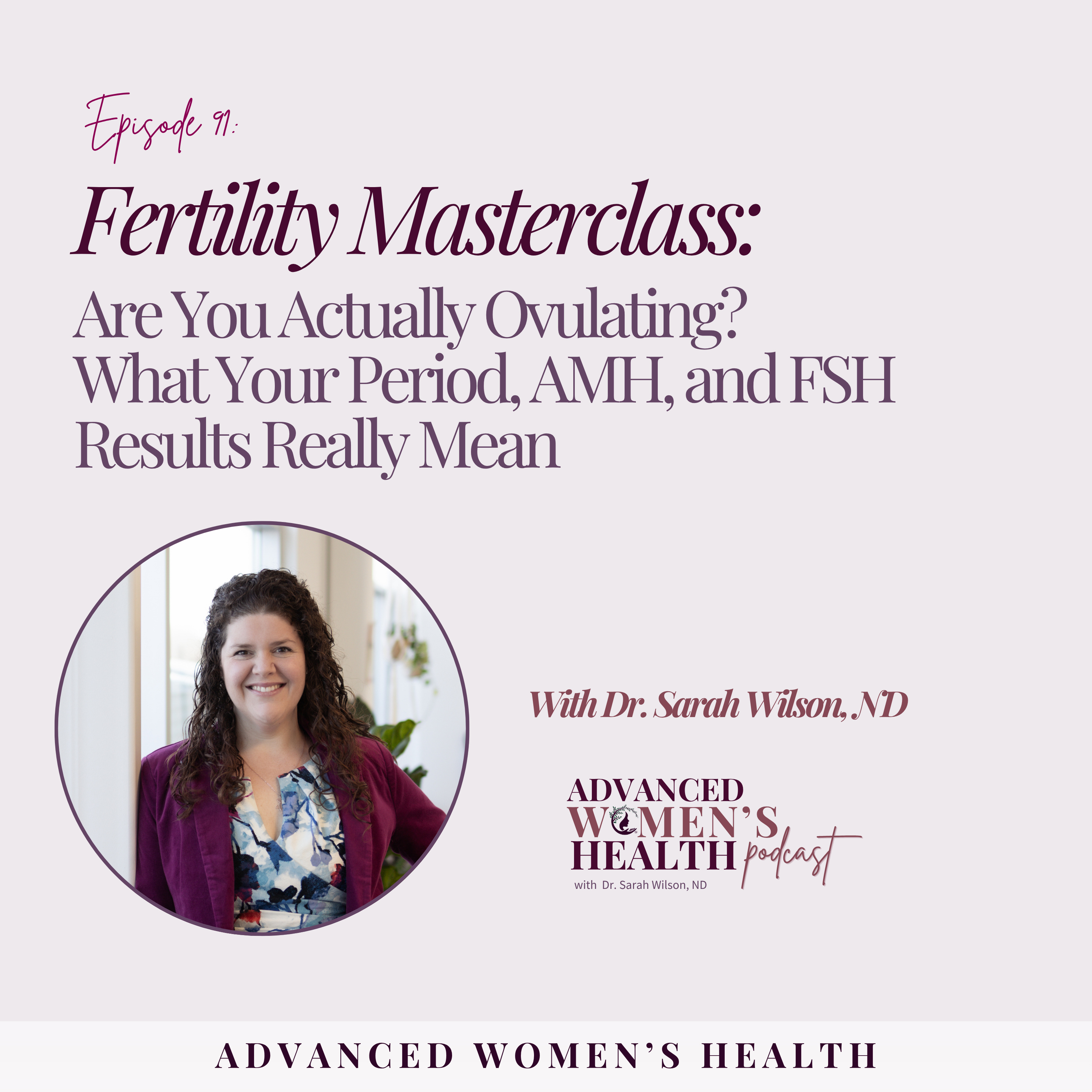
    Episode 91: Fertility Masterclass: Are You Actually Ovulating? What Your Period, AMH, and FSH Results Really Mean

    If you have a regular period and assume that means you are ovulating, this episode will change how you understand your cycle, your hormones, and your fertility. In This Episode, We Answer: How do I know if I'm actually ovulating? What does AMH actually mean and is mine too low? Can I have a regular period and still not ovulate? Why does it take so long to get a fertility diagnosis? What blood tests should I ask for if I'm trying to conceive? Key Takeaways: Having a regular period does not mean you are ovulating. A bleed can occur without ovulation, and the only way to confirm ovulation is by tracking LH, progesterone, and estrogen through the cycle. Not just on day 2 or 3. AMH is a useful marker of ovarian reserve but it is not the complete picture. Primordial follicle pools do not contribute to AMH. A low AMH with a normal antral follicle count can indicate ovarian inflammation, stress, or follicles stuck in arrest, not necessarily permanent diminished reserve. Not ovulating has consequences far beyond fertility. Progesterone and estrogen affect the immune system, brain health, glucose metabolism, muscle development, sleep quality, and inflammation. If you are not ovulating at any age, it is worth understanding why. Quick Answers (FAQ): Q: How do I know if I'm actually ovulating?A: A period alone does not confirm ovulation. You need to track LH and progesterone across your full cycle. At-home urinary hormone monitors like Mira can show you the full picture. Blood work on cycle day 2 to 4 (FSH, LH, estradiol) plus a progesterone test 7 days after ovulation gives a clearer view. We go deeper into this at 07:00. Q: What does AMH actually mean and is mine too low?A: AMH (anti-Mullerian hormone) is a marker of how many follicles are actively developing, not a direct count of all your eggs. Primordial follicles, which are eggs in reserve, do not contribute to AMH. A low AMH does not necessarily mean you have no eggs. It can mean your follicles are stuck and not being recruited due to inflammation or stress. We go deeper into this at 18:00. Q: Can I have a regular period and still not ovulate?A: Yes. Dr. Sarah describes a patient who bled every 30 to 40 days but had no evidence of ovulation on cycle monitoring. The bleed was not a true period because no egg had been released and no progesterone had been made. We go deeper into this at 09:30. Q: What blood tests should I ask for if I'm trying to conceive?A: At minimum: FSH, LH, and estradiol on cycle day 2 to 4. AMH. Progesterone 7 days post-ovulation. Prolactin. Thyroid (TSH, T3, T4, anti-TPO, anti-TG). Two-hour insulin and glucose challenge test. Inflammatory markers (ESR, CRP). HbA1c, vitamin D, iron, ferritin. If PMOS or PCOS is suspected, add testosterone and DHEA. We go deeper into this at 49:00. Resources Mentioned: Mira: at-home urinary hormone monitor used at AWH for cycle tracking AWH Fertility Fellowship: advanced fertility training for AWH practitioners Nature article referenced: "Anti-Mullerian Hormone as an Ovarian Reserve Marker in Primary Ovarian Insufficiency" Book a fertility consult: advancedwomenshealth.ca Email the team: info@advancedwomenshealth.ca Advanced Men's Health (sperm-side fertility): advancedmenshealth.ca Related Episodes: Episode 81: PCOS is now PMOS, what does it mean for you Episode 86: Metabolic Rehab Type 1, insulin and insulin resistance Connect With Us: Website: advancedwomenshealth.ca Instagram: @drsarah_nd | @advancedwomenshealth Book a fertility consult: advancedwomenshealth.ca Email: info@advancedwomenshealth.ca Leave a review: wherever you're listening, it helps other women find this episode
  • S1 · E90
    July 23 · 38 min

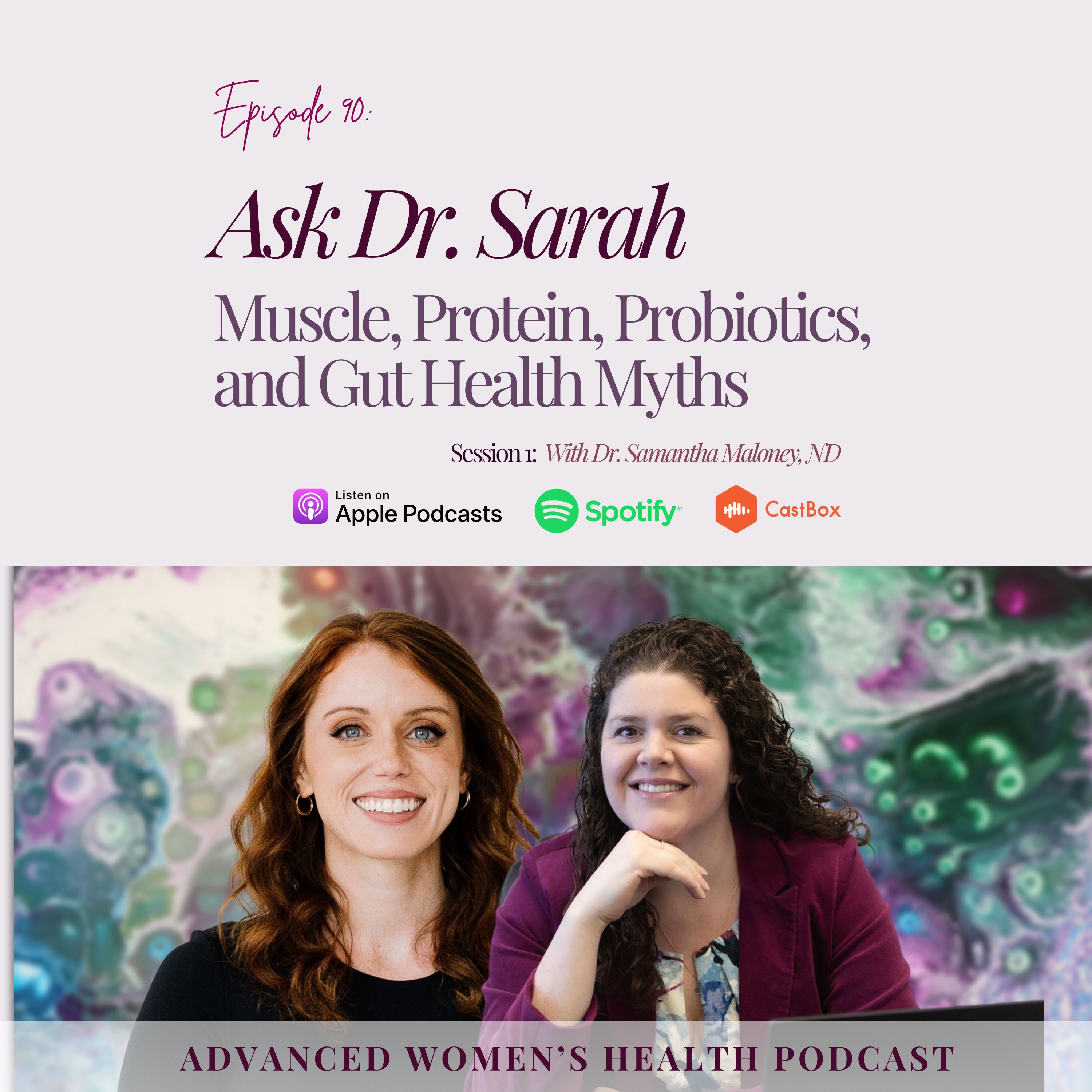
    Episode 90: Ask Dr. Sarah: Muscle, Protein, Probiotics, and Gut Health Myths

    If you have been wondering why your supplements and fitness routine are not moving the needle, Dr. Sarah is answering the questions patients are actually asking in clinic. In This Episode, We Answer: Is muscle mass really that important for inflammation and metabolism? How much protein do I actually need to build muscle? Does my protein intake change if I have insulin resistance? Are probiotics actually worth taking? Do I need to worry about pre- and post-workout nutrition before fixing my basics? Key Takeaways: Muscle is not just for strength. It is your main glucose disposal site, a source of immune-signaling compounds called myokines, and a key factor in bone health, insulin sensitivity, and longevity. Building and preserving it is one of the highest-yield things you can do for your health at any age. Your protein requirements depend on your metabolic state. A metabolically healthy person and someone with insulin resistance need different amounts and types of protein to stimulate muscle growth. One gram per pound is a reference for healthy people, not a universal prescription. Most people do not need a probiotic. In many cases, gut symptoms come from too many bacteria, not too few. Adding a probiotic to an already-overgrown environment can make symptoms worse. The more important question is why the terrain allowed those bugs to overgrow in the first place. Quick Answers (FAQ): Q: Is muscle mass really that important for inflammation and metabolism? A: Yes. Muscle is your main glucose disposal site, produces immune-signaling compounds called myokines, supports bone density, and plays a direct role in regulating inflammation. The research shows low muscle mass and high inflammation are closely correlated, though the causation runs both ways. We go deeper into this at 03:45. Q: How much protein do I actually need to build muscle? A: For metabolically healthy people eating animal-based protein, 25 to 30 grams per meal is enough to trigger muscle protein synthesis via leucine. But this number changes significantly if you have insulin resistance, high inflammation, or are older. There is no universal answer without knowing your metabolic state. We go deeper into this at 10:45. Q: Are probiotics actually worth taking? A: Sometimes, but most people do not need them. Many gut symptoms come from bacterial overgrowth, not bacterial deficiency. Adding more bacteria to an overloaded environment worsens symptoms. The goal is to understand why the terrain allowed the overgrowth and fix that, rather than use a probiotic as a long-term fix. We go deeper into this at 25:00. Q: Do I need to worry about pre and post-workout nutrition before fixing my basics? A: No. If you are dealing with insulin resistance, the priority is getting your general daily meals right first: protein at every meal, stable blood sugar, consistent timing. Micromanaging your post-workout protein shake while eating a chocolate chip muffin for breakfast is backwards. We go deeper into this at 19:30. Resources Mentioned: Advanced Metabolic Rehab program: advancedwomenshealth.ca Clinically guided programs: info@advancedwomenshealth.ca Advanced Men's Health: advancedmenshealth.ca Dr. Sam: Dr. Samantha Maloney, ND, AWH Brooklyn/Whitby location

  • S1 · E89
    July 16 · 21 min

    Episode 89: The Real Reason You're Gaining Belly Fat in Perimenopause

    If what used to work has stopped working and nobody can tell you why, this episode is for you. In This Episode, We Answer: Why am I gaining belly fat in perimenopause when nothing in my diet changed? What is visceral fat and why is it different from regular fat? Can perimenopause start in your 30s? Why can't I lose weight no matter what I do in perimenopause? What labs should I get to understand my hormones and metabolism? Key Takeaways: Perimenopause is not just a hormonal event. It is a metabolic one. When hormones fluctuate rapidly, the body shifts from depositing subcutaneous fat (under the skin) to visceral fat (around the organs). These two types of fat do not respond to the same interventions. Caloric restriction and resistance training alone are not enough to address visceral fat in perimenopause. The research is clear on this. You also need Zone 2 cardio, specific protein and carbohydrate targets, and a plan that preserves muscle while losing visceral fat. DHEA is what Dr. Sarah calls the secret hormone of resilience. When levels are appropriate for your age, it supports metabolic resilience, stress resilience, and muscle mass. It is almost never tested in standard care and almost always worth checking. Quick Answers (FAQ): Q: Why am I gaining belly fat in perimenopause when nothing in my diet changed? A: Rapid hormone fluctuation causes the body to shift from depositing fat under the skin to depositing it around the organs. This visceral fat does not respond to the same strategies as other fat and requires a different approach. We go deeper into this at 11:25. Q: What is visceral fat and why is it different from regular fat? A: Subcutaneous fat sits under your skin. Visceral fat sits around your organs in your abdomen. Visceral fat is metabolically active in a way that drives inflammation, insulin resistance, and cardiovascular risk, and it does not respond as well to caloric restriction or standard resistance training alone. We go deeper into this at 11:25. Q: Can perimenopause start in your 30s? A: Yes. Perimenopause is defined as the 2 to 10 years before menopause, and for some women that window begins in their late 30s. Hormonal fluctuation-based weight changes can also happen postpartum and when going on or off hormonal contraceptives at any age. We go deeper into this at 09:36. Q: What labs should I get to understand my hormones and metabolism? A: For this pattern, Dr. Sarah looks at DHEA, morning cortisol, a two-hour insulin and glucose challenge test, inflammatory markers, lipids (HDL, LDL, triglycerides), and a liver panel. Together these build a metabolic map of what your body is doing with glucose and fat. We go deeper into this at 17:23. Resources Mentioned: Visceral Adiposity Index calculator: https://www.advancedwomenshealth.ca/vai-calculator Advanced Metabolic Rehab program: advancedwomenshealth.ca Clinically guided programs: info@advancedwomenshealth.ca Advanced Men's Health: advancedmenshealth.ca Related Episodes: Episode 86: Metabolic Rehab Type 1, insulin and insulin resistance Episode 87: Metabolic Rehab Type 2, stress and liver dysfunction Episode 88: Metabolic Rehab Type 3, gut hormones and inflammation Connect With Us: Advanced Men's Health: advancedmenshealth.ca Instagram: @drsarah_nd | @advancedwomenshealth Book an appointment: advancedwomenshealth.ca Clinically guided programs: info@advancedwomenshealth.ca Leave a review: wherever you're listening, it helps other women find this episode The Advanced Women's Health Podcast is hosted by Dr. Sarah Wilson, ND, naturopathic doctor, clinic founder, and obesity and immunology researcher. This is the final episode in the four-part Metabolic Rehab series.
  • S1 · E88
    July 9 · 21 min

    Episode 88: Why Is My Gut Making It Harder to Lose Weight?

    If you have been told bloating, joint pain, allergies, and weight gain are unrelated, this episode connects the dots. In This Episode, We Answer: Why can't I lose weight even though I eat well? Is my gut health affecting my weight? What do gut bacteria have to do with fat storage? Why do I have such bad food cravings and food noise? What is inflammation doing to my metabolism? Key Takeaways: Ozempic, Wegovy, and tirzepatide are synthetic versions of hormones your gut makes naturally. When those gut hormones drop from yo-yo dieting, poor diet, or gut bacteria imbalance, weight loss becomes very hard regardless of effort. Your gut bacteria affect how many calories you extract from food, what hormones tell your body to store or burn fat, and what cravings you experience. This is biology, not willpower. A probiotic alone will not fix this. The pattern requires testing first (ESR, CRP, urate) to understand what is driving the inflammation, then a personalized plan based on those results. Quick Answers (FAQ): Q: Why can't I lose weight even though I eat well?A: Your gut bacteria may be extracting more calories from your food, lowering the gut hormones that control fat storage, and sending cravings signals to your brain that override your intentions. We go deeper into this at 12:00. Q: What do gut bacteria have to do with fat storage?A: In mice studies, transplanting gut bacteria from an obese mouse into a lean mouse causes the lean mouse to gain weight. In humans, giving lean microbiome bacteria to an obese person causes rapid weight loss. These bacteria are directly controlling the hormones that decide whether your body stores or burns fat. We go deeper into this at 12:30. Q: Why do I have such bad food cravings and food noise?A: The bacteria in your gut send signals to your brain instructing it to seek high-fat, high-sugar foods, because those foods feed the bacteria. The food noise you are experiencing may be coming from the bugs in your system, not from a lack of willpower. We go deeper into this at 13:00. Q: Is my gut health affecting my weight?A: Yes, and in multiple ways: calorie extraction, gut hormone production, insulin signaling, inflammation levels, and cravings. We go deeper into all of this starting at 11:30. Resources Mentioned: Advanced Metabolic Rehab program: advancedwomenshealth.ca Clinically guided programs inquiry: info@advancedwomenshealth.ca Advanced Men's Health: advancedmenshealth.ca Herbs mentioned: berberine, nigella (black cumin seed), resveratrol, glutamine, N-acetylglucosamine Related Episodes: Episode 86: Metabolic Rehab Type 1, insulin and insulin resistance Episode 87: Metabolic Rehab Type 2, stress and liver dysfunction Metabolic Rehab Type 4: Perimenopause and Visceral Fat, coming next in this series Connect With Us: Website: advancedwomenshealth.ca Advanced Men's Health: advancedmenshealth.ca Instagram: @drsarah_nd | @advancedwomenshealth Book an appointment: advancedwomenshealth.ca Clinically guided programs: info@advancedwomenshealth.ca Leave a review: wherever you're listening, it helps other women find this episode The Advanced Women's Health Podcast is hosted by Dr. Sarah Wilson, ND, naturopathic doctor, clinic founder, and obesity and immunology researcher. Subscribe so you don't miss the final episode in this series.
  • S1 · E87
    July 2 · 24 min

    Episode 87: Why Is Stress Making Me Gain Weight?

    If you gain weight in your middle when you're stressed, can't tolerate things you used to, and feel like diet and exercise are making things worse, this episode explains why. In This Episode, We Answer: Why do I gain weight when I'm stressed even if I'm not eating more? Why is my belly fat not responding to diet and exercise? What is cortisol actually doing to my weight? Does stress cause fat storage? Why do I feel flat, unmotivated, and burnt out all the time? Key Takeaways: Stress causes your liver to release glucose into your bloodstream. When you're sitting at a desk, that glucose has nowhere to go except fat cells. This is called auto-generating fat, and it happens completely independent of what you eat. Eating less and exercising more can make this pattern worse. If your body reads calorie restriction and intense exercise as additional stressors, it generates more fat, not less. Cortisol isn't the whole story. The initial stress response (fight, flight, freeze, fawn) runs on epinephrine and norepinephrine. Cortisol comes about 20 to 30 minutes later. Both matter, and they affect your metabolism differently. Quick Answers (FAQ): Q: Why do I gain weight when I'm stressed even if I'm not eating more? A: Cortisol signals your liver to release glucose into the blood. Since you're not moving, that glucose converts to fat. It's independent of food. We go deeper into this at 13:45. Q: Why is my belly fat not responding to diet and exercise? A: If stress is auto-generating fat, no amount of calorie restriction or cardio will outrun it. You need to address the cortisol and liver piece first. We go deeper into this at 14:30. Q: What is cortisol actually doing to my weight? A: Cortisol on a healthy circadian rhythm is beneficial. When it stays persistently elevated, it drives glucose dysregulation, fat storage, and eventually hormone and immune dysfunction. We go deeper into this at 12:00. Q: Why do I feel flat, unmotivated, and burnt out all the time? A: After years of chronic stress, the body starts to shut down the stress response because it isn't helping. That shows up as flatness, low drive, and feeling switched off. It's a physiological pattern, not a personality problem. We go deeper into this at 16:00. Resources Mentioned: Advanced Metabolic Rehab program: advancedwomenshealth.ca Clinically guided programs inquiry: info@advancedwomenshealth.ca Advanced Men's Health: advancedmenshealth.ca Heart rate variability tracking: Oura Ring, WHOOP, Fitbit (mentioned as tools used in-clinic) Continuous glucose monitors (CGM): used in-clinic for real-time stress and glucose tracking Related Episodes: Episode 86: Metabolic Rehab Type 1, insulin and insulin resistance Metabolic Rehab Type 3: Fat and Inflammation, coming next in this series Metabolic Rehab Type 4: Perimenopause and Visceral Fat, coming this summer Connect With Us: Website: advancedwomenshealth.ca Advanced Men's Health: advancedmenshealth.ca Instagram: @drsarah_nd | @advancedwomenshealth Book an appointment: advancedwomenshealth.ca Clinically guided programs: info@advancedwomenshealth.ca Leave a review: wherever you're listening, it helps other women find this episode
  • S86 · E1
    June 25 · 22 min

    Episode 86: Why Can't I Lose Weight No Matter What I Do? | Metabolic Rehab Type 1

    If you've ever felt like you're doing everything right and still can't lose weight, this episode is for you. In This Episode, We Answer: Why can't I lose weight no matter what I do? Is my metabolism broken? How does insulin resistance affect weight? What labs should I get to understand my metabolism? Why do I crave sugar so badly? Key Takeaways: Insulin is a storage hormone, not just a number on a lab. When it stays high all the time, your body can't access stored fat for energy, no matter how little you eat. Feeling hangry between meals (that hungry, shaky, angry combination) often isn't actual low blood sugar. It's your brain sensing it can't access fuel efficiently, which creates a stress response on its own. A standard ferritin test can miss anemia entirely if you're also inflamed. Ask your doctor for a full iron panel, not just ferritin alone. Resources Mentioned: Advanced Metabolic Rehab system: advancedwomenshealth.ca Advanced Men's Health (partner support): advancedmenshealth.ca Finally Lose It: A professional woman's guide to stop dieting, fix your hormones and overcome weight loss resistance Related Episodes coming next in this series: Metabolic Rehab Type 2: Fat and Inflammation Metabolic Rehab Type 3: Perimenopause and Visceral Fat Metabolic Rehab Type 4: Stress, the Liver, and Weight Connect With Us: Website: advancedwomenshealth.ca Advanced Men's Health (partner support): advancedmenshealth.ca Instagram: @drsarah_nd | @advancedwomenshealth Book an appointment: advancedwomenshealth.ca Leave a review: wherever you're listening, it helps other women find this episode. Quick Answers (FAQ): Q: Why can't I lose weight no matter what I do? A: Weight loss is driven by hormones, not just calories. If insulin stays elevated even after fasting overnight, your body never gets the signal to burn stored fat. We go deeper into this at 12:04. Q: Is my metabolism broken? A: Probably not broken, but it may be stuck communicating the wrong message. Insulin tells your body whether to store or burn fuel. When that signal stays stuck on "store," weight loss becomes hard regardless of effort. We go deeper into this at 08:34. Q: What labs should I get to understand my metabolism? A: A fasting glucose and HbA1c only show part of the picture. A two-hour insulin and glucose challenge test, plus markers like uric acid and free fatty acids, show what's actually happening when you eat. We go deeper into this at 17:55. Q: Why do I crave sugar so badly? A: When your body can't efficiently access stored fuel between meals, your brain senses a shortage and pushes you toward quick energy, usually sugar or refined carbs. We go deeper into this at 13:58.

  • S1 · E85
    June 18 · 37 min

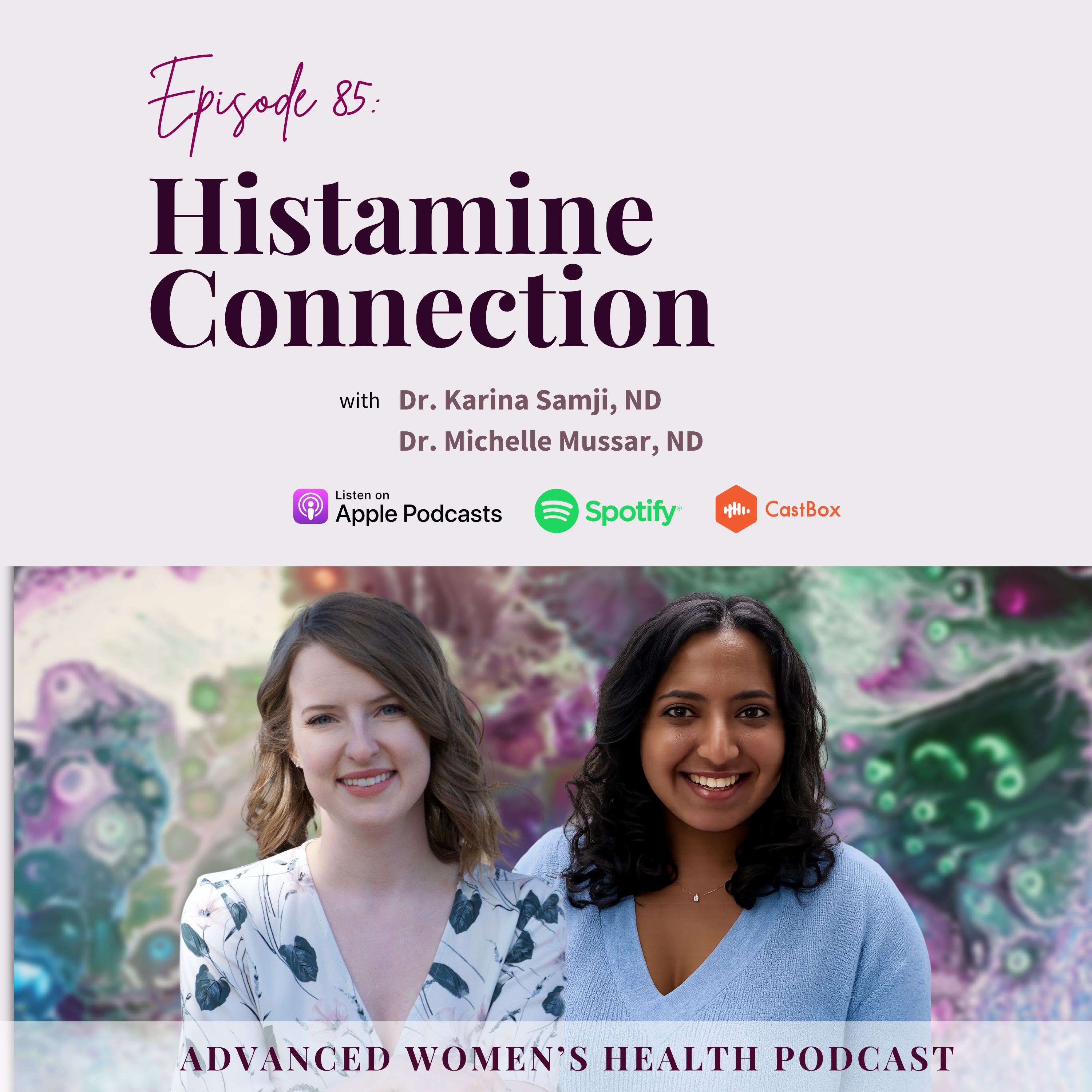
    Episode 85: Histamine, MCAS, POTS & Endo: The Hidden Connections

    Dizziness. Headaches. Random food reactions. Bloating. Palpitations. Period pain that doesn't make sense. If you've been collecting diagnoses — endometriosis, MCAS, POTS — and seeing a different specialist for each one, this episode is going to connect the dots no one else has. Dr. Michelle and Dr. Karina dive deep into histamine, mast cells, and how conditions that seem completely unrelated are often driven by the same underlying mechanisms. In this episode they cover: What histamine actually is — an inflammatory messenger released by mast cells, and why antihistamines only block one piece of a much bigger puzzle The gut-histamine connection — how gut bacteria imbalances increase histamine production, and why some people react to foods they were totally fine with yesterday Mast Cell Activation Syndrome (MCAS) — a systemic, more intense version of histamine intolerance, with symptoms ranging from skin flushing and hives to brain fog, palpitations, and breathing issues POTS (postural orthostatic tachycardia syndrome) — how histamine creates vascular leakiness, why standing up can trigger dizziness or fainting, and a simple at-home heart rate test you can try The EDS connection — how a genetic collagen defect (Ehlers-Danlos Syndrome) compounds the vascular issues seen in POTS and MCAS PMDD and hormones — why histamine fluctuates with your cycle, and why PMDD often has a histamine and inflammatory component The nervous system's role — both external stress and internal stress (nutrient deficiencies, blood sugar swings) drive mast cell instability The 6 health pillars AWH uses to map it all out — insulin & blood sugar, gut & liver health, nutrient deficiencies, oxidative stress, energy production, and nervous system regulation Also in this episode: an update on AWH's new patient onboarding system, the Advanced Metabolic Rehab program, and what's coming this summer — fertility deep dives and "the core four" of perimenopause. Resources & Links 🌐 Book with Dr. Michelle, Dr. Karina, or any AWH practitioner: advancedwomenshealth.ca 📧 Ask about clinically guided programs (Metabolic Rehab, Fertility & more): info@advancedwomenshealth.ca 📲 Follow Dr. Sarah: @drsarah_nd 🏥 Advanced Women's Health: @advancedwomenshealth 🎙️ Mentioned: Episode 3: Understanding Histamine Intolerance with Dr. Michelle Mussar, ND — Dr. Michelle's original histamine deep dive

  • S84 · E1
    June 11 · 33 min

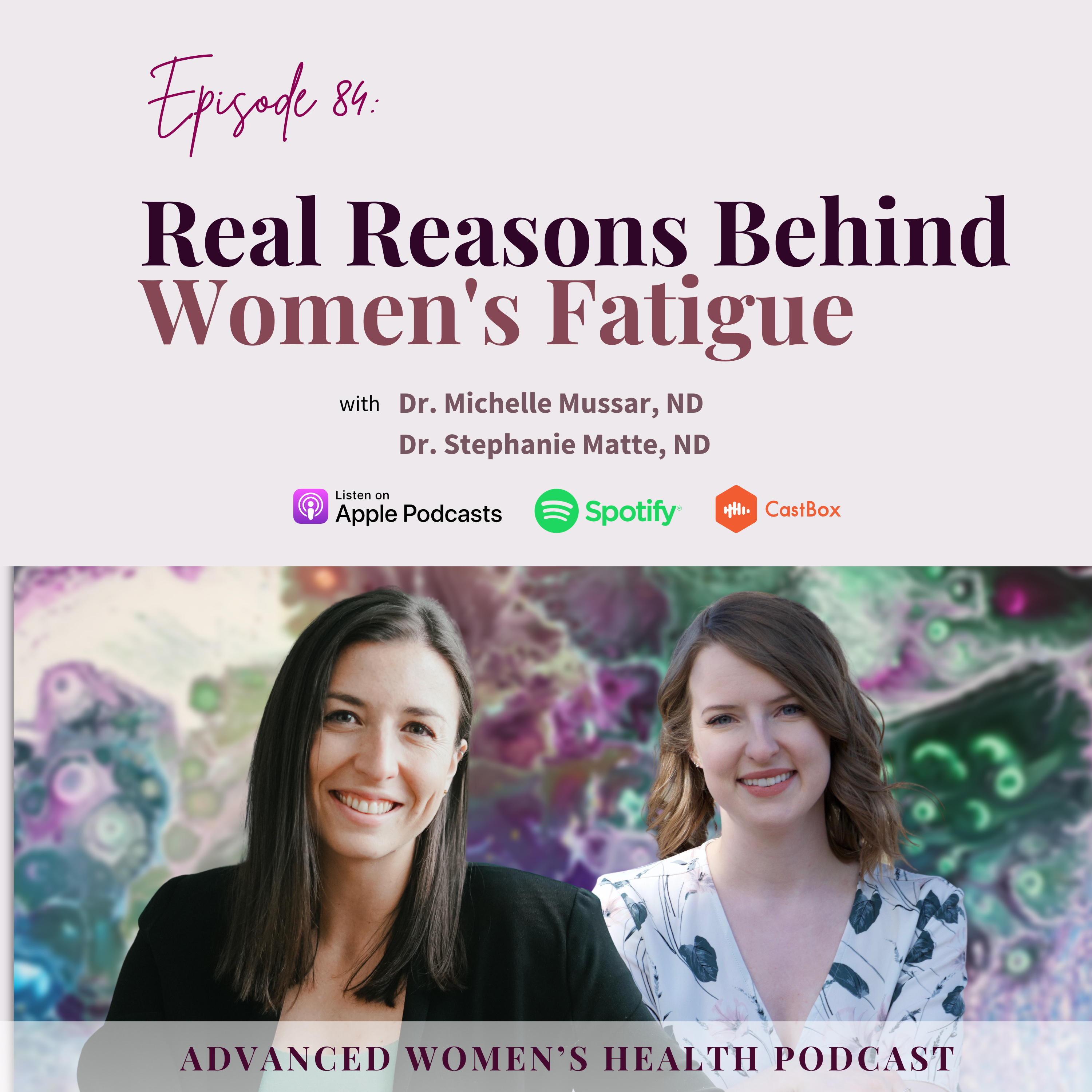
    Episode 84: The Real Reasons Behind Women's Fatigue

    You're exhausted. You've been told your labs are normal. And you still feel terrible. Dr. Michelle and Dr. Steph are breaking down the real reasons behind chronic fatigue in women — and why it is almost never just one thing. In this episode, they cover: Nutrient deficiencies — B12, iron, vitamin D, and why being "in range" isn't the same as being optimal. Plus: why ferritin can actually be falsely elevated during inflammation and mask an iron deficiency Insulin resistance and blood sugar dysregulation — the energy crashes, brain fog, and cravings that come from riding the blood sugar rollercoaster all day. And why fixing the gut is half the equation (40–60% of insulin signaling is determined by gut bacteria) Sleep dysfunction and cortisol — why blood sugar drops at 3 AM trigger a cortisol surge that wakes you up, and what's really happening hormonally in perimenopause and menopause Thyroid dysfunction — why a TSH alone isn't enough, what Hashimoto's has to do with fatigue, and why the autoimmune piece goes underinvestigated Immunological fatigue — what happens when your immune system is constantly fighting something (infections, autoimmune activity, endometriosis) and why that by itself creates deep, unrelenting exhaustion Chronic infections — recurrent UTIs, strep, cold sores, mono, shingles. When infections keep coming back, the immune system needs investigation — not just antibiotics Oxidative stress and mitochondrial dysfunction — the cellular rusting that happens when the body can't keep up with its own cleanup, and why this is especially common post-viral illness 📍 Resources & Links 🌐 Book with Dr. Michelle, Dr. Steph, or any AWH practitioner: advancedwomenshealth.ca 📲 Follow Dr. Sarah on Instagram: @drsarah_nd 🏥 Advanced Women's Health: @advancedwomenshealth

  • S1 · E83
    June 4 · 40 min

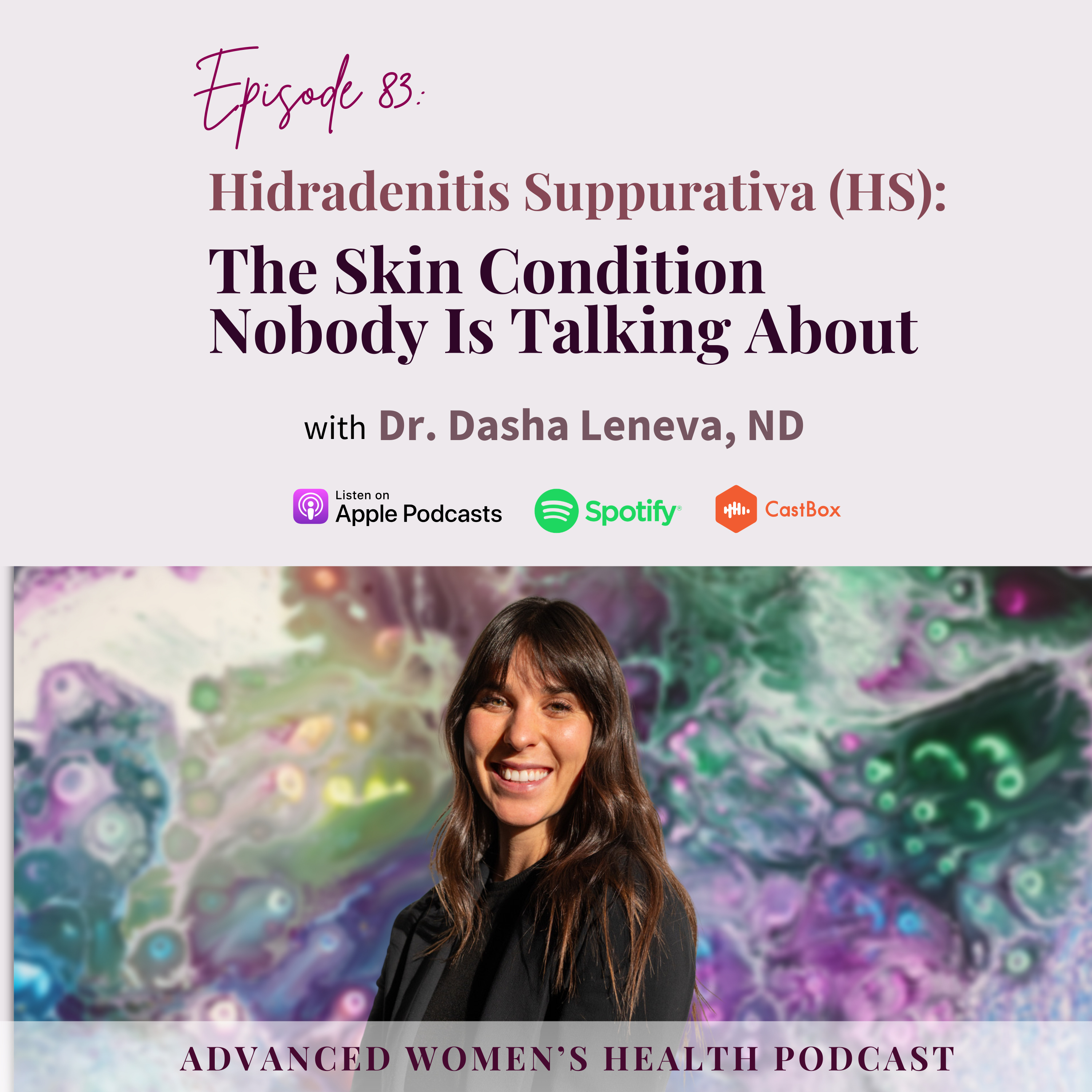
    Episode 83: Hidradenitis Suppurativa (HS): The Skin Condition Nobody Is Talking About

    If you've ever had a recurring boil in your armpit, groin, or under your breast and been told it's just ingrown hair or a sign of poor hygiene, this episode is for you. Dr. Sarah and Dr. Dasha are diving into hidradenitis suppurativa (HS): a chronic inflammatory skin condition that is far more common than most people realize, deeply connected to insulin resistance and immune dysfunction, and almost always misdiagnosed or dismissed. Here's what they cover: What HS actually is — a chronic inflammatory disease of the hair follicle, not an infection, not caused by poor hygiene, and absolutely not your fault The three Hurley stages — from a single boil to interconnected tunnels and scarring, and why catching it early matters Where HS shows up — armpits, groin, under the breasts, buttocks — and why it's so often mistaken for ingrown hairs or shaving irritation The root causes — immune dysregulation, insulin resistance, genetics, gut dysbiosis, and a significant metabolic component (Dr. Sarah has never seen a single case without underlying metabolic dysfunction) Food and lifestyle triggers — high insulin-demand foods, histamine-rich foods (bread, vinegar, fermented products, alcohol), smoking, and sedentary behavior Why exercise actually helps — and why the "sweating makes it worse" myth is causing real harm What treatment actually looks like — from dietary shifts and targeted supplements (zinc, vitamin D, doxycycline at low doses) to biologics and surgery for severe cases The hormonal piece — androgens, the cycle connection, and why "estrogen dominance" is not the right explanation What an AWH visit looks like — from assessment and staging through to a flare plan and a maintenance plan Takeaways from this episode: HS is not caused by poor hygiene — it's an immune and metabolic condition If you have recurring boils in classic locations AND PCOS/PMOS or insulin resistance, get screened A fasting insulin test isn't enough — a 2-hour glucose challenge reveals the real picture Low insulin demand eating and managing metabolic health are foundational to managing HS Sweating does not make HS worse — exercise actually improves outcomes If a provider just gives you one thing and sends you home, that's a red flag — this condition requires a comprehensive plan There is hope — this condition can be brought under control with the right team 📍 Resources & Links Book with Dr. Dasha or the AWH team: advancedwomenshealth.ca Follow Dr. Sarah: @drsarah_nd Follow Dr. Dasha: @dr.dashaleneva Advanced Women's Health: @advancedwomenshealth

  • S1 · E82
    May 28 · 22 min

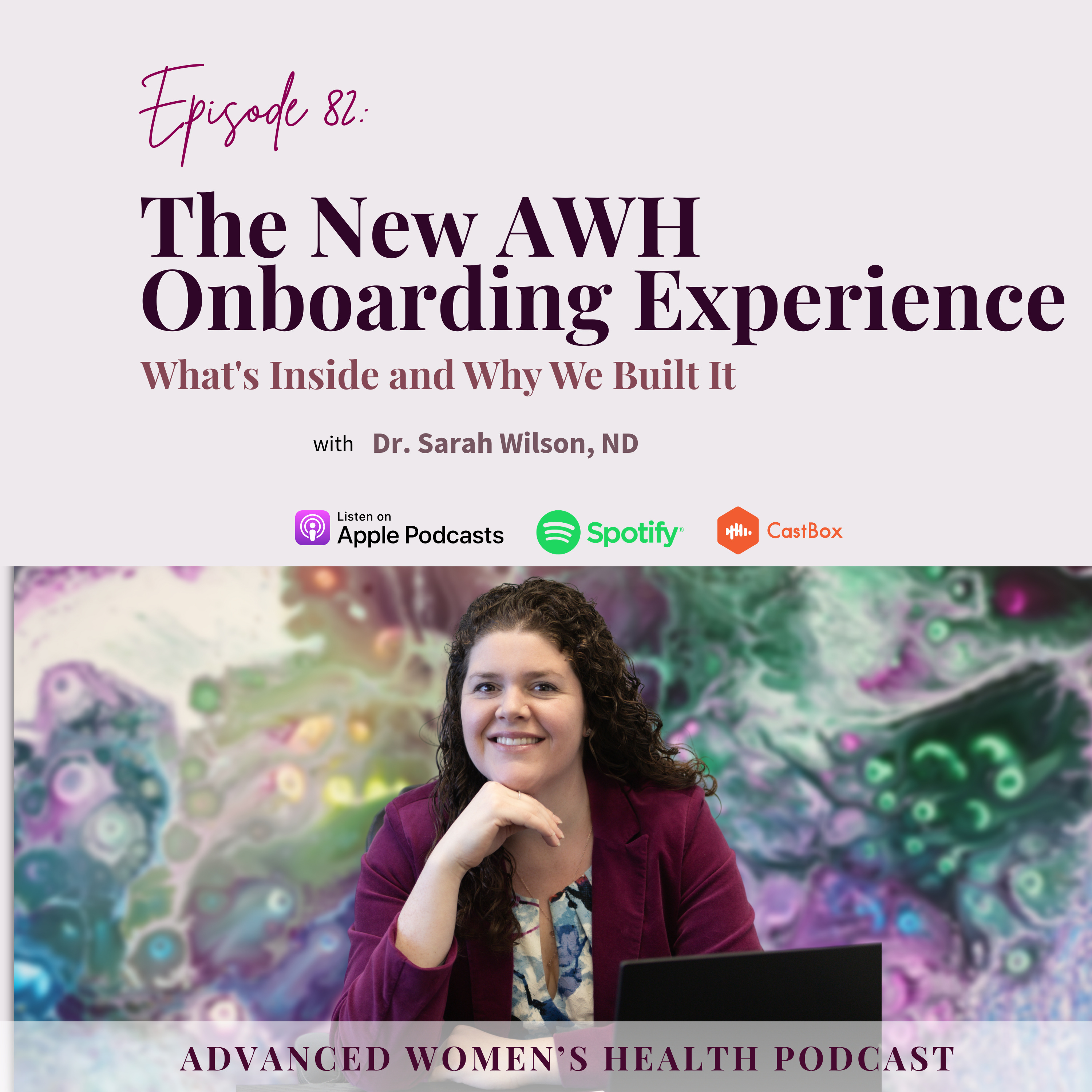
    Episode 82: The New AWH Onboarding Experience: What's Inside and Why I Built It

    You've had your appointment. You have a plan. And then you go home, and real life is still there. That gap between knowing what to do and actually doing it? I've been thinking about it for 10 years. And I've finally built the answer. In this episode, I'm walking you through the brand-new AWH onboarding system. 18 months in the making, designed to hold your hand through your first month so that this time, your plan actually sticks. Here's what's included: Daily education Meal plan templates Movement programming Community cohorts The AWH app All of it: $27 a month. And if you're a current patient, your first month is free. Just email info@advancedwomenshealth.ca. Resources & Links Book a visit: advancedwomenshealth.caFollow me on Instagram: @drsarah_ndAdvanced Women's Health: @advancedwomenshealth

  • S1 · E81
    May 21 · 28 min

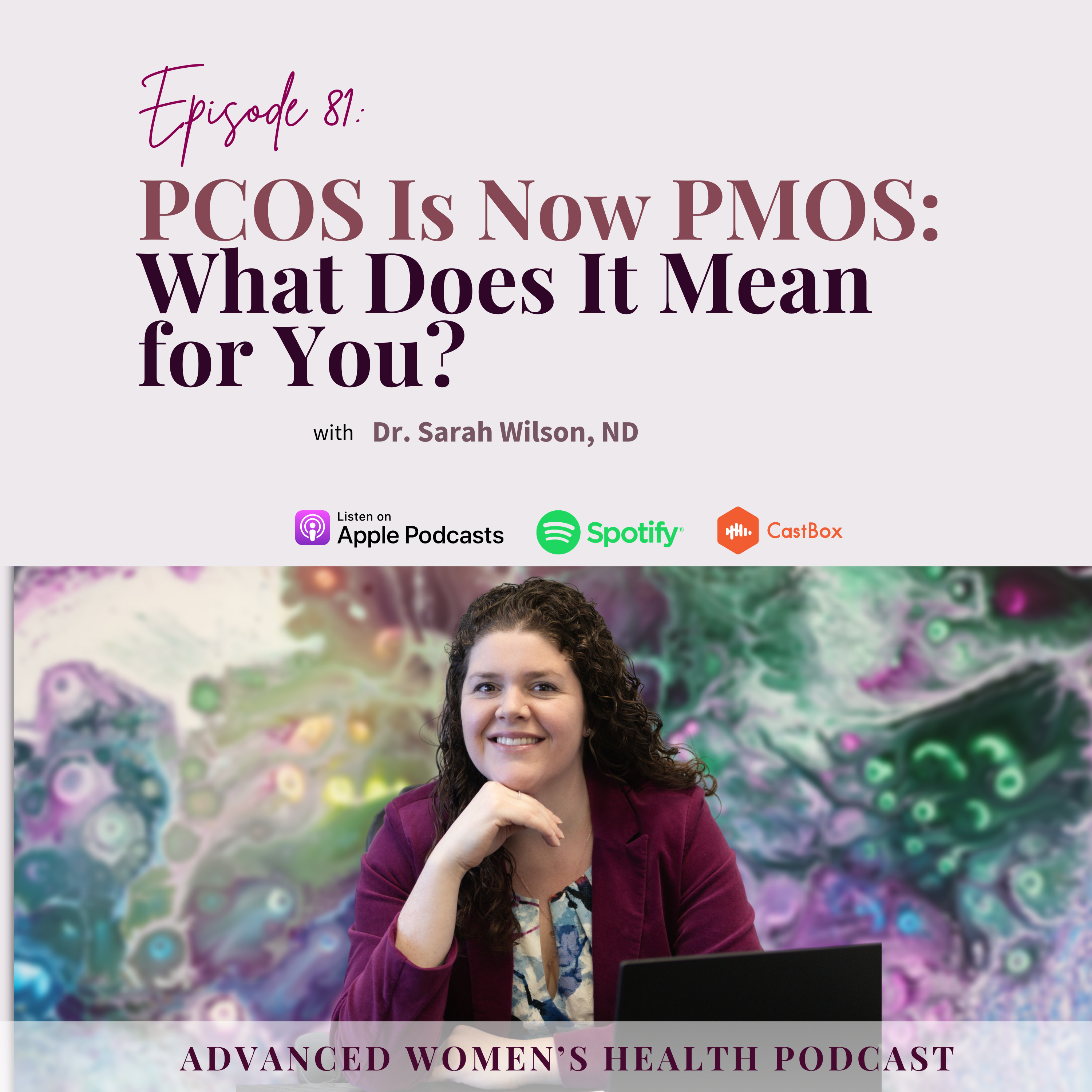
    Episode 81: PCOS Is Now PMOS: What Does It Mean for You?

    You may have heard the news — PCOS is being renamed. But if you're sitting there thinking, "Okay, what does that actually mean for me?" — this episode is exactly what you need. Dr. Sarah breaks it all down. In this episode, Dr. Sarah covers: 1. Why the name had to changeThose "cysts" on your ovaries? They were never actually cysts. They're immature follicles — the result of your brain and ovaries not communicating efficiently. Not everyone with PCOS even has them. The old name was creating missed diagnoses and dismissed women. That ends now. 2. What birth control actually does — and what it doesn'tThe pill suppresses ovulation, manages estrogen, and protects the uterine lining from thickening. Dr. Sarah is clear: she recommends medications when her patients need them. But the pill doesn't touch insulin resistance. It doesn't fix metabolic risk. And it doesn't protect your cardiovascular health long-term. That's the gap we need to talk about. 3. PMOS doesn't "graduate" at menopauseOne of the most damaging things Dr. Sarah hears: women being told they no longer have PCOS once they stop having periods. That is not how this works. The insulin resistance doesn't disappear. The cardiovascular risk doesn't disappear. The thyroid and adrenal connections don't disappear. The condition changes — but it doesn't end. 4. The test that changes everything: the 2-hour insulin glucose challengeA fasting blood test can only tell you what happened overnight. It cannot tell you what happens when you eat — and in PCOS/PMOS, that's where most of the dysfunction lives. Dr. Sarah explains why she runs this test on every single patient with this diagnosis, and what it allows her to do: build a meal plan that is specific to your insulin response. How many carbs. When to eat. Whether fasting is right for you. Protein types and timing. Information most women have never been given. 5. What real PMOS management looks like at AWHAt Advanced Women's Health, nothing is changing — because the AWH approach has always treated this as a multi-system condition. That means assessing the brain (FSH, LH, prolactin), the thyroid, the ovaries, the adrenals, and the pancreas/insulin system. On an ongoing basis. Because this condition requires monitoring through every phase of life, including perimenopause and menopause. Takeaways from this episode:✅ You don't need cysts on your ovaries to have PCOS/PMOS — irregular cycles and androgenic signs (acne, hair growth, high testosterone or DHEAS) are the key markers✅ The birth control pill manages symptoms — it does not treat the underlying metabolic condition✅ If you've only ever had a fasting insulin test, you're missing most of the picture — ask about the 2-hour insulin glucose challenge✅ PMOS is a lifelong condition requiring ongoing monitoring — not just until you start ovulating or until menopause✅ Up to 30% of women with PMOS also have hypothyroidism — thyroid and adrenal health must be assessed alongside ovarian function✅ Metabolic health can be achieved with this condition. You don't need hundreds of dollars of supplements for life — you need the right strategic approach, customized to your body Go back and listen to Episodes 8 and 9 for Dr. Sarah's deep dives on hormones, insulin, and insulin resistance — they're essential companions to this one. 📍 Resources & Links Book a visit or reach out: advancedwomenshealth.ca Not sure who to work with? AWH onboarding coordinators offer free 15-minute calls to match you with the right practitioner 📲 Follow Dr. Sarah on Instagram: @drsarah_nd 🏥 Advanced Women's Health on Instagram: @advancedwomenshealth If you've been told you don't have PCOS, or that you've "outgrown" it, or if you've never had a full insulin workup — reach out. This is exactly what we're here for.

  • S1 · E80
    May 7 · 25 min

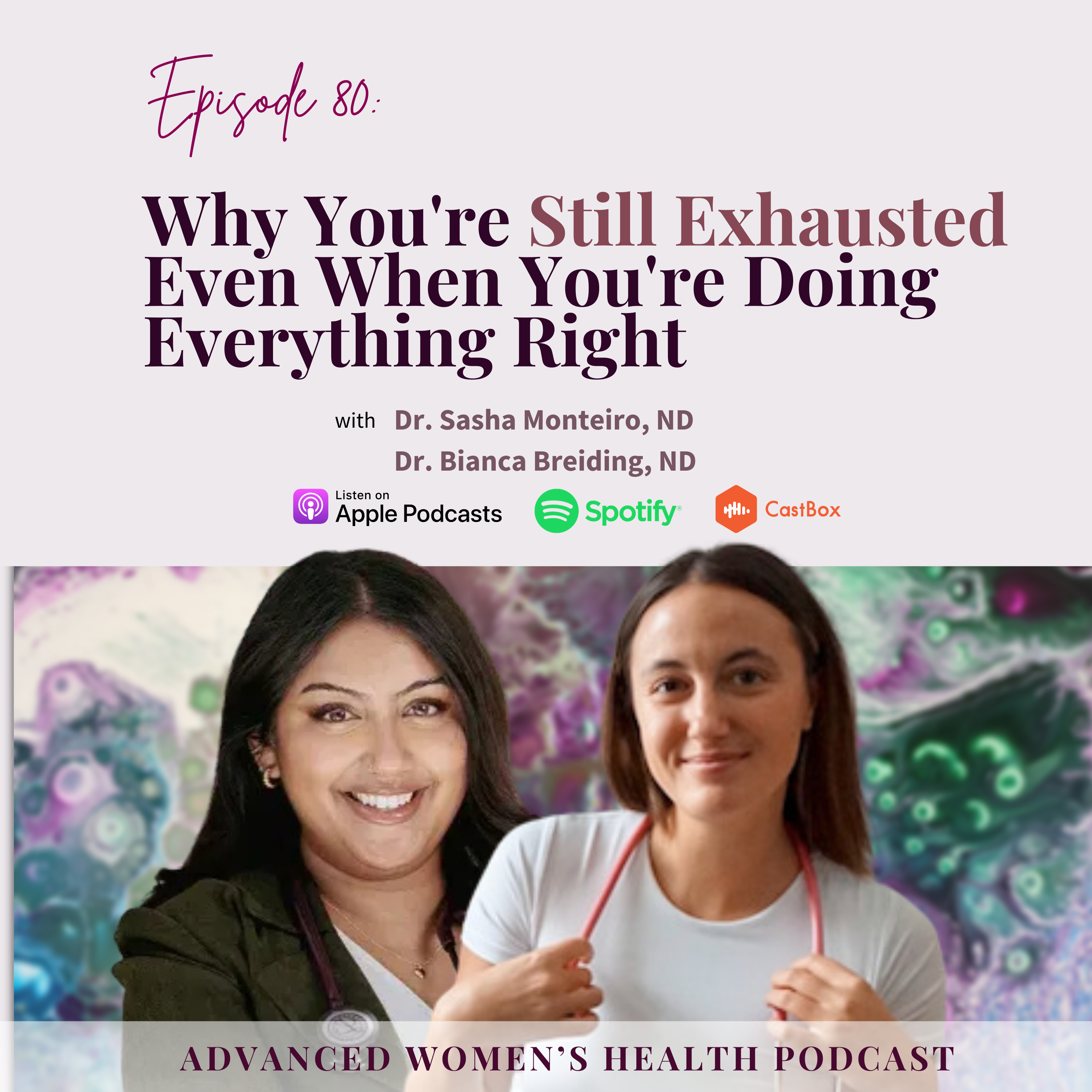
    Episode 80: Why You're Still Exhausted Even When You're Doing Everything Right

    You're sleeping more. You've slowed down. You've taken a break. And you're still exhausted. Not just tired — foggy, heavy, unmotivated, running on empty no matter what you do. And every explanation you've been given sounds like some version of "it's just stress, rest more, you'll feel better." But what if something deeper is going on? What if burnout isn't just a mental health issue or a scheduling problem — but a cellular one? That's exactly what Dr. Sasha and Dr. Bianca are unpacking in this episode. And once you understand it, you will never see your fatigue the same way again. Here's what they cover: What mitochondria actually are — and why they matter for everythingYour mitochondria are the batteries inside every single one of your cells. They produce ATP — measurable, biochemical energy that powers every thought, heartbeat, hormone, immune response, and muscle contraction in your body. When they're struggling, you feel it everywhere. The iPhone battery analogy that makes it all clickYour body isn't lazy. It's not unmotivated. It's running on low power mode — and the battery needs attention, not willpower. Signs your mitochondria might be struggling You crash after exercise and take days to recover You wake up after a full night of sleep still feeling unrested Brain fog, word searching, and feeling mentally slow Energy dips after meals, relying on snacks and caffeine to function Mood that feels flat or harder to regulate Basic tasks that feel like they take way more out of you than they should What damages mitochondria over time Chronic stress and elevated cortisol Blood sugar spikes and insulin dysregulation — the cycle that keeps you stuck Poor sleep reducing mitochondrial repair Sedentary lifestyle decreasing mitochondrial density Over-training without adequate recovery Environmental toxins and endocrine disruptors Nutritional deficiencies in key co-factors What you can actually do about it — 4 key areas: Stabilize blood sugar — eat at consistent times, balance every meal with protein + fat + fiber, and stop skipping meals Move in a way that builds mitochondria — resistance training and short bursts of higher intensity movement signal the body to make new mitochondria (but match it to your current stress load — over-training damages them) Lower the oxidative burden — colorful plants, berries, antioxidant-rich foods, short walks after meals, slow deep breathing, and reducing unnecessary stressors Rebuild the raw materials — CoQ10, L-carnitine, magnesium, B vitamins, NAD, alpha lipoic acid (ALA), and glutathione — not as energy stimulants, but as the specific building blocks your cells need to produce ATP Supplements work best on top of a solid lifestyle foundation — not instead of it. If you've been told your labs are normal but you still don't feel right, this episode might be the missing piece you've been looking for. 📍 Resources & Links 🌐 Book a visit with Dr. Sasha, Dr. Bianca, or any AWH doctor: advancedwomenshealth.ca 📲 Follow Dr. Sarah on Instagram: @drsarah_nd 🏥 Advanced Women's Health on Instagram: @advancedwomenshealth 💬 Does this sound like you? Book with the AWH team — we'd love to help you get back to feeling like yourself.

  • S1 · E79
    April 30 · 27 min

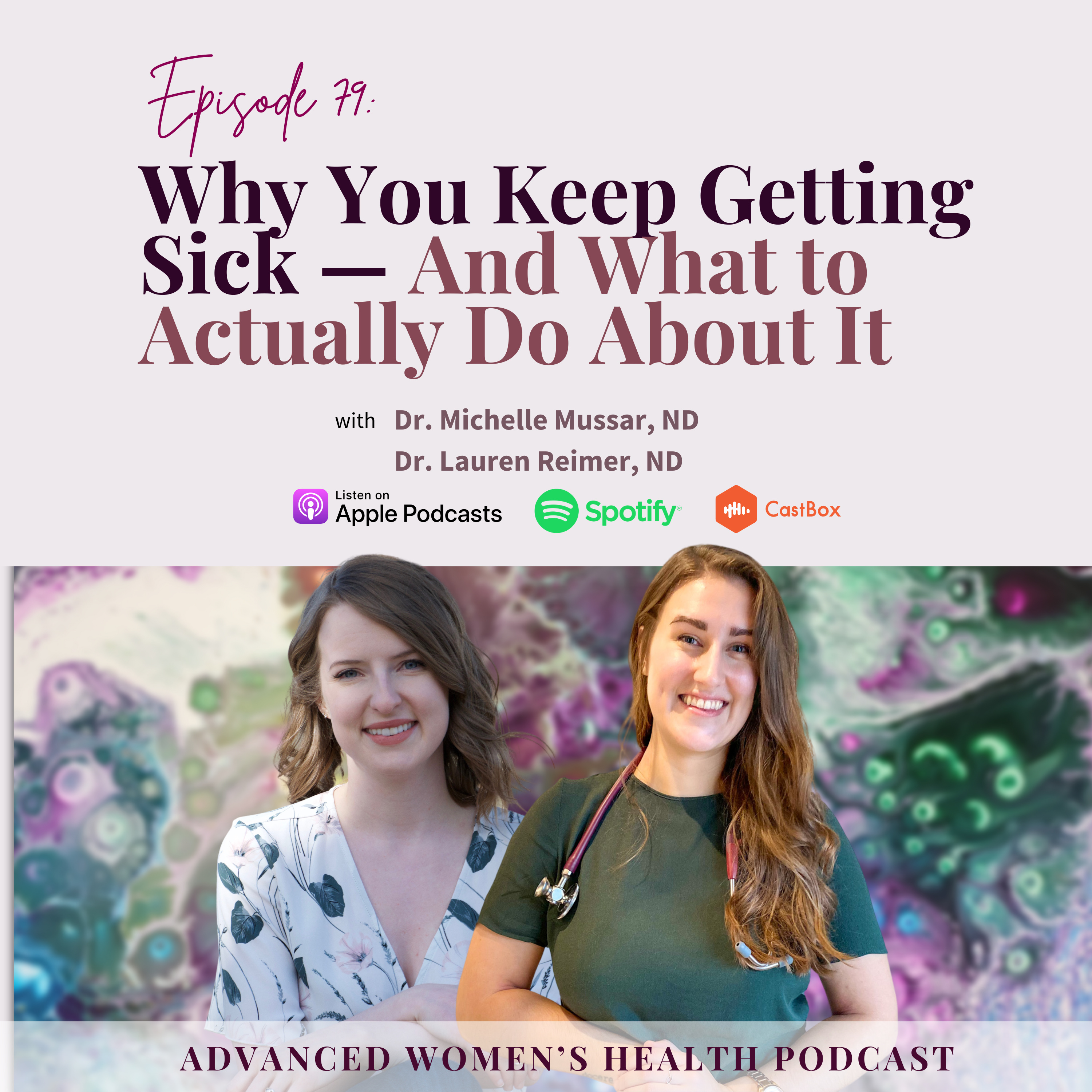
    Episode 79: Why You Keep Getting Sick — And What to Actually Do About It with Dr. Michelle Mussar, ND & Dr. Lauren Reimer, ND

    Do you feel like you catch everything that goes around? Or maybe you always get hit in the same spot — the throat, the sinuses, the stomach — like clockwork, every single season? Or you finally shake something, but you never quite feel like yourself again for weeks afterward? This episode is for you. Dr. Michelle and Dr. Lauren sit down to talk all things immune function — from why some people get sick more than others, to what you should actually be doing when illness hits, to how to truly recover (not just "feel better enough to go back to work"). If you're tired of just pushing through, this episode gives you an actual game plan. 💛 💬 Struggling with recurrent or chronic infections and don't know where to start? Reach out — the AWH team is ready to help.

  • S1 · E78
    April 23 · 40 min

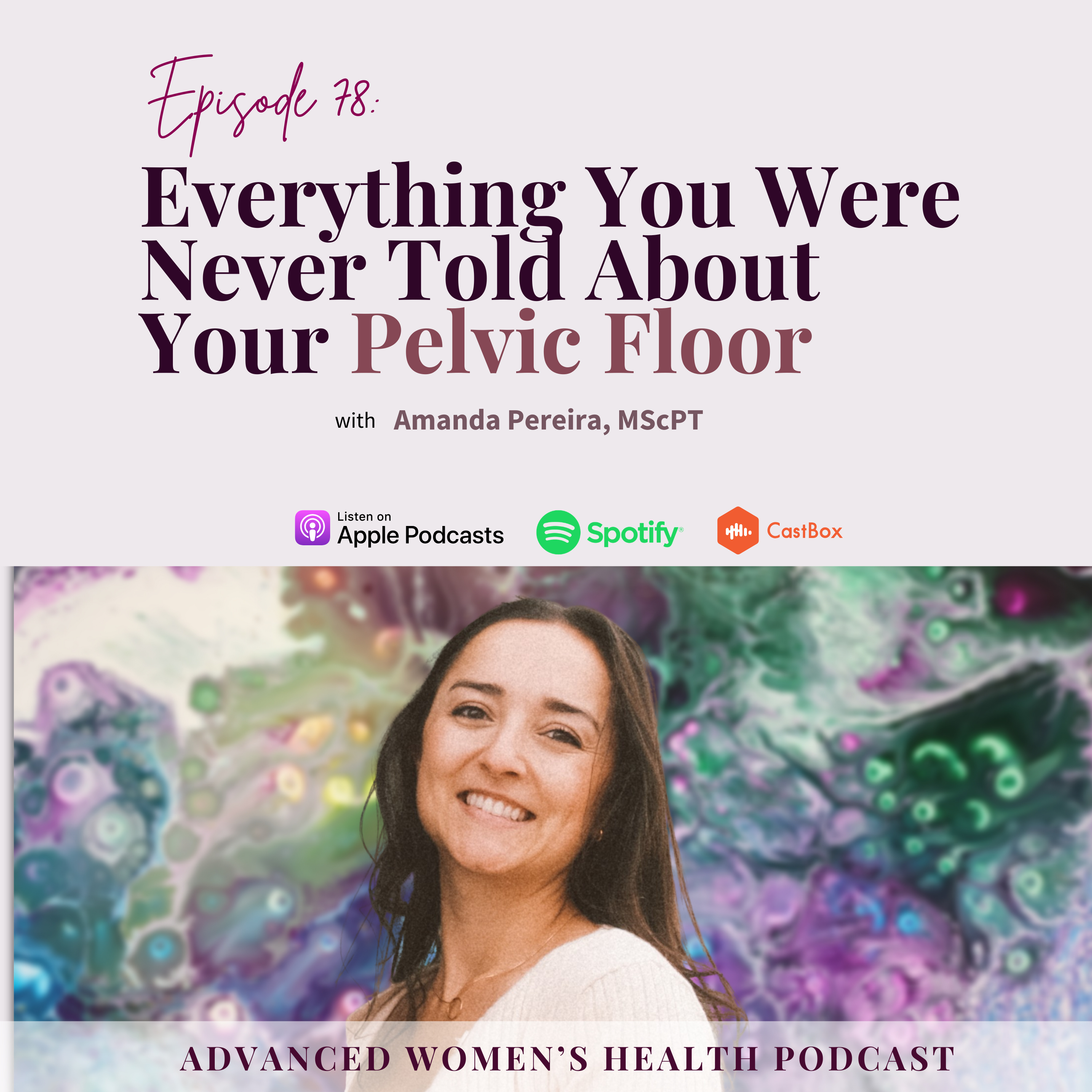
    Episode 78: Everything You Were Never Told About Your Pelvic Floor with Amanda Pereira, MScPT

    If you have ever been told to just do your Kegels and left wondering if there is actually more to it than that, this episode is going to be a really good one. Dr. Alessandra Autieri, ND, sits down with Amanda Pereira, our new pelvic health physiotherapist at AWH Port Credit, to break open everything about pelvic health that most women have never been told. We cover why leaking, heaviness, pelvic pain, and urgency are incredibly common but not normal, and what you can actually do about them. We get into why Kegels are not always the answer, and for a lot of women, they are the last thing your body needs right now. Amanda walks through what a first appointment actually looks like, how virtual pelvic physio works and who it can help, and she shares a simple exercise you can do tonight to start calming your pelvic floor down. This is the episode we wish someone had given every woman before she ever Googled pelvic floor. What We Want You to Walk Away With Leaking, pelvic pressure, and urgency are very common but they are not normal. There is help available and you do not have to just live with it. A pelvic health assessment is not just an internal exam. It is a full conversation about who you are, what you carry, and what your body needs. No physical touch required. Kegels are not the default answer for every pelvic floor concern. If your pelvic floor is already holding too much tension, more contraction will make things worse, not better. Calves on the couch is the most downregulating position for your pelvic floor. One to two minutes at the end of your day can calm tension, pain, and that heaviness feeling.

  • S1 · E77
    April 16 · 46 min

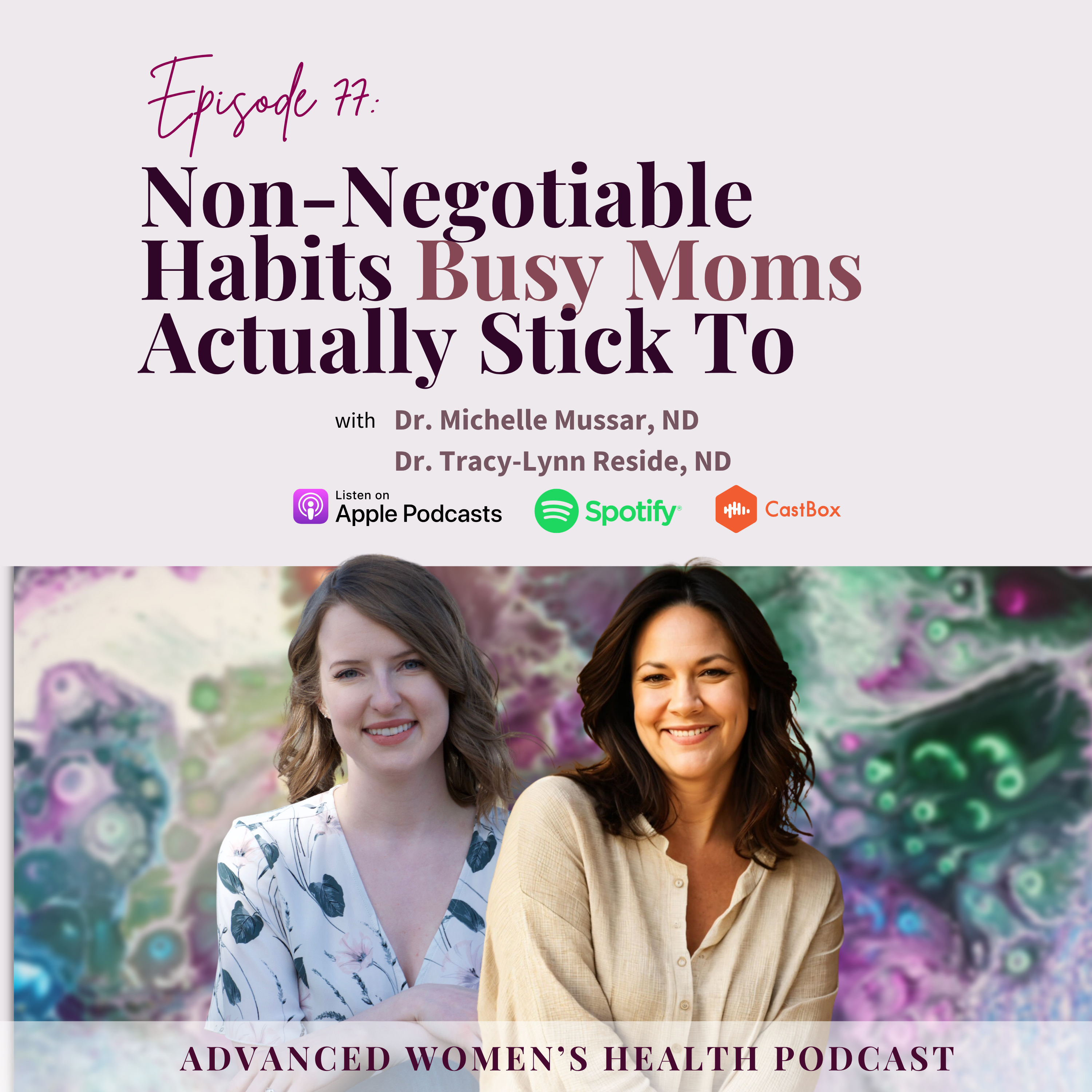
    Episode 77: Non-Negotiable Habits Busy Moms Actually Stick To

    What does it actually look like to practice what you preach — when you have a baby, two teenagers, a toddler, a full patient schedule, and real life happening all around you? In this episode, Dr. Michelle Mussar, ND (currently in the thick of postpartum with a baby under one) and Dr. Tracy-Lynn Reside, ND (mom of three, including two teenagers and a toddler) get completely real about the health habits that anchor their lives. Not the polished, perfectly filtered version. The messy, honest, works-for-us-right-now version. This is the mom spin-off of the non-negotiables episode with Dr. Lauren and Dr. Alessandra — and it hits a little different. Here's what they get into: Meal planning as a lifeline — why Sunday planning isn't about being rigid, it's about eliminating the decision fatigue that drains you by 5 PM. Plus: the shredded chicken hack that keeps protein on track all week. Movement that's actually sustainable — how Dr. Michelle rebuilt her relationship with exercise after a rough postpartum recovery, why she treks 25 minutes to a gym she has to pay for (on purpose), and what Dr. Tracy-Lynn does when a sleepless night blows up the 6 AM plan. The consistency vs. perfection trap — you don't lose six weeks of progress by missing one week. You only lose it if you don't get back up. Water, supplements, and the alarm trick — the low-tech strategies that actually make daily habits stick. Nighttime routines that aren't fancy but work — e-readers, app blockers, phone alarms set 75 minutes before bed, and why winding down needs more runway than you think. Gratitude that isn't corny — how Dr. Tracy-Lynn uses it to regulate, not toxic-positivity her way through stress. Capacity before habits — because if your thyroid, iron, or nervous system are tanking you, no habit stack is going to save you. If you've ever felt like you're failing at self-care because your life doesn't look like a wellness influencer's — this episode will feel like a deep exhale. Imperfect consistency beats perfect paralysis every single time. 📍 Resources & Links 🌐 Book a visit: advancedwomenshealth.ca 🆓 Free 50-minute consult available — reach out if you're on the fence or want to find the right fit 📲 Follow Dr. Sarah on Instagram: @drsarah_nd 🏥 Advanced Women's Health on Instagram: @advancedwomenshealth 🎙️ Mentioned in this episode: Dr. Lauren & Dr. Alessandra's non-negotiables episode — go back and listen if you haven't yet! 📱 App mentioned: Be Present (screen time blocker) 💬 Are you a mom trying to figure out your non-negotiables right now? DM us on Instagram — we want to hear what's working for you (and what isn't).

  • S1 · E76
    April 9 · 28 min

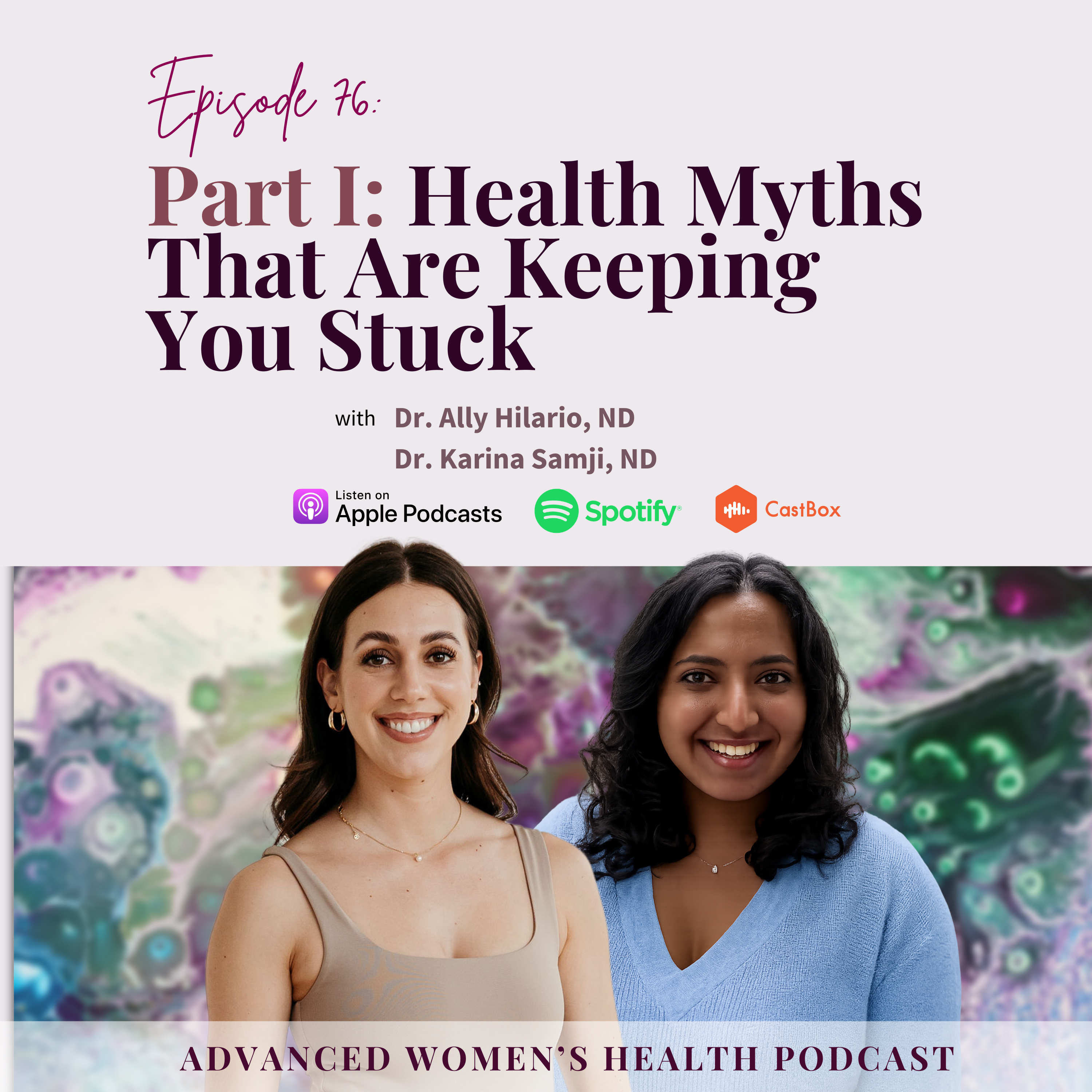
    Episode 76: Health Myths That Are Keeping You Stuck (Part 1)

    You're eating well. You're exercising. You're taking your supplements. So why do you still feel exhausted, bloated, and like your body is working against you? You're not imagining it — and you're definitely not failing. In this episode, Dr. Ally and Dr. Katrina sit down to bust the most common health myths they hear in the clinic every single week. The ones that sound like good advice but are quietly keeping women stuck, frustrated, and no closer to feeling like themselves. This is Part 1 of a two-part series, and it covers a lot: The myths they tackle in this episode: "I'm doing everything right, but nothing is changing" — what's really going on when effort doesn't equal results "More supplements = faster healing" — why a bag full of supplements might actually be holding you back "If I just cut out more foods, my gut will heal" — the truth about elimination diets and why less isn't always more "If I poop every day, I can't be constipated" — yes, really. We go there. "My labs came back normal, so I must be fine" — the crucial difference between normal and optimal that your doctor probably never explained This episode is for you if you've ever felt dismissed, overwhelmed, or like your body just doesn't make sense. Dr. Ally and Dr. Katrina break it all down in plain language — no jargon, no shame, just the clarity you've been looking for. Your body is always trying to tell you something. This episode will help you finally hear it. 📍 Resources & Links 🌐 Book a visit: advancedwomenshealth.ca 📲 Follow Dr. Sarah on Instagram: @drsarah_nd 🏥 Advanced Women's Health on Instagram: @advancedwomenshealth

  • S1 · E75
    April 2 · 30 min

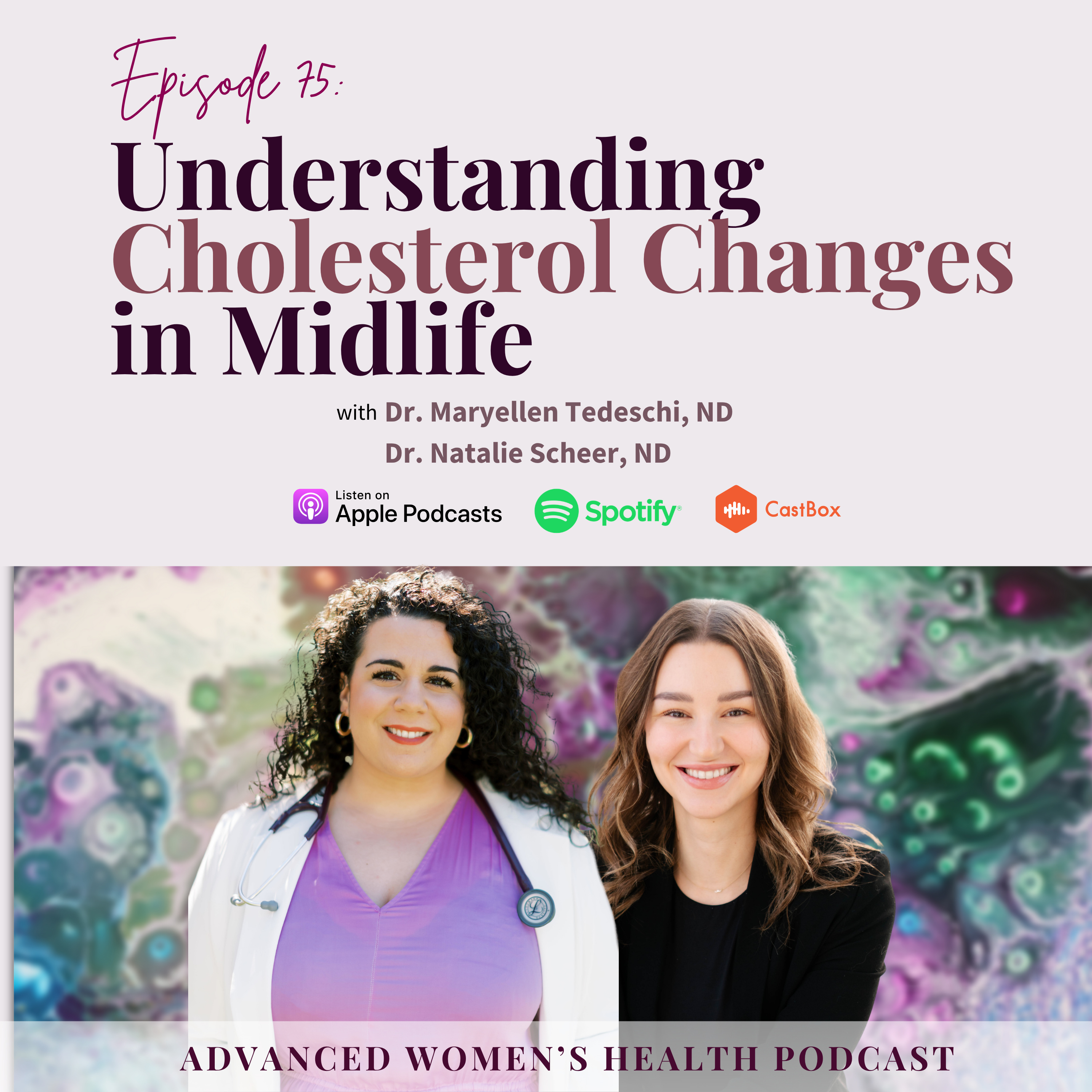
    Episode 75: Understanding Cholesterol Changes in Midlife

    If your cholesterol has recently increased and nothing in your lifestyle has changed, you’re not alone. This is something we commonly see in women entering their 40s and 50s. Hormonal shifts during perimenopause can directly impact cholesterol levels, even when diet and exercise stay the same. In this episode, we break down why cholesterol often rises in midlife, what your lipid panel actually means, and how to take a proactive approach to your cardiovascular health. We also discuss the connection between hormones, insulin, nutrition, and lifestyle, and when menopausal hormone therapy may play a role. This conversation is designed for both practitioners and women who want to better understand what’s happening in their bodies and how to support long-term heart health. In this episode, we cover: Why cholesterol levels often increase during perimenopause How declining estrogen impacts LDL and overall lipid levels What your lipid panel actually means (LDL, HDL, triglycerides, total cholesterol) Why one cholesterol number doesn’t tell the full story How insulin resistance and carbohydrate intake affect cholesterol The role of fiber in supporting heart health Common myths about eggs and dietary cholesterol Mediterranean-style eating for cardiometabolic health Exercise strategies for midlife heart health When menopausal hormone therapy may help—and when it may not Why midlife is a key window for cardiovascular risk assessment Resources Mentioned Lipid panel (Total cholesterol, LDL, HDL, triglycerides) Cardiovascular risk assessment calculator Food insulin demand / low insulin demand diet approach Mediterranean-style diet principles Fiber intake target: ~25–30g per day Resistance training + cardio exercise guidelines (150 min/week + 2–3 strength sessions) Menopausal Hormone Therapy (MHT) discussion with a healthcare provider If your cholesterol has changed, this episode will help you understand why—and what to do next. We walk through the clinical reasoning, practical strategies, and how to personalize your approach. Subscribe to the Advanced Women’s Health Podcast for more conversations on hormones, metabolism, and women’s health in midlife. Listen to the Full Episode

  • S1 · E74
    March 26 · 41 min

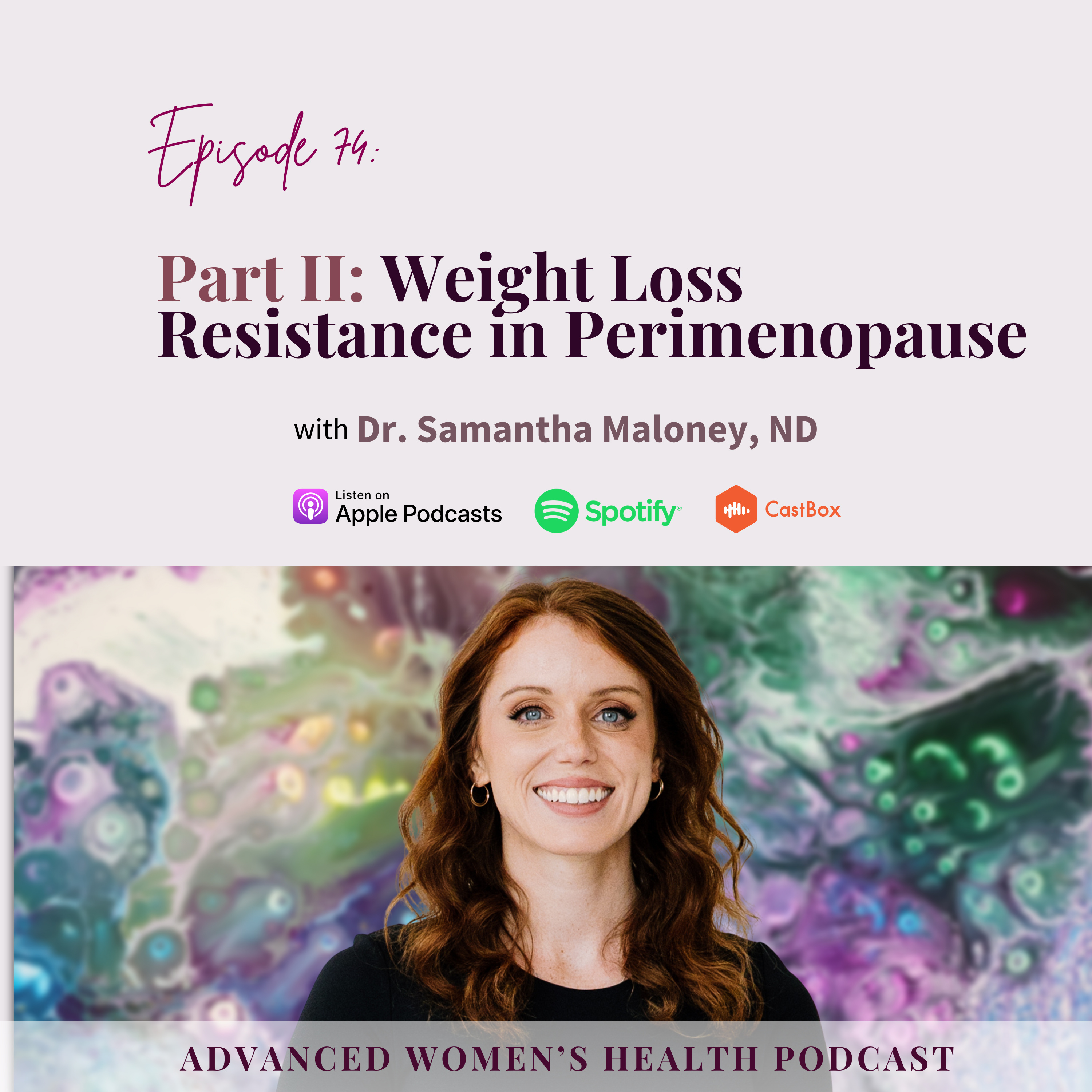
    Episode 74: Part II: Weight Loss Resistance in Perimenopause: What Changes After 40

    In this episode of the Advanced Women’s Health Podcast, we’re continuing our conversation on weight loss resistance—this time focusing specifically on what happens during perimenopause and menopause. This is one of the most common things I hear from patients in this stage of life: “I’m doing everything the same… and my body is changing anyway.” And the truth is—you’re not imagining it. There are very real, measurable shifts happening in your body during this time. Your hormones are changing, your sleep may be more disrupted, your stress tolerance can shift, and your metabolism starts responding differently. But here’s the most important part: you are not broken. When we understand what’s changing, we can actually work with your body instead of feeling like it’s working against you. In this conversation with Dr. Samantha Maloney, we break down the key drivers behind weight changes in midlife—from insulin resistance and fat distribution to muscle loss, sleep, and stress. We also talk about something I feel very strongly about: weight is not just about calories. It’s about hormones, metabolism, and how your body is functioning as a whole. And while some things do change with age, many of the factors influencing your health are still modifiable—and that’s where we focus our attention. There is so much happening in your body during this phase of life—but that doesn’t mean you’re stuck. When you understand what’s changing, you can start making decisions that actually support your body in a way that feels effective and sustainable. If you haven’t yet listened to Part 1 of this conversation, I highly recommend starting there first. Please follow this show on Spotify. It really helps!

  • S1 · E73
    March 19 · 1 hr

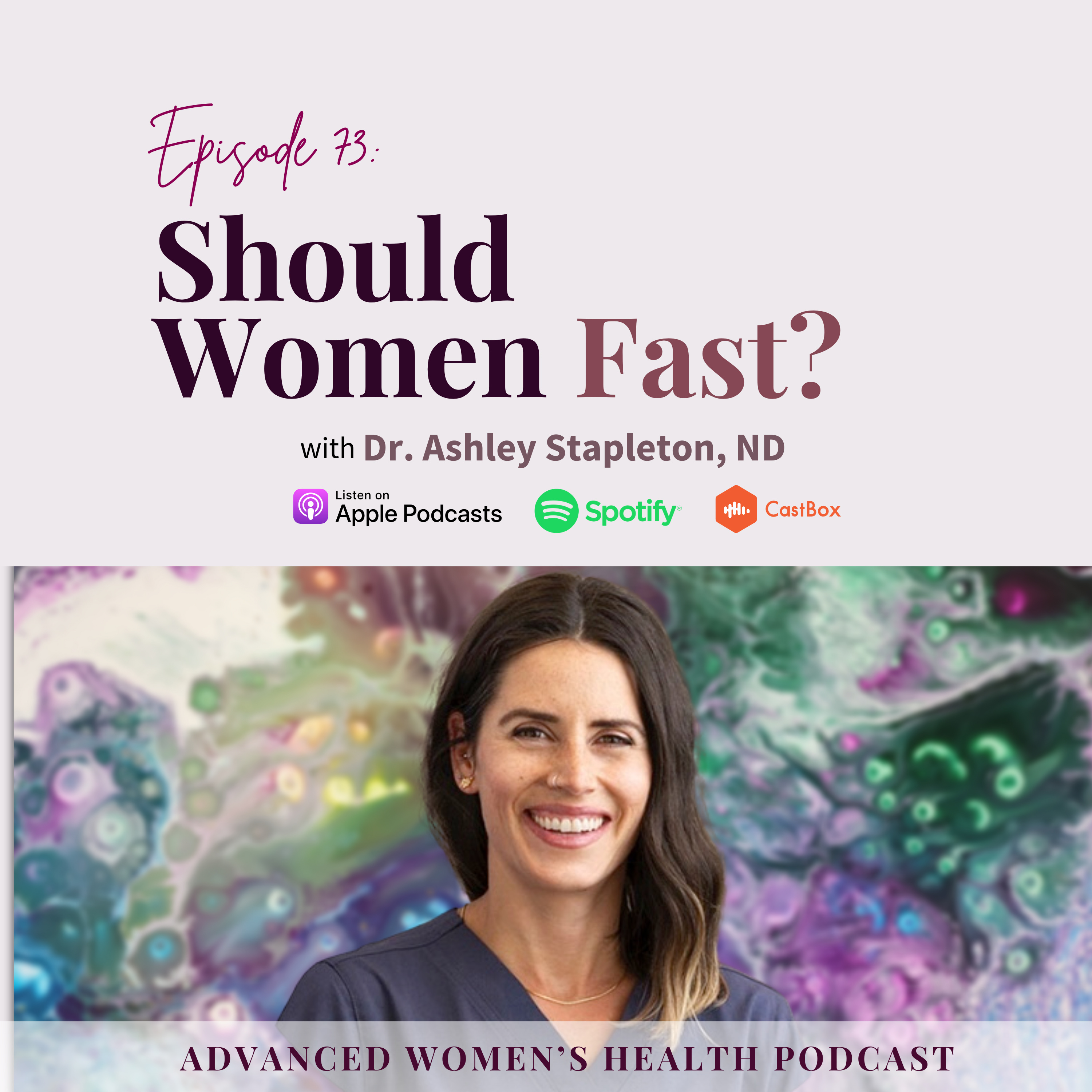
    Episode 73: Fasting for Women Explained: Hormones, Stress & When It Works with Dr. Ashley Stapleton, ND

    Fasting has become one of the most talked-about topics in health right now—and also one of the most misunderstood. In this episode, I sit down with Dr. Ashley Stapleton to break down what fasting actually means, the different ways it can be used, and most importantly… whether it’s right for you. Because the truth is, fasting isn’t good or bad. It’s context-dependent. We dive into the physiology behind fasting, how it impacts hormones, metabolism, and stress, and why two women can try the exact same approach and have completely different results. If you’ve ever wondered whether fasting is helping you—or holding you back—this episode is for you. Chapters: 00:00 Fasting Types Defined 02:04 Why People Fast 03:31 Fasting Mimicking Deep Dive 09:24 Cravings Dopamine and Food Triggers 21:09 Fasting Physiology and Women’s Cycles 29:54 Fasting Risks for Lean Women 32:10 Calories, Weight Loss, and Cortisol 36:19 Stress Buckets and Body Feedback 43:16 Fasted Workouts and Fuel State 54:22 Personalized Fasting Takeaways

Showing 1–20 of 20 episodes