Skip to content
Artwork for TellyCast: The content industry podcast
EducationHow ToTV & FilmFilm Interviews

TellyCast: The content industry podcast

Justin Crosby

TellyCast is the leading podcast exploring the future of television, YouTube, the creator economy and digital-first production.

Hosted by Justin Crosby, each episode features conversations with the people shaping the future of content.

🎧 New episodes every week.

Play
  • 35 episodes
  • weekly
  • Avg 40 min
  • English
Counted on this page — what you have heard stays on this device, so it is not something the list can be paged by.
  • S13 · E285
    Thursday · 12 min

    TV Is Now the Second Window: 5 Digital-First Shifts of 2026

    A year ago at the Digital Content Forum we asked whether creators were becoming studios. That question is settled. This week Justin Crosby goes back through all 644 stories The Drop has published since then to identify the five shifts that defined digital-first video in 2026, and what they mean for TV producers. The numbers set the scene. AI fell from a quarter of The Drop's stories to 15%, while acquisition stories doubled. AI has become part of the stack. The deals are where the change is happening. In this episode: Shift 1: TV becomes the second window. Channel 4, ITV, E4, Netflix and Disney+ are all buying shows that built their audiences elsewhere first. The people who own the audience now decide the order. Shift 2: Distributors go direct. Blue Ant, Cineflix, Fremantle and Banijay Rights are running hundreds of channels between them, and some are now funding original content. Shift 3: TV's best-known faces launch their own shows. Twenty launches in a year, most with a production company behind them. But a famous name doesn't solve discovery, money or dependence on one face. Shift 4: Sport without the rights. Goalhanger and The Overlap show the conversation around sport can be worth more than the match itself. Shift 5: Vertical leaves the app. Micro drama is moving from paywalled apps to ad-funded feeds, brand funding and the living room screen. Justin closes with a prediction for 2027: the most valuable thing a UK producer owns will not be a commission. It will be an audience the platforms can't take away. Views are rented. Customers are owned. Read The Drop: https://www.dropmedia.co.uk Enter the 2027 TellyCast Digital Video Awards: https://digitalvideoawards.co.uk TellyCast is produced by Spirit Studios and recorded in London. Sign up for The Drop newsletter Enrol on the TellyCast Digital Bootcamp Buy tickets for the Digital Content Forum Subscribe to the TellyCast YouTube channel for exclusive TV industry videos Follow us on LinkedIn Connect with Justin on LinkedIN TellyCast videos on YouTube TellyCast website TellyCast insta TellyCast Twitter TellyCast TikTok

    • Transcript
  • S13 · E284
    November 12 · 41 min

    Simon Willgoss, Nutopia: why A-list talent wants equity, not a fee

    Nutopia has spent two decades making premium factual with A-list talent for broadcasters and streamers. Its new digital-first studio, Youtopia, works differently. It partners with that same talent on shows made directly for YouTube, sharing creative control and a commercial stake rather than paying a fee for a role in someone else’s show. Chief Creative Officer Simon Willgoss joins Justin Crosby to explain why that offer landed faster than Nutopia expected. In a post-peak-streaming market the commissioning bar is so high that most of what big-name talent genuinely cares about will never get funded, and those stars increasingly want ownership. Youtopia’s answer is to build returnable formats around proven YouTube demand, publish at volume, then licence second or non-exclusive windows to broadcasters afterwards. 00:00 Why Nutopia launched Youtopia 01:50 Clickbait Clinic: a BBC One series with a YouTube sibling 03:55 The BBC funded the digital series too 06:20 Inside the talent deals 08:00 Why A-list talent said yes 11:20 From passion projects to IP businesses 12:30 Brands arrived earlier than expected 14:50 Trevor Noah, Jeff Goldblum and Tom Daley 16:00 Second windows and non-exclusive licensing 17:40 Does this cut the distributor out? 20:40 Will the two divisions compete? 21:40 Tom Hanks, 40 million viewers, and the limits of digital 24:10 Advice for mid-size indies still on the fence 25:30 A platform shift, not an existential threat 30:50 The demand for long-form specialist factual 32:20 Story of the week: Bela Bajaria and Ben Frow 35:50 Where displaced TV execs should be looking 37:30 Hero of the week 39:50 Get in the bin Sign up for The Drop newsletter Enrol on the TellyCast Digital Bootcamp Buy tickets for the Digital Content Forum Subscribe to the TellyCast YouTube channel for exclusive TV industry videos Follow us on LinkedIn Connect with Justin on LinkedIN TellyCast videos on YouTube TellyCast website TellyCast insta TellyCast Twitter TellyCast TikTok

    • Transcript
  • S13 · E283
    October 29 · 42 min

    From Countdown to YouTube: Rachel Riley’s Digital-First Leap

    Rachel Riley has spent 18 years on Countdown. Now she is fronting The Maths of Everything, a weekly YouTube series and podcast made with Little Dot Studios, the team behind some of the platform’s biggest science and history channels. In this episode of TellyCast, Rachel explains why maths has been missing from a YouTube factual market that already rewards physics and history, and why Little Dot thinks there is a large audience waiting for it. The format is built to be discovered: topics like sharks, Halloween, space travel and supermarket queues pull viewers in, and the maths does the rest. She also sets out how a YouTube-native show differs from television. A TV commission depends on a pilot and a fixed series order. A 52-episode-a-year YouTube show is shaped week to week by audience data, retention and what unexpectedly takes off. Rachel calls it “the Moneyball of making YouTube shows.” Sign up for The Drop newsletter Enrol on the TellyCast Digital Bootcamp Buy tickets for the Digital Content Forum Subscribe to the TellyCast YouTube channel for exclusive TV industry videos Follow us on LinkedIn Connect with Justin on LinkedIN TellyCast videos on YouTube TellyCast website TellyCast insta TellyCast Twitter TellyCast TikTok

    • Transcript
  • S13 · E282
    October 22 · 53 min

    MIPCOM 2026 Part 2: Creator Hollywood and the YouTube-First Studio, with Made By Us Studios and Underknown

    In the second part of our MIPCOM 2026 special, Justin Crosby talks to two studio leaders who come to the creator economy from opposite directions. Tanya Cohen spent her career representing film stars and directors at WME and Range Media Partners. In April she left that business to become co-CEO of Made By Us Studios, the LA studio she runs with creator-economy pioneer Leanne Perice. She explains why she made the move, how Dentsu came to back the studio’s slate, and why she thinks advertisers are returning to the old model of underwriting content. Steve Hulford is founder and CEO of Toronto’s Underknown, which is marking its tenth anniversary. Its channels include What If, How to Survive, Aperture and Animal Logic, with 22 million YouTube subscribers between them. Steve explains why the studio’s creators are full-time staff, and what it was like to lose half its revenue overnight when Facebook shut down Watch pages. He describes the timing that kept What If off Discovery and National Geographic, and why YouTube is now the first stop. In this episode: Creator Hollywood: putting legacy resources behind creator-led IP Why brand-funded content is coming back Creator ownership, live events and the IP flywheel How creator deals put pressure on the SVOD model Platform risk and spreading revenue across many sources AI-assisted ideation, dubbing and generative VFX in a working studio The Digital Content Forum takes place in London on 5 November. Entries for the Digital Video Awards open the same day. Sign up for The Drop newsletter Enrol on the TellyCast Digital Bootcamp Buy tickets for the Digital Content Forum Subscribe to the TellyCast YouTube channel for exclusive TV industry videos Follow us on LinkedIn Connect with Justin on LinkedIN TellyCast videos on YouTube TellyCast website TellyCast insta TellyCast Twitter TellyCast TikTok

    • Transcript
  • S13 · E281
    October 15 · 50 min

    MIPCOM 2026 Special Part 1: Steven Moffat, Sue Vertue, After Party Studios, Dentsu and Sister

    In the first of two TellyCast specials recorded in Cannes at MIPCOM 2026, Justin Crosby talks to the producers, studio founders and agency leaders working out where scripted, social video and brand-funded content meet. Steven Moffat and Sue Vertue of Hartswood Films open the show with Number 10, their new Channel 4 comedy drama set behind the most famous door in Britain. They explain why Downing Street works as a workplace drama, why authentically British shows travel best internationally, and why Moffat sees micro drama as a real creative challenge. As he puts it, there is nothing special about the hour-long episode, which only came from the technology of the time. They also answer the inevitable Sherlock question. Josh, Ben and Jamie from After Party Studios talk about life after the Sister acquisition. They discuss bringing the craft of Gangs of London and Black Doves to young audiences at social speed, the case for 15-minute episodic series on YouTube, the growth of their sports division, and what the Red Bull and Disney+ Max Verstappen vs 100 project shows about live, creator-led brand activations. Kathy Boxall, Head of Entertainment at Dentsu, explains the agency’s title sponsorship of MIPCOM’s new BrandWorks strand and its 55-episode micro drama for P&G’s Native, which it describes as the first brand-funded full-length micro drama in the US. She shares Dentsu’s Gen Z research showing long viewing sessions on micro dramas, and makes the case for shoppable social video as the missing link between entertainment and proven sales. Lucinda Hicks, Group CEO of Sister, closes the episode with the thinking behind the After Party deal, Sister’s minority investment in Common Interest Group, and the new Amol Rajan venture. She explains why the group is cautious about piling into micro drama, why it sees vertical scripted content more broadly, and why the next 12 months are about making the whole worth more than its parts. Sign up for The Drop newsletter Enrol on the TellyCast Digital Bootcamp Buy tickets for the Digital Content Forum Subscribe to the TellyCast YouTube channel for exclusive TV industry videos Follow us on LinkedIn Connect with Justin on LinkedIN TellyCast videos on YouTube TellyCast website TellyCast insta TellyCast Twitter TellyCast TikTok

    • Transcript
  • S13 · E280
    October 8 · 36 min

    Why Brands Are the New TV Commissioners, with Studio Fawkes CEO Lucy Smith

    Lucy Smith left TV development two and a half years ago to launch Fawkes Digital. The company has just rebranded as Studio Fawkes. It has landed its first linear commission, with street-dating format Date Me Right Now heading to MTV. And Lucy says revenues have tripled in the last six months. In this episode she explains why Studio Fawkes treats brands as broadcasters rather than "a money pot", and why she believes the old-school TV model is "totally dead and wildly unsustainable". She describes how a L'Oréal-sponsored podcast with creator Paige Lewin led to a haircare line that sold out almost instantly, with a 50/50 split on format and merchandise sales. She also explains why every Studio Fawkes idea starts with a long-tail commercial goal. Sign up for The Drop newsletter Enrol on the TellyCast Digital Bootcamp Buy tickets for the Digital Content Forum Subscribe to the TellyCast YouTube channel for exclusive TV industry videos Follow us on LinkedIn Connect with Justin on LinkedIN TellyCast videos on YouTube TellyCast website TellyCast insta TellyCast Twitter TellyCast TikTok

    • Transcript
  • S13 · E279
    October 1 · 38 min

    Have UK Indies Lost Their Nerve?

    Rob Rawlings spent 25 years in premium factual TV before co-founding Full Slate Media, a production studio and boutique agency working with creators, brands and digital publishers across YouTube, Instagram and TikTok. His recent LinkedIn post asked whether UK indies have lost their nerve, and he joins Justin Crosby to make the case. They discuss why the old commission-and-sell model is shrinking year on year, why so much post-Edinburgh talk about YouTube has not turned into investment, and how indies can use development budgets, existing shoots and in-house editors to build audiences and IP of their own. Rob also explains why creators now refer to TV as "legacy media", and why trained TV storytellers are better placed than most to succeed on YouTube. Sign up for The Drop newsletter Enrol on the TellyCast Digital Bootcamp Buy tickets for the Digital Content Forum Subscribe to the TellyCast YouTube channel for exclusive TV industry videos Follow us on LinkedIn Connect with Justin on LinkedIN TellyCast videos on YouTube TellyCast website TellyCast insta TellyCast Twitter TellyCast TikTok

    • Transcript
  • S13 · E278
    September 25 · 41 min

    How to Go Viral With YouTube Strategist Seb Losardo

    Our interview with former Top Gear boss Andy Wilman has passed 200,000 views on YouTube and around 400,000 elsewhere. Justin Crosby asks YouTube strategist Seb Losardo, who has helped grow John Nellis's channel from 600,000 to 16 million subscribers, to explain why, and how to repeat it. Seb explains how to find outlier guests, why an AI-generated thumbnail beat our usual design in an A/B test, and why he tells creators not to be led by their most vocal fans. He sets out his 40/30/30 rule for dividing effort between packaging, the intro and the rest of the video, an approach that turns traditional TV workflow on its head. The conversation also covers why preamble costs viewers, how gaps between sections cause audiences to drop off, how YouTube editing differs from TV, and why brands spending heavily on talent still end up with videos nobody watches. Seb will be speaking at the Digital Content Forum on 5 November at BFI Southbank. TellyCast is produced by Spirit Studios and recorded in London. Sign up for The Drop newsletter Enrol on the TellyCast Digital Bootcamp Buy tickets for the Digital Content Forum Subscribe to the TellyCast YouTube channel for exclusive TV industry videos Follow us on LinkedIn Connect with Justin on LinkedIN TellyCast videos on YouTube TellyCast website TellyCast insta TellyCast Twitter TellyCast TikTok

    • Transcript
  • S13 · E277
    September 18 · 22 min

    The Sidemen's guide to creating superstar formats

    Victor Bengtsson runs production at Sidemen Entertainment. In this episode, recorded at the TellyCast Digital Content Forum 2025, he explains how the company built Inside, a Big Brother-style format developed with no TV experience and no format experts in the room, and turned it into a Netflix number one. Victor takes us through Sidemen's Core Missions structure, the single-sentence pitch rule that governs every idea, and the decision to test Inside on a second YouTube channel before committing serious money. He explains why the company deliberately avoids hiring format specialists at the ideation stage, how a 30-day pre-production sprint led to 55 million views in ten days, and what happened when Netflix came calling. The conversation also covers the tension between YouTube instinct and traditional TV development, and why Victor believes reintroducing fun to the commissioning process is the industry's biggest missed opportunity. This is a candid look at how a digital-first creator business out-developed the TV industry at its own game. Sign up for The Drop newsletter Enrol on the TellyCast Digital Bootcamp Buy tickets for the Digital Content Forum Subscribe to the TellyCast YouTube channel for exclusive TV industry videos Follow us on LinkedIn Connect with Justin on LinkedIN TellyCast videos on YouTube TellyCast website TellyCast insta TellyCast Twitter TellyCast TikTok

    • Transcript
  • S13 · E276
    September 10 · 33 min

    Jungle Creations: how social brands become real world businesses

    Jungle Creations built an audience of 145 million followers across a portfolio of social-first media brands. The harder question, and the one Siobhan McDade has spent the past few years answering, is what you do with that audience once the platforms stop paying for it. Siobhan is Chief Publishing Officer at Jungle Creations, the London business behind Twisted, VT, Four Nine, Level Fitness and, most recently, Sporf. She joins Justin Crosby to explain how the company reduced its dependence on platform revenue, why publishing revenue grew 32% year on year, and how a viral PepsiCo recipe video turned into a retail product that has sold more than a million units. The conversation covers the strategy Jungle calls URL to IRL: Twisted now operates more than 130 delivery-only restaurants, a cookbook, supermarket ranges and pop-ups, and the new Twisted Labs division has formalised the route from social hit to physical product. McDade argues that the threshold for taking a brand into the real world has nothing to do with follower count and everything to do with the depth of the community behind it. Sign up for The Drop newsletter Enrol on the TellyCast Digital Bootcamp Buy tickets for the Digital Content Forum Subscribe to the TellyCast YouTube channel for exclusive TV industry videos Follow us on LinkedIn Connect with Justin on LinkedIN TellyCast videos on YouTube TellyCast website TellyCast insta TellyCast Twitter TellyCast TikTok

    • Transcript
  • S13 · E275
    September 3 · 1 hr 2 min

    Andy Wilman on Rebooting The Grand Tour

    This week Justin Crosby is joined by Andy Wilman, the producer behind Top Gear, The Grand Tour and Clarkson's Farm, for a conversation about handing the format to a new generation. The Grand Tour returns to Prime Video on 4 September with a presenting trio built from digital-first talent: Thomas Holland and James Engelsman of the YouTube channel Throttle House, and trainspotter and qualified mechanical engineer Francis Bourgeois. Wilman talks through the casting logic that ruled out famous faces, the mechanics of testing on-screen chemistry before a series is greenlit, and why he believes the format's biggest moments were never planned, only discovered. He also reflects candidly on the show's origins as a rushed response to a punishing Amazon contract, the eye-watering costs behind its biggest stunts, and why he now sits as a consultant rather than the hands-on producer he was for two decades. The conversation closes with a look at Clarkson's Farm's demanding edit process, and a wider question for the industry: would Top Gear have worked as a YouTube-native show, or did it need the BBC to kick against? Plus this week's Story of the Week, Hero of the Week, and Get in the Bin. 00:00 Introduction and welcome 01:00 Casting the new presenting trio 06:00 Why chemistry with the audience can't be faked 17:00 The chaotic origins of The Grand Tour format 22:00 Wilman's role as consultant, not "brains behind" 35:00 Budgets, crew growth and the cost of the format's biggest stunts 37:00 Clarkson's Farm and why its edit is harder than The Grand Tour's 48:00 Would Top Gear have worked as a YouTube show? 54:00 Story of the Week, Hero of the Week, Get in the Bin Sign up for The Drop newsletter Enrol on the TellyCast Digital Bootcamp Buy tickets for the Digital Content Forum Subscribe to the TellyCast YouTube channel for exclusive TV industry videos Follow us on LinkedIn Connect with Justin on LinkedIN TellyCast videos on YouTube TellyCast website TellyCast insta TellyCast Twitter TellyCast TikTok

    • Transcript
  • S13 · E274
    August 27 · 28 min

    Factual Futures: Who Owns the Audience?

    Is uploading a documentary to YouTube really a route to serious money? At the TellyCast Digital Content Forum 2025, Lucy Smith (Fawkes Digital) chairs a panel of factual specialists working across the creator economy: Gerrit Kemming (founder and MD, Quintus Studios), Marvin Benoit (founder, Baker's Dozen Studios, former commissioning editor at Sky Originals and creative executive at YouTube Originals) and Jamie MacDonald (head of originals, After Party Studios). The panel gets into what actually separates people who own audience from people who own IP, and why that distinction now shapes how factual programming gets funded, made and sold. Kemming explains why Quintus deliberately built its own YouTube audience rather than staying a pure distributor, and how that audience now replaces two or three pre-sale partners on a co-production. Benoit and MacDonald discuss splitting IP between production companies and creators, using Don't Get Catfish as a case study, and why "collaborate or evaporate" is becoming the operating principle for factual production. Other topics covered: patchwork financing and moving beyond broadcaster-only development; which factual genres actually monetise well and why territory affects CPM; using digital platforms to trial and prove IP cheaply before scaling budget; the risk of creator talent not porting successfully across platforms; and what traditional broadcasters stand to lose by not competing in this space. Recorded at BFI Southbank as part of the TellyCast Digital Content Forum 2025. Sign up for The Drop newsletter Enrol on the TellyCast Digital Bootcamp Buy tickets for the Digital Content Forum Subscribe to the TellyCast YouTube channel for exclusive TV industry videos Follow us on LinkedIn Connect with Justin on LinkedIN TellyCast videos on YouTube TellyCast website TellyCast insta TellyCast Twitter TellyCast TikTok

    • Transcript
  • S13 · E273
    August 21 · 27 min

    Money Talks: Inside the New Wave of Social Video Investment

    Ahead of the TellyCast Digital Content Forum returning to BFI Southbank on 5 November, we're revisiting one of last year's standout sessions. Daniel Winner chairs a conversation with three of the most active investors in creator and social video businesses in the UK: Indi Sunner of Lunar X, Jason Kingston-Brown of Viewture, and Claire Geddie of Electrify Video Partners. They discuss why institutional capital has replaced vanity investing in this space, what makes a YouTube-first business investible, how valuations are actually calculated, why the "thousand true fans" model has overtaken subscriber count as the metric that matters, and what founders need in place before they raise. Watch the panel session Recorded live at the TellyCast Digital Content Forum 2025. Sign up for The Drop newsletter Enrol on the TellyCast Digital Bootcamp Buy tickets for the Digital Content Forum Subscribe to the TellyCast YouTube channel for exclusive TV industry videos Follow us on LinkedIn Connect with Justin on LinkedIN TellyCast videos on YouTube TellyCast website TellyCast insta TellyCast Twitter TellyCast TikTok

    • Transcript
  • S13 · E272
    August 15 · 39 min

    Emma Walker, Curly Media: why brands became the new commissioners

    Emma Walker founded Curly Media in January 2022, after deciding she did not want to spend her career in a television industry that was contracting around her. Three and a half years on, the agency has made Spotify's Wrapped campaign in the UK, Sky's Danny Dyer lookalike contest, video podcasts for Netflix and work for Nike and BBC Studios. She joins Justin Crosby to explain the commercial logic that took her straight to brands. Brand money was already paying for television through ad breaks, so the question was never whether brands would fund content, only who they would fund it through. What follows is a practical account of how that money actually moves: which departments hold which budgets, why social, PR, marketing and out of home teams need to be treated as one conversation rather than several, and why understanding a client's internal politics matters as much as the creative work. Emma takes us inside the Spotify Wrapped UK film, built around twelve artists and twelve scenes, each designed to stand alone so every artist could post their own moment. She explains the cultural nods that carried it, the ITV ad break takeover that put it in front of an audience that never sees TikTok, and the world building approach Curly now applies to every campaign, where a single hour on set produces assets that all belong to the same universe. We also cover the economics. Project fees against retainers, the absence of an IP tail in branded work, and what changes when a business can finally see a few months of runway. Emma discusses hiring Jade Green out of Spotify's social marketing team, why brand side experience is now a competitive advantage for a production business, and a newly greenlit project that points somewhere genuinely new: a scripted mini series, brand funded, but commissioned by a broadcaster who keeps editorial control. Plus the Disney and TikTok deal, a viral friendship between a monkey and a Buddhist nun, and who is going in the bin this week. (00:00) Introduction (00:57) Founding Curly Media and being a chameleon business (02:50) The first commission and why podcasts were the way in (03:30) "I don't love podcasts": moving from audio to video (05:00) From video podcasts to branded social storytelling (06:00) Why branded entertainment works best when content leads (06:40) Brand money was already funding television (09:00) Where brand budgets sit and how to navigate departments (12:00) Sky's Danny Dyer lookalike contest and 10 million organic views (15:40) Making Spotify Wrapped UK (18:30) Cultural nods, bus auntie and building for the feed (21:00) The ITV ad break takeover and designing scenes to stand alone (23:00) World building: one shoot, one universe, many assets (24:40) Hiring Jade Green from Spotify and why brand side experience matters (28:45) A brand funded scripted series with broadcaster editorial control (30:30) Project fees, retainers and life without IP (32:40) What comes next and what producers can learn from creators (34:00) Story of the week: Disney and TikTok (36:20) Hero of the week (37:50) Get in the bin TellyCast is the podcast about the business of digital-first video, hosted by Justin Crosby. Produced by Spirit Studios and recorded in London. Watch this episode on YouTube: https://youtu.be/85nAhf1oAIY Sign up for The Drop newsletter Enrol on the TellyCast Digital Bootcamp Buy tickets for the Digital Content Forum Subscribe to the TellyCast YouTube channel for exclusive TV industry videos Follow us on LinkedIn Connect with Justin on LinkedIN TellyCast videos on YouTube TellyCast website TellyCast insta TellyCast Twitter TellyCast TikTok

    • Transcript
  • S13 · E271
    August 7 · 59 min

    Ben Powell-Jones on Strong Watch Studios, A Comedy Thing and Why TV and Digital Are Becoming One Industry

    Three years after ex-LADbible executives Ben Powell-Jones and Thom Gulseven launched Strong Watch Studios with backing from Hat Trick Productions' Jimmy Mulville, the digital-first studio is delivering for Channel 4, the BBC and Netflix - and has just hired two senior TV executives to help it do more. This week on TellyCast, Justin Crosby is joined by co-founder Ben Powell-Jones for his first solo appearance on the show, to talk through how Strong Watch actually works: the strategy-first pitch that won Channel 4's A Comedy Thing, why the studio calls itself a content company rather than a digital one, and why Ben believes TV and digital commissioning are converging into a single industry — content distribution. The conversation also covers Strong Watch's expanding slate, including last year's Sidemen series three for Netflix and the Pluto TV FAST deal for its own factual series People Are Deep, why Ben thinks the creator economy is giving way to a "community economy" built on platforms like Patreon and Substack, and where AI fits — and doesn't — in the studio's workflow. Inside this episode: Why Jimmy Mulville backed Strong Watch Studios, and how the deal came together Hiring senior TV executives Adam Reeve and Helen Gordon into a digital-first structure The strategy-first pitch behind Channel 4's A Comedy Thing, and who owns what Why TV and digital commissioning are merging into one "content distribution" industry Content acquisition, TFI Friday and Piers Morgan's Uncensored playbook Taking People Are Deep from YouTube to Pluto TV and FAST channels What LADbible's pandemic-era data taught Ben about stripping out "creative ego" The shift from creator economy to "community economy," and what Time Team's Patreon success reveals Why Strong Watch uses AI everywhere except in the content itself Story of the Week Hero of the Week Get in the Bin Sign up for The Drop newsletter Enrol on the TellyCast Digital Bootcamp Buy tickets for the Digital Content Forum Subscribe to the TellyCast YouTube channel for exclusive TV industry videos Follow us on LinkedIn Connect with Justin on LinkedIN TellyCast videos on YouTube TellyCast website TellyCast insta TellyCast Twitter TellyCast TikTok

    • Transcript
  • S12 · E270
    July 9 · 1 hr 1 min

    Cannes Lions Special: AI, IP and Brand-Led Content | Luma AI, Studio 55, Aardman

    Recorded on the ground at the Cannes Lions International Festival of Creativity, this Cannes special closes the current series of TellyCast before the summer break. Host Justin Crosby meets three guests working at the point where advertising, entertainment and technology now converge. Jason Day, Head of EMEA at Luma AI, explains how the company is unifying multiple video and image models into a single creative platform, why he believes the technology has moved ahead of consumer expectations, and how brands are building AI capability in-house rather than outsourcing it. He also discusses Luma Agents and the Moses drama series produced with Wonder Project and Amazon Prime. Will Scougal, EVP of Brand and Commercial Partnerships at ITV Studios' Studio 55, unpacks Double Date Island, the TikTok-first dating format built with Tinder and OMD. He sets out why ITV Studios is bringing broadcast-grade IP and creator craft to brands, and why production groups are still rare at Cannes. Emma Hardie Commercial and Brand Director at Aardman, marks 50 years of the studio with a look at how Shaun the Sheep, Wallace and Gromit and a forthcoming Pokémon series translate into brand partnerships, gaming, Roblox and live experiences, from a Japanese farmhouse recreation to Feathers McGraw tattoos in China. TellyCast returns in September, with the Digital Content Forum taking place in London on 5 November. Explore the back catalogue of more than 270 shows, plus recent content from the studio and events, on the TellyCast YouTube channel. Sign up for The Drop newsletter Enrol on the TellyCast Digital Bootcamp Buy tickets for the Digital Content Forum Subscribe to the TellyCast YouTube channel for exclusive TV industry videos Follow us on LinkedIn Connect with Justin on LinkedIN TellyCast videos on YouTube TellyCast website TellyCast insta TellyCast Twitter TellyCast TikTok

    • Transcript
  • S12 · E270
    July 2 · 39 min

    How to Build a Billion-View Entertainment Brand

    What does it take to build one of the UK’s most successful branded entertainment franchises? This week on TellyCast, Justin Crosby is joined by Mark Rivers, co-founder of Cold Glass Productions, the company behind the award-winning Dish from Waitrose podcast and video series. Mark shares the remarkable story behind the show’s growth from a bold business plan into a billion-view entertainment brand, why Cold Glass doesn’t think of itself as a podcast company, and how premium digital entertainment is reshaping the production landscape. They discuss: Why podcasting is now an entertainment business, not an audio business Building Dish from Waitrose into one of the UK’s biggest branded content success stories Creating different edits for YouTube and Spotify audiences The importance of quality in an increasingly crowded podcast market Working with A-list talent including Dave Grohl, Emilia Clarke and Louis Theroux Why distribution strategy should be developed alongside creative Cold Glass Productions’ new original series Outside In Subscription, Substack and the future of creator-led media businesses How TV production companies can learn from digital-first entertainment brands If you’re interested in the future of podcasts, branded entertainment, YouTube strategy or the convergence of television and digital media, this episode is essential listening. Visit Tubular Labs Sign up for The Drop newsletter Support the show Enrol on the TellyCast Digital Bootcamp Buy tickets for the Digital Content Forum Subscribe to the TellyCast YouTube channel for exclusive TV industry videos Follow us on LinkedIn Connect with Justin on LinkedIN TellyCast videos on YouTube TellyCast website TellyCast insta TellyCast Twitter TellyCast TikTok Sign up for The Drop newsletter Enrol on the TellyCast Digital Bootcamp Buy tickets for the Digital Content Forum Subscribe to the TellyCast YouTube channel for exclusive TV industry videos Follow us on LinkedIn Connect with Justin on LinkedIN TellyCast videos on YouTube TellyCast website TellyCast insta TellyCast Twitter TellyCast TikTok

    • Transcript
  • S12 · E270
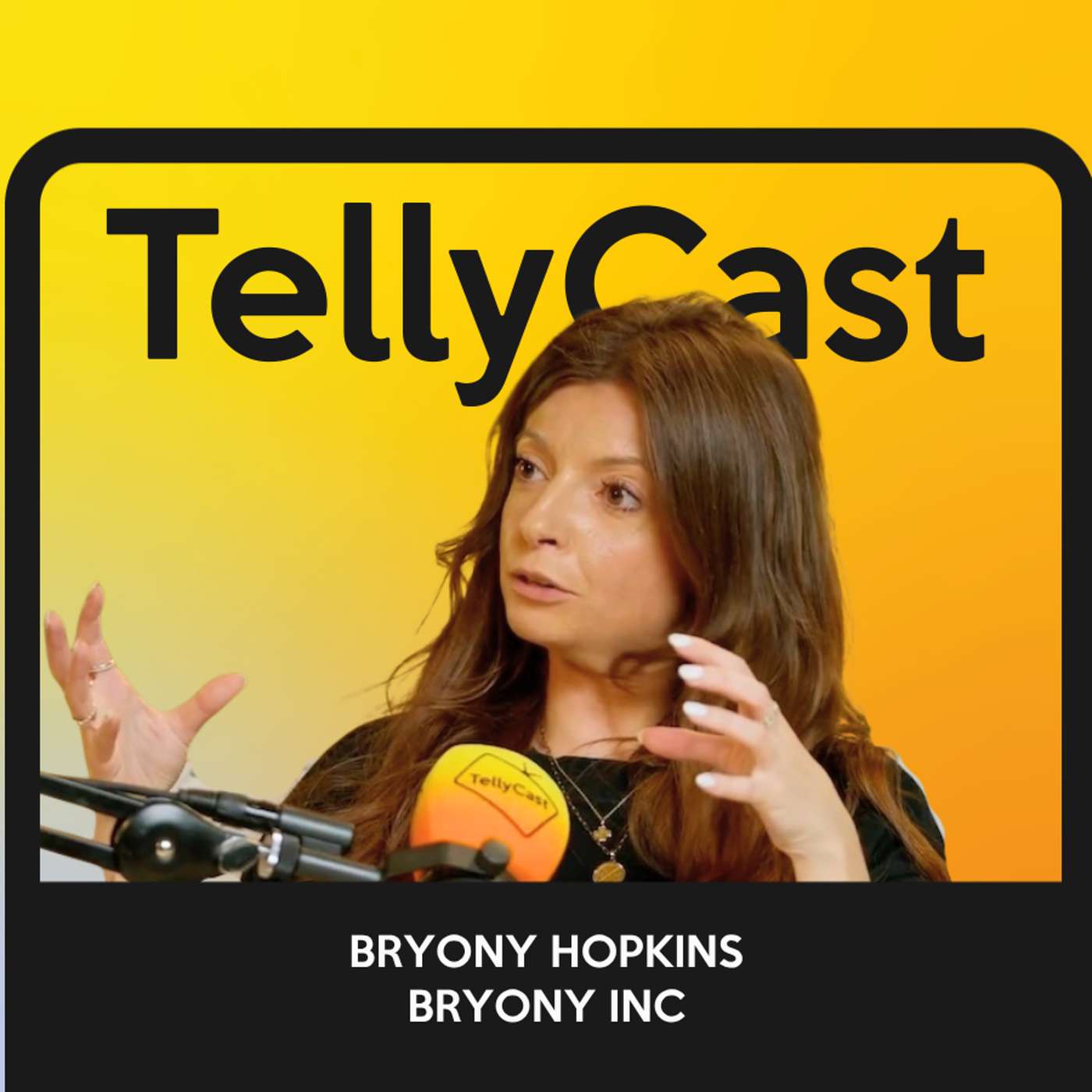
    June 26 · 40 min

    How to build a digital-first production company

    What does it really take to build a production company for the creator economy? This week on TellyCast, Justin Crosby is joined by production strategist Bryony Hopkins, founder of BRYONY Ink, whose career spans the BBC, LADbible Group, Strong Watch Studios and FlightStory. Bryony has spent years designing production systems for creator businesses, broadcasters and digital-first studios, helping teams make premium content on lean budgets without sacrificing quality. The conversation explores why traditional TV production models often struggle in digital, how creators are building media companies, and why operational excellence is becoming a competitive advantage. Topics include: • Building production infrastructure for digital-first studios • Why mindset matters as much as production skills • Creating more content from every shoot day • Scaling creator businesses sustainably • The future of duty of care in the creator economy • AI tools transforming production workflows • Why TV professionals have valuable skills the creator economy needs • Protecting creators while producing ambitious content • The professionalisation of creator-led media businesses Whether you’re a TV producer, production executive, creator, commissioner or studio founder, this episode is packed with practical insights into how production is evolving in the digital-first era. Visit Tubular Labs Sign up for The Drop newsletter Support the show Enrol on the TellyCast Digital Bootcamp Buy tickets for the Digital Content Forum Subscribe to the TellyCast YouTube channel for exclusive TV industry videos Follow us on LinkedIn Connect with Justin on LinkedIN TellyCast videos on YouTube TellyCast website TellyCast insta TellyCast Twitter TellyCast TikTok Sign up for The Drop newsletter Enrol on the TellyCast Digital Bootcamp Buy tickets for the Digital Content Forum Subscribe to the TellyCast YouTube channel for exclusive TV industry videos Follow us on LinkedIn Connect with Justin on LinkedIN TellyCast videos on YouTube TellyCast website TellyCast insta TellyCast Twitter TellyCast TikTok

    • Transcript
  • S12 · E269
    June 18 · 37 min

    Is Hollywood Broken? Peter White on YouTube, Netflix and the Future of TV

    This week on TellyCast, Justin Crosby is joined by Peter White, Executive Editor at Deadline⁠, for a wide-ranging conversation covering the biggest issues facing the global content business. Peter shares his perspective from Los Angeles on the changing fortunes of Hollywood, the impact of YouTube on traditional television, the future of late-night programming following Stephen Colbert’s departure from CBS, the economics of streaming, and why production companies need to rethink how they make and monetise content. The discussion explores major industry developments including the Paramount-Skydance deal, the rise of creator-led content, YouTube’s growing dominance in the attention economy, the future of unscripted television, and whether vertical drama is genuinely the next big thing or simply the latest industry fad. Peter also explains why he believes the next generation of media talent will emerge from YouTube rather than traditional television, reveals why Deadline has expanded into live events, and shares his thoughts on the future relationship between creators, broadcasters and streamers. A candid and insightful conversation about where television, social video and the wider creator economy are heading next. In this episode: • Is Hollywood really in crisis? • Why YouTube is winning the attention war • The future of late-night television after Stephen Colbert • The Paramount-Skydance merger and industry consolidation • Why production companies must reduce costs • Creator-led content versus traditional TV models • The rise of YouTube-first entertainment • Why Peter is sceptical about vertical drama • How Deadline is adapting to a changing media landscape • The future of TV, streaming and social video TellyCast is the podcast exploring the future of television, social video and the creator economy. Sign up for The Drop newsletter Enrol on the TellyCast Digital Bootcamp Buy tickets for the Digital Content Forum Subscribe to the TellyCast YouTube channel for exclusive TV industry videos Follow us on LinkedIn Connect with Justin on LinkedIN TellyCast videos on YouTube TellyCast website TellyCast insta TellyCast Twitter TellyCast TikTok

    • Transcript
  • S12 · E268
    June 11 · 39 min

    From Gold Rush to YouTube, AI and the Future of TV Production

    What happens when two experienced television producers decide to leave the traditional TV industry and build a digital-first business from scratch? In this episode of TellyCast, Justin Crosby sits down with Pete Campion, Co-Founder of IndyStudios, to explore how he and former BBC producer Matt Ramsden have made the leap from broadcast television into the creator economy. Pete spent more than two decades producing large-scale international factual series, including the hugely successful Gold Rush franchise. But as the economics of traditional television became increasingly challenging, he saw an opportunity to apply those storytelling skills to YouTube, digital channels and AI-powered content. The conversation explores the realities of building a digital-first production company, why TV producers should have confidence in their storytelling skills, how Indie Studios is developing original YouTube channels, and why AI is creating entirely new opportunities for factual storytelling. Pete also discusses audience behaviour on YouTube, the importance of owning intellectual property, collaborating with creators, working with brands, and the lessons traditional production companies need to learn if they want to succeed in the new production economy. Elsewhere, Justin and Pete discuss the future of reality television, duty of care in content production, the opportunities for experienced TV producers in social video, and why storytelling remains the most valuable skill in any medium. Whether you’re a producer, creator, commissioner, studio executive or media entrepreneur, this episode offers a fascinating insight into how one production company is navigating the transition from television to digital-first content. Key Topics • Building IndyStudios after redundancy from traditional TV • Why experienced TV producers are moving into digital-first content • Gold mining channels and niche audience strategies • Working with creators and athletes • The opportunities and risks of AI-generated storytelling • Legends of Gold and AI-powered factual content • What TV producers can learn from YouTube creators • Audience-first storytelling versus commissioner-led development • Duty of care in digital production • The future of independent production companies Episode Highlights • Pete’s journey from Gold Rush to founding IndyStudios • Why “storytelling will win” regardless of technology changes • How AI is unlocking previously impossible factual stories • Building owned IP instead of relying on commissions • Lessons learned from publishing on YouTube • The biggest mindset shifts TV producers need to make • Why collaboration is essential for traditional indies entering digital Sign up for The Drop newsletter Enrol on the TellyCast Digital Bootcamp Buy tickets for the Digital Content Forum Subscribe to the TellyCast YouTube channel for exclusive TV industry videos Follow us on LinkedIn Connect with Justin on LinkedIN TellyCast videos on YouTube TellyCast website TellyCast insta TellyCast Twitter TellyCast TikTok

    • Transcript
Showing 1–20 of 35 episodes