Skip to content
Artwork for Tell Me What It's Like
Society & CulturePersonal Journals

Tell Me What It's Like

Stacy Raine

– Season 3 starts Fall 2026 –

What's it like to be a tween therapist? To switch careers and begin photographing toys? To have Guillain-Barré? To be the first female chess grandmaster?

Tell Me What It’s Like is a podcast about uncommon experiences and what they teach us about the world. Host Stacy Raine talks with people who have spent years in roles and life situations most of us don’t experience to understand what it’s actually like, what they’ve seen over time, and what those experiences reveal.

Play
  • 20 episodes
  • Avg 45 min
  • English
  • S2 · E45
    June 24 · 47 min

    Building Community Wherever You Go: Kandi Hart on What She's Learned as a Military Spouse

    In the Season 2 finale, military spouse Kandi Hart joins the show to discuss what she's learned about building community after decades of moves. She and Stacy talk about what it takes to thrive in every new place, including the mindset you need, the tactics that can work, and how sometimes community starts with just one person. "I will immediately walk up to somebody, and I will ask them about themselves. I'll say, 'Tell me about your family.'" Hear Kandi talk about: Why Twentynine Palms — a base most people dread — became a place her whole family asked to go back to The party mistake that humbled her and changed how she thinks about inclusivity How she went from a shy kindergartner who cried every morning to the first person to grab the microphone in any room Why she thinks showing up at someone's door still matters more than any Facebook group How to build your community when you're not in a military bubble Mentioned in this episode: Twentynine Palms, California Support This Show: Follow Tell Me What It’s Like in your favorite podcast app Leave a rating & review — it helps others find the show Share the episode and tag @RaineMediaCo on social media

  • S2 · E44
    June 17 · 50 min

    Diagnosed with Asperger's at 65: Charles Grimes on Finally Understanding Himself

    Charles Grimes has spent nearly 30 years as a business psychologist, helping leaders understand themselves so they could lead others well. But he’s also been trying to understand himself, with therapy, courses, and numerous self-assessment tools. But it wasn't until he was 65 — when a friend made a casual, throwaway comment — that the missing piece finally clicked into place. He had Asperger's. The diagnosis didn't feel like bad news. It felt like freedom. "It's okay to be Charles. And that's something which I hadn't felt. And I'm 65. This is very late in life to suddenly feel it's okay to be me." Hear Charles talk about: What his friend said that set the whole thing in motion and why he didn't dismiss it What "masking" is, and the exhausting work of hiding in plain sight for decades The conductor who walked into rehearsal and transformed a mediocre choir without saying a word - and what this has to do with leadership What fell into place when he looked back at his life through the new lens of his diagnosis Learning about love and connection later in life — and why he thinks it's never too late Mentioned in this episode: A Question of Leadership by Charles Grimes The National Autistic Society — where Charles went for his formal assessment Support This Show: Follow Tell Me What It’s Like in your favorite podcast app Leave a rating & review — it helps others find the show Share the episode and tag @RaineMediaCo on social media Mentioned in this episode: Help Others Discover the Show Enjoying Tell Me What It’s Like? Leaving a rating and review in your podcast app helps more listeners discover the show. Thanks for supporting thoughtful conversations and perspective-driven storytelling.

    • Chapters
  • S2 · E43
    June 10 · 47 min

    Coming Back to the Game: A Quad Amputee Soccer Coach on Reclaiming His Confidence

    When soccer coach Scott Martin contracted a rare illness that took his hands and parts of his feet, it took the way he coached the game as well as his confidence. What followed was years of depression, discrimination, and self-doubt, until he finally found his way back to the game that he loves. "I was faking it. I was doing a pretty darn good job of faking me being me. But everyone else avoided it too. We never talked about it." Hear Scott talk about: What it was like to wake up from a month-long coma and learn what had happened to his body Why he skipped past the emotional reality of his illness and what that cost him The discrimination he faced trying to return to coaching What it was like to address his disability with his new team of 12-year-olds How he rebuilt his confidence, and what playing from the heart really means Mentioned in this episode: Play From Your Heart by Scott Martin The Five Stages of Grief by Elisabeth Kübler-Ross Support This Show: Follow Tell Me What It’s Like in your favorite podcast app Leave a rating & review — it helps others find the show Share the episode and tag @RaineMediaCo on social media Mentioned in this episode: Help Others Discover the Show Enjoying Tell Me What It’s Like? Leaving a rating and review in your podcast app helps more listeners discover the show. Thanks for supporting thoughtful conversations and perspective-driven storytelling.

  • S2 · E42
    June 3 · 43 min

    Inside Fertility Medicine: Dr. Yemi Famuyiwa on Birth, Loss, and the Science of Having Babies

    Dr. Yemi Famuyiwa knew she wanted to be a doctor long before she knew what kind. It was during her third-year rotations at Emory that the answer became obvious. She'd had “a roaring blast” in her OBGYN rotation and couldn't imagine anything else. She went on to specialize in reproductive endocrinology and infertility, and has spent decades helping people navigate one of the most emotional experiences a person or couple can face. In this episode, she talks about what she's noticed inside that world — the science, the cultural pressures that leave women suffering in silence, and the grief that has no name.Nullam id diam metus. Interdum et malesuada fames ac ante ipsum primis in faucibus. Nullam interdum est erat, rutrum tristique ipsum cursus a. " I hope I never get over it. It's just such a magical moment." Hear Dr. Famuyiwa talk about: What it was like to guide her first baby into the world and how she hopes she never gets over it The cultural pressure on women in paternalistic societies to conceive, and what can happen when they can't Why men suffer in silence too, and how infertility can challenge a marriage Ambiguous loss: the grief that never ends and has no body to weep over Why infertility is rising worldwide — and why delaying childbearing is only part of the story What she wishes people understood about their own biology before it's too late Mentioned in this episode: The Quest for Fertility by Dr. Yemi Famuyiwa Dr. Nanette Wenger, cardiologist at Emory, who influenced her during medical school Grady Memorial Hospital, Atlanta Emory University School of Medicine Support This Show: Follow Tell Me What It’s Like in your favorite podcast app Leave a rating & review — it helps others find the show Share the episode and tag @RaineMediaCo on social media Mentioned in this episode: Help Others Discover the Show Enjoying Tell Me What It’s Like? Leaving a rating and review in your podcast app helps more listeners discover the show. Thanks for supporting thoughtful conversations and perspective-driven storytelling.

  • S2 · E41
    May 27 · 43 min

    From Blogger to Influencer to Done: Chelsea Coulston on the Creator Economy

    In 2012, Chelsea Coulston had just moved to a new house in a new city with a newborn while her husband was deployed. She turned her focus to decorating her new rental home, and turned to the internet for help. But she wasn’t finding much to inspire her, since most of what existed was meant for people who could make permanent changes. So she started a blog called Making Home Base to share renter-friendly decorating ideas for military families. What followed was a 13-year front-row seat to how the internet went from a wholesome, free exchange of ideas to a massively profitable influencer industry — and why she ultimately walked away. " I think we're to this place where social media doesn't feel good. The content that we see doesn't feel real or authentic a lot of times. " Hear Chelsea talk about: How home bloggers were among the first to use Instagram — not to sell, but to send people back to their sites How the money worked: sidebar ads to Google AdSense to brand deals to sponsored posts, and what that means for authenticity Why Chelsea calls the creator economy the Wild West, and what it actually takes to keep up Why everyone with a following is an influencer now and why that comes with responsibility What made her walk away, and why she'd reset the whole thing to the early blogging days if she could Mentioned in this episode: Making Home Base — Chelsea's blog Making Home Base on Instagram Brick— an app designed to help people limit their time on social media Support This Show: Follow Tell Me What It’s Like in your favorite podcast app Leave a rating & review — it helps others find the show Share the episode and tag @RaineMediaCo on social media Mentioned in this episode: Help Others Discover the Show Enjoying Tell Me What It’s Like? Leaving a rating and review in your podcast app helps more listeners discover the show. Thanks for supporting thoughtful conversations and perspective-driven storytelling.
  • S2 · E40
    May 20 · 41 min

    The Reality of Reality TV: The Psychologist Who Decides Who Gets on the Show

    Have you ever wondered how the people on reality TV get cast? Dr. Steven Stein is a psychologist who's spent twenty years helping make that call. Working behind the scenes of shows like The Amazing Race Canada and Big Brother Canada, he assesses who belongs, who can handle it, and what might happen when the cameras start rolling. "People want to be the villain. And if you fake it, we try to screen you out. You can’t fake being a villain." Hear Steven talk about: How casting works: the psychological assessments, the interviews, and how producers narrow thousands of applicants to a final cast The personality traits that drive people to apply for reality TV in the first place What it really means to be the "villain" and why the best ones know the difference between the game and real life The 12 reality TV archetypes he's identified and the quiz he's developed to find out which one you are Why social media has fundamentally changed what contestants experience after the show airs What reality TV has taught him about behavior, emotion, and how people perform under pressure Mentioned in this episode: Multi-Health Systems (MHS) — Dr. Stein's company, which developed the EQ-i emotional intelligence assessment Yes, Chef with Martha Stewart — the cooking competition show Dr. Stein describes as one of the more intense sets he's worked on Support This Show: Follow Tell Me What It’s Like in your favorite podcast app Leave a rating & review — it helps others find the show Share the episode and tag @RaineMediaCo on social media Mentioned in this episode: Help Others Discover the Show Enjoying Tell Me What It’s Like? Leaving a rating and review in your podcast app helps more listeners discover the show. Thanks for supporting thoughtful conversations and perspective-driven storytelling.
  • S2 · E39
    May 13 · 51 min

    Joining Their Reality: Lisa Skinner on Alzheimer's, Dementia, and Caregiving

    When Lisa Skinner was a teenager, she went to visit her grandmother, who began telling her frantic stories about birds living in her mattress and men trying to steal her jewelry. There were no birds, and there were no men, but Lisa would soon find out that her grandmother had Alzheimer’s disease. That experience shaped the course of Lisa’s life and eventually led her into dementia care, where she’s spent decades helping families better understand what their loved ones are experiencing and how to care for them with compassion and dignity. In this episode, Lisa shares what she’s learned from both her personal and professional experiences with Alzheimer’s and dementia, including why “joining their reality” can completely change the caregiving experience. "A diagnosis of Alzheimer’s disease does not have to equate to this is the end of the person’s life." Hear Lisa talk about: The moment she first realized her grandmother had Alzheimer’s The difference between Alzheimer’s disease and the umbrella term dementia How her experiences with eight family members led her into dementia care Why traditional caregiving instincts often do not work with dementia patients What it means to “join their reality” instead of correcting them How person-centered dementia care can help families live more meaningful lives together Mentioned in this episode: Lisa Skinner’s latest book on Alzheimer’s and dementia care Lisa’s podcast and newsletter resources Lisa’s television show on dementia care Support This Show: Follow Tell Me What It’s Like in your favorite podcast app Leave a rating & review — it helps others find the show Share the episode and tag @RaineMediaCo on social media Mentioned in this episode: Help Others Discover the Show Enjoying Tell Me What It’s Like? Leaving a rating and review in your podcast app helps more listeners discover the show. Thanks for supporting thoughtful conversations and perspective-driven storytelling.

  • S2 · E38
    May 6 · 55 min

    Finding her Birth Mother at 51: Julie Melanson on Adoption and Identity

    Julie Melanson always knew she was adopted, but it wasn’t until she was 51 years old that she decided to search for her birth mother. She eventually found her, built a connection with both her mother and her birth siblings, and then lost her mother soon after. Julie reflects on what it was like to grow up as an adoptee, search for her mom, meet her for the first time, and get to know her during the time they had together. "And she said, 'I am your mother and I have been looking for you for the last five years.'" Hear Julie talk about: Growing up in a large extended family with 17 cousins and summers at the family lake house What her adoptive mother used to say about her birth mother Why she waited until 51 to begin searching for her birth family What it felt like to finally find and meet her birth mother Discovering similarities between herself and her biological relatives The complicated emotions of finding — and later losing — her birth mother Mentioned in this episode: Julie’s memoir, Not Yours To Keep, about adoption and her birth mother’s strength “The Prayer” by Josh Groban and Charlotte Church Support This Show: Follow Tell Me What It’s Like in your favorite podcast app Leave a rating & review — it helps others find the show Share the episode and tag @RaineMediaCo on social media Mentioned in this episode: Help Others Discover the Show Enjoying Tell Me What It’s Like? Leaving a rating and review in your podcast app helps more listeners discover the show. Thanks for supporting thoughtful conversations and perspective-driven storytelling.
  • S2 · E37
    April 29 · 44 min

    Switching Sides: James Porfido on Becoming a Defense Attorney After Prosecuting

    Note: This episode includes discussion of crime and the criminal justice system, including violent crime. James Porfido spent years as a prosecutor, working to put accused criminals behind bars—until he made a pivotal shift and began defending them instead. Now, having seen the criminal justice system from both sides, he shares what changed his perspective, what most people misunderstand about fair trials, and why he believes the system doesn’t always deliver equal justice. " As an attorney, this is how I viewed my transition to becoming a defense attorney: we all are guaranteed a fair trial and due process under the law, and we have constitutional protections. " Hear James talk about: His path from prosecutor to defense attorney, and what changed his perspective The meaning of “innocent until proven guilty” in practice The state’s obligation in a criminal case The role of a strong defense attorney in ensuring a fair trial Why he believes the justice system isn’t always equal What everyday citizens misunderstand about the legal system Mentioned in this episode: The Salem Witch Trials Framed, by John Grisham Unequal Justice by James Porfido Support This Show: Follow Tell Me What It’s Like in your favorite podcast app Leave a rating & review — it helps others find the show Share the episode and tag @RaineMediaCo on social media Mentioned in this episode: Help Others Discover the Show Enjoying Tell Me What It’s Like? Leaving a rating and review in your podcast app helps more listeners discover the show. Thanks for supporting thoughtful conversations and perspective-driven storytelling.

  • S2 · E36
    April 22 · 43 min

    Earth Day Special | Trash Wolf: Leader of the Anti-Litter Pack (Re-Release)

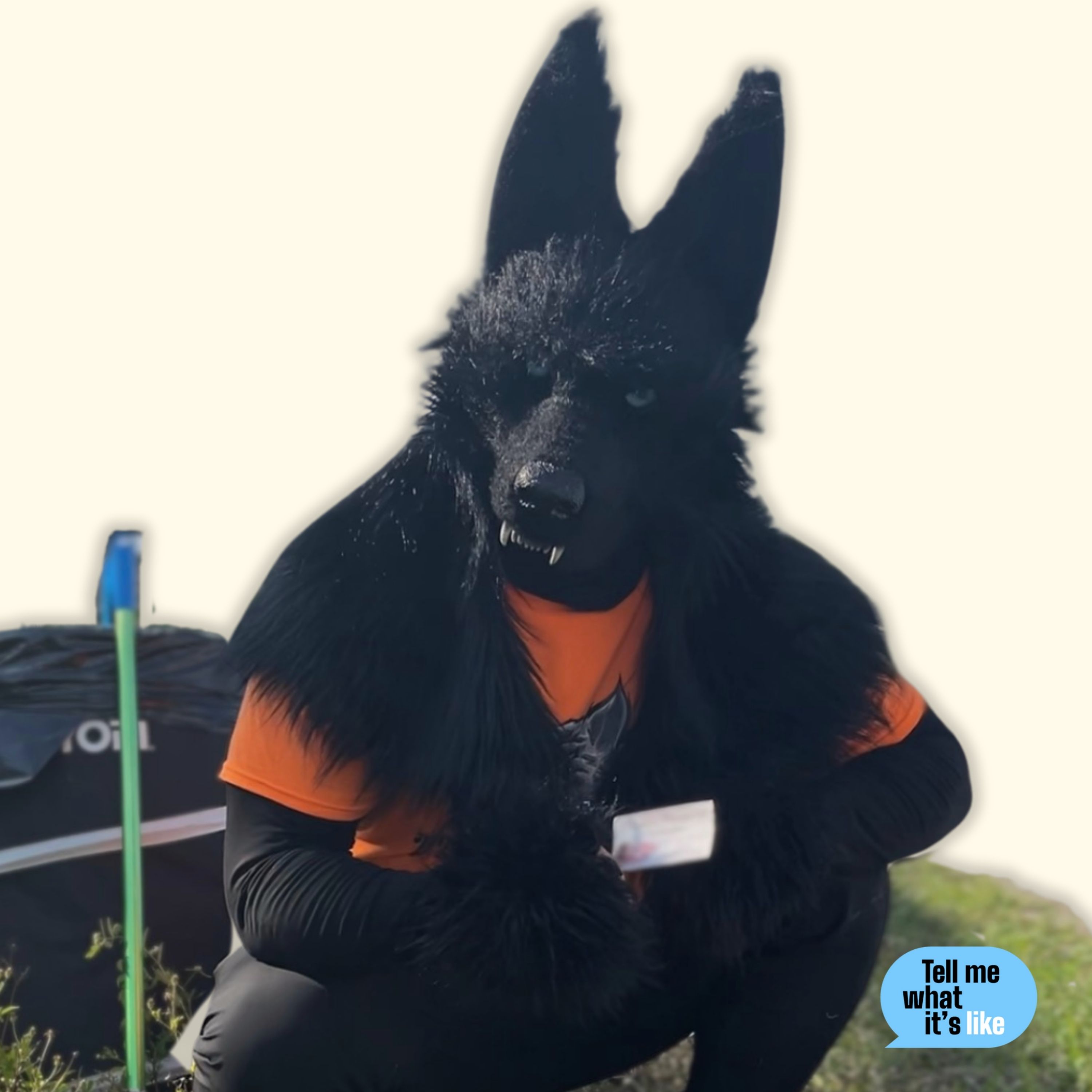
    This Earth Day, listen to one of the most earth-friendly guests from Tell Me What It's Like so far: Trash Wolf. While there are lots of people who talk about helping the environment, Florida’s Trash Wolf took a different route. In 2022, Trash Wolf began prowling the streets, putting on a wolf suit to patrol his neighborhood and solve one specific problem: litter. Since this episode first aired, Trash Wolf's anti-litter pack has doubled in size, illustrating that his unique approach to caring about the earth makes a lot of sense. "It's your neighborhood. It's your community. You live there. If you are already out and walking around, pick up a piece of litter or two." Hear Trash Wolf talk about: The Origin Story: What finally pushed him to put on the mask, and why it was a wolf The Philosophy: How cleaning up trash teaches us about the world. The Call to Action: Why his mission is really about awareness, community, and taking that first step. Mentioned in this episode: Trash Wolf on Instagram Trash Wolf on YouTube Support This Show: Follow Tell Me What It’s Like in your favorite podcast app Leave a rating & review — it helps others find the show Share the episode and tag @RaineMediaCo on social media Mentioned in this episode: Help Others Discover the Show Enjoying Tell Me What It’s Like? Leaving a rating and review in your podcast app helps more listeners discover the show. Thanks for supporting thoughtful conversations and perspective-driven storytelling.

  • S2 · E35
    April 15 · 51 min

    Dying Well: JoAnne Chitwood on 40 Years of Hospice Nursing

    When JoAnne Chitwood graduated from nursing school, she wasn't sure what she actually wanted to do—until a hospice volunteer at the bedside of her patient told her, "JoAnne, you are a hospice nurse". She had never even heard the term, but she soon realized she was born for the role. JoAnne has spent the past four decades at the bedside of the dying. In this episode, she shares the profound lessons learned from 40 years of end-of-life care: how to manage terminal anxiety, why death mirrors the birth process, and how "pouring love" into patients can lead to the most unexpected outcomes. "Hospice has a level of intuition and sensitivity that I have not found in any other area of nursing or healthcare... it’s fabulous." Hear JoAnne talk about: How JoAnne discovered she was "born" for this hospice work Why the dying process is a mirror image of birth, as the body begins to "unwind" and nourish itself from within. Managing the many different facets of hospice nursing Why she doesn’t run from sadness Why forty years of witnessing "peaceful" transitions has completely removed her own fear of death. Mentioned in this episode: Please Help Me Die Well Book Series by JoAnne Chitwood The Highly Sensitive Person by Elaine Aron The Medicare Hospice Benefit Support This Show: Follow Tell Me What It’s Like in your favorite podcast app Leave a rating & review — it helps others find the show Share the episode and tag @RaineMediaCo on social media Mentioned in this episode: Help Others Discover the Show Enjoying Tell Me What It’s Like? Leaving a rating and review in your podcast app helps more listeners discover the show. Thanks for supporting thoughtful conversations and perspective-driven storytelling.

  • S2 · E34
    April 8 · 34 min

    Dating Again After 30 Years: Victoria Vaughn on the Frogs She’s Kissed

    After 30 years of marriage, Victoria Vaughn found herself newly single in her 50s — and back in a dating world that looked nothing like the one she left. She landed many dates, but many of them weren’t what she expected. She calls those dates “frogs.” But through those experiences, she gained a much clearer understanding of what she wanted, what actually matters in a partner, and why finding the right person often starts with being true to yourself. "Don’t try to put a square peg into a round hole … don’t settle." Hear Victoria talk about: What it’s like to date again after 30 years off the market Why dating later in life comes with more complexity and more clarity The unexpected realities of finances, baggage, and honesty in dating Why you might be a “frog” to someone else — and what that means How she recognized her “prince” and what made him different The lessons she wishes she knew before she started dating again Her husband’s Parkinson’s diagnosis and why she supports the Michael J. Fox Foundation Mentioned in this episode: Oh the Frogs I’ve Kissed Before I Finally Found My Prince - Victoria’s book on dating again The Michael J. Fox Foundation Support This Show: Follow Tell Me What It’s Like in your favorite podcast app Leave a rating & review — it helps others find the show Share the episode and tag @RaineMediaCo on social media Mentioned in this episode: Help Others Discover the Show Enjoying Tell Me What It’s Like? Leaving a rating and review in your podcast app helps more listeners discover the show. Thanks for supporting thoughtful conversations and perspective-driven storytelling.

  • S2 · E33
    April 1 · 43 min

    Becoming a Toy Photographer: Mitch Wu on Turning Play into a Creative Career

    Mitch Wu thought he knew exactly what his creative career would look like. But after years in product design, a difficult job, and the loss of his brother, he realized how far he’d drifted from the kind of work he actually wanted to be doing. Then one afternoon he and his nephew went to the park with a couple of action figures and from the first photograph he knew he'd found what he was meant to do. In this episode, Mitch shares what it’s like to build miniature worlds, develop a creative niche that didn’t really exist, and turn play into a profession. "Then I took the photo and I looked at what I got on the camera and it's like, my God, this is, it was like clear as day that that's what I was going to do for my next career." Hear Mitch talk about: His journey from illustration to product design to wedding photography—and how he realized he’d gotten off his creative path The moment in a park with his nephew that instantly shifted his career direction What toy photography actually is, and why it’s rooted in storytelling and world-building How he built a career in a niche that barely existed at the time The difference between being a “commodity” creative and owning a specialized niche Why continual learning and experimentation keep his work evolving Mentioned in this episode: Larger Than Life (documentary) – See Mitch at work and get a behind-the-scenes look at his toy photography process New York Toy Fair – The largest toy industry convention in North America, where Mitch exhibited his work and connected with major brands Disney+ Marvel documentary series – A series featuring toy creators, including Mitch and his work Mitch Wu’s toy photography work – See examples of his work for major toy companies, including Mattel’s Ever After High, one of Mitch’s first major clients Support This Show: Follow Tell Me What It’s Like in your favorite podcast app Leave a rating & review — it helps others find the show Share the episode and tag @RaineMediaCo on social media

  • S2 · E32
    March 25 · 37 min

    Understanding Medicare: Toni King on Navigating a Complex System

    Toni King was at a Medicare workshop when she realized how easy it is for someone to misunderstand the system—and how difficult it can be to fix those misunderstandings once they happen. She’s spent years helping people navigate Medicare, a process shaped by rules, timelines, and decisions that aren’t always intuitive. She shares what it’s like to guide people through it, how the system works, and why it can be so challenging to understand from the outside. "The whole thing is all about rules." Hear Toni talk about: How she got started helping people navigate Medicare Why the system can be difficult for people to understand The structure of Medicare and how the different parts fit together The role of private insurance within Medicare What people need to think about as they approach enrollment Mentioned in this episode: Learn more about Toni King Medicare Social Security Medicare Advantage (Part C) Prescription Drug Plans (Part D) Support This Show: Follow Tell Me What It’s Like in your favorite podcast app Leave a rating & review — it helps others find the show Share the episode and tag @RaineMediaCo on social media

  • S2 · E31
    March 18 · 45 min

    How Cities Are Designed: Creating Walkable Places with Jahnavi Kirtane

    Cities don’t just develop over time — they’re shaped by decisions about transportation, where we build, and what gets prioritized. Urban planner Jahnavi Kirtane explains how those decisions come together, why so many places in the U.S. are built around cars, and how walkability affects independence, access, and everyday life in ways most people don’t realize. "Walking is really good for you, both your physical health and your social health and emotional health." Hear Jahnavi talk about: The difference between growing up in a car-dependent suburb and navigating New York City What “walkability” actually means and how it shows up in daily life Why many U.S. communities are designed around cars The kinds of decisions that shape how cities function How design influences independence, access, and connection Mentioned in this episode: Walkable City by Jeff Speck Speck Dempsey, the planning and design firm where Jahnavi works Jeff Speck's TED talk, The Walkable City Support This Show: Follow Tell Me What It’s Like in your favorite podcast app Leave a rating & review — it helps others find the show Share the episode and tag @RaineMediaCo on social media Mentioned in this episode: Help Others Discover the Show Enjoying Tell Me What It’s Like? Leaving a rating and review in your podcast app helps more listeners discover the show. Thanks for supporting thoughtful conversations and perspective-driven storytelling.

  • S2 · E30
    March 11 · 42 min

    Scaling Social Impact: Suzanne Smith on Helping Organizations Create Change

    Suzanne Smith has spent her career working with nonprofits and has witnessed a reality many people outside the field don’t see: solving big social problems requires more than passion and good intentions. It requires organizations strong enough to grow and build long-term sustainability. In this episode, Suzanne shares what it’s like to work in the social impact world, and what she’s learned from working with organizations trying to turn big ideas for change into lasting results and stronger communities. "One of the things I saw was the fact that the issues were scaling, but the organizations were not scaling along with them." Hear Suzanne talk about: Growing up in a family that talked about social issues at the dinner table Her early career working in lobbying and the nonprofit sector Why many nonprofits struggle to scale their impact The intersection of nonprofit, business, and government in creating change Why she believes social change work is a calling, not just a job Mentioned in this episode: Social Impact Architects Suzanne Smith’s Substack blog, Social Trendspotter Support This Show: Follow Tell Me What It’s Like in your favorite podcast app Leave a rating & review — it helps others find the show Share the episode and tag @RaineMediaCo on social media
  • S2 · E29
    March 4 · 51 min

    22 Days in a Buddhist Monastery: Clarity That Comes From Silence

    When Laurie Jacobson was 43, she found herself in a deeply unhappy marriage and increasingly isolated and depressed. After years of trying conventional therapies and self-help approaches without relief, she made a decision that felt radical at the time: she signed up for a silent retreat at a Buddhist monastery she’d discovered through a pamphlet in a coffee shop. Over the next 22 days of meditation and silence, Laurie experienced a profound shift in perspective that helped her see her life differently, and ultimately gave her the clarity she needed to make a difficult life decision. "Don't be afraid to step outside your comfort zone, because sometimes it takes stepping outside your comfort zone to find a better place." Hear Laurie talk about: What daily life was like during a silent meditation retreat Why she decided to go to a Buddhist monastery after trying many other forms of help The surprising mental clarity that can come from long periods of silence and meditation How the experience changed the way she saw her marriage and gave her the strength to leave it The lessons she carried forward about openness, desire, and letting go Mentioned in this episode: Theravada Buddhism Laurie's book, Unexpected Awakening: 22 Days at a Buddhist Monastery Freed Me from Abuse Support This Show: Follow Tell Me What It’s Like in your favorite podcast app Leave a rating & review — it helps others find the show Share the episode and tag @RaineMediaCo on social media Mentioned in this episode: Help Others Discover the Show Enjoying Tell Me What It’s Like? Leaving a rating and review in your podcast app helps more listeners discover the show. Thanks for supporting thoughtful conversations and perspective-driven storytelling.

  • S2 · E28
    February 25 · 53 min

    Parenting Tween Girls: Christina King on the Teenage Brain

    As a teenager, Christina King looked like she was doing everything right — she had good grades, played sports, took advanced classes. But when her mom paused during an argument and asked, “Are you happy?” it changed the course of her life. Today, Christina is a therapist specializing in tween and teen girls, and she shares what’s really happening in the teenage brain, why emotional ups and downs are often developmentally normal, and how parents can stay connected during one of the most intense seasons of growing up. "I say with teens that sometimes it's like all gas, no brakes." Note: This episode is for informational purposes only and is not a substitute for professional medical or mental health advice. It includes discussion of teen mental health, including self-harm, in the context of helping parents understand and respond. Hear Christina talk about: The question that led her to therapy as a teen What "all gas, no brakes" means for the adolescent brain Why emotional volatility can be a healthy sign Tween girl friendship dynamics and indirect aggression Social media, comparison culture, and feeling left out The difference between venting mode and problem-solving mode Why parents should depersonalize their teen's emotions Mentioned in this episode: Christina King Family Therapy Find Christina on Instagram Inside Out 2 (when discussing adolescent emotions) Support This Show: Follow Tell Me What It’s Like in your favorite podcast app Leave a rating & review — it helps others find the show Share the episode and tag @RaineMediaCo on social media Mentioned in this episode: Help Others Discover the Show Enjoying Tell Me What It’s Like? Leaving a rating and review in your podcast app helps more listeners discover the show. Thanks for supporting thoughtful conversations and perspective-driven storytelling.

  • S2 · E27
    February 18 · 38 min

    Unexpected Pregnancy at 21: Finding a Safety Net with Kristen Mardis

    Kristen Mardis was 21 years old, fresh out of college, and had just been accepted into graduate school when she found out she was pregnant. With no financial safety net and no health insurance, she had to quickly figure out how she would care for a baby while still pursuing her dream of becoming a speech pathologist. In this episode, Kristen shares what it was like to navigate Medicaid, SNAP benefits, and childcare assistance — and how those programs gave her the foundation she needed to build the life she has today. “None of that would have happened without those programs.” Hear Kristen talk about: Finding out she was pregnant just weeks after being accepted into graduate school How Medicaid and SNAP helped her access prenatal care and feed her baby Navigating childcare assistance so she could finish her master’s degree The stigma around government assistance — and the dignity everyone deserves How her experience shaped the way she now serves families in her work as a speech pathologist Mentioned in this episode: SNAP (Supplemental Nutrition Assistance Program) Medicaid Childcare assistance programs Support This Show: Follow Tell Me What It’s Like in your favorite podcast app Leave a rating & review — it helps others find the show Share the episode and tag @RaineMediaCo on social media

  • S2 · E26
    February 18 · 42 min

    Behind the Scenes of News and Life: Carol Lin on Reporting History

    Carol Lin spent her career inside newsrooms built for breaking news. She covered some of the most difficult moments in recent history, including being the first person to report the attacks on September 11. In this conversation, she reflects on her career in journalism and the behind-the-scenes moments that shaped her life. She also discusses what it was like to revisit those experiences while writing her memoir. "And then I hear the music, the breaking news animation comes up and we are live." Hear Carol talk about: What it’s like inside a newsroom built for breaking news The moment she realized she was going live on September 11 without a script How anchors rely on producers, reporters, and unseen teams during national crises The emotional discipline required to deliver information in uncertain moments The intersection of her career with major personal turning points Why writing her memoir required revisiting both professional and private pain What she hopes readers — and her daughter — take away from her story Mentioned in this episode: The first moments reporting 9/11 (viewer discretion advised) Carol Lin’s memoir, When News Breaks Support This Show: Follow Tell Me What It’s Like in your favorite podcast app Leave a rating & review — it helps others find the show Share the episode and tag @RaineMediaCo on social media Mentioned in this episode: Help Others Discover the Show Enjoying Tell Me What It’s Like? Leaving a rating and review in your podcast app helps more listeners discover the show. Thanks for supporting thoughtful conversations and perspective-driven storytelling.

Showing 1–20 of 20 episodes