Skip to content
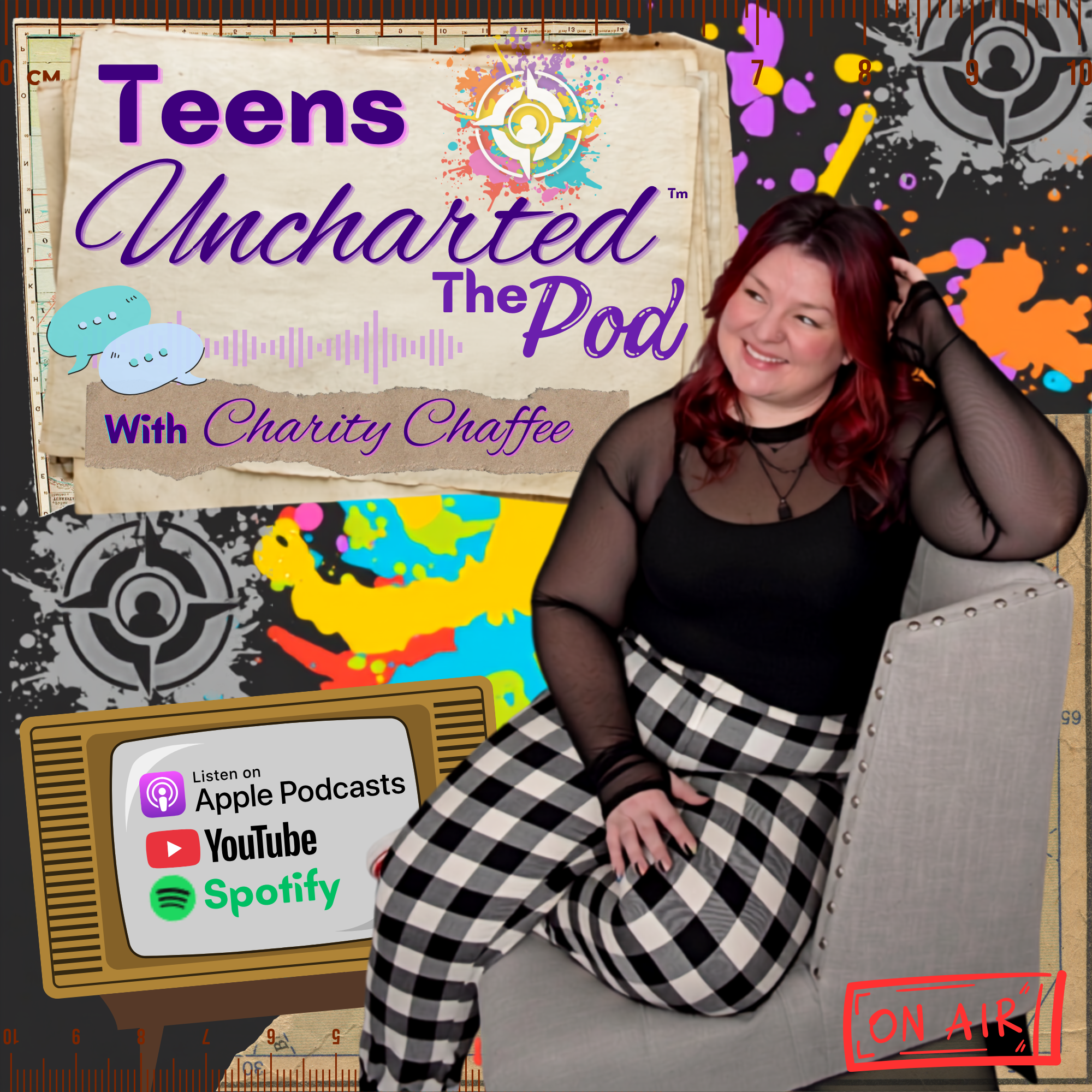
Artwork for Teens Uncharted: the Pod
Kids & FamilyParentingHealth & FitnessMental Health

Teens Uncharted: the Pod

Teens Uncharted

Teens Uncharted: the Pod

Being a teenager today is messy, and we aren’t going to lie about it. Welcome to Teens Uncharted: the Pod where we drop the filters and talk about what’s actually going on. Hosted by Charity, this show bridges the gap between teens, parents, and the professionals who support them. From mental health and school struggles (yes, even IEPs) to high-risk behaviors and finding real connection, we tackle the hard stuff with zero judgment, total honesty, and real clinical insight. Whether you’re a teen trying to figure it out, a parent trying to understand, or a therapist doing the work, you're in the right place. Watch the video episodes on Spotify and YouTube, or listen anywhere you get your podcasts.

Play
  • 23 episodes
  • weekly
  • Avg 44 min
  • English
Counted on this page — what you have heard stays on this device, so it is not something the list can be paged by.
  • S1 · E45
    April 25 · 16 min

    Guides Not Guards, Rethinking Consequences & Reframing Teen Rebellion | Teens: No Cap Ep.45

    Welcome back to Teens: No Cap! In episode 45, licensed mental health counselor Charity Chaffee shares her top insights from day two of a specialized teen therapy conference. In this episode, we cover: 🎙️Rethinking Tech Use: Why it is more important to understand the how and why of a teen's screen usage rather than simply tracking their time limit. 🎙️Guides, Not Guards: Exploring presenter Chris Conley's concept of transitioning from managing your child to mentoring them as they grow into teens. 🎙️The Reality of Consequences: Why consequences should focus on steering teens in the right direction as a learning opportunity, rather than validating an adult's feelings about the behavior. 🎙️Reframing Rebellion: Understanding that what looks like rebellion is often just a teen's attempt to gain autonomy, build independence, and trust their own intuition. 🎙️The Power of Community: Why teen therapists need dedicated consultation spaces and how we are only as strong as our weakest link. Whether you are a clinician looking to evolve your skill set or a parent navigating high-risk behaviors, you deserve a community that understands this unique population. Join the Community: Clinicians: https://www.facebook.com/share/g/1BHi1bkcXZ/ Parents: https://www.facebook.com/share/g/1CLjk1359K/ Like our Facebok Page: https://www.facebook.com/profile.php?id=61575657270757 Join us in Skool: https://www.skool.com/teens-uncharted/about Follow us on Instagram: https://www.instagram.com/teens.uncharted/ #teensnocap #TeenTherapy #ParentingTeens #TeenMentalHealth #TherapistCommunity #GuidesNotGuards #TeensUncharted

    • Transcript
  • S1 · E44
    April 18 · 29 min

    Inside the Teen Therapy Conference: Trauma, Resistance & Sports Culture | Teens No Cap Ep. 44

    Hey everybody, welcome back to episode 44 of Teens: No Cap! I’m your host, Charity Chaffee, a licensed mental health counselor in Massachusetts who specializes exclusively in treating teenagers. In this episode, I’m coming to you straight from Pennsylvania after an exciting Day 1 at the Teen Therapy Conference run by Katie Kates May. It's been a long day and I am tired, but I couldn't wait to share my raw, bullet-point notes and biggest takeaways from today's incredible presentations! Here are some of the game-changing "nuggets of information" from today's experts: Regulation & Safety: Regulation isn't always calm, and ensuring safety is the actual treatment. Before you can get regulation within a teenager, you have to establish regulation with them. Reframing Trauma: Trauma is what happens in the nervous system, not just the incident itself. The Truth About Resistance: Teen resistance is really just a data point, and it is actually a powerful developmental milestone for building autonomy. Student Athletes: A massive 90% of athletes identify their coach as their biggest role model. Unfortunately, sports culture frequently normalizes emotion suppression. High-Conflict Divorce & Policies: When managing high-conflict cases, providers must be brave, because being too risk-averse creates a barrier to competent care. Practice policies are the structure for your practice and are different from consents for treatment. Self-Harm vs. Repetitive Behaviors: Body-focused repetitive behavior should absolutely be assessed, but it is not actually self-harm. Shame & Secrecy: Shame is a relational wound, and secrecy functions as a supportive behavior. If a parent or therapist's response increases a teen's shame, it almost guarantees that their behavior will become more secretive. We have to remember that teens deserve their own specialized treatment category because they aren't just little adults, and they shouldn't be lumped in with children! Stay tuned for Part 2 next week after Day 2 of the conference! #TeenTherapy #MentalHealthCounseling #ParentingTeens #StudentAthletes #TraumaInformed #TeensNoCap #JerriChafee #TherapistTips #MentalHealthAwareness #TeenMentalHealth

    • Transcript
  • S1 · E43
    April 11 · 46 min

    Neurodiversity in Teen Girls: ADHD, Autism & Harm Reduction w/ Jamie Roberts | Teens No Cap Ep 43

    Welcome back to Teens No Cap! I'm your host, Charity Chafee, a licensed mental health counselor specializing in teens and their families. Today, I am absolutely jazzed to welcome Jamie Roberts to the show! Jamie is a California-based LMFT who specializes in working with neurodivergent teens and young adults (ADHD, autism, learning differences, and anxiety). She joins us to discuss her incredible new book, Neurodiversity for Teen Girls, and share her own journey of receiving a late diagnosis of AuDHD in her thirties. In this episode, we dive deep into: ✅The Diagnostic Gap: Exploring why 80% of autistic girls do not receive a diagnosis by age 18. ✅The Phone Battery Analogy: A highly relatable update to the traditional "spoon theory" that helps teens effectively communicate their daily energy levels. ✅Redefining Self-Harm: Why we need to start viewing self-harm as a form of "pain regulation" for dopamine-deprived brains. ✅Harm Reduction Strategies: How to implement "distract and delay" techniques to keep teens safe, rather than relying on abstinence-only approaches that don't work. ✅Finding Yourself in Fiction: A look at the six crystal-named archetypes in Jamie's book (like Citrine, Onyx, and Emerald) that help neurodivergent teens feel seen and understood. Resources & Links Mentioned: ✨Jamie's New Book: Neurodiversity for Teen Girls [https://a.co/d/04DEEBbR] ✨Jamie's First Book: Mindfulness for Teen Anxiety [https://www.amazon.com/dp/1638783829] ✨Neuroaffirming Clinical Trainings: Check out Neuropebble! [https://www.linkedin.com/company/neuropebble-corp/posts/] ✨Follow Jamie Everywhere: @NeuroDivergentTherapist [https://www.instagram.com/neurodivergenttherapist/] ✨ Visit Teens Uncharted Website: https://www.teensuncharted.com/ ✨ Follow us on Instagram: https://www.instagram.com/teens.uncharted/ #Neurodiversity #AutismInGirls #ADHD #HarmReduction #TeenMentalHealth #TeensNoCap #ParentingTeens #JamieRobertsLMFT

    • Transcript
Showing 21–23 of 23 episodes