
October 8 · 13 min

TED-Ed
TED-Ed’s mission is to create lessons worth sharing. Feed and expand your curiosity with our award-winning animated shorts - published on YouTube and available with supplemental learning materials on ed.ted.com.
Want to suggest an idea for a TED-Ed animation, nominate an educator or animator? Visit our website at: http://ed.ted.com/get_involved.
Consider backing us on Patreon. By doing so, you directly support our nonprofit mission to create free, high-quality educational content: https://www.patreon.com/teded
For more information on using TED-Ed content for commercial purposes (e.g. employee learning, in a film, or in an online course), please submit a Media Request using this link: https://media-requests.ted.com/

Ramesh Raskar presents femto-photography, a new type of imaging so fast it visualizes the world one trillion frames per second, so detailed it shows light itself in motion. This technology may someday be used to build cameras that can look "around" corners or see inside the body without X-rays. Talk by Ramesh Raskar. Learn more about your ad choices. Visit megaphone.fm/adchoices

Dive into the incredible diversity of animal pupils, and how the different shapes indicate the animal’s role in an ecosystem. -- Peering into the eyes of different animals, you’ll see some extraordinarily shaped pupils. House cats, for one, are twilight hunters with vertically elongated pupils. Many grazing animals, like goats, have rectangular pupils. Other animals have crescent- or heart-shaped pupils. So, what’s going on? Why are there so many different pupil shapes? Emma Bryce digs into the science of animal vision. Lesson by Emma Bryce, directed by Bálint Gelley, CUB Animation Ltd. Support Our Non-Profit Mission ---------------------------------------------- Support us on Patreon: http://bit.ly/TEDEdPatreon Check out our merch: http://bit.ly/TEDEDShop ---------------------------------------------- Connect With Us ---------------------------------------------- Sign up for our newsletter: http://bit.ly/TEDEdNewsletter Follow us on Facebook: http://bit.ly/TEDEdFacebook Find us on Twitter: http://bit.ly/TEDEdTwitter Peep us on Instagram: http://bit.ly/TEDEdInstagram ---------------------------------------------- Keep Learning ---------------------------------------------- View full lesson: https://ed.ted.com/lessons/why-do-cats-have-vertical-pupils-emma-bryce Dig deeper with additional resources: https://ed.ted.com/lessons/why-do-cats-have-vertical-pupils-emma-bryce#digdeeper Animator's website: http://cubanimation.com/en/intro-en ---------------------------------------------- Thank you so much to our patrons for your support! Without you this video would not be possible! Helen Lee, pam morgan, sarim haq, Juan Pablo Rodriguez Morales, ANNE FINE, Gerardo Castro, Siddharth Toshniwal, Michel-Ange Hortegat, Enes Kirimi, Amaury BISIAUX, Aravind C V, ND, Samyogita Hardikar, Vanessa Graulich, Vandana Gunwani, LvL042, Abdulmohsin Almadi, Andrew Brodski, AJ Lyon, Anandha Krishnan, Geoffrey Bultitude, Mi Mi, Thomas Rothert, Christopher McVay, Carlo Solaroli, Javier Aldavaz, Ivan Yeung, Brian Elieson, Grayson Garbarino, Oge O, Weronika Falkowska, Stefano Esposito, Nevin Spoljaric, Yvonne Feijoo, Sid Chanpuriya, Arjay Arcinue Dineros, Anoom Yasmin, Anoop Varghese, David Yastremski, Noah Webb, B, Erica Guerrero, Roberto Chena, Oliver Koo, Luke Pisano, Andrea Gordon, Aleksandar Donev, Nicole Klau Ibarra, Milo Vermeulen and Ryan Weiler. Learn more about your ad choices. Visit megaphone.fm/adchoices

Inspired by cell division, Michael Hansmeyer writes algorithms that design outrageously fascinating shapes and forms with millions of facets. No person could draft them by hand, but they're buildable -- and they could revolutionize the way we think of architectural form. Talk by Michael Hansmeyer. Learn more about your ad choices. Visit megaphone.fm/adchoices

View full lesson: http://ed.ted.com/lessons/how-to-fossilize-yourself-phoebe-a-cohen You can aspire to great things in life, but how about in death? Could you be one of the world's greatest fossils many years from now? To ensure being found by a future paleontologist, you'll need to die in a highly specific way (think within tree sap or on the bottom of the ocean floor), and nature takes care of the rest. Phoebe A. Cohen details the steps your body must take to find future fame as a fossil. Lesson by Phoebe A. Cohen, animation by Anton Bogaty. Learn more about your ad choices. Visit megaphone.fm/adchoices

Check out our Patreon page: https://www.patreon.com/teded View full lesson: http://ed.ted.com/lessons/how-sugar-affects-the-brain-nicole-avena When you eat something loaded with sugar, your taste buds, your gut and your brain all take notice. This activation of your reward system is not unlike how bodies process addictive substances such as alcohol or nicotine -- an overload of sugar spikes dopamine levels and leaves you craving more. Nicole Avena explains why sweets and treats should be enjoyed in moderation. Lesson by Nicole Avena, animation by STK Films. Learn more about your ad choices. Visit megaphone.fm/adchoices

View full lesson: http://ed.ted.com/lessons/the-nurdles-quest-for-ocean-domination-kim-preshoff Uploaded 04-08-14 Nurdles are the tiny, factory-made pellets that form the raw material for every plastic product that we use, from toys to toothbrushes. And while they look pretty harmless on land, they can really wreak havoc on our oceans. Kim Preshoff details the nurdles' quest for ocean domination, shedding light on the particular features that allow these pervasive polluters to persist for entire generations. Lesson by Kim Preshoff, animation by Reflective Films. Learn more about your ad choices. Visit megaphone.fm/adchoices Learn more about your ad choices. Visit megaphone.fm/adchoices

View full lesson: http://ed.ted.com/lessons/susan-cain-the-power-of-introverts In a culture where being social and outgoing are prized above all else, it can be difficult, even shameful, to be an introvert. But, as Susan Cain argues in this passionate talk, introverts bring extraordinary talents and abilities to the world, and they should be encouraged and celebrated. Susan Cain makes a case for the quiet and contemplative. Talk by Susan Cain. Learn more about your ad choices. Visit megaphone.fm/adchoices

Explore how seawater desalination methods transform saltwater into potable freshwater, and what drawbacks this technology has. -- Humans have been transforming seawater into potable freshwater for millennia. Today, billions of people can’t access clean drinking water, and 87 different countries are projected to be “water-scarce” by 2050. So, how can we use seawater desalination to combat water scarcity? And can we do it without further harming the environment? Manish Kumar digs into how scientists are creating freshwater. Lesson by Manish Kumar, directed by Vitalii Nebelskyi, and action creative agency. Support Our Non-Profit Mission ---------------------------------------------- Support us on Patreon: http://bit.ly/TEDEdPatreon Check out our merch: http://bit.ly/TEDEDShop ---------------------------------------------- Connect With Us ---------------------------------------------- Sign up for our newsletter: http://bit.ly/TEDEdNewsletter Follow us on Facebook: http://bit.ly/TEDEdFacebook Find us on Twitter: http://bit.ly/TEDEdTwitter Peep us on Instagram: http://bit.ly/TEDEdInstagram ---------------------------------------------- Keep Learning ---------------------------------------------- View full lesson: https://ed.ted.com/lessons/why-dont-we-get-our-drinking-water-from-the-ocean-manish-kumar Dig deeper with additional resources: https://ed.ted.com/lessons/why-dont-we-get-our-drinking-water-from-the-ocean-manish-kumar/digdeeper Animator's website: https://www.and-action.net Music: https://www.wonderboyaudio.com ---------------------------------------------- Thank you so much to our patrons for your support! Without you this video would not be possible! Michel-Ange Hortegat, Enes Kirimi, Amaury BISIAUX, ND, Samyogita Hardikar, Vanessa Graulich, Vandana Gunwani, Abdulmohsin Almadi, AJ Lyon, Geoffrey Bultitude, Mi Mi, Thomas Rothert, Brian Elieson, Oge O, Weronika Falkowska, Nevin Spoljaric, Sid Chanpuriya, Anoop Varghese, David Yastremski, Noah Webb, Roberto Chena, Oliver Koo, Luke Pisano, Andrea Gordon, Aleksandar Donev, Nicole Klau Ibarra, Jesse Lira, Ezekiel Raui, Petr Vacek, Dennis, Olivia Fu, Kari Teffeau, Cindy Lai, Rajath Durgada Manjunath, Dan Nguyen, Chin Beng Tan, Tom Boman, Karen Warner, Iryna Panasiuk, Aaron Torres, Eric Braun, Sonja Worzewski, Michael Clement, Adam Berry, Ghaith Tarawneh, Nathan Milford, Tomas Beckett, Alice Ice, Eric Berman, and Kurt Paolo Sevillano. Learn more about your ad choices. Visit megaphone.fm/adchoices

View full lesson: http://ed.ted.com/lessons/beyond-the-shadow-of-a-doubt-gina-cooke Say the word "doubt" aloud. What is that "b" doing there? Does it have any purpose? Gina Cooke explains the long and winding history of "doubt" and why the spelling, though it seems random, is a wink to its storied past. Lesson by Gina Cooke, animation by The Leading Sheep Studios. Learn more about your ad choices. Visit megaphone.fm/adchoices

Get to know the story of Sojourner Truth, a woman born into slavery who became known as a powerful orator and outspoken activist. -- Isabella Baumfree was born into slavery in late 18th century New York. Fleeing bondage with her youngest daughter, she renamed herself Sojourner Truth and embarked on a legendary speaking tour. She became known as an electrifying orator and her speeches impacted thousands of people in communities across the United States. Daina Ramey Berry details the life of the outspoken activist. Lesson by Daina Ramey Berry, directed by WOW-HOW Studio. Animator's website: https://wow-how.com/ Sign up for our newsletter: http://bit.ly/TEDEdNewsletter Support us on Patreon: http://bit.ly/TEDEdPatreon Follow us on Facebook: http://bit.ly/TEDEdFacebook Find us on Twitter: http://bit.ly/TEDEdTwitter Peep us on Instagram: http://bit.ly/TEDEdInstagram View full lesson: https://ed.ted.com/lessons/the-electrifying-speeches-of-sojourner-truth-daina-ramey-berry Thank you so much to our patrons for your support! Without you this video would not be possible! Jun Cai, Tim Robinson, Henrique 'Sorín' Cassús, cnorahs, Lyn-z Schulte, Elaine Fitzpatrick, Karthik Cherala, Clarence E. Harper Jr., Milad Mostafavi, Аркадий Скайуокер, Kiara Taylor, Louisa Lee, eden sher, Vignan Velivela, Sage Curie, Srikote Naewchampa, Tejas Dc, Khalifa Alhulail, Faiza Imtiaz, Martin Stephen, Jerome Froelich, Dan Paterniti, Jose Henrique Leopoldo e Silva, Mullaiarasu Sundaramurthy, Elnathan Joshua Bangayan, Caleb ross, Duo Xu, Quinn Shen, Marvin Vizuett, Sid , Marylise CHAUFFETON, Karen Goepen-Wee, Sama aafghani, Mandeep Singh, Abhijit Kiran Valluri, Morgan Williams, Kris Siverhus, Jason Weinstein, Tony Trapuzzano, Devin Harris, Brandy Jones, Shawn Quichocho, Gi Nam Lee, Joy Love Om, Miloš Stevanović, Ghassan Alhazzaa, Yankai Liu, Pavel Zalevskiy, Claudia Mayfield and Stephanie Perozo. Learn more about your ad choices. Visit megaphone.fm/adchoices

Follow the spider Anansi on his quest to complete a challenge from the Sky God in order to take ownership of the world’s stories. -- Long ago, all stories belonged to Nyame, the all-seeing Sky God. But one creature, Anansi, was determined to bring the stories down to Earth. Anansi went to Nyame and requested to take ownership of the world’s stories. The Sky God told Anansi that he could have all the stories he wished — but only if he could complete an impossible task. Emily Zobel Marshall shares the cunning spider's journey. Lesson by Emily Zobel Marshall, directed by Keegan Thornhill. Support Our Non-Profit Mission ---------------------------------------------- Support us on Patreon: http://bit.ly/TEDEdPatreon Check out our merch: http://bit.ly/TEDEDShop ---------------------------------------------- Connect With Us ---------------------------------------------- Sign up for our newsletter: http://bit.ly/TEDEdNewsletter Follow us on Facebook: http://bit.ly/TEDEdFacebook Find us on Twitter: http://bit.ly/TEDEdTwitter Peep us on Instagram: http://bit.ly/TEDEdInstagram ---------------------------------------------- Keep Learning ---------------------------------------------- View full lesson: https://ed.ted.com/lessons/the-myth-of-anansi-the-trickster-spider-emily-zobel-marshall Dig deeper with additional resources: https://ed.ted.com/lessons/the-myth-of-anansi-the-trickster-spider-emily-zobel-marshall#digdeeper Animator's website: https://www.behance.net/cosmiconionring ---------------------------------------------- Thank you so much to our patrons for your support! Without you this video would not be possible! zjweele13, Jurjen Geleijn, Anna-Pitschna Kunz, Edla Paniguel, Thomas Mungavan, Jaron Blackburn, Venkat Venkatakrishnan, ReuniteKorea, Aaron Henson, Rohan Gupta, Begum Tutuncu, Mikhail Shkirev, Brian Richards, Cindy O., Jørgen Østerpart, Tyron Jung, Carolyn Corwin, Carsten Tobehn, Katie Dean, Ezgi Yersu, Gerald Onyango, alessandra tasso, Côme Vincent, Doreen Reynolds-Consolati, Manognya Chakrapani, Ayala Ron, Samantha Chow, Eunsun Kim, Phyllis Dubrow, Ophelia Gibson Best, Paul Schneider, Joichiro Yamada, Henrique Cassús, Lyn-z Schulte, Elaine Fitzpatrick, Karthik Cherala, Clarence E. Harper Jr., Brad Sullivan, Karen Ho, Vignan Velivela, Ana Maria, Exal Enrique Cisneros Tuch, Tejas Dc, Khalifa Alhulail, Martin Stephen, Dan Paterniti, Jose Henrique Leopoldo e Silva, Elnathan Joshua Bangayan, Jayant Sahewal, Mandeep Singh, Abhijit Kiran Valluri and Kris Siverhus. Learn more about your ad choices. Visit megaphone.fm/adchoices

Explore the relationship between the Amazon rainforest and the rest of the planet, and what would happen if it disappeared. -- As of 2022, humans have deforested 17% of the Amazon, and scientists warn that we may be approaching a tipping point. It’s like removing bricks from a house: take a few and the house remains standing; remove too many and the whole thing will collapse. So, what would happen if the entire Amazon disappeared? Anna Rothschild explores the relationship between this ecosystem and the rest of the planet. Lesson by Anna Rothschild, directed by Upamanyu Bhattacharyya, Otter Studios. This video made possible in collaboration with Speed & Scale Learn more about how TED-Ed partnerships work: https://bit.ly/TEDEdPartner Support Our Non-Profit Mission ---------------------------------------------- Support us on Patreon: http://bit.ly/TEDEdPatreon Check out our merch: http://bit.ly/TEDEDShop ---------------------------------------------- Connect With Us ---------------------------------------------- Sign up for our newsletter: http://bit.ly/TEDEdNewsletter Follow us on Facebook: http://bit.ly/TEDEdFacebook Find us on Twitter: http://bit.ly/TEDEdTwitter Peep us on Instagram: http://bit.ly/TEDEdInstagram ---------------------------------------------- Keep Learning ---------------------------------------------- View full lesson: https://ed.ted.com/lessons/what-would-happen-if-the-amazon-rainforest-disappeared-anna-rothschild Dig deeper with additional resources: https://ed.ted.com/lessons/what-would-happen-if-the-amazon-rainforest-disappeared-anna-rothschild/digdeeper Animator's website: https://www.otterstudios.org Music: https://www.campstudio.co ---------------------------------------------- Thank you so much to our patrons for your support! Without you this video would not be possible! Doreen Reynolds-Consolati, Manognya Chakrapani, Ayala Ron, Eunsun Kim, Phyllis Dubrow, Ophelia Gibson Best, Paul Schneider, Joichiro Yamada, Henrique Cassús, Karthik Cherala, Clarence E. Harper Jr., Vignan Velivela, Ana Maria, Exal Enrique Cisneros Tuch, Tejas Dc, Khalifa Alhulail, Martin Stephen, Jose Henrique Leopoldo e Silva, Mandeep Singh, Abhijit Kiran Valluri, Morgan Williams, Devin Harris, Pavel Zalevskiy, Karen Goepen-Wee, Filip Dabrowski, Barbara Smalley, Megan Douglas, Tim Leistikow, Ka-Hei Law, Hiroshi Uchiyama, Mark Morris, Misaki Sato, EdoKun, SookKwan Loong, Bev Millar, Lex Azevedo, Michael Aquilina, Jason A Saslow, Yansong Li, Cristóbal Moenne, Dawn Jordan, Prasanth Mathialagan, Samuel Doerle, David Rosario, Dominik Kugelmann - they-them, Siamak Hajizadeh, Ryohky Araya, Mayank Kaul, Christophe Dessalles, and Heather Slater. Learn more about your ad choices. Visit megaphone.fm/adchoices
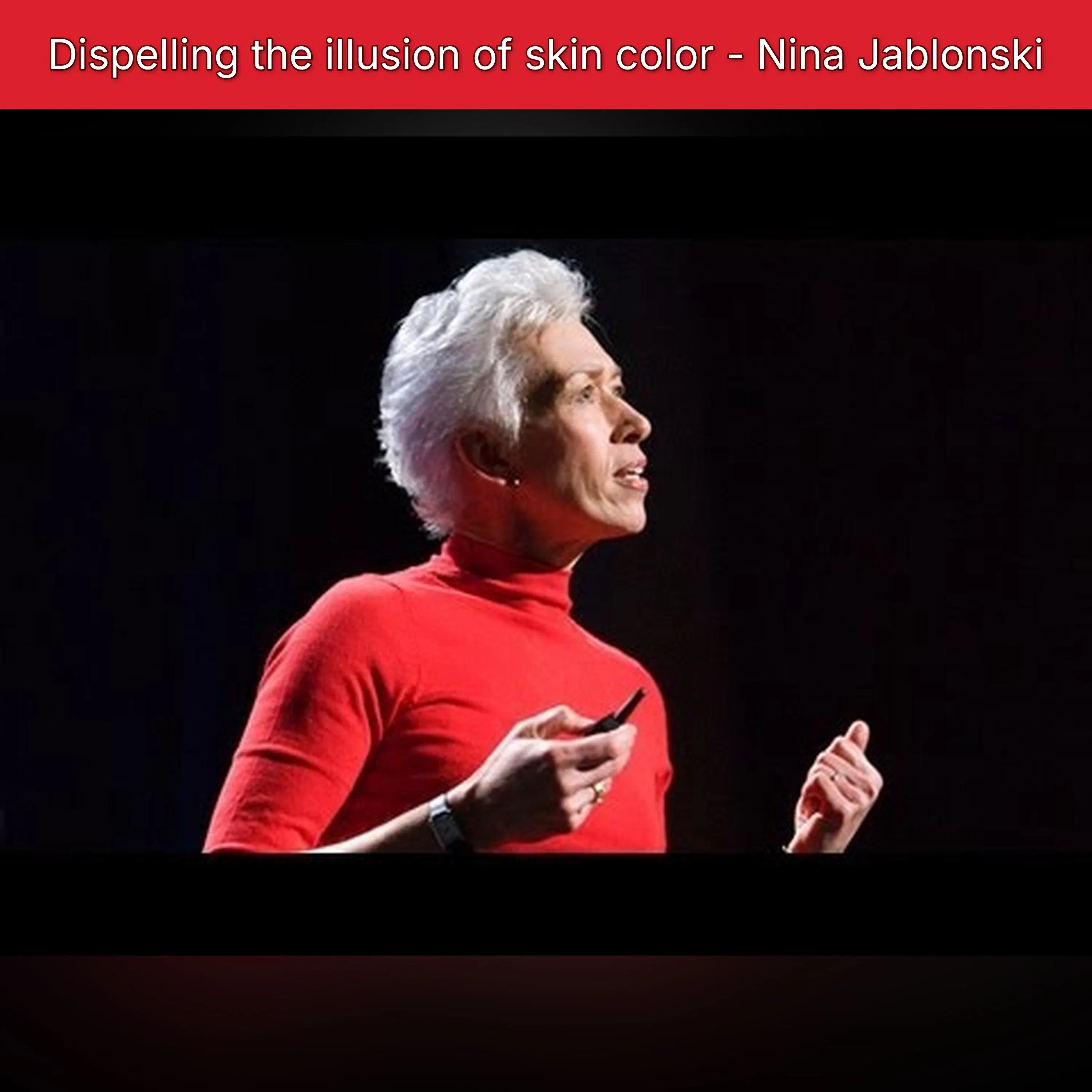
View full lesson: http://ed.ted.com/lessons/nina-jablonski-breaks-the-illusion-of-skin-color Nina Jablonski says that differing skin colors are simply our bodies' adaptation to varied climates and levels of UV exposure. Charles Darwin disagreed with this theory, however, as Jablonski explains, Darwin did not have access to NASA. Nina Jablonski is author of Skin: A Natural History, a close look at human skin's many remarkable traits: its colors, its sweatiness, the fact that we decorate it. Talk by Nina Jablonski. Learn more about your ad choices. Visit megaphone.fm/adchoices

Explore the paradox of welfare programs, and learn how they inadvertently reinforce generational poverty, and what we can do to fix them. -- Imagine that you’ve been unemployed for months. Government benefit programs have helped you cover your expenses, but you’re barely getting by. Finally, you receive a paycheck— but there’s a catch. Your new job pays enough to disqualify you from benefit programs, but not enough to cover your costs. So how do we design benefit programs that don’t penalize you for working? Ann-Helén Bay investigates. Lesson by Ann-Helén Bay, directed by Avi Ofer. Support Our Non-Profit Mission ---------------------------------------------- Support us on Patreon: http://bit.ly/TEDEdPatreon Check out our merch: http://bit.ly/TEDEDShop ---------------------------------------------- Connect With Us ---------------------------------------------- Sign up for our newsletter: http://bit.ly/TEDEdNewsletter Follow us on Facebook: http://bit.ly/TEDEdFacebook Find us on Twitter: http://bit.ly/TEDEdTwitter Peep us on Instagram: http://bit.ly/TEDEdInstagram ---------------------------------------------- Keep Learning ---------------------------------------------- View full lesson: https://ed.ted.com/lessons/why-is-it-so-hard-to-escape-poverty-ann-helen-bay Dig deeper with additional resources: https://ed.ted.com/lessons/why-is-it-so-hard-to-escape-poverty-ann-helen-bay#digdeeper Animator's website: https://aviofer.com ---------------------------------------------- Thank you so much to our patrons for your support! Without you this video would not be possible! Sid, Kent Logan, Alexandra Panzer, John Hellmann, Poompak Meephian, Chuck Wofford, Daniel Erickson, frank goto, Jayson Hauschild, J D Wallace, Marq Short, Chen Jun Xiang, Adam Pagan, Paul Schultz, Behzad Farhanieh, Anders Sørheim, Wes Winn, Conder Shou, BrushReads, Matt Kennedy, Jonah Dobbs, ntiger, Noname, Hansan Hu, Cameron Burkle, Dhanwanth Varadhan, David D, Zuko Gameplays, Jonathan Bates JBZ, Aria Smith, Mac Hyney, Keith Ellison, robin valero walters, Camehira, Lynne Truesdale, Gatsby Dkdc, Matthew Neal, Jayson Gasper Ayson, Maxwell Ramsby, Dmitry Yuryev, Denis Chon, Julian Oberhofer, Monte Carroll, Eddy, Jay M, Constantino Victor Delgado, Andrea Galvagni, Andrew Tweddle, Laurel-Ann Rice and Fernando A. Endo. Learn more about your ad choices. Visit megaphone.fm/adchoices
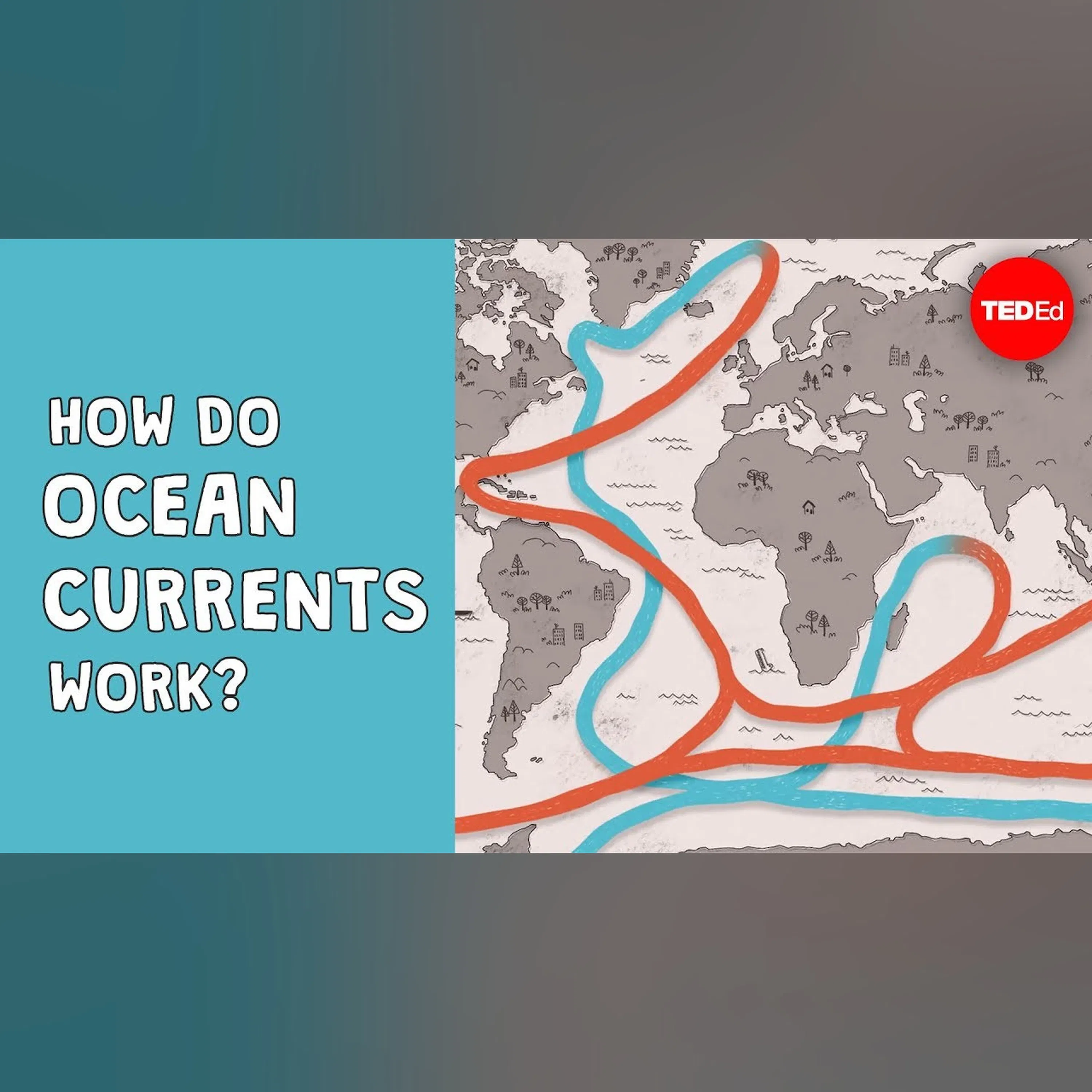
Dive into the science of ocean currents (including the Global Conveyor Belt current), and find out how climate change affects them. Uploaded 31-01-19 -- In 1992, a cargo ship carrying bath toys got caught in a storm. Shipping containers washed overboard, and the waves swept 28,000 rubber ducks and other toys into the North Pacific. But they didn’t stick together -- the ducks have since washed up all over the world. How did this happen? Jennifer Verduin dives into the science of ocean currents. Lesson by Jennifer Verduin, directed by Cabong Studios. Sign up for our newsletter: http://bit.ly/TEDEdNewsletter Support us on Patreon: http://bit.ly/TEDEdPatreon Follow us on Facebook: http://bit.ly/TEDEdFacebook Find us on Twitter: http://bit.ly/TEDEdTwitter Peep us on Instagram: http://bit.ly/TEDEdInstagram View full lesson: https://ed.ted.com/lessons/how-do-ocean-currents-work-jennifer-verduin Thank you so much to our patrons for your support! Without you this video would not be possible! Ritul Raghavan, Mada Arslan, Nathan Giusti, Steven Razey, paul g mohney, Marisa Miller, Xavier dupont, Eliza Cram, David Lucsanyi, Vack91, calista , Mickey Mikeworth, Khalid AlAli, June Reiling, Jai Prasanth, Connor Ross McIntyre, Michele Lynn Rose, Elija Peterson, Kaitlyn holland, Scott Markley, Jan-Erik, Auxiliadora Trejos, Josue Perez Miranda, Jesse Jurman, NinjaBoffin, Siobhan O'Connor Gwozdz, Po Foon Kwong, Nazmul Idris, Vladimir Ivanchenko, Elizabeth Gu, Felderblick , Faizan , Rayo , Rare Media, France Lipuzic, Cristian Cristian, Eric McDaniel, Avinash Amarnath, Tonya Ratliff-Garrison, Dmitry Neverov, Connor Roberts, Regina Zurbano, Laurence McMillan, Monkeypatcher, Jorge Rodríguez, Bradley Heinold, John simmons, Ramanan , Mark Byers and Marcus Poulsen. Learn more about your ad choices. Visit megaphone.fm/adchoices Learn more about your ad choices. Visit megaphone.fm/adchoices

Dig into how the infamous Salem Witch Trials began and why they remain a cautionary tale of the dangers of groupthink and scapegoating. -- You’ve been accused of a crime you did not commit. It’s impossible to prove your innocence. If you insist that you’re innocent anyway, you’ll likely be found guilty and executed. But if you confess, apologize, and implicate others, you’ll go free. This was the choice facing those accused of witchcraft in Salem, Massachusetts in the 17th century. How did this happen? Brian A. Pavlac investigates. Lesson by Brian A. Pavlac, directed by Lucy Animation Studio. Animator's website: https://www.silviaprietov.com/ Sign up for our newsletter: http://bit.ly/TEDEdNewsletter Support us on Patreon: http://bit.ly/TEDEdPatreon Follow us on Facebook: http://bit.ly/TEDEdFacebook Find us on Twitter: http://bit.ly/TEDEdTwitter Peep us on Instagram: http://bit.ly/TEDEdInstagram View full lesson: https://ed.ted.com/lessons/what-really-happened-during-the-salem-witch-trials-brian-a-pavlac Thank you so much to our patrons for your support! Without you this video would not be possible! Christophe Dessalles, Janie Jackson, Dr Luca Carpinelli, Heather Slater, Yuh Saito, Quentin Le Menez, Mattia Veltri, Fabian Amels, Sandra Tersluisen, PnDAA, Hugo Legorreta, Zhexi Shan, Gustavo Mendoza, Bárbara Nazaré, Josh Engel, Natalia Rico, Andrea Feliz, Eysteinn Guðnason, Bernardo Paulo, Victor E Karhel, Sydney Evans, Latora Slydell, Oyuntsengel Tseyen-Oidov, Noel Situ, Elliot Poulin, emily lam, Juan, Jordan Tang, Kent Logan, Alexandra Panzer, Laura Cameron Keith, Jen, Ellen Spertus, Cailin Ramsey, Markus Goldhacker, Leora Allen, Andras Radnothy, Chris, Arpita Singh, Vijayalakshmi, Marc Bilodeau, Peng, Tzu-Hsiang, paul g mohney, Maya Toll, Sebastian Regez, Bruno Hannud, Andreas Voltios, Shubham Arora, Ugur Doga Sezgin and Akinola Emmanuel. Learn more about your ad choices. Visit megaphone.fm/adchoices

Explore what would happen if all of humanity’s satellites disappeared and the real-life scenarios that could lead to such a catastrophe. -- What would happen if one day all of humanity’s artificial satellites suddenly disappeared? Within hours, most of the planet’s traffic would grind to a halt, the world economy would shut down, and most countries would declare a state of emergency. Even in the best-case scenario, our civilization would be set back by decades. So, what are the odds of this actually happening? Moriba Jah investigates. Lesson by Moriba Jah, directed by Darvideo Animation Studio. Support Our Non-Profit Mission ---------------------------------------------- Support us on Patreon: http://bit.ly/TEDEdPatreon Check out our merch: http://bit.ly/TEDEDShop ---------------------------------------------- Connect With Us ---------------------------------------------- Sign up for our newsletter: http://bit.ly/TEDEdNewsletter Follow us on Facebook: http://bit.ly/TEDEdFacebook Find us on Twitter: http://bit.ly/TEDEdTwitter Peep us on Instagram: http://bit.ly/TEDEdInstagram ---------------------------------------------- Keep Learning ---------------------------------------------- View full lesson: https://ed.ted.com/lessons/what-if-every-satellite-suddenly-disappeared-moriba-jah Dig deeper with additional resources: https://ed.ted.com/lessons/what-if-every-satellite-suddenly-disappeared-moriba-jah#digdeeper ---------------------------------------------- Thank you so much to our patrons for your support! Without you this video would not be possible! Tekin Gültekin, Gaurav Mathur, Erik Biemans, Tony, Michelle, Katie and Josh Pedretti, Aidan Forero, Sunny Patel, Lowell Fleming, Hoai Nam Tran, Stina Boberg, Kack-Kyun Kim, Ken, zjweele13, Jurjen Geleijn, Anna-Pitschna Kunz, Edla Paniguel, Thomas Mungavan, Jaron Blackburn, Venkat Venkatakrishnan, ReuniteKorea, John Saveland, Aaron Henson, Cailin Ramsey, Begum Tutuncu, Ever Granada, Brian Richards, Divina Grace Dar Santos, Cindy O., Jørgen Østerpart, Tyron Jung, Carolyn Corwin, Charlene You, Carsten Tobehn, Katie Dean, Ezgi Yersu, Gerald Onyango, alessandra tasso, Alan Froese, Côme Vincent, Doreen Reynolds-Consolati, Manognya Chakrapani, Ayala Ron, Samantha Chow, Eunsun Kim, Phyllis Dubrow, Ophelia Gibson Best, Paul Schneider, Joichiro Yamada, Henrique 'Sorín' Cassús, Lyn-z Schulte and Elaine Fitzpatrick. Learn more about your ad choices. Visit megaphone.fm/adchoices

Explore the middle ground fallacy, which assumes that the truth is always a compromise between two extreme opposing positions. -- It’s 1819. The US is preparing to make Missouri and Maine new states. One representative insists that slavery shouldn’t be allowed in any new state. Another believes it should be a state’s right to choose. A compromise is proposed: slavery will be allowed in Missouri and prohibited in Maine. Can you spot the problem with this compromise? Elizabeth Cox explores the middle ground fallacy. Lesson by Elizabeth Cox, directed by TOGETHER. Support Our Non-Profit Mission ---------------------------------------------- Support us on Patreon: http://bit.ly/TEDEdPatreon Check out our merch: http://bit.ly/TEDEDShop ---------------------------------------------- Connect With Us ---------------------------------------------- Sign up for our newsletter: http://bit.ly/TEDEdNewsletter Follow us on Facebook: http://bit.ly/TEDEdFacebook Find us on Twitter: http://bit.ly/TEDEdTwitter Peep us on Instagram: http://bit.ly/TEDEdInstagram ---------------------------------------------- Keep Learning ---------------------------------------------- View full lesson: https://ed.ted.com/lessons/can-you-outsmart-the-fallacy-that-divided-a-nation-elizabeth-cox Dig deeper with additional resources: https://ed.ted.com/lessons/can-you-outsmart-the-fallacy-that-divided-a-nation-elizabeth-cox#digdeeper Animator's website: https://wearetogether.ca ---------------------------------------------- Thank you so much to our patrons for your support! Without you this video would not be possible! Devin Harris, Pavel Zalevskiy, Karen Goepen-Wee, Filip Dabrowski, Barbara Smalley, Megan Douglas, Tim Leistikow, Ka-Hei Law, Hiroshi Uchiyama, Mark Morris, Misaki Sato, EdoKun, Boytsov Ilya, SookKwan Loong, Bev Millar, Lex Azevedo, Noa Shore, Michael Aquilina, Jason A Saslow, Dawn Jordan, Prasanth Mathialagan, Samuel Doerle, David Rosario, Dominik Kugelmann - they-them, Siamak H, Ryohky Araya, Mayank Kaul, Christophe Dessalles, Heather Slater, Sandra Tersluisen, Zhexi Shan, Bárbara Nazaré, Andrea Feliz, Victor E Karhel, Sydney Evans, Latora Slydell, Noel Situ, emily lam, Sid, Kent Logan, Alexandra Panzer, John Hellmann, Poompak Meephian, Chuck Wofford, Daniel Erickson, frank goto, Jayson Hauschild, J D Wallace, Marq Short, Chen Jun Xiang and Adam Pagan. Learn more about your ad choices. Visit megaphone.fm/adchoices

Journalist Mustafa Akyol talks about the way that some local cultural practices (such as wearing a headscarf) have become linked, in the popular mind, to the articles of faith of Islam. Has the world's general idea of the Islamic faith focused too much on tradition, and not enough on core beliefs? (Filmed at TEDxWarwick.) Talk by Mustafa Akyol. Learn more about your ad choices. Visit megaphone.fm/adchoices

Dig into the science of enhanced rock weathering, a technology which takes carbon dioxide out of the air and stores it in rocks. -- Mount Teide is one of the world’s largest active volcanoes, and there may be a way to use the basalt rock inside it to save humanity. Obviously, destroying an ancient volcano would cause catastrophic and unpredictable ecological fallout. But what if we harvested only some of that basalt— could it really stop climate change? Elise Cutts explores the fascinating science of enhanced rock weathering. Lesson by Elise Cutts, directed by Ivana Volda. This video made possible in collaboration with Speed & Scale Learn more about how TED-Ed partnerships work: https://bit.ly/TEDEdPartner Support Our Non-Profit Mission ---------------------------------------------- Support us on Patreon: http://bit.ly/TEDEdPatreon Check out our merch: http://bit.ly/TEDEDShop ---------------------------------------------- Connect With Us ---------------------------------------------- Sign up for our newsletter: http://bit.ly/TEDEdNewsletter Follow us on Facebook: http://bit.ly/TEDEdFacebook Find us on Twitter: http://bit.ly/TEDEdTwitter Peep us on Instagram: http://bit.ly/TEDEdInstagram ---------------------------------------------- Keep Learning ---------------------------------------------- View full lesson: https://ed.ted.com/lessons/the-weird-things-thatd-happen-if-we-blew-up-this-mountain-elise-cutts Dig deeper with additional resources: https://ed.ted.com/lessons/the-weird-things-thatd-happen-if-we-blew-up-this-mountain-elise-cutts/digdeeper Animator's website: https://ivanathomasvolda.org Music: https://www.wonderboyaudio.com ---------------------------------------------- Thank you so much to our patrons for your support! Without you this video would not be possible! Carsten Tobehn, Katie Dean, Ezgi Yersu, Gerald Onyango, alessandra tasso, Doreen Reynolds-Consolati, Manognya Chakrapani, Ayala Ron, Eunsun Kim, Phyllis Dubrow, Ophelia Gibson Best, Paul Schneider, Joichiro Yamada, Henrique Cassús, Karthik Cherala, Clarence E. Harper Jr., Vignan Velivela, Ana Maria, Exal Enrique Cisneros Tuch, Tejas Dc, Khalifa Alhulail, Martin Stephen, Jose Henrique Leopoldo e Silva, Mandeep Singh, Abhijit Kiran Valluri, Morgan Williams, Devin Harris, Pavel Zalevskiy, Karen Goepen-Wee, Filip Dabrowski, Barbara Smalley, Megan Douglas, Tim Leistikow, Ka-Hei Law, Hiroshi Uchiyama, Mark Morris, Misaki Sato, EdoKun, SookKwan Loong, Bev Millar, Lex Azevedo, Michael Aquilina, Jason A Saslow, Yansong Li, Cristóbal Moenne, Dawn Jordan, Prasanth Mathialagan, Samuel Doerle, David Rosario, and Dominik Kugelmann - they-them. Learn more about your ad choices. Visit megaphone.fm/adchoices