Skip to content
Artwork for TED-Ed
EducationScienceTechnology

TED-Ed

TED-Ed

TED-Ed’s mission is to create lessons worth sharing. Feed and expand your curiosity with our award-winning animated shorts - published on YouTube and available with supplemental learning materials on ed.ted.com.

Want to suggest an idea for a TED-Ed animation, nominate an educator or animator? Visit our website at: http://ed.ted.com/get_involved.

Consider backing us on Patreon. By doing so, you directly support our nonprofit mission to create free, high-quality educational content: https://www.patreon.com/teded

For more information on using TED-Ed content for commercial purposes (e.g. employee learning, in a film, or in an online course), please submit a Media Request using this link: https://media-requests.ted.com/

Play
  • 1,823 episodes
  • daily
  • Avg 9 min
  • English

Episodes 1,823

Counted on this page — what you have heard stays on this device, so it is not something the list can be paged by.
  • October 12 · 7 min

    How the world's longest underwater tunnel was built - Alex Gendler

    Discover how the English Channel Tunnel was built and the engineering challenges of building a 200 kilometer long tunnel underwater. Uploaded 30-03-20 -- Flanked by two powerful nations, the English Channel has long been one of the world’s most important maritime passages. Yet for most of its history, crossing was a dangerous prospect. Engineers proposed numerous plans for spanning the gap, including a design for an underwater passage more than twice the length of any existing tunnel. Alex Gendler details the creation of the Channel Tunnel. Lesson by Alex Gendler, directed by Studio Kimchi. Animator's website: https://studiokimchi.com/ Sign up for our newsletter: http://bit.ly/TEDEdNewsletter Support us on Patreon: http://bit.ly/TEDEdPatreon Follow us on Facebook: http://bit.ly/TEDEdFacebook Find us on Twitter: http://bit.ly/TEDEdTwitter Peep us on Instagram: http://bit.ly/TEDEdInstagram View full lesson: https://ed.ted.com/lessons/how-the-world-s-longest-underwater-tunnel-was-built-alex-gendler Thank you so much to our patrons for your support! Without you this video would not be possible! Clement, Hadi Salahshour, FAWWAZ GHUWAIDI, Dino Biancolini, Reagen O'Connor, Nicu Boanda, Cindy O., Karla Brilman, Jørgen Østerpart, Sergi Páez, rakesh Katragadda, Carolyn Corwin, Charlene You, Boris Langvand, Exal Enrique Cisneros Tuch, Carsten Tobehn, Kin Lon Ma, Katie Dean, Ezgi Yersu, Eunsun Kim, Katrina Harding, Gerald Onyango, alessandra tasso, Astia Rizki Safitri, Côme Vincent, Antony Lee, Melissa Sorrells, Rakshit Kothari, Doreen Reynolds-Consolati, Simon Holst Ravn, Manognya Chakrapani, Ayala Ron, Samantha Chow, Philippe Spoden, Phyllis Dubrow, Michelle Stevens-Stanford, Cas Jamieson, Ophelia Gibson Best, Amber Wood, Paul Schneider, Jun Cai, Tim Robinson, Henrique 'Sorín' Cassús, cnorahs, Lyn-z Schulte, Elaine Fitzpatrick, Karthik Cherala, Clarence E. Harper Jr., Milad Mostafavi and Аркадий Скайуокер. Learn more about your ad choices. Visit megaphone.fm/adchoices Learn more about your ad choices. Visit megaphone.fm/adchoices

  • October 12 · 6 min

    The most perilous elements on the periodic table - Shannon Odell

    Learn more at https://brilliant.org/TedEd -- Within the periodic table loom many potential hazardous elements. Some elements are dangerous due to their toxicity. Others are dangerous because of how they respond, react, or even explode in the outside environment. And perhaps the most threatening elements are those that silently emit energy. So, which substances on the periodic table are the most dangerous? Shannon Odell investigates. Lesson by Shannon Odell, directed by Anton Bogaty. This video made possible in collaboration with Brilliant Learn more about how TED-Ed partnerships work: https://bit.ly/TEDEdPartners Support Our Non-Profit Mission ---------------------------------------------- Support us on Patreon: http://bit.ly/TEDEdPatreon Check out our merch: http://bit.ly/TEDEDShop ---------------------------------------------- Connect With Us ---------------------------------------------- Sign up for our newsletter: http://bit.ly/TEDEdNewsletter Follow us on Facebook: http://bit.ly/TEDEdFacebook Find us on Twitter: http://bit.ly/TEDEdTwitter Peep us on Instagram: http://bit.ly/TEDEdInstagram ---------------------------------------------- Keep Learning ---------------------------------------------- View full lesson: https://ed.ted.com/lessons/the-most-dangerous-elements-on-the-periodic-table-shannon-odell Dig deeper with additional resources: https://ed.ted.com/lessons/the-most-dangerous-elements-on-the-periodic-table-shannon-odell/digdeeper Animator's website: https://antonbogaty.com ---------------------------------------------- Thank you so much to our patrons for your support! Without you this video would not be possible! Kack-Kyun Kim, Michael Braun-Boghos, zjweele13, Anna-Pitschna Kunz, Edla Paniguel, Thomas Mungavan, Jaron Blackburn, Venkat Venkatakrishnan, ReuniteKorea, Aaron Henson, Rohan Gupta, Begum Tutuncu, Brian Richards, Jørgen Østerpart, Tyron Jung, Carsten Tobehn, Katie Dean, Ezgi Yersu, Gerald Onyango, alessandra tasso, Doreen Reynolds-Consolati, Manognya Chakrapani, Ayala Ron, Eunsun Kim, Phyllis Dubrow, Ophelia Gibson Best, Paul Schneider, Joichiro Yamada, Henrique Cassús, Karthik Cherala, Clarence E. Harper Jr., Vignan Velivela, Ana Maria, Exal Enrique Cisneros Tuch, Tejas Dc, Khalifa Alhulail, Martin Stephen, Jose Henrique Leopoldo e Silva, Mandeep Singh, Abhijit Kiran Valluri, Morgan Williams, Devin Harris, Pavel Zalevskiy, Karen Goepen-Wee, Filip Dabrowski, Barbara Smalley, Megan Douglas, Tim Leistikow, Ka-Hei Law and Hiroshi Uchiyama. Learn more about your ad choices. Visit megaphone.fm/adchoices

  • October 12 · 7 min

    What is hysteria, and why were so many women afflicted with it? - Mark S. Micale

    Download a free audiobook version of “City of Girls” and support TED-Ed's nonprofit mission: https://www.audible.com/ted-ed -- Do you ever feel tired? Overwhelmed? Depressed? Do you have headaches, dizziness, cramps, difficulty breathing? From 300 BCE to the 1900s, if you answered yes to any of these questions and you had a uterus, a doctor would likely diagnose you with hysteria. So, where did this medical diagnosis come from? And why did it persist for so long? Mark S. Micale traces the history of the catch-all term. Lesson by Mark S. Micale, directed by Laura Jayne Hodkin. Support Our Non-Profit Mission ---------------------------------------------- Support us on Patreon: http://bit.ly/TEDEdPatreon Check out our merch: http://bit.ly/TEDEDShop ---------------------------------------------- Connect With Us ---------------------------------------------- Sign up for our newsletter: http://bit.ly/TEDEdNewsletter Follow us on Facebook: http://bit.ly/TEDEdFacebook Find us on Twitter: http://bit.ly/TEDEdTwitter Peep us on Instagram: http://bit.ly/TEDEdInstagram ---------------------------------------------- Keep Learning ---------------------------------------------- View full lesson: https://ed.ted.com/lessons/what-is-hysteria-and-why-were-so-many-women-diagnosed-with-it-mark-s-micale Dig deeper with additional resources: https://ed.ted.com/lessons/what-is-hysteria-and-why-were-so-many-women-diagnosed-with-it-mark-s-micale/digdeeper Check out our full book recommendation: https://shop.ed.ted.com/collections/ted-ed-book-recommendations/products/1984-copy Animator's website: https://laurajaynehodkin.com Music: https://www.philbrookes.com ---------------------------------------------- Thank you so much to our patrons for your support! Without you this video would not be possible! Mac Hyney, Keith Ellison, robin valero walters, Lynne Truesdale, Gatsby Dkdc, Matthew Neal, Denis Chon, Julian Oberhofer, Monte Carroll, Eddy, Jay M, Constantino Victor Delgado, Andrea Galvagni, Andrew Tweddle, Laurel-Ann Rice, Fernando A. Endo, Helen Lee, pam morgan, sarim haq, Gerardo Castro, Michel-Ange Hortegat, Enes Kirimi, Amaury BISIAUX, ND, Samyogita Hardikar, Vanessa Graulich, Vandana Gunwani, Abdulmohsin Almadi, AJ Lyon, Geoffrey Bultitude, Mi Mi, Thomas Rothert, Brian Elieson, Oge O, Weronika Falkowska, Nevin Spoljaric, Sid Chanpuriya, Anoop Varghese, David Yastremski, Noah Webb, Roberto Chena, Oliver Koo, Luke Pisano, Andrea Gordon, Aleksandar Donev, Nicole Klau Ibarra, Jesse Lira, Ezekiel Raui, Petr Vacek and Dennis. Learn more about your ad choices. Visit megaphone.fm/adchoices

  • October 12 · 7 min

    How Curiosity Took Us to Mars - Bobak Ferdowsi

    View full lesson: http://ed.ted.com/lessons/how-curiosity-got-us-to-mars-bobak-ferdowsi In August 2012, the Curiosity rover landed on Mars. The landing itself was a huge achievement and required a lot of forethought and planning by a very smart team. In this TED Youth 2012 Talk, Bobak Ferdowsi, the mohawked member of that team, outlines various aspects of a Mars landing, including the Seven Minutes of Terror. Talk by Bobak Ferdowsi. Learn more about your ad choices. Visit megaphone.fm/adchoices

  • October 12 · 7 min

    Is this the most treasured thing in the ocean? - David Biello

    Dig into what makes whale poop so vitally important to ocean health, and how it helps support countless other marine life forms. -- Whales frequently surface to take in air and let out massive plumes of waste. And while this slurry might seem disgusting, whale poop is much more desirable than it may seem. In fact, it may be one of the most important substances in the ocean — and the world. So, what makes whale poop so vital to our ecosystems? David Biello shares the surprising benefits of whale excrement. Lesson by David Biello, directed by Joseph Clark, Oh Studio. This video made possible in collaboration with Speed & Scale Learn more about how TED-Ed partnerships work: https://bit.ly/TEDEdPartner Support Our Non-Profit Mission ---------------------------------------------- Support us on Patreon: http://bit.ly/TEDEdPatreon Check out our merch: http://bit.ly/TEDEDShop ---------------------------------------------- Connect With Us ---------------------------------------------- Sign up for our newsletter: http://bit.ly/TEDEdNewsletter Follow us on Facebook: http://bit.ly/TEDEdFacebook Find us on Twitter: http://bit.ly/TEDEdTwitter Peep us on Instagram: http://bit.ly/TEDEdInstagram ---------------------------------------------- Keep Learning ---------------------------------------------- View full lesson: https://ed.ted.com/lessons/is-this-the-most-valuable-thing-in-the-ocean-david-biello Dig deeper with additional resources: https://ed.ted.com/lessons/is-this-the-most-valuable-thing-in-the-ocean-david-biello/digdeeper Animator's website: https://www.ohstudio.co.uk Music: https://soundgoods.tv ---------------------------------------------- Thank you so much to our patrons for your support! Without you this video would not be possible! Jennifer Heald, Megulo Abebe, isolwi, Kate Sem, Ujjwal Dasu, Angel Alberici, Minh Quan Dinh, Sylvain, Terran Gimpel, Talia Sari, Katie McDowell, Allen, Mahina Knuckles, Charmaine Hanson, Thawsitt, Jezabel, Abdullah Abdulaziz, Xiao Yu, Melissa Suarez, Brian A. Dunn, Francisco Amaya, Daisuke Goto, Matt Switzler, Peng, Tzu-Hsiang, Bethany Connor, Jeremy Shimanek, Mark Byers, Avinash Amarnath, Xuebicoco, Rayo, Po Foon Kwong, Boffin, Jesse Jurman, Scott Markley, Elija Peterson, Ovidiu Mrd, paul g mohney, Steven Razey, Nathan Giusti, Helen Lee, Anthony Benedict, Karthik Balsubramanian, Annastasshia Ames, Amy Lopez, Vinh-Thuy Nguyen, Liz Candee, Ugur Doga Sezgin, Karmi Nguyen, John C. Vesey and Yelena Baykova. Learn more about your ad choices. Visit megaphone.fm/adchoices

  • October 12 · 6 min

    The sneakiest tricksters of the animal kingdom - Eldridge Adams

    Sign up for our newsletter and never miss an animation: http://bit.ly/TEDEdNewsletter Uploaded 18-12-18 -- A male firefly emits a series of enticing flashes. He hopes a female will respond and mate with him. A female from a different species mimics his patterns: by tricking the male, she lures him in -- and turns him into a meal. Where else do we see this kind of trickery in the animal kingdom? Eldridge Adams details the surprising complexity of how animals manipulate predators, prey and their rivals. Lesson by Eldridge Adams, directed by The Duke and the Duck. Support Our Non-Profit Mission ---------------------------------------------- Support us on Patreon: http://bit.ly/TEDEdPatreon Check out our merch: http://bit.ly/TEDEDShop ---------------------------------------------- Connect With Us ---------------------------------------------- Sign up for our newsletter: http://bit.ly/TEDEdNewsletter Follow us on Facebook: http://bit.ly/TEDEdFacebook Find us on Twitter: http://bit.ly/TEDEdTwitter Peep us on Instagram: http://bit.ly/TEDEdInstagram ---------------------------------------------- Keep Learning ---------------------------------------------- View full lesson: https://ed.ted.com/lessons/can-animals-be-deceptive-eldridge-adams Dig deeper with additional resources: https://ed.ted.com/lessons/can-animals-be-deceptive-eldridge-adams#digdeeper ---------------------------------------------- Thank you so much to our patrons for your support! Without you this video would not be possible! Mary Sawyer, David Rosario, Samuel Doerle, Susan Herder, Prasanth Mathialagan, Yanira Santamaria, Dawn Jordan, Constantin Salagor, Kevin Wong, Umar Farooq, Goh Xiang Ting Diana, Cristóbal Medina Moenne, MJ Tan Mingjie, Yansong Li, Jason A Saslow, Henry Li, Kyle Nguyen, Taylor Hunter, Noa Shore, Lex Azevedo, Merit Gamertsfelder, Bev Millar, Rishi Pasham, Jhuval , SookKwan Loong, Daniel Day, Nick Johnson, Bruno Pinho, Javier Aldavaz, Marc Veale, Boytsov Ilya, maxi kobi einy, Misaki Sato, Andrew Bosco, Nik Maier, Mark Morris, Tamás Drávai, Adi V, Peter Liu, Leora Allen, Hiroshi Uchiyama, Julie Cummings-Debrot, Gilly, Ka-Hei Law, Maya Toll, Aleksandar Srbinovski, Ricardo Rendon Cepeda, Renhe Ji, Andrés Melo Gámez and Tim Leistikow. Learn more about your ad choices. Visit megaphone.fm/adchoices Learn more about your ad choices. Visit megaphone.fm/adchoices

  • October 12 · 20 min

    The El Sistema musical revolution - Jose Antonio Abreu

    View full lesson: http://ed.ted.com/lessons/the-el-sistema-music-revolution-jose-antonio-abreu Jose Antonio Abreu is the charismatic founder of a youth orchestra system that has transformed thousands of kids' lives in Venezuela. Here he shares his amazing story and unveils a TED Prize wish that could have a big impact in the US and beyond. Talk by Jose Antonio Abreu. Learn more about your ad choices. Visit megaphone.fm/adchoices

  • October 12 · 14 min

    Let's crowdsource the world's goals - Jamie Drummond

    In 2000, the UN laid out 8 goals to make the world better by reducing poverty and disease -- with a deadline of 2015. As that deadline approaches, Jamie Drummond of ONE.org runs down the surprising successes of the 8 Millennium Development Goals, and suggests a crowdsourced reboot for the next 15 years. Uploaded 28-06-13 Talk by Jamie Drummond. Learn more about your ad choices. Visit megaphone.fm/adchoices Learn more about your ad choices. Visit megaphone.fm/adchoices

  • October 12 · 21 min

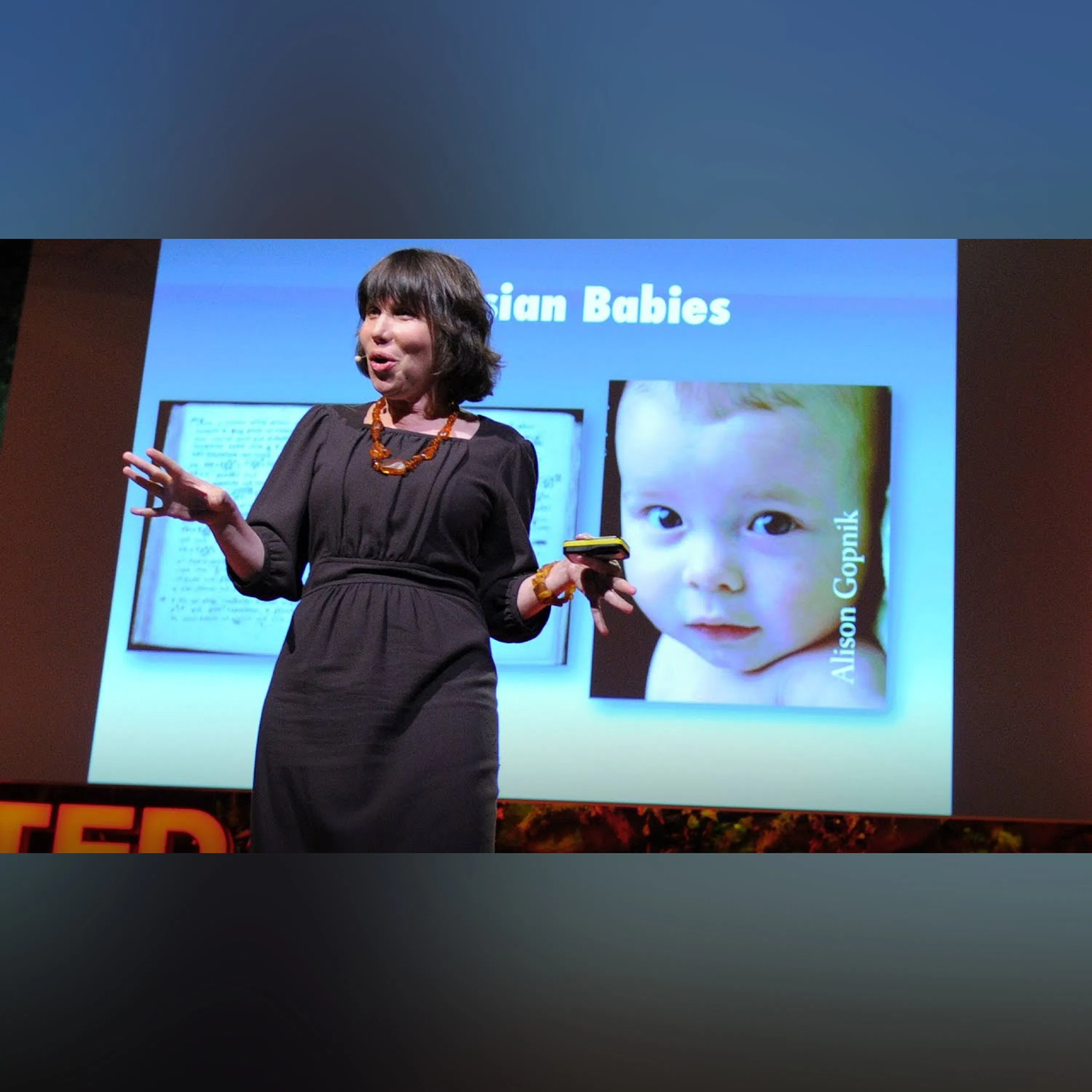
    What do babies think? - Alison Gopnik

    "Babies and young children are like the R and D division of the human species," says psychologist Alison Gopnik. Her research explores the sophisticated intelligence-gathering and decision-making that babies are really doing when they play. Uploaded 09-08-13 Talk by Alison Gopnik. Learn more about your ad choices. Visit megaphone.fm/adchoices Learn more about your ad choices. Visit megaphone.fm/adchoices

  • October 12 · 7 min

    What does appendicitis pain feel like? - David R. Flum

    Explore what we know about the function of the appendix, what leads to appendicitis, and why the organ is so prone to bursting. -- In 1961, an Antarctic expedition took a harrowing turn: Dr. Leonid Rogozov began feeling feverish, with an excruciating pain in his right side. It soon became clear that he had appendicitis. While Rogozov’s predicament was extreme, appendicitis is not uncommon; affecting roughly one in 12 people. So, what causes appendicitis? And why is this organ so prone to bursting? David R. Flum investigates. Lesson by David R. Flum, directed by Igor Ćorić, Artrake Studio. Support Our Non-Profit Mission ---------------------------------------------- Support us on Patreon: http://bit.ly/TEDEdPatreon Check out our merch: http://bit.ly/TEDEDShop ---------------------------------------------- Connect With Us ---------------------------------------------- Sign up for our newsletter: http://bit.ly/TEDEdNewsletter Follow us on Facebook: http://bit.ly/TEDEdFacebook Find us on Twitter: http://bit.ly/TEDEdTwitter Peep us on Instagram: http://bit.ly/TEDEdInstagram ---------------------------------------------- Keep Learning ---------------------------------------------- View full lesson: https://ed.ted.com/lessons/what-does-appendix-pain-feel-like-david-r-flum Dig deeper with additional resources: https://ed.ted.com/lessons/what-does-appendix-pain-feel-like-david-r-flum/digdeeper Animator's website: https://www.artrake.com Music: https://www.campstudio.co ---------------------------------------------- Thank you so much to our patrons for your support! Without you this video would not be possible! Nevin Spoljaric, Sid Chanpuriya, Anoop Varghese, David Yastremski, Noah Webb, Roberto Chena, Oliver Koo, Luke Pisano, Andrea Gordon, Aleksandar Donev, Nicole Klau Ibarra, Jesse Lira, Ezekiel Raui, Petr Vacek, Dennis, Olivia Fu, Kari Teffeau, Cindy Lai, Rajath Durgada Manjunath, Dan Nguyen, Chin Beng Tan, Tom Boman, Karen Warner, Iryna Panasiuk, Aaron Torres, Eric Braun, Sonja Worzewski, Michael Clement, Adam Berry, Ghaith Tarawneh, Nathan Milford, Tomas Beckett, Alice Ice, Eric Berman, Kurt Paolo Sevillano, Jennifer Heald, Megulo Abebe, isolwi, Kate Sem, Ujjwal Dasu, Angel Alberici, Minh Quan Dinh, Sylvain, Terran Gimpel, Talia Sari, Katie McDowell, Allen, Mahina Knuckles, Charmaine Hanson and Thawsitt. Learn more about your ad choices. Visit megaphone.fm/adchoices

  • October 12 · 20 min

    How bacteria "speak" - Bonnie Bassler

    View full lesson: http://ed.ted.com/lessons/how-bacteria-talk-bonnie-bassler Bonnie Bassler discovered that bacteria "talk" to each other, using a chemical language that lets them coordinate defense and mount attacks. The find has stunning implications for medicine, industry -- and our understanding of ourselves. Talk by Bonnie Bassler. Learn more about your ad choices. Visit megaphone.fm/adchoices

  • October 12 · 5 min

    Establishing the American presidency - Kenneth C. Davis

    View full lesson: http://ed.ted.com/lessons/inventing-the-american-presidency-kenneth-c-davis When the founders of the United States gathered to create the foundations of the country, they decided on three branches of government, with a president central to the executive branch. Kenneth C. Davis explains why this decision was not necessarily inevitable and what variables were up for debate. Lesson by Kenneth C. Davis, animation by G. Melissa Graziano-Humphrey. Learn more about your ad choices. Visit megaphone.fm/adchoices

  • October 12 · 6 min

    The Pangaea Pop-up - Michael Molina

    View full lesson: http://ed.ted.com/lessons/the-pangaea-pop-up-michael-molina/ Uploaded 03-02-14 The supercontinent Pangaea, with its connected South America and Africa, broke apart 200 million years ago. But the continents haven't stopped shifting -- the tectonic plates beneath our feet (in Earth's two top layers, the lithosphere and the asthenosphere) are still traveling at about the rate your fingernails grow. Michael Molina discusses the catalysts and consequences of continental drift. Lesson by Michael Molina, animation by TED-Ed. Learn more about your ad choices. Visit megaphone.fm/adchoices Learn more about your ad choices. Visit megaphone.fm/adchoices

  • October 12 · 5 min

    Why is glass transparent? - Mark Miodownik

    View full lesson: http://ed.ted.com/lessons/why-is-glass-transparent-mark-miodownik Uploaded 04-02-14 If you look through your glasses, binoculars or a window, you see the world on the other side. How is it that something so solid can be so invisible? Mark Miodownik melts the scientific secret behind amorphous solids. Lesson by Mark Miodownik, animation by Provincia Studio. Learn more about your ad choices. Visit megaphone.fm/adchoices Learn more about your ad choices. Visit megaphone.fm/adchoices

  • October 12 · 6 min

    Why we love repetition in music - Elizabeth Hellmuth Margulis

    Dig into the principles of the exposure effect, which helps music listeners become active participants through repetition. Uploaded 02-09-14 -- How many times does the chorus repeat in your favorite song? How many times have you listened to that chorus? Repetition in music isn’t just a feature of Western pop songs, either; it’s a global phenomenon. Why? Elizabeth Hellmuth Margulis walks us through the basic principles of the ‘exposure effect,’ detailing how repetition invites us into music as active participants, rather than passive listeners. Lesson by Elizabeth Hellmuth Margulis, animation by Andrew Zimbelman for The Foreign Correspondents' Club. Support Our Non-Profit Mission ---------------------------------------------- Support us on Patreon: http://bit.ly/TEDEdPatreon Check out our merch: http://bit.ly/TEDEDShop ---------------------------------------------- Connect With Us ---------------------------------------------- Sign up for our newsletter: http://bit.ly/TEDEdNewsletter Follow us on Facebook: http://bit.ly/TEDEdFacebook Find us on Twitter: http://bit.ly/TEDEdTwitter Peep us on Instagram: http://bit.ly/TEDEdInstagram ---------------------------------------------- Keep Learning ---------------------------------------------- View full lesson: http://ed.ted.com/lessons/why-we-love-repetition-in-music-elizabeth-hellmuth-margulis Dig deeper with additional resources: https://ed.ted.com/lessons/why-we-love-repetition-in-music-elizabeth-hellmuth-margulis/digdeeper ---------------------------------------------- Learn more about your ad choices. Visit megaphone.fm/adchoices Learn more about your ad choices. Visit megaphone.fm/adchoices
  • October 12 · 6 min

    How to get better at video games, according to babies - Brian Christian

    Explore what happened when the AI system Deep Q Networks (DQN) attempted to beat the Atari game Montezuma’s Revenge. Uploaded 02-11-21 -- In 2013, a group of researchers wanted to create an AI system that could beat every Atari game. They developed a system called Deep Q Networks (DQN) and less than two years later, it was superhuman. But there was one notable exception. When playing Montezuma’s Revenge, DQN couldn’t score a single point. What was it that made this game so vexingly difficult for AI? Brian Christian investigates. Lesson by Brian Christian, directed by Gavin Edwards, Movult. Support Our Non-Profit Mission ---------------------------------------------- Support us on Patreon: http://bit.ly/TEDEdPatreon Check out our merch: http://bit.ly/TEDEDShop ---------------------------------------------- Connect With Us ---------------------------------------------- Sign up for our newsletter: http://bit.ly/TEDEdNewsletter Follow us on Facebook: http://bit.ly/TEDEdFacebook Find us on Twitter: http://bit.ly/TEDEdTwitter Peep us on Instagram: http://bit.ly/TEDEdInstagram ---------------------------------------------- Keep Learning ---------------------------------------------- View full lesson: https://ed.ted.com/lessons/how-to-get-better-at-video-games-according-to-babies-brian-christian Dig deeper with additional resources: https://ed.ted.com/lessons/how-to-get-better-at-video-games-according-to-babies-brian-christian#digdeeper Check out our full book recommendation: https://shop.ed.ted.com/collections/ted-ed-book-recommendations/products/copy-of-1991 Animator's website: https://www.movult.com ---------------------------------------------- Thank you so much to our patrons for your support! Without you this video would not be possible! JY Kang, Abhishek Goel, Heidi Stolt, Christina Salvatore, Karlee Finch, Michael Goldberg, Denise A Pitts, Doug Henry, Keven Webb, Mihai Sandu, Deepak Iyer, Javid Gozalov, Kyanta Yap, Rebecca Reineke, William Biersdorf, Patricia Alves Panagides, Yvette Mocete, Cyrus Garay, Samuel Barbas, Brighteagle, LadyGeek, Curtis Light, Dianne Palomar, Marin Kovachev, Fahad Nasser Chowdhury, Penelope Misquitta, Hans Peng, Gaurav Mathur, Erik Biemans, Tony, Michelle, Katie and Josh Pedretti, Sunny Patel, Hoai Nam Tran, Stina Boberg, Kack-Kyun Kim, Michael Braun-Boghos, zjweele13, Jurjen Geleijn, Anna-Pitschna Kunz, Edla Paniguel, Thomas Mungavan, Jaron Blackburn, Venkat Venkatakrishnan, ReuniteKorea, Aaron Henson, Rohan Gupta, Begum Tutuncu, Mikhail Shkirev, Brian Richards, Cindy O. and Jørgen Østerpart. Learn more about your ad choices. Visit megaphone.fm/adchoices Learn more about your ad choices. Visit megaphone.fm/adchoices

  • October 12 · 7 min

    The remarkable reason zebras have stripes - Cella Wright

    Dig into the scientific theories of why zebras have stripes, and why this unique patterning sets them apart from their equine relatives. -- Zebras belong to the same equine family as horses and donkeys. After their lineage entered Africa, they evolved into three zebra species, lived in social herds, grazed on grasses, and evaded fierce predators. One mystery that has perplexed prominent scientists for decades is the matter of their coats: why are they striped? Cella Wright digs into the common theories about the unique patterning. Lesson by Cella Wright, directed by Sharon Colman. Support Our Non-Profit Mission ---------------------------------------------- Support us on Patreon: http://bit.ly/TEDEdPatreon Check out our merch: http://bit.ly/TEDEDShop ---------------------------------------------- Connect With Us ---------------------------------------------- Sign up for our newsletter: http://bit.ly/TEDEdNewsletter Follow us on Facebook: http://bit.ly/TEDEdFacebook Find us on Twitter: http://bit.ly/TEDEdTwitter Peep us on Instagram: http://bit.ly/TEDEdInstagram ---------------------------------------------- Keep Learning ---------------------------------------------- View full lesson: https://ed.ted.com/lessons/the-surprising-reason-zebras-have-stripes-cella-wright Dig deeper with additional resources: https://ed.ted.com/lessons/the-surprising-reason-zebras-have-stripes-cella-wright/digdeeper Animator's website: https://www.sharoncolman.com ---------------------------------------------- Thank you so much to our patrons for your support! Without you this video would not be possible! Orlellys Torre, Corheu, Thomas Mee, Maryann H McCrory, Blas Borde, John Hellmann, Poompak Meephian, Chuck Wofford, Adam Pagan, Wes Winn, Conder Shou, ntiger, Noname, Hansan Hu, David D, Mac Hyney, Keith Ellison, robin valero walters, Lynne Truesdale, Gatsby Dkdc, Matthew Neal, Denis Chon, Julian Oberhofer, Monte Carroll, Eddy, Jay M, Constantino Victor Delgado, Andrea Galvagni, Andrew Tweddle, Laurel-Ann Rice, Fernando A. Endo, Helen Lee, pam morgan, sarim haq, Gerardo Castro, Michel-Ange Hortegat, Enes Kirimi, Amaury BISIAUX, ND, Samyogita Hardikar, Vanessa Graulich, Vandana Gunwani, Abdulmohsin Almadi, AJ Lyon, Geoffrey Bultitude, Mi Mi, Thomas Rothert, Brian Elieson, Oge O and Weronika Falkowska. Learn more about your ad choices. Visit megaphone.fm/adchoices

  • October 12 · 13 min

    The future race car -- 150mph, and no driver - Chris Gerdes

    Autonomous cars are coming -- and they're going to drive better than you. Chris Gerdes reveals how he and his team are developing robotic race cars that can drive at 150 mph while avoiding every possible accident. And yet, in studying the brainwaves of professional racing drivers, Gerdes says he has gained a new appreciation for the instincts of professional drivers. (Filmed at TEDxStanford.) Uploaded 29-08-13 Talk by Chris Gerdes. Learn more about your ad choices. Visit megaphone.fm/adchoices Learn more about your ad choices. Visit megaphone.fm/adchoices

  • October 12 · 6 min

    Can AI foresee someone's breakup? - Thomas Hofweber

    Explore one of the main issues of AI-based predictive models and how it affects user decision-making and accountability. -- A couple has been considering getting engaged, but they’re worried about divorce statistics. An AI-based model was just released that can predict your likelihood of divorce with 95% accuracy. The only catch is the model doesn’t offer any reasons for its results. So, should they decide whether or not to get married based on this AI’s prediction? Thomas Hofweber explores AI’s transparency problem. Lesson by Thomas Hofweber, directed by Hannah Lau-Walker. This video was produced in collaboration with the Parr Center for Ethics, housed within the renowned Philosophy Department at the University of North Carolina at Chapel Hill. The Parr Center is committed to integrating abstract work in ethical theory with the informed discussion of practical ethical issues, and prides itself on the development of innovative and inclusive approaches to moral and civic education. Support Our Non-Profit Mission ---------------------------------------------- Support us on Patreon: http://bit.ly/TEDEdPatreon Check out our merch: http://bit.ly/TEDEDShop ---------------------------------------------- Connect With Us ---------------------------------------------- Sign up for our newsletter: http://bit.ly/TEDEdNewsletter Follow us on Facebook: http://bit.ly/TEDEdFacebook Find us on Twitter: http://bit.ly/TEDEdTwitter Peep us on Instagram: http://bit.ly/TEDEdInstagram ---------------------------------------------- Keep Learning ---------------------------------------------- View full lesson: https://ed.ted.com/lessons/would-you-use-a-machine-that-predicts-your-future-thomas-hofweber Dig deeper with additional resources: https://ed.ted.com/lessons/would-you-use-a-machine-that-predicts-your-future-thomas-hofweber/digdeeper Animator's website: https://www.hannahlauwalker.com ---------------------------------------------- Thank you so much to our patrons for your support! Without you this video would not be possible! Jesús Bíquez Talayero, Chels Raknrl, Sai Pranavi Jonnalagadda, Stuart Rice, Jing Chen, Vector-Dopamine math, Jasper Song, Giorgio Bugnatelli, Chardon, Eddy Trochez, OnlineBookClub.org, Eric Shear, Leith Salem, Omar Hicham, Adrian Rotaru, Brad Sullivan, Karen Ho, Niklas Frimberger, Hunter Manhart, Nathan Nguyen, Igor Stavchanskiy, James R DeVries, Grace Huo, Diana Huang, Chau Hong Diem, Orlellys Torre, Corheu, Thomas Mee, Maryann H McCrory, Blas Borde, John Hellmann, Poompak Meephian, Chuck Wofford, Adam Pagan, Wes Winn, Conder Shou, ntiger, Noname, Hansan Hu, David D, Mac Hyney, Keith Ellison, robin valero walters, Lynne Truesdale, Gatsby Dkdc, Matthew Neal, Denis Chon, Julian Oberhofer, Monte Carroll and Eddy. Learn more about your ad choices. Visit megaphone.fm/adchoices

  • October 12 · 9 min

    If superpowers were real: Body mass - Joy Lin

    View full lesson: http://ed.ted.com/lessons/if-superpowers-were-real-body-mass-joy-lin Uploaded 27-06-13 What if manipulating body mass wasn't just the stuff of epic comic book stories? Is it scientifically possible to manipulate your body mass? In this series, Joy Lin tackles six superpowers and reveals just how scientifically realistic they can be to us mere mortals. Lesson by Joy Lin, animation by Cognitive Media. Learn more about your ad choices. Visit megaphone.fm/adchoices Learn more about your ad choices. Visit megaphone.fm/adchoices

Showing 841–860 of 1,823 episodes