Skip to content
Artwork for TED-Ed
EducationScienceTechnology

TED-Ed

TED-Ed

TED-Ed’s mission is to create lessons worth sharing. Feed and expand your curiosity with our award-winning animated shorts - published on YouTube and available with supplemental learning materials on ed.ted.com.

Want to suggest an idea for a TED-Ed animation, nominate an educator or animator? Visit our website at: http://ed.ted.com/get_involved.

Consider backing us on Patreon. By doing so, you directly support our nonprofit mission to create free, high-quality educational content: https://www.patreon.com/teded

For more information on using TED-Ed content for commercial purposes (e.g. employee learning, in a film, or in an online course), please submit a Media Request using this link: https://media-requests.ted.com/

Play
  • 1,235 episodes
  • daily
  • Avg 10 min
  • English

Episodes 1,235

Counted on this page — what you have heard stays on this device, so it is not something the list can be paged by.
  • August 23 · 5 min

    How did feathers come to be? - Carl Zimmer

    View full lesson: http://ed.ted.com/lessons/how-did-feathers-evolve-carl-zimmer To look at the evolution of modern bird feathers, we must start a long time ago, with the dinosaurs from whence they came. We see early incarnations of feathers on dinosaur fossils, and remnants of dinosaurs in a bird's wish bone. Carl Zimmer explores the stages of evolution and how even the reasons for feathers have evolved over millions of years. Lesson by Carl Zimmer, animation by Armella Leung. Learn more about your ad choices. Visit megaphone.fm/adchoices

  • August 23 · 7 min

    How bones make blood - Melody Smith

    Dig into the science of how bone marrow transplants work and find out how you could become a donor by visiting https://join.bethematch.org/teded -- Bones might seem rock-solid, but they’re actually quite porous inside. Most of the large bones of your skeleton have a hollow core filled with soft bone marrow. Marrow's most essential elements are blood stem cells and for patients with advanced blood cancers like leukemia and lymphoma, the best chance for a cure is often a bone marrow transplant. How does this procedure work? Melody Smith explains. Lesson by Melody Smith, directed by Artrake Studio. Animator's website: https://www.artrake.com Sign up for our newsletter: http://bit.ly/TEDEdNewsletter Support us on Patreon: http://bit.ly/TEDEdPatreon Follow us on Facebook: http://bit.ly/TEDEdFacebook Find us on Twitter: http://bit.ly/TEDEdTwitter Peep us on Instagram: http://bit.ly/TEDEdInstagram View full lesson: https://ed.ted.com/lessons/how-bones-make-blood-melody-smith Thank you so much to our patrons for your support! Without you this video would not be possible! JackKeyton, Matthew D. Vigil, Amin Shahril, Adriano Fontes, Xiao Yu, Fatima Kried, Aravind Battaje, Melissa Suarez, Jason Duncan, Brian A. Dunn, Francisco Amaya, Daisuke Goto, Matt Switzler, Chhunheng Veng, Leonardo Monrroy, Sumedh Ghaisas, Guhten, Amer Harb, Dowey Baothman, Norbert Orgován, Shafeeq Ansari, Gabriel Balsa, Maryam Sultan, Bethany Connor, Jeremy Shimanek, Adam Foreman, Sebastiaan Vleugels, Lâm Nguyễn, Mark Byers, Bradley Heinold, Monkeypatcher, Laurence McMillan, Connor Roberts, Dmitry Neverov, Tonya Ratliff-Garrison, Avinash Amarnath, Eric McDaniel, Cristian Cristian, France Lipužič, EdoKun, Rare Media, Rayo, Faizan, Elizabeth Gu, Nazmul Idris, Po Foon Kwong, Siobhan O'Connor Gwozdz, NinjaBoffin, Jesse Jurman and Josue Perez Miranda. Learn more about your ad choices. Visit megaphone.fm/adchoices

  • August 23 · 8 min

    Is AI the most transformative technology of the century?

    Is the 21st century the most pivotal time in human history? Explore how the decisions we make now may impact humanity’s future. -- Is it possible that this century is the most important one in human history? The 21st century has already proven to be a period of rapid growth. We’re on the cusp of developing new technologies that could entirely change the way people live— and could contribute to unprecedented levels of existential risk. Explore how the decisions we make now might have a major impact on humanity’s future. Directed by Jon Mayes, AIM Creative Studios. Learn more about the long-term thinking required for humanity to thrive: https://ed.ted.com/mostimportantcentury This video made possible in collaboration with the Forethought Foundation Learn more about how TED-Ed partnerships work: https://bit.ly/TEDEdPartners Support Our Non-Profit Mission ---------------------------------------------- Support us on Patreon: http://bit.ly/TEDEdPatreon Check out our merch: http://bit.ly/TEDEDShop ---------------------------------------------- Connect With Us ---------------------------------------------- Sign up for our newsletter: http://bit.ly/TEDEdNewsletter Follow us on Facebook: http://bit.ly/TEDEdFacebook Find us on Twitter: http://bit.ly/TEDEdTwitter Peep us on Instagram: http://bit.ly/TEDEdInstagram ---------------------------------------------- Keep Learning ---------------------------------------------- View full lesson: https://ed.ted.com/lessons/the-most-important-century-in-human-history Dig deeper with additional resources: https://ed.ted.com/lessons/the-most-important-century-in-human-history#digdeeper Animator's website: https://aimcreativestudios.com Music: https://soundcloud.com/aim-music ---------------------------------------------- Thank you so much to our patrons for your support! Without you this video would not be possible! Morgan Williams, Devin Harris, Pavel Zalevskiy, Karen Goepen-Wee, Filip Dabrowski, Barbara Smalley, Megan Douglas, Tim Leistikow, Ka-Hei Law, Hiroshi Uchiyama, Mark Morris, Misaki Sato, EdoKun, SookKwan Loong, Bev Millar, Lex Azevedo, Michael Aquilina, Jason A Saslow, Yansong Li, Cristóbal Moenne, Dawn Jordan, Prasanth Mathialagan, Samuel Doerle, David Rosario, Dominik Kugelmann - they-them, Siamak Hajizadeh, Ryohky Araya, Mayank Kaul, Christophe Dessalles, Heather Slater, Sandra Tersluisen, Zhexi Shan, Bárbara Nazaré, Andrea Feliz, Victor E Karhel, Sydney Evans, Latora, Noel Situ, emily lam, Sid, Niccolò Frassetto, Mana, I'm here because of Knowledge Fight Facebook group., Linda Freedman, Edgardo Cuellar, Jaspar Carmichael-Jack, Michael Burton, VIVIANA A GARCIA BESNE, The Vernons and Olha Bahatiuk. Learn more about your ad choices. Visit megaphone.fm/adchoices

  • August 23 · 8 min

    The Hawaiian legend of the wind keepers - Sydney Iaukea

    Get to know the Hawaiian legend of the sacred wind gourd and follow Paka’a's fight to restore his rightful place beside the king. -- Long ago, the Hawaiian wind goddess wielded a gourd that housed the winds of the Islands. It came to hold her bones, along with the life force they carried, and was eventually passed to her grandson, Paka'a. Like his father before him, he became the trusted attendant to the king of Hawaii. But his privileged status also made him a target. Sydney Iaukea shares the tale of the king's betrayal. Lesson by Sydney Iaukea, directed by Ivana Bošnjak. Support Our Non-Profit Mission ---------------------------------------------- Support us on Patreon: http://bit.ly/TEDEdPatreon Check out our merch: http://bit.ly/TEDEDShop ---------------------------------------------- Connect With Us ---------------------------------------------- Sign up for our newsletter: http://bit.ly/TEDEdNewsletter Follow us on Facebook: http://bit.ly/TEDEdFacebook Find us on Twitter: http://bit.ly/TEDEdTwitter Peep us on Instagram: http://bit.ly/TEDEdInstagram ---------------------------------------------- Keep Learning ---------------------------------------------- View full lesson: https://ed.ted.com/lessons/the-hawaiian-story-of-the-king-s-betrayal-sydney-iaukea Dig deeper with additional resources: https://ed.ted.com/lessons/the-hawaiian-story-of-the-king-s-betrayal-sydney-iaukea#digdeeper ---------------------------------------------- Thank you so much to our patrons for your support! Without you this video would not be possible! Eric Braun, Sonja Worzewski, Michael Clement, Adam Berry, Ghaith Tarawneh, Nathan Milford, Tomas Beckett, Alice Ice, Eric Berman, Kurt Paolo Sevillano, Jennifer Heald, Megulo Abebe, isolwi, Kate Sem, Ujjwal Dasu, Angel Alberici, Minh Quan Dinh, Sylvain, Terran Gimpel, Talia Sari, Katie McDowell, Allen, Mahina Knuckles, Charmaine Hanson, Thawsitt, Jezabel, Abdullah Abdulaziz, Xiao Yu, Melissa Suarez, Brian A. Dunn, Francisco Amaya, Daisuke Goto, Matt Switzler, Peng, Tzu-Hsiang, Bethany Connor, Jeremy Shimanek, Mark Byers, Avinash Amarnath, Xuebicoco, Rayo, Po Foon Kwong, Boffin, Jesse Jurman, Scott Markley, Elija Peterson, Ovidiu Mrd, paul g mohney, Steven Razey, Nathan Giusti and Helen Lee. Learn more about your ad choices. Visit megaphone.fm/adchoices

  • August 22 · 23 min

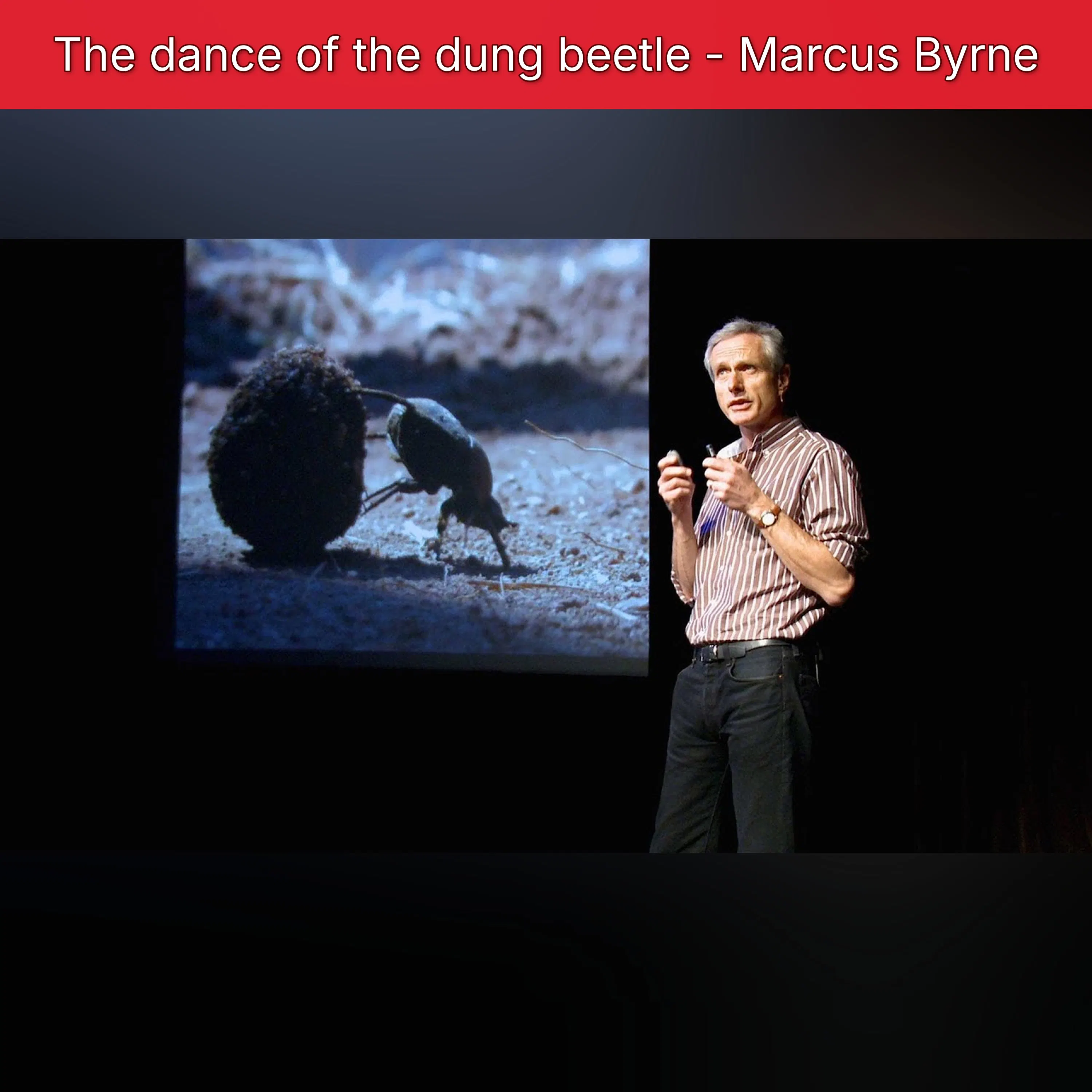
    The dance of the dung beetle - Marcus Byrne

    A dung beetle has a brain the size of a grain of rice, and yet shows a tremendous amount of intelligence when it comes to rolling its food source -- animal excrement -- home. How? It all comes down to a dance. (Filmed at TEDxWitsUniversity.) Talk by Marcus Byrne. Learn more about your ad choices. Visit megaphone.fm/adchoices

  • August 22 · 8 min

    The sharks that hunt in forests - Luka Seamus Wright

    Discover the unique adaptations of marine forests, the ecosystems that provide food and shelter for sharks and diverse coastal species. -- Forests don’t usually come to mind as a habitat for sharks. But marine forests provide a home for 35% of the world’s sharks. Mangrove forests in particular function as an essential bridge between land and sea and have evolved various adaptations that protect them and their resident sharks. Luka Seamus Wright explores these unique and vital ecosystems. Lesson by Luka Seamus Wright, directed by William Cifuentes, Lucy Animation Studio. Support Our Non-Profit Mission ---------------------------------------------- Support us on Patreon: http://bit.ly/TEDEdPatreon Check out our merch: http://bit.ly/TEDEDShop ---------------------------------------------- Connect With Us ---------------------------------------------- Sign up for our newsletter: http://bit.ly/TEDEdNewsletter Follow us on Facebook: http://bit.ly/TEDEdFacebook Find us on Twitter: http://bit.ly/TEDEdTwitter Peep us on Instagram: http://bit.ly/TEDEdInstagram ---------------------------------------------- Keep Learning ---------------------------------------------- View full lesson: https://ed.ted.com/lessons/the-sharks-that-hunt-in-forests-luka-seamus-wright Dig deeper with additional resources: https://ed.ted.com/lessons/the-sharks-that-hunt-in-forests-luka-seamus-wright#digdeeper Music: https://www.campstudio.co ---------------------------------------------- Thank you so much to our patrons for your support! Without you this video would not be possible! Rebecca Reineke, William Biersdorf, Patricia Alves Panagides, Valeria Sloan Vasquez, Yvette Mocete, Cyrus Garay, Samuel Barbas, Brighteagle, LadyGeek, Curtis Light, Dwight Schrute, Dianne Palomar, Marin Kovachev, Fahad Nasser Chowdhury, Penelope Misquitta, Hans Peng, Gaurav Mathur, Erik Biemans, Tony, Michelle, Katie and Josh Pedretti, Sunny Patel, Hoai Nam Tran, Stina Boberg, Kack-Kyun Kim, Michael Braun-Boghos, Ken, zjweele13, Jurjen Geleijn, Anna-Pitschna Kunz, Edla Paniguel, Elena Crescia, Thomas Mungavan, Jaron Blackburn, Venkat Venkatakrishnan, ReuniteKorea, Aaron Henson, Rohan Gupta, Begum Tutuncu, Ever Granada, Mikhail Shkirev, Brian Richards, Cindy O., Jørgen Østerpart, Tyron Jung, Carolyn Corwin, Carsten Tobehn, Katie Dean, Ezgi Yersu, Gerald Onyango, alessandra tasso and Côme Vincent. Learn more about your ad choices. Visit megaphone.fm/adchoices

  • August 22 · 8 min

    How does this all-female species multiply? - Susana Freitas and Darren Parker

    Explore the science of parthenogenesis, a form of reproduction which allows animals to develop an embryo without fertilization. -- In 2021, workers at a Sardinian aquarium were stunned by the birth of a smooth-hound shark. What was shocking was that, for the last decade, the shark’s mother had been living only with other females. So, how was this birth possible? And can other species reproduce this way? Susana Freitas and Darren Parker explore the phenomenon of asexual reproduction known as parthenogenesis. Lesson by Susana Freitas and Darren Parker, directed by Petya Zlateva, Compote Collective. Support Our Non-Profit Mission ---------------------------------------------- Support us on Patreon: http://bit.ly/TEDEdPatreon Check out our merch: http://bit.ly/TEDEDShop ---------------------------------------------- Connect With Us ---------------------------------------------- Sign up for our newsletter: http://bit.ly/TEDEdNewsletter Follow us on Facebook: http://bit.ly/TEDEdFacebook Find us on Twitter: http://bit.ly/TEDEdTwitter Peep us on Instagram: http://bit.ly/TEDEdInstagram ---------------------------------------------- Keep Learning ---------------------------------------------- View full lesson: https://ed.ted.com/lessons/how-does-this-all-female-species-reproduce-susana-freitas-and-darren-parker Dig deeper with additional resources: https://ed.ted.com/lessons/how-does-this-all-female-species-reproduce-susana-freitas-and-darren-parker#digdeeper Animator's website: https://www.facebook.com/CompoteCollective ---------------------------------------------- Thank you so much to our patrons for your support! Without you this video would not be possible! Jesús Bíquez Talayero, Chels Raknrl, Sai Pranavi Jonnalagadda, Stuart Rice, Jing Chen, Vector-Dopamine math, Jasper Song, Giorgio Bugnatelli, Chardon, Eddy Trochez, OnlineBookClub.org, Eric Shear, Leith Salem, Omar Hicham, Adrian Rotaru, Brad Sullivan, Karen Ho, Niklas Frimberger, Hunter Manhart, Nathan Nguyen, Igor Stavchanskiy, James R DeVries, Grace Huo, Diana Huang, Chau Hong Diem, Orlellys Torre, Corheu, Thomas Mee, Maryann H McCrory, Blas Borde, John Hellmann, Poompak Meephian, Chuck Wofford, Adam Pagan, Wes Winn, Conder Shou, ntiger, Noname, Hansan Hu, David D, Mac Hyney, Keith Ellison, robin valero walters, Lynne Truesdale, Gatsby Dkdc, Matthew Neal, Denis Chon, Julian Oberhofer, Monte Carroll and Eddy. Learn more about your ad choices. Visit megaphone.fm/adchoices

  • August 22 · 19 min

    Hey science teachers -- make it entertaining - Tyler DeWitt

    High school science teacher Tyler DeWitt was ecstatic about a lesson plan on bacteria (how cool!) -- and devastated when his students hated it. The problem was the textbook: it was impossible to understand. He delivers a rousing call for science teachers to ditch the jargon and extreme precision, and instead make science sing through stories and demonstrations. (Filmed at TEDxBeaconStreet.) Talk by Tyler DeWitt. Learn more about your ad choices. Visit megaphone.fm/adchoices

  • August 22 · 8 min

    Ugly History: The U.S. Syphilis Experiment - Susan M. Reverby

    Dig into the unethical Tuskegee Syphilis Study, which spanned 40 years and lied to its participants about receiving treatment for syphilis. -- Afflicting nearly 1 in 10 Americans, syphilis was ravaging the U.S. in the 1930s. Many doctors believed syphilis affected Black and white patients differently, and the Public Health Service launched an experiment to investigate, recruiting 600 Black men to take part. But the study was centered on a lie: the men wouldn’t actually receive treatment. Susan Reverby details the Tuskegee Syphilis Study. Lesson by Susan M. Reverby, directed by Ouros Animation. Support Our Non-Profit Mission ---------------------------------------------- Support us on Patreon: http://bit.ly/TEDEdPatreon Check out our merch: http://bit.ly/TEDEDShop ---------------------------------------------- Connect With Us ---------------------------------------------- Sign up for our newsletter: http://bit.ly/TEDEdNewsletter Follow us on Facebook: http://bit.ly/TEDEdFacebook Find us on Twitter: http://bit.ly/TEDEdTwitter Peep us on Instagram: http://bit.ly/TEDEdInstagram ---------------------------------------------- Keep Learning ---------------------------------------------- View full lesson: https://ed.ted.com/lessons/ugly-history-the-u-s-syphilis-experiment-susan-m-reverby Dig deeper with additional resources: https://ed.ted.com/lessons/ugly-history-the-u-s-syphilis-experiment-susan-m-reverby#digdeeper Animator's website: https://www.ouros.net ---------------------------------------------- Thank you so much to our patrons for your support! Without you this video would not be possible! Po Foon Kwong, NinjaBoffin, Jesse Jurman, Josue Perez Miranda, Scott Markley, Elija Peterson, Ovidiu Mrd, Xavier dupont, paul g mohney, Aravind Battaje, Nathan Giusti, Helen Lee, Anthony Benedict, Karthik Balsubramanian, John Hong, Annastasshia Ames, Amy Lopez, Vinh-Thuy Nguyen, Liz Candee, Kathryn Vacha, Ugur Doga Sezgin, Anthony Arcis, Chung Wah Gnapp, Karmi Nguyen, Yelena Baykova, Harshita Jagdish Sahijwani, Nick Johnson, Carlos H. Costa, Roberto Patrick, Les Howard, Jennifer Kurkoski, Ryan B Harvey, Abhishek Bansal, Akinola Emmanuel, Jose Arcadio Valdes Franco, Karl Laius, JY Kang, Heidi Stolt, Alexis Hevia, Christina Salvatore, Karlee Finch, Michael Goldberg, Denise A Pitts, Doug Henry, Kristiyan Bonev, Keven Webb, Mihai Sandu, Deepak Iyer, Javid Gozalov and Kyanta Yap. Learn more about your ad choices. Visit megaphone.fm/adchoices

  • August 22 · 16 min

    Consolidate medical patents, save lives - Ellen 't Hoen

    View full lesson: http://ed.ted.com/lessons/pool-medical-patents-save-lives-ellen-t-hoen Patenting a new drug helps finance its immense cost to develop -- but that same patent can put advanced treatments out of reach for sick people in developing nations, at deadly cost. Ellen 't Hoen talks about an elegant, working solution to the problem: the Medicines Patent Pool. (Filmed at TEDxZurich.) Talk by Ellen 't Hoen. Learn more about your ad choices. Visit megaphone.fm/adchoices

  • August 22 · 5 min

    Why are frogs disappearing? - Kerry M. Kriger

    View full lesson: http://ed.ted.com/lessons/disappearing-frogs-kerry-m-kriger Frogs (and amphibians in general) are in danger -- worldwide, nearly one-third of the world's amphibian species are on the verge of extinction. And yet, frogs contribute to our well-being in many important ways. Kerry M. Kriger describes why frogs are in trouble and how you can help save them. Lesson by Kerry M. Kriger, animation by Simon Ampel. Learn more about your ad choices. Visit megaphone.fm/adchoices

  • August 22 · 27 min

    It's time to question bio-engineering - Paul Root Wolpe

    Bioethicist Paul Root Wolpe describes an astonishing series of recent bio-engineering experiments, from glowing dogs to mice that grow human ears. He asks: Isn't it time to set some ground rules? (Filmed at TEDxPeachtree.) Talk by Paul Root Wolpe. Learn more about your ad choices. Visit megaphone.fm/adchoices

  • August 22 · 7 min

    The archives the British Empire didn't want you to see - Audra A. Diptée

    Explore the British policy called Operation Legacy, where the government hid incriminating documents from its former colonies. -- In 2009, five Kenyan people took a petition to the British Prime Minister. They claimed they endured human rights abuses in the 1950s, while Kenya was under British colonial rule, and demanded reparations. They had no documentary evidence that Britain sanctioned systems of torture— but thousands of secret files were waiting to be discovered. Audra Diptée digs into the Operation Legacy documents. Lesson by Audra A. Diptée, directed by Hernando Bahamon. Support Our Non-Profit Mission ---------------------------------------------- Support us on Patreon: http://bit.ly/TEDEdPatreon Check out our merch: http://bit.ly/TEDEDShop ---------------------------------------------- Connect With Us ---------------------------------------------- Sign up for our newsletter: http://bit.ly/TEDEdNewsletter Follow us on Facebook: http://bit.ly/TEDEdFacebook Find us on Twitter: http://bit.ly/TEDEdTwitter Peep us on Instagram: http://bit.ly/TEDEdInstagram ---------------------------------------------- Keep Learning ---------------------------------------------- View full lesson: https://ed.ted.com/lessons/why-did-the-british-empire-burn-sink-and-hide-these-documents-audra-a-diptee Dig deeper with additional resources: https://ed.ted.com/lessons/why-did-the-british-empire-burn-sink-and-hide-these-documents-audra-a-diptee#digdeeper Animator's website: https://www.ted.com/profiles/5461461/about ---------------------------------------------- Thank you so much to our patrons for your support! Without you this video would not be possible! Lex Azevedo, Michael Aquilina, Jason A Saslow, Yansong Li, Cristóbal Moenne, Dawn Jordan, Prasanth Mathialagan, Samuel Doerle, David Rosario, Dominik Kugelmann - they-them, Siamak Hajizadeh, Ryohky Araya, Mayank Kaul, Christophe Dessalles, Heather Slater, Sandra Tersluisen, Zhexi Shan, Bárbara Nazaré, Andrea Feliz, Victor E Karhel, Sydney Evans, Latora, Noel Situ, emily lam, Sid, Niccolò Frassetto, Mana, I'm here because of Knowledge Fight Facebook group., Linda Freedman, Edgardo Cuellar, Jaspar Carmichael-Jack, Michael Burton, VIVIANA A GARCIA BESNE, The Vernon's, Olha Bahatiuk, Jesús Bíquez Talayero, Chels Raknrl, Sai Pranavi Jonnalagadda, Stuart Rice, Jing Chen, Vector-Dopamine math, Jasper Song, Giorgio Bugnatelli, Chardon, Eddy Trochez, OnlineBookClub.org, Eric Shear, Leith Salem, Omar Hicham and Adrian Rotaru. Learn more about your ad choices. Visit megaphone.fm/adchoices

  • August 22 · 7 min

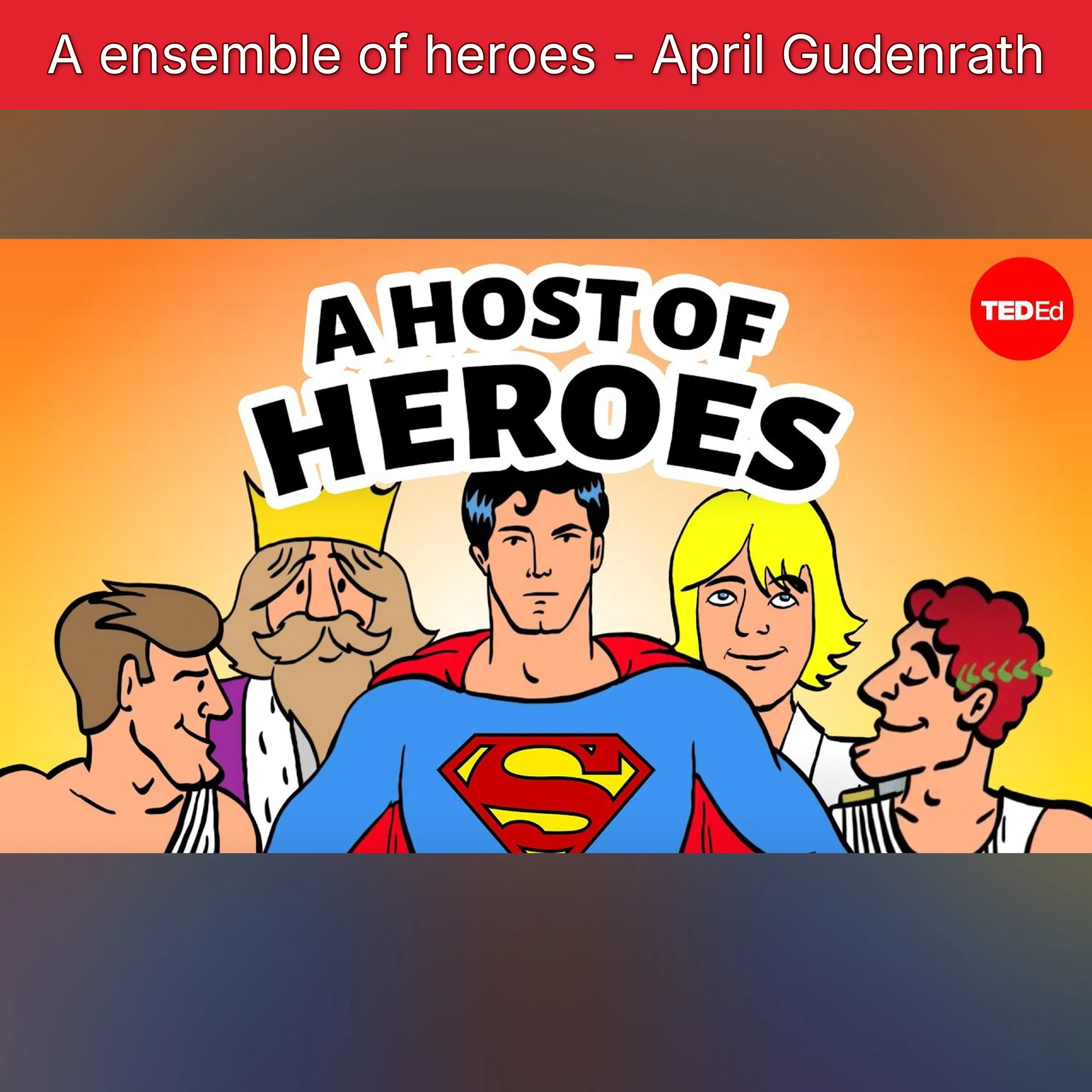
    A ensemble of heroes - April Gudenrath

    View full lesson: http://ed.ted.com/lessons/a-host-of-heroes-april-gudenrath What can some of literature's most famous heroes teach us? From the epic hero (like Beowulf) to the tragic hero (like Oedipus), each has something distinctive to share. April Gudenrath describes the many faces of the fictional hero -- and shows how they can inspire everyday people. Lesson by April Gudenrath, animation by Buzzco Associates, inc. Learn more about your ad choices. Visit megaphone.fm/adchoices

  • August 22 · 8 min

    What is a fecal microbial transplantation? - Kathryn M. Stephenson and David L. Suskind

    Dig into the science of fecal microbial transplantation, where doctors transfer feces into a patient to help reset their gut microbiome. -- 1,700 years ago, Chinese alchemist Ge Hong was renowned for his soup that could cure diarrhea-stricken patients. It had a surprising secret ingredient: feces. While it might seem unwise to consume feces, exciting new research suggests that taking poop into the body in other ways might benefit our health. Kathryn M. Stephenson & David L. Suskind share the science of fecal microbial transplantation. Lesson by Kathryn M. Stephenson and David L. Suskind, directed by Luisa Holanda. Support Our Non-Profit Mission ---------------------------------------------- Support us on Patreon: http://bit.ly/TEDEdPatreon Check out our merch: http://bit.ly/TEDEDShop ---------------------------------------------- Connect With Us ---------------------------------------------- Sign up for our newsletter: http://bit.ly/TEDEdNewsletter Follow us on Facebook: http://bit.ly/TEDEdFacebook Find us on Twitter: http://bit.ly/TEDEdTwitter Peep us on Instagram: http://bit.ly/TEDEdInstagram ---------------------------------------------- Keep Learning ---------------------------------------------- View full lesson: https://ed.ted.com/lessons/what-is-a-poop-transplant-and-how-does-it-work-kathryn-m-stephenson-and-david-l-suskind Dig deeper with additional resources: https://ed.ted.com/lessons/what-is-a-poop-transplant-and-how-does-it-work-kathryn-m-stephenson-and-david-l-suskind#digdeeper Animator's website: https://www.luisaholanda.com ---------------------------------------------- Thank you so much to our patrons for your support! Without you this video would not be possible! Jay M, Constantino Victor Delgado, Andrea Galvagni, Andrew Tweddle, Laurel-Ann Rice, Fernando A. Endo, Helen Lee, pam morgan, sarim haq, Gerardo Castro, Michel-Ange Hortegat, Enes Kirimi, Amaury BISIAUX, ND, Samyogita Hardikar, Vanessa Graulich, Vandana Gunwani, Abdulmohsin Almadi, AJ Lyon, Geoffrey Bultitude, Mi Mi, Thomas Rothert, Brian Elieson, Oge O, Weronika Falkowska, Nevin Spoljaric, Sid Chanpuriya, Anoop Varghese, David Yastremski, Noah Webb, Roberto Chena, Oliver Koo, Luke Pisano, Andrea Gordon, Aleksandar Donev, Nicole Klau Ibarra, Jesse Lira, Ezekiel Raui, Petr Vacek, Dennis, Olivia Fu, Kari Teffeau, Cindy Lai, Rajath Durgada Manjunath, Dan Nguyen, Chin Beng Tan, Tom Boman, Karen Warner, Iryna Panasiuk and Aaron Torres. Learn more about your ad choices. Visit megaphone.fm/adchoices

  • August 22 · 9 min

    Can we create the "perfect" farm? - Brent Loken

    Explore the innovative ways countries are revolutionizing farming to ensure we can feed humanity in a way that works with the environment. -- About 10,000 years ago, humans began to farm. This agricultural revolution was a turning point in our history and enabled the existence of civilization. Today, nearly 40% of our planet is farmland. Spread all over the world, these lands are the pieces to a global puzzle we’re all facing: in the future, how can we feed every member of a growing population a healthy diet? Brent Loken investigates. Lesson by Brent Loken, directed by Hype CG. Animator's website: https://www.hype.cg/ & https://www.luisacopetti.com/ Sign up for our newsletter: http://bit.ly/TEDEdNewsletter Support us on Patreon: http://bit.ly/TEDEdPatreon Follow us on Facebook: http://bit.ly/TEDEdFacebook Find us on Twitter: http://bit.ly/TEDEdTwitter Peep us on Instagram: http://bit.ly/TEDEdInstagram View full lesson: https://ed.ted.com/lessons/can-we-create-the-perfect-farm-brent-loken Thank you so much to our patrons for your support! Without you this video would not be possible! JackKeyton, Matthew D. Vigil, Amin Shahril, Adriano Fontes, Xiao Yu, Fatima Kried, Aravind Battaje, Melissa Suarez, Jason Duncan, Brian A. Dunn, Francisco Amaya, Daisuke Goto, Matt Switzler, Chhunheng Veng, Leonardo Monrroy, Sumedh Ghaisas, Guhten, Amer Harb, Dowey Baothman, Norbert Orgován, Shafeeq Ansari, Gabriel Balsa, Maryam Sultan, Bethany Connor, Jeremy Shimanek, Adam Foreman, Sebastiaan Vleugels, Lâm Nguyễn, Mark Byers, Bradley Heinold, Monkeypatcher, Laurence McMillan, Connor Roberts, Dmitry Neverov, Tonya Ratliff-Garrison, Avinash Amarnath, Eric McDaniel, Cristian Cristian, France Lipužič, EdoKun, Rare Media, Rayo, Faizan, Elizabeth Gu, Nazmul Idris, Po Foon Kwong, Siobhan O'Connor Gwozdz, NinjaBoffin, Jesse Jurman and Josue Perez Miranda. Learn more about your ad choices. Visit megaphone.fm/adchoices

  • August 22 · 7 min

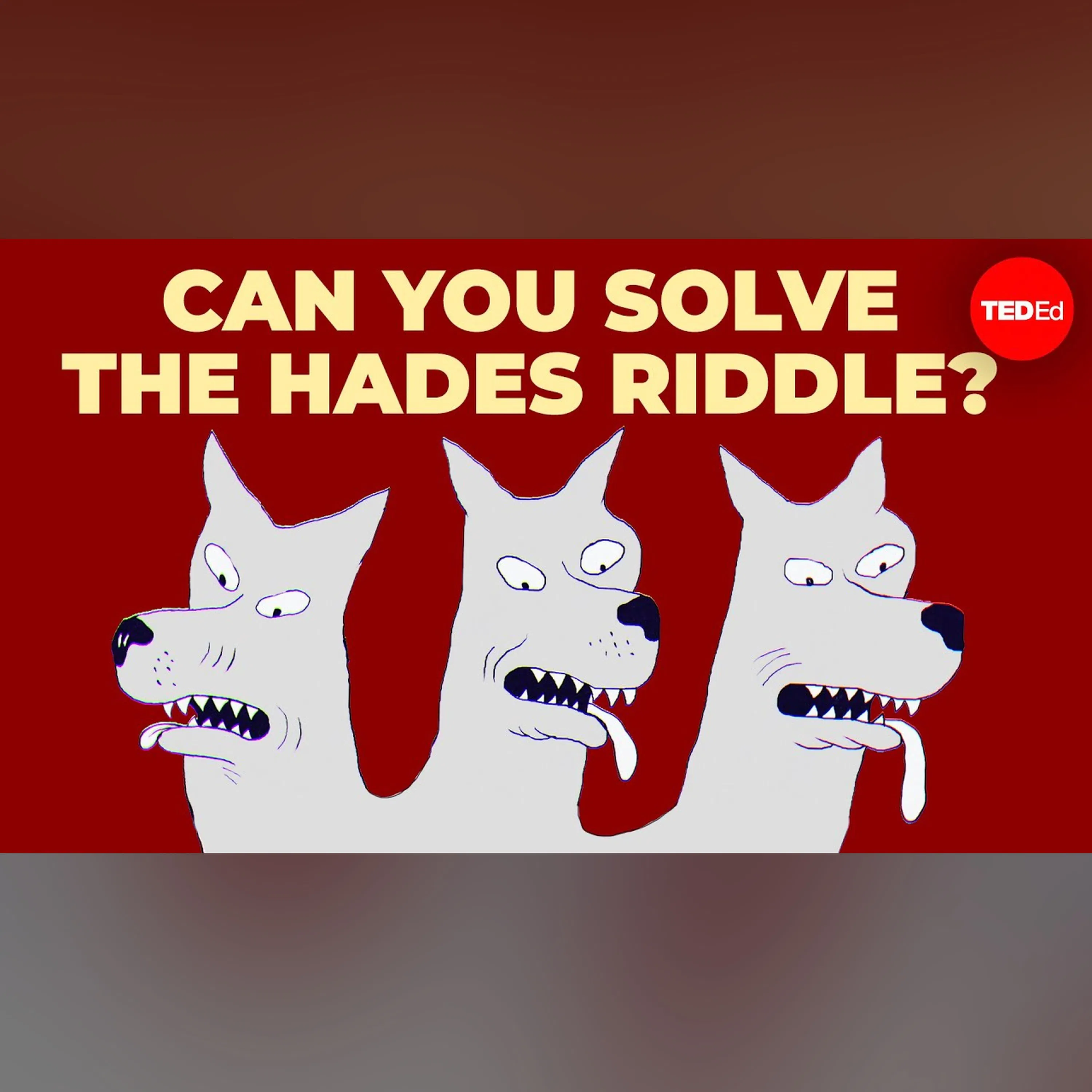
    Can you solve the riddle and escape Hades? - Dan Finkel

    Practice more problem-solving at https://brilliant.org/TedEd/ -- The underworld is overcrowded, and Zeus has ordered Hades to let some spirits out. Hades arranges all the souls of the dead in a line before Cerberus. When one of his three heads bites down on the soul in front of it, they’ll get returned to the land of the living. Anyone to the left must stay in Hades forever. Can you pick the right spot and escape the underworld? Dan Finkel shows how. Lesson by Dan Finkel, directed by Artrake Studio. Animator's website: https://www.artrake.com Sign up for our newsletter: http://bit.ly/TEDEdNewsletter Support us on Patreon: http://bit.ly/TEDEdPatreon Follow us on Facebook: http://bit.ly/TEDEdFacebook Find us on Twitter: http://bit.ly/TEDEdTwitter Peep us on Instagram: http://bit.ly/TEDEdInstagram View full lesson: https://ed.ted.com/lessons/can-you-solve-the-riddle-and-escape-hades-dan-finkel Thank you so much to our patrons for your support! Without you this video would not be possible! Marc Bilodeau, Peng, Tzu-Hsiang, paul g mohney, Maya Toll, Sebastian Regez, Bruno Hannud, Andreas Voltios, Shubham Arora, Ugur Doga Sezgin, Akinola Emmanuel, Kyanta Yap, Ricardo Rendon Cepeda, Ana Maria, Benjamin & Shannon Pinder, Ernest Chow, Bela Namyslik, Alan Froese, Anika Westburg, Nick Cozby, Shawar Khan, Michael Braun-Boghos, Rohan Gupta, Elizabeth Cruz, Yujing Jiang, Sarah Lundegaard, Vladimir Ivanchenko, Georg Gusewski, Rohit Lodha, Erica Zhuang, Aaron Henson, Julio Sabatés Rodríguez, Vivian & Gilbert Lee, Fahad Nasser Chowdhury, ரமணன், John simmons, June Reiling, Khalid AlAli, Mickey Mikeworth, Nathaniel Lupus, Yansong Li, Chung Wah Gnapp, Amber Alexander, Robert Patrick, Pi Guanghui, Barbara Younker, Ai Ejima, Soma Ali, Roman Pinchuk, Raheem and Hector Quintanilla. Learn more about your ad choices. Visit megaphone.fm/adchoices

  • August 22 · 7 min

    How (and why) to read William Faulkner - Sascha Morrell

    Get to know the works of William Faulkner, whose inventive literature made him one of America’s most remarkable writers. -- William Faulkner is considered one of America’s most remarkable and perplexing writers. He confused his audience intentionally, using complex sentences, unreliable narrators, and outlandish imagery. His body of work is shocking, inventive, hilarious, and challenging. So how can readers navigate his literary labyrinths? Sascha Morrell explains how to read one of literature's most confusing writers. Lesson by Sascha Morrell, directed by Naghmeh Farzaneh, Sarah Saidan. Support Our Non-Profit Mission ---------------------------------------------- Support us on Patreon: http://bit.ly/TEDEdPatreon Check out our merch: http://bit.ly/TEDEDShop ---------------------------------------------- Connect With Us ---------------------------------------------- Sign up for our newsletter: http://bit.ly/TEDEdNewsletter Follow us on Facebook: http://bit.ly/TEDEdFacebook Find us on Twitter: http://bit.ly/TEDEdTwitter Peep us on Instagram: http://bit.ly/TEDEdInstagram ---------------------------------------------- Keep Learning ---------------------------------------------- View full lesson: https://ed.ted.com/lessons/why-is-william-faulkner-so-difficult-to-read-sascha-morrell Dig deeper with additional resources: https://ed.ted.com/lessons/why-is-william-faulkner-so-difficult-to-read-sascha-morrell#digdeeper Animator's website: https://www.naghmehfarzaneh.com and https://vimeo.com/user8581494 ---------------------------------------------- Thank you so much to our patrons for your support! Without you this video would not be possible! Francisco Amaya, Daisuke Goto, Matt Switzler, Peng, Tzu-Hsiang, Bethany Connor, Jeremy Shimanek, Mark Byers, Avinash Amarnath, Xuebicoco, Rayo, Po Foon Kwong, Boffin, Jesse Jurman, Scott Markley, Elija Peterson, Ovidiu Mrd, paul g mohney, Steven Razey, Nathan Giusti, Helen Lee, Anthony Benedict, Karthik Balsubramanian, Annastasshia Ames, Amy Lopez, Vinh-Thuy Nguyen, Liz Candee, Ugur Doga Sezgin, Karmi Nguyen, John C. Vesey, Yelena Baykova, Nick Johnson, Carlos H. Costa, Jennifer Kurkoski, Ryan B Harvey, Akinola Emmanuel, Jose Arcadio Valdes Franco, Sebastiaan Vleugels, Karl Laius, JY Kang, Abhishek Goel, Heidi Stolt, Nicole Sund, Karlee Finch, Mario Mejia, Denise A Pitts, Doug Henry, Keven Webb, Mihai Sandu, Deepak Iyer and Javid Gozalov. Learn more about your ad choices. Visit megaphone.fm/adchoices

  • August 22 · 8 min

    Licking bees and pulping trees: The reign of a wasp queen - Kenny Coogan

    Take a look inside a hive as a wasp queen begins her reign; founding a colony, hunting to feed her brood and defending against intruders. -- As the sun rises, something royal stirs inside a pile of firewood. It's the wasp queen; one of thousands who mated in late autumn and hibernated through the winter. Now she must emerge into the spring air to begin her reign. This queen is the lone survivor of her old hive, and now, she must become the foundress of a new one. Kenny Coogan details a year in the life of a wasp queen. Lesson by Kenny Coogan, directed by Biljana Labovic & animated by Denis Chapon. Animator's website: http://denischapon.com/ Sign up for our newsletter: http://bit.ly/TEDEdNewsletter Support us on Patreon: http://bit.ly/TEDEdPatreon Follow us on Facebook: http://bit.ly/TEDEdFacebook Find us on Twitter: http://bit.ly/TEDEdTwitter Peep us on Instagram: http://bit.ly/TEDEdInstagram View full lesson: https://ed.ted.com/lessons/licking-bees-and-pulping-trees-the-reign-of-a-wasp-queen-kenny-coogan Thank you so much to our patrons for your support! Without you this video would not be possible! Jan-Erik, Scott Markley, Kaitlyn holland, Elija Peterson, Michele Lynn Rose, Jai Prasanth, Vack91, David Lucsanyi, Xavier dupont, Marisa Miller, Boytsov Ilya, Steven Razey, Javier Aldavaz, Nathan Giusti, Mada Arslan, Joichiro Yamada, Ritul Raghavan, Aline de Paula Zillig, Yambu Ganesh Shaw, Abeer Rajbeen, John Hong, Minh Tran, Helen Lee, Anthony Benedict, Turine Tran, Mathew Samuel, Karthik Balsubramanian, Lee, Livia-Alexandra Sarban, Annastasshia Ames, João Henrique Rodrigues, Sebastiaan Hols, Aries SW, SANG HAN, Amy Lopez, ReuniteKorea , Vinh-Thuy Nguyen, Liz Candee, Clovis Norroy, Danielle Downs, Nik Maier, Angel Pantoja, Nishant Suneja, 张晓雨, Srinivasa C Pasumarthi, Kathryn Vacha, Anthony Arcis, Jeffrey Segrest, Sandra Fuller Bocko and Alex Pierce. Learn more about your ad choices. Visit megaphone.fm/adchoices

  • August 22 · 9 min

    We can halt the next epidemic - George Zaidan

    What makes for an effective outbreak response? Explore successful systems from around the world that prevented epidemics. -- In 2013, an Ebola outbreak began in Guinea. The country had no formal response system and the outbreak became the largest Ebola epidemic in recorded history. Guinea then completely overhauled their response system, and were able to successfully combat another outbreak in 2021. So what does an effective epidemic response look like? George Zaidan explores how different communities have taken action. Lesson by George Zaidan, directed by Gavin Edwards, Movult. This video made possible in collaboration with the Skoll Foundation Learn more about how TED-Ed partnerships work: https://bit.ly/TEDEdPartners Support Our Non-Profit Mission ---------------------------------------------- Support us on Patreon: http://bit.ly/TEDEdPatreon Check out our merch: http://bit.ly/TEDEDShop ---------------------------------------------- Connect With Us ---------------------------------------------- Sign up for our newsletter: http://bit.ly/TEDEdNewsletter Follow us on Facebook: http://bit.ly/TEDEdFacebook Find us on Twitter: http://bit.ly/TEDEdTwitter Peep us on Instagram: http://bit.ly/TEDEdInstagram ---------------------------------------------- Keep Learning ---------------------------------------------- View full lesson: https://ed.ted.com/lessons/the-epidemics-that-almost-happened-george-zaidan Dig deeper with additional resources: https://ed.ted.com/lessons/the-epidemics-that-almost-happened-george-zaidan#digdeeper Animator's website: https://www.movult.com Music: https://www.workplaywork.com ---------------------------------------------- Thank you so much to our patrons for your support! Without you this video would not be possible! John Hellmann, Poompak Meephian, Chuck Wofford, Adam Pagan, Wes Winn, Conder Shou, ntiger, Noname, Hansan Hu, David D, Mac Hyney, Keith Ellison, robin valero walters, Lynne Truesdale, Gatsby Dkdc, Matthew Neal, Denis Chon, Julian Oberhofer, Monte Carroll, Eddy, Jay M, Constantino Victor Delgado, Andrea Galvagni, Andrew Tweddle, Laurel-Ann Rice, Fernando A. Endo, Helen Lee, pam morgan, sarim haq, Gerardo Castro, Michel-Ange Hortegat, Enes Kirimi, Amaury BISIAUX, ND, Samyogita Hardikar, Vanessa Graulich, Vandana Gunwani, Abdulmohsin Almadi, AJ Lyon, Geoffrey Bultitude, Mi Mi, Thomas Rothert, Brian Elieson, Oge O, Weronika Falkowska, Nevin Spoljaric, Sid Chanpuriya, Anoop Varghese, David Yastremski and Noah Webb. Learn more about your ad choices. Visit megaphone.fm/adchoices

Showing 661–680 of 1,235 episodes