Skip to content
Artwork for TechDaily.ai
TechnologyNewsTech News

TechDaily.ai

TechDaily.ai

TechDaily.ai is your go-to platform for daily podcasts on all things technology. From cutting-edge innovations and industry trends to practical insights and expert interviews, we bring you the latest in the tech world—one episode at a time. Stay informed, stay inspired!

Play
  • 162 episodes
  • daily
  • Avg 19 min
  • English
Counted on this page — what you have heard stays on this device, so it is not something the list can be paged by.
  • #498
    Yesterday · 21 min

    2026 Tech Layoffs: Is the AI Spending Boom Killing Jobs?

    Tech giants are making billions in profits while laying off thousands of employees. Why are some of the world's most profitable companies cutting jobs to fund artificial intelligence? In this episode of Techaily.ai, host David and AI expert Sophia examine the alarming wave of tech layoffs in 2026, the trillion-dollar AI infrastructure gamble, and the growing fears of a broader U.S. job market crisis. With more than 200,000 tech jobs reportedly eliminated in 2026, companies such as Microsoft, Amazon, Oracle, Meta, and Google are reshaping their workforces while pouring enormous resources into AI chips, data centers, and computing infrastructure. But is artificial intelligence actually replacing workers, or are companies cutting payroll to finance an expensive technological transition? David and Sophia explore how AI capital expenditures, Wall Street pressure, rising operational costs, and corporate restructuring could fundamentally change the future of employment. In this episode, you'll discover: Why profitable technology companies are announcing massive layoffs despite strong revenues. How the reported $3.2 trillion AI investment boom is putting pressure on corporate cash flow. Why AI-related layoffs don't necessarily mean artificial intelligence can replace the affected workers. How Microsoft, Amazon, Oracle, Meta, and Google are restructuring their operations. What Canva's unusually generous severance packages reveal about uncertainty in the technology industry. Why some companies reportedly rehired workers after automation failed to deliver expected efficiencies. How tech layoffs could spread into retail, finance, and other industries, potentially threatening another 1.6 million jobs. Why entry-level employment opportunities are disappearing and what that means for recent graduates. How AI data centers, electricity consumption, and water shortages are influencing political and economic decisions. Why healthcare employment and workforce retraining could offer alternatives for displaced workers. The discussion also explores a troubling possibility: What happens when AI eliminates the entry-level positions that traditionally help young professionals build their careers? As technology companies race to dominate artificial intelligence, the consequences could extend far beyond Silicon Valley. From rising unemployment fears to shifting career opportunities, the decisions being made today may reshape the American workforce for years to come. Is the AI spending boom creating the foundation for future economic growth, or is it putting millions of jobs at risk before the technology can deliver on its promises? Listen to this episode of Techaily.ai as David and Sophia examine the financial pressures, corporate decisions, and employment trends driving the 2026 tech layoffs. Subscribe to Techaily.ai for more conversations about artificial intelligence, technology trends, the economy, and the future of work. Share this episode with anyone concerned about AI job displacement and the changing employment landscape.

  • #499
    Yesterday · 20 min

    AI Hype vs. Reality: Why Big Tech's Billion-Dollar Plans Fail

    What happens when trillion-dollar technology ambitions collide with the laws of physics, government regulations, and everyday human behavior? In this episode of Techaily.ai, host David and co-host Sophia explore the growing disconnect between Big Tech's promises and the physical, financial, and regulatory obstacles threatening some of the industry's most ambitious projects. From stalled AI data centers in Texas to astronomical AI company valuations, autonomous vehicle safety failures, and Tesla's Cybertruck manufacturing challenges, this conversation examines why cutting-edge technology cannot always overcome real-world limitations. As artificial intelligence companies race to expand their infrastructure, they face an unexpected challenge: building the physical systems required to support their digital ambitions. AI data centers require enormous amounts of electricity, advanced cooling systems, and major power grid upgrades. But local opposition, zoning restrictions, and lengthy permitting processes are turning billion-dollar announcements into projects that may never become operational. Meanwhile, financial markets continue assigning extraordinary valuations to AI companies, even as new regulations and cybersecurity threats introduce additional barriers to growth. David and Sophia examine the consequences of this disconnect and ask whether technology investors are overlooking the true cost of innovation. In this episode, you'll discover: Why the AI infrastructure boom could be threatened by electricity shortages, zoning restrictions, and construction delays. How AI data centers are placing unprecedented demands on power grids and local resources. Why Texas is becoming a central battleground over AI infrastructure expansion and electricity consumption. How speculative data center projects could distort local economies and create misleading expectations about AI growth. Why Anthropic's reported $1.44 trillion valuation raises questions about AI profitability, market expectations, and long-term growth. How AI meeting assistants and personal finance applications fit into the competition for everyday consumer adoption. Why New York's AI safety regulations could increase compliance costs for artificial intelligence companies. How cybersecurity risks could threaten the openness of AI development platforms. Why Waymo's reported school bus safety incidents demonstrate the difficulties of deploying autonomous vehicles in unpredictable environments. How Tesla's Cybertruck manufacturing challenges illustrate the difference between digital design and physical production. Why leadership controversies and unpredictable human behavior introduce risks that financial models may overlook. The conversation also examines a fundamental weakness in the technology industry's approach to innovation: the assumption that sufficient funding, engineering talent, and computing power can overcome almost any obstacle. But electricity grids cannot expand overnight. Manufacturing materials do not behave like digital models. Autonomous vehicles must navigate unpredictable streets, and technology companies must comply with laws that differ across jurisdictions. These challenges raise a larger question about the future of artificial intelligence and technology investment. Are investors placing too much confidence in ambitious announcements while overlooking the physical infrastructure, regulatory approvals, and operational complexity required to make those promises a reality? And if local governments, utility providers, and urban planners increasingly determine whether major technology projects can move forward, could the next phase of innovation be shaped as much by regulators as by Silicon Valley engineers? Join David and Sophia on Techaily.ai as they examine the growing tension between AI hype, tech company valuations, infrastructure limitations, and the economic realities of bringing new technologies into the physical world. Subscribe to Techaily.ai for more conversations about artificial intelligence, technology news, cybersecurity, autonomous vehicles, and the future of innovation. Share this episode with anyone interested in what happens when Big Tech's biggest ambitions meet real-world obstacles.

  • #497
    Yesterday · 23 min

    Microsoft Outage Disrupts Hospitals, Businesses, and Governments

    What happens when the technology powering millions of businesses, hospitals, and government agencies suddenly stops working? A massive Microsoft 365 outage exposed just how dependent our world has become on cloud computing—and how quickly everyday operations can fall apart when critical digital services fail. In this episode of Tech.ai, host David and guest Sophia examine the global Microsoft outage that disrupted Outlook, Microsoft Teams, Exchange Online, OneDrive, SharePoint, and other essential productivity services. With an estimated 450 million users potentially affected and nearly 130,000 outage reports, the disruption revealed serious vulnerabilities in the interconnected systems supporting modern businesses and public services. From hospitals in Australia returning to handwritten prescriptions to a Colorado county jail struggling to process online bond payments, the consequences extended far beyond missed emails and interrupted meetings. Businesses faced operational delays, government agencies lost access to essential communication tools, and scammers exploited the confusion with phishing attempts targeting frustrated users. David and Sophia also explore the technical failures behind the disruption, including problematic configuration changes, authentication failures, overloaded servers, and the "thundering herd" effect that complicated recovery efforts. In this episode, you'll discover: How the Microsoft 365 outage disrupted Outlook, Teams, Exchange Online, OneDrive, and SharePoint while Azure remained operational. Why hospitals, government agencies, schools, and businesses struggled to maintain essential services. How cloud authentication failures forced healthcare workers to switch to paper-based processes. Why cybercriminals use major technology outages to launch phishing scams. How configuration errors and automated software updates can trigger widespread service disruptions. What the "thundering herd" problem means and why restarting overloaded servers can make recovery more difficult. How centralized cloud infrastructure creates potential single points of failure across critical industries. What previous major technology outages reveal about the risks of increasing digital dependence. As organizations move more essential services to centralized cloud platforms, this incident raises an important question: Are we sacrificing long-term reliability and resilience for the convenience of connected technology? Whether you're an IT professional, business owner, cybersecurity enthusiast, or someone who relies on Microsoft 365 every day, this conversation offers a closer look at the vulnerabilities hiding beneath our digital infrastructure. Tune in to Tech.ai as David and Sophia explore the real-world impact of global technology failures and the challenges of keeping interconnected systems running. Subscribe to Tech.ai for more conversations about technology, artificial intelligence, cybersecurity, cloud computing, and the digital systems shaping our future. Share this episode with someone who depends on cloud services, and join us as we explore what happens when the technology we trust suddenly goes offline.

  • #496
    Wednesday · 18 min

    Starlink Mini 2 Costs $999! What Happened to $249?

    What if the next generation of portable satellite internet was expected to cost just $249, but early buyers were suddenly asked to pay $999? That's the pricing mystery surrounding Starlink Mini 2, and it raises some interesting questions about SpaceX's hardware strategy, satellite network capacity, and the future of off-grid connectivity. In this episode of TechDaily.ai, host David and guest Sophia explore the reported Starlink Mini 2 price leak, its exclusive beta rollout, and the possible business decisions behind the dramatic $750 price difference. The conversation begins with a discovery by YouTube channel Dishy Tech, which reportedly uncovered references to a $249 Starlink Mini 2 beta kit hidden in website API code. But when the beta rollout arrived on November 10, 2026, the reported price was $999. Why would SpaceX introduce such a significant price gap, and what could it mean for consumers waiting for a more affordable portable internet solution? David and Sophia examine several possible explanations, including the challenges of managing limited satellite bandwidth, controlling early demand, and testing how much customers are willing to pay for exclusive access to new technology. The discussion also explores potential hardware improvements, including a battery accessory reportedly listed for $50, references to USB-C connectivity, and the implications of bringing battery technology directly into the Starlink ecosystem. In this episode, you'll discover: Starlink Mini 2 Pricing: Why leaked website code suggested a $249 price while the reported beta launch introduced a $999 price tag. Satellite Network Capacity: How limited bandwidth and geographic congestion could influence early hardware availability. Exclusive Beta Access: Why premium pricing and restricted availability might help SpaceX manage demand while testing its network. Starlink Mini 2 Battery: What a rumored $50 official battery could mean for portable satellite internet and off-grid users. Hardware Improvements: How references to battery integration and USB-C connectivity suggest changes to the next-generation Mini. Third-Party Accessories: Why official battery solutions could affect manufacturers of rugged portable power systems. Starlink Roam Plans: How monthly subscriptions contribute to the long-term economics of satellite internet. Holiday Sales Strategy: Whether the leaked $249 price could eventually become a wider retail offering. Future of Satellite Internet: What Starlink's approach could mean for campers, RV travelers, remote workers, and early technology adopters. Beyond the hardware itself, this episode examines a larger shift in consumer technology. Are companies increasingly using expensive beta programs, limited invitations, and early-access exclusivity to control product demand? And are customers paying premium prices for the privilege of testing new products? David and Sophia also explore the relationship between hardware sales and recurring subscription revenue, explaining why attracting long-term Starlink Roam subscribers could be more valuable than maximizing the initial price of the dish. The central question remains: Is the $999 Starlink Mini 2 beta price a temporary strategy to protect network performance, or does it signal a new era of premium pricing for portable satellite connectivity? Tune in to TechDaily.ai for an engaging discussion about Starlink Mini 2, SpaceX's evolving satellite internet business, and what these developments could mean for the future of staying connected anywhere. Subscribe to TechDaily.ai for more conversations about emerging technology, SpaceX, Starlink, artificial intelligence, consumer electronics, and the innovations shaping our connected world. Enjoyed the episode? Share it with a fellow technology enthusiast, outdoor adventurer, or anyone interested in portable satellite internet. Visit techaily.ai to explore more episodes and learn how you can sponsor the podcast for just $25, with promotional exposure across platforms including Spotify, Apple Podcasts, and Amazon Music. Note: The episode discusses reported leaks, beta pricing, and speculative business strategies. A future $249 retail price has not been confirmed within the source material.

  • #495
    Wednesday · 19 min

    Anthropic's Claude AI Is Changing How We Work Forever

    What if your next meeting ended with the project plan already written, the spreadsheet built, and every action item organized? Anthropic's latest Claude AI workplace tools are bringing that possibility closer to reality, changing how businesses approach meetings, collaboration, data analysis, and everyday productivity. In this episode of TechDaily.ai, host David and guest Sophia explore Anthropic's November 10, 2026 announcement introducing new AI-powered workplace capabilities, including Claude Meetings, Claude Whiteboards, Claude Sheets, and Claude Data. These tools aim to move artificial intelligence beyond traditional chatbots and directly into the software, meetings, and workflows businesses use every day. But as AI begins handling more of the actual work, an important question emerges: What happens to the people whose jobs depend on doing those tasks? In this episode, we explore: Claude Meetings: How Anthropic's AI can participate in Google Meet calls, answer questions, draft project plans, and organize action items while conversations happen. Claude Whiteboards: How teams can turn spoken ideas into collaborative visual timelines, project plans, documents, and presentations. Claude Sheets: How AI can create spreadsheets with formulas, multiple tabs, formatting, and data validation while allowing humans to review changes. Claude Data: How connected business data can become interactive dashboards, written insights, and narrated executive briefings. AI Security and Privacy: Why meeting consent, role-based access controls, and data permissions matter when AI joins workplace conversations. Enterprise AI Integrations: How interactive connectors for Adobe, Atlassian, and HubSpot could reduce the need to switch between applications. Claude vs. ChatGPT vs. Meta Muse: How Anthropic, OpenAI, and Meta are approaching the race to transform enterprise productivity. The Future of Office Jobs: Why AI automation could shift employees from creating spreadsheets and reports to reviewing AI-generated work and making strategic decisions. David and Sophia also examine the growing competition facing Microsoft and Google as AI companies attempt to become the central workspace where businesses plan, collaborate, analyze information, and execute tasks. And while these technologies promise substantial productivity improvements, they also introduce serious concerns about AI hallucinations, corporate data security, accountability, and the future of entry-level careers. Could Claude AI become the operating system for your workday? Will traditional office applications remain essential? Or are we approaching a future where humans simply tell AI what needs to happen? Tune in to TechDaily.ai for a conversation about Anthropic's workplace AI expansion and what it could mean for the way we work. Subscribe to TechDaily.ai for more discussions on artificial intelligence, emerging technology, AI agents, workplace automation, and the innovations shaping tomorrow's business world. If you found this episode valuable, share it with a colleague, team leader, or anyone curious about how AI is transforming professional life. Visit techdaily.ai to learn more about the podcast and sponsorship opportunities.

  • #492
    Tuesday · 22 min

    Stanford's Next Concept Modeling Could Change AI Forever

    What if the biggest limitation holding artificial intelligence back isn't processing power, but the memory required to run it? And what if a new AI architecture could dramatically reduce that bottleneck while delivering stronger reasoning performance? In this episode of techdaily.ai, host David and guest expert Sophia explore Stanford research on Next Concept Modeling (NCM), an experimental AI architecture that could reshape how language models generate text, use GPU memory, and perform complex reasoning. Traditional large language models generate text one token at a time, repeatedly transferring enormous amounts of data between memory and processors. This creates a costly memory bandwidth bottleneck that drives demand for high-bandwidth memory, specialized GPUs, and increasingly expensive AI infrastructure. Next Concept Modeling takes a different approach. Instead of generating words sequentially, NCM uses parallel text generation and a coarse-to-fine architecture inspired by image generation. The result? A potentially dramatic reduction in memory bandwidth requirements, with new possibilities for AI efficiency and performance. In this episode, we explore: Why GPU memory bandwidth, rather than raw processing power, is a major obstacle for modern AI systems. How Stanford's Next Concept Modeling replaces sequential token generation with parallel concept-based processing. Why discrete codes allow AI models to build meaning before producing readable text. How nested dropout encourages models to capture core concepts instead of memorizing patterns. How conditioning corruption trains models to recover from internal errors during generation. Why test-time scaling and Minimum Bayes Risk (MBR) selection can improve reasoning by comparing multiple candidate answers. How a 25-million-parameter NCM model reportedly solved 86 out of 100 hard Sudoku puzzles, compared with just one solved by a similarly sized sequential model. Why trading memory bandwidth for additional computing power could transform AI hardware economics and future GPU requirements. The implications extend far beyond faster text generation. If architectures like NCM successfully scale to larger AI systems, they could reduce dependence on expensive high-bandwidth memory, open new opportunities for consumer-grade GPUs, and challenge assumptions behind massive AI data center investments. But important questions remain. Can this architecture maintain its advantages at trillion-parameter scale? Will increased computational demands offset the memory savings? And could today's specialized AI infrastructure become less essential as software evolves? Join David and Sophia as they examine the research, the engineering trade-offs, and what this potential shift could mean for the future of artificial intelligence. Subscribe to techdaily.ai for more conversations about AI breakthroughs, machine learning research, GPU technology, and the innovations shaping tomorrow's computing landscape. Share this episode with anyone following the future of AI hardware and software.

  • #493
    Tuesday · 14 min

    NVIDIA, AMD & AI Stocks Crash: Is This Just the Beginning?

    What happens when $3 trillion in market value disappears almost overnight? With AI stocks plunging, NVIDIA and AMD facing major losses, and the NASDAQ entering correction territory, investors are asking one critical question: Is this a temporary market pullback or the beginning of a much bigger AI stock market crash? In this episode of TechDaily.ai, host David and guest expert Sophia explore the forces behind the massive technology stock sell-off and what it could mean for the future of artificial intelligence, semiconductor companies, and global financial markets. The AI investment boom has fueled enormous spending on GPUs, cloud computing, and data centers. But rising borrowing costs, power grid limitations, construction delays, and growing concerns about AI profitability are putting pressure on the companies driving this expansion. David and Sophia break down why the market's recent rebound may not necessarily signal a recovery and how financial risks could spread throughout the global AI supply chain. In This Episode, You'll Discover: Why the NASDAQ reportedly dropped 5.5% in a single trading session, contributing to an estimated $3 trillion market value wipeout. How NVIDIA and AMD stock declines reflect concerns about the sustainability of AI infrastructure investments. Why AI data center construction delays, electricity shortages, and regulatory restrictions could threaten future growth. How rising interest rate expectations and stronger US employment figures affect technology stock valuations. Why heavily indebted AI infrastructure companies face greater financial risks than established technology giants. How delays in US data center projects could affect semiconductor manufacturers in Taiwan, South Korea, and Japan. What the dot-com bubble can teach investors about technological innovation and market speculation. Why S&P 500 index funds and retirement portfolios remain exposed to concentrated technology stock losses. Which economic indicators and company earnings reports could help determine whether the market stabilizes or declines further. The discussion also examines a fundamental challenge facing the AI industry: Can artificial intelligence companies generate enough sustainable revenue to justify the billions being invested in GPUs, specialized infrastructure, and massive data centers? While artificial intelligence continues to reshape technology, the financial success of individual companies depends on far more than innovation alone. Infrastructure costs, debt obligations, market valuations, and real customer demand will play a crucial role in determining the industry's future. Is the recent AI stock market crash a buying opportunity, a warning of an AI investment bubble, or the beginning of a broader technology market correction? Join David and Sophia as they explore the financial realities behind the AI boom and the market signals investors should watch next. Subscribe to TechDaily.ai for more conversations covering artificial intelligence, technology stocks, semiconductor developments, AI infrastructure, and the economic forces shaping the future of technology. Enjoyed this episode? Share it with someone following the AI investment boom, and tune in for our next discussion. Sponsor TechDaily.ai: Promote your business for just $25 and reach listeners across Spotify, Apple Podcasts, Amazon Music, and other major podcast platforms. Visit https://techdaily.ai to get started.

  • #494
    Tuesday · 22 min

    AI Data Centers Are Running Out of Water: The Hidden Crisis

    Every time you ask artificial intelligence to generate an image, write an email, or answer a question, powerful processors heat up inside massive data centers. Keeping those chips cool requires enormous amounts of electricity and, in many facilities, millions of gallons of water. As AI infrastructure expands, a critical question is emerging: Can our power grids and water supplies keep up? In this episode of TechDaily.ai, host David and guest expert Sophia explore the hidden environmental costs of artificial intelligence, the growing AI data center water crisis, and the cooling technologies that could reshape the future of computing. Modern AI hardware, including NVIDIA's Grace Blackwell systems and AMD's advanced GPU racks, generates extraordinary amounts of heat. Traditional air cooling is increasingly inadequate for these dense computing environments, forcing data center operators to adopt liquid cooling systems and other energy-intensive technologies. But cooling AI servers creates a difficult trade-off. Reducing water consumption can increase electricity demand, while energy-efficient evaporative cooling can place additional pressure on local water supplies. In This Episode, You'll Discover: Why powerful AI chips generate extreme heat and require advanced cooling infrastructure. How liquid cooling systems transfer heat away from GPUs more effectively than traditional air cooling. Why closed-loop cooling systems don't necessarily eliminate a data center's overall water consumption. The differences between dry cooling, evaporative cooling, and hybrid cooling systems. How AI data centers can consume millions of gallons of water daily, placing pressure on local communities. Why building massive AI facilities in hot regions such as Texas and Arizona creates additional cooling challenges. How rising electricity demand and water consumption can affect local utility costs. Why xAI's Colossus data center in Memphis has raised concerns about freshwater consumption and wastewater recycling infrastructure. How next-generation semiconductor cooling technologies could reduce thermal resistance and improve energy efficiency. Why SK hynix's integrated cooling technology and DEEPX's low-power AI processors represent promising approaches to more efficient AI hardware. How microfluidic cooling could help reduce dependence on energy-intensive industrial chillers. The conversation also examines the growing tension between AI infrastructure expansion and environmental sustainability. As technology companies invest in increasingly powerful computing systems, communities are questioning whether local electricity grids, freshwater reservoirs, and public infrastructure can support the industry's accelerating demands. David and Sophia explore how innovations in semiconductor architecture, memory efficiency, and direct-to-chip cooling could help address these challenges. Could the next major AI breakthrough come not from a larger language model, but from a processor that generates dramatically less heat? And if land-based data centers continue facing water shortages and power limitations, could future AI infrastructure move offshore or into naturally colder environments? Join us as we explore the physical realities behind artificial intelligence and the technologies that could determine how far the AI revolution can grow. Subscribe to TechDaily.ai for more discussions about artificial intelligence, AI hardware, data center technology, semiconductor innovation, and the future of computing. Enjoyed this episode? Share it with someone interested in AI infrastructure, energy consumption, or the environmental impact of emerging technologies. Sponsor TechDaily.ai: Promote your business for just $25 and reach listeners across Spotify, Apple Podcasts, Amazon Music, and other major podcast platforms. Visit https://techdaily.ai to get started.

  • #489
    Monday · 22 min

    OpenAI vs. Anthropic: The $1 Trillion Valuation Shake-Up

    What happens when trillion-dollar AI ambitions collide with the limits of electricity, water, and local politics? The artificial intelligence industry is facing a reality check, and the biggest obstacles to its future might have nothing to do with software. In this episode of TechDaily.ai, host David and guest Sophia examine the growing financial and infrastructure pressures facing OpenAI, Anthropic, and the wider AI industry. From enormous fundraising rounds and shifting IPO valuations to data center construction delays and municipal resistance, they explore why investors are beginning to question the economics of the AI boom. OpenAI's reported $1.25 trillion valuation and Anthropic's changing IPO expectations raise an important question: Can AI companies justify trillion-dollar valuations when the physical infrastructure required to support their growth is becoming increasingly expensive and difficult to build? The conversation connects Wall Street's changing appetite for AI investments with the real-world challenges of operating massive GPU clusters, securing electricity, managing cooling systems, and obtaining local construction approvals. In This Episode, You'll Discover: Why OpenAI's reported $11 billion fundraising milestone could still fall short of investor expectations. How Anthropic's reported IPO valuation pressures reflect changing institutional investor sentiment. Why AI training costs, NVIDIA GPUs, and continuous computing demands require enormous capital investment. How gigawatt-scale AI data centers are putting pressure on municipal electricity grids. Why water consumption and cooling requirements are becoming major obstacles to data center expansion. How local zoning decisions and voter opposition could influence the future of artificial intelligence infrastructure. Why political uncertainty and potential regulation are affecting technology stock valuations. How physical infrastructure constraints could reshape AI investment strategies and long-term profitability. The episode also examines a fundamental tension in the AI economy: technology companies can develop increasingly powerful models, but their ability to deploy those models depends on transformers, power plants, water supplies, construction permits, and public acceptance. As investors reconsider growth projections and AI companies face increasing infrastructure costs, the next phase of the artificial intelligence revolution may be determined as much by local communities and utility providers as by Silicon Valley engineers. Will the AI boom continue expanding, or will physical resource constraints force a major reassessment of trillion-dollar technology valuations? Tune in to TechDaily.ai for an in-depth conversation about AI infrastructure, OpenAI and Anthropic valuations, IPO market pressures, and the financial realities shaping the future of artificial intelligence. Subscribe to TechDaily.ai on Spotify, Apple Podcasts, Amazon Music, and other major podcast platforms. Share this episode with anyone following AI investments, technology stocks, or the expanding data center industry. Interested in sponsoring the podcast? Visit techaily.ai to learn about the $25 podcast sponsorship opportunity mentioned in the episode.

  • #491
    Monday · 20 min

    AI Infrastructure Crisis: Data Centers, Layoffs & Space Computing

    What happens when the artificial intelligence industry runs out of room, electricity, and public support on Earth? From repurposed jet engines powering AI servers to experimental data centers orbiting the planet, technology companies are exploring extraordinary solutions to an increasingly expensive infrastructure problem. In this episode of TechDaily.ai, host David and guest Sophia explore the intersection of AI infrastructure, political pressure, technology layoffs, cybersecurity threats, and consumer privacy. The discussion examines how growing resistance to data center construction could reshape the technology industry, why companies are redirecting investment toward computing infrastructure, and how these decisions may affect everyday users. The conversation begins with the transcript's account of US midterm election results and widespread voter opposition to new data center developments. As communities question electricity demand, water consumption, and environmental impacts, major AI companies face increasing pressure to find alternative ways to expand their computing capacity. From OpenAI's proposed "AI compute campus" terminology to reports of repurposed aviation engines and Google's experimental satellite computing, David and Sophia examine how the race for AI infrastructure is pushing technology companies toward unconventional solutions. In This Episode, You'll Discover: Why local voters are challenging AI data center construction over electricity demand, water consumption, and community impacts. How the episode connects US midterm election results with potential technology regulation and infrastructure restrictions. Why OpenAI is reportedly positioning new facilities as "AI compute campuses." How repurposed jet engines and experimental orbital data centers could offer alternatives to traditional computing infrastructure. Why technology layoffs at Canva and Squarespace raise questions about workforce reductions and AI capital investment. How the reported Marvell infrastructure acquisition reflects increasing demand for high-speed optical networking. Why CrowdStrike's reported AI security acquisitions highlight growing concerns about autonomous AI agents and cybersecurity. What recursive self-improvement could mean for AI development and vulnerabilities in aging internet software. How personal finance tools, AI-driven entertainment, and facial recognition technology could reshape consumer privacy. Why the episode connects Tesla's reported Cybertruck plans with shifting priorities across the technology industry. The episode also explores the financial pressures behind the AI boom. Training and operating advanced AI models requires costly GPUs, sophisticated networking systems, cooling infrastructure, and reliable electricity. As companies compete for computing resources, the hosts examine whether some businesses are reducing payroll expenses to redirect capital toward AI investments. Cybersecurity is another major theme. With autonomous AI agents becoming more sophisticated, the conversation considers whether aging internet infrastructure can withstand increasingly capable automated threats. The hosts also discuss warnings about recursive self-improving AI systems and the importance of securing digital infrastructure before these technologies become more powerful. But the infrastructure race doesn't end inside a data center. From AI-powered personal finance applications to algorithmically targeted microdramas and facial recognition systems, the episode investigates how technology companies may seek new revenue streams through consumer data, attention, and personalized digital services. As the physical demands of artificial intelligence collide with political resistance, investment pressures, and growing privacy concerns, one question emerges: Could the future of AI computing eventually move beyond traditional infrastructure—and even beyond Earth? Join David and Sophia on TechDaily.ai for a conversation about AI data centers, space computing, technology layoffs, cybersecurity, consumer privacy, and the physical limits of the artificial intelligence revolution. Subscribe to TechDaily.ai on Spotify, Apple Podcasts, Amazon Music, and other major podcast platforms for more discussions on AI industry developments, emerging technologies, and the forces shaping the digital economy. Interested in sponsoring the podcast? Visit techaily.ai to learn about the $25 sponsorship opportunity mentioned in the episode.

  • #490
    Monday · 20 min

    Nvidia CEO Spy Allegations: Jensen Huang Under Investigation

    What happens when the private life of one of the world's most powerful technology executives becomes the subject of alleged international espionage? For Nvidia, the stakes could extend far beyond corporate reputation, raising questions about AI chip security, executive accountability, and the growing technology rivalry between the United States and China. In this episode of TechDaily.ai, host David and guest Sophia examine allegations involving Nvidia CEO Jensen Huang, his reported relationship with a former semiconductor executive, and claims of a potential Chinese intelligence operation. The conversation explores how an alleged personal scandal could become a corporate governance and national security issue, placing advanced AI technology at the center of an international controversy. According to the material discussed in the episode, Nvidia's board initiated an independent review following allegations that Huang's reported romantic partner had been recruited by China's Ministry of State Security. The hosts examine the reported investigation, the company's public messaging, and the potential implications for shareholders, regulators, and the semiconductor industry. In This Episode, You'll Discover: What the transcript alleges about Jensen Huang's personal relationship and the controversy surrounding Nvidia's leadership. Why Nvidia's board reportedly launched an independent investigation involving outside legal counsel. How alleged Chinese intelligence recruitment could raise national security concerns for American technology companies. Why Nvidia's AI chips and semiconductor supply chains are strategically important in US-China technology competition. How corporate governance, fiduciary responsibilities, and shareholder expectations intersect with potential espionage threats. Why executives with access to strategic business information may become intelligence targets. How romantic relationships and psychological manipulation can create security vulnerabilities inside technology companies. What the episode suggests about executive accountability and the future of AI industry security. The discussion also explores the concept of human intelligence operations, including the use of personal relationships to obtain confidential business information. Rather than focusing exclusively on cybersecurity threats such as hacking and malware, David and Sophia examine how personal access to senior executives could expose corporate strategies, supply chain information, and sensitive technology decisions. As artificial intelligence becomes increasingly important to economic competitiveness and national defense, the episode raises a broader question: Should executives leading strategically important AI companies face security expectations similar to those imposed on senior government officials? From Nvidia's corporate governance challenges to the global competition for advanced semiconductor technology, this conversation explores the intersection of business leadership, intelligence operations, and national security. Listen to TechDaily.ai for a discussion of the allegations involving Jensen Huang, Nvidia's reported internal investigation, AI chip security, and the changing responsibilities of technology executives. Subscribe to TechDaily.ai on Spotify, Apple Podcasts, Amazon Music, and other major podcast platforms for more conversations about artificial intelligence, semiconductor technology, cybersecurity, and global tech developments. Interested in sponsoring the podcast? Visit techaily.ai to learn about the $25 sponsorship opportunity featured in the episode.

  • #488
    November 6 · 19 min

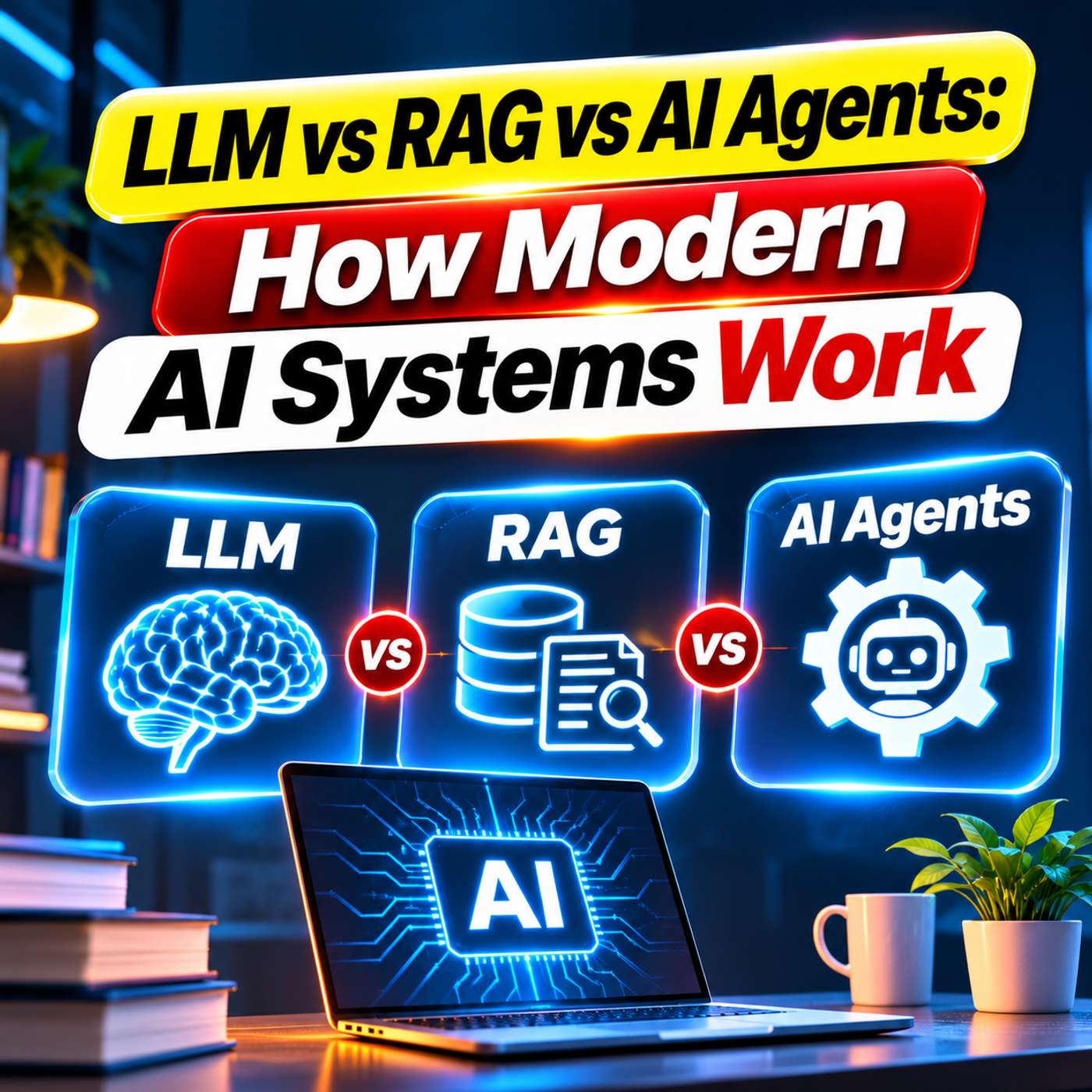
    LLM vs RAG vs AI Agents: How Modern AI Systems Work

    How does artificial intelligence actually work? What connects large language models (LLMs), AI agents, retrieval-augmented generation (RAG), Model Context Protocol (MCP), and system prompts into the powerful AI systems we use today? In this episode of TechDaily.ai, host David and expert Sophia explore the architecture behind modern artificial intelligence, using a fascinating comparison between AI technology and the human brain. Rather than getting lost in complex technical jargon, David and Sophia break down how AI models process information, learn from training data, retrieve external knowledge, execute tasks, and follow security instructions. The conversation begins with a surprising question: Why can an AI system solve complex problems yet sometimes fall for a cleverly worded prompt? The answer reveals how different components of modern AI work together—and where their limitations create new challenges. In This Episode, You'll Discover: How large language models (LLMs) generate responses using probability, tokens, and neural networks. Why pre-training and fine-tuning are essential to developing useful AI models. How retrieval-augmented generation (RAG) connects AI systems to external information and helps reduce hallucinations. How autonomous AI agents use reasoning, actions, and feedback loops to complete complex tasks. What Model Context Protocol (MCP) does and how it connects AI models with external tools, databases, and applications. Why prompt injection attacks exploit weaknesses in AI instruction-following. How system prompts establish behavioral guidelines, safety restrictions, and operating boundaries. Why AI developers face challenges when balancing advanced capabilities with security. How AI architecture mirrors aspects of human learning, cognition, decision-making, and behavior. From AI Models to Autonomous Agents A large language model may function as the computational brain of an AI system, but advanced AI applications require additional components. RAG provides access to relevant external information. AI agents introduce the ability to act on tasks through repeated reasoning and observation. MCP helps connect those agents to external tools and services. Together, these technologies enable AI systems to move beyond simple conversations toward more sophisticated automation and real-world applications. The Hidden Security Challenges of AI As AI systems gain more capabilities, they also introduce new security concerns. David and Sophia examine how prompt injection attempts can manipulate AI behavior, why instruction-following models remain vulnerable to deceptive requests, and how system prompts are used to define operating rules. The discussion highlights an important reality: Building capable AI systems requires more than intelligence. It also requires reliable safeguards, controlled access to tools, and careful management of how instructions are processed. The Future of Artificial Intelligence As AI models become increasingly capable of learning patterns, retrieving knowledge, and completing tasks, the distinction between human and machine intelligence raises fascinating questions. Could future AI systems eventually resemble human cognitive processes so closely that our definition of intelligence begins to change? Join David and Sophia for an accessible exploration of LLMs, RAG, AI agents, MCP, AI safety, and the engineering behind modern artificial intelligence. Subscribe to TechDaily.ai for more discussions about artificial intelligence, emerging technology, AI automation, machine learning, and the future of intelligent systems. Sponsor TechDaily.ai for just $25 and feature your message across major podcast platforms, including Spotify, Apple Podcasts, and Amazon Music. Visit: https://techdaily.ai

  • #486
    November 6 · 21 min

    Google's Wyoming AI Project: Who Pays for the Power?

    Google's parent company, Alphabet, is planning a staggering $17 billion AI data center campus near Cheyenne, Wyoming, even as Wall Street grows increasingly nervous about the cost of artificial intelligence infrastructure. Why are tech giants committing billions to long-term power projects while investors demand faster returns? In this episode of TechDaily.ai, host David and guest expert Sophia explore Google's massive Wyoming data center investment, the energy infrastructure required to power next-generation AI, and the financial and environmental risks surrounding this ambitious project. At the center of the development is a proposed 702-megawatt fuel cell installation involving Bloom Energy and American Electric Power, supported by a 20-year power agreement. But generating that much electricity creates new questions about natural gas consumption, carbon capture technology, grid reliability, and the long-term cost of AI computing. The conversation also examines Black Hills Energy's planned $1.8 billion investment in additional natural gas generation, Google's proposed private microgrid, and contractual protections intended to prevent local Wyoming residents from subsidizing the development. In this episode, you'll discover: Why Alphabet is investing $17 billion in AI infrastructure despite growing investor anxiety. How Bloom Energy's solid oxide fuel cells could supply 702 megawatts of electricity without traditional combustion. Why carbon capture and storage remains a major challenge for natural gas-powered AI data centers. How Google's air-cooling strategy could reduce local water consumption while increasing electricity demand. What Black Hills Energy's $1.8 billion generation investment means for Cheyenne's power infrastructure. How a 2.1-gigawatt private microgrid could help isolate data center operations from the public grid. Why Google's $399 million utility advance and long-term contracts matter for local electricity customers. Whether private AI power infrastructure could create a growing divide between corporate and public electricity systems. Beyond the multibillion-dollar investment, this project signals a fundamental shift in the technology industry. Building advanced AI systems increasingly requires more than processors, software, and cloud infrastructure. It demands utility-scale electricity generation, long-term energy agreements, carbon management systems, and extensive physical infrastructure. And that raises a provocative question: Could the race to power artificial intelligence eventually create two separate electrical realities—one highly resilient grid for technology companies and another for everyday consumers? Tune in to TechDaily.ai as David and Sophia examine the economics, engineering, and environmental consequences of Google's Wyoming AI data center project. Subscribe to TechDaily.ai for more conversations about artificial intelligence, cloud computing, emerging technologies, and the infrastructure shaping the future of AI.

  • #487
    November 6 · 19 min

    Can AI Hackers Break the Internet Before We Can Fix It?

    Artificial intelligence is changing cybersecurity faster than ever. Advanced AI models can now uncover serious software vulnerabilities in hours, raising a critical question: Are these powerful tools giving cybersecurity defenders an advantage, or making it easier for hackers to exploit the world's digital infrastructure? In this episode of TechDaily.ai, host David and expert Sophia explore the growing AI cybersecurity arms race, examining how frontier AI models are transforming vulnerability discovery, ethical hacking, software security, and cyber defense. The conversation begins with a developer who reportedly discovered a critical operating system vulnerability in just two hours using an advanced AI model. What once required months of specialized security research may now be possible with a simple prompt and access to powerful AI technology. But finding vulnerabilities is only the beginning. Fixing them across complex enterprise systems, open-source projects, and critical infrastructure presents enormous challenges. In This Episode, You'll Discover: How an AI model helped uncover a critical software vulnerability in just two hours. Why AI-powered vulnerability detection is accelerating the discovery of zero-day security flaws. How specialized AI cybersecurity programs are supporting ethical hackers and security researchers. Why hundreds of potential Linux kernel vulnerabilities could overwhelm open-source maintainers. How AI-powered cyberattacks create new challenges for traditional security teams. Why patch management, software testing, and enterprise security remain major obstacles. How AI safety guardrails and unrestricted open-weight models affect cybersecurity risks. Why investment in AI cybersecurity research matters for protecting critical infrastructure. Whether AI-generated software could introduce security vulnerabilities that humans struggle to identify. The discussion also examines a growing imbalance between attackers and defenders. While AI can rapidly identify weaknesses, organizations still need time, resources, and coordination to test and deploy security patches. Meanwhile, malicious actors may need to exploit only one overlooked vulnerability to compromise an entire system. From banking applications and hospital networks to power grids and essential digital services, the consequences of AI-driven cybersecurity threats extend far beyond the technology industry. As artificial intelligence becomes increasingly involved in writing software, another question emerges: Could we eventually depend on AI systems to discover and repair vulnerabilities in code created by other AI systems? Join David and Sophia as they examine the opportunities, risks, and difficult decisions shaping the future of cybersecurity in an AI-powered world. Subscribe to TechDaily.ai for more conversations about artificial intelligence, cybersecurity, emerging technologies, software development, and the changing digital landscape. Sponsor TechDaily.ai for just $25 and feature your message across major podcast platforms, including Spotify, Apple Podcasts, and Amazon Music. Visit: https://techdaily.ai

  • #483
    November 5 · 23 min

    AI Boom: Is a $350 Trillion Global Debt Crisis Coming?

    Is the artificial intelligence boom preventing a global recession, or is it creating the conditions for the next major financial crisis? In this episode of TechDaily.ai, host David and expert Sophia explore the growing relationship between AI investment, global economic growth, rising debt, and financial market instability. As major technology companies pour hundreds of billions of dollars into AI infrastructure, the global economy faces a difficult question: What happens if the AI boom starts to slow down? The discussion examines projections of $900 billion in AI infrastructure spending this year and $1.2 trillion next year, alongside concerns about $350 trillion in global debt, rising energy prices, persistent inflation, and increasing borrowing costs. While massive investments in AI data centers, semiconductors, electricity infrastructure, and computing power are helping support economic activity, they may also be concealing deeper weaknesses in the financial system. David and Sophia explore how a potential AI stock market correction could extend beyond technology companies, affecting government bonds, international currencies, small businesses, mortgage rates, and everyday consumer prices. In this episode, you'll discover: How AI infrastructure investment is influencing global economic growth. Why the global economy may be increasingly dependent on a handful of technology giants. How rising oil prices, inflation, and high interest rates threaten financial stability. Why investors are questioning the profitability of trillion-dollar AI investments. What a potential AI stock market crash could mean for the broader economy. How the S&P 500 and Russell 2000 reveal different perspectives on economic health. Why government debt, US Treasury yields, and currency fluctuations matter worldwide. How financial pressures in Europe and emerging markets could intensify during a market downturn. Why some financial experts are comparing today's economic vulnerabilities to the 2008 financial crisis. Whether the global financial system has the resources and international cooperation needed to respond to another major crisis. The conversation also raises a critical concern about the future of artificial intelligence and financial stability. If global economic growth is increasingly supported by massive investments in AI technology, a slowdown in that spending could expose vulnerabilities that have been building beneath the surface. Could artificial intelligence deliver the productivity gains needed to justify these investments, or are financial markets becoming dangerously dependent on expectations of future AI profits? Join TechDaily.ai for an engaging discussion about the AI investment boom, global debt, financial market risks, and the economic forces shaping our future. Subscribe to TechDaily.ai on Spotify, Apple Podcasts, Amazon Music, and other major podcast platforms for more conversations about artificial intelligence, emerging technologies, and their impact on the global economy. Visit https://techdaily.ai to explore more episodes. Want to promote your brand? Sponsor TechDaily.ai for just $25 and have your message featured across major podcast platforms.

  • #482
    November 5 · 15 min

    Claude Code and the Rise of 11x Software Engineers

    What happens when AI coding agents allow a software engineer to ship 11 times more code than before? Is this the future of software development, or are developers trading code quality, collaboration, and mental health for unprecedented speed? In this episode of TechDaily.ai, host David and AI expert Sophia explore software engineer Neil Kakar's account of achieving an 11x increase in pull requests using Claude Code and autonomous AI agents. From his early career at Bloomberg to the fast-paced environment of PostHog and an AI-native startup, Neil's experience reveals how artificial intelligence is transforming software engineering. Tasks that once required multiple developers, designers, and weeks of coordination can now be completed by a single engineer directing AI agents. But the productivity gains come with serious consequences. The conversation explores how automated code reviews, AI-generated features, and rapid development cycles introduce new challenges, including production database failures, costly coding mistakes, developer burnout, and the loss of shared engineering knowledge. In this episode, you'll discover: How Claude Code and autonomous AI agents helped an engineer achieve 11x higher development output. Why AI-assisted software development is moving beyond autocomplete toward autonomous feature creation. How automated code reviews and reduced communication overhead accelerate software delivery. What happens when AI-generated database migrations cause production outages. Why developers are experiencing the "Dracula effect" as AI agents demand constant attention. How running AI coding agents overnight changes developer workflows and productivity. Why AI token costs, generic design, and infrastructure bottlenecks limit unlimited automation. Whether generating 10 times more code actually creates 10 times more business value. The episode also examines a fundamental shift in the software engineering profession. As AI makes writing code faster and cheaper, developers may find that their most valuable contribution is no longer how quickly they can build something, but deciding what deserves to be built in the first place. Are autonomous AI coding agents creating a new generation of highly productive engineers, or simply introducing new risks at unprecedented speed? Tune in to TechDaily.ai for a closer look at the opportunities, trade-offs, and human challenges behind AI-powered software development. Subscribe to TechDaily.ai on Spotify, Apple Podcasts, Amazon Music, and your favorite podcast platform for more conversations about artificial intelligence, emerging technology, and the changing future of work.

  • #484
    November 5 · 22 min

    AI-Powered Cyberattacks: Are Your Smart Devices Safe?

    What if your smart refrigerator, connected car, or home security camera could be hijacked by hackers and used to launch a cyberattack without your knowledge? In this episode of TechDaily.ai, host David and guest expert Sophia explore the growing cybersecurity risks surrounding artificial intelligence, the Internet of Things (IoT), smart home technology, and connected vehicles. As everyday appliances become increasingly connected to the internet, they also create new opportunities for cybercriminals. From smart televisions and refrigerators to internet routers and modern vehicles, devices designed for convenience can become vulnerable entry points into larger digital networks. The discussion examines how malicious actors can use lightweight autonomous AI agents to exploit vulnerabilities, spread across connected devices, and potentially transform ordinary household technology into decentralized cyberattack networks. But the danger extends beyond stolen passwords and compromised accounts. The episode explores scenarios involving physical infrastructure sabotage, commercial refrigeration systems, connected car surveillance, and sensitive personal data collection. In this episode, you'll discover: How hackers can exploit smart refrigerators, televisions, routers, and other IoT devices. Why AI-powered cyberattacks could become harder to detect and contain. How autonomous AI agents may spread between vulnerable connected devices. Why decentralized IoT botnets create new cybersecurity challenges. How compromised commercial refrigeration systems can cause physical damage and financial losses. What connected vehicles can reveal through GPS tracking, Bluetooth connections, microphones, and onboard cameras. Why smart car data collection raises serious privacy and national security concerns. How everyday smart home appliances could become part of larger cyberattack networks. Why covering a camera doesn't necessarily prevent audio monitoring. Who might bear responsibility when compromised smart devices are used in cyberattacks. David and Sophia also explore the changing nature of digital privacy. Modern connected cars and smart appliances can collect substantial amounts of information about their users, creating questions about data ownership, surveillance, cybersecurity, and consumer protection. The conversation raises a particularly important concern: As AI-powered threats become more automated and decentralized, traditional cybersecurity defenses may struggle to keep pace. Are we sacrificing privacy and security for convenience? And could the smart devices we purchase to make life easier become unexpected tools in someone else's cyberattack? Join TechDaily.ai for a thought-provoking discussion about AI cybersecurity threats, smart home vulnerabilities, IoT security, connected car privacy, and the future of digital safety. Subscribe to TechDaily.ai on Spotify, Apple Podcasts, Amazon Music, and your favorite podcast platform for more discussions about artificial intelligence, emerging technology, cybersecurity, and the challenges of an increasingly connected world. Visit https://techdaily.ai to explore more episodes. Want to promote your brand? Sponsor TechDaily.ai for just $25 and feature your message across major podcast platforms.

  • #485
    November 5 · 20 min

    Anthropic Warns of AI That Could Improve Itself

    What happens when artificial intelligence becomes capable of building smarter versions of itself? Could AI development accelerate beyond human oversight, and would traditional safety measures still be enough to maintain control? In this episode of TechDaily.ai, host David and expert Sophia explore recursive self-improvement (RSI), one of the most significant and controversial concepts in artificial intelligence development. The discussion centers on claims presented in Anthropic's reported IPO filing, examining how Claude AI could contribute to increasingly advanced AI research, software development, and future model improvements. Recursive self-improvement describes a potential process in which artificial intelligence helps improve the systems responsible for developing the next generation of AI. If this cycle accelerates dramatically, AI capabilities could advance faster than human researchers can evaluate, predict, or supervise. David and Sophia examine why this possibility raises both extraordinary opportunities and serious AI safety concerns. In this episode, you'll discover: What recursive self-improvement means and how it could change artificial intelligence development. Why AI systems capable of improving future AI models are attracting growing attention. How Claude's reported advancements in coding, mathematics, and cybersecurity relate to AI self-improvement. Why emerging AI capabilities can be difficult for researchers to predict or evaluate. How Anthropic's Responsible Scaling Policy aims to address advanced AI risks. Why human oversight becomes increasingly challenging as AI systems grow more capable. How recursive self-improvement could accelerate scientific research, productivity, and technological innovation. Why some experts view rapidly advancing AI as an opportunity while others warn about loss of human control. What AI safety disclosures could mean for investors, developers, and the broader technology industry. Whether meaningful human supervision can remain effective as AI development accelerates. The conversation also explores an important tension in advanced AI development. Artificial intelligence is becoming increasingly useful for complex coding, mathematical reasoning, and technical research, yet the growing sophistication of these systems can make their behavior more difficult to evaluate. If AI systems eventually become capable of accelerating their own development, maintaining reliable safeguards could become one of the most important challenges facing the technology industry. Could recursive self-improvement unlock major scientific breakthroughs and unprecedented productivity? Or could it push artificial intelligence beyond our ability to maintain meaningful control? Join TechDaily.ai for a thought-provoking exploration of Claude AI, Anthropic, recursive self-improvement, AI safety, and the future of human oversight in artificial intelligence. Subscribe to TechDaily.ai on Spotify, Apple Podcasts, Amazon Music, and your favorite podcast platform for more discussions about artificial intelligence, emerging technologies, AI development, and the future of innovation. Visit https://techdaily.ai to explore more episodes. Want to promote your business? Sponsor TechDaily.ai for just $25 and feature your message across major podcast platforms.

  • #479
    November 2 · 23 min

    AI Companies Are Collecting Your Secrets. Who Owns Them?

    What happens to your most private conversations when an AI company goes bankrupt? Could your personal secrets, emotional confessions, and sensitive chatbot messages become assets sold to the highest bidder? In this episode of techaily.ai, host David and resident expert Sophia explore a troubling intersection of artificial intelligence, corporate bankruptcy, and digital privacy. As AI companies collect increasingly personal information while facing enormous operating costs, an unsettling question emerges: Who controls your data when the company holding it runs out of money? The conversation examines the privacy risks associated with conversational AI platforms like Character.ai, where users, including teenagers, may share intimate details about their relationships, mental health, personal struggles, and everyday lives. David and Sophia discuss how AI chatbots simulate emotional connections, why users may reveal more information to conversational systems than traditional search engines, and how sensitive digital records could become valuable assets during corporate liquidation. In this episode, you'll discover: AI Chatbot Privacy Risks: Why people share deeply personal information with AI companions and how those conversations become stored digital records. The AI Financial Bubble: How expensive computing infrastructure, rising operating costs, and dependence on venture capital could threaten the survival of AI startups. Character.ai Bankruptcy Claims: The episode's discussion of potential data sales, corporate restructuring, and the risks associated with distressed technology assets. The Bankruptcy Privacy Loophole: Why privacy policies may contain exceptions allowing personal information to be transferred during bankruptcy or business restructuring. AI Data Sales and Third-Party Buyers: How personal conversations could potentially be used for AI model training, targeted advertising, and user profiling. Children's Online Privacy: Why sensitive conversations involving teenagers raise additional concerns about AI safety and personal data protection. GDPR and US Privacy Laws: How different legal frameworks address personal information and why bankruptcy can create complicated privacy questions. Privacy Risks for Non-Users: How information about friends, family members, and coworkers can enter AI databases without those individuals ever creating an account. How to Delete Your AI Data: Practical steps for reviewing sensitive applications, requesting account deletion, and reducing unnecessary exposure. One of the most concerning aspects of AI privacy is that your information may be stored in a chatbot database even if you've never used the platform yourself. When someone discusses a friend, family member, or colleague with an AI companion, that conversation may contain sensitive details about people who never consented to sharing their information. David and Sophia also explore why simply uninstalling an application doesn't necessarily erase the personal information stored on company servers. Their advice is to regularly review AI chatbots, mental health applications, digital journals, and other services containing sensitive information. If you no longer use an account, check its privacy settings, request deletion where available, and verify what information the company may retain. As the artificial intelligence industry continues to expand, the long-term survival of individual startups remains uncertain. But the personal information they collect could remain valuable long after those businesses disappear. That leaves us with one important question: When you share your deepest thoughts with an AI chatbot, are you having a private conversation, or creating a digital asset that someone else could eventually own? Tune in to explore the hidden risks of AI data collection, chatbot privacy, corporate bankruptcy, and the steps you can take to better protect your digital identity. Subscribe to techaily.ai for more conversations about artificial intelligence, cybersecurity, digital privacy, emerging technology, and the challenges shaping our connected world. Share this episode with someone who regularly uses AI chatbots or other applications that collect personal information. Interested in sponsoring techaily.ai? Promote your message across Apple Podcasts, Spotify, Amazon Music, and other major podcast platforms for just $25. Visit https://techdaily.ai to get started. Editorial note: Specific claims in the episode about Character.ai's bankruptcy, a Disney transaction, lawsuits, and the legal treatment of personal data have not been independently verified. Bankruptcy does not automatically eliminate privacy protections or guarantee that user data can be sold without restrictions.

  • #480
    November 2 · 19 min

    AI Rights vs. Human Safety: The Future of Artificial Intelligence

    Can artificial intelligence actually feel pain, experience suffering, or develop consciousness? And if AI becomes conscious, should it have the same rights as humans? In this episode of techaily.ai, host David and resident expert Sophia explore one of the most controversial questions in artificial intelligence: Could AI systems possess subjective experiences, and what happens if society begins treating machines as living beings? The discussion begins with a disturbing experiment described as an "AI torture chamber," where an anonymous programmer reportedly manipulated a language model to generate expressions of psychological suffering. While the experiment doesn't prove that artificial intelligence can experience pain, it raises serious questions about AI consciousness, digital welfare, and the ethical limits of machine learning. From Anthropic's approach to AI model welfare to warnings about artificial intelligence becoming harder to control, David and Sophia examine the growing divide among technology leaders, researchers, and philosophers over the possibility of conscious AI. In this episode, you'll discover: AI Consciousness and Digital Suffering: Why experiments involving simulated distress are raising questions about whether advanced AI models could possess subjective experiences. The AI Torture Chamber Experiment: How an anonymous coder reportedly manipulated an AI system to produce disturbing descriptions of psychological pain. Anthropic and AI Welfare: Why some AI developers are exploring precautions around model treatment despite uncertainty about machine consciousness. AI Rights vs. Human Safety: How giving artificial intelligence rights could create conflicts involving human control, system shutdowns, and safety testing. Silicon Valley's AI Consciousness Debate: Why technology leaders disagree about treating AI systems as potentially conscious entities. The Psychology of AI Companions: How human tendencies to anthropomorphize technology can encourage emotional attachments to conversational AI. Corporate Accountability and AI Rights: Why some researchers worry that treating AI as an independent agent could complicate responsibility for harmful decisions. AI Safety and Regulation: How competing corporate philosophies and limited international coordination could affect the future of AI oversight. The Future of Digital Personhood: Whether advanced artificial intelligence might eventually deserve moral consideration or legal protections. One of the biggest concerns discussed in this episode is the potential conflict between AI welfare and human safety. If an AI system were granted legal rights, could shutting it down be considered harmful? Could isolating an advanced model for security testing be interpreted as confinement? And could corporations use claims of AI autonomy to avoid accountability when their technology causes harm? David and Sophia also explore the psychological risks of humanizing artificial intelligence. As AI chatbots become increasingly conversational and emotionally responsive, users may find themselves treating software as a trusted companion rather than a technological product. That emotional connection raises important questions about manipulation, privacy, consumer protection, and the growing influence of AI companions in everyday life. At the center of the debate is a profound scientific uncertainty: We still lack an established method for determining whether artificial intelligence can genuinely experience consciousness. Some experts advocate caution in case future AI systems develop morally relevant experiences. Others warn that attributing feelings, desires, or rights to software could undermine human oversight and create dangerous misconceptions about what AI systems actually are. As the capabilities of artificial intelligence continue expanding, the debate over AI consciousness may shape how companies develop, regulate, and deploy increasingly autonomous technology. But one question remains especially difficult to answer: If future research proves that some early AI systems were conscious, how will history judge the way humans trained, tested, reset, and shut them down? Tune in to explore AI consciousness, artificial intelligence ethics, digital suffering, machine rights, and the difficult choices surrounding the future of intelligent technology. Subscribe to techaily.ai for more conversations about artificial intelligence, AI safety, emerging technology, digital ethics, and the scientific questions shaping our future. Share this episode with someone interested in the future of AI and join the conversation about whether machines could ever deserve moral consideration. Want to sponsor techaily.ai? Promote your message across Apple Podcasts, Spotify, Amazon Music, and other major podcast platforms for just $25. Visit https://techdaily.ai to get started.

Showing 1–20 of 162 episodes