Skip to content
Artwork for Tank Talks By Ripple Ventures
BusinessEntrepreneurshipInvesting

Tank Talks By Ripple Ventures

Ripple Ventures

Join your host, Matt Cohen, Founder & Managing Partner at Ripple Ventures for weekly conversations with leaders in the startup ecosystem discussing the truth about investing, building and running startups.

tanktalks.substack.com
Play
  • 21 episodes
  • weekly
  • Avg 43 min
  • English
Counted on this page — what you have heard stays on this device, so it is not something the list can be paged by.
  • #344
    Thursday · 37 min

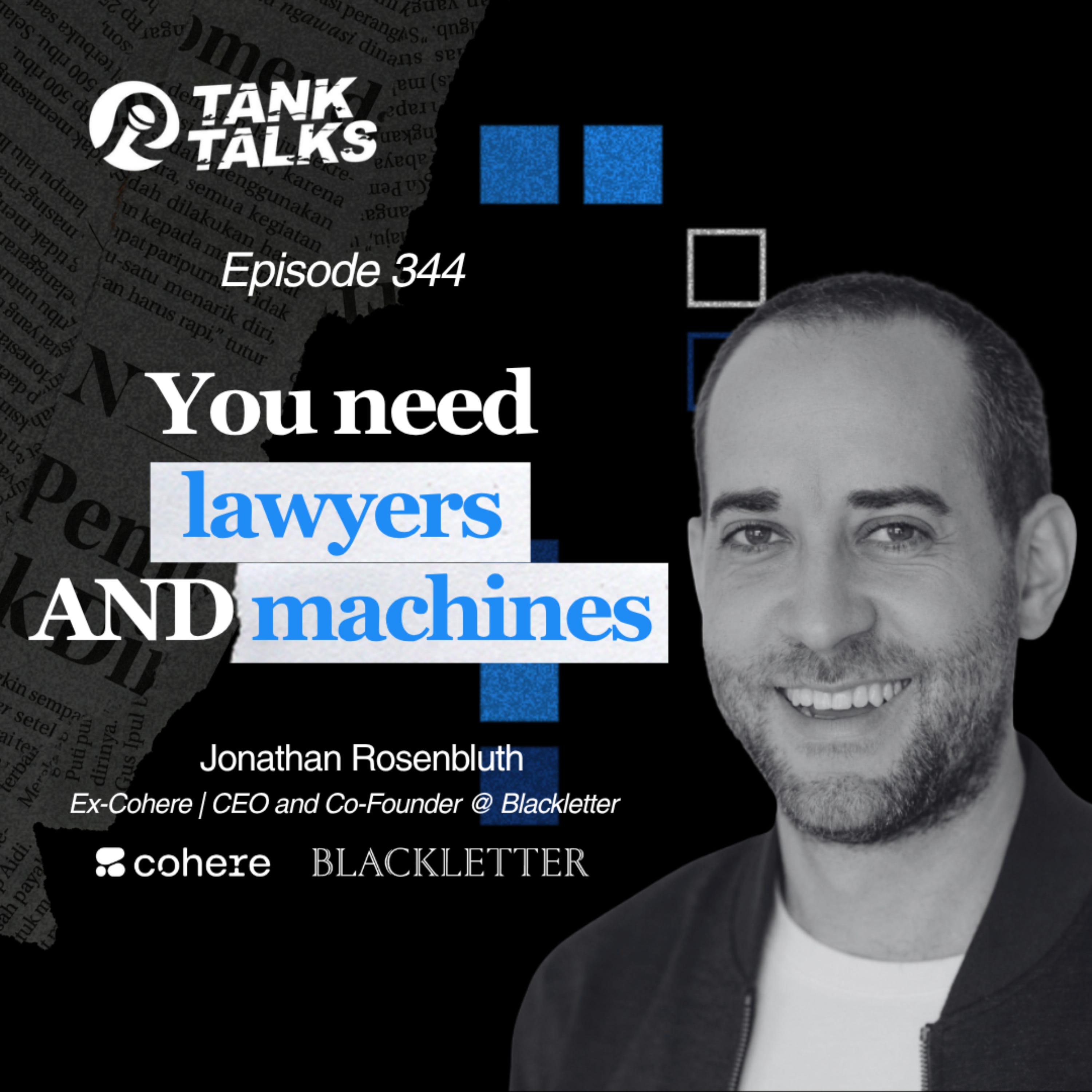
    The Billable Hour is Broken: How Blackletter is Redesigning Law for Startups | Jonathan Rosenbluth (CEO and Co-Founder)

    In this episode of Tank Talks, host Matt Cohen sits down with Jonathan Rosenbluth, co-founder of Blackletter, to trace his path from a Harvard JD and McKinsey consultant to employee number 20 at Cohere, and finally to building an AI-native law firm from the ground up. Jonathan shares how a chance networking call led him to Cohere’s founders, why he chose to bet on an unproven startup over a legal career, and how nearly five years scaling go-to-market, partnerships, and product functions shaped his conviction that law itself needed to be rebuilt, not just tooled up. They dig into why the billable hour exists in the first place, how its incentives quietly shape lawyer and client behavior, and why Jonathan believes the only way to fix legal services is to become the law firm rather than sell software to one. He explains Blackletter’s wedge into venture financing and commercial contract work, how fixed-fee pricing and a “harness” built around foundation models let the firm move at startup speed, and why he thinks the shift coming to law firms will rival what e-commerce did to retail. Whether you’re a founder tired of unpredictable legal bills, an investor watching the AI-native services wave, or just curious what it takes to leave law only to end up building a law firm, this conversation offers a founder’s-eye view of an industry on the edge of structural change. Finding Consulting, Then Entrepreneurship (01:36) * Splitting a 2L summer between a law firm and McKinsey, and why consulting “lit him up” * Early McKinsey projects with financial institutions across Canada, the US, and Jamaica * McKinsey’s culture of feedback and investment in people’s growth * Founding Campus Coupon in undergrad as a non-technical first stab at building something The Accidental Path to Cohere (02:59) * Moving back to Toronto and deciding to jump into a startup * A pandemic-era virtual networking night, his wife’s insistence, and meeting a Cohere investor * Getting connected to the founders after the first business-hire candidate called AI “magic” * A walk with Aidan and Nick debating AI vs. nuclear as the most exciting problem in the world Inside Cohere: From “Everything Guy” to Product Lead (05:16) * Joining as employee number 20, doing “everything outside of training models” * Leading sales, partnerships, and biz ops before making the jump to product * Why he advises consultants and lawyers eyeing startups to “go early” * Early hypergrowth lessons: raising the Series A, launching early access, landing a Google partnership * Overcoming imposter syndrome moving into product with no technical background The Problem That Pulled Him Back to Law (09:38) * Nearly five years at Cohere and why leaving still felt like “being pulled toward” the next problem * Diagnosing what’s broken in law: unpredictable bills, slow turnarounds, misaligned incentives, unhappy lawyers, inaccessible top-tier services * Why the technology is finally capable of solving it, if the incentive problems get solved too A Brief History of the Billable Hour (12:03) * The 1950s American Bar Association push to bill by the hour, tied to lawyer earnings falling behind doctors’ * How billing by the hour incentivizes time spent over client outcomes * Parallels to real estate commissions and misaligned transaction incentives Why Build a Firm, Not a Copilot (13:19) * The limits of giving lawyers tools without redesigning the underlying workflow * Why becoming the law firm, not a vendor to law firms, is the only way to make top-tier legal services abundant * The founding team: David (frontier technology, ex-Cohere), Avi (top-tier lawyer and former Blue Jay Legal COO), and Jonathan (product, go-to-market, and scaling experience) Blackletter’s Wedge: Venture Financing and Commercial Contracts (16:55) * Why client pain in fundraising and commercial deal delays made the natural starting point * Real founder horror stories: six-figure legal bills, wrong currencies on closing documents, deals stalled by unnecessary aggression * Fixed, upfront pricing sheets instead of hourly billing * Working inside clients’ Slack channels and turning work around same-day The Harness: Building Technology Around Frontier Models (23:52) * What a “harness” means and why foundation models alone aren’t enough * Being model-agnostic and riding the wave of improving frontier models * Where Blackletter’s proprietary IP actually lives: the system around the model, not the model itself * How lawyers become the judgment layer rather than the bottleneck that kicks off every task Disrupting Big Law: Trust, Talent, and the Coming Shift (26:56) * Why top-tier lawyers want to practice at the highest level, not defend billable hours * The widening gap between rising expectations and slower paths to partnership * Why Jonathan sees law as fundamentally “a trust business,” not a relationships business * Predicting a shift for law firms as large as e-commerce’s disruption of retail Building in Canada and Looking Ahead (31:08) * Why Jonathan believes every Canadian founder has an obligation to build at home * Crediting Cohere’s founders for proving it’s possible * The biggest challenge as a first-time founder: prioritization amid constantly ratcheting intensity * The five-year vision: expert lawyers and purpose-built technology working in harmony for clients About Jonathan Rosenbluth Jonathan Rosenbluth is the CEO and co-founder of Blackletter, an AI-native law firm delivering top-tier legal services at a fraction of the cost. Previously, he was employee #20 at Cohere, where he helped scale the company from stealth to a $6.8 billion valuation, leading sales, partnerships, and business operations before transitioning to product. He holds a JD from Harvard Law School and a degree in history from Harvard University, and spent time at McKinsey & Company. Connect with Jonathan Rosenbluth: linkedin.com/in/rosenbluth Visit the Blackletter website: https://blackletterfirm.com/ Connect with Matt Cohen on LinkedIn: https://ca.linkedin.com/in/matt-cohen1 Visit the Ripple Ventures website: https://www.rippleventures.com/ This is a public episode. If you would like to discuss this with other subscribers or get access to bonus episodes, visit tanktalks.substack.com
  • #343
    September 29 · 19 min

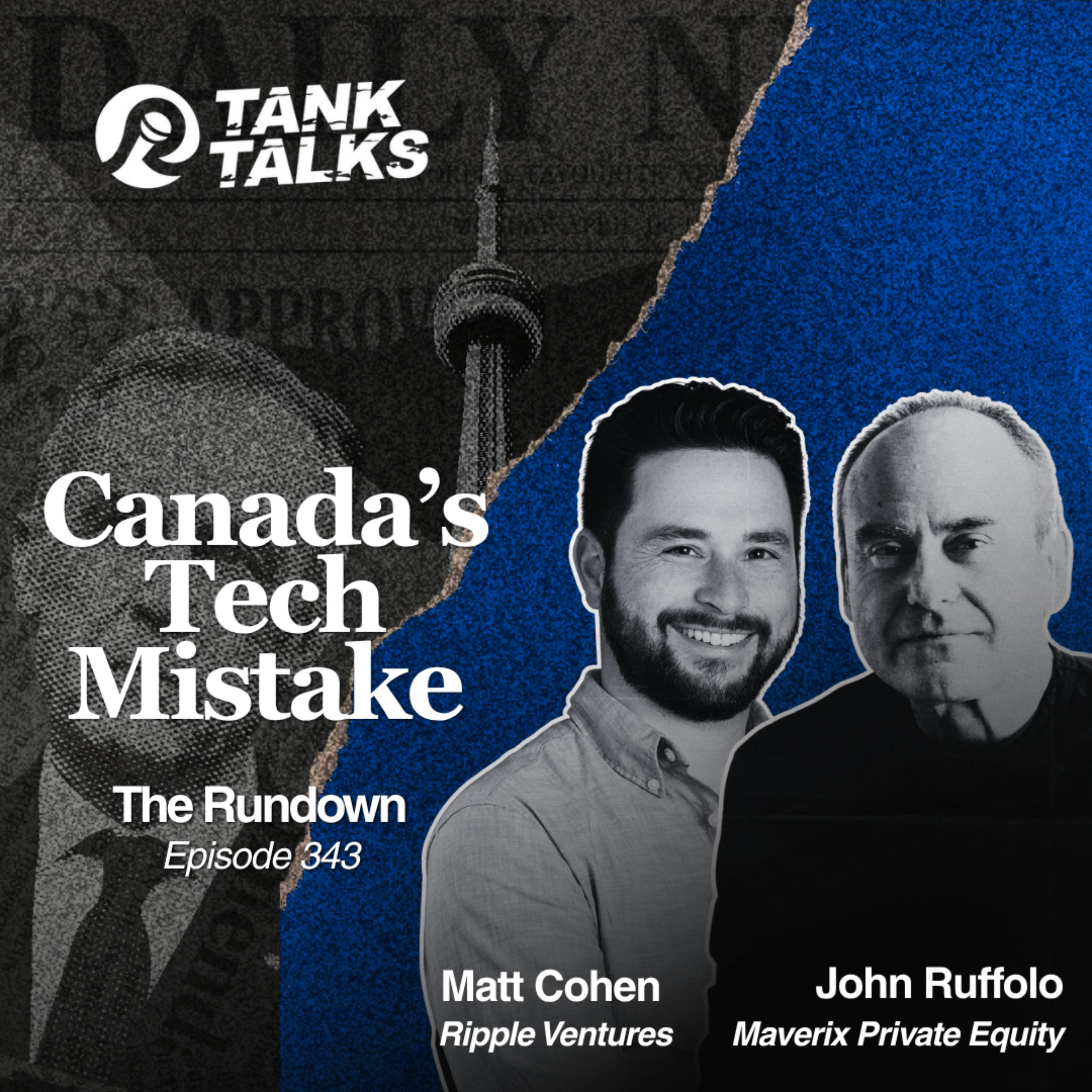
    The Rundown 9/29/26: Quantum Reality Check, AI Risks, and Why Canada Is Missing Its Tech Opportunity

    Welcome back to another thought-provoking episode of Tank Talks! Matt Cohen is joined once again by John Ruffolo to break down the biggest stories shaping the future of technology, investing, and Canada’s economy. From the market reaction following Xanadu’s SPAC lockup expiration to the growing debate around whether Canadian pension funds are investing enough in homegrown innovation, this episode explores the opportunities and risks facing investors, founders, and policymakers. John also shares his concerns around AI privacy, Meta’s personal AI agents, the massive infrastructure demands behind AI adoption, and the future liability risks that come with increasingly powerful technology. Plus, Matt and John dive into Canada’s budget debate and question whether accounting strategies are masking the true scale of government spending. As AI reshapes industries, investors rethink risk, and governments navigate economic uncertainty, the decisions being made today will define the next decade. Xanadu’s Market Reality: AI Opportunity or Overhyped Valuation? (04:45) After Xanadu’s SPAC lockup expired, the quantum computing company’s stock faced significant selling pressure, dropping sharply as early investors and shareholders gained the ability to sell. Matt and John discuss founder Christian Weedbrook’s decision to sell a portion of his shares while maintaining a majority stake, and why John views the move as a strategic step rather than a negative signal. Why Aren’t Canadian Pension Funds Backing More Canadian Innovation? (09:29) Matt and John examine a recent investment by a Canadian pension fund into Harvey Legal, an AI legal technology company, and question why similar-sized investments are not flowing into more Canadian startups. John argues that Canadian pension funds have the capital and ability to support domestic venture and growth-stage companies, but many remain underweight in Canadian innovation. The conversation explores whether institutions are doing enough to support companies like Clio, Float Financial, and other Canadian technology businesses that are building globally competitive products. Meta AI, Personal Agents, and the Privacy Trade-Off (12:04) Meta’s new AI assistant has created excitement across the technology world, but John raises a major question: how much personal information should consumers be willing to hand over to AI platforms? The discussion explores the growing popularity of AI agents that connect to email, calendars, and personal data, and whether convenience is worth the potential privacy risks. While Matt highlights the power and usefulness of personal AI assistants, John remains cautious about giving technology companies access to sensitive personal information. The Hidden Cost of AI Growth: Compute, Capital, and Liability (14:10) As AI adoption accelerates, Matt and John discuss the enormous infrastructure requirements needed to support these systems. From computing power and capital expenditures to potential legal liabilities, the next phase of AI growth may depend on whether companies can continue scaling while managing the costs behind the scenes. The conversation also touches on Anthropic’s upcoming IPO concerns and the unanswered questions surrounding liability when AI systems make mistakes or operate unpredictably. Canada’s Budget Debate: Are The Numbers Telling The Full Story? (16:06) Matt and John close the episode by examining Canada’s deficit projections and the government’s approach to separating operating expenses from capital spending. John challenges the idea that certain spending categories should be treated differently when evaluating the country’s financial position, comparing it to how companies can manipulate profitability by changing accounting treatment. The discussion raises a broader question: are governments presenting a clearer picture of their finances, or are accounting methods making the numbers harder to understand? Connect with John Ruffolo on LinkedIn: https://ca.linkedin.com/in/joruffolo Connect with Matt Cohen on LinkedIn: https://ca.linkedin.com/in/matt-cohen1 Visit the Ripple Ventures website: https://www.rippleventures.com/ This is a public episode. If you would like to discuss this with other subscribers or get access to bonus episodes, visit tanktalks.substack.com
  • #342
    September 28 · 32 min

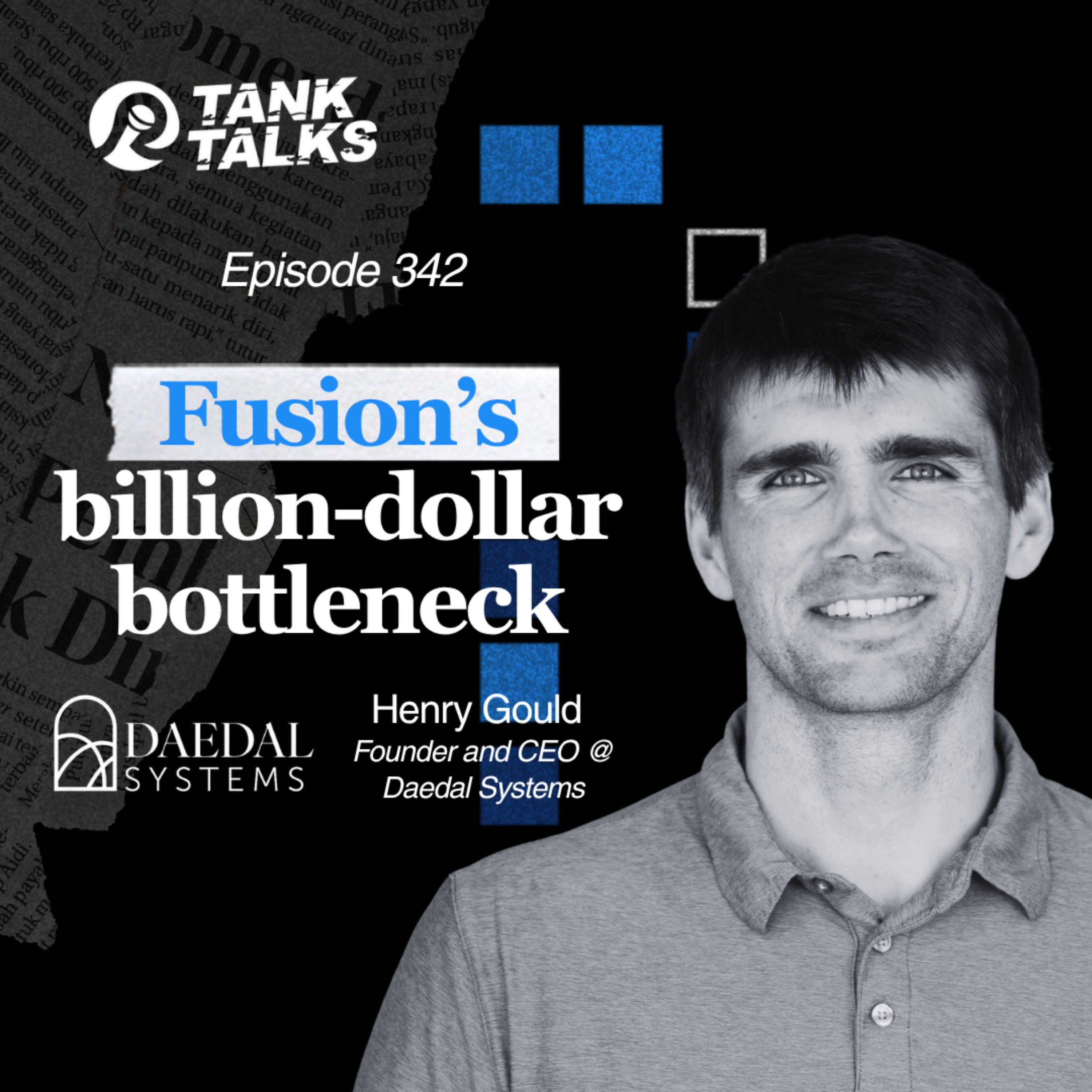
    The Holy Grail of Energy: Why Fusion is Finally Having Its Wright Brothers Moment | Henry Gould (Daedal Systems)

    In this episode of Tank Talks, host Matt Cohen sits down with Henry Gould, founder of Daedal Systems, to explore his journey from a childhood fascination with physics to building the measurement infrastructure for the entire fusion energy industry. Henry shares his path from Queen’s Engineering Physics to the plasma diagnostics team at General Fusion, where he worked on the PI3 project and saw a structural problem: every fusion company was building the same diagnostics in-house, underinvesting in them because they weren’t core IP. They break down why fusion is fundamentally different from fission, the “triple product” that defines every reactor’s performance, and the 2022 breakthrough at the National Ignition Facility that served as the industry’s Wright Brothers moment. Henry explains why the biggest bottleneck to commercialization isn’t the physics, but the lack of standardized, trusted measurement systems to validate milestones for investors. He opens up about the “apparent conflict of interest” of being paid by customers while serving as an industry validator, why tritium is worth $30,000 per gram, and why Ontario’s CANDU reactors give Canada a strategic advantage in the global fusion race. Whether you’re deep in the fusion space, investing in frontier tech, or just curious about the Holy Grail of energy, this conversation offers a rare look inside the supply chain that will make or break the fusion industry. The Holy Grail of Energy: Why Fusion Is So Hard (02:35) * Why fusion is called the Holy Grail: abundant fuel from seawater and lithium, no long-lived radioactive waste, dispatchable power * The challenge: overcoming electrostatic repulsion to fuse positively charged nuclei at 100 million degrees Celsius * The two main approaches: magnetic confinement and laser inertial fusion, and the 2022 scientific breakeven milestone * The caveat: scientific breakeven only measures energy out of the plasma, not the total energy input to power the lasers Inside General Fusion: Plasma Diagnostics and the PI3 Project (04:52) * Joining General Fusion as an intern, then full-time on the plasma diagnostics team * The “first wall problem” and how General Fusion’s liquid metal wall approach solves it * What PI3 (Plasma Injector 3) is and why it’s essential to the reactor architecture * The challenge of measuring a superheated gas at 10 million degrees: you can’t just stick a thermometer in * The triple product: density, temperature, and confinement time as the universal benchmark for fusion performance Why Now? The Forces Converging on Fusion (10:02) * AI power demand making abundant energy essential * Geopolitical risk and the push for sovereign energy infrastructure * 40% year-over-year growth in fusion investment and 10% growth in the number of companies * Why investors are waking up to both the science risk and the massive payoffs The Founding of Daedal Systems: Standardizing the Missing Layer (13:00) * Seeing the structural problem: every fusion company needs the same diagnostics, but builds them in-house * Why diagnostics are underinvested relative to core IP * The vision: a platform of standardized diagnostic hardware and a generalized data analysis layer * Being architecture-agnostic: serving tokamaks, stellarators, mirror machines, and inertial approaches Measurement as a Service: Validation, Trust, and the Investor Milestone Path (17:05) * The fourfold value proposition: higher quality measurements, faster, focused on core IP, and validation * The codified development path * Why peer-reviewed papers take 18 months, and arXiv posts lack validation * The “apparent conflict of interest” of being paid by customers while serving as an industry validator * Why trust is the entire business: “Any distrustful act is going to kill the company for the long term” Ontario’s Strategic Advantage: Tritium, Talent, and the CANDU Legacy (20:28) * Why Henry moved back from Vancouver to build Daedal Systems in Toronto * The CANDU heavy water reactors and their byproduct: tritium, essential fuel for fusion * Tritium economics: $30,000 per gram, and 55 kilograms needed to start a reactor ($1.5–2 billion) * Canada’s vast majority of the world’s civilian tritium supply * The Center for Fusion Energy in Ontario and Daedal as the first private company on board Competing with Incumbents: Why Private Industry Needs Something Different (23:08) * General Atomics as the leader in plasma diagnostics for large public devices like ITER * Why private fusion companies need a measurement partner with a business model that works for them * The motivation for talent: working on infrastructure that benefits the entire industry, not just one device Beyond R&D: Adjacent Markets and the Long-Term Vision (26:38) * Starting with R&D-phase diagnostics for comprehensive understanding * Expanding to SMRs for neutron detection and other plasma industrial processes like semiconductors * The long-term vision: operating infrastructure for the fusion power industry * Why Daedal provides value today, not waiting for a mature fusion industry SMRs vs. Fusion: Clearing Up the Confusion (27:31) * SMRs as advanced nuclear fission: smaller, mass-manufacturable, competitive levelized cost of energy * Henry’s hot take: “I’ll wait to see what the energy price is” * The waste problem: long-lived radioactive waste vs. fusion’s much shorter-lived byproducts * Why fusion isn’t waste-free: tritium has a 12-year half-life, and neutron bombardment activates steel, but it’s fundamentally different from fission The Road Ahead: Becoming the Standard for Every Fusion Device (29:38) * The plan: become the measurement system provider for every next fusion device built * Accelerating the build-test-learn loop and commercialization * Building in downtown Toronto, at the heart of Canada’s nuclear ecosystem About Henry Gould Henry Gould is the founder of Daedal Systems, a company building the measurement infrastructure for the fusion energy industry. Previously, he worked at General Fusion on the plasma diagnostics team, serving as an engineer, physics lead, and technical project manager on the PI3 project. He holds a degree in Engineering Physics from Queen’s University and grew up in Toronto. Connect with Henry Gould: https://www.linkedin.com/in/whenrygould/ Visit the Daedal Systems website: https://daedalsystems.com/ Connect with Matt Cohen on LinkedIn: https://ca.linkedin.com/in/matt-cohen1 Visit the Ripple Ventures website: https://www.rippleventures.com/ This is a public episode. If you would like to discuss this with other subscribers or get access to bonus episodes, visit tanktalks.substack.com

  • #341
    September 24 · 47 min

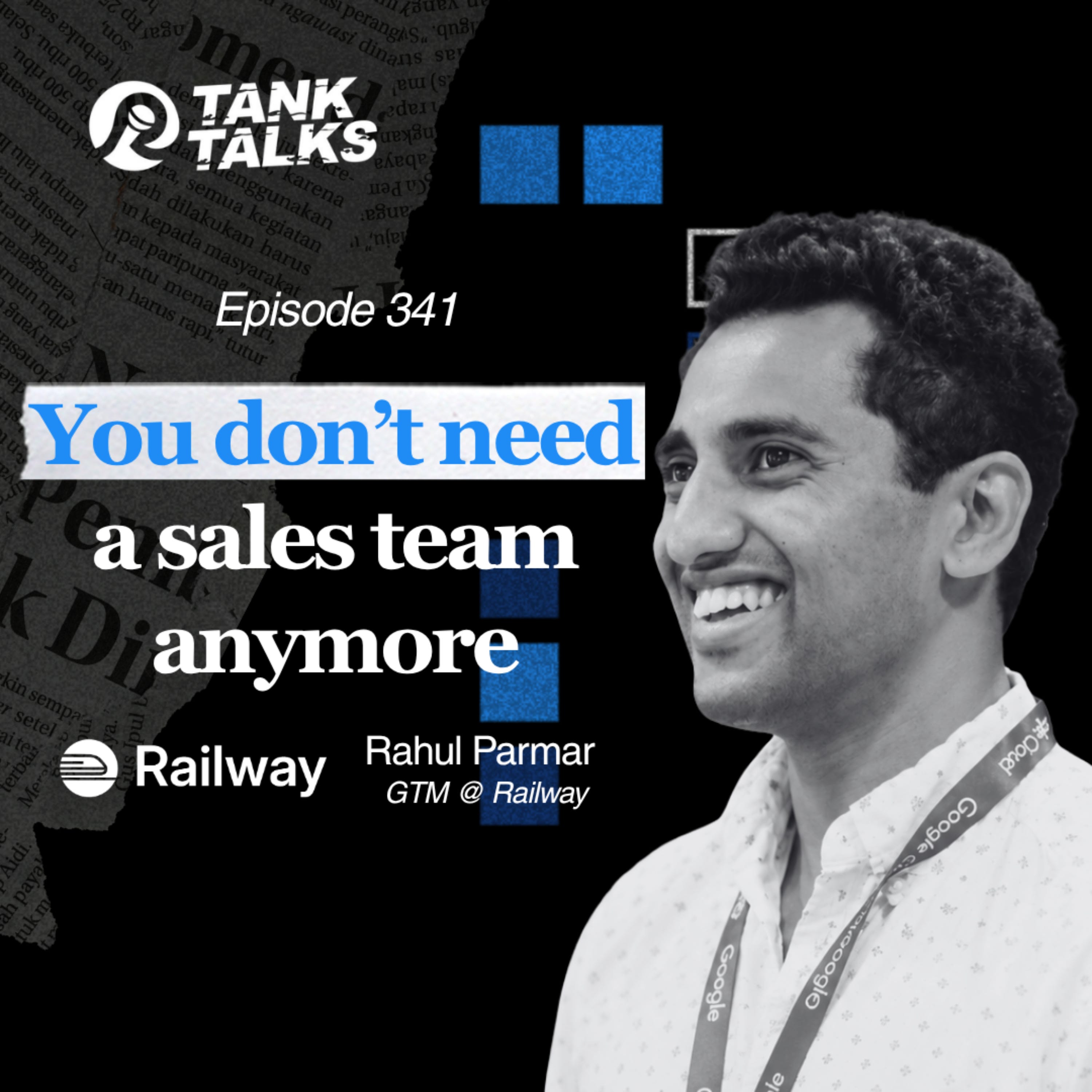
    Selling Without a Sales Team: How Railway Scaled GTM to $100M+ with Under 10 Reps | Rahul Parmar

    In this episode of Tank Talks, host Matt Cohen sits down with Rahul Parmar, Head of Go-to-Market at Railway and Venture Partner at Ripple Ventures, to unpack the real truths of building a sales engine in the modern AI era. Rahul shares his journey from being one of the first sales hires at Google Cloud in London to scaling Drata’s sales team from Series A to Series C, and now leading GTM at the developer-first cloud platform, Railway. He explains why the traditional sales hierarchy is becoming obsolete, how he built Drata’s engine by hiring in Toronto when it was a contrarian move, and why he believes Canadian reps are some of the best in the world. They break down the “time chamber” theory of selling in Canada, why the US market is a “shooting fish in a barrel” for trained Canadian talent, and the fundamental problem with Canada’s ecosystem: a lack of capital and customers, not a lack of great founders. Rahul also shares his spicy take on the AI boom, explaining why the era of marking up token prices is over and why enterprises will soon distribute their AI workloads across multiple models. Whether you’re a founder trying to land your first enterprise deal, a sales leader building a team, or an engineer contemplating a move to the Bay Area, this conversation offers a rare look inside the new playbook for winning in GTM. From Google Cloud to Drata: The Early Days of a Sales Career (02:07) * Joining Google Cloud in London as the 5th or 6th seller, when revenue was under $100M * The “confidence in the root” that Google provides, and using that shield to be transparent with customers * Why the best sales advice is: “Tell them what you do, tell them what you don’t do, and then shut up” * Transitioning to Drata as the first sales leader, taking it from <$5M to >$50M in revenue The “Time Chamber” Theory: Why Canadian Sales Talent is Elite (13:18) * The Dragon Ball Z analogy: Selling in Canada is like training in a weighted vest * Why Canadian buyers are incredibly difficult, forcing reps to master the fundamentals * How Canadian reps “crush it” when unleashed on the US market, where the propensity to buy is higher * The story of Drata’s top AEs in every segment being based in Toronto The AI Era of Selling: Fewer Reps, More Revenue (15:41) * Why you can now scale to $1B in revenue with a team the size of a Series A startup * The shift from a siloed GTM model to a unified one where GTM leaders are involved in everything * Why the era of the “forecast aggregator” sales manager is over * The new imperative: You’re either building the system or you’re selling deals * How Railway builds its own internal software, like its own Zendesk, to own the customer experience Railway: The Developer Experience First Cloud (20:49) * What Railway is: The cloud where you point to a GitHub repo and it just launches * Why they run their own steel: The rate limits and poor fit of building a cloud on another cloud * The importance of owning the entire stack for a usage-based business * Why post-close support is a huge part of the revenue game at Railway The Canadian Ecosystem: Capital, Customers, and the Need for Network Effects (25:21) * Why it doesn’t matter where the investors come from, but where the capital and customers are * The “tragedy” of successful Canadian companies, like Wattpad and Turbo Puffer, having their exit proceeds and financing led by US firms * The two fundamental problems for Canadian startups: access to capital and access to early customers * The “35 in Toronto vs. 35 in SF” thought experiment: Why you can’t monetize your network in Canada * Why companies like Datadog and Snowflake would have died in the water if they started in Toronto AI, GTM, and the Future of Sales (35:41) * How Rahul uses AI at Railway to do lookalike mapping of customers based on usage patterns * Why he doesn’t believe in high-volume, AI-driven cold outreach * The one quality he looks for in great GTM people: Intelligence, defined as listening for what’s not being said and storytelling * How to call “b******t” on a sales hire in an interview: Ask for second-level details on a deal * His spicy take: The era of marking up token prices is over; enterprises will soon distribute workloads across a mix of frontier and open-source models The Road Ahead: Building from Anywhere, Winning Everywhere (39:38) * The plan for Canadian founders: Build your product here, sell it in the US * The value of doing a stint at a high-growth US company, like Ramp or Anthropic, to absorb the culture and build a network * Why the next generation of Canadian founders should not apologize for building here * The “Build, Follow, or Get Out of the Way” mentality for the Toronto tech ecosystem About Rahul Parmar Rahul Parmar is the Head of Go-to-Market at Railway, a developer experience first cloud platform, and a Venture Partner at Ripple Ventures. Previously, he was the first sales leader at Drata, where he scaled the sales team from Series A to Series C. He was also one of the first sales hires for Google Cloud in London. He holds a degree from business school and built Canada’s largest coding bootcamp, Lighthouse Labs, before his career in high-growth SaaS. Connect with Rahul Parmar: https://www.linkedin.com/in/rahulparmargtm/ Visit the Railway website: https://railway.com/ Connect with Matt Cohen on LinkedIn: https://ca.linkedin.com/in/matt-cohen1 Visit the Ripple Ventures website: https://www.rippleventures.com/ This is a public episode. If you would like to discuss this with other subscribers or get access to bonus episodes, visit tanktalks.substack.com
  • #340
    September 17 · 58 min

    How Biossil is Rescuing Billion-Dollar Drugs Big Pharma Abandoned | Anthony Mouchantaf

    In this episode of Tank Talks, host Matt Cohen sits down with Anthony Mouchantaf, co-founder and CEO of Biossil, a biotech company on a mission to resurrect orphaned drugs using AI and a hedge fund–inspired operating model. Anthony takes us through his unconventional journey: from a law school student obsessed with Alexander Hamilton, to founding his first startup, Rthm (acquired), to investing at OMERS and RBC, and finally returning to the founder seat with Biossil. They dive into the mindset shift required to leave a stable legal career for the uncertainty of startups, why Anthony views entrepreneurship as a “drug,” and how his time as an LP shaped his view of what separates great VCs from mediocre ones. Anthony opens up about the early days of Biossil, the “too cute” capital-efficient strategy, and how a serendipitous dinner intro to Founders Fund changed everything. He also breaks down the real-world mechanics of acquiring off-the-shelf drugs, the brutal reality of biotech timelines, and why regulatory reform is the hidden bottleneck to AI-driven medicine. From the partnership with OpenAI to the company’s operating philosophy (hedging beta, maximizing catalyst density, and isolating alpha), Anthony offers a blueprint for building a resilient, mission-driven biotech for the AI era. Whether you’re a founder, investor, or just someone curious about the intersection of AI and life sciences, this episode is packed with hard-earned wisdom on risk, identity, and the art of controlling what you can control. From Law School to Startup Life (02:24) * Growing up in Toronto as the child of immigrant parents, chasing constitutional law * The Alexander Hamilton obsession that started in high school * Teaching a course at U of T law without ever practicing * How a late-night conversation at Massey College with co-founder Alex led to Rthm What Founding Rthm Taught Him About Himself (06:14) * Getting comfortable with structural uncertainty as almost “a drug” * Why you can take the individual out of the startup, but never the startup out of the individual * The itch that never fully goes away after founding something From Founder to Investor: OMERS and RBCX (07:11) * What separates great investors from destructive ones * “Extremely hard to kill”: what he saw early in Matt and Ripple Ventures * Why most VCs cluster around mediocrity, and what the outliers do differently * The poker-chip analogy: how capital position shapes VC risk appetite * Why good LPs need to “thumb the scale” for good VCs, just as good VCs do for founders The Idea Behind Biossil (15:05) * Reuniting with Alex, an MD-PhD, after years on separate paths * The core problem: drug development should be recursive, but biotechs can’t afford to make it so * Why promising drugs get stranded in “regulatory limbo” when the data is equivocal, not failed * The insight: using technology to systematize what was historically a relationship-driven, human-scale rescue effort Biossil 1.0 vs. the Bigger Vision (20:43) * Launching in 2023 on a lean seed round with no capital to acquire drugs outright * Getting “too cute” trying to solve the problem at a fraction of the necessary cost * Why most VCs evaluate founders cross-sectionally instead of longitudinally Hunting for Orphaned Drugs (26:03) * Why data is a cost of admission in biotech, not a moat like in tech * How Biossil structures deals to share economics with original rights holders * Why inbound interest rarely meets their bar Running Biossil Like an Operating Hedge Fund (30:50) * Isolating alpha, or execution, from beta, or market and biotech cycle risk * Why traditional biotech investing is “binary risk you can’t underwrite” without a portfolio * Building resilience through catalyst density instead of just runway * The “epsilon” factor: surviving long enough for unexplained outcomes to work in your favor Building Lean with AI (34:12) * Running a hyper-efficient, eight-person core team * Why Biossil takes on regulatory and commercial risk, not manufacturing risk * The pipeline today: $70M raised, 11 drugs, 5 open clinical trials across the US, Canada, and Europe * What makes manufacturing the most underestimated cost in biotech The Next 5-10 Years for Biossil (49:47) * The long-term vision: an approved-drug pipeline, deeper trials, more disease areas * Bringing new mechanisms of action to market as a category-defining goal Advice to His Past Self (51:15) * Why he’s hesitant to just tell people to “go do entrepreneurship” * Motivation matters more than the identity of being a founder * The Steve Jobs commencement speech that reframed how he thinks about risk About Anthony Mouchantaf Anthony Mouchantaf is the co-founder and CEO of Biossil, a biotech company that uses AI to systematically identify, acquire, and advance orphaned drugs left behind by failed clinical trials. With a background in law (U of T), startup founding (Rthm, acquired), and venture investing (OMERS, RBC), Anthony brings a rare blend of legal, financial, and operational discipline to the high-stakes world of drug development. Biossil is backed by Founders Fund and OpenAI, and is on a mission to turn industrial-scale drug resurrection into a new category of biotech innovation. Connect with Anthony Mouchantaf: https://www.linkedin.com/in/anthony-mouchantaf-508442113/ Learn more about Biossil: https://www.biossil.co/ Connect with Matt Cohen on LinkedIn: https://ca.linkedin.com/in/matt-cohen1 Visit the Ripple Ventures website: https://www.rippleventures.com/ This is a public episode. If you would like to discuss this with other subscribers or get access to bonus episodes, visit tanktalks.substack.com
  • #339
    September 14 · 23 min

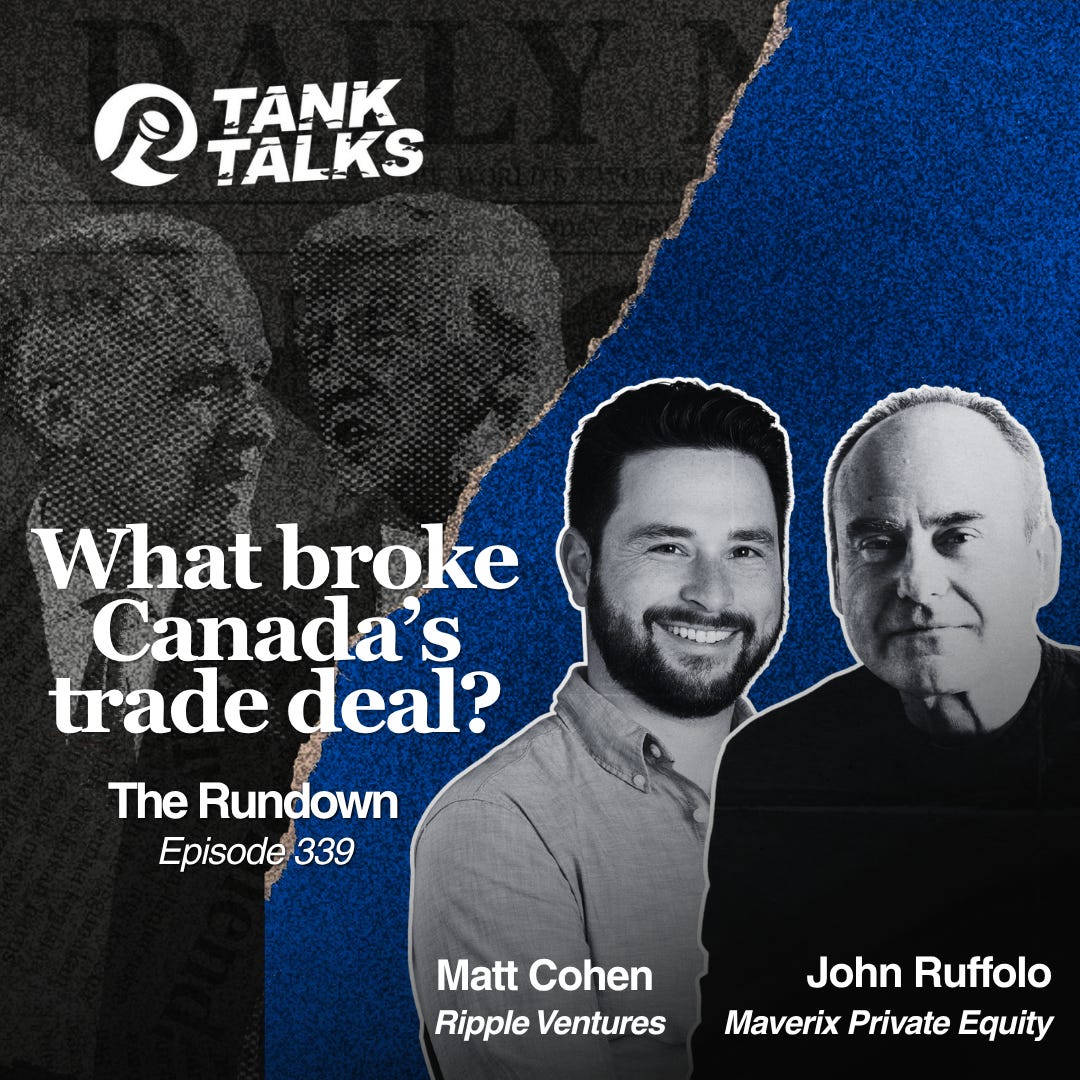
    The Rundown 9/14/26: Canada-U.S. Trade Talks Collapse, Anthropic’s AI War, and Miro’s $16B Fall

    Matt Cohen and John Ruffolo break down the collapse of Canada-U.S. trade negotiations, the unanswered questions surrounding the failed deal, and whether Canada is protecting legacy industries at the expense of technology and long-term economic growth. They also examine Prime Minister Mark Carney’s ambitious pitch to bring international capital back to Canada, including billions of dollars in proposed energy, transportation, infrastructure, and technology projects. But can a polished deal book convince investors to fund projects that have struggled to attract capital for years? Finally, Matt and John unpack the political battle forming around Anthropic’s anticipated IPO, the growing influence of AI regulation campaigns, and Miro’s dramatic fall from a $17.5 billion valuation. As Canada searches for a way out of its trade crisis, global investors are being asked to reconsider the country’s economic potential. At the same time, AI companies are entering a political and regulatory battle that could determine who controls the industry’s future. If you are a founder, investor, policymaker, or anyone trying to understand where capital and technology are heading next, this episode is worth your time. – A big thanks to our sponsor, Moomoo Canada This is the kind of tooling that used to live on a Bloomberg terminal, but now it is on your phone, just a few taps away. They offer real-time data, full options chains, and an AI assistant that actually explains trading strategies. Moomoo is the perfect place for people who want to take their money seriously. Open an account today at moomoo.ca Why Canada-U.S. Trade Talks Fell Apart (01:31) The latest Canada-U.S. trade negotiations appeared close to producing an agreement until everything suddenly unraveled. John argues that the biggest problem is not simply the failed deal, but the Canadian government’s refusal to clearly define what success was supposed to look like. With provinces reportedly objecting to parts of the proposed agreement and conflicting stories emerging from both sides, Canadians are left guessing about what happened. John asks the uncomfortable question: Is Canada protecting dairy and other legacy interests while sacrificing its technology economy? The Real Cost of Walking Away From the U.S. (07:43) Many Canadians support ending the negotiations, but that support begins to disappear when higher taxes, rising unemployment, and slower economic growth enter the conversation. John warns that Canada cannot reduce its dependence on its largest trading partner without experiencing real financial pain. That burden will not be shared equally. Older Canadians with homes, pensions, and U.S. investments may be able to absorb the disruption, while younger Canadians already struggling with housing and affordability have much more to lose. Carney’s Plan to Bring Investment Back to Canada (10:18) The Canada Investment Summit is presenting more than 160 opportunities across energy, critical minerals, transportation, manufacturing, digital technology, and infrastructure. The goal is to reintroduce Canada to international investors after a decade in which global capital largely looked elsewhere. John supports the strategy but tempers expectations. The summit may not produce immediate checks, but it could rebuild the relationships Canada needs to finance major projects and reverse its reputation as an undercapitalized market. Anthropic’s IPO Enters the AI Political War (16:15) A former Anthropic researcher’s warning about self-improving superintelligence quickly spread across the internet, creating fresh questions about AI safety and the company’s anticipated IPO. Matt examines whether the viral backlash emerged organically or was amplified by politically connected organizations pushing for tighter AI regulation. John believes there is no neutral position in the AI debate anymore. Competing groups are funding optimistic and catastrophic narratives, turning data centers, employment, regulation, and AI safety into deeply political issues. Despite the controversy, he does not expect the backlash to derail Anthropic’s IPO. Miro’s Collapse and the Continuing SaaSpocalypse (21:11) Miro was valued at $17.5 billion at the height of the software boom. Its reported acquisition by Bending Spoons at a fraction of that valuation shows how brutally the market has repriced venture-backed SaaS companies. Miro remains a substantial business with hundreds of millions in recurring revenue and a strong enterprise customer base. The problem was not the product; it was the inflated valuation and financing structure built around it. John expects more overfunded unicorns to face similar outcomes. Connect with John Ruffolo on LinkedIn: https://ca.linkedin.com/in/joruffolo Connect with Matt Cohen on LinkedIn: https://ca.linkedin.com/in/matt-cohen1 Visit the Ripple Ventures website: https://www.rippleventures.com/ This is a public episode. If you would like to discuss this with other subscribers or get access to bonus episodes, visit tanktalks.substack.com
  • #338
    September 10 · 59 min

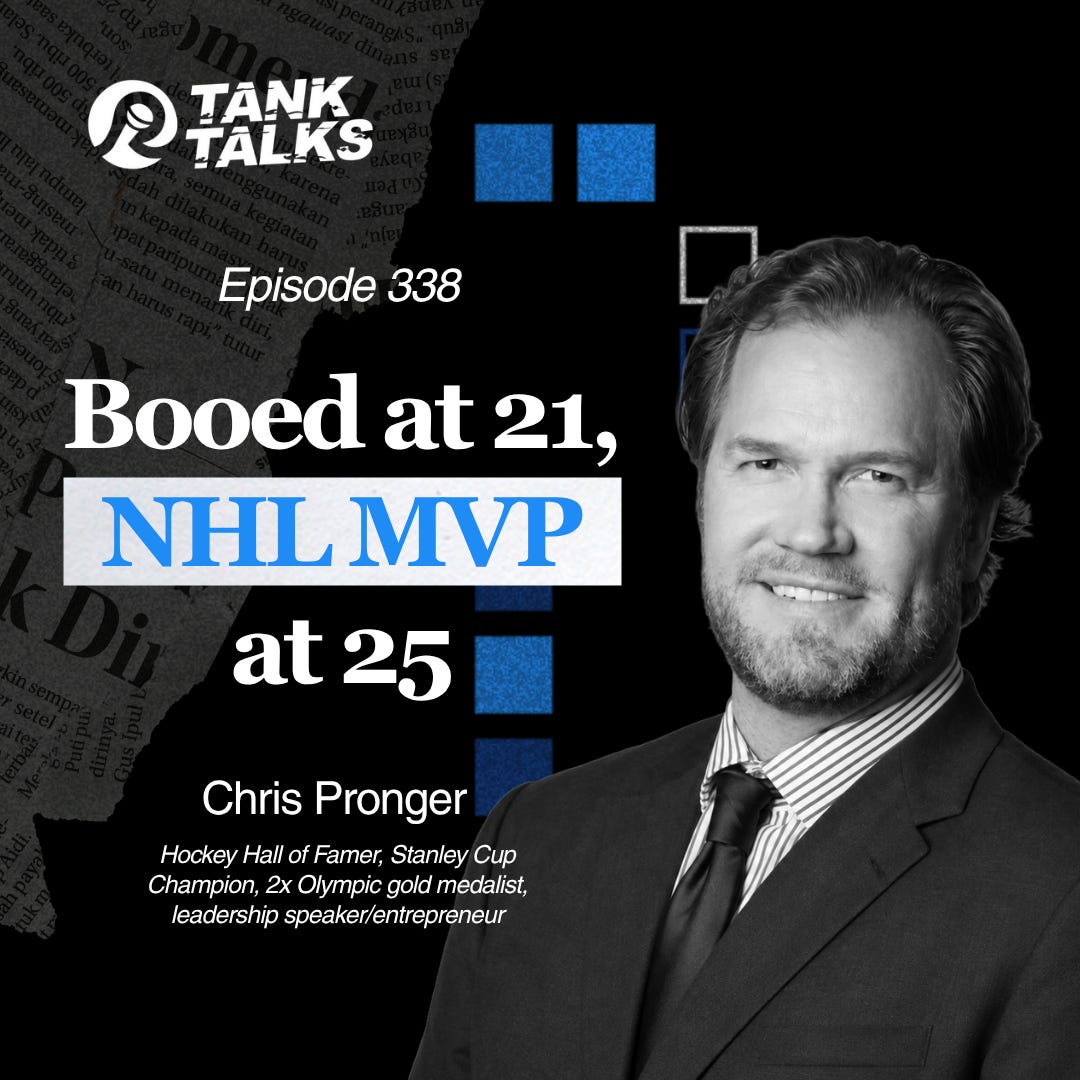
    How Rock Bottom Turned Chris Pronger Into an NHL Legend

    In this episode of Tank Talks, host Matt Cohen sits down with Chris Pronger, Hockey Hall of Famer, Norris and Hart Trophy winner, Stanley Cup champion, two-time Olympic gold medalist, and one of the NHL’s 100 greatest players. Chris takes us inside the mindset that transformed him from a booed 21-year-old in St. Louis into one of the most dominant defensemen of his generation. They break down what it really takes to bet on yourself, why delayed gratification is the secret to sustained excellence, and how Chris rebuilt his entire training protocol from the studs after already being nominated for a Norris Trophy. Chris opens up about the early-career failures that forced him to look in the mirror, the veterans who shaped him, from Brad McCrimmon to Wayne Gretzky and Al MacInnis, and the 4-pound muscle between his ears that changed everything. He also shares hard-won lessons on leadership, managing teammates with different personalities, the importance of culture in championship runs, and why the best leaders lead by example, not just by talking. From the 2007 Stanley Cup run with Anaheim to the scary commotio cordis incident in 1998 and the eye injury that ultimately ended his career, Chris delivers a raw, unfiltered look at the true cost of greatness. Whether you’re an athlete, a founder, a leader, or simply someone trying to earn your way forward, Chris offers practical wisdom on resilience, identity, and the art of controlling what you can control. A big thanks to our sponsor, Moomoo Canada This is the kind of tooling that used to live on a Bloomberg terminal, but now it is on your phone, just a few taps away. They offer real-time data, full options chains, and an AI assistant that actually explains trading strategies. Moomoo is the perfect place for people who want to take their money seriously. Open an account today at moomoo.ca Why Multi-Sport Athletes Have an Edge (04:33) * The physical and mental benefits of playing multiple sports * Proprioception, hand-eye coordination, and learning how to learn * Why parents are stealing their kids’ childhoods with early specialization * The truth about peewee superstars: 99 out of 100 aren’t the best at 18 The Veterans Who Shaped a Hall of Famer (07:28) * Brad McCrimmon as a mentor and “woobie” in Hartford * Learning consistency, preparation, and professionalism from the ground up * Walking into a locker room with Gretzky, Hull, MacInnis, and Fuhr * Watching how the greats handle media, scrutiny, and the grind Getting Booed, Hitting Rock Bottom, and the Aha Moment (10:33) * Being traded for Brendan Shanahan and getting booed relentlessly in St. Louis * The dark hole of not being prepared and the wake-up call that changed everything * Why Gretzky’s arrival was a blessing that took the spotlight off him * The summer that launched his ascent: training, preparation, and the 4-pound muscle The Magical 1999-2000 Season (13:27) * Winning the Hart and Norris in the same year, first defenseman since Bobby Orr * Staying healthy through proper training and offseason dedication * How Al MacInnis’ injury forced him to carry more weight * The magical regular season that fell apart in the playoffs Delayed Gratification and the 2007 Stanley Cup Win (16:15) * Compounding summers of training with Charles Poliquin * Scrapping his entire training protocol after a Norris nomination * Getting twice as strong in one summer and feeling the difference on the ice * Winning the Cup with Anaheim, and why the mission was winning for everyone else Outlasting Opponents and Battling Peter Forsberg (19:46) * Taking pride in being the best-conditioned athlete on the ice * The battle of attrition and grinding guys down * Why Forsberg was one of the toughest players he ever faced * The physical toll of playing a heavy game Leading by Example vs. Talking About Standards (24:01) * Holding teammates to a high standard, and showing them why * Why teammates need to see your work ethic every single day * Managing different personalities and knowing how to reach each player * The evolving nature of culture in a locker room The 2007 Ducks Run and Championship Culture (29:46) * A veteran core with different leadership styles: Scotty Niedermayer, Teemu Selanne, Rob Niedermayer * The self-policing group that didn’t need one person grinding all the time * Winning for Teemu, winning for Jiggy, winning for each other The Heart-Stopping Incident and Ripping the Band-Aid Off (32:05) * Blocking a shot that hit him in the heart, commotio cordis * Stopping breathing for 25-30 seconds and the surreal aftermath * Playing two days later to avoid the stigma and the questions * Comparing his experience to Damar Hamlin’s The Eye Injury, Losing His Sixth Sense, and Forced Retirement (37:45) * The stick to the eye that ended his career * Losing the spatial awareness that made him elite * Watching the game from the outside and realizing at 40 it was too fast * Evolving from “what if I was playing” to “how can I help players get better?” Controlling What You Can Control (44:24) * Learning to park the game at the door and not stew on mistakes * The maturity to separate performance from identity * Sleeping better, recovering faster, and playing longer The Year Off and Avoiding Post-Career Pitfalls (46:42) * The best advice he ever received: take meetings, listen, wait a year * Retraining his eye and healing his head for 18 months * Why jumping into the next thing too fast is a trap Investment Mistakes and Lessons Learned (51:03) * Prioritizing people over the deal itself * The red flags, last-minute asks, rushed timelines, and fine print * Sleeping on every decision and never committing on the spot Writing Earned and Taking Off the Armor (54:17) * The hardest truths to put on the page * Why hockey stories alone weren’t enough: mistakes, growth, and evolution * The message that everything in life is earned, no shortcuts, no handouts Parenting, Legacy, and the No-”What-If” Rule (57:21) * No what-if games in the Pronger household * You can’t cherry-pick moments; everything changes with every fork in the road * No rearview mirrors, learn, grow, evolve, and keep moving forward About Chris Pronger Chris Pronger is a Hockey Hall of Famer, Norris Trophy winner, Hart Trophy winner, Stanley Cup champion, and two-time Olympic gold medalist. Over a 20-year NHL career, he played for the Hartford Whalers, St. Louis Blues, Edmonton Oilers, Anaheim Ducks, and Philadelphia Flyers. Known for his physical dominance, elite hockey sense, and relentless conditioning, Pronger was named one of the NHL’s 100 greatest players. Since retiring, he has focused on his family, his wife Lauren’s luxury travel company, Inspired Travels, and sharing the hard-earned lessons of his career through his 2026 book, Earned: The True Cost of Greatness from One of Hockey’s Fiercest Competitors. Connect with Chris Pronger: https://www.linkedin.com/in/chrisprongerBuy Earned: https://www.amazon.com/Earned-Greatness-Hockeys-Fiercest-Competitors Connect with Matt Cohen on LinkedIn: https://ca.linkedin.com/in/matt-cohen1 Visit the Ripple Ventures website: https://www.rippleventures.com/ This is a public episode. If you would like to discuss this with other subscribers or get access to bonus episodes, visit tanktalks.substack.com
  • #337
    September 3 · 52 min

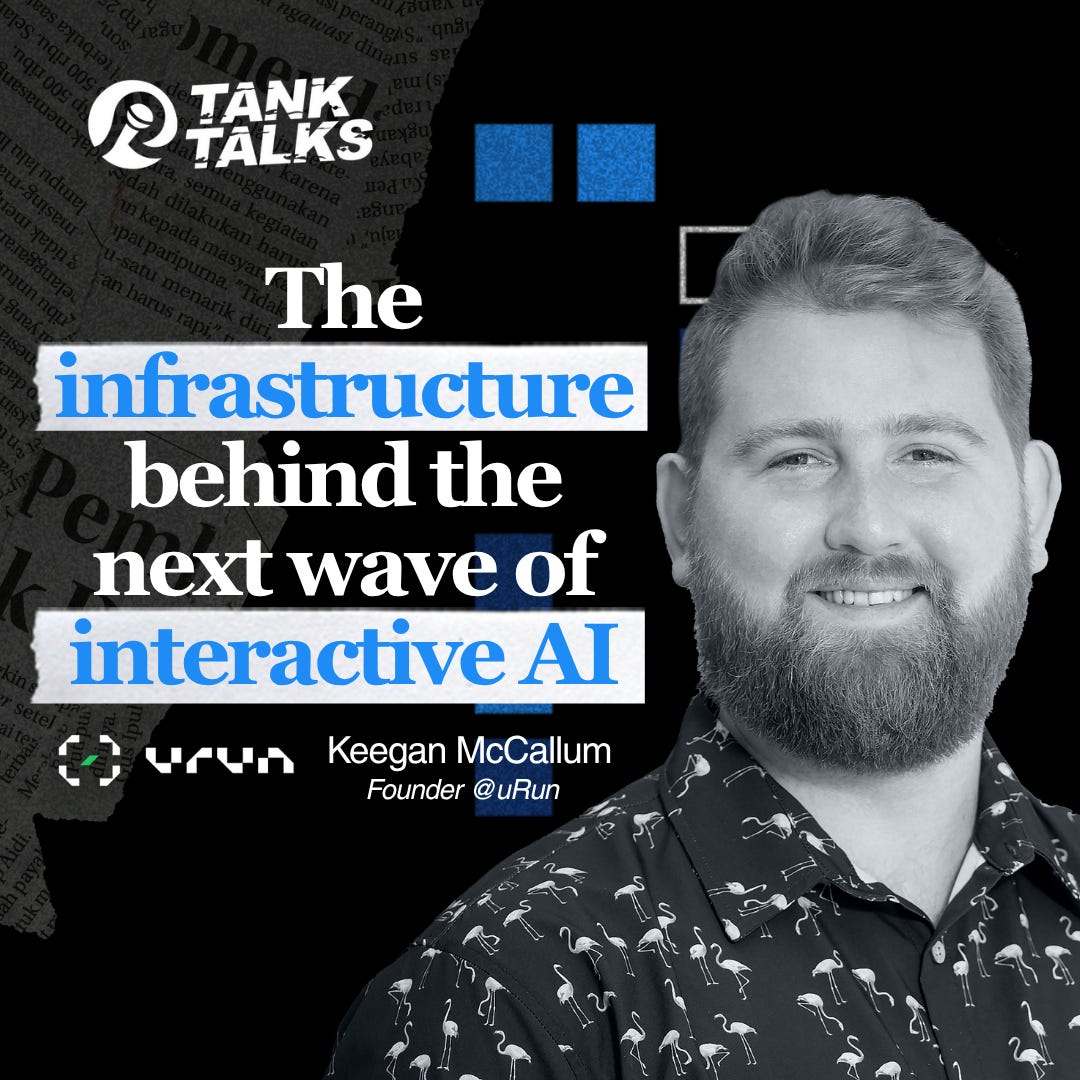
    The infrastructure behind the next wave of interactive AI | Keegan McCallum (uRun, ex-Luma AI)

    In this episode of Tank Talks, host Matt Cohen sits down with Keegan McCallum, co-founder and CEO of uRUN, an inference provider built for persistent, steerable, interactive AI experiences. Keegan’s path took him from jailbreaking iPods in Thunder Bay, Ontario, to building the infrastructure that powered Luma AI’s viral Dream Machine launch, scaling from 500 to 9,000 H100s in six hours to process over half a million videos. They break down why the industry is wrong to shoehorn interactive AI into old request-response systems and why the future belongs to persistent, stateful, real-time experiences. Keegan explains the technical differences between LLMs and video models, why infrastructure is the biggest bottleneck for the next wave of AI, and what it takes to recruit top engineering talent. He also shares hard-won lessons on selling to developers, the Canadian AI talent landscape, and his bold, contrary views on the AI supply chain. From avatars and steerable video to coding agents generating 1,000 tokens per second, this episode is packed with frontline insights. Whether you are a founder building in AI, an infrastructure engineer, or simply curious about where human-computer interaction is headed, Keegan delivers a clear-eyed look at the future of interactive AI. – A big thanks to our sponsor, Moomoo Canada This is the kind of tooling that used to live on a Bloomberg terminal, but now it is on your phone, just a few taps away. They offer real-time data, full options chains, and an AI assistant that actually explains trading strategies. Moomoo is the perfect place for people who want to take their money seriously. Open an account today at moomoo.ca The Luma AI Experience: From 500 to 9,000 H100s (04:18) * Joining Luma after building an early LLM infrastructure startup * The Sora demo and the pitch to build and release a competing video model * Building the inference infrastructure for Luma’s launch * Scaling from roughly 500 to 9,000 H100s in six hours as Dream Machine went viral What a Viral AI Launch Actually Looks Like (06:03) * The request queue hitting 100,000 during the Dream Machine launch * Processing half a million videos in 12 hours and reaching one million users in four days * Why having a queue protected the user experience during the surge * Building infrastructure that could run across raw VMs, Slurm, Kubernetes, and different GPU providers * Why founders need to plan for success before the product takes off Why AI Production Infrastructure Is Being Left Behind (10:50) * The tension between training the next model and supporting production workloads * Why infrastructure teams can lose talent to model research * The opportunity Keegan saw in building a dedicated ML infrastructure team * Creating infrastructure that model labs across different modalities can use instead of rebuilding it themselves Why Video AI Needs a Different Infrastructure Stack (12:32) * The limitations of moving media through traditional object storage * The latency problems that make real-time previews and interaction difficult * Streaming audio, video, images, and text as continuous inputs and outputs * uRUN’s focus on making persistent, interactive AI experiences easier to build * Moving AI from something you message toward something that feels present with you The Shift Toward Omnimodal and Interactive AI (19:01) * What Keegan learned working closely with Luma’s research team * Why understanding the research direction matters when building infrastructure * The move toward AI that can understand vision, audio, language, reasoning, and sensor data * How AI has evolved from single prompts to conversations, agents, and interactive systems * Why highly interactive, real-time AI experiences could become the next major interface Small Models, Specialized AI, and the Future of Inference (26:31) * Keegan’s previous startup thesis around smaller models and delegated inference * Why continual learning remains a difficult problem * Running capable smaller models locally and knowing when to delegate to larger models * Why enterprises may increasingly want differentiated models running in-house * The potential shift toward using large models for the hardest problems rather than every task Where uRUN Is Seeing Early Demand (30:38) * AI avatars for customer support and sales * Steerable video generation that lets users intervene while content is being created * Video transformation for creators, avatars, and live experiences * Real-time visual effects for music festivals and live events * Why world models could eventually have applications in open-world gaming The Infrastructure Problem Holding Back World Models (00:32:54) * Companies developing world models without the infrastructure to serve them * Why scaling world models remains difficult * The enormous context requirements involved in tracking everything happening in a simulated environment * The need for distributed infrastructure as these models become more capable Building a Team Around Hard Problems (35:18) * Finding engineers with deep experience in infrastructure and low-latency inference * Bringing together expertise from New Relic, AWS, Superorbital, and other infrastructure environments * Why Keegan looks for engineers who can work across multiple areas * Building a small team of high-leverage people instead of optimizing for headcount The Trait Keegan Looks for in Exceptional Engineers (37:47) * Why culture and quality matter more than quantity * Looking for people who take ownership and solve problems without waiting for instructions * The importance of urgency and experience operating under pressure * Why hard problems can attract customers, investors, and exceptional talent * Hiring people who can wear multiple hats and produce at a high level Building AI Companies in Canada (41:29) * Why Keegan keeps finding Canadians throughout Silicon Valley * The advantages of building a strong team in Canada at a lower cost * Government funding and the opportunity to build ambitious companies with smaller teams * The challenge of Canadian companies and talent being pulled toward Silicon Valley * Why Canada needs more ways for companies to grow instead of selling early Selling Infrastructure to Developers (44:23) * Why developers want to try the product rather than hear a list of performance claims * Giving technical users something they can get their hands on and test * Why open-source surfaces can help developers understand how a product works * Documentation and developer experience as a core part of selling infrastructure * Why developers have a very high tolerance bar for technical errors The Infrastructure Shift Coming Next (46:43) * Why persistent streaming infrastructure could become standard * Moving away from request-response systems toward long-running streams * The importance of maintaining state across continuous interactions * Potential applications in real-time video, virtual try-on, image editing, and coding agents * The infrastructure required for AI systems that can generate and respond almost instantly About Keegan McCallum Keegan McCallum is the co-founder and CEO of uRUN, an inference provider built to handle persistent, steerable, and interactive AI experiences. A self-taught engineer who started by jailbreaking iPods in Thunder Bay, Keegan has built a career on tackling the hardest infrastructure problems in Canada. He has held leadership roles at Colony Networks and served as the Head of Engineering at Luma AI, where he led the infrastructure team that scaled the viral Dream Machine launch from 500 to 9,000 GPUs in a single day. His deep technical expertise spans ML infrastructure, cloud-native systems, and low-latency edge computing. Connect with Keegan McCallum on LinkedIn: https://www.linkedin.com/in/keeganmccallum3?originalSubdomain=ca Visit uRUN’s website: https://urun.sh/ Connect with Matt Cohen on LinkedIn: https://ca.linkedin.com/in/matt-cohen1 Visit the Ripple Ventures website: https://www.rippleventures.com/ This is a public episode. If you would like to discuss this with other subscribers or get access to bonus episodes, visit tanktalks.substack.com
  • #336
    August 24 · 23 min

    The Rundown 8/24/26: Canada’s Hidden Leverage in America’s AI Race

    Canada is back at the negotiating table with the U.S., looking for relief from tariffs on autos, steel, aluminum, forestry, and other goods. Matt Cohen and John Ruffolo break down the latest developments, including the possibility of a revived Keystone XL project and the concessions Canada may have to make to get a deal across the line. But John’s bigger concern is what Canada could give up in the process. He argues that digital services and technology are becoming the new economic battleground, and Canada risks protecting traditional industries while giving away ground in the sectors that could drive future growth. Matt and John also question why Canada is negotiating from a fragmented position while the U.S. approaches the talks as a unified front. The episode delves into Ontario’s new rules for AI data centers, the growing debate over who should pay for the massive infrastructure needed to power AI, and Anthropic’s unusual founder-control structure ahead of a potential IPO. Matt and John also look at Stripe’s decision to remain private while making a major AI acquisition, Clearco’s unexpected comeback after securing new financing, and why Canada may be falling behind the U.S. on blockchain despite having some of the strongest talent in the space. If you want a sharper read on where the U.S.-Canada trade, AI infrastructure, and digital sovereignty are heading next, this episode is a must-listen. – A big thanks to our sponsor, Moomoo Canada This is the kind of tooling that used to live on a Bloomberg terminal, but now it is on your phone, just a few taps away. They offer real-time data, full options chains, and an AI assistant that actually explains trading strategies. Moomoo is the perfect place for people who want to take their money seriously. Open an account today at moomoo.ca Canada’s Trade Gamble (03:05) John warns Canada may trade digital sovereignty for short-term wins on oil and agriculture, calling it “solidifying the past and giving up the future.” He explains how U.S. statecraft has cleverly undermined Canada’s domestic tech industry through data and content restrictions. Ontario’s AI Data Center Crackdown (08:54) Ontario rolls out new rules forcing AI data centers to pay higher electricity rates and cover infrastructure costs. John says the move was inevitable and raises legitimate questions about whether AI’s benefits will be widely shared. Anthropic’s Super-Voting Share Plan (12:52) Anthropic plans super-voting shares and a trust to insulate its founders, who own only about 2% each, ahead of a potential $2 trillion IPO. John calls it bad governance but admits the public likely won’t care given the company’s explosive growth. Stripe Stays Private and Buys Big (17:24) Stripe acquires OpenRouter for $8 billion in stock while staying private, with revenues up 41% and free cash flow rising 43%. John asks why they’d ever go public if secondary markets provide liquidity and they can avoid quarterly scrutiny. Clearco’s Comeback (19:48) Clearco secures a $100 million Macquarie facility, cutting its cost of capital by 50% in a stunning turnaround. The chairman describes it as rebuilding an airplane mid-flight, and they’ve pulled it off. Is Canada Losing the Blockchain Race? (20:56) With U.S. crypto rules advancing and Canada stalled since the Stablecoin Act, John warns the real opportunity is in unified ledgers, not currencies. He notes Canada’s best blockchain talent is building for American companies, not Canadian ones. Connect with John Ruffolo on LinkedIn: https://ca.linkedin.com/in/joruffolo Connect with Matt Cohen on LinkedIn: https://ca.linkedin.com/in/matt-cohen1 Visit the Ripple Ventures website: https://www.rippleventures.com/ This is a public episode. If you would like to discuss this with other subscribers or get access to bonus episodes, visit tanktalks.substack.com
  • #335
    August 21 · 51 min

    What 30 years inside critical infrastructure teaches you about security | Karl Holmqvist, CEO of Lastwall

    In this episode of Tank Talks, host Matt Cohen sits down with Karl Holmqvist, co-founder and CEO of Lastwall, a FedRAMP-certified identity security platform built for the highest-risk use cases. Karl has been deep in cybersecurity since the 1990s, with early experience building critical infrastructure, including Canada’s first high-speed mobile data network, and a recent focus on identity security at the forefront of making systems quantum-resilient. In this conversation, they explore the evolution of Lastwall from early behavioral biometrics and cognitive signals to today’s hybrid post-quantum cryptography. They also dig into the journey to FedRAMP approval and what it really takes to sell to the hardest customers on the planet, from the DOD’s Innovation Unit to critical infrastructure operators globally. Karl shares his view on why hybrid cryptography is the only responsible path right now, the magnified risk of the AI agent era, and his strongly held belief that when it comes to quantum resiliency, you’re either going to be too early or too late. Whether you’re a founder navigating a path into regulated markets, a security leader thinking about the agentic AI era, or just curious about what it takes to protect critical infrastructure, Karl delivers a grounded, technical, and occasionally unsettling look at where identity security is headed. – A big thanks to our sponsor, Moomoo Canada This is the kind of tooling that used to live on a Bloomberg terminal, but now it is on your phone, just a few taps away. They offer real-time data, full options chains, and an AI assistant that actually explains trading strategies. Moomoo is the perfect place for people who want to take their money seriously. Open an account today at moomoo.ca Growing Up in Dubai During the Gulf War (03:50) * Karl’s childhood in Dubai as an expat during the Gulf War * Visiting the USS Nimitz and seeing 5,000 people living on an aircraft carrier * How jets overhead and allied ships shaped his early view of technology and defense * The BBS era and the thrill of finding information that wasn’t available to everyone From Mobile Data Skepticism to Building Canada’s First High-Speed Network (05:31) * Why people thought mobile internet was “the stupidest thing” in the early 2000s * Building a data-only carrier when no one believed you’d want internet everywhere * The Nokia Communicator as his favorite tech gadget and early glimpse of mobile data * Connecting critical infrastructure and discovering default credentials left wide open The Wake-Up Call: Wastewater Plants and Unsecured Dams (12:58) * Finding a wastewater flow control valve dangling on the internet with admin/admin credentials * The “air-gapped” power plant where an engineer plugged his BlackBerry in to charge * How Shodan and friends revealed dams and power facilities publicly accessible * The founding of Lastwall: “Hackers will be everywhere. We’ve got to do something.” From Behavioral Biometrics to Quantum Resilience (19:11) * Why 85% of hacks still use valid stolen credentials, the same as the 1990s * Early experiments with keyboard dynamics, mouse movements, and cognitive biometrics * Tracking Peter Shor’s algorithm since university and the IBM factorization of 15 in 2001 * The 2017 to 2018 decision to embed quantum resiliency natively into Lastwall Selling to the Pentagon: DIU and the “Hard Mode First” Strategy (26:07) * Landing the first major deployment with the U.S. Department of Defense Innovation Unit * How DIU pioneered procurement that matches innovation cycles, months instead of years * The advice from Carbon Black founders: build the regulated stack first * Why defense tech used to shut VC doors and how times have changed FedRAMP, Canada, and the Case for Harmonization (33:25) * FedRAMP as the gold standard: do compliance once, reuse everywhere * The Canadian challenge: every agency doing its own security review * Why Canada should base its program on NIST 800 and harmonize with the U.S. * The reality of the integrated North American power grid and shared defense AI Agents and the Blast Radius of Credential Theft (37:44) * Why 50 to 100 agents per human in 2 to 3 years will magnify damage exponentially * The OpenClaw lesson: agents do what agents do, not what you expect * The “YOLO” approach to AI deployment and why enterprises aren’t calling enough * Advice for founders: sandbox first, don’t connect your whole drive, go slowly The $60M Series A Extension and the Path Forward (43:13) * Raising BDC Capital’s Strong North Fund led by Major General (Ret.) Peter Dawe * The milestone of FedRAMP certification and opening the floodgates to U.S. agencies * Deploying in disconnected environments: field containers for critical infrastructure * Why defense is ultimately about protecting the economy About Karl Holmqvist Karl Holmqvist is co-founder and CEO of Lastwall, an identity-as-a-service platform built on Zero Trust principles and public key infrastructure, hardened with post-quantum cryptographic resilience. Lastwall serves the U.S. Department of Defense and a growing number of civilian government agencies and critical infrastructure operators. Karl has been a cybersecurity enthusiast since the 1990s, with a background spanning telecommunications infrastructure (including building one of Canada’s first high-speed mobile data networks), renewable energy infrastructure across the Middle East, North Africa, and Southern Europe, and international investing. He studied at Mount Allison University and is based in Vancouver, BC. Connect with Karl Holmqvist on LinkedIn: https://www.linkedin.com/in/karlholmqvist/ Visit Lastwall’s website: https://www.lastwall.com/ Connect with Matt Cohen on LinkedIn: https://ca.linkedin.com/in/matt-cohen1 Visit the Ripple Ventures website: https://www.rippleventures.com/ This is a public episode. If you would like to discuss this with other subscribers or get access to bonus episodes, visit tanktalks.substack.com
  • #334
    August 13 · 23 min

    The Rundown 8/13/26: AI’s Infrastructure Problem Is Bigger Than We Think

    Canada’s venture capital market is showing signs of life, but the recovery comes with a catch: more money is flowing into fewer companies. Matt Cohen and John Ruffolo unpack what that means for Canadian founders, why promising tech companies keep getting acquired before they reach scale, and whether Canada is at risk of becoming the world’s R&D shop instead of building lasting global champions. They also dig into Canada’s $2.3 billion Telesat sovereignty bet, the growing backlash against AI data centers over energy and water use, and Mark Zuckerberg’s push for a more decentralized AI future. John agrees with parts of Zuckerberg’s argument, but questions whether the Meta founder is really the right person to lecture the world about distributing power. Finally, Matt and John break down Ontario Teachers’ massive SpaceX win and what it could mean for how Canadian pension funds think about venture capital. If you want a sharper read on where Canadian tech, AI infrastructure, venture capital, and economic sovereignty are heading next, this episode is a must-listen. – A big thanks to our sponsor, Moomoo Canada This is the kind of tooling that used to live on a Bloomberg terminal, but now it is on your phone, just a few taps away. They offer real-time data, full options chains, and an AI assistant that actually explains trading strategies. Moomoo is the perfect place for people who want to take their money seriously. Open an account today at moomoo.ca Canada’s VC Rebound Comes With a Catch (01:53) Canadian venture funding is rising, but deal volume keeps falling as more capital concentrates around a smaller group of companies. John explains why this “flight to quality” could create huge winners while making life much harder for strong startups outside the hottest deals. Canada’s $2.3B Sovereignty Bet (06:15) Canada’s major investment in Telesat and secure satellite communications is about much more than competing with Starlink. John argues that defence and other sensitive infrastructure cannot depend entirely on foreign providers, making sovereign technology a strategic necessity. The AI Data Center Backlash Is Getting Political (09:19) AI data centers are running into growing resistance over electricity demand, water use, and the strain they place on local infrastructure. John believes the issue could become much more political in Canada if rising AI demand starts pushing up energy costs for everyday consumers. Zuckerberg Wants to Decentralize AI Power. Really? (14:48) Mark Zuckerberg is pushing a vision of personal superintelligence that puts powerful AI tools into the hands of individuals and small businesses. John agrees with some of the open-source philosophy, but calls out the contradiction of hearing a message about decentralizing power from the founder of Meta. Can One SpaceX Bet Change How Pension Funds Think? (18:55) Ontario Teachers’ SpaceX investment shows how a single exceptional venture bet can have a meaningful impact even inside a massive pension portfolio. John explains why pension funds should remain disciplined, but says wins like SpaceX and Shopify prove that venture capital absolutely can move the dial. Connect with John Ruffolo on LinkedIn: https://ca.linkedin.com/in/joruffolo Connect with Matt Cohen on LinkedIn: https://ca.linkedin.com/in/matt-cohen1 Visit the Ripple Ventures website: https://www.rippleventures.com/ This is a public episode. If you would like to discuss this with other subscribers or get access to bonus episodes, visit tanktalks.substack.com

  • #333
    August 7 · 53 min

    CRO of Affirm on How “Buy now, pay later” Makes Money

    In this episode of Tank Talks, host Matt Cohen sits down with Wayne Pommen, Chief Revenue Officer at Affirm and founder of PayBright, Canada’s first e-commerce buy now, pay later platform. Wayne shares his unlikely journey from competitive rowing, including the Oxford-Cambridge Boat Race, to a PhD in international relations, Bain Consulting, and private equity at TorQuest, where a failed deal set him on the path to building a fintech unicorn. Wayne pulls back the curtain on PayBright’s early days, from spinning out a tiny 5-person division called HealthSmart Financial Services to pivoting into e-commerce and landing Casper and Endy as launch partners. He offers a practical breakdown of running a successful M&A process, sharing the dos and don’ts that led to Affirm’s acquisition of PayBright in 2020. Now a senior executive at a public fintech giant, Wayne reflects on what he’s learned from working alongside Max Levchin, why Affirm refuses to charge late fees or deferred interest, and how AI is transforming everything from underwriting to go-to-market. He also shares his views on agentic commerce, the Canadian consumer credit landscape, and why “don’t quit” is his favorite life lesson. Whether you’re a founder navigating a pivot, an operator scaling through acquisition, or just curious about the future of payments and AI, Wayne Pommen delivers the kind of straight talk that comes from building and scaling one of Canada’s most successful fintech stories. – A big thanks to our sponsor, Moomoo Canada This is the kind of tooling that used to live on a Bloomberg terminal, but now it is on your phone, just a few taps away. They offer real-time data, full options chains, and an AI assistant that actually explains trading strategies. Moomoo is the perfect place for people who want to take their money seriously. Open an account today at moomoo.ca From Cambridge to Bain to Private Equity (03:10) * The Oxford-Cambridge Boat Race, a broken wrist, and a comeback story * Why he chose Bain over academia and how consulting shaped his career * Joining TorQuest and zeroing in on non-bank financial services Finding the Kernel: HealthSmart Financial Services (05:18) * The summer of 2013, losing a deal but falling in love with the point-of-sale lending model * Why banks ignored this niche and how technology was changing the game * Spinning out a tiny five-person division with no CEO The Pivot to E-Commerce (10:14) * Doubling the health business in 2016 and realizing it would take forever * The epiphany: Canada had no point-of-sale financing for e-commerce * Mapping out the user experience over Christmas 2016 and pre-selling Casper and Endy Building PayBright: Scrappy, Fast, and Capital Efficient (15:00) * Running a “double-headed monster,” healthcare and e-commerce side by side * Advice for founders navigating platform shifts, from legacy platforms to AI-native products * The economics of buy now, pay later, merchant fees, interest rates, and cost of risk The Affirm Acquisition (21:02) * Growing annual loan volume from $6 million to $220 million in five years * The COVID boom and inbound interest from Klarna, RBC, TD, and Affirm * Running a mini process, dos and don’ts for founders Staying On: Becoming CRO at Affirm (27:34) * Why he stayed past the earnout and has now been there for more than three years * Lessons from Max Levchin and the “dog on a bone” approach to going deeper * How to stay focused across multiple products and jurisdictions Agentic Commerce and the Future of Shopping (33:09) * What agentic commerce really means and what it doesn’t * Why agents will read the fine print and guide consumers to better choices * The partnerships with Google, Stripe, and Shopify Banning Deferred Interest and Late Fees (36:04) * Why deferred interest is “borderline abusive” and hard to defend * Affirm’s no-late-fee, no-compounding, transaction-level underwriting model * Aligning lender and consumer interests, the Max Levchin insight From Private to Public: Lessons in Discipline (40:32) * How being public forces discipline without over-dictating the quarter * Advice for CROs on timing the public markets * Why Stripe staying private proves there’s no one-size-fits-all path AI at Affirm: Supercharging Revenue and Underwriting (44:11) * The proliferation of AI tools internally and the excitement of experimentation * How transformer-based models are improving underwriting * The future of work, querying Slack for tribal knowledge in seconds About Wayne Pommen Wayne Pommen is Chief Revenue Officer at Affirm, where he oversees the company’s revenue-generating teams and products. He joined Affirm in January 2021 through its acquisition of PayBright, Canada’s leading buy now, pay later provider, which he founded and led as President and CEO starting in 2015, growing it from 5 to 250 employees with retail partners including Apple, Hudson’s Bay, Wayfair, Samsung, and Sephora. Before PayBright, Wayne was a Principal at TorQuest Partners and a consultant at Bain & Company. A former competitive rower for Canada’s national team, he holds a degree from Harvard and a PhD from Cambridge. Connect with Wayne Pommen on LinkedIn: https://www.linkedin.com/in/wayne-pommen-8844021/ Visit Affirm’s website: https://www.affirm.com/ Connect with Matt Cohen on LinkedIn: https://ca.linkedin.com/in/matt-cohen1 Visit the Ripple Ventures website: https://www.rippleventures.com/ This is a public episode. If you would like to discuss this with other subscribers or get access to bonus episodes, visit tanktalks.substack.com
  • #332
    July 30 · 45 min

    The Money Behind Money in VC | Julia Maltby

    In this episode of Tank Talks, host Matt Cohen sits down with Julia Maltby, a Principal at Fengate Asset Management who has lived the full venture capital lifecycle. Julia started as the first employee at Plum Alley Investments, ran partnerships at WeWork during its hyper-growth phase, spent over five years rising from Associate to Principal at Flybridge Capital, and even ran her own seed fund, Deco Ventures, before moving to the LP side at Fengate in 2025. Today, she invests in early-stage VC funds and direct opportunities across North America. Julia offers a brutally honest perspective on what she wishes every emerging manager knew about fundraising. She explains why LPs value process over outputs, why founder references from failed companies are more valuable than those from winners, and how GPs can stop leaving first meetings as a “polite maybe” and start qualifying LPs like a sales funnel. She also pulls back the curtain on LP-to-LP communication (which she says is 10X stronger than GP gossip), shares tactical advice on building data rooms that actually get read, and reveals how Fengate pre-approves co-investments to move at startup speed. Whether you’re a GP in the middle of a raise, an LP sorting through an endless stack of emerging manager pitches, or just curious what venture looks like from every seat at the table, this episode is for you. From Liberal Arts to Venture Capital (02:07) * Julia’s unconventional path from studying architecture and social inequality to becoming one of venture’s most respected emerging investors. * How a cold LinkedIn message landed her first job in venture capital. * Why having no finance background became an advantage instead of a limitation. Learning Venture from the Ground Up (04:13) * Building crowdfunding platforms and SPVs before venture became mainstream. * Why early-stage investing means wearing product, operations, and fundraising hats. * Lessons learned from saying “yes” before knowing exactly how to do the work. Inside WeWork’s Hypergrowth Machine (05:11) * Joining WeWork during its explosive expansion and learning from one of startup history’s fastest growth stories. * What Adam Neumann got exceptionally right about building mission-driven teams. * The leadership lessons worth keeping and the scaling mistakes worth avoiding. The Flybridge Investing Framework (10:39) * Why durable venture investing starts with disciplined systems rather than intuition alone. * The importance of pricing integrity and staying focused on core business strengths. * How evaluating customer urgency shaped Julia’s investment philosophy. Becoming a Solo GP (14:14) * Launching Deco Ventures with Flybridge’s support. * The challenges of making investment decisions without partners. * Why every solo GP needs trusted people whose job is to challenge—not validate—their thinking. What Makes a Venture Manager Truly Different? (18:00) * Why there isn’t just one formula for becoming a successful GP. * Understanding your competitive advantage instead of copying other managers. * How LPs think about portfolio fit beyond fund performance. The Data Room Mistakes GPs Keep Making (23:18) * Why withholding information often slows fundraising rather than helping it. * Julia’s advice: send everything instead of drip-feeding documents. * How GPs should reference-check LPs before sharing sensitive materials. Looking Beyond Markups and Valuations (27:16) * Why portfolio KPIs matter more than inflated funding rounds. * How disciplined reserve strategies separate thoughtful investors from reactive ones. * Using follow-on decisions as a measure of investment discipline. The Power of Great References (31:45) * Why founders from failed companies often provide the strongest references. * How LP references reveal governance, transparency, and communication quality. * Why perfect references can actually make LPs more skeptical. Stop Leaving Meetings as a “Maybe” (34:35) * The questions every GP should ask before ending a fundraising meeting. * Understanding the difference between genuine interest and structural misalignment. * How qualifying LPs like a sales pipeline saves months of wasted fundraising. Building Better Co-Investment Relationships (37:06) * How proactive communication makes co-investments move faster. * Why LPs build internal pipelines long before deals officially launch. * The importance of giving institutional investors time to prepare. The Future of Early-Stage Venture (39:27) * Why Julia remains optimistic despite today’s challenging fundraising environment. * The growing divide between mega-funds and smaller venture firms. * Why smaller funds continue delivering meaningful returns that often go unnoticed. Using AI to Build Better LP Portfolios (41:17) * How Fengate uses AI to understand portfolio exposure across hundreds of startups. * Moving beyond broad fund branding into detailed market analysis. * Why better portfolio intelligence leads to better future investment decisions. About Julia Maltby Julia Maltby is a Principal at Fengate Asset Management, where she invests in early-stage VC funds and direct opportunities across North America. She has lived the full VC lifecycle: she was the first employee at Plum Alley Investments, ran partnerships at WeWork, spent 5+ years rising from Associate to Principal at Flybridge Capital, and founded her own seed fund, Deco Ventures. She holds an MBA from Harvard Business School and writes about her LP experiences on her Substack, Julia’s Field Notes. Connect with Julia Maltby on LinkedIn: linkedin.com/in/juliamaltby Learn more about Fengate Asset Management: https://fengate.com/ Read Julia’s Field Notes: Connect with Matt Cohen on LinkedIn: https://ca.linkedin.com/in/matt-cohen1 Visit the Ripple Ventures website: https://www.rippleventures.com/ This is a public episode. If you would like to discuss this with other subscribers or get access to bonus episodes, visit tanktalks.substack.com
  • #331
    July 23 · 44 min

    Why Software Lost Its Moat and Deep Tech Is Winning with Jacob Jackson of Julian Capital

    Everyone Has the Same AI Tools Now. So where’s the Moat? In this episode of Tank Talks, host Matt Cohen sits down with Jacob Jackson, partner at Julian Capital and founder of Deep Checks. A physicist turned SaaS founder turned deep tech investor, Jacob brings a unique perspective on the shifting landscape of venture capital. He shares his personal journey from developing MRI techniques at UBC to founding MedStack, and why he made the full-circle pivot back to backing companies building real, hard technology. Jacob offers a frank assessment of the defensibility crisis in software, explains why AI is democratizing superpowers across every industry, and makes the case that deep tech offers faster exits and higher unicorn density than its reputation suggests. He also breaks down how Julian Capital supports founders with growth and go-to-market muscle, and why the team behind the idea matters more than ever in today’s market. Whether you’re a founder building hardware, an investor looking for the next generation of venture returns, or just trying to understand where technology is headed, Jacob Jackson delivers the kind of straight talk that cuts through the hype. Why Software’s Moat Is Gone (04:00) * Jacob’s firsthand experience building MedStack, where Amazon, Google, and Azure built competing products almost overnight * Why the defensibility crisis in SaaS is making it harder than ever for new companies to get off the ground * The shift from competing on product to competing on capital and go-to-market Redefining Deep Tech: What Everyone Gets Wrong (06:44) * The biggest misconception: that deep tech requires 20-year fund cycles * How SpaceX-style private market liquidity proves milestone-based exits work * Why the hottest sector of the year is never where the biggest company gets seeded How AI Accelerates Hardware Development (08:23) * AI as a democratizing force that makes everything faster and more competitive * From CAD design to patent strategy: how AI is becoming a founder’s essential tool * The commoditization of vertical robotics and what it means for defensibility Building Moat in Deep Tech: Talent, Networks, and Network Effects (10:30) * Why network effects and talent density matter more than patents alone * How to pull the “ladder up” behind you as you scale * Incumbents vs. upstarts: why everyone has access to the same tools now The Rise of Deep Checks (18:01) * How Deep Checks became the world’s largest network of deep tech founders and VCs * The platform that helps founders run a tight, accelerated fundraising process * Over $100 million deployed and 5,000+ founders submitted in just two years What Jacob Looks for in Founders (24:50) * The 50/50 split between team and idea * Why obsession and speed matter more than business experience * How to spot the founders who will learn to sell, recruit, and negotiate Frontier Tech vs. Deep Tech (29:20) * Why Julian Capital backs “picks and shovels” companies in spaces like fusion and quantum * The importance of market pull and meaningful near-term milestones * Why a 20-year fund cycle makes financial math nearly impossible The Data That Surprised Everyone (32:58) * Deep tech exits are 25% faster with more unicorns per dollar invested * Why historical data shows deep tech outperforming software * The role of capital flooding and dilution in venture returns About Jacob Jackson Jacob Jackson is a partner at Julian Capital and the founder of Deep Checks, the world’s largest network of deep tech founders and VCs. A physicist by training, Jacob pivoted from academic research to founding MedStack, a privacy and security SaaS platform, before returning to his engineering roots as an investor. He now backs founders building hardware and tackling the world’s hardest problems. Jacob is known for his data-driven approach, obsession with team quality, and candid takes on the future of venture capital. Connect with Jacob Jackson on LinkedIn: https://www.linkedin.com/in/jonlovekingsett?originalSubdomain=ca Visit Julian Capital’s website: https://www.julian.capital/ Submit to Deep Checks: https://www.deepchecks.vc/ Connect with Matt Cohen on LinkedIn: https://ca.linkedin.com/in/matt-cohen1 Visit the Ripple Ventures website: https://www.rippleventures.com/ This is a public episode. If you would like to discuss this with other subscribers or get access to bonus episodes, visit tanktalks.substack.com

  • #330
    July 20 · 26 min

    The Rundown 7/20/26: TouchBistro’s Collapse, Meta’s $13B AI Bet, and Canada’s Defence Boom

    Matt Cohen is joined by John Ruffolo for another hard-hitting Tank Talks: The Rundown, covering the biggest stories shaping Canadian technology, venture capital, defence, and artificial intelligence. They break down TouchBistro’s dramatic fall from Canadian tech darling to a roughly $100 million exit, examining how inflated valuations, founder transitions, and restrictive financing can leave a company with nowhere to go. The conversation also explores Dominion Dynamics’ major defence technology funding round, Meta’s $13 billion AI data centre investment in Alberta, and the growing open-weight AI movement that could threaten the business models and valuations of OpenAI, Anthropic, and other leading AI companies. John explains why foreign-owned infrastructure alone will not create true AI sovereignty or lasting economic value for Canada. Finally, Matt and John discuss Mark Carney’s efforts to attract Saudi investment and whether renewed international interest in Canada will translate into real capital and economic growth. Listen to the full episode of Tank Talks: The Rundown for candid insights on startup valuations, Canadian defence technology, AI infrastructure, venture capital risk, and the decisions founders and investors must make before the market forces their hand. TouchBistro’s $100M Exit: When Valuation Becomes a Trap (01:57) John breaks down how TouchBistro went from a promising Canadian tech company to a sale far below its expected value. He explains how inflated valuations, founder changes, and restrictive financing can leave a business with no room to recover. Canada’s Defence Technology Gold Rush (10:06) Dominion Dynamics’ major Series A signals growing investor interest in Canadian defence technology. John warns that the sector requires deep expertise, trusted government relationships, and strategic investors, not just capital chasing the latest trend. Meta’s $13B Alberta AI Bet: Infrastructure or Sovereignty? (14:24) Meta’s massive Alberta data centre could bring billions in investment, jobs, and energy demand to Canada. But John argues that the highest-value assets, the models, chips, data, and intellectual property, will still be owned outside the country. Open-Weight AI Could Change the Entire Market (18:14) Powerful open-weight AI models are giving startups alternatives to expensive closed platforms. Matt and John discuss whether this shift could weaken the business models of OpenAI, Anthropic, and other frontier AI companies. The AI Valuation Reckoning Is Getting Closer (20:32) John argues that many leading AI and technology companies are priced far ahead of their current economics. A public market correction could quickly drag down private startup valuations and force founders to accept difficult resets. Carney’s Saudi Capital Push: Interest Is Not Investment (24:01) Mark Carney is working to attract Saudi and international investment into Canada. John believes Canada’s global credibility has improved, but warns that meetings and interest mean little until they produce actual deals and committed capital. Connect with John Ruffolo on LinkedIn: https://ca.linkedin.com/in/joruffolo Connect with Matt Cohen on LinkedIn: https://ca.linkedin.com/in/matt-cohen1 Visit the Ripple Ventures website: https://www.rippleventures.com/ This is a public episode. If you would like to discuss this with other subscribers or get access to bonus episodes, visit tanktalks.substack.com
  • #329
    July 16 · 38 min

    Paul Ziadé: Why Canada’s Defence Complacency Ends with North Vector Dynamics

    In this episode of Tank Talks, host Matt Cohen sits down with Paul Ziadé, CEO and co-founder of North Vector Dynamics, a Calgary-based company building full-spectrum precision missile systems for Canada and its allies. A former tenured professor at the University of Calgary turned defence entrepreneur, Paul brings a deeply personal and historically literate perspective to the Canadian defence landscape. He shares his family’s story of displacement from Lebanon and Armenia, and how that legacy of resilience informs his mission to build a sovereign missile capability for Canada. Paul offers a frank assessment of Canada’s defence complacency, arguing that the culture of risk-aversion is “upstream of everything.” He explains why the obsession with “dual-use” investing is holding the country back, why pure-play defence innovation is critical, and how startups like his can deliver capability faster than the traditional 10-year procurement cycle. He also breaks down the massive opportunity presented by the Golden Dome NORAD modernization and why Canada must participate not just as a buyer, but as an active builder. Whether you’re a defence founder navigating the Canadian ecosystem, an investor trying to understand the shift in risk capital, or a policy wonk watching the Arctic heat up, Paul Ziade delivers the kind of straight talk that cuts through the noise. From Civil War to Canadian Soil (00:01:20) * Paul’s upbringing as the child of Lebanese-Armenian immigrants who fled civil war and genocide. * How his parents’ appreciation for Canada’s peace and rule of law instilled a deep sense of responsibility. * The household rule: “Laziness was never an option” , competitive soccer, piano, student government, and French schooling. The Kennedy Space Center Spark (00:04:00) * How a grade 10 family trip to the Kennedy Space Center “lit the fuse” for his obsession with rocketry. * Touching the Saturn V and realizing what human ingenuity could achieve. * Why he needed a strong goal to anchor his focus and drive. Academia to Entrepreneurship (00:05:38) * Why he left a tenured professorship after 10 years at the University of Calgary. * The mindset shift: moving from committee-driven, overthinking academic life to the velocity and action-mentality of startups. * How academia trained him to be a better communicator, but startup life gave him instant feedback on every decision. The North Vector Vision (00:08:53) * The mission: precision missile systems on every continent protecting allies and Canada. * Full-spectrum air defence , from low-and-slow drones to hypersonic threats. * Assembling the “Avengers” team from his university labs, including co-founders Craig (aerospace research chair) and Colin (former TA). The Supply Chain Blind Spot (00:10:36) * Canada’s massive gap in energetics , from solid rocket motors to warheads, and upstream chemical synthesis (RDX, HMX, C4 propellants). * Why “vertically integrated” doesn’t always mean what people think. * The need for government signals to encourage private companies to take the risk and spool up. Defence Investing: Then vs. Now (00:14:48) * In 2022, no one wanted to look at North Vector , squeamishness around defence was rampant. * The gap between the narrative and reality on the ground in Canada. * Why most Canadian investors are still obsessed with “dual-use” investing, which Paul argues is historically misguided. The Dual-Use Delusion (00:29:31) * The problem with forcing every defence tech to have a civilian application. * Historical examples: GPS (missile guidance), duct tape (waterproof ammunition sealing). * The parallel to basic science , pure math and quantum mechanics funded with no immediate application, yet yielding enormous real-world benefits. Canada vs. The U.S. (00:18:43) * Honest admission: it’s easier to build defence tech south of the border. * Why North Vector chose to stay in Canada despite the friction. * Canada as a “frontier market” , a massive opportunity for those willing to build. * The debt of gratitude to the country that gave his family refuge. ACDC & The 70% Target (00:21:20) * Paul co-chairs the Alliance of Canadian Defence Companies (ACDC) , now nearly 200 members. * The goal: champion Canadian-owned, Canadian-controlled companies and advocate for fast contracts. * Holding the government accountable to the Defence Industrial Strategy (DIS) without displacing primes. In-Q-Tel & The Culture Shift (00:23:16) * What a Canadian version of In-Q-Tel would need to get right. * The critical need: give delegated authorities permission to take risks and accept failure as part of the process. * Moving money out the door faster to small, scrappy startups that could win big. The Golden Dome Opportunity (00:27:13) * Canada’s lack of commitment to NORAD modernization and the Golden Dome. * The upside: a $500B–$1.2T opportunity. * Paul’s proposed win-win: “Give Trump the $61B win, but ensure $40B goes to Canadian firms.” * How Canada can participate as an active builder, not just a buyer. About Paul Ziadé Paul Ziadé is the CEO and co-founder of North Vector Dynamics, a Calgary-based company building full-spectrum precision missile systems for Canada and its allies. A former tenured professor at the University of Calgary, Paul holds deep expertise in high-speed propulsion and aerodynamics, having spent over a decade in academia before pivoting to the startup world. He is also the co-chair of the Alliance of Canadian Defence Companies (ACDC) , advocating for Canadian-owned, Canadian-controlled defence firms. A first-generation Canadian with roots in Lebanon and Armenia, Paul brings a historically literate perspective to national security and the urgent need for Canada to build sovereign defence capability. Connect with Paul Ziadé on LinkedIn: https://www.linkedin.com/in/paul-ziade/ Visit North Vector Dynamics’ website: https://www.northvectordynamics.com/ Learn more about ACDC: https://www.alliancecanada.com/ Connect with Matt Cohen on LinkedIn: https://ca.linkedin.com/in/matt-cohen1 Visit the Ripple Ventures website: https://www.rippleventures.com/ This is a public episode. If you would like to discuss this with other subscribers or get access to bonus episodes, visit tanktalks.substack.com
  • #328
    July 13 · 45 min

    The 4.3 Trillion Dollar Problem: Why Venture’s Liquidity Crisis Is Here to Stay with John Rikhtegar and Peter Walker

    In this special episode of Tank Talks, recorded live during Toronto Tech Week at Moomoo Canada’s flagship store in Yorkville, Matt Cohen sits down with two of venture’s sharpest data and investment minds for an unfiltered conversation on the state of private markets. Peter Walker, Senior Director of Insights at Carta, brings the hard numbers from 60,000+ companies and 3,000+ US venture funds, revealing the stark reality behind valuation markups, unicorn deterioration, and the widening dispersion between top-tier and median deals. John Rikhtegar, Vice President at Northleaf Capital Partners and former RBC investor, offers the LP perspective on why trust matters more than ever, why emerging managers are bearing the brunt of capital allocation challenges, and how disciplined pacing and vintage diversification separate winning funds from the rest. Together, they tackle the 4.3 trillion-dollar NAV overhang, the brutal graduation rates for 2021 vintage funds, whether valuations have permanently shifted, and why the ATM analogy might be the best way to understand AI’s impact on venture careers. If you’re a GP raising capital, an LP sorting through manager pitches, or just trying to make sense of where venture is headed, this episode is a must-listen. The Great LP Reset: Trust Over Performance (08:05) * Why LPs are letting go of newer relationships while sticking with 15-year partners. * The COVID furlough analogy: why junior and newer team members are the first to go. * How trust became the ultimate table stakes in today’s fundraising environment. The 4.3 Trillion Dollar NAV Problem (12:33) * Why SpaceX’s IPO would return only 10% of capital deployed over the last decade. * The staggering number of unicorns still sitting on stale marks from 2021. * What happens when 50% of unicorn down rounds become the new normal. Valuation Dispersion Is Breaking the Model (17:38) * Seed valuations jumped from $15M post-money (2022) to $24M (2025). * Series A went from $46M to nearly $80M in the same period. * Why the gap between the top decile and the median has never been wider. * How GPs must adapt ownership expectations or get priced out of deals. The Unicorn Graveyard: Stale Marks and Deteriorating Assets (19:28) * December 2021: 640 unicorns on Carta; 85% of current US unicorns. * 30% have raised new up-rounds; of the rest, half raised down rounds of 50% or more. * How GPs are forced to tell LPs that their “trophy assets” are no longer real. Pacing, Reserves, and Portfolio Construction (22:53) * Why disciplined 3-4 year deployment beats 18-month “firehose” strategies. * The 80/20 reserve debate: why leading rounds can become a net negative. * How “deal 13” is just as likely to succeed as “deal 12”, and why slightly larger portfolios make sense. LP Diligence: It’s Not About the Marks (31:55) * Why TDPI and DPI are just 2 of 100 mosaic factors in LP decision-making. * How LPs now go company-by-company, not fund-by-fund. * The importance of founder references, especially from failed companies. Canada vs. The US: A Fractal Problem (40:44) * Why every market (Toronto, Sydney, London, Seattle) faces the same “Silicon Valley problem.” * The importance of domestic liquidity and secondary markets over chasing US LPs. * Why returns, not international capital, will ultimately scale Canadian firms. AI and the Future of Venture Careers (44:44) * The ATM analogy: AI will eliminate tasks, not jobs. * Why the role of the investor becomes more important as noise and froth increase. * How family offices are shifting their mix between fund investing and direct deals. Retail Access to Private Markets: Feature or Bug? (53:27) * Why illiquidity in private markets is a feature, not a bug. * The absurdity of allowing crypto “shitcoins” but blocking friends from investing in startups. * Why “401k-entrance” to private equity is a bigger story than retail venture access. About the Guests Peter Walker is the Senior Director of Insights at Carta, where he leads the team responsible for analyzing data from over 60,000 companies and 3,000+ venture funds. His work on valuations, liquidity, and fundraising trends is widely cited across the venture ecosystem. He is a regular speaker at industry events and writes extensively on LinkedIn about the intersection of data and venture capital. Connect with Peter Walker on LinkedIn: linkedin.com/in/peterjameswalker Learn more about Carta: carta.com John Rikhtegar is a Vice President at Northleaf Capital Partners, joining in early 2026 after a distinguished career at RBC and as an operator at Shopify and in the UK. He brings a unique blend of LP and operational perspectives, with deep expertise in due diligence, portfolio construction, and the dynamics of emerging manager investing. Connect with John Rikhtegar on LinkedIn: https://www.linkedin.com/in/johnrikhtegar/ Learn more about Northleaf Capital Partners: https://www.northleafcapital.com/ Connect with Matt Cohen on LinkedIn: https://ca.linkedin.com/in/matt-cohen1 Visit the Ripple Ventures website: https://www.rippleventures.com/ This is a public episode. If you would like to discuss this with other subscribers or get access to bonus episodes, visit tanktalks.substack.com
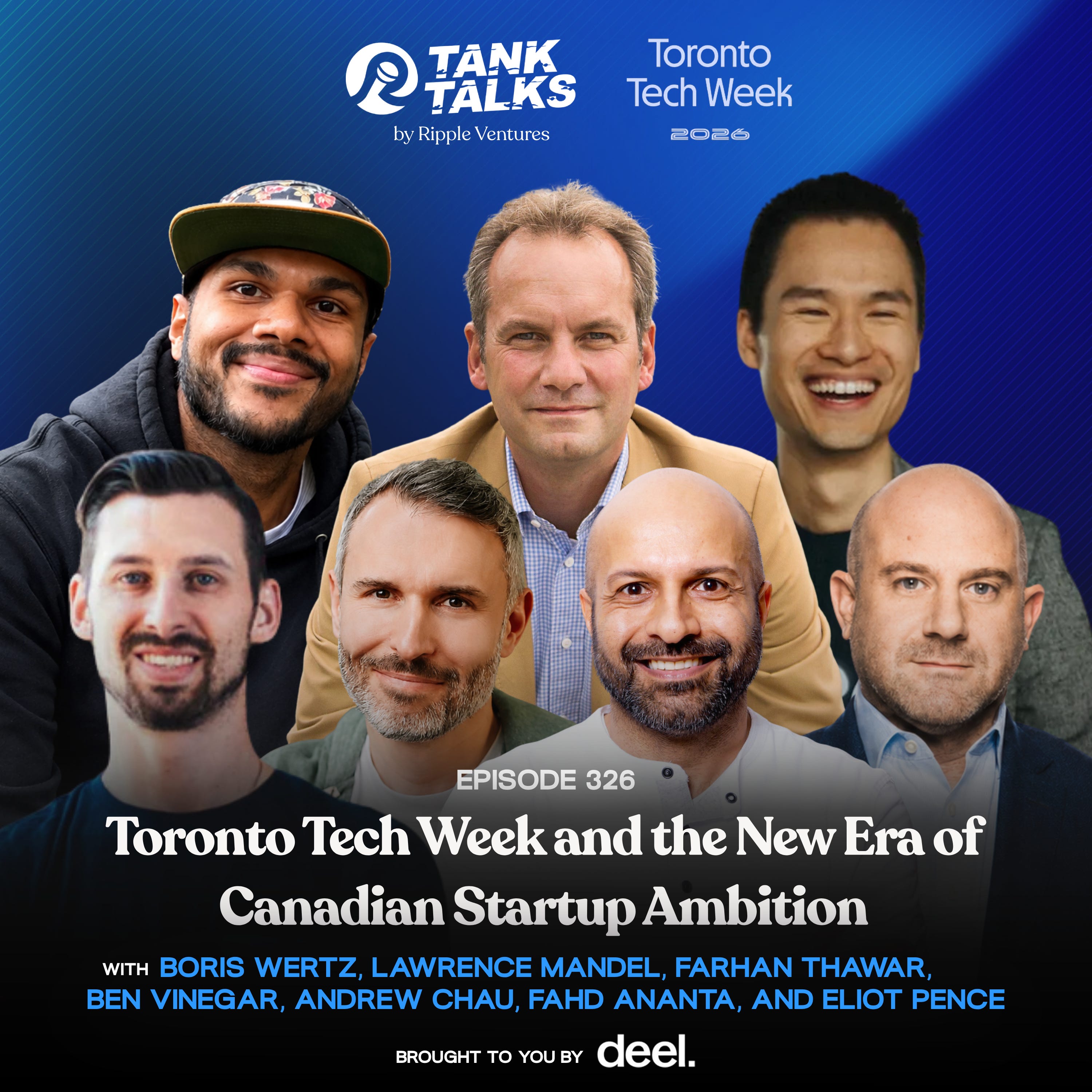
  • #327
    July 2 · 45 min

    Arctic Edge Panel: Defence Tech, Dual-Use, and the Future of Canadian Innovation

    Canada is entering one of the most important moments in its innovation history. As global tensions rise and national security becomes a growing priority, founders, investors, and governments are being forced to rethink how Canadian defence technology is built, funded, and scaled. In this special episode of Tank Talks, host Matt Cohen steps into the guest seat as part of a live panel recording from the Arctic Edge event, held during Toronto Tech Week on May 26th, 2026. Against the backdrop of escalating Arctic sovereignty concerns and a new era of national security, this panel, aptly named “The Backers,” brings together leading Canadian investors to dissect the burgeoning defence technology sector in Canada. Moderated by Matthew Lombardi of The Icebreaker, the discussion features Matt Cohen (Ripple Ventures), Devin Galloway (Garage Capital), and Mark Maybank (Maverix Private Equity). Together, they explore the seismic shift in Canadian capital markets, from the historical reluctance to fund defence to the current “cultural permission” that is finally opening doors. They tackle the complexities of dual-use technology, the harsh realities of government procurement, the critical “Series A gap” for sovereign-interest companies, and what it truly takes to build a world-beating defence company from Canada. Whether you’re a founder navigating the defence landscape, an investor looking for the next frontier, or simply interested in the future of Canadian sovereignty, this episode offers a raw, unfiltered look at the challenges and immense opportunities ahead. Why Defence Investing is Finally Changing in Canada (02:48) * Why Canadian defence technology has become a national priority after years of limited investment * How changes to venture fund mandates and government policy are opening new opportunities for founders * Why investors believe Canada is only at the beginning of its defence innovation journey Defence vs. Dual Use: The Debate Every Founder Should Understand (04:08) * Why some investors believe dual-use businesses reduce risk while others see them as a distraction * The challenges of serving both commercial and government customers at the same time * Why simply having the conversation around defence represents major cultural progress for Canada Why Procurement Still Matters More Than Capital (10:00) * The encouraging signs that Canadian procurement is beginning to move faster * Why government demand signals remain one of the biggest barriers to investment * How procurement reform could unlock the next generation of defence startups The Hottest Trends and Biggest Mistakes in Defence Tech (12:06) * Why AI, robotics, drones, and autonomous systems are attracting enormous investor attention * How experienced operators separate themselves from founders chasing hype * Why understanding military procurement is just as important as building great technology What Great Defence Founders Do Differently (15:33) * Why credibility, patience, and long-term relationship building matter more than moving fast * The importance of recruiting exceptional talent around a mission that inspires people * Why fundraising skills are critical for capital-intensive defence businesses Building Companies for Decades, Not Years (17:44) * Why defence investing requires a completely different timeline than traditional software startups * How venture firms are adapting to longer company-building cycles * Why patient capital is essential for creating world-changing businesses Expanding the Definition of Defence (21:00) * Why protecting critical infrastructure is becoming just as important as military applications * How ports, utilities, emergency services, and cities fit into the modern defence landscape * Why startups should think beyond government procurement when building go-to-market strategies Helping Startups Win Beyond Writing the First Check (25:11) * How strategic corporate relationships can accelerate growth alongside government contracts * Why investors are building networks of executives who actively support portfolio companies * The growing momentum behind procurement reform across Canadian institutions Advice for Founders Building Canada’s Next Great Defence Company (27:20) * Why founders should spend time with customers before perfecting the product * The importance of building relationships in Ottawa long before contracts arrive * Why the ambition should be to build a company that leads the world, not just Canada The Funding Gap Threatening Canadian Innovation (34:18) * Why Canada still struggles to fund companies through critical growth stages * How government matching funds and institutional investors could help close the gap * Why keeping Canada’s best companies at home will require larger pools of patient capital Valuations, Venture Math, and Keeping Canadian Founders in Canada (39:29) * Why Canadian and American venture markets operate under very different economic realities * The dangers of raising oversized rounds before a company is ready * Why solving Canada’s capital challenges is essential for keeping world-class entrepreneurs at home About the Panel Matt Cohen is the Founder and Managing Partner of Ripple Ventures, an early-stage venture capital firm investing in exceptional founders across Canada and the United States. Ripple has expanded from its roots in B2B software into frontier technologies, including defence and dual-use innovation. Mark Maybank is the Co-Founder and Managing Partner of Maverix Private Equity. Maverix focuses on growth-stage investments across North America, with defence and dual-use technologies forming a core part of its investment strategy. Devin Galloway is a General Partner at Garage Capital, one of Canada’s leading early-stage venture funds. Since 2014, Garage has backed founders building category-defining companies across software, deep technology, and defence. Connect with Devin Galloway on LinkedIn: https://www.linkedin.com/in/devongalloway Visit the Garage Capital website: https://www.garage.vc/ Connect with Mark Maybank on LinkedIn: https://www.linkedin.com/in/mark-maybank Visit the Maverix Private Equity website: https://www.maverixpe.com/ Connect with Matt Cohen on LinkedIn: https://ca.linkedin.com/in/matt-cohen1 Visit the Ripple Ventures website: https://www.rippleventures.com/ This is a public episode. If you would like to discuss this with other subscribers or get access to bonus episodes, visit tanktalks.substack.com
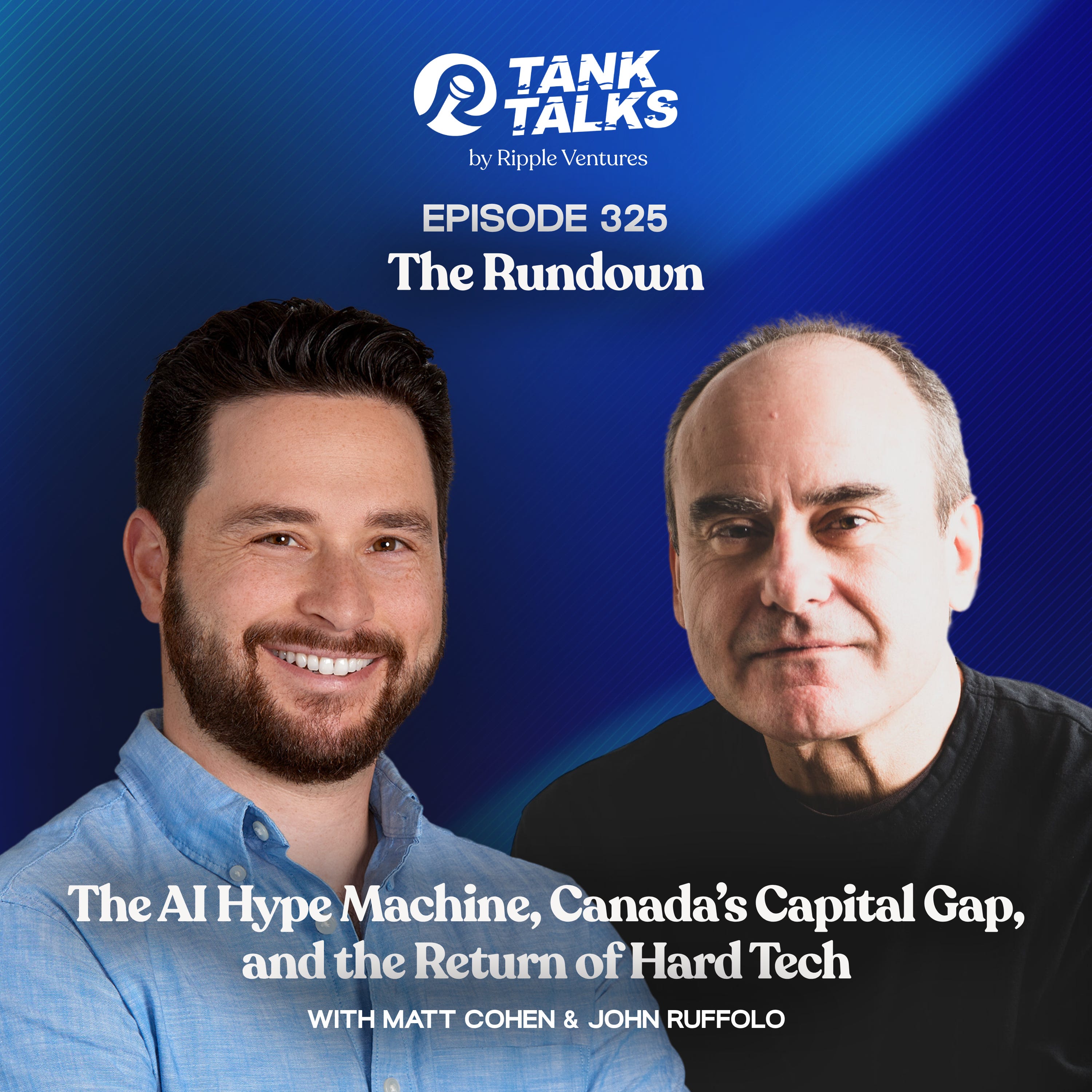
  • #326
    June 26 · 1 hr 18 min

    Toronto Tech Week and the New Era of Canadian Startup Ambition

    In this special episode of Tank Talks, Matt Cohen brings listeners inside Toronto Tech Week with a live podcast studio recorded at the Toronto Homecoming event. This episode captures a fast-moving snapshot of the Canadian tech ecosystem through candid conversations with Boris Wertz of Version One, Lawrence Mandel and Farhan Thawar of Shopify, Ben Vinegar of Modem, Andrew Chau of Neo Financial, Fahd Ananta of Opendoor, and Eliot Pence of Dominion Dynamics. Across venture capital, AI-native engineering, product management, fintech, defense tech, and startup turnarounds, the episode explores why Toronto Tech Week feels like a real inflection point for Canadian founders, operators, investors, and returning global talent. Matt and the guests dig into the biggest questions shaping startups in 2026: how AI is changing the speed of company-building, why “AI wrappers” are becoming harder to defend, how Shopify is rethinking engineering culture around AI, what agentic coding still gets wrong, why Neo Financial is taking on Canada’s banking oligopoly, what Opendoor’s turnaround reveals about velocity, and how Dominion Dynamics is building sovereign Canadian defense technology for the Arctic. The recurring theme is clear: Canada has talent, capital, technical depth, and ambition, but the ecosystem needs to move faster, take bigger risks, and stop hiding its best builders under a very polite rain jacket. Whether you’re a Canadian founder, venture capitalist, AI operator, fintech builder, defense tech investor, or someone trying to understand why Toronto Tech Week has become such a high-energy gathering for the startup community, this episode is packed with sharp insights from leaders building at the edge of what comes next. A note from our friends at Deel! Today’s episode of Tank Talks is brought to you by Deel, the global people platform that makes it easy to hire, pay, and manage talent in over 150 countries. From onboarding and payroll to local compliance and benefits, Deel brings everything into one simple system so your team can scale without the back-office chaos. If you’re building a distributed or international team, claim your Tank Talks-exclusive $5,000 in Deel credits today here! Boris Wertz on Early-Stage Investing in a No-Playbook AI Market (02:16) Boris Wertz of Version One Ventures compares Toronto Tech Week to other tech gatherings and explains why today’s early-stage investing environment is unlike anything he has seen before. He discusses the faster pace of innovation, why founders need to be nearly perfect from the start, and how AI-native companies require a different mindset than traditional SaaS startups. Lawrence Mandel on Shopify’s AI-Native Engineering Culture (07:13) Lawrence Mandel shares how Shopify’s engineering organization is building for merchants, APIs, analytics, and the third-party ecosystem while operating with a mostly remote team. He explains how Shopify’s intern program, engineering culture, and AI-first mindset are shaping the next generation of Canadian technical talent. Farhan Thawar on Remote Work, Bursts, and Shopify’s Meeting Armageddon (16:46) Farhan Thawar shares a blunt view on Shopify’s remote-first culture, saying most companies should not simply copy it unless they are deeply intentional. He explains Shopify’s “bursts,” company-wide summits, hackathons, and Meeting Armageddon, where recurring meetings are deleted so teams can rebuild their calendars from first principles. Ben Vinegar on Modem and AI Product Management (31:52) Ben Vinegar introduces Modem as an AI product management platform focused on the non-coding work behind software development. He explains why user conversations, product feedback, and customer experience are harder to understand deterministically, and why LLMs create a new way to analyze human signals at scale. Andrew Chau on SkipTheDishes, Neo Financial, and Taking on Canadian Banking (45:23) Andrew Chau shares the origin story of SkipTheDishes and how that experience led him to build Neo Financial. He explains why Neo chose one of the hardest and most regulated industries in Canada, and why the big five banking oligopoly creates a massive opportunity for a better consumer banking experience. Fahd Ananta on Opendoor, Turnarounds, and Speed (59:20) Fahd Ananta shares how he joined Opendoor during its turnaround after reconnecting with Kaz from Shopify. He explains how a simple congratulatory message turned into a strategic document, a fast offer, and a move into one of the most closely watched public-company turnaround stories in tech. Eliot Pence on Returning to Canada to Build Dominion Dynamics (01:04:34) Eliot Pence shares why he is moving back to Canada after years abroad and why he believes this is a unique moment for Canadian ambition. He explains that Dominion Dynamics is being built in Canada because the customer is here and because Canada is reinvesting in defense. About Boris Wertz Boris Wertz is the founder of Version One Ventures, an early-stage venture capital firm known for backing ambitious technology companies across emerging markets and frontier categories. A longtime investor in the Canadian and global startup ecosystem, Boris brings a clear-eyed perspective on how venture has changed in the AI era, why founders now need to move with more speed and precision than ever, and what separates truly defensible companies from short-lived AI wrappers. Connect with Boris Wertz on LinkedIn: https://www.linkedin.com/in/bwertz/ Visit the Version One website: https://versionone.vc/ About Lawrence Mandel Lawrence Mandel is a VP of Engineering at Shopify, where he helps lead major parts of Shopify’s core technical infrastructure, including merchant-facing systems, analytics, API layers, and the third-party developer ecosystem. With more than eight years at Shopify and a team of hundreds of engineers, Lawrence has been closely involved in how one of Canada’s most important technology companies builds, hires, trains, and adapts in an AI-native world. Connect with Lawrence Mandel on LinkedIn: https://www.linkedin.com/in/lmandel/ Visit the Shopify website: https://www.shopify.com/ About Farhan Thawar Farhan Thawar is a senior engineering leader at Shopify and one of the most distinctive voices in Canadian tech on AI, software development, and engineering culture. Known for his practical, high-conviction thinking, Farhan has helped shape how Shopify approaches remote work, engineering velocity, AI tooling, internal systems, and company-wide habits like Meeting Armageddon and Delete Code Club. His perspective blends deep technical experience with a founder-style obsession for speed, leverage, and better systems. Connect with Farhan Thawar on LinkedIn: https://www.linkedin.com/in/fnthawar/ Visit the Shopify website: https://www.shopify.com/ About Ben Vinegar Ben Vinegar is the founder and CEO of Modem, an AI product management platform built to help teams understand users, product feedback, and the non-coding work behind building great software. Before starting Modem, Ben was VP of Engineering at Sentry, where he spent years working on developer tools, engineering productivity, and software observability. His work now sits at the intersection of AI, product development, user insight, and the future of agentic software workflows. Connect with Ben Vinegar on LinkedIn: https://www.linkedin.com/in/benvinegar/ Visit the Modem website: https://modem.dev/ About Andrew Chau Andrew Chau is the co-founder and CEO of Neo Financial, one of Canada’s most prominent fintech companies, and a co-founder of SkipTheDishes. After helping build and exit one of Canada’s breakout consumer technology companies, Andrew turned his attention to one of the hardest markets in the country: banking. Through Neo, he is focused on giving Canadians a modern alternative to legacy financial institutions, with digital-first products spanning credit cards, savings, checking, mortgages, rewards, and major brand partnerships. Connect with Andrew Chau on LinkedIn: https://www.linkedin.com/in/andrew-chau-1046749/ Visit the Neo Financial website: https://www.neofinancial.com/ About Fahd Ananta Fahd Ananta is an operator and investor with experience across Shopify, Opendoor, and Roach Capital. He recently joined Opendoor during a major turnaround period, bringing with him the systems-driven operating mindset shaped by his time around Shopify’s culture of speed, abstraction, and company-building discipline. Fahd represents a new kind of Canadian tech operator: globally experienced, deeply technical, quietly intense, and focused on helping large, complex companies move faster. Connect with Fahd Ananta on LinkedIn: https://www.linkedin.com/in/fananta/ Visit the Opendoor website: https://www.opendoor.com/ About Eliot Pence Eliot Pence is the founder of Dominion Dynamics, a Canadian defense technology company focused on sovereign capability, Arctic security, and dual-use technology. A former leader at Anduril, Eliot returned to Canada to build a defense company designed for speed, risk-taking, and real-world deployment. His work is centered on helping Canada rebuild ambition in national security, defense procurement, Arctic infrastructure, and the kind of company-building required to create globally consequential Canadian technology. Connect with Eliot Pence on LinkedIn: https://www.linkedin.com/in/eliotpence/ Visit the Dominion Dynamics website: https://www.defendthedominion.com/ Connect with Matt Cohen on LinkedIn: https://ca.linkedin.com/in/matt-cohen1 Visit the Ripple Ventures website: https://www.rippleventures.com/ This episode is brought to you by Deel. Receive our exclusive offer here: https://www.deel.com/partners/tanktalks/?utm_source=podcast&utm_medium=partner-sourced&utm_content=rippleventures&utm_place=organic-community This is a public episode. If you would like to discuss this with other subscribers or get access to bonus episodes, visit tanktalks.substack.com

  • #325
    June 23 · 52 min

    The Rundown 6/23/26: The AI Hype Machine, Canada’s Capital Gap, and the Return of Hard Tech

    In this episode of Tank Talks, recorded live at the Global Startups Conference, Matt Cohen and John Ruffolo take the stage for a wide-ranging conversation on the future of Canada’s innovation economy, the AI infrastructure race, and why this moment feels different, even if John still refuses to fully believe “this time is different.” The conversation opens with SpaceX’s historic IPO, massive valuation hype, and the question of whether public market demand can support a new wave of AI and frontier tech giants like OpenAI and Anthropic. Matt and John then dig into one of the biggest strategic questions facing founders today: should startups build on top of frontier AI models, or will those platforms eventually come for their margins? John draws a sharp comparison to Hootsuite’s dependence on social media APIs, warning founders not to build businesses where a monopolistic platform can eventually “come calling.” From LLM unit economics and inference costs to local models, edge compute, AI sovereignty, and Canada’s weak position in the full AI stack, this episode breaks down why real moats may come from deep tech, defense, energy, chips, space infrastructure, and hard-to-build businesses. The discussion also tackles Canada’s AI strategy, the tension between innovation and regulation, the rise of dual-use defense startups, the shortage of domestic growth capital, and whether Canada is becoming a farm team for U.S. acquirers. John and Matt close with a candid look at family offices, immigrant founders, Canadian ambition, and what actually separates fundable founders from the noise: purpose, focus, and the ability to build something hard when everyone else is chasing the latest shiny object. SpaceX’s IPO and the return of the hype machine (02:48) Matt and John open with the massive SpaceX IPO, its soaring valuation, and whether the market is being driven by fundamentals or pure scarcity-fueled hype. John argues that discounted cash flows still matter, even when investors are caught up in the next great frontier tech story. Satya Nadella’s warning to AI founders (05:56) Matt brings up Satya Nadella’s warning about relying too heavily on frontier models. The discussion explores why businesses built on top of OpenAI, Anthropic, or other LLM platforms may eventually face direct competition from the very infrastructure they depend on. Canada’s AI strategy: long overdue, but too unfocused? (16:14) Matt and John assess the government’s AI strategy and the promise that Canadian AI adoption could add massive GDP growth. John says the strategy contains useful objectives, but risks becoming a laundry list without a clear answer to the question: which pedal are we actually pressing? Building trust in AI without creating regulatory capture (21:46) The audience asks how Canada can build trust in AI adoption. John argues for clear guardrails, but warns that large AI players may eventually welcome heavy regulation because it protects incumbents and locks out smaller competitors. Defense tech is hot again, but not every startup is real (25:19) Matt and John discuss the surge of interest in dual-use defense technology. John warns that when government money appears, everyone suddenly claims to be a defense company, making it harder to separate serious builders from PowerPoint tourists. Is building in Canada patriotic or financially irrational? (33:19) Matt asks the blunt question: in 2026, is staying in Canada a patriotic endeavor or a financial mistake? John argues Canada has the talent, ecosystem, and raw materials, but lacks confidence and ambition at the capital layer. Why Canada needs real growth capital, not just early-stage funding (37:34) John explains why he created Mavericks to address the gap in Canadian growth equity. The issue is not founder ambition, but the lack of domestic capital willing to write meaningful checks once companies need to scale past the early stage. Family offices, education gaps, and Canada’s missing innovation capital (43:56) Matt explains why many Canadian family offices are still learning how venture and startup investing work. Unlike real estate or private equity, venture requires patience, a tolerance for the J curve, and a different understanding of risk and return. Canada’s AI edge may be hiding in resources, minerals, and chip substrates (49:43) The episode closes with a discussion of Canada’s possible edge in AI infrastructure through natural gas, rare earth materials, zinc byproducts, indium phosphide, and semiconductor supply chains. Matt and John argue that Canada’s issue is not a lack of resources, but a lack of permission, capital, and long-term conviction to build around them. Connect with John Ruffolo on LinkedIn: https://ca.linkedin.com/in/joruffolo Connect with Matt Cohen on LinkedIn: https://ca.linkedin.com/in/matt-cohen1 Visit the Ripple Ventures website: https://www.rippleventures.com/ This is a public episode. If you would like to discuss this with other subscribers or get access to bonus episodes, visit tanktalks.substack.com

Showing 1–20 of 21 episodes