Artwork for SWIMMING WITH THE POD
Sports

SWIMMING WITH THE POD

Marc West

There’s more to ocean swimming than swimming in the ocean.

  • 58 episodes
  • Updated Mar 24, 2025

Episodes58

  • Jul 5, 2019 · 29 min

    Ocean swimming... with whales (part 2)

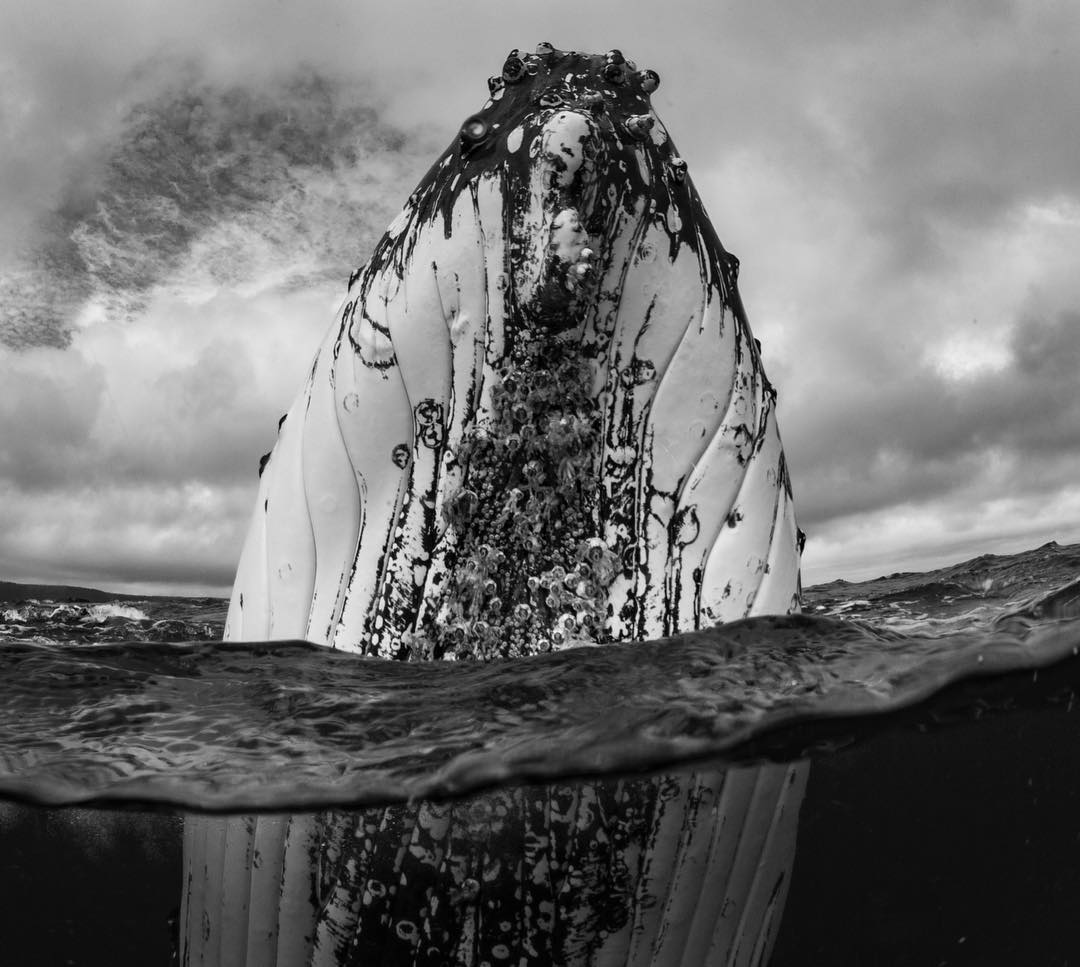
    Scott Portelli is an acclaimed wildlife and underwater photographer, and has swum with whales and other magnificent creatures of the deep in some of the world's most exotic locations, like Antarctica, Tonga, the Falkland Islands and Norway. Among many other awards, Scott was awarded Wildlife Photographer of the Year in 2016, and he runs tours that you can join up with around the world to swim with whales. Songs in this episode - all licensed under a Creative Commons License: Message from the whales - Ulrik Grahn-Olsen Whales of the north - Hydrosphere Orca - Skinny Lags Orca - Ani Onix Sapphire - Tobu Image from Scott Portelli on Instagram

  • Jun 21, 2019 · 24 min

    Ocean swimming... with whales (part 1)

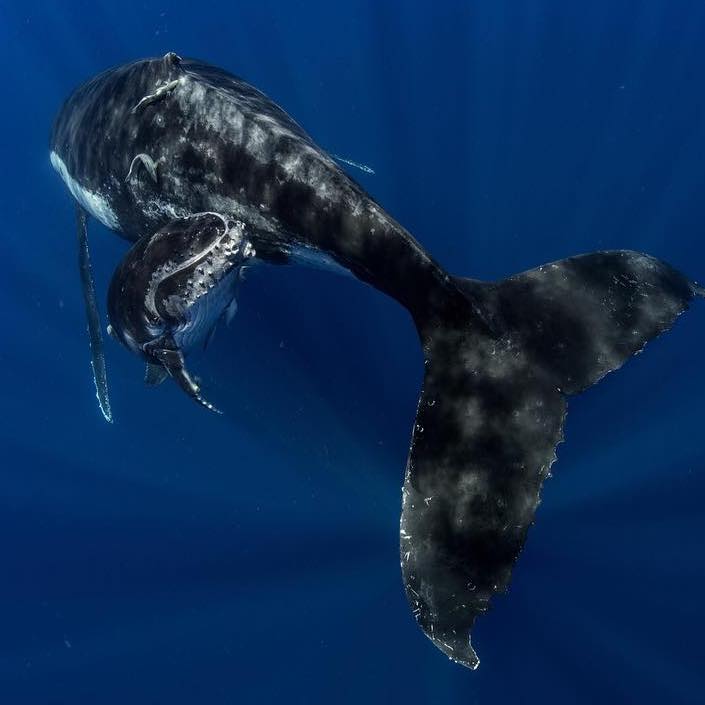
    During winter, you're probably familiar with human snot, but are you familiar with whale snot? Dr. Vanessa Pirotta is! Vanessa is a marine biologist, naturalist and science communicator, and has been collecting snot from whale spouts using bespoke drones in order to understand whale health. She's collected viruses, bacteria and DNA from the snot, in a much less invasive way than other methods. She's also run whale watching tours, swum with whales in Tonga and observed them in Antarctica. Songs in this episode - all licensed under a Creative Commons License: Whales - Matt Matic Hipster whales - Jamophone Luminous Snot - Sober Spring Sapphire - Tobu Image from Scott Portelli on Instagram

  • Jun 5, 2019 · 19 min

    Ocean swimming... and the box jellyfish antidote

    Last time we talked about stingers, we learnt some valuable insights - don't wee on them! Turns out, there may be some better solutions on the horizon. Associate Professor Greg Neely, from the School of Life and Environmental Sciences at the University of Sydney, has discovered an antidote to the sting of the most venomous creature on Earth - the Australian box jellyfish. Greg's antidote, discovered using CRISPR genome editing technology, blocks the symptoms within 15 minutes, and overlaps interestingly with research conducted into cholesterol. This means that the drug development may already be out there and we could see something in the hands of life-savers sooner rather than later. Songs in this episode - all licensed under a Creative Commons License: Jellyfish - Fidser Jellyfish in space - Kevin MacLeod Sapphire - Tobu Image from Will Fisher

  • May 17, 2019 · 1 hr 23 min

    Ocean swimming... and oceanswims.com

    Whether you are an experienced or aspiring ocean swimmer, if you are in Australia or New Zealand, you will visit oceanswims.com. Oceanswims.com handles the entries for the majority of organised swims in this part of the world, as well as being home to commentary, photos, witty banter, results and competitions. Paul Ellercamp and Suanne Hunt are the ocean swimming doyens who run oceanswims.com and Ocean Swim Safaris, and we talked rather pleasantly over tea and macaroons about all things ocean swimming, including how the sport has grown over the last 20 years, technology changes, drafting, some of the characters of the sport, swimming around the world, and Paul's starring roll, with a former Prime Minister (another great Bob Hawke story), in the classic Australian TV soap A Country Practice. See if you can hear the puppy sleeping in the background on Suanne's lap! Songs in this episode - all licensed under a Creative Commons License: Whale Film - James Ellercamp Music Ocean - KV Ocean - Lilat Ocean - Unfinite Ocean - hanimaltos Ocean - Andreas Bu Sapphire - Tobu Image from Paul on twitter

  • Apr 16, 2019 · 39 min

    Ocean swimming... and sand

    Dr Gary Greenberg is a scientist, author, teacher and photographer who combines his passion for art and science by exploring the hidden small-scale dimensions of nature. Gary has invented multiple high-definition, three-dimensional light microscopes (for which he has multiple US patents) and nowadays focuses his microscopes on common objects, such as grains of sand, flowers, and food. He's looked at sand from all round the Earth, but the funkiest sand he has examined is from the Moon. He's hoping he can get some Mars sand! You can identify a beach (or heavenly body) from its sand, which depends on the temperature, surf and erosion conditions and marine environment. You can see Gary's sand photography for yourself at sandgrains.com. And you might like to do some searching for the in vitro human pancreatic cancer cells he turned into the planet Kyrpton in the first Superman movie - the nuclei of the cells look like impact craters! Songs in this episode - all licensed under a Creative Commons License: Sand - Viasol Sand - Adrian Rivas Sand Planet - JubyPhonic Laid in the sand beside the sea - Seasidetrip 90 Sand - Sean Tierney Sapphire - Tobu The image is from sandgrains.com and is of sand from Maui.

  • Mar 17, 2019 · 42 min

    Ocean swimming... and ocean pools

    Ocean pools are a delight. I love swimming in them, and they are also quite often simply beautiful places to be. Dr. Marie-Louise McDermott has written a PhD on ocean pools (Wet, wild and convivial: past, present and future contributions of Australia’s ocean pools to surf, beach, pool and body cultures and recreational coasts) and runs a fantastic website dedicated to ocean pools, All into ocean pools inc. I had a wonderful chat with Marie-Louise about her love of ocean pools, why Australia (and Sydney in particular) has such a rich tradition of them, and their influence on Australian life. Songs in this episode - all licensed under a Creative Commons License: Ocean - THBD Ocean - Frederick Ocean - Santamaria Pool - Veronica Judin Pool - Hirnlego Sapphire - Tobu Image: Mona Vale Beach By Gab Scanu

  • Feb 14, 2019 · 32 min

    Ocean swimming... and swimming caps

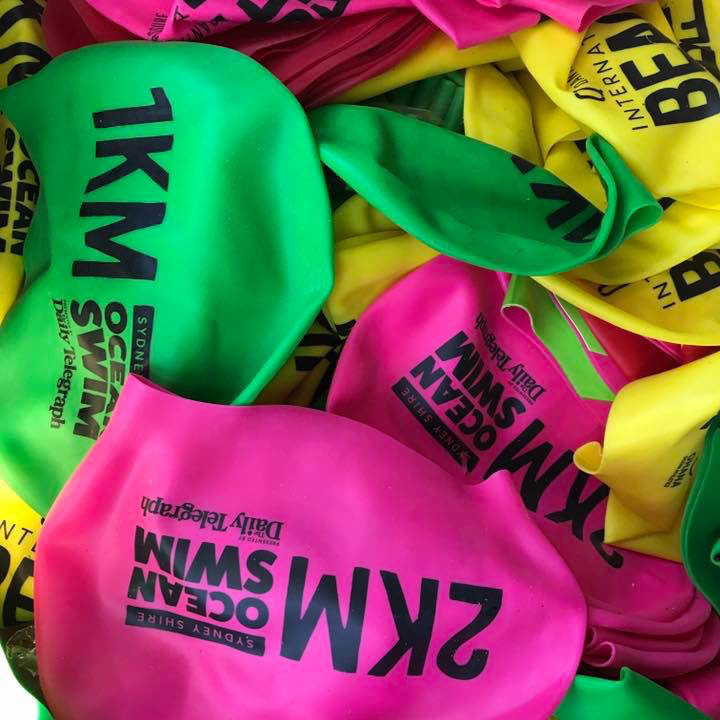
    Swimming caps are a large source of ocean swimming waste. Often only once used, destined for land-fill or the ocean itself, events have not got a handle on to how to appropriately use them. And despite popular belief, they do not break down in the environment in any useful timeframe. They are important facets of ocean swimming safety so that swimmers can be seen in the water and in their racing waves, but at the end of each season, even mediocre swimmers like myself end up with a bag full of caps, never to be used again. So, what can you do? I've been collecting caps for Recap over the last few summers to give them on to good causes. One of those places they go is Reverse Garbage, an organisation that saves materials from landfill and renews their value by making them available for reuse by families, students, artists and community groups. Each year, they take about 35 thousand cubic meters of waste for reuse, saving tonnes of raw material, energy and emissions. I spoke with Kirsten Junor, Creative Director at Reverse Garbage, about what she does with the caps, what Reverse Garbage does in general, interspersed with all sorts of reuse/recycle discussion. We recorded in the pub - surely the best way to spend an afternoon recording a podcast - so occasionally the sound quality dips. Songs in this episode - all licensed under a Creative Commons License: Kalon - extenz Positive Happy - PeriTune Atlantis - Scandinavianz Endless Summer - extenz Eventide - mezhdunami Show me the way - Vendredi Okay - True Magenta Sapphire - Tobu

  • Jan 20, 2019 · 37 min

    Ocean swimming... with jellyfish

    Things that can sting you are part of every ocean swimming experience, not matter where you are in the world. Associate Professor Jamie Seymour, Director of the Tropical Australian Stinger Research Unit at James Cook University, studies venomous animals and has a particular interest in decreasing the envenomings of humans by jellyfish. He has some personal experience in this area too - he has been stung by Irukandji 11 times! He is a world leader in the studies of the ecology and biology of Box jellyfish (his favourite jellyfish), and his work has led to pharmaceuticals being made from animal venom. We chatted about how to treat ocean stings (not with vinegar nor, funnily enough, urine!), habitats and the influence of climate change on the spread of stingers, stinger evolution, the difference between poison and venom, and between a toxicologist and a toxinologist, and a host of other jellyfish tangents (tentacles?). Songs in this episode - all licensed under a Creative Commons License: Addict - Peyruis Night Out - LiQWYD Want you - ZAYFALL I Wonder - PYC Sapphire - Tobu

  • Nov 30, 2018 · 19 min

    Ocean swimming... in rips

    Rips claim an order of magnitude more lives than shark attacks in Australia, and are arguably the most dangerous facet of going to the beach. Associate Professor Rob Brander, also known as Dr Rip, is a coastal geomorphologist who studies morphodynamics (hydrodynamics, sediment transport, morphology) of coastal systems, with a particular interest in rips and the safety of beachgoers. He runs a beach education program called Science of the Surf, and one of the cool things he does is publish a Rip of the month. You might like to read his book, Dr. Rip's Essential Beach Book, or check out the National Geographic documentary, Rip Current Heroes. Coming into the summer, listen in as Rob lets you know how to spot a rip and what to do if you're caught in one. Songs in this episode - all licensed under a Creative Commons License: Groove It - ZAYFALL Somebody - ZAYFALL Paraclet - Amaria Breeze - MBB Sapphire - Tobu

  • Jun 30, 2018 · 29 min

    Ocean swimming... with shark nets

    Shark nets are fairly common across popular Australian tourist beaches, but beyond giving swimmers a perception that they are being protected from sharks, do they actually work? Jordan Sosnowski is the Advocacy Director for Action for Dolphins, a group that aims to stop cruelty to, and gain legal protection for, small cetaceans (dolphins and other small whales). We chatted about how shark nets probably don't work to keep sharks and swimmers apart, that shark nets have an incredible toll on marine life, that sharks don't hunt you down, that opinions on the use of shark nets are changing, and the non-lethal options that are out there. Songs in this episode - all licensed under a Creative Commons License: Epic Song by BoxCat Games Earth Tones by Hpnotic718 Ave Marimba - Kevin MacLeod Sapphire - Tobu Image from Sea Gazing

  • May 26, 2018 · 1 hr 16 min

    Ocean swimming... in ice

    Ram Barkai is the founder of the International Ice Swimming Association - they are all about swimming in water less than 5 degrees Celcius. Ram has swum many of the world's toughest swims, including in Antarctica, and holds multiple world records. The IISA introduced the Ice Mile as its signature achievement; the Ice Mile is one mile in water of 5C or less. The swim must be unassisted and only a pair of goggles, a cap and a standard swimming costume can be worn. In 2014, the IISA introduced the 1 km ice event, and Ram's ambition is to have the 1 km event introduced to the 2022 Winter Olympics. I've left this episode long as I found it absolutely fascinating, and Ram very entertaining! Songs in this episode - all licensed under a Creative Commons License Lullaby - Joakim Karud Yukowla - Yuku Discotheque - Bluehost Sapphire - Tobu don't leave me here alone - Artifical.Music Real Bad Girl - Audionautix

  • Apr 28, 2018 · 35 min

    Ocean swimming... the English Channel

    Sally Catt is an ocean swimmer who this year is tackling the English Channel. She is raising money for Save The Box, a campaign to raise awareness and fundraising for gynaecological cancer research, as part of the Australia New Zealand Gynaecological Oncology Group (ANZGOG). I chatted to Sally about her journey to this point and what it takes to swim that far (>30 km) including long distance training, cold water acclimatization, going to the toilet while you're swimming, diet, travel companies, qualifying swims and English Channel swim operators. Listen in for tips if this is something you want to do! It is not out of reach. You can sponsor Sally's journey for charity here. Songs in this episode are all licensed under a Creative Commons License and are by Bensound, who provides royalty free music. The songs are Funky Element, Jazzy French, Moose and Ukulele.

  • Apr 3, 2018 · 44 min

    Ocean swimming... training

    Andre Slade runs OceanFit, which is an open water swim school run at Bondi Beach. Andre has been involved in ocean swimming for a long time, and knows a thing or two about ocean swimming training, tactics and skills. He's also started a surf life saving magazine and written surf life saving policy. Songs in this episode - all licensed under a Creative Commons License Beach Buggy Ride - SIRPRICE Acoustic Breeze - Bensound Hot Mustard - S Strong Sapphire - Tobu

  • Mar 13, 2018 · 33 min

    Ocean swimming... in polluted rivers

    The Cooks River in Sydney has been variously described as an open sewer, the River of Death, and one of Australia's most polluted rivers. Yet there are plans - possibly rather hopeful plans - to bring swimming back to the river. There are numerous such rivers in cities around the world, so how realistic is the idea that you could bring swimming back to polluted city rivers? Could ex-industrial rivers join the oceans (and dams) of Australia as recreational swimming spots? Professor Stuart Khan from the School of Civil and Environmental Engineering at UNSW studies sustainable urban water management, and has studied chemical composition of the Cooks River, and how the pollutants got there. He thinks that, whilst it may be a long way off, there are precedents around the world for bringing back swimming to polluted rivers. You can read more on efforts to remediate the Cooks River at the Cooks River Valley Association. Songs in this episode - all licensed under a Creative Commons License Funk City - Reatch Up In My Jam - Kubbi Cease - A Himitsu Sapphire - Tobu

  • Jan 16, 2018 · 19 min

    Ocean swimming... with Beachwatch

    Beachwatch test the water quality of Sydney beaches to see if they are suitable for swimming. The program also partners with councils and wastewater managers for swimming sites along the NSW coast. Water samples are collected and tested for bacteria, which may suggest faecal pollution, and influence whether the beach is safe for swimming. The program started in 1989 due to sewage pollution washing up on Sydney beaches - there was literally poo on the beach... These days, water quality has greatly improved, largely due to new deep ocean outfalls for coastal sewage treatment plants, as well as improvements in wastewater and stormwater management. The major reason why a beach may be unsafe to swim these days is because of recent rainfall, which can bring stormwater and wastewater overflow. Beachwatch also provides weekly star ratings for beaches, and the annual State of the Beaches report. Dr. Meredith Campey is the Beachwatch Program Manager, and I spoke to her about what Beachwatch does, its history, how they test and what they test for, and the various reasons a beach may be unsuitable for swimming. You can receive Beachwatch updates on Facebook and Twitter, subscribe to their RSS feeds, or subscribe to daily pollution forecasts. Songs in this episode - all licensed under a Creative Commons License Exit the Premises - Kevin MacLeod Tonic and Energy - Elexive Adventures - A Himitsu A new beginning - Bensound Sapphire - Tobu Episode image - licensed under a Creative Commons License: Yellow Bioman

  • Dec 12, 2017 · 44 min

    Ocean swimming... in plastic pollution

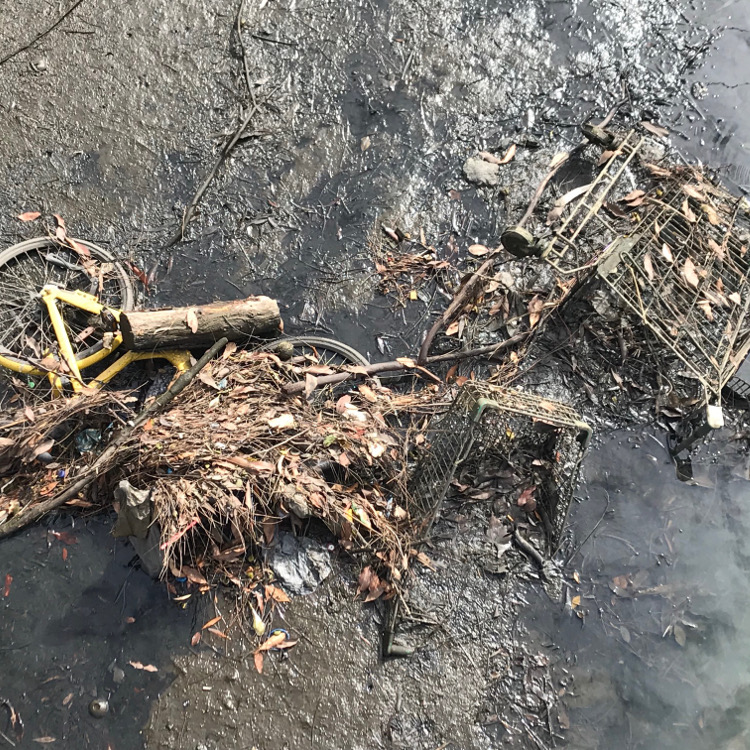
    It is estimated that ocean plastics will outweigh ocean fish by 2050, according to a study by the World Economic Forum. There are at least 5.25 trillion plastic pieces floating in the oceans right now. Dr. Jennifer Lavers is a Research Scientist at the Institute for Marine and Antarctic Studies at the University of Tasmania. She is a marine eco-toxicologist with expertise in tropical and temperate seabird ecology, plastic pollution (marine debris), invasive species management, and fisheries by-catch. Her research examines how marine apex predators, such as seabirds, act as sentinels of ocean health, and focuses on pollutants of aquatic ecosystems such as plastic, heavy metals, Persistent Organic Pollutants (POPs) and radionuclides. She is also very interested in science and conservation outreach. Jennifer also has an Erdos-Bacon number, as a star of the stage and screen, as well as of academia! I chatted to Jennifer about her work, starting with her article This South Pacific island of rubbish shows why we need to quit our plastic habit. Songs in this episode - all licensed under a Creative Commons License Happy Life - Fredji Acoustic guitar arrangement for song - TRow A new beginning - Bensound Buddha - Kontekst Sapphire - Tobu

  • Nov 27, 2017 · 35 min

    Ocean swimming... on other planets

    Can you ocean swim on other planets? Perhaps! Water is far more common in the Universe than you might think, and there are many other oceans out there, even on our neighbours in our own solar system. Associate Professor Jonti Horner is an astronomer and astrobiologist who works in the Computational Engineering and Science Research Centre at the University of Southern Queensland. We caught up at the Australian Space Research Conference. It is currently thought that there are oceans deep beneath the surface of some of Jupiter's and Saturn's moons, as well as astonishingly, on asteroids and Pluto. The Saturnian moon Titan, as well as likely having a subsurface water ocean, may have standing hydrocarbon oceans on its surface. Mars and Venus may have had oceans in the past. And it's almost certain that outside the solar system, there are planets just like Earth with vast water oceans. Could these locations be the home of future extreme sports? We also chatted about publically funded science, future space missions and the future of Earth. Songs in this episode - all licensed under a Creative Commons License: Moon - LEMMiNO Free Your Soul - SIRPRICE Tonic and Energy - Elexive Sapphire - Tobu

  • Nov 17, 2017 · 40 min

    Ocean swimming... with flesh-eating sea lice

    A Melbourne man recently emerged from the ocean with his legs covered in blood seeping from thousands of tiny wounds. Dr. Murray Thomson from the School of Life and Environmental Sciences at The University of Sydney, thinks that Cirolana harfordi, a small crustacean that lives on the coast and in rivers, may have been to blame. These creatures have been known to take down sharks, have bitten divers on the face and have even skeletonised the top half of a human, using their slicing, guillotine-like mouth parts. If they're around where you're swimming, you've probably got about 10 minutes to get out of the water! I chatted to Murray about his research into these fascinating (terrifying...) creatures, their various types and behaviours, as well as their evolution and precautions you should take if you think there may be Cirolanids around. Songs in this episode - all licensed under a Creative Commons License: Dubstep - Bensound Adventures - A Himitsu Acoustic guitar arrangement for song - TRow Sapphire - Tobu