Skip to content
Artwork for Studio Central and Eastern Europe

Studio Central and Eastern Europe

fcee

In our podcast series, produced by the Forum on Central and Eastern Europe at KU Leuven, we explore the latest academic research on the region. Through 20-minute conversations, researchers share their personal experiences from fieldwork, along with their latest findings and ideas. Tune in to hear captivating stories about politics, history, anthropology, sociology, literature, music, visual arts, and architecture.

Play
  • 20 episodes
  • Avg 21 min
  • English
  • S1 · E38
    July 21 · 26 min

    Olivera Simić on How to Understand the Intellectual Turned War Criminal Biljana Plavšić

    In this episode, Peter Vermeersch, Professor of Political Studies at KU Leuven, speaks with Olivera Simić, Professor at Griffith University, about Biljana Plavšić—a respected biologist and university professor who became a senior Bosnian Serb political leader during the Bosnian War and was later convicted of crimes against humanity by the International Criminal Tribunal for the former Yugoslavia. At the heart of the conversation is Simić's effort to gain access to Plavšić and build a relationship that led to many hours of conversations - and to the publication of her latest book, Madam War Criminal. Reflecting on this unusual encounter, Simić discusses what it means to listen to, write about, and seek to understand a perpetrator of mass violence without diminishing responsibility for their actions. The conversation explores human complexity, asking how an accomplished intellectual became involved in a political project that led to the persecution, expulsion, and suffering of thousands.

  • S2 · E37
    July 6 · 20 min

    Katarzyna Wojnicka on How to Dismantle Patriarchy

    What would it take to build a more equal society—and what role do men have in making it possible? In this episode of Studio CEE, Maryna Shevtsova of KU Leuven speaks with Katarzyna Wojnicka, sociologist and Associate Professor at the University of Gothenburg, whose research explores masculinities, gender equality, and social change. Drawing on years of work in the field, Wojnicka argues that dismantling patriarchy requires more than engaging men as allies. It demands that we place men themselves within the conversation about unequal power relations and examine how masculinity is shaped by—and helps reproduce—social hierarchies. The discussion also turns to a distinction often overlooked in public debates: the difference between care and protection. While both may appear benevolent, Wojnicka explains how they relate to power in markedly different ways, with important implications for gender equality and social justice.

  • S2 · E36
    June 30 · 46 min

    Exploring World Enemy No. 1 with Jochen Hellbeck

    This is an unedited recording of a lecture delivered earlier this year by Jochen Hellbeck for the Forum on Central and Eastern Europe. Hellbeck—a distinguished historian of modern Russia and author of the award‑winning Revolution on My Mind: Writing a Diary Under Stalin and Stalingrad: The City That Defeated the Third Reich—discusses his latest book, World Enemy No. 1: Nazi Germany, Soviet Russia, and the Fate of the Jews, in conversation with KU Leuven historian Georgi Verbeeck.

  • S2 · E35
    June 19 · 23 min

    Konrad Klejsa on Film Censorship in Socialist Poland

    In this conversation, Kris Van Heuckelom, Professor of Polish Studies and Cultural Studies at KU Leuven, speaks with Konrad Klejsa (University of Łódź), a leading scholar of socialist-era Polish cinema. Their exchange turns to the often paradoxical workings of film censorship under communism: not merely as a blunt instrument of suppression, but as a filtering mechanism that withheld some films while—selectively—allowing others to circulate. Klejsa reflects on the uneven privileges granted to specific circles of viewers, as well as on the fissures that opened within the system, where alternative modes of access and interpretation could emerge in the cracks of official control. You can explore the Foreign Feature Films in People’s Poland database—an open-access academic resource, created by Konrad Klejsa and documenting the circulation of international cinema in the PRL—here: http://watchedinprl.uni.lodz.pl

  • S2 · E34
    June 8 · 21 min

    Zsuzsa Csergő on Minority Agency and the Politics of Belonging

    What does it mean to live as a minority “at home”? How do non-titular populations navigate political systems designed to secure a comfortable majority? And under what conditions can minorities exercise meaningful democratic agency? In this episode of Studio Central and Eastern Europe, Peter Vermeersch, Professor of Political Science at KU Leuven, speaks with Professor Zsuzsa Csergő, Professor of Nationalism and Democracy Studies at Queen’s University in Canada. A leading scholar of nationalism and minority politics, Csergő reflects on her long-standing research into the tensions between nation-building and democratic pluralism in Central and Eastern Europe, alongside her current work on resilient minorities and the Minority Institutions Database. At the heart of the conversation is what Csergő terms the “minority condition”: a persistent positionality that shapes how individuals and communities relate to the state. Rather than viewing minorities as guests in a host country, she reframes them as “homeland minorities”—populations rooted in place, yet often denied full recognition. This shift opens onto deeper questions of historicity, language rights, and the criteria by which belonging is politically acknowledged. Drawing on comparative insights—from Hungarian and Polish minorities to Russian-speakers in the Baltic states—Csergő outlines four key structural axes that shape minority life: numbers, place, time, and status. These dimensions, she argues, define the resources and constraints within which minorities organise, sustain cultural institutions, and pursue collective goals. The discussion invites listeners to rethink the democratic stakes of diversity, and the subtle, ongoing labour required to inhabit it. Peter Vermeersch: Hello, everyone. You're listening to the podcast of Studio Central Eastern Europe of the KU Leuven. In our 20-minute episodes, we discuss the latest research on the region. I'm Peter Vermeersch, professor at KU Leuven, and with me today is Zsuzsa Csergo. Zsuzsa is professor of nationalism and democracy studies in the Department of Political Studies at Queen's University in Canada. She specializes in the study of nationalism and contemporary challenges to democracy, with a particular expertise on Central and Eastern Europe. Zsuzsa's research contributes to the understanding of tensions between nationalism and democracy in multiethnic societies, and she is the author of many books and articles, among them, Talk of the Nation: Language and Conflict in Romania and Slovakia from 2007, Cornell University Press. And currently, she is working on the topic of resilient minorities and sources of minority democratic agency in majoritarian states based on comparative research in Central and Eastern Europe. And she's also leading the Minority Institutions Database. So, lots to talk about. Zsuzsa, welcome to the studio. Zsuzsa Csergo: Thank you for the invitation, Peter. I'm delighted to be here. Peter Vermeersch: Let's talk about the focus of your research, ethnolinguistic minorities in Central Europe. Could you explain a little bit how you came to this topic? Zsuzsa Csergo: Yes, I'm happy to do that I think many of us, or maybe most of us who are doing research, especially empirical research are guided by some broader, larger question that motivates our research. And in my case, that has been the question of how persistent ethnic minorities seek political agency in majoritarian states. By majoritarian states, I mean states where the state center is engaged in majoritarian nation building, establishing policies, institutions to ensure that the mainstream culture, the core culture becomes dominant in the state. This is what the logic of the nation-building project has been: to create comfortable cultural majorities in states for reasons that have to do with legitimacy and all that. And it always leaves some people outside the mainstream. I focus on persistent ethnic minorities in the sense that these are minorities that are not just different from the mainstream because there are always all kinds of different reasons why people do not align with the mainstream. But these are ethnocultural minorities in the sense that they have something that creates a commonality, a shared culture that is different from the mainstream, from the core culture, and they want to maintain it. Peter Vermeersch: And language is an important part of it, I suppose? Zsuzsa Csergo: Language is an important part of it, not only in Central and Eastern Europe. But I think in Central and Eastern Europe, the boundary maker tends to be language. So, I think of language as well as ethnicity, race and religion and other forms of boundary making, cultural boundary making as theoretically equivalent in a sense. In most cases they are interrelated. But there's something about language that makes it easier for linguistic minorities to tell their own story to create some kind of cultural narrative that creates the boundary. This is also why I think language is important. Peter Vermeersch: Could you give some examples of cases that you've been, working on extensively? Zsuzsa Csergo: I'm a comparativist and, within that framework, I have been working primarily on Hungarian minorities. That's a language I speak, which makes it easier, obviously. I've been working on Hungarian minorities in Romania, Slovakia, recently I have also added Hungarians in Serbia. But about 15 years ago, I started doing research also on Russian speakers and Poles in the Baltic states. Peter Vermeersch: Very important topics. When you research these minorities and you compare these cases, you look at what you call democratic agency. What do you mean by that? What is exactly the democratic agency in these linguistic minorities, in all these places? Zsuzsa Csergo: Great question that I've been thinking about for many years. Political agency generally means that people have the capacity to have a say in the rules by which they live. And in majoritarian states where there is majoritarian nation-building, typically members of the core population, let's call them the majority members, have a sense of titularity in the state. That also means that they have a right within the boundaries of the state to have institutions in their language or in their culture, depending on what the boundary maker is. [As part of] the institutions that reflect their culture, in the case of linguistic minorities, there will always be schools in their language, culture institutions in their language, courts are going to be speaking their language, government at all levels is going be speaking their language. Whereas minorities have to demonstrate that they're worthy of it. This is what drives my research: the question of how minority members, persistent minority members, seek agency in this way. Peter Vermeersch: I can imagine that it's different in various contexts. In Slovakia, let's say, the Hungarians have opportunities to have schools in Hungarian or libraries or cultural institutions in Hungarian, but it might be different for the Russian-speakers in the Baltic States. Zsuzsa Csergo: Absolutely. And that is something else. I use this term that I think I may have coined, which is the minority condition, by which I mean that there is the persistent minority condition that makes people who live in this condition to see the state from a different angle. They look at the state from a different angle. It's a perspective matter because they are not titulars. They're constantly encountering that they are not titulars unless they assimilate individually. I'm talking about people who are not individually assimilated, but they want to keep speaking their language. They want to not just use it around the dinner table necessarily but also to live in the language where they live, develop their literature, their culture not just preserve some archaic culture. Those are interesting [cases]. Those are the minorities I'm thinking about. Peter Vermeersch: I think it's important to stress that when we are speaking about these ethnolinguistic minorities in majoritarian states, that they still might feel attached to, or at home in, the state where they live. Zsuzsa Csergo: Exactly. Peter Vermeersch: It's not the case, or not always the case, I suppose, that they are connected to some external state. Is that correct? Zsuzsa Csergo: Yes, it is, and that's again something that I like to emphasize. I use the term homeland minorities, homeland populations, because there has been a tendency to talk about such minorities as living in a host state. As if they're guests, not at home. And you have also done a lot of research on minorities and know that there is... there are debates about how historicity, the length of time that a population has been living in a place becomes a source of rights. Peter Vermeersch: We're talking also in this context about migration in a certain sense. The minorities that you are talking about are typically not seen as immigrants. They're typically seen as longstanding members of the state. Zsuzsa Csergo: Although one of the interesting comparisons or reasons to compare Russian-speakers in the Baltic states and more traditional, historic, established minorities, like Hungarians or Poles, in the region, is precisely that the Baltic states are majoritarian nation builders and do not look at them as homeland minorities. They are not considered even national minorities. The question of course arises, how much time do you need? How many generations have to live in a place to have rights to language use, for example? Peter Vermeersch: Exactly, and it's also, I think, about the dominant self-understanding of the state and the population in that state. How diverse do they see themselves? How many languages do they think they can accommodate within their idea of being a nation? Zsuzsa Csergo: Yes. And I have also found through this comparative work that the way the situation in which these minorities live can also be studied through patterns. I call them four axes of the minority condition. One of them is numbers, size matters. The other one is places in the sense of where they live and attachment to place -- how concentrated or dispersed they are, because that really shapes their ability, their capacity to create a social life and institutions, right? Peter Vermeersch: Sort of regional concentration in one part of the country, for example. Zsuzsa Csergo: Yes. Or if there may be a large number, in absolute numbers, like Russian speakers in Riga or Tallinn or Vilnius, even if the ratio is smaller there, they're more dispersed in the city. So even if there are cultural centers, it's much more difficult for them to reach them, whereas Russian speakers in, for example, Estonia's Narva region have easier access. These things matter. When parents have to take their kids to school and then to extracurricular- activities. There's numbers and place, and there's time, which we've mentioned -- the historicity, which also creates stories, narratives of attachment: they name the places, they name the river, they name the environment, surroundings around them. So time, and also status, recognition, political recognition, class… So these four structural axes create a different capacity and different resources. Peter Vermeersch: Very interesting and a very rich field of political action from both the states and these minority representatives. Because, when you're talking about this democratic agency, you're also looking at the way they are organized politically, in political parties that represent the minority. Maybe also NGOs and other forms. Zsuzsa Csergo: That's the agency part. I have mentioned the structural conditions within which these minority actors work. And then I also look at political actors, who are directly working, doing the politics, of seeking agency. And then there are the other, I call them intermediary actors. Those are who are leaders of cultural institutions, of schools, of organizations, media, minority media. And so, these are the actors who are doing the constant balancing work to do the intra-ethnic bonding activities that maintain, sustain a minority, and also create a space for a good life for a minority member, and the bridging activities toward the larger society. I call them constant balancers. Peter Vermeersch: There's another dimension here that I want to discuss with you briefly, and that is when we're talking about minorities, as you describe them in Central Europe, a lot of people would associate it with let's call it political abuse. I can imagine, for example, that Russian-speakers in the Baltic states are the focus of attention from a lot of politicians within the Baltic states, but also from Russia. Hungarian-speakers outside of Hungary are, of course, very much in the focus of Hungarian nationalists. We've seen the Orbán regime very much focusing on that. Could you say something about the development of this, politically ‘using’ of the position of these minorities to advance certain political agendas. Zsuzsa Csergo: This is one of the one of the sources of weakening democratic agency for minorities. Because these constant balancers, these minority actors have to work in at least four different fields: minority titular with the larger society in their home state, inter-minority, like for example, Hungarian minorities among each other. Hungarians and Roma Poles and Russians in Lithuanian. So, there's the inter-minority field, and then there's this consequential cross-border field. And in most of the cases that I study, there is a kin-state across the border where their ethnicity is the core, the majoritarian nation-building population. For Hungarians, of course, it's Hungary. For Russian-speakers, it's Russia. For the Poles it's Poland. Roma do not have that luxury. Or sometimes they do, if they identify as Hungarian Roma in Slovakia, for example. So sometimes they do, but they might not be accepted by the kin-state as a member of the community. There are those tensions as well. But my focus is on minority democratic agency, and I also look carefully at this cross-border field. I have done research on kin-state politics and so the instrumentalization of external kin has been one of the strategies that kin-state centers have been using, in many cases, for their own domestic purposes. Minorities, unfortunately, are caught between states in this sense, and they are vulnerable, made vulnerable to that, and some of them are co-opted by kin-state governments. Others resist, but it's one of the challenges that minority actors face if they want to create democratic agency. Peter Vermeersch: Very interesting. It's an intricate field of connections and dynamics and influences. What is for you the most important case that you've worked on recently? Maybe not most important in the political sense, but one that captured your attention. Zsuzsa Csergo: I have focused quite a bit on Hungarians in Romania and also on Russian-speakers in Estonia. From the region, these are the two cases on which I have done the most, extensive research. And there are personal reasons for why I'm interested in Hungarians in Romania, because I came from there. I have an insider-outsider advantage – or disadvantage, I don't know. And Russian speakers in Estonia, because that was my first research site. I was invited to give a talk, and I started making contacts and talking to people, and I became really interested. Peter Vermeersch: And in the current geopolitical context, in the current sphere of tension that exists around, let's say, the eastern border of the EU, the Russian-speakers in Estonia, are, becoming even a more important case than a few years ago. Zsuzsa Csergo: One of the things that is part of the minority condition is that there is constant built-in securitization, even if there is no kin-state from the majority perspective. I mentioned earlier that the way I look at the logic of, and goals of nation-making, nation-building is to create a comfortable majority in the state. If there are minorities that are perceived as potential challengers for whatever reason, that's a source of what we call with co-authors a titular insecurity. An ontological insecurity of those who feel that they are the titular owners of the state, the core, the majority. And if there are small minorities that do not count that much because they are disorganized, they are small, they don't have any resources or support from abroad and all that's okay, but if they do... So there is a built-in securitization which is not constantly there, but it can be activated. Peter Vermeersch: And then people feel threatened by the minority. Zsuzsa Csergo: Exactly. Just the existence of a minority can be [seen as a threat]. Of course, the majority is no single block of people thinking the same thing. Peter Vermeersch: Of course not. Zsuzsa Csergo: In general, there are patterns of fear that can be generated by their nationalist populist leaders. Peter Vermeersch: And can be instrumentalized. Zsuzsa Csergo: That's right. Peter Vermeersch: Thank you very much, Zsusza, for sketching this interesting research topic in a very rich field of research. And you will continue, I think, in the coming years to do a lot more case studies in this comparative context. Thank you very much for speaking to us about your work. Zsuzsa Csergo: My pleasure.

  • S2 · E33
    June 1 · 16 min

    Julija Sardelić on Transit Europe and the Politics of Refugee Protection

    What does it mean for a country to become “transit”? Is this a matter of geography, or a political choice? And how do such choices reshape the rights and lived realities of those seeking refuge? In this episode of Studio Central and Eastern Europe, Denitsa Marchevska speaks with Dr Julija Sardelić, Senior Lecturer in Political Science and International Relations at Te Herenga Waka – Victoria University of Wellington. The conversation grows out of Sardelić’s recent book, Refugee Protection Crises and Transit Europe (Springer, 2025). She advances a compelling argument: so-called “transit countries” do not merely find themselves in that position—they actively fashion themselves as such, precisely to circumscribe their obligations towards those in search of protection. Tracing four key moments in post-war European history—from the displacement following the 1956 Hungarian Revolution, through the Yugoslav wars, to the movements of 2015–2016 and the flight from Ukraine after Russia’s full-scale invasion in 2022—Sardelić shows how states in Central and South-East Europe have recurrently cast themselves as temporary waypoints. This self-positioning, she argues, enables them to withhold full refugee status and the rights it entails, transforming what are commonly termed “refugee crises” into, more accurately, “refugee protection crises”. The episode situates these insights within the wider architecture of the international refugee regime, which Sardelić characterises as both hierarchical and racialised. It considers how selective forms of diversity politics sustain uneven systems of protection, while leaving all refugees in conditions of precarity. Denitsa Marchevska brings to the discussion her expertise as a postdoctoral researcher at KU Leuven, where she studies public policy-making and administrative processes in hybrid regimes and weak democracies. Together, they offer a reflection on borders, belonging, and the political production of mobility—and its suspension—in contemporary Europe.

  • S2 · E31
    April 15 · 25 min

    Antoine Bailleux on the ECJ, Hungary, and the Legal Power of Values

    On 21 April 2026, the European Court of Justice will deliver its long-awaited judgement in an historical case where the European Commission, for the first time ever, took Hungary to Europe’s highest court for a violation of “European Values” because of its anti-LGBT laws. Why could this judgement be a game-changer for European law? Why were European values not invoked before in courts? What are the risks when judges start using values? And more broadly: is it a coincidence that Central European Countries such as Poland and Hungary are, once more, accused of disrespecting Europe’s values and principles? And how do these countries defend themselves before the court in Luxembourg? In this episode of Studio Central and Eastern Europe these and other questions are discussed by Antoine Bailleux, who is a professor in European Law at UCLouvain, in a conversation with Wim Weymans, who, until recently, held the Chair in European Values at UCLouvain and who is also a Research Affiliate at LINES (KU Leuven).

  • S2 · E30
    March 12 · 20 min

    Vjosa Musliu on Lived Experience as Knowledge in International Relations

    From a distance, objectivity looks almost effortless—one of the presumed privileges of studying war. But what if the scholar has survived the very conflict they seek to analyse? In this episode of Studio Central and Eastern Europe, Kosovo-born and Belgium-based scholar Vjosa Musliu joins PhD researcher at KU Leuven Njomëza Mulhaxha Musliu to discuss her book Girlhood at War. Blending personal narrative with political reflection, Musliu probes how lived experience can inform, unsettle, and deepen academic inquiry into conflict and its aftermath. Can the researcher’s own memories—intellectual, emotional, even bodily—become a legitimate source of knowledge in the study of international relations? And might embracing subjectivity, rather than expunging it, bring greater humanity to the discipline? Girlhood at War offers a vivid account of growing up during the Kosovo war and its aftermath, tracing how a young girl’s initially clear-cut moral map fractures as displacement, class, and the ambiguities of “liberation” take hold. The book evokes the intimate textures of wartime life that rarely enter official histories, including Musliu’s unexpected role as a thirteen‑year‑old interpreter for NATO troops, while also illuminating the broader stakes of writing scholarship from a life shaped by conflict. In this conversation, Vjosa Musliu reflects on how these formative experiences inform her teaching and thinking as a scholar—shaping her work as Professor of International Relations at the VUB, her research on statebuilding and liberal interventions in the Balkans, and her engagement in regional scholarly and human‑rights initiatives.

  • S2 · E29
    January 29 · 18 min

    Elisabed Gedevanishvili on Unravelling Democracy and Opposition Energy in Georgia

    Researcher and activist Elisabed Gedevanishvili speaks about the political situation in Georgia. In conversation with political scientist Peter Vermeersch, she reflects on how the continued unravelling of Georgia’s democracy affects the opposition, fuels the energy of the protests, and shapes the ways in which protesters find the courage to stand their ground and demand democracy.

  • S2 · E28
    January 14 · 16 min

    Vera Messing on Hungary’s ‘Community Identity’ Law—and Its Impact on the Roma Minority

    Can a law designed to safeguard local identity end up eroding fundamental rights? In this episode of Studio Central and Eastern Europe at KU Leuven, sociologist Vera Messing (Center for Social Sciences, Budapest) speaks with political scientist Peter Vermeersch about Hungary’s Law on Protecting Local Community Identity, in force since July 2025. The legislation gives municipalities the power to restrict new residents and property buyers, granting local councils authority to regulate settlement and property acquisition. While presented as a measure to preserve cultural identity and support small communities, human rights organisations and the EU warn of serious risks to equality and freedom of movement. Messing examines how local authorities apply—or ignore—these powers, and what this means for Hungary’s citizens, particularly the Roma minority. Vera Messing is a research fellow at the Center for Policy Studies and a senior research associate of the Institute of Sociology at the Hungarian Academy of Sciences in Budapest. Peter Vermeersch is Professor of Political Science at KU Leuven. Their current work forms part of the project RAISE, Recognition and Acknowledgement of Injustice to Strengthen Equality. Join us for a conversation that exposes the tension between local autonomy, national politics, and fundamental rights in Hungary.

  • S2 · E27
    Dec 12, 2025 · 18 min

    Tatiana Klepikova on the Contested Legacy of Sergej Parajanov

    This episode explores the enigmatic world of Sergej Parajanov, the cult film director whose visionary work defied conventions and censorship in the second half of the 20th century. Tatiana Klepikova—UR’s Freigeist Fellow at the University of Regensburg, currently writing a book on Parajanov—joins Maryna Shevtsova, senior FWO researcher at KU Leuven, for a conversation about his contested heritage. Why do so many post-Soviet nations claim him as their own? And how did his unconventional art and persona navigate the cultural politics of an era defined by rigid norms? Together, they unravel the intersections of cinema, identity, and cultural memory in a turbulent era.

  • S2 · E24
    Nov 19, 2025 · 16 min

    Emil Edenborg on Why Gender and Sexuality Become Political Battlegrounds

    In this episode of Studio Central and Eastern Europe, Maryna Shevtsova engages Emil Edenborg in a thought-provoking conversation on why gender and sexuality become such potent political tools, what drives the international rise in homophobia, and how scholarly work might help counter these trends. Their discussion unpacks global dynamics, power struggles, and the role of knowledge in shaping social change. Maryna is a Senior FWO Researcher at LINES, KU Leuven, and Emil is an Associate Professor of Gender Studies at Stockholm University.

  • S3 · E2
    Nov 4, 2025 · 16 min

    Jeroen Van den Bosch on Encyclopedia Tyrannica

    In this episode of Studio Central and Eastern Europe, political scientist Jeroen Van den Bosch, co-author of the newly published Encyclopedia Tyrannica, joins Ria Laenen, lecturer in Russian and International Politics at KU Leuven, for a conversation that spans both the conceptual and the geopolitical. Together, they explore how the idea for this ambitious encyclopaedia—a research guide to totalitarianism—took shape, and what it finds in common between authoritarianisms across the globe. Why do the Asian republics—once integral to the Soviet Union and still of strategic global importance—remain a blind spot in Belgium, even among political science students? Encyclopedia Tyrannica is available free of charge: Read it here: https://www.ibidem.eu/out/media/vlb_9783838278827_2.pdf #EncyclopediaTyrannica #PostSovietSpace #CentralAsia #PoliticalScience #KULeuven #JeroenVandenBosch #RiaLaenen #StudioCEE #AcademicPodcast #Geopolitics #EasternEurope

  • S3 · E1
    Sep 23, 2025 · 24 min

    Lessons in Peacebuilding: What Colombia Can Teach Ukraine

    This is the first episode of our third season. It feels as if we only started yesterday, yet this is already the third academic year that our Studio on Central and Eastern Europe brings you conversations on the latest research about the region. In this episode, we draw connections that may surprise many listeners: What can Colombia’s experience with conflict teach Ukraine? And what does transitional justice in Latin America share with the post-conflict processes of Central and Eastern Europe? Stephan Parmentier, professor of criminology and human rights at KU Leuven, speaks with Fernando Serrano-Amaya, a Colombian scholar whose work bridges peacebuilding, social policy, and the politics of reconciliation. Serrano-Amaya holds a PhD from the University of Sydney and has taught and conducted research in Australia, Colombia, and beyond. His work examines youth and gender-based violence, masculinities, and queer peacebuilding, and he recently co-edited a special issue on the subject in the Revista de Estudios Sociales. Together, Stephan Parmentier and Jose Fernando Serrano-Amaya discuss the main pillars of transitional justice, while tracing how violence and justice shift and take new forms during and after violent conflict.

  • S2 · E23
    Jul 1, 2025 · 22 min

    Peter Vermeersch on the creative fight for freedom in Belarus and beyond

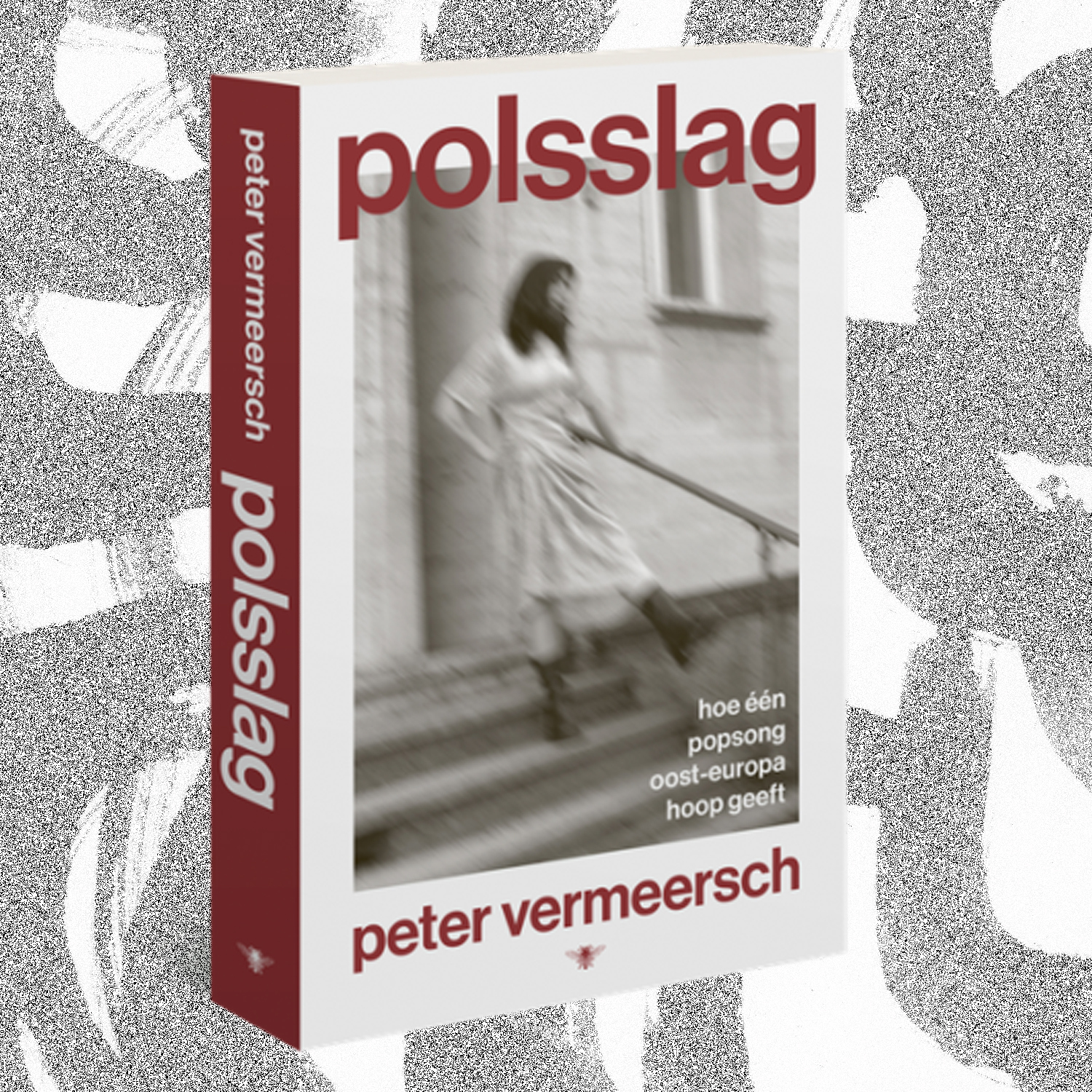
    The final episode of this academic year revolves around the story of a group of Belarusian musicians caught in the violent crackdown on dissent. Slavic studies scholar Hanna Stähle speaks with political scientist Peter Vermeersch about his new book Pulse (Polsslag), a compelling chronicle (and musical history) of the 2020 Belarusian pro-democracy protests. Set to the soundtrack of Peremen! — a Soviet-era rock anthem that became the heartbeat of a modern uprising — Pulse traces the stories of artists, musicians, and ordinary citizens who transformed creativity into resistance against the regime of Alexander Lukashenko. Moving from the Belarusian capital Minsk to exiled communities in Warsaw, Riga, Brussels, and Berlin, Pulse captures a moment of history when art refuses to be apolitical. This episode is a conversation about courage, music, and the enduring pulse of dissent.

  • S2 · E22
    Jun 20, 2025 · 16 min

    Oksana Dudko on the War’s Impact on Ukrainian and East European Studies

    In this episode of Studio Central and Eastern Europe, Oksana Dudko discusses how Russia’s full-scale invasion of Ukraine has broadened the field of Ukrainian studies in the West. In conversation with Maryna Shevtsova, a senior FWO postdoctoral researcher in political studies at KU Leuven, they explore how the war has deepened scholarly engagement and encouraged East European Studies to move beyond its long-standing Russia-centric lens. Oksana Dudko is a historian of 20th-century Europe, specializing in violence, gender, and cultural history in Ukraine and the Soviet Union. She is currently a PhD candidate at the University of Toronto and has taught in both Canada and Ukraine. Beyond academia, she is an active curator and founder of several theatre festivals in Ukraine, and a participant in KU Leuven’s project HER-UKR: Challenges and Opportunities for EU Heritage Diplomacy in Ukraine, which explores the role of cultural heritage in the EU’s external action. The project brings together a consortium of 15 universities to examine EU foreign policy, heritage diplomacy, and Eastern European memory politics.

  • S2 · E21
    May 20, 2025 · 23 min

    Behind the Glitter: Eurovision's Identity Crisis

    Uniting Europe or dividing it? A celebration of LGBTQ+ identity or a stage for homophobia? A voice for peace or a platform for political contestations? In the wake of the latest Eurovision edition, KU Leuven academics Maryna Shevtsova (political science) and Jonas Vanderschueren (cultural studies) reflect on the deepening cracks in Eurovision’s identity. They discuss how the song contest came dangerously close to imploding this year—and how its political values remain strikingly inconsistent and unresolved.

  • S2 · E20
    May 9, 2025 · 21 min

    Camp Diplomacy: Maryna Shevtsova on the Politics and Power of Eurovision

    Each May, the dazzling and often divisive Eurovision song contest stirs up a whirlwind of fans, deep emotions, and fierce debates. Ahead of this year’s edition, political scientists Maryna Shevtsova and Peter Vermeersch delve into the social and political undercurrents of Eurovision — and its future. A lifelong fan with a sharp analytical lens, Maryna reflects on how Eurovision became important to her personally and why it resonates powerfully in Ukraine today, especially in light of the Russian invasion. In a conversation with political scientist Peter Vermeersch, she unpacks the passions the contest evokes, the challenges its fans face, and its rising significance for the LGBTQ+ community and soft diplomacy. Don’t miss this compelling conversation — and subscribe to our podcast series from the Forum on Central and Eastern Europe at KU Leuven!

  • S2 · E19
    Apr 25, 2025 · 21 min

    Emilia Kledzik on the Appropriation of Papusza’s Voice and the Stereotyping of Romani Poetry

    In this episode of Studio Central and Eastern Europe, we dive into the powerful intersection of literature, myth, and minority narratives in postwar Poland. Our guest is Prof. Emilia Kledzik, a literary scholar from Adam Mickiewicz University in Poznań, whose groundbreaking book The Poet’s Perspective: Jerzy Ficowski’s Romani Studies explores the roots of Romani representation in Polish literature and policy. In conversation with Prof. Kris van Heuckelom (KU Leuven), Kledzik revisits the life and legacy of Papusza—Europe’s most renowned Romani poet—and the role played by Ficowski, her mentor and interpreter, in shaping the discourse around Romani identity. Together, they unpack how Ficowski’s work both illuminated and, at times, mythologized Roma culture, offering insight into how literature became a battleground for cultural memory and state ideology.

  • S1 · E18
    Mar 18, 2025 · 20 min

    Ria Laenen Offers a Non-Eurocentric View on the Unraveling World Order and Europe’s Misjudgment of Putin

    In this episode, Ria Laenen discusses her recently published and already widely acclaimed book on the history of global politics since World War II, Een heel klein beetje vrede (A Tiny Bit of Peace). She answers questions from Lien Verpoest, professor of the history of international relations at KU Leuven, about whether we are witnessing a major historical shift and when the post-World War II world order began to unravel. Ria Laenen, a senior lecturer in East European, Eurasian, and international politics at KU Leuven, argues that while Europe spent decades underestimating Russia’s authoritarian leader, Vladimir Putin, it now appears to be overestimating his power. Offering a rare non-Eurocentric perspective on current affairs, she is a vital voice in today’s geopolitical discourse.

Showing 1–20 of 20 episodes