Skip to content
Artwork for Strawberry Letter
Society & CultureRelationships

Strawberry Letter

iHeartPodcasts

Got a situation? Steve Harvey and Shirley Strawberry deliver unfiltered advice on love, relationships, family, work, and life. Send your letter, subscribe, and get real talk every day!

Every weekday, the Steve Harvey Morning Show tackle a listener-submitted “Strawberry Letter”... a real-life dilemma ranging from romantic entanglements to career choices, family drama to money struggles, and everything in between.

With a blend of wisdom, wit, and brutal honesty, they offer candid commentary and heartfelt guidance, often sparking conversation (and laughter) among the rest of the morning show crew.

Submit your Strawberry Letter at www.steveharveyfm.com for a chance to be featured, and get the truth, Steve Harvey style!

Play
  • 626 episodes
  • daily
  • Avg 25 min
  • English
Counted on this page — what you have heard stays on this device, so it is not something the list can be paged by.
  • September 20 · 32 min

    Follow Your Passion: Senita provides cancer patients sanctuaries for peace, clarity, and empowerment.

    Listen and subscribe to Money Making Conversations on iHeartRadio, Apple Podcasts, Spotify, www.moneymakingconversations.com/subscribe/ or wherever you listen to podcasts. New Money Making Conversations episodes drop daily. I want to alert you, so you don’t miss out on expert analysis and insider perspectives from my guests who provide tips that can help you uplift the community, improve your financial planning, motivation, or advice on how to be a successful entrepreneur. Keep winning! Two-time Emmy and Three-time NAACP Image Award-winning, television Executive Producer Rushion McDonald interviewed Senita M. Hill. Purpose of the Interview To spotlight Peace on Patuxent Incorporated, a nonprofit founded by Senita M. Hill. To discuss the challenges women face when diagnosed with cancer and how the organization provides sanctuaries for peace, clarity, and empowerment. To inspire entrepreneurs and individuals to prioritize wellness and community support. Key Takeaways About Peace on Patuxent Located in Prince George’s County, Maryland. Offers two-day retreats for women diagnosed with life-leveling cancers. Provides limousine pickup, red carpet welcome, prepared meals, and activities focused on stillness. Launching virtual sessions nationwide in January to reach women who cannot attend in person. Life-Leveling Cancer Defined as any cancer diagnosis that disrupts life and forces major changes. Emphasizes the emotional and psychological impact beyond physical illness. Senita’s Personal Journey Inspired by her mother’s battle with lung cancer to create a space for women to pause and regain control. Empowerment Through Pause Women often feel they have choices, but treatment paths are usually predetermined. Peace on Patuxent offers a moment of stillness to reflect and make informed decisions. Community and Cultural Impact Addresses stigma in African American and ethnic communities around illness. Encourages open conversations and sharing of resources. Access and Application Apply via peaceonpatuxent.org. Requirements: Over 18, healthy enough to be independent, ideally within two years post-diagnosis. Notable Quotes “Every woman should allow herself the opportunity to come to peace.” “She matters—not just as a patient, but as a mother, daughter, coworker, and friend.” “When you hear the word cancer, it changes your life. It’s life-leveling.” “We’re not here to tell you how to run your journey. We’re here to allow you to pause your mind.” “The only way you’ll know your options is if you come out and have the conversation.” #SHMS #STRAW #BEST Money Making Conversations Master Class with Rushion McDonald is America's premier entrepreneurship, business leadership, financial literacy, and wealth-building podcast featuring successful entrepreneurs, executives, founders, celebrities, and industry experts sharing actionable insights for professional and financial success. Business Podcast Entrepreneurship Small Business Business Growth Financial Literacy Wealth Building Black Entrepreneurs Minority Business Leadership Executive Leadership Business Funding Marketing Strategies Personal Development Startup Advice Sales Training CEO Interviews Founder Stories Professional Development Economic Empowerment Business Success Networking Brand Building Innovation How to start a business Small business funding Entrepreneur success stories Business leadership podcast Wealth building strategies Black entrepreneur podcast Minority business development Marketing for small businesses Business growth strategies Startup funding opportunities Executive leadership training Financial literacy education Success mindset podcast See omnystudio.com/listener for privacy information.

    • Transcript
  • September 19 · 28 min

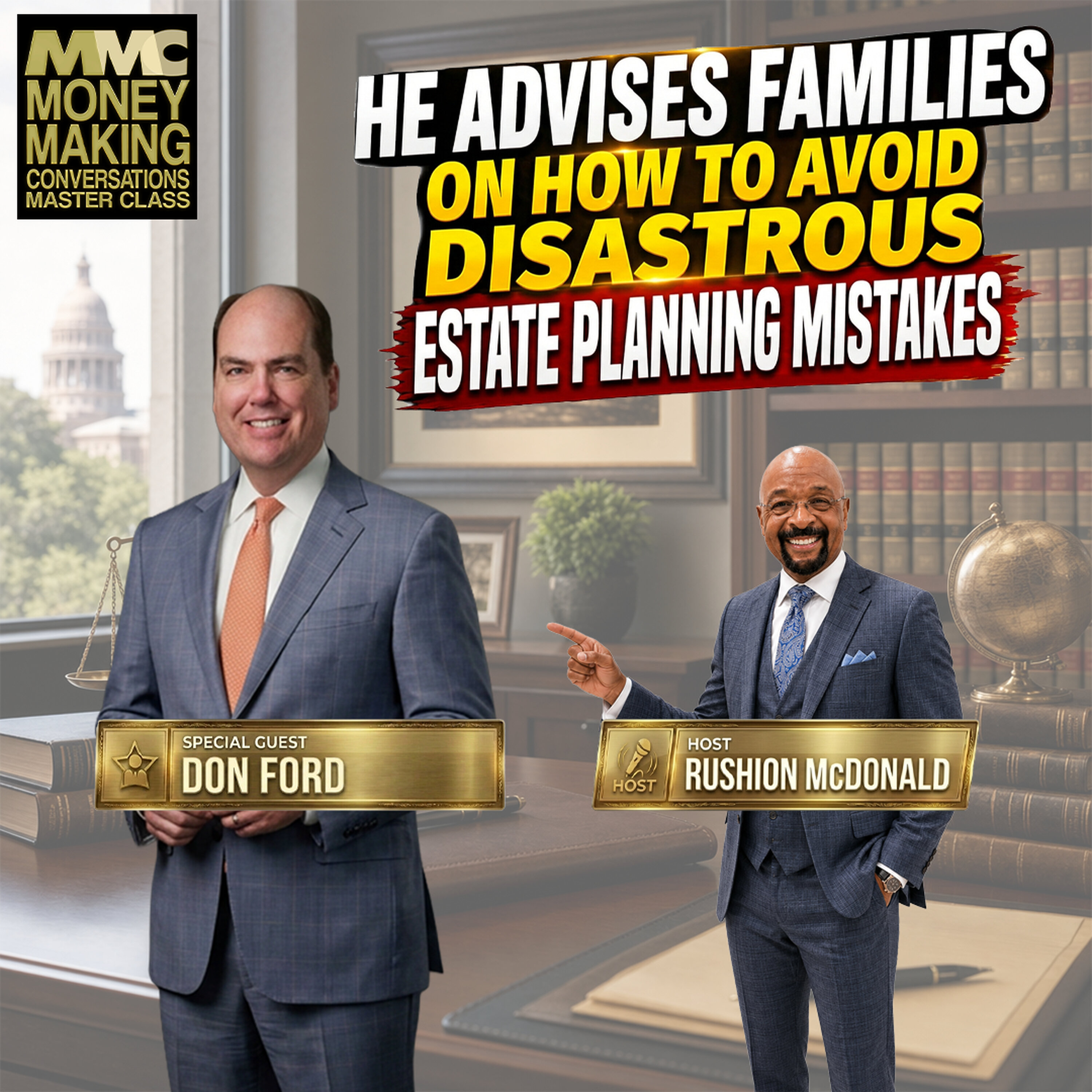
    Money Talk: Don explains the differences between wills, trusts, probate, and powers of attorney.

    Listen and subscribe to Money Making Conversations on iHeartRadio, Apple Podcasts, Spotify, www.moneymakingconversations.com/subscribe/ or wherever you listen to podcasts. New Money Making Conversations episodes drop daily. I want to alert you, so you don’t miss out on expert analysis and insider perspectives from my guests who provide tips that can help you uplift the community, improve your financial planning, motivation, or advice on how to be a successful entrepreneur. Keep winning! Two-time Emmy and Three-time NAACP Image Award-winning, television Executive Producer Rushion McDonald interviewed Don Ford. A board-certified probate and estate attorney and managing partner of Ford Bergner LLP. The discussion centers on estate planning, wills, trusts, probate, executor responsibilities, and how families can protect both their assets and relationships through proper planning. Ford shares practical insights from nearly 30 years of legal experience, explaining common mistakes families make when preparing for death or incapacity and the disputes that can arise when a clear estate plan is absent. Purpose of the Interview The interview was designed to: Educate listeners on the fundamentals of estate planning. Explain the differences between wills, trusts, probate, and powers of attorney. Encourage individuals and families to create estate plans before a crisis occurs. Highlight the risks of incomplete or poorly drafted legal documents. Show how thoughtful planning can reduce family conflict and preserve wealth across generations. Key Takeaways 1. Estate Planning and Financial Planning Are Not the Same While financial advisors focus on growing and managing wealth, estate planning focuses on what happens to assets after death or incapacity. Effective planning often requires collaboration between legal and financial professionals. 2. DIY Wills Can Create Serious Problems Ford shared an example of a handwritten will that instructed one sister to "share" assets with her siblings but failed to specify how. The ambiguity led to litigation, family conflict, and lasting division. 3. Most Americans Are Unprepared According to Ford, roughly two-thirds of Americans do not have a will. Common reasons include avoiding conversations about death, concerns about cost, and procrastination. 4. Estate Planning Is About Circumstances, Not Age The need for an estate plan is determined more by life situation than age. Anyone who owns a home, has financial accounts, or has dependents should consider creating a plan. 5. Family Conflict Often Starts After a Death Different family members grieve differently, and disagreements frequently emerge when there are no clear instructions regarding property, finances, or responsibilities. Clear planning reduces uncertainty and conflict. 6. Communication Matters Many estate disputes begin because expectations were never discussed among family members. Open communication and documented wishes can help prevent misunderstandings. 7. Executors Have Legal Duties An executor is responsible for managing and distributing estate assets fairly and transparently. They must account for finances, follow court procedures, and act in the best interests of beneficiaries. 8. A Trust Can Help Avoid Probate Trusts can simplify the transfer of assets and avoid the probate process in certain situations, particularly in states where probate is costly and time-consuming. 9. Estate Planning Is More Than a Will A comprehensive estate plan may include: A will Trusts Medical powers of attorney Financial powers of attorney Incapacity planning Asset protection strategies 10. Every Family's Situation Is Different Family dynamics, blended families, stepchildren, multiple properties, business interests, and assets in multiple states all require customized planning. 11. Protecting a Legacy Requires Planning Building wealth is only part of the equation. Without a plan in place, a lifetime of work and accumulated assets can be diminished by taxes, legal expenses, confusion, and family disputes. Notable Quotes On Estate Planning "Estate planning is really what happens if I die... making a plan for your death and what happens after you're gone." On Handwritten Wills "While the handwritten will may be an option, it's usually not the best option." On Avoiding Difficult Conversations "Not thinking about it doesn't mean it's not going to happen." On Timing "If you own a home, you probably need a will or some sort of a plan." On Family Disputes "A good plan alleviates a lot of those problems, because if there's no plan, then it's kind of a free-for-all." On Executor Responsibilities "The executor has to treat everybody fairly. The executor has to account for all of the money." On Estate Planning as a Whole "Estate planning is a more holistic view about all of these issues." Rushion McDonald's Closing Insight "You can gain all this success, all this legacy, and it can be lost if you didn't plan the part when you were not going to be here." Bottom Line The central message of the interview is that estate planning is essential for anyone who wants to protect their family, assets, and legacy. Whether through a will, trust, powers of attorney, or a combination of legal tools, proactive planning helps ensure personal wishes are honored, minimizes family disputes, and creates a smoother transition for loved ones during difficult times. #SHMS #STRAW #BEST Money Making Conversations Master Class with Rushion McDonald is America's premier entrepreneurship, business leadership, financial literacy, and wealth-building podcast featuring successful entrepreneurs, executives, founders, celebrities, and industry experts sharing actionable insights for professional and financial success. Business Podcast Entrepreneurship Small Business Business Growth Financial Literacy Wealth Building Black Entrepreneurs Minority Business Leadership Executive Leadership Business Funding Marketing Strategies Personal Development Startup Advice Sales Training CEO Interviews Founder Stories Professional Development Economic Empowerment Business Success Networking Brand Building Innovation How to start a business Small business funding Entrepreneur success stories Business leadership podcast Wealth building strategies Black entrepreneur podcast Minority business development Marketing for small businesses Business growth strategies Startup funding opportunities Executive leadership training Financial literacy education Success mindset podcast See omnystudio.com/listener for privacy information.

    • Transcript
  • September 19 · 28 min

    Financial Advice: Davis explains how families can protect, grow, and transfer wealth across generations.

    Listen and subscribe to Money Making Conversations on iHeartRadio, Apple Podcasts, Spotify, www.moneymakingconversations.com/subscribe/ or wherever you listen to podcasts. New Money Making Conversations episodes drop daily. I want to alert you, so you don’t miss out on expert analysis and insider perspectives from my guests who provide tips that can help you uplift the community, improve your financial planning, motivation, or advice on how to be a successful entrepreneur. Keep winning! Two-time Emmy and Three-time NAACP Image Award-winning, television Executive Producer Rushion McDonald interviewed LaVaisha Davis. Guest: LaVaisha Davis, Founder of Ell Wess Advisors (boutique family office and wealth management firm) Host: Rushion McDonald Topic: Building multigenerational wealth, family wealth planning, asset protection, and creating lasting legacies. Purpose of the Interview The interview focuses on helping first-generation wealth builders and entrepreneurs understand that wealth creation is about more than investments. Davis explains how families can organize, protect, grow, and transfer wealth across generations by treating their family finances as a structured enterprise rather than simply accumulating money. A central theme is that many successful individuals earn substantial incomes but lack a blueprint for preserving and transferring wealth. Davis advocates for intentional planning, legal structures, family involvement, and asset protection to create lasting legacies. Key Takeaways 1. Wealth Requires a Blueprint Davis explains that creating a legacy does not happen automatically. Families need a deliberate plan, legal structures, and defined roles if they want wealth to survive beyond one generation. Takeaway: Making money and building wealth are not the same. Wealth requires systems and succession planning. 2. Family Should Be Treated as an Asset One of Davis's strongest messages is that family members can play meaningful roles in wealth-building efforts. She argues that when people think about legacy, they often overlook the importance of human relationships and family participation. Wealth-transfer strategies frequently require successors, trustees, managers, and beneficiaries. Many of those roles can be filled by family members. Takeaway: Family can be a strategic asset when properly organized and aligned. 3. Not Every Family Member Contributes Equally Davis acknowledges that some family members may behave more like liabilities than assets. Using a balance-sheet analogy, she explains that every family includes both contributors and individuals who may create financial burdens. The key is identifying those dynamics without allowing them to derail long-term wealth planning. Takeaway: Successful family wealth planning requires honest assessment of family dynamics. 4. Wealth Management Is More Than Investments Davis differentiates her firm's approach from traditional investment-focused advisory services. Her firm begins with: Family and wealth governance Legal structures Estate planning Tax planning Business succession planning Preparing future generations to inherit wealth Investments are addressed after these foundational elements are in place. Takeaway: Investments should support a broader wealth strategy, not drive it. 5. "Your Family Is a Business" One of Davis's most memorable concepts is that families should think of themselves as enterprises. She advises clients to separate their “wealth business” from their personal household and to create structures that can survive beyond their lifetime. Takeaway: Families should operate with the same intentionality that successful businesses use. 6. First-Generation Wealth Creates Unique Challenges Davis specializes in serving people who are the first high earners or successful entrepreneurs within their families. She notes that these individuals often face challenges that previous generations never had to navigate, including: Sudden financial complexity Family expectations Tax planning Asset protection Wealth transfer decisions Takeaway: New wealth requires new skills and specialized guidance. 7. There Are Four Forms of Capital Davis identifies four sources of capital: Human Capital – people, family, relationships Intellectual Capital – knowledge and expertise Social Capital – networks and connections Financial Capital – money and assets She argues that most families focus only on financial capital while neglecting the others. [ Takeaway: Wealth is broader than money. 8. Asset Protection Is Essential Davis warns that unprotected assets can disappear quickly due to lawsuits, business failures, creditor claims, or debt obligations. She emphasizes the importance of proper ownership structures, legal entities, and asset protection strategies. Takeaway: Wealth must be protected as carefully as it is created. 9. Different Advisors Serve Different Stages of Wealth When McDonald asks how people should evaluate their current financial advisor, Davis provides a thoughtful perspective: An advisor who helped someone build their first million dollars may not be the right advisor to help them grow to ten million dollars. Increased wealth often brings more complexity and a need for broader expertise. Takeaway: Financial advisory needs evolve as wealth grows. Notable Quotes On Family and Legacy "Your family is your God-given team, not your liability." [ On Wealth Planning "When you say that you want to build something that's long lasting or you want to create a legacy for children, there's a blueprint that needs to be followed." On Family Dynamics "Your family even has a balance sheet when it comes to assets and liabilities." On Financial Complexity "My particular mission is the first-generation families who want to make an exponential difference in their families." On Her Approach "We don't begin with investments. We begin by stabilizing and creating a way that you really want to operate your wealth business." [ On Family Wealth "Your family and your finances are definitely a business." [ On Wealth Building "Your family is in the business of growing the value of your last name. Period." [ On Capital "The four sources of capital are human capital, intellectual capital, social capital, and financial capital." On Asset Protection "The wealth you build can be taken if it's not protected." On Advisor Selection "The advisor that may have gotten you to your first million... may not be the advisor that can get you to ten million." Overall Message Lavashia Davis's core message is that wealth is not simply about earning or investing money—it is about building systems, structures, and family alignment that allow wealth to endure across generations. By treating the family as an asset, activating multiple forms of capital, protecting assets legally, and planning intentionally, families can transform income into legacy. #SHMS #BEST #STRAW Money Making Conversations Master Class with Rushion McDonald is America's premier entrepreneurship, business leadership, financial literacy, and wealth-building podcast featuring successful entrepreneurs, executives, founders, celebrities, and industry experts sharing actionable insights for professional and financial success. Business Podcast Entrepreneurship Small Business Business Growth Financial Literacy Wealth Building Black Entrepreneurs Minority Business Leadership Executive Leadership Business Funding Marketing Strategies Personal Development Startup Advice Sales Training CEO Interviews Founder Stories Professional Development Economic Empowerment Business Success Networking Brand Building Innovation How to start a business Small business funding Entrepreneur success stories Business leadership podcast Wealth building strategies Black entrepreneur podcast Minority business development Marketing for small businesses Business growth strategies Startup funding opportunities Executive leadership training Financial literacy education Success mindset podcast See omnystudio.com/listener for privacy information.

    • Transcript
  • September 18 · 26 min

    Financial Advice: Saunders stressed that generational wealth isn’t just about money, it’s about education,

    Listen and subscribe to Money Making Conversations on iHeartRadio, Apple Podcasts, Spotify, www.moneymakingconversations.com/subscribe/ or wherever you listen to podcasts. New Money Making Conversations episodes drop daily. I want to alert you, so you don’t miss out on expert analysis and insider perspectives from my guests who provide tips that can help you uplift the community, improve your financial planning, motivation, or advice on how to be a successful entrepreneur. Keep winning! Two-time Emmy and Three-time NAACP Image Award-winning, television Executive Producer Rushion McDonald interviewed Amber C. Saunders. An estate planning attorney and founder of The Saunders Firm, about generational wealth, estate planning, and financial literacy in the Black community. 🔑 Key Themes & Highlights The Importance of Estate Planning Saunders emphasized that estate planning isn’t just for the wealthy—it’s for anyone who owns assets, including homes, jewelry, and even bank accounts. She shared how her family’s experience with probate court inspired her to educate others on avoiding financial hardships. Generational Wealth & Legacy Many Black families lose wealth due to lack of estate planning, leading to long legal battles and financial instability. Saunders stressed that generational wealth isn’t just about money—it’s about education, financial literacy, and structured wealth transfer. Common Misconceptions About Estate Planning Many people believe wills and trusts are only for the rich, but anyone with assets should have a plan. She debunked myths about DIY estate planning, warning that generic online templates can lead to legal complications. Protecting Small Businesses & Entrepreneurs Entrepreneurs must plan for succession, ensuring their businesses can survive beyond their leadership. She advised business owners to structure their companies properly, so they don’t just create a job for themselves but build a lasting enterprise. 📘 About Amber C. Saunders Amber C. Saunders is a leading estate planning attorney, dedicated to helping families secure their financial futures. She founded The Saunders Firm, specializing in wealth preservation, estate planning, and business succession strategies. #BEST #STRAW #SHMS Money Making Conversations Master Class with Rushion McDonald is America's premier entrepreneurship, business leadership, financial literacy, and wealth-building podcast featuring successful entrepreneurs, executives, founders, celebrities, and industry experts sharing actionable insights for professional and financial success. Business Podcast Entrepreneurship Small Business Business Growth Financial Literacy Wealth Building Black Entrepreneurs Minority Business Leadership Executive Leadership Business Funding Marketing Strategies Personal Development Startup Advice Sales Training CEO Interviews Founder Stories Professional Development Economic Empowerment Business Success Networking Brand Building Innovation How to start a business Small business funding Entrepreneur success stories Business leadership podcast Wealth building strategies Black entrepreneur podcast Minority business development Marketing for small businesses Business growth strategies Startup funding opportunities Executive leadership training Financial literacy education Success mindset podcast See omnystudio.com/listener for privacy information.

    • Transcript
  • September 18 · 13 min

    He Let Her Plan My Party - 9.18.26

    The Strawberry Letter, heard on The Steve Harvey Morning Show, Friday, September 18th, 2026. Subject: "He Let Her Plan My Party" See omnystudio.com/listener for privacy information.

    • Transcript
  • September 18 · 28 min

    Legal Advice: Attorney Carter discusses the critical role of legal protection in business, civic engagement and voting rights.

    Listen and subscribe to Money Making Conversations on iHeartRadio, Apple Podcasts, Spotify, www.moneymakingconversations.com/subscribe/ or wherever you listen to podcasts. New Money Making Conversations episodes drop daily. I want to alert you, so you don’t miss out on expert analysis and insider perspectives from my guests who provide tips that can help you uplift the community, improve your financial planning, motivation, or advice on how to be a successful entrepreneur. Keep winning! Two-time Emmy and Three-time NAACP Image Award-winning, television Executive Producer Rushion McDonald interviewed Attorney James Carter. The 84th President of the National Bar Association, to discuss the critical role of legal protection in business, the importance of civic engagement and voting rights, the impact of the Black legal profession, and the responsibility of leaders to mentor future generations. The conversation focused on empowering entrepreneurs, protecting communities through legal advocacy, and creating opportunities through education and service. Key Takeaways 1. Every Business Needs a Strong Legal Foundation Attorney Carter emphasized that successful entrepreneurship begins with proper legal documentation. Contracts, operating agreements, and legal compliance are not optional expenses but essential investments that protect business owners from future disputes and misunderstandings. Lesson: Handshake agreements can lead to costly problems. Written agreements establish expectations and provide protection when challenges arise. 2. AI Is a Tool, Not a Substitute for Legal Expertise While artificial intelligence can help people begin researching legal matters, Carter warned against relying on AI as a final authority. He noted that AI systems can produce inaccurate information and that even attorneys have faced professional consequences for depending too heavily on AI-generated content. Lesson: Use technology to gather information, but rely on qualified professionals when making important legal decisions. 3. The National Bar Association Exists to Protect Rights and Advance Justice Carter discussed the long history and mission of the National Bar Association, which was founded in 1925 to advocate for African American attorneys and communities. He highlighted its role in significant civil rights efforts and its continued commitment to advancing freedom, justice, and equality. Lesson: Legal advocacy remains essential in protecting civil rights and ensuring equal access to opportunities. 4. Voting Is a Responsibility, Not Just a Right One of Carter's major priorities as NBA president is election protection. He described efforts to educate voters, provide resources, and help people overcome barriers to voting. He stressed that many people sacrificed greatly to secure voting rights, making civic participation a responsibility that should not be taken for granted. Lesson: Voting is one of the most powerful ways individuals can influence their communities and future generations. 5. Reputation Matters More Than Advertising Discussing legal advertising, Carter advised consumers to look beyond marketing campaigns and evaluate attorneys based on experience, qualifications, and proven results. Lesson: Whether choosing an attorney or any professional service provider, conduct research and evaluate credibility before making a decision. 6. Black Lawyers Play a Critical Role in Social Progress Carter emphasized the historic and ongoing contributions of Black attorneys in advancing civil rights, protecting communities, and shaping American society. He encouraged greater recognition of the profession's impact and the importance of supporting diverse legal representation. Lesson: Representation matters, and strong legal advocates continue to help create pathways to justice and opportunity. 7. Mentorship Should Be a Lifestyle One of the most inspiring parts of the conversation centered on mentorship. Carter shared lessons from his mentor and encouraged professionals to practice what he called "simple service" by consistently guiding, encouraging, and creating opportunities for younger generations. Lesson: Success is not just about personal achievement but also about helping others access opportunities and reach their potential. Memorable Quotes On Contracts and Business Agreements "It's a mutual document of distrust." On Written Agreements "Oftentimes when it comes down to money, in the end, folks get amnesia." On Artificial Intelligence "It's a good guide to help you start the process, but it is not the best guide to end the process." On the Mission of the National Bar Association "America lives its creed of freedom, justice and equality." On Civic Engagement "When we have the opportunity and the ability to rest upon the struggles of our ancestors who fought, bled and died, and you don't vote, that is very, very frustrating." On Mentorship "It should be a way of life for all of us to grab some young person." On Giving Back "Practice the living prayer." On Community Service "Simple service. Just simple service." Final Thoughts Attorney James Carter's interview was a powerful reminder that success requires preparation, protection, participation, and purpose. From establishing a legally sound business to exercising the right to vote and mentoring the next generation, Carter reinforced that leadership is about more than personal achievement. His message was clear: build strong foundations, stay engaged in your community, protect your rights, and create pathways for others to succeed. Those actions ultimately strengthen businesses, families, and communities while helping everyone continue to Keep Winning. #STRAW #BEST #SHMS Money Making Conversations Master Class with Rushion McDonald is America's premier entrepreneurship, business leadership, financial literacy, and wealth-building podcast featuring successful entrepreneurs, executives, founders, celebrities, and industry experts sharing actionable insights for professional and financial success. Business Podcast Entrepreneurship Small Business Business Growth Financial Literacy Wealth Building Black Entrepreneurs Minority Business Leadership Executive Leadership Business Funding Marketing Strategies Personal Development Startup Advice Sales Training CEO Interviews Founder Stories Professional Development Economic Empowerment Business Success Networking Brand Building Innovation How to start a business Small business funding Entrepreneur success stories Business leadership podcast Wealth building strategies Black entrepreneur podcast Minority business development Marketing for small businesses Business growth strategies Startup funding opportunities Executive leadership training Financial literacy education Success mindset podcast See omnystudio.com/listener for privacy information.

    • Transcript
  • September 17 · 13 min

    Her Little Sister Isn't Little Anymore - 9.17.26

    The Strawberry Letter, heard on The Steve Harvey Morning Show, Thursday, September 17th, 2026. Subject: "Her Little Sister Isn't Little Anymore" See omnystudio.com/listener for privacy information.

    • Transcript
  • September 17 · 21 min

    Business Advice: Dave educates business owners on effective marketing strategies.

    Listen and subscribe to Money Making Conversations on iHeartRadio, Apple Podcasts, Spotify, www.moneymakingconversations.com/subscribe/ or wherever you listen to podcasts. New Money Making Conversations episodes drop daily. I want to alert you, so you don’t miss out on expert analysis and insider perspectives from my guests who provide tips that can help you uplift the community, improve your financial planning, motivation, or advice on how to be a successful entrepreneur. Keep winning! Two-time Emmy and Three-time NAACP Image Award-winning, television Executive Producer Rushion McDonald interviewed Dave Charest. Director of Small Business Success at Constant Contact, shared practical advice for entrepreneurs, small business owners, and startup founders on marketing, customer engagement, business growth, and the future of AI in marketing. Drawing from his experience helping small businesses worldwide, Charest explained why entrepreneurship is booming, how businesses can effectively market themselves with limited budgets, and why building direct customer relationships through email marketing remains one of the most valuable assets a company can own. Purpose of the Interview The interview was designed to: Explain why more people are starting businesses and pursuing entrepreneurship. Educate business owners on effective marketing strategies. Highlight the advantages of email marketing over relying solely on social media. Discuss common mistakes made by new entrepreneurs. Help small businesses understand how to build customer relationships. Explore how AI is transforming marketing and business operations. Provide actionable guidance for growing a brand through consistency and community engagement. Key Takeaways 1. Entrepreneurship Continues to Grow According to Charest, people are increasingly motivated to start businesses because they want: Greater independence Better control over their schedules Increased financial potential Many entrepreneurs are turning side hustles into full-time businesses and pursuing ownership rather than traditional employment. 2. Email Marketing Is More Valuable Than Most Entrepreneurs Realize One of the strongest themes of the interview is the importance of owning your audience. While social media platforms can help businesses attract attention, email marketing provides direct access to customers without relying on platform algorithms. Charest encourages entrepreneurs to use social media as a discovery tool but move customers into channels they control, such as email and text messaging. 3. The Real Asset Is the Relationship Businesses that own customer contact information have a direct connection that cannot be disrupted by changes in social media platforms. Unlike followers on a social network, email subscribers have chosen to hear from a business directly. The stronger the relationship, the greater the opportunity for future sales and engagement. 4. Small Lists Can Produce Big Results Charest challenges the belief that businesses need massive audiences to succeed. A small, engaged audience often produces better results than a large, passive following. For many local businesses, quality relationships matter more than audience size. 5. Consistency Beats Perfection When marketing a business, consistency is more important than trying every available platform. Business owners should: Choose channels they can maintain consistently. Show up regularly. Stay visible to customers. Build trust through repetition and reliability. His message is simple: people can't buy from businesses they forget about. 6. New Entrepreneurs Often Try to Do Too Much One of the most common mistakes startups make is attempting to launch every marketing tactic simultaneously. Charest recommends: Starting small. Building a solid foundation. Creating manageable marketing habits. Avoiding unrealistic expectations. Businesses grow more effectively when they focus on a few activities and execute them well. 7. Community Matters Successful local businesses build relationships beyond customers. Charest emphasized the importance of connecting with: Other local businesses Community organizations Referral partners Customers in person Strong community connections often become a business's most reliable growth engine. 8. Choose Marketing Channels That Fit Your Strengths Different social platforms serve different purposes. Rather than chasing every trend, entrepreneurs should focus on: Where their audience spends time What content they naturally enjoy creating Which platforms they can use consistently A sustainable strategy beats an ambitious one that is quickly abandoned. 9. Marketing Is About Staying Top of Mind Charest defines marketing in a straightforward way: Businesses need to remain visible so customers think of them first when they need a product or service. The more consistently a company appears in front of its audience, the stronger its brand becomes. 10. AI Is Becoming a Powerful Marketing Tool Charest views AI as a major opportunity for small businesses. He discussed how AI can help: Generate marketing content Create email campaigns Build marketing plans Repurpose content across multiple channels Analyze customer behavior Identify new opportunities Rather than replacing entrepreneurs, AI allows them to save time and make smarter decisions. 11. Business Owners Must Continue Learning Technology and marketing are evolving rapidly. Charest advises entrepreneurs to stay informed and remain open to new tools and trends, even if they do not adopt every new technology immediately. The key is to remain adaptable and avoid being left behind. Memorable Quotes "People are determined to become their own bosses." "Our mission is to help the small stand tall." "The money is in the list." "Your goal should always be trying to move those people to channels that you own." "The relationships you build with customers are always going to be your most valuable asset." "You don't really need the big numbers." "Start small." "Consistency is the big thing that makes marketing work." "Marketing at its simplest level is about keeping your business top of mind." "Small business owners are resilient." "There isn't a Plan B. Plan A is to own this business." "AI can save time so you can get back to the things you'd rather be doing." Bottom Line Dave Charest's interview is a practical playbook for entrepreneurs looking to grow a business in a crowded digital marketplace. His core message is that successful marketing is not about chasing every trend or building massive social media followings. Instead, businesses win by building genuine relationships, creating direct connections with customers through email and text marketing, staying consistent, embracing new technology like AI, and becoming a trusted part of their community. For entrepreneurs seeking sustainable growth, Charest advocates focusing on ownership, relationships, and long-term customer engagement. Money Making Conversations Master Class with Rushion McDonald is America's premier entrepreneurship, business leadership, financial literacy, and wealth-building podcast featuring successful entrepreneurs, executives, founders, celebrities, and industry experts sharing actionable insights for professional and financial success. Business Podcast Entrepreneurship Small Business Business Growth Financial Literacy Wealth Building Black Entrepreneurs Minority Business Leadership Executive Leadership Business Funding Marketing Strategies Personal Development Startup Advice Sales Training CEO Interviews Founder Stories Professional Development Economic Empowerment Business Success Networking Brand Building Innovation How to start a business Small business funding Entrepreneur success stories Business leadership podcast Wealth building strategies Black entrepreneur podcast Minority business development Marketing for small businesses Business growth strategies Startup funding opportunities Executive leadership training Financial literacy education Success mindset podcast #SHMS #BEST #STRAW See omnystudio.com/listener for privacy information.

    • Transcript
  • September 17 · 26 min

    Financial Advice: Brett educates listeners about financial planning and wealth creation.

    Listen and subscribe to Money Making Conversations on iHeartRadio, Apple Podcasts, Spotify, www.moneymakingconversations.com/subscribe/ or wherever you listen to podcasts. New Money Making Conversations episodes drop daily. I want to alert you, so you don’t miss out on expert analysis and insider perspectives from my guests who provide tips that can help you uplift the community, improve your financial planning, motivation, or advice on how to be a successful entrepreneur. Keep winning! Two-time Emmy and Three-time NAACP Image Award-winning, television Executive Producer Rushion McDonald interviewed Brett Chestnut. Managing Director at Northwestern Mutual Goodwin Wright Gwinnett, joins Rushion McDonald to discuss financial literacy, wealth building, career transitions, mentorship, and the importance of creating opportunities within underserved communities. The conversation focuses on helping individuals make better financial decisions, pursue purpose-driven careers, and build generational wealth through discipline, planning, and education. Purpose of the Interview The purpose of the interview was to: Educate listeners about financial planning and wealth creation. Encourage people to pursue careers that align with their purpose and fulfillment. Highlight the importance of diversity in the financial services industry. Discuss strategies for closing wealth gaps and building generational wealth. Promote mentorship as a tool for personal and professional growth. Inspire listeners to take control of their financial futures through informed decision-making. Key Takeaways 1. Financial Freedom Allows People to Dream Again Chestnut believes too many people are living based on obligation rather than aspiration. Financial planning helps individuals create the freedom needed to pursue their goals and dreams rather than simply surviving. 2. We Become the Product of Our Decisions One of his most powerful messages is that long-term success is determined by daily choices. Financial outcomes are often the result of consistent habits and decisions made over time. 3. Career Fulfillment Matters Chestnut left a successful engineering career to enter financial services because he wanted more purpose and impact. He encourages professionals to evaluate whether their current career aligns with their passions and long-term goals. 4. Start With Awareness Before investing or creating financial goals, individuals should understand where their money is going. Reviewing spending habits can reveal whether financial choices align with personal priorities. 5. Budgeting Creates Clarity Rather than viewing budgeting as restrictive, Chestnut sees it as a valuable tool for understanding spending habits and identifying opportunities to improve financial outcomes. 6. Diversity Creates Opportunity He explains that underserved communities represent significant opportunities for financial education and planning. Increasing diversity within financial services helps create stronger relationships and greater trust. 7. Mentorship Is About Relationships True mentorship is not simply giving advice. It begins with understanding a person's background, experiences, challenges, and aspirations before providing guidance. 8. Build a Financial Foundation Before Taking Risks When discussing cryptocurrency and alternative investments, Chestnut emphasizes the importance of first establishing a strong financial foundation through savings, planning, and long-term investing. 9. Education Comes Before Investment People should avoid investing in opportunities they do not understand. Learning how an investment works is a critical step before committing money. 10. Closing the Wealth Gap Requires Generational Thinking Chestnut believes wealth creation requires families to think beyond their own generation and intentionally create financial opportunities for their children and grandchildren. 11. Emotional Connections Influence Financial Decisions Money affects nearly every area of life, including relationships, family, faith, and personal goals. Understanding the emotional side of money can improve financial outcomes. 12. Success Requires Discipline Financial success is not the result of shortcuts or magic solutions. Consistent saving, investing, and disciplined decision-making remain the most effective path to wealth creation. Memorable Quotes Brett Chestnut “I want people to dream again.” “When we're born, we look like our parents. When we die, we look like our decisions.” “The start of anything is acknowledgment of where you are now.” “I want to help people be thoughtful in their decisions.” “Mentorship first starts with getting to know the person.” “To give someone feedback without relationship is harassment.” “We’re not trying to change people. We’re trying to develop them into the best version of themselves.” “People want to skip steps.” “Everything has its place in your financial plan.” “If you don’t really understand it, maybe it’s not time for you to invest in it yet.” “There really is no magic pill.” “It’s either going to be hard now or hard later. You choose.” “Simple and hard are two very different things.” Rushion McDonald “You are a brand.” “All we want is a shot.” “I’m trying to get ahead of everybody.” “I want what I see on TV.” “Save, save, save, save.” “Relationships matter.” Major Themes Financial Literacy Wealth Building Generational Wealth Financial Planning Career Development Entrepreneurship Mentorship Diversity in Financial Services Personal Growth Long-Term Investing Financial Discipline Community Empowerment Conclusion Rushion McDonald's conversation with Brett Chestnut delivers a practical and inspiring discussion about creating financial independence through education, discipline, and intentional decision-making. Chestnut's message centers on the belief that wealth is built through consistent habits, thoughtful planning, meaningful mentorship, and a willingness to delay short-term gratification for long-term success. The interview ultimately encourages listeners to stop looking for shortcuts, build a strong financial foundation, and create a legacy that benefits future generations. #BEST #STRAW #SHMS Money Making Conversations Master Class with Rushion McDonald is America's premier entrepreneurship, business leadership, financial literacy, and wealth-building podcast featuring successful entrepreneurs, executives, founders, celebrities, and industry experts sharing actionable insights for professional and financial success. Business Podcast Entrepreneurship Small Business Business Growth Financial Literacy Wealth Building Black Entrepreneurs Minority Business Leadership Executive Leadership Business Funding Marketing Strategies Personal Development Startup Advice Sales Training CEO Interviews Founder Stories Professional Development Economic Empowerment Business Success Networking Brand Building Innovation How to start a business Small business funding Entrepreneur success stories Business leadership podcast Wealth building strategies Black entrepreneur podcast Minority business development Marketing for small businesses Business growth strategies Startup funding opportunities Executive leadership training Financial literacy education Success mindset podcast See omnystudio.com/listener for privacy information.

    • Transcript
  • September 17 · 24 min

    Brand Building: Dami is bridging the gap between the African continent and the global Black diaspora.

    Listen and subscribe to Money Making Conversations on iHeartRadio, Apple Podcasts, Spotify, www.moneymakingconversations.com/subscribe/ or wherever you listen to podcasts. New Money Making Conversations episodes drop daily. I want to alert you, so you don’t miss out on expert analysis and insider perspectives from my guests who provide tips that can help you uplift the community, improve your financial planning, motivation, or advice on how to be a successful entrepreneur. Keep winning! Two-time Emmy and Three-time NAACP Image Award-winning, television Executive Producer Rushion McDonald interviewed Dami Kujembola. CEO and co-founder of Amplify Africa. 🎯 Purpose of the Interview The interview aims to: Highlight Dami Kujembola’s journey as an immigrant entrepreneur. Showcase the mission and impact of Amplify Africa. Address stereotypes about Africa and advocate for accurate representation. Inspire listeners to connect with their heritage and pursue entrepreneurial goals. 🔑 Key Takeaways 1. Amplify Africa’s Mission Amplify Africa is a media and entertainment company focused on bridging the gap between the African continent and the global Black diaspora. It promotes African culture through events, media, and partnerships, reaching 12 million people monthly across the US, UK, Brazil, and Africa. 2. Combatting Stereotypes Dami emphasizes the need to correct misconceptions about Africa, especially those perpetuated by Western media. He uses media as a tool to educate and reshape narratives about African life, culture, and innovation. 3. Africon Festival A multi-day cultural and business event in Atlanta featuring: A marketplace with 100+ businesses. Pitch competitions for startups and short films. Music, fashion, food, and film experiences. Support from the Atlanta Mayor’s Office. Designed to make attendees feel immersed in African culture, especially Lagos, Nigeria. 4. Nollywood’s Global Rise Nollywood is the third-largest film industry globally. Netflix and other platforms have helped elevate African stories and talent. Dami’s company partnered with Regal Cinemas for a nationwide Nollywood release. 5. Afro Ball Gala An annual gala honoring successful individuals of African descent. Aims to inspire others by showcasing excellence and validating dreams regardless of skin color. 6. Challenges & Resilience Dami discusses immigration challenges, funding cuts, and political shifts affecting cultural events. Despite setbacks, he remains optimistic and committed to fostering global connections. 💬 Notable Quotes “The event is purely geared towards access.” – On the purpose of Africon. “I’ve probably never seen a lion in my entire life.” – On the absurdity of stereotypes about Africa. “Our goal is to make our world smaller.” – On creating immersive cultural experiences. “I didn’t know where to find successful people who looked like me.” – On the inspiration behind Afro Ball. “I’m actually not special… it’s really representative of the need of people right now.” – On the growth of Amplify Africa. #SHMS #STRAW #BEST Money Making Conversations Master Class with Rushion McDonald is America's premier entrepreneurship, business leadership, financial literacy, and wealth-building podcast featuring successful entrepreneurs, executives, founders, celebrities, and industry experts sharing actionable insights for professional and financial success. Business Podcast Entrepreneurship Small Business Business Growth Financial Literacy Wealth Building Black Entrepreneurs Minority Business Leadership Executive Leadership Business Funding Marketing Strategies Personal Development Startup Advice Sales Training CEO Interviews Founder Stories Professional Development Economic Empowerment Business Success Networking Brand Building Innovation How to start a business Small business funding Entrepreneur success stories Business leadership podcast Wealth building strategies Black entrepreneur podcast Minority business development Marketing for small businesses Business growth strategies Startup funding opportunities Executive leadership training Financial literacy education Success mindset podcast See omnystudio.com/listener for privacy information.

    • Transcript
  • September 16 · 23 min

    Brand Building: Paul is shaping the future of iconic brands like Billboard, Rolling Stone, and SXSW.

    Listen and subscribe to Money Making Conversations on iHeartRadio, Apple Podcasts, Spotify, www.moneymakingconversations.com/subscribe/ or wherever you listen to podcasts. New Money Making Conversations episodes drop daily. I want to alert you, so you don’t miss out on expert analysis and insider perspectives from my guests who provide tips that can help you uplift the community, improve your financial planning, motivation, or advice on how to be a successful entrepreneur. Keep winning! Two-time Emmy and Three-time NAACP Image Award-winning, television Executive Producer Rushion McDonald, interviewed Paul Rainey. He holds a powerful executive role in the media world, shaping the future of iconic brands like Billboard, Rolling Stone, and SXSW. 🏆 Paul Rainey’s Executive Career at Penske Media Corporation (PMC) Current Role Executive Vice President of Operations and Finance at Penske Media Corporation (PMC). Oversees operations and financial strategy for Rolling Stone, Billboard, Variety, The Hollywood Reporter, Vibe, SXSW, and more. Provides strategic input across PMC’s global media brands and live events, including the Billboard Music Awards, SXSW, and American Music Awards. Key Responsibilities Leads financial decision-making, acquisitions, and operational procedures across PMC’s portfolio. Serves on several boards, including as Audit Committee Chair of Redaptive, Inc. and a Director at SXSW. Background & Education Holds a Master of Science in Accountancy and a BBA in Finance and Computer Applications from the University of Notre Dame. Formerly held leadership roles at General Electric, Global Eagle, and Harris CapRock Communications, managing billion-dollar operations across five continents. 📘 About PMC & Cultural Influence PMC is a global media powerhouse, reaching over 350 million people monthly. Its brands shape culture through journalism, entertainment, and live events, including SXSW Paul Rainey is a rare blend of creative storyteller and corporate strategist, bridging the worlds of graphic novels and global media leadership. Whether he’s crafting a sci-fi twist in a comic or guiding the future of Billboard and SXSW, his influence is both wide-reaching and deeply personal. Let me know if you’d like a visual timeline of his career or a deeper dive into one of his roles. 🎬📈✨ #BEST #STRAW #SHMS Money Making Conversations Master Class with Rushion McDonald is America's premier entrepreneurship, business leadership, financial literacy, and wealth-building podcast featuring successful entrepreneurs, executives, founders, celebrities, and industry experts sharing actionable insights for professional and financial success. Business Podcast Entrepreneurship Small Business Business Growth Financial Literacy Wealth Building Black Entrepreneurs Minority Business Leadership Executive Leadership Business Funding Marketing Strategies Personal Development Startup Advice Sales Training CEO Interviews Founder Stories Professional Development Economic Empowerment Business Success Networking Brand Building Innovation How to start a business Small business funding Entrepreneur success stories Business leadership podcast Wealth building strategies Black entrepreneur podcast Minority business development Marketing for small businesses Business growth strategies Startup funding opportunities Executive leadership training Financial literacy education Success mindset podcast See omnystudio.com/listener for privacy information.

    • Transcript
  • September 16 · 25 min

    Family First: Annie helps entrepreneurs struggling to balance home life and business growth.

    Listen and subscribe to Money Making Conversations on iHeartRadio, Apple Podcasts, Spotify, www.moneymakingconversations.com/subscribe/ or wherever you listen to podcasts. New Money Making Conversations episodes drop daily. I want to alert you, so you don’t miss out on expert analysis and insider perspectives from my guests who provide tips that can help you uplift the community, improve your financial planning, motivation, or advice on how to be a successful entrepreneur. Keep winning! Two-time Emmy and three-time NAACP Image Award-winning television Executive Producer Rushion McDonald interviewed Annie Yatch. A leadership and performance coach specializing in helping high-achieving entrepreneurs balance business growth with personal fulfillment. The discussion focused on leadership, relationships, and overcoming subconscious barriers to success. 🔑 Key Themes & Highlights Balancing Business & Personal Life Yatch helps ambitious entrepreneurs struggling to balance home life and business growth. She emphasized that success at work doesn’t mean sacrificing relationships—leaders must redefine their roles at home. The Importance of Transition Time Many entrepreneurs struggle to switch from work mode to home life, leading to stress in relationships. Yatch recommends a 30-minute decompression routine before entering the home, including: Writing down lingering work concerns. Engaging in a mindless activity like listening to music. Reflecting on positive memories with loved ones to shift emotional energy. Leadership Gaps in Entrepreneurs Yatch identified three major leadership gaps that hold entrepreneurs back: Delegation – Many leaders struggle to trust their teams, leading to micromanagement. Feedback – Entrepreneurs must learn to give and receive feedback effectively without defensiveness. Planning – Businesses often fail to plan for obstacles, focusing only on ideal scenarios. Trauma & Entrepreneurial Success Yatch explained that many entrepreneurs have unresolved childhood trauma, leading them to create chaos in business as a way to regain control. She emphasized that stability at home is crucial for scaling a business successfully. 📘 About Annie Yatch Annie Yatch is a team leadership and performance coach, specializing in helping entrepreneurs unlock their full potential. She is the founder of Northstar Leadership, a company dedicated to helping high-achieving men redefine leadership at home and in business. #BEST #STRAW #SHMS Money Making Conversations Master Class with Rushion McDonald is America's premier entrepreneurship, business leadership, financial literacy, and wealth-building podcast featuring successful entrepreneurs, executives, founders, celebrities, and industry experts sharing actionable insights for professional and financial success. Business Podcast Entrepreneurship Small Business Business Growth Financial Literacy Wealth Building Black Entrepreneurs Minority Business Leadership Executive Leadership Business Funding Marketing Strategies Personal Development Startup Advice Sales Training CEO Interviews Founder Stories Professional Development Economic Empowerment Business Success Networking Brand Building Innovation How to start a business Small business funding Entrepreneur success stories Business leadership podcast Wealth building strategies Black entrepreneur podcast Minority business development Marketing for small businesses Business growth strategies Startup funding opportunities Executive leadership training Financial literacy education Success mindset podcast See omnystudio.com/listener for privacy information.

    • Transcript
  • September 16 · 13 min

    It's Either Now Or Never - 9.16.26

    The Strawberry Letter, heard on The Steve Harvey Morning Show, Wednesday, September 16th, 2026. Subject: "It's Either Now Or Never" See omnystudio.com/listener for privacy information.

    • Transcript
  • September 15 · 13 min

    My Husband Is My Only Hobby - 9.15.26

    The Strawberry Letter, heard on The Steve Harvey Morning Show, Tuesday, September 15th, 2026. Subject: "My Husband Is My Only Hobby" See omnystudio.com/listener for privacy information.

    • Transcript
  • September 14 · 25 min

    Business Tips: He began in government contracting in 2012 and credits it with helping him scale his business.

    Listen and subscribe to Money Making Conversations on iHeartRadio, Apple Podcasts, Spotify, www.moneymakingconversations.com/subscribe/ or wherever you listen to podcasts. New Money Making Conversations episodes drop daily. I want to alert you, so you don’t miss out on expert analysis and insider perspectives from my guests who provide tips that can help you uplift the community, improve your financial planning, motivation, or advice on how to be a successful entrepreneur. Keep winning! Two-time Emmy and Three-time NAACP Image Award-winning, television Executive Producer Rushion McDonald interviewed Tim Mercer. Author of Bootstrap Millionaire and CFO of Cadence Ventures, Inc.: 🎯 Purpose of the Interview To inspire and educate aspiring entrepreneurs and professionals by sharing Tim Mercer’s journey from humble beginnings to financial success, emphasizing the importance of hard work, faith, planning, and leveraging government contracts and nontraditional financing. 🗝️ Key Takeaways Background & Journey Tim Mercer grew up in Mullins, South Carolina, in modest circumstances. His path to success began with military service, which broadened his worldview and led him to entrepreneurship. Bootstrap Millionaire Philosophy The term “bootstrap” symbolizes hard work, sacrifice, and perseverance. Mercer emphasizes that success doesn’t come overnight—it requires grinding, planning, and faith. Importance of a Business Plan A solid business plan is essential for securing funding and guiding business growth. Mercer shares real-life examples of people failing to secure support due to lack of planning. Cadence Ventures, Inc. A boutique private equity firm offering nontraditional financing for real estate investors. Focuses on investment properties and uses the property itself as collateral. Government Contracting Mercer began in government contracting in 2012 and credits it with helping him scale his business. He stresses that while it’s complex and paperwork-heavy, it’s a valuable opportunity for minority-owned businesses. Free resources like SAM.gov and Georgia Tech’s GT PAC can help entrepreneurs navigate the process. Success Requires Sacrifice Mercer highlights that every successful person has a story of struggle and sacrifice. His book’s first chapter, “See the Glory, Don’t Know the Story,” encapsulates this message. 💬 Notable Quotes “If you want to have the things tomorrow that other people won’t have, then you got to be willing to do the things today that other people won’t do.” — Tim Mercer quoting Les Brown “There’s no success without sacrifice.” — Tim Mercer “You can only make as much as the customer that you have.” — Tim Mercer on scaling through government contracts “See the glory, don’t know the story.” — Chapter title from Bootstrap Millionaire #SHMS #STRAW #BEST #AMI See omnystudio.com/listener for privacy information.

    • Transcript
  • September 14 · 26 min

    Financial Advice: Nidhi discusses her financial platform designed to help consumers value, track, and sell their gold jewelry.

    Listen and subscribe to Money Making Conversations on iHeartRadio, Apple Podcasts, Spotify, www.moneymakingconversations.com/subscribe/ or wherever you listen to podcasts. New Money Making Conversations episodes drop daily. I want to alert you, so you don’t miss out on expert analysis and insider perspectives from my guests who provide tips that can help you uplift the community, improve your financial planning, motivation, or advice on how to be a successful entrepreneur. Keep winning! Two-time Emmy and Three-time NAACP Image Award-winning television Executive Producer Rushion McDonald interviewed Nidhi Singhvi. Co-founder and CEO of OnVault, an AI-powered financial platform designed to help consumers value, track, and sell their gold jewelry. The conversation explores how millions of Americans may be sitting on untapped wealth in the form of jewelry and other precious metal assets without realizing their true value. Singvi discusses the mission behind OnVault: transforming personal jewelry from a forgotten possession into a transparent, trackable financial asset. By combining artificial intelligence, mobile technology, and financial education, OnVault aims to empower consumers to understand, manage, and monetize the value of their jewelry. Purpose of the Interview The interview was designed to: Introduce OnVault and explain how AI is changing jewelry valuation. Educate consumers about the hidden value of gold jewelry and tangible assets. Promote financial literacy through asset awareness. Explain how technology can provide transparency in jewelry sales and valuation. Challenge the negative perceptions associated with pawn shops and traditional jewelry resale. Demonstrate how dormant assets can become tools for financial flexibility and wealth-building. Key Takeaways 1. Many Americans Are Sitting on Hidden Wealth Nidhi Singvi estimates that hundreds of billions of dollars in gold jewelry are sitting unused in homes across America. Most people view jewelry as sentimental possessions rather than financial assets. 2. Jewelry Should Be Treated Like Other Assets Consumers regularly track the value of stocks, homes, cars, and collectibles. Singvi argues that jewelry should be viewed similarly, especially gold jewelry whose value fluctuates with market prices. 3. AI Makes Valuation Easier and More Accessible OnVault allows users to upload photos of their jewelry and receive an AI-generated valuation. The platform analyzes factors such as: Gold content Weight Construction type Age and style of the piece Current gold market prices This eliminates the need for expensive appraisals or visits to jewelry stores. 4. Transparency Is the Company's Core Differentiator Singvi repeatedly emphasizes transparency as a key advantage over traditional resale channels. Customers receive: Detailed valuation reports Video documentation of inspections Explanations of how offers are calculated Breakdowns of gold, gemstone, and diamond values 5. The Traditional Pawn Shop Experience Needs Reinvention A major theme of the discussion is the emotional discomfort people often associate with pawn shops. Singvi believes technology can remove the stigma, uncertainty, and lack of transparency that consumers frequently experience. 6. Financial Literacy Should Include Tangible Assets The interview highlights that financial education often focuses on: Budgeting Saving Investing Credit Singvi believes consumers should also understand the value of physical assets they already own. 7. Gold Remains an Important Asset Class Singvi explains that gold has experienced significant appreciation and has outperformed many traditional investment indexes over extended periods. She encourages consumers to understand how gold pricing affects jewelry values. 8. OnVault's Long-Term Vision Extends Beyond Jewelry Sales The company's vision includes helping consumers: Track jewelry values Sell jewelry Access loans using jewelry-backed portfolios Obtain insurance coverage Manage jewelry as part of a broader financial plan 9. AI Vision Technology Created the Opportunity Advances in AI image recognition now allow OnVault to analyze a simple photograph and estimate a jewelry item's dimensions and value with a high level of confidence. 10. Convenience Drives Adoption Users can complete the valuation process from home using only a smartphone and a web browser, removing many of the barriers traditionally associated with jewelry appraisal and resale. Notable Quotes On OnVault's Mission "We want to start with the education of gold and jewelry as an asset." On Consumer Empowerment "We want people to understand their jewelry before they even think of selling it." On Transparency "We send you the entire video of the process." On Understanding Value "That entire evaluation is just for the customer to know a little bit more before selling their jewelry." On Financial Awareness "Jewelry is actually one of the most real assets you can own." On Consumer Education "First is understand it, then you can sell wherever you want to sell." On Hidden Wealth "There is a lot of gold in the U.S. We think of it as an asset class." On the Company's Mission "We want there to be respect in this process of understanding the value and then selling jewelry." On Future Services "We can help you sell your jewelry. We can give you loans on top of it. We can help you insure it." On AI's Role "We could actually take a photo of a ring and understand its dimensions." On Accessibility "We don't want you to leave home. We want you to do that piece at home so that everything else becomes easier." On Simplifying Wealth Discovery "The process takes 60 seconds." On Long-Term Impact "We are changing people's perception on jewelry." Bottom Line The interview positions OnVault as a modern financial technology platform that seeks to unlock the hidden value of personal jewelry through AI, transparency, and financial education. Nidhi Singvi's central message is that many consumers already own valuable assets but lack the tools to understand and leverage them. By making valuation simple, transparent, and accessible, OnVault aims to transform jewelry from a forgotten possession into a meaningful component of personal wealth and financial planning. #BEST #SHMS #STRAW Money Making Conversations Master Class with Rushion McDonald is America's premier entrepreneurship, business leadership, financial literacy, and wealth-building podcast featuring successful entrepreneurs, executives, founders, celebrities, and industry experts sharing actionable insights for professional and financial success. Business Podcast Entrepreneurship Small Business Business Growth Financial Literacy Wealth Building Black Entrepreneurs Minority Business Leadership Executive Leadership Business Funding Marketing Strategies Personal Development Startup Advice Sales Training CEO Interviews Founder Stories Professional Development Economic Empowerment Business Success Networking Brand Building Innovation How to start a business Small business funding Entrepreneur success stories Business leadership podcast Wealth building strategies Black entrepreneur podcast Minority business development Marketing for small businesses Business growth strategies Startup funding opportunities Executive leadership training Financial literacy education Success mindset podcast See omnystudio.com/listener for privacy information.

    • Transcript
  • September 14 · 28 min

    Financial Advice: Don's conversation focuses on the importance of estate planning, wills, and trusts,

    Listen and subscribe to Money Making Conversations on iHeartRadio, Apple Podcasts, Spotify, www.moneymakingconversations.com/subscribe/ or wherever you listen to podcasts. New Money Making Conversations episodes drop daily. I want to alert you, so you don’t miss out on expert analysis and insider perspectives from my guests who provide tips that can help you uplift the community, improve your financial planning, motivation, or advice on how to be a successful entrepreneur. Keep winning! Two-time Emmy and Three-time NAACP Image Award-winning television Executive Producer Rushion McDonald interviewed Don Ford. A board-certified probate and estate attorney and managing partner of Ford Bergner LLP. The conversation focuses on the importance of estate planning, wills, trusts, probate, executors, and family dynamics that often arise after the death of a loved one. Ford provides practical guidance on how individuals can protect their assets, reduce family conflict, and ensure their wishes are properly carried out through legally sound estate planning. Throughout the interview, he emphasizes that estate planning is not just for the wealthy but for anyone who owns assets or has loved ones they want to protect. Purpose of the Interview The interview was designed to: Educate listeners about wills, trusts, and estate planning. Explain the legal differences between financial planning and estate planning. Help families avoid disputes and costly probate issues. Clarify common misconceptions about handwritten wills and DIY estate documents. Encourage individuals to create estate plans before a crisis occurs. Highlight the importance of planning for incapacity as well as death. Key Takeaways 1. Estate Planning Is Different from Financial Planning Ford explains that financial planners focus on growing wealth, while estate planning focuses on what happens to your assets if you die or become incapacitated. 2. Most Americans Don't Have a Will According to Ford, approximately two-thirds of Americans do not have a will, often because they avoid thinking about death, worry about legal costs, or struggle with difficult family decisions. 3. DIY Wills Can Create Major Problems While some states allow handwritten wills, poorly written documents often create ambiguity that leads to family disputes, litigation, and unintended outcomes. 4. Clear Legal Language Prevents Family Conflict A properly drafted will eliminates confusion by clearly defining beneficiaries, distributions, responsibilities, and contingency plans. 5. Estate Planning Should Be Based on Life Stage, Not Age Ford argues that estate planning becomes important when people begin accumulating assets such as: Homes Vehicles Retirement accounts Brokerage accounts Savings The need for a plan is determined more by responsibilities and assets than by age. 6. Communication Is Critical After a Death Many estate disputes begin because family members grieve differently and have different expectations about property, money, and responsibilities. 7. A Good Estate Plan Protects Family Relationships When instructions are clearly documented, families spend less time arguing about intentions and more time focusing on healing. 8. Executors Have Serious Legal Responsibilities An executor is responsible for managing and settling an estate, but cannot legally act until approved by a court. Executors must: Treat beneficiaries fairly Account for all assets Distribute assets according to the law and the will Avoid conflicts of interest 9. Trusts and Wills Serve Different Purposes A trust can be used to transfer assets during a person's lifetime and may help avoid probate in certain states where the probate process is costly and complicated. 10. Estate Planning Is More Than a Will A complete estate plan may include: A will A trust Medical powers of attorney Financial powers of attorney Guardianship planning Asset protection strategies 11. Family Structure Matters Blended families, multiple marriages, children from different relationships, and out-of-state property ownership often require more sophisticated estate planning. 12. Planning for Incapacity Is Equally Important Ford emphasizes that estate planning also addresses what happens if someone becomes unable to make their own medical or financial decisions before death. Notable Quotes On Estate Planning "Estate planning is really what happens if I die, making a plan for your death and what happens after you're gone." On Handwritten Wills "While the handwritten will may be an option, it's usually not the best option." On Legal Guidance "A lawyer would put in the verbiage to make sure there is not that ambiguity." On Why People Avoid Wills "A lot of people have not wanted to talk about these issues because they don't really want to talk about dying." On Planning Ahead "Not thinking about it doesn't mean it's not going to happen." On Timing "It's more of a position-in-life issue and not more about an age issue." On Estate Administration "The executor can't take money and spend it on themselves when it's supposed to go to the others." On Family Conflict "Communication is a big piece of that." On Good Planning "A good plan and a well-drafted will alleviates a lot of those problems." On Trusts "The trust agreement is going to determine who gets my home rather than my will determining who gets my home." On Estate Planning as a Whole "Estate planning is a more holistic view about all of these issues." On Powers of Attorney "We need powers of attorney if you become incapacitated before you die." Bottom Line Don Ford's central message is that estate planning is an act of protection, not simply a legal exercise. A properly structured estate plan helps preserve assets, reduce family conflict, ensure personal wishes are honored, and prepare for both death and incapacity. The interview serves as a reminder that waiting too long to create a will, trust, or estate plan can leave loved ones facing unnecessary stress, confusion, and costly legal challenges. #SHMS #BEST #STRAW Money Making Conversations Master Class with Rushion McDonald is America's premier entrepreneurship, business leadership, financial literacy, and wealth-building podcast featuring successful entrepreneurs, executives, founders, celebrities, and industry experts sharing actionable insights for professional and financial success. Business Podcast Entrepreneurship Small Business Business Growth Financial Literacy Wealth Building Black Entrepreneurs Minority Business Leadership Executive Leadership Business Funding Marketing Strategies Personal Development Startup Advice Sales Training CEO Interviews Founder Stories Professional Development Economic Empowerment Business Success Networking Brand Building Innovation How to start a business Small business funding Entrepreneur success stories Business leadership podcast Wealth building strategies Black entrepreneur podcast Minority business development Marketing for small businesses Business growth strategies Startup funding opportunities Executive leadership training Financial literacy education Success mindset podcast See omnystudio.com/listener for privacy information.

    • Transcript
  • September 14 · 13 min

    He Was Next Door With The Neighbor's Sister - 9.14.26

    The Strawberry Letter, heard on The Steve Harvey Morning Show, Monday, September 14th, 2026. Subject: "He Was Next Door With The Neighbor's Sister" See omnystudio.com/listener for privacy information.

    • Transcript
  • September 14 · 28 min

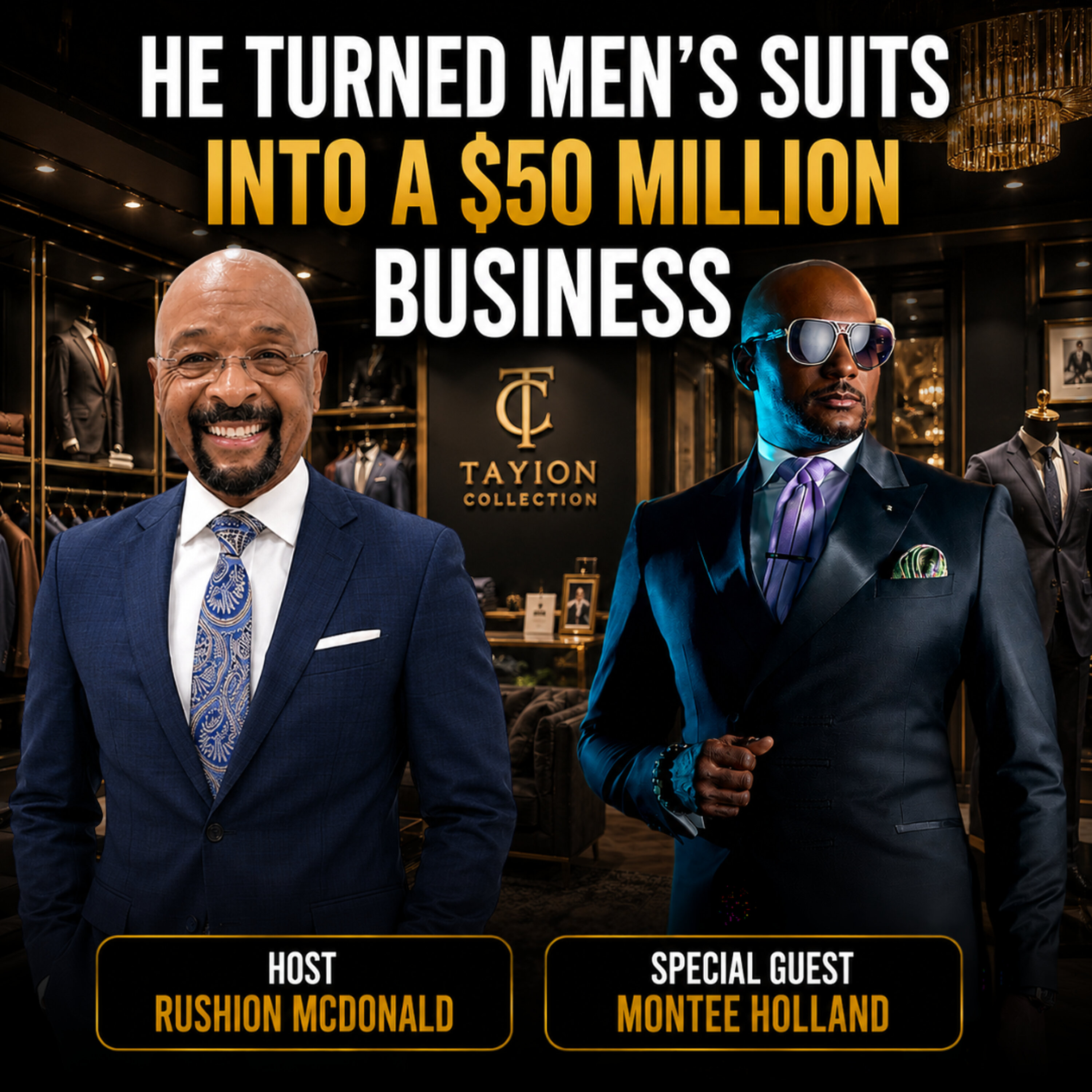
    Follow Your Dreams: Montee left pharmaceutical sales to build a nationally recognized fashion brand carried by major retailers.

    Listen and subscribe to Money Making Conversations on iHeartRadio, Apple Podcasts, Spotify, www.moneymakingconversations.com/subscribe/ or wherever you listen to podcasts. New Money Making Conversations episodes drop daily. I want to alert you, so you don’t miss out on expert analysis and insider perspectives from my guests who provide tips that can help you uplift the community, improve your financial planning, motivation, or advice on how to be a successful entrepreneur. Keep winning! Two-time Emmy and Three-NAACP Image Award-winning, television Executive Producer Rushion McDonald, interviewed Montee Tayion Holland. Founder, president, and CEO of The Tayion Collection, a luxury menswear brand. Holland shares his journey from growing up in Detroit, serving in the U.S. Marine Corps, and working in pharmaceutical sales to building a nationally recognized fashion brand carried by major retailers. The conversation focuses on entrepreneurship, fashion, branding, licensing, mentorship, business growth, and creating a legacy through both business success and community impact. Purpose of the Interview The interview aims to: Share Montee Tayion Holland's entrepreneurial journey. Educate listeners on how to build a successful fashion brand. Explain the business side of the fashion industry, including licensing and retail partnerships. Inspire aspiring entrepreneurs to pursue their passions and monetize their talents. Highlight the importance of mentorship, networking, and community involvement. Discuss the success and significance of apparel collections inspired by historically Black fraternities and sororities. Key Takeaways 1. Passion Often Starts Early Holland's interest in fashion began while growing up in Detroit, where he admired the way coaches and professional role models dressed. Their polished appearance inspired him to pursue a future connected to fashion, even before he understood how to enter the industry. 2. Detroit Influenced His Style Philosophy Detroit's rich culture of fashion, confidence, and self-expression helped shape Holland's view that clothing should reflect an individual's personality. He believes style is about more than appearance. It is a statement of identity and confidence. 3. Military Service Became His Fashion Classroom While serving in the Marine Corps overseas, Holland spent time in tailoring shops creating custom shirts, jackets, and suits. Those experiences taught him about fabrics, fit, construction, and design, laying the foundation for his future brand. 4. The Tayion Collection Bridges Luxury and Accessibility Holland designed The Tayion Collection to offer many of the details and craftsmanship found in custom clothing while remaining accessible through ready-to-wear garments. His goal was to deliver luxury quality at a more attainable price point. 5. A Great Product Alone Is Not Enough One of Holland's strongest lessons is that entrepreneurs must understand the business behind their products. Success requires knowledge of: Manufacturing Cost structure Inventory management Supply chains Distribution Cash flow Retail relationships He stresses that many businesses fail not because of poor products but because of weak business operations. 6. Relationships Can Transform a Career A key turning point came when Holland met apparel executive Ronnie Waksburger, who helped introduce him to larger opportunities within the fashion industry. The interview demonstrates how networking, reputation, and relationship-building can accelerate business growth. 7. Licensing Is a Powerful Growth Strategy Holland explains that licensing allows entrepreneurs to expand their brands without personally funding massive production runs. Through licensing partnerships, businesses gain access to: Manufacturing capabilities Capital resources Industry expertise Distribution channels Retail partnerships This model allows brands to scale faster while reducing operational challenges. 8. The Divine Nine Collection Filled an Important Market Need Holland partnered with Macy's to create apparel inspired by the colors of the Divine Nine fraternities and sororities. Rather than focusing primarily on logos and symbols, the collection uses sophisticated color combinations and versatile styling that can be worn in both professional and social settings. 9. Giving Back Is Part of His Mission Beyond fashion, Holland has spent years mentoring young people and helping student-athletes earn college scholarships. His commitment comes from his own experiences growing up and wanting to create opportunities for future generations. 10. Legacy Matters More Than Short-Term Success Holland's long-term goal is not simply to sell clothing but to build an enduring fashion brand that can continue impacting people for generations. He views entrepreneurship as an opportunity to create something meaningful that outlives its founder. Notable Quotes On Fashion and Identity "People who are really into fashion would like their fashion to be an extension of their personalities." On The Tayion Collection "Where the custom suit meets the ready-to-wear suit." On Entrepreneurship "You can have the hottest garments in the world. If you don't understand the business of it, you will lose and you will fail." On Innovation "It's about taking risks and it's about following that little voice in your head." On Purpose "That little voice in your head is your gift and you have to listen to it." On Licensing "Would you rather have all of $1 million or 10% of $100 million?" On Passion "You have to love what you do." On Recognizing Opportunity "If people are always complimenting you on it, it's maybe something that you could do and monetize." On Entrepreneurship "You will not fail. You will know." On Legacy "I believe there is no mountaintop. It's a legacy brand that could be here for years and years to come." Executive Summary Montee Tayion Holland's interview is a powerful story about vision, resilience, and entrepreneurship. From humble beginnings in Detroit and service in the Marine Corps to founding The Tayion Collection and securing partnerships with major retailers, Holland demonstrates how passion, discipline, continuous learning, and strategic relationships can build a successful brand. His central message is simple: identify your gifts, develop the business skills to support them, trust your instincts, and build something that creates lasting value for future generations. #AMI #BEST #SHMS #STRAW Money Making Conversations Master Class with Rushion McDonald is America's premier entrepreneurship, business leadership, financial literacy, and wealth-building podcast featuring successful entrepreneurs, executives, founders, celebrities, and industry experts sharing actionable insights for professional and financial success. Business Podcast Entrepreneurship Small Business Business Growth Financial Literacy Wealth Building Black Entrepreneurs Minority Business Leadership Executive Leadership Business Funding Marketing Strategies Personal Development Startup Advice Sales Training CEO Interviews Founder Stories Professional Development Economic Empowerment Business Success Networking Brand Building Innovation How to start a business Small business funding Entrepreneur success stories Business leadership podcast Wealth building strategies Black entrepreneur podcast Minority business development Marketing for small businesses Business growth strategies Startup funding opportunities Executive leadership training Financial literacy education Success mindset podcast See omnystudio.com/listener for privacy information.

    • Transcript
  • September 13 · 20 min

    Follow Your Dreams: Jasmine promotes entrepreneurship and wealth-building within underserved communities.

    Listen and subscribe to Money Making Conversations on iHeartRadio, Apple Podcasts, Spotify, www.moneymakingconversations.com/subscribe/ or wherever you listen to podcasts. New Money Making Conversations episodes drop daily. I want to alert you, so you don’t miss out on expert analysis and insider perspectives from my guests who provide tips that can help you uplift the community, improve your financial planning, motivation, or advice on how to be a successful entrepreneur. Keep winning! Two-time Emmy and Three-time NAACP Image Award-winning television Executive Producer Rushion McDonald interviewed Jasmine Young. Founder and President of the Financial Literacy Institute, joins Rushion McDonald to discuss her journey from a small rural town in Alabama to becoming a financial literacy advocate, entrepreneur, and community leader. The conversation focuses on education, financial empowerment, HBCUs, generational wealth, entrepreneurship, and the role economic power plays in creating social change. Purpose of the Interview The interview was designed to: Share Jasmine Young's personal story and professional journey. Highlight the importance of financial literacy and financial education. Promote entrepreneurship and wealth-building within underserved communities. Discuss the value and impact of Historically Black Colleges and Universities (HBCUs). Raise awareness about the Black Wall Street Black Business Expo and its mission. Encourage individuals and families to build financial independence and generational wealth. Key Takeaways 1. Education Was Her Path to Opportunity Young grew up in rural Alabama and saw education as her pathway to a different future. She earned a full scholarship to Alabama A&M University and knew as early as high school that she wanted to become a CPA. Quote: "I knew that I was getting out, and I was going to use financial literacy as a way to do it." Her story demonstrates how education can create opportunities regardless of where someone begins. 2. HBCUs Build Confidence and Leadership Young credits Alabama A&M University with shaping her personally and professionally. She explains that being surrounded by Black excellence helped develop her confidence and prepared her for challenges she would face in the broader workforce. Quote: "Going to an HBCU was the best thing I ever did." She argues that HBCUs provide not only academic preparation but also practical life and leadership skills. 3. Financial Literacy Starts at Home One of the most compelling parts of the interview is Young's description of how her parents taught financial responsibility. Although her family lived in a rural area and did not appear wealthy by traditional standards, they taught budgeting, discipline, accountability, and long-term thinking. Examples included: Managing a weekly allowance. Paying for personal expenses. Learning to budget before adulthood. Understanding the value of money early. She believes these lessons created the foundation for her success. 4. Wealth Is More Than Appearances As a child, Young was embarrassed by her rural upbringing. Later, she realized her family possessed something far more valuable than appearances: land ownership, self-sufficiency, and financial wisdom. Her family owned more than 78 acres of land and lived off resources available on their property. She learned that true wealth is often found in assets, knowledge, and long-term planning rather than outward displays of success. 5. Financial Literacy Is Her Purpose Young explains that her passion for numbers eventually became her life mission. Through the Financial Literacy Institute, she works to increase financial knowledge and help families improve their economic outcomes. Quote: "My passion for financial literacy was actually my purpose." Her goal is to spread financial literacy one family at a time. 6. Economic Power Creates Social Change A major theme of the interview is that financial empowerment and social justice are closely connected. Young argues that communities gain influence when they build wealth, support businesses strategically, and leverage their spending power. She believes economic participation is one of the most effective ways to create meaningful change. Quote: "The way for us to move the needle economically is we have to be civically engaged." 7. The Legacy of Black Wall Street Matters Today Young created the Black Wall Street Black Business Expo to honor the entrepreneurs and wealth-builders of Tulsa's Greenwood District while encouraging modern business owners to continue that legacy. She views the event as both a celebration of Black excellence and a call to action. Key goals include: Supporting Black-owned businesses. Building generational wealth. Strengthening communities through entrepreneurship. Encouraging civic and economic engagement. 8. Your Environment Does Not Define Your Potential Throughout the interview, Young challenges stereotypes about people from rural communities. She demonstrates that success is not determined by geography, background, or circumstances but by education, discipline, opportunity, and persistence. Her story serves as an example that individuals can achieve significant success regardless of where they start. Notable Quotes On education and opportunity "I knew that I was getting out, and I was going to use financial literacy as a way to do it." On HBCUs "Going to an HBCU was the best thing I ever did." On financial literacy "My passion for financial literacy was actually my purpose." On her upbringing "My parents gave my brother and me a basic foundation of how to be a responsible financial adult." On economic empowerment "The way for us to move the needle economically is we have to be civically engaged." On wealth-building "We've done it before, and Black Wall Street is an example of it." On leveraging economic power "The answer to all our social injustice issues is recirculating the Black dollar in our community." Overall Assessment The interview is a powerful discussion about financial literacy, education, entrepreneurship, generational wealth, and community advancement. Jasmine Young presents a compelling example of how discipline, education, and financial knowledge can transform lives. Her message is that true empowerment begins with understanding money, building assets, supporting community businesses, and using economic influence to create lasting social and financial change. The central theme is that financial literacy is not just about money. It is a tool for freedom, opportunity, and generational impact. #SHMS #BEST #STRAW Money Making Conversations Master Class with Rushion McDonald is America's premier entrepreneurship, business leadership, financial literacy, and wealth-building podcast featuring successful entrepreneurs, executives, founders, celebrities, and industry experts sharing actionable insights for professional and financial success. Business Podcast Entrepreneurship Small Business Business Growth Financial Literacy Wealth Building Black Entrepreneurs Minority Business Leadership Executive Leadership Business Funding Marketing Strategies Personal Development Startup Advice Sales Training CEO Interviews Founder Stories Professional Development Economic Empowerment Business Success Networking Brand Building Innovation How to start a business Small business funding Entrepreneur success stories Business leadership podcast Wealth building strategies Black entrepreneur podcast Minority business development Marketing for small businesses Business growth strategies Startup funding opportunities Executive leadership training Financial literacy education Success mindset podcast See omnystudio.com/listener for privacy information.

    • Transcript
Showing 441–460 of 626 episodes