Skip to content
Artwork for STRAT
BusinessManagementGovernmentHistory

STRAT

Mutual Broadcasting System LLC

STRAT – Strategic Risk Assessment Talk, is a forum with a preparedness mindset. Mitigating risks, creating systems of prevention and recovery to deal with potential threats, and understanding the objectives of a Business Continuity Plan. This is the podcast for leaders who are committed to being prepared. The program is hosted by retired Marine Corps intelligence officer and strategic risk assessment professional Hal Kempfer and investment banker Mark Mansfield.

Play
  • 20 episodes
  • weekly
  • Avg 23 min
  • English
  • S5 · E36
    Wednesday · 26 min

    STRAT | 26 AUG 2026 | Ukraine’s Strategic Gambit

    Ukraine’s deep-strike campaign is reaching farther into Russia, targeting refineries, warehouses, defense plants, air-defense systems, and critical infrastructure with growing frequency. In this episode of STRAT, retired Marine intelligence officer LtCol. Hal Kempfer examines whether Ukraine’s expanding drone and missile program has created a strategic inflection point for Vladimir Putin. Kempfer explores the pressure on Russian air defenses, the economic consequences of disrupted energy and commercial networks, mounting battlefield casualties, labor shortages, and growing strains within Russia’s political elite. He also considers the risks surrounding possible mobilization, escalation involving NATO, and the Kremlin’s ability to maintain public confidence as attacks reach deeper into Russian territory. Finally, Kempfer examines the broader strategic implications of Ukraine’s campaign, including parallels with American pressure on Iran, and asks whether Kyiv’s evolving approach to long-range warfare could ultimately reshape the conflict, destabilize Putin’s regime, and influence how future wars are fought for years worldwide. Takeaways: Ukraine’s deep strikes are stretching Russian air defenses dangerously thin. Critical infrastructure attacks are increasing economic pressure across Russia. Putin faces mounting political risks from potential mass mobilization. Ukrainian strikes increasingly threaten Russia’s energy and commercial networks. Russian casualties and labor shortages compound Kremlin economic pressures. Continued escalation could increase risks of confrontation involving NATO. Ukraine’s campaign demonstrates warfare’s growing emphasis on strategic disruption. Putin’s greatest long-term threat may ultimately emerge from within Russia. #STRATPodcast #HalKempfer #MutualBroadcastingSystem #StrategicRiskAnalysis #UkrainesStrategicGambit #UkraineWar #Ukraine #Russia #Putin #VladimirPutin #DeepStrike #DroneWarfare #StrategicWarfare #RussiaUkraineWar #NATO #Geopolitics #NationalSecurity #MilitaryIntelligence #GlobalSecurity #StrategicAnalysis
  • S5 · E35
    August 22 · 35 min

    STRAT | 22 AUG 2026 | Economic D-Day with Iran

    In this episode of STRAT, retired Marine intelligence officer LtCol. Hal Kempfer examines what the White House is calling “Economic D-Day,” a major escalation of economic pressure against Iran. Kempfer assesses why anticipated public resistance to Tehran’s government has not materialized, how months of conflict have strained regional security and U.S. air-defense inventories, and why Washington may now see economic collapse as its most viable strategic lever. The discussion explores Iran’s inflation crisis, the rial’s decline, oil flows through and around the Strait of Hormuz, efforts to close financial and trading backdoors, and the critical role of Gulf allies. Kempfer also considers whether intensified sanctions could fracture Iran’s security apparatus, revive domestic unrest, and ultimately produce regime change without an official declaration of that objective. Finally, he examines the risks of escalation, propaganda, covert action, strategic deception, and the consequences of failure for U.S. credibility worldwide and future diplomacy abroad. Takeaways: Washington shifts toward intensified economic pressure against Iran. Iran’s economic crisis could become a strategic breaking point. Domestic unrest remains critical to Tehran’s long-term stability. U.S. air-defense inventories face significant pressure from regional conflict. Gulf allies could determine whether economic sanctions truly succeed. Closing Iranian financial backdoors becomes a central U.S. objective. Economic collapse could potentially trigger fractures within security forces. Regime change may emerge without becoming declared American policy. #STRATPodcast #HalKempfer #MutualBroadcastingSystem #StrategicRiskAnalysis #EconomicDDay #Iran #IranConflict #IranEconomy #EconomicWarfare #EconomicSanctions #USForeignPolicy #StraitOfHormuz #MiddleEastSecurity #Geopolitics #NationalSecurity #RegimeChange #StrategicIntelligence #GlobalSecurity #MarineIntelligence #RiskAssessment

  • S5 · E34
    August 20 · 28 min

    STRAT | 19 AUG 2026 | Consequence Management and the Super El Nino

    In this episode of STRAT, retired Marine intelligence officer LtCol. Hal Kempfer examines consequence management and warns of the risks he associates with a potential Super El Niño. Drawing on decades of work with military commands, FEMA, DHS, intelligence organizations, and state and local agencies, Kempfer traces the evolution of all-hazards consequence management and argues that critical gaps remain in disaster intelligence and decision support. He revisits lessons from Hurricane Katrina, the development and abandonment of CPG-502, and the intended role of state and local fusion centers in helping leaders understand threats, damage, and cascading consequences. Kempfer also explores California’s historic flood vulnerability, including the catastrophic storms of 1861–62, and considers what extreme precipitation could mean for infrastructure, supply chains, businesses, governments, and communities today. His central message: preparedness must go beyond assurances. Leaders need realistic assessments, integrated intelligence, mitigation planning, and action before a major disaster actually arrives unexpectedly. Takeaways: Consequence management prepares organizations for natural and manmade disasters. Disaster intelligence provides leaders critical information for timely decisions. Hurricane Katrina exposed major gaps in federal disaster preparedness. CPG-502 sought stronger state and local disaster intelligence capabilities. Kempfer argues CPG-502 was never adequately implemented nationwide. California’s historic floods demonstrate the catastrophic potential of extreme rainfall. Super El Niño could severely challenge existing emergency preparedness systems. Businesses must prepare for workforce, infrastructure, and supply disruptions. #STRATPodcast #HalKempfer #MutualBroadcastingSystem #StrategicRiskAnalysis #ConsequenceManagement #SuperElNino #DisasterPreparedness #EmergencyManagement #DisasterIntelligence #NationalSecurity #RiskAssessment #CrisisManagement #EmergencyPreparedness #CaliforniaFlooding #ExtremeWeather #HomelandSecurity #FEMA #DisasterResponse #CriticalInfrastructure #StrategicIntelligence

  • S5 · E33
    August 14 · 22 min

    STRAT | 14 AUG 26 | Drones Across The Homeland

    Drones are transforming the security landscape across the American homeland, creating opportunities for first responders while introducing rapidly evolving threats to military installations, critical infrastructure, public safety, major venues, and communities. This STRAT episode examines warnings from U.S. Northern Command and NORAD leaders that existing sensor and interception capabilities may not be sufficient to confront modern drone swarms launched from within U.S. territory. Host Hal Kempfer explores lessons from Ukraine, the disruption unauthorized drones can cause during wildfire operations, and their growing use by criminal smuggling networks. It also examines the expansion of Drone as First Responder programs, which can provide emergency personnel with valuable situational awareness before crews arrive. From terrorism and espionage to public safety and emergency response, drones are reshaping risk assessment. The central message is urgent: governments, infrastructure operators, security professionals, and major venues must develop dynamic counter-UAS plans before the next major incident occurs on American soil. Takeaways: America’s drone defenses face significant sensor and interception gaps. Future drone attacks could originate from within U.S. borders. Ukraine demonstrates drones can challenge advanced conventional military forces. Unauthorized drones can disrupt and endanger critical emergency operations. Criminal networks increasingly exploit drones for smuggling and contraband. First responder drones can dramatically improve emergency situational awareness. Critical infrastructure and major venues need counter-UAS planning now. Drone preparedness must anticipate evolving threats, not yesterday’s attacks. #STRATPodcast #HalKempfer #MutualBroadcastingSystem #StrategicRiskAnalysis #DroneSecurity #HomelandSecurity #DroneThreats #CounterUAS #DroneWarfare #DroneSwarms #NationalSecurity #PublicSafety #CriticalInfrastructure #EmergencyResponse #DroneTechnology #FirstResponderDrones #MilitaryIntelligence #SecurityPreparedness #ThreatAssessment #UnmannedAircraftSystems

  • S5 · E32
    August 7 · 27 min

    STRAT | 06 AUG 2026 | Missile Mayhem From Absent Ammo

    This episode of STRAT with retired Marine Intelligence Officer Hal Kempfer examines the growing shortage of advanced air defense interceptors and the strategic consequences for conflicts in Ukraine, the Middle East, and future U.S. military readiness in East Asia. Kempfer explores how Patriot and THAAD missile inventories have been depleted faster than they can be replaced, exposing vulnerabilities created by years of limited production capacity. The discussion highlights the enormous cost imbalance between intercepting inexpensive drones with multimillion-dollar missiles, while explaining why increasing production will take years. The episode also analyzes Ukraine's urgent need to destroy Russian missile launchers before they fire, the role Starlink could play in enabling precision targeting, and the political complications surrounding that request. Finally, the conversation looks ahead to emerging technologies such as directed-energy weapons while emphasizing that today's conflicts are rapidly redefining modern warfare and forcing governments to rethink defense industrial capacity, military preparedness, and strategic priorities before the next major crisis. Takeaways: Patriot and THAAD remain the backbone of U.S. and allied ballistic missile defense. Missile inventories have been depleted faster than production can replace them. Ukraine's efficient Patriot employment contrasts with higher interceptor usage elsewhere. Using multimillion-dollar interceptors against inexpensive drones is economically unsustainable. Expanding missile production is underway but meaningful increases remain years away. Ukraine increasingly depends on destroying launchers before missiles are fired. Starlink has become part of a larger strategic and political debate over battlefield connectivity. Future conflicts will require stronger defense industrial capacity alongside emerging technologies like directed-energy weapons. #STRATPodcast #HalKempfer #MutualBroadcastingSystem #StrategicRiskAnalysis #MissileDefense #PatriotMissiles #THAAD #Ukraine #Russia #Iran #AirDefense #MilitaryStrategy #NationalSecurity #DefenseIndustry #MissileProduction #DroneWarfare #EastAsia #Geopolitics #StrategicRisk #GlobalSecurity

  • S5 · E31
    August 3 · 26 min

    STRAT | 03 AUG 2026 | Iran Stalemate & Russian Reality Check

    This STRAT episode examines two of the world's most dangerous security flashpoints as events accelerate in both the Middle East and Eastern Europe. The discussion with Retired Marine Intelligence Officer Hal Kempfer explores reports of a possible U.S.-Israeli strike on Iran that was reportedly halted amid conflicting claims of diplomatic progress, while analyzing the growing threat posed by Iran and its regional proxy forces to critical shipping lanes, Gulf infrastructure, and vital desalination facilities that millions depend upon for fresh water. Attention then shifts to Ukraine, where increasingly effective deep strikes inside Russia are reshaping the battlefield and challenging public confidence in Vladimir Putin's leadership. The episode also reviews Russia's mounting military and economic pressures, Ukraine's growing air defense challenges, and historical parallels that could signal significant political instability in Moscow. Throughout the conversation, listeners gain strategic context behind rapidly changing global events and the risks these conflicts pose to regional stability, international commerce, energy security, and the broader geopolitical landscape. Takeaways: The possibility of renewed U.S.-Israeli military action against Iran remains a significant strategic concern. Iran and its proxy network continue threatening critical Gulf energy infrastructure and international shipping routes. Gulf nations are increasingly focused on protecting desalination facilities that are essential for civilian survival. Regional cooperation among Gulf states appears to be strengthening in response to shared security threats. Ukraine's expanding long-range strikes are bringing the war directly into Russia's population centers. Russia faces increasing military, economic, and political pressure as battlefield realities worsen. Ukraine's shortage of Patriot interceptors presents growing challenges against Russian missile attacks. Historical comparisons suggest Russia could face increasing internal instability if current trends continue. #STRATPodcast #HalKempfer #MutualBroadcastingSystem #StrategicRiskAnalysis #Iran #Russia #Ukraine #MiddleEast #Geopolitics #NationalSecurity #MilitaryAnalysis #GlobalSecurity #ForeignPolicy #Defense #EnergySecurity #RedSea #Hormuz #BlackSea #Intelligence #WorldAffairs

  • S5 · E30
    July 27 · 24 min

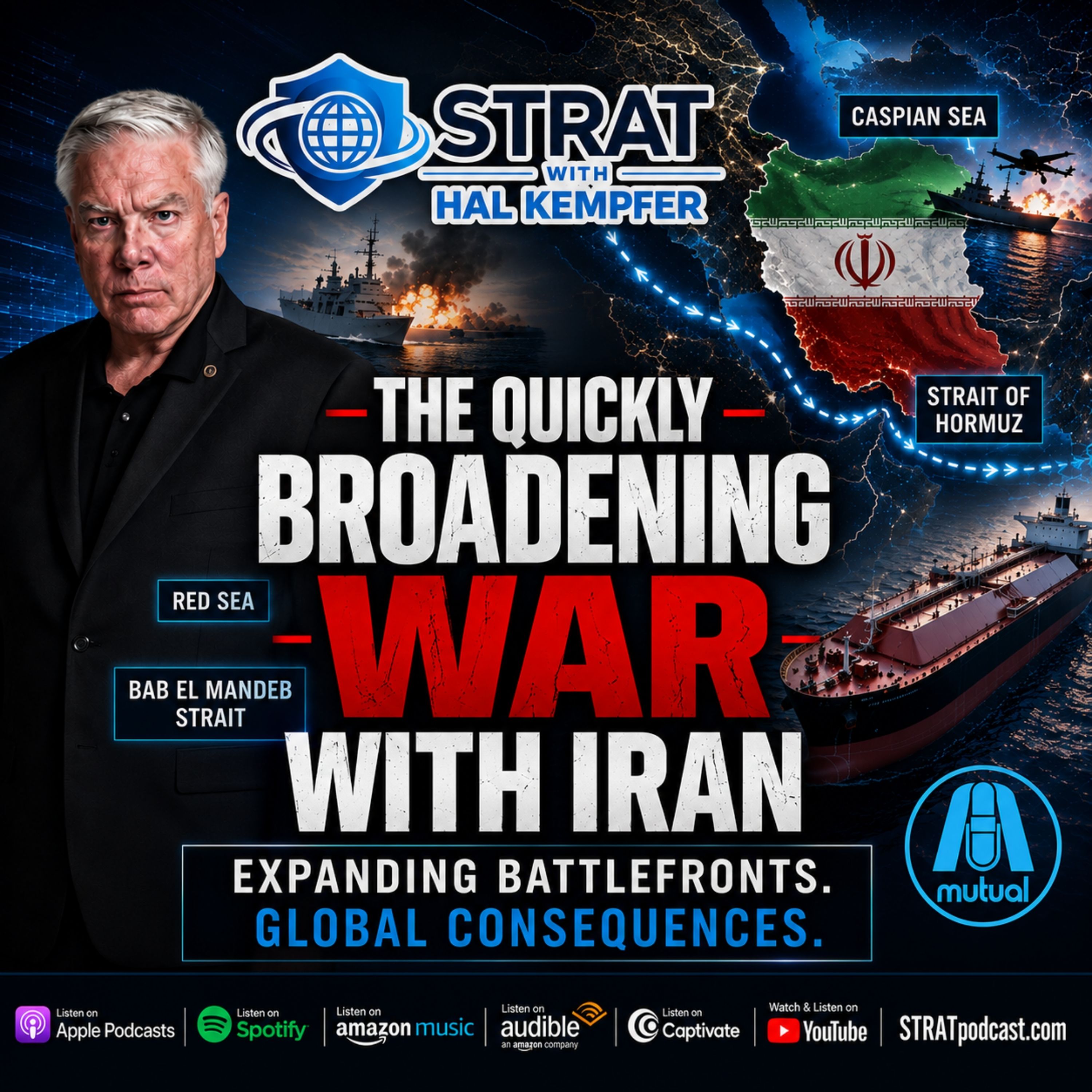
    STRAT | 26 JULY 2026 | The Quickly Broadening War with Iran

    As military operations against Iran enter what appears to be an operational pause, the broader regional conflict is expanding in dangerous and unexpected ways. In this episode of STRAT, retired Marine intelligence officer LtCol. Hal Kempfer examines how Tehran is widening the battlefield by empowering its Houthi proxies to disrupt critical maritime chokepoints while drawing Saudi Arabia into more direct combat. Hal analyzes the strategic importance of the Bab el Mandeb Strait, the Strait of Hormuz, and the growing threats to global energy markets and international shipping. He also explores Ukraine's unprecedented drone strikes against Iran-Russia military logistics in the Caspian Sea, highlighting how the wars in Ukraine and the Middle East are increasingly converging into a single strategic contest. Finally, Hal assesses reports of new Iranian attacks in the Strait of Hormuz and explains why the current pause in military operations could rapidly give way to renewed kinetic action across multiple theaters. Takeaways: Iran has transformed the Houthis into a more direct operational extension of the IRGC, expanding Tehran's military reach beyond its borders. Simultaneous threats to the Bab el Mandeb Strait and the Strait of Hormuz place unprecedented pressure on global shipping and energy supplies. Saudi Arabia has shifted from defensive measures to direct military operations against Houthi positions and Iranian-backed infrastructure. The Red Sea has become a central battlefield affecting international commerce, oil exports, and regional security. Ukraine's drone strikes in the Caspian Sea demonstrate the growing intersection between the Ukraine war and Iran's regional ambitions. Russia's military partnership with Iran continues to blur the lines between the European and Middle Eastern conflicts. Any confirmed Iranian mining or attacks in the Strait of Hormuz could quickly end the current operational pause and trigger broader military action. The emerging conflict is no longer confined to isolated regions but is evolving into a connected, multi-theater strategic confrontation with global consequences. #STRATPodcast #HalKempfer #MutualBroadcastingSystem #StrategicRiskAnalysis #Iran #MiddleEast #RedSea #Houthis #IRGC #SaudiArabia #StraitOfHormuz #BabElMandeb #Ukraine #Russia #CaspianSea #MaritimeSecurity #GlobalShipping #EnergySecurity #Geopolitics #NationalSecurity

  • S5 · E29
    July 19 · 21 min

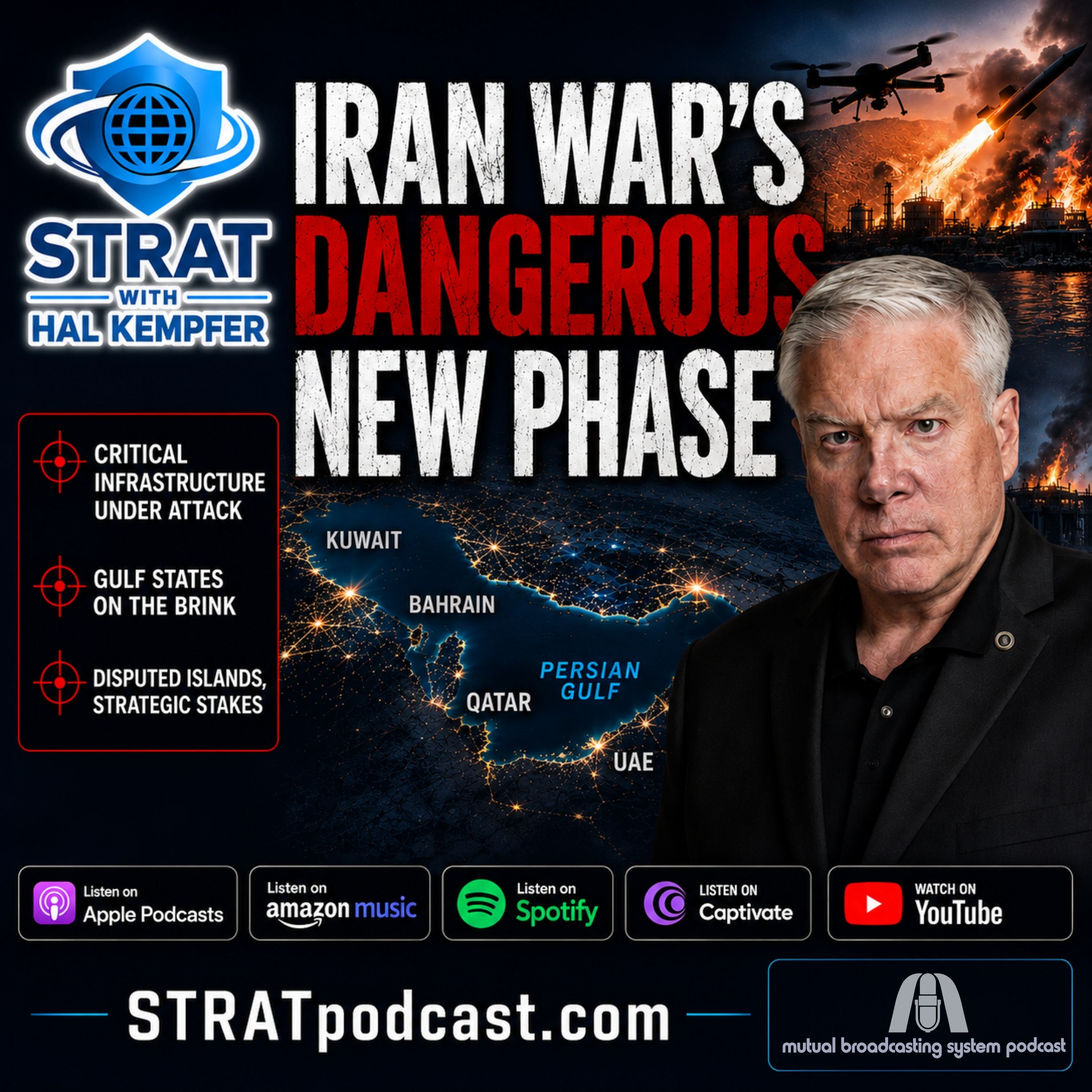
    STRAT | 18 JULY 2026 | Iran War’s Dangerous New Phase

    The conflict with Iran is entering a far more dangerous stage as military operations expand beyond traditional battlefield targets and increasingly focus on critical infrastructure across the region. This episode of STRAT has retired Marine Intelligence Officer LtCol. Hal Kempfer examining the strategic implications of U.S. strikes against bridges, energy facilities, and ports in Iran, alongside Iran's retaliatory attacks on Gulf desalination plants that provide drinking water for millions. Kempfer explains why these facilities represent highly vulnerable strategic targets and how attacks on Gulf infrastructure could fundamentally change the calculations of regional governments. The discussion also explores the growing possibility that Gulf nations—including the UAE, Kuwait, Bahrain, Qatar, and potentially Saudi Arabia—could become active combatants, dramatically increasing military pressure on Iran. Finally, the episode analyzes the strategic importance of disputed islands controlling the Strait of Hormuz and why their future could significantly reshape regional security, maritime commerce, and the balance of power throughout the Middle East. Takeaways: The war has shifted toward attacks on critical civilian infrastructure with major strategic consequences. Gulf desalination plants are exceptionally vulnerable and essential to regional survival. U.S. strikes suggest preparations for expanded and sustained air operations. Iran's attacks may remove the remaining political barriers preventing Gulf states from joining the conflict. Regional military participation could dramatically increase the scale of strikes against Iran. Covert operations targeting Iran's Revolutionary Guard Corps have become increasingly plausible. Control of disputed islands in the Strait of Hormuz could reshape regional military balance. The conflict appears to be entering a prolonged and significantly more dangerous phase. #STRATPodcast #HalKempfer #MutualBroadcastingSystem #StrategicRiskAnalysis #Iran #MiddleEast #StraitOfHormuz #PersianGulf #NationalSecurity #Geopolitics #MilitaryAnalysis #RegionalSecurity #CriticalInfrastructure #Desalination #USMilitary #IranConflict #GulfStates #DefenseAnalysis #ForeignPolicy #GlobalSecurity

  • S5 · E28
    July 13 · 20 min

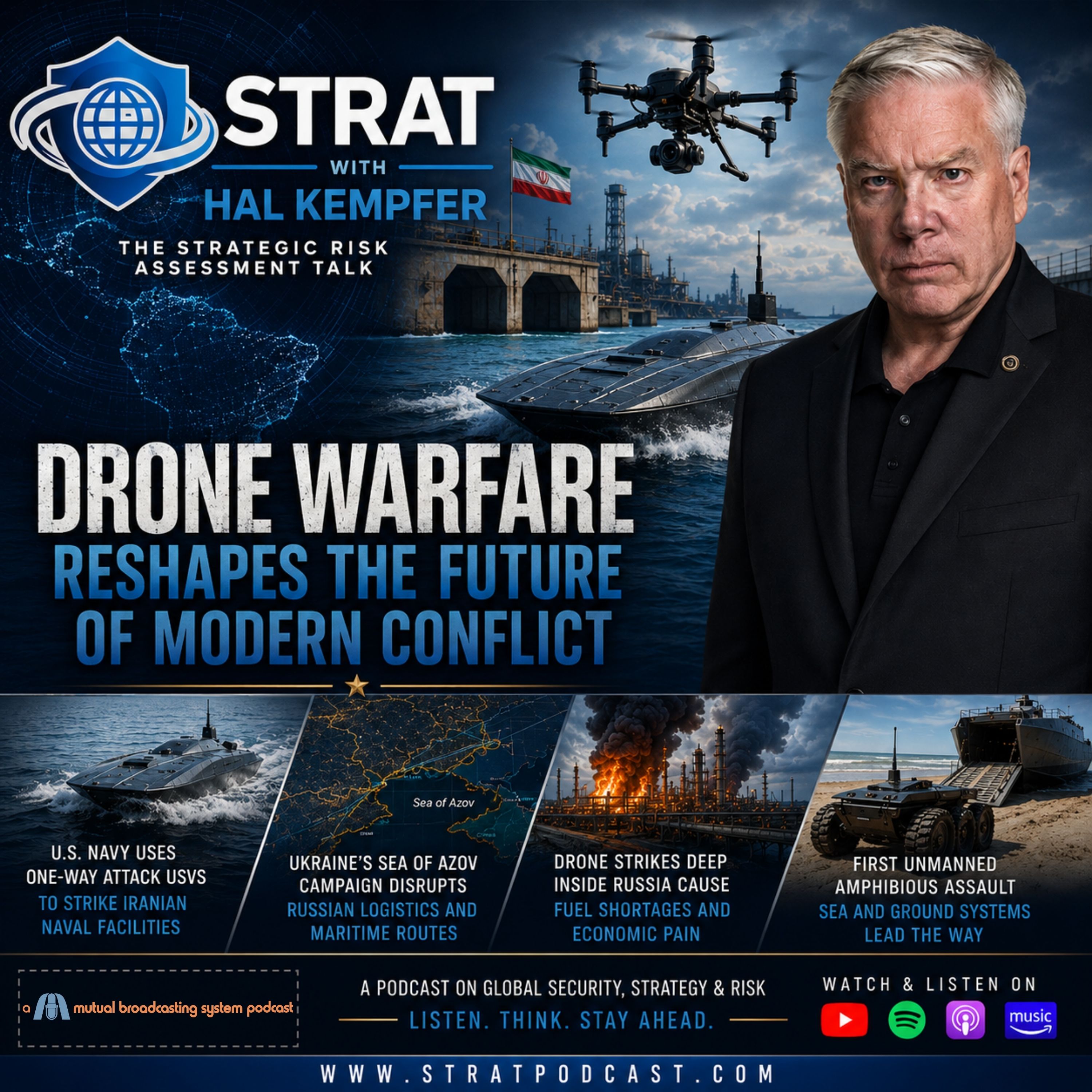
    STRAT | 13 JULY 2026 | Drone Dominance Reshapes Future of Modern Conflict

    Drone technology is rapidly transforming the battlefield, and its strategic consequences are becoming impossible to ignore. This episode of STRAT with Hal Kempfer examines how autonomous air, sea, and ground systems are redefining military operations while reducing risks to personnel and expanding the reach of precision attacks. The discussion explores the U.S. military's first operational use of one-way autonomous surface drones against Iranian targets, Ukraine's sweeping drone campaign disrupting Russian logistics, energy infrastructure, and maritime operations, and the growing vulnerability of traditional military defenses. The episode also analyzes how long-range drone strikes are bringing the war directly into Russia, creating fuel shortages, economic pressure, and political consequences far beyond the front lines. Finally, attention turns to what may represent another historic milestone: the first known unmanned amphibious assault combining autonomous sea and ground vehicles. Together, these developments illustrate how drone warfare is fundamentally reshaping strategy, deterrence, logistics, and the future character of armed conflict. Takeaways: The U.S. Navy employed autonomous surface attack drones operationally against Iranian naval infrastructure. Unmanned sea, air, and ground systems are rapidly changing the nature of modern warfare. Ukraine's drone campaign has severely disrupted Russian logistics, fuel production, and maritime operations. Long-range drones are reaching targets deep inside Russia, exposing vulnerabilities in homeland defense. Drone attacks on refineries and transportation networks are creating economic and political pressure within Russia. The Sea of Azov campaign demonstrates how unmanned systems can effectively impose a naval blockade. Shortages of advanced air defense missiles highlight the growing challenge of defending against mass drone attacks. The first reported unmanned amphibious assault signals another major evolution in military operations. #STRATPodcast #HalKempfer #MutualBroadcastingSystem #StrategicRiskAnalysis #DroneWarfare #MilitaryStrategy #NationalSecurity #UkraineWar #RussiaUkraine #MaritimeSecurity #AutonomousSystems #DefenseTechnology #MilitaryIntelligence #Geopolitics #HomelandSecurity #AirDefense #SeaDrones #MilitaryInnovation #GlobalSecurity #FutureWarfare

  • S5 · E27
    July 8 · 19 min

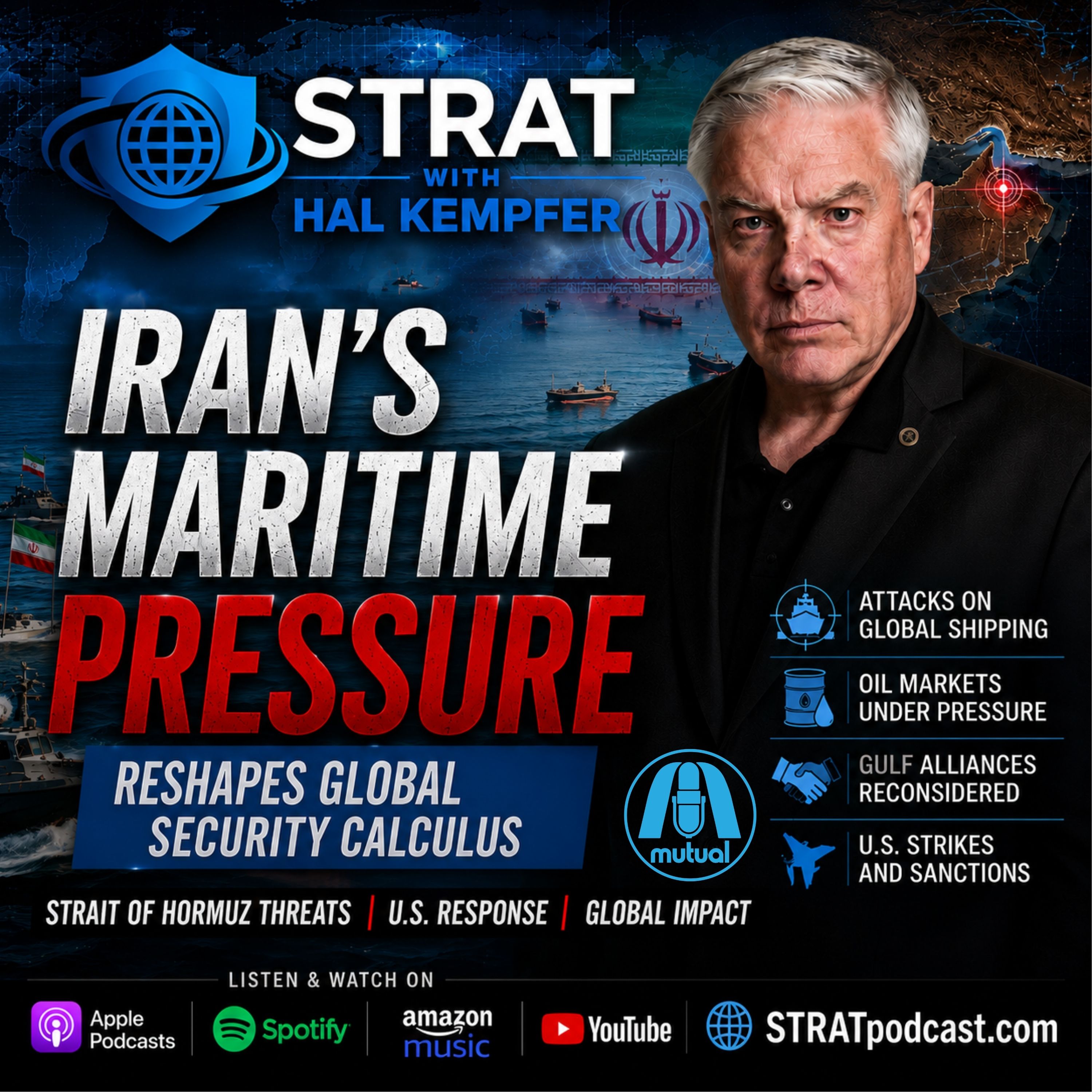
    STRAT | 08 July 2026 | Global Security Calculus and Iran's Action

    Iran's actions in the Strait of Hormuz are testing more than regional stability—they are challenging the future of global commerce, maritime security, and U.S. strategic credibility — and are provocations that have now effectively ended the ceasefire. This episode of STRAT with retired Marine Intelligence Officer Hal Kempfer examines Iran's alleged violations of post-conflict agreements, including attacks on commercial shipping, coercive maritime practices, and continued pressure on one of the world's most critical energy corridors. The discussion explores how Gulf nations are reassessing their security partnerships, why shifting U.S. military posture is influencing regional diplomacy, and how renewed sanctions and military strikes signal a changing phase in the confrontation. The episode also analyzes the implications of Iranian threats against U.S. leadership, the evolving relationship between Washington and Jerusalem, and the broader risks posed to international trade through strategic maritime chokepoints. From energy markets to global supply chains, this conversation provides a strategic assessment of how events in the Persian Gulf could reshape geopolitical competition, economic stability, and security policy well beyond the Middle East. Takeaways: Iran's actions in the Strait of Hormuz continue to challenge regional security and freedom of navigation. Maritime disruptions threaten global energy markets and international supply chains. Gulf nations are reassessing long-standing security relationships with the United States. U.S. military repositioning is influencing strategic calculations throughout the region. Renewed sanctions and military strikes signal a tougher American response to Iranian actions. Maritime chokepoints are becoming increasingly important tools of geopolitical leverage. Rising instability could increase shipping costs, insurance rates, and consumer prices worldwide. Strategic competition in the Middle East continues to shape global economic and security policy #STRATPodcast #HalKempfer #MutualBroadcastingSystem #StrategicRiskAnalysis #Iran #StraitOfHormuz #PersianGulf #MaritimeSecurity #GlobalTrade #EnergySecurity #USForeignPolicy #MiddleEast #Geopolitics #CENTCOM #ShippingSecurity #OilMarkets #NationalSecurity #GlobalEconomy #RiskAssessment #InternationalRelations

  • S5 · E26
    July 2 · 26 min

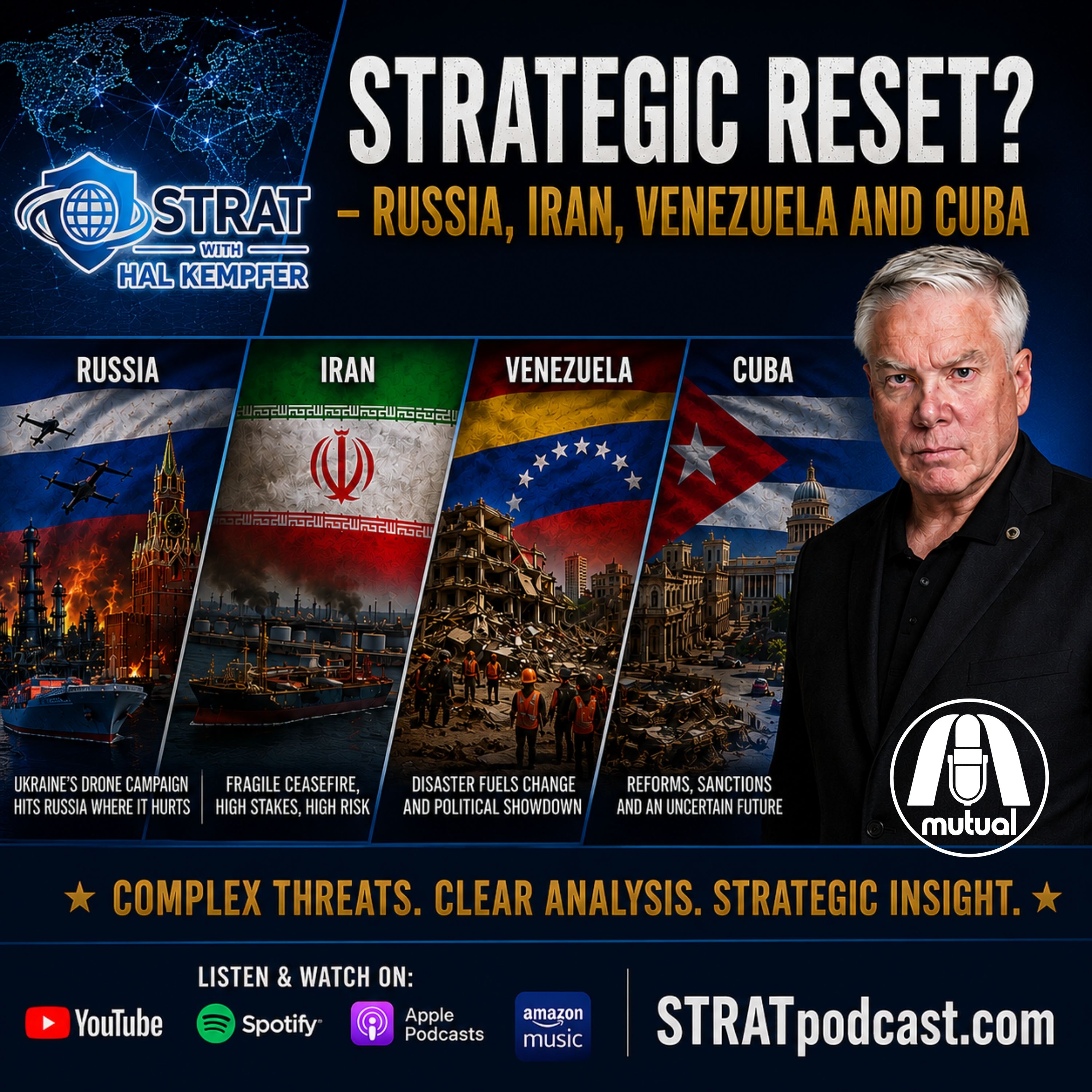
    STRAT | 01 JULY 2026 | Strategic Reset? – Russia, Iran, Venezuela and Cuba

    As geopolitical tensions continue to evolve, this episode examines four major international developments that could reshape the global strategic landscape in the months ahead. The discussion begins with STRAT host Hal Kempfer talking about Ukraine's expanding long-range drone campaign against Russia, exploring how sustained attacks on energy infrastructure, military facilities, and Crimea are increasing pressure on Moscow while raising questions about President Vladimir Putin's political future. Attention then shifts to Iran, where a fragile memorandum of understanding has failed to resolve disputes over nuclear ambitions, maritime security, and regional proxy forces, leaving the possibility of renewed confrontation. The episode also examines Venezuela following catastrophic earthquakes that have intensified political instability and renewed calls for democratic change, along with the implications for the nation's energy sector. Finally, Cuba's unprecedented economic reforms, combined with tightening U.S. sanctions, are assessed for their potential to trigger significant political and economic consequences. Together, these developments highlight a rapidly changing strategic environment demanding close attention from policymakers, businesses, and citizens alike. Takeaways: Ukraine's drone campaign is placing unprecedented military, economic, and psychological pressure on Russia. Russian energy infrastructure has become a primary target, affecting fuel production and logistics. Crimea is becoming increasingly difficult for Russia to defend and sustain. Questions continue to grow regarding Vladimir Putin's political stability and long-term leadership. Iran's ceasefire framework remains fragile amid unresolved disputes over nuclear and regional security issues. Control of the Strait of Hormuz remains a critical factor influencing global energy markets. Venezuela's earthquake disaster may accelerate political change and reshape future investment opportunities. Cuba faces mounting economic pressure as reforms collide with continued sanctions and uncertain political prospects. #STRATPodcast #HalKempfer #MutualBroadcastingSystem #StrategicRiskAnalysis #Russia #Ukraine #Iran #Venezuela #Cuba #Geopolitics #NationalSecurity #MilitaryAnalysis #DroneWarfare #EnergySecurity #StraitOfHormuz #Crimea #GlobalRisk #ForeignPolicy #StrategicIntelligence #WorldAffairs

  • S5 · E25
    June 26 · 21 min

    STRAT | 26 June 2026 | Venezuela Disaster: A Strategic Opportunity

    A catastrophic series of earthquakes has left Venezuela facing widespread destruction, thousands of casualties, and an overwhelming humanitarian crisis. In this STRAT episode, the discussion examines not only the immediate rescue effort but also the broader strategic implications for the United States and the Western Hemisphere. Host Hal Kempfer explores why Venezuela's weakened infrastructure and years of government neglect have complicated disaster response, requiring extensive international assistance led in part by U.S. military and civilian teams. Beyond humanitarian relief, the episode analyzes how disaster response can create lasting diplomatic, military, and political opportunities by building trust, strengthening partnerships, and expanding regional influence. Kempfer also considers how long-term recovery efforts could reshape U.S.-Venezuelan relations, improve regional security cooperation, support future democratic stability, and potentially strengthen counter-cartel operations. This episode provides a strategic risk assessment of how a devastating natural disaster could influence geopolitical relationships long after the rescue missions conclude. Takeaways: Venezuela's earthquakes created a humanitarian disaster requiring significant international assistance. Government neglect and deteriorating infrastructure severely hampered emergency response efforts. Local citizens became first responders despite limited training and significant personal risk. U.S. search-and-rescue teams and military assets play a critical role in relief operations. Establishing logistics, airports, ports, and transportation networks is essential to recovery. Disaster response can become a powerful instrument of diplomacy and strategic influence. Long-term recovery efforts may strengthen U.S.-Venezuelan military and governmental relationships. Humanitarian assistance today could shape Venezuela's future political and security landscape. #STRATPodcast #HalKempfer #MutualBroadcastingSystem #StrategicRiskAnalysis #Venezuela #Earthquake #DisasterRelief #HumanitarianAid #Geopolitics #NationalSecurity #StrategicAnalysis #Southcom #USMilitary #EmergencyResponse #ForeignPolicy #WesternHemisphere #DisasterRecovery #RiskAssessment #RegionalSecurity #CivilMilitaryOperations
  • S5 · E24
    June 18 · 26 min

    STRAT | 17 JUN 26 | Ukraine Momentum Shifts Amid Emerging Policy Reset

    On this episode of STRAT, retired Marine intelligence officer Hal Kempfer examines emerging signs of a potential shift in U.S. policy toward the Russia-Ukraine war following developments at the G7 summit. He analyzes battlefield trends, Ukrainian deep-strike operations, Russian territorial setbacks, and the growing impact of drone warfare on modern conflict. The discussion explores reports of increasing pressure on Russia’s military logistics, infrastructure, and political leadership, while highlighting concerns among Russian elites about the long-term sustainability of the war. Kempfer also reviews recent diplomatic activity involving President Trump, President Zelensky, and European leaders, assessing whether Washington may be moving toward stronger support for Ukraine. Additionally, he considers how the recent Iran conflict, sanctions policy, and broader geopolitical dynamics involving China, Europe, and NATO could influence future U.S. strategic decisions. This episode offers a detailed strategic risk assessment of one of the world’s most consequential conflicts. Takeaways: Evidence suggests Russia has lost battlefield momentum Ukraine’s deep-strike drone campaign is increasingly targeting critical Russian infrastructure. Russian territorial gains have stalled, while some areas show measurable losses. Drone warfare accounts for the majority of battlefield casualties. Russian logistics networks are facing growing disruption from Ukrainian attacks. Reports indicate rising frustration among Russian political and business elites. G7 discussions may signal a shift toward more US support for Ukraine. Broader geopolitical considerations involving Iran, China, and Europe are influencing U.S. strategic calculations #STRATPodcast #HalKempfer #MutualBroadcastingSystem #StrategicRiskAnalysis #UkraineWar #RussiaUkraineConflict #Geopolitics #NationalSecurity #MilitaryAnalysis #ForeignPolicy #DroneWarfare #StrategicRisk #GlobalSecurity #UkraineDefense #RussiaEconomy #NATO #G7Summit #InternationalRelations #DefenseStrategy #ConflictAnalysis

  • S5 · E23
    June 14 · 22 min

    STRAT | 14 JUNE 2026 | Testing a Fragile Path Toward Stability

    A reported U.S.–Iran Memorandum of Understanding could become one of the most consequential geopolitical developments in years—but only if both sides follow through. In this episode of STRAT with retired Marine Intelligence Officer Hal Kempfer, the discussion examines what is reportedly included in the proposed framework, why an MOU is not the same as a treaty or peace agreement, and what challenges lie ahead during the expected 60-day negotiation period. Key topics include reopening the Strait of Hormuz, Iran’s nuclear enrichment program, ballistic missile capabilities, international inspections, sanctions relief, and the future of Iran’s regional proxy networks. The episode also explores the strategic concerns of Israel, the role of the Iranian Revolutionary Guard Corps, and the economic pressures facing Tehran. While the agreement could potentially reduce tensions and improve regional stability, significant questions remain about verification, compliance, and enforcement. The ultimate success of any deal, the analysis argues, will depend on actions—not promises. Takeaways: The reported U.S.–Iran MOU is a framework, not a final agreement. Reopening the Strait of Hormuz will be the first major compliance test. Iran’s nuclear enrichment activities remain a central negotiating issue. Verification and inspections are critical due to longstanding trust concerns. Ballistic missile capabilities remain a major security concern for Israel and the West. Iran’s proxy networks across the Middle East are expected to be addressed. Economic pressure and sanctions relief may be driving negotiations. The success of the agreement will depend on implementation and enforcement, not rhetoric. #STRATPodcast #HalKempfer #MutualBroadcastingSystem #StrategicRiskAssessmentTalk #IranDeal #StraitOfHormuz #MiddleEastSecurity #NuclearNegotiations #BallisticMissiles #MaritimeSecurity #GlobalRisk #NationalSecurity #ForeignPolicy #Geopolitics #RegionalStability #IranNuclearProgram #ProxyWarfare #StrategicAnalysis #InternationalRelations #WorldAffairs

  • S5 · E22
    June 8 · 20 min

    STRAT | 07 JUN 26 | Iran’s Missile Gamble Signals Growing Desperation

    Iran’s latest ballistic missile attack on northern Israel may appear aggressive on the surface, but in this STRAT episode, retired Marine Intelligence Officer LtCol. Hal Kempfer examines why it could actually signal growing weakness inside the Iranian regime. The strike, launched by Iran’s Revolutionary Guard Corps, follows renewed tensions involving Hezbollah, Lebanon, and Israeli military operations. Despite the dramatic headlines, the attack caused limited damage while highlighting the shrinking capabilities of Iran’s missile arsenal. This episode explores how Tehran’s leadership is attempting to connect the conflicts in Lebanon, Israel, and Iran into a single strategic narrative while facing mounting economic pressure at home. With inflation soaring, sanctions remaining in place, frozen assets still inaccessible, and public dissatisfaction growing, the regime faces increasing challenges to its long-term stability. The discussion analyzes the strategic calculations behind the attack, the role of Hezbollah and Iranian proxy networks, the implications for U.S.-Israeli relations, and why Tehran may view escalation as a path toward preserving regime survival. Takeaways: Iran launched multiple waves of ballistic missiles and drones toward northern Israel. The attack marked Iran’s first direct strike on Israel since the ceasefire that followed the spring conflict. Iranian leaders sought to link Israeli actions against Hezbollah with the broader confrontation involving Tehran. Hezbollah’s rejection of a ceasefire proposal complicates regional stability efforts. Israeli operations have significantly degraded Hezbollah’s traditional leadership structure. Iran’s missile inventory appears substantially reduced compared with earlier attacks. Severe inflation, sanctions, and frozen assets are increasing pressure on Iran’s economy. The strike may have been intended more for political signaling and deterrence than battlefield impact. #STRATPodcast #HalKempfer #MutualBroadcastingSystem #StrategicRiskAnalysis #Iran #Israel #MiddleEast #IRGC #Hezbollah #NationalSecurity #Geopolitics #MissileAttack #ForeignPolicy #MilitaryAnalysis #GlobalSecurity #RiskAssessment #DefenseAnalysis #Counterterrorism #InternationalRelations #StrategicStudies

  • S5 · E21
    June 4 · 21 min

    STRAT | 04 JUNE 2026 | Lebanon’s High-Stakes Battle Against Hezbollah

    A major shift may be unfolding in the Middle East. In this episode of STRAT, retired Marine Intelligence Officer LtCol. Hal Kempfer examines the evolving conflict involving Hezbollah, Iran, Lebanon, Israel, and the United States. Founded by Iran’s Revolutionary Guard Corps in the early 1980s, Hezbollah has long served as Tehran’s most powerful regional proxy and remains committed to armed conflict with Israel. Now, for the first time, Israel and the Government of Lebanon are engaging directly on ceasefire and security arrangements that largely exclude Hezbollah itself. What does this mean for the future of Lebanon, regional stability, and Iran’s influence? Hal analyzes Hezbollah’s military strength, its vast missile and drone arsenal, the humanitarian toll inside Lebanon, and the strategic calculations driving Israeli and American policy. He also explores why Hezbollah and Iran may be unable to accept the compromises necessary for lasting peace—and why Lebanon could become one of the most important indicators of what comes next. Takeaways: Hezbollah was established by Iran’s Revolutionary Guard Corps in the early 1980s as a proxy force focused on confronting Israel and advancing Iranian influence. The group remains responsible for some of the deadliest terrorist attacks against Americans, including the 1983 Beirut Marine Barracks bombing. Israel and the Government of Lebanon are now engaging directly on ceasefire and security issues, signaling a potentially transformative regional development. Lebanese authorities increasingly recognize that Hezbollah’s military power poses challenges to Lebanon’s sovereignty and stability. Hezbollah maintains a formidable military capability, including tens of thousands of fighters, rockets, missiles, UAVs, and precision-guided weapons. Despite extensive Israeli operations, Hezbollah has demonstrated resilience and the ability to rebuild military infrastructure. Iran seeks to connect developments in Lebanon with broader U.S.-Iran negotiations, while both Washington and Jerusalem have resisted that linkage. The future of Lebanon may provide critical clues about the trajectory of Hezbollah, Iran’s regional strategy, and wider Middle East security dynamics. #STRATPodcast #HalKempfer #MutualBroadcastingSystem #StrategicRiskAnalysis #Hezbollah #Lebanon #Israel #Iran #MiddleEast #NationalSecurity #Geopolitics #CounterTerrorism #MilitaryAnalysis #Intelligence #ForeignPolicy #RegionalSecurity #IDF #IranianRevolutionaryGuard #GlobalAffairs #RiskAssessment

  • S5 · E20
    May 28 · 27 min

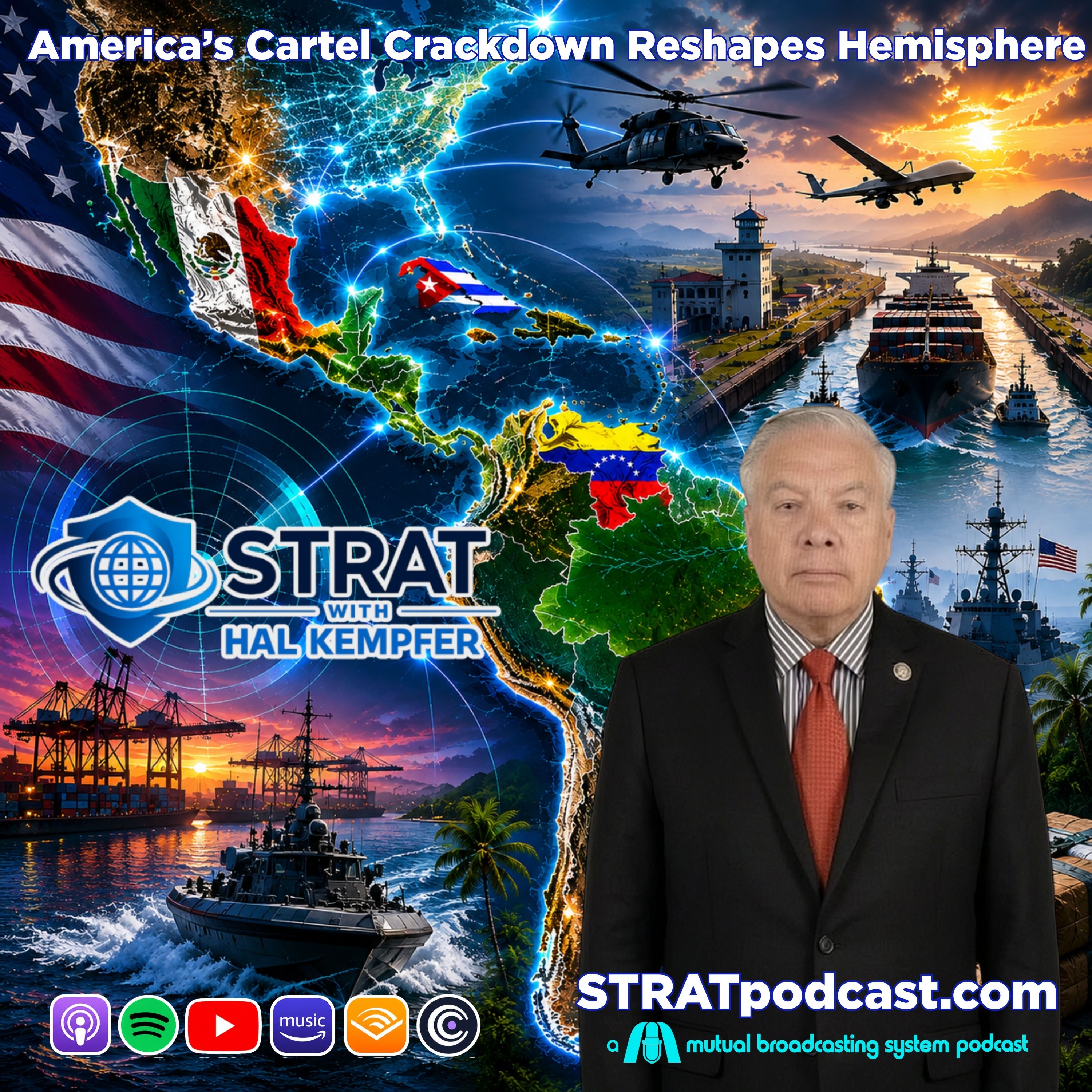
    STRAT | 28 MAY 2026 | America’s Cartel Crackdown Reshapes Hemisphere

    In this explosive episode of STRAT, retired Marine intelligence officer LtCol. Hal Kempfer examines how aggressive U.S. operations across Latin America are transforming the region’s political, economic, and security landscape. From renewed American military activity around the Panama Canal to intensified cartel targeting in Mexico, Ecuador, Guatemala, and Venezuela, and a burgeoning strategic shift with Cuba, Washington appears to be executing a sweeping hemispheric strategy aimed at countering narco-terrorism, expanding economic influence, and rolling back Chinese encroachment. The discussion explores covert raids, intelligence cooperation, joint military operations, anti-cartel campaigns, and major mineral and energy agreements reshaping regional alliances. The episode also examines the implications for global trade, maritime security, corruption, foreign investment, and business expansion opportunities throughout the Western Hemisphere. As Operation Southern Spear expands, the future of Latin America may be entering a dramatic new era of geopolitical realignment. Takeaways: U.S. military involvement in Latin America has expanded dramatically. The Panama Canal region is becoming strategically aligned with U.S. interests again. Venezuela’s political shift is opening massive U.S. energy and mining opportunities. Cuba faces growing economic collapse and increased American pressure. Ecuador has entered a new phase of joint anti-cartel operations with the United States. Intelligence and special operations activity inside Mexico has intensified significantly. Major cartel leadership losses are reshaping organized crime networks in the region. Operation Southern Spear reflects a broader U.S. effort to counter Chinese influence in the Western Hemisphere. #STRATPodcast #HalKempfer #MutualBroadcastingSystem #StrategicRiskAnalysis #LatinAmerica #CartelWar #PanamaCanal #OperationSouthernSpear #Geopolitics #NationalSecurity #USMilitary #CounterNarcotics #ChinaInfluence #MexicoCartels #Venezuela #Cuba #Ecuador #DrugTrafficking #ForeignPolicy #WesternHemisphere

  • S5 · E19
    May 24 · 23 min

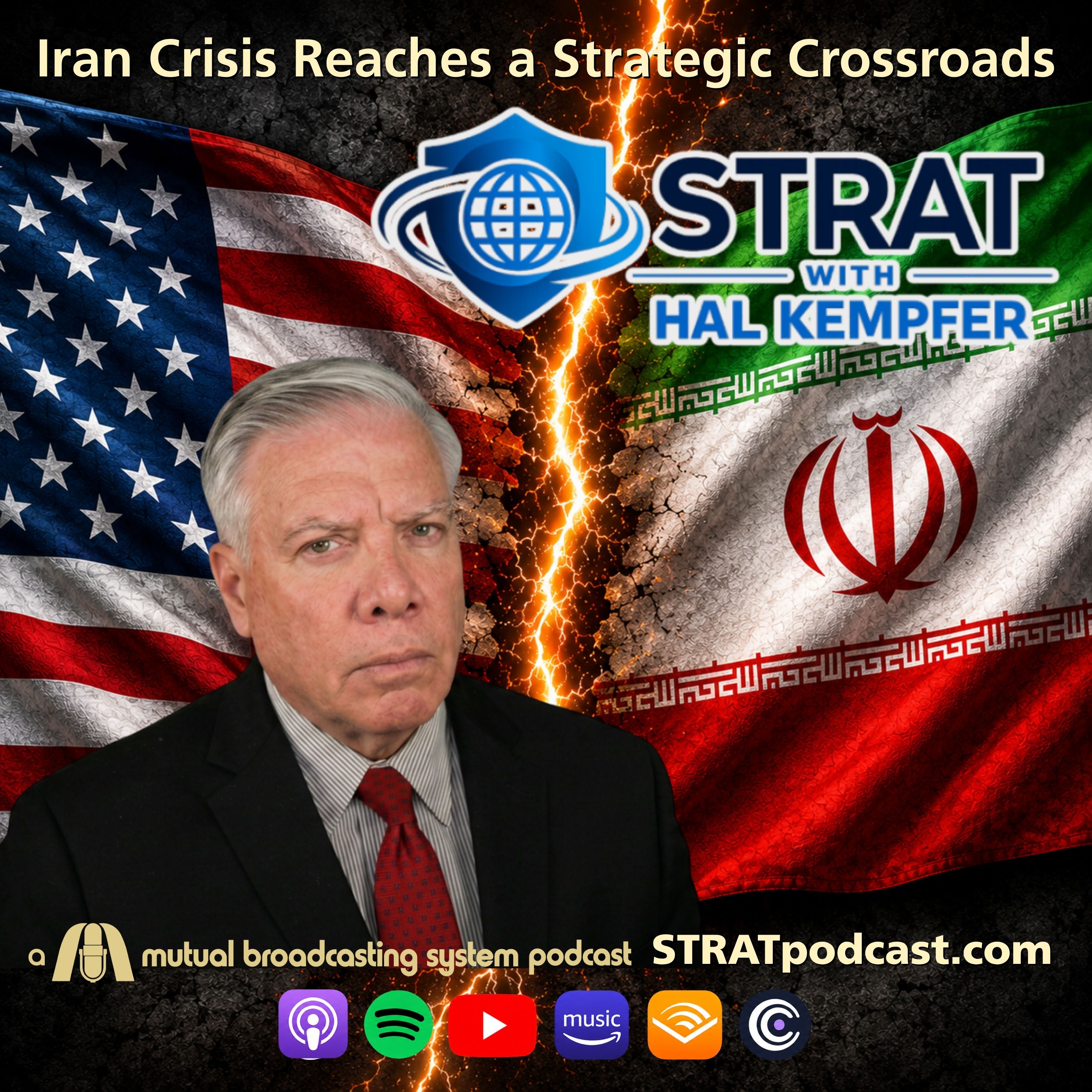
    STRAT | 23 MAY 26 | Iran Crisis Reaches a Strategic Crossroads

    In this episode of STRAT with Hal Kempfer, the focus turns to a major strategic inflection point involving Iran, where diplomacy and military escalation appear to be on a collision course. As reports emerge of a potential memorandum of understanding between Tehran and Washington, critical questions remain about whether current negotiations represent a path toward stability or simply a temporary pause before renewed conflict. The discussion explores what future kinetic action could involve, from possible ground operations to threats against vulnerable Gulf oil, gas, and water infrastructure. The conversation also examines the broader strategic implications of shifting U.S. troop deployments, questions surrounding NATO confidence, and Europe’s evolving role in regional security. Beyond the battlefield, the political stakes are substantial, with concerns that perceived weakness or unfinished objectives could carry lasting consequences domestically and internationally, reshaping alliances, deterrence, and the balance of power across multiple regions. Takeaways: Iran appears to be approaching either a diplomatic framework or renewed military action. Any future military operation could differ significantly from previous engagements. Gulf infrastructure remains a critical vulnerability in any expanded conflict. Water desalination and energy facilities represent high-value strategic targets. U.S. troop deployment shifts are creating uncertainty among allies. Poland and NATO reactions highlight broader alliance confidence concerns. Critics argue a temporary agreement could weaken leverage over Iran. Domestic political consequences may become as important as military outcomes. #STRATPodcast #HalKempfer #MutualBroadcastingSystem #StrategicRiskAnalysis #IranConflict #MiddleEastSecurity #Geopolitics #NationalSecurity #USForeignPolicy #StrategicIntelligence #GlobalRisk #MilitaryStrategy #IranNuclearProgram #StraitOfHormuz #EnergySecurity #NATO #Poland #RegionalStability #GlobalThreats #ForeignPolicy

  • S5 · E18
    May 16 · 18 min

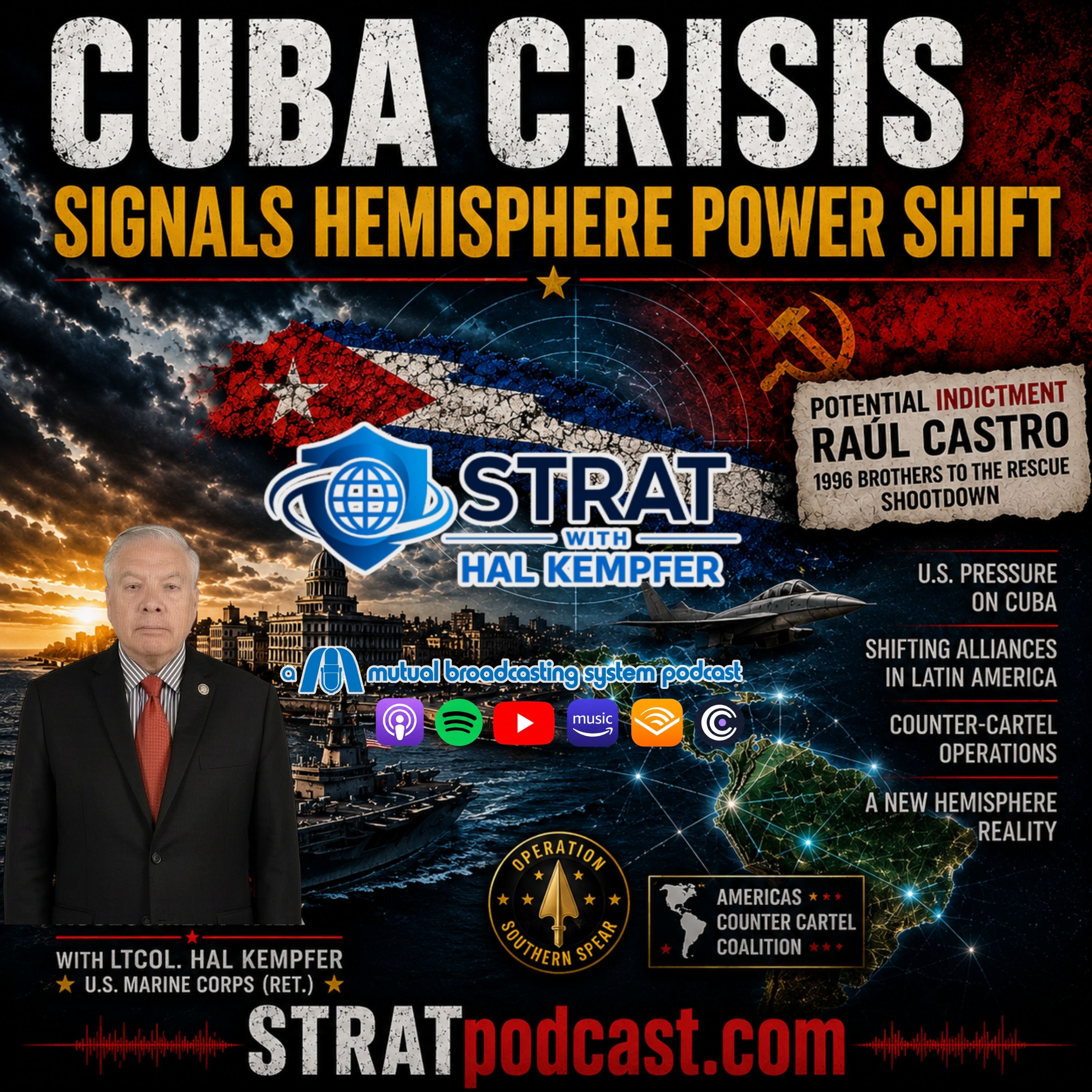
    STRAT | 15 MAY 2026 | Cuba Crisis Signals Hemisphere Power Shift

    On this episode of STRAT, retired Marine intelligence officer LtCol. Hal Kempfer examines the growing pressure campaign against Cuba and what it could mean for the future of the Western Hemisphere. With reports that the United States is preparing a potential indictment against Raúl Castro tied to the 1996 Brothers to the Rescue shootdown, tensions between Washington and Havana are escalating rapidly. The discussion explores how recent geopolitical shifts — including changes in Bolivia, increased counter-cartel cooperation with Mexico, new regional military coalitions, and Nicaragua distancing itself from Cuban migration routes — point toward a broader realignment away from Russian and Chinese influence in Latin America. Kempfer breaks down the strategic implications of renewed U.S. dominance in the region, the role of covert and overt pressure campaigns, and why Cuba may be approaching a historic turning point that could reshape hemispheric security for decades to come. Takeaways: The U.S. may pursue criminal charges against Raúl Castro over the 1996 Brothers to the Rescue shootdown. Cuba faces increasing economic and political pressure from Washington. Regional governments are shifting away from alliances with Russia and China. Bolivia’s new leadership signals a return toward closer U.S. relations. Mexico is quietly expanding cooperation with U.S. counter-cartel operations. Nicaragua’s policy changes suggest regional leaders are recalculating their stance toward the U.S. Operation Southern Spear and the Americas Counter Cartel Coalition demonstrate growing military coordination in the hemisphere. A collapse or transformation of Cuba’s communist system would dramatically reshape Western Hemisphere geopolitics. #STRATPodcast #HalKempfer #MutualBroadcastingSystem #StrategicRiskAnalysis #Cuba #RaulCastro #BrothersToTheRescue #WesternHemisphere #Geopolitics #LatinAmerica #USForeignPolicy #Communism #CIA #CounterCartel #NationalSecurity #CubaCrisis #Russia #China #Narcoterrorism #GlobalThreats

  • S5 · E17
    May 9 · 22 min

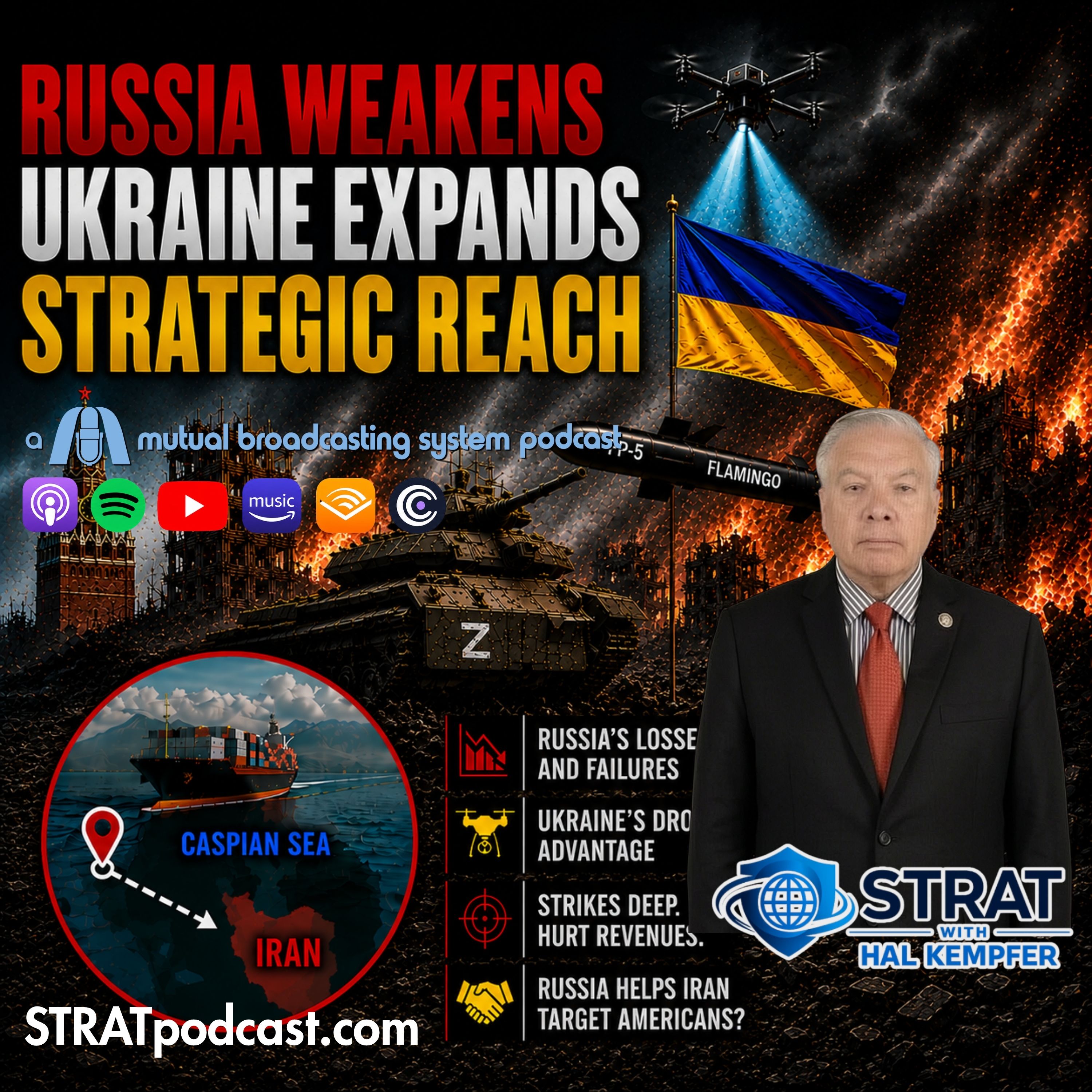
    STRAT | 09 MAY 26 | Russia Weakens as Ukraine Expands Strategic Reach

    On this episode of STRAT, retired Marine intelligence officer Hal Kempfer examines why Russia’s much-anticipated Spring offensive is faltering and why Moscow may be in a far weaker position than many analysts realize. The discussion explores mounting Russian casualties, recruiting failures, growing unrest inside Russia, and signs of increasing paranoia surrounding Vladimir Putin and the Kremlin leadership. The episode also highlights Ukraine’s expanding military innovation, including advanced drone warfare, laser counter-drone systems, long-range strikes on Russian logistics, and growing influence in international defense markets. Beyond the battlefield, the conversation addresses Russia’s reported military cooperation with Iran, including drone technology transfers allegedly linked to attacks on American personnel in the Middle East. This strategic assessment provides a deeper look at the shifting balance of power in Ukraine and the broader geopolitical consequences emerging from the conflict. Takeaways: Russia’s military position appears significantly weaker than one year ago. Russian troop losses and recruiting problems are creating sustainability concerns. Putin’s Victory Day parade reflected growing shortages of military equipment. Reports suggest increasing paranoia and instability within the Kremlin leadership. Ukraine is becoming a global leader in drone warfare and counter-drone defense. Ukrainian long-range drone strikes are disrupting Russian logistics and oil exports. Russian oil revenues may be suffering severe declines from repeated infrastructure attacks. Russia’s reported drone support for Iran raises concerns about attacks targeting Americans. #STRATPodcast #HalKempfer #MutualBroadcastingSystem #StrategicRiskAnalysis #UkraineWar #RussiaUkraineWar #Putin #DroneWarfare #MilitaryAnalysis #Geopolitics #NationalSecurity #DefenseNews #Ukraine #Russia #Iran #MiddleEast #GlobalSecurity #MilitaryStrategy #IntelligenceAnalysis #CurrentEvents

Showing 1–20 of 20 episodes