Nobody Asked Her to Organise a Community of Practice, So She Did It Anyway
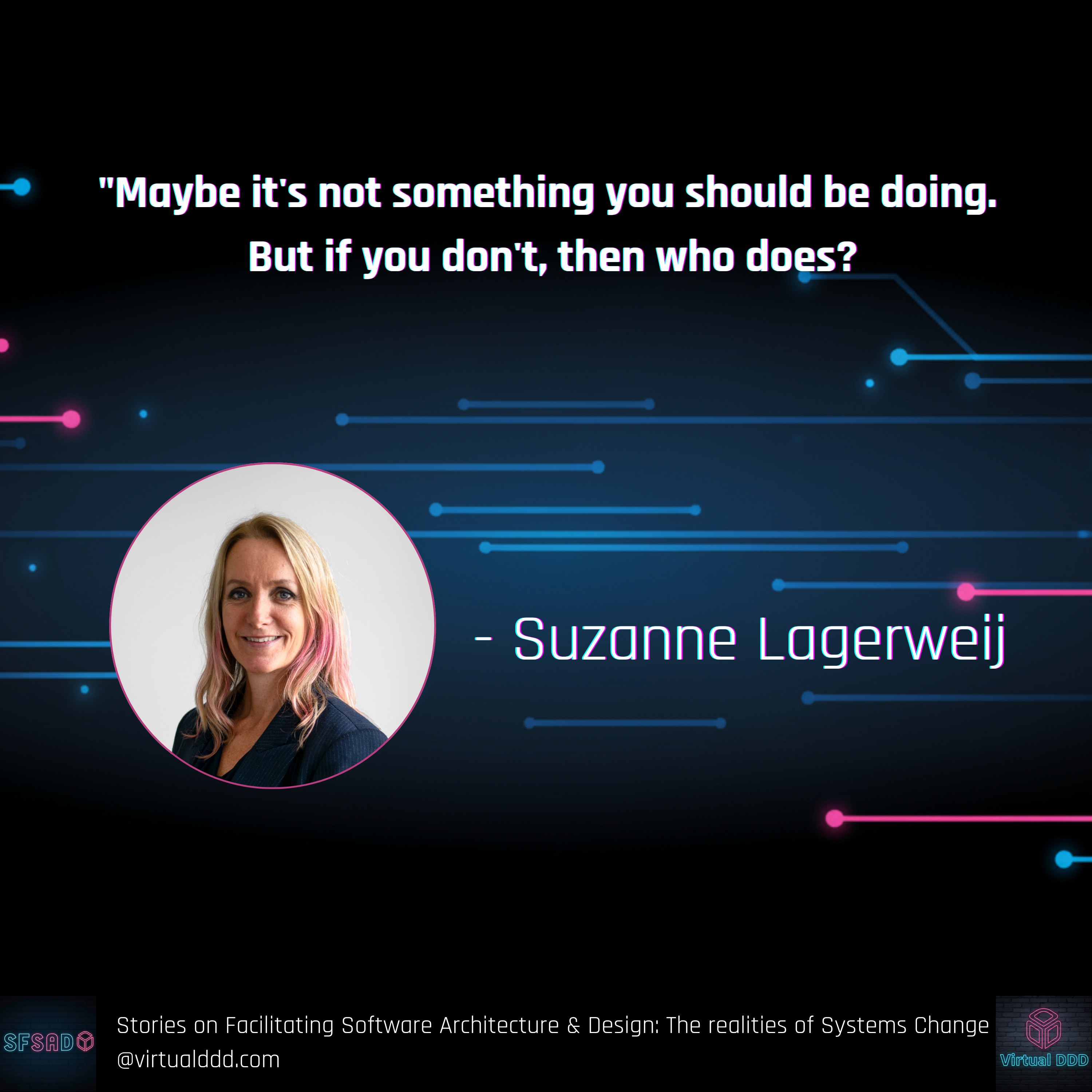
Most organisations have a community of practice that nobody actually wants to attend. It sits in the calendar every two weeks, a handful of people talk, and the rest stay silent. Suzanne Lagerweij has a simple explanation for why: people don't feel like they matter there. Why would anyone go the extra mile if they go unnoticed? Suzanne brings a background in psychology and social work, including working with troubled teenagers in group homes. She sees clear parallels with software teams: stubborn people you can't order around, where nothing moves until you understand what they need. At her current client, AI adoption consisted of exactly one thing: an Excel sheet where a few early adopters logged their experiments. There was no direction and no support, and nobody was listening. So Suzanne, brought in to coach a very difficult team, organised an internal AI conference that nobody had asked for. Management said yes, but mostly worried about the hours lost from the roadmap. About 100 people came to the first edition and 150 to the second. Alongside the conference she started a biweekly AI café: a demo, a conversation and a freshly baked cake. She refused to make it hybrid, because "if you want to have an actual community that works, people have to be together." Her own team went from being the problem team to being the department's AI frontrunners. Not everything moved, though. Management loved the energy, right up to the point where they realised they were part of the problem. Suzanne proposed a questionnaire to understand where developers were on the learning curve. It came back longer and mandatory, with everyone summoned to a meeting to fill it in. "Well, that's not how it works." This conversation explores what it takes to build a community people actually want to be part of. That means making invisible work visible to the people who can support it, and recognising people as individuals. It also means finding successors before you leave, and being honest about why you're doing it when it isn't your job. Wouter Lagerweij joins in to connect the mandatory survey to Goodhart's law, with token spend as the new lines of code. As Suzanne puts it: if you don't, then who does? Key Discussion Points [00:01] From Group Homes to Lifeless Chapters: Suzanne's background in social work, and why communities of practice become just another meeting when people feel unnoticed [03:45] The Spreadsheet Was the Strategy: AI adoption amounts to an Excel sheet of experiments, so Suzanne organises an internal conference nobody budgeted for [05:00] A Stage, Not a Finished Product: Convincing reluctant speakers that a session is a story, and bringing management in to see what's really happening [07:00] Cake, Demos, and No Hybrid: The biweekly AI café that turned a problem team into frontrunners, and why Suzanne insisted people be in the room [10:00] Management as Part of the Problem: Managers who liked the movement, but not what it revealed about them [13:30] If You Don't, Who Does?: Why communities collapse when the organiser leaves, and the effort of finding people to carry it forward [15:00] Making People Change Makers: Small steps, visible value, and Wouter on appreciation and recognition as the basics that make people feel important [19:00] The Mandatory Questionnaire: Measuring productivity versus understanding the learning curve, and why enforced participation breaks the instrument Guest: Suzanne Lagerweij (with Wouter Lagerweij) Host: Kenny Schwegler
- Transcript