Skip to content
Artwork for Stephan Livera Podcast

Stephan Livera Podcast

Stephan Livera

Join Stephan as he interviews the sharpest economic and technical minds in Bitcoin & Austrian Economics to help you understand how money is changing and evolving. Leading names in the world of Bitcoin join the show to share their insights, whether they are developers, CEOs, economists, authors, analysts and more.

Play
  • 32 episodes
  • Avg 39 min
  • English
Counted on this page — what you have heard stays on this device, so it is not something the list can be paged by.
  • S1 · E774
    Tuesday · 36 min

    Bitcoin Accelerator on Mirissa Beach | James of Ârc SLP774

    Most Asian markets still make buying and saving Bitcoin painfully hard. James of Ârc argues the fix is not another protocol breakthrough — it is local founders shipping simple DCA and savings products market by market. James joins me from Mirissa Beach, Sri Lanka, where Arc is partnering with Fulgur Ventures on a continuous Bitcoin accelerator. He is a former EY advisor and Playfair Capital investor who previously built with Alexander Mann (now Fulgur GP) and later sold Consequence, an early LLM-on-databases company. The conversation covers why the program is continuous rather than a six- or twelve-week cohort, how to apply at arc.lk/Fulgur, why Sri Lanka ranks among his top-three country bets, the South Coast talent melting pot, funding DCA apps across Asia even where operators already exist, AI agents as Bitcoin users, and why Strike expanding should not scare local founders. Timestamps: 00:00 — Intro: James of Ârc 00:35 — From Accenture to Venture Capital 02:13 — Building With Alex Singh 03:21 — Fed Up With Monkey JPEGs 05:10 — Ârc Fulgur Bitcoin Accelerator 06:35 — Continuous Program at Mirissa 07:34 — Two Paths Into Ârc Fulgur 10:13 — Why Sri Lanka? 12:02 — Top-Three Country Bet 12:23 — Whales, Leopards, Beach Hub 15:00 — South Coast Talent Melting Pot 18:36 — 34 Local Founders Already In 21:39 — Fund DCA Apps Across Asia 25:23 — AI Agents Will Use Bitcoin 28:18 — Room for Many Asian Operators 32:23 — Just Focus on Your Customer 32:39 — Apply Now Links: https://x.com/James_of_Arc https://x.com/FulgurVentures https://arc.lk/ Stephan Livera links: Follow me on X: @stephanlivera Subscribe to the podcast Subscribe to Substack
  • September 16 · 1 hr 7 min

    Institutional Custody, Multisig & the War on Cash | Mike Belshe SLP773

    Mike Belshe, co-founder and CEO of BitGo, walks through how institutional Bitcoin custody actually works in 2026: qualified custody, self-custody co-signing, and why BitGo still centers a 2-of-3 model after pioneering P2SH multisig in 2013. BitGo now operates as a US-regulated qualified custodian and public company, while still offering the same wallet stack individuals can run in self-custody mode. The conversation covers what “institutional security” means in practice — HSM-backed co-signing, open-source recovery paths, multi-jurisdictional key storage (including how BitGo moved WBTC when US regulation looked hostile), and why on-chain multisig still beats vendor-locked MPC for cold ops. They also dig into the political and operational risks around large Bitcoin holdings: KYC and PII as honeypots, France tying names to amounts, the war on cash reaching Bitcoin, and whether an EO 6102-style confiscation risk still belongs in the threat model. On the institutional side, Belshe pushes back on multi-custodian setups that add failure modes, explains insurance limits versus the size of the Bitcoin market, and why splitting wallets matters after events like Bybit. Timestamps 00:00 — Intro: Mike Belshe of BitGo 00:59 — Don't Lose Self-Custody's Power 05:41 — Retail Deserves Institutional Security 07:16 — Humans Are Terrible at OpSec 09:56 — 2-of-3 Protects Theft and Loss 14:35 — Retail Pays 160 Basis Points 19:22 — Why People Drift Toward Banks 20:35 — Self-Custody Is Never Trustless 23:39 — Why BitGo Sticks to 2-of-3 30:31 — A Public CEO Holds Zero at Home 31:27 — KYC Leaks Are Government Honeypots 39:28 — France Doxed Bitcoin Holdings 41:30 — War on Cash Reaches Bitcoin 43:45 — Multi-Jurisdictional Key Storage 45:29 — Executive Order 6102 Could Return 47:43 — Quantum-Resistant Wallets Today 49:27 — Multisig Beats MPC 53:33 — Splitting Custodians Adds Failures 58:29 — 2-of-2 MPC Can't Recover Loss 01:00:57 — $5–7B Insurance vs $1.6T Bitcoin 01:03:35 — Bybit Lost 10x by Not Splitting 01:05:21 — Multi-Institution vs Qualified Custody Links: https://x.com/mikebelshe https://x.com/bitgo Stephan Livera links: Follow me on X: @stephanlivera Subscribe to the podcast Subscribe to Substack

  • S1 · E772
    September 15 · 37 min

    Trustless Swaps Across Bitcoin Layers | Walter Maffione SLP772

    Walter Maffione, CEO and co-founder of KaleidoSwap, join me to explain how the project grew from an RGB Lightning DEX into a broader swap engine and LSP stack — Lightning as rails between Liquid, Arkade, Taproot Assets, Spark, and RGB — plus KaleidoSDK, desktop app, and browser Extension. We dig into web app and SDK integrations for merchants and unified-balance wallets, how HTLC atomicity works across layers, BOLT 12 multi-asset offers and Nostr discovery for competing providers, Bitcoin-only scope with Flashnet and Utexo bridges for external stables, and a product lineup of desktop app, browser extension, and dual SDKs. Walter also covers agentic payments via MCP plugins, self-sovereign local models with Tether’s QVAC, fee ranges around 0.5–1%, and a one-to-three-month mainnet launch path for the extension, swap provider, and web app. Timestamp: 00:00 — Intro: Walter & KaleidoSwap 00:50 — From RGB to Multi-Layer Swaps 02:14 — LSP Plus Swap Provider Stack 03:42 — Merchants, Stables, Unified Balance 05:38 — Why Swap UX Took Over Wallets 06:42 — Liquidity Ops and Mainnet Path 07:58 — AI Attacks After Boltz Shutdown 10:23 — Defending Non-Custodial Swaps 12:18 — How Atomic Swaps Actually Work 13:36 — RGB, Liquid, Arkade, Spark 14:36 — Open Spec, BOLT 12, Nostr Discovery 18:23 — Pay Anything via the SDK 19:34 — Bitcoin Layers Only + Bridges 22:05 — Desktop, Extension, Dual SDKs 25:05 — UX That Adapts to the User 26:32 — Agentic Payments and QVAC 33:22 — MCP Plugins, Keep Your Own AI 35:11 — Fees Around 0.5–1% 35:57 — Launch Timeline: Next 1–3 Months 37:05 — Find KaleidoSwap Online Links: https://x.com/bit_walt https://x.com/kaleidoswap https://docs.kaleidoswap.com/whats-kaleidoswap/introduction Stephan Livera links: Follow me on X: @stephanlivera Subscribe to the podcast Subscribe to Substack
  • S1 · E771
    September 10 · 49 min

    Bitcoiners Must Remove Single Points of Failure | Dhruv Bansal SLP771

    Recent attacks exposed how even large, educated Bitcoin holders remained exposed through single-vendor setups. The core lesson is that self-custody alone does not remove single points of failure; deliberate design is required. Dhruv Bansal, co-founder and CISO of Unchained, joins to examine these incidents and the practical barriers that keep most hardware wallet users on single sig despite years of warnings. The conversation covers the gap between theoretical multisig knowledge and actual adoption, the trade-offs between anonymity and regulated inheritance paths, why newer layers attract attacks first, and the need for human review of AI-generated code at Bitcoin firms. Bansal argues that cryptographic hardware will become ordinary infrastructure for everyone in an AI-driven internet, not a niche Bitcoin tool, and that mature risk systems rely on fractal networks rather than centralized controls. Timestamps: 01:42 — No Single Points of Failure Allowed 05:34 — Even Large Holders Skip Multisig? 09:14 — You Could Be Your Own Failure Point 13:35 — Anonymity vs KYC 16:27 — Don't Half-Ass Your Bitcoin Security 21:23 — One Wallet, True Multi-Vendor Security 24:24 — Single Sig Can Still Lose Everything 30:26 — Why Everyone Will Need Hardware Wallets 32:06 — Why Attackers Hit Bitcoin L2s First 36:32 — Bitcoin Firms Must Human-Review AI Code 40:05 — Bitcoin as Humanity's AI Defense System 42:59 — Remove Single Points of Failure Forever 45:25 — Hardware Wallets at Every Gas Station 47:34 — Bitcoiners and Key Entropy Links: https://x.com/dhruvbansal https://x.com/unchained https://www.unchained.com/ Stephan Livera links: Follow me on X: @stephanlivera Subscribe to the podcast Subscribe to Substack
  • S1 · E770
    September 3 · 41 min

    Interviews at Origin Seoul 2026 | SLP770

    00:00 - Interview with Gabriele Vernetti of Stratum V2 @gitgab19 15:38 - Interview with Jimmy Kostro @jimmykostro 29:30 - Interview with James Check of checkonchain Links: https://x.com/gitgab19 https://x.com/jimmykostro https://x.com/_checkonchain https://x.com/_checkmatey_ https://x.com/stratumv2 Bitcoinchiangmai.org

  • S1 · E769
    August 31 · 27 min

    Bitcoin Asia (HK) 2026 Day 2 Interviews | SLP769

    Interviews at Bitcoin Asia 2026 Day 2 00:00 - Piriya Sambandaraksa 05:14 - Alexander Mann 11:04 - Shone Anstey of LQWD 17:03 -Liam Eagen from Ideal Group Links: https://x.com/piriya https://x.com/idealgroup https://x.com/liameagen https://x.com/LQWDTech https://x.com/shoneanstey https://x.com/alex_singh_mann Stephan Livera links: Follow me on X: @stephanlivera Subscribe to the podcast Subscribe to Substack
  • S1 · E768
    August 29 · 40 min

    Bitcoin Asia (HK) 2026 Day 1 Interviews | SLP768

    In this episode, I interviewed several people at Bitcoin Asia 2026. Timestamps: 00:00 - Interview with Adam Poulton 06:28 Interview with Giovanni Santostasi 15:18 Interview Jeff Walton of Strive 34:11 Interview with Alex B from ArkLabs Links: http://x.com/Giovann35084111 http://x.com/adampoulton http://x.com/bergealex4 http://x.com/arklabshq http://x.com/punterjeff http://x.com/strive Stephan Livera links: Follow me on X: @stephanlivera Subscribe to the podcast Subscribe to Substack
  • S1 · E767
    August 25 · 29 min

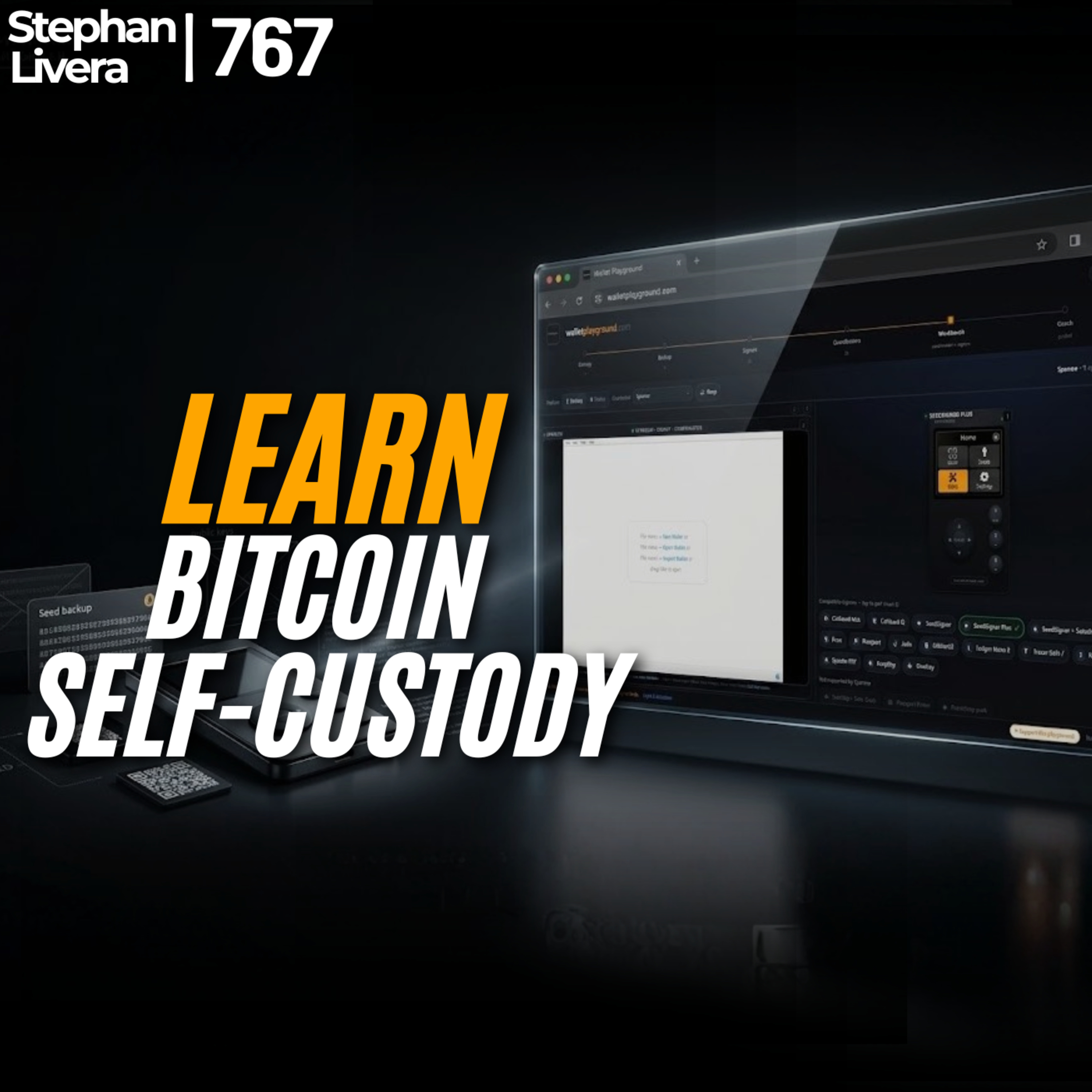
    Wallet Playground for learning Bitcoin self custody with Piers Macrae | SLP767

    In this episode, Piers Macrae demonstrates Wallet Playground and explains why hardware wallets are signing devices, not wallets. Timestamps: 01:10 — Teach Me vs Do It For Me 03:23 — Test Any Wallet Free in Browser 09:09 — Coldcard Drama Forced Early Release 14:03 — Generate Seeds Using Your Webcam 17:52 — Hardware Wallets Aren't Real Wallets 21:52 — Only 1% Use Multisig for Life Savings 25:33 — Self-Custody Like Firearms Drilling? 27:30 — Only Tiny Percentage Will Self-Custody Links: X: @mineracks — https://x.com/mineracks Wallet Playground: https://walletplayground.com/ mineracks: https://www.mineracks.com/ Stephan Livera links: Follow me on X: @stephanlivera Subscribe to the podcast Subscribe to Substack
  • S1 · E766
    August 22 · 52 min

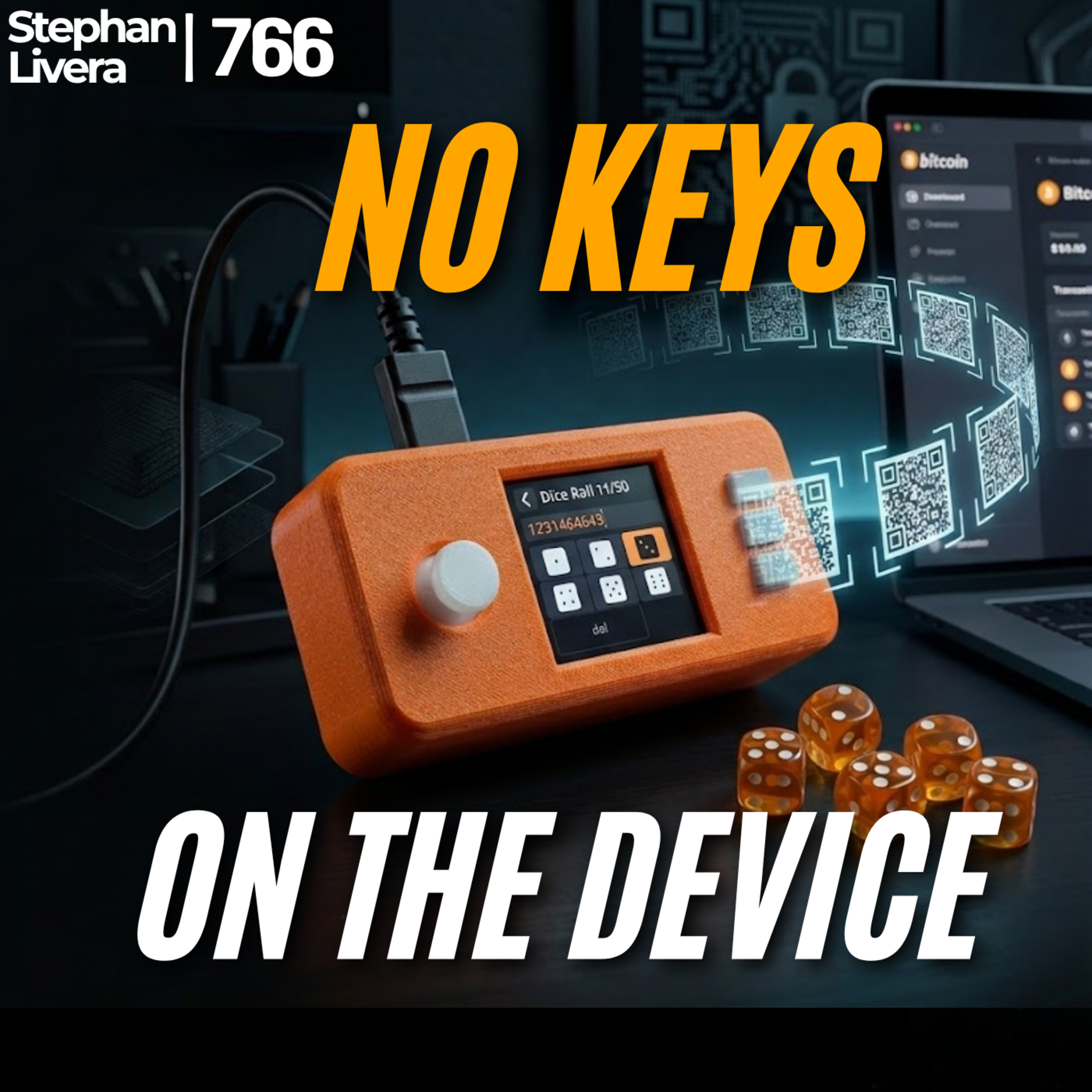
    Dice Rolls, Entropy, and SeedSigner | Keith Mukai SLP766

    In this episode, Keith Mukai of SeedSigner joins to explain why 1.4 percent variance in cheap dice still delivers full 128-bit entropy and how to verify rolls across devices. Timestamps: 03:10 — Cheap Dice Only 1.4% Unfair? 06:29 — Shake Multiple Dice in a Box 08:26 — Verify Dice Rolls Across Devices 11:02 — Verify Dice Seeds With Fake Rolls 13:50 — Multiple Test Rounds Foil Attackers 16:36 — 90% Users Choose Easy RNG Mode 19:08 — Jade's D&D Dice Method? 21:53 — Build Your Own: Avoid Mailing List Leak 24:48 — Stateless Device: Evil Maid Gets Nothing 26:45 — Hand-Drawn SeedQR: Skip Typing 24 Words 29:02 — SeedSigner: Built for Long-Term Cold Storage 31:30 — Evil Maid SD Card Swap Destroys Security 35:27 — Why Multisig Beats Single-Sig + Passphrase 37:14 — Scan Sparrow PDF QR to Load Multisig 42:16 — No One-Size-Fits-All Security 46:41 — Understand Dice Rolls Yourself 49:13 — Take Baby Steps to Multisig Links: https://seedsigner.com/ https://x.com/keithmukai https://x.com/SeedSigner Stephan Livera links: Follow me on X: @stephanlivera Subscribe to the podcast Subscribe to Substack
  • S1 · E765
    August 19 · 27 min

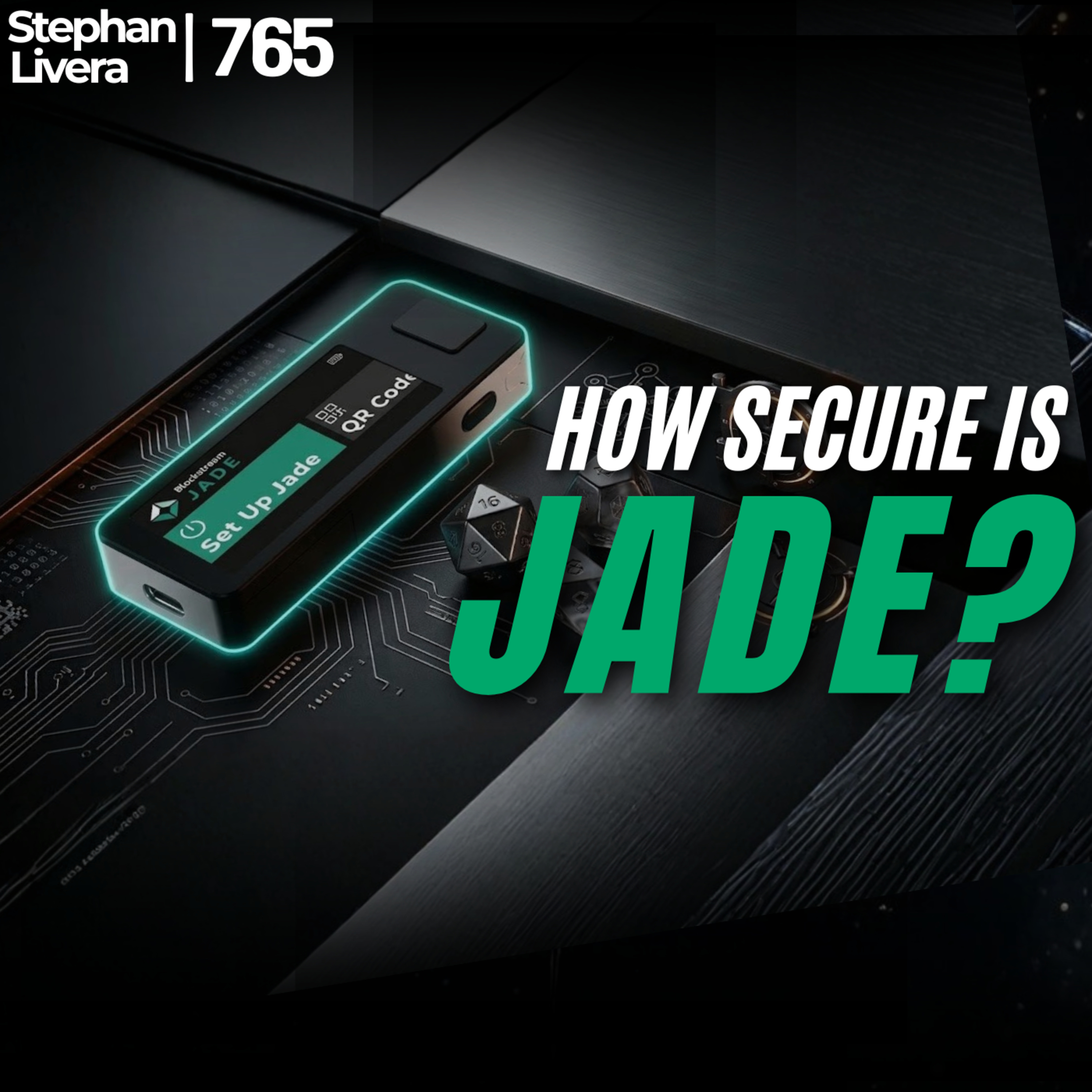
    Jade for Single-Sig or Multisig | Rich SLP765

    In this episode, Rich from the team at Blockstream explains Jade, offline dice entropy, blind oracle protection, multisig descriptor recovery and the new Blockstream Swaps beta. Timestamps: 00:45 — AI Scans & Audits Secure Jade 03:21 — Jade Core $99, Plus Up to $169 05:51 — Roll Dice for Offline Seed Entropy 08:23 — Blind Oracle: Remote Secure Element Explained 11:15 — Seed QR: Hand-Draw Your Recovery Phrase 15:24 — Jade Sends Back Lost Multisig Descriptor 19:40 — People Choosing Multisig Over ETFs 25:03 — Blockstream Swaps Beta: Lightning to Liquid Links: blockstream.com/jade https://x.com/blockstream https://x.com/blockstreamjade Stephan Livera links: Follow me on X: @stephanlivera Subscribe to the podcast Subscribe to Substack
  • S1 · E764
    August 14 · 50 min

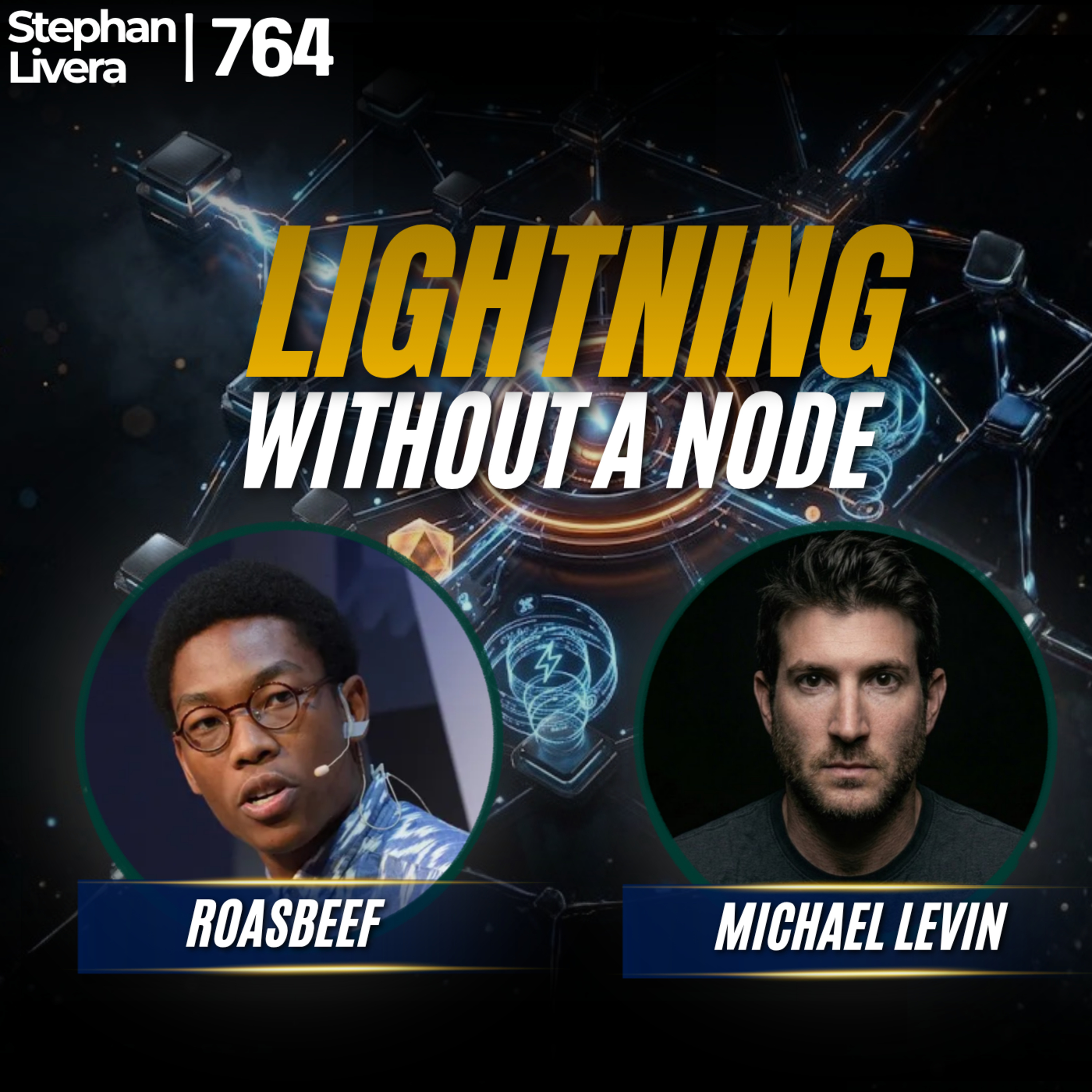
    Wavelength Delivers Ark-Based Lightning Without Node Overhead | Roasbeef & Michael Levin SLP764

    Lightning Labs built Wavelength to deliver self-custodial Lightning payments without forcing users to run nodes, manage channels, or handle liquidity. Olaoluwa Osuntokun, CTO and co-founder of Lightning Labs, and Michael Levin, VP of Product, join me to detail the design choices behind their Ark implementation. They explain why Ark was selected, how hop hints let every payment use ordinary Lightning invoices, and why the four-endpoint SDK targets AI agents and vibe coders. The conversation covers sub-dust vouchers, unilateral exits, offline payment delivery, and one-basis-point alpha pricing. Wavelength shows that self-custodial Lightning can match the integration ease of custodial services while preserving Bitcoin sovereignty. Timestamps 01:28 — Why Wavelength: Lightning Without Node Pain 03:00 — Why Ark? 05:28 — No New Addresses: Just Lightning Invoices 08:40 — Targeting Vibe Coders & AI Agents 13:06 — Lightning Beats Credit for LLM APIs 17:51 — Receive Sub-1k Sat Vouchers Seamlessly 19:32 — Normal User Spins Up Ark Wallet Fast 23:02 — Build Wallets with Just 4 Endpoints 24:46 — Telegram Self-Custodial Wallets Already Live 26:21 — Offline Payments Still Arrive Automatically 29:17 — Drop-In SDK for iOS and Android 31:26 — Can Servers Steal Your Funds? 33:36 — Wavelength Alpha: Just 1 Bip Fees 37:57 — AI Attacks Targeting Bitcoin Services? 44:05 — Bug Bounties Shift to Token Spending 48:36 — Self-Custody as Easy as Custodial Links: https://x.com/roasbee https://x.com/MichaelLevin Wavelength Announcement: https://x.com/lightning/status/2079620936567779707 Stephan Livera links: Follow me on X: @stephanlivera Subscribe to the podcast Subscribe to Substack
  • S1 · E763
    August 13 · 44 min

    Bitcoin Custody Rules Have Changed | Michael Tanguma SLP763

    Old self-custody approaches collapse once Bitcoin reaches six figures, physical threats rise, and AI tools proliferate. Single hardware wallets and mattress myths no longer match the scale or risks that large holders now face. Michael Tanguma, CEO and co-founder of Onramp, returns to examine how custody must adapt to family obligations, mortality, and market structure that turns concentrated holdings into targets. The discussion covers why repeated exchange failures keep Bitcoin looking speculative to outsiders, how multi-institution setups reduce scam ROI, and the limits of adding more dice or vendors in an AI era. It also addresses custody pricing models and the practical question of whether any current setup survives a tenfold price increase. Game theory now requires diversified institutional layers rather than pure self-reliance for serious stacks. Timestamp: 03:43 — Bitcoin Custody Won't Work Like 2012 05:49 — Self-Custody Rules Changed With Your Life 07:19 — Why Bitcoiners Must Stop the Mattress Myth 09:01 — Bitcoin's Asset Layer Makes It Unstoppable 11:22 — Private Keys Are Like Firearms 15:40 — Custody Losses Keep Bitcoin Speculative 18:56 — AI Just Changed Self-Custody Forever 21:41 — Why Bitcoin Robberies Are Skyrocketing 25:41 — Multi-Institution Custody Kills Pig Butchering 27:57 — Bitcoin at $650K: Security Nightmare? 29:30 — Game Theory Demands Multi-Custody Bitcoin 32:03 — Centralized Custody: The Honeypot Risk 37:56 — Why Custody Fees Should Be Zero 39:51 — Full Bitcoin Custody for $100/Month 42:51 — Would Your Setup Survive 10x Bitcoin? Links: https://x.com/mtanguma https://x.com/OnrampBitcoin Stephan Livera links: Follow me on X: @stephanlivera Subscribe to the podcast Subscribe to Substack #Bitcoin #SelfCustody #Custody #OnrampBitcoin #StephanLivera #StephanLiveraPodcast #BitcoinSecurity #MultiSig

  • S1 · E762
    August 12 · 34 min

    Breez Ships Glow — A Super Simple Bitcoin Wallet | Roy Sheinfeld SLP762

    Roy Sheinfeld of Breez returns to walk through Glow, the team's new reference wallet built using Spark. It’s designed so non-custodial Bitcoin feels simple: send, receive, and go. Glow uses passkey onboarding (no seed phrase to write down), automatic backup via the passkey provider, and a single-balance UX so users can pay Lightning, on-chain, and stablecoin destinations without wrestling settings. They also cover client-side swaps (Flashnet, multi-vendor architecture after Boltz), AI-driven attacks on swap providers, where Lightning volume actually comes from, Spark unilateral exits, and how AI plus the Breez SDK lets non-developers ship Bitcoin apps from a prompt. Timestamps 04:21 — Bitcoin Wallet Onboard with One Passkey 08:05 — Stables on Lightning: Overhyped? 09:59 — Swaps Needed Even With Lightning Stables 11:48 — AI Attacks: Cheaper to Attack Than Defend 15:07 — Why Small Teams Get Hacked First 17:15 — Swaps Going Private to Survive? 19:17 — Backends Drive Most Lightning Volume 21:32 — 80/20 Rule: B2B Drives Lightning Volume 25:13 — Making Unilateral Exit Economically Viable 29:48 — Spark Public Mode 31:38 — One Prompt Builds a Bitcoin App 33:13 — Non-Technical Users Now Ship Bitcoin Apps Links: https://x.com/roy_breez https://x.com/breez_tech https://breez.technology/glow/ Stephan Livera links: Follow me on X: @stephanlivera Subscribe to the podcast Subscribe to Substack
  • S1 · E761
    August 7 · 36 min

    Bitcoin Multi Sig vs Secure Single Sig with Nick Neuman | SLP761

    In this episode, Nick Neuman of Casa argues that it’s not the end of self-custody. Instead, it highlights why multisig with multiple vendors provides stronger protection without the hidden complexity of passphrases or dice rolling for single sig setups. Timestamps: 03:12 — Not the End of Self-Custody 06:14 — Single Sig Is Actually More Complex 08:45 — Multisig Simpler Than Secure Single Sig 15:37 — $1K Single Sig, $10K Multisig? 17:32 — Casa's $250 2-of-3 Multisig Plan 20:01 — Private Clients Get Dedicated Advisors 22:21 — Bitkey vs Casa 27:36 — Going Closed Source Versus AI Attacks 30:23 — AI Code Audits Now Cost $1K 33:04 — Auto-Rejecting Unknown Callers Saves You 34:35 — Guardian Mode Requires Video Verification Links: https://x.com/Nneuman https://x.com/CasaHODL https://casa.io/ Stephan Livera links: Follow me on X: @stephanlivera Subscribe to the podcast Subscribe to Substack
  • S1 · E760
    August 6 · 28 min

    Kruw on Wasabi 2.8 and Upcoming Forks | SLP760

    Kruw (@kruwed) runs one of the highest-volume WabiSabi coordinators, giving him direct insight into how the protocol handles liquidity, Sybil resistance, and real-world usage. Timestamps: 00:42 — Wasabi 2.8 Privacy Features 02:45 — Taproot As Wasabi's Default Address 07:25 — Pay Inside CoinJoin Saves 40 Minutes 10:26 — Auto CoinJoin 12:21 — WabiSabi Blocks Whale Sybil Attacks 14:31 — Payjoins 16:37 — ClusterMempool Wins for CoinJoins 20:00 — Upcoming forks 21:14 — CoinJoin: Free Replay Protection Hack 22:53 — CoinJoin Ban Myth Debunked 25:41 — Black Hole: Earn While Mixing Links: https://x.com/wasabiwallet https://x.com/Kruwed https://wasabiwallet.io/ Stephan Livera links: Follow me on X: @stephanlivera Subscribe to the podcast Subscribe to Substack

  • S1 · E759
    July 28 · 45 min

    Bitcoin Security Consortium with Mike Schmidt | SLP759

    In this episode, Mike Schmidt executive director of Brink, and volunteer coordinator for the consortium, explains how the group formed, autonomy over funding, and how it plans to avoid repeating earlier centralized roadmap fights. Timestamps: 00:55 — Quantum Risk and the Consortium Pledge 03:10 — The Nine Consortium Members 11:40 — Publishing Quantum Research Publicly 13:39 — Brink Role and Funding Concerns 16:20 — Defining Early Success Metrics 19:00 — Informing the Public on Quantum Progress 21:17 — Institutional Influence and Protocol Concerns 25:13 — Research First on Quantum Signatures 29:25 — Expanding Quantum Expertise 33:14 — Scope Beyond Quantum Security 35:31 — Why Quantum Motivates Corporate Involvement 37:43 — Debates Over Development Funding 40:30 — No Protocol Roadmap From the Consortium 42:57 — Three-Year Goal: Mature Proposals Links: Press release: https://www.strategy.com/press/leading-financial-institutions-bitcoin-companies-launch-the-bitcoin-security-consortium_07-23-2026 Mike’s thread: https://x.com/bitschmidty/status/2080263159152091455 Consortium X: https://x.com/BTCconsortium Stephan Livera links: Follow me on X: @stephanlivera Subscribe to the podcast Subscribe to Substack
  • S1 · E758
    July 23 · 57 min

    Daniel Buchner: Why BIP 110 Cannot Stop Bitcoin Spam | SLP758

    Buchner, known for his work on decentralized identity at Proof, brings a technical and game-theoretic lens to the debate over Bitcoin's monetary focus versus attempts to restrict arbitrary data. The conversation covers narrative shifts driving spam to Bitcoin, the limits of relay policy versus consensus rules, why the house analogy fails, economic node power over basement operators, and the lack of miner or buyer support that dooms the proposal. Timestamps: 01:31 — Locusts Flock to Bitcoin's Last Pasture 03:32 — Core Policy Tweaks Aren't Consensus Rules 08:44 — Spam Hides in Any Public Key or Hash 11:12 — Spammers Adapt in a Day, Consensus Can't 14:59 — BIP110 Debate Exposes Major Inconsistency 20:44 — Why the House Analogy Totally Fails 25:25 — Nodes Get Cheaper Even With Max Spam 28:08 — Set Tolerances Assuming Worst Case 30:35 — No Legal Liability for Bad Chain Data 33:04 — Filter Regime Creates Government Backdoor 35:13 — BIP 110 Risks Centralizing Devs Around Luke 37:33 — Economic Incentives Trump 'Good Guy' Miners 39:03 — Economic Nodes Outweigh Basement Node Runners 43:49 — BIP 110 Has Near-Zero Economic Support 48:43 — Why Game Theory Kills BIP 110 55:52 — BIP 110 Fork Dies With a Whimper Links: https://x.com/csuwildcat Stephan Livera links: Follow me on X: @stephanlivera Subscribe to the podcast Subscribe to Substack

  • S1 · E757
    July 22 · 1 hr 1 min

    Lyn Alden: BIP 110 Could Trigger August Bitcoin Chain Split | SLP757

    Lyn Alden warns that BIP 110 is unlikely to curb spam and instead mostly rearranges non-monetary data, raising the risk of a minority fork attempt that could split the Bitcoin chain. Lyn Alden is a leading macro analyst and Bitcoiner who examines how fiscal dominance now overrides traditional monetary policy tools. She breaks down why high debt-to-GDP ratios prevent rate hikes from taming inflation, how broad money supply still expands 5-8 percent annually, the limits of semiconductor and AI valuations, and the structure of a new Bitcoin-backed permanent capital vehicle for acquiring cash-flowing businesses. Timestamps: 02:14 — BIP 110 Won't Stop Spam 04:56 — Bitcoin Faces August Chain Split Risk 12:12 — Bitcoin in Bottom Decile of Cycle 15:37 — Nothing Stops This Fiscal Train 18:04 — Why Volcker Can't Work Today 22:02 — Higher Rates Won't Break the System 24:44 — Net Issuance Matters, Not Gross Refi 27:34 — Fed Balance Sheet Stays Flattish 32:56 — Broad Money Grows Despite Flat Fed 36:05 — US Money Supply Growth Hits 5-8% 38:51 — Fiscal Dominance: Who Wins the Money? 41:50 — Why Semiconductors Print Money 45:13 — Software Stocks: Value Trap or Opportunity? 47:31 — AI Is the New Dot-Com Bubble 52:00 — Orange Juice: Bitcoin-Backed Business Buyer 57:57 — Permanent Capital Vehicle, Not a Fund 59:39 — Founders Keep Equity Upside After Sale Links: X: https://x.com/LynAldenContact Website: https://www.lynalden.com/0 BIP 110 debate ("motte-and-bailey" critique): https://x.com/LynAldenContact/status/2078599151043162159 Stephan Livera links: Follow me on X: @stephanlivera Subscribe to the podcast Subscribe to Substack

  • S1 · E756
    July 17 · 43 min

    Bitcoin Desire Hits 8-Year Low | Michael Sullivan SLP756

    Bitcoin desire sentiment has fallen to an eight-year low, a contrarian signal that historically aligns with market bottoms rather than tops. Michael Sullivan, an engineer and author, applies machine learning to individual X accounts to track granular Bitcoin emotions and moods over time. He examines how entry eras shape lasting narratives, why pro-BIP 110 cohorts show strikingly low conviction, how individual tracking avoids bot pollution, and why boredom plus infighting often mark optimal accumulation zones. Timestamps: 01:44 — Conviction Isn't Bullish or Bearish 07:05 — Why Individual X Tracking Beats Bots 09:53 — Desire Peaks Flag Bull Market Tops 11:49 — Bitcoin Desire Hits 8-Year Low 16:27 — New Bitcoiners Angriest Right Now 21:00 — Bitcoin Entry Era Shapes Your Views Forever? 22:48 — BIP 110 Backers Show Strikingly Low Conviction 25:33 — Pro-BIP 110 Group Lives in Its Own Bubble 28:39 — BIP110 Brigading Creates Fake Consensus 31:57 — OGs Optimistic, Plebs Stay Angry 37:13 — X Algo Shift Sparks Bitcoin Optimism 39:57 — Why Sentiment Metrics Fail for Trading 41:55 — Boredom and Infighting Signal Bitcoin Bottom Links: Michael's X: https://x.com/SullyMichaelvan Bitcoin Sentiment Weekly on Substack: https://sentimentsully.substack.com Michael’s novel, Blood of the Bourgeoisie: https://www.amazon.com/Blood-Bourgeoisie-Michael-R-Sullivan-ebook/dp/B0FRZTM49Y Stephan Livera links: Follow me on X: @stephanlivera Subscribe to the podcast Subscribe to Substack

  • S1 · E755
    July 10 · 54 min

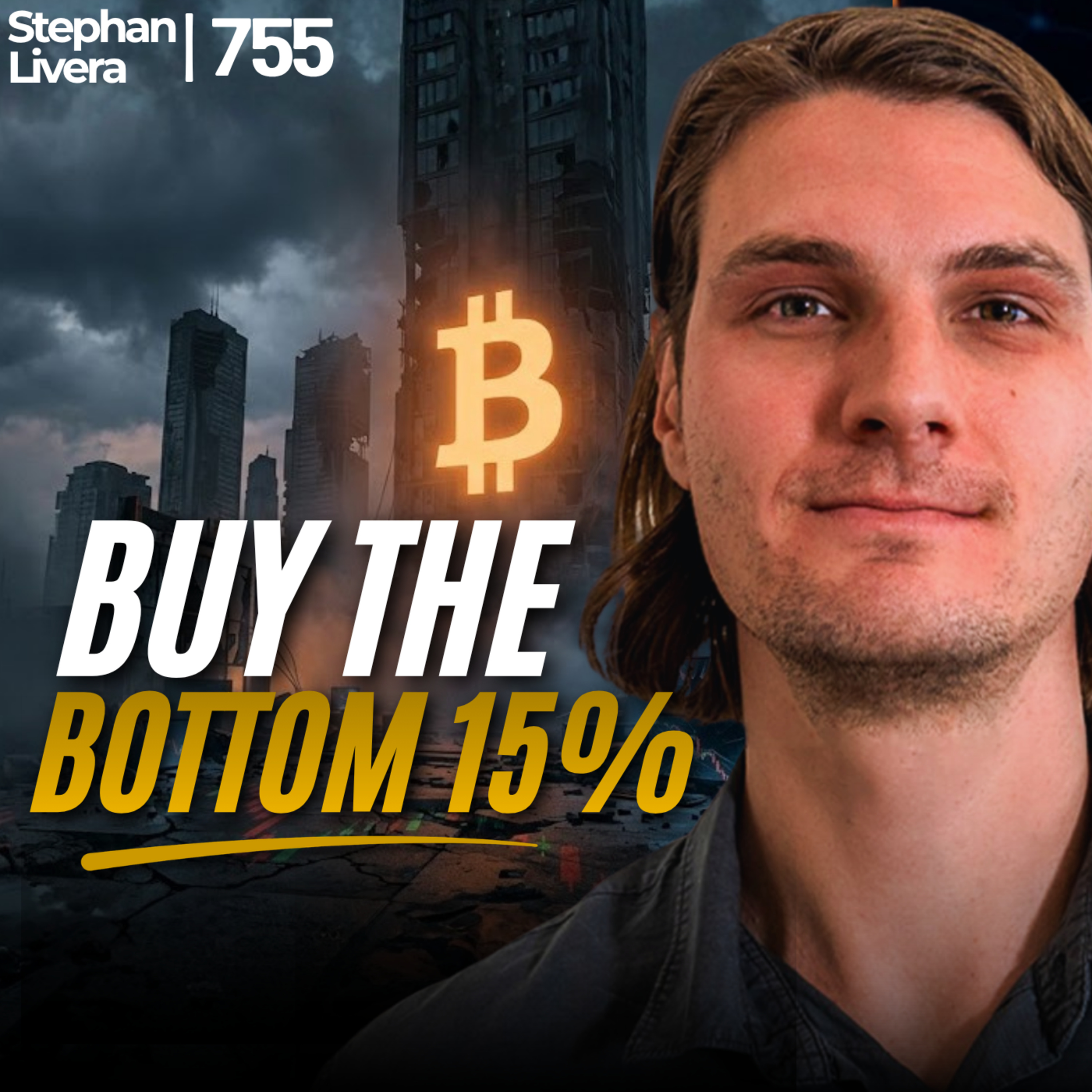
    James Check: Spot Buyers Saving Bitcoin Amid Time Pain | SLP755

    Even as ETFs and MicroStrategy sell into weakness, natural spot demand has kept Bitcoin from collapsing in what may be the shallowest bear market on record. The real test now is time pain, the grinding boredom that forces out remaining weak hands after the initial price capitulation. James Check, founder of Checkonchain.com, joins me to break down the current cycle through on-chain data and market psychology. His framework distinguishes price pain from the subsequent time pain that historically marks the true bottom. Checkmate examines why short-term holders flipped into high-conviction buyers, why 53K realized price now acts as a floor, the Pareto distribution among Bitcoin treasury companies, and why most copycat strategies will fail in the months ahead. Timestamps: 00:56 — Last Day of Bear Feels Worst 03:26 — Time Pain Grinds Out Weak Hands 05:53 — Shallowest Bear Market Ever Seen 08:53 — Spot Buyers Saving Bitcoin From Zero 11:14 — Short-Term Holders Are Now Smart Money 15:28 — July Bear Bottom: 8-Method Average 18:50 — 53K Realized Price Now the Floor 23:00 — Buy Bottom 15% and Just DCA 28:30 — The AI Trade 30:46 — Bitcoin and Gold Share a Rare Moat 35:23 — Will Most Bitcoin Treasuries Fail? 37:37 — MSTR's Sale of Bitcoin 41:28 — Bitcoin Treasuries Follow Harsh Pareto Rule 47:30 — Bitcoin Treasuries Next Cycle 49:05 — High-Yield Trap? Links: https://x.com/_Checkmatey_ https://x.com/_checkonchain checkonchain.com https://charts.checkonchain.com http://newsletter.checkonchain.com/ Stephan Livera links: Follow me on X: @stephanlivera Subscribe to the podcast Subscribe to Substack #StephanLivera #StephanLiveraPodcast #Bitcoin #BearMarket #OnChain #Checkmate #TimePain #RealizedPrice #BitcoinTreasury #MarketCycles

Showing 1–20 of 32 episodes