Skip to content
Artwork for Spybrary Spy Podcast
ArtsBooksFiction

Spybrary Spy Podcast

Shane Whaley

Spybrary is a podcast for fans of spy books, spy tv and spy movies since 2017. We bring you author interviews and reader discussions on our favorite spy books and novels.

Play
  • 24 episodes
  • Avg 47 min
  • English
Counted on this page — what you have heard stays on this device, so it is not something the list can be paged by.
  • #308
    Thursday · 40 min

    Lies, Spies and Suspense: Inside Traitors with Robert B. McCaw

    A propulsive, high-stakes thriller—Robert McCaw delivers a gripping tale of espionage, betrayal, and deception amid the race to expose Russian moles at the highest levels of the US government. Tense, timely, and full of international intrigue, Traitors will keep you on the edge of your seat. Highly recommended. David McCloskey, former CIA analyst and author of The Persian Author Robert B McCaw joins us to discuss Traitors, a geopolitical thriller shaped by his background in law, Washington and international affairs. He reveals how real-world stories involving Russia, Ukraine, Finland, nuclear weapons and ballistic submarines helped inspire the novel—and how his legal experience taught him to think about lies, interrogation and the search for truth. Support Spybrary every month with a small donation and help us keep the lights on at the Spybrary Safehouse McCaw also explains why he believes a thriller writer has to "play fair" with the reader: the clues should be there, the twists should feel earned, and even the most dramatic developments need to feel possible. Along the way, we explore his unusual path to publication—from spending nearly 20 years on his first novel and self-publishing it, to a chance encounter on a Mediterranean cruise that led to a literary agent and, eventually, Traitors being published by W. W. Norton.

  • #307
    September 1 · 37 min

    From Bourne to le Carré: Jinwoo Park on The Oxford Soju Club

    In this episode of Spybrary, host Matthew Hurst talks with author Jinwoo Park about his debut novel, The Oxford Soju Club. The book centres on North Korean spies and their Korean American adversaries, who are regulars at an Oxford restaurant run by an oblivious South Korean. It's as much about the psychology of their ethnic identities as shoot outs and chases. Jinwoo discusses how the book developed from a simple action thriller to drawing out parallels of how deep cover spies and immigrants share a need to to mould themselves to their surroundings. The conversation explores Jinwoo's influences, from the Bourne films and Robert Ludlum to John le Carré and The Sympathizer, to conversations with his uncle — a former deputy director in South Korea's National Intelligence Service. It also explains why spies should never be rude to taxi drivers. Support Spybrary on Patreon, every little helps us produce content for you.

  • #309
    August 26 · 1 hr 9 min

    Sweden's Secret Cold War Spies: Dead Drops, Hidden Cells and the Stay Behinds

    Cold War Spies Series with Shane Whaley For decades, Sweden presented itself as neutral and determined to remain outside the Cold War struggle between East and West. But behind that public image, the Swedish Stay Behind network was preparing for an altogether darker possibility: Soviet occupation. Shane Whaley is joined by Swedish historian and author Johan Wennström to uncover the extraordinary story of Sweden's secret Stay Behind resistance network — a clandestine organisation created in 1949 to operate behind enemy lines in the event of a Soviet invasion. Drawing on previously classified documents, archival research and first-hand testimony from surviving members, Johan reveals how ordinary Swedes — farmers, insurance brokers, businessmen and travelling salesmen — were secretly recruited into cells designed to survive occupation. They trained in intelligence gathering, clandestine communications, psychological warfare and resistance operations, all while keeping their involvement hidden from colleagues, friends and even their own families. We also explore Sweden's real relationship with NATO during the Cold War, Soviet submarine incursions, Cold War traitors, the human cost of living a secret life — and why one of Sweden's most important intelligence chiefs bears an uncanny resemblance to George Smiley. And, naturally, the conversation eventually turns to spy fiction, John le Carré, Len Deighton, Carl Hamilton, Jan Guillou and the surprisingly underdeveloped world of Swedish spy novels.

  • #286
    August 17 · 26 min

    Simon Conway Returns with The British Agent and a Brand-New Spy

    Simon Conway returns to Spybrary to discuss his latest espionage thriller, The British Agent — a contemporary, globe-spanning story involving missing British-made surface-to-air missiles, Ukraine, American extremist militias, political conspiracy, and an audacious plot targeting.... Support Spybrary here and help us produce more spy author interviews. Spybrary's David Craggs talks with Simon Conway about the creation of his new protagonist, Chuff, why he decided to leave behind the recurring characters of his earlier novels, and how his real-world experience informs the weapons trafficking and intelligence elements of the story. The conversation also explores the complicated people drawn into extremist movements, the influence of algorithms and conspiracy theories, a fascinating connection between The British Agent and the Gunpowder Plot, and whether Chuff might return in a future novel. Simon also discusses the long, uncertain road from novel to screen adaptation.

  • #306
    July 21 · 48 min

    Graham Greene: The Novelist Who Never Stopped Spying

    The novelist Graham Greene ranks at number 6 on Tim Shipman's infamous Best Spy Writers list — and yet we haven't given him enough airtime on the podcast. Time to put that right. Graham Greene didn't just write about spies — spying was the family business. His uncle founded Naval Intelligence. His sister recruited him into SIS. And Greene himself walked out of the Service the day before D-Day. Why? The answer may involve his boss and drinking companion: Kim Philby. Guest host Matt Hurst debriefs Professor Kevin Ruane — Greene scholar and Director of the Graham Greene International Festival — on the novelist's secret double life. In this episode: The Greene family spy business: an uncle in Naval Intelligence, a sister in SIS, a brother running black ops in Malaya, and another spying for three countries at once (badly) Why Greene quit SIS on the eve of D-Day — and the Philby theory "Recreational espionage": how Greene's letters reveal decades of meetings with "the old firm" before trips to Vienna, Cuba, Poland and Vietnam The Quiet American: the 1955 novel that predicted the Vietnam War, and why journalists like David Halberstam and Neil Sheehan carried it in their knapsacks Was Greene spying in Vietnam? The "Catholic solution" and the hunt for a third force The 1958 film Greene called a travesty — and his fan letter to Sean Connery for a remake that never happened Greene vs le Carré: the endorsement that made le Carré's name, and the letter that said "you're not my friend" Why Greene would love Slow Horses This is the first of what we hope will be many episodes exploring the great spy novelists — subscribe to Spybrary so you don't miss what's coming. The Graham Greene International Festival runs 24-27 September in Berkhamsted, UK — 30 minutes from London Euston. Spy highlights include Ben Brown's play A Splinter of Ice, Robert Verkaik on The Writer and the Traitor, and le Carré biographer Adam Sisman on Greene and le Carré. Tickets at grahamgreenebt.org All links at spybrary.com/306

  • #303
    July 1 · 54 min

    Charles Cumming Talks ICARUS 17, BOX 88 and Writing Modern Espionage

    In this episode of the Spybrary Spy Podcast, Shane Whaley is joined by fellow Spybrarian and Head of Boston Station, Joe Modzelewski, to welcome bestselling espionage author Charles Cumming back to the show. Support us on Patreon for even more content. Charles joins Spybrary to discuss his new Lachlan Kite thriller, ICARUS 17, released on 2 July in the UK and 7 July in the United States. Billed as a nail-biting new entry in the BOX 88 series, ICARUS 17 sees Kite pulled back into fieldwork when Martha Rain, a woman from his past, asks for his help in finding her missing son, Max. Max and his girlfriend Yasmine have disappeared in Athens, but they are not simply missing. They are on the run, hunted by two rival agencies with orders to kill. The secret they are carrying could destabilise the Middle East for a generation, and if Kite fails to save them, the consequences will be catastrophic. Alongside the new novel, Shane and Joe talk with Charles about his writing process, his approach to writing modern espionage fiction, and his experiences working in the writers' rooms of some of the spy television shows and films enjoyed by Spybrary listeners.

  • #300
    June 23 · 21 min

    Nine Years, 300 Episodes – The Future of Spybrary Spy Podcast

    Nine years after nervously recording episode one, Shane Whaley celebrates a major Spybrary Spy Podcast milestone: episode 300. In this reflective and forward-looking episode, Shane shares how Spybrary began, why the community has kept it going, and what comes next for the Spybrary spy podcast. Full shownotes at www.spybrary.com/300

  • #302
    June 8 · 52 min

    Bestselling Author Brad Thor on Choke Point, Netflix's Cold Zero, and Spy Fiction

    Brad Thor has sold over 25 million thriller books. Tim Shipman welcomes Brad Thor on Spybrary to discuss Choke Point, the 25th Scot Harvath thriller, and the evolution of Scott Harvath from post-9/11 counterterrorism operator. Thor explains how the new novel uses Thailand, China's ambitions, the Strait of Malacca, sabotage, bomb-making, and geopolitical manipulation as the backdrop for a fast-moving thriller. The conversation also digs into Thor's writing process, his research network of intelligence, military, law enforcement, and diplomatic sources, and how he builds authentic detail even when he has not personally visited a location. Thor reflects on his early career as a travel show host, the honeymoon conversation that pushed him to write his first novel, his friendship with Vince Flynn, the collaborative thriller Cold Zero with Ward Larsen, and the Netflix film adaptation currently in development. Key Topics and Themes Brad Thor's 25th Scot Harvath thriller, Choke Point China's Belt and Road Initiative and global infrastructure influence Thailand, the Strait of Malacca, and the strategic value of a Thai canal The evolution of Scot Harvath Post-9/11 thriller fiction and the rise of the American action-spy hero Real-world tradecraft, bomb-making research, and responsible thriller detail Writing geopolitical thrillers that teach readers something without slowing the pace Bangkok as an underused spy-fiction setting Collaboration with Ward Larsen on Cold Zero The Netflix adaptation of Cold Zero British spy-fiction influences: Fleming, le Carré, Forsyth, MacLean, Deighton Brad Thor Official Website Follow Tim Shipman Buy Choke Point The Top 125 Spy Authors Ranked and Rated by Tim Shipman Join the Spybrary Community

  • #301
    May 26 · 52 min

    Cold War Spy Files - Britain's Secret Fakers: The Cold War's Hidden Propaganda War with Rory Cormac

    What happens when Britain fights the Cold War with typewriters, fake pamphlets, covert publishers, and even pretend hippies? On this episode of Spybrary's Cold War Spy Files, Shane Whaley talks with historian Rory Cormac about his book Fakers: A Top Secret Tale of Phantoms and Forgeries on the Disinformation Line.and the extraordinary true story of the Information Research Department — Britain's secret propaganda and forgery machine. A fascinating dive into Cold War deception, disinformation, and 'state-sanctioned skullduggery.' The conversation opens the file on Britain's Cold War covert propaganda machine, especially the little-known Information Research Department — the IRD — a blandly named Foreign Office unit involved in unattributable propaganda, forgeries, fake groups, and intelligence laundering. Professor Cormac explains how the IRD moved far beyond ordinary government messaging, creating forged pamphlets, fake political organisations, covert publishing operations, and disinformation campaigns designed to expose or disrupt Soviet influence worldwide. The episode is packed with strange-but-true stories, from British officials posing as hippies to disrupt a Soviet-backed youth festival in Bulgaria, to the painstaking forensic details of typewriters, staples, paper, and fonts used in Cold War forgery work. The discussion also highlights the unusual people behind these operations: refugees, journalists, women, fixer-agents, propagandists, and oddball bureaucrats working in the shadows of British foreign policy. Rather than focusing on famous spies or prime ministers, Fakers reveals the human texture of covert influence work: the hustlers, handlers, writers, typists, and paper experts who helped wage Britain's secret propaganda war. Buy Fakers by Rory Cormac Follow Rory Cormac Cold War Spy Files Join the Spybrary Community Support Spybrary Sign up for The Dead Drop newsletter

  • #298
    May 5 · 16 min

    Jack Carr's Cry Havoc — Did This Le Carré Fan Finish It?

    I'm Shane Whaley — a self-confessed "guile over guns" spy fiction reader who has always preferred le Carré's slow burn spy novels to military firefights. So what happens when a Le Carré fan picks up Jack Carr's Cry Havoc, a 550-page Vietnam War action thriller written by a former Navy SEAL? Welcome to the Spybrary Rodeo — the brand new Spybrary feature where I pick up a book outside my comfort zone, or by a new-to-me author, give it a fair crack, and tell you exactly how many pages I stayed on for. Sometimes I bail early. Sometimes I go all the way to the final page. Today's book is Cry Havoc by Jack Carr. 550 pages. Lots of guns. Not my usual territory. Did I finish it? Keep listening to find out. In this episode: What the Spybrary Rodeo is and how it works The secret MACV-SOG unit running deniable missions in Vietnam in 1968 Why Cry Havoc is NOT your typical action thriller The speech that stopped me cold The spy fiction ingredients hidden inside this action thriller — GRU, moles, honey traps and the USS Pueblo The brilliant le Carré and Fleming passage that tells you everything about Jack Carr as a writer The literary rabbit hole that sent me straight to Jean Lartéguy's The Centurions My honest verdict Books mentioned: Cry Havoc — Jack Carr https://geni.us/UMYz The Quiet American — Graham Greene The Tears of Autumn — Charles McCarry The Honourable Schoolboy — John le Carré The Centurions — Jean Lartéguy - https://geni.us/pzrFcJ Suggest my next Rodeo read: 👉 Join the Spybrary community: https://www.spybrary.com/community 👉 Find me on X: @Spybrary - https://x.com/spybrary 👉 Full show notes: https://www.spybrary.com/298 If you're a spy fiction fan who has been avoiding Jack Carr because you thought he was too kinetic — start here. This is the episode that might just change your mind. Don't forget to subscribe for more Spybrary Rodeo episodes, Dead Drop Five conversations, and the best spy fiction and espionage history content on the internet.

  • #299
    April 23 · 52 min

    The Dark Truth About the Cambridge Five | Stalin's Apostles with Antonia Senior

    If you think you already know the Cambridge Five story, think again. In this episode of Spybrary, Shane Whaley is joined by journalist and author Antonia Senior to discuss her powerful new book, Stalin's Apostles: The Cambridge Five and the Making of the Soviet Empire— a major re-examination of Kim Philby, Donald Maclean, Guy Burgess, Anthony Blunt and John Cairncross. But this is not the familiar story of clubland betrayal, old boys' networks. ping gins and establishment embarrassment. Instead, Antonia asks a darker and more important question: what did Stalin actually want from his greatest spies and what was the human cost? From Poland, the Baltics, Albania and Ukraine to the corridors of Whitehall and Washington, this conversation explores the real human cost of the Cambridge Five's betrayals — and why they were far more than 'Robin Hood' types embarrassing the British establishment. In this episode, we discuss: Why the Cambridge Five knew far more about Stalin's crimes than many like to admit Kim Philby's role in betraying anti-Soviet operations How Donald Maclean helped Stalin see the West's diplomatic hand The fate of partisans and resistance fighters in Eastern Europe Anthony Blunt, Poland, and the brutal realities behind the myth The enduring mystery of Philby in Beirut: did he run, or was he allowed to go? If you enjoy spy books, espionage history, and serious conversations about the moral consequences of intelligence work, this one is for you. Buy Stalin's Apostles: https://geni.us/XcUoM2 Join the Spybrary Community Support Spybrary Sign up for The Dead Drop newsletter

  • #289
    April 15 · 1 hr 1 min

    She Judges Crime Fiction's Biggest Prizes — Here Are Her 5 Favourite Spy Books!

    One of crime fiction's most trusted voices reveals her 5 best spy novels. In our latest Spybrary Dead Drop Five series, crime fiction critic Ayo Onatade makes a passionate case for each one — and her picks may surprise you. Welcome back to the Dead Drop 5 series! In this episode, Spybrary host Shane Whaley is joined by Ayo Onatade — one of the most respected voices in crime and thriller fiction. Ayo is a critic, commentator, and moderator who has written extensively on crime and thriller fiction, contributed to major reference works on British and American crime writing, and served as judge and chair for some of the genre's most significant prizes, including the Ian Fleming Steel Dagger.

  • #295
    March 31 · 38 min

    'He Gave Me Information About Spying That Frightened The Life Out of Me!' (and inspired The New Spy)

    Guest host Matthew Hurst sits down with author Michael Dylan to explore his debut spy thriller The New Spy. Dylan shares his unconventional journey from global advertising creative to full-time novelist, revealing how real-world research, including chilling conversations with a mysterious source known only as "Mr. Pickles" shaped the authenticity of his espionage writing. The conversation dives deep into modern intelligence warfare, particularly the concept of "chaos warfare," where the goal is not conquest but destabilisation. Dylan explains how this evolving geopolitical reality inspired the novel's themes and characters, including rookie MI5 agent Joe Batten and a brilliant but physically limited analyst working from the shadows. The episode also explores the realities of self-publishing versus traditional publishing, the creative risks of killing beloved characters, and the importance of writing stories that genuinely excite the author. It's a fascinating blend of craft, industry insight, and the unsettling truths behind modern espionage.

  • #297
    March 25 · 1 hr 8 min

    Remembering Len Deighton: The Outsider Who Revolutionised Spy Fiction

    We share the sad news that renowned spy novelist Len Deighton has passed away at 97. We pay tribute to his incredible work, discussing why he was considered the greatest spy novelist and his impact on cold war espionage. His contributions to the spy thriller genre remembered. Len Deighton didn't just write spy novels… he changed the genre. In this episode, we take a step back and reflect on the life, legacy, and impact of one of the true giants of espionage fiction. From The IPCRESS File through to the Bernard Samson/Berlin Game series, Deighton gave us something very different—spies who weren't superheroes, but real people. Flawed. Wry. Often stuck in offices, navigating bureaucracy as much as danger. I'm joined by Rob Mallows of the Deighton Dossier, broadcaster and commentator Eliot Wilson, and Aspect of Crime's Paul Burke as we talk through what made Len Deighton so special, including: Why his "everyman spy" felt like such a shift at the time How he stood apart from Fleming and le Carré His incredible sense of place—especially when it comes to Berlin The influence he's had on modern writers like Mick Herron And why, all these years later, his books still hold up This isn't just a tribute episode. It's a proper Spybrary-style conversation about why Len Deighton matters and why he still should matter to readers today. If you've never read him, this is a great place to start. And if you have… well, you'll know exactly why we're doing this one. 🎧 Tune in and raise a glass to one of the greats. 👇 And let us know in the comments or in our community— What's your favourite Len Deighton book? Join 5,000+ spy thriller fans in our online community and share your thoughts on Len Deighton: https://spybrary.com/join-our-community/

  • #293
    March 17 · 46 min

    He Wrote Spy Game. Now He's Written an Epic CIA Saga | Michael Frost Beckner

    What happens when a legendary screenwriter turns decades of espionage ideas into an epic literary spy saga? On this episode of the Spybrary podcast, Michael Frost Beckner joins Bruce Dravis to unpack Kaleidoscope, the Spy Game universe, CIA family legacies, his influences, moral ambiguity, and the hidden machinery of intelligence. A must-listen/watch for serious spy fiction fans. Join the Spybrary Community: https://spybrary.com/join-our-community/ If you enjoyed today's episode - please can you give us a rating and review? This helps us spread the word to bring more spy readers in from the cold.

  • #294
    March 4 · 45 min

    Former Spy Turned Novelist: James Wolff on Spies and Other Gods with Tim Shipman

    Tim Shipman sits down with thriller author James Wolff who worked as a British intelligence officer for over ten years. They unpack his latest spy novel Spies and Other Gods. Wolff shares how a single line in a UK parliamentary oversight report (the Intelligence and Security Committee) sparked the novel's core idea. An anonymous whistleblower sends British Intelligence into a frenzy, threatening to reveal secrets that could bring the establishment to its knees. Wolff also reveals why it took government censors 16 months to approve his book—and shares some of the truly absurd references they insisted he remove. He then turns the tables on Shipman, asking whether he uses spy-like tradecraft in his own work as a political journalist who relies on sources, assets and insiders to uncover stories. If you love le Carré-style moral tension, Slough House office politics, and spy fiction that feels real, Spies and Other Gods is for you. So what is Spies And Other Gods by James Wolff all about, Shane? In this cat-and-mouse spy thriller, an anonymous whistleblower sends British Intelligence into a frenzy, threatening to reveal secrets that could bring the establishment to its knees. The Head of British Intelligence is having a bad day. Only six months off retirement and Sir William Rentoul is wondering if he'll make it that far, what with the sudden descent of a brain fog dense enough to turn every day into a series of small humiliations. To make matters worse, when parliamentary researcher Aphra McQueen is brought in to investigate an internal complaint, she discovers something horrifying: the murder of nine Iranian dissidents. The elusive assassin, nicknamed CASPIAN, kills across borders, forcing intelligence services throughout Europe into an alliance. Their only lead? An unsuspecting dentist in the UK. Aphra McQueen seems to know more about the operation than she is letting on. What will she uncover? What is she really up to? And can she survive the unexpected events that will bounce her from London to Birmingham to Paris to Lausanne? In the exhilarating chase that follows, Spies and Other Gods offers a vibrant, fresh and darkly funny take on the spy thriller that lays bare the human cost of secrecy.

  • #292
    February 25 · 1 hr 12 min

    Fleming's Final Bond Stories: Octopussy, Living Daylights & The Spy Boom Of 1966

    Spybrary's James Bond Book Club jumps back to 1966 to discuss Ian Fleming's final book of 007 short stories—Octopussy and The Living Daylights. The episode closes with a forward-looking discussion: spy fiction is exploding, and Fleming's legacy may be less about continuation novels and more about how he opened the floodgates for Len Deighton, John le Carré, Modesty Blaise, Quiller, and the entire "spy mania" era—on page and screen.

  • #291
    February 12 · 51 min

    Everybody Wants to Rule the World: 1980s Nostalgia & Cold War Espionage with Ace Atkins

    In this thriller author interview, Spywrite's Jeff Quest sits down with Ace Atkins to dive deep into his nostalgic Cold War spy novel Everybody Wants to Rule the World — a thrilling, 80s-set espionage adventure that blends suburban coming-of-age storytelling with high-stakes KGB intrigue. Support Spybrary on Patreon - help us keep the lights on at the Spybrary Safehouse Atkins shares how discovering Ian Fleming as a teenager transformed him into a lifelong spy fiction obsessive, eventually shaping his career as a bestselling author. The conversation explores the real-life espionage inspirations behind the novel, including infamous traitors Aldrich Ames, as well as the bizarre and often comedic true story of Soviet defector Vitaly Yurchenko. From suburban Atlanta in the mid-1980s to the paranoia of Reagan's Star Wars era, this episode captures the zeitgeist of a time when espionage dominated headlines — and imaginations. If you love Cold War spy fiction, 80s nostalgia, and tradecraft stranger than fiction, this episode is for you.

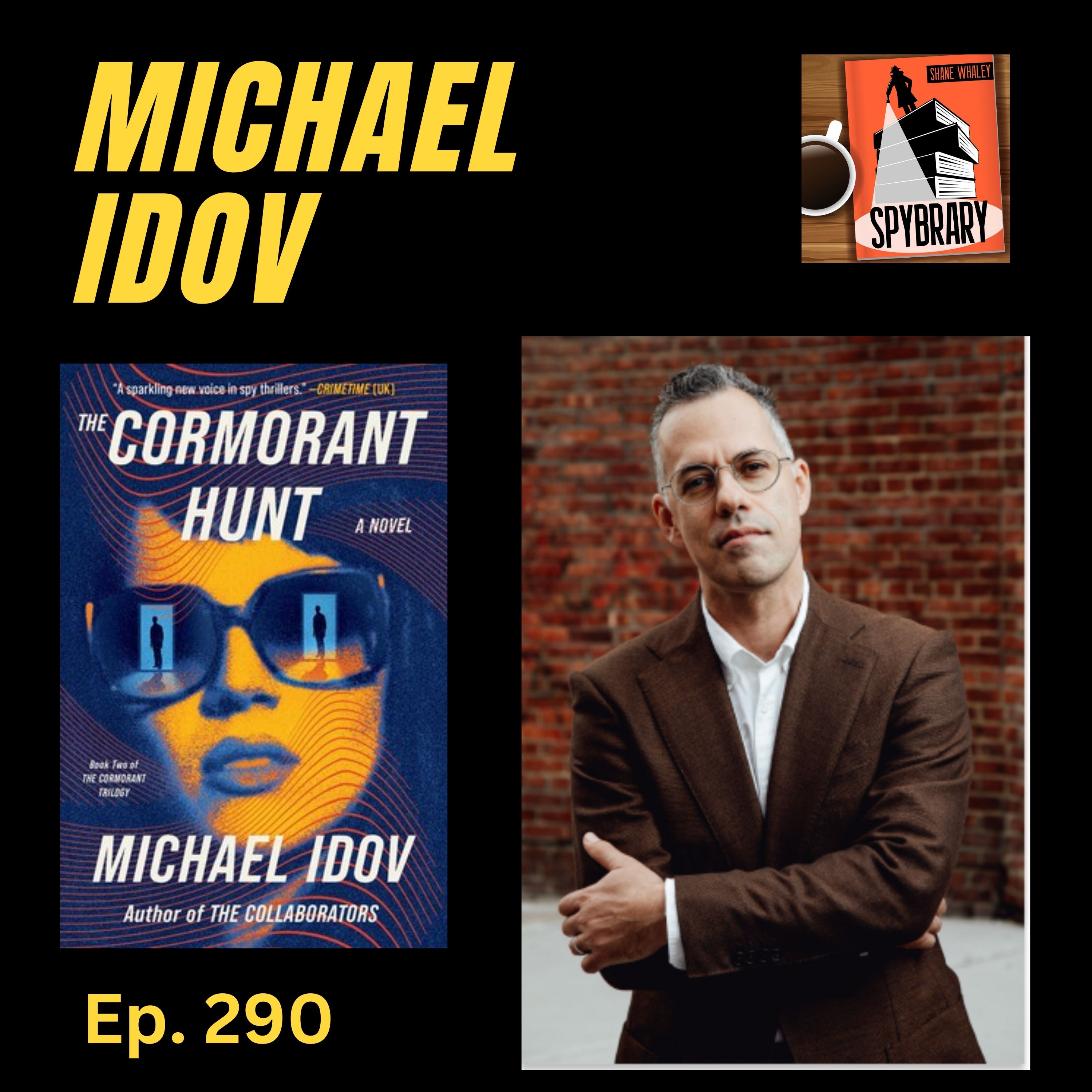
  • #290
    February 4 · 1 hr

    Inside The Cormorant Hunt with Michael Idov (Spoiler Free)

    Bryan Boling sits down for a spoiler-free chat with novelist Michael Idov, diving into The Cormorant Hunt, the standalone sequel to his acclaimed spy thriller The Collaborators. Idov discusses the challenge of writing a compelling antagonist in Felix Burnham—a fusion of Jordan Peterson and Andrew Tate who pushes protagonist Ari Falk to his limits. They explore how real-world extremism, post-COVID paranoia, and disinformation influence modern spy fiction, and why setting stories in overlooked global locales adds authenticity. From the Reichsbürger to action-packed drone chases in Georgia (the country), Idov breaks down how topical fiction is crafted under the ticking clock of world events. Michael also shared some news about an upcoming spy thriller film he is directing with Noomi Rapace in the lead. Good news for the Brits, The Cormorant Hunt is scheduled to be released in the UK in May.

Showing 1–20 of 24 episodes